There’s something undeniably inviting about a dining room English style — the kind of space where a long mahogany table anchors the room, portraits hang in heavy frames, and dinner somehow feels like an occasion worth dressing for. It’s a look that’s stood the test of time, and for good reason.
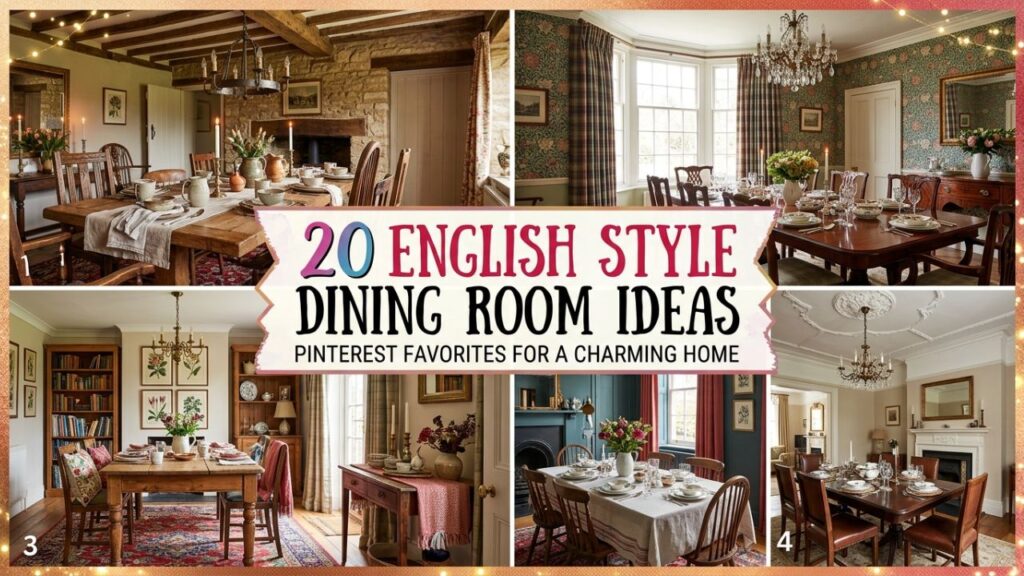
If you’ve been drawn to the warmth of traditional English interiors but aren’t sure how to pull it together in your own home, you’re in the right place.
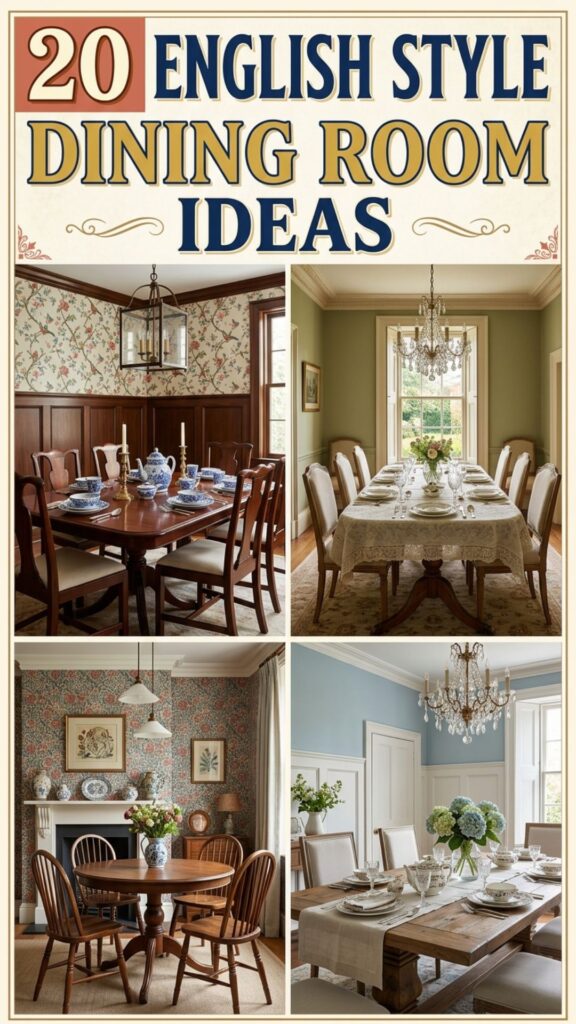
In this guide, you’ll find 20 practical, specific ideas for designing or refreshing a dining room with authentic English character. Whether you’re starting from scratch or adding finishing touches, these ideas will help you build a space that feels both elegant and genuinely livable.
1. Anchor the Room With a Solid Wood Dining Table
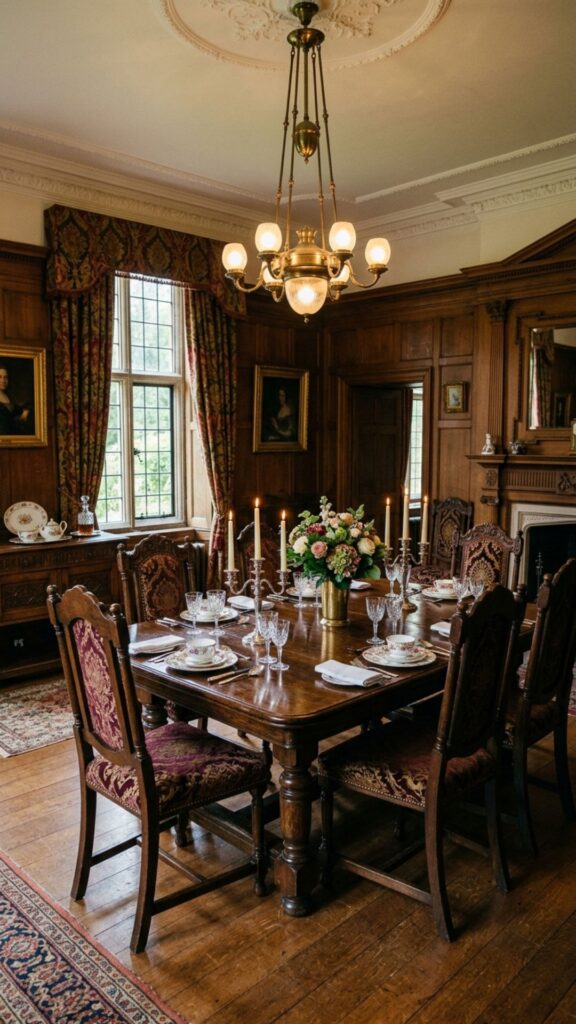
The foundation of any traditional English dining room is a substantial, well-made dining table. Look for pieces in dark hardwoods like mahogany, walnut, or oak — ideally with turned legs, a pedestal base, or a refectory-style design. A table with patina and history tells a story, so don’t shy away from antique or reclaimed wood.
Scale matters here. In English interior design, the table tends to be the centerpiece of the room, commanding attention rather than blending in. Allow enough space around it for chairs to be pulled back comfortably, but don’t be afraid of a table that fills the room with presence.
2. Choose Upholstered Dining Chairs With Classic Lines
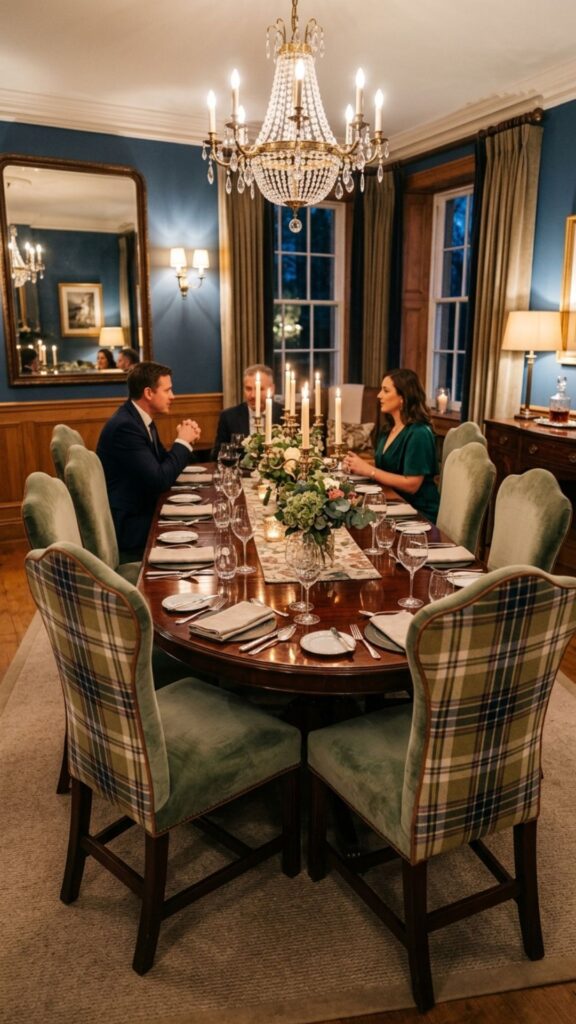
Paired seating sets the tone just as much as the table itself. English-style dining chairs often feature high backs, straight legs, and subtle carved detailing. Upholstered seats in muted velvets, wool plaids, or leather add both comfort and texture to the space.
Mixing chair styles slightly — such as combining carver chairs at the heads of the table with side chairs along the length — is a classically English approach. It adds visual interest while still feeling cohesive, especially when the upholstery shares a common color or fabric family.
3. Install Wainscoting or Wall Paneling
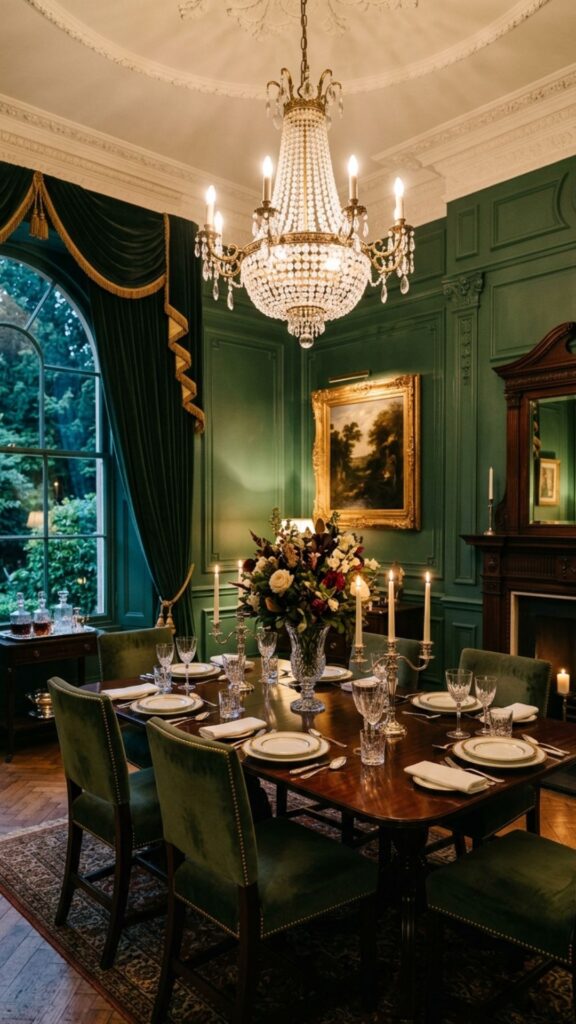
Wall paneling is one of the most effective ways to bring an English dining room to life. Traditional wainscoting — typically installed to chair-rail height — adds architectural depth and a sense of craftsmanship that plain painted walls simply can’t replicate.
Paint the panels in a rich heritage tone like deep forest green, navy, or warm stone, or keep them crisp white for a lighter country-house feel. The key is clean, precise installation with properly proportioned molding profiles, which immediately elevates the room’s character.
4. Layer in a Statement Chandelier
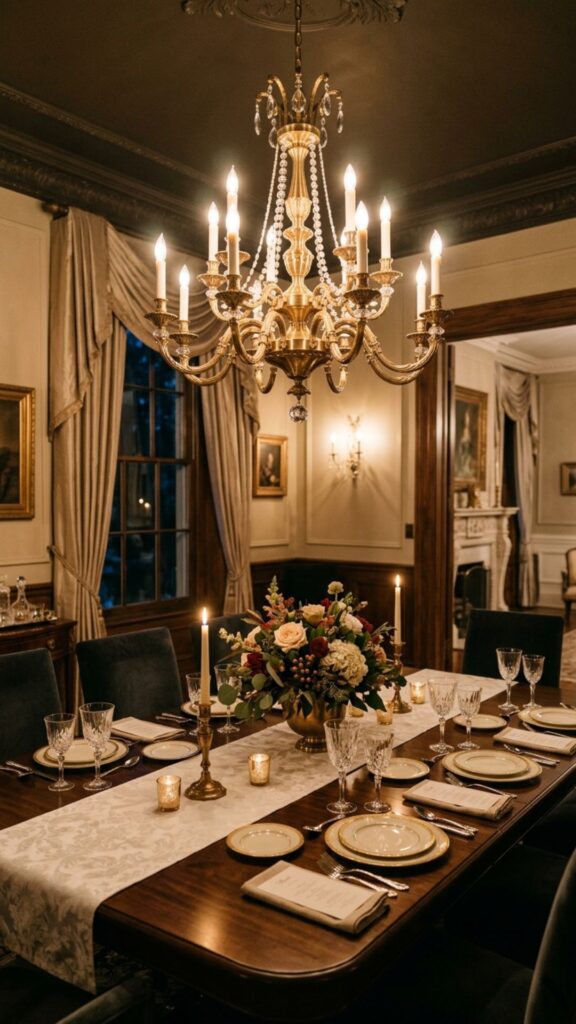
Lighting in an English-style dining room should feel dramatic without being harsh. A chandelier with brass, bronze, or aged iron finishes — fitted with warm Edison bulbs or candelabra-style fittings — provides exactly the right ambiance for a long dinner.
Position the chandelier so it hangs roughly 30 to 36 inches above the tabletop for ideal light distribution and visual proportion. Add dimmer controls so you can shift from a bright family lunch to a softly lit dinner party without changing a thing about the room’s setup.
5. Embrace Deep, Heritage Paint Colors
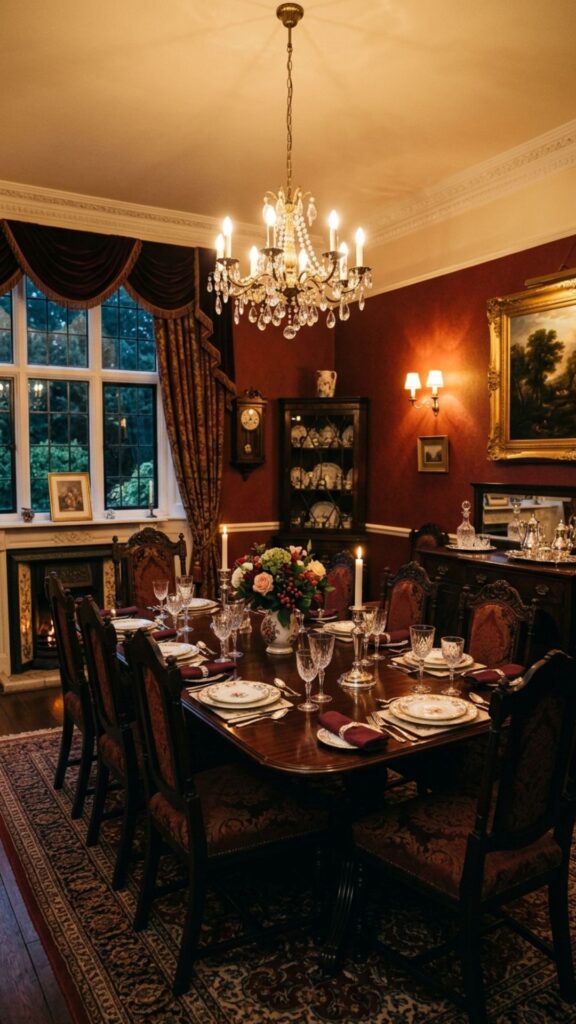
Color is where personality enters the room. English dining rooms are known for their confidence with color — think oxblood red, deep teal, forest green, and charcoal. These tones feel rich without being oppressive, especially when balanced with warm lighting and natural wood tones.
If deep color feels like a commitment, start with one feature wall or go all-in on the ceiling for a dramatic canopy effect. Heritage paint brands often offer historically inspired palettes that align naturally with this aesthetic, so browsing those collections is a good starting point.
6. Hang Framed Art and Portraiture
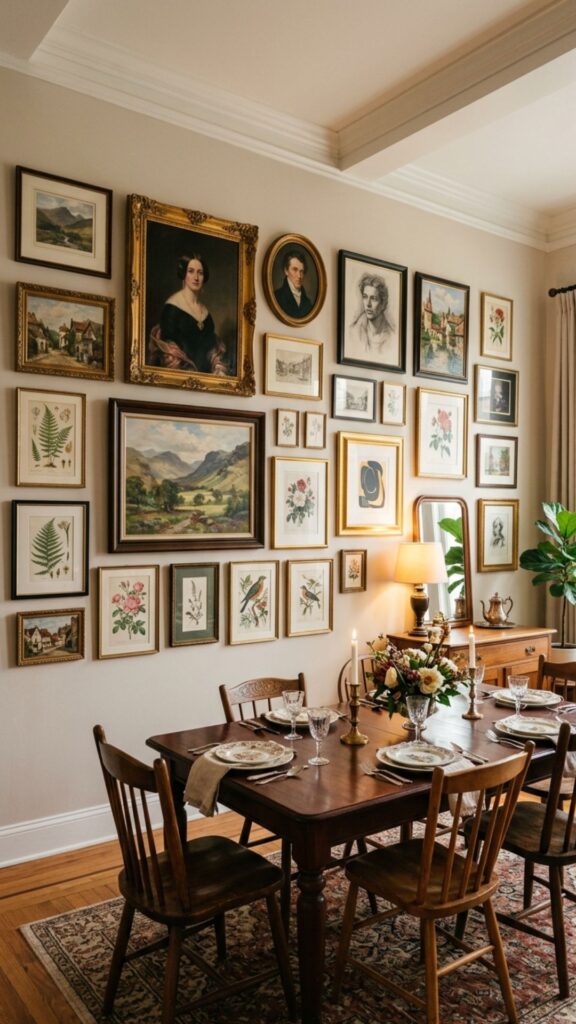
Walls in an English dining room are rarely bare. Traditional portraits, hunting scenes, botanical prints, and landscapes all feel at home here. The frames themselves are part of the decoration — heavy gilded frames, dark wood moldings, and ornate carved surrounds all fit the style.
Don’t worry about matching every piece precisely. A well-curated mix of frames and subjects, arranged in a salon-style gallery wall, adds the kind of lived-in richness that defines this look. Spacing pieces closer together rather than too far apart keeps the arrangement looking considered rather than random.
7. Add a Sideboard or Credenza
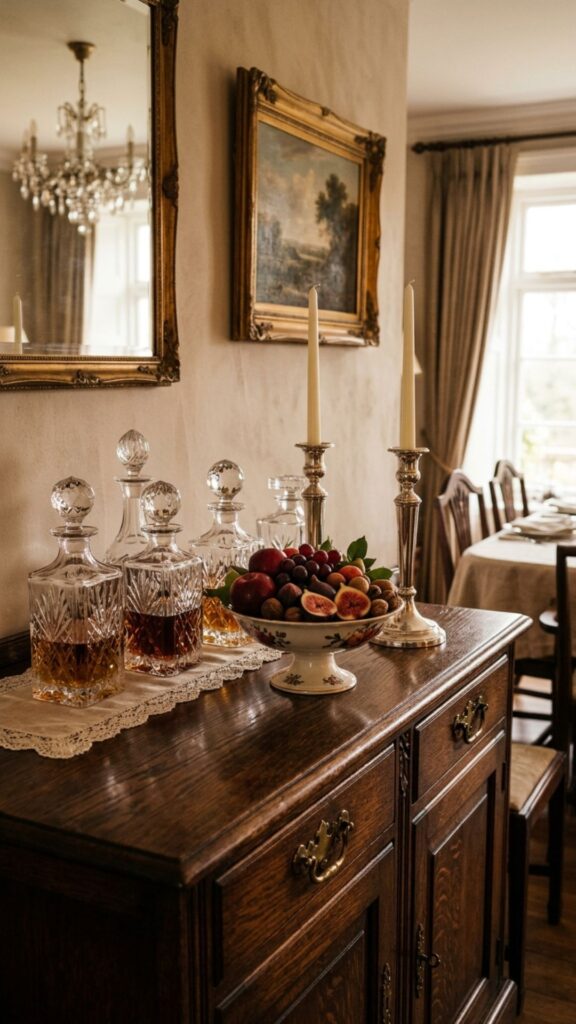
A long, low sideboard is both functional and essential to the English dining room aesthetic. It provides storage for linens, silverware, and serving pieces while offering a surface for display — think decanters, a silver candlestick, or a bowl of seasonal fruit.
Antique and vintage sideboards with original hardware are worth hunting down at estate sales or antique markets. If buying new, look for pieces with crossbanding detail, tapered legs, and quality drawer joinery — hallmarks of traditional English cabinet-making that hold their value over time.
8. Dress the Windows With Full-Length Curtains
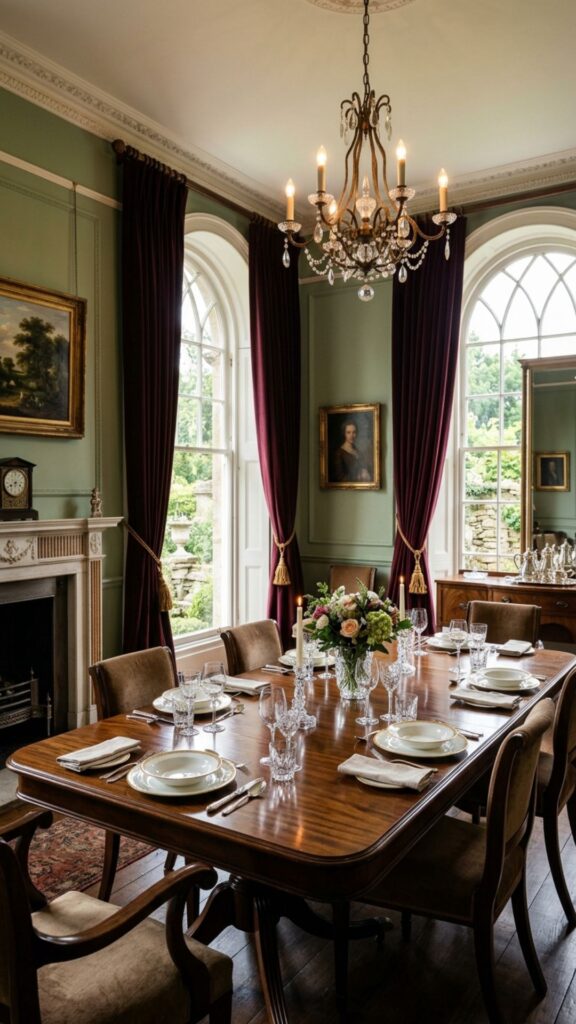
Windows in an English-style dining room deserve proper treatment. Full-length curtains in heavy fabrics — wool, velvet, or lined cotton — frame the windows well and add to the room’s sense of substance. Classic patterns like wide stripes, florals, or subtle plaids all work beautifully here.
Hang the curtain rod close to the ceiling rather than just above the window frame. This draws the eye upward, makes ceilings feel taller, and gives the drapery that sweeping, elegant fall that’s so characteristic of traditional English interiors.
9. Layer Rugs Under the Table
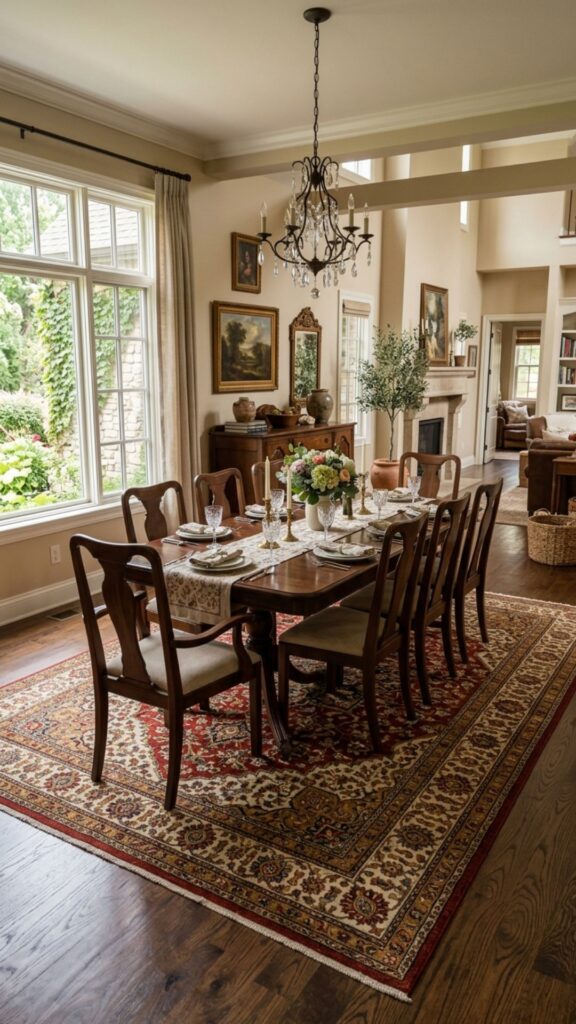
A dining room English style almost always features a rug underfoot, even in rooms with hardwood or stone floors. A Persian or Oriental-style rug brings warmth, pattern, and visual grounding to the seating arrangement.
Make sure the rug is large enough that all four legs of every chair remain on it, even when pulled out. A rug that’s too small will make the furniture look like it’s floating awkwardly, while the right size creates a contained, intentional dining zone within the room.
10. Display Fine China and Crystal in a Cabinet
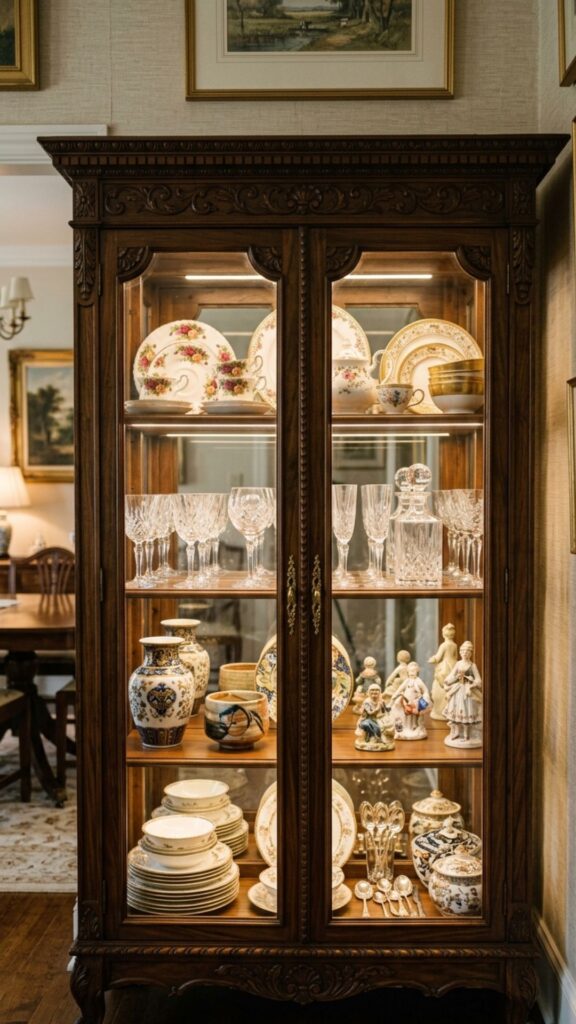
A glass-fronted display cabinet filled with fine china, crystal glasses, or decorative ceramics adds instant English character. It suggests a home that values quality and tradition — and one that actually uses the good stuff on occasion.
Arrange pieces thoughtfully rather than just stacking them in. Group by color, alternate heights, and let a few items stand in front of others for depth. Even everyday dishes look considered when displayed with a little care and purpose.
11. Introduce Brass and Antique Metal Accents
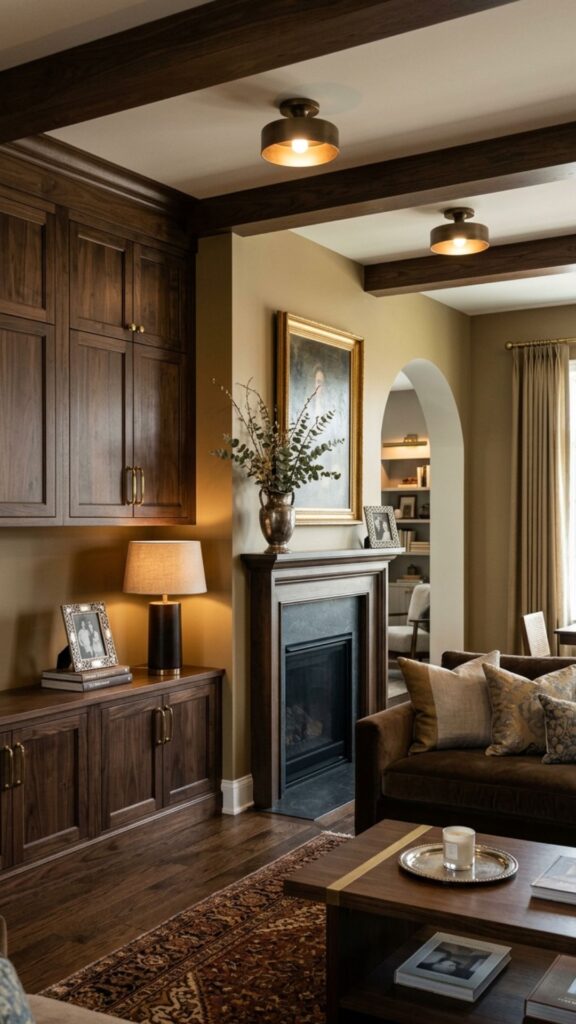
Hardware and metal accents play a supporting but important role. Brass cabinet handles, bronze light fittings, and antique silver accessories all speak to the English aesthetic’s relationship with quality craftsmanship and natural materials.
Keep metal finishes consistent across the room — mixing too many metallic tones can feel chaotic. Warm brass and bronze work particularly well against the dark wood tones and rich wall colors typical of this style, creating a unified, intentional palette.
12. Use Textiles to Add Warmth and Layering
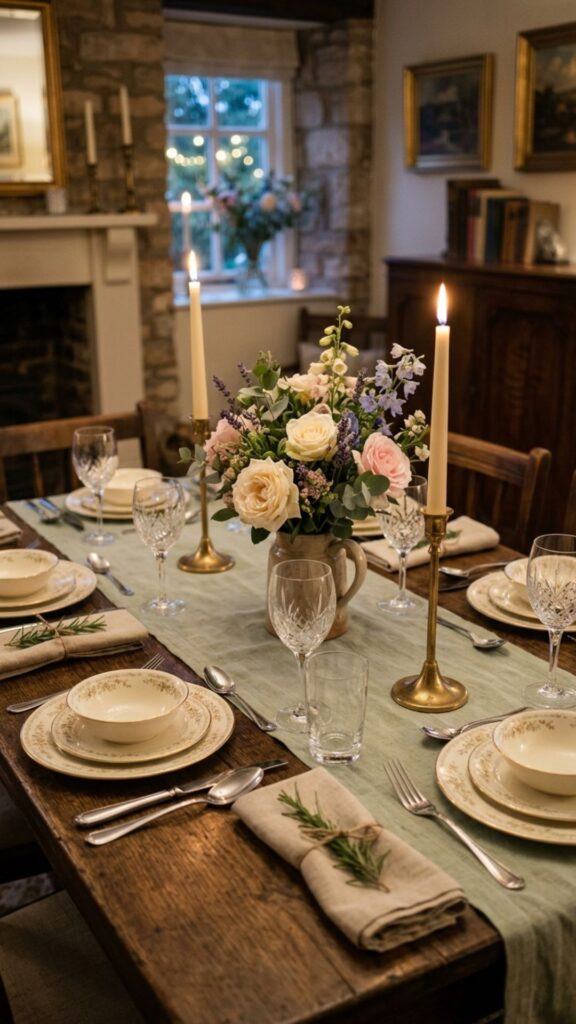
Tablecloths, placemats, napkins in linen or damask, and upholstery all contribute to the textural richness of an English dining room. Natural fabrics that age gracefully — linen, wool, velvet, cotton — are preferable to synthetics, which tend to look flat and lifeless in this context.
A well-dressed table is part of the room’s decoration, even when it’s not set for a meal. A simple linen runner down the center, a few candlesticks, and a small floral arrangement keep the table looking intentional between uses.
13. Incorporate a Fireplace or Decorative Mantelpiece
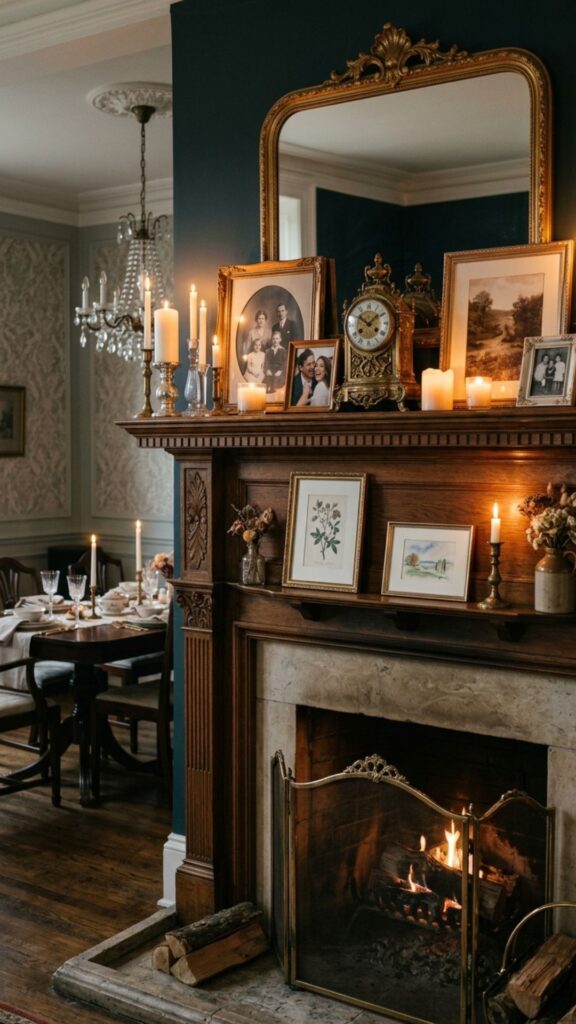
Where space allows, a fireplace transforms a dining room into something truly special. The mantelpiece becomes a natural focal point and display surface — perfect for a clock, framed pictures, and candlesticks arranged with deliberate symmetry.
Even a non-functional decorative fireplace or a fireplace surround fitted with candles achieves a similar effect. The visual weight of the mantelpiece anchors the room and gives it the kind of historical gravitas that’s central to the English dining room tradition.
14. Keep the Ceiling Simple but Considered
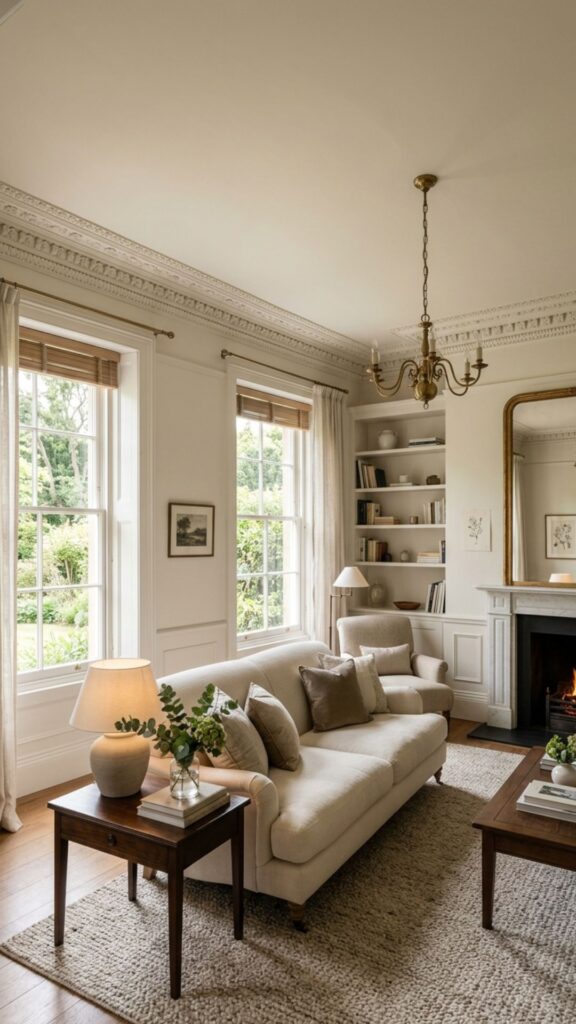
Ceilings are often overlooked in dining room design, but in English-style interiors, they deserve attention. A simple cornice or crown molding at the ceiling line adds architectural detail without overwhelming the room, and it ties the walls and ceiling together elegantly.
Painting the ceiling in a slightly warmer shade than white — a soft off-white or even the same deep color as the walls for a truly enveloping effect — gives the room a more finished and considered quality than a standard white ceiling allows.
15. Bring in Fresh Flowers and Natural Elements
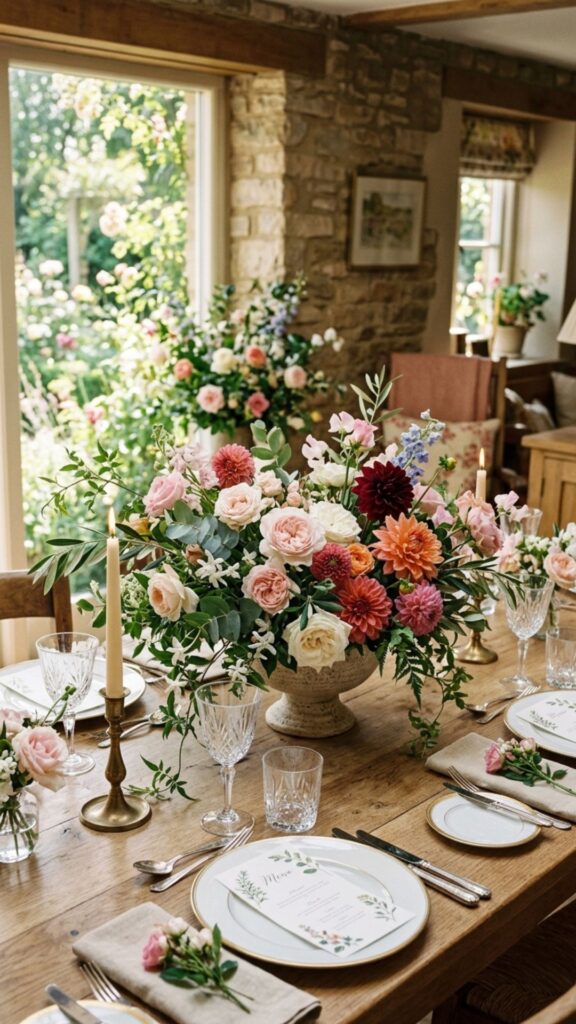
Fresh flowers have always been central to English domestic life. A generous arrangement of seasonal flowers — peonies, dahlias, garden roses, or foliage-heavy branches — placed on the table or sideboard brings life and color to a room that might otherwise feel overly formal.
Keep floral arrangements loose and garden-gathered in style rather than stiff and architectural. The English aesthetic favors a certain unstudied abundance in its botanicals, which balances beautifully against the more structured elements of the room.
16. Choose Flooring That Feels Grounded and Authentic
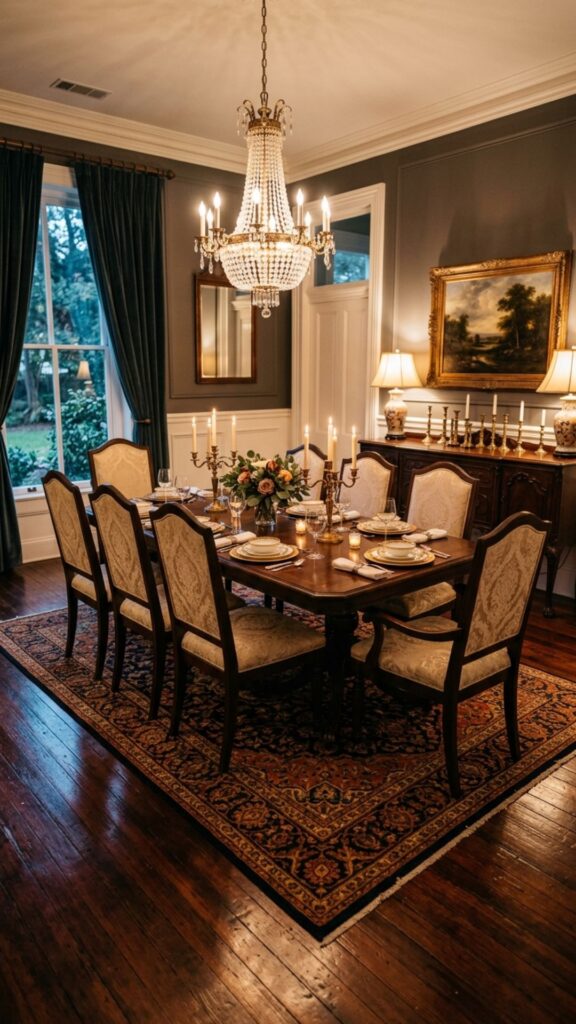
Traditional English dining rooms often feature dark-stained hardwood, wide-plank oak, or stone tile floors. These materials age well and improve with use, which aligns perfectly with the English design philosophy of investing in things built to last.
If you’re working with existing flooring that doesn’t fit the style, a well-chosen rug (as mentioned earlier) can do a lot of the visual work. For new installations, engineered hardwood in a dark or medium tone is a practical choice that delivers the right aesthetic at a more accessible price point.
17. Add Bookshelves or Built-In Storage
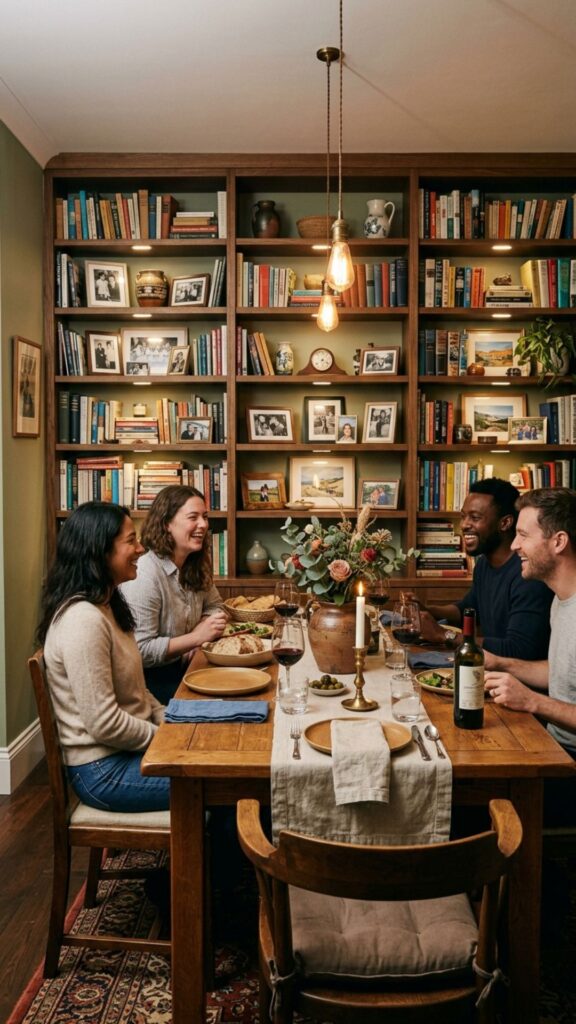
Not every dining room English style is purely about eating — these spaces often double as places to read, write letters, or simply spend time. Low bookshelves, built-in cabinetry, or a small writing desk tucked into a corner make the room feel more inhabited and less like a stage set.
Style bookshelves with a mix of books, small decorative objects, and framed photographs. Avoid making them look too perfectly curated; a little friendly disorder reads as genuine and lived-in, which is exactly the feeling this interior style aims for.
18. Select Hardware and Fixtures With Period Sensitivity
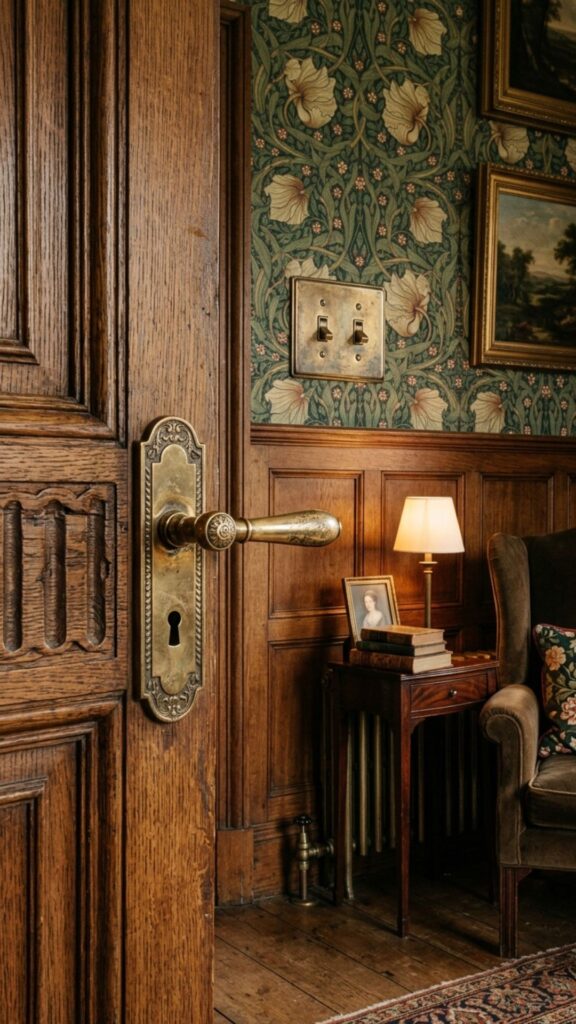
Every detail in a well-designed room either contributes to or detracts from the overall style. In an English dining room, door handles, light switch plates, and even socket covers in antique brass or aged bronze keep the period aesthetic consistent throughout.
These are small changes that make a significant collective difference. Swapping out modern chrome or brushed nickel fittings for warmer, more traditional finishes is one of the most cost-effective upgrades you can make to move a room toward this look.
19. Use Symmetry and Arrangement as a Design Tool
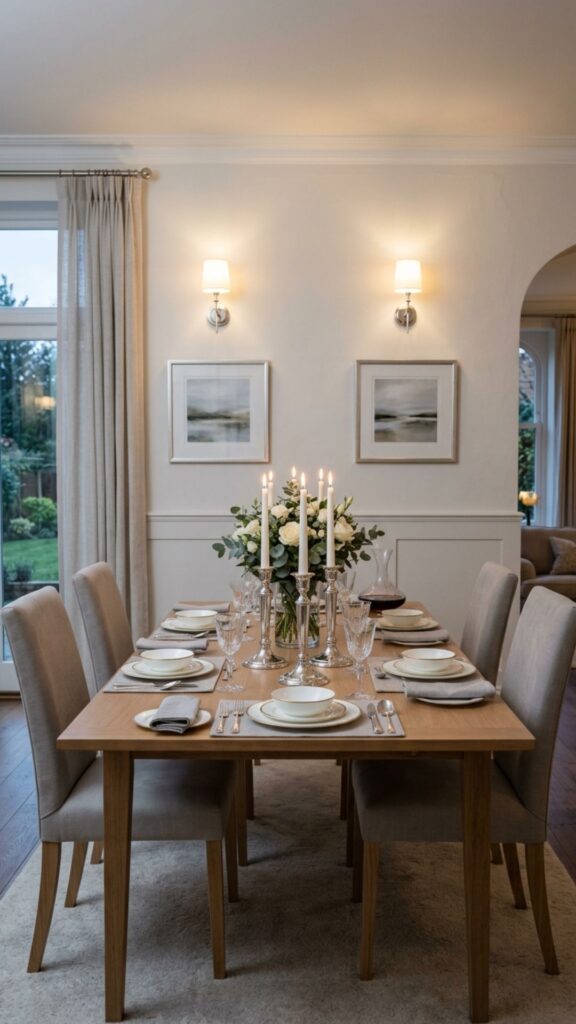
English interior design has always favored symmetry — pairs of candlesticks flanking a centerpiece, matching sconces on either side of the fireplace, identical chairs at the table heads. This sense of order creates visual calm and a feeling of intention that distinguishes a well-designed room from a random collection of furniture.
Use symmetry as a guiding principle when arranging accessories on the sideboard or mantelpiece. Even if every individual item is different, placing them in balanced pairs or groupings creates a composed, confident look that feels distinctly English.
20. Invest in Quality Over Quantity
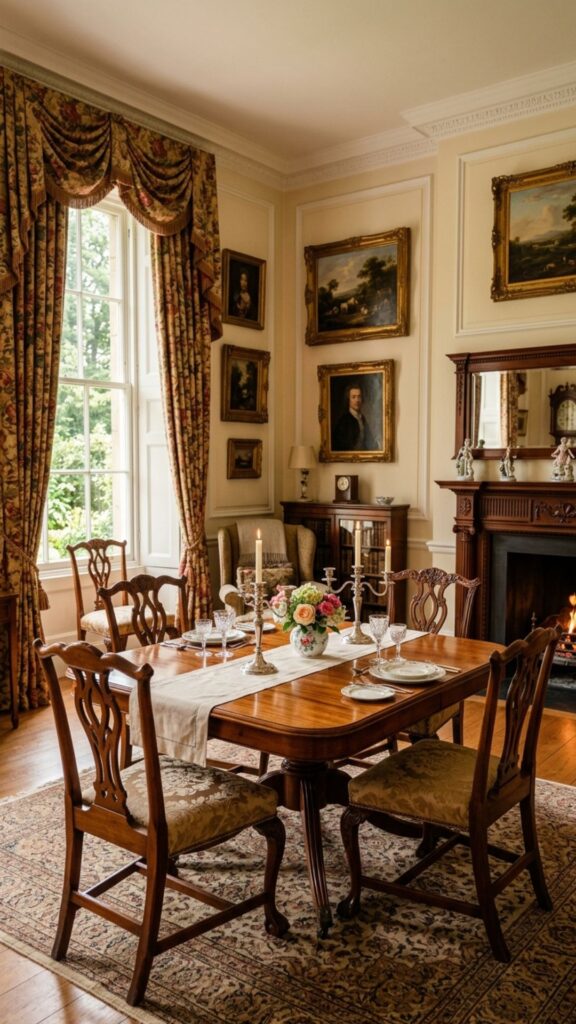
Perhaps the most important principle underpinning the entire English-style aesthetic is this: fewer, better things. A well-made chair you’ll use for thirty years is worth far more than several cheaper versions that wear out in three. Quality shows in the details — the weight of a piece of crystal, the smoothness of a drawer, the drape of a good linen curtain.
Start by identifying the two or three items in your dining room that will do the most work — the table, the lighting, the curtains — and invest thoughtfully there. The rest can come gradually, and the room will develop its own character over time, which is ultimately the most English approach of all.
Conclusion: Start Building Your English-Style Dining Room Today
Designing a dining room English style doesn’t require a country estate or an unlimited budget. What it does require is a clear sense of what you love, a willingness to invest in quality where it counts, and patience to let the room develop gradually over time.
Pick two or three ideas from this list that feel most relevant to your space and start there. Maybe it’s the wall paneling, the right dining table, or simply a set of full-length curtains in a rich fabric. Each small change moves the room closer to the refined, characterful space you’re after.
If you found these ideas useful, share this guide with someone who loves classic interiors — and start planning your refined dining room today.
What makes a dining room look English in style?
A dining room English style typically features dark hardwood furniture, rich heritage paint colors, traditional wall paneling, statement chandeliers, and layered textiles. The overall effect is warm, considered, and grounded in quality craftsmanship rather than trend-driven design.
What colors are used in English-style dining rooms?
Deep, saturated tones dominate the English dining room palette. Common choices include forest green, navy blue, oxblood red, warm charcoal, and rich terracotta. These are often offset with white or off-white ceiling details and natural wood tones for balance.
Do English-style dining rooms work in small spaces?
Yes — scale is key, but the style adapts well to smaller rooms. Choose furniture with slimmer profiles, use a lighter paint palette, and keep accessories edited. A small English-style dining room can feel just as refined as a larger one when the details are well-chosen.
How do I start decorating an English-style dining room on a budget?
Focus on high-impact, lower-cost changes first: paint the walls in a heritage tone, hang full-length curtains, add a second-hand sideboard, and introduce framed artwork from vintage shops or markets. These changes deliver the biggest visual shift before you invest in larger furniture pieces.
Is English-style dining room design the same as Victorian or Georgian design?
They overlap but aren’t identical. English-style dining room design draws on several periods — Georgian formality, Victorian richness, and Edwardian comfort — and typically blends elements from all three rather than adhering strictly to one era. The result is a timeless look that feels less like a museum and more like a real home.