A beautiful kitchen can do more than look good. With the right choices, it can use less energy, waste less water, improve indoor air quality, and last for years without constant replacement.
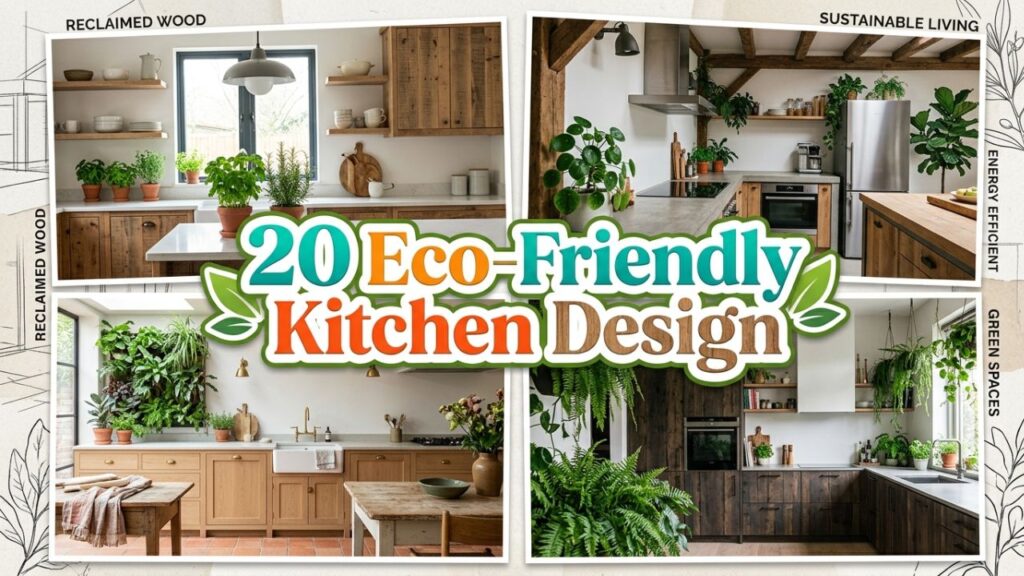
That is the heart of sustainable Kitchen design: creating a space that works well for your daily life while reducing its impact on the planet.
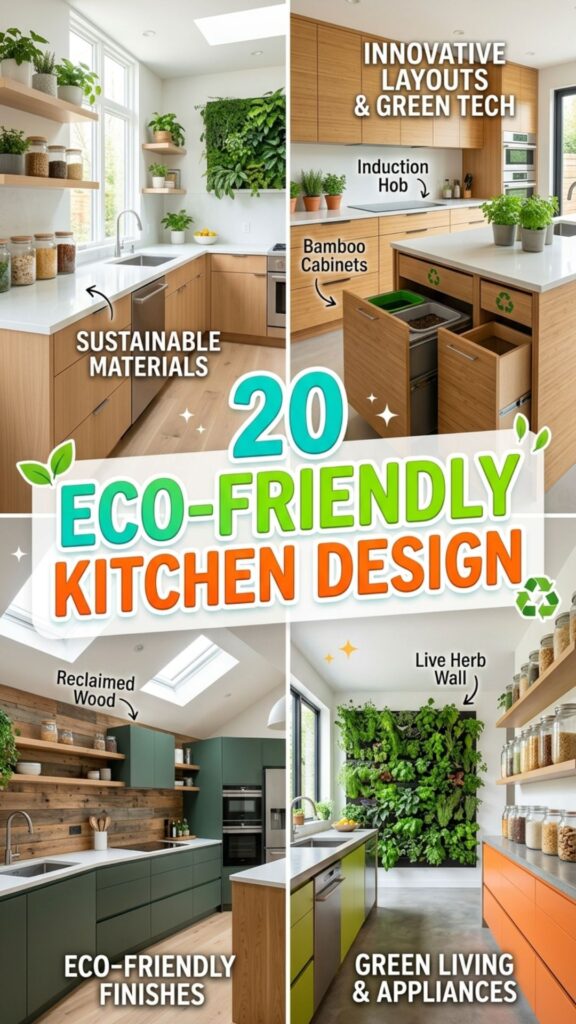
The good news is that an eco-friendly kitchen does not have to feel plain, expensive, or complicated.
You can start with small upgrades, such as LED lighting and compost storage, or plan a full remodel with reclaimed materials, efficient appliances, and durable finishes. Below are 20 practical ideas to help you design a greener, healthier, and more efficient kitchen.
1. Start Your Kitchen Design With a Smarter Layout
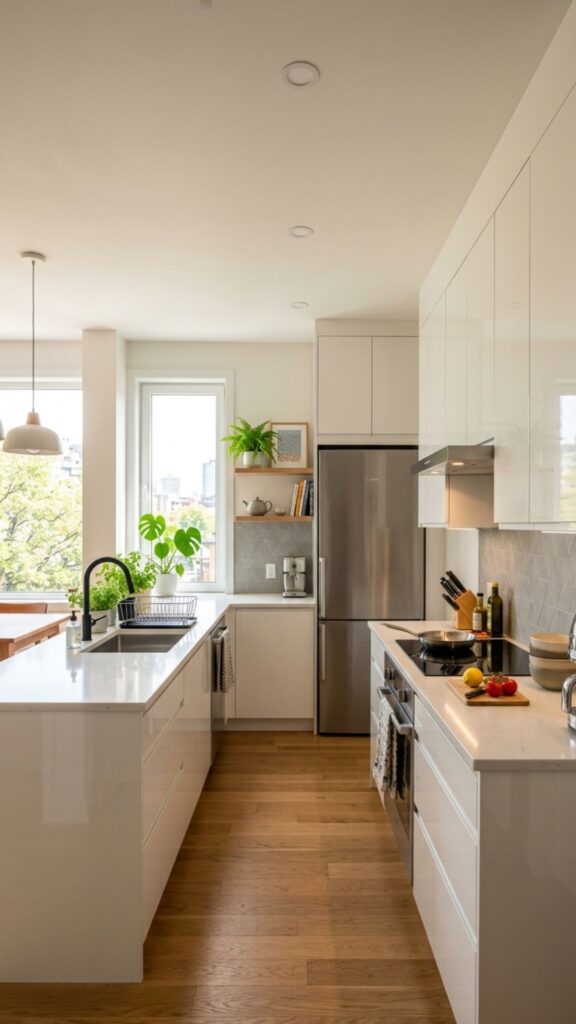
A sustainable kitchen begins with a layout that reduces wasted movement and makes cooking easier. Place your sink, stove, and refrigerator in a practical work zone so you can prep, cook, and clean without crossing the room again and again.
This approach also helps you avoid overbuilding. Instead of adding more cabinets or a larger island than you need, focus on flow, storage, and function. A compact, well-planned Kitchen design often uses fewer materials and feels better to use every day.
2. Choose Energy-Efficient Appliances
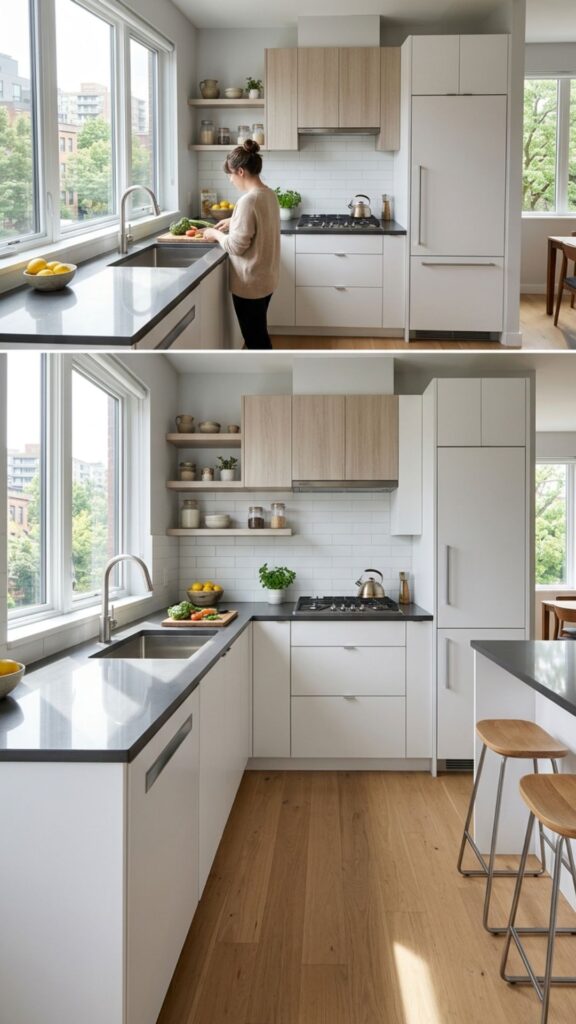
Energy-efficient appliances are one of the most useful upgrades in an eco-friendly kitchen. Look for refrigerators, dishwashers, and ovens designed to use less electricity and water without lowering performance.
If you cannot replace everything at once, start with the appliance that uses the most energy or causes the most frustration. For many homes, that is an older refrigerator. A newer model can reduce waste, keep food fresher, and support a more sustainable kitchen design.
3. Install LED Lighting Throughout the Kitchen
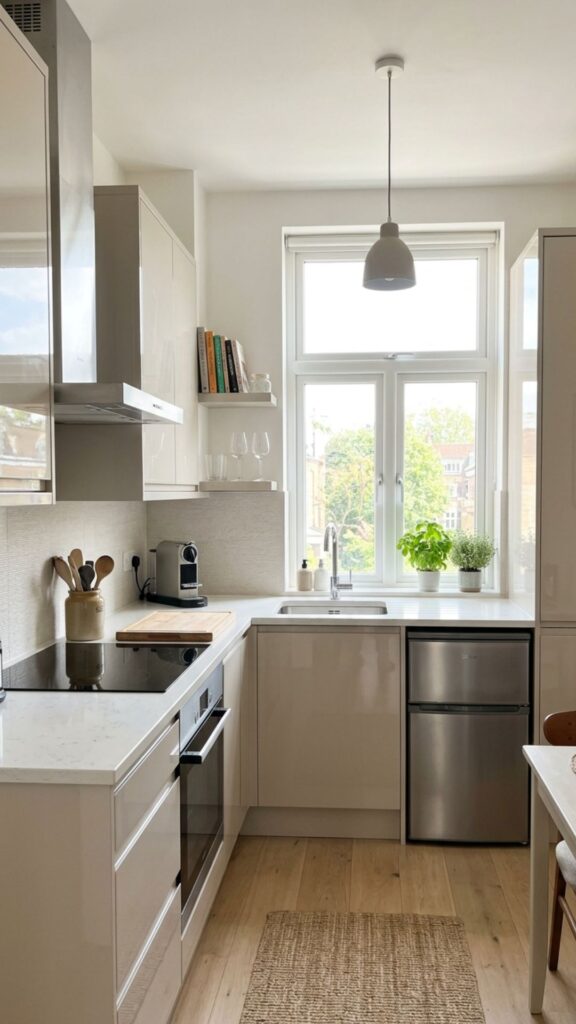
LED lighting uses far less energy than older bulbs and lasts much longer. Use it for ceiling lights, under-cabinet lighting, pendant lights, and task lighting over prep areas.
Good lighting also makes your kitchen safer and more pleasant. Warm white LEDs can create a cozy feel, while brighter task lights help with chopping, reading recipes, and cleaning. This small change can make a noticeable difference in both comfort and energy use.
4. Use Reclaimed or Salvaged Wood
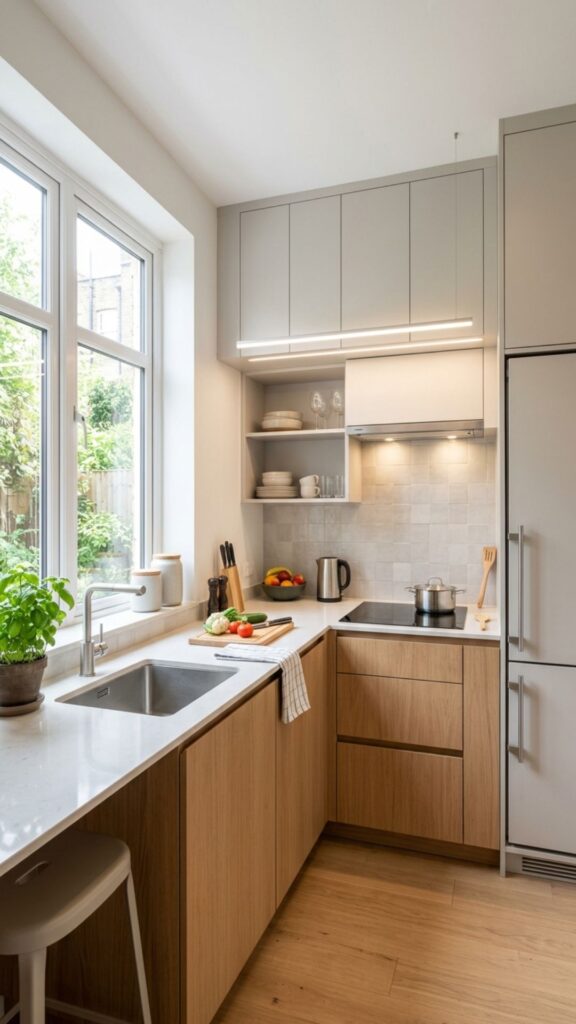
Reclaimed wood adds warmth, character, and history to a kitchen. It can be used for open shelves, cabinet fronts, ceiling beams, island panels, or a dining nook.
Because the wood has already been harvested and used before, it reduces the need for new raw materials. It also brings a natural texture that many new products try to copy. For a balanced look, pair reclaimed wood with simple counters, clean lines, and modern hardware.
5. Select Sustainable Cabinet Materials
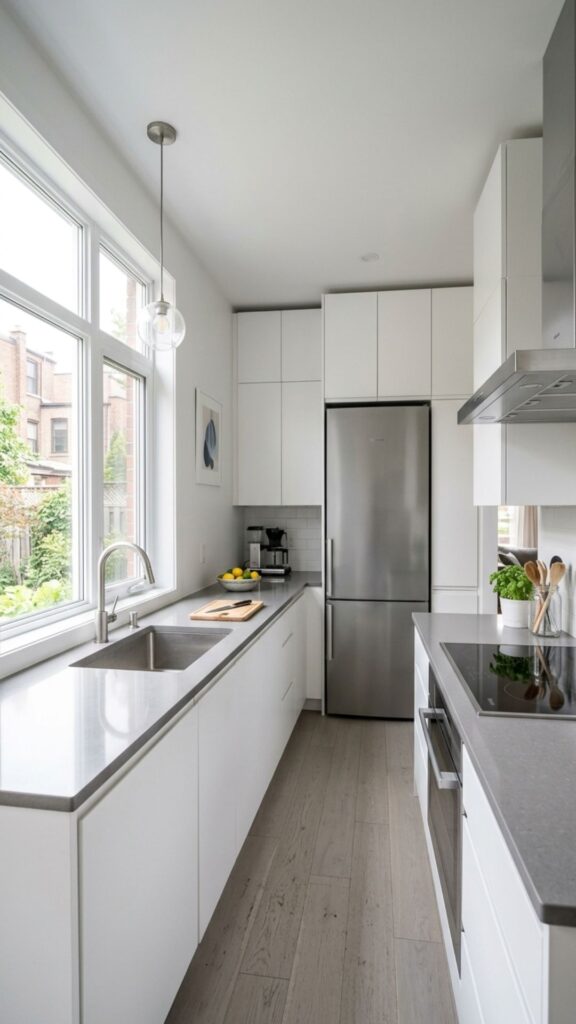
Cabinets make up a large part of most kitchens, so material choice matters. Consider cabinets made from responsibly sourced wood, bamboo, recycled wood fiber, or formaldehyde-free plywood.
Also think about durability. The greenest cabinet is often the one you do not have to replace for decades. Choose strong boxes, quality hinges, and timeless door styles that can be refinished or repainted later instead of thrown away.
6. Refinish Existing Cabinets Instead of Replacing Them
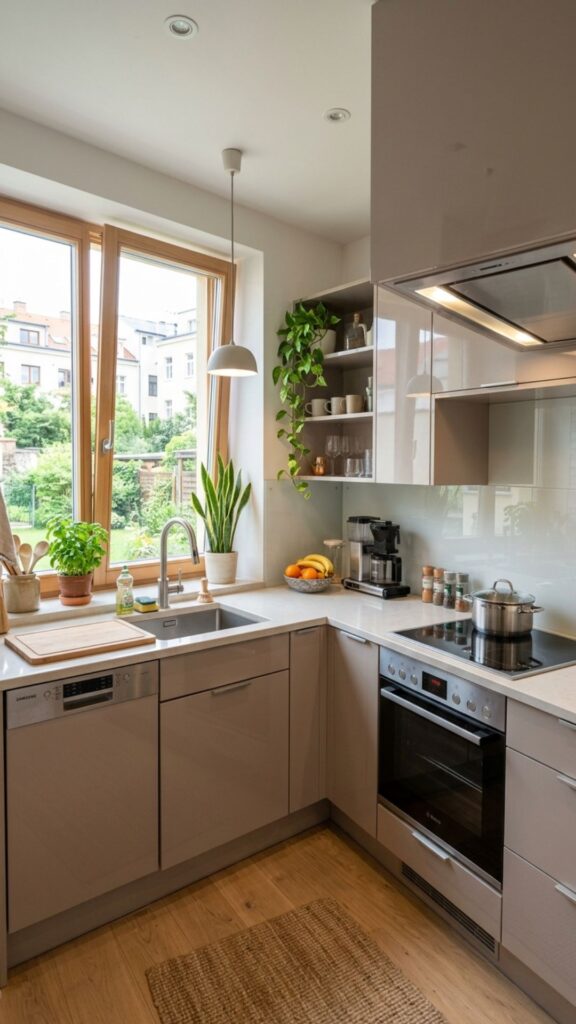
If your cabinet boxes are in good condition, refinishing can be much more sustainable than a full replacement. You can repaint, restain, reface doors, or update hardware for a fresh look.
This option saves money and keeps usable materials out of landfills. For example, white paint and brushed nickel pulls can brighten a dated kitchen, while deep green cabinets with wood knobs can create a natural, modern feel.
7. Pick Countertops Made From Recycled Materials
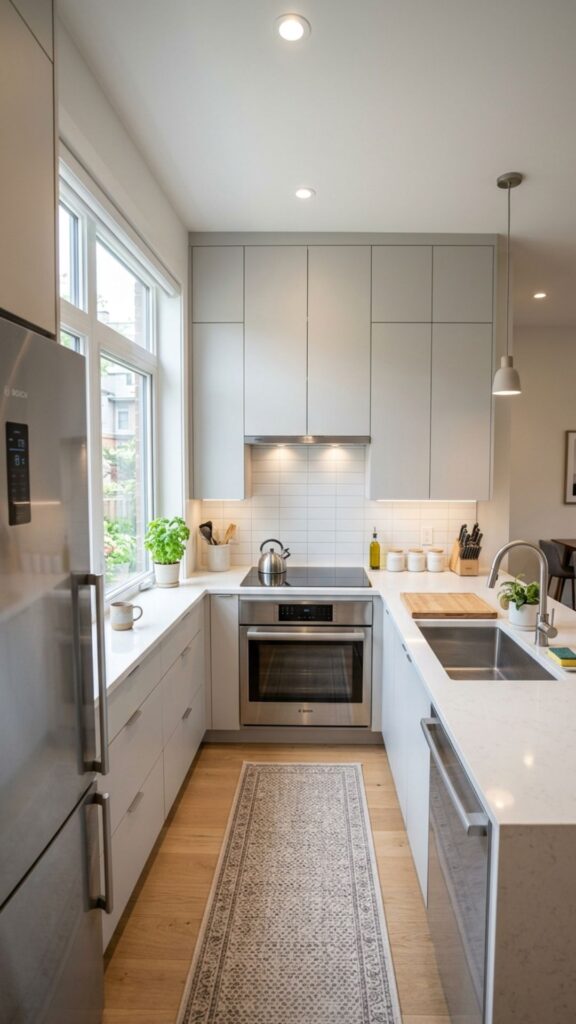
Recycled countertops can be made from glass, paper composite, reclaimed stone, or recycled porcelain. These surfaces give waste materials a second life while offering strong performance.
When choosing a countertop, compare maintenance needs as well as appearance. A durable surface that resists stains and chips can last longer, which makes it a better long-term choice for eco-conscious Kitchen design.
8. Consider Butcher Block From Responsible Sources
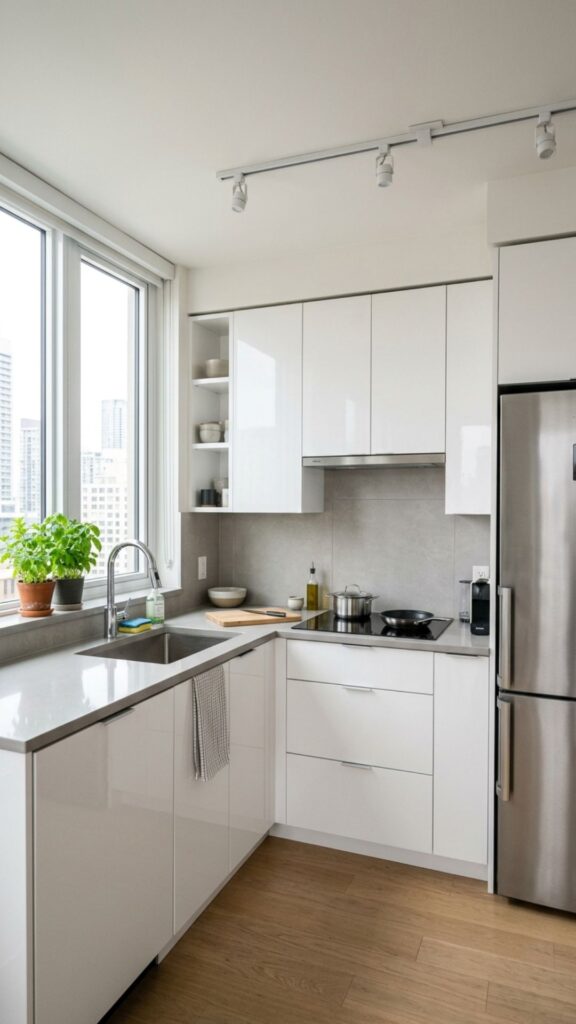
Butcher block countertops bring warmth and function to a kitchen. They work especially well on islands, baking stations, and smaller prep zones.
Choose wood from responsible sources and seal it with food-safe oils or low-VOC finishes. With regular care, butcher block can be sanded and refreshed instead of replaced, making it a practical choice for a sustainable kitchen.
9. Use Low-VOC Paints and Finishes
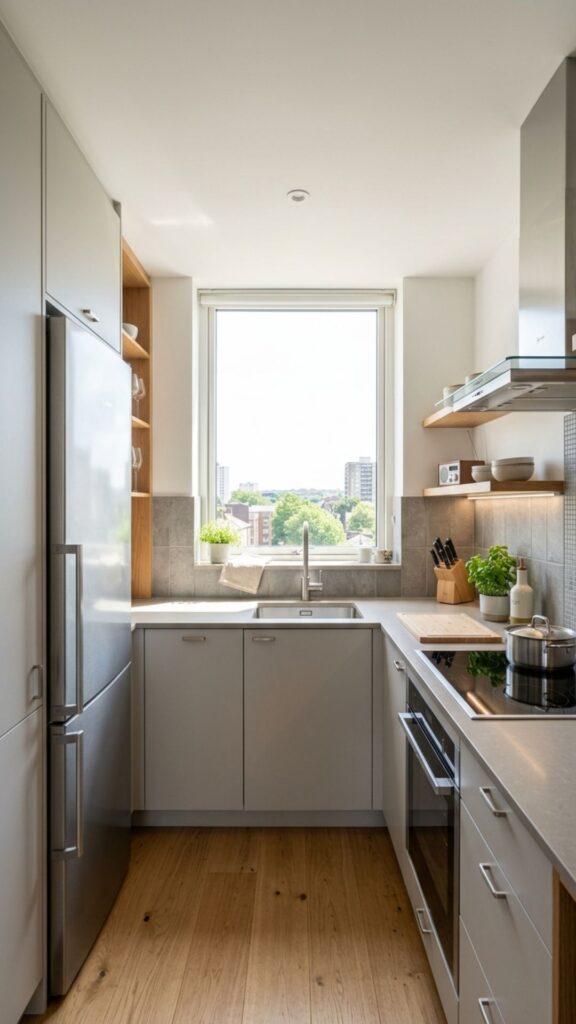
Paints, stains, sealers, and adhesives can release chemicals into the air. Low-VOC or zero-VOC products help improve indoor air quality, which is important in a space where you cook and gather.
This is especially helpful for families with children, pets, allergies, or asthma concerns. Use these finishes on walls, cabinets, trim, and furniture to create a healthier kitchen environment.
10. Add a Water-Saving Faucet
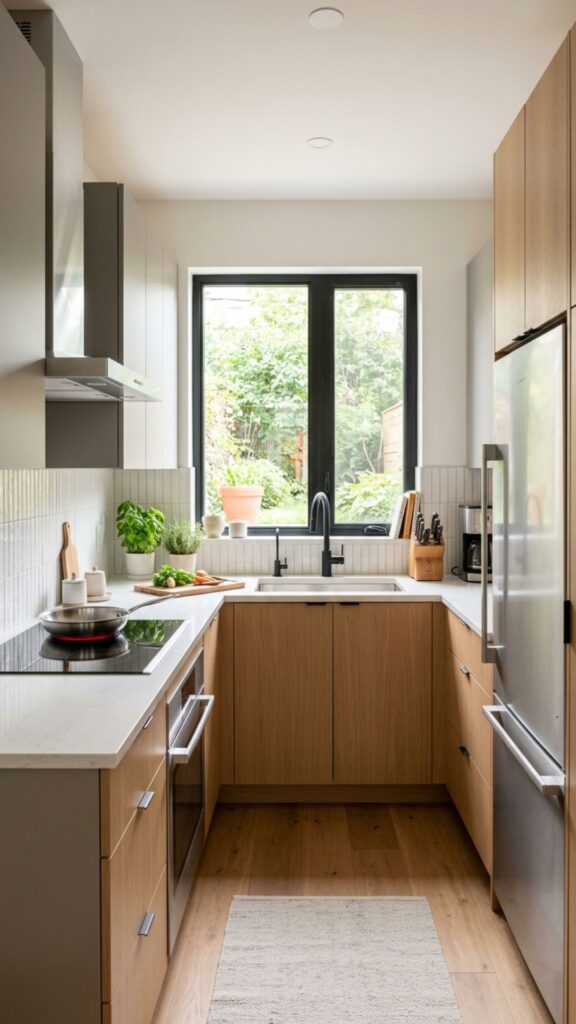
A water-saving faucet reduces water use without making everyday tasks harder. Look for aerators, efficient flow rates, and durable handles that are easy to repair.
Touchless or single-handle faucets can also prevent waste because they make it easier to turn water on and off while cooking. If your current faucet works well, you can often add an aerator as a quick, low-cost upgrade.
11. Choose an Efficient Dishwasher
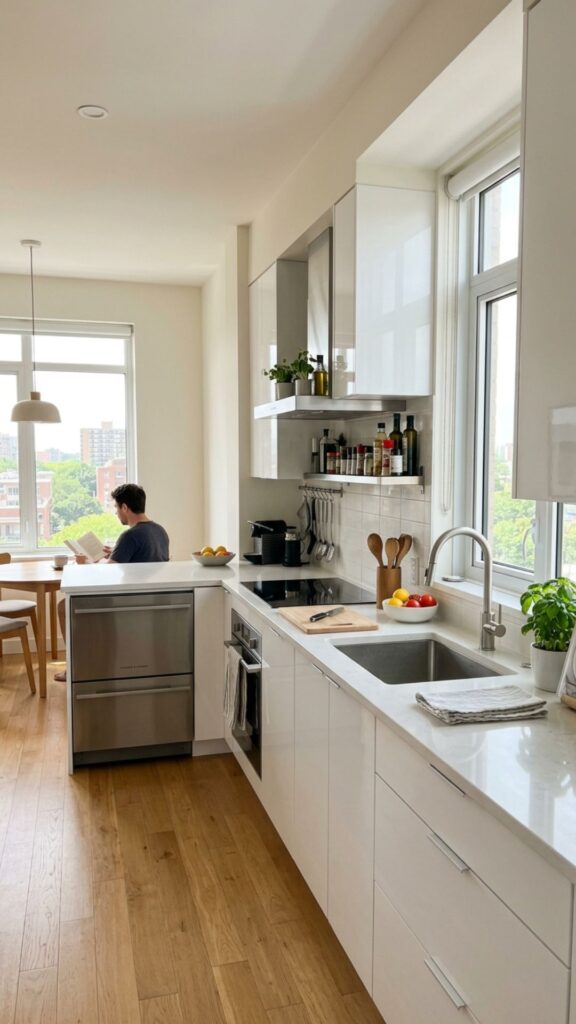
Modern efficient dishwashers often use less water than handwashing, especially when run with full loads. Select a model with eco settings and soil sensors to reduce unnecessary water and energy use.
To get the best results, scrape plates instead of pre-rinsing them. This simple habit saves water and lets the machine do its job. It is a small routine change with a real impact over time.
12. Design Storage That Reduces Food Waste
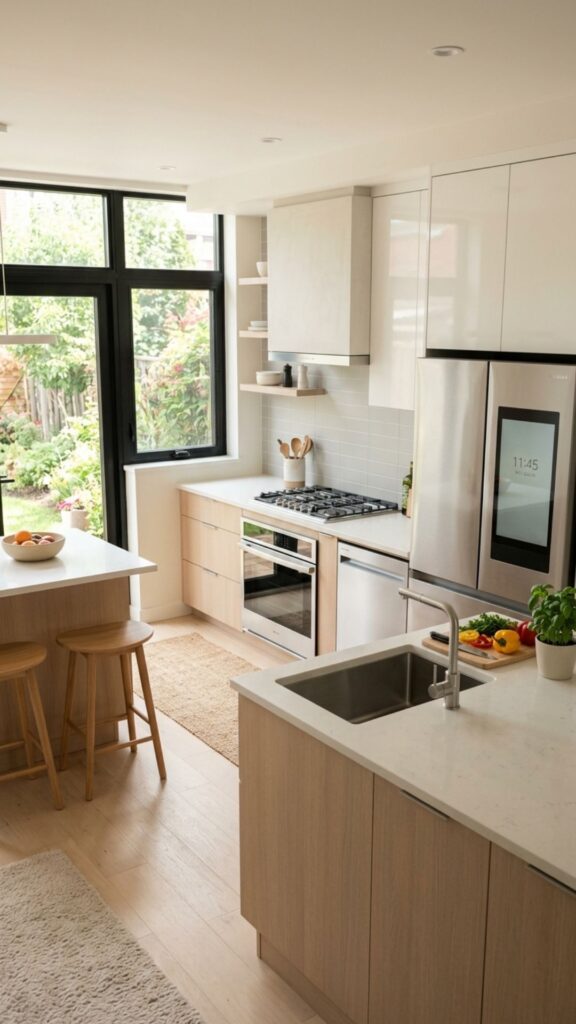
Good storage helps you see what you have before food expires. Use pull-out shelves, clear containers, labeled bins, and dedicated zones for grains, snacks, spices, and produce.
A thoughtful storage plan is a key part of sustainable Kitchen design. When ingredients are easy to find, you buy fewer duplicates and throw away less food. Even a small pantry can work well with the right shelves and baskets.
13. Create a Built-In Recycling Station
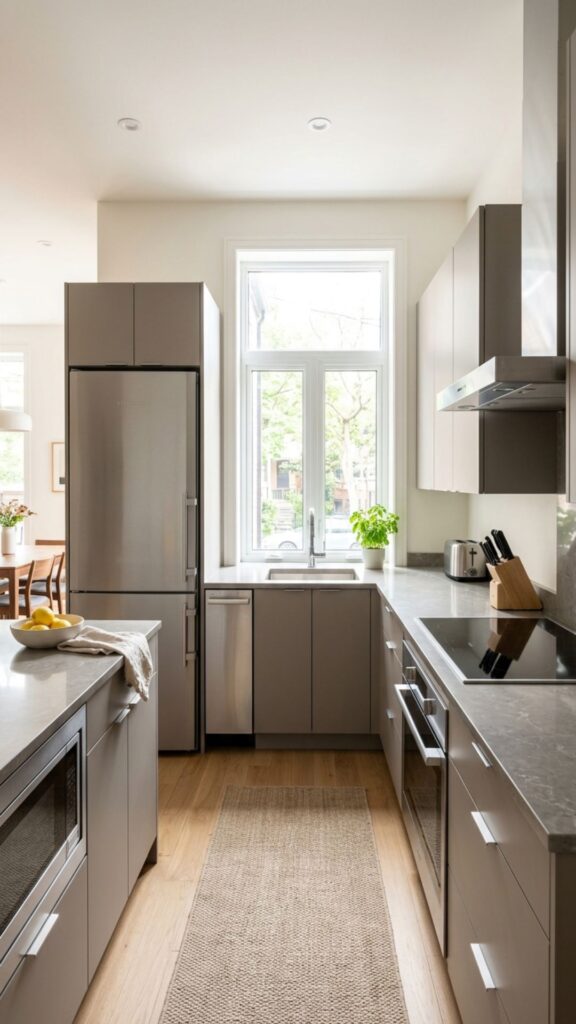
Recycling is easier when the system is simple. Add pull-out bins for paper, glass, plastic, and metal near the sink or prep area, where most packaging is handled.
If you have limited cabinet space, use slim bins or stackable containers in a pantry or mudroom. The goal is to make recycling feel like part of your normal kitchen routine, not an extra chore.
14. Plan a Composting Zone
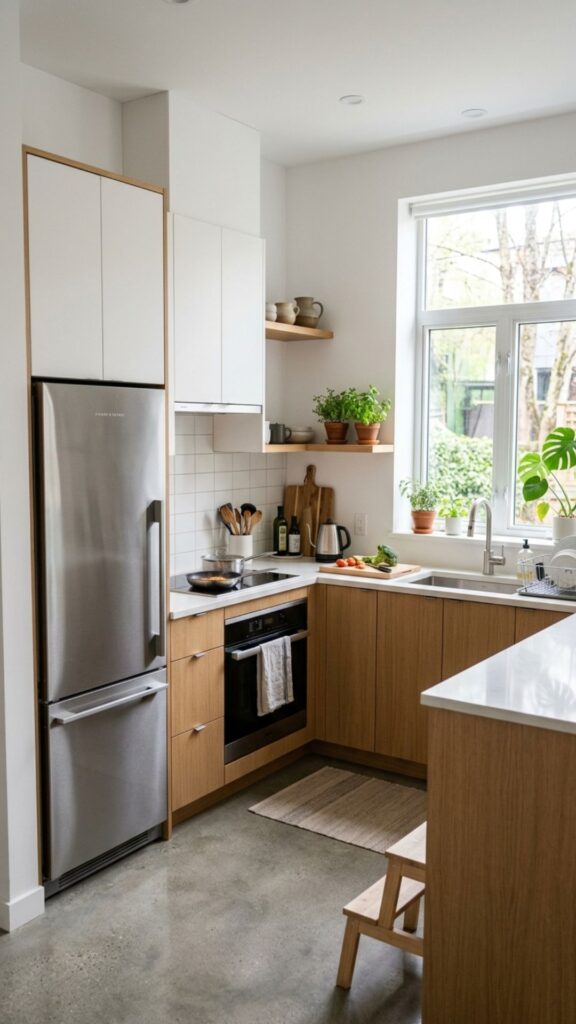
Composting keeps food scraps out of the trash and turns them into something useful. You can use a small countertop bin, an under-sink container, or a pull-out compost drawer.
Choose a bin with a lid and charcoal filter to control odor. If you do not have a garden, check for local compost pickup or drop-off options. Even coffee grounds, vegetable peels, and eggshells can add up quickly.
15. Bring in Natural Light
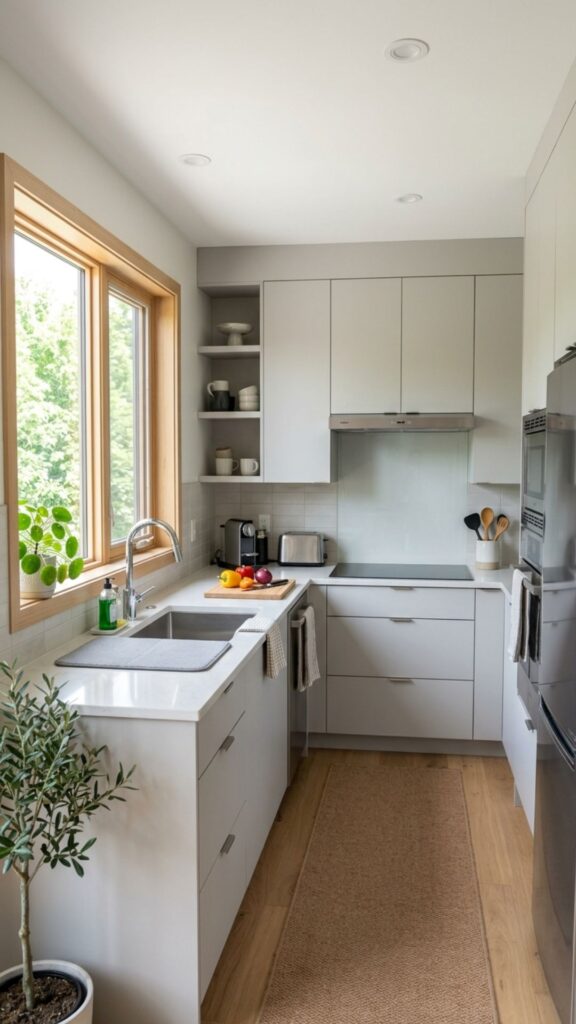
Natural light makes a kitchen feel larger, warmer, and more inviting. It can also reduce the need for electric lights during the day.
If you are remodeling, consider larger windows, glass doors, skylights, or a solar tube. For smaller updates, use light wall colors, reflective backsplashes, and simple window treatments that let daylight in.
16. Use Durable Flooring With a Lower Impact
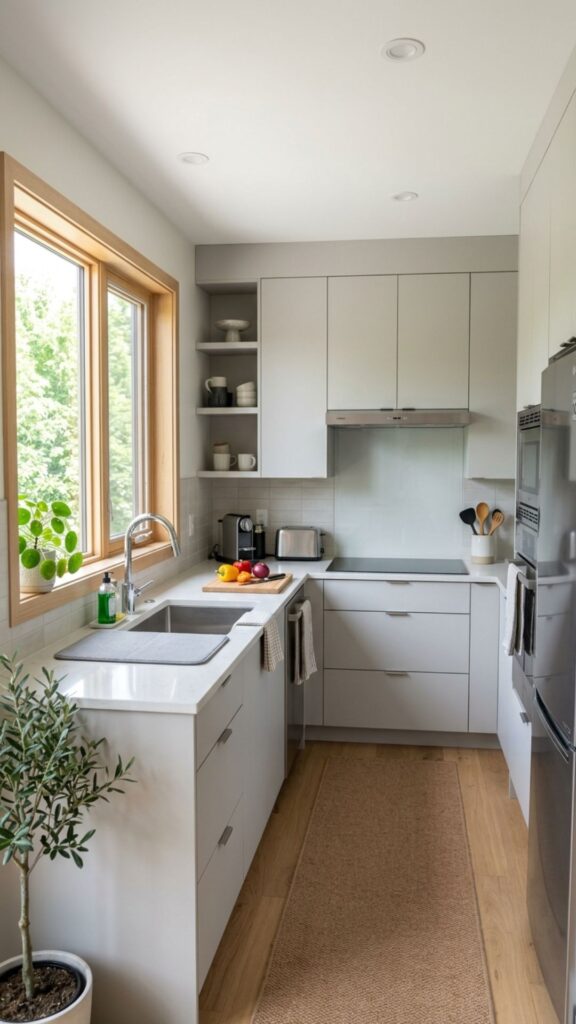
Kitchen floors need to handle spills, foot traffic, and daily cleaning. Sustainable options include cork, bamboo, reclaimed wood, linoleum, and recycled tile.
Think about comfort as well as durability. Cork feels softer underfoot, while tile can be long-lasting and easy to clean. The best choice depends on your household, budget, and maintenance style.
17. Choose a Timeless Style Over Fast Trends
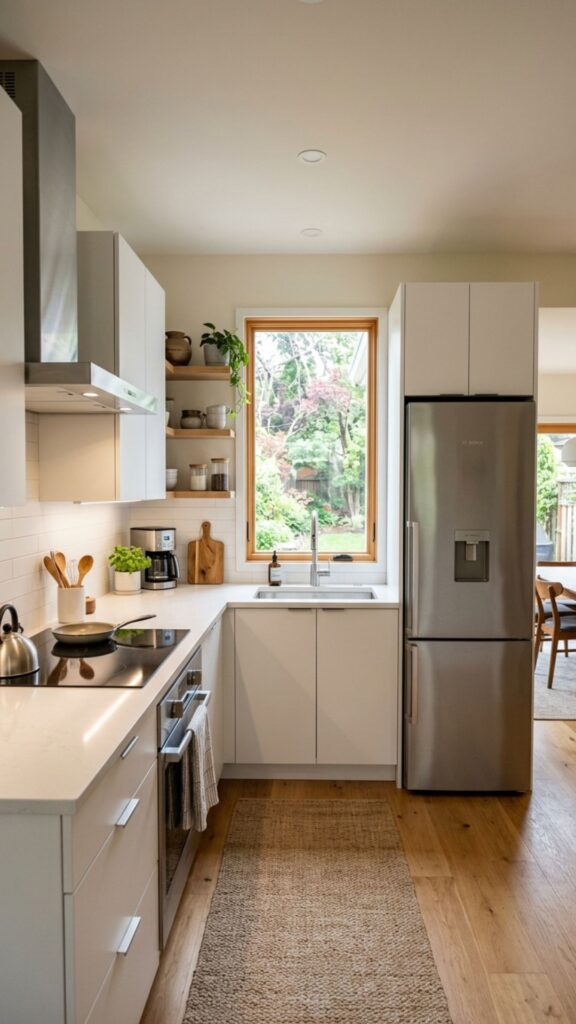
Trendy finishes can look dated quickly, which may lead to more remodeling and waste. A timeless kitchen uses simple shapes, balanced colors, and materials that age well.
You can still add personality through easy-to-change details like stools, rugs, art, and cabinet hardware. This keeps your Kitchen design flexible without requiring major updates every few years.
18. Add Plants and Natural Elements
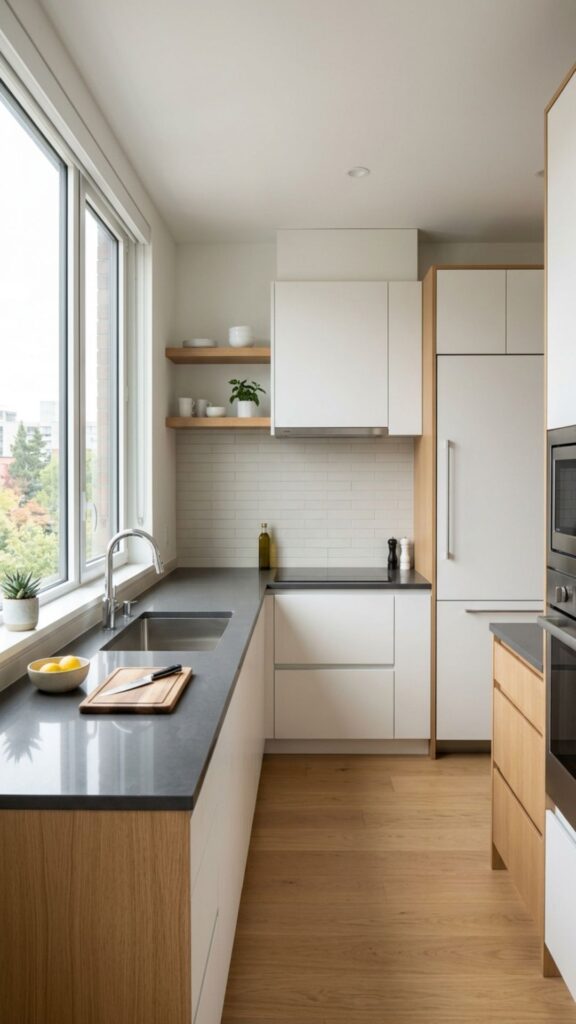
Plants can soften hard surfaces and make the kitchen feel more alive. Herbs such as basil, mint, rosemary, and parsley are especially useful because you can cook with them.
Place herbs near a sunny window or use a small grow light if needed. You can also bring in natural textures through woven baskets, wood bowls, stoneware, and linen towels.
19. Buy Local and Long-Lasting Materials When Possible
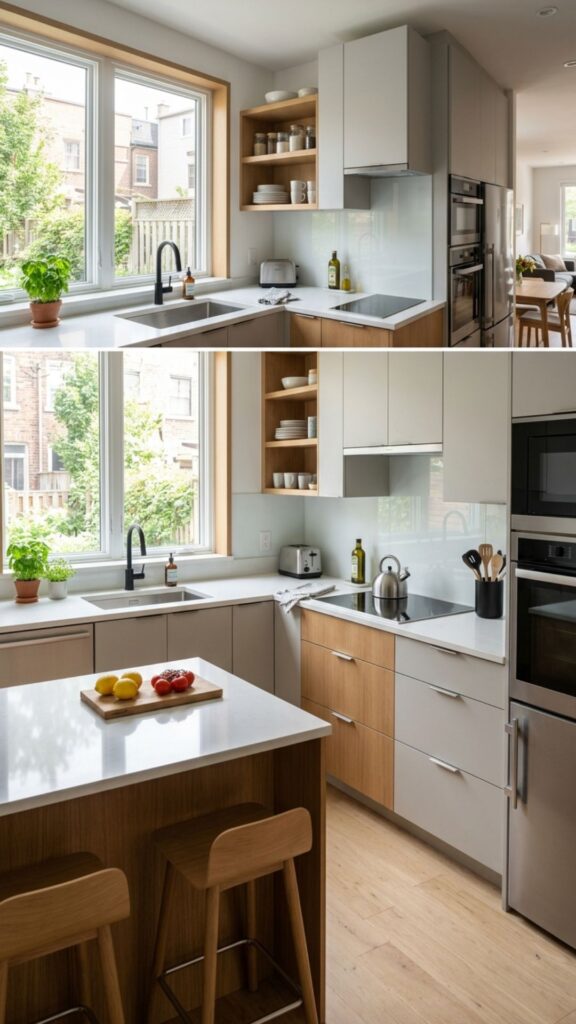
Local materials often require less transportation and can support nearby makers. This may include locally made cabinets, handmade tiles, regional stone, or custom woodwork.
Long-lasting materials also reduce waste. Before buying, ask how the product should be maintained, whether it can be repaired, and how it will age. A slightly higher upfront cost may be worth it if the material lasts for decades.
20. Upgrade in Phases Instead of Wasting What Works
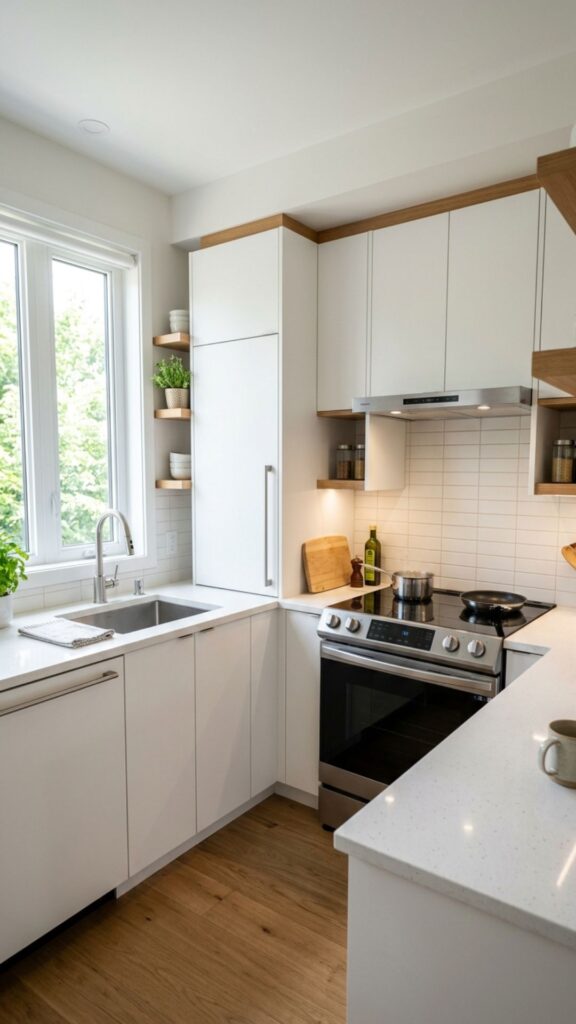
You do not need to remodel your whole kitchen to make it greener. In many cases, the most sustainable choice is to keep what still works and improve the rest over time.
Start with high-impact updates: efficient lighting, better storage, water-saving fixtures, and low-VOC paint. Then plan larger changes, such as appliances, counters, or flooring, when your budget and timing make sense.
Eco-Friendly Kitchen Design Checklist
Use this quick checklist to plan your project:
- Keep usable cabinets, flooring, or fixtures when possible.
- Choose efficient appliances and LED lighting.
- Add recycling and composting zones.
- Use low-VOC paints, sealers, and adhesives.
- Select durable materials that can be repaired or refreshed.
- Plan storage that helps reduce food waste.
- Favor timeless design over short-lived trends.
Conclusion: Build a Kitchen That Works Better and Wastes Less
Eco-friendly Kitchen design is not about perfection. It is about making smarter choices that improve your home, reduce waste, and support healthier daily living. A sustainable kitchen can be stylish, practical, and comfortable when you focus on efficient systems, durable materials, and thoughtful details.
Start with one change you can make this week, such as switching to LED bulbs, adding a compost bin, or organizing your pantry to reduce food waste. If you are planning a remodel, use these 20 ideas as a roadmap for a kitchen that looks good, works hard, and lasts.