Most kitchen islands play it safe. They match the cabinets, blend into the backsplash, and fade into the background. But your kitchen doesn’t have to look like everyone else’s. An eclectic island breaks the rules on purpose, mixing colors, textures, and eras to create something that feels alive.
I’ve spent years helping homeowners rethink their kitchens, and the ones people love most are almost never the “perfectly matched” designs. They’re the bold ones. Below, you’ll find 20 eclectic kitchen island ideas that add character without turning your space into a mess. Expect practical tips, real materials, and specific looks you can actually pull off.
Here’s what you’ll get: color and pattern tricks, material mixing, budget-friendly hacks, and styling details that tie everything together.
1. Paint It a Bold, Unexpected Color
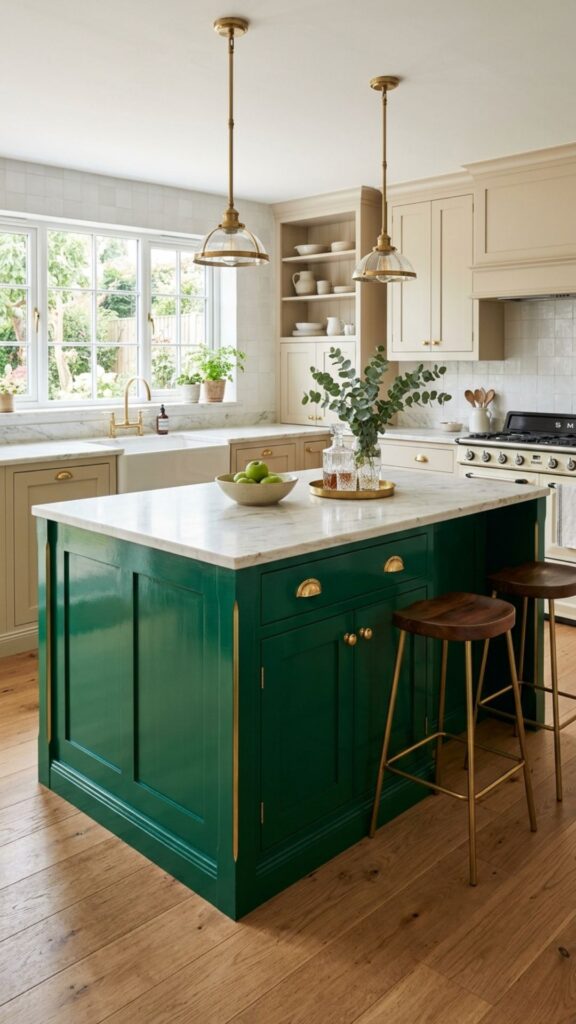
Nothing shifts a kitchen’s mood faster than a fearless paint choice. While your cabinets stay neutral, your island can go deep emerald, mustard yellow, or a moody navy. This contrast draws the eye and instantly signals that your kitchen has a point of view.
If you’re nervous about commitment, test a swatch on a large piece of cardboard first. Live with it for a few days. Colors like terracotta or forest green pair beautifully with brass hardware and wood countertops, giving you that layered, collected-over-time feel.
2. Mix Wood Tones on Purpose
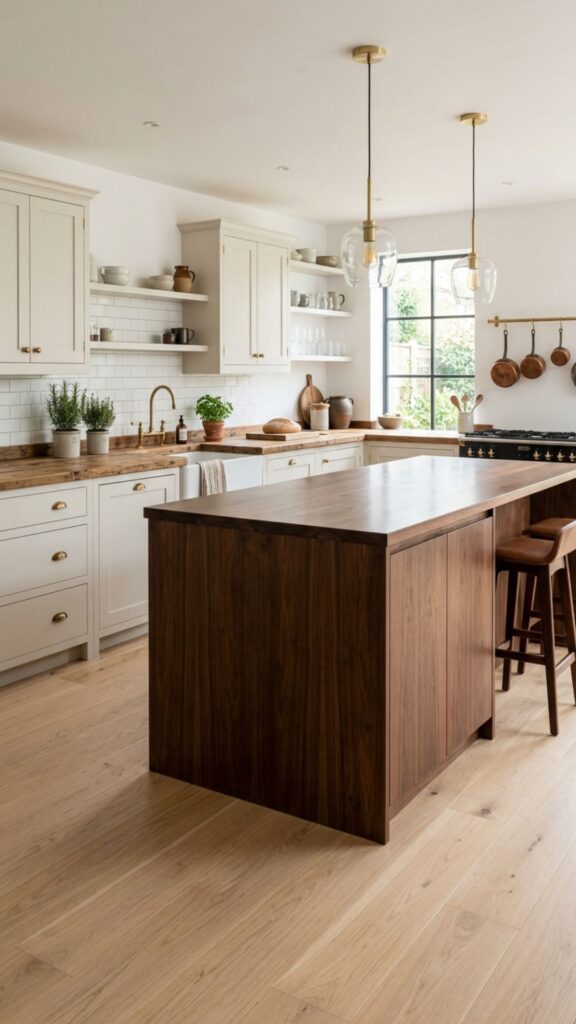
Matching every wood surface can look flat. Instead, pair a walnut island base with lighter oak floors or a reclaimed pine top. The clash reads as intentional and warm rather than accidental.
Aim for two or three tones and repeat each one somewhere else in the room. A dark island echoed by a dark shelf or picture frame keeps the whole space cohesive while still feeling relaxed and personal.
3. Add a Vintage Furniture Piece
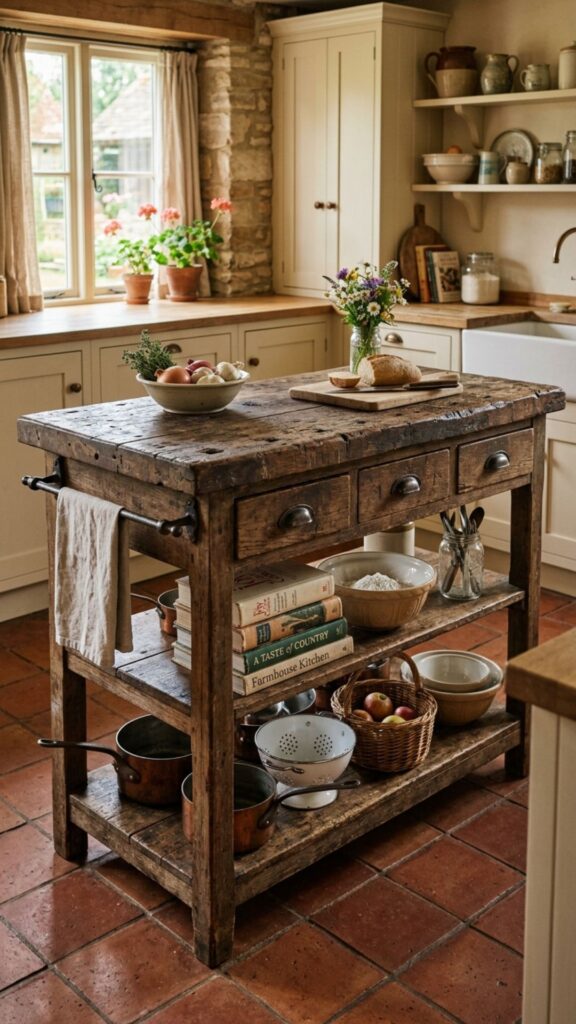
One of my favorite tricks is turning an antique table, dresser, or workbench into an island. These pieces bring history and craftsmanship that new cabinetry rarely matches. A worn farmhouse table becomes a conversation starter instantly.
Look for solid wood items at flea markets or estate sales. You may need to reinforce the top or add casters, but the payoff is a one-of-a-kind centerpiece. Seal the surface if you’ll use it for food prep.
4. Top It With Reclaimed Wood
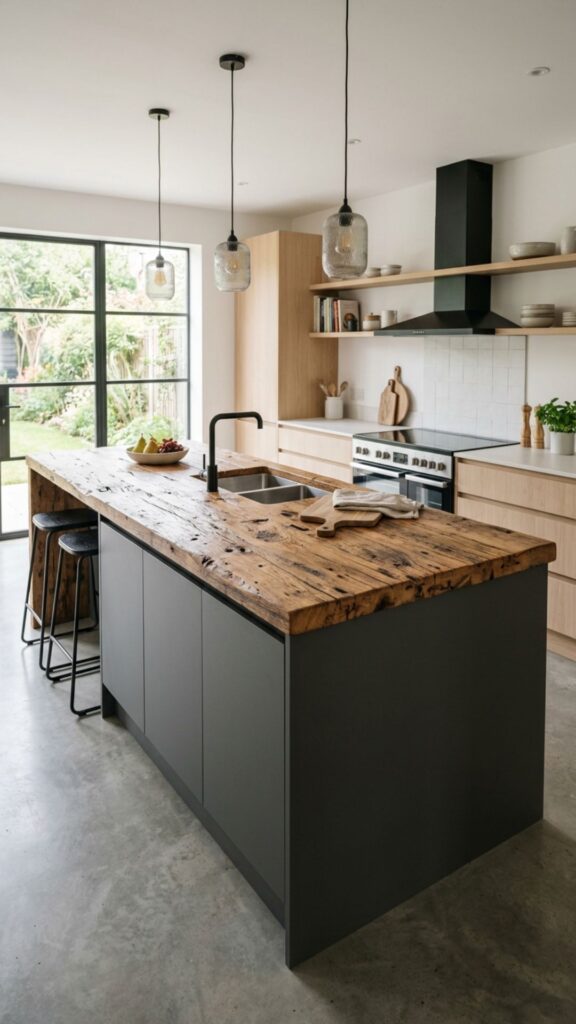
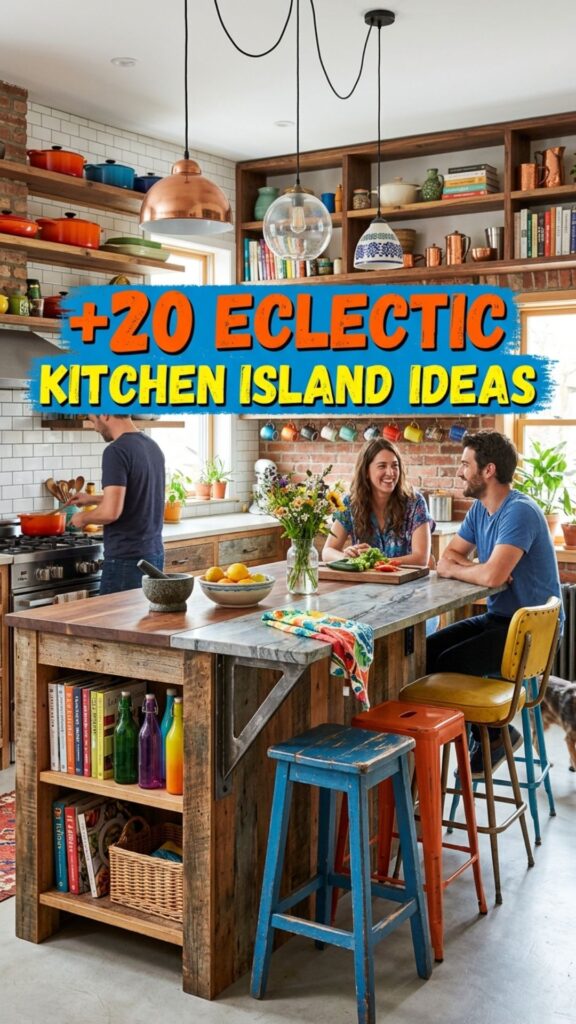
A reclaimed wood countertop adds texture, warmth, and a story. Barn wood, old bowling lanes, and salvaged flooring all make striking island tops. The variation in grain and color gives the piece real depth.
Have the wood professionally sealed with a food-safe finish so it holds up to spills. Pair it with a sleek stone waterfall on a second island or a modern sink for a satisfying old-meets-new contrast.
5. Go Bold With Patterned Tile
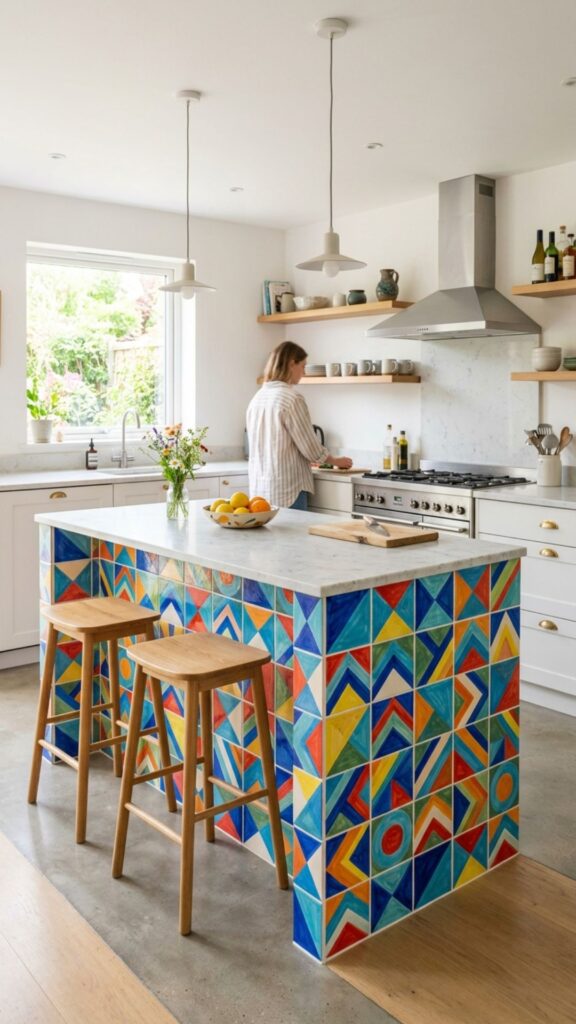
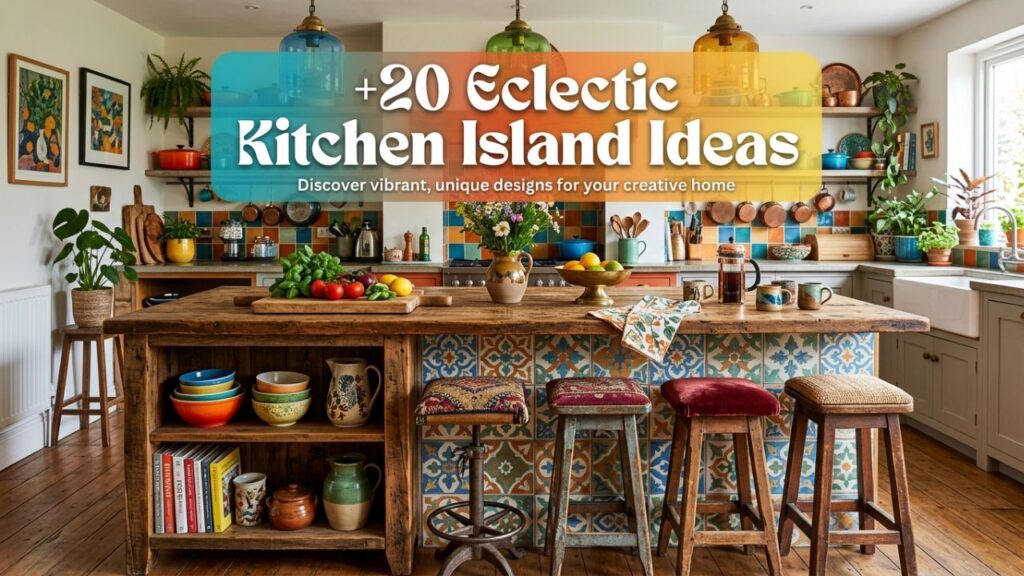
Cover your island’s sides or countertop with hand-painted tile for a punch of personality. Moroccan zellige, Portuguese azulejos, or graphic cement tiles all bring color and pattern that feel artisanal and lively.
Keep the surrounding surfaces simple so the tile stays the star. Even a small strip of patterned tile along the base can transform a plain island into something you’ll want to show off.
6. Mix Metals for Hardware and Fixtures
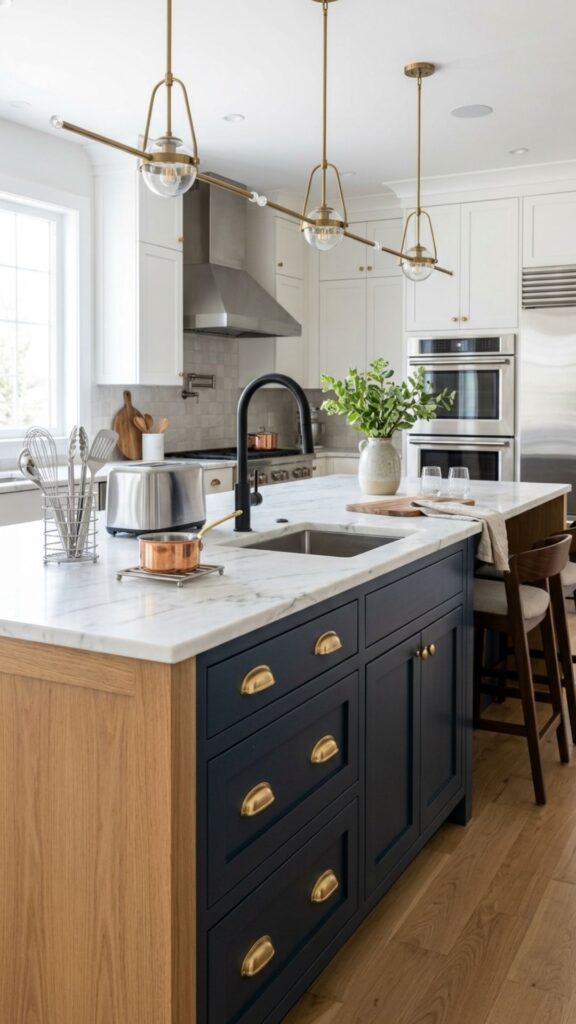
Forget the rule that all metals must match. Combining brass pulls, black faucets, and stainless steel appliances creates a layered, gathered look that feels rich and intentional.
Stick to two or three metals and repeat them across the room. A brass pendant above the island tied to brass drawer pulls below keeps the mix feeling planned rather than chaotic.
7. Install a Statement Pendant Trio
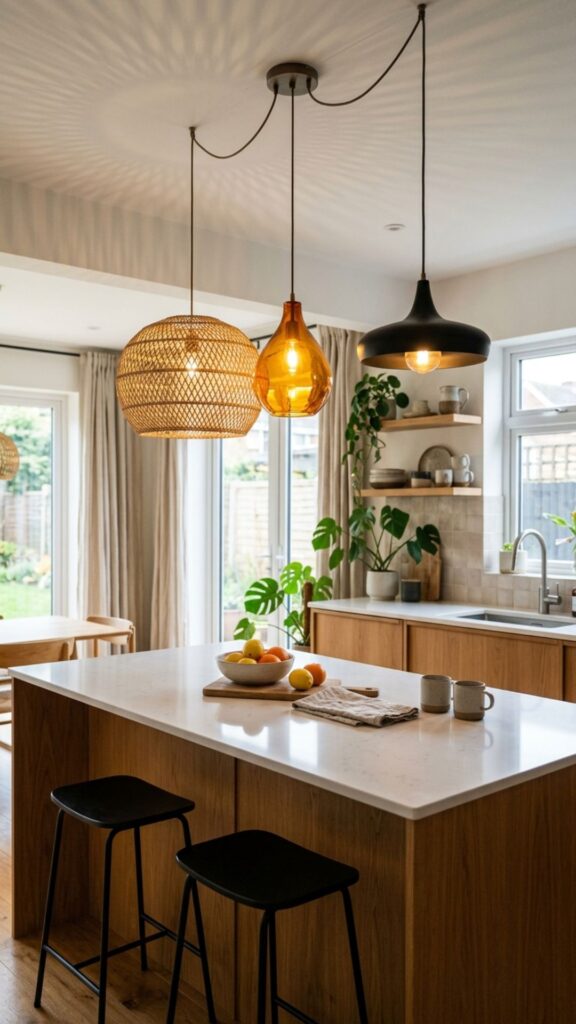
Lighting sets the tone, and mismatched pendants add instant charm. Try three pendants in different shapes but a shared color, or the same shape in three finishes. The rhythm keeps things playful yet balanced.
Hang them about 30 to 36 inches above the counter. Woven rattan, colored glass, or industrial metal shades all bring texture that reinforces your eclectic direction.
8. Combine Open Shelving and Closed Storage
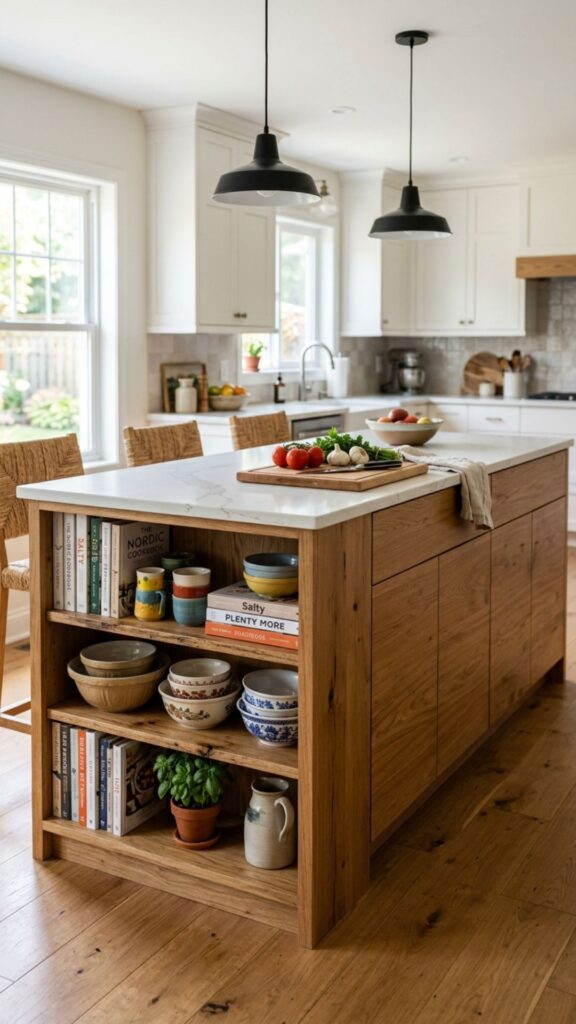
An island that mixes open shelves with cabinets feels lived-in and functional. Use the open sections to display cookbooks, ceramics, or a collection of vintage bowls, and hide the clutter behind doors.
This blend gives you styling opportunities while keeping practical storage. Rotate your displayed items seasonally to keep the look fresh without any renovation.
9. Use a Waterfall Countertop in Marble or Quartzite
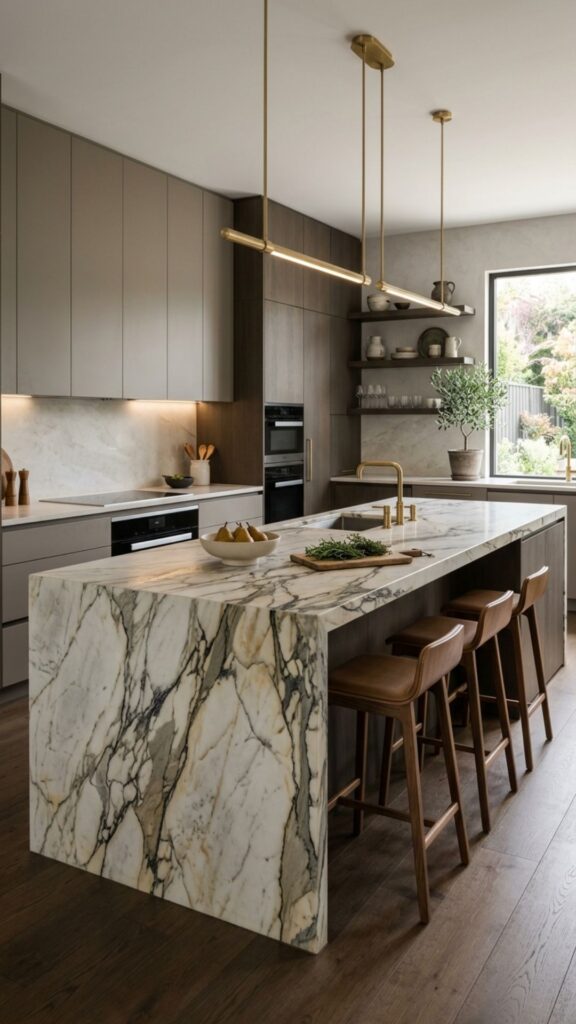
For a touch of drama, run your countertop down the sides of the island in a continuous slab. Dramatic veining in marble or quartzite turns the island into a sculptural focal point.
Balance this luxe surface with rougher, more casual elements elsewhere, like a rattan stool or a weathered wood shelf. The contrast keeps the space from feeling too polished.
10. Layer in Rattan or Cane Details
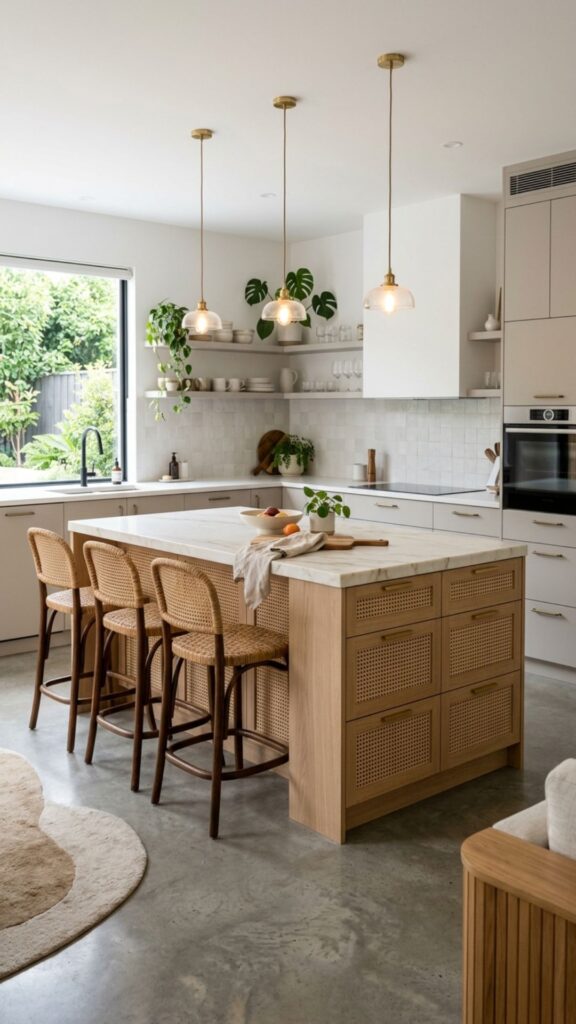
Woven textures soften a kitchen and add a relaxed, global feel. Cane inserts on cabinet doors or rattan bar stools bring an organic warmth that plays well against stone and metal.
These natural materials are budget-friendly and easy to swap. A couple of woven stools tucked under the island can instantly shift the mood toward eclectic and inviting.
11. Choose a Rustic Butcher Block Top
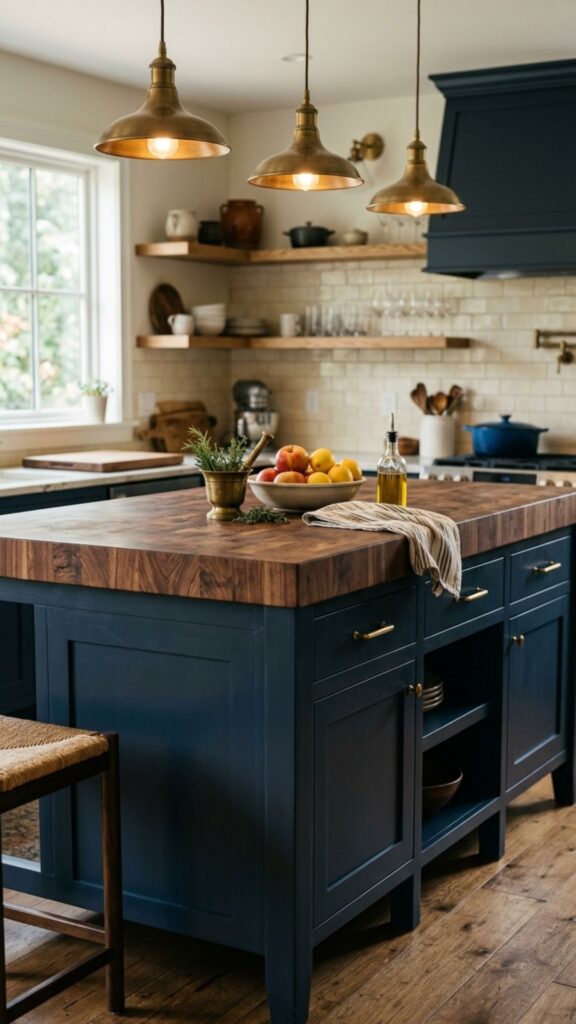
Butcher block is practical and full of character. Its warm grain contrasts beautifully with painted bases and stone floors, and it doubles as a chopping surface.
Oil it regularly to keep it healthy and stain-resistant. Pair a chunky maple or walnut block with a moody painted base for a look that feels both functional and full of personality.
12. Add a Pop of Color With Bar Stools
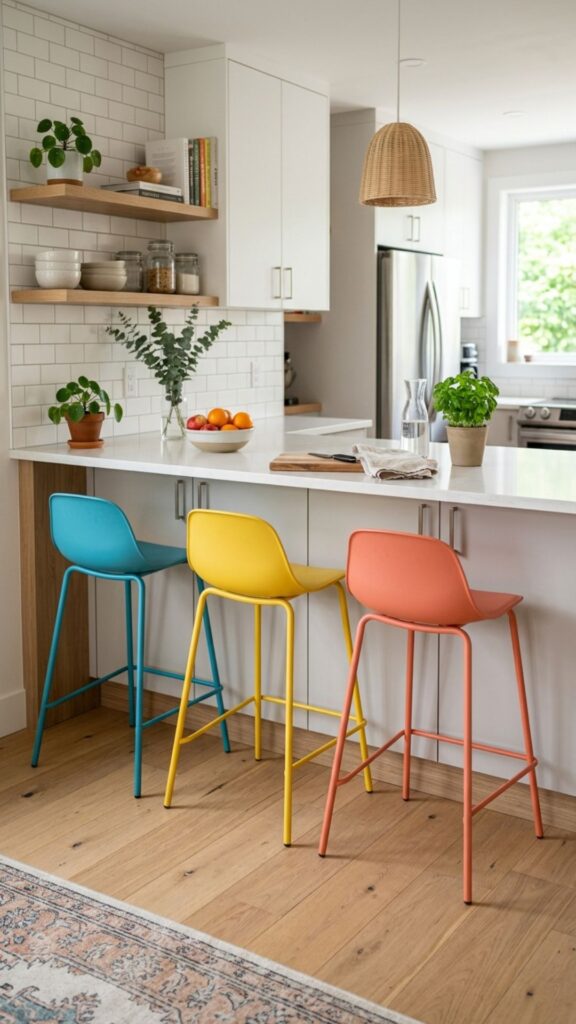
Sometimes the island itself stays simple, and the stools do the talking. Bright velvet seats, mismatched vintage chairs, or bold enameled metal stools inject energy without a full renovation.
Try three stools in slightly different but coordinated colors. This small swap is affordable and easy to change when your taste evolves, making it a low-risk way to experiment.
13. Blend Modern and Farmhouse Styles
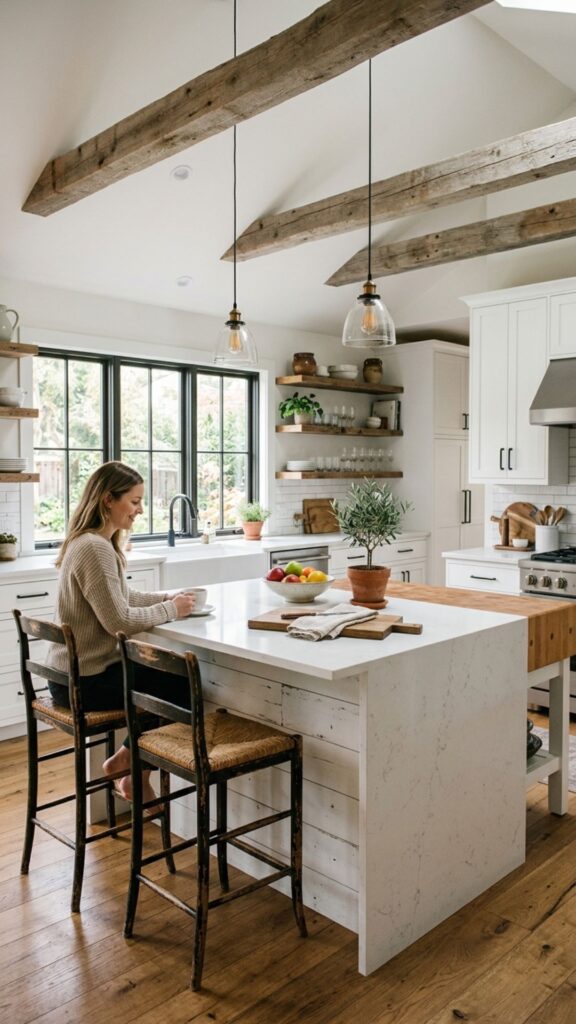
Eclectic design thrives on unexpected pairings. Combine a sleek quartz top with a rustic shiplap base, or a modern faucet with a distressed wood island. The tension between styles creates interest.
Repeat one connecting element to unify the look, like matching your faucet finish to your light fixtures. This keeps the mix feeling curated instead of confused.
14. Incorporate a Built-In Bookshelf or Wine Rack
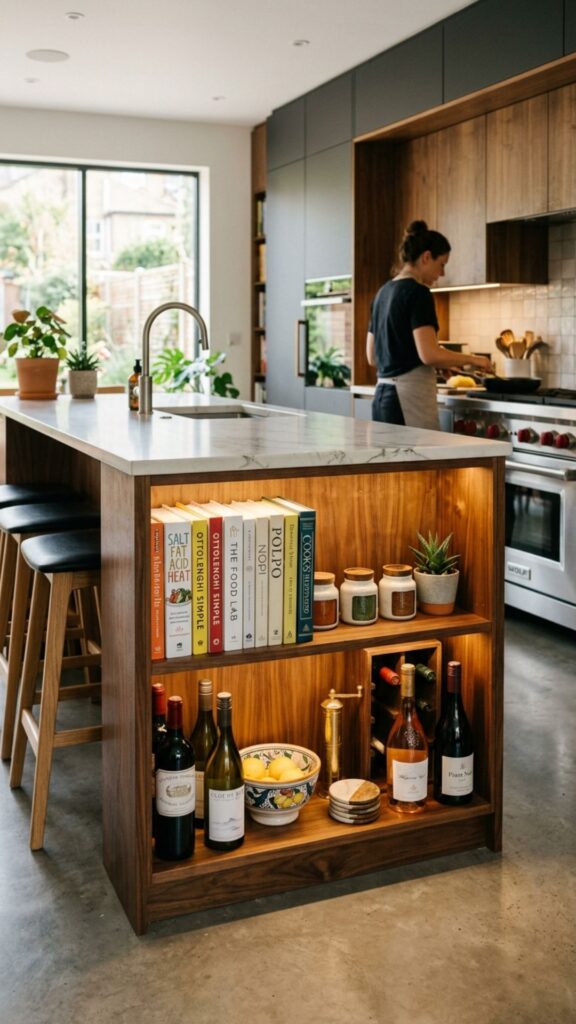
Turn the end of your island into a display for cookbooks, wine bottles, or curated objects. This detail adds function and instantly makes the island feel more personal and collected.
Angle the shelf toward the seating area so guests can browse while you cook. It’s a simple carpentry addition that pays off in charm and daily usability.
15. Try a Two-Tone Island Base
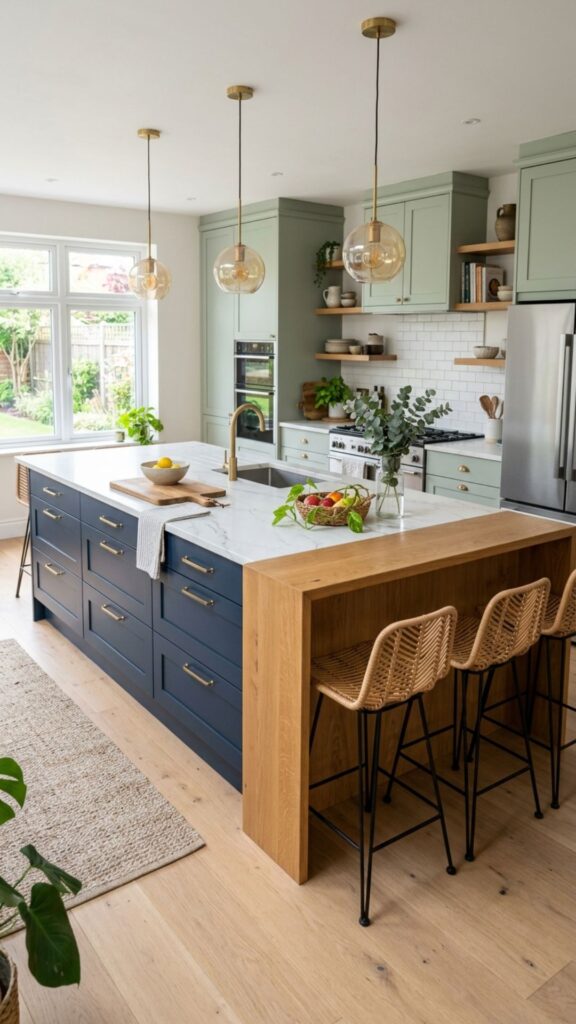
Paint the drawers one color and the cabinets another, or use a contrasting color on just the seating side. This subtle trick adds depth and keeps the island from looking like one solid block.
Choose tones from the same family for a soft effect, or go high-contrast for drama. Either way, it’s an inexpensive way to introduce personality with just a couple of paint cans.
16. Mix in Antique Brass or Copper Accents
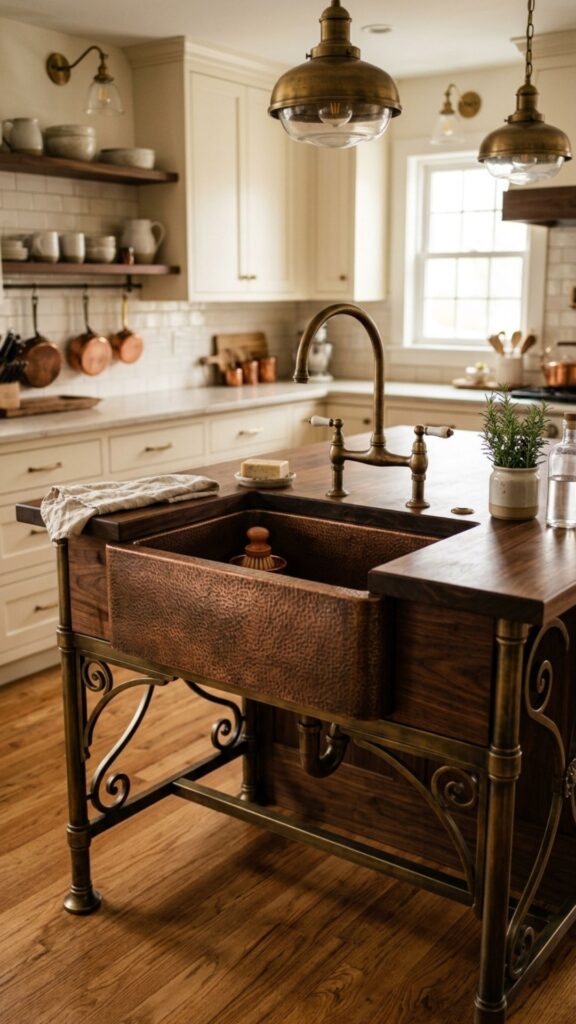
Warm metals age beautifully and lend instant character. A hammered copper sink, antique brass legs, or a vintage faucet gives your island a soulful, timeworn quality.
Let these metals patina naturally instead of polishing them constantly. The living finish deepens over time and reinforces that gathered-over-years feeling eclectic kitchens do so well.
17. Add Curved or Rounded Edges
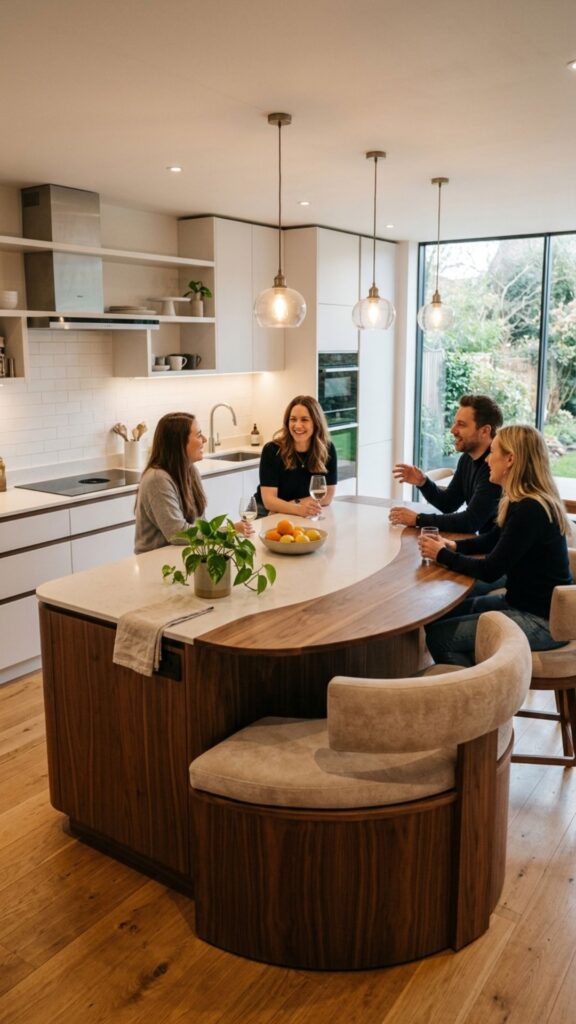
Break away from boxy islands with a rounded end or a fully curved shape. Soft edges feel welcoming, improve traffic flow, and stand out in a room full of straight lines.
A curved seating area invites people to gather and chat. Pair the shape with a contrasting countertop material to emphasize its unusual silhouette.
18. Use Salvaged Doors or Panels
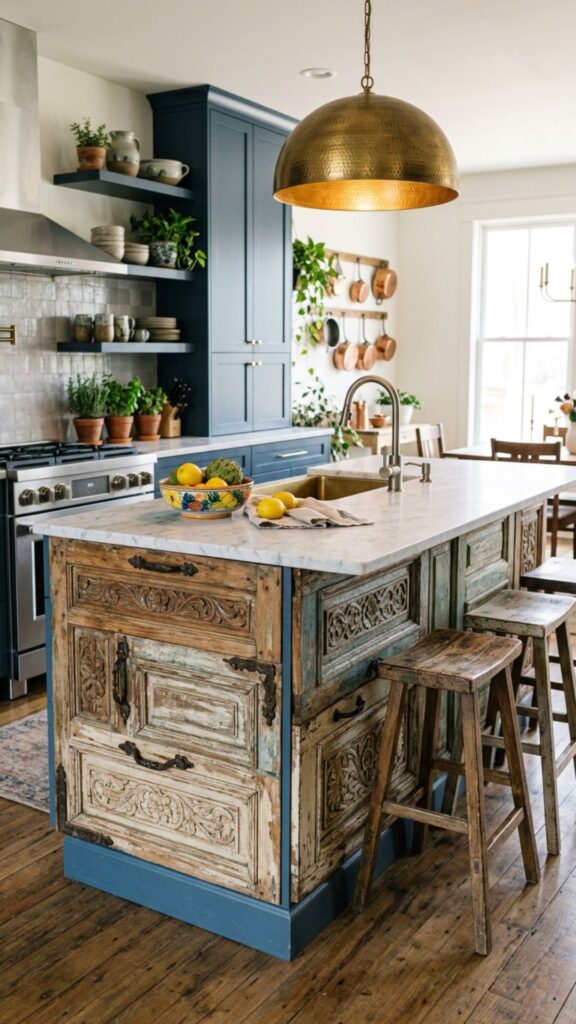
Repurpose old shutters, cabinet doors, or architectural panels on your island’s sides. These salvaged elements bring texture, history, and a genuinely unique look you can’t buy off the shelf.
Sand and seal them for durability, then mount them as decorative facing. This approach is eco-friendly and gives your kitchen a story worth telling.
19. Display an Open Herb Garden
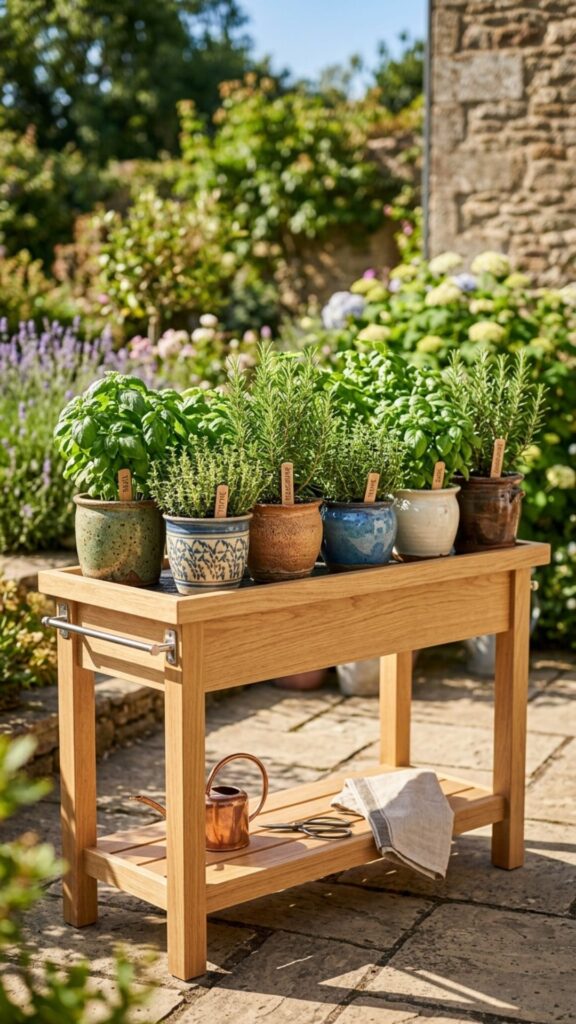
Build a small planter box into the countertop or a shelf for fresh basil, thyme, and rosemary. Greenery adds life, color, and a practical touch for anyone who loves to cook.
Choose a spot near natural light and use pots you can lift out for watering. Living plants soften hard surfaces and add a personal, everyday-use element to the island.
20. Layer Textiles and Accessories
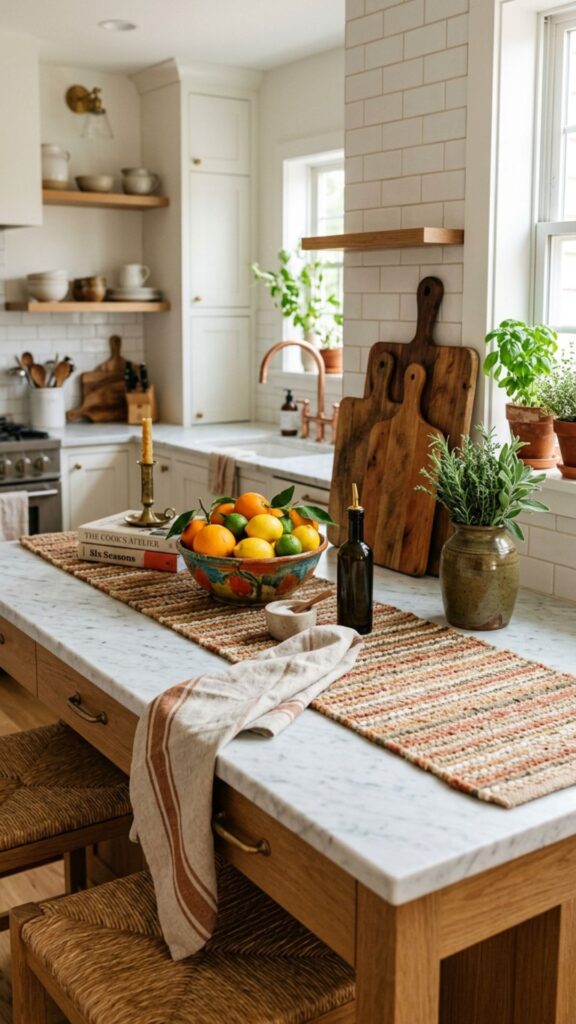
Finish your island with a runner, a bowl of citrus, a stack of vintage cutting boards, and a ceramic vase. Styling is what pulls an eclectic look together and makes it feel intentional.
Rotate these accessories with the seasons to keep things fresh. The goal is a lived-in space that reflects your personality, not a showroom that no one dares to touch.
Bring Your Kitchen to Life
Eclectic kitchen island ideas work because they reflect the people who use them. Mix bold colors, layered materials, and personal touches, but tie everything together with one or two repeating elements so the space still feels cohesive. Start small with paint or stools, then build toward bigger changes like reclaimed tops or salvaged panels.
Pick two or three ideas from this list that made you smile, and sketch out how they’d work in your space. Then grab a paint swatch, hit a flea market, or call a local craftsperson to get started. Your kitchen should tell your story, so make it one worth sharing.
What makes a kitchen island eclectic?
An eclectic kitchen island mixes styles, colors, materials, and eras on purpose. It might combine reclaimed wood with modern stone, vintage furniture with new hardware, or bold paint with natural textures, creating a personal, collected look rather than a matched set.
How do I keep an eclectic island from looking messy?
Repeat one or two unifying elements throughout the space, such as a metal finish or a color that appears in several spots. Limit your palette to two or three main colors and stick to a few key materials so the mix feels intentional.
Are eclectic kitchen islands expensive?
Not necessarily. Many eclectic looks come from affordable swaps like painting the base, adding colorful stools, or repurposing vintage furniture. Salvaged materials and thrifted pieces often cost less than new custom cabinetry.
Can I make a small kitchen island eclectic?
Yes. Focus on high-impact details like a bold paint color, patterned tile on one side, or a set of statement stools. Small islands benefit from a single strong feature rather than several competing ones.
What countertop works best for an eclectic island?
Butcher block, reclaimed wood, and dramatically veined stone all suit eclectic kitchens. Choose a surface that contrasts with your cabinets and surrounding counters to help the island stand out as a focal point.