Opening a kitchen cabinet to an avalanche of plastic containers is frustrating. When your cooking space lacks order, making meals feels like a chore instead of a joy. Proper kitchen cabinet organization solves this problem, turning a chaotic room into a calm, efficient workspace.
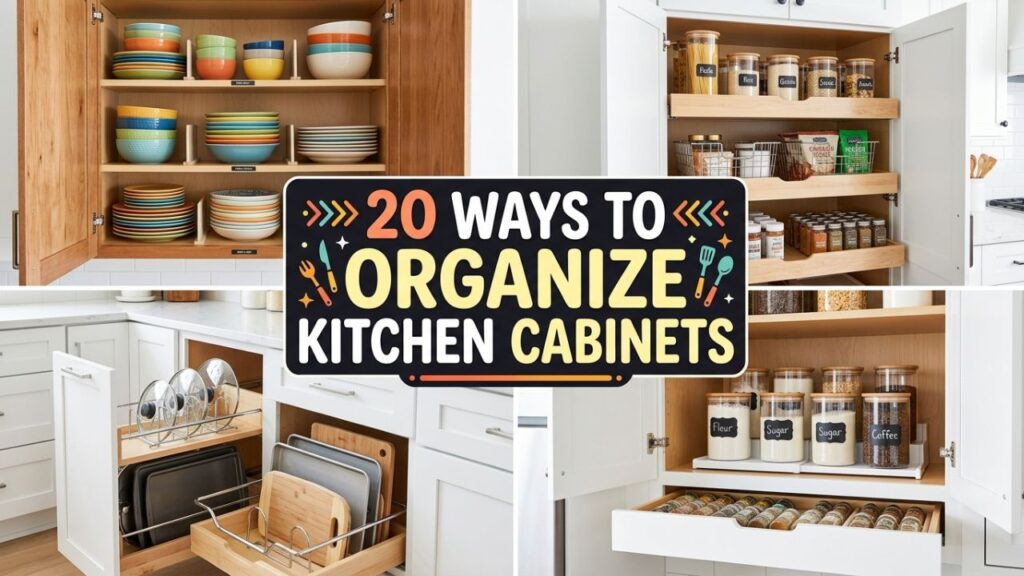
In this guide, we will walk you through practical strategies to reclaim your kitchen space.
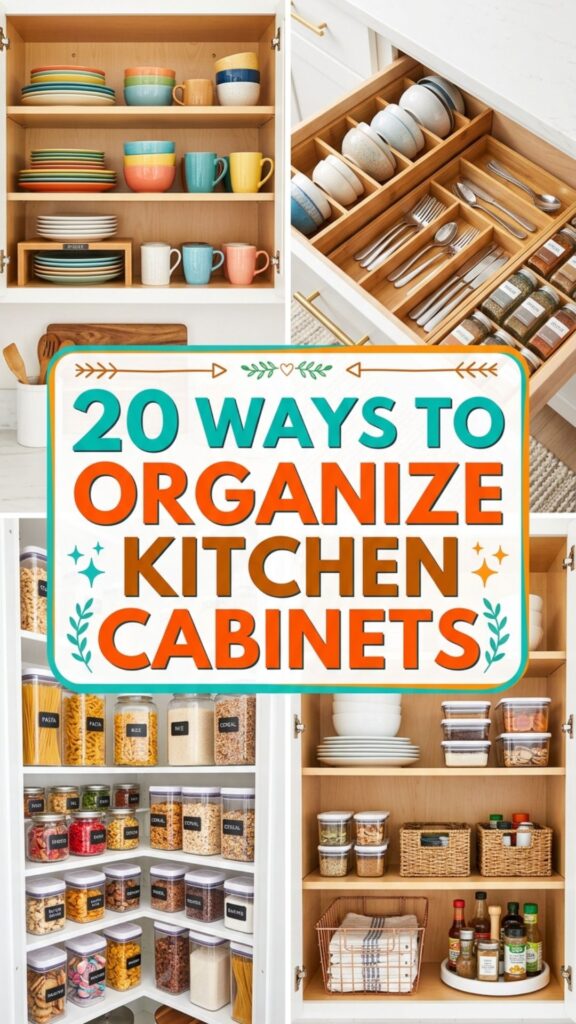
You will learn exactly how to sort your items, maximize hidden storage areas, and maintain a pristine setup for years to come. Let us dive into the best ways to get your cabinets perfectly organized.
1. Empty and Declutter First
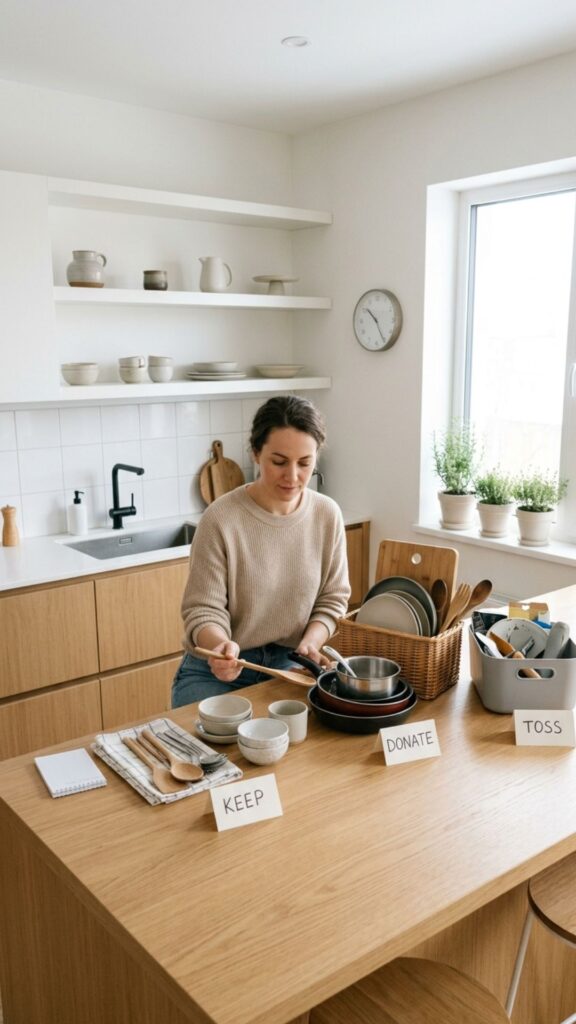
Before you buy any bins or organizers, take everything out of your cabinets. Wipe down the bare shelves with a damp microfiber cloth and a gentle cleaner. Seeing an empty space gives you a fresh perspective on how much room you actually have.
Next, sort your items into three piles: keep, donate, and toss. Discard expired food, broken tools, and mismatched container lids. You only want to put items back into your cabinets that you regularly use and love.
2. Group Items by Zone
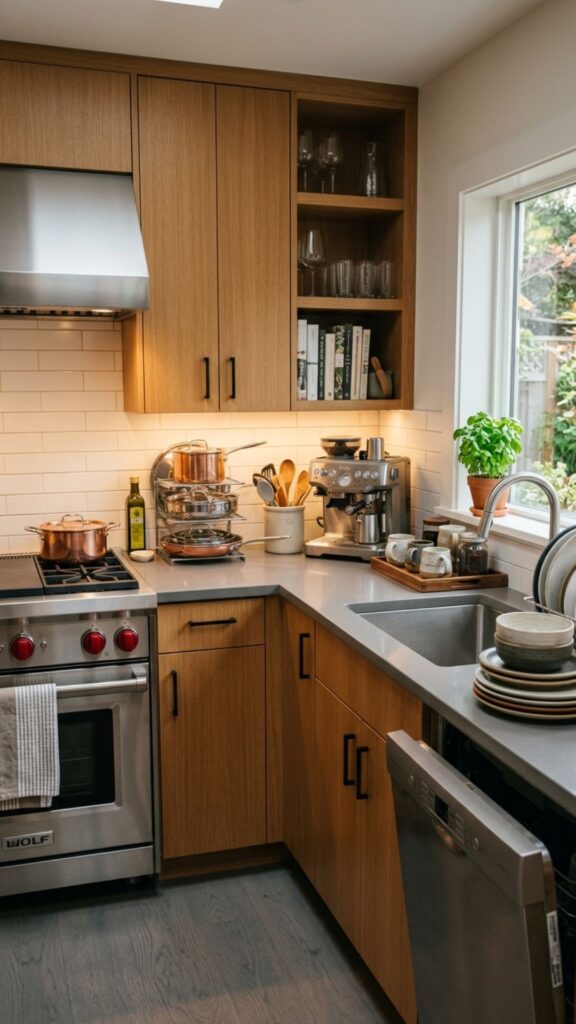
Think about how you move around your kitchen when you cook or bake. Kitchen cabinet organization relies heavily on setting up practical work zones. Store your pots, pans, and cooking oils near the stove where you need them most.
Keep your coffee mugs and grounds near the coffee maker, and place your plates and glasses close to the dishwasher. Storing items near their point of use saves you time and cuts down on unnecessary steps while preparing meals.
3. Install Pull-Out Shelves
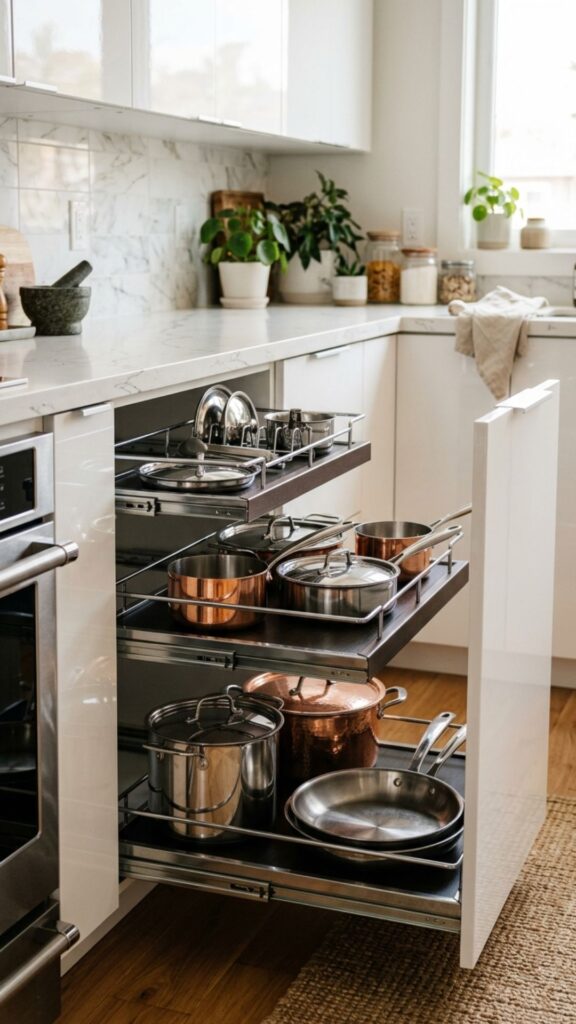
Deep lower cabinets often become dark caves where pots and pans disappear. Installing sliding pull-out shelves completely changes how you use these awkward spaces. You bring the items to you instead of reaching blindly into the back.
These sliding drawers glide out smoothly, giving you full visibility of your pots, appliances, and large mixing bowls. They require a small upfront investment, but the daily convenience makes them highly worthwhile.
4. Use Clear Storage Bins
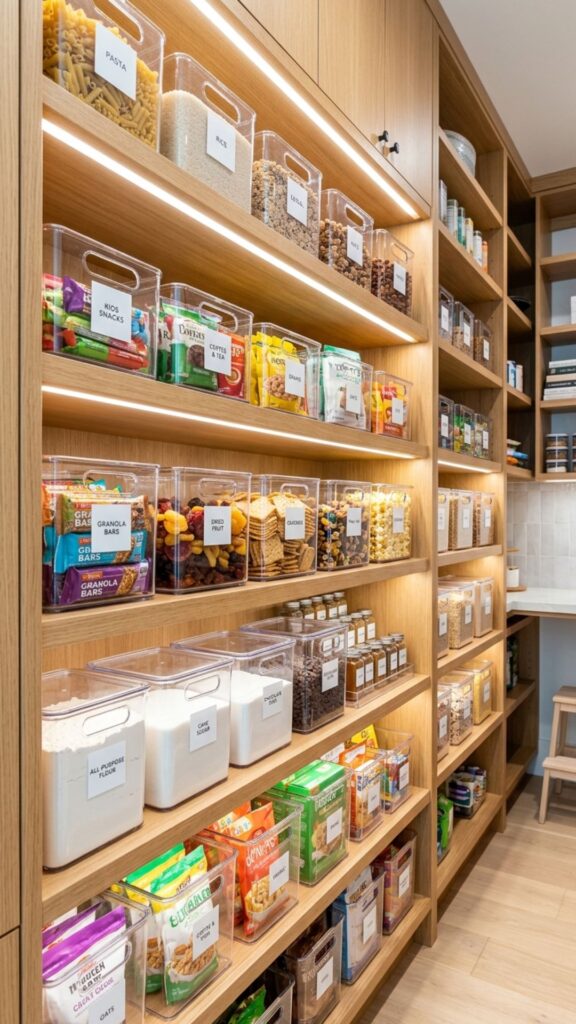
Grouping small, loose items into bins keeps them from scattering across your shelves. Clear acrylic bins work beautifully because they let you see exactly what you have at a glance. You never have to guess what sits inside.
Use these bins to corral baking supplies, spice packets, or small snacks. When you need a specific ingredient, simply slide the whole bin out, grab what you need, and slide it back in.
5. Add Shelf Risers
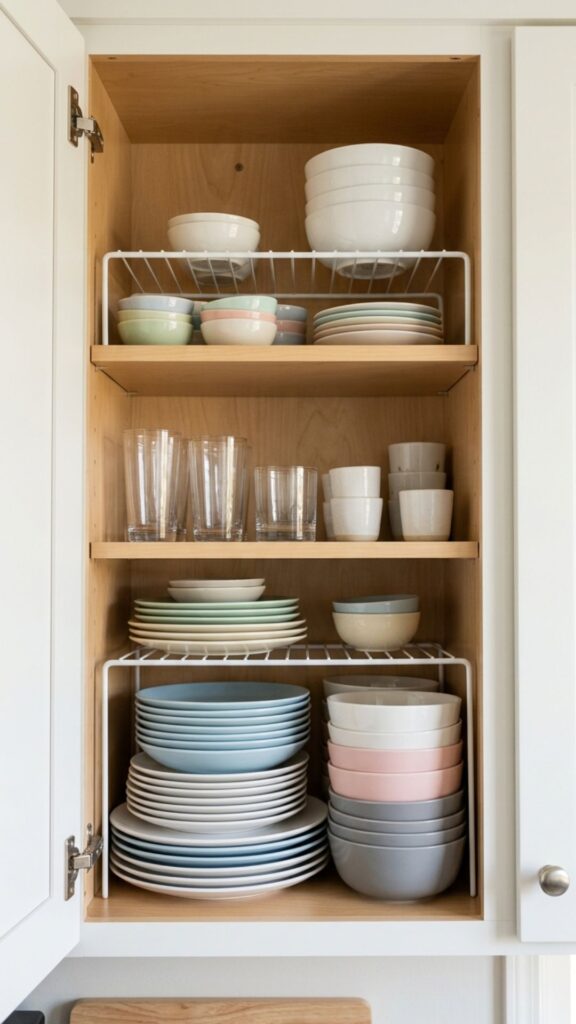
A common mistake in kitchen cabinet organization is wasting the vertical space between shelves. Shelf risers act like mini tables that sit on your existing shelves, instantly doubling your usable surface area.
You can slide plates underneath the riser and stack bowls on top. This prevents you from building leaning towers of mismatched dishware, making it much easier to grab a single plate without toppling everything else.
6. Utilize the Inside of Cabinet Doors
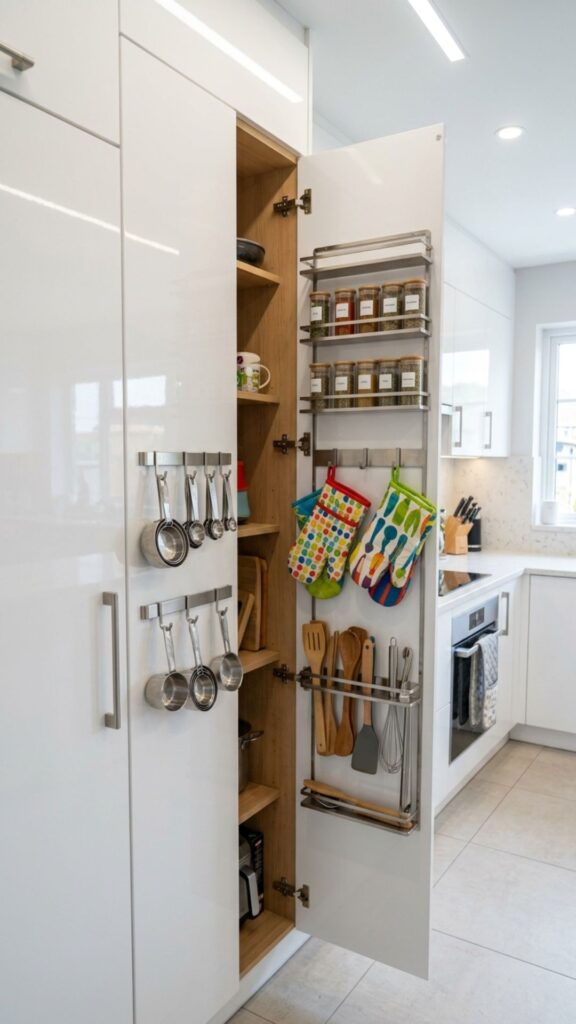
Cabinet doors offer valuable, untapped storage real estate. You can mount lightweight adhesive hooks or narrow racks directly onto the inside of the doors. This keeps frequent necessities hidden but easily accessible.
Hang measuring cups, oven mitts, or pot holders on small hooks. If you install a slim wire rack, you can store cutting boards, aluminum foil boxes, or your most-used spices right on the door.
7. Store Baking Sheets Upright
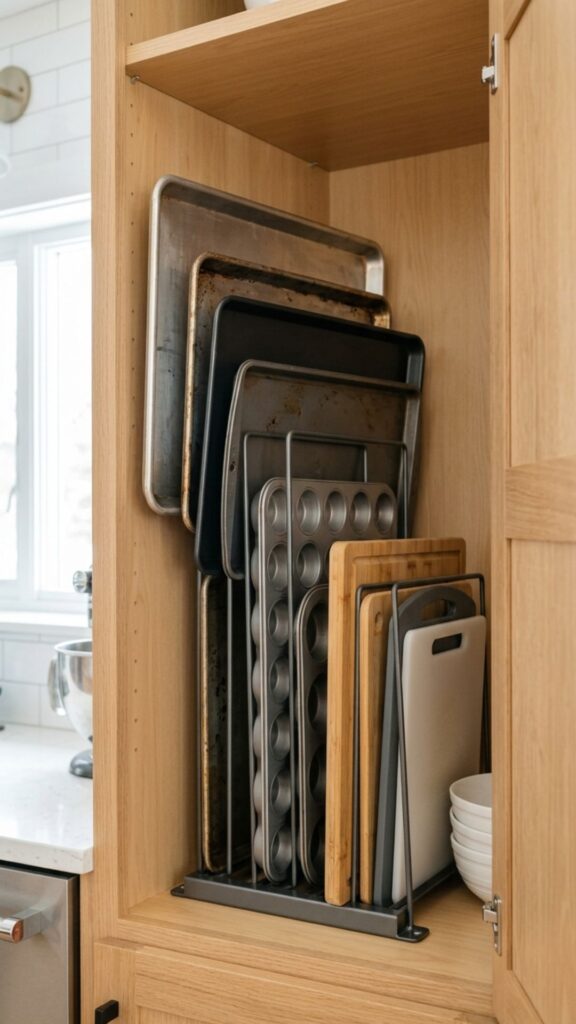
Stacking baking sheets, muffin tins, and cutting boards flat creates a heavy, noisy mess. Every time you need the bottom pan, you have to lift the entire heavy stack. Upright storage eliminates this daily hassle entirely.
Place a sturdy vertical rack inside your cabinet to file your pans like folders in a cabinet. You can instantly slide out the exact baking sheet you need without disturbing the others next to it.
8. Invest in a Lazy Susan
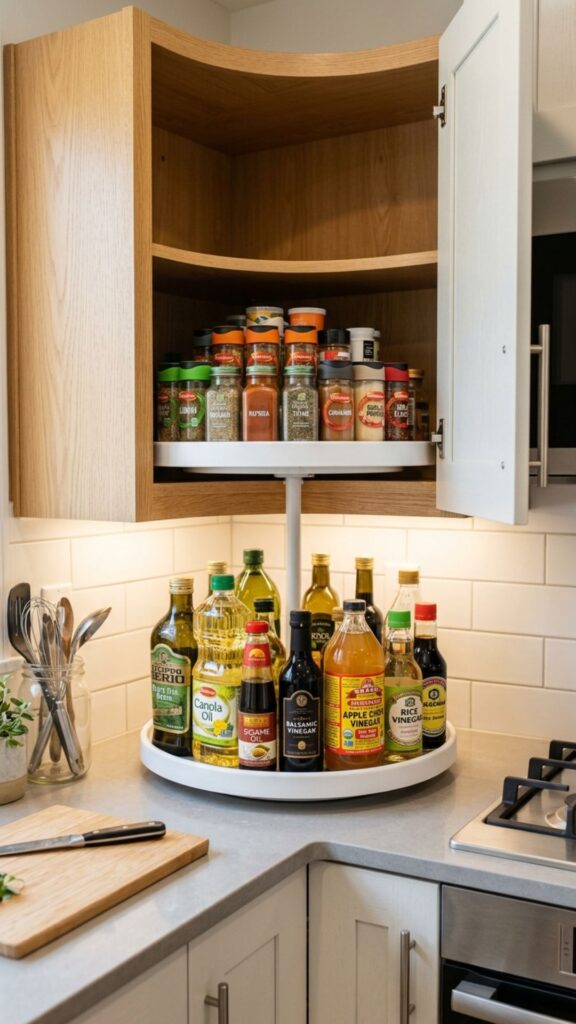
Deep corner cabinets and high shelves easily trap small items in the back. A Lazy Susan creates a spinning platform that brings those hard-to-reach items directly to the front. A quick spin reveals everything you own.
These rotating trays work exceptionally well for cooking oils, vinegars, and baking extracts. Place one in a corner cabinet or on a pantry shelf to keep your bottles organized and prevent them from getting lost.
9. Transfer Dry Goods to Airtight Containers
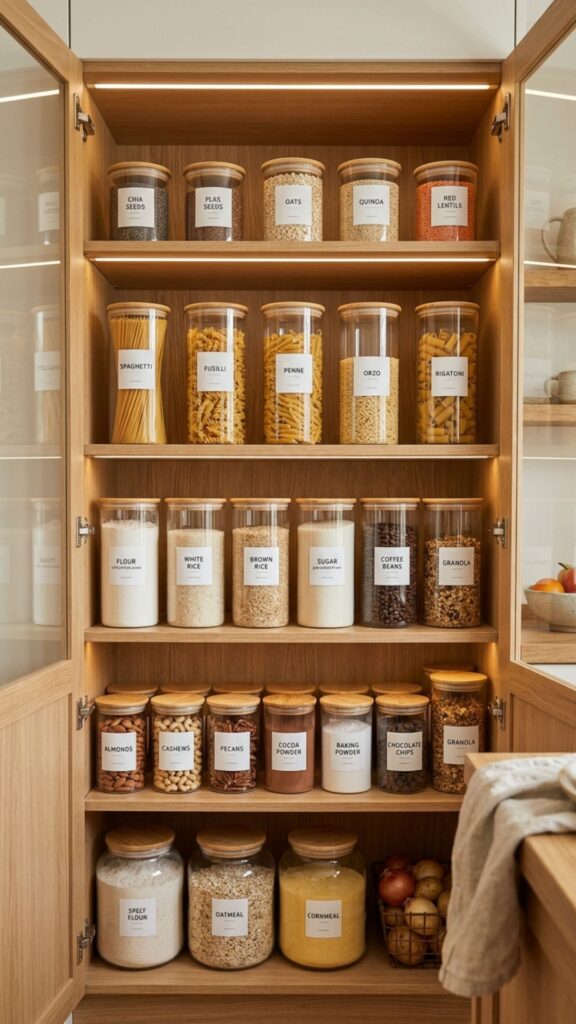
Cardboard boxes and flimsy plastic bags create visual clutter and take up unnecessary space. Decanting your dry goods into uniform, airtight containers makes your cabinets look incredibly tidy. It also keeps your food fresh for much longer.
Choose a set of clear plastic or glass containers for your flour, sugar, pasta, and rice. The matching shapes stack neatly together, maximizing your shelf space while making your ingredients look beautiful.
10. Label Everything
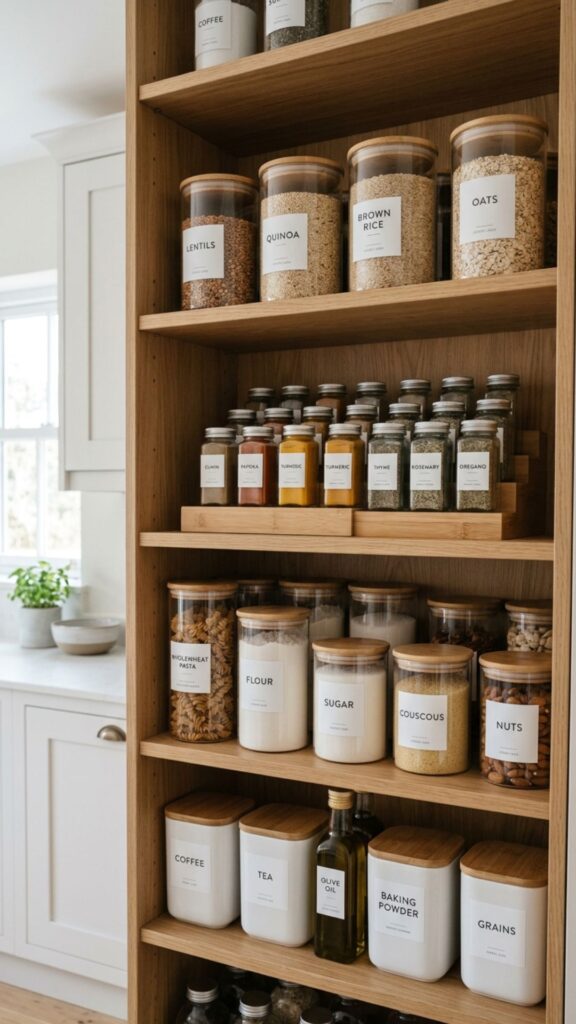
Once you transfer your food into matching containers, you need to know exactly what is inside. Labels remove the guesswork and keep your kitchen cabinet organization system intact. You will never confuse salt with sugar again.
Use a label maker, chalkboard stickers, or custom printed decals to mark your bins and jars. Be sure to label the bottom with expiration dates if you decant items that spoil quickly.
11. Stack Pots and Pans with Protectors
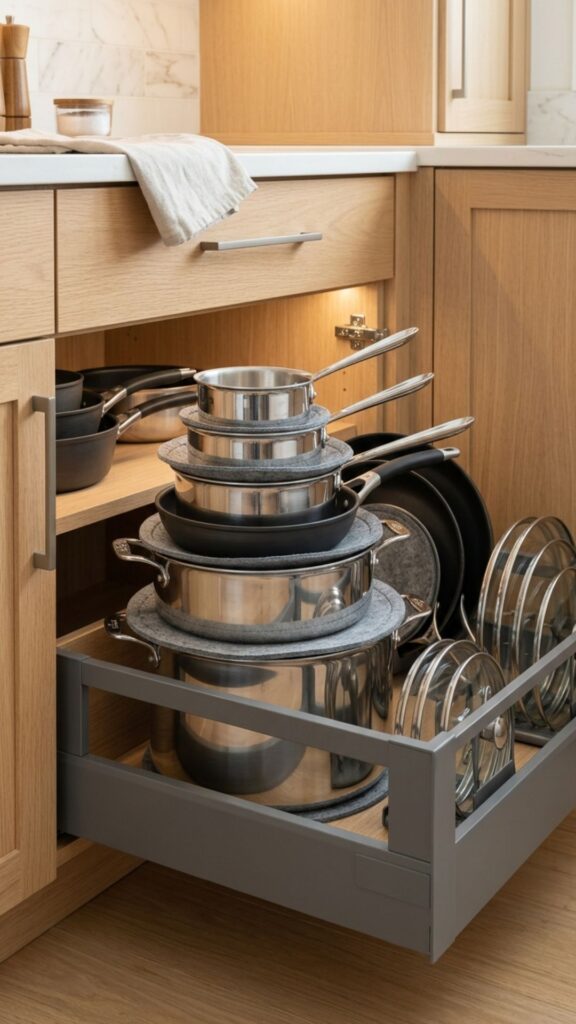
Cookware takes up a massive amount of cabinet space. While stacking pots and pans saves room, it easily leads to scratched non-stick coatings and damaged metal. Protecting your investment requires a careful approach to stacking.
Place soft felt or silicone pan protectors between each layer of your nested cookware. This simple barrier prevents scratching and stops the pans from sticking together when you try to lift them out.
12. Keep Heavy Items Low
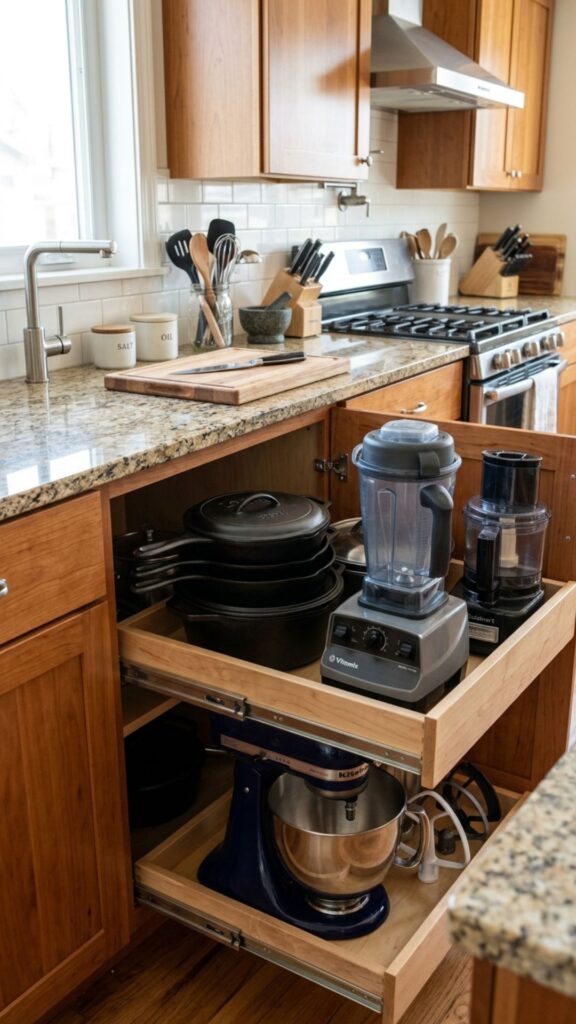
Safety matters just as much as aesthetics when organizing your kitchen. Placing heavy items on high shelves increases the risk of dropping them and causing injury. Always reserve your lower cabinets for your heaviest gear.
Store bulky items like slow cookers, cast-iron skillets, and large blenders below waist level. Use your upper cabinets for lighter items like plates, glasses, and lightweight pantry staples.
13. Dedicate a Snack Station
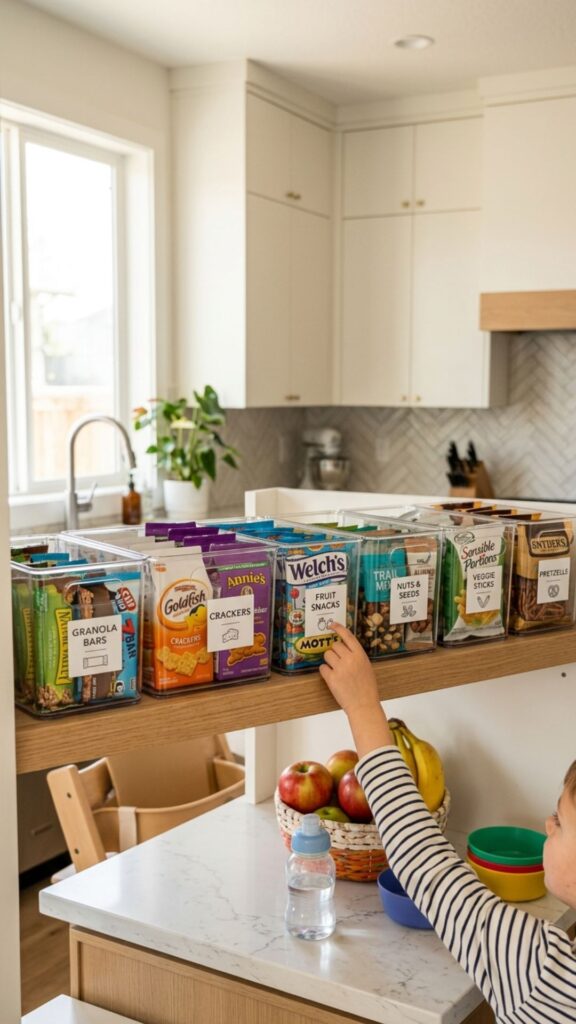
Families with children know how quickly a pantry falls apart when everyone searches for snacks. Creating a dedicated snack station solves this problem by giving everyone an easy, designated spot to grab a quick bite.
Place a few clear bins on a low, accessible shelf. Fill them with granola bars, fruit snacks, and crackers. This keeps the rest of your cabinets undisturbed when hunger strikes between meals.
14. Use Tension Rods for Cutting Boards
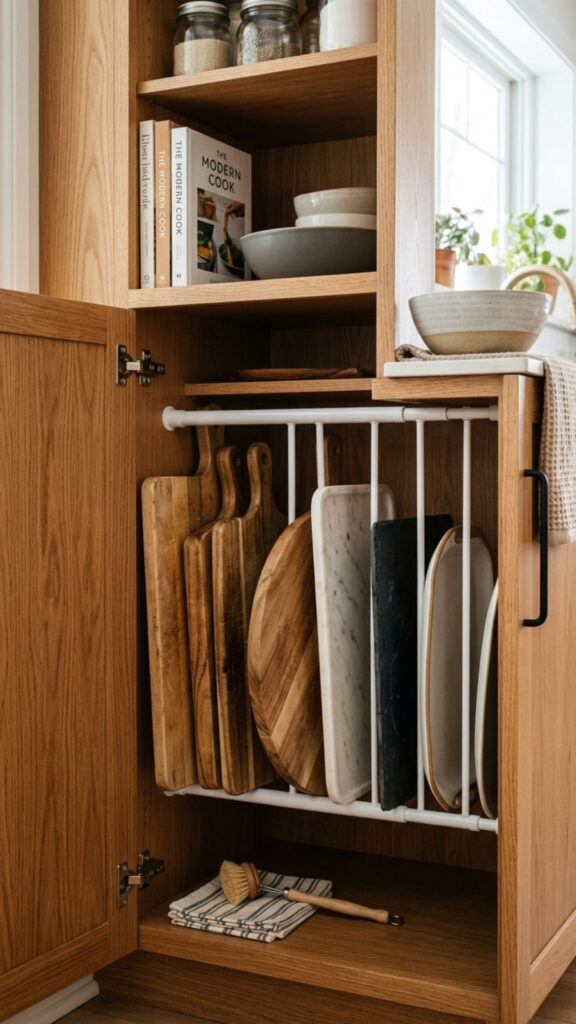
Tension rods are inexpensive, versatile tools that work wonders in the kitchen. If you do not want to buy a specialized vertical organizer, a few short tension rods can do the exact same job for a fraction of the price.
Install the rods vertically between the top and bottom of a cabinet shelf, leaving a few inches between each rod. Slide your cutting boards and serving platters into these custom slots for easy, upright storage.
15. Maximize Corner Cabinets with Baskets
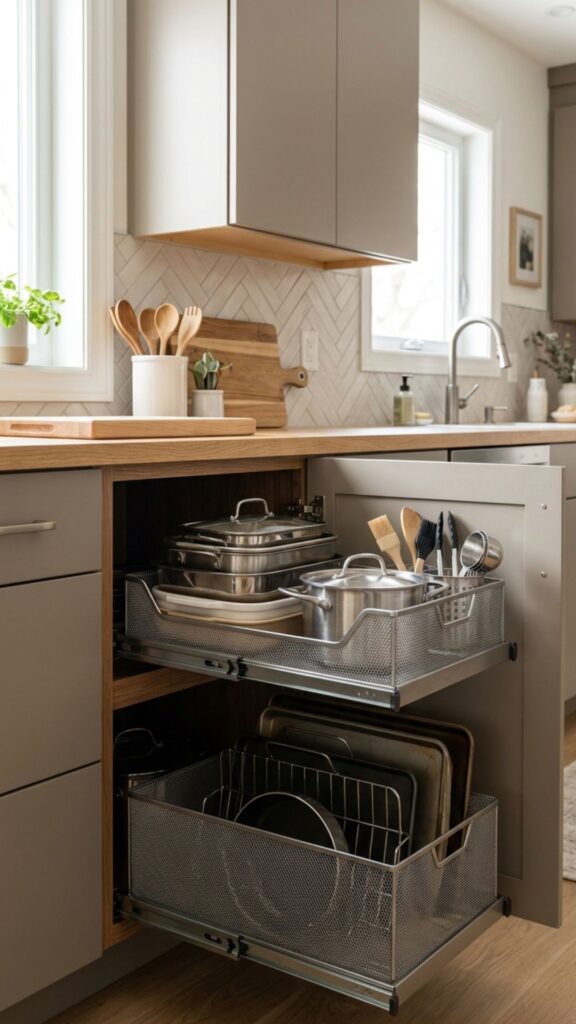
Blind corner cabinets feature awkward angles that make them notoriously difficult to organize. Items easily slide into the dark corners and stay there for years. Baskets offer a practical solution to this common layout problem.
Store items you rarely use in large, sturdy baskets and slide them into the deepest part of the corner. When you actually need that holiday roasting pan, you just pull the basket out using the handle.
16. Hang Mugs on Hooks
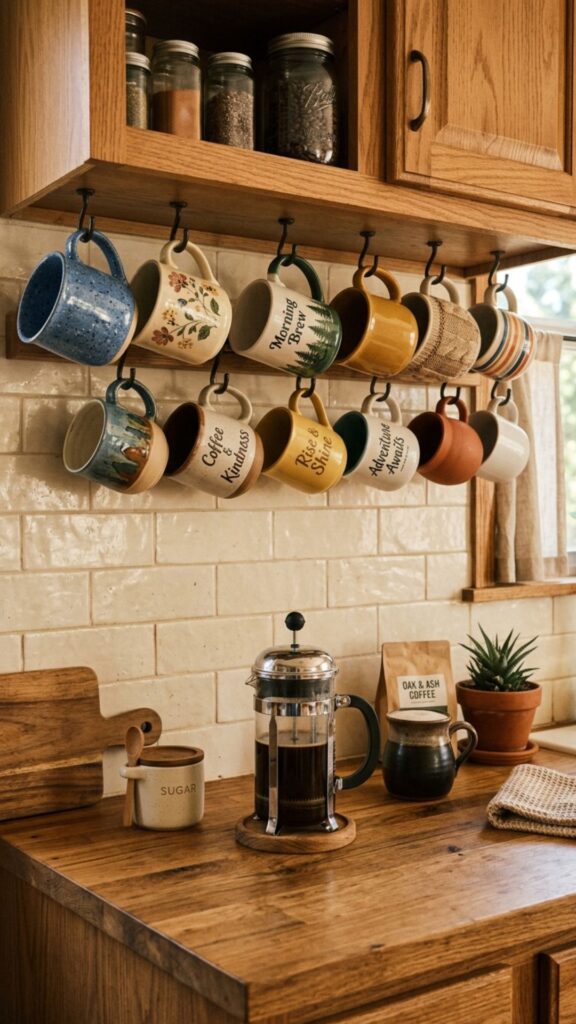
Coffee mugs take up an immense amount of shelf space because of their handles. Stacking them is risky, and lining them up leaves empty air above them. Hanging them utilizes that unused vertical space perfectly.
Screw small cup hooks into the underside of your cabinet shelves. Hang your mugs by the handles to free up the shelf space below for small plates, saucers, or boxes of tea bags.
17. Store Water Bottles Horizontally
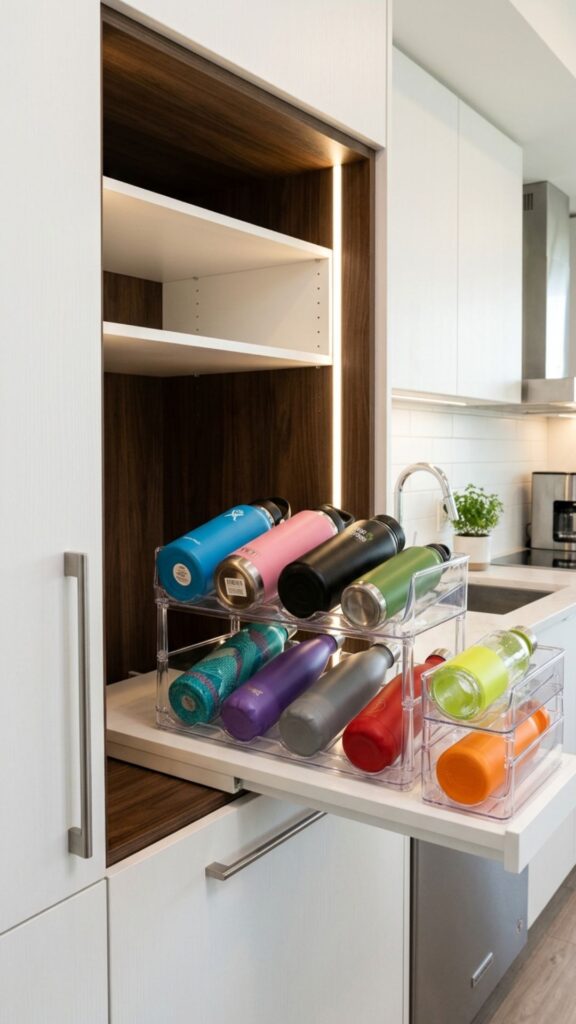
Reusable water bottles fall over easily like dominoes when you store them standing up. Because they come in so many different heights, they rarely fit well on standard shelves. Horizontal storage keeps them contained and accessible.
Buy a specialized wine rack or a stackable bottle organizer. Laying the bottles on their sides prevents them from tipping over and allows you to grab the one you want without knocking the others down.
18. Nest Storage Containers and Lids
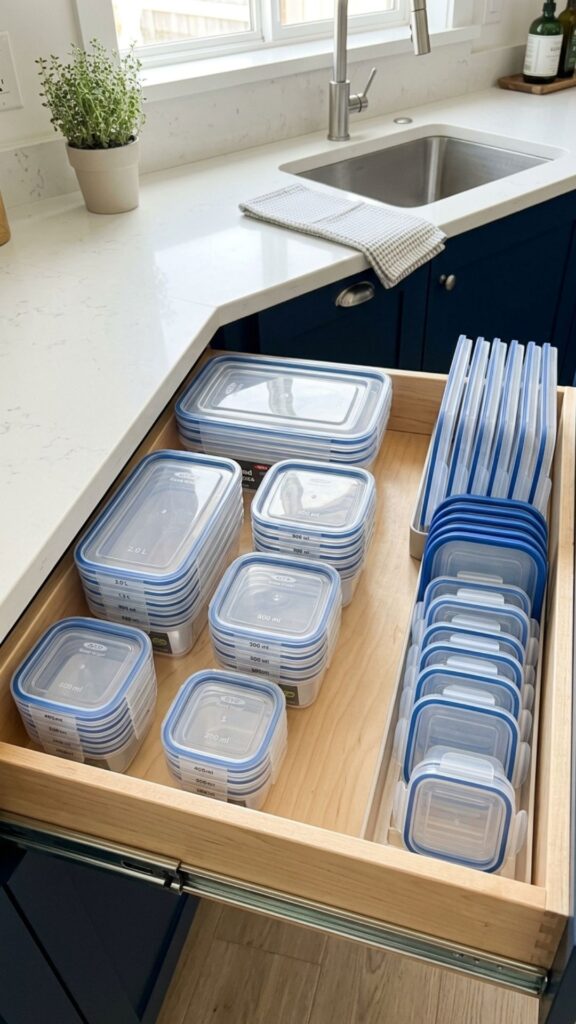
Food storage containers create the biggest headache in most kitchens. Tossing them randomly into a drawer leads to mismatched pairs and missing lids. A nesting system instantly cures container chaos.
Stack the container bottoms inside each other from largest to smallest. Keep all the lids in a separate upright bin or a dish drying rack right next to the containers so you can always find a matching set.
19. Adjust Shelf Heights
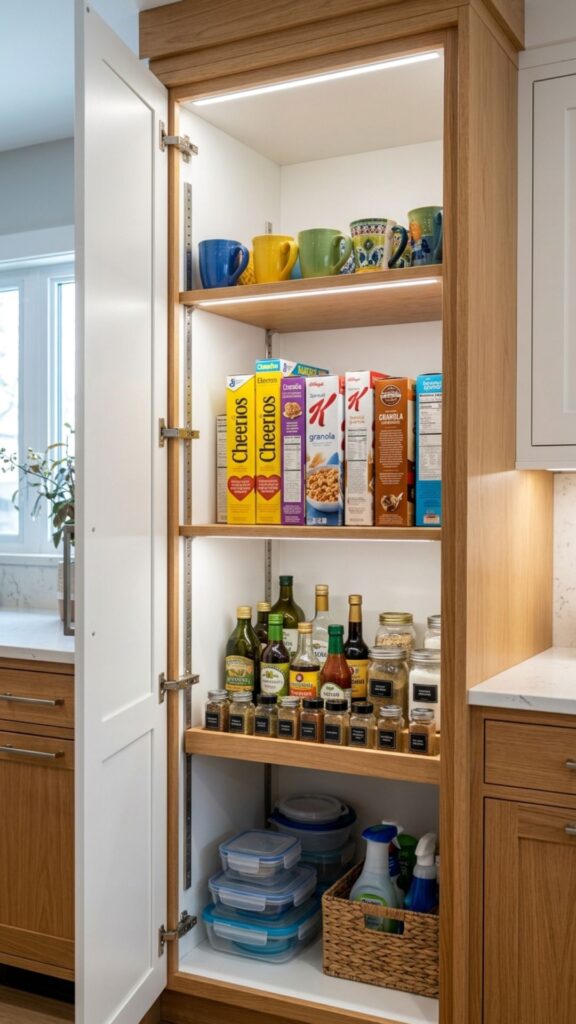
Most people leave their cabinet shelves at the height the builder set them. However, standard heights rarely fit your specific dishes and appliances. Adjusting your shelves customizes the space to fit your exact needs.
Move shelves closer together for short items like coffee mugs and canned goods. Create taller gaps for your large cereal boxes and tall olive oil bottles. This simple fix eliminates dead space instantly.
20. Maintain with Monthly Checks
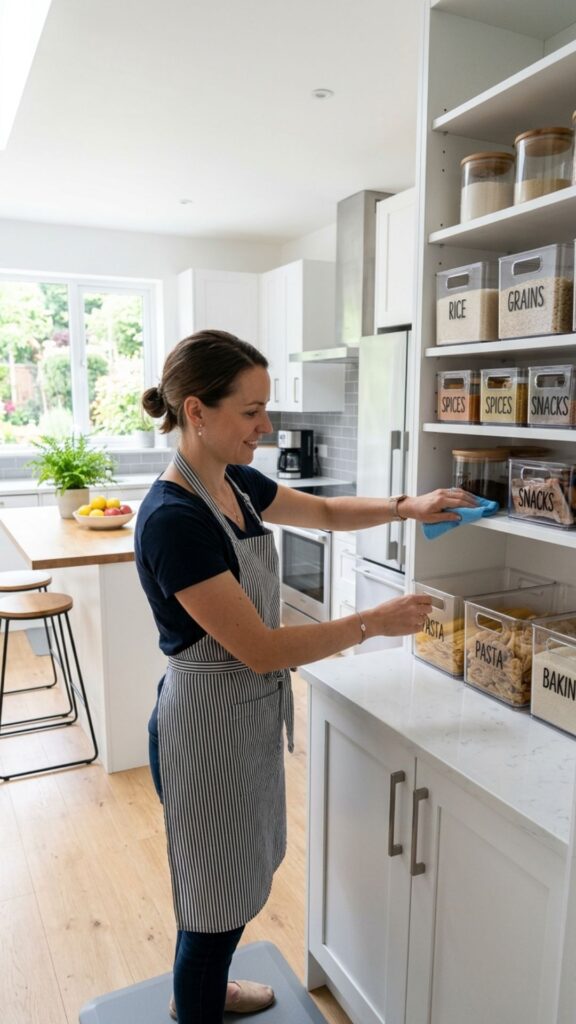
No organization system lasts forever without a little maintenance. Daily life happens, and things inevitably end up in the wrong spot. A quick monthly check keeps your cabinets looking just as good as the day you organized them.
Take ten minutes at the end of each month to reset your kitchen. Straighten out the bins, match up stray container lids, and wipe up any spills. Consistent upkeep prevents you from ever having to do a massive overhaul again.
Conclusion
Mastering your kitchen cabinet organization transforms your cooking routine from a stressful chore into a seamless experience. By decluttering, using the right storage tools, and grouping items logically, you create a kitchen that actually works for you. Start small, tackle one cabinet at a time, and watch how quickly these straightforward changes improve your daily life.
Ready to get started? Pick just one cabinet today, pull everything out, and apply these simple tips to build the organized kitchen you deserve.
How do I decide what to keep in my upper vs. lower kitchen cabinets?
Keep lightweight, frequently used items like plates, glasses, and spices in your upper cabinets. Reserve lower cabinets for heavy, bulky items like pots, pans, cast-iron skillets, and large kitchen appliances.
What is the best way to organize deep cabinets?
The best way to organize deep cabinets is by using pull-out sliding drawers or large storage bins. This allows you to pull the contents forward, preventing items from getting lost in the back.
How can I organize my cabinets on a tight budget?
You can organize on a budget by repurposing sturdy cardboard boxes, using inexpensive tension rods to separate baking sheets, and adjusting your existing shelf heights to maximize your current vertical space.
Where should I store plastic food containers?
Store food containers in a designated deep drawer or lower cabinet. Nest the bottoms inside one another and keep the lids filed upright in a separate bin or a small dish rack to keep them tidy.