There’s something deeply comforting about a kitchen that feels grounded in nature. Warm wood grains, honest stone surfaces, and colors pulled straight from the landscape can turn a cold, sterile room into the heart of your home. And the kitchen island? That’s where all of this comes together.
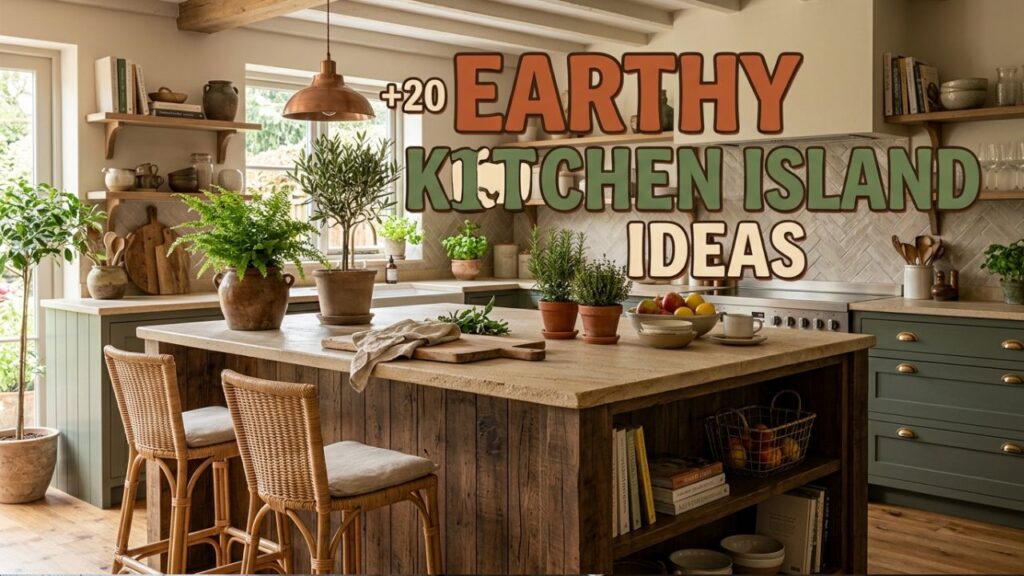
I’ve spent years helping homeowners rethink their kitchens, and the island is almost always the star of the show. It’s the piece everyone gathers around, the surface that does the most work, and the design element people notice first. So getting it right matters.
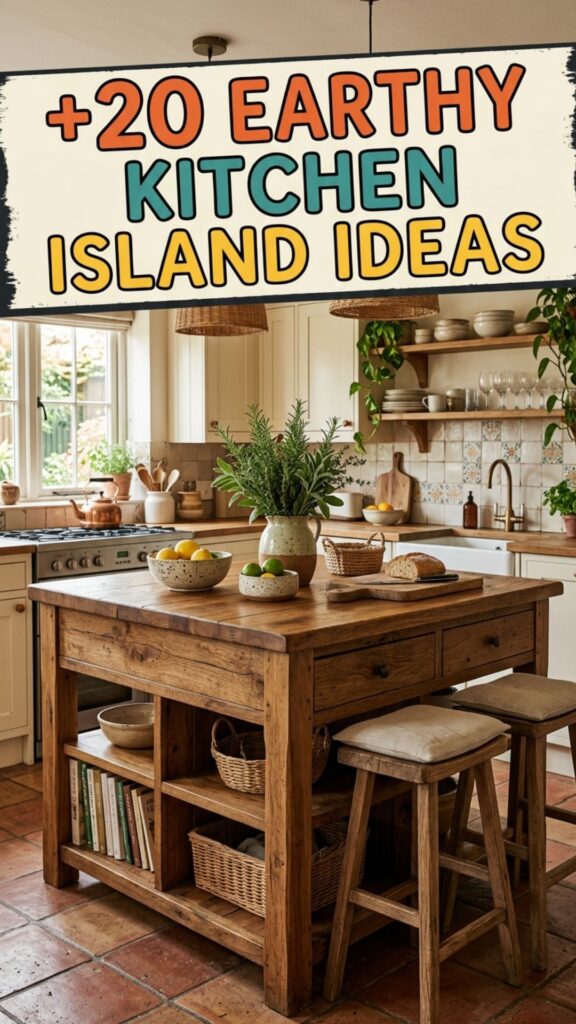
Below you’ll find 20 earthy kitchen island ideas that blend beauty with everyday function. Whether you’re building from scratch or refreshing what you already have, these ideas will help you create a space that feels warm, natural, and genuinely welcoming.
1. Reclaimed Wood Base
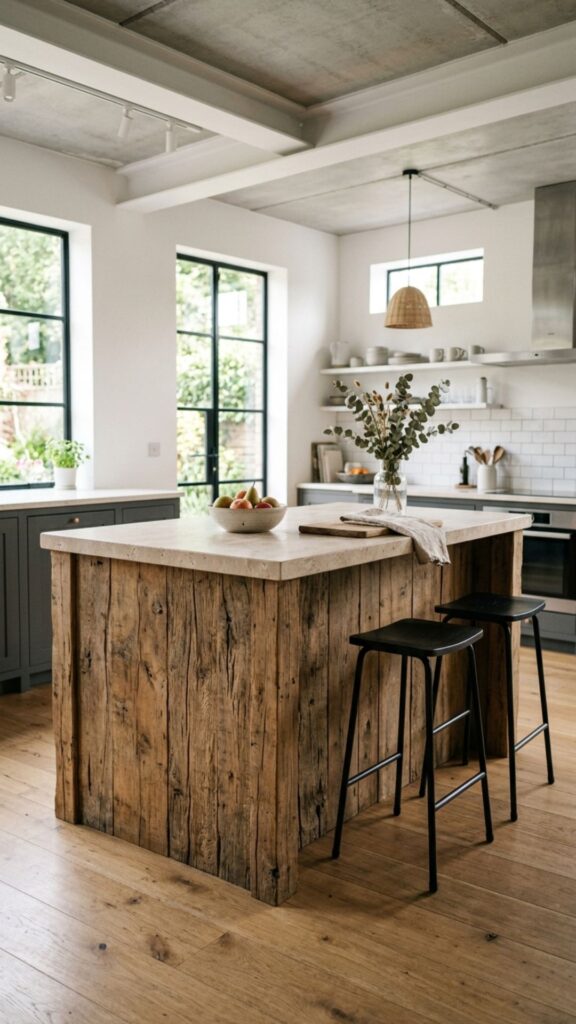
Nothing says earthy quite like reclaimed wood. Old barn beams, salvaged flooring, or weathered timber bring instant character to your island. Each plank carries its own history, with knots, nail holes, and color variations you simply can’t fake with new lumber.
Beyond the good looks, reclaimed wood is a smart, sustainable choice. You’re giving old material a second life instead of sending it to a landfill. Pair a reclaimed base with a simple stone top, and you’ve got a centerpiece that feels both rustic and refined.
2. Live-Edge Wood Countertop
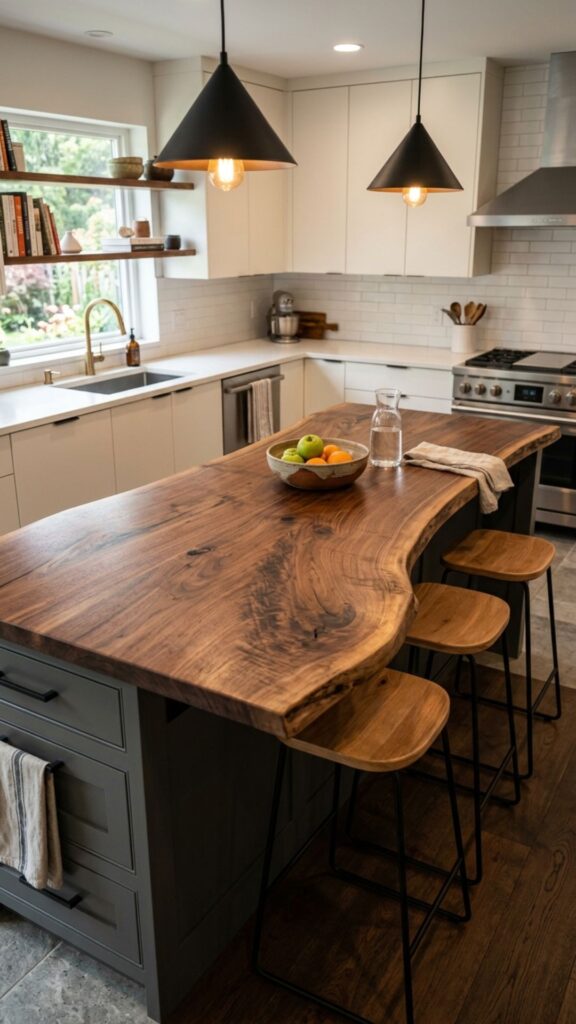
A live-edge countertop keeps the natural curve of the tree’s outer edge, so no two pieces look alike. Walnut, oak, and maple all work beautifully here. The organic shape softens the boxy lines most kitchens have and draws the eye instantly.
To keep it practical, seal the surface well so it can handle spills and daily wear. If you cook a lot, consider adding a small stone or butcher block section for hot pans. That way you protect the wood while still enjoying its raw, natural beauty.
3. Natural Stone Waterfall Edge
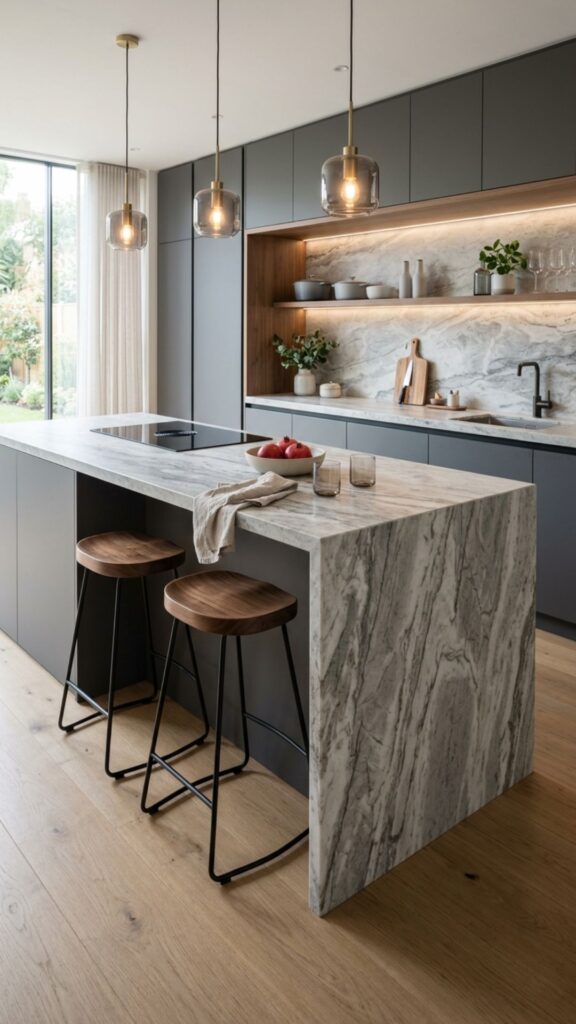
A waterfall edge lets stone flow from the countertop straight down the sides of the island. Choose materials like soapstone, honed granite, or marble with soft, earthy veining. The effect is grounding and quietly luxurious.
Honed finishes work especially well for an earthy look because they skip the high-gloss shine. You get a matte, tactile surface that feels closer to raw stone. It hides fingerprints better too, which is a bonus in a busy kitchen.
4. Butcher Block Top
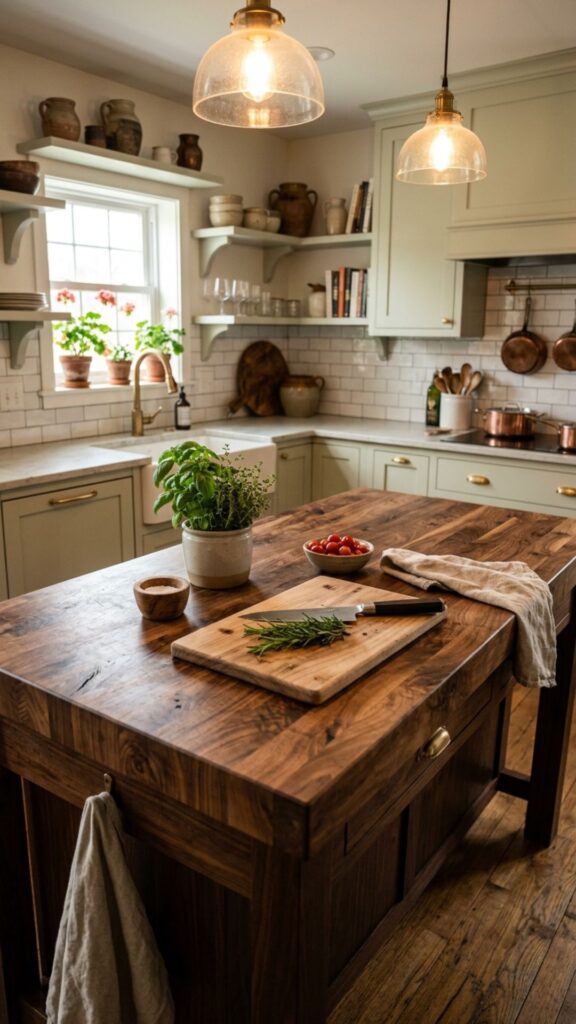
Butcher block is a classic for good reason. The warm, tight wood grain adds instant coziness, and it doubles as a functional prep surface. Maple, walnut, and cherry are popular picks that age gracefully over time.
You’ll need to oil the surface every so often to keep it looking fresh and to protect it from moisture. Think of it as a small ritual rather than a chore. That bit of upkeep is exactly what gives butcher block its lived-in, hand-touched charm.
5. Earthy Green Painted Base
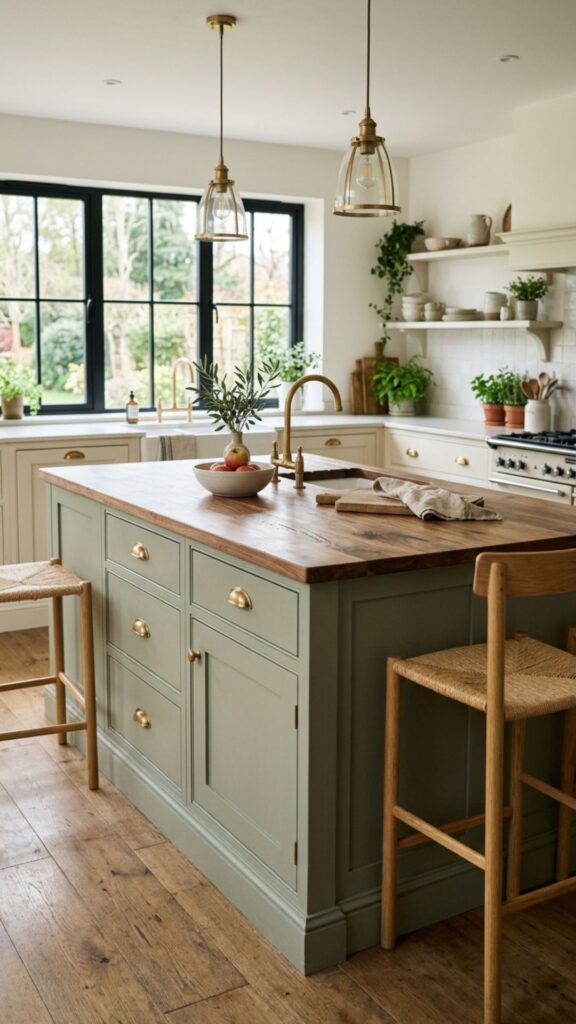
Swap a plain white base for a muted green pulled from nature. Sage, olive, and forest tones bring the outdoors in without overwhelming the room. These shades pair beautifully with wood tones and warm brass hardware.
Green also has a calming quality that suits the kitchen well. It reads as fresh but grounded, especially when balanced with natural light. For a subtle touch, keep the rest of the cabinets neutral and let the island be the color moment.
6. Terracotta and Clay Accents
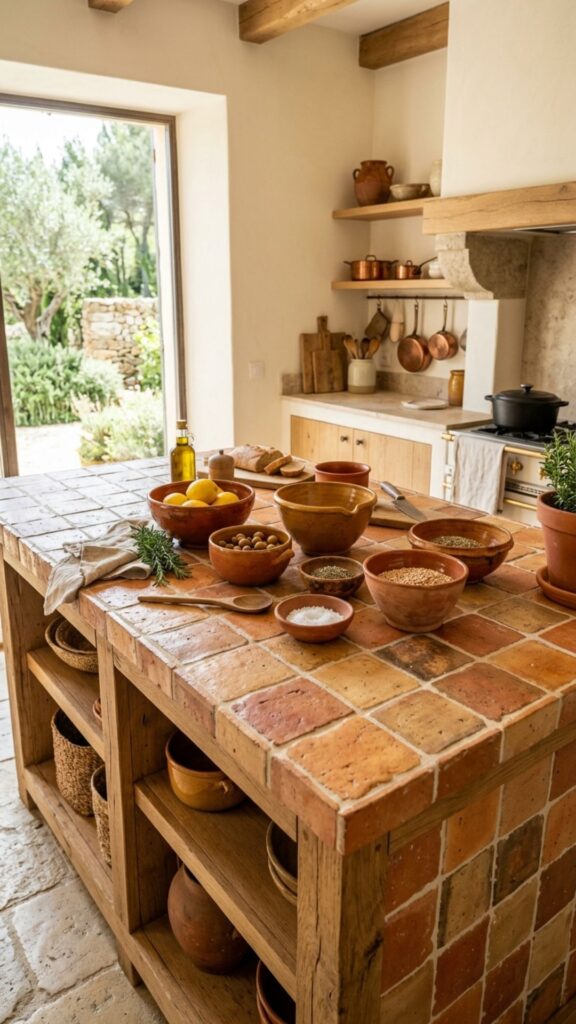
Terracotta brings a sun-baked, Mediterranean warmth that instantly feels earthy. Use clay tiles along the island base or add terracotta pots and bowls on the countertop for texture. The reddish-brown tones glow under warm lighting.
This look pairs wonderfully with cream plaster walls and wooden stools. If a full clay base feels like too much, start small. A single row of handmade tiles or a clustered display of terracotta serveware can carry the vibe beautifully.
7. Rattan and Cane Detailing
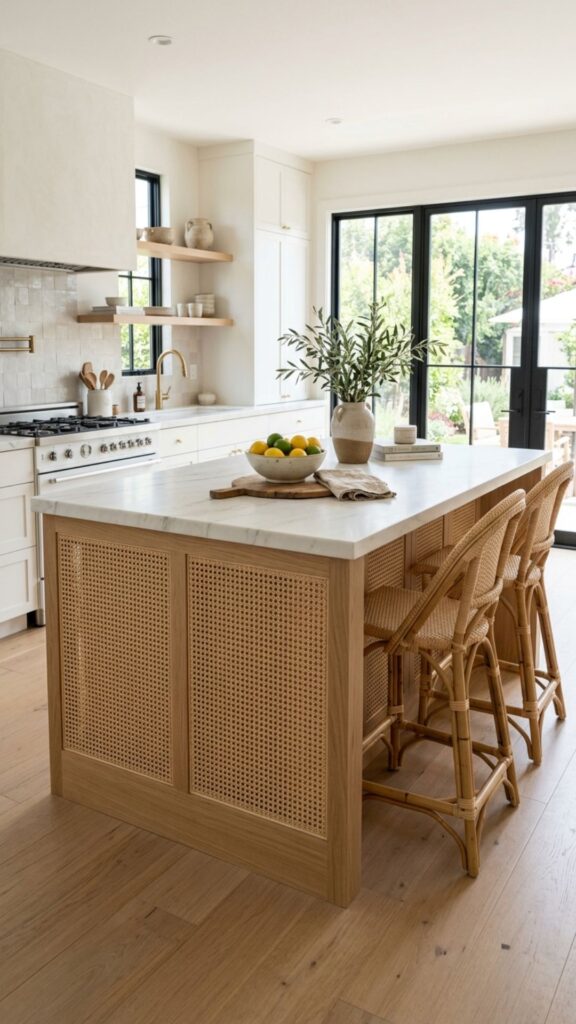
Woven rattan or cane panels add lightness and texture to an island base. The open weave brings a natural, handcrafted feel that softens harder surfaces like stone and metal. It’s a favorite in boho and coastal kitchens.
Use cane inserts on the island’s end panels or on nearby cabinet doors for consistency. Because the material is light and airy, it keeps the space from feeling too heavy. Just keep it in a spot away from constant splashes to protect the weave.
8. Concrete Countertop with Warm Undertones
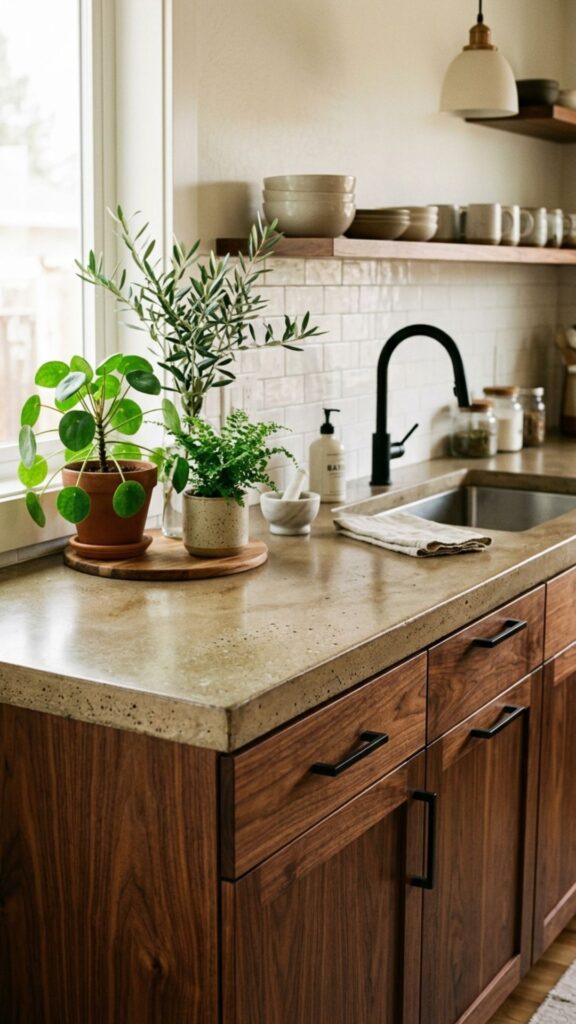
Concrete might sound cold, but the right mix can feel surprisingly earthy. Look for warm gray or sandy tones rather than stark industrial gray. The subtle texture and matte finish give it an organic, stone-like quality.
Concrete is also incredibly durable and can be cast into any shape you want. Seal it properly to guard against stains and etching. Paired with wood cabinets and greenery, a concrete top strikes a lovely balance between modern and natural.
9. Two-Tone Wood and Stone Combination
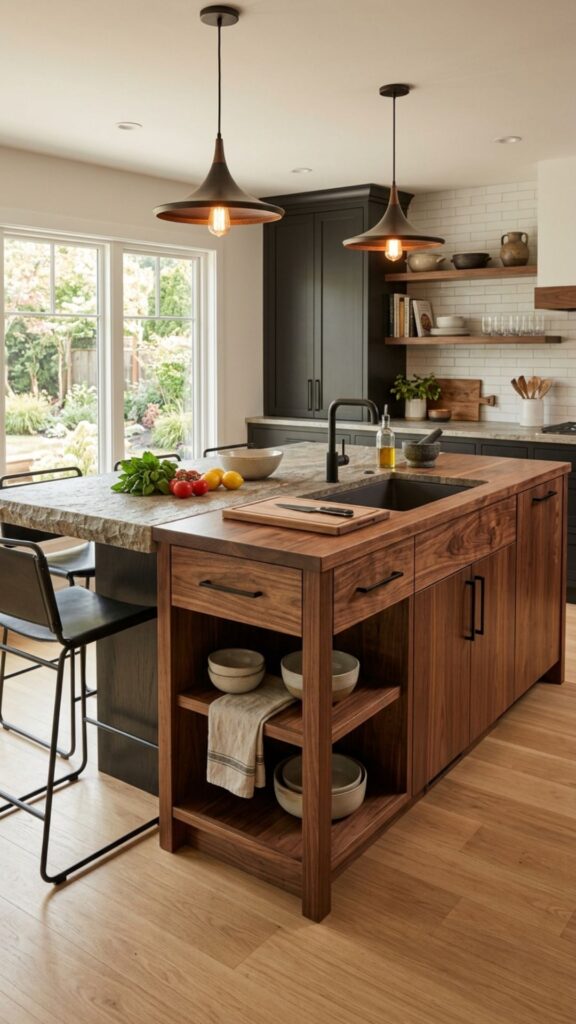
Mixing materials adds depth and keeps your island from looking flat. Try a warm wood base topped with earthy stone, or reverse it with a stone base and a wood top. The contrast highlights the best of both materials.
This approach also lets you zone the island for different tasks. Use the wood section for prep and the stone section for baking or serving. It’s a practical design trick that looks intentional and thoughtfully put together.
10. Open Shelving for Natural Displays
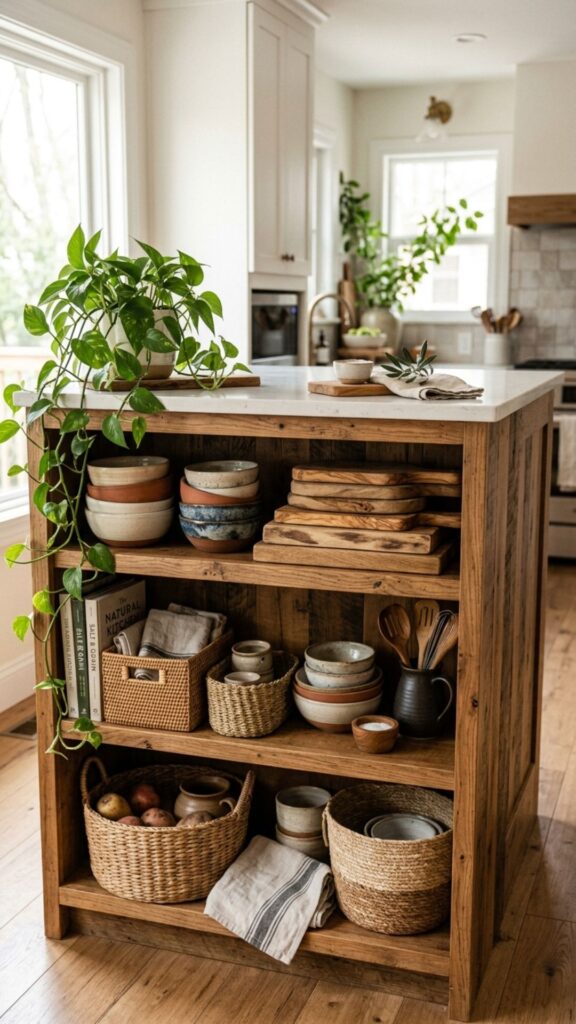
Built-in open shelves on the island give you a spot to display earthy pieces. Think stoneware bowls, wooden cutting boards, woven baskets, and trailing plants. These small touches make the island feel personal and lived-in.
Open shelving also keeps everyday items within easy reach. Store your favorite ceramics or cookbooks where you can grab them fast. Just keep the styling loose and natural so it feels collected rather than staged.
11. Raw Edge Stone Slab
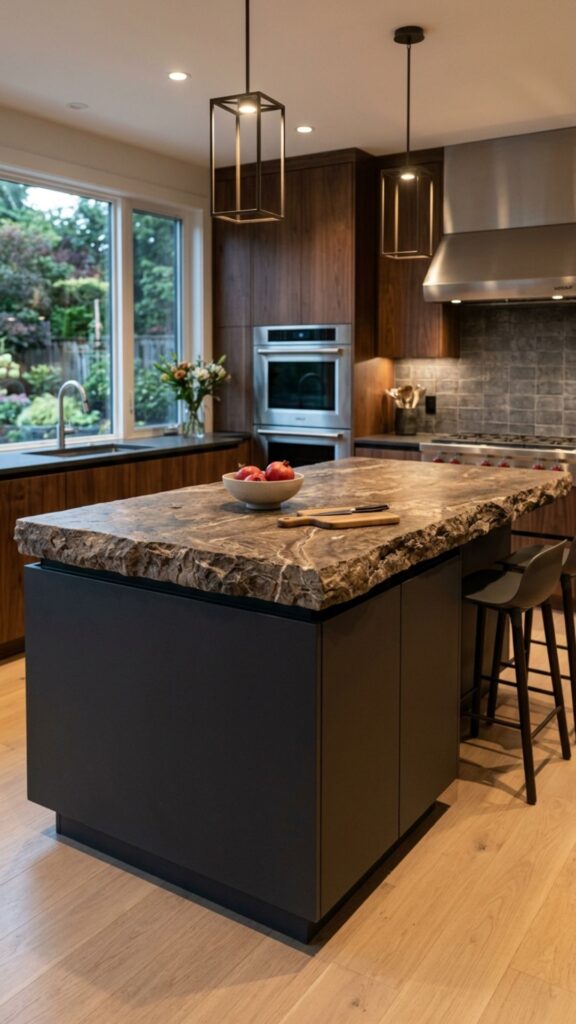
For a bold statement, choose a stone slab with a raw, unpolished edge. Materials like travertine, limestone, and soapstone carry natural pits and texture that celebrate imperfection. The result feels grounded and elemental.
These stones develop a patina over time, which only adds to their character. If you love the idea of a surface that tells a story, this is it. Seal porous stones like travertine to keep them looking their best through years of use.
12. Farmhouse Wood Island with Turned Legs
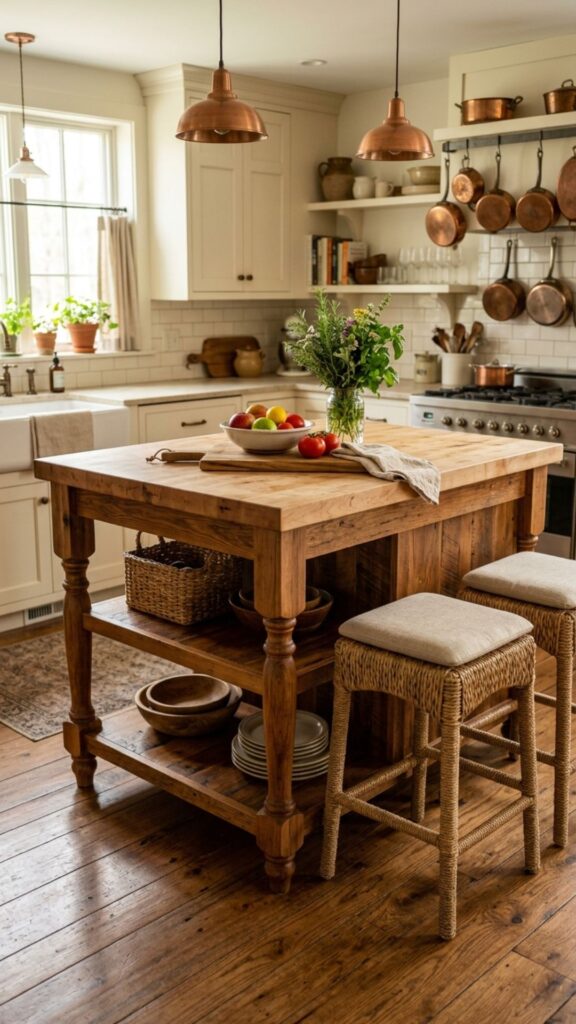
A furniture-style island with turned wooden legs brings farmhouse warmth. It looks less like a built-in cabinet and more like a cherished piece of furniture. Oak and pine work well and keep the tones natural.
This style pairs beautifully with a stone or butcher block top. Add woven stools and a few sprigs of greenery, and you’ve got a country-kitchen feel that never goes out of style. It’s cozy, practical, and full of charm.
13. Neutral Plaster or Limewash Finish
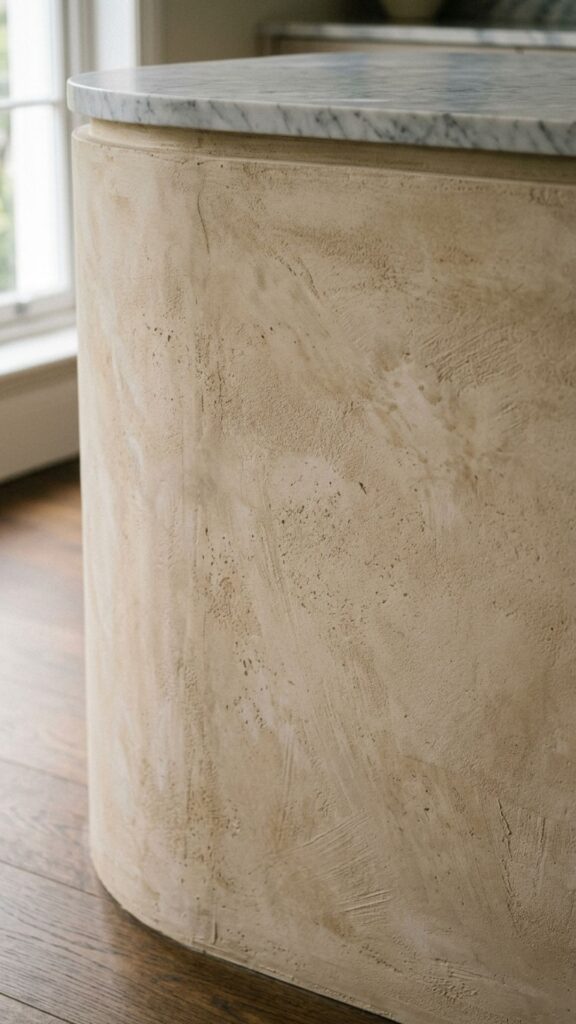
Limewash and plaster finishes add subtle depth and a soft, matte texture. Applied to the island base, these finishes create gentle color variation that mimics natural clay and stone. The look is calm and understated.
Earthy neutrals like beige, taupe, and warm white work best here. The finish catches light in a soft, uneven way that feels handmade. It’s a great option if you want texture without pattern or heavy color.
14. Integrated Herb Garden
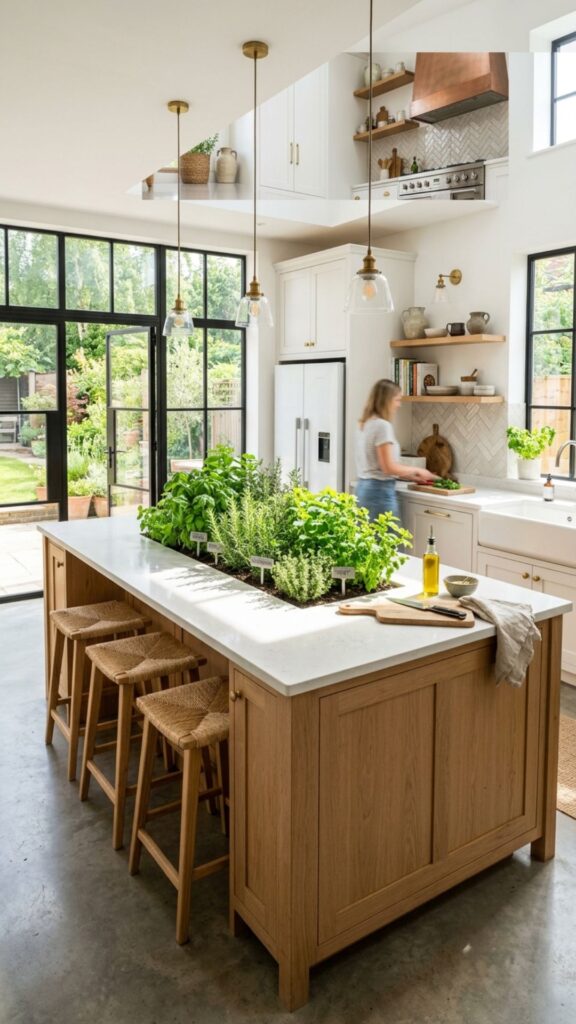
Build a small planter into your island for fresh herbs. Basil, rosemary, and thyme thrive in a sunny kitchen and add living greenery right where you cook. It’s functional and undeniably earthy.
The pop of green softens hard surfaces and keeps the space feeling fresh year-round. Plus, snipping herbs while you cook is a genuine everyday pleasure. Choose a spot near a window so your plants get enough light.
15. Warm Metal Hardware Accents
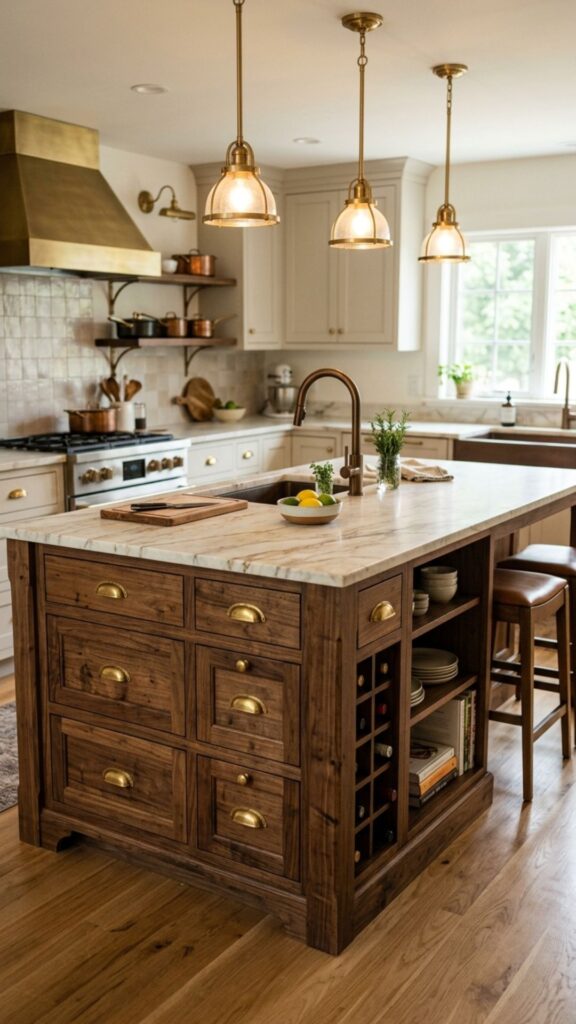
Small details matter, and hardware is one of them. Swap chrome for warm metals like aged brass, copper, or bronze. These finishes add a gentle glow that complements wood and stone beautifully.
Over time, these metals develop a natural patina that only deepens their character. Use them on drawer pulls, faucets, or pendant lights above the island. Even a small change here can pull your whole earthy look together.
16. Soapstone Surface
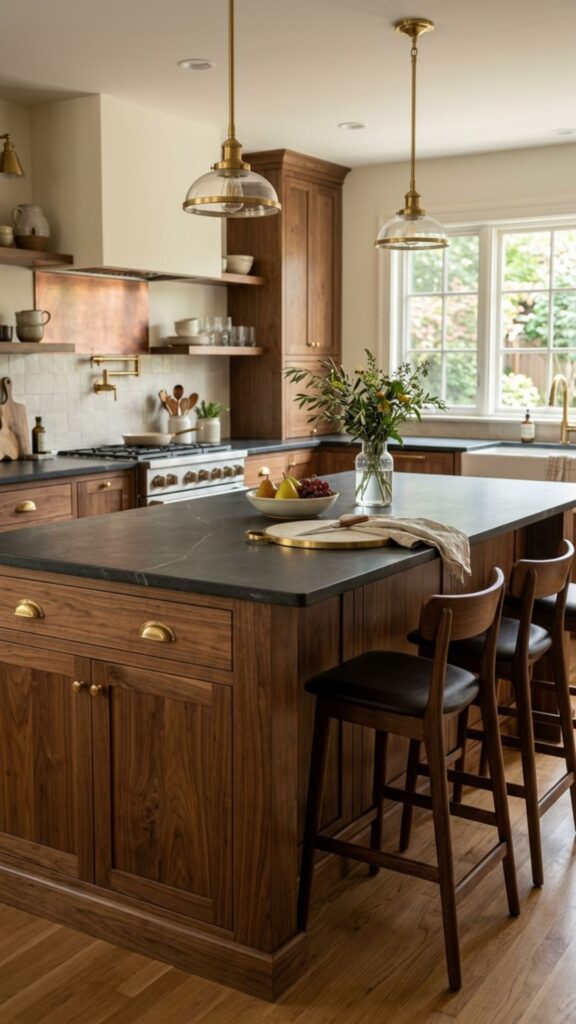
Soapstone has a soft, matte finish and a deep charcoal-gray tone that feels wonderfully organic. It’s naturally non-porous, so it resists stains without heavy sealing. That makes it both beautiful and low-maintenance.
The stone also darkens gradually with use and oiling, giving it a rich, evolving look. If you want a surface that feels timeless and grounded, soapstone is hard to beat. It pairs especially well with wood and warm brass.
17. Textured Wood Slat Base
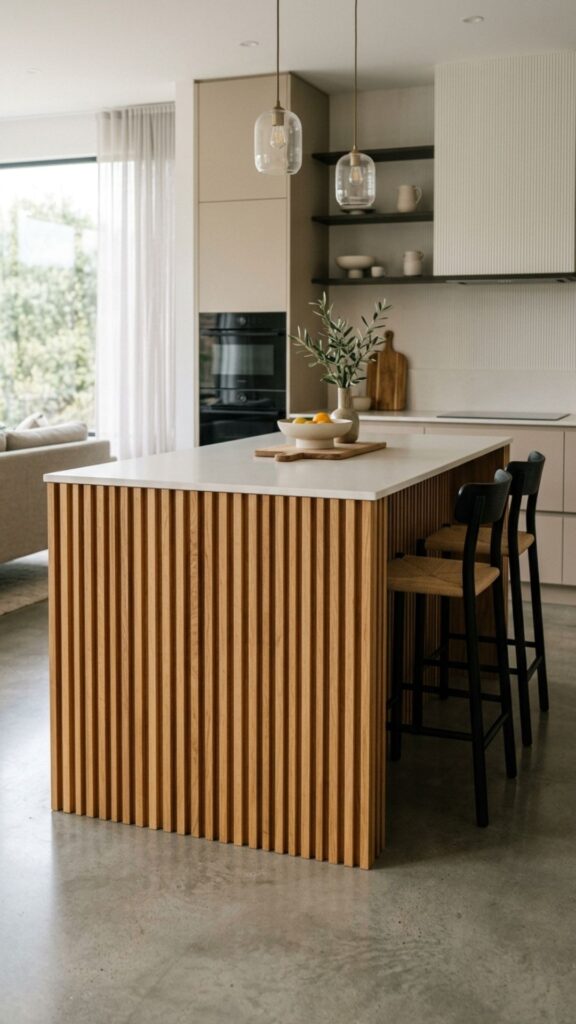
Vertical wood slats add rhythm and texture to an island base. The repeating lines create subtle shadows and depth, giving the piece a tactile, handcrafted feel. Oak and walnut slats look especially warm.
This detail works in both modern and rustic kitchens. It adds visual interest without color or pattern, keeping things calm and natural. Run the slats vertically to make the island feel a touch taller and more elegant.
18. Earthy Tile Waterfall
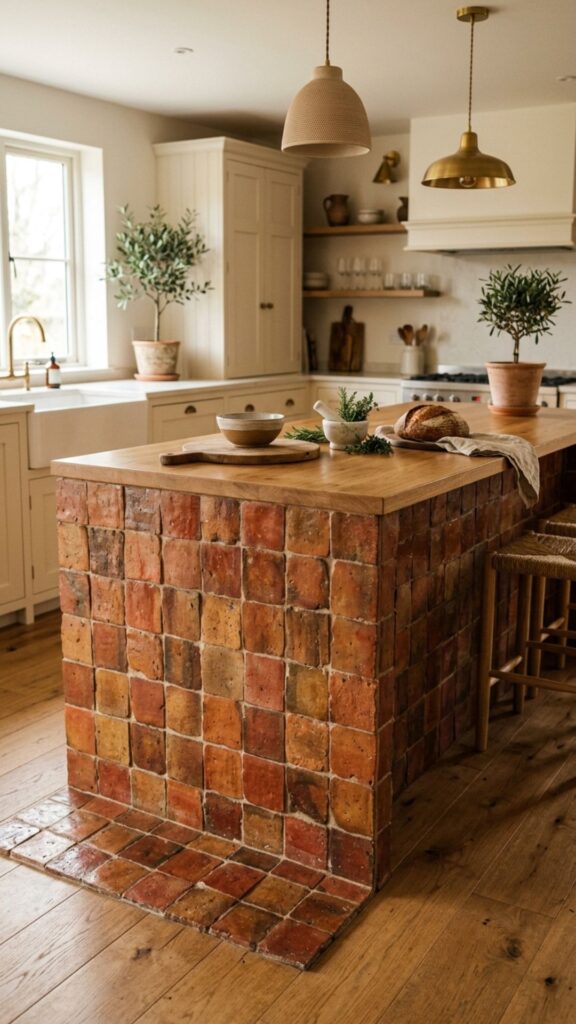
Instead of stone, cover your island in handmade earthy tiles. Zellige, terracotta, and matte ceramic tiles in warm tones bring texture and craftsmanship. The slight irregularities in handmade tile add real charm.
Run the tile down the sides for a waterfall effect, or use it just on the base. Grout in a warm, muted tone keeps the look cohesive. This is a great way to add pattern while staying firmly in earthy territory.
19. Mixed Natural Wood Tones
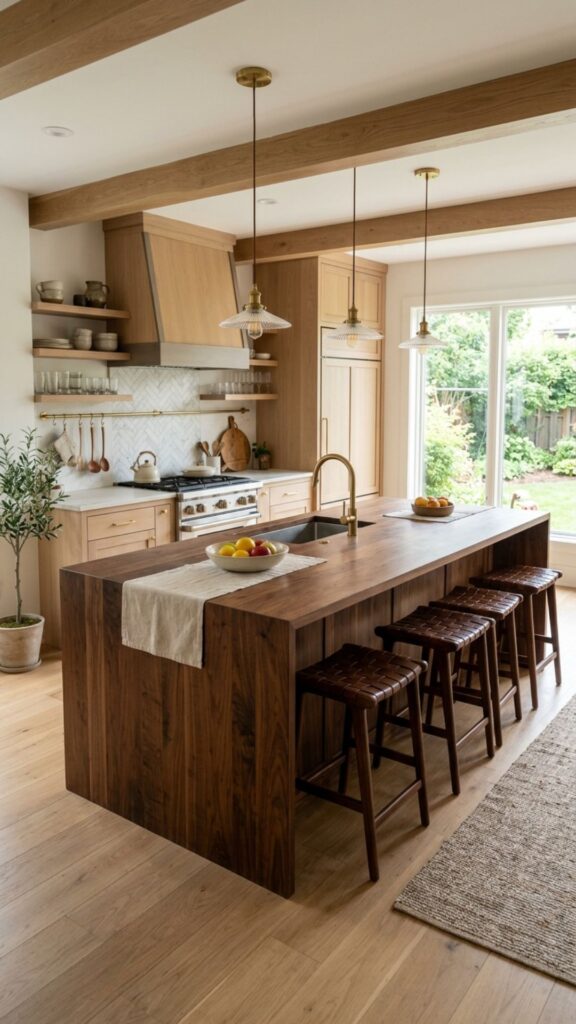
You don’t have to match every wood in your kitchen. Mixing tones, like a walnut island against oak cabinets, adds warmth and depth. The contrast feels collected and organic rather than overly coordinated.
The trick is to keep the undertones in the same family. Stick with warm woods together and cool woods together for balance. Done well, this layered look feels rich, natural, and full of personality.
20. Sculptural Stone Base
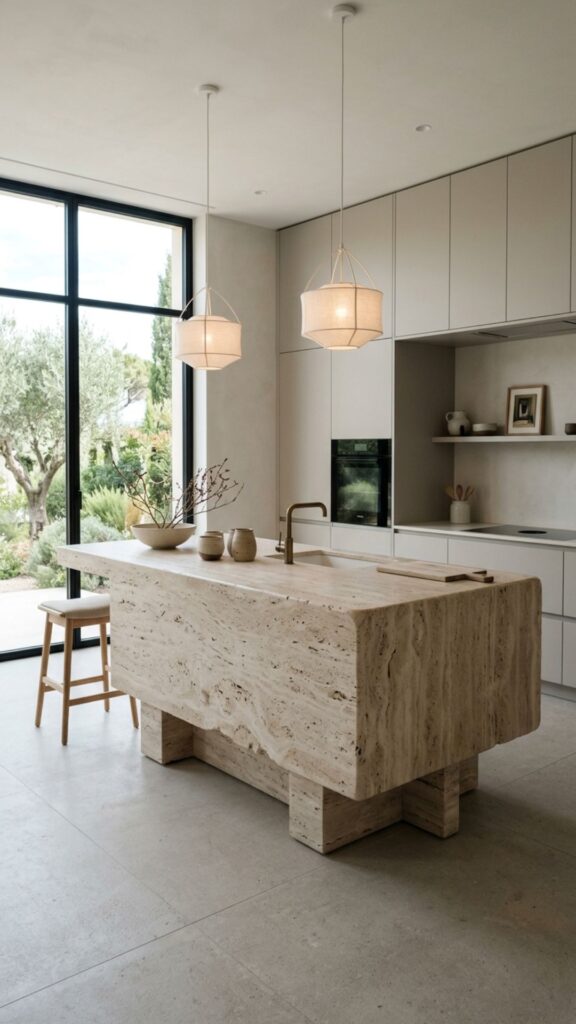
For a striking centerpiece, consider a solid stone base with a sculptural shape. A carved travertine or limestone block feels almost like a piece of art. The raw material grounds the entire kitchen.
This bold choice works best in open, minimal spaces where it can breathe. Keep surrounding elements simple so the stone stays the star. It’s an investment, but the impact is unforgettable and deeply earthy.
Conclusion
Bringing earthy elements into your kitchen island is one of the easiest ways to make your whole space feel warmer and more inviting. Whether you lean toward reclaimed wood, honest stone, woven textures, or a splash of natural green, the goal is the same: a kitchen that feels grounded, personal, and genuinely lived-in.
You don’t have to overhaul everything at once. Start with one idea that speaks to you, like swapping hardware for warm brass or adding a butcher block top, and build from there. Ready to create a warmer, more natural kitchen? Pick your favorite idea from this list and start planning your island transformation today.
What materials make a kitchen island look earthy?
Natural materials like reclaimed wood, live-edge slabs, soapstone, travertine, terracotta tile, and woven rattan give an island an earthy feel. Warm metal hardware in brass or copper and muted green or clay paint tones complete the look.
What is the most durable countertop for an earthy kitchen island?
Soapstone and honed granite are among the most durable earthy countertop choices. Both resist stains and heat well, and soapstone needs little sealing. For a warmer option, sealed butcher block holds up nicely with regular oiling.
How do I make my kitchen island feel warm and natural on a budget?
Focus on small, high-impact changes. Swap hardware for warm brass, add butcher block or reclaimed wood accents, style open shelves with stoneware and baskets, and bring in plants or fresh herbs. These touches add earthy warmth without a full remodel.
What colors work best for an earthy kitchen island?
Warm, nature-inspired shades work best, including sage green, olive, terracotta, taupe, warm beige, and soft charcoal. Pair these with natural wood tones and warm metals for a cohesive, grounded look.
Can I mix wood and stone on the same island?
Yes. Combining a wood base with a stone top, or vice versa, adds depth and lets you zone the island for different tasks. Keep the tones warm and complementary so the two materials feel intentional together.