Overhead lighting is rarely enough on its own. Most dining rooms have a single pendant or chandelier that works fine for dinner but does nothing for the atmosphere the rest of the time. That’s where a well-chosen floor lamp changes everything — it fills in shadows, adds personality, and makes the whole room feel more considered.
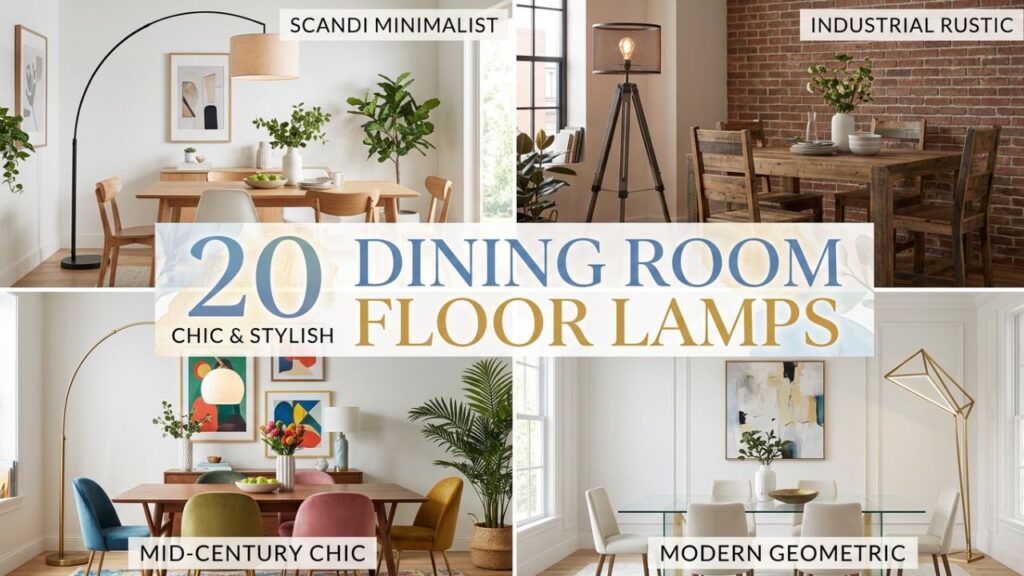
The challenge is knowing which lamp to choose and where to put it. Get the height wrong and it feels awkward. Choose the wrong shade or bulb and you end up with harsh light that kills the mood.
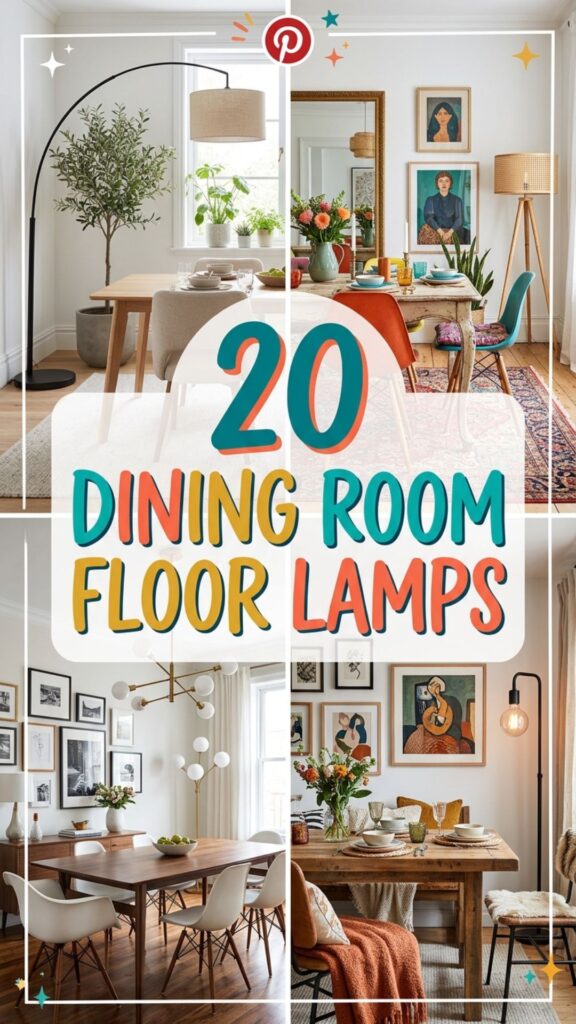
This guide covers 20 dining room floor lamp ideas, styles, and placement strategies that work in real homes — whether you’re decorating a compact space or a large open-plan room. Here’s what you’ll find inside:
- Lamp styles that complement modern and traditional dining rooms
- Practical placement and height guidance
- Tips on shade materials, bulb warmth, and avoiding glare
- Ideas for small spaces, open-plan layouts, and every budget
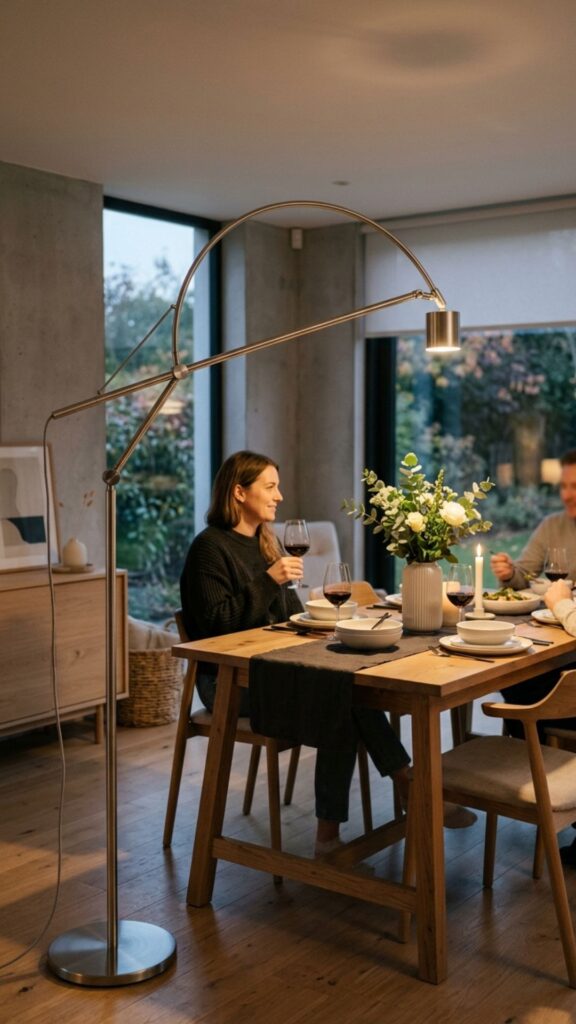
1. Arc Lamps That Reach Over the Dining Table
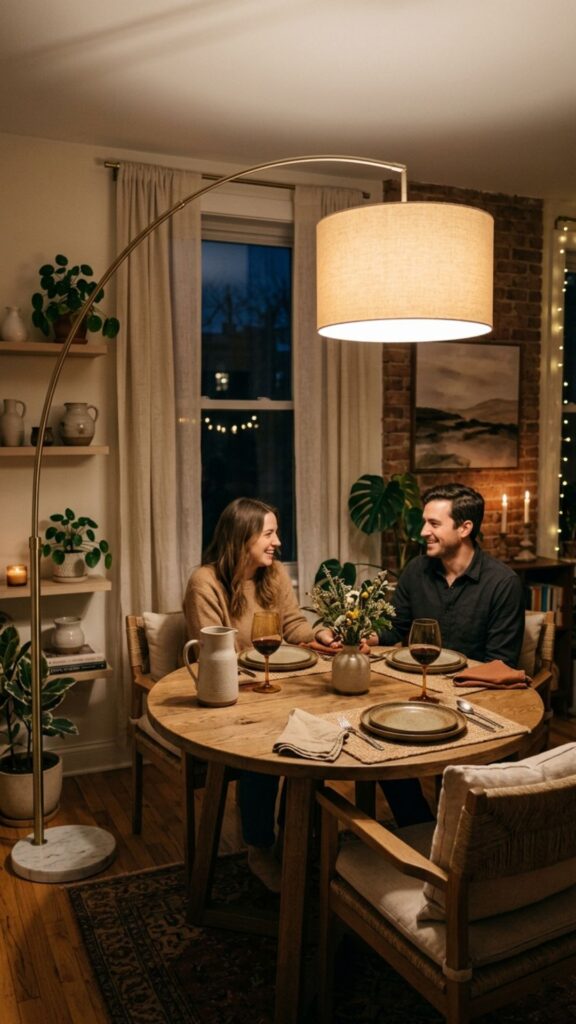
An arc floor lamp — one with a long curved neck that extends out from the base — is one of the most practical dining room floor lamps you can buy. It positions light directly over or beside the table without requiring any ceiling installation. This makes it ideal for renters or anyone who wants flexibility without committing to hard-wired lighting.
Position the base against the wall or in a corner, letting the arc extend toward the table. Choose a model with a dimmer switch so you can shift between bright light for family dinners and a softer glow for evenings. A large drum shade in linen or cotton diffuses light evenly and reduces glare significantly.
2. Tripod Floor Lamps for a Modern Statement
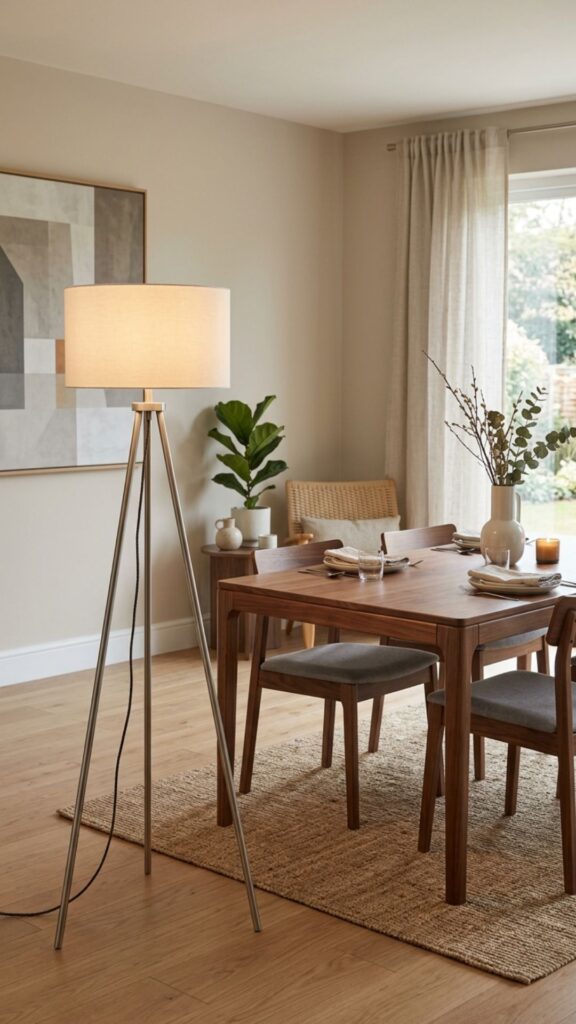
Tripod floor lamps have three angled legs that spread out from a central column, creating a sculptural silhouette that looks at home in modern and mid-century dining rooms. They’re sturdy, visually interesting, and available at a wide range of price points.
A tripod lamp in dark walnut wood or matte black metal pairs naturally with dining chairs that have tapered legs or a table with clean lines. Keep the shade simple — a straight-sided drum shade in white or off-white works well — so the base remains the visual focus rather than competing with it.
3. Warm Edison Bulb Lamps for Evening Atmosphere
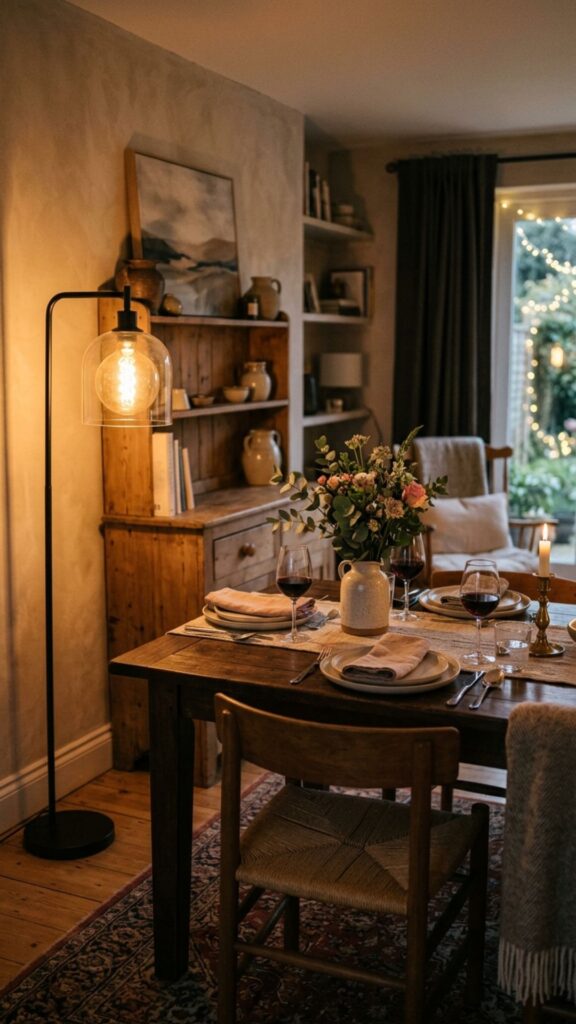
The bulb you choose matters as much as the lamp itself. Edison-style bulbs with a warm color temperature — 2200K to 2700K — produce a golden, candlelight-adjacent glow that makes dining rooms feel intimate and inviting. This is the opposite of the cool, bluish light that overhead fluorescents tend to cast.
Look for floor lamps with exposed bulb holders or open-cage shades that let the bulb be visible. In a dining room with warm wood tones, brick, or terracotta accents, an Edison bulb lamp reinforces the palette naturally. Pair it with a dimmer for full control over the mood.
4. Torchiere Floor Lamps for Ambient Uplighting
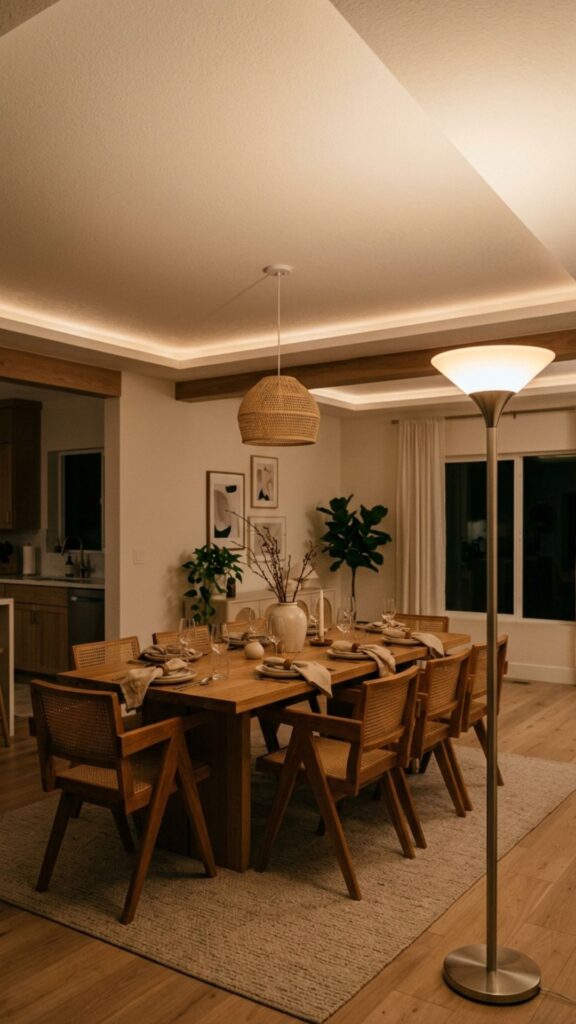
Torchiere lamps direct light upward toward the ceiling, which then bounces back down as soft, diffused ambient light. This is one of the best approaches for dining rooms where you want overall brightness without any single harsh point of light.
These lamps are tall — typically 60 to 72 inches — which means they work especially well in rooms with higher ceilings. In a dining room with a 9-foot or taller ceiling, a torchiere creates a beautifully even wash of light that makes the whole space feel larger and more open. Use a warm white bulb to avoid the cold, clinical effect that upward-facing lights can sometimes produce.
5. Slim Floor Lamps for Small Dining Rooms
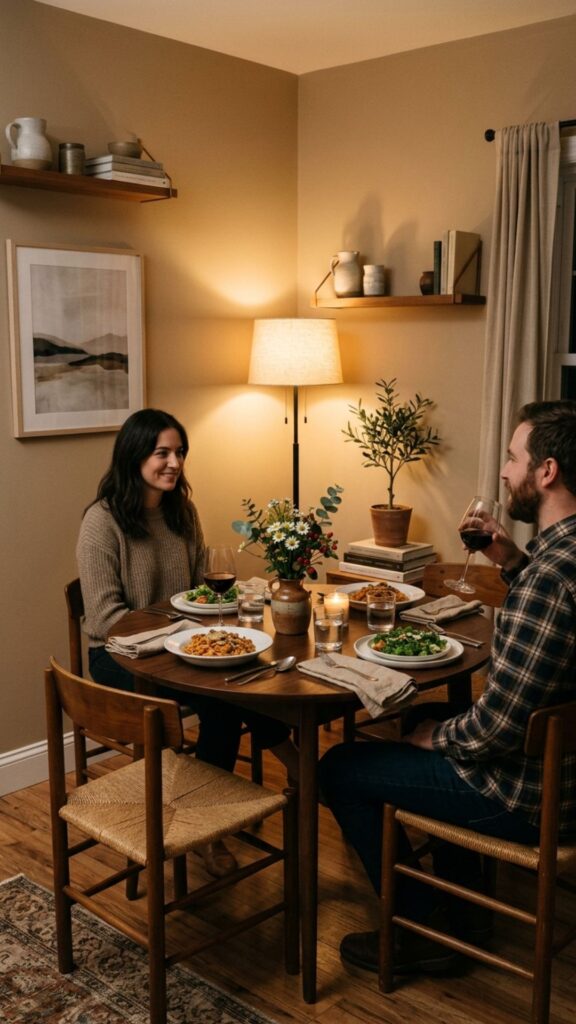
In a compact dining room, the wrong floor lamp takes up space the room can’t afford to give. A slim, single-post floor lamp with a small footprint solves that problem. Look for a base that’s no wider than 10 to 12 inches across and a shade that doesn’t project far past the pole.
Place a slim lamp in a corner behind a chair or beside a sideboard so it contributes light without interrupting traffic flow. This approach keeps the floor lamp from feeling like an obstacle while still adding the warm layered lighting that makes a small dining room feel cozy rather than cramped.
6. Industrial-Style Lamps With Metal Shades
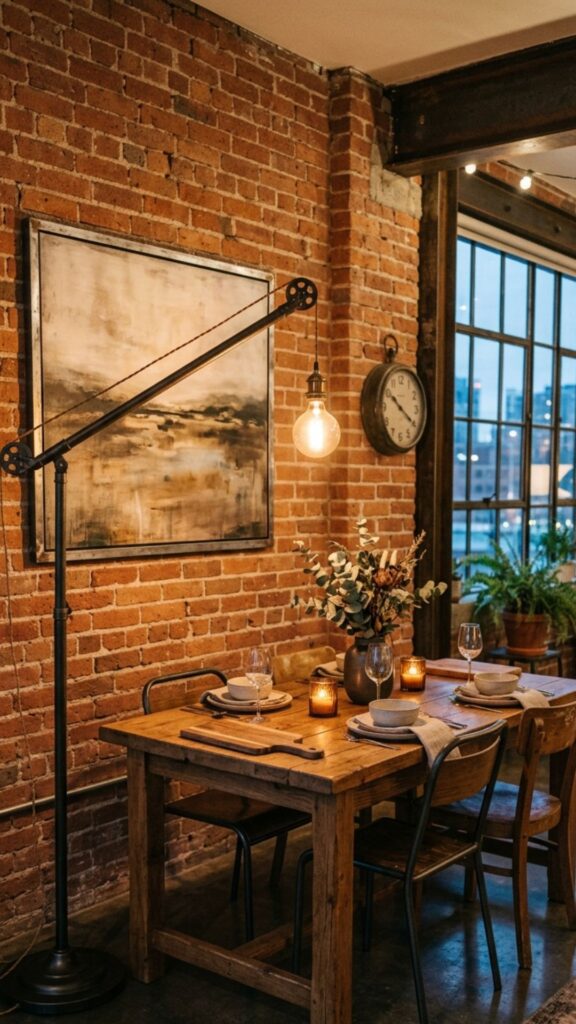
Industrial floor lamps — exposed metal, dark finishes, Edison bulbs, minimal ornamentation — suit dining rooms with raw or textural elements like exposed brick, concrete, dark wood, or iron furniture. The style bridges rustic and modern convincingly without tipping into either extreme.
A single industrial floor lamp positioned beside a dark dining table or near a bar cart reads as intentional and well-considered. The directional metal shade sends light exactly where you aim it, which is useful if you want to highlight a specific zone — a sideboard display, a reading corner, or the table surface itself.
7. Rattan and Woven Shade Lamps for Organic Warmth
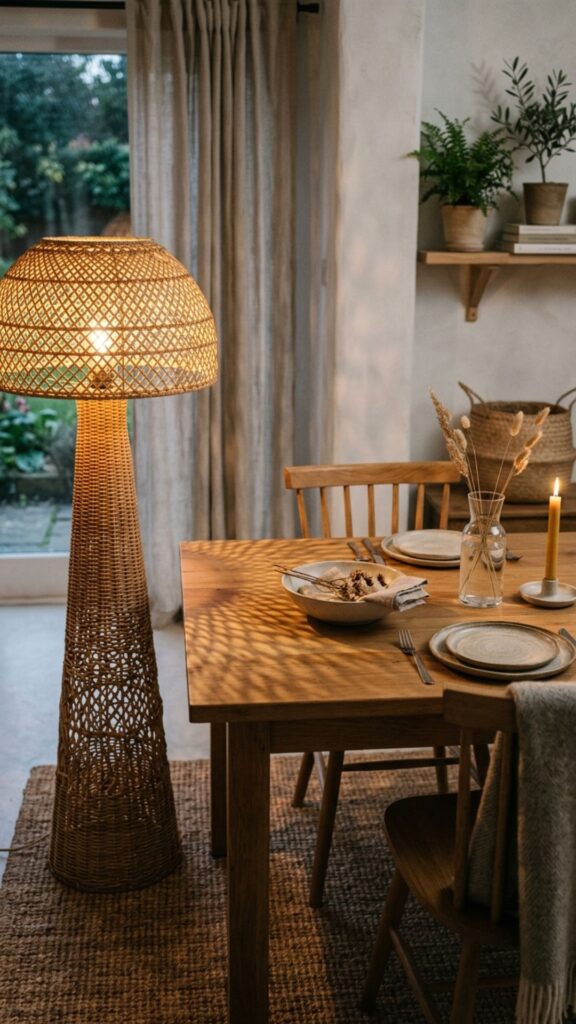
Rattan, bamboo, and woven shade floor lamps are having a genuine moment in interior design, and for good reason. When light passes through a woven shade, it creates a warm, dappled effect on surrounding walls that no solid shade can replicate. It’s an easy way to add texture and softness to a dining room simultaneously.
This style works particularly well in dining rooms with natural materials — a jute rug, cane chairs, or a reclaimed wood table. The visual language is consistent and cohesive. Avoid very tightly woven shades if your goal is to put meaningful light into the room; looser weaves let through more light while still creating that textured effect.
8. Pharmacy Floor Lamps for Adjustable Directed Light
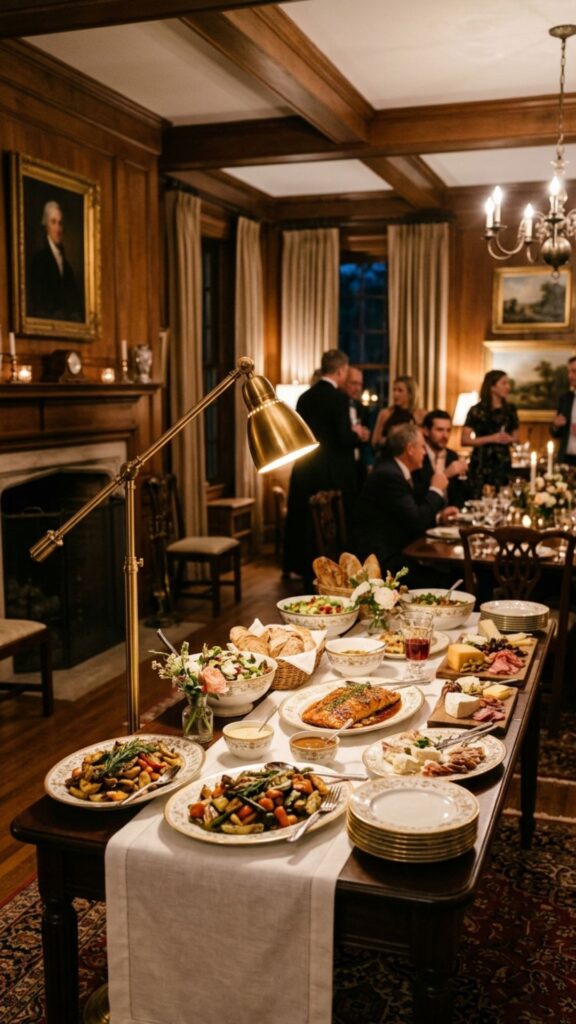
A pharmacy or task-style floor lamp has an adjustable arm that lets you redirect the shade in whatever direction you need. In a dining room, this is useful when you want to illuminate a specific area — a buffet table for hosting, a corner reading spot, or a piece of art — rather than lighting the room generally.
Look for a pharmacy lamp in brushed brass, satin nickel, or matte black to match existing metal finishes in the room. These lamps are typically more compact than arc models and sit comfortably beside chairs or in corners without dominating the space. The adjustability makes them one of the most practical dining room floor lamps for multi-use rooms.
9. Brass Floor Lamps for a Timeless Dining Room Look
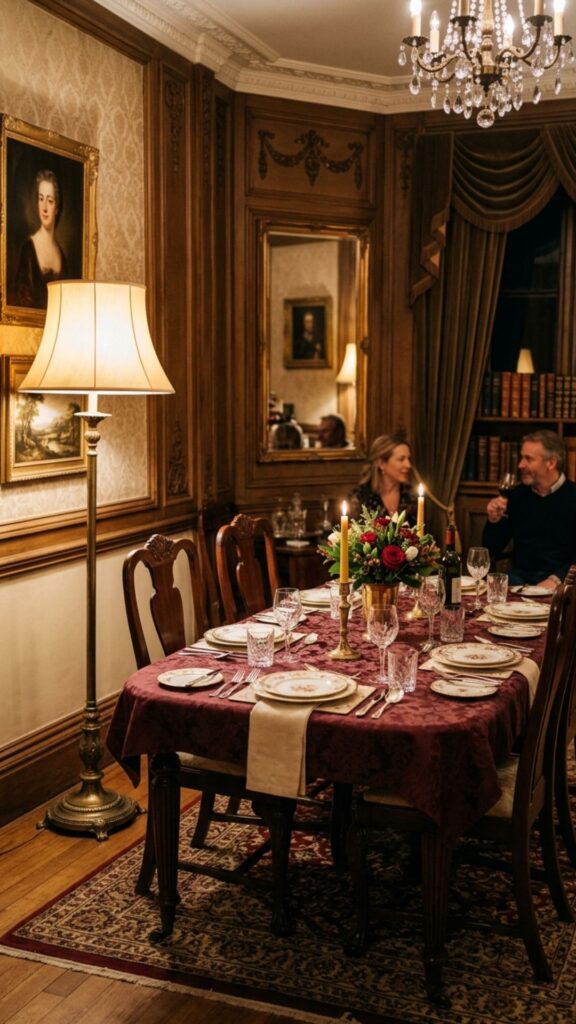
Brushed or antique brass floor lamps have made a strong return to interiors and show no signs of fading. Brass coordinates well with warm neutrals, olive greens, and burgundy — color combinations that are increasingly common in contemporary dining rooms.
A tall brass column lamp with a pleated or tapered fabric shade suits a dining room that leans traditional without being stuffy. The finish bridges older furniture and newer accessories convincingly. Keep the rest of the room’s metalwork consistent — matching brass in cabinet hardware or light fixtures ties everything together cleanly.
10. Black Matte Floor Lamps for Graphic Contrast
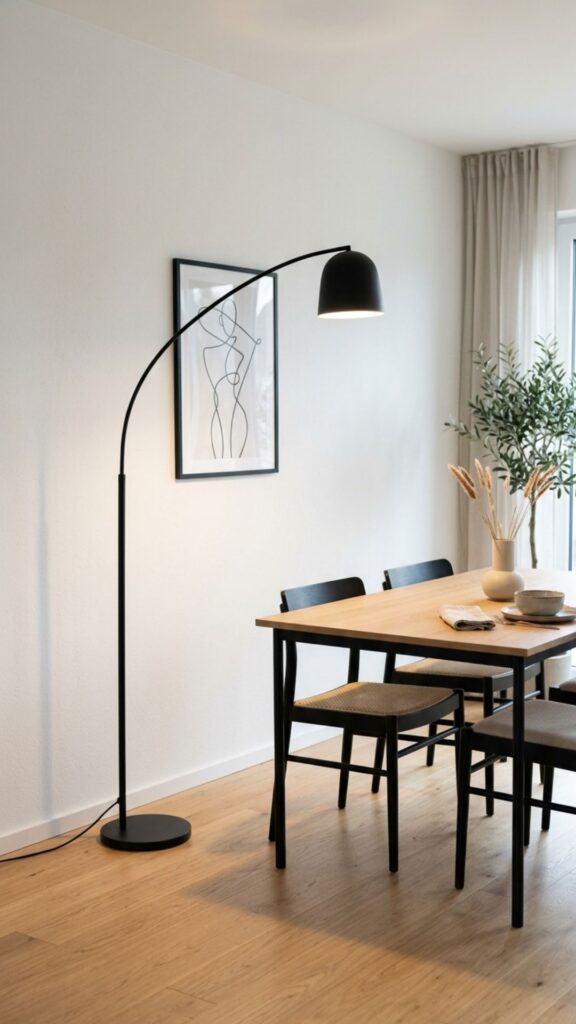
A matte black floor lamp against a white or light-toned dining room wall creates the kind of graphic contrast that makes a space feel deliberate and modern. Black is also one of the easiest finishes to integrate because it coordinates with nearly any color scheme.
Choose a matte black lamp with a clean silhouette — no fussy details — and a shade in white or natural linen so the contrast stays focused on the base. This is one of the most reliable dining room floor lamp choices for people who want a modern result with minimum risk.
11. Tall Lamps That Double as Sculpture
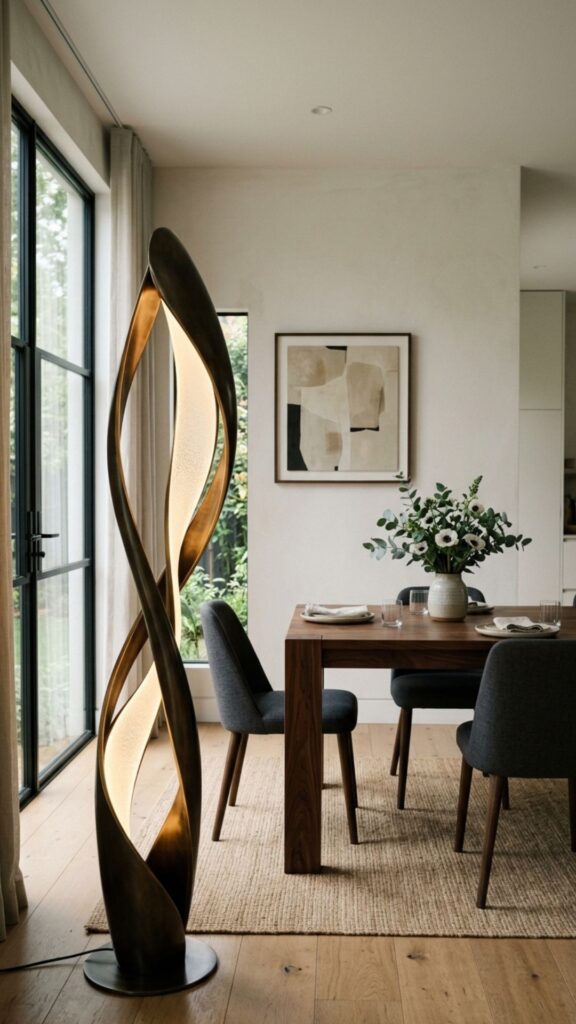
Some floor lamps are genuinely beautiful objects in their own right — sculptural bases in organic shapes, unusual materials, or unexpected proportions. In a dining room with otherwise simple furnishings, a sculptural floor lamp can be the single statement piece that anchors the whole room.
Look for bases in ceramic, sculptural plaster, or cast metal if you want something that reads as art. Keep the shade understated so it doesn’t compete with the base. A sculptural lamp works best when there’s enough clear space around it to be seen — avoid placing it where furniture crowds its base.
12. Globe Shade Lamps for Soft, Diffused Light
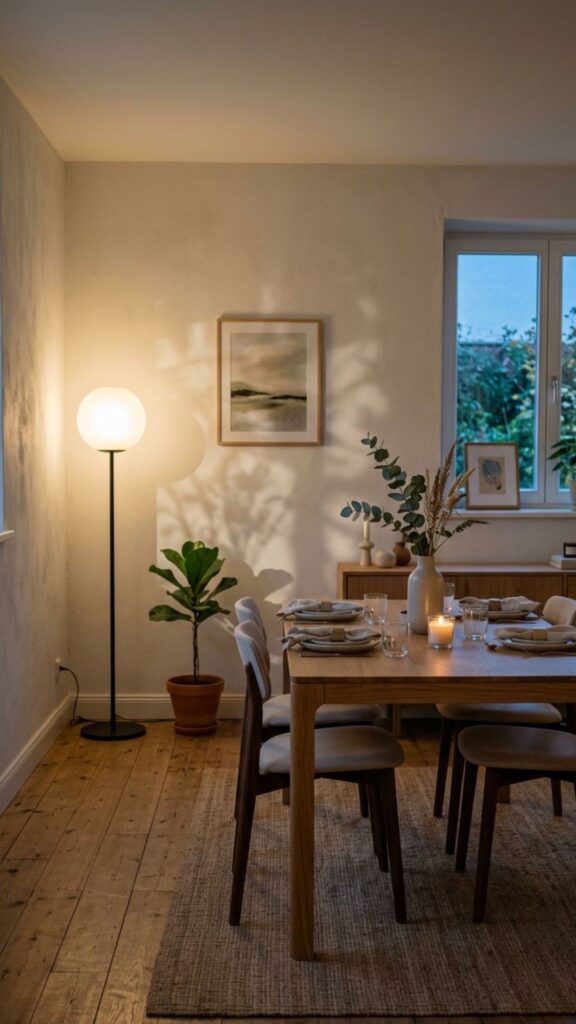
A floor lamp with a globe-shaped shade — round and enclosed — produces one of the most evenly diffused pools of light available. Light escapes from every surface of the shade simultaneously, which means very little harsh shadow and a gentle all-over glow.
Glass globe shades in frosted white or amber are the most common choices for dining rooms. Amber glass gives a distinctly warm, golden tone even with a standard bulb. Frosted white is more neutral but still softer than an open shade. Either option is a strong dining room floor lamp choice for anyone who finds directed light too harsh.
13. Floor Lamps With Built-In Shelves
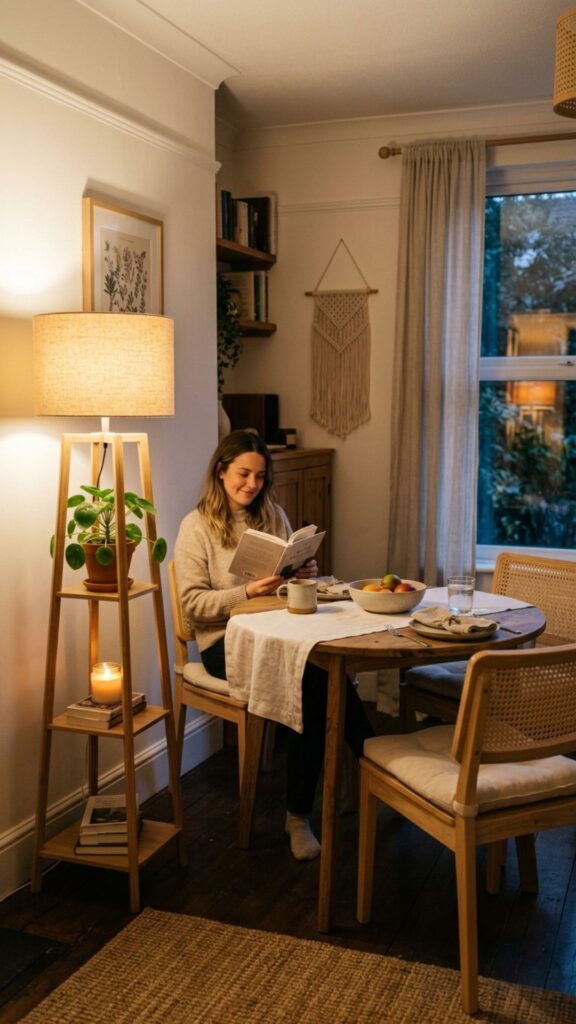
Some floor lamp designs incorporate small shelves or side tables into the base structure, which is a genuinely clever solution for dining rooms that need to do more with less space. The lamp provides light while the integrated surface holds a book, a small plant, or a candle.
This is particularly useful in dining rooms that double as home offices or reading spaces. The shelf keeps essentials within reach without requiring an additional piece of furniture. Look for designs with the shelf positioned at a comfortable height — around 24 to 28 inches from the floor — so it’s accessible without bending.
14. Drum Shade Floor Lamps for Versatile Style
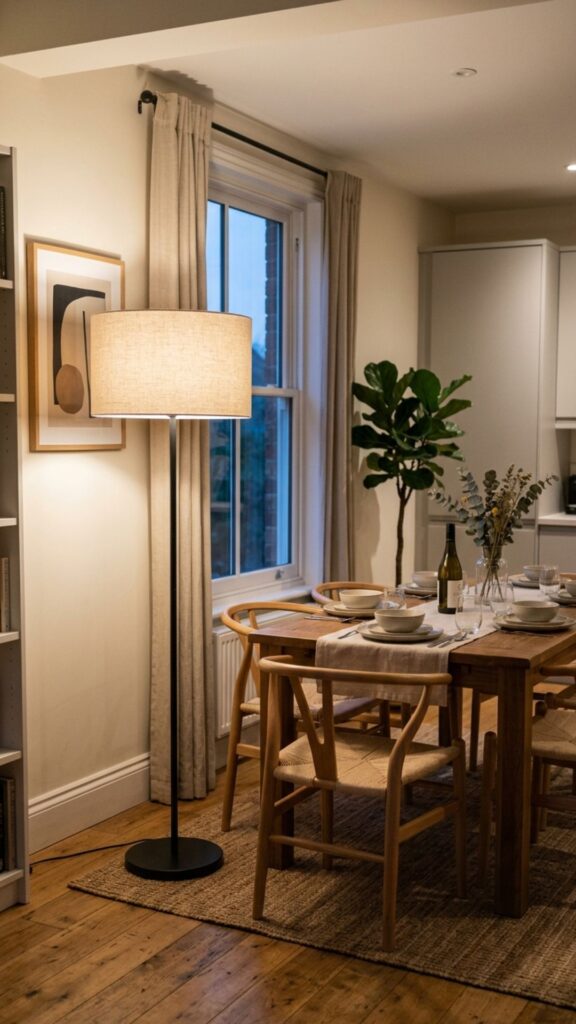
A drum shade — cylindrical, with equal top and bottom diameters — is one of the most versatile shade shapes available because it works across multiple interior styles. It’s at home in modern, transitional, and even more traditional dining rooms without effort.
The key variable is the shade material. A linen drum shade is soft and warm. A paper shade is even lighter in appearance. A fabric shade with a metallic interior lining bounces more light downward and outward, which increases the effective output of the lamp. If your dining room needs more light from a single lamp, interior lining makes a noticeable difference.
15. Swing-Arm Floor Lamps for Flexible Positioning
A swing-arm floor lamp has an articulated arm that pivots horizontally, letting you redirect the lamp’s light without moving the base. In a dining room where you occasionally reconfigure the table arrangement for gatherings or hosting, this flexibility is worth having.
Position the base against a wall and swing the arm out over the table or seating area as needed. Swing-arm lamps tend to have a slightly utilitarian aesthetic that suits modern and industrial dining rooms particularly well. In more traditional spaces, look for swing-arm models in warm brass or bronze finishes to soften the functional appearance.
16. Color-Shaded Lamps for a Bold Dining Room Accent
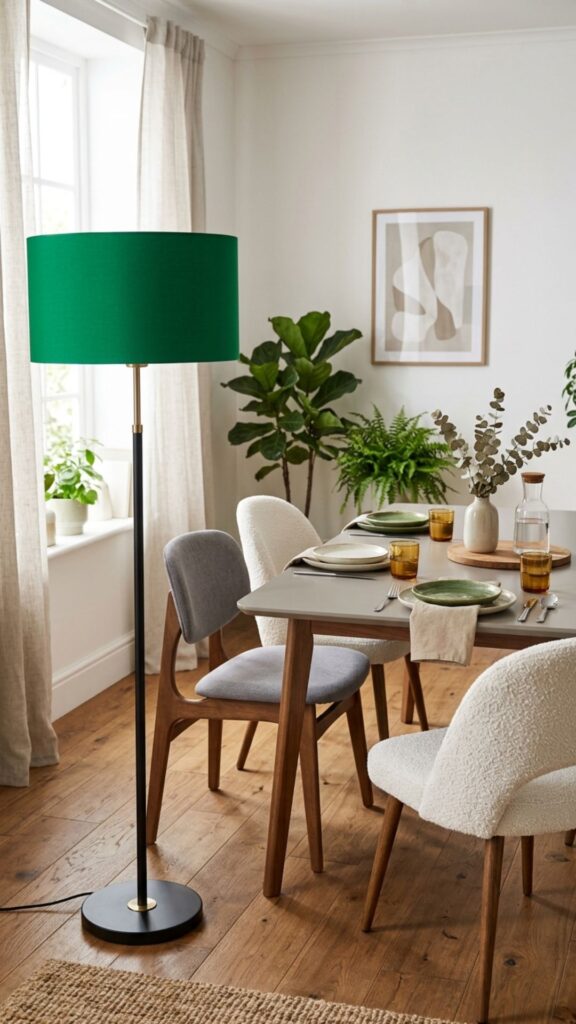
Most dining room floor lamps come with neutral shades, but a lamp with a colored shade — deep green, terracotta, cobalt blue, dusty rose — can become a defining accent in an otherwise neutral room. The shade casts colored light onto nearby surfaces, which adds warmth and depth that neutral shades can’t achieve.
Choose a color that already exists somewhere in the room — in a piece of art, a rug, or the upholstery on your dining chairs. This connects the lamp to the room’s existing palette so it reads as intentional rather than random. A single bold shade lamp is usually enough; more than one in the same room risks tipping from accent into chaos.
17. Low-Profile Floor Lamps for Casual Dining Spaces
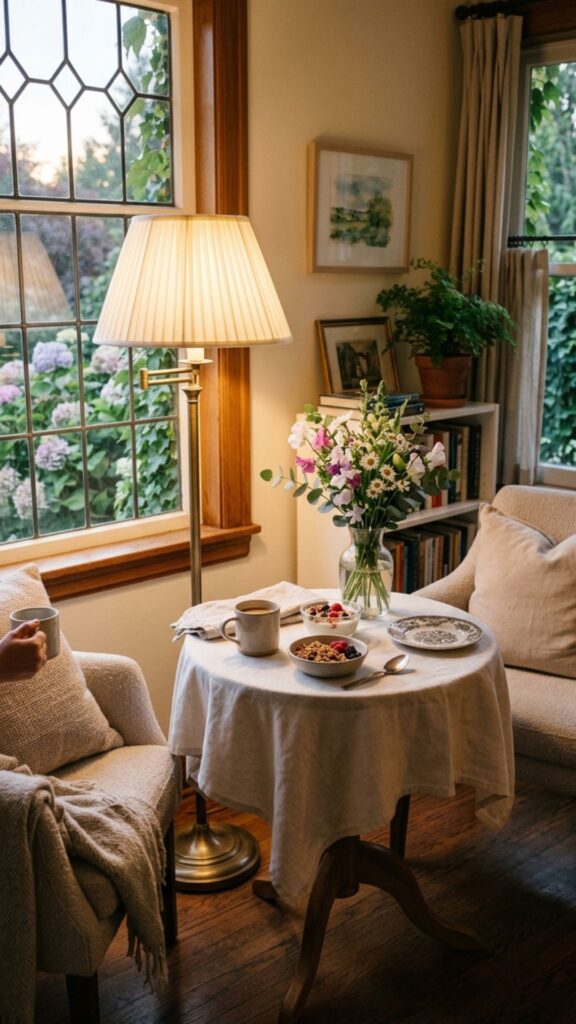
Not every dining room has a formal setup. Casual dining spaces — an eat-in kitchen, a breakfast nook, a bistro-style corner — often suit lower, more relaxed lamps rather than tall statement models. A low-profile floor lamp, typically 48 to 55 inches tall, keeps the light source closer to the table and creates a more intimate atmosphere.
This approach is especially effective in small dining rooms where a full-height lamp can feel disproportionate. A shorter lamp beside a round bistro table and two chairs creates a cozy, café-like corner that invites lingering. Keep the bulb warm and the shade opaque so the glow stays soft and focused.
18. Mid-Century Modern Lamps for Enduring Appeal
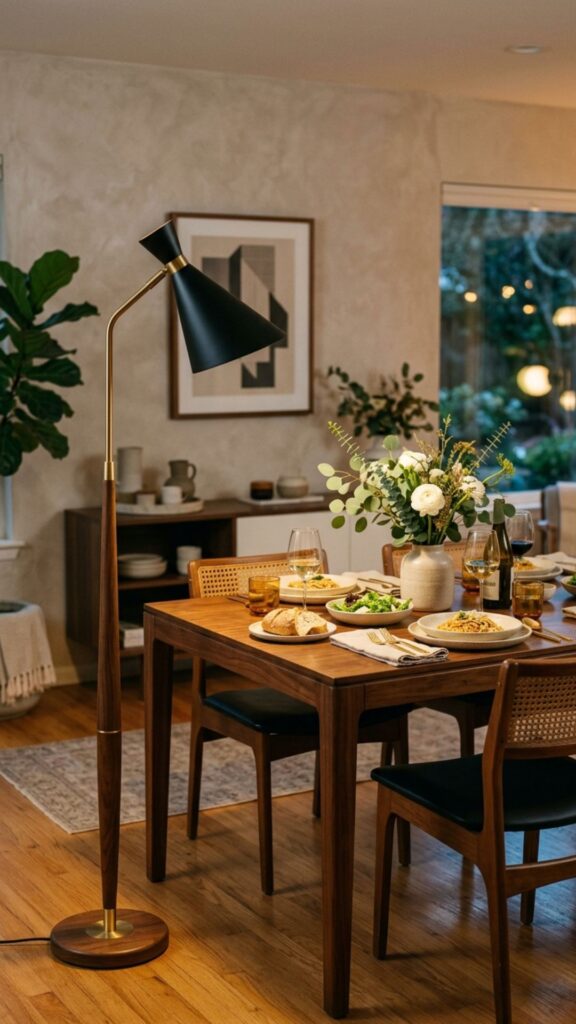
Mid-century modern floor lamps — clean lines, angled shades, tapered bases, walnut or brass finishes — remain one of the safest stylistic investments in home décor because the aesthetic has genuinely lasting appeal. A well-made mid-century lamp looks as current today as it did a decade ago.
Look for lamps with a tripod or single-leg base in natural wood or polished metal, a cone or dome shade in white or cream, and minimal ornament. This style pairs easily with most dining room furniture because it’s neither aggressively retro nor trying too hard to be contemporary. It simply works.
19. Smart Floor Lamps With Dimmable LED Options
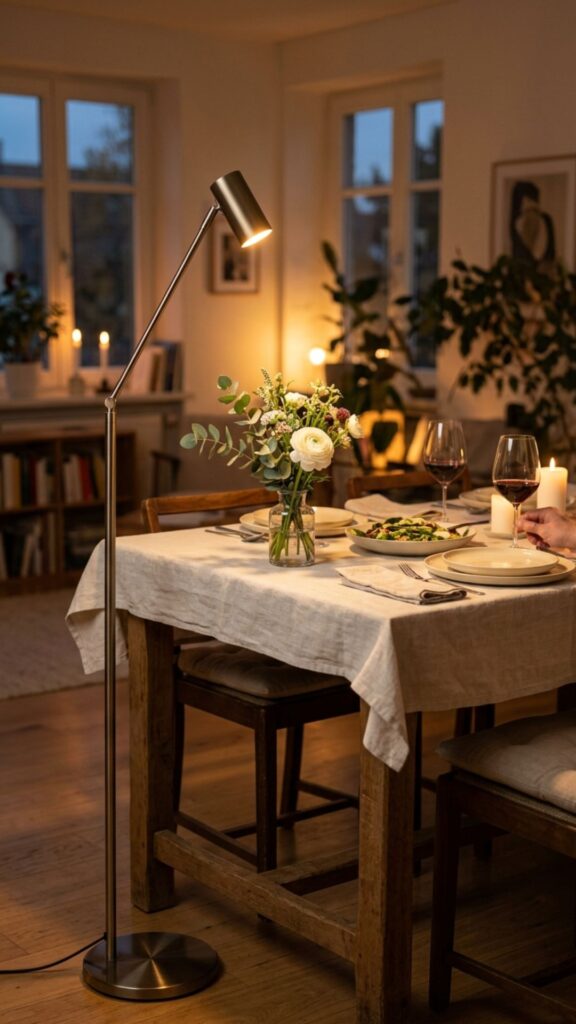
A smart floor lamp connected to a phone app or a voice assistant lets you adjust brightness and color temperature without getting up from the table. For a dining room, this is genuinely practical — you can shift from bright white light while setting the table to a warm amber glow once the meal starts.
Dimmable LED bulbs in the 2700K to 3000K range are the current standard for dining room use. They’re energy efficient, last far longer than incandescent alternatives, and produce a light quality that’s close enough to warm incandescent that most people find it indistinguishable in practice. Many smart floor lamps include this functionality built in.
20. Two Floor Lamps Instead of One
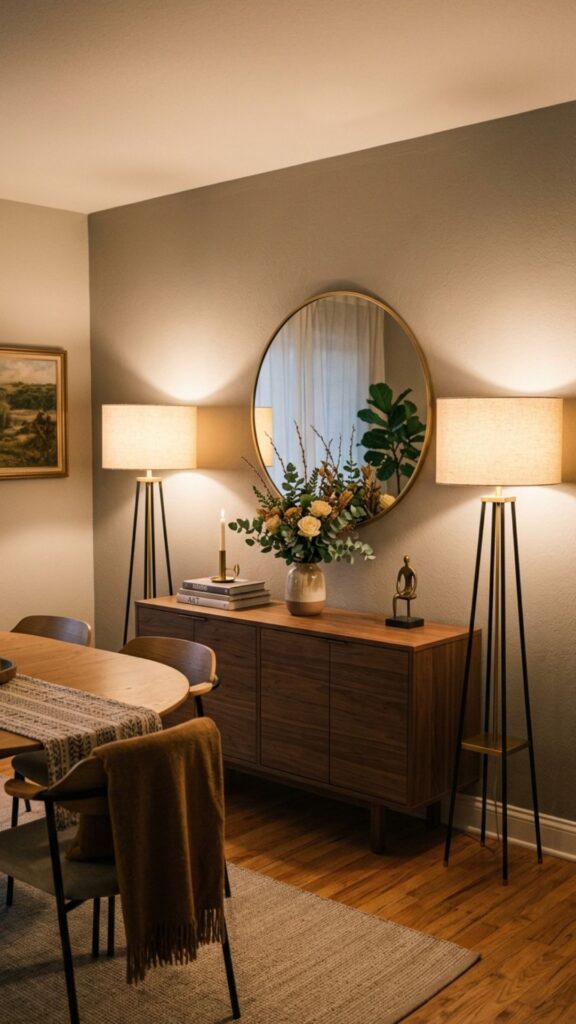
One often-overlooked dining room floor lamp idea is simply using two. A pair of matching lamps placed symmetrically — one on each side of a sideboard, or flanking a large piece of art — creates a balanced, finished look that’s hard to achieve with a single light source.
Two lamps also provide more even ambient light, which reduces shadowy corners and makes the whole room feel more cohesive after dark. Choose identical models for a formal, symmetrical effect, or very similar lamps in the same finish for something slightly more relaxed. Either approach reads as more considered than a single lamp placed wherever it fits.
Conclusion
The right dining room floor lamp doesn’t just add light — it adds character, warmth, and a sense that the room was put together with care. Whether you’re drawn to a sculptural arc lamp, a rattan shade, or a simple brass column, the best choice is the one that fills the gaps in your current lighting while fitting naturally with what’s already in the room.
Start by identifying where your dining room feels darkest or coldest in the evening, then choose a lamp style that addresses that specific problem. You don’t need to overhaul the whole room — one well-placed floor lamp, with the right bulb and a dimmer, can transform how the space feels entirely.
Pick the lamp style that suits your dining room best and make the upgrade — warmer evenings are closer than you think.
What is the best height for a dining room floor lamp?
Most dining room floor lamps perform best at 58 to 64 inches tall. This height puts the shade at or just above eye level when seated, which directs light into the room without shining directly into anyone’s eyes. Arc lamps are an exception — the arc positions the shade higher and further out, so standard height rules don’t apply in the same way.
What bulb color temperature is best for a dining room floor lamp?
Aim for a color temperature between 2200K and 2700K for dining room use. This range produces a warm, golden light that makes food look appealing and creates a relaxed, welcoming atmosphere. Avoid anything above 3000K in a dining room — the light becomes noticeably cooler and harsher, which works against the intimate mood most people want at the table.
Can a floor lamp provide enough light for a dining room on its own?
A single floor lamp is rarely sufficient as the only light source in a dining room — it’s designed to layer with overhead lighting, not replace it. Used together, a ceiling fixture at full brightness for practical tasks and a floor lamp at lower intensity for ambiance creates a far more comfortable and versatile lighting setup than either source alone.
How do I choose a floor lamp that coordinates with my dining room furniture?
Match at least one element of the lamp — the finish, material, or color — to something already in the room. If your dining chairs have brass legs, a brass floor lamp connects naturally. If your table is dark walnut, a lamp with a walnut wood base fits the palette. You don’t need everything to match perfectly; one shared element is usually enough to make a lamp feel like it belongs.