There’s something deeply comforting about a farmhouse-style dining room. It feels lived-in, welcoming, and full of personality — the kind of space where people linger long after the plates are cleared. If your dining room walls feel bare, cold, or just uninspired, the right décor can change all of that without a full renovation.
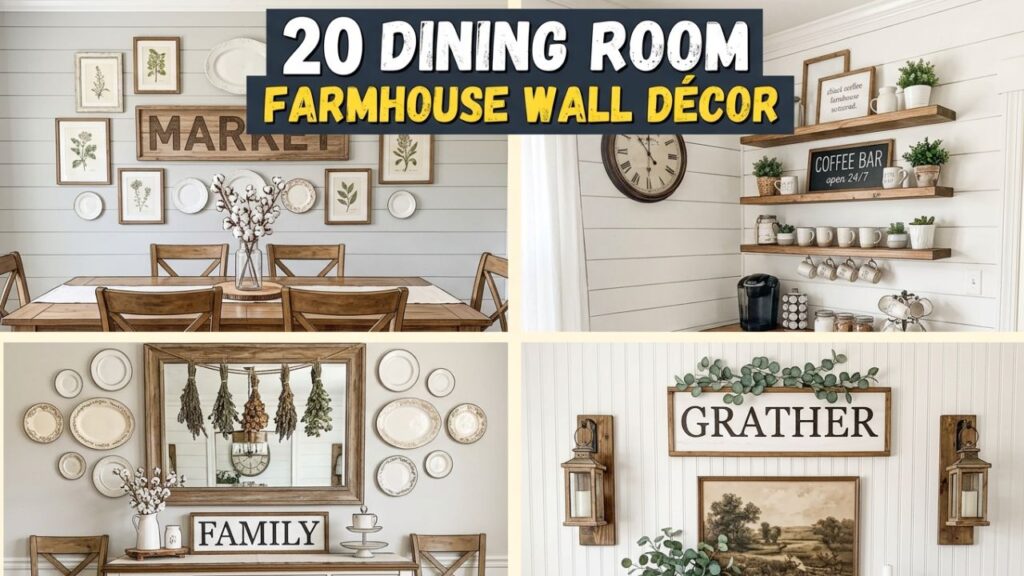
This guide covers 20 practical, budget-friendly dining room farmhouse wall décor ideas you can actually use. Whether you’re working with a rental, a new build, or a home that needs a little soul, you’ll find ideas here that suit your space and your style.
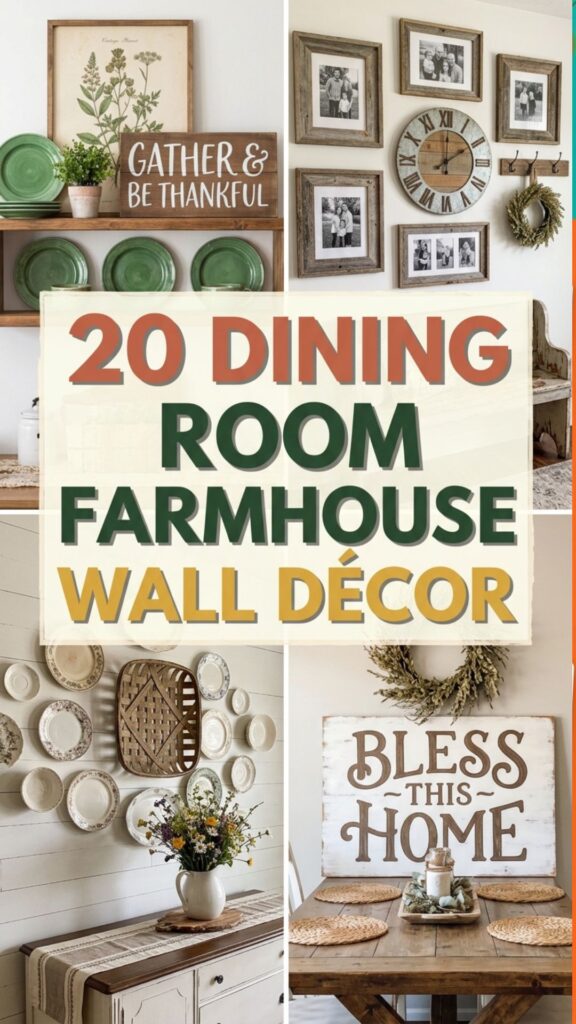
From simple DIY touches to thoughtful statement pieces, every suggestion is grounded in real home styling principles — nothing overly fussy, nothing out of reach.
1. Hang a Wooden Shiplap Panel as a Backdrop
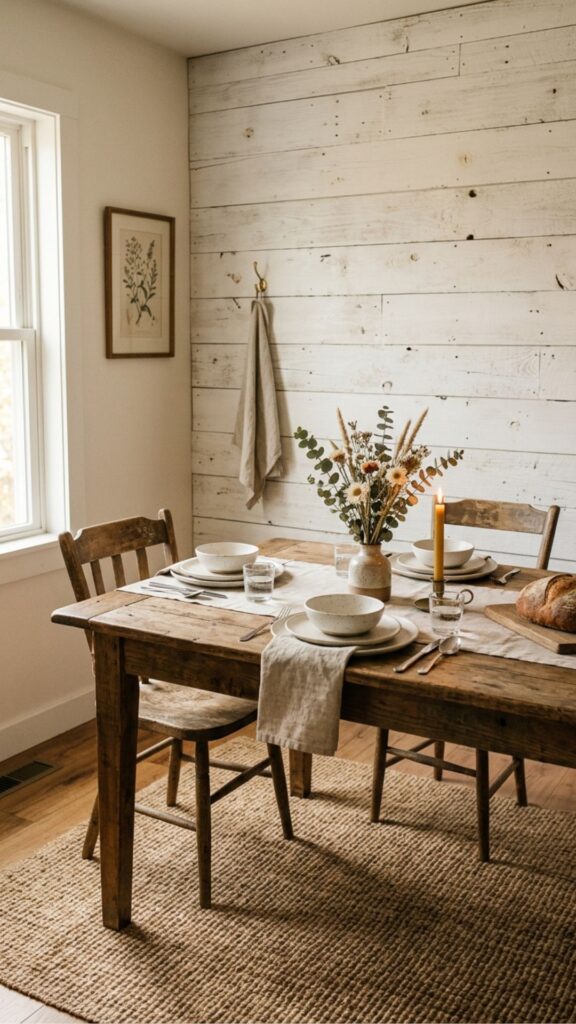
Shiplap is one of the most recognizable features of farmhouse design, and you don’t need to install it floor-to-ceiling to get the effect. A single shiplap panel behind your dining table — painted white, left natural, or stained in a warm oak tone — creates an immediate sense of character and texture.
You can buy pre-made shiplap boards at most home improvement stores and attach them horizontally to a single accent wall. Keep the rest of the room walls simple so the shiplap reads as a deliberate design choice rather than a patchwork project.
2. Create a Gallery Wall With Vintage Botanical Prints
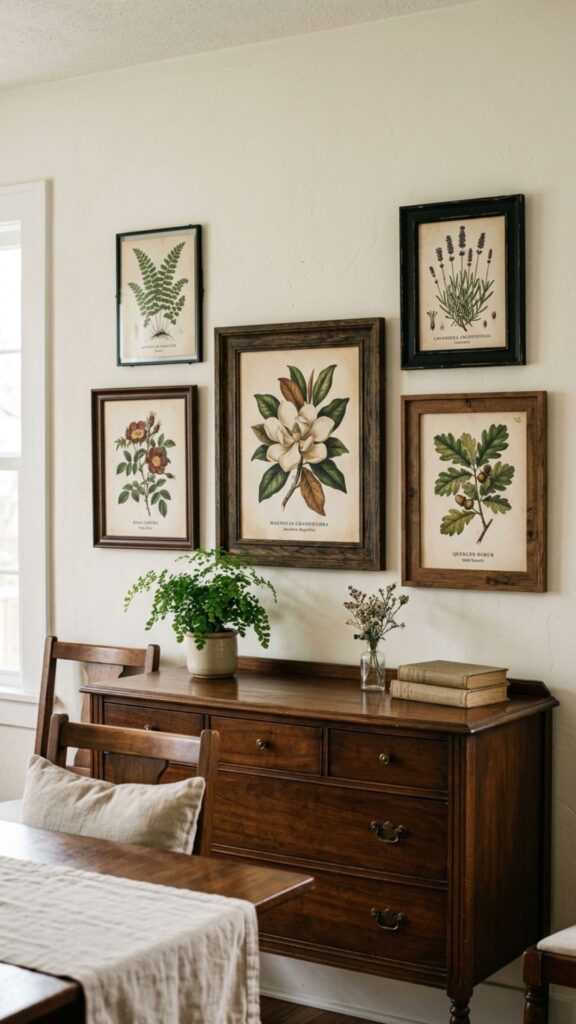
Botanical prints in aged frames have a quiet, timeless quality that suits farmhouse dining rooms perfectly. Group five to nine prints of varying sizes on one wall, mixing thin black frames with worn wood or antique gold to give the arrangement a collected, layered feel.
Look for public domain botanical illustrations online — they’re free to download and print at your local copy center. This makes it one of the most affordable dining room farmhouse wall décor ideas on this list, and it looks every bit as intentional as something you’d find in a design magazine.
3. Mount a Reclaimed Wood Sign With a Simple Phrase
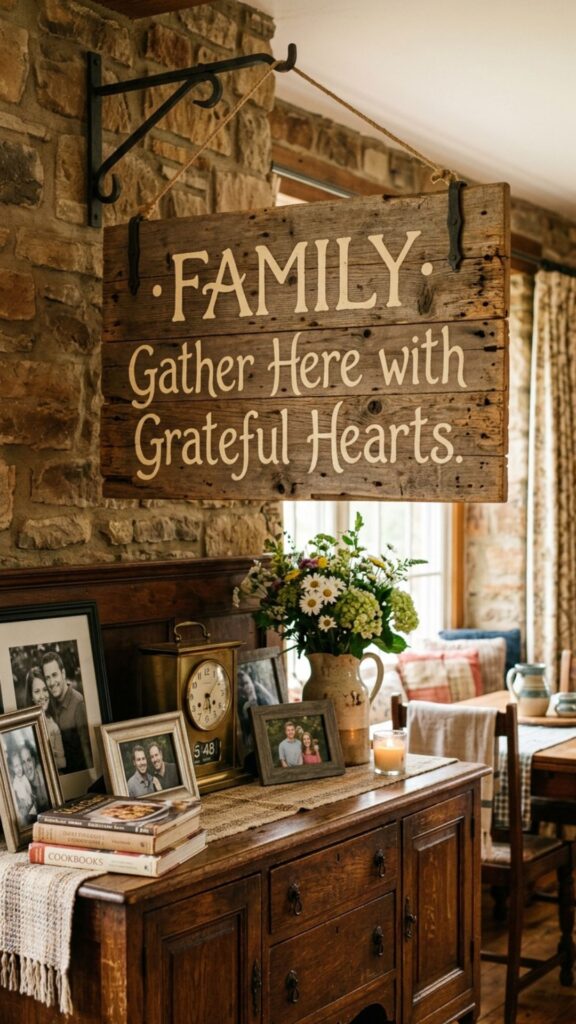
Reclaimed wood signs with hand-painted or laser-engraved text are a staple of farmhouse style. Choose a phrase that feels personal rather than generic — something related to gathering, gratitude, or family works especially well in a dining room context.
Look for signs made from actual weathered wood rather than printed-on faux textures, since the real thing has a weight and warmth that printed alternatives can’t quite replicate. Hang it centered above a buffet table or sideboard for the most balanced look.
4. Display a Large Farmhouse Clock
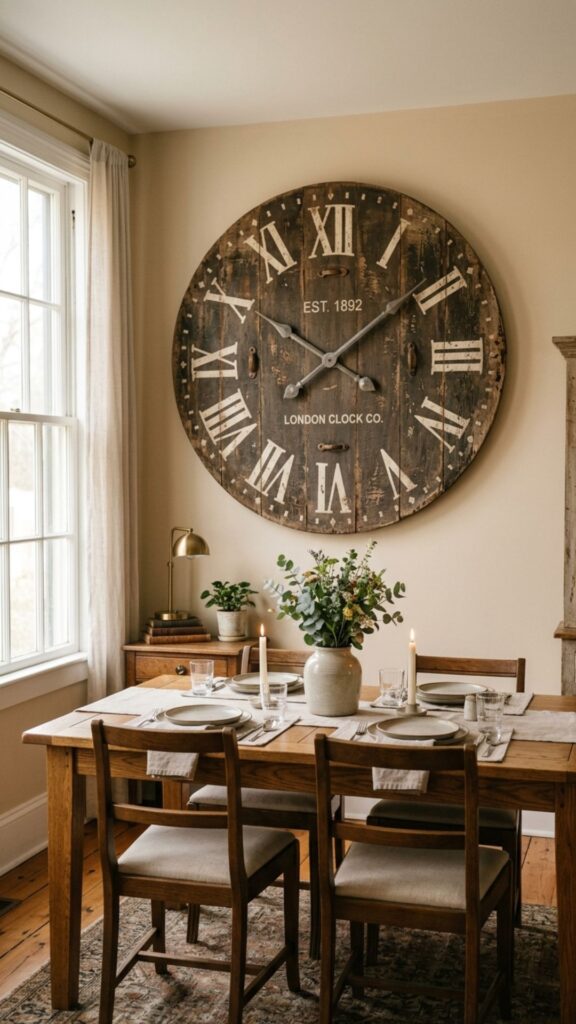
An oversized vintage-style clock is both decorative and functional — two things farmhouse design does well. A large round clock in an antique finish, distressed metal, or natural wood gives a dining room wall an instant focal point without requiring much else around it.
Choose one with roman numerals and a simple face for the most authentic farmhouse feel. A diameter of 24 to 36 inches reads well from across a dining room without overwhelming the space.
5. Arrange a Set of Woven Baskets
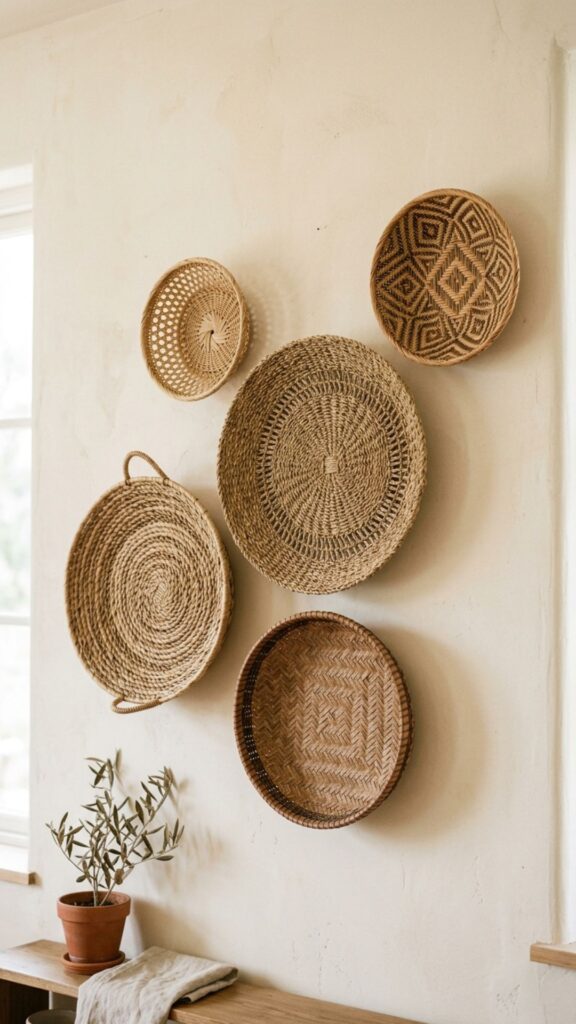
Woven baskets hung directly on the wall are a surprisingly effective design move. Arrange three to five baskets of different sizes in a loose cluster — some overlapping, some spaced apart — for a textural wall display that feels organic and handmade.
Rattan, seagrass, and water hyacinth are the most common materials, and they all carry a natural warmth that works perfectly in farmhouse interiors. Hang them using simple picture hooks and adjust the arrangement until the grouping feels balanced without being too symmetrical.
6. Frame a Vintage Map or Blueprint
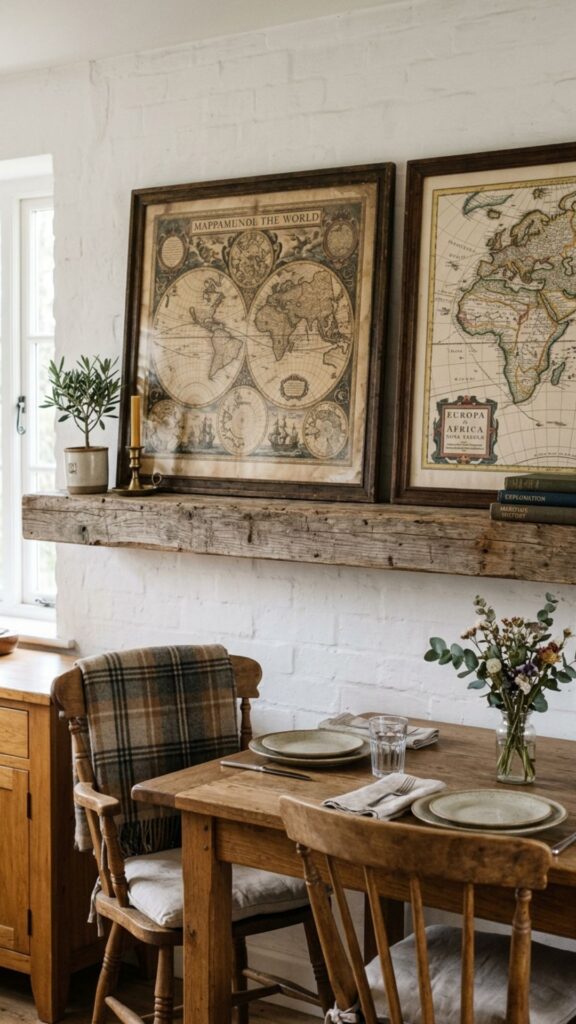
Old maps, architectural blueprints, or antique land survey prints bring a sense of history and quiet sophistication to a dining room wall. Frame them in simple wood or metal frames and lean them against the wall on a shelf, or hang them in a small grouping of two or three.
Maps of meaningful places — the town you grew up in, a national park you love, or a coastline you visit every summer — make the display personal rather than purely decorative. That personal touch is what gives farmhouse décor its warmth.
7. Install Open Shelving With Styled Objects
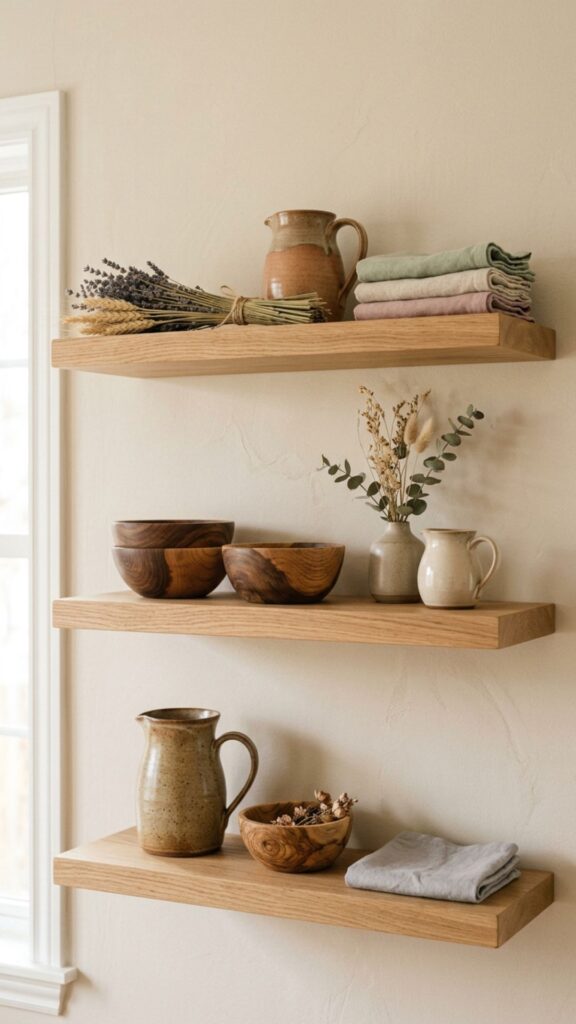
Open wooden shelves mounted on the dining room wall serve as both storage and display space. Style them with a mix of practical items — stoneware pitchers, wooden bowls, linen napkins folded neatly — and a few purely decorative pieces like dried botanicals or small framed quotes.
Use floating shelves in a natural wood finish or painted white, depending on your wall color. Keep the styling relaxed rather than perfectly curated — farmhouse décor is meant to look gathered over time, not assembled in an afternoon.
8. Hang Dried Botanicals or Herb Bundles
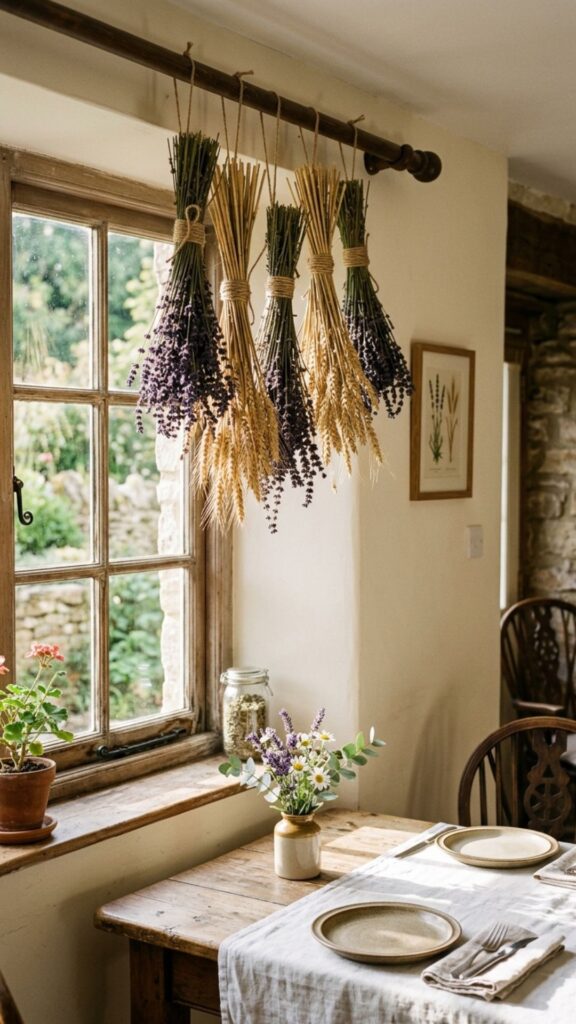
Dried lavender, eucalyptus, wheat stalks, and pampas grass add soft, earthy texture to dining room walls with almost no effort. Bundle a few stems together with twine and hang them from a small nail or hook — it’s one of the simplest dining room farmhouse wall décor ideas that still makes a real visual impact.
Dried botanicals also fill a room with a subtle, natural scent as they age. Hang them near a window if possible so light catches the textures, and replace them every season to keep the look fresh.
9. Use a Chalkboard Wall or Large Chalkboard Frame
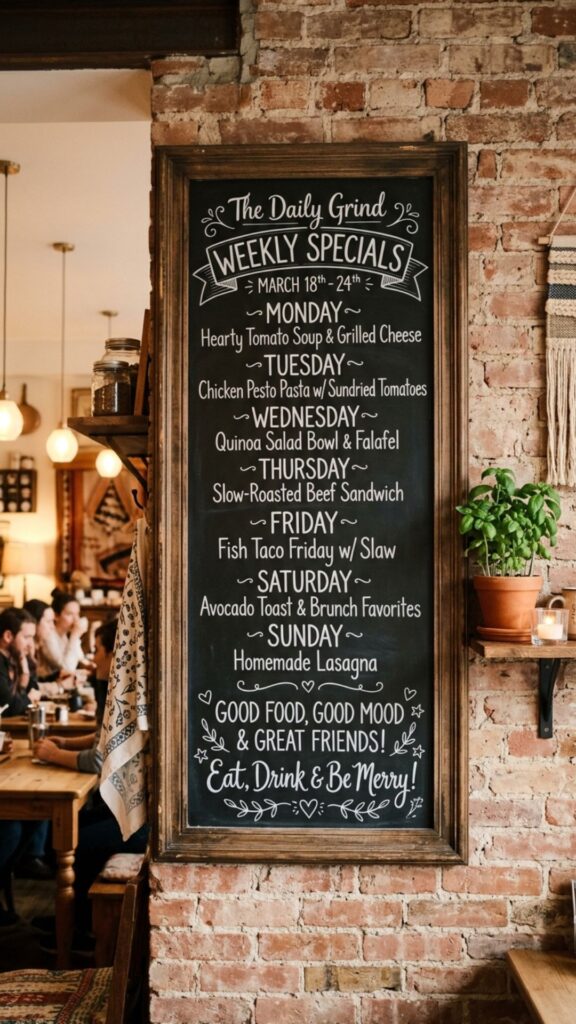
A large chalkboard — either a framed version hung on the wall or a full section of painted chalkboard paint — is a classic farmhouse feature. In a dining room, it works especially well for writing the week’s menu, a favorite quote, or a cheerful seasonal message.
Frame a large chalkboard in a distressed wood frame for a finished, intentional look. Change the writing regularly so it always feels current rather than like an afterthought you put up and forgot about.
10. Hang a Set of Vintage Plates
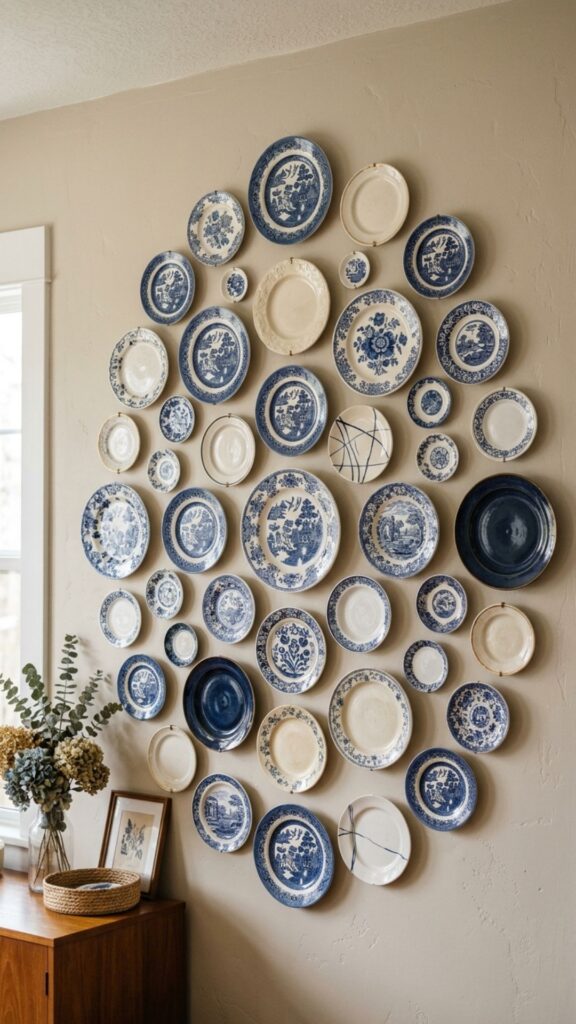
A collection of mismatched vintage plates arranged on the wall is a charming and unexpected dining room farmhouse wall décor idea. Look for blue-and-white transferware, antique floral patterns, or simple cream-colored plates at thrift stores and estate sales.
Use plate-hanging hooks, which are inexpensive and won’t damage your plates. Arrange them in a loose oval or horizontal line and vary the sizes — having all identical plates in a rigid grid tends to look stiff rather than warm.
11. Add a Framed Antique Mirror
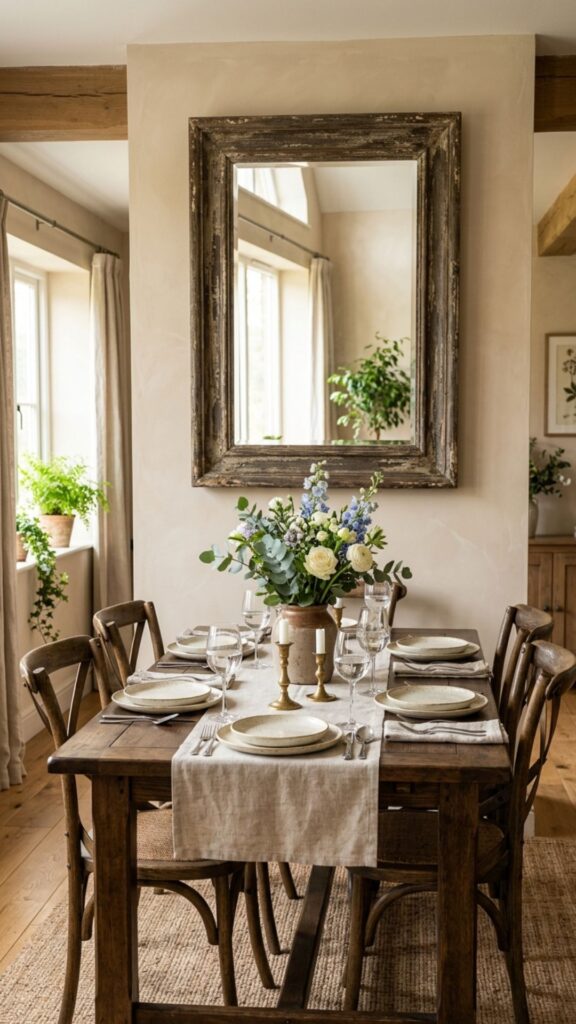
An antique or distressed mirror hung on the dining room wall reflects both light and movement, making the space feel larger and more alive. Choose a frame with a worn wood or aged metal finish — ornate gilded frames lean too formal for a farmhouse aesthetic.
Position the mirror to reflect your dining table or a window, so it amplifies natural light during daytime meals. A rectangular or oval mirror in the 24-by-36-inch range works well on most standard dining room walls without overwhelming the space.
12. Mount a Wooden Ladder as a Décor Display
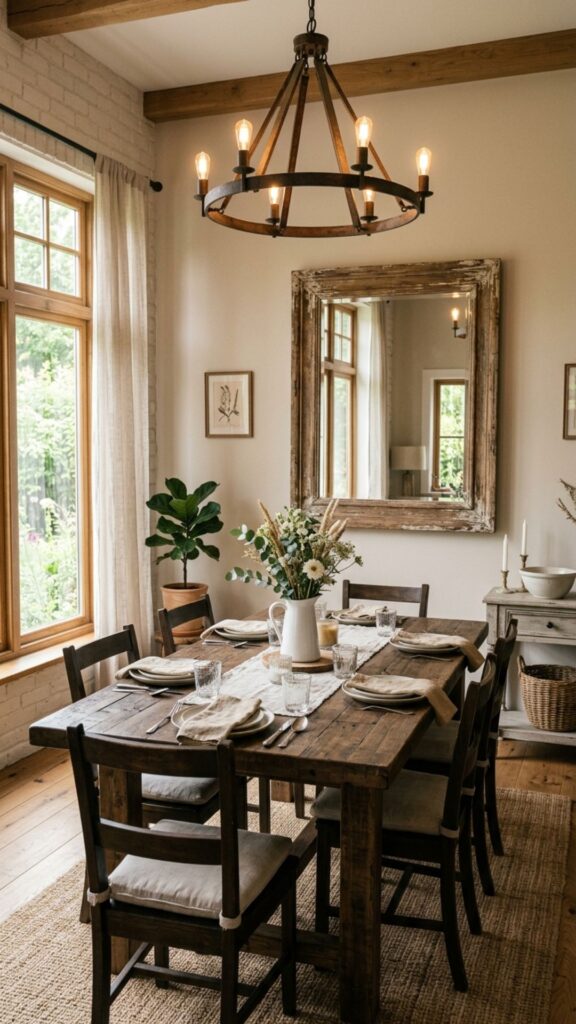
A vintage or new wooden ladder propped against the dining room wall works as a casual display structure for throws, small signs, dried flower bundles, and hanging plants. It adds vertical interest without requiring any holes in the wall beyond a single anchor point if you want to secure it in place.
Lean it at a slight angle in a corner of the dining room near the entrance for a welcoming, layered effect. Paint it white for a cleaner farmhouse look, or leave the wood natural for a more rustic feel.
13. Display a Wrought Iron Wall Sculpture
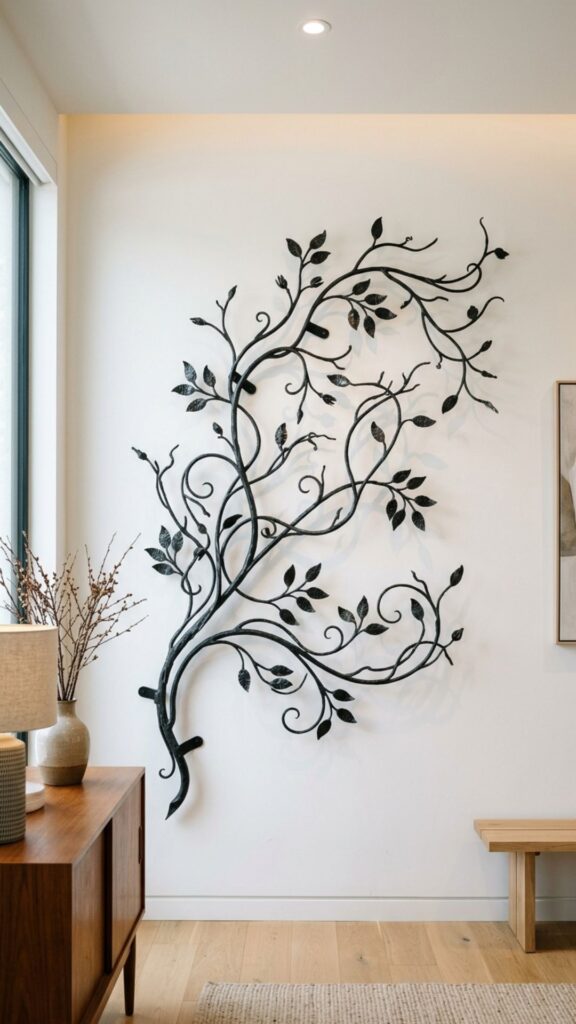
Wrought iron wall art — think scrollwork branches, botanical forms, or abstract geometric shapes — adds dimension and a handcrafted quality to farmhouse dining rooms. The dark metal tone contrasts beautifully against white, cream, or sage walls without feeling heavy.
Look for pieces with an organic, flowing design rather than anything too rigid or symmetrical. A single large piece works well as a standalone focal point, especially on a wall that doesn’t have much else competing for attention.
14. Create a Wood Slice or Tree Ring Display
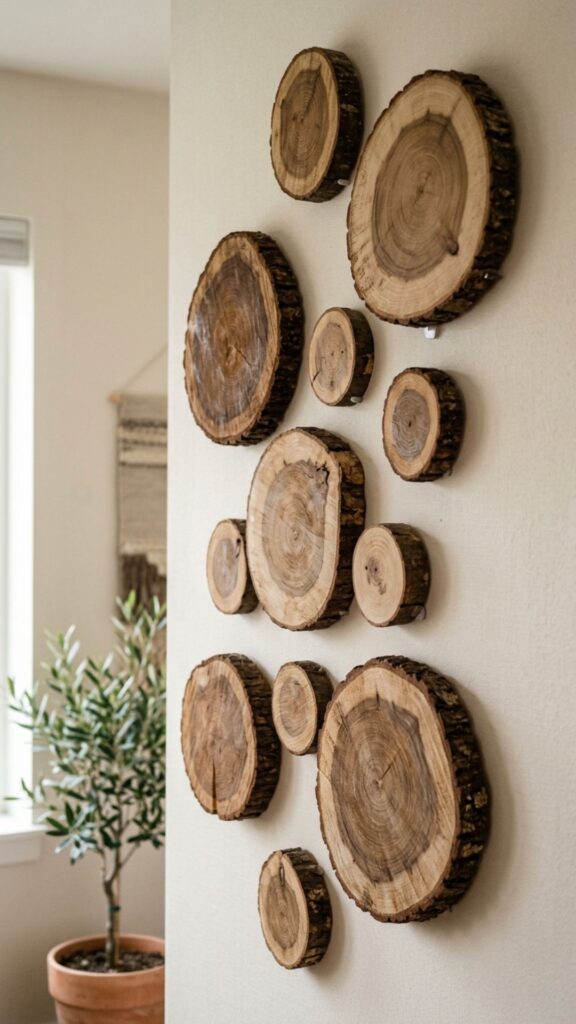
Wooden tree rounds or cross-section slices, either natural or lightly stained, make a striking wall installation when arranged in a cluster. Group five to twelve pieces of varying sizes and hang them at slightly different heights for a relaxed, organic arrangement.
You can find raw wood slices at craft stores, lumber yards, or online. Sand the edges smooth and seal them with a clear coat to prevent cracking. The natural grain patterns in each piece ensure no two look exactly alike, which is exactly the kind of handmade character farmhouse style is built on.
15. Hang a Large Woven Textile or Macramé
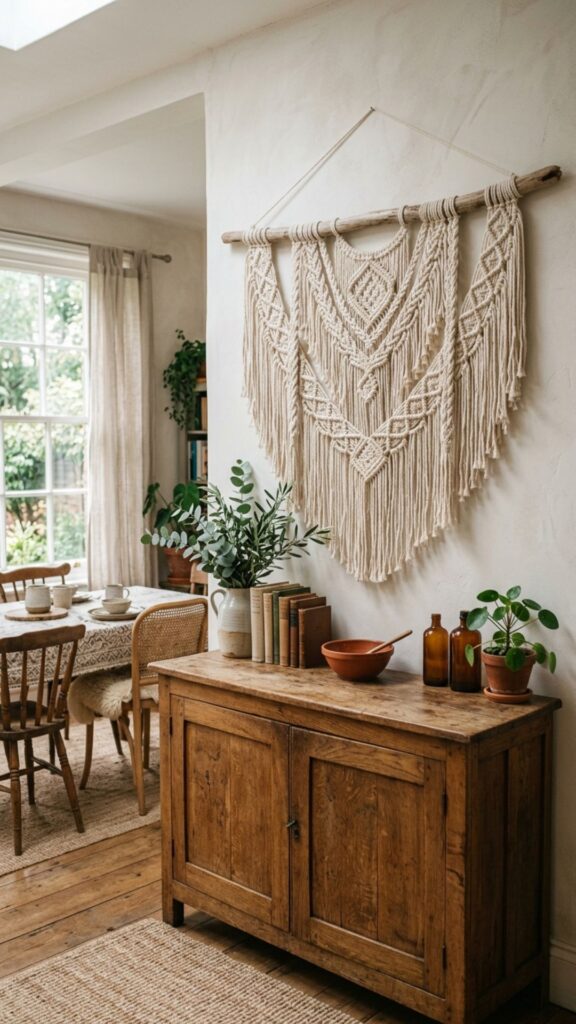
A woven wall hanging or macramé piece adds softness and texture to a dining room wall in a way that framed art simply can’t. In farmhouse spaces, large woven textiles in natural tones — cream, oat, sandy beige — feel right at home alongside wood and linen.
Choose a piece wide enough to feel proportional to your wall — for a standard dining room wall, aim for a width of at least 24 to 36 inches. Hang it above a buffet or centered behind the dining table so it anchors the room’s focal point.
16. Frame a Seed Packet Collection
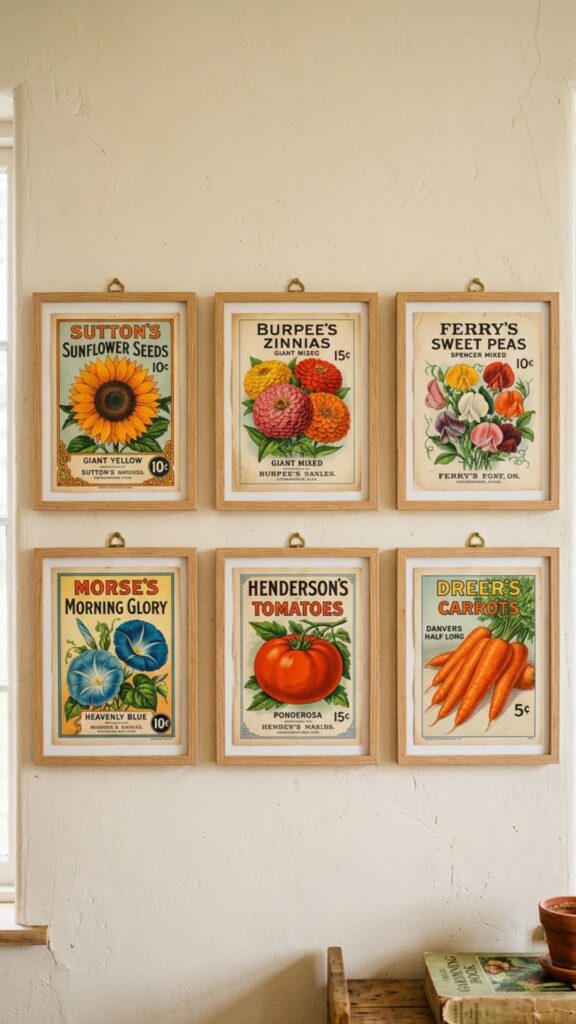
Vintage seed packet illustrations are colorful, nostalgic, and perfectly on-theme for a farmhouse dining room. Print reproductions or purchase originals from antique shops, frame them in matching simple frames, and hang them in a neat grid of six or nine for a charming, cottage-inspired display.
Keep the frames consistent in size and color to hold the grid together visually. A neutral frame color — white, black, or natural wood — lets the illustrations carry the energy without the frames competing.
17. Use a Barn Door Slider as a Wall Feature
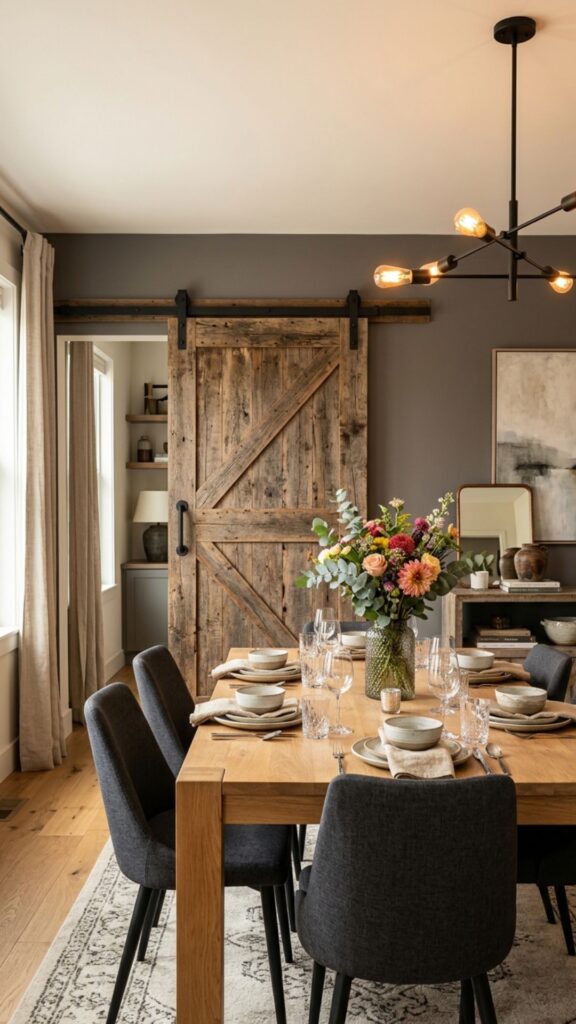
A barn door isn’t just a functional element — it’s a wall statement in its own right. If your dining room connects to a pantry, hallway, or kitchen, a sliding barn door in a weathered wood finish brings farmhouse character to the entire wall it occupies.
Even if you don’t need the door to actually function as a divider, a decorative barn door panel mounted on a standard sliding track adds significant visual impact. Paint it a soft sage, navy, or classic barn red if you want color — or leave the wood natural for a more understated look.
18. Display a Collection of Lanterns or Candle Sconces
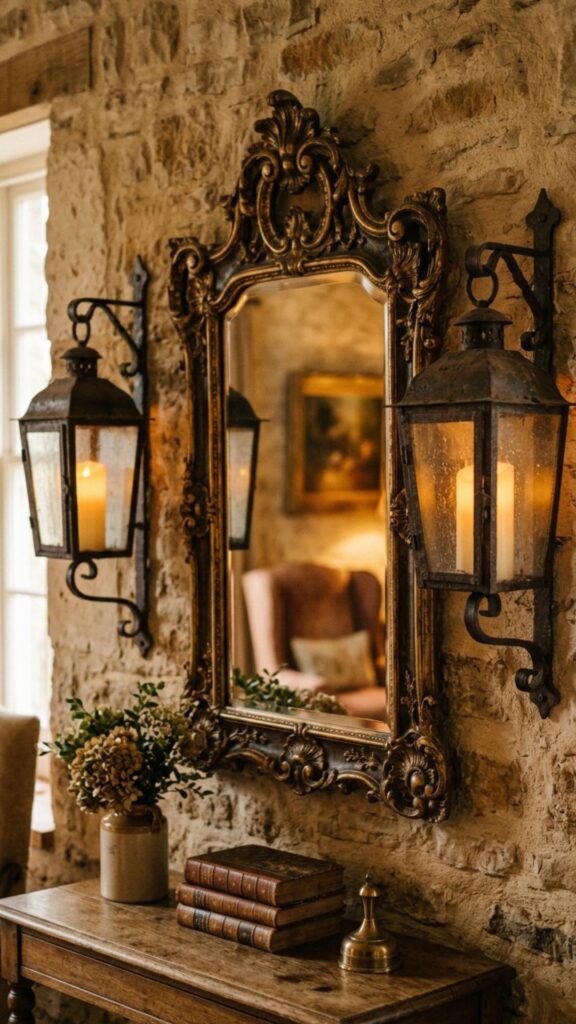
Wall-mounted lanterns or candle sconces in an antique iron, bronze, or matte black finish add warmth and ambiance that most flat wall art simply can’t. Hang a pair of matching sconces at eye level on either side of a mirror or shiplap panel for a symmetrical, intentional look.
Opt for flameless LED candle inserts rather than real candles for safety and convenience. Many quality flameless candles now flicker convincingly and can be set on a timer, so your dining room always looks warm and welcoming without any effort on your part.
19. Stencil a Pattern Directly on the Wall
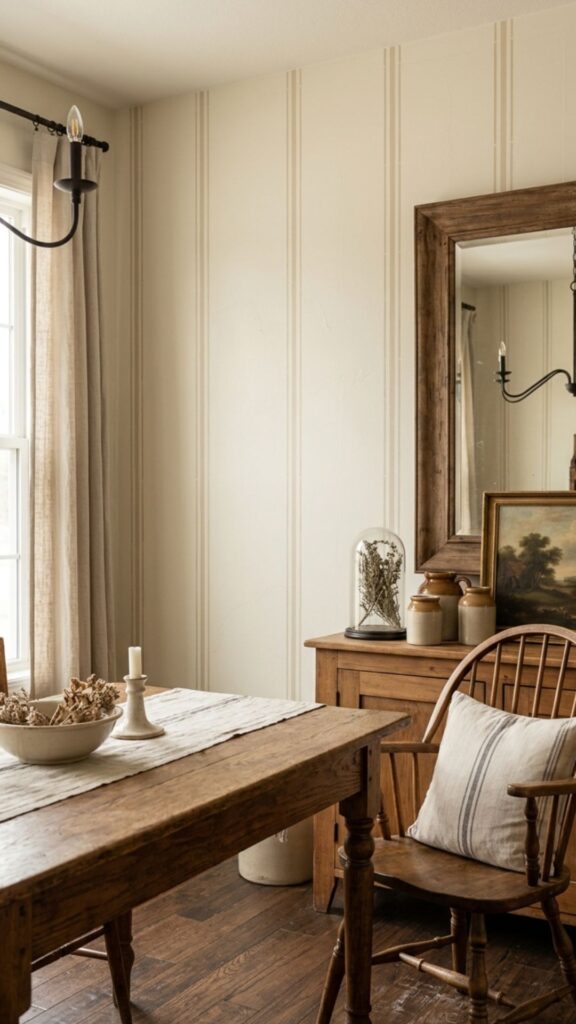
If you want something truly custom, stenciling a pattern directly on the dining room wall is a cost-effective and striking option. Farmhouse-appropriate patterns include simple florals, grain sack stripes, and geometric checks — all of which add texture without requiring wallpaper or expensive materials.
Use a chalk-based or matte paint in a tone just slightly deeper or lighter than your base wall color for a subtle, tonal effect. Or go bolder with a contrasting stencil color if you want the pattern to stand out as a true feature wall.
20. Create a Memory Board With Twine and Clips
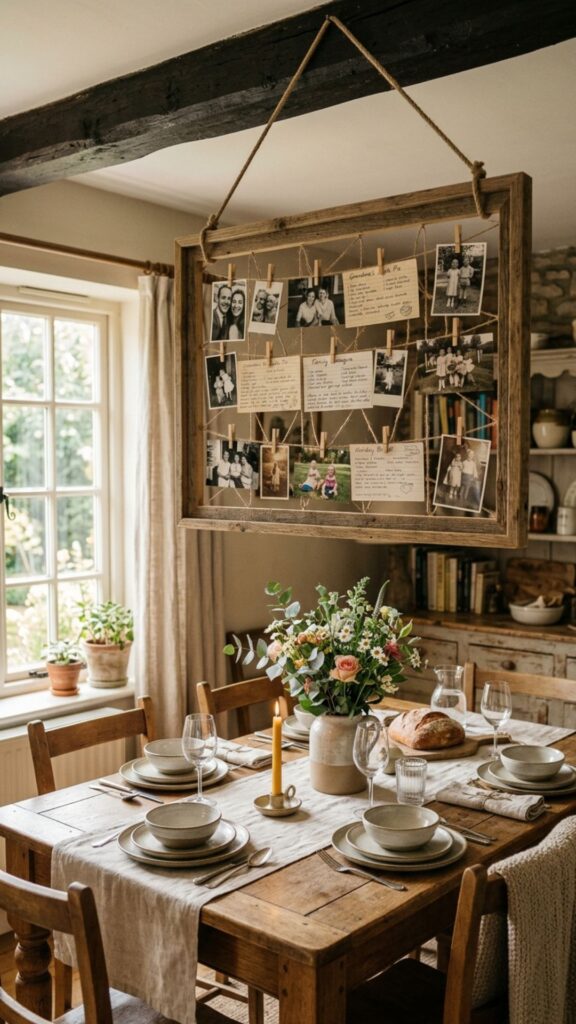
A large memory board — a wooden frame strung with horizontal lengths of twine — gives you a flexible wall display where you can clip recipe cards, family photos, postcards, and small notes. It’s personal, practical, and genuinely farmhouse in spirit.
Build one yourself using a picture frame, a staple gun, and a roll of natural jute twine, or buy a ready-made version. This is the kind of dining room farmhouse wall décor idea that evolves over time as you add to it, making the wall feel like a living part of your home rather than a fixed design choice.
Start Decorating Your Dining Room Walls Today
Great farmhouse wall décor doesn’t require a big budget or a designer’s eye — it requires a few thoughtful choices and a willingness to layer things in gradually. Start with one or two ideas from this list that match what your dining room already has going for it, then build from there.
The most inviting farmhouse spaces always feel collected rather than coordinated — like everything in the room has a story. Pick the ideas that feel most natural to you, bring home a few pieces, and see how the room begins to shift. Once your walls start working with the rest of the space, the whole room comes alive.
If this guide helped you, share it with someone who’s working on their home — and take the first step toward the cozy, welcoming dining room you’ve been imagining.
What is dining room farmhouse wall décor?
Dining room farmhouse wall décor refers to wall art, textures, and decorative elements that create a warm, rustic, and lived-in atmosphere in a dining space. Common examples include shiplap panels, vintage signs, botanical prints, woven baskets, antique mirrors, and reclaimed wood accents.
How do I start decorating my dining room walls in a farmhouse style?
Start with one anchor piece — a large clock, a framed gallery wall, or a shiplap panel — and build around it gradually. Farmhouse style works best when it looks collected over time, so avoid filling every wall at once. Layer in textures, natural materials, and personal touches as you go.
What colors work best for farmhouse dining room wall décor?
Neutral tones are the foundation of farmhouse style: white, cream, warm gray, soft sage, and earthy beige all work well as wall colors. Accent pieces in black, natural wood, aged metal, and muted pastels complement these base tones without disrupting the relaxed, cozy feel.
Can I do farmhouse wall décor on a budget?
Absolutely. Many of the most effective farmhouse wall décor ideas are low-cost. Thrift stores, estate sales, printable art, DIY wood signs, and dried botanicals are all budget-friendly options that look just as good as more expensive alternatives when styled thoughtfully.
How do I avoid making my farmhouse dining room look cluttered?
Choose a clear focal point — one primary wall that carries most of the décor — and keep the other walls simpler. Use odd numbers when grouping items, leave breathing room between pieces, and stick to a consistent color palette. Farmhouse style should feel relaxed, not crowded.