Farmhouse style has staying power for a reason. It’s warm without being fussy, personal without being cluttered, and grounded in materials that actually improve with age.
But pulling it off in a dining room takes more than shiplap and a mason jar centerpiece — the best farmhouse dining rooms balance texture, light, and character in a way that feels current rather than costume-y.
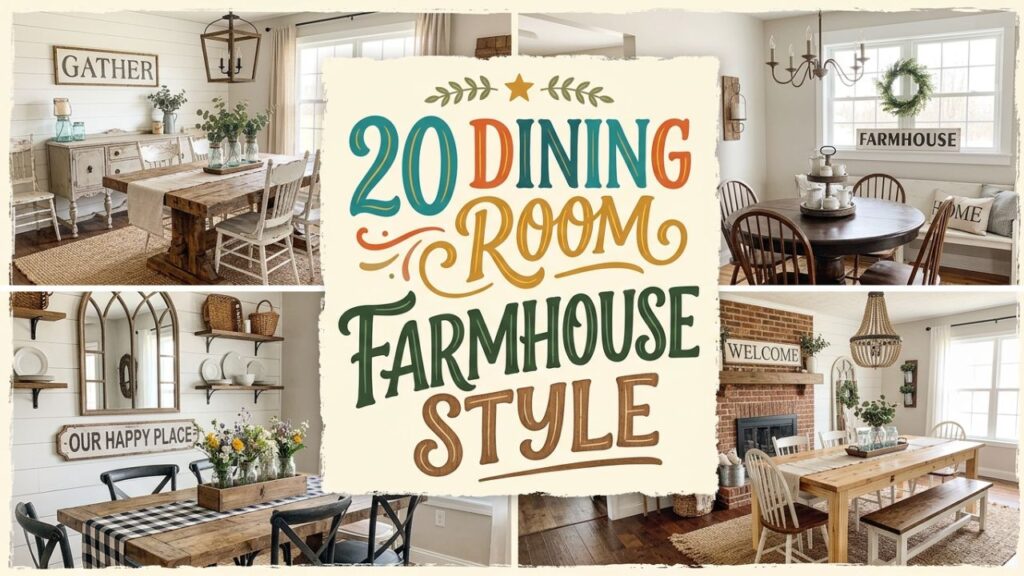
This guide gives you 20 practical dining room farmhouse style ideas you can apply right now. Whether you’re starting from scratch or refreshing a room that’s already close, you’ll find ideas covering:

- Color palettes and wall treatments
- Furniture choices and mixing strategies
- Lighting, textiles, and table styling
- Storage, wall decor, and small-space solutions
1. Start With a Reclaimed Wood Dining Table
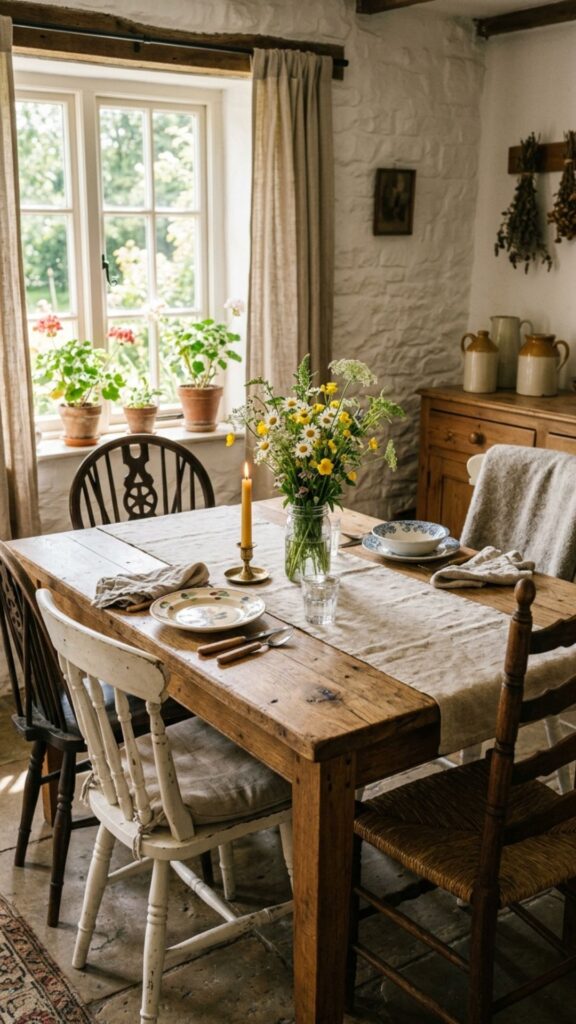
A reclaimed wood table is the single most effective piece of furniture for establishing a farmhouse dining room. The knots, grain variation, and natural texture do the decorating work for you — no tablecloth required.
Look for solid wood tables with a live edge, a trestle base, or visible joinery. If a fully reclaimed piece is out of budget, a new table with a distressed or wire-brushed finish achieves a similar effect. Pair it with mismatched chairs for a gathered, collected look that feels genuinely lived-in rather than staged.
2. Layer in White Shiplap or Beadboard Walls
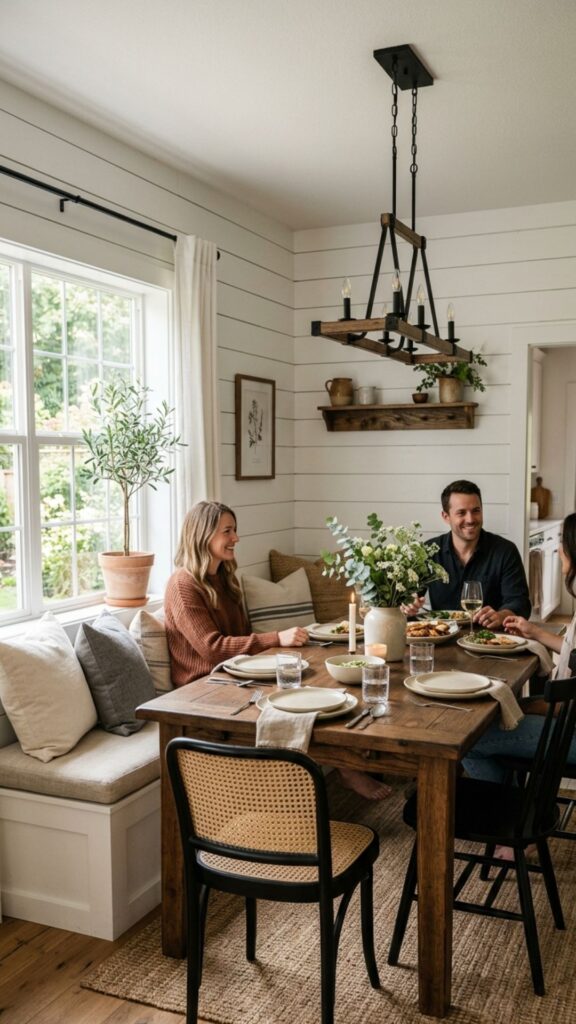
Shiplap and beadboard are two of the most recognizable elements of dining room farmhouse style. A single accent wall behind a built-in bench or buffet table immediately shifts the room’s character without requiring a full renovation.
You don’t need floor-to-ceiling coverage. Even a lower half-wall with beadboard paneling topped by a simple chair rail adds texture and visual depth. Paint it crisp white, off-white, or a soft sage green if you want something less expected. The texture carries the look either way.
3. Choose Warm Neutrals for Your Color Palette
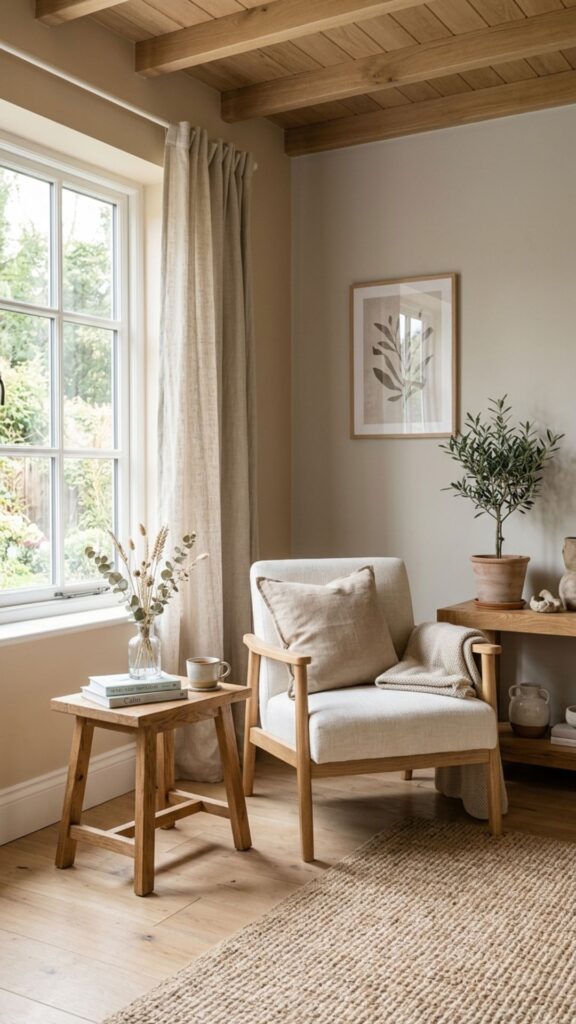
Farmhouse dining rooms tend to rely on a warm neutral base — creamy whites, warm beiges, soft greiges, and muted greens — because these colors reflect natural light well and make natural materials like wood and linen look their best.
Avoid stark, cool whites in a farmhouse dining room; they read as modern rather than cozy. Instead, try Benjamin Moore’s White Dove or Sherwin-Williams Accessible Beige as wall colors. Anchor the palette with one deeper tone — a charcoal, deep navy, or forest green — in an accent wall, chairs, or cabinet doors to keep the room from feeling washed out.
4. Add a Vintage or Antique Sideboard
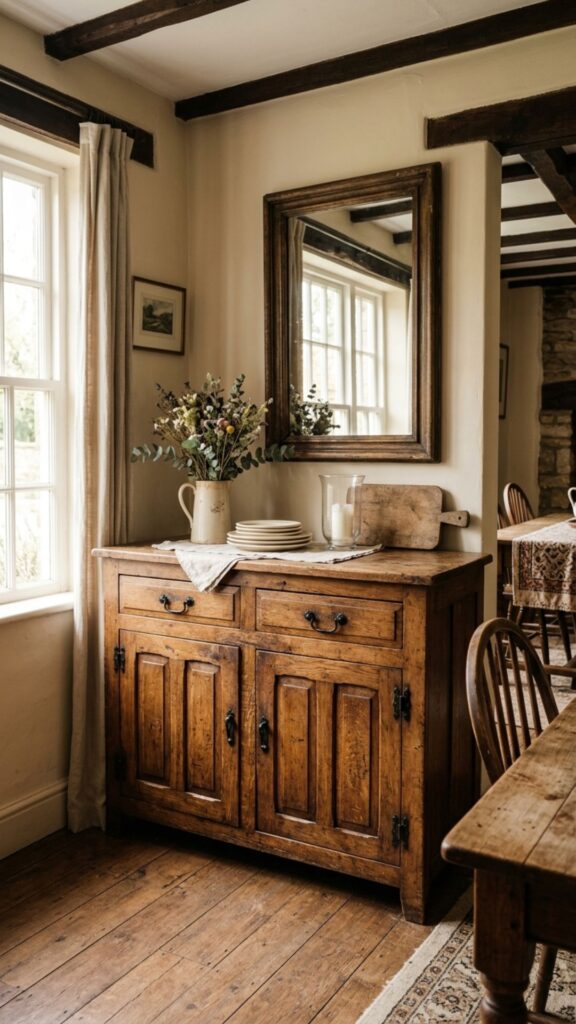
A sideboard is one of the most functional and character-rich additions to a farmhouse dining room. It provides storage, a display surface, and a visual anchor for the room — all at once.
Vintage sideboards in oak, pine, or painted wood often have patina and craftsmanship that newer pieces can’t replicate. Estate sales, antique markets, and online resale platforms regularly turn up solid options at fair prices. If you buy new, look for a distressed finish, simple hardware in black iron or aged brass, and solid rather than veneer construction.
5. Use Open Shelving for Everyday Storage
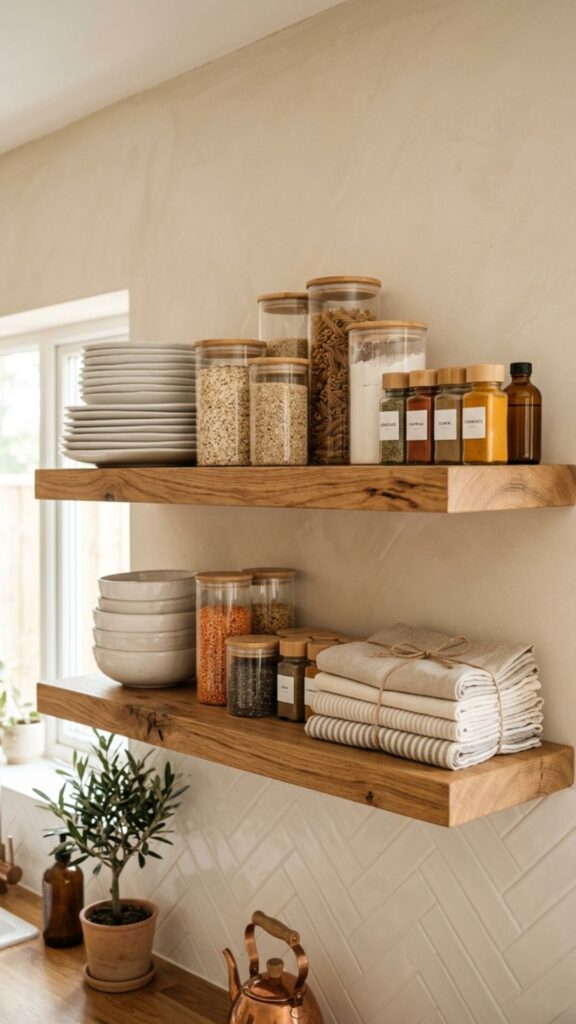
Open shelves along a dining room wall serve a dual purpose in a farmhouse-style space — they store everyday items and display them at the same time. Stacked white ceramic plates, mismatched pottery, linen napkins, and glass jars all look intentional and warm when arranged simply on open wood shelves.
Mount floating shelves in a dark-stained oak or natural pine for contrast against white or light walls. Keep the styling honest — real objects you actually use tend to look better than purely decorative pieces because they reinforce the “lived-in family home” quality that farmhouse decor depends on.
6. Hang a Statement Chandelier With Farmhouse Character
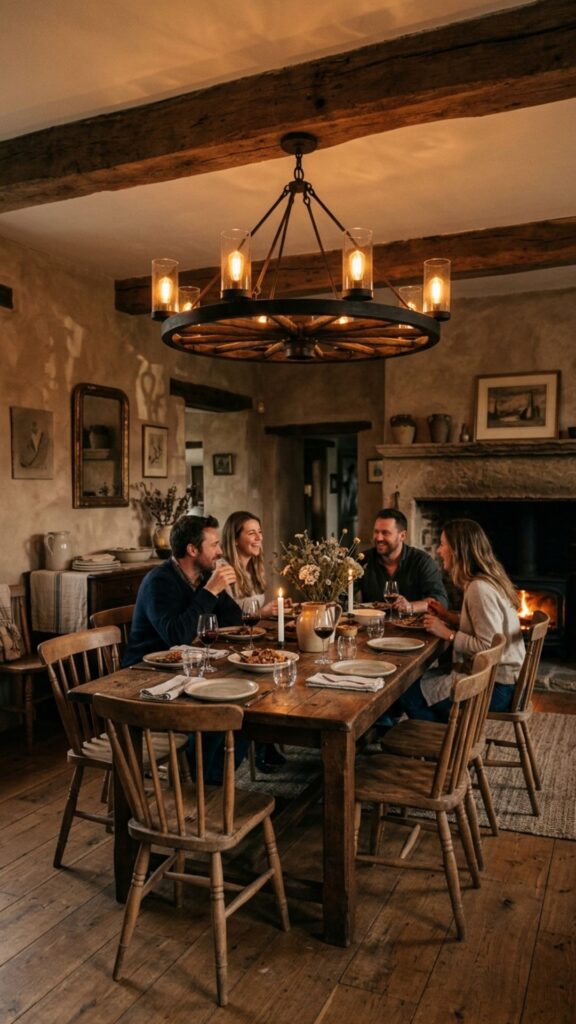
Lighting is one of the most transformative elements in any dining room, and a well-chosen farmhouse chandelier does more than illuminate — it sets the tone for everything below it.
Look for fixtures in wrought iron, aged brass, or natural wood with exposed bulbs or simple fabric shades. A wagon-wheel style chandelier is the most traditional choice. A linear multi-pendant light in black iron works better if your farmhouse dining room leans more modern. Hang it 30 to 34 inches above the table surface for the most effective light distribution and visual proportion.
7. Mix Wood Tones Intentionally
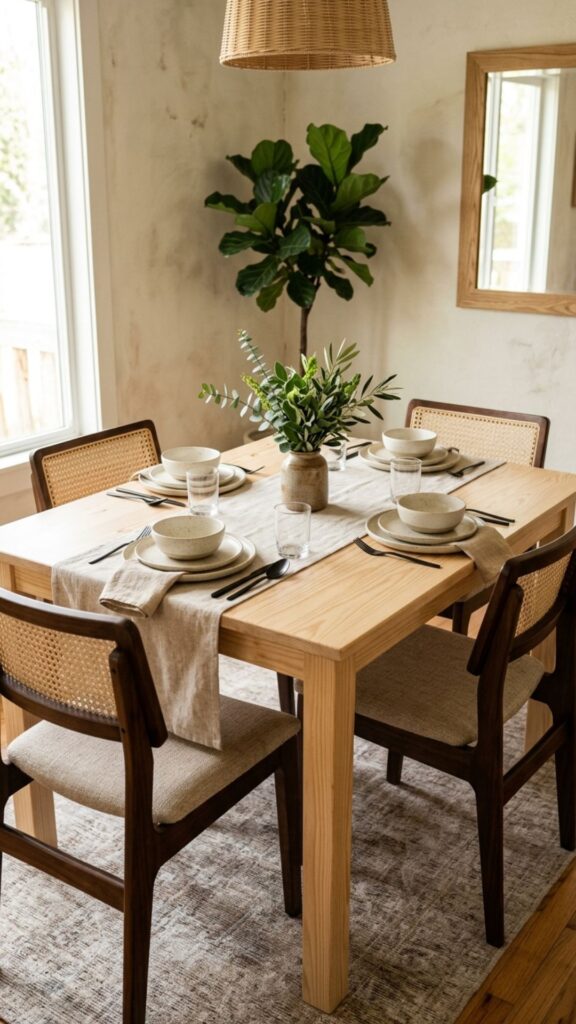
One of the biggest misconceptions about farmhouse decor is that all the wood in a room needs to match. It doesn’t — and in fact, mixing wood tones often looks more authentic and less like a furniture showroom.
The key is to mix tones with intention. Combine a lighter pine table with darker walnut chairs, or a whitewashed bench with a medium oak table. Ground the combination with consistent metal finishes or a unifying textile — a neutral linen rug or cotton runner — to prevent the mix from feeling accidental.
8. Bring In a Bench on One Side of the Table
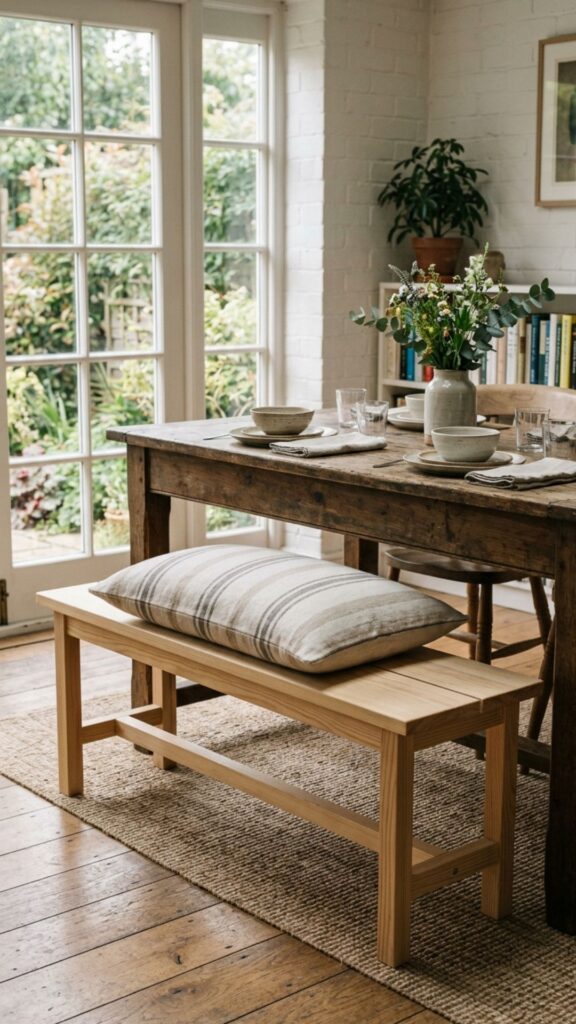
A farmhouse dining room almost always includes a bench on at least one side of the table. It seats more people informally, reinforces the casual, communal spirit of the style, and adds a horizontal line that grounds long tables visually.
A simple pine bench with minimal detailing works in nearly any dining room farmhouse style setup. You can add a cushion in a stripe, check, or solid linen for comfort and softness. For smaller dining rooms, a bench that slides entirely under the table when not in use reclaims significant floor space.
9. Layer Textiles to Add Warmth and Softness
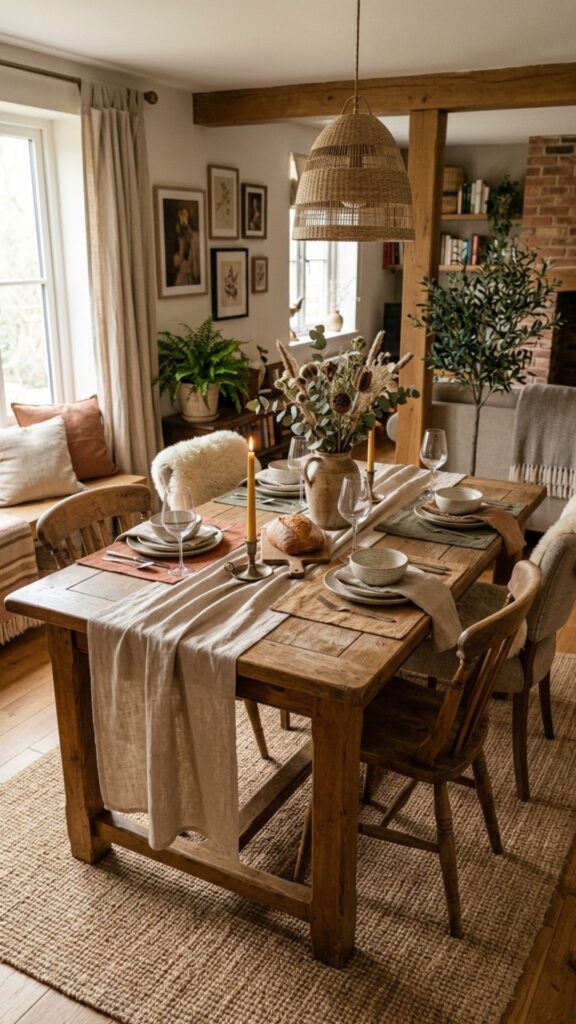
Farmhouse dining rooms can feel hard and cold if they rely too heavily on wood and metal without softening elements. Textiles fix that. A linen table runner, cotton placemats, a woven jute rug under the table, and seat cushions on the chairs all add layers of warmth that pull the room together.
Stick to natural fibers — linen, cotton, wool, jute — in neutral or earthy tones for an authentic farmhouse feel. Avoid synthetic fabrics with sheen, which tend to look out of place in this style. Mixing textures (a chunky knit runner alongside smooth ceramic plates, for example) creates visual interest without introducing pattern overload.
10. Decorate With Galvanized Metal Accents
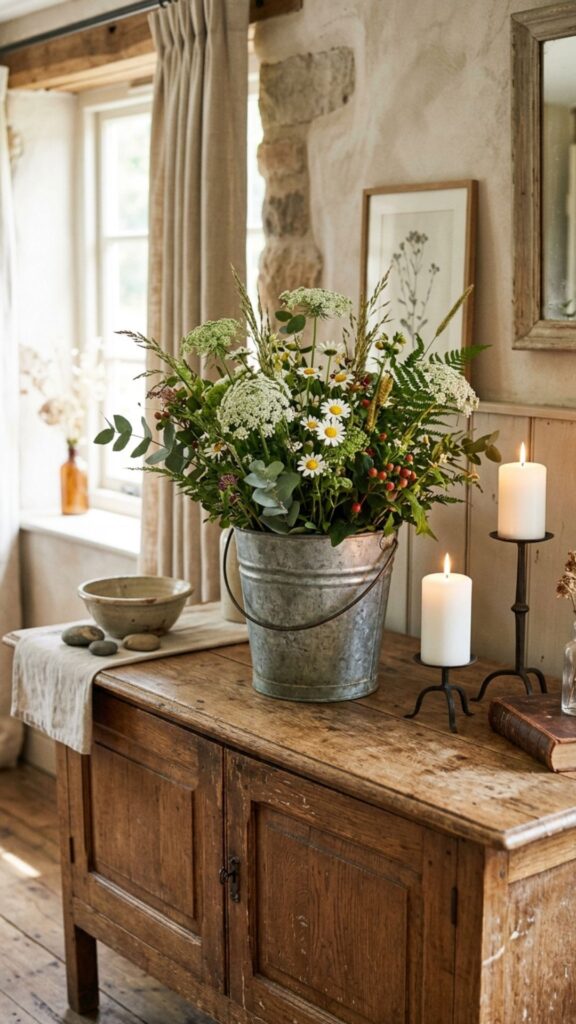
Galvanized steel and aged metal are defining material accents in dining room farmhouse style. A galvanized bucket used as a vase, metal tray on the sideboard, or corrugated metal planter as a centerpiece adds the industrial edge that keeps farmhouse decor from tipping into pure country-cottage territory.
Use metal accents sparingly — three to five pieces is usually enough. Scatter them throughout the room rather than clustering them in one spot. Pair them with softer elements like greenery, candles, or linen to balance the harder texture.
11. Display Vintage Signage or Typography on the Walls
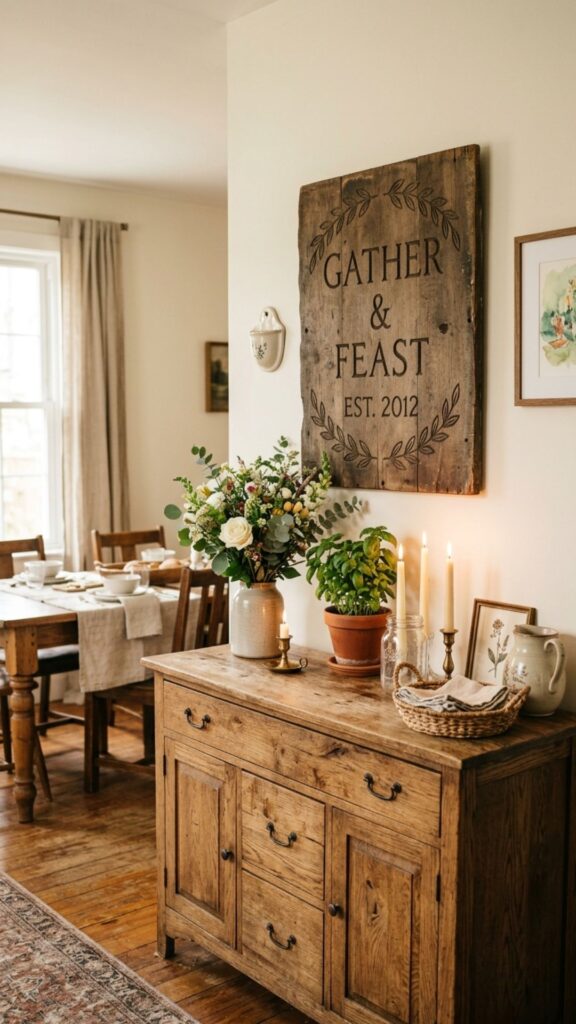
Words and letters have been a staple of farmhouse wall decor for years, and when chosen carefully, they still look good. A vintage wooden sign with simple, meaningful text — a family name, a town, a year, or a short phrase — adds personality without requiring art skills or a large budget.
Avoid mass-produced signs with generic farmhouse phrases; they tend to read as dated quickly. Instead, look for original vintage lettering, custom wooden signs from small makers, or your own framing of a vintage map or printed text in a simple frame. What you say matters less than how it’s displayed.
12. Incorporate Greenery and Fresh Botanicals
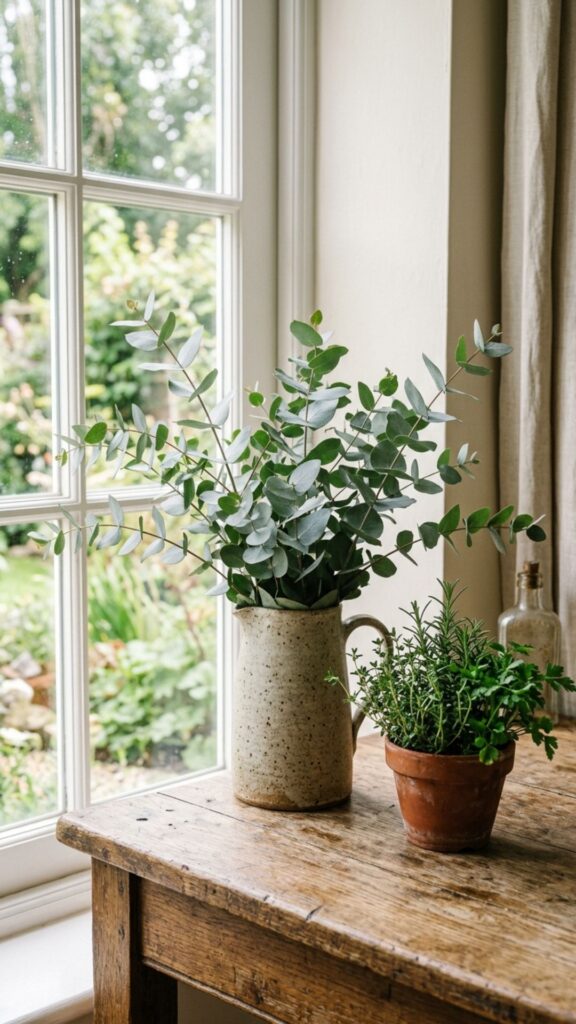
Plants and greenery are one of the most reliable ways to make a farmhouse dining room feel alive and current rather than static. A few stems of eucalyptus in a ceramic jug, a trailing pothos on a shelf, or a small herb pot on the table all add organic life that no other decor element can replicate.
Fresh greenery is ideal, but dried botanicals — pampas grass, dried lavender, dried cotton stems — work equally well and require zero maintenance. Arrange them in simple containers: ceramic vases, glass bottles, galvanized tin, or clay pots. The container matters almost as much as what’s in it.
13. Choose Ladder-Back or Windsor Chairs
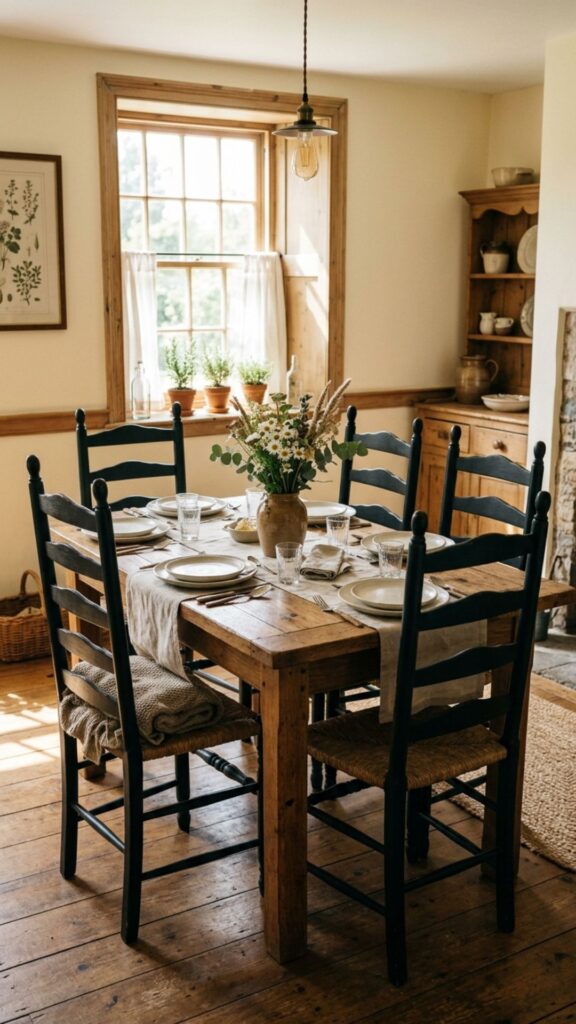
Chair style is one of the most defining choices in a farmhouse dining room. Ladder-back chairs — with horizontal slats running up the back — and Windsor chairs — with spindle backs and turned legs — are the two most historically grounded options for this style.
Both are widely available in natural wood, painted finishes, or with upholstered seats. A painted ladder-back in black or deep navy alongside a natural wood table is a classic farmhouse pairing. Windsor chairs in a warm wood stain read as slightly more formal but still entirely at home in a dining room farmhouse style setting.
14. Use a Distressed or Painted Wood Cabinet for Storage
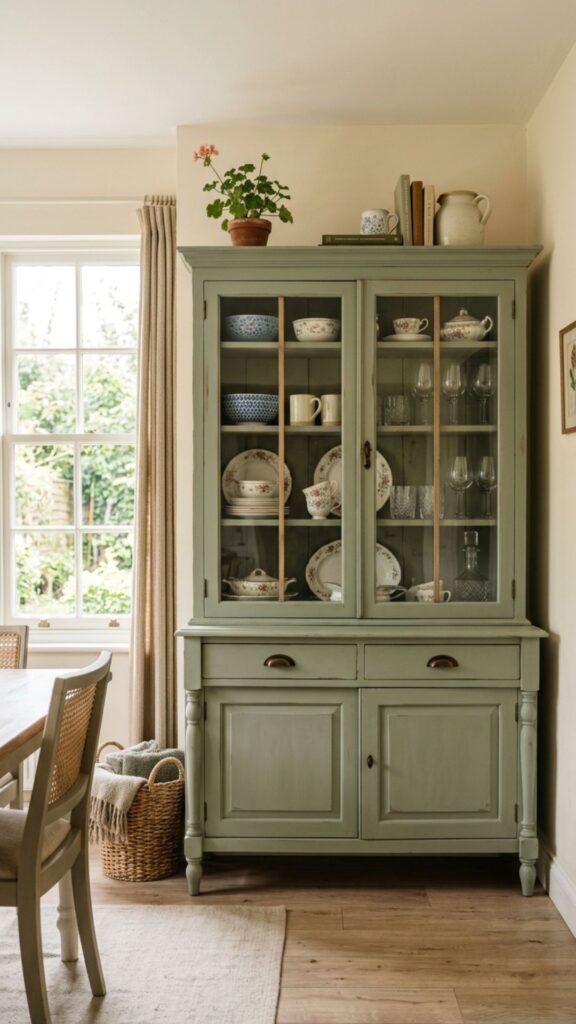
A painted cabinet or hutch in the dining room serves as both storage and display in a farmhouse-style space. A classic choice is a hutch with glass-front upper doors for displaying dishes and solid lower cabinets for practical storage.
Paint it in a muted color — a dusty sage, slate blue, or warm white — with simple hardware in black iron or aged brass. A distressed or slightly imperfect finish adds authenticity. This is one of the easiest ways to introduce color and character into a dining room without painting the walls.
15. Lay a Natural Fiber Rug Under the Table
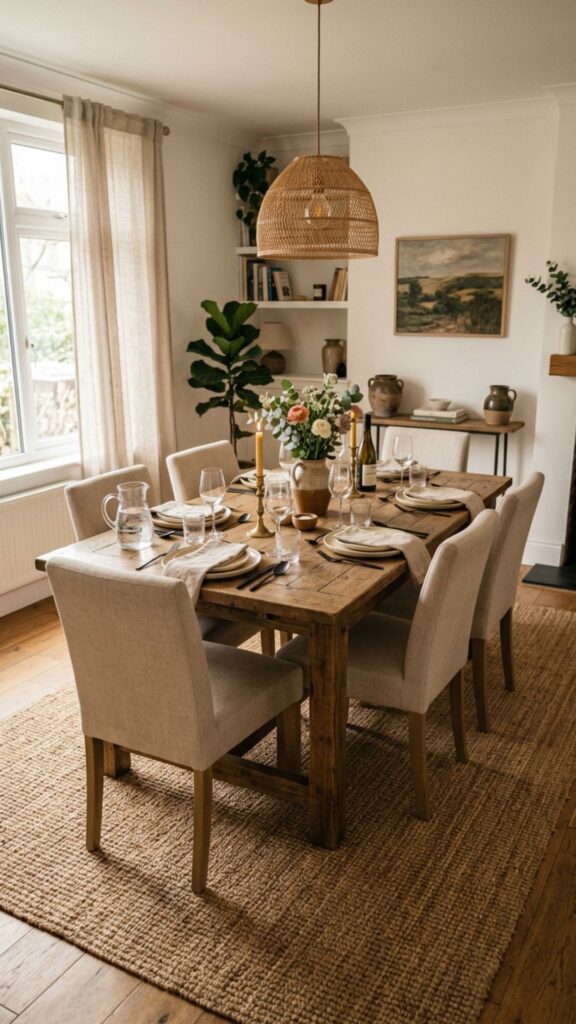
A rug under the dining table defines the dining zone, protects the floor, and adds a layer of texture that hard flooring alone can’t provide. In a farmhouse dining room, natural fiber rugs — jute, sisal, seagrass — are the strongest fit because they’re honest, durable, and visually grounded.
Size matters here. The rug should extend at least 24 inches beyond each side of the table so chairs remain on the rug even when pulled out. A 8×10 or 9×12 foot rug works for most dining rooms. A solid or subtly textured natural fiber is easier to style than a heavily patterned rug because it coordinates with more furniture combinations.
16. Style the Table With Simple, Layered Centerpieces
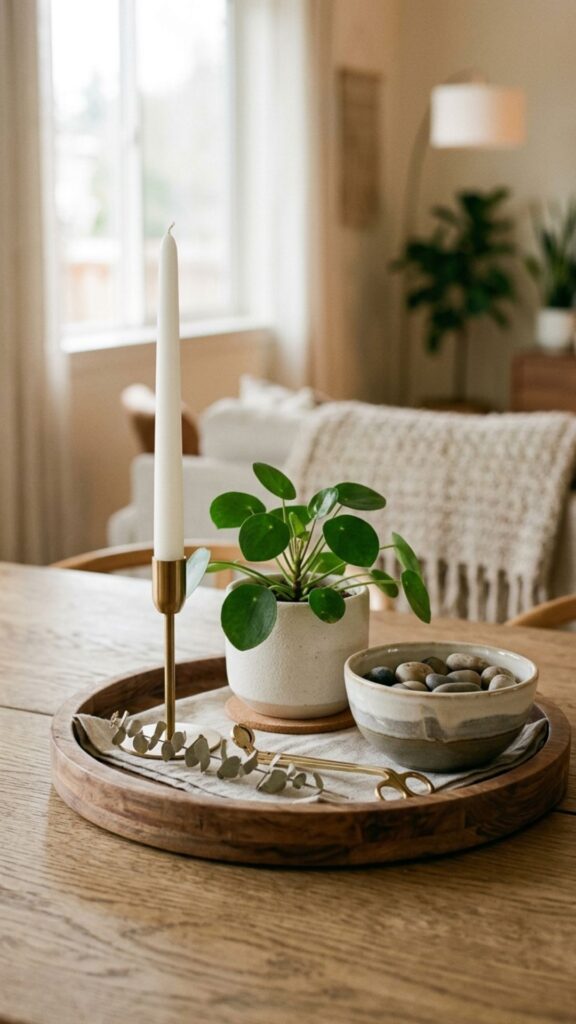
A farmhouse table deserves a centerpiece that looks effortless rather than arranged. The most effective approach is a simple tray or runner as a base, then a loose grouping of objects at varying heights — a candle, a small plant, a ceramic bowl, a few cut stems.
Keep the arrangement low enough to maintain eye contact across the table during meals. Swap elements seasonally: spring wildflowers, summer herbs, autumn gourds, winter greenery. The table centerpiece is the most frequently changed element in a dining room, so keeping the components simple and swappable saves money and effort over time.
17. Install Board-and-Batten Wainscoting for Added Depth
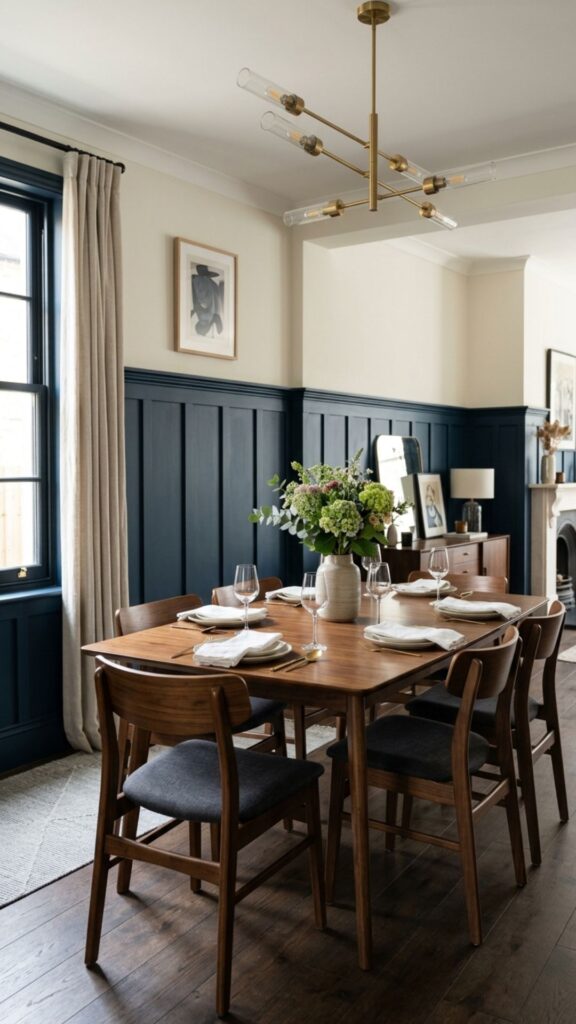
Board-and-batten wainscoting — vertical boards with thin trim strips over the seams — is a slightly more substantial wall treatment than shiplap but equally at home in a farmhouse dining room. It adds architectural depth to flat walls and raises the visual weight of the lower half of the room.
Paint the wainscoting the same color as the walls for a tonal, modern farmhouse effect, or use a contrasting color below and a lighter shade above. The transition line typically falls at chair-rail height — about 36 inches from the floor — which is a natural visual break that works in nearly every room proportion.
18. Add a Barn Door for Practical Drama
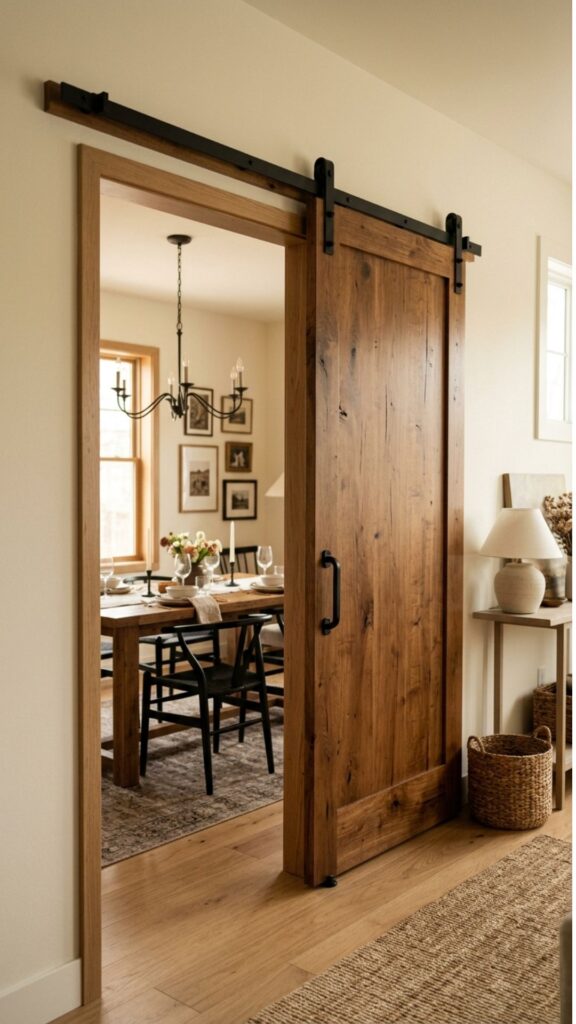
A sliding barn door on a dining room entrance or pantry opening is one of the most discussed elements of farmhouse interior design. It’s functional — it takes no swing clearance — and it’s visually distinctive in a way that a standard door simply isn’t.
For a dining room farmhouse style that feels current rather than trendy, choose a barn door in a solid wood finish with minimal hardware. Avoid highly distressed or heavily knotted styles if your dining room is otherwise refined. A clean-lined barn door in a medium wood stain hits the right balance between rustic character and modern restraint.
19. Light With Candles for Evening Ambiance
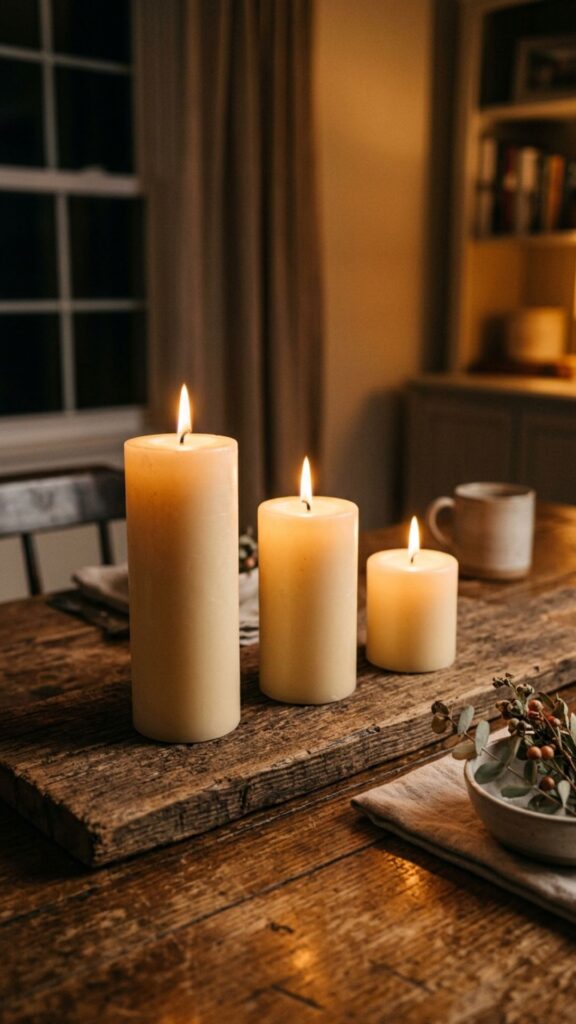
No farmhouse dining room feels complete without candlelight in the evening. A few pillar candles on the table, tapers in simple iron candlesticks, or tea lights grouped in glass jars shift the room’s atmosphere from practical to genuinely inviting.
Use unscented candles at the dining table — scented candles compete with food aromas and can be distracting. Group candles in odd numbers for a more natural arrangement. A cluster of three pillar candles at different heights on a wooden board is a simple, effective centerpiece that works for both casual weeknight dinners and more formal occasions.
20. Keep Small Dining Rooms Focused and Uncluttered
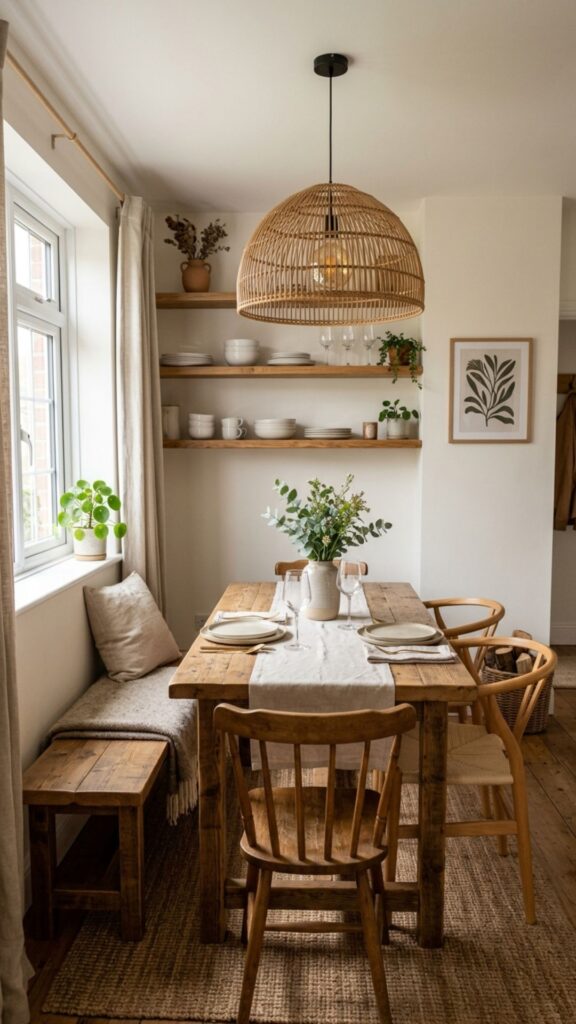
Farmhouse style can work beautifully in a small dining room, but it requires editing. The temptation to layer in every rustic element at once is exactly what makes small rooms feel overwhelmed. Choose three or four key pieces — a reclaimed table, a bench, open shelves, and a statement light — and let those do the work.
In a small dining room farmhouse style setup, light colors on the walls and ceiling help the space feel open. A large mirror on one wall bounces light and creates the impression of depth. Keep furniture scaled to the room — an oversized farmhouse table in a small room blocks traffic flow and makes the space feel smaller, not cozier.
Conclusion
Farmhouse style in a dining room is about warmth, honesty, and materials that tell a story. You don’t need to overhaul everything at once — even three or four of these ideas applied together will shift a room’s character noticeably. Start with the table, get the lighting right, and build outward from there.
Choose two or three ideas from this list that fit your space and budget, make those changes this month, and see how the room responds before adding more. The best farmhouse dining rooms grow gradually — they’re edited over time, not assembled all at once.
Pick your starting point and begin — a warmer, more welcoming dining room is closer than you think.
What is dining room farmhouse style?
Dining room farmhouse style is a decorating approach that prioritizes natural materials, warm neutrals, and a mix of old and new elements to create a space that feels comfortable, lived-in, and unpretentious. It typically includes wood furniture, linen and cotton textiles, iron or aged metal hardware, and simple, honest craftsmanship over highly polished or ornate finishes.
How do I make my farmhouse dining room look current instead of dated?
The key is restraint. Avoid over-relying on iconic farmhouse props — mason jars, “EAT” signs, and heavily distressed everything — in favor of quality natural materials and a cleaner color palette. Mixing in one or two contemporary elements, like a modern light fixture or sleek hardware, keeps the overall look fresh without abandoning the style’s warmth.
What colors work best in a farmhouse dining room?
Warm neutrals are the most reliable base: creamy whites, warm beiges, soft greiges, and muted greens. These shades complement natural wood and linen beautifully and reflect light in a way that feels welcoming rather than stark. Add depth with one deeper accent tone — charcoal, navy, forest green, or terracotta — in chairs, cabinetry, or a single accent wall.
Can farmhouse style work in a small dining room?
Yes — but it requires editing. Choose a few key farmhouse elements (a reclaimed table, open shelving, a statement light) and resist the urge to add more. Light wall colors, a natural fiber rug sized correctly for the table, and a large mirror help small rooms feel open rather than crowded. Scale every piece of furniture to the room’s actual dimensions.