The entrance to your dining room does more work than most people realize. It’s the first thing guests see before they sit down, and it sets the mood for everything that follows — the conversation, the meal, the whole experience. A thoughtfully designed entrance signals that what’s inside is worth the walk over.
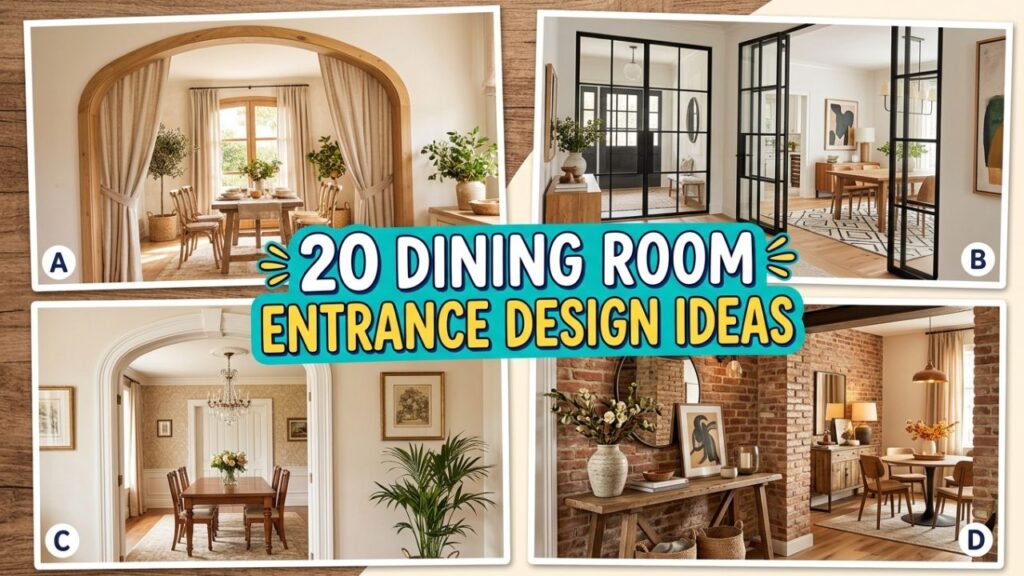
Good dining room entrance designs don’t require major construction or a designer’s budget. They require intention. The right combination of lighting, framing, furniture placement, and decorative details can turn a plain doorway into something that genuinely impresses.
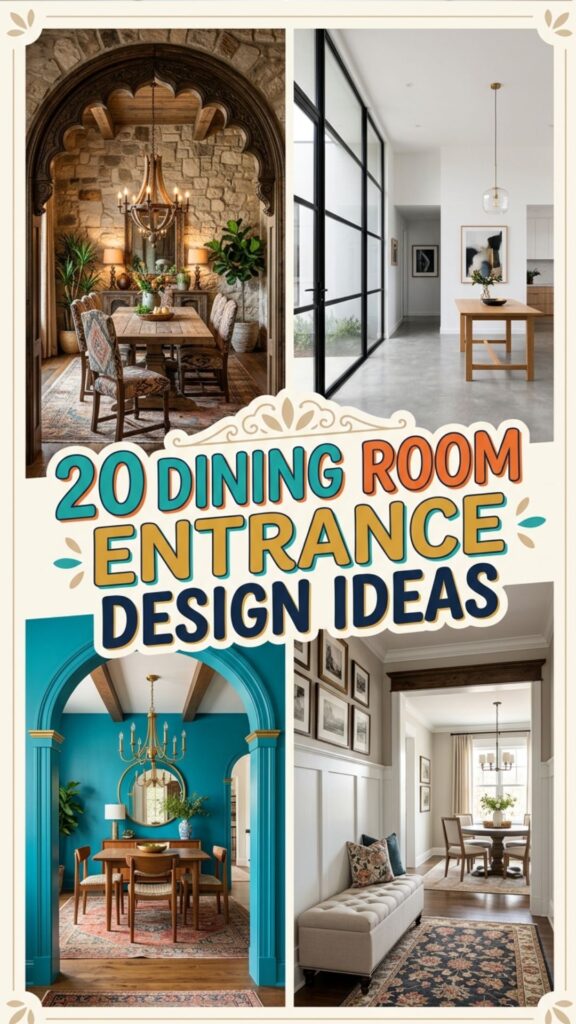
In this guide, you’ll find 20 specific, actionable ideas for upgrading your dining room entrance — from architectural details and statement lighting to simple styling tricks that cost almost nothing. Each one comes with practical advice you can act on right away.
1. Frame the Doorway With Painted Trim or Molding
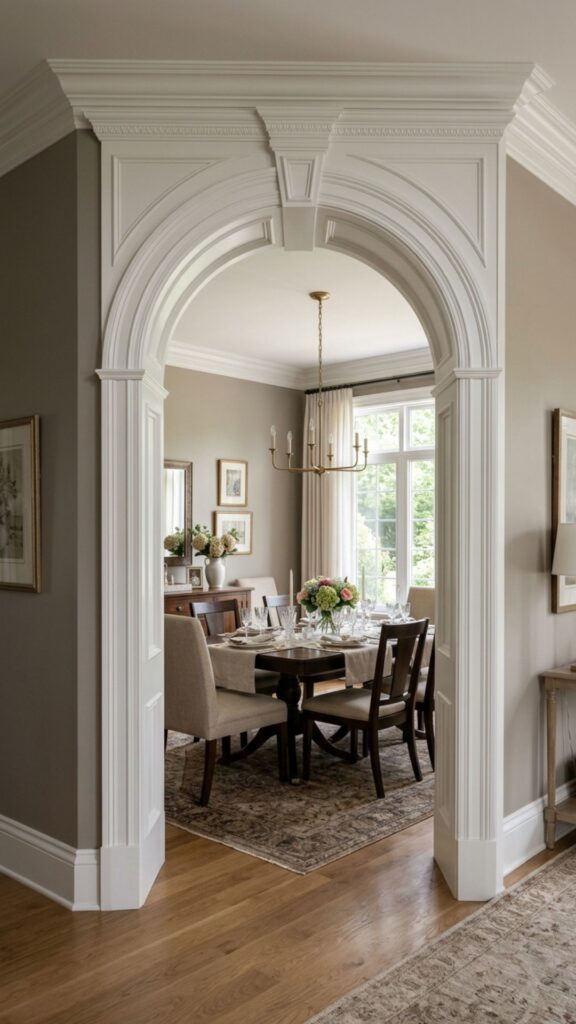
A doorway with strong trim work immediately feels more finished and deliberate. Add crown molding, picture rail molding, or even simple flat trim boards around the door frame, then paint them in a color that contrasts slightly with the surrounding wall. The effect is subtle but powerful — the entrance looks purposeful rather than plain.
For a quick, low-cost version, use peel-and-stick molding strips or MDF trim from your local hardware store. Paint the trim the same color as the wall for a tone-on-tone look, or go slightly darker for definition. Either approach frames the entrance like a picture frame and makes it feel like a design choice rather than a gap in the wall.
2. Install a Statement Light Just Inside the Entrance
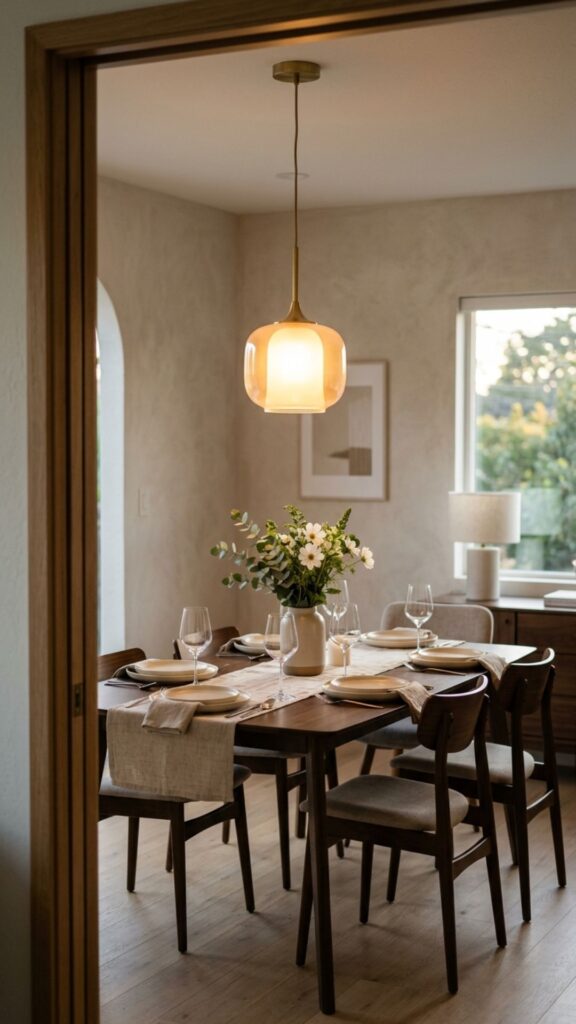
Lighting is one of the fastest ways to signal that a space is special. A pendant light, chandelier, or cluster of hanging bulbs positioned just inside the dining room entrance draws the eye inward and creates immediate visual impact before anyone even sits down.
Choose a fixture that suits the scale of the room — something too small reads as an afterthought, while something too large crowds the space. A single oversized pendant in a natural material like rattan or aged brass works especially well in transitional and contemporary homes. Put it on a dimmer so you can dial down the brightness during meals.
3. Use a Wide Archway Instead of a Standard Door Frame
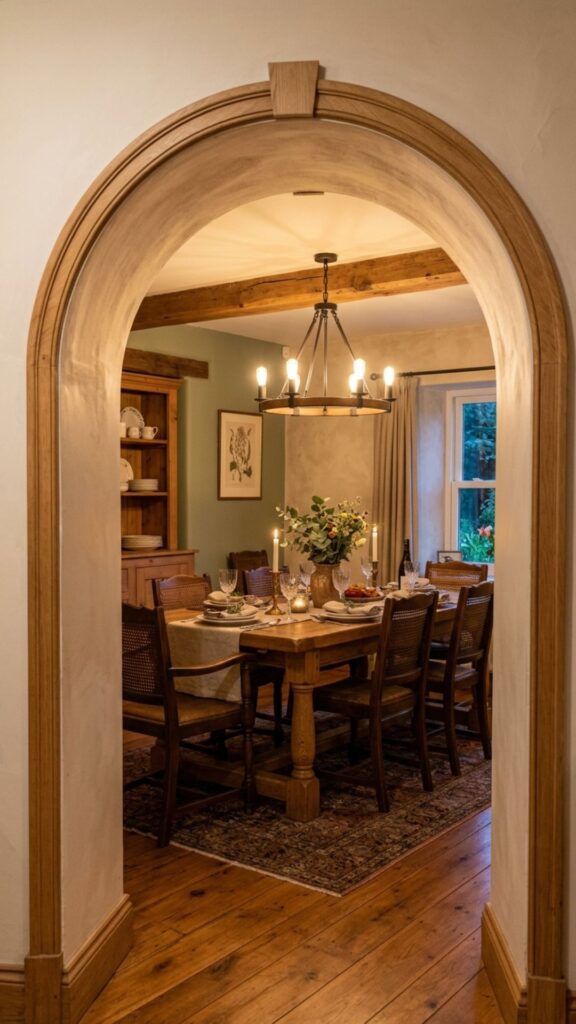
An arched opening between the hallway or living area and the dining room creates a sense of arrival that a flat doorway simply can’t match. If you’re renovating, replacing a square frame with an arched one isn’t a massive project — and the visual payoff is significant.
If a structural change isn’t on the table, you can mimic the effect with paint. Trace and paint an arched shape in a contrasting color directly on the wall around the existing door frame. It’s a surprisingly convincing trick that costs almost nothing and can be updated whenever your style changes.
4. Add a Decorative Console Table at the Entrance
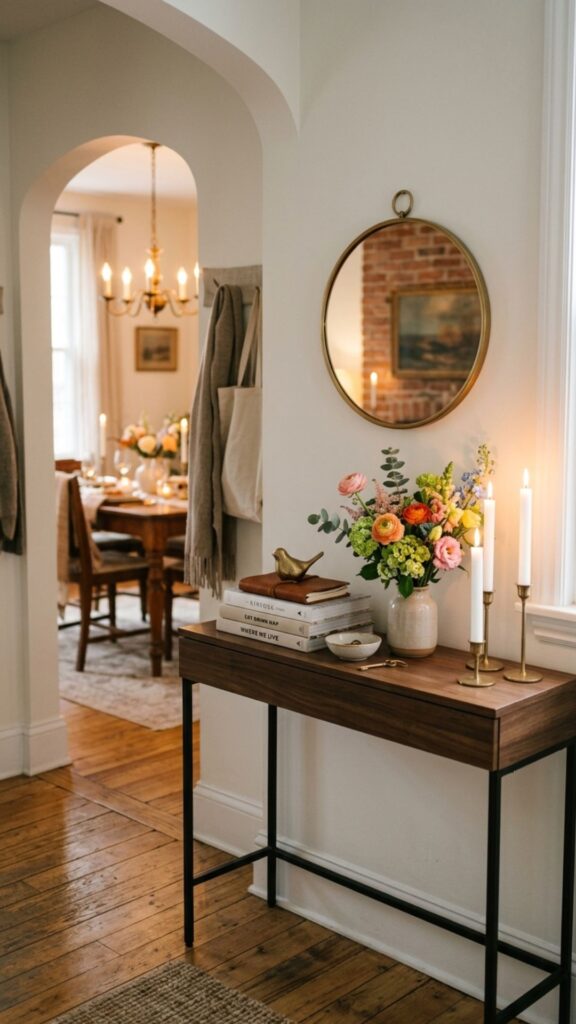
A narrow console table placed just inside or just outside the dining room entrance gives the space a clear landing zone and visual anchor. Use it to display a vase of fresh flowers, a pair of candles, a small mirror, or a stack of design books. The goal is to make the entrance feel curated rather than just functional.
Keep the styling simple and proportional. One tall element, one mid-height element, and one low element creates a natural visual triangle that’s easy to pull off. Swap out seasonal items — fresh branches in winter, citrus in summer — to keep it feeling current without much effort.
5. Define the Entrance With a Distinct Paint Color
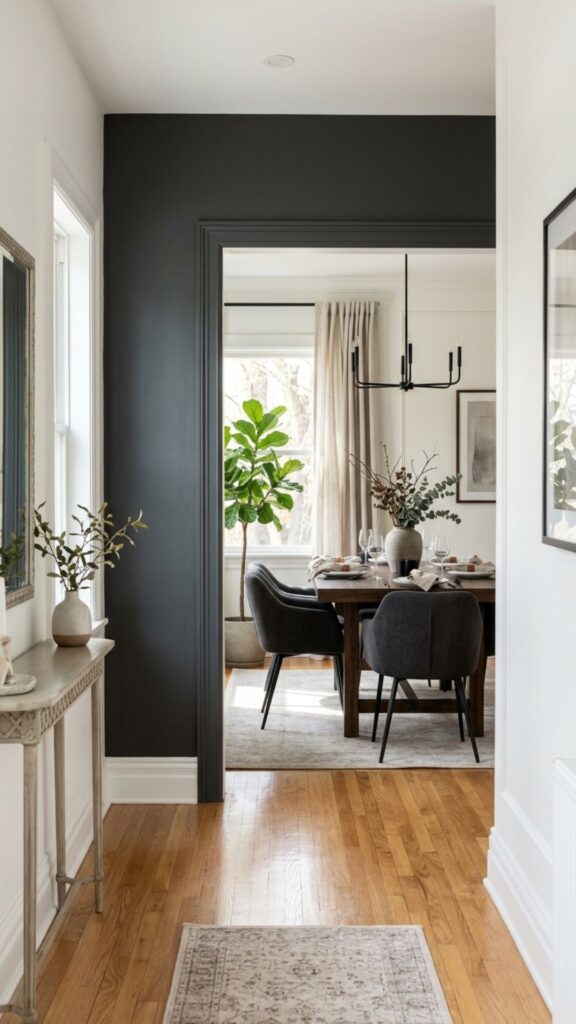
Painting the wall just beyond the doorway in a different color from the hallway creates a visual boundary that says “you’re entering somewhere different now.” A deep, saturated shade — forest green, navy, terracotta — makes the dining room feel like a proper room rather than an extension of wherever you came from.
You don’t need to repaint the entire room. Even a single accent wall directly in the sightline of the entrance creates enough contrast to signal a shift in space. Pair it with trim in a complementary color for a finished, deliberate effect.
6. Hang a Mirror Opposite the Entrance
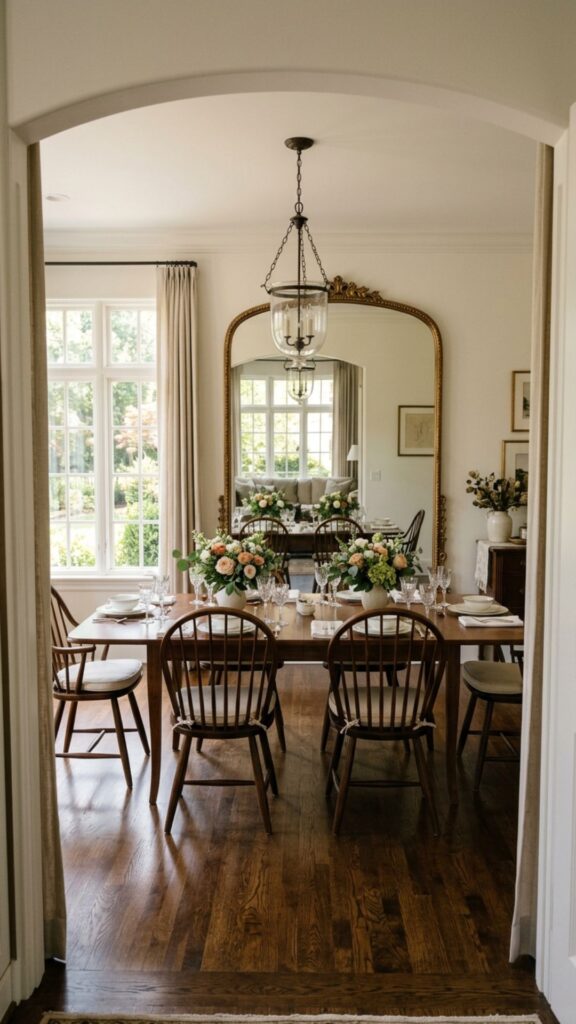
A mirror positioned so that it’s visible as you approach the dining room creates depth and reflects light back toward the entrance. The result is a space that feels larger and more welcoming before you’ve even stepped inside.
Go large — a mirror that’s at least 24 inches wide reads as a design choice rather than an afterthought. Lean it against the wall behind a console table, or mount it directly at eye height. An antique or ornate frame adds character; a simple, thin metal frame keeps things clean and modern.
7. Lay a Distinctive Rug at the Threshold
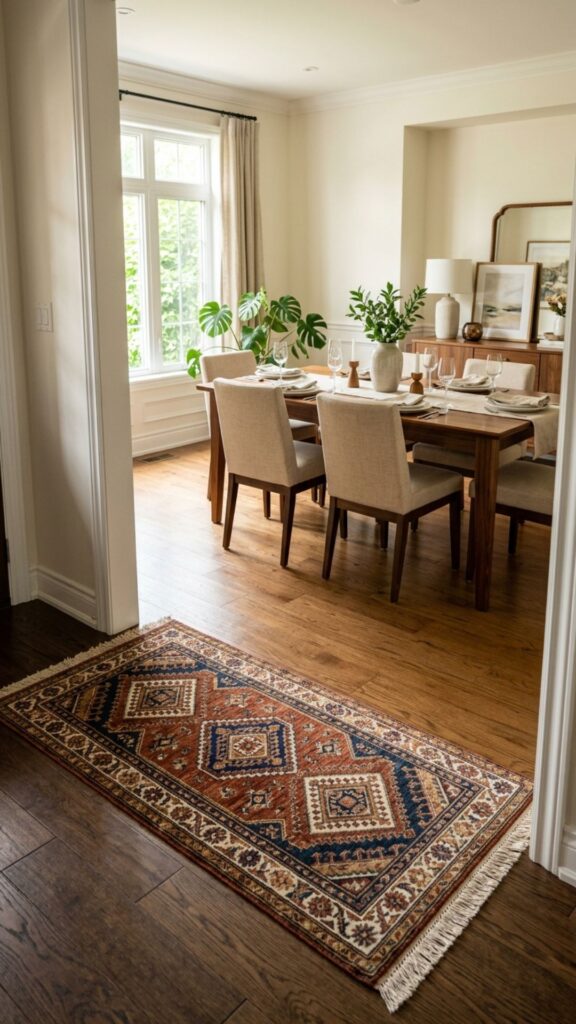
A rug placed right at the dining room entrance — or extending from the hallway into the dining space — creates a physical and visual boundary between areas. It tells people they’re crossing into a defined room, even in open-plan homes where walls don’t do that job.
Choose a rug with a pattern or texture that complements the dining room’s color scheme. A geometric or abstract print adds energy; a solid or subtly textured rug reads as grounded and calm. Make sure it’s large enough to feel intentional — a rug that’s too small just looks lost.
8. Create a Pocket Entrance With Curtains or Sheers
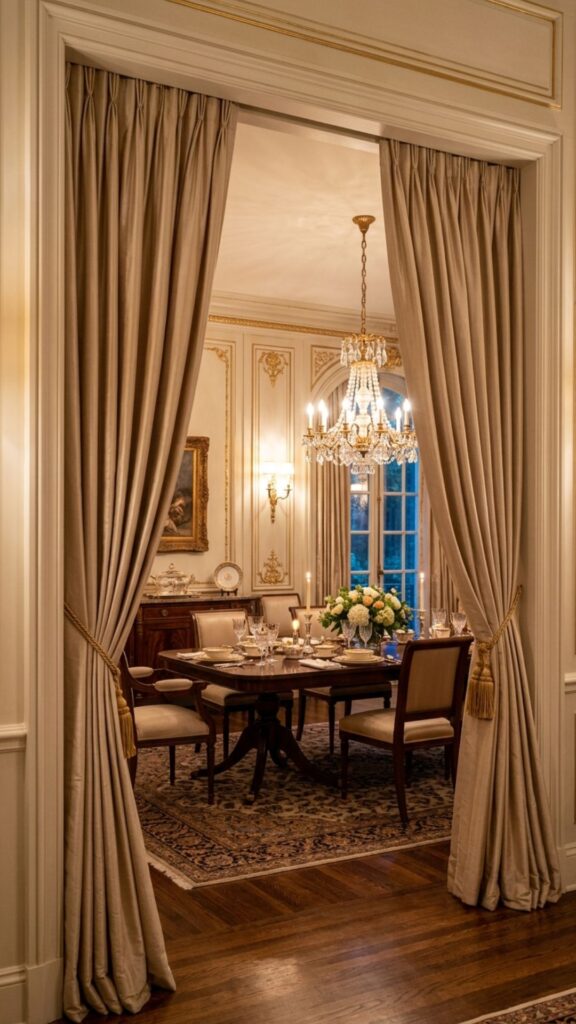
Floor-to-ceiling curtain panels on either side of a doorway or opening create a soft, dramatic entrance that feels both luxurious and easy to achieve. Use them as a partial divider between an open-plan dining area and a living room, or as a decorative frame for an existing doorway.
Linen, velvet, and lightweight cotton all work well. Hang the rod several inches above the door frame and extend it wider than the opening on both sides — this makes the opening feel taller and grander. Tie the panels back during dinner to keep the entrance open and airy.
9. Incorporate Plants to Create a Natural Entryway
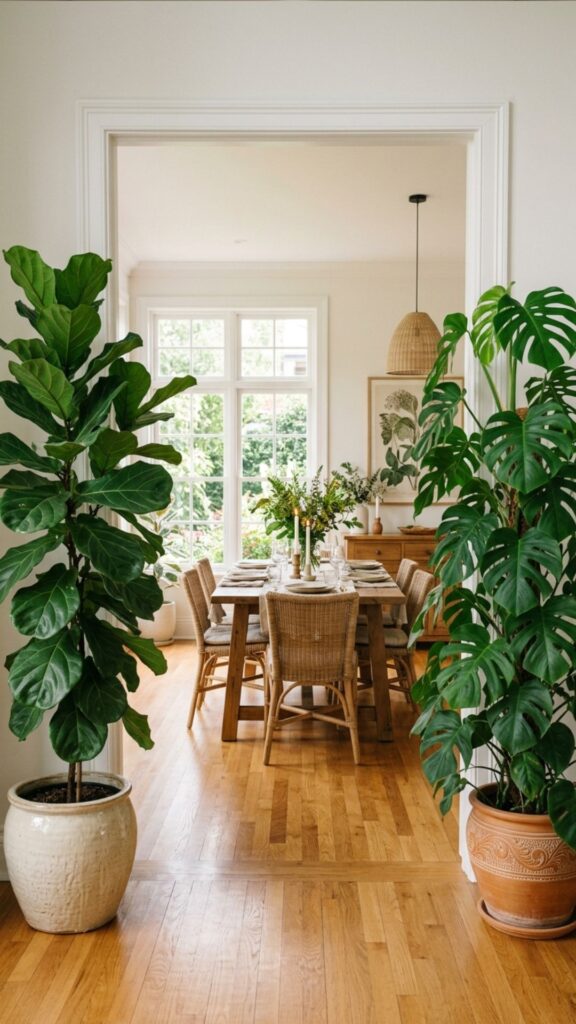
A pair of tall plants — fiddle leaf figs, olive trees, or large snake plants — flanking a dining room entrance creates a botanical “gate” effect that feels organic and welcoming. Plants add life, clean the air, and soften what might otherwise be a hard architectural transition.
If floor space is tight, use wall-mounted planters or hanging plants above the entrance instead. A single dramatic plant in a statement pot on one side of the doorway also works well. The key is scale: choose plants tall enough to frame the opening, not ones that get lost at knee height.
10. Use Wallpaper on the Wall Directly Facing the Entrance
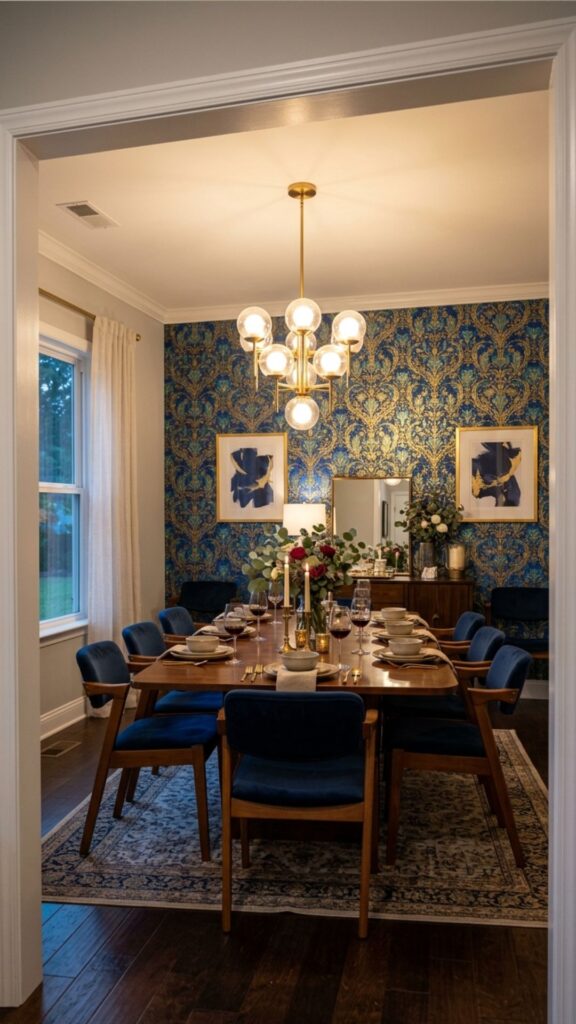
The wall you see the moment you look into a dining room is prime real estate. Covering it with a bold wallpaper — a large botanical print, a geometric pattern, a textured grasscloth — transforms the entrance experience immediately.
This approach works even in open-plan homes. If there’s no defined wall facing the entrance, use a wallpapered panel or a large piece of wall art to create a visual endpoint that pulls the eye in. Peel-and-stick wallpaper makes this easy to test and easy to change.
11. Install Wall Sconces on Either Side of the Entrance
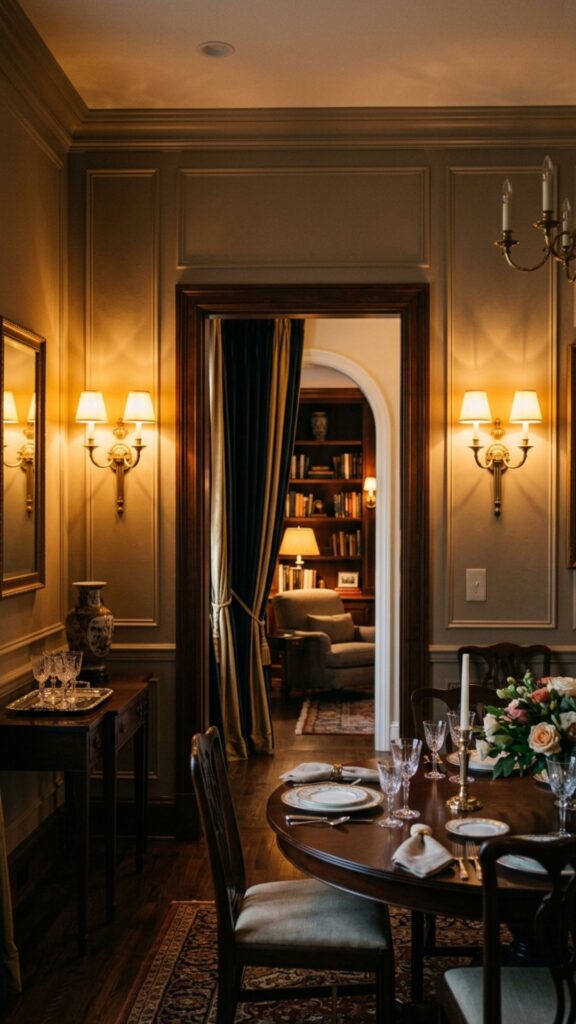
Sconces flanking the dining room entrance create symmetry, add warmth, and make the transition into the room feel considered and complete. Unlike overhead lighting, sconces cast light at eye level — which is exactly where you want it when people are walking through and settling in.
Choose sconces that match or complement your main dining room light fixture. Aged brass, matte black, and brushed nickel are all versatile options. Mount them at about 60 to 66 inches from the floor so they sit comfortably in the visual field without competing with artwork above or furniture below.
12. Add Built-In Shelving on One Side of the Entrance
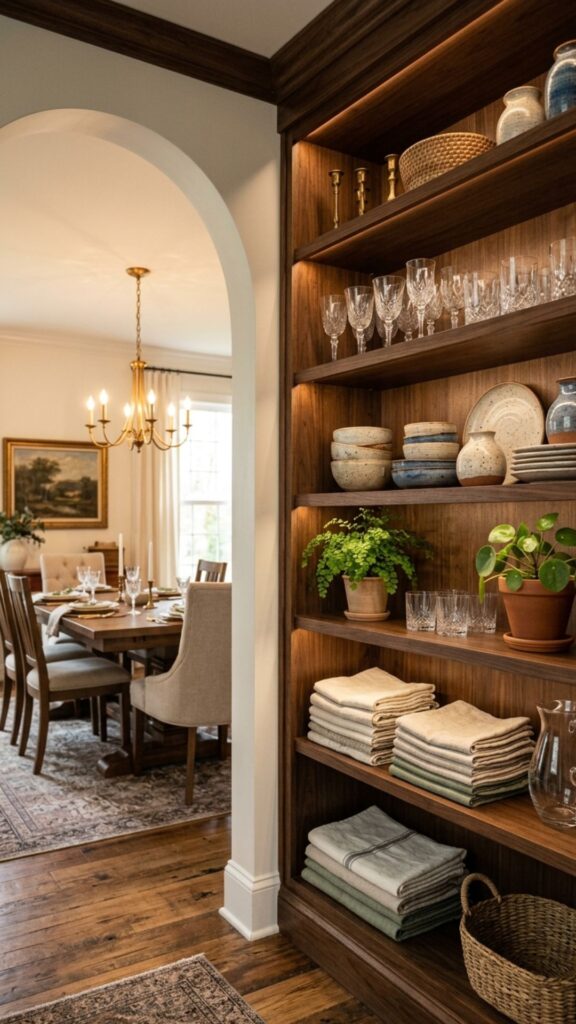
Built-in shelves integrated into the wall on one side of the dining room entrance serve double duty: they store linens, candles, or barware while acting as a decorative feature that makes the entrance feel architecturally rich.
Style the shelves with a mix of practical items and decorative objects — stacked napkins alongside a ceramic vase, a small plant next to a row of glass decanters. Keep the overall palette cohesive. This approach works especially well in older homes where doorways already have deep walls or recesses that can be built out.
13. Use a Barn Door or Sliding Panel as a Feature
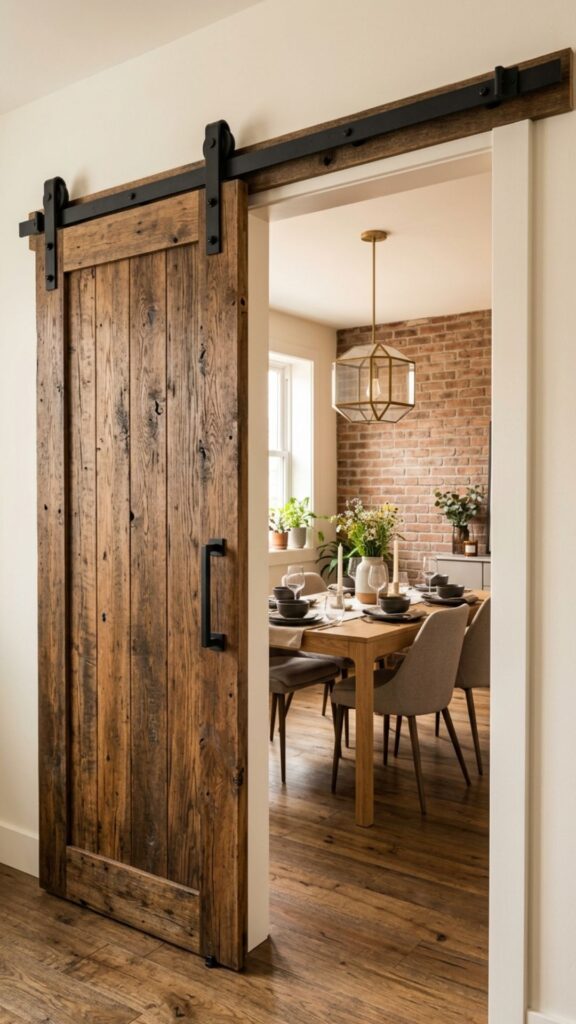
A barn door or sliding panel at the dining room entrance is both functional and visually striking. It frames the opening, adds texture, and introduces a material — reclaimed wood, frosted glass, painted steel — that becomes part of the room’s design story.
The sliding mechanism means no floor space is lost to a swinging door, which matters in tighter layouts. Choose a door finish that ties into something already in the dining room: a wood tone that echoes the dining table, or a painted color that connects to the walls. The hardware alone — in brass or matte black — can be a design statement.
14. Frame the Entrance With Column Details or Pilasters
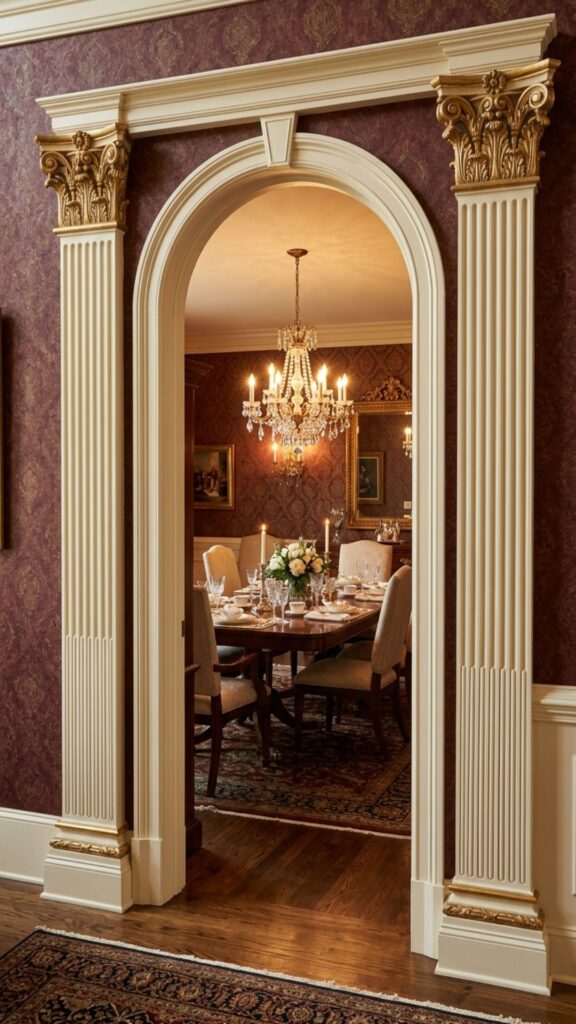
Pilasters — flat, decorative columns applied to the wall on either side of an entrance — add architectural gravitas to an otherwise plain doorway. They suggest formality and intention without the cost of actual structural columns.
You can buy pre-made pilaster kits from millwork suppliers and paint them to match or contrast your walls. Even simple square trim boards built up into column-like forms achieve a similar effect at a fraction of the cost. This idea works particularly well in traditional or transitional dining rooms where the architecture is already leaning classic.
15. Hang Artwork on the Hallway Wall Facing the Entrance
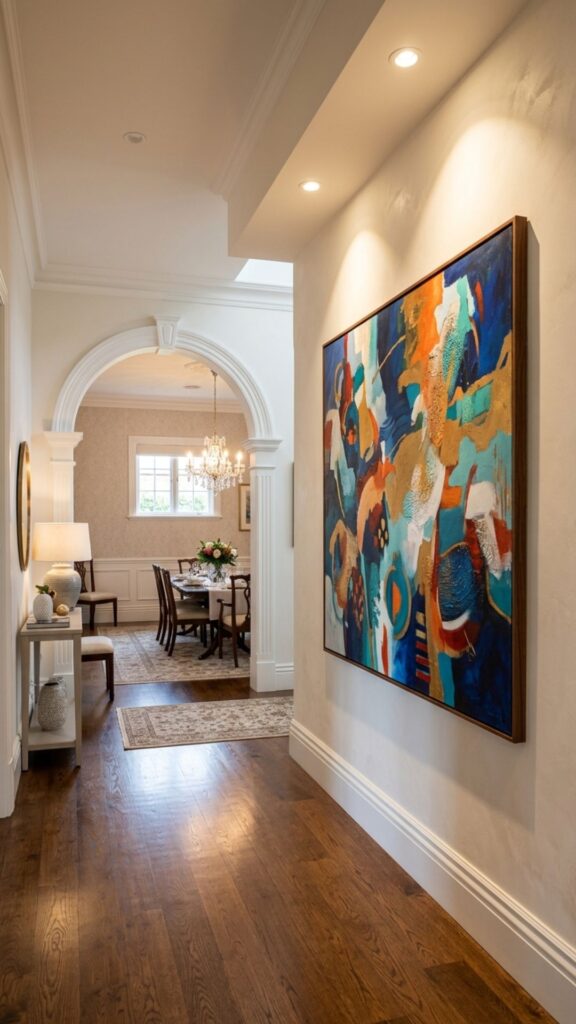
The hallway leading to a dining room is part of the entrance experience, not separate from it. Hanging a single large piece of art on the hallway wall directly in line with the dining room opening creates a focal point that draws people forward and builds anticipation before they arrive.
Choose artwork with colors that appear inside the dining room — a connection that makes the transition between spaces feel deliberate. One well-chosen, well-hung piece does more than a scatter of small frames. Scale it up: something at least 24 by 30 inches reads confidently in a hallway context.
16. Install an Overhead Trellis or Lattice Feature at the Opening
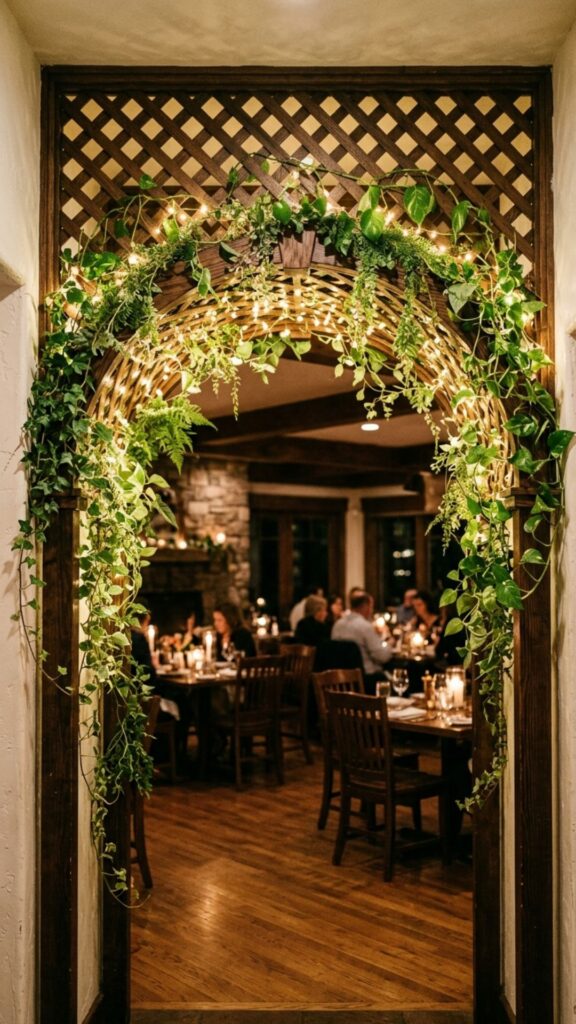
An overhead trellis or lattice panel installed at the top of a wide opening between rooms creates a partial enclosure that defines the dining area without fully closing it off. Wind faux vines or string lights through the lattice to add softness and warmth.
This idea suits open-plan homes where the dining area floats in a larger space without natural boundaries. The trellis creates the suggestion of a ceiling that’s separate from the rest of the room — enough structure to make the dining area feel like a defined destination rather than just a section of a bigger floor plan.
17. Create a Color Gradient Transition Between Spaces
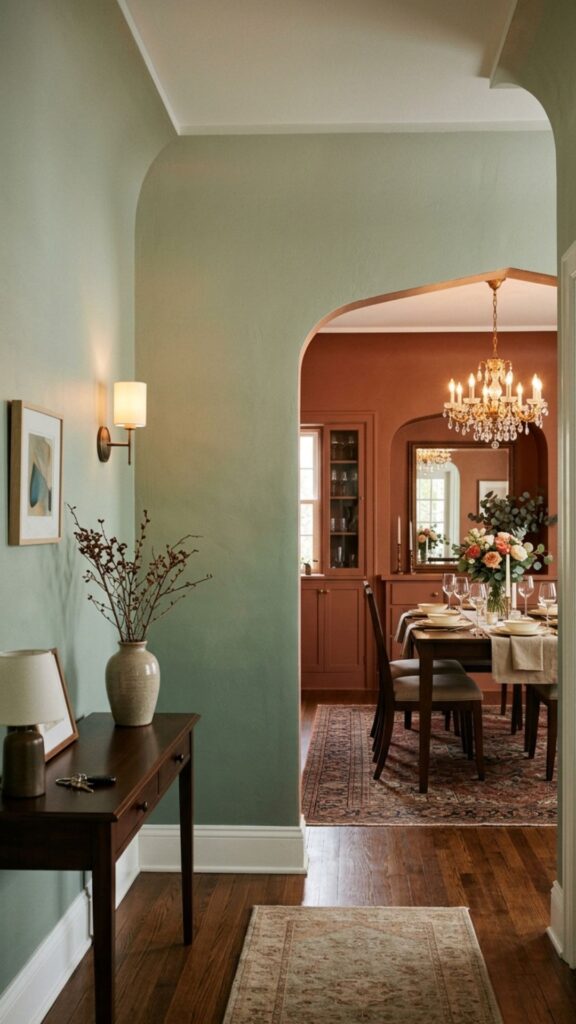
If your hallway and dining room share a wall or open onto each other, painting them in related but distinct shades from the same color family creates a smooth, designed transition rather than a jarring change. Try moving from a lighter shade in the hallway to a deeper version of the same hue in the dining room.
This technique feels cohesive and intentional — it suggests that the whole home was styled as one, rather than room by room. Benjamin Moore, Farrow & Ball, and Sherwin-Williams all offer well-curated color families that make this kind of transition straightforward to execute.
18. Use Lighting on a Dimmer to Control Entrance Atmosphere
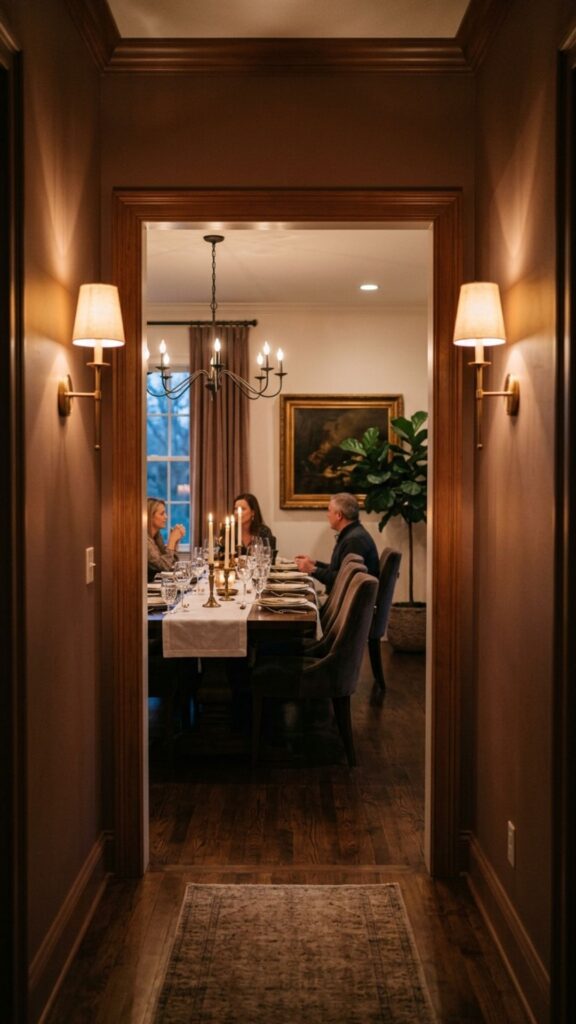
How a dining room entrance feels changes dramatically depending on lighting intensity. Installing a dimmer switch for every light near and inside the entrance — overhead fixtures, sconces, even plug-in lamps on a console table — gives you real-time control over the mood as guests arrive.
Bright lighting works for family dinners and casual gatherings; a lower setting transforms the same space for dinner parties or intimate meals. This is one of the highest-impact, lowest-effort upgrades on this list. An electrician can install a dimmer in under an hour, and the functional difference is immediate.
19. Add a Statement Door or Painted Interior Door
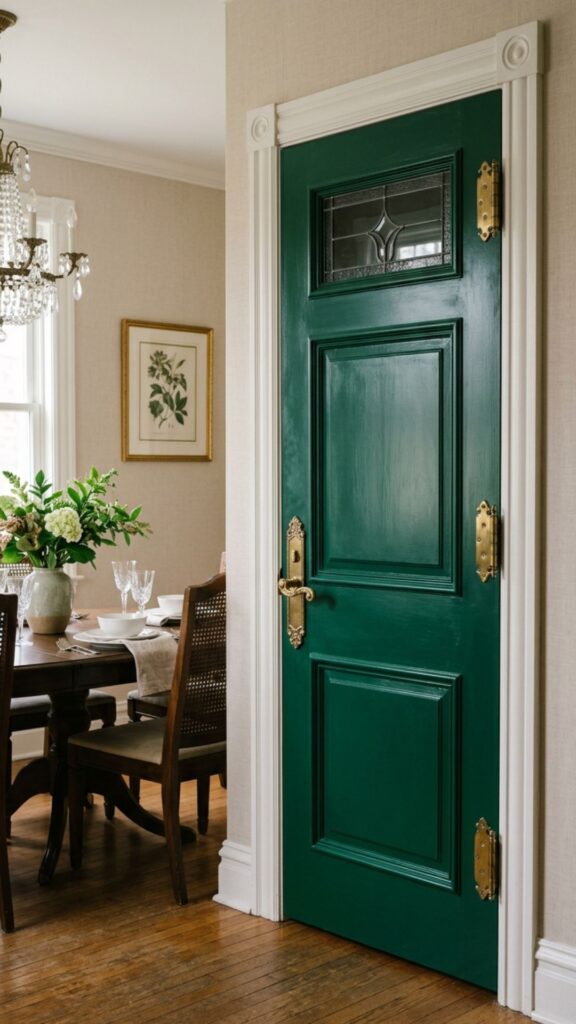
If the dining room has an interior door, make it a feature rather than something that blends into the wall. Paint it in a bold, unexpected color — deep teal, dusty rose, matte black, or warm terracotta — and update the hardware to something with character, like aged brass or hand-forged iron.
A painted door draws attention to the entrance itself and makes the act of entering the room feel slightly more deliberate. It’s also one of the easiest changes to make, requiring nothing more than a quart of paint and a few hours on a weekend. The door becomes part of the design rather than an architectural afterthought.
20. Layer Multiple Elements for a Composed Entrance Vignette
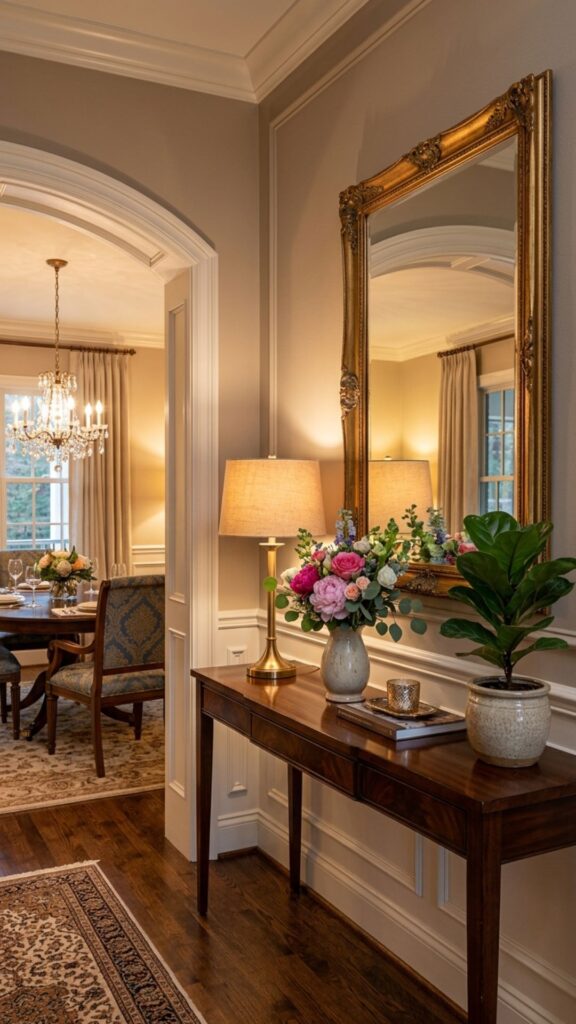
The most memorable dining room entrances rarely rely on a single idea. A composed entrance — one that layers a light fixture, a console table, a mirror, and a small plant — creates depth and richness that one element alone can’t achieve.
Start with the largest piece (a mirror or piece of art), add a surface below it (console table or shelf), then introduce a light source and a natural element (plant or fresh flowers). Step back and edit. A well-layered entrance vignette takes ten minutes to rearrange and delivers the kind of visual impact that makes guests pause before they even sit down.
Conclusion
A dining room entrance is worth the attention. It shapes first impressions, sets the mood for meals, and reflects the care you’ve put into your home. Whether you start with something simple — a new paint color or a console table — or go bigger with architectural details and custom lighting, the difference is noticeable.
Pick one idea from this list that fits your space and your weekend. That’s the only rule. Start there, see how it changes the room, and build from it. Your dining room entrance is closer to impressive than you might think.
Choose one idea today and take the first step — whether that’s ordering a pendant light, picking up a can of paint, or styling a shelf you already own.
What makes a good dining room entrance design?
A good entrance creates a clear visual transition into the room, uses lighting to set mood, and includes at least one anchor element — a mirror, a console table, or a statement fixture — that draws the eye. It doesn’t need to be elaborate; it just needs to feel intentional.
How do I upgrade a dining room entrance on a small budget?
Paint delivers the highest impact for the lowest cost. A contrasting color on the entrance wall, a painted interior door, or a color gradient between spaces can completely change the feel of the entrance. Beyond paint, a thrifted console table, a simple mirror, and a plant from a grocery store are enough to create a styled entrance vignette for under $100.
How do I define a dining room entrance in an open-plan home?
Use visual cues rather than physical walls. A distinctive rug at the threshold, a change in wall color, an overhead pendant positioned directly above the dining table, or a partial curtain panel all signal that the dining area is a defined destination, even without walls to separate it.
What lighting works best at a dining room entrance?
A pendant light or pair of wall sconces placed at or just inside the entrance creates warmth and draws attention inward. Install everything on a dimmer so you can adjust the intensity to suit different occasions — bright for family dinners, low and warm for dinner parties.
Should the dining room entrance match the rest of the hallway?
Not necessarily. A slight contrast — a richer wall color, a bolder paint on the door, a more substantial light fixture — actually works better because it marks the transition between spaces. Think of the entrance as the beginning of the dining room’s design story, not a continuation of the hallway.