A blank wall in the dining room is one of those things you walk past every day without really seeing — until a guest glances at it, or you’re setting the table for a dinner party and suddenly notice just how bare it looks. The good news? An empty wall isn’t a problem. It’s an opportunity.
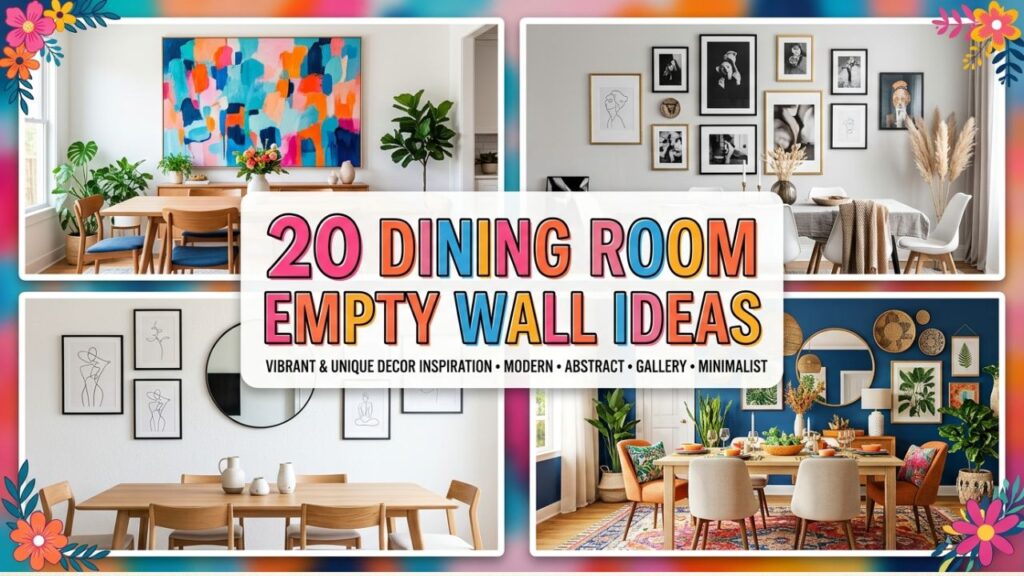
The best dining room empty wall ideas don’t require a full renovation or a large budget. What they do require is a little intention. Whether your wall is wide and dramatic or short and awkward, there’s a solution here that works for your space, your style, and your Saturday afternoon.
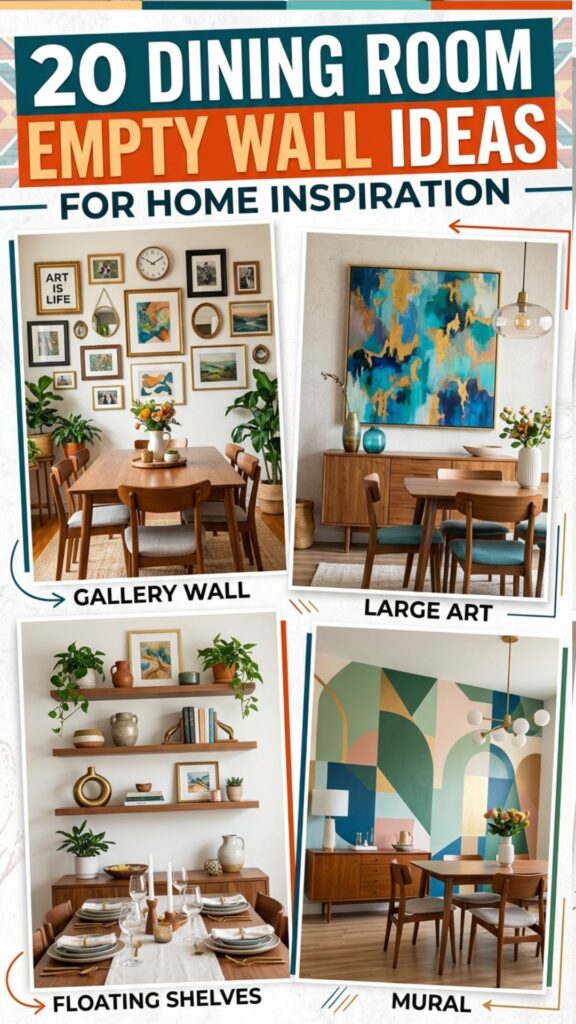
In this guide, you’ll find 20 specific, actionable ideas to fill that blank wall — from gallery displays and mirrors to bold paint treatments and architectural details. You’ll also get practical styling advice for each one, so you know exactly how to pull it off.
1. Build a Gallery Wall With Frames You Already Own
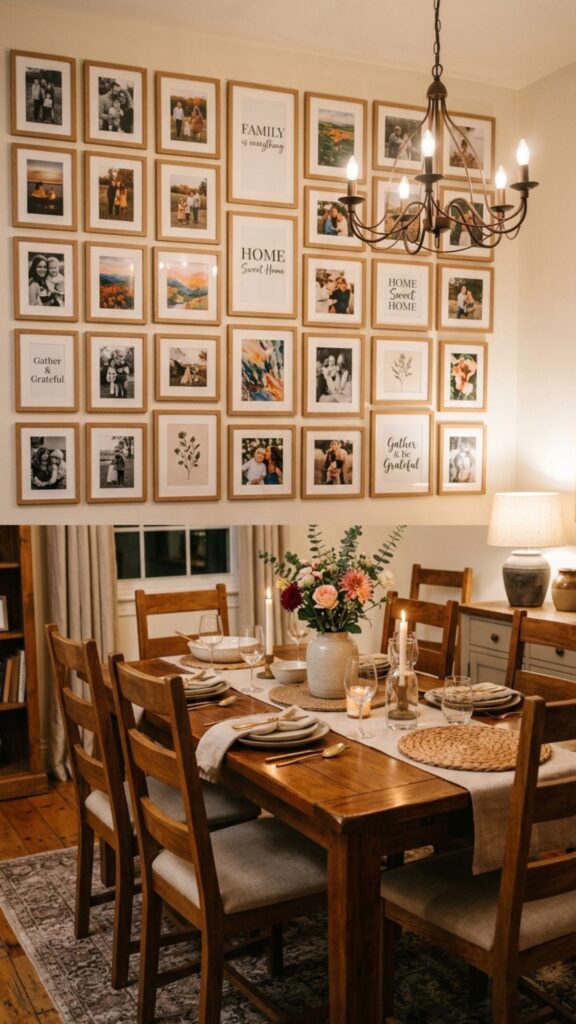
A gallery wall is one of the most versatile solutions for dining room empty wall ideas because it works at almost any scale. Start by collecting frames you already own — mix sizes, but keep the finish consistent (all black, all wood, all gold) for a cohesive look. Lay them on the floor first and arrange them until the grouping feels balanced.
When you hang them, start from the center and work outward. Keep gaps between frames to about two to three inches for a tight, curated look. Include a mix of photographs, prints, and maybe one or two illustrated quotes to give the wall personality beyond decoration.
2. Hang a Single Large-Scale Artwork
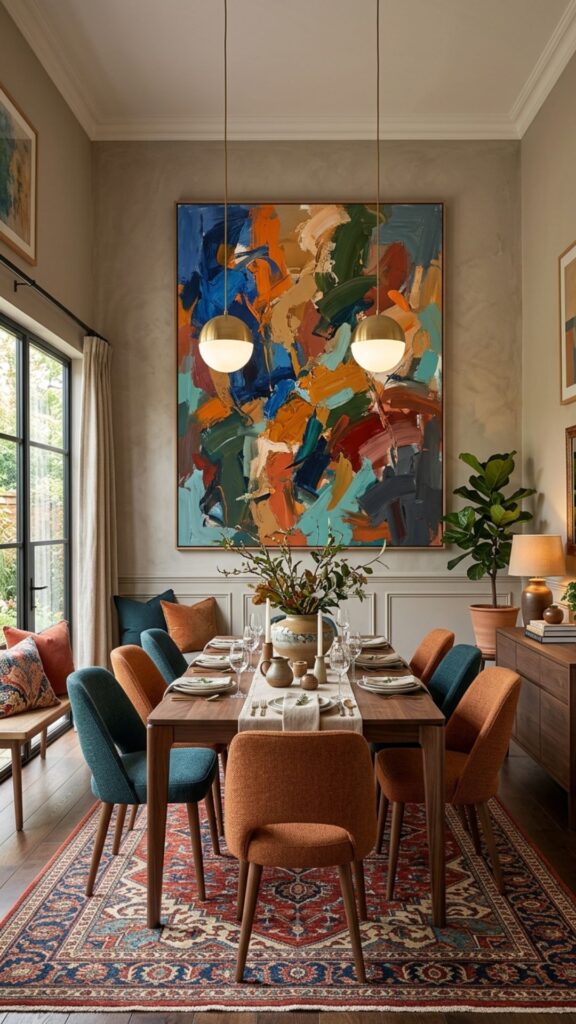
Sometimes the most powerful move is one bold piece. A large canvas or framed print — something at least 36 inches wide — commands attention and makes an empty wall feel intentional rather than unfinished. This works especially well on a wide wall behind the dining table.
Choose a piece with colors that appear somewhere else in the room: a throw pillow, a rug, the chair upholstery. That connection makes the artwork feel chosen rather than placed. Hang it so the center of the piece sits at roughly 57 to 60 inches from the floor — that’s the standard museum-height rule, and it works beautifully in dining rooms.
3. Install a Large Mirror to Open Up the Space
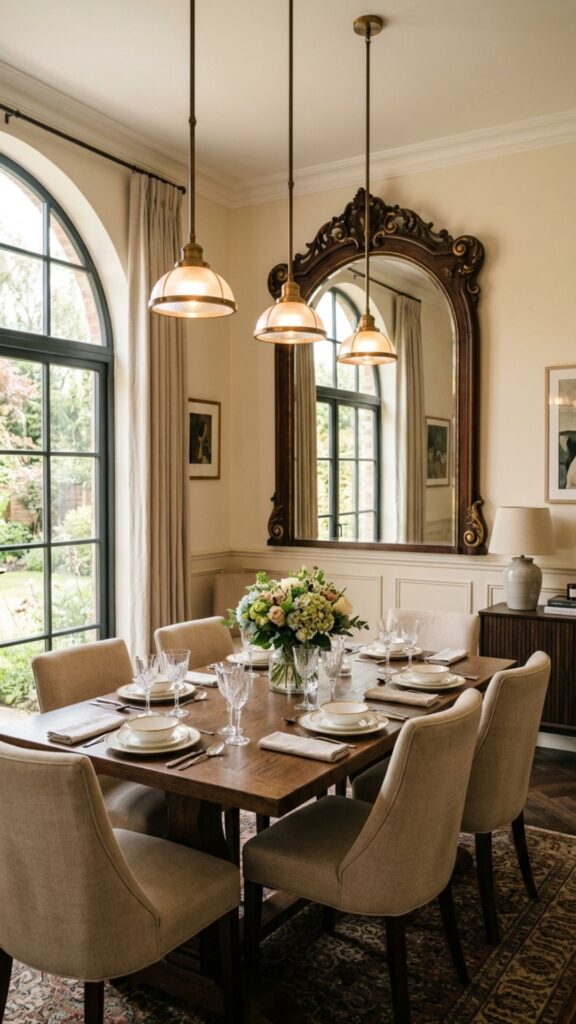
Mirrors are a decorator’s go-to for good reason. A large mirror on a dining room wall bounces light, makes the space feel bigger, and adds a reflective element that candlelight and pendant lights absolutely love. Look for something with an interesting frame — arched, sunburst, ornate, or simple depending on your aesthetic.
For maximum impact, position the mirror so it reflects either a window or your main light fixture. That reflected light doubles the warmth in the room. An arched mirror leaning against the wall (rather than hung) also works well and adds an editorial, relaxed quality that feels current.
4. Create a Statement With Wallpaper on One Wall
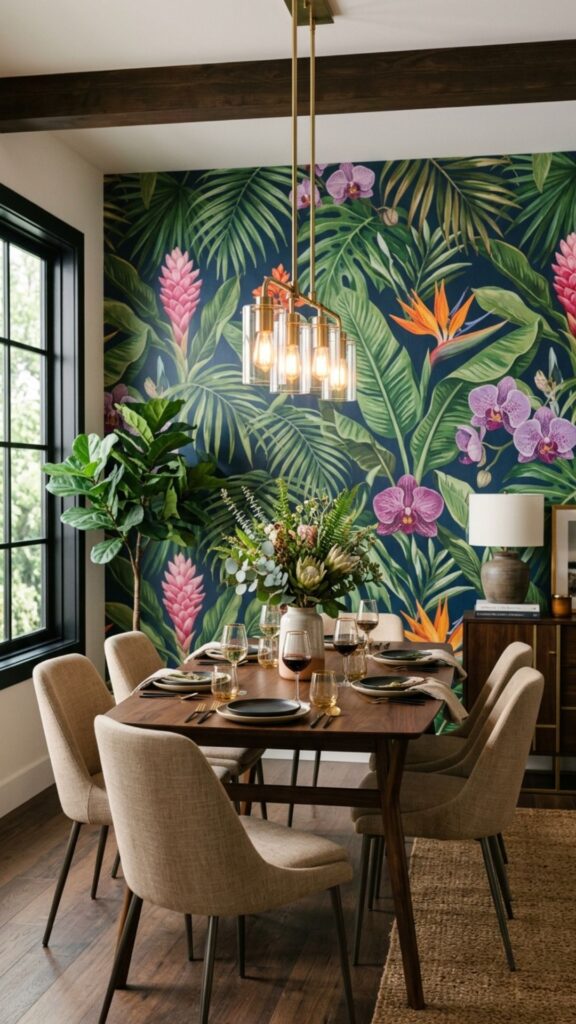
Accent wallpaper on a single dining room wall transforms it from empty to extraordinary. Botanical prints, geometric patterns, textured grasscloth, and bold stripes are all strong choices. The key is choosing something with enough personality to justify being the focal point of the room.
You don’t need to wallpaper all four walls — just the one that faces the dining table, or the wall behind a buffet. Most peel-and-stick wallpaper options today are genuinely good quality and renter-friendly, which means you can commit to the look without committing permanently.
5. Add a Floating Shelf for Display and Function
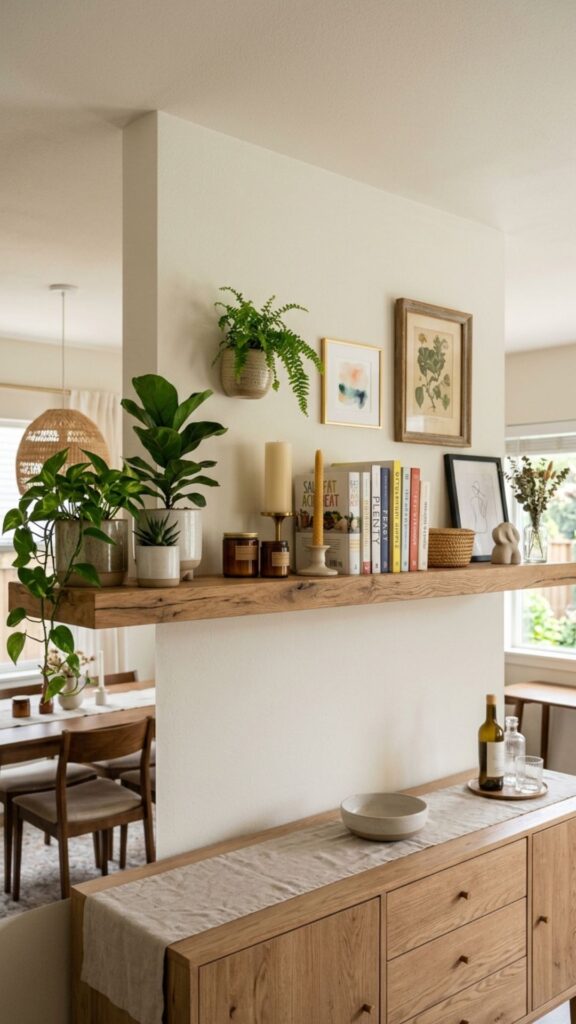
A single wide floating shelf, or a set of two or three staggered shelves, turns an empty dining room wall into a display zone that’s both practical and decorative. Use them to hold plants, ceramics, candles, stacked cookbooks, or small framed prints.
Keep the styling intentional: group objects in odd numbers, vary the heights, and leave some breathing room between items. A shelf that’s slightly overcrowded feels cluttered; one with too little on it feels neglected. Aim for 60 to 70 percent coverage and let the wall show through the rest.
6. Hang a Tapestry or Textile for Warmth and Texture
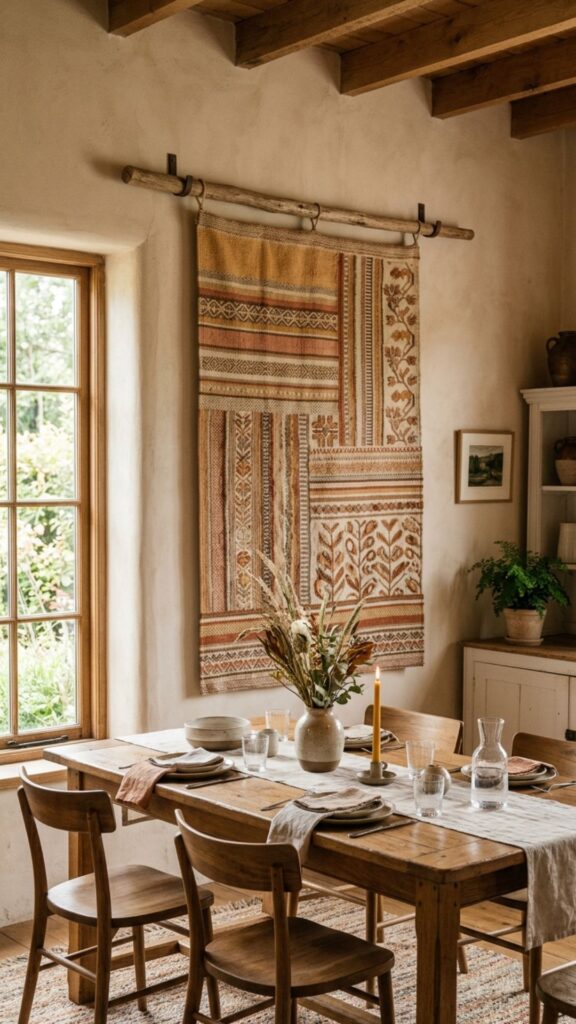
Textiles on walls add something that framed art and mirrors can’t: softness. A woven tapestry, macramé piece, or even a beautifully patterned vintage textile brings warmth and texture to a dining room wall, especially in rooms that lean toward hard surfaces like stone floors or lacquered furniture.
Choose a textile with colors that tie into the room’s palette. Neutral oatmeal and cream tones work almost universally; earthy terracotta and rust add richness; deep jewel tones create drama. Hang it from a wooden dowel or decorative rod for a clean, intentional presentation.
7. Mount a Pegboard for an Organized, Modern Look
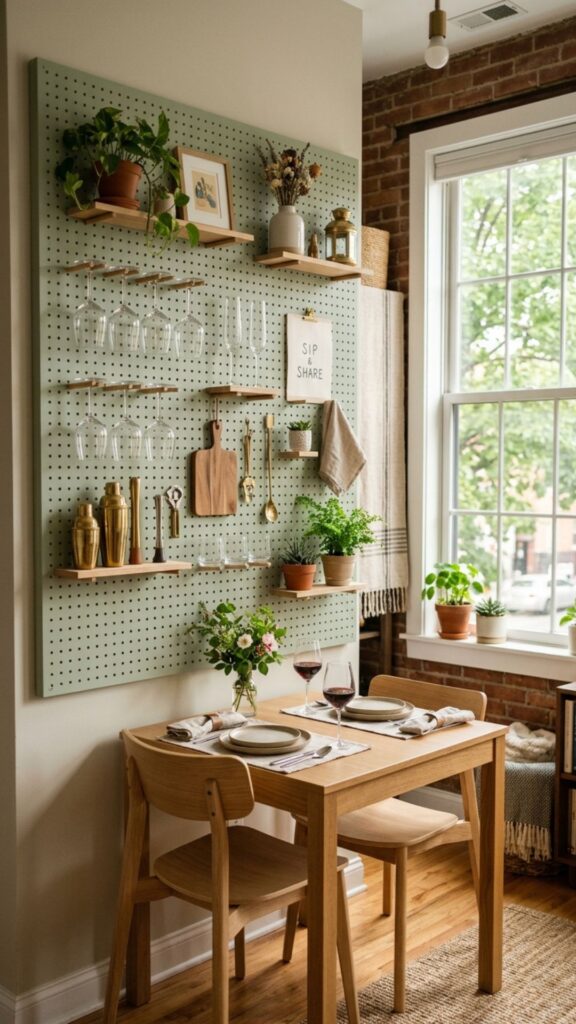
Pegboards aren’t just for garages and craft rooms. A painted pegboard in the dining room — particularly one adjacent to the kitchen — creates a functional wall feature that holds wine glasses, serving tools, small plants, and decorative items. Paint it the same color as the wall for a seamless, elevated look, or in a contrasting color for a bold pop.
This idea works particularly well in smaller dining spaces where storage is useful. Hang frequently used items alongside purely decorative ones to blend function and style. Keep the arrangement tidy — the visual effect depends on intentional placement rather than random hanging.
8. Use a Chalkboard or Blackboard Paint Panel
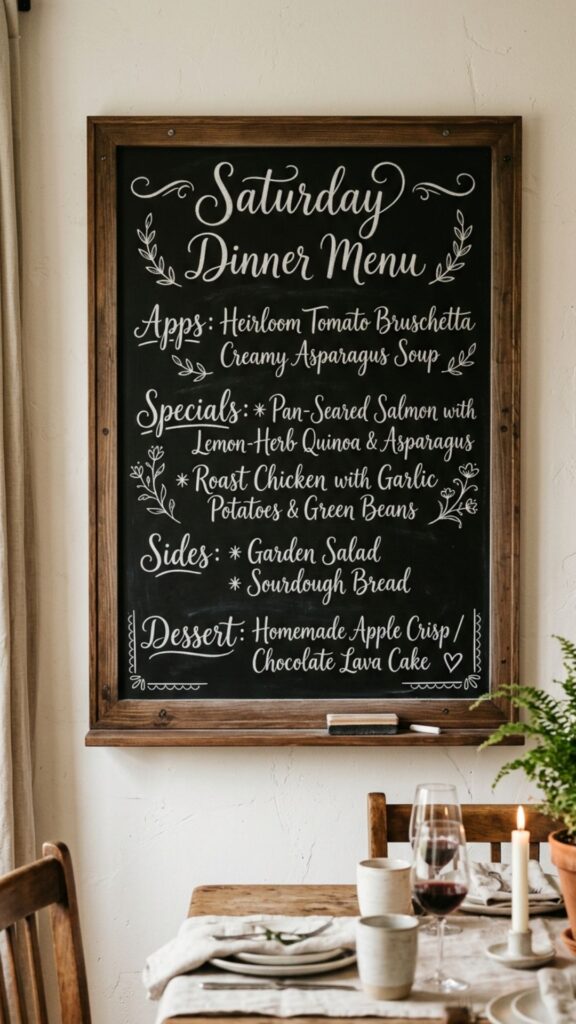
A chalkboard wall panel is one of the more playful dining room empty wall ideas, and it earns its keep in households that host often. Use it to display the evening’s menu, write a welcome message for guests, or let kids draw during family dinners. The board becomes a living, changing piece of decor.
Frame the chalkboard area using simple wood trim painted in the same color as the surrounding wall — this elevates it from a practical surface to an architectural feature. Keep chalk markers and an eraser nearby in a small wall-mounted holder so the board stays usable without looking messy.
9. Install Decorative Wall Paneling or Wainscoting
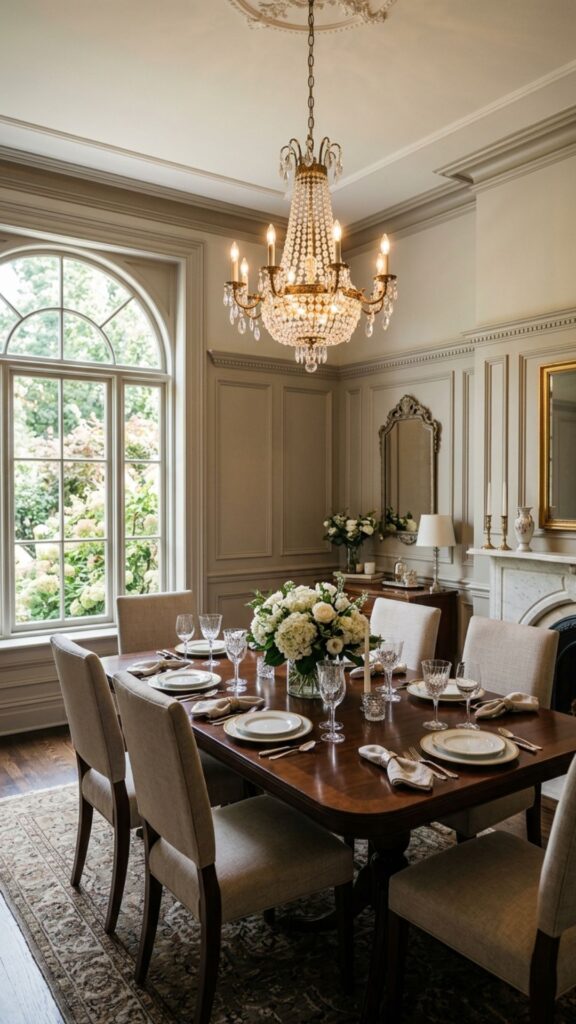
Wall paneling adds architectural interest and depth that paint alone can’t achieve. Whether it’s classic raised-panel wainscoting, a modern slat wall, or geometric panel trim, this treatment makes an empty dining room wall feel finished and considered — like it was always meant to look that way.
Paint the paneling the same color as the wall above it for a tone-on-tone effect that feels layered and sophisticated. Alternatively, use a deeper or contrasting shade on the paneled section for a more dramatic result. Either approach converts a blank wall into a genuine design feature.
10. Display a Collection of Plates or Ceramic Pieces
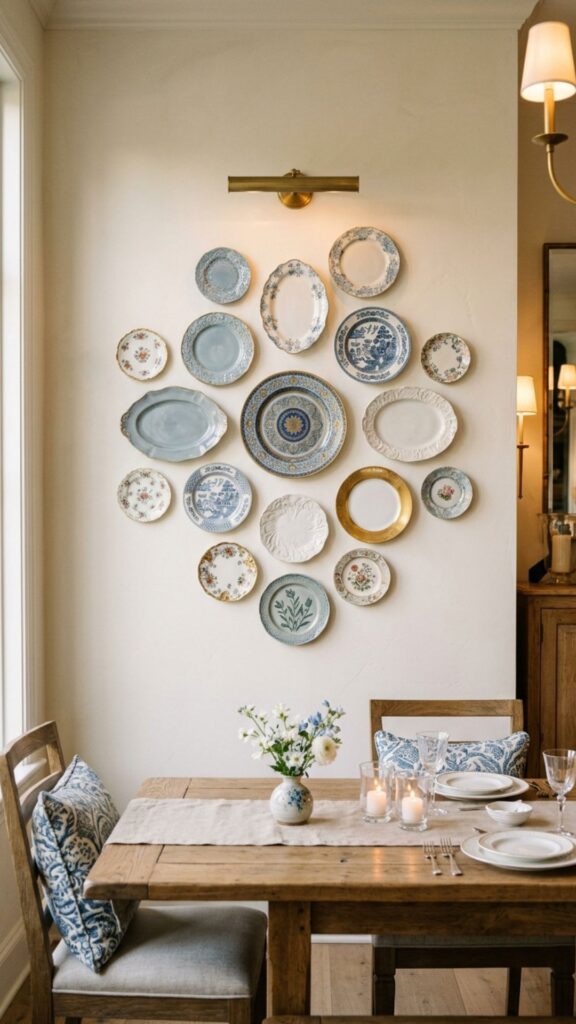
Plate walls have been around for centuries, and they keep coming back because they work. A curated collection of decorative plates, ceramic platters, or handmade pottery pieces creates a dining room wall display that’s connected to the room’s function and full of character.
Mix sizes and shapes, but keep a consistent color story — all-white ceramics feel clean and contemporary; a mix of deep blue and white has a classic, coastal quality; earth tones in terracotta and cream feel warm and organic. Use dedicated plate hangers or adhesive plate-hanging discs to mount them safely.
11. Try a Mural or Hand-Painted Wall Design
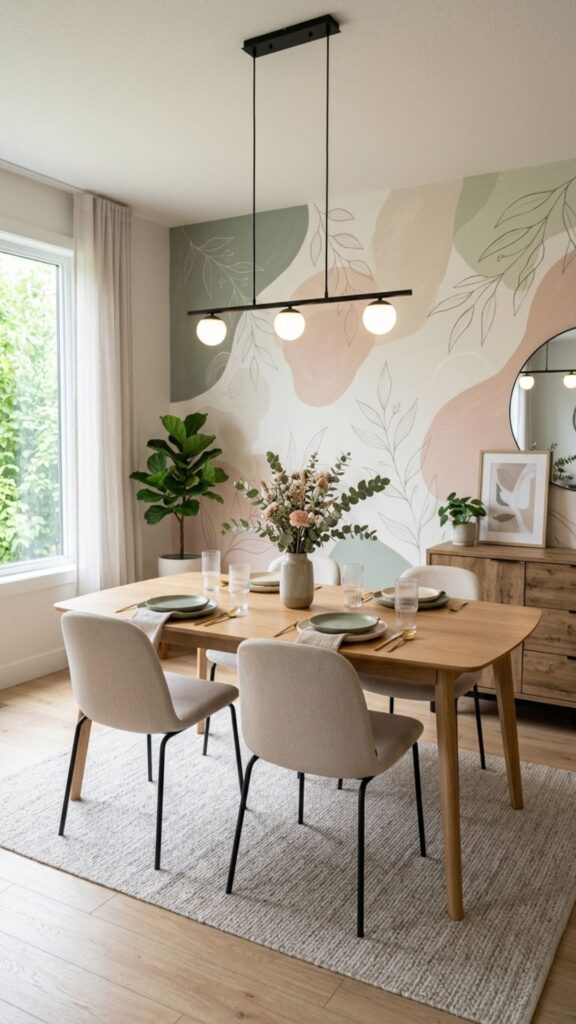
A painted mural — even a simple one — turns an empty wall into a piece of art that’s completely unique to your home. You don’t need to be a professional artist to pull this off. Geometric shapes, large organic brush strokes, simple botanical outlines, and abstract color blocking are all achievable with basic painting skills and a little patience.
If hand-painting feels like a stretch, consider peel-and-stick mural panels, which come in stunning designs and are easy to apply. A mural works best on a wall with no windows or doors competing for attention — the dining room feature wall behind the table is usually the perfect candidate.
12. Lean a Large Framed Mirror or Canvas Against the Wall
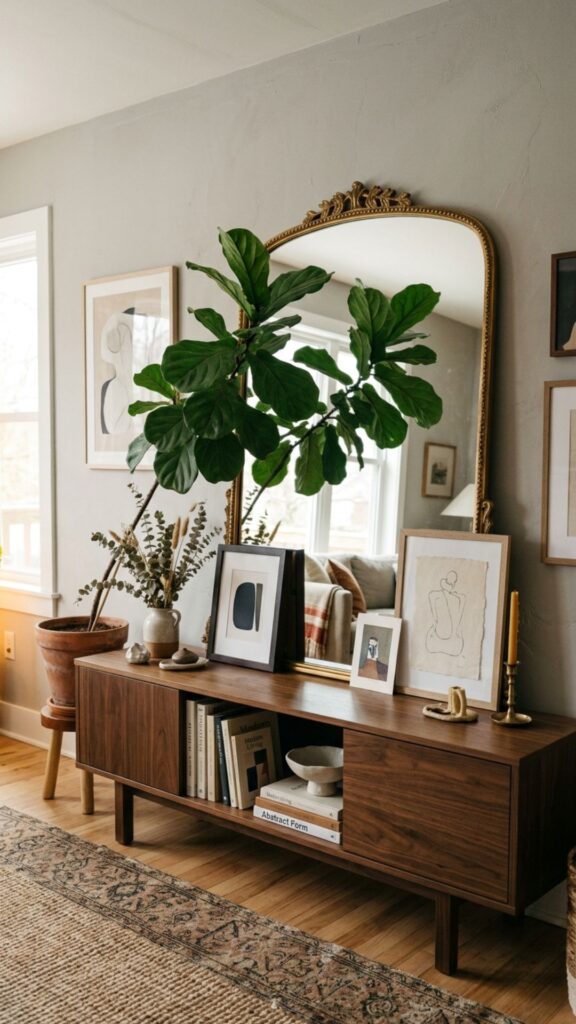
Not everything needs to be hung. Leaning a large framed piece against the dining room wall creates a relaxed, layered look that feels current and effortless. It’s also much easier to move or swap out than something wall-mounted, which makes it a great choice if your tastes tend to evolve.
Layer a smaller framed print or a plant in front of the leaning piece for depth. A large arched mirror leaning behind a sideboard or buffet creates a particularly strong visual — it feels both deliberate and casual at the same time, which is exactly the mood most modern dining rooms aim for.
13. Mount Wall Sconces for Decorative Lighting
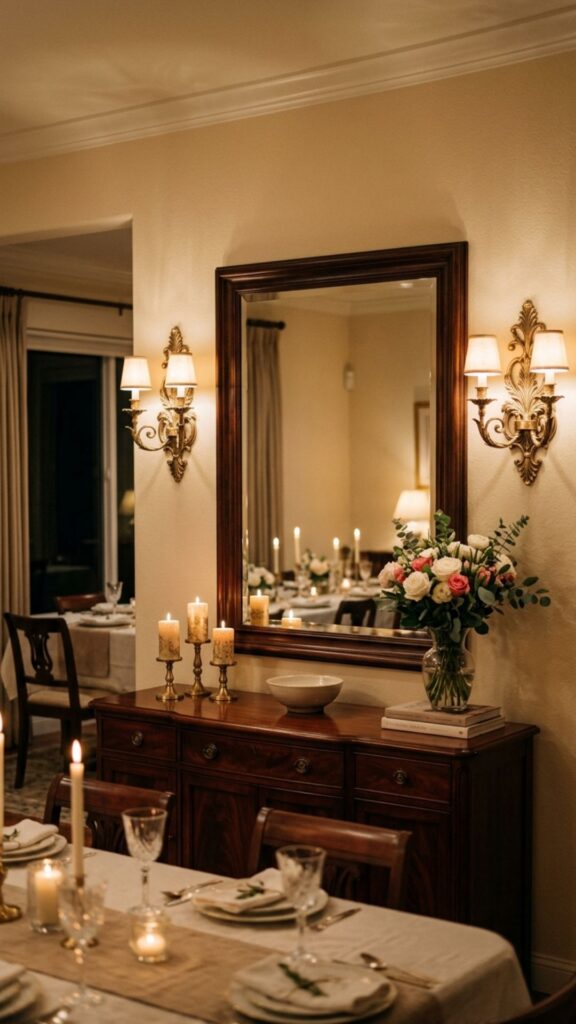
Wall sconces serve double duty: they’re both functional light sources and decorative wall features. A pair of sconces flanking a mirror, artwork, or window transforms an empty dining room wall into a composed, symmetrical vignette that feels finished and warm.
Connect your sconces to a dimmer for maximum flexibility — you want full brightness when setting the table and a softer glow during the meal itself. Candle-style sconces in aged brass work well in traditional rooms; simple geometric shades in matte black suit contemporary spaces. Either way, the wall goes from bare to designed.
14. Hang a Oversized Clock as a Focal Point
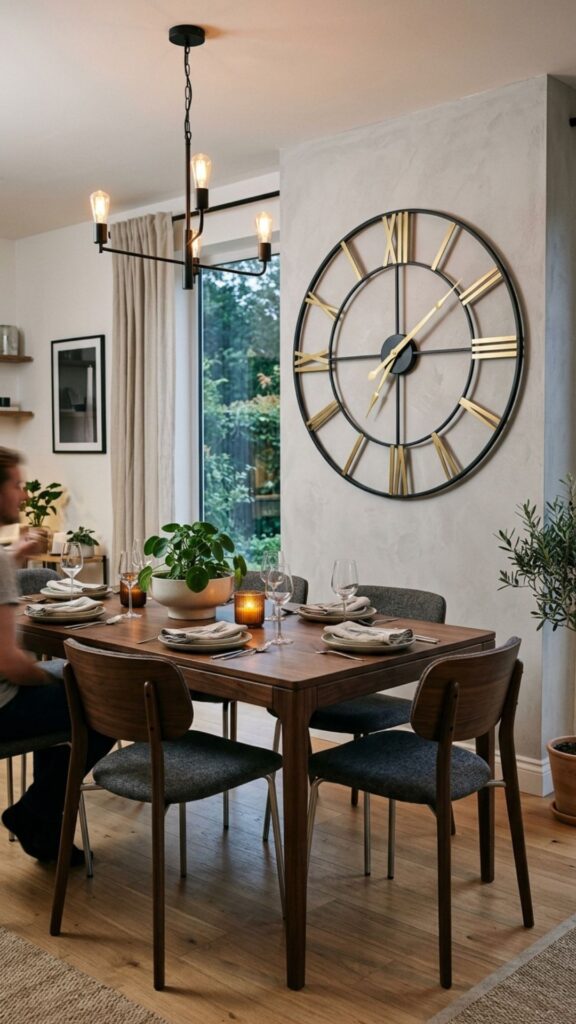
A large wall clock — 24 inches or bigger — is one of those dining room empty wall ideas that solves the problem and adds real function at the same time. It draws the eye, fills the space with confidence, and gives everyone at the table a way to keep track of time without checking their phones.
Choose a clock face that fits your design style: Roman numerals on a clean white face for a classic look, an exposed-mechanism industrial style for something more eclectic, or a borderless minimalist design for contemporary interiors. Position it slightly off-center on a large wall for a more dynamic, editorial feel.
15. Create a Botanical Wall With Framed Pressed Plants
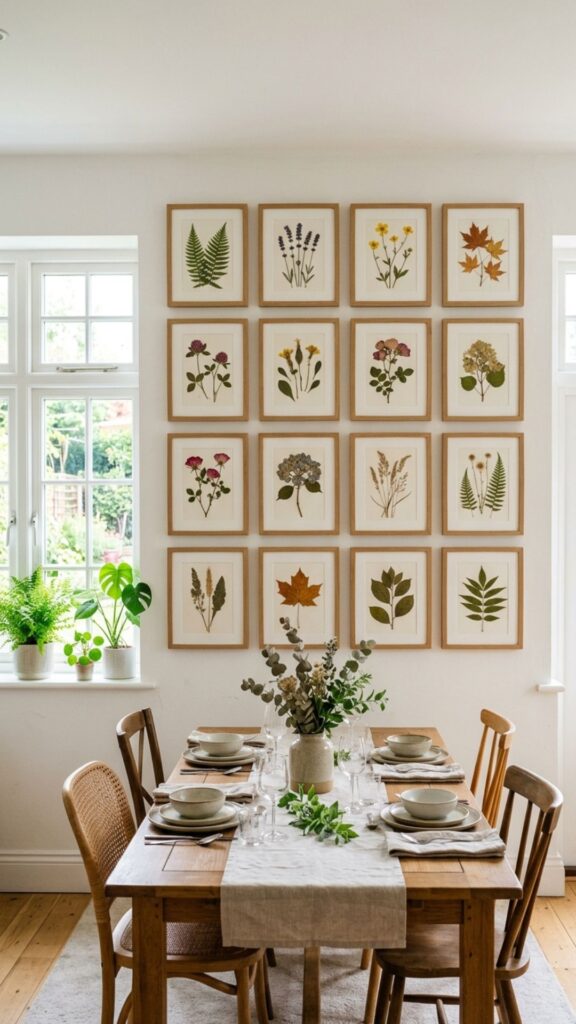
Framed pressed botanicals — leaves, ferns, flowers, grasses — make a beautiful series of prints for a dining room wall. You can buy ready-made botanical prints, commission custom pieces, or press and frame your own. The result is organic, personal, and quietly beautiful.
Hang them as a tight grid (four to nine pieces in even rows) for a structured, graphic look, or arrange them loosely in a flowing cluster for something more relaxed. Use matching frames throughout — thin black or natural wood works best — and choose a consistent mat color to tie the series together.
16. Use Open Shelving as a Display Wall for Glassware
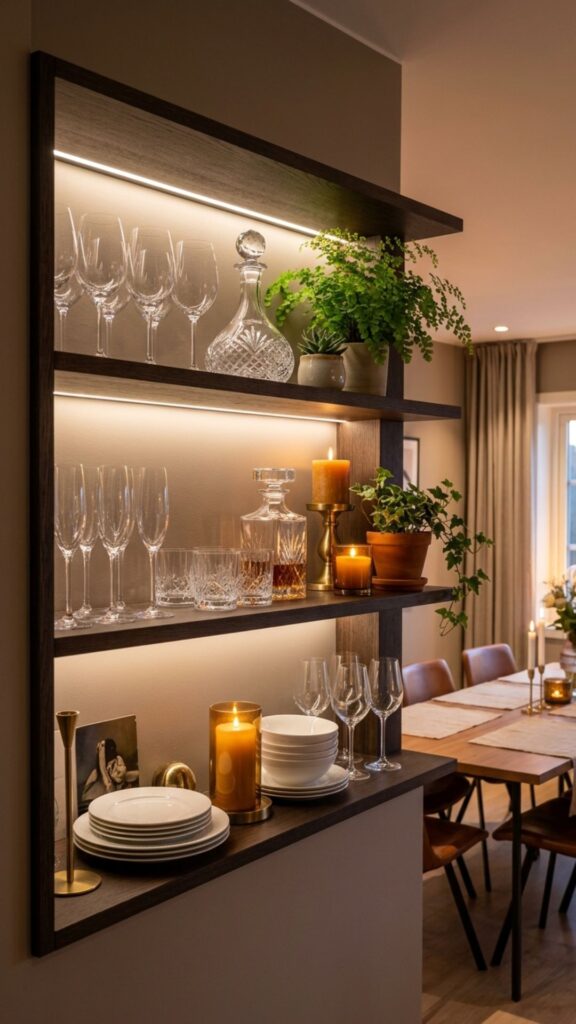
If your dining room is adjacent to a kitchen or has a buffet nearby, open shelving dedicated to beautiful glassware, decanters, and barware turns a purely practical storage need into a display. Backlit shelves with LEDs make the glass shimmer and give the wall a warm, ambient glow.
Keep what’s on the shelves curated. A mix of crystal glasses, a decanter or two, and a few small decorative items — a candle, a ceramic bowl, a small plant — looks considered. Avoid crowding the shelves with random items; the goal is to make everyday objects look like they belong in a shop window.
17. Frame and Display Vintage Maps or Blueprints
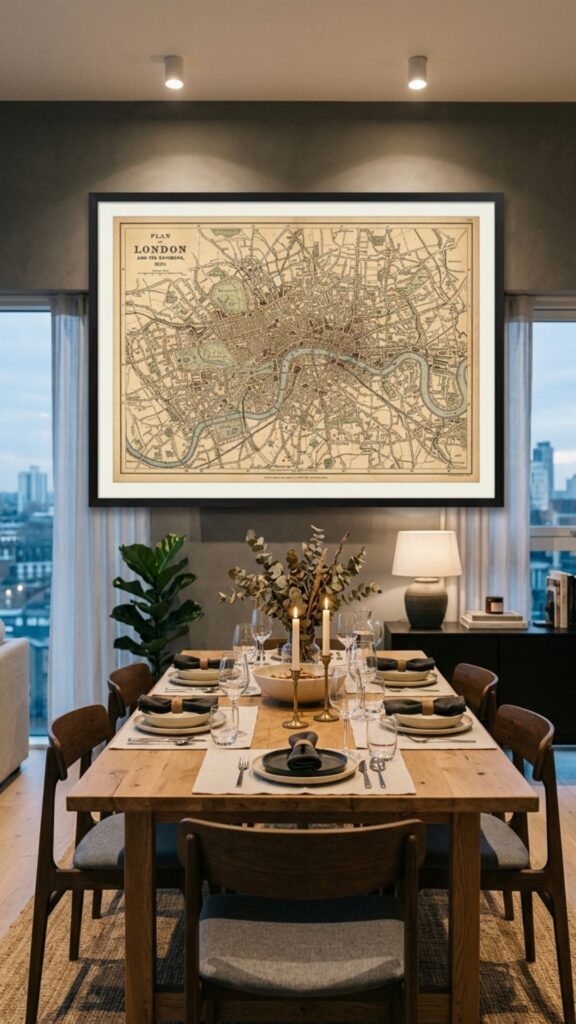
Vintage maps, architectural blueprints, and antique charts make genuinely interesting wall art because they give viewers something to look at, read, and discover. A large framed map of a city that means something to your family, or a vintage chart of wine regions, adds character and starts conversations over dinner.
Scale matters here. One large, well-framed map reads better than several small ones. Choose a frame that suits the piece — a simple black frame with a white mat for a clean look; an antique gold frame for something more ornate. Reproduction prints of vintage originals are widely available and much more affordable than originals.
18. Install a Row of Hooks for Functional Wall Decor
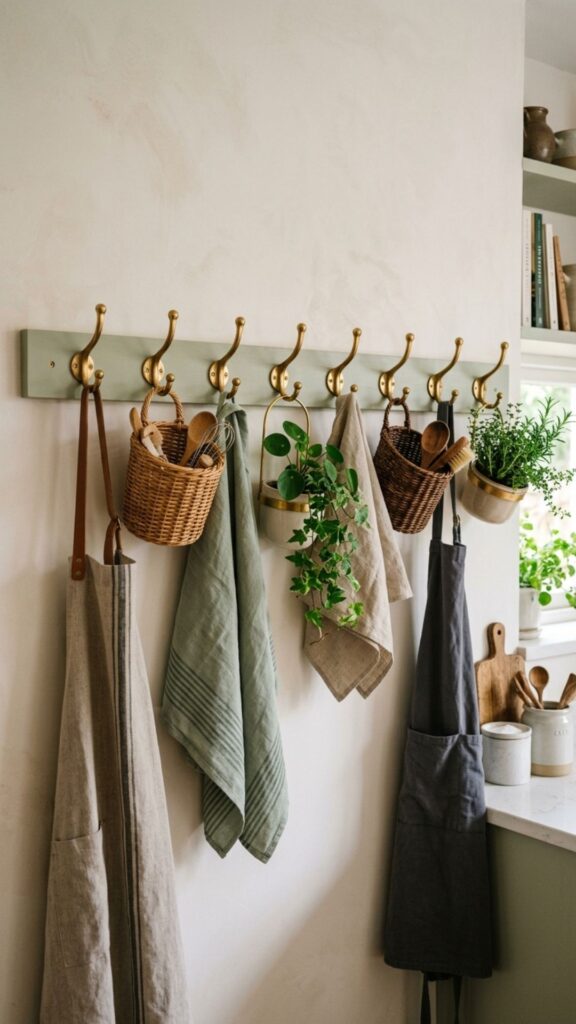
A horizontal row of decorative hooks on a dining room wall near a door or sideboard is one of those ideas that looks intentional and earns its place every day. Use it to hang aprons, linen napkins in a basket, small baskets with herbs, or even wall planters.
Choose hooks that fit your room’s aesthetic — cast iron for a farmhouse look, brass or gold for something more polished, matte black for a contemporary feel. Space them evenly and mount them on a thin painted board or strip of wood to create a finished, furniture-quality installation rather than a random scatter of hardware.
19. Use Color Blocking to Create a Painted Focal Point
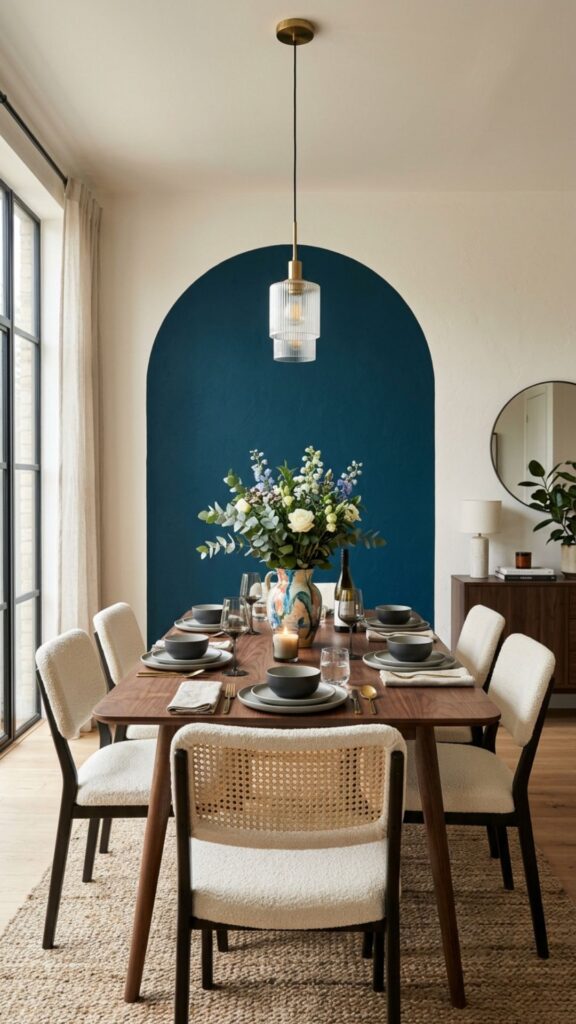
Color blocking — painting a portion of the wall in a contrasting or complementary shade — is one of the most accessible dining room empty wall ideas because it requires nothing but paint and tape. A half-painted wall, a painted arch shape, or a rectangular panel of color instantly creates visual structure and intention.
Common approaches include painting the lower half of the wall in a deeper shade (a modern take on traditional two-tone walls), creating a painted rectangular frame that mimics paneling, or painting a full arch directly onto the wall. Each approach requires only one or two colors and a steady hand — or painter’s tape.
20. Combine Several Elements for a Layered Wall Moment
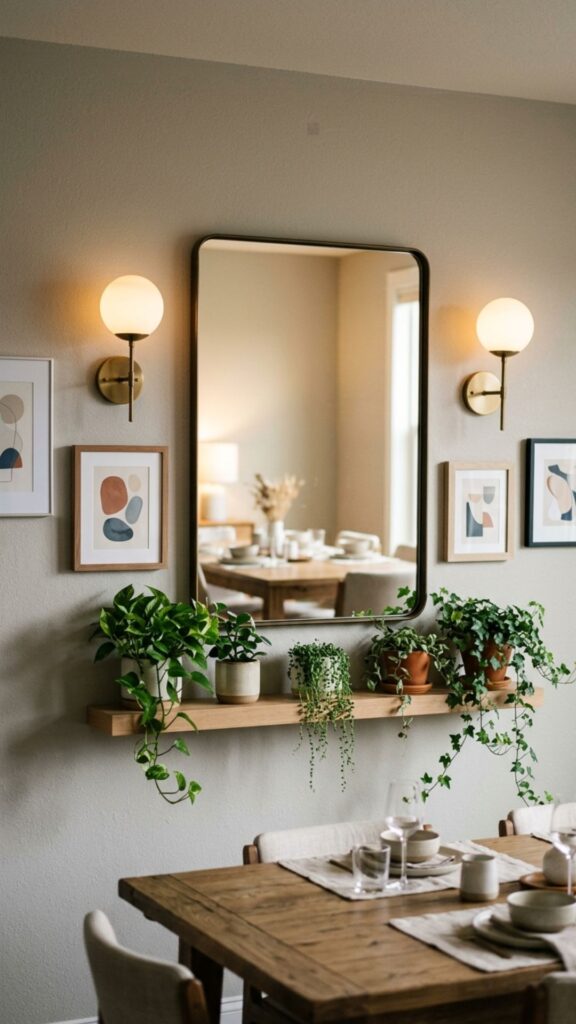
The most memorable dining rooms rarely have walls filled with just one thing. A layered approach — a mirror backed by a shelf, sconces flanking a piece of art, a tapestry beside a small floating shelf with plants — creates depth, richness, and visual interest that a single element simply can’t achieve.
Start with your largest anchor piece — a mirror, large artwork, or shelf — then build outward. Add a light source if there isn’t one already, then introduce a smaller element on one side for asymmetry. Step back often as you work and edit ruthlessly. A wall that feels complete and personal is almost always the result of careful layering, not adding more.
Conclusion
An empty wall in the dining room doesn’t have to stay that way. Whether you want something simple like a single oversized mirror or something more layered like a combination of shelves, lighting, and art, the right choice is the one that fits how you live and what you love.
Pick one idea that feels immediately right — not the most ambitious one, but the one you’d actually do this week. A dining room wall doesn’t transform overnight, but it does transform with one decision and the follow-through. Start there. Your next dinner party will be the proof.
Choose one idea from this list and take the first step today — whether that’s ordering a print, picking up a mirror, or buying a can of paint. Your dining room wall is waiting.
What should I put on an empty wall in my dining room?
The best option depends on your space and style. Large-scale art, a statement mirror, floating shelves, or a gallery wall are all strong starting points. The key is choosing something with enough visual weight to fill the space — and something that connects to the colors or materials already in the room.
How do I style a dining room wall on a budget?
Paint is the highest-impact, lowest-cost option. A color-blocked accent wall or a painted arch costs very little and completely changes the room. Beyond that, thrifted frames with printed art, DIY pressed botanical displays, and peel-and-stick wallpaper panels are all affordable and effective.
How high should wall art be hung in a dining room?
The standard rule is to hang art so the center of the piece is at 57 to 60 inches from the floor. In a dining room where people are often seated, aim for the lower end of that range — around 57 inches — so the art sits comfortably in the sightline of someone at the table.
Can I use multiple ideas on the same dining room wall?
Absolutely — layering works well. Start with one anchor element (a large mirror or piece of art), then add supporting details like sconces, a small shelf, or a plant to build depth. The trick is to edit as you go and leave enough breathing room so the wall feels curated, not overcrowded.
How do I fill a very large dining room wall without it looking sparse?
Scale up. One large piece of art (at least 48 inches wide), an oversized mirror, a wide gallery arrangement, or a full-wall mural all work better on a large wall than several small pieces spread out. If you want to use smaller items, cluster them tightly in the center of the wall rather than spreading them across the full surface.