A bay window is one of the most generous architectural features a dining room can have. It pushes out beyond the wall, pulls in natural light from three directions, and instantly creates a focal point — but only if you know how to work with it rather than around it.

What makes dining room bay window ideas effective? The best approach treats the bay as a destination: a defined zone for seating, greenery, lighting, or a combination of all three. Choose an idea based on your room’s size, your household’s needs, and the window’s orientation.

South- and west-facing bays get strong afternoon sun, which affects fabric and plant choices. North-facing bays stay cool and shadowy, which calls for lighter window treatments and warmer lighting.
In this guide, you’ll find 20 practical ideas covering window seat design, curtain styles, lighting, privacy, storage, and styling — all grounded in what actually works in real dining rooms.
1. Built-In Window Seat with Storage Below
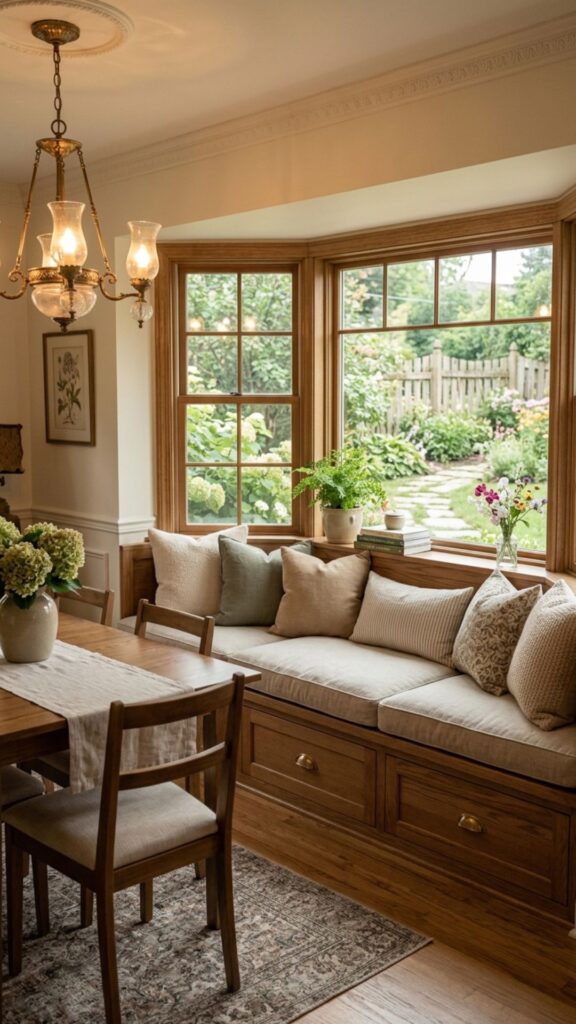
A built-in window seat transforms the bay into a functional extension of your dining space. Box-style seating with lift-up lids gives you a place to store table linens, seasonal tableware, or children’s items — all hidden neatly beneath a cushioned surface.
For the seat depth, aim for eighteen to twenty-four inches so it’s comfortable for sitting without feeling cramped. Add a fitted cushion in a durable, washable fabric and the bench becomes somewhere people actually want to linger after a meal.
2. Round Dining Table in the Bay
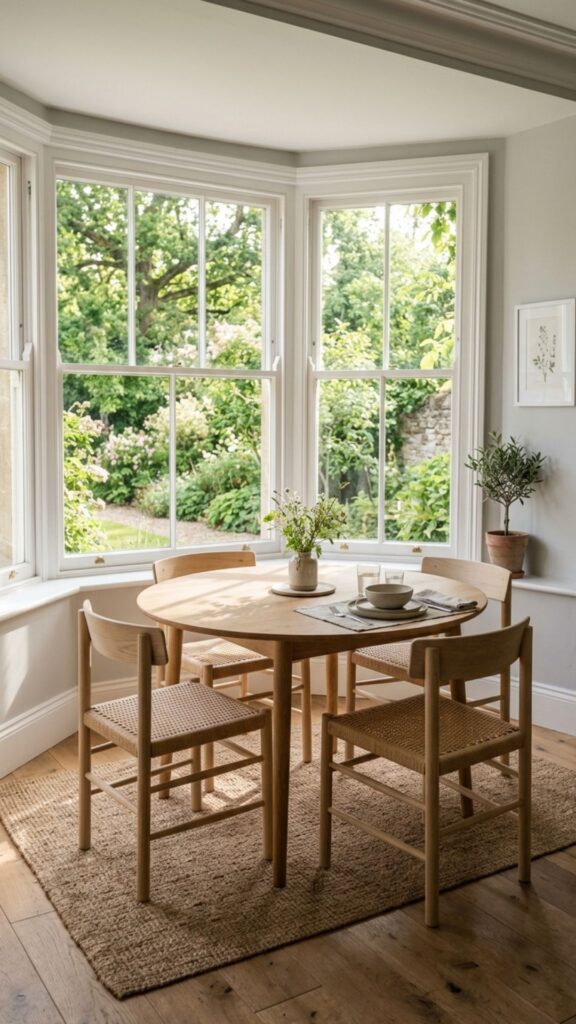
Placing a round table inside the bay rather than against a flat wall is one of the most satisfying uses of the curved space. The rounded shape mirrors the arc of the bay, creating a naturally cohesive look that a rectangular table can’t replicate.
This arrangement also improves traffic flow through the rest of the room. With the table tucked into the bay, the central floor space stays clear. It’s particularly effective in open-plan homes where the dining area needs to feel defined without physical barriers.
3. Banquette Seating Wrapping the Bay
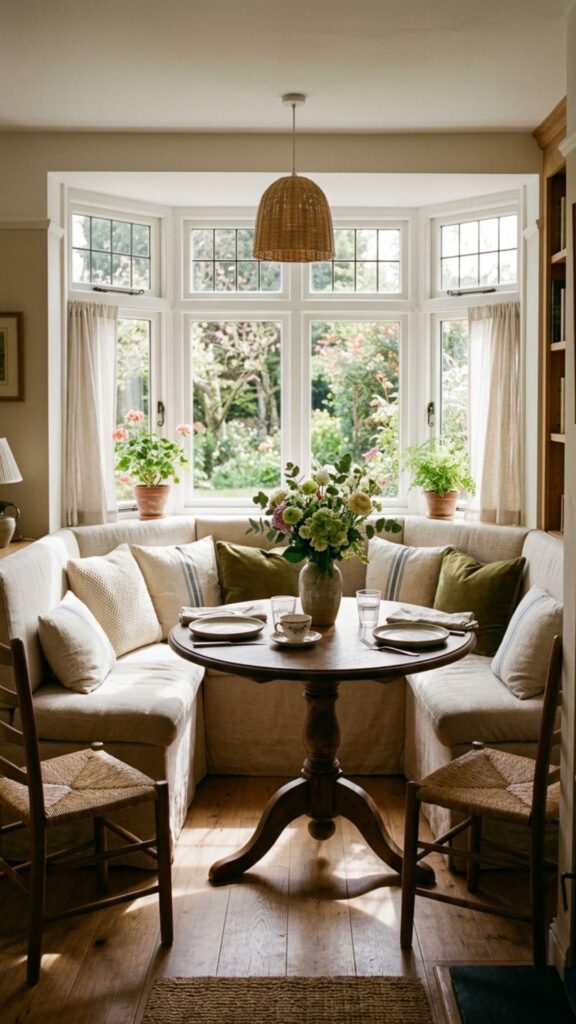
Upholstered banquette seating built along the three walls of a bay creates a booth-like dining nook. It’s cozy, visually distinctive, and seats more people in a compact footprint than individual chairs can manage.
Banquettes work especially well in kitchens that open into dining areas or in rooms where you want a casual, informal atmosphere. Have a cushion made in a performance fabric — something that handles spills without drama. Pair it with a pedestal table so there’s no leg obstruction when people slide in and out.
4. Floor-to-Ceiling Curtains Framing the Bay
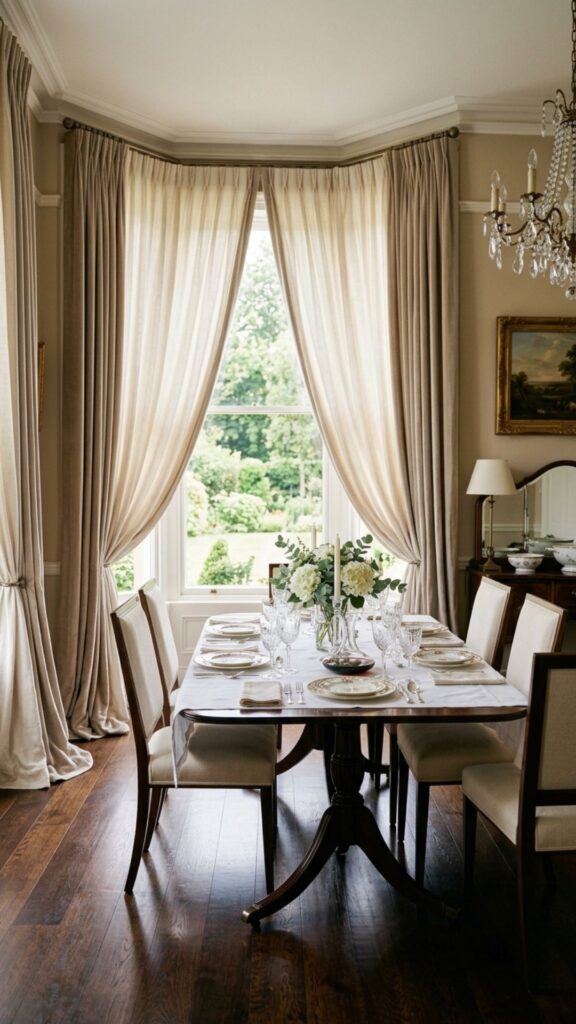
Long curtains — hung from a ceiling-height rod rather than the window frame — make the bay feel taller and more dramatic. Letting the curtains pool slightly on the floor adds a touch of luxury that works in both traditional and contemporary dining rooms.
Choose a fabric weight appropriate to the window’s orientation. Heavier linen or velvet works well for west-facing bays where afternoon glare is an issue. Sheer or lighter fabrics suit north-facing windows that need every bit of daylight they can get.
5. Roman Blinds for a Tailored Finish
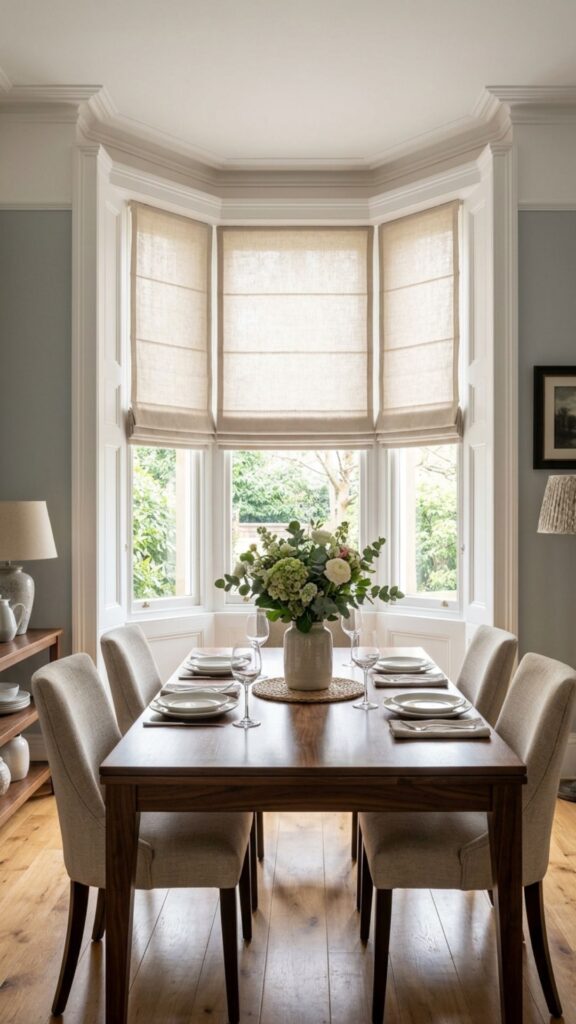
Roman blinds fit neatly within each window pane of the bay, giving a clean, architectural look that curtains can’t achieve as precisely. They’re particularly effective when the bay has three distinct panes with a visible frame between them.
Each blind can be raised independently, giving you control over light and privacy in each section. This is useful in dining rooms that face a street or a neighbor’s garden — you can open the upper portion for light while keeping the lower section closed.
6. Pendant Light Over the Bay Table
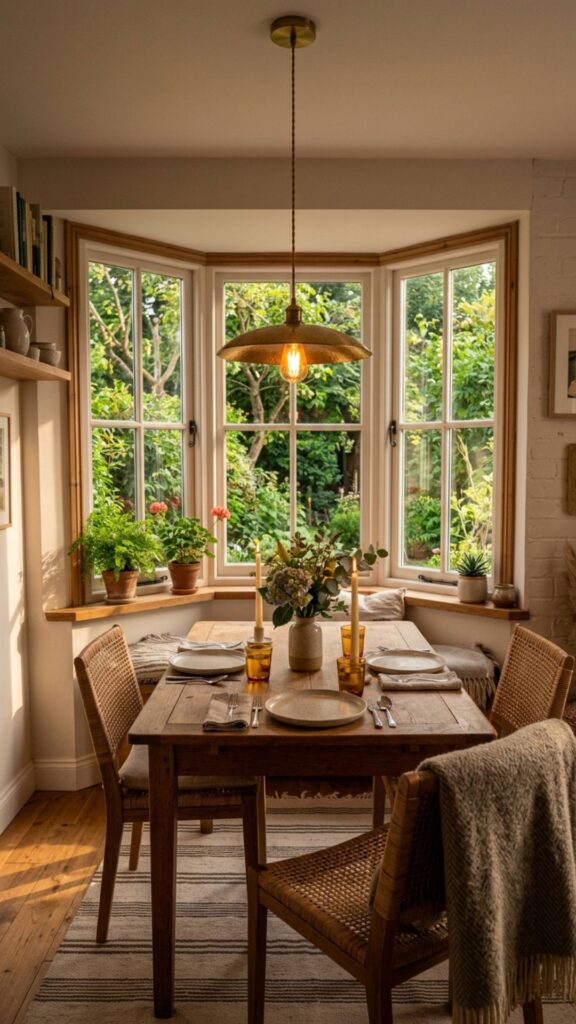
Hanging a pendant light over a dining table in the bay grounds the table visually and adds warmth to what can otherwise be a cool, bright space. A cluster of pendants at varying heights or a single wide-span shade works well depending on the table size.
Position the pendant so its base sits around thirty inches above the tabletop for comfortable task lighting without blocking sightlines across the table. An adjustable-cord pendant is worth the extra cost — it lets you dial in the exact height before committing.
7. Window Seat Without a Table
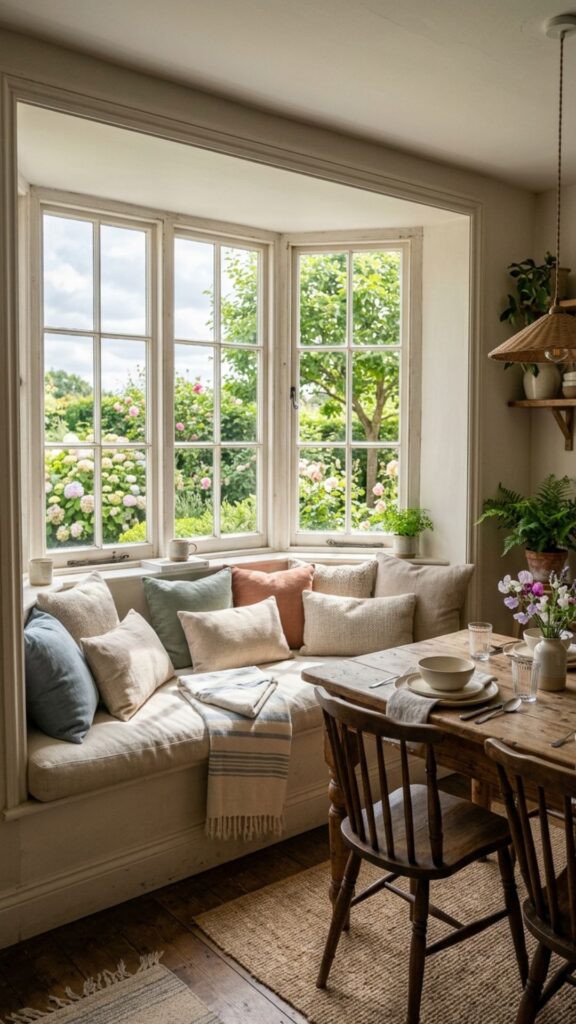
Not every bay needs a dining table. A fully cushioned window seat used as additional dining-adjacent seating — somewhere guests move to after eating — creates a more relaxed, living-room-like quality in the dining space.
This works particularly well in dining rooms that flow into a lounge or open-plan space. The bay becomes a transition zone rather than a dedicated eating spot. Add scatter cushions in fabrics that echo the dining chair upholstery to tie the two areas together.
8. Indoor Plants Styled in the Bay
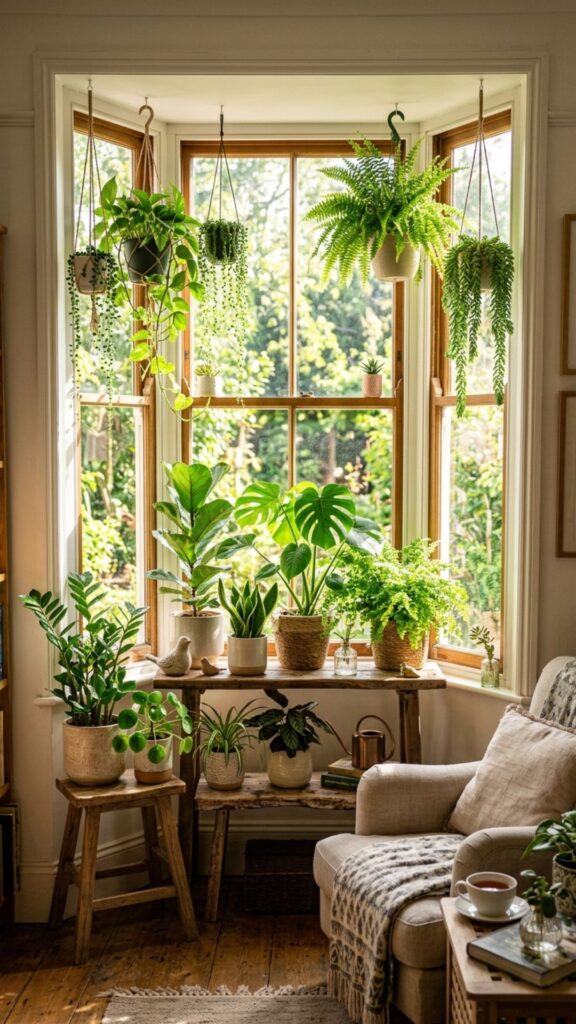
A bay window with reasonable light is one of the best spots in the house for plants. Large-leafed varieties like fiddle-leaf figs, bird of paradise, or potted olive trees fill vertical space and bring a natural warmth that no decorative accessory quite replicates.
Group plants at different heights using floor pots, stools, and hanging planters to create visual depth. This works especially well when the dining table sits outside the bay — the plant grouping gives the window its own purpose and prevents the bay from feeling like dead space.
9. Mirrored or Reflective Accents in the Bay
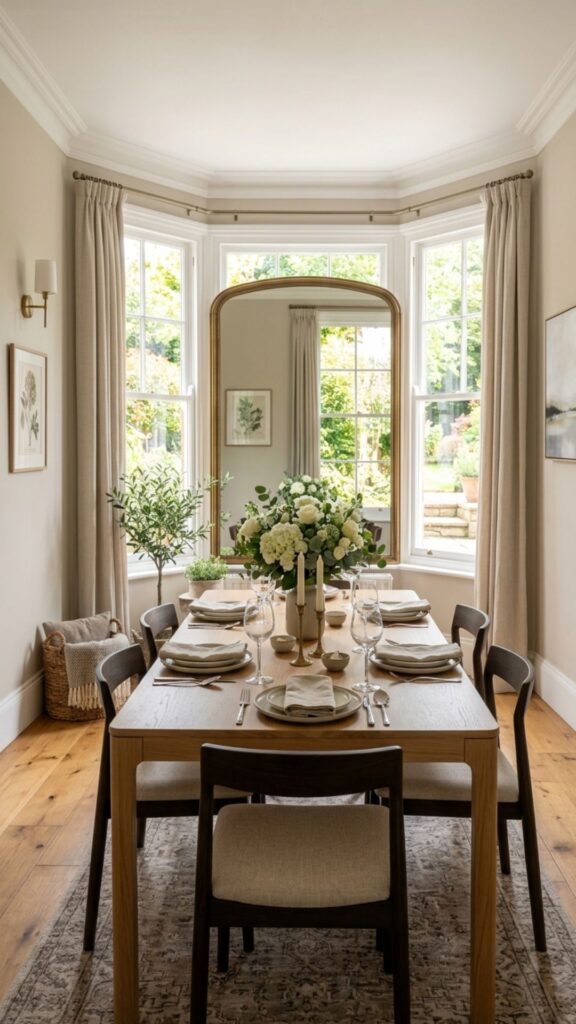
Placing a large mirror or mirrored furniture piece within the bay amplifies the natural light the window brings in. The reflection bounces daylight into the deeper parts of the room, which is particularly useful in dining rooms where the bay faces north or east.
A leaner mirror propped against the back wall of the bay, or a mirrored sideboard positioned just inside the recess, both work without requiring permanent fixtures. The doubled sense of space also makes smaller dining rooms feel less confined.
10. Shutters for Privacy and Style
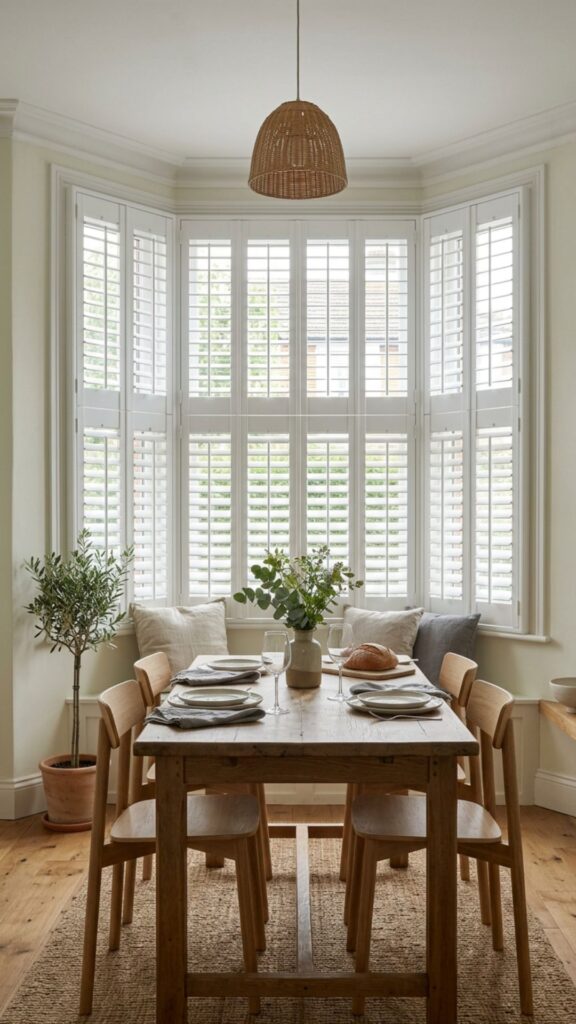
Plantation shutters on bay windows give a clean, architectural look and precise control over light and privacy. Unlike curtains, they don’t require track systems across an angled bay, and they hold their shape better over time.
Full-height shutters suit period properties and traditional dining rooms. Café-style shutters — covering only the lower half of the pane — let in maximum light from the upper portion while screening the lower section from street-level view. Both options add resale value and require minimal maintenance.
11. Built-In Shelving on the Bay Flanks
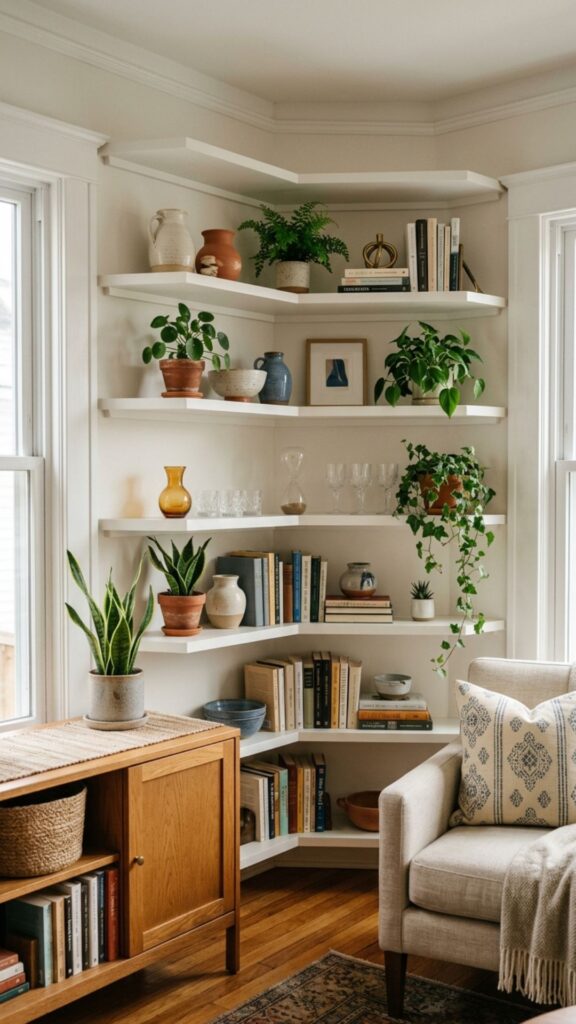
The side returns of a bay — the angled walls connecting the bay to the main room — are often wasted space. Building in shelving on these returns creates display space for ceramics, glassware, books, or plants without eating into the dining area itself.
Keep the shelving open for a relaxed, casual look, or add lower cupboards with upper open shelves for a more tailored finish. This approach works particularly well in dining rooms where storage is limited and the bay has enough depth to accommodate a meaningful shelf run.
12. Layered Lighting for Evening Atmosphere
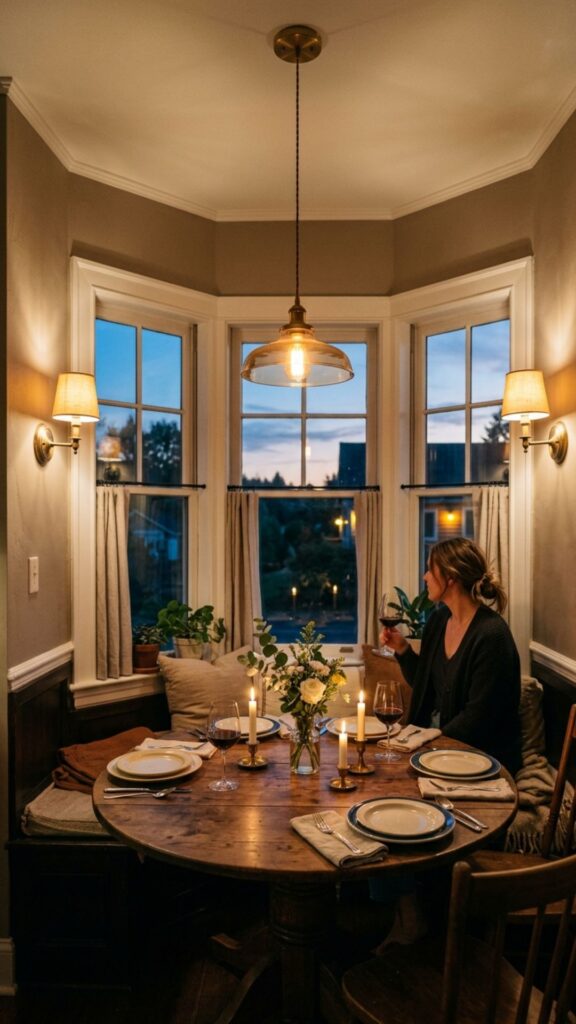
Natural light floods a bay during the day, but after dark the space can feel flat or exposed if the only lighting is an overhead fixture. Layered lighting — combining pendant or chandelier light over the table, wall sconces on the bay flanks, and candle light at table level — creates a much more inviting evening atmosphere.
Dimmer switches on all circuits give you control to shift from bright functional lighting during meals to a warmer, softer mood for after-dinner conversation. It’s one of the most cost-effective changes you can make to the quality of the dining experience.
13. Window Seat as Extra Dining Seating
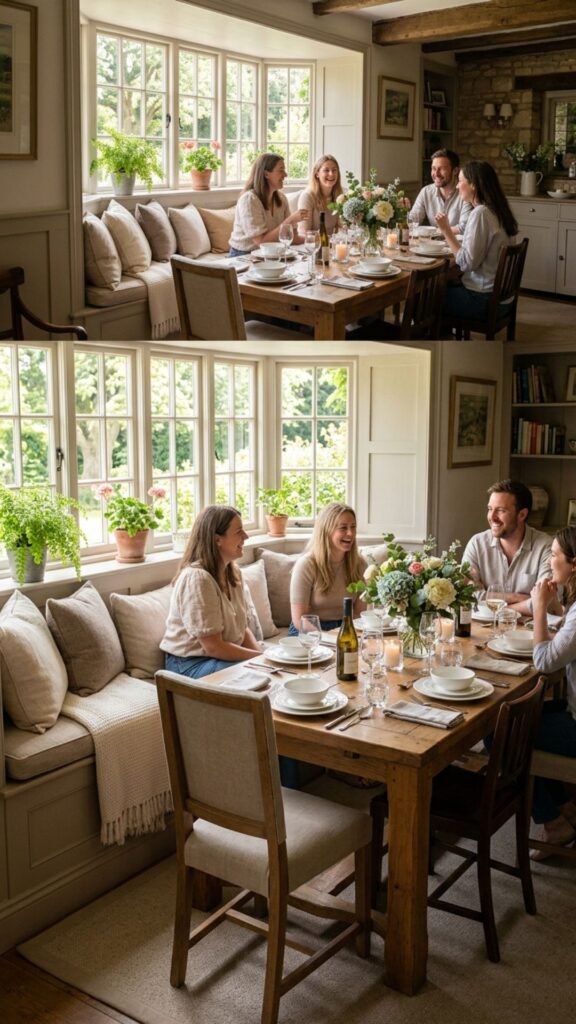
When you have more guests than chairs, a cushioned window seat becomes a practical extension of the dining table. Position the table close enough to the bay that people sitting on the window seat can comfortably reach it — typically within twelve to eighteen inches.
This hybrid arrangement works well for households that occasionally host larger groups but don’t have room for a permanently expanded seating setup. Keep the window seat the same height as your dining chairs to maintain a level sightline around the table.
14. Bay Window Breakfast Nook
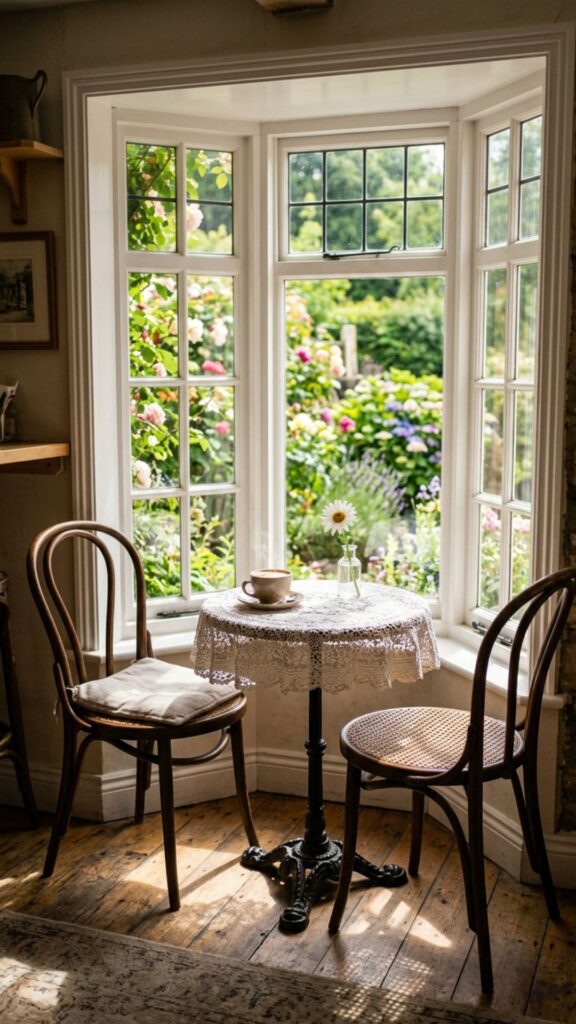
Converting the bay into a dedicated breakfast nook — separate from the main dining area — gives your home two distinct dining zones. A small bistro table and two chairs in the bay creates a casual, intimate spot for morning coffee or weekday meals.
Choose a table and chairs in a material that’s easy to clean and light enough to move if needed. Bentwood café chairs and a marble-topped table are a classic combination that suits both traditional and contemporary kitchens. A small pendant or wall light over the nook completes the sense of it being its own zone.
15. Cohesive Color Throughout the Bay
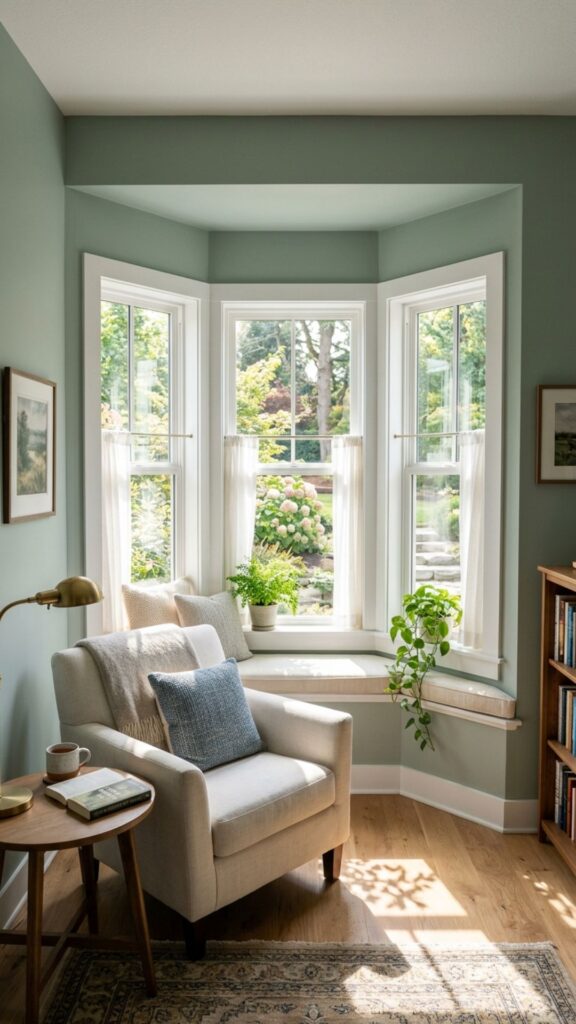
Painting the bay the same color as the rest of the room keeps the architecture from feeling like an interruption. It’s the simplest way to make the bay feel intentional rather than incidental — and it works in any style of home.
If you want to highlight the bay slightly, use the same base color but in a slightly deeper shade on the back and side walls. This creates subtle definition without making the bay feel cut off. Finish the window trim in a crisp white or off-white to frame the glass cleanly.
16. Café Curtains for a Relaxed Feel
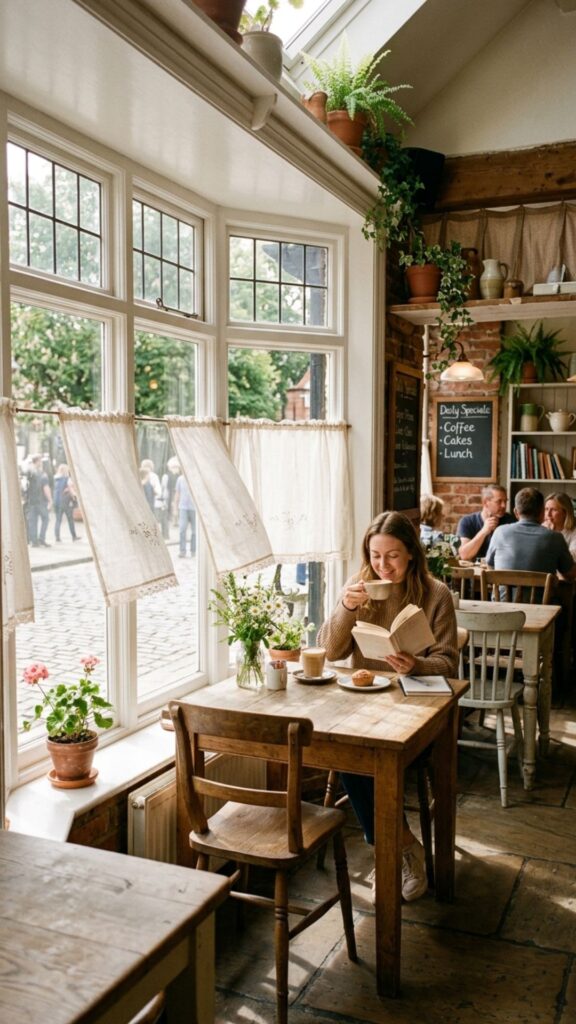
Café curtains — short panels that cover only the lower half of the window — are a practical and charming treatment for dining room bays. They provide privacy at seated eye level while letting in unobstructed light from above.
They work best in casual, relaxed dining rooms: farmhouse kitchens, cottage-style homes, and informal family spaces. Choose a lightweight cotton or linen in a pattern that suits the room — a small check, a subtle stripe, or a simple solid. They’re easy to make or find off the shelf and don’t require any specialist installation.
17. Statement Wallpaper Inside the Bay
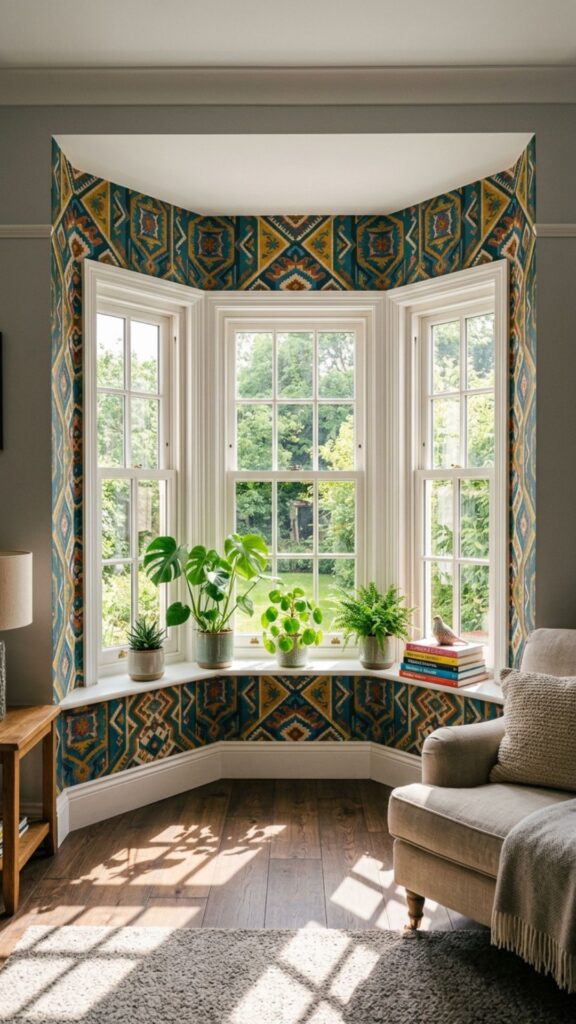
Applying a bold or textured wallpaper to the interior walls of the bay — the back wall and the two angled sides — creates a framed focal point that draws the eye. It’s a confident move that works well in dining rooms where the rest of the walls are relatively plain.
Choose a pattern that has some scale to it — large botanicals, a classic toile, or a geometric print. Small patterns can look busy in a recessed space. If you’re hesitant about the commitment, a removable peel-and-stick wallpaper lets you test the look without the permanence.
18. Bench on One Side, Chairs on the Other
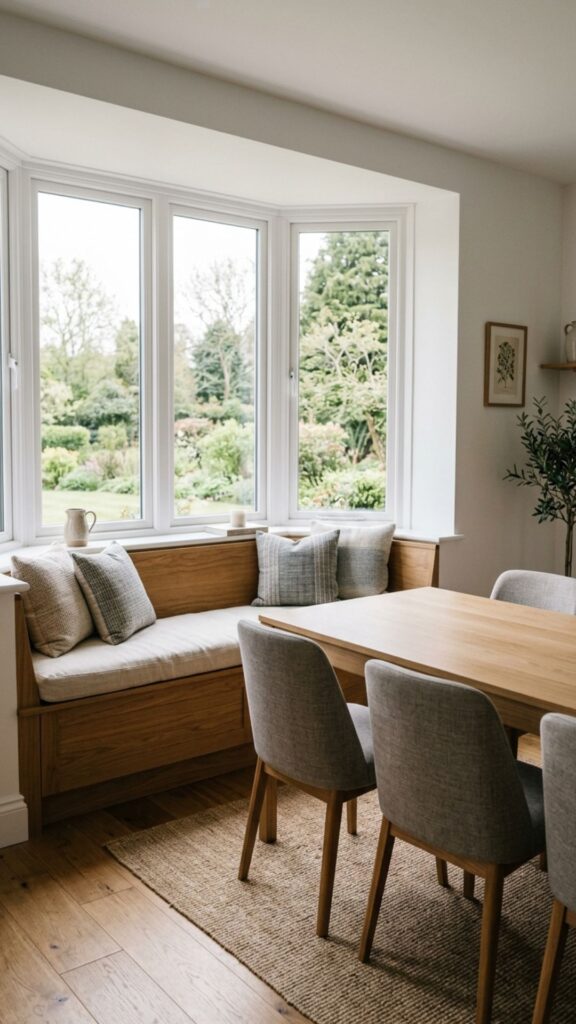
Using a long bench along the back of the bay with chairs on the outward side of the table creates a flexible, layered seating arrangement. The bench can seat two or three people against the window, while individual chairs maintain more formal dining comfort on the opposite side.
This is particularly effective when you want to make use of the bay’s width without committing to a full banquette build. A freestanding bench in the same wood finish as the table keeps the look cohesive without requiring any construction.
19. Artwork or a Mirror Above the Bay Seat
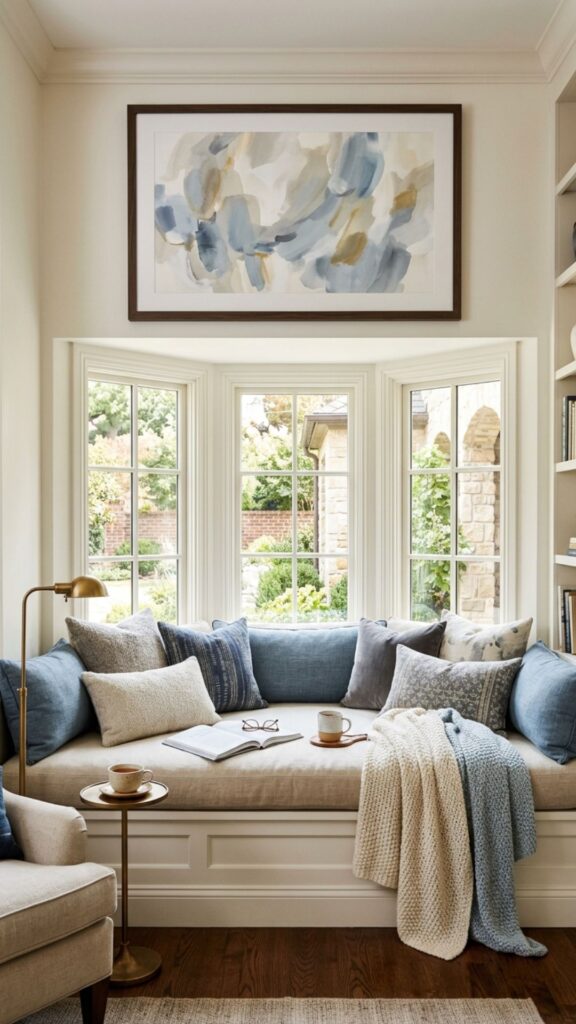
The wall space above a bay window seat — between the top of the window and the ceiling — is often left blank by default. Hanging a piece of artwork or a well-proportioned mirror in this space gives the bay visual completion and prevents the upper zone from feeling forgotten.
Choose a piece that is scaled to the width of the bay rather than a single pane. A long horizontal print, a set of three matching frames, or a wide convex mirror all work well. Keep the frame color consistent with other metalwork in the room — door handles, light fittings, and curtain rods — for a cohesive finish.
20. Budget-Friendly Bay Styling with Textiles
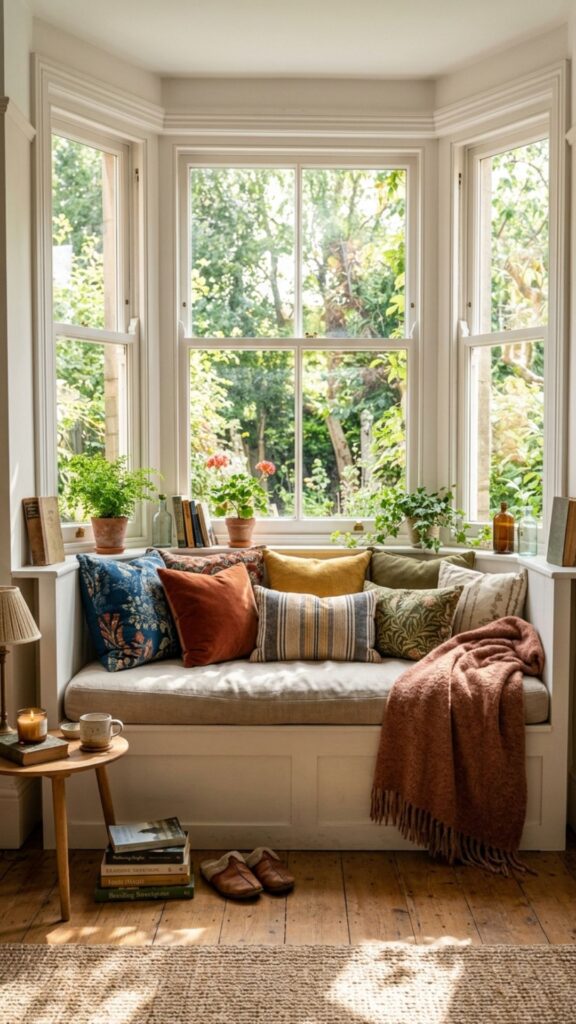
You don’t need built-in seating or custom joinery to make a bay window look intentional. A simple approach — a freestanding bench, a fitted cushion, a throw, and two scatter cushions — achieves a polished look at a fraction of the cost.
Choose textiles in tones that echo the rest of the dining room. If your chairs are upholstered in a neutral fabric, bring in one accent color through the cushions and repeat it somewhere else in the room — a piece of artwork, a vase, a napkin. This small degree of coordination makes the bay look designed rather than assembled.
Making the Most of Your Dining Room Bay Window
A bay window is one of those features that rewards attention. When you treat it as a specific zone with its own purpose — whether that’s seating, storage, greenery, or pure atmosphere — it stops being an awkward architectural quirk and starts being the best part of the room.
Start with the practical question: does the bay work better as part of your dining setup, or as a counterpoint to it? From there, work through light, privacy, and seating before moving on to styling. Get the fundamentals right, and the finishing touches will follow naturally.
Pick one idea from this list that solves a real problem in your dining room and start there. Small, deliberate changes add up quickly in a bay window — you’ll likely find that one good decision leads naturally to the next.
What is the best use of a bay window in a dining room?
The most effective use depends on room size and lifestyle. In a smaller dining room, a built-in window seat with storage below maximizes space without cluttering the floor. In a larger room, placing a round or oval dining table directly in the bay creates a defined eating zone with excellent natural light. The key is treating the bay as a purposeful space rather than leaving it incidentally furnished.
How do I add privacy to a dining room bay window without losing light?
Café curtains, Roman blinds, and plantation shutters all allow for selective coverage. Café curtains screen at seated eye level while leaving the upper pane open. Roman blinds can be raised to the top third of the window for a similar effect. Frosted or privacy window film applied to the lower portion is another low-cost option that requires no fabric at all.
What window treatments work best on a bay window?
Roman blinds are the most practical because they fit within each window pane independently. Plantation shutters offer similar precision and add architectural character. Curtains work well when hung from a ceiling-height track that spans the full bay opening — this creates a dramatic look but requires a bespoke curved or angled track. Avoid standard off-the-shelf curtain poles, which rarely accommodate the angles of a bay cleanly.
How do I make a small dining room bay window look bigger?
Use light, reflective surfaces: pale wall colors, a mirror within or opposite the bay, sheer curtains that maximize daylight, and glass or lucite furniture near the window. Hanging curtains from ceiling height rather than the window frame draws the eye upward and makes the bay feel taller. Keeping the bay itself uncluttered — a single plant or a simple cushioned seat rather than multiple objects — preserves the sense of openness.