The dining room is one of the most underestimated spaces in a home. It’s where family dinners happen, where guests linger after a meal, and where memories get made. Yet most people pour their decorating energy into the living room or kitchen and leave the dining room as an afterthought.
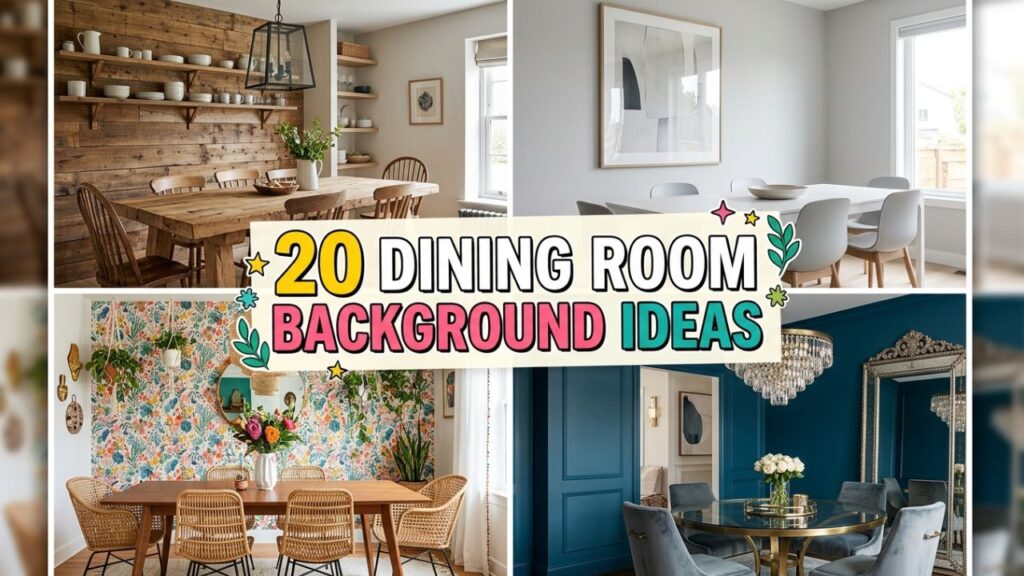
The right dining room background can completely change how the space feels — making it cozier, more dramatic, more elegant, or more relaxed. Whether you’re working with a small apartment dining nook or a sprawling formal room, the wall behind your table sets the entire mood.
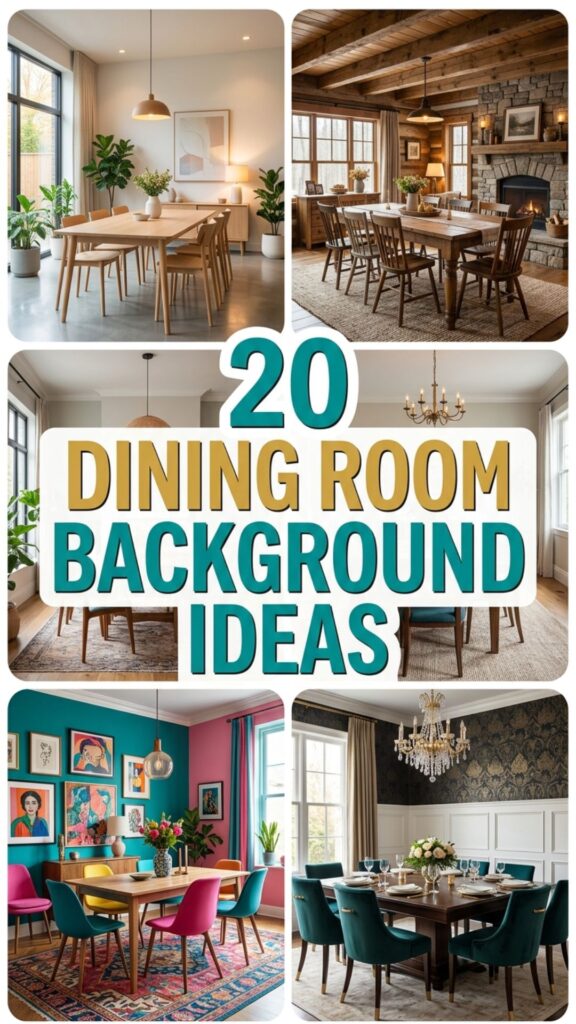
In this guide, you’ll find 20 practical, inspiring background ideas for your dining room — from bold wallpaper prints to simple paint techniques — with tips on how to pull each one off without overthinking it.
1. Classic White Shiplap
Shiplap — horizontal wooden planks installed flush against the wall — brings a clean, farmhouse-inspired look to any dining room. It works equally well in modern and traditional spaces, and its texture adds visual interest without competing with furniture or artwork.
Paint it crisp white for a bright, airy feel, or leave the wood natural for warmth. Either way, shiplap is easy to install as a DIY project and creates a dining room background that looks far more expensive than it actually is.
2. Deep Jewel-Toned Paint
Rich colors like emerald green, navy blue, or plum create an intimate, dramatic atmosphere in the dining room. Dark tones make a space feel more intentional — like a place designed for a real experience, not just a quick meal.
The key is to commit fully. Paint all four walls (or at least three) rather than just one accent wall. Pair the color with warm lighting and metallic accents to keep the room from feeling heavy or cave-like.
3. Botanical Wallpaper
Large-scale botanical prints — think tropical leaves, oversized florals, or trailing vines — bring life and energy into the dining room. This type of dining room background works especially well in rooms with natural light, where the greens and earth tones can really shine.
Choose a print with colors that complement your existing furniture. If you’re nervous about committing to full coverage, apply the wallpaper to just one wall behind the dining table for a statement effect that’s easy to live with.
4. Textured Plaster Walls
Venetian plaster or limewash paint creates a layered, organic texture that photographs beautifully and looks even better in person. It’s a popular choice for Mediterranean and bohemian-style homes, but it adapts well to almost any aesthetic.
Unlike flat paint, textured plaster adds depth — the way light moves across it changes throughout the day, making your dining room background feel alive. Hire a professional for best results, or try limewash paint as an approachable DIY alternative.
5. Exposed Brick
If your home has original brick behind its walls, uncovering it could be the best design decision you make. Exposed brick adds warmth, history, and texture to a dining room in a way that no paint or wallpaper can replicate.
If you don’t have real brick, brick veneer panels are a convincing and affordable alternative. Either way, seal the surface to prevent dust and pair it with warm Edison bulb lighting to bring out the earthy tones.
6. Geometric Tile Accent Wall
Tiles aren’t just for kitchens and bathrooms. A wall covered in patterned geometric tiles — especially behind a built-in bench or buffet — creates a striking focal point in the dining room.
Choose a tile with a pattern that reflects your overall style. Moroccan-inspired tiles work beautifully in eclectic spaces, while simple hexagons or subway tiles complement more modern or minimal aesthetics. This dining room background idea also happens to be very easy to clean.
7. Moody Wallpaper Murals
Unlike repeating wallpaper patterns, mural wallpaper covers an entire wall with one continuous image — a forest, a mountain range, an abstract landscape. It turns your dining room background into a scene, which makes every meal feel a little more cinematic.
Mural wallpaper is easier to install than it sounds, often coming in numbered panels. Choose an image that fits the scale of your wall and doesn’t feel claustrophobic — open landscapes tend to work better in smaller rooms than dense jungle prints.
8. Two-Tone Paint with a Dividing Rail
Painting the lower third of your wall in a darker shade and the upper portion in a lighter tone is a timeless technique that makes ceilings look higher and rooms feel more polished. Add a chair rail molding at the dividing line for a finished, architectural look.
This dining room background works in both traditional and transitional spaces. For a modern twist, skip the molding and create a clean paint line, or try two complementary colors rather than light and dark versions of the same hue.
9. Wainscoting Panels
Wainscoting — decorative wood paneling on the lower half of a wall — adds instant sophistication to a dining room. It protects walls from chair scuffs, adds texture, and creates a sense of craftsmanship that flat walls simply can’t deliver.
Paint the panels in a classic white or soft neutral, or go bold with a navy or forest green to make the upper wall feel even more striking. Wainscoting pairs especially well with patterned wallpaper above the paneling line.
10. Gallery Wall of Framed Art
A gallery wall transforms your dining room background from bare and forgettable to personal and intentional. Group a mix of framed prints, photographs, and paintings in complementary frames for an eclectic, collected look.
Plan your layout on the floor first before putting any nails in the wall. Stick to a consistent color palette within the artwork, even if the frames and styles vary. This keeps a gallery wall looking curated rather than chaotic.
11. Grasscloth Wallpaper
Grasscloth is a woven wallpaper made from natural fibers like jute, seagrass, or bamboo. It brings an organic, tactile quality to a dining room background that feels warm and grounded without looking rustic.
It’s available in a wide range of tones — from sandy beiges to deep charcoals — so it works across many design styles. Keep in mind that grasscloth shows seams more than other wallpapers, so it’s best installed by a professional for a seamless result.
12. Dark Wood Paneling
Full-height dark wood paneling — especially in walnut, mahogany, or stained oak — creates a sophisticated, library-like atmosphere in the dining room. It’s the kind of dining room background you’d find in a well-designed restaurant or members club.
This works best in rooms with enough natural light to prevent the space from feeling too enclosed. Balance the darkness with light-colored furniture, warm overhead lighting, and a few carefully placed mirrors.
13. Abstract Paint Effect
Hand-painted abstract techniques — such as color washing, sponging, or rag rolling — give your dining room background a one-of-a-kind, artistic quality. No two results are the same, which means your space is genuinely unique.
These techniques are surprisingly beginner-friendly. Choose two or three colors that blend well together and watch tutorials before you start. The imperfect, organic result is the whole point — don’t aim for precision.
14. Vertical Striped Wallpaper
Vertical stripes draw the eye upward, making any room feel taller. A striped dining room background — whether in subtle tonal variations or bold contrasting colors — adds energy and structure to the space.
Thin pinstripes feel formal and classic, while wide bold stripes lean more contemporary and playful. Make sure the stripes are perfectly plumb when installing; even a slight angle becomes very obvious over a large wall.
15. Stone Veneer Wall
Natural or faux stone veneer creates a dramatic, almost architectural feature wall in the dining room. It works especially well in rustic, Scandinavian, or industrial-style spaces where raw materials are part of the aesthetic.
Real stone is heavy and requires professional installation, but lightweight stone veneer panels are a practical DIY alternative. Keep the rest of the dining room relatively simple so the texture can be the star of the show.
16. Soft Sage Green Paint
Not every dining room background needs to be dramatic. Soft sage green is a gentle, earthy tone that creates a calm, restorative atmosphere — perfect for families who want the dining room to feel relaxed rather than formal.
Sage pairs beautifully with natural wood tones, terracotta accents, and cream linens. It also photographs well, which is a bonus if you host guests who will inevitably share your home on social media.
17. Mirrored or Reflective Panels
Mirrored panels on a dining room wall serve two practical purposes: they make a small room feel larger, and they bounce light around the space to brighten the whole room. As a background, they also add glamour and a sense of occasion.
Use antique-tinted mirrors for a warmer, less stark effect than modern clear glass. You can arrange them in panels of varying sizes for an artistic look, or use a single large mirror for maximum impact.
18. Chalkboard Paint Wall
A chalkboard wall in the dining room is as functional as it is visually interesting. Use it to display menus, seasonal quotes, or children’s drawings — it becomes a living, changing dining room background that’s different every week.
Chalkboard paint works on any smooth surface and is available in multiple colors beyond the traditional black (navy, green, and grey are popular alternatives). Season the surface properly before first use to avoid ghost marks.
19. Linen or Fabric Wall Panels
Upholstered fabric panels — stretched linen, velvet, or even burlap — add sound-absorbing texture and warmth to a dining room. In homes where the dining room doubles as a home office or study, this acoustic benefit is genuinely practical.
Install fabric panels in a grid pattern for a structured look, or overlap them loosely for something more organic. Choose a fabric that ties into your seat cushions or curtains to keep the room feeling cohesive.
20. Warm Terracotta Tones
Terracotta — that warm, earthy orange-brown — has made a strong comeback as a dining room background color. It feels rooted and welcoming in a way that brighter colors don’t, and it pairs effortlessly with both natural materials and bold metallics.
Use terracotta across all walls for a full immersive effect, or apply it to a single feature wall for something more subtle. Either way, pair it with warm white trim and plenty of plants to lean into the earthy, Mediterranean feel.
Conclusion
Your dining room background is one of the most impactful design decisions you can make in that space. Whether you go bold with a mural, tactile with plaster, or simple with a thoughtful paint color, the wall behind your table sets the tone for every meal, gathering, and quiet weeknight dinner.
Start by identifying your style, your lighting conditions, and how much you want to invest. Pick one idea from this list that excites you, and commit to it. You don’t need to renovate everything at once — even a single well-chosen background can completely transform how your dining room feels.
Ready to get started? Pick your favorite idea from this list and start gathering samples or swatches this week. Small steps lead to real results.
What is the best dining room background color for a small space?
Light, neutral tones like soft white, pale sage, or warm cream help a small dining room feel more open. Vertical stripes and mirrors are also effective for creating the illusion of height and depth.
Can I use wallpaper in a dining room?
Yes — dining rooms are actually ideal for wallpaper since they don’t face the moisture or steam issues that kitchens and bathrooms do. Wallpaper can add significant personality and depth to a dining room background with minimal upkeep.
How do I choose a dining room background that matches my furniture?
Start with the furniture’s dominant tone. Warm wood tones pair well with earthy colors, greens, and terracottas. Dark or painted furniture works well against lighter, contrasting backgrounds. When in doubt, pull one accent color from a fabric in the room and use that as your wall color guide.
Is it okay to have a different background on just one wall?
Absolutely. A single accent or feature wall — typically the one behind the dining table — is a practical and popular approach. It creates a focal point without requiring a full room transformation.
How do I make a dining room background look more expensive?
Texture is the key to an elevated look. Limewash paint, grasscloth wallpaper, wainscoting, and stone veneer all add perceived quality and craftsmanship. Consistent lighting — particularly warm, layered lighting — also makes any background look more intentional and refined.