A bare floor can leave your eating space feeling cold and uninviting. Adding a well-chosen dining room area rug anchors your table, absorbs echoing sounds, and brings an immediate sense of warmth to your home.

Selecting the right foundation involves balancing visual appeal with the everyday realities of dropped food, moving chairs, and heavy furniture.
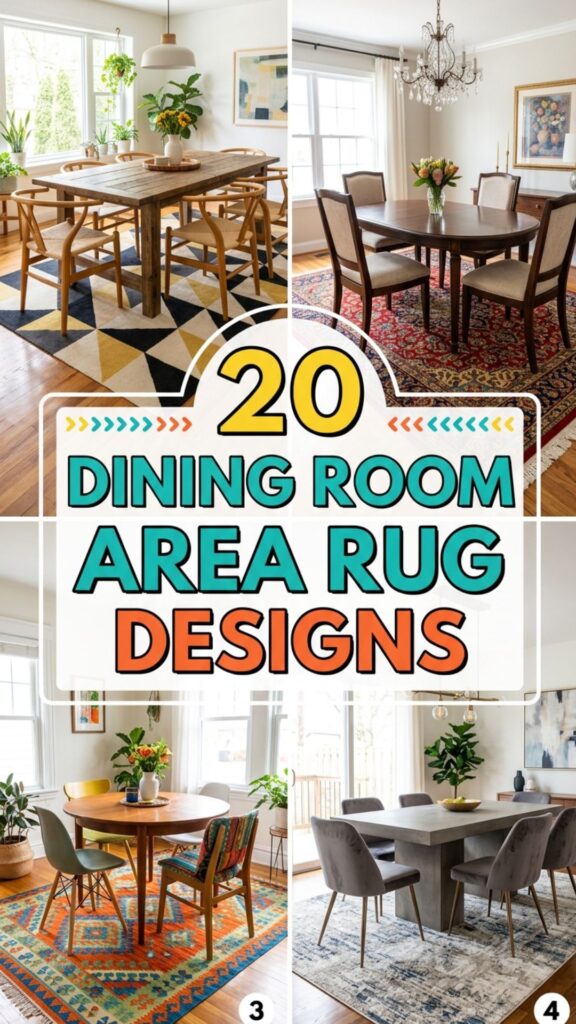
You need a piece that withstands daily traffic while making your guests feel comfortable and relaxed. In this guide, you will learn exactly how to choose a rug that elevates your space.
We have compiled 20 beautiful dining room area rug designs that combine texture, color, and practicality to create a truly welcoming atmosphere.
1. Vintage Persian Patterns
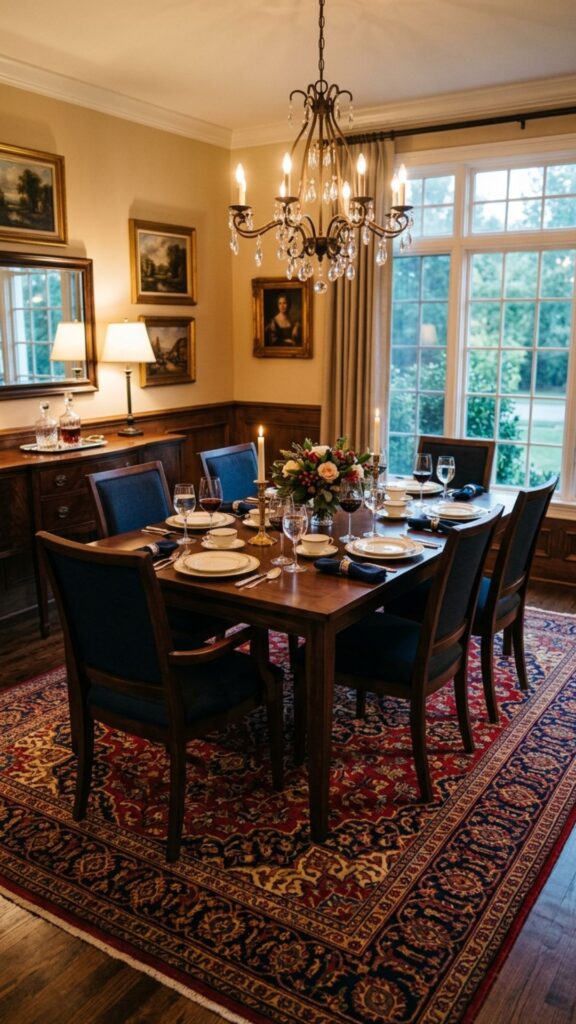
A classic Persian-style dining room area rug instantly brings traditional elegance and rich warmth to your home. Deep reds, warm navies, and golden accents create a cozy foundation that pairs beautifully with both dark wood and modern glass tables. The intricate floral and geometric patterns offer a massive practical advantage for dining spaces.
These busy designs easily hide minor spills, crumbs, and everyday wear. When selecting a vintage pattern, look for a low pile height. This allows your dining chairs to slide back and forth effortlessly without catching on thick fibers.
2. Natural Jute and Sisal Weaves
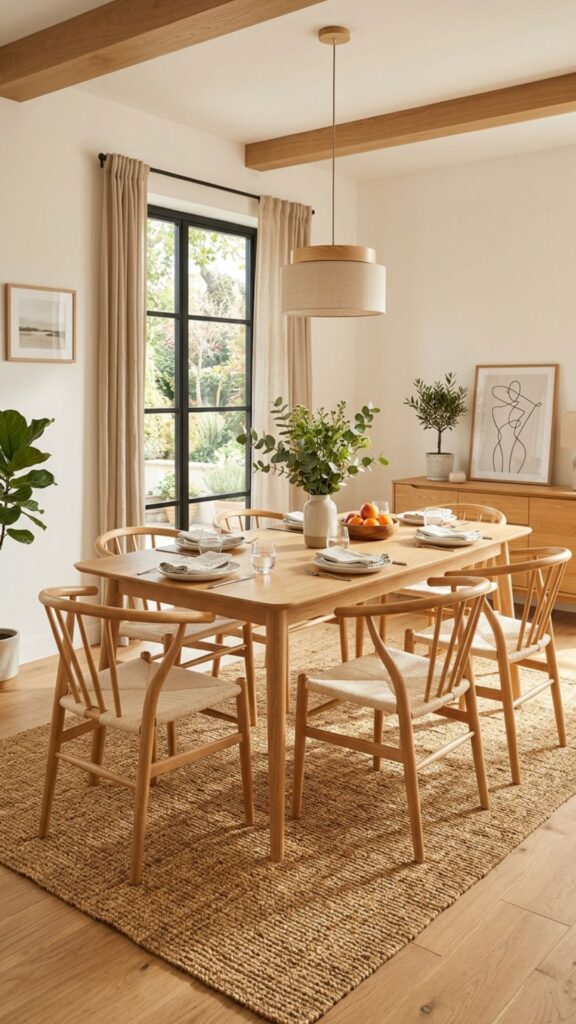
Natural fiber rugs provide an earthy, organic warmth that grounds an airy, light-filled dining room. The golden-brown tones of jute and sisal mimic the look of natural wood, complementing farmhouse, coastal, and bohemian decor styles. These materials bring exceptional texture to the room without overpowering your existing furniture.
Durability stands out as a key benefit of natural fibers. Sisal handles heavy foot traffic and the weight of a large dining table with ease. However, jute can be sensitive to moisture, so you should treat these rugs with a stain-resistant spray to protect them from accidental drink spills.
3. Faded Turkish Motifs
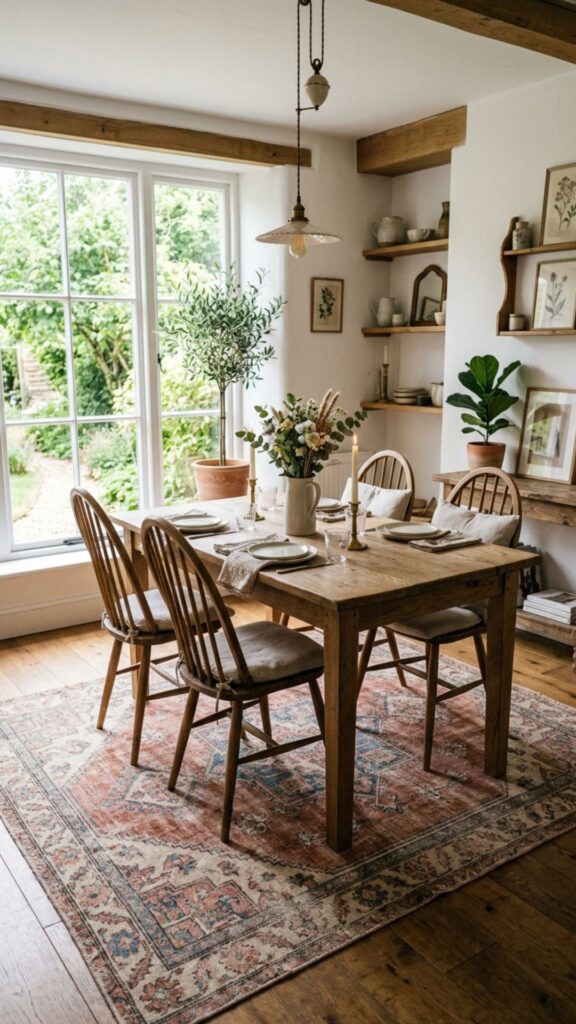
Faded Turkish designs offer the charm of an antique heirloom with a slightly muted color palette. The distressed look softens the visual impact of the rug, making it an excellent choice if you want to add warmth without darkening the entire room. Soft rusts, faded blues, and dusty pinks work together to create a welcoming, lived-in feel.
Because the design already looks weathered, new spots or signs of wear blend right in. Make sure you purchase a rug pad to place underneath. A quality pad keeps the rug firmly anchored to the floor when guests push their chairs away from the table.
4. Geometric Wool Flatweaves
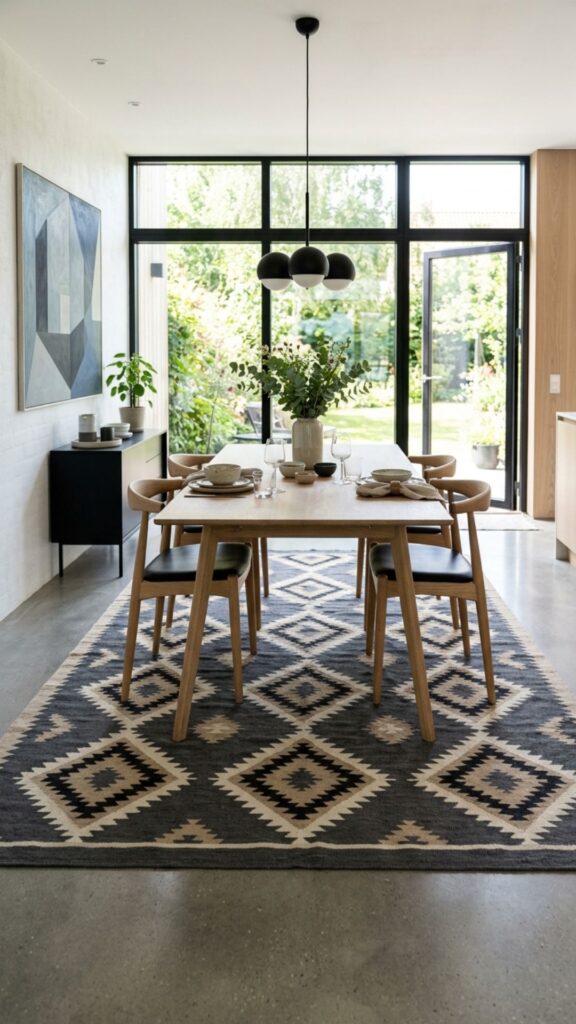
For a mid-century modern or contemporary home, a geometric wool flatweave serves as the perfect dining room area rug. Bold interlocking shapes or simple diamond patterns draw the eye and give the room a structured, intentional look. Wool naturally repels water and stains, making it one of the smartest investments for an eating area.
The flatweave construction means there are no tall loops for crumbs to hide inside. You can quickly sweep or vacuum the surface after a meal. Always ensure your flatweave extends at least 24 inches beyond all sides of your table so chair legs stay on the rug when pulled out.
5. Earth-Toned Floral Prints
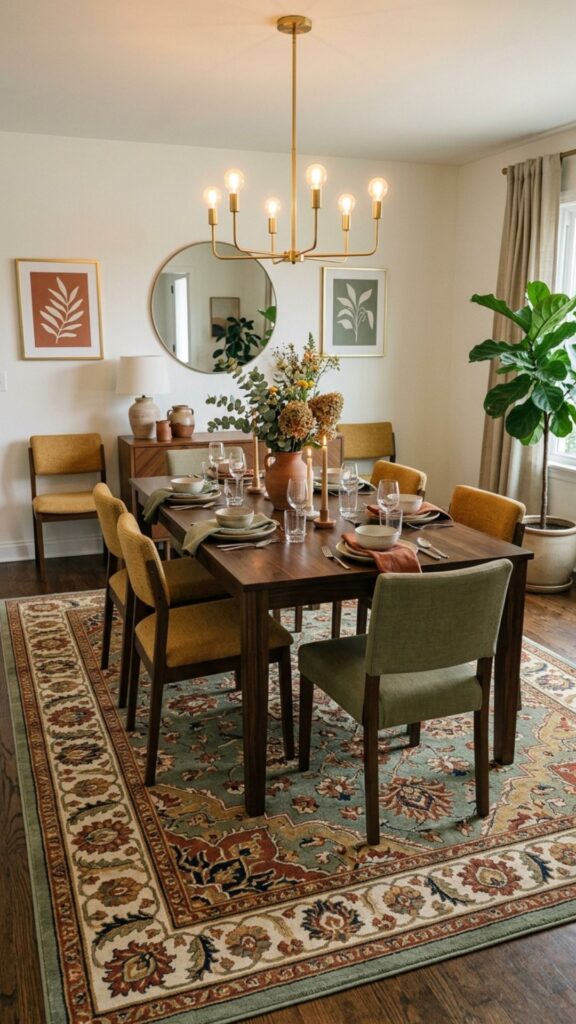
Large-scale floral prints in earthy colors like sage green, terracotta, and mustard yellow bring the warmth of nature indoors. Unlike traditional tight floral patterns, modern oversized botanicals feel fresh and inviting. They work exceptionally well to soften rooms that feature a lot of sharp angles and hard metal finishes.
When choosing a floral dining room area rug, pick a synthetic blend if you have a busy household. Modern synthetics clean up beautifully with just mild soap and water. The colorful organic shapes will easily camouflage the occasional dropped piece of food between deep cleanings.
6. Washable Synthetic Blends
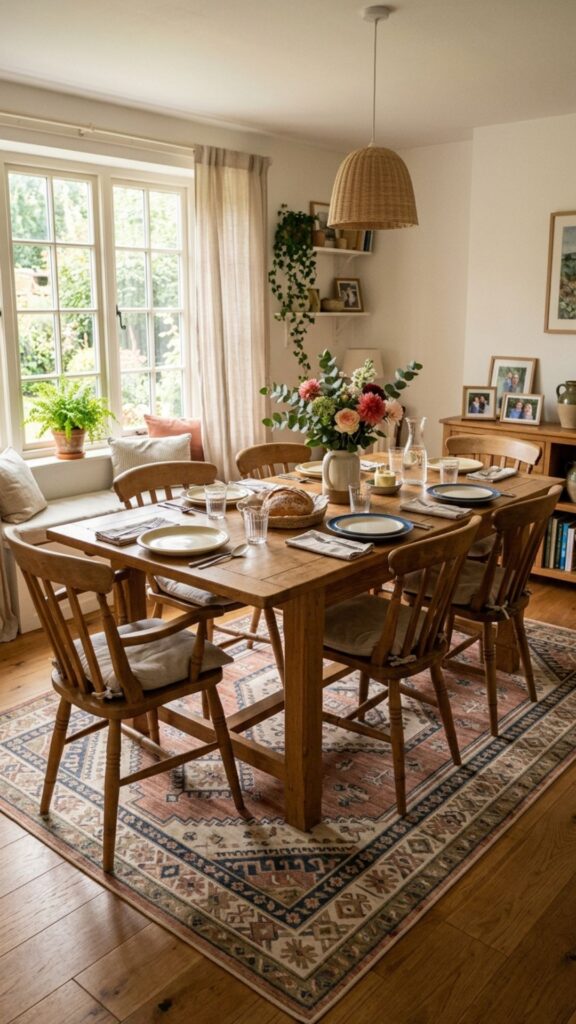
Families with young children or indoor pets often avoid dining rugs out of fear of permanent stains. A machine-washable dining room area rug solves this problem entirely. These ultra-thin rugs come in hundreds of warm, inviting patterns and feature a specialized backing that clings to the floor.
Whenever a major spill happens, you simply roll the rug up and place it in your washing machine. Since these are incredibly thin, chairs glide over them without any friction. You get all the visual warmth of a traditional rug with zero anxiety during family dinners.
7. Solid Braided Cotton
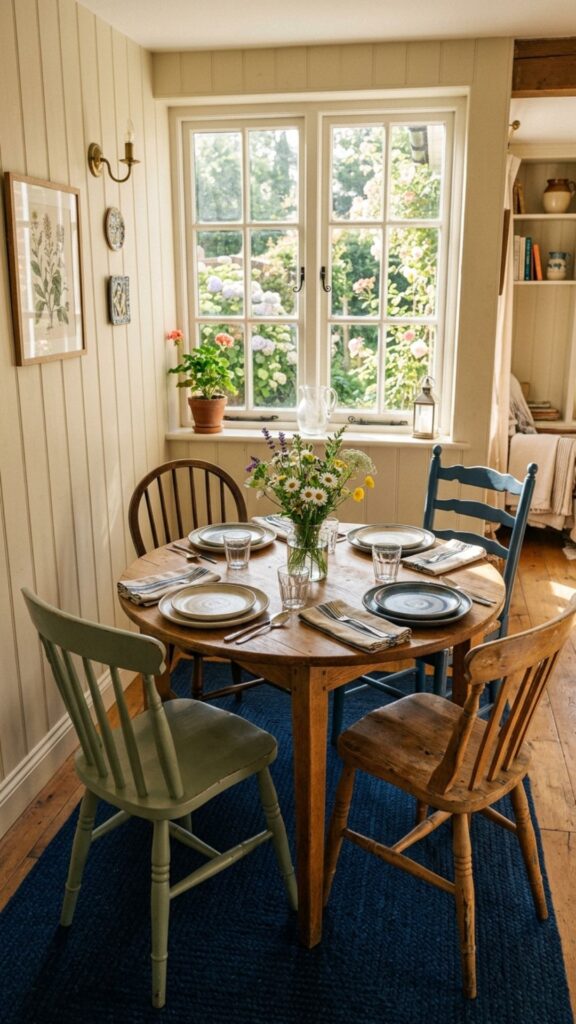
Braided cotton rugs evoke a sense of casual, cottage-style comfort. The circular or oval shapes soften the hard rectangular lines of standard dining tables. Rich, solid colors like deep navy, warm burgundy, or forest green anchor the room while the braided texture adds tactile interest underfoot.
Cotton fibers feel incredibly soft but require more frequent cleaning than wool or synthetics. You can easily spot-clean braided cotton, and many smaller versions are reversible. Flipping the rug over occasionally ensures even wear and extends the lifespan of the piece.
8. Hand-Knotted Wool Oushaks
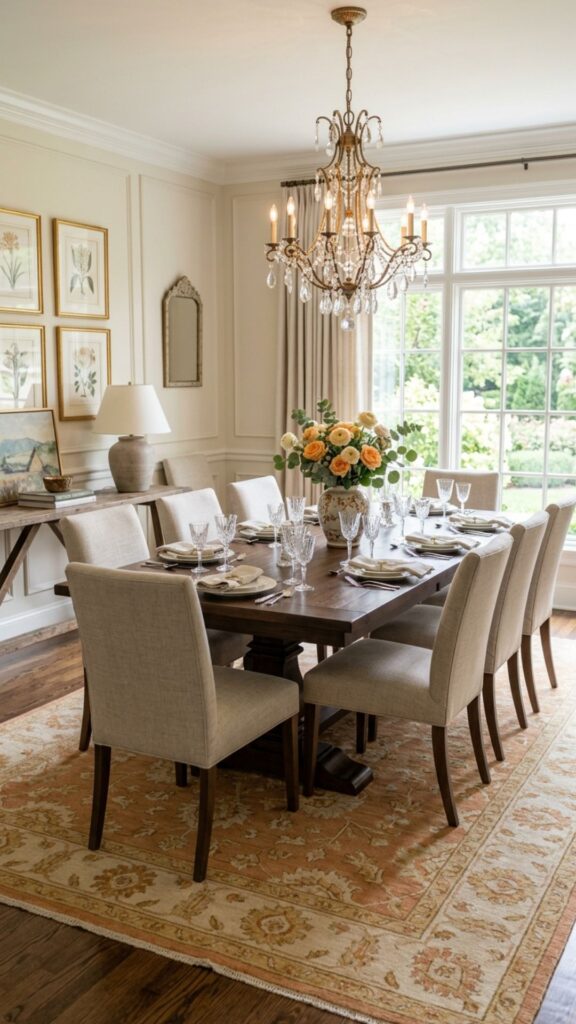
Oushak rugs feature larger scale patterns and a notoriously soft, luxurious feel. The color palettes usually lean toward warm pastels, light apricots, and soft golds. Placing an Oushak dining room area rug under your table instantly elevates the space, bringing a sophisticated yet approachable warmth.
Hand-knotted wool represents a significant financial investment, but it lasts for generations. The natural oils in high-quality wool prevent liquid spills from soaking in immediately. Blotting stains quickly will keep this beautiful centerpiece looking pristine for years to come.
9. Southwestern Inspired Kilims
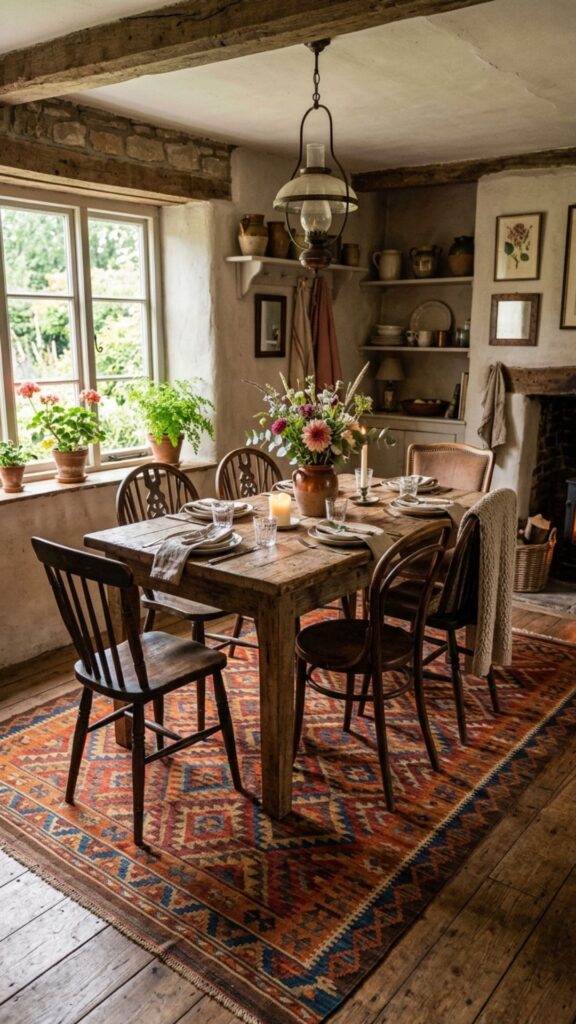
Kilim rugs inject vibrant, desert-inspired warmth into your dining space through bold geometric patterns and warm sunset hues. These flat-woven pieces utilize rich reds, oranges, and earthy browns to create a striking focal point. They pair flawlessly with rustic wood tables, leather chairs, and eclectic decor.
Since Kilims lack a pile, chairs move smoothly across their surface. They are tightly woven and highly durable, though they tend to be lightweight. A heavy-duty, non-slip rug pad is absolutely essential to prevent a Kilim from bunching up under the weight of shifting furniture.
10. Subtle Stripe Patterns
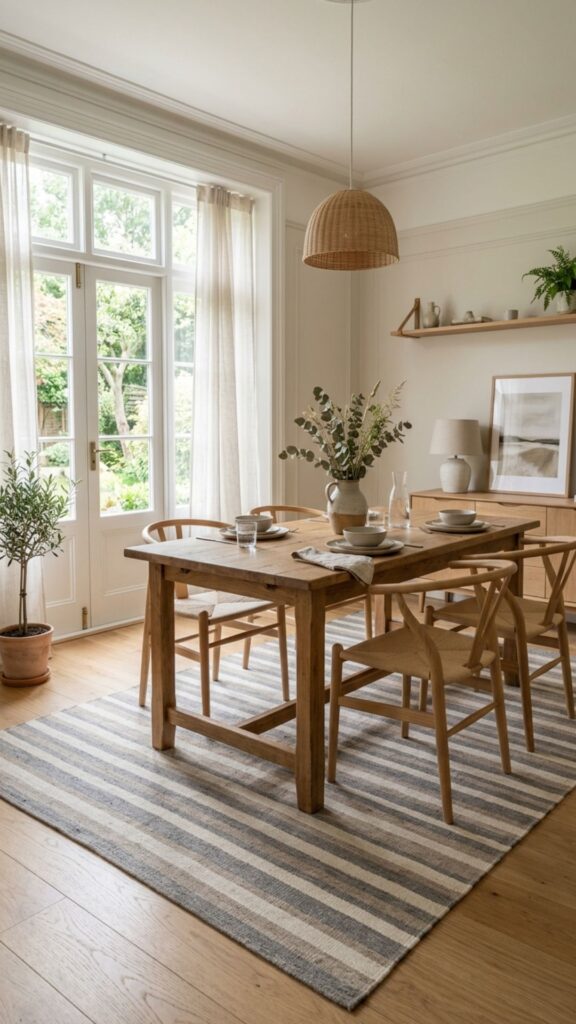
A striped dining room area rug offers a clever visual trick while adding cozy texture. Running stripes lengthwise can make a short dining room feel longer and more expansive. Tonal stripes in warm greys, creams, and taupes provide a subtle backdrop that lets your lighting fixtures and dining chairs stand out.
Stripes hide wear patterns exceptionally well, especially if you choose a multi-tonal weave. Look for materials like polypropylene or solution-dyed acrylic for maximum stain resistance. These materials withstand rigorous scrubbing if a dinner party guest spills a glass of red wine.
11. Overdyed Antique Rugs
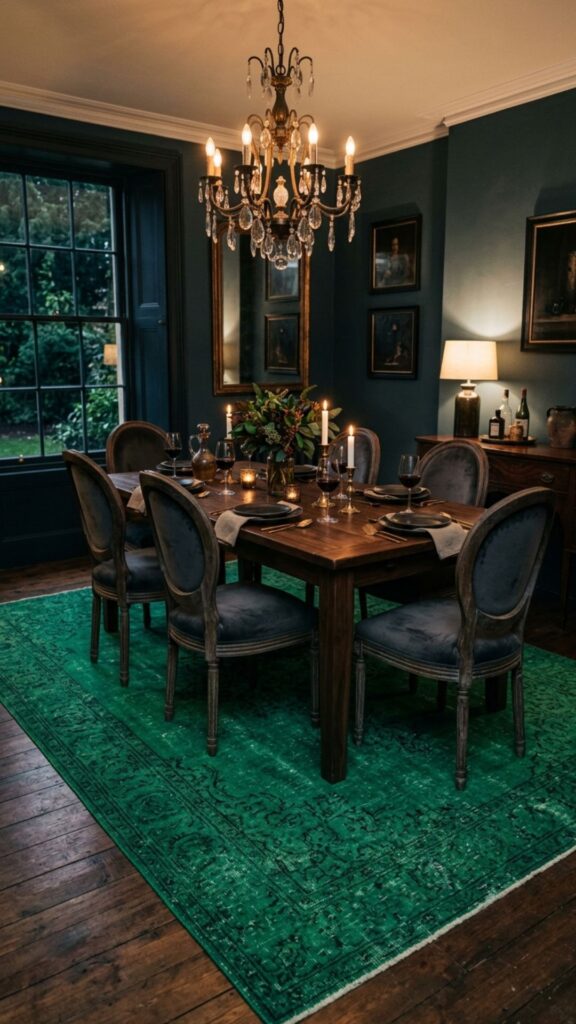
Overdyed rugs take vintage pieces and saturate them with bold, vibrant new colors. A deep emerald green or rich magenta overdyed rug creates an incredibly moody, warm dining atmosphere. You still see the faint outline of the traditional pattern beneath the brilliant new color, offering a perfect blend of old and new.
This style makes a massive design statement, so you should keep the rest of your dining room decor relatively neutral. The intense color saturation practically guarantees that minor food stains will remain invisible. Opt for a low-pile version to keep maintenance simple.
12. Chunky Wool Loops
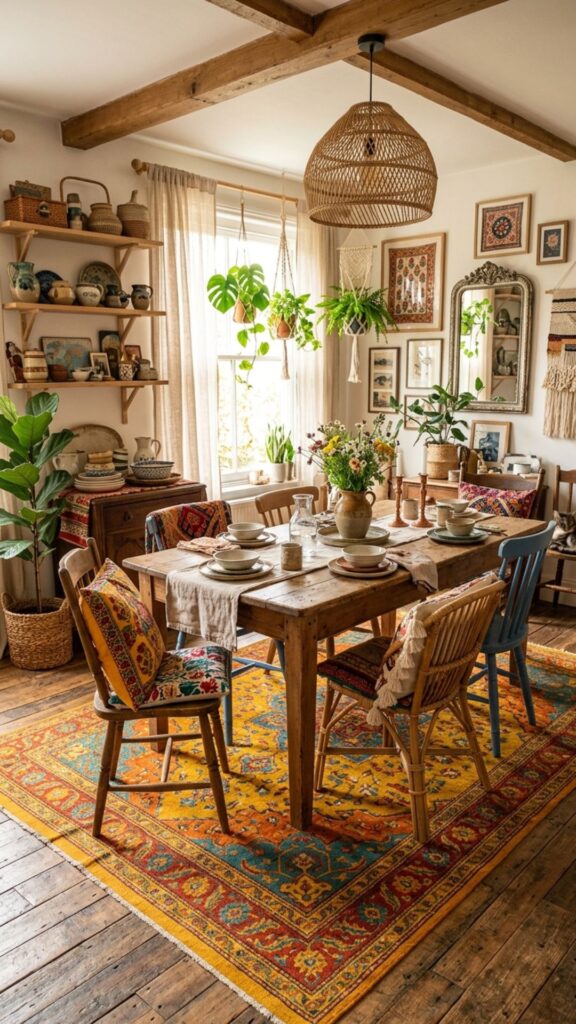
If your dining room feels too sterile, a chunky looped wool rug adds incredible dimension and tactile warmth. The pebble-like texture feels wonderful under bare feet and creates a cozy, intimate environment for long dinners. Natural, undyed wool offers warm ivory and oatmeal tones that brighten up dark flooring.
Keep in mind that thick loops can make moving heavy wooden chairs slightly difficult. This design works best in formal dining rooms that see occasional use rather than everyday family meals. Vacuum without a beater bar to prevent the thick woolen loops from pulling or fraying.
13. Abstract Watercolor Designs
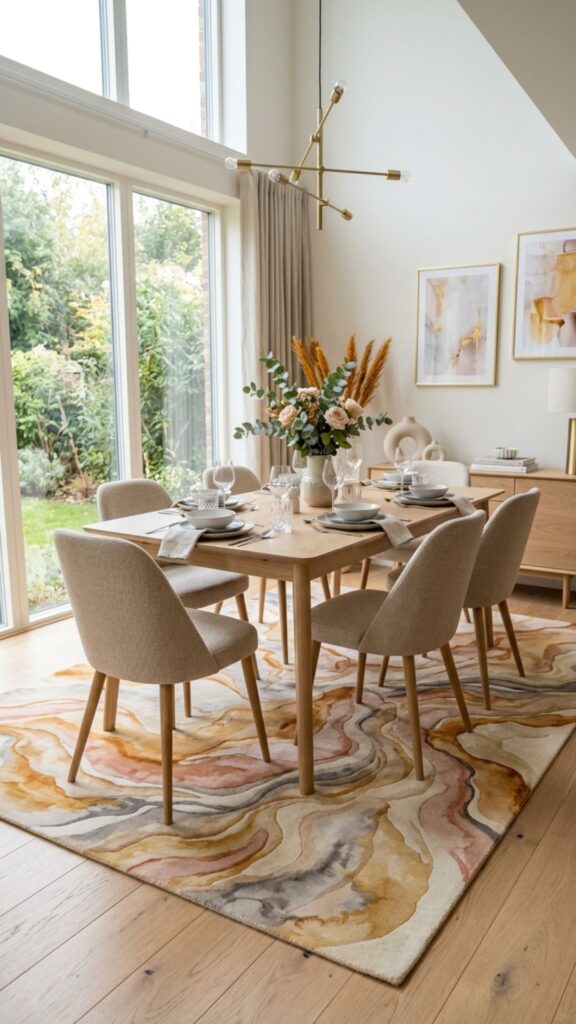
An abstract watercolor rug brings fluid movement and contemporary warmth to a modern dining space. Swirls of warm amber, soft grey, and blush pink mimic the look of a canvas painting on your floor. This style breaks up the rigid lines of modern dining sets and introduces a softer, more relaxed energy.
The blended, irregular nature of abstract designs makes them highly forgiving of dirt and spills. Ensure you select a size that accommodates all chairs, even when guests push back to leave the table. A rug that is too small will cause chairs to catch on the edge, damaging the binding over time.
14. Traditional Medallion Centers
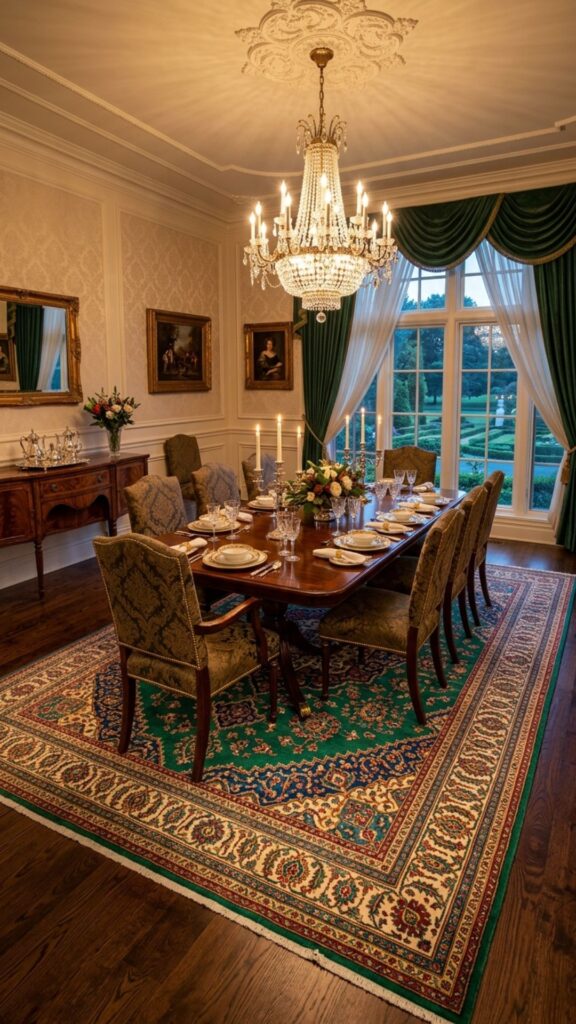
A large central medallion design creates a highly formal, centered aesthetic in your dining room. The symmetry draws the eye directly to the dining table, grounding the entire space in warm, traditional elegance. Rich jewel tones often feature heavily in these designs, bringing a sophisticated coziness to dinner parties.
Center your table perfectly over the medallion for the best visual impact. Because the center is completely covered by the table, focus on a rug that features intricate, beautiful borders. The borders will frame your dining set and take the brunt of the foot traffic.
15. Plaid and Tartan Weaves
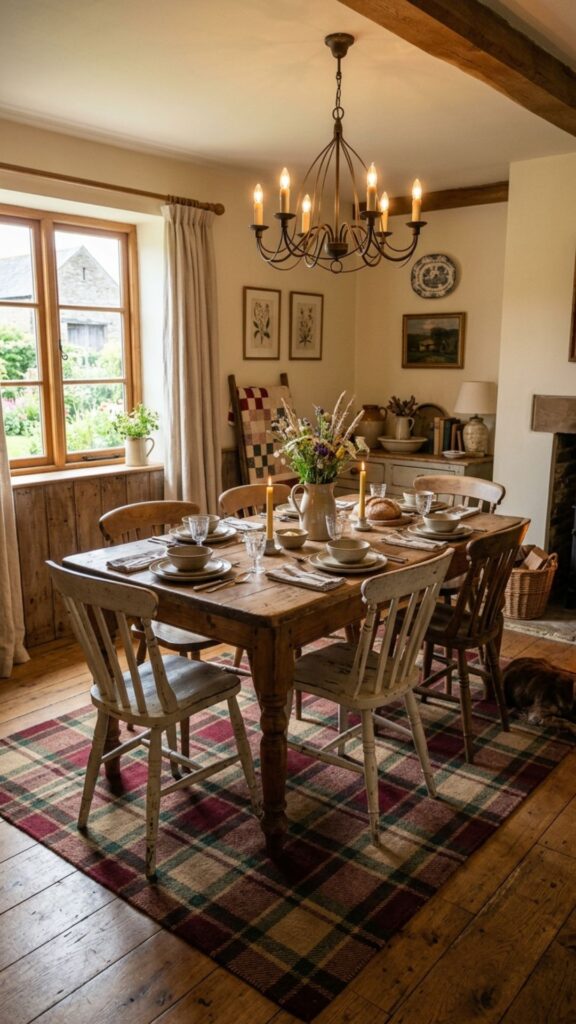
Nothing says cozy quite like a warm plaid or tartan pattern. These rugs work beautifully in farmhouse, cabin, or transitional dining rooms. Earthy greens, deep reds, and warm tans woven into intersecting lines create a familiar, welcoming environment that encourages guests to linger after dessert.
Plaid patterns inherently hide crumbs and dirt within their intersecting colored lines. Choose a flatweave or a very low pile to keep the dining space functional. Synthetic plaid rugs offer the look of cozy wool but allow for much easier cleanup after messy family meals.
16. Neutral Chevron Patterns
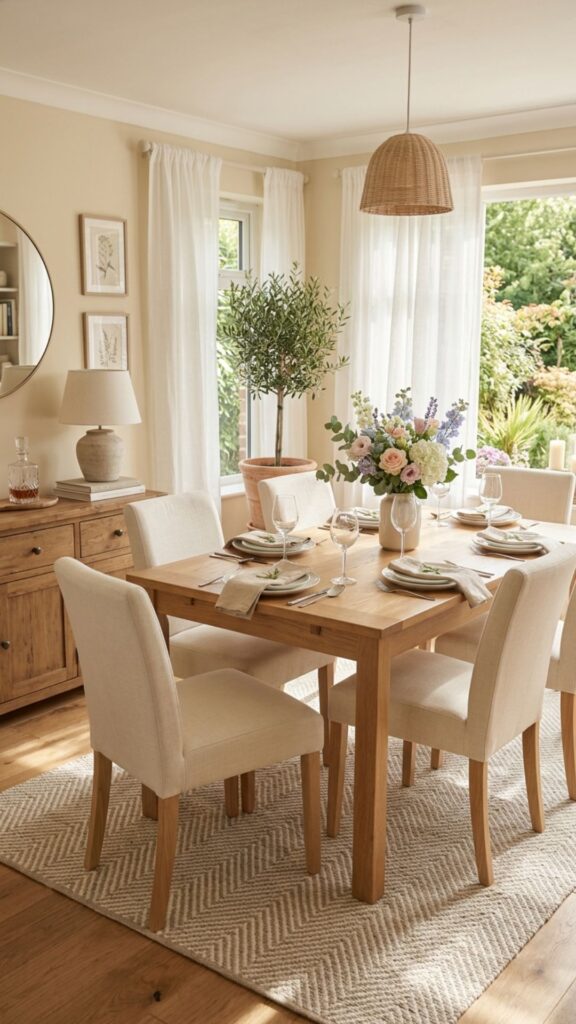
Chevron patterns provide a dynamic sense of movement while remaining understated enough for a calm dining environment. A tone-on-tone neutral chevron in warm beige and cream adds texture and subtle interest. It brings warmth without competing with bold wallpaper or striking dining chairs.
The zigzag pattern helps disguise inevitable wear patterns that develop around the seating areas. When buying a chevron rug, verify the edges are tightly bound so the geometric pattern does not unravel. Regular vacuuming keeps the lighter neutral tones looking fresh and bright.
17. Block Printed Global Designs
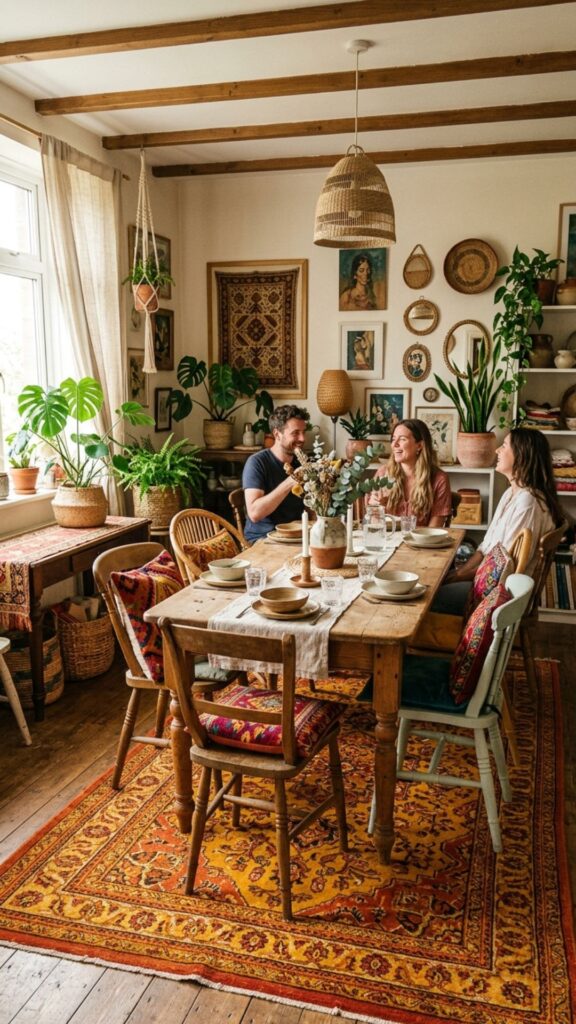
Global-inspired block prints feature repeating motifs in warm, spicy colors like saffron, turmeric, and paprika. These rugs inject a bohemian, relaxed warmth into the room. The slightly irregular patterns give the space an artisanal, handcrafted feel that makes dining feel less formal and more intimate.
Cotton or wool block prints lay beautifully flat against the floor. They are highly functional under dining tables, allowing chairs to glide effortlessly. Keep these rugs out of direct, harsh sunlight, as natural vegetable dyes used in authentic block prints can fade over time.
18. Bordered Framed Rugs
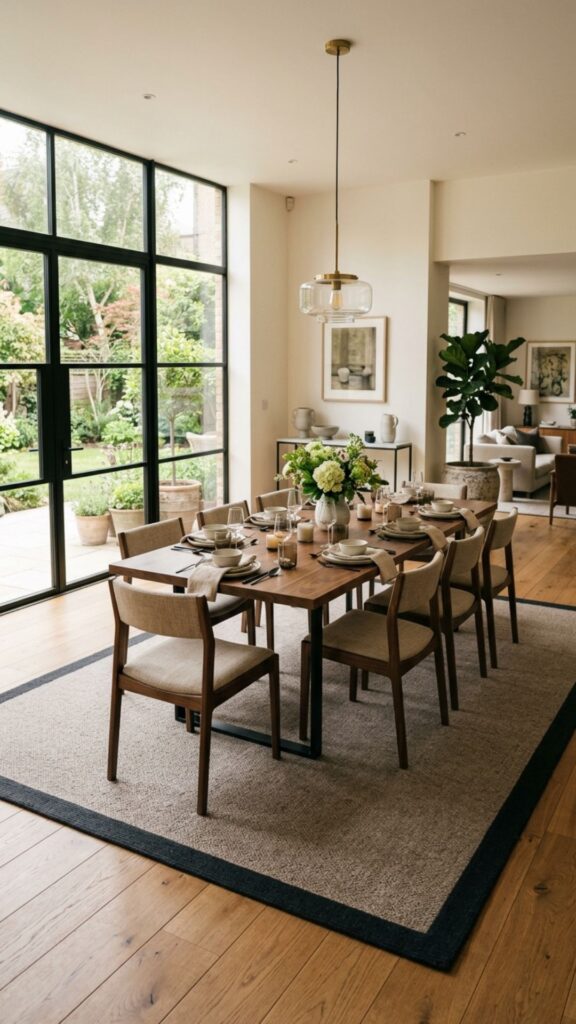
A solid color rug with a contrasting border acts like a picture frame for your dining set. A warm taupe center with a deep charcoal border neatly defines the eating area in an open-concept home. It creates a dedicated “room within a room,” making the dining space feel cozy and purposeful.
The solid center requires a bit more diligence with cleaning, as crumbs are easily visible on a single color. However, the darker border typically sits right where chair legs rest and feet shuffle. This clever design places the most forgiving color exactly where you need it most.
19. Moroccan Trellis Shag (Short Pile)
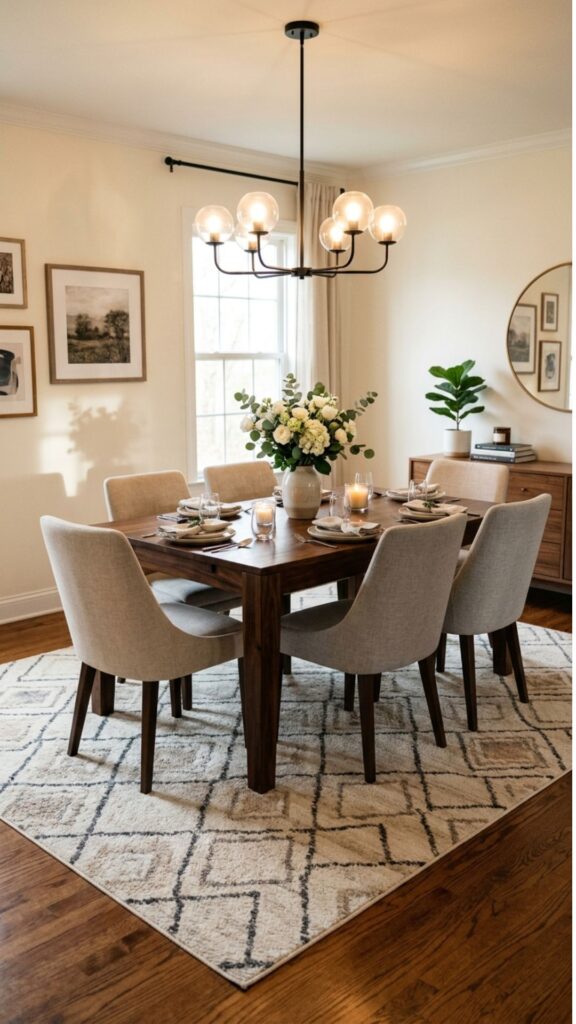
While a deep, fluffy shag rug traps food and halts chairs, a modified short-pile Moroccan trellis design gives you the best of both worlds. You get the visual warmth of the iconic diamond pattern and the cozy feel of thicker yarn, but with a manageable pile height.
This style bridges the gap between high comfort and dining room practicality. To maintain the fluffy texture, vacuum regularly with suction only. Spot clean immediately to prevent liquids from traveling down the yarn shafts to the base of the rug.
20. Reversible Braided Synthetics
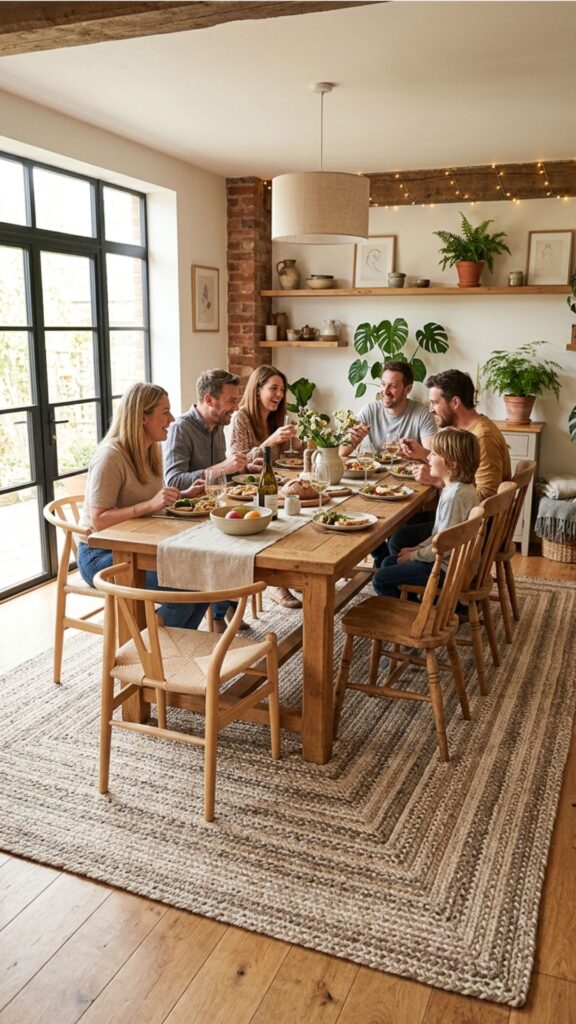
Indoor/outdoor reversible rugs have evolved dramatically and now look stunning in interior dining rooms. Modern synthetic braids mimic the look of natural cotton or wool but repel stains completely. They bring a casual, welcoming warmth to the space with unparalleled durability.
If one side gets heavily soiled during a holiday dinner, you simply flip the rug over to reveal a fresh surface. You can even take these rugs outside and hose them down for a deep clean. They offer the ultimate peace of mind for high-traffic, messy dining environments.
Conclusion
Finding the perfect dining room area rug transforms your eating space from a strictly functional room into the warm, inviting heart of your home. By balancing beautiful patterns with practical materials like wool or washable synthetics, you create a space that handles daily life effortlessly. Measure your room carefully, account for chair movement, and select a design that reflects your personal style.
Ready to upgrade your space? Start measuring your dining table today to find the exact rug size you need, and subscribe to our newsletter for more weekly interior design tips and practical home solutions.
What is the correct size for a dining room area rug?
Your rug should extend at least 24 to 36 inches beyond all sides of your dining table. This extra space ensures that chairs remain entirely on the rug even when guests push them back to stand up.
What is the best rug material for a dining room?
Wool and synthetic blends (like polypropylene) are the best materials for dining rooms. Wool naturally repels liquid and stains, while synthetic fibers are highly durable, affordable, and exceptionally easy to scrub clean.
How do I keep my dining chairs from catching on the rug?
Choose a low-pile rug or a flatweave design to prevent chairs from catching. Avoid thick shag rugs in the dining room, and always use a high-quality rug pad to keep the rug flat and firmly in place.
Can I put a round rug under a rectangular dining table?
You should generally match the shape of your rug to the shape of your room or table. A rectangular rug works best under a rectangular table, while round rugs perfectly complement round dining tables.