A well-designed kitchen bar can do a lot in a small home. It can give you a place to eat, prep meals, work on a laptop, serve drinks, or store everyday items without taking over the room. When space is tight, every inch matters, so the best ideas are the ones that look good and work hard.
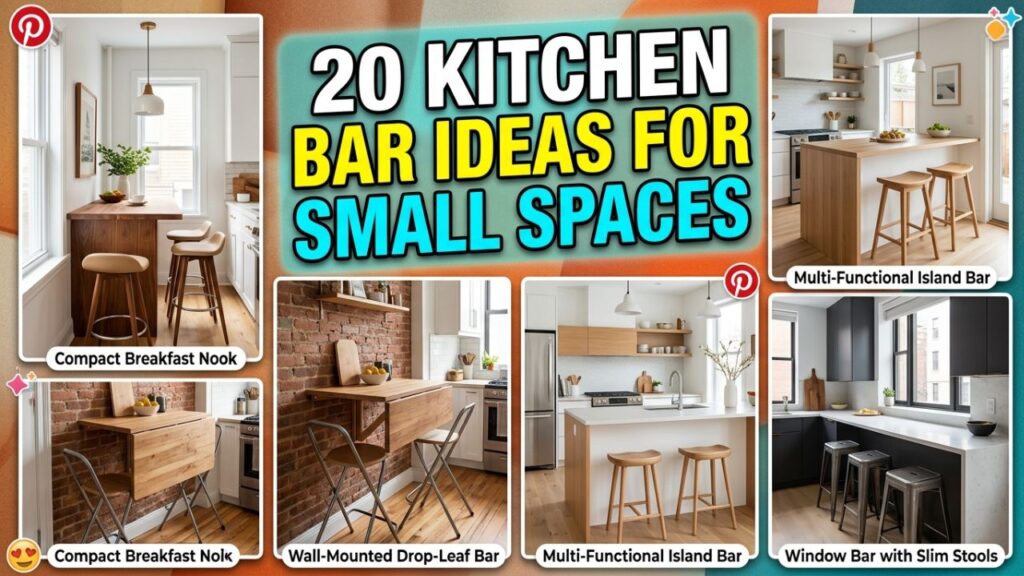
In this guide, you’ll find 20 practical and stylish ways to add a kitchen bar to a small space. Some ideas are simple weekend updates. Others are smart layout changes that can make your kitchen feel bigger and more useful.
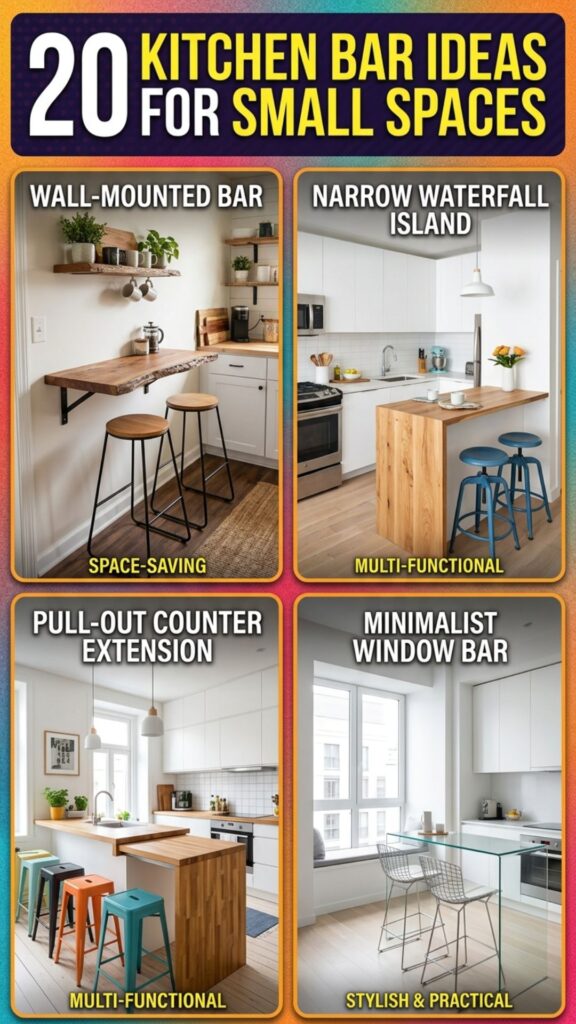
Whether you live in an apartment, condo, or compact house, these ideas can help you create a setup that fits your life.
1. Wall-Mounted Kitchen Bar Ideas for Tiny Layouts
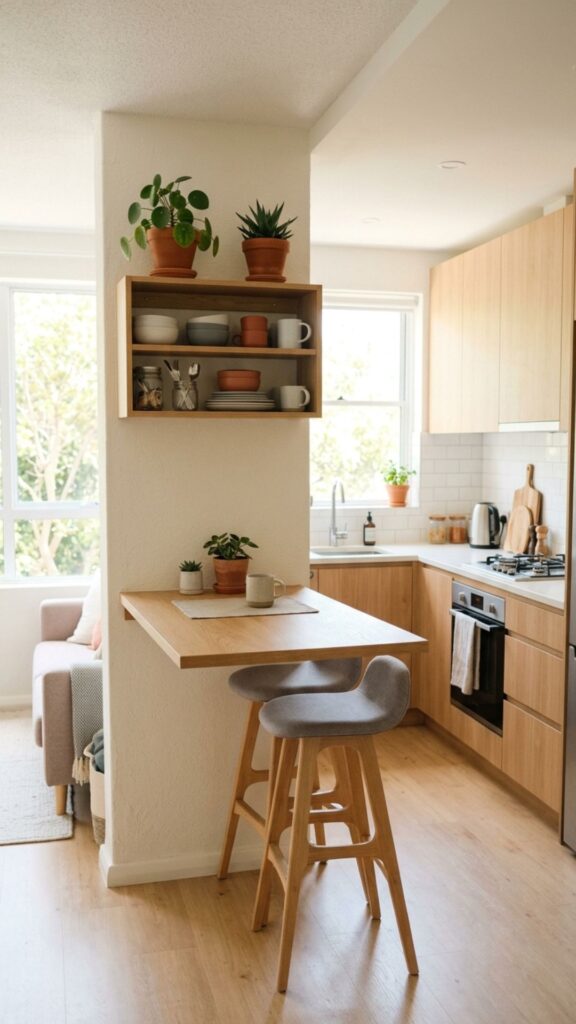
A wall-mounted kitchen bar is one of the easiest ways to save floor space. Because it attaches to the wall, it keeps the room open and gives you a clean, simple place for meals or coffee. This works especially well in narrow kitchens where a full island would feel cramped.
Choose a slim wood or stone-look top and pair it with two stools that slide completely underneath. If you want more function, install a small shelf above the bar for mugs, plates, or plants. This setup is budget-friendly, easy to style, and perfect for renters or anyone working with a tight footprint.
2. Fold-Down Kitchen Bar Designs That Disappear When Not in Use
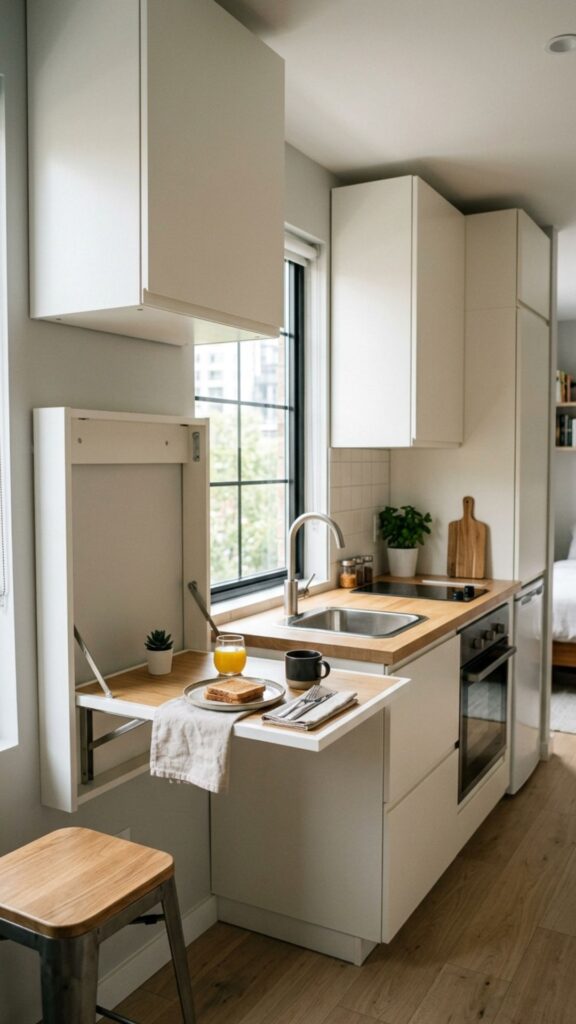
A fold-down kitchen bar is ideal if you need flexibility. You can use it during breakfast, meal prep, or work hours, then fold it flat against the wall when you’re done. That makes it a smart choice for studio apartments or kitchens that open into a busy walkway.
To make this idea work well, pick sturdy hardware and a finish that blends with your cabinets or wall color. You can even add a chalkboard or decorative panel underneath so it looks intentional when closed. It’s a clever way to gain function without giving up precious square footage.
3. Peninsula Kitchen Bar Options for Better Flow
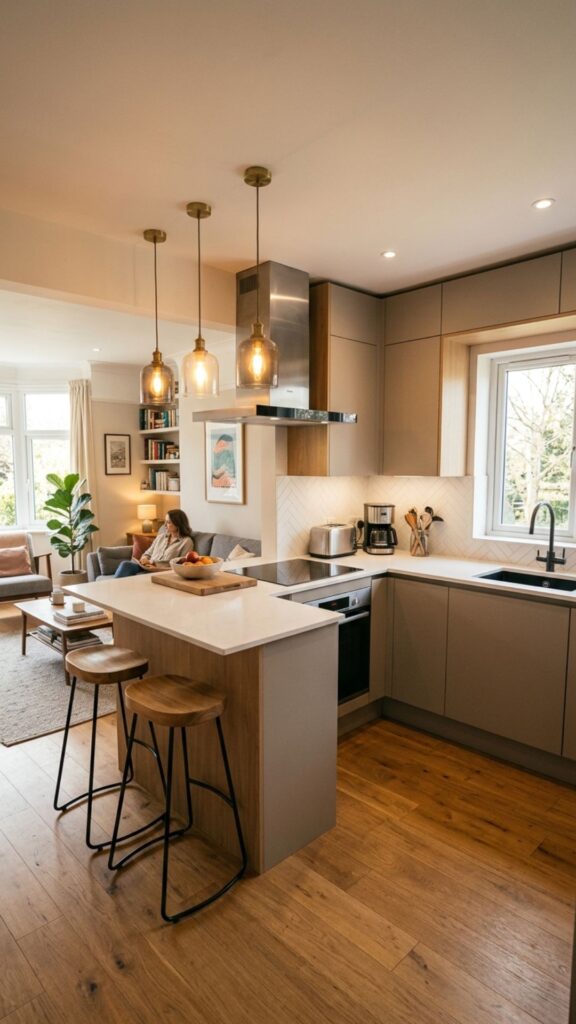
If your kitchen already has an L-shaped layout, a peninsula kitchen bar may be the best fit. Unlike an island, a peninsula connects to existing cabinetry, so it takes up less room while still creating a place to sit, prep, and serve. It also helps define the kitchen area in an open-plan home.
Add an overhang on one side for stools, and keep the seating area simple so people can move around easily. This kind of kitchen bar often feels more natural in small homes because it works with the layout you already have instead of forcing a big new piece into the room.
4. Narrow Kitchen Bar Counters for Galley Kitchens
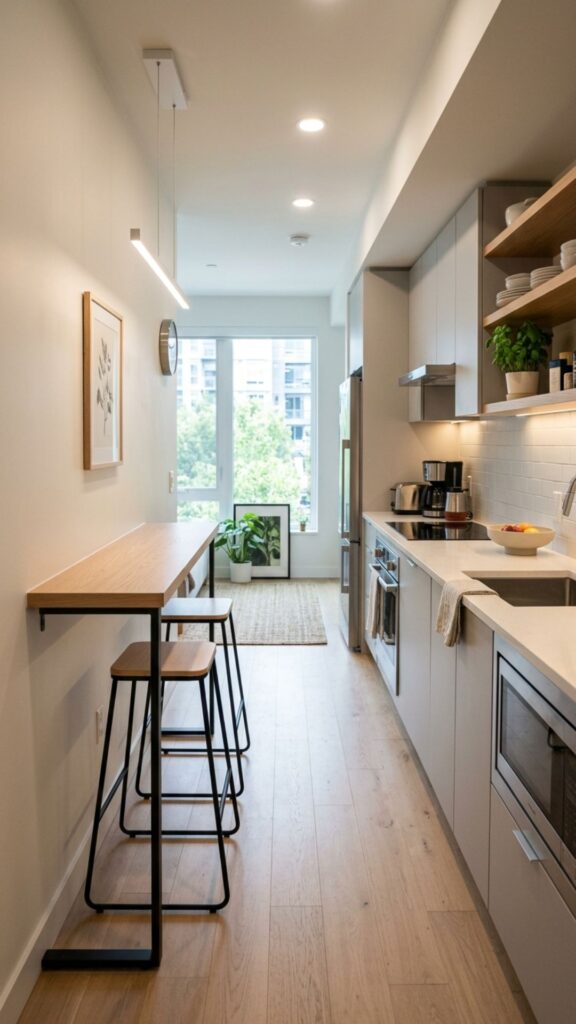
A galley kitchen can be hard to furnish, but a narrow kitchen bar can fit where a larger dining table never would. A slim counter along one wall creates a place to eat or work without blocking movement between cabinets and appliances.
Keep the depth modest and use backless stools so they tuck in neatly. Light colors and open space below the counter can also help the area feel less crowded. This option proves that even a very small kitchen can have a bar area if the scale is right.
5. Kitchen Bar With Built-In Storage Underneath
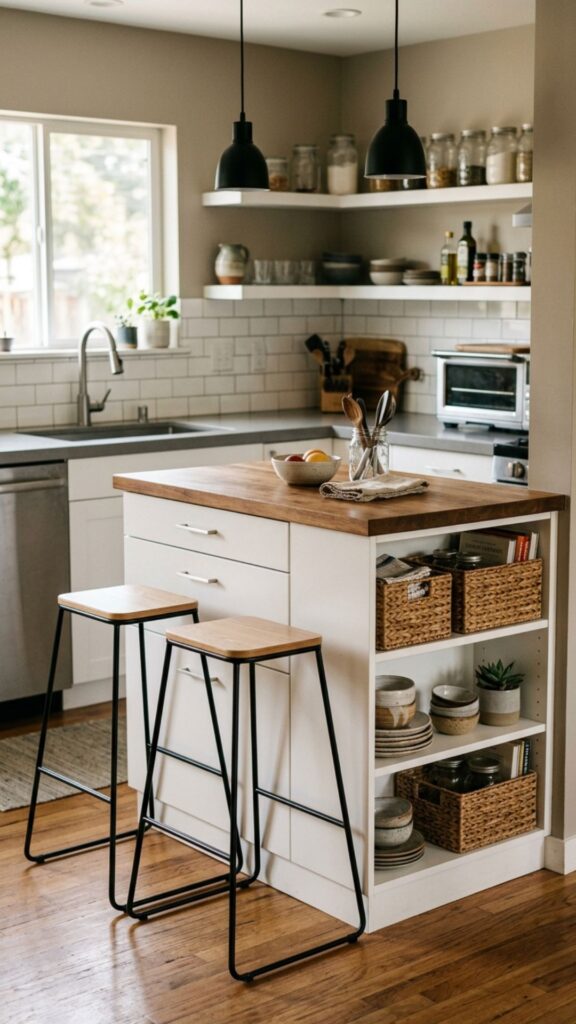
In a small kitchen, hidden storage can be just as valuable as seating. A kitchen bar with cabinets, drawers, or open shelving underneath helps you use the full footprint. You can store placemats, small appliances, serving bowls, or pantry staples right where you need them.
This works especially well in homes with limited cabinet space. If you want the area to look tidy, use baskets or bins on open shelves. If you prefer a cleaner finish, closed cabinetry keeps clutter out of sight. It’s a smart way to make your kitchen bar do more than one job.
6. Breakfast Bar Extensions on Existing Counters
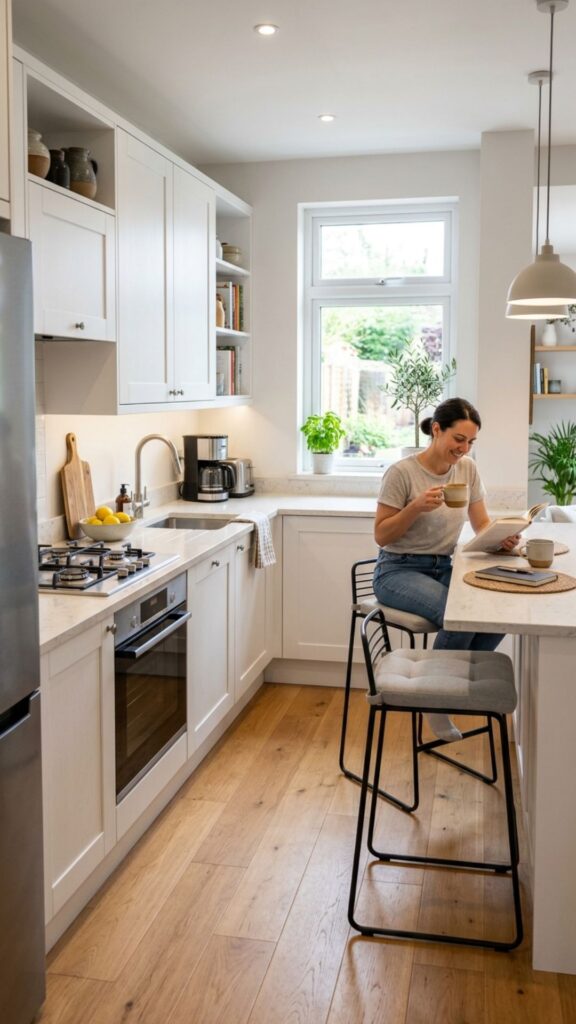
You don’t always need a full remodel to create a kitchen bar. In many cases, you can extend an existing countertop by a few inches and turn it into a breakfast bar. This is one of the simplest upgrades for homeowners who want extra seating without changing the whole kitchen.
The key is making sure there is enough legroom and enough space for stools. Even room for two seats can make a big difference in a compact home. A small extension can turn a standard counter into a daily dining spot and a casual place for guests to gather.
7. Floating Kitchen Bar Shelves for a Light, Open Look
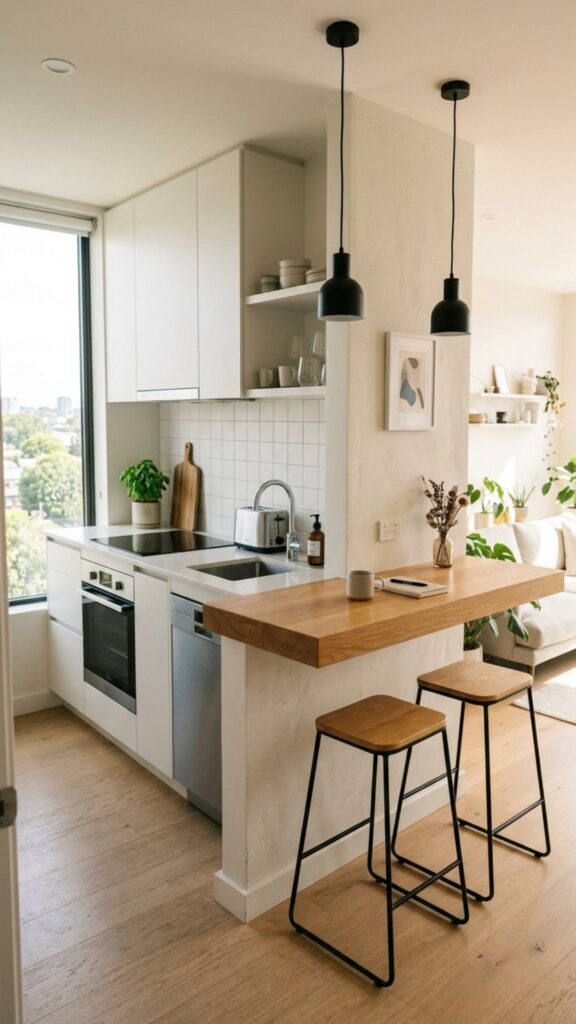
A floating kitchen bar has a modern feel and helps small kitchens look less heavy. Because there are no bulky legs or base cabinets, the room feels more open. It’s a great choice if you want a clean style and don’t need a lot of built-in storage below.
Pair this design with minimalist stools and simple lighting to keep the look airy. Wood adds warmth, while white or black finishes create a sharper, more contemporary style. This type of kitchen bar works well in small apartments where visual clutter can make the space feel tighter.
8. Small Kitchen Bar Ideas With Open Shelving
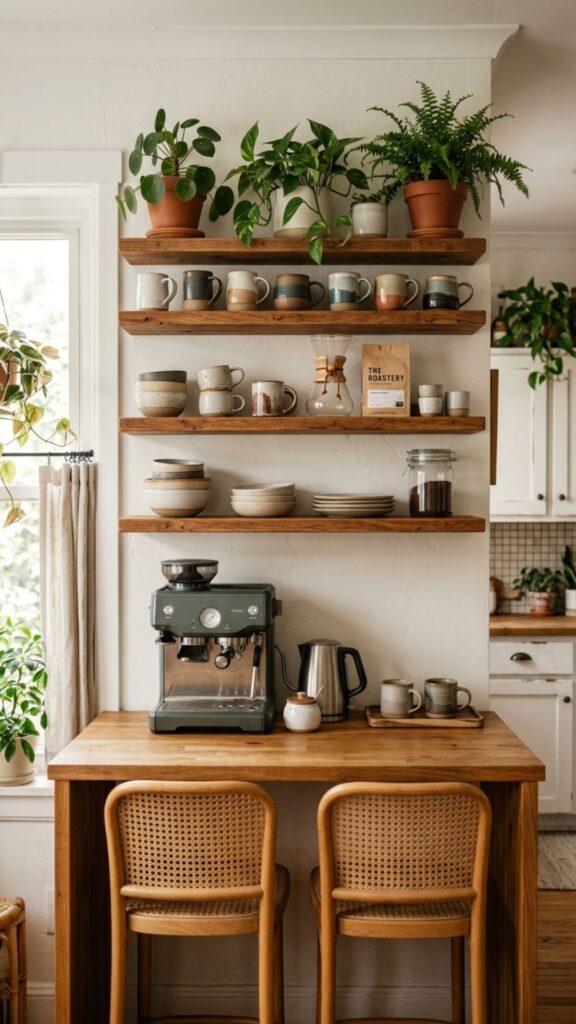
Open shelving can make a kitchen bar more useful and more attractive. Shelves nearby give you easy access to glasses, bowls, coffee supplies, or cookbooks. They also let you add personality with a few well-chosen items, like ceramics or greenery.
The trick is not to overload the shelves. In a small kitchen, too many visible items can quickly look messy. Stick to a simple color palette and leave some empty space. When done well, open shelving turns a practical kitchen bar into a feature that feels styled and lived-in.
9. Corner Kitchen Bar Setups That Use Awkward Space Well
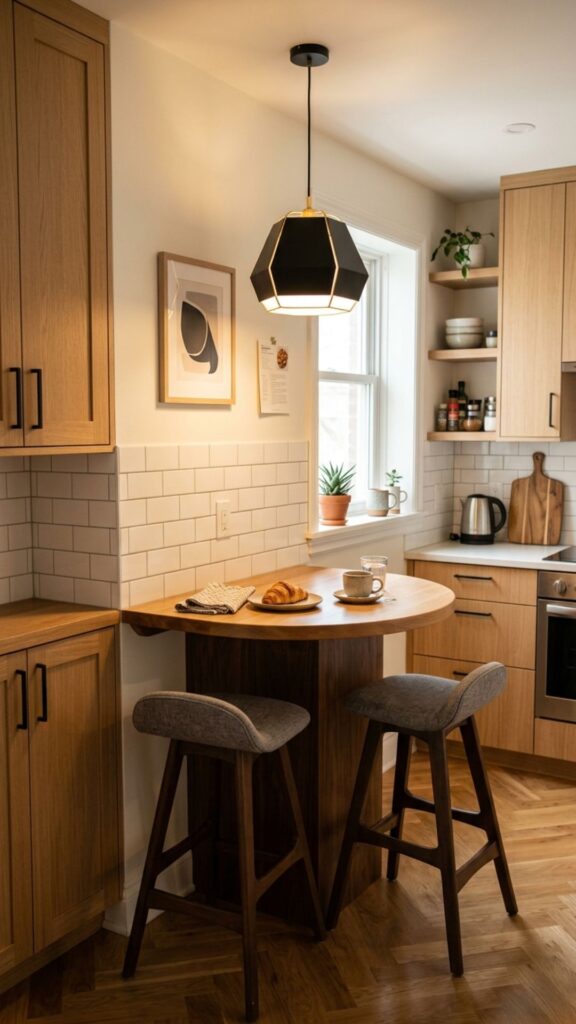
Corners are often underused, but they can be perfect for a compact kitchen bar. A custom or semi-custom corner counter can turn dead space into a cozy breakfast nook or coffee station. This is especially useful in small kitchens where every wall matters.
Add one or two stools, a pendant light, and a few simple accessories to make the corner feel intentional. Rounded edges can also help with flow and safety in tight rooms. A corner kitchen bar is a great example of how smart planning can make an awkward area feel valuable.
10. Kitchen Bar Islands on Wheels for Flexibility
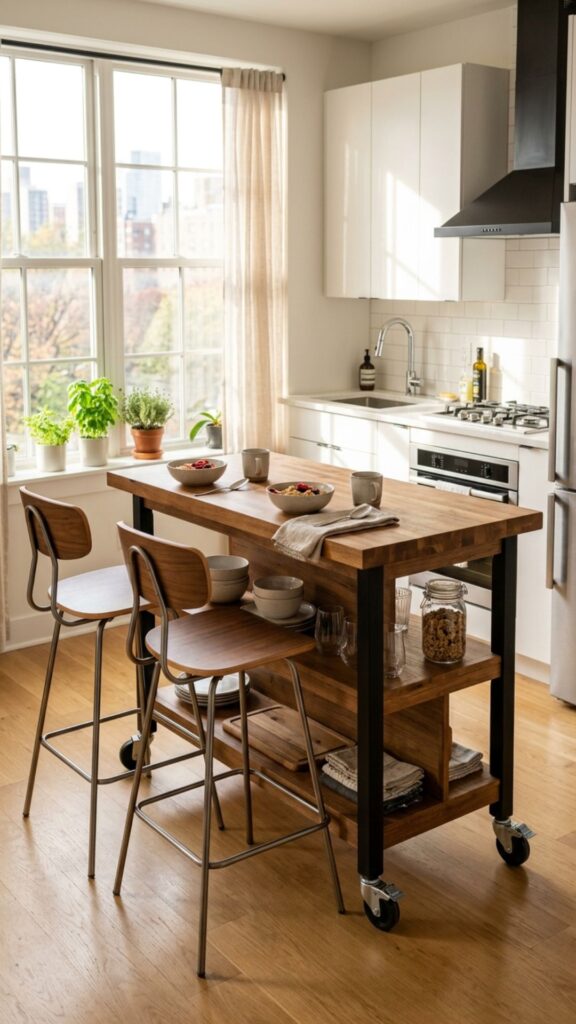
A rolling island can function as a movable kitchen bar, which is helpful if your needs change throughout the day. You can pull it out for meal prep, use it for casual dining, and move it aside when you need more open floor space.
Look for one with locking wheels and at least a little storage underneath. Some styles also include towel bars, wine racks, or drop leaves. For renters or anyone not ready for a permanent build, this kind of kitchen bar offers convenience without a major commitment.
11. Two-Tier Kitchen Bar Counters for Clear Zones
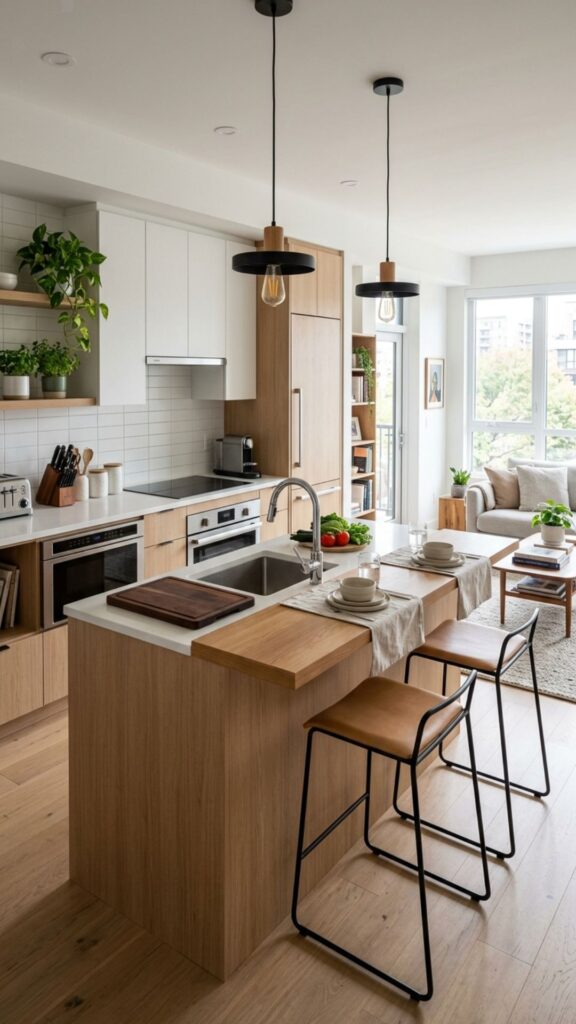
A two-tier kitchen bar creates separate levels for different tasks. The lower section can be used for prep work, while the raised section serves as the dining or serving area. This helps hide clutter and keeps the kitchen looking more organized.
This design is useful if your kitchen is part of an open living area. The raised bar acts like a soft divider between spaces while still keeping the room connected. It’s a practical choice for small homes where one area often needs to serve many purposes.
12. Window-Side Kitchen Bar Seating for Natural Light
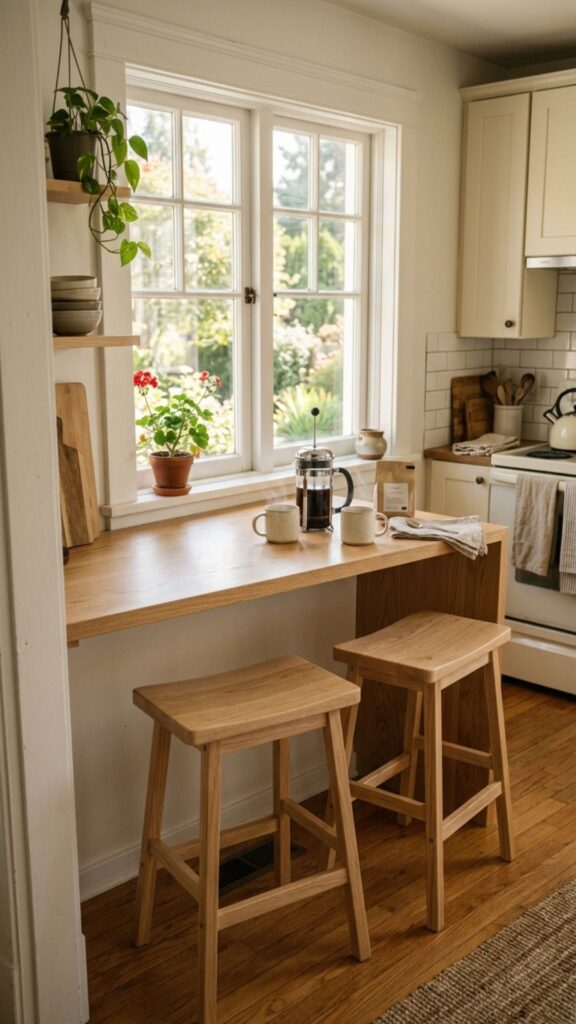
Placing a kitchen bar near a window can make a small kitchen feel brighter and more inviting. Natural light adds openness, and the view gives the seating area a pleasant, relaxed feel. Even a very small bar feels special when it catches daylight.
This setup is ideal for morning coffee, quick meals, or working from home for an hour or two. Use materials that reflect light, such as pale wood, white surfaces, or soft metal finishes. A bright window-side kitchen bar can make the whole room feel less boxed in.
13. Kitchen Bar Ideas With Backless Stools
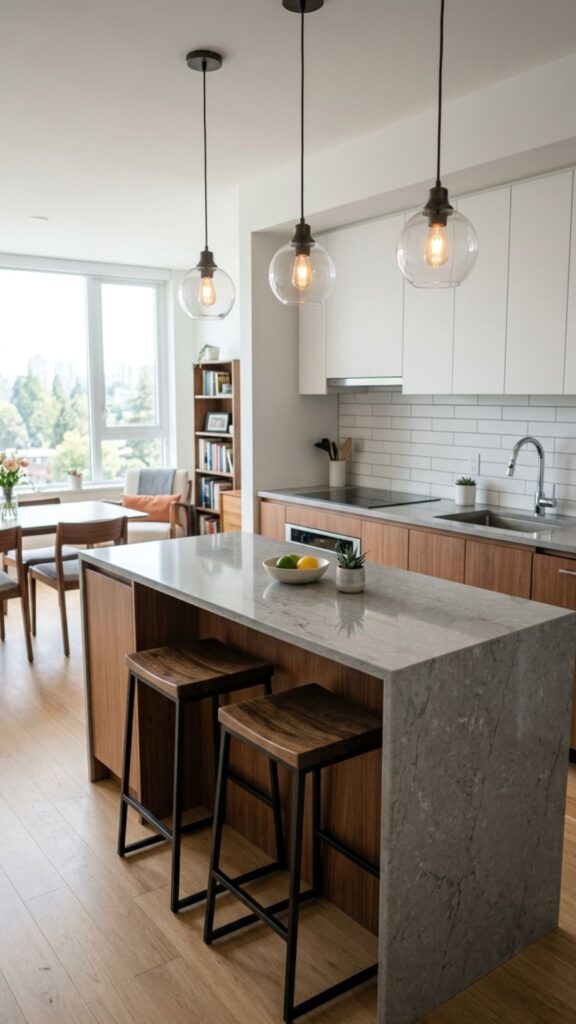
The right seating makes a big difference in a small kitchen. Backless stools are one of the best choices for a kitchen bar because they slide fully underneath and keep sightlines open. That means the room feels less crowded, even when the bar is in use.
Choose stools with footrests and comfortable seats so they still feel practical for everyday use. Upholstered tops can add softness, while wood or metal designs are easy to clean. Small details like these help your kitchen bar stay both functional and comfortable.
14. Minimalist Kitchen Bar Styling for Small Homes
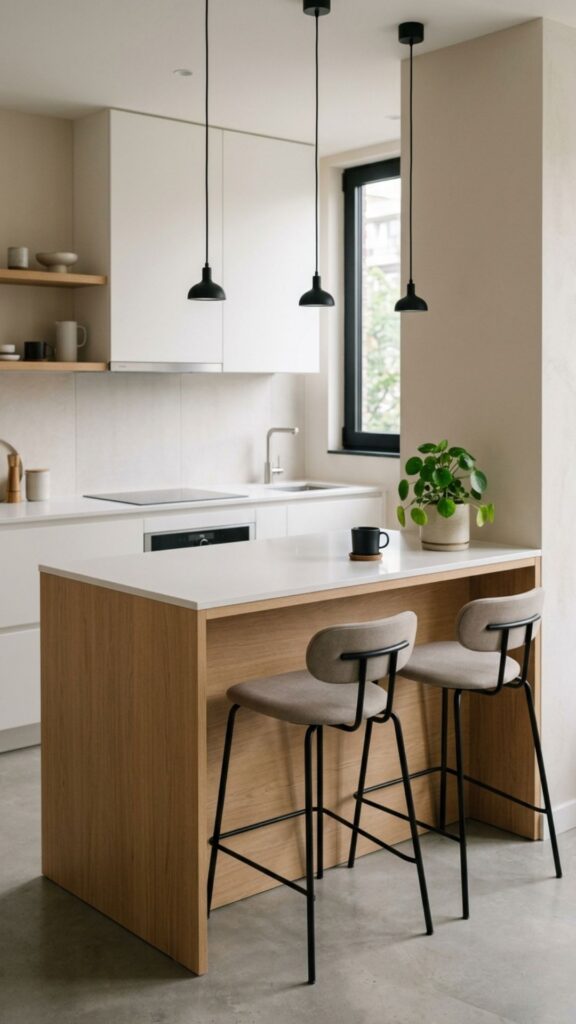
A minimalist kitchen bar works well in compact spaces because it avoids visual noise. Clean lines, simple finishes, and limited decor help the kitchen feel calm and uncluttered. This doesn’t mean the design has to feel cold. It just means every piece should have a purpose.
Stick to a few materials and colors, and avoid overdecorating the counter. A tray, a small plant, or two stylish stools may be all you need. In a small kitchen, restraint often looks better than excess, and a simple kitchen bar can still feel warm and welcoming.
15. Rustic Kitchen Bar Ideas for Added Warmth
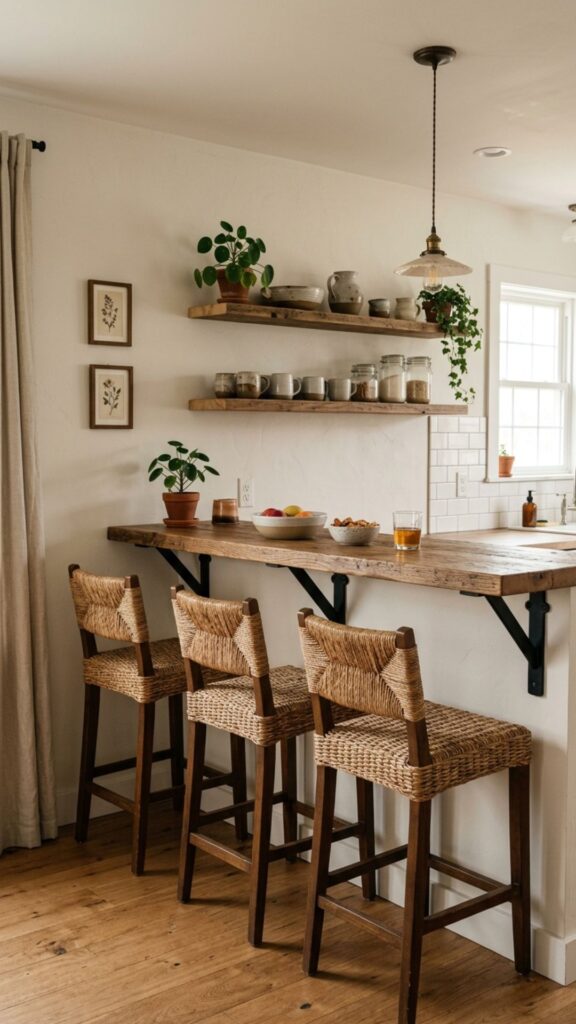
If your kitchen feels plain or a bit sterile, a rustic kitchen bar can add warmth and texture. Wood tops, natural finishes, black metal brackets, and woven stools create a more relaxed and inviting feel. This style works well in both modern and traditional homes.
You don’t need a full farmhouse makeover to make it work. Even one reclaimed wood counter or a pair of rustic stools can shift the mood. A warm, textured kitchen bar can make a small space feel more personal and comfortable.
16. Modern Kitchen Bar Designs With Clean Lines
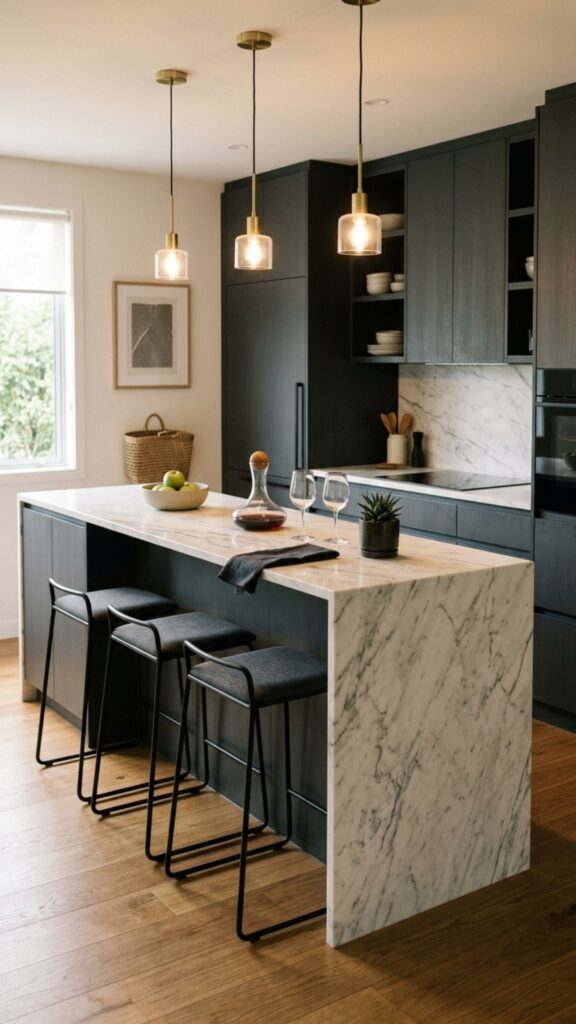
For a sleeker look, a modern kitchen bar focuses on sharp shapes, smooth surfaces, and simple detail. Think waterfall edges, matte finishes, handle-free cabinetry, and streamlined seating. This style is especially good for small kitchens because it keeps the eye moving.
To avoid making the room feel stark, balance modern finishes with warmth from wood, soft lighting, or subtle texture. A clean, modern kitchen bar can make a compact kitchen feel fresh, polished, and surprisingly spacious.
17. Kitchen Bar and Coffee Station Combos
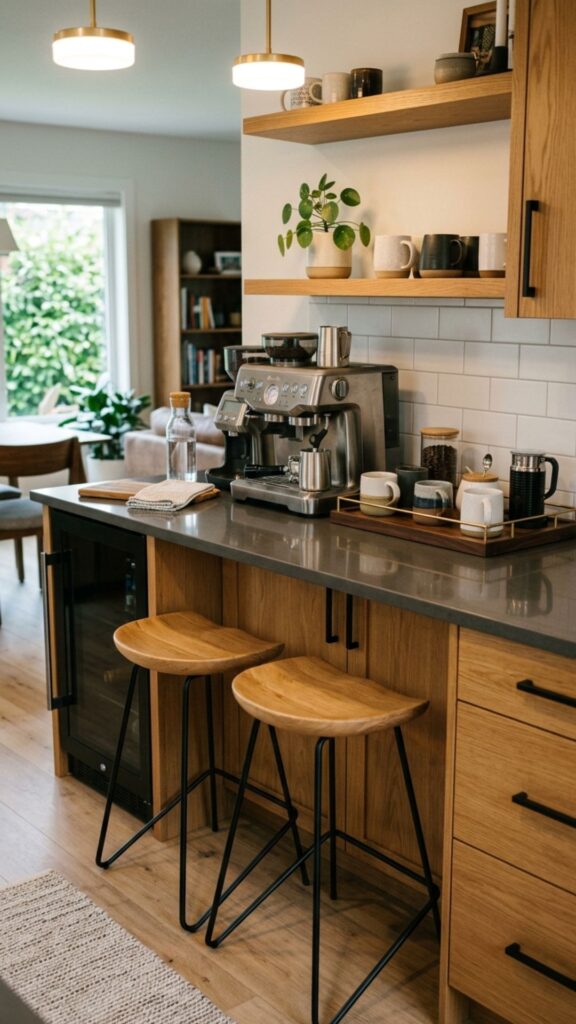
A kitchen bar can also serve as a coffee station, which is a smart use of space in small homes. One end can hold mugs, beans, a coffee maker, and sweeteners, while the rest of the bar stays open for meals or prep. This creates a daily-use zone that feels organized.
Keep the setup simple with a tray or small shelf to group items together. If possible, place it near an outlet to avoid messy cords. A combined coffee and kitchen bar area adds charm and function without needing extra square footage.
18. Small Kitchen Bar Ideas With Pendant Lighting
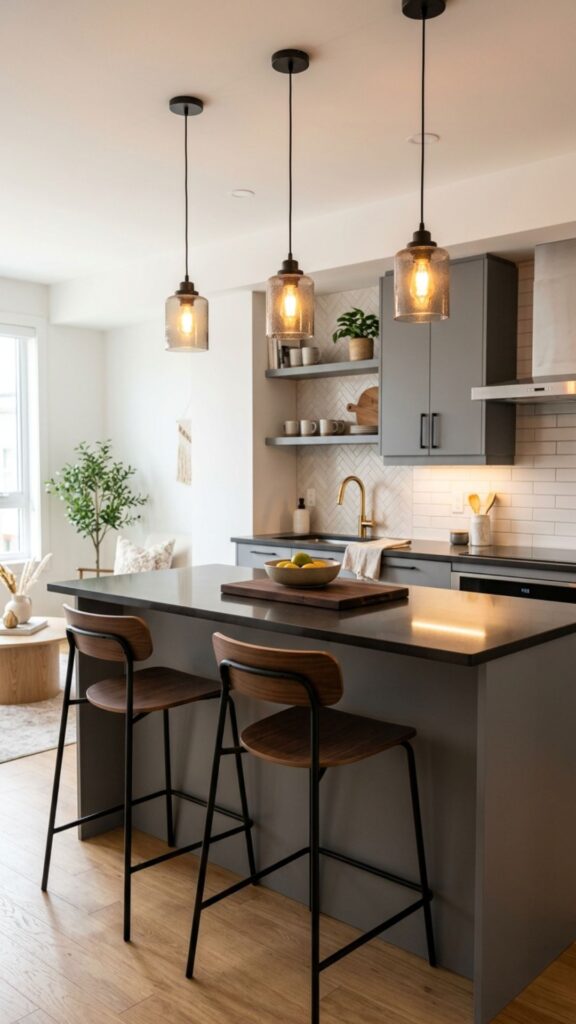
Good lighting can turn a basic kitchen bar into a standout feature. Pendant lights draw the eye upward, define the bar area, and make the space feel finished. In a small kitchen, lighting also helps create mood and improve task visibility.
Choose fixtures that fit the scale of the room. Oversized pendants can overwhelm a compact layout, while slim or glass styles keep things light. The right lighting makes your kitchen bar feel more intentional and gives the whole kitchen a polished look.
19. Multi-Use Kitchen Bar Spaces for Work and Dining
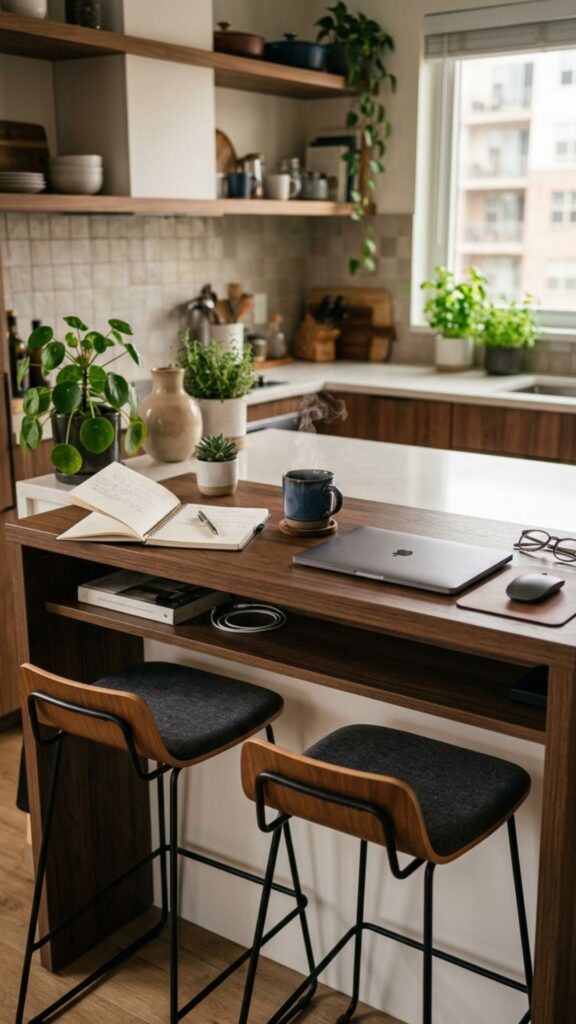
In many homes, the kitchen bar is no longer just for eating. It may also be a homework station, remote work desk, or spot for paying bills. That makes flexibility more important than ever, especially when you have limited space.
To support different uses, focus on comfort, lighting, and easy cleanup. Keep a nearby drawer or basket for chargers, notebooks, and pens so the area can switch roles quickly. A multi-use kitchen bar helps a small kitchen support real daily life.
20. Custom Kitchen Bar Solutions for Unusual Small Spaces
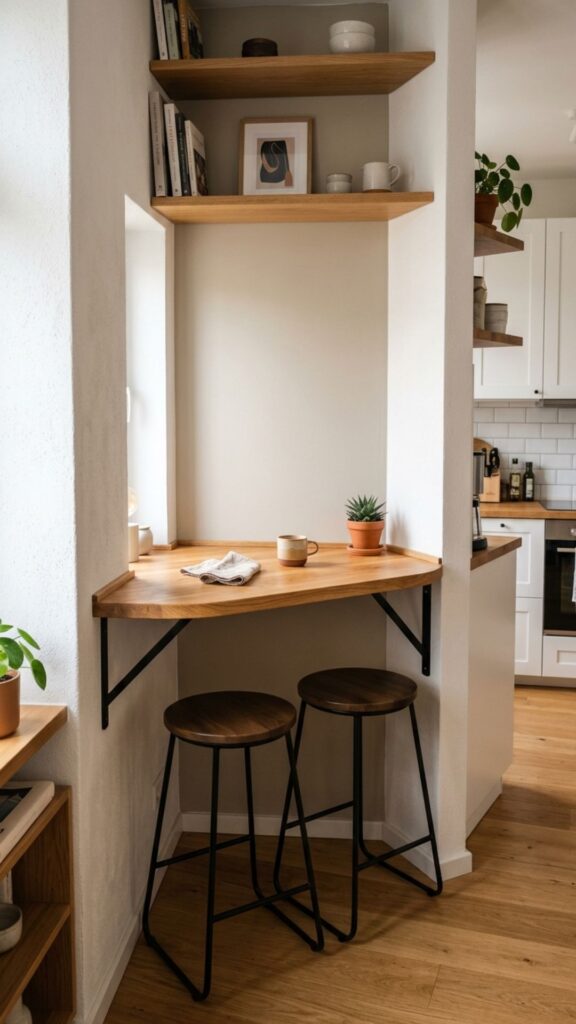
Sometimes the best kitchen bar idea is one designed for your exact layout. If your kitchen has odd corners, low windows, tight walkways, or unusual walls, a custom solution may help you use the space better than any off-the-shelf piece.
Custom does not always mean expensive. Even a made-to-measure countertop with simple brackets can solve a tricky design problem. If standard options have not worked, a tailored kitchen bar may be the smartest way to create a small-space kitchen that truly fits.
How to Choose the Best Kitchen Bar for Your Space
Before you pick a style, measure carefully. Make sure there is enough room to move around stools and walk comfortably through the kitchen. In most small spaces, a slimmer bar with compact seating works better than a bulky design.
Also think about how you will use it most. If you need storage, prioritize shelves or cabinets. If you want a casual dining spot, focus on comfort and legroom. The best kitchen bar is not just the one that looks great. It’s the one that solves a real need in your home.
Conclusion
A smart kitchen bar can transform a small kitchen without requiring a huge renovation. From fold-down counters to narrow peninsulas and rolling islands, there are many ways to add style, seating, and function in a limited footprint. The right choice depends on your layout, your routine, and how much flexibility you need.
If you’re planning a small kitchen update, start with the idea that matches your biggest need, whether that’s storage, dining space, or better flow. A thoughtful kitchen bar can make your kitchen feel more useful, more inviting, and much easier to enjoy every day.
What is the best kitchen bar for a very small kitchen?
The best option for a very small kitchen is usually a wall-mounted or fold-down kitchen bar. These designs save floor space and still give you a place to eat, work, or prep food.
How much space do you need for a kitchen bar?
It depends on the layout, but you should leave enough room for stools and for people to walk by comfortably. In small kitchens, slim counters and backless stools are often the easiest fit.
Can a kitchen bar replace a dining table?
Yes, a kitchen bar can replace a dining table in many small homes. It works especially well for one or two people and can free up space for storage or better movement.
What stools work best with a small kitchen bar?
Backless stools are often the best choice because they tuck fully under the counter. This helps keep the room open and makes the kitchen bar feel less bulky.
Is a kitchen bar a good idea for renters?
Yes, renters can use temporary or movable options such as rolling islands, narrow freestanding bars, or fold-down tables if allowed. These ideas add function without requiring a full remodel.