A courtyard doesn’t need to be big to feel special. Some of the most beautiful outdoor spaces I’ve helped design were tucked between city walls, no wider than a parking spot. With the right approach, that little patch of concrete or brick can become the calmest corner of your home.
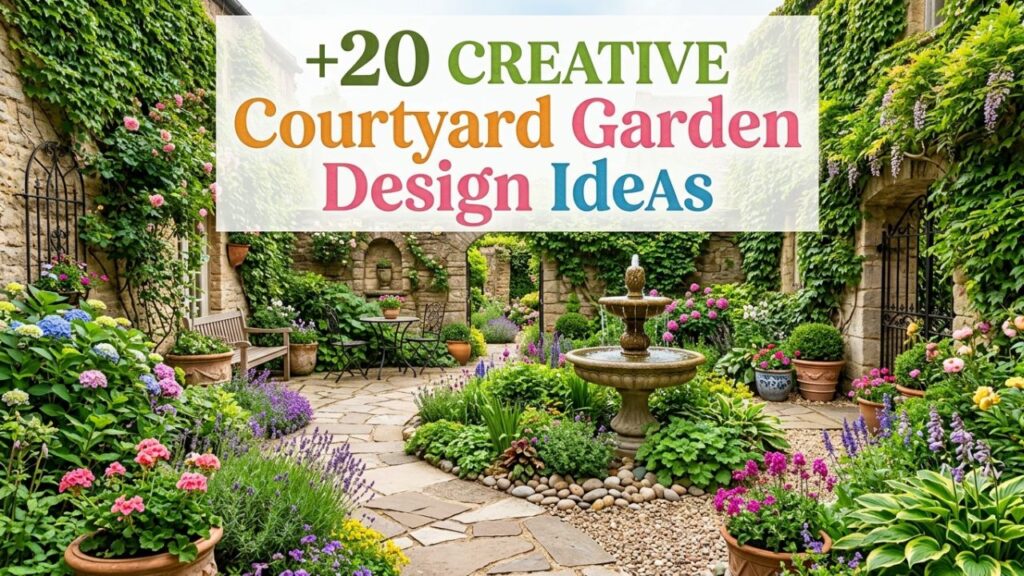
Over the years, I’ve worked with homeowners who thought their space was too small, too shaded, or too plain to bother with. Every single one of them was wrong.
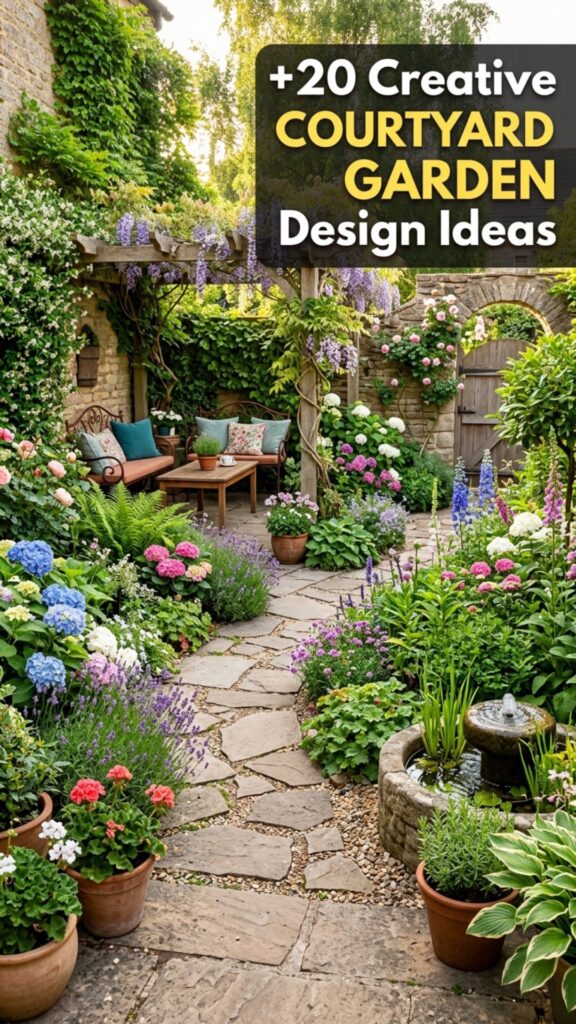
Below, you’ll find 20 courtyard garden design ideas that work in real urban settings, with practical tips you can actually use. Whether you want a leafy retreat, a spot for dinner parties, or a low-maintenance green escape, there’s something here for you.
1. Go Vertical With Living Walls
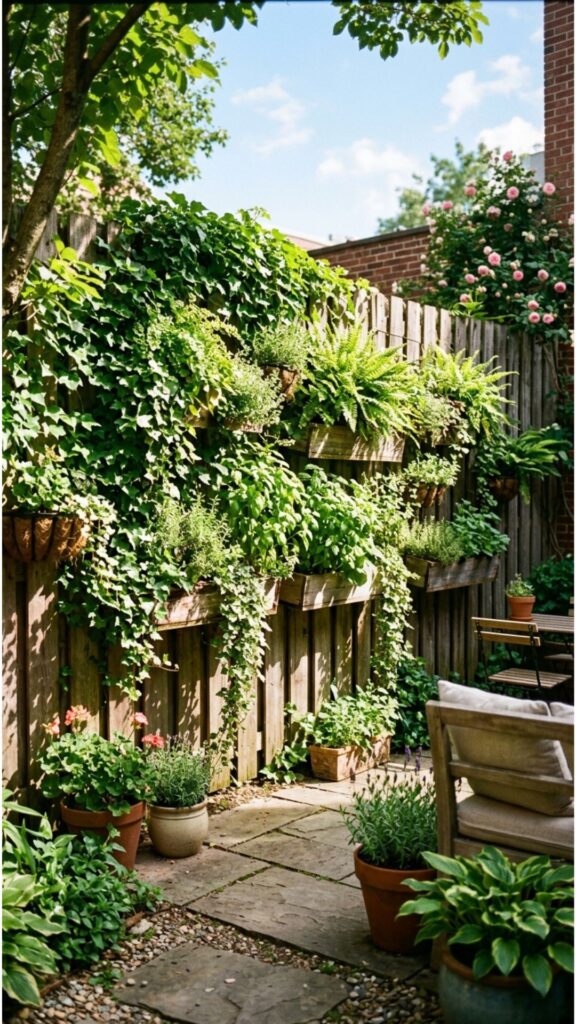
When floor space runs out, look up. A living wall packs dozens of plants into a footprint smaller than a doormat. Mount modular planters or felt pockets on a sunny fence, then fill them with ferns, herbs, or trailing ivy for instant greenery.
Living walls also soften hard surfaces and muffle street noise, which matters a lot in a busy city. Start small with one panel near a seating area, and add irrigation tubing so you’re not hauling a watering can every day.
2. Create a Cozy Reading Nook
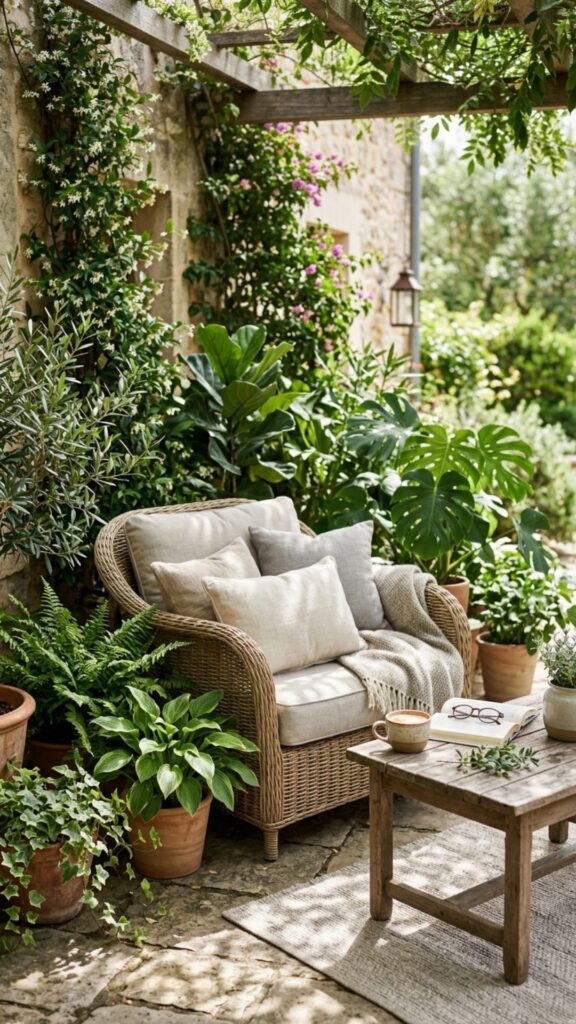
Every courtyard deserves a spot that invites you to slow down. Tuck a weatherproof bench or a single armchair into a corner, then wrap it with potted plants for a sense of shelter. A small side table for your coffee finishes the scene.
Add a canopy, umbrella, or pergola overhead to make the nook usable even on bright afternoons. String a few outdoor cushions in fade-resistant fabric, and you’ve got a private hideaway just steps from your door.
3. Layer Plants for Depth
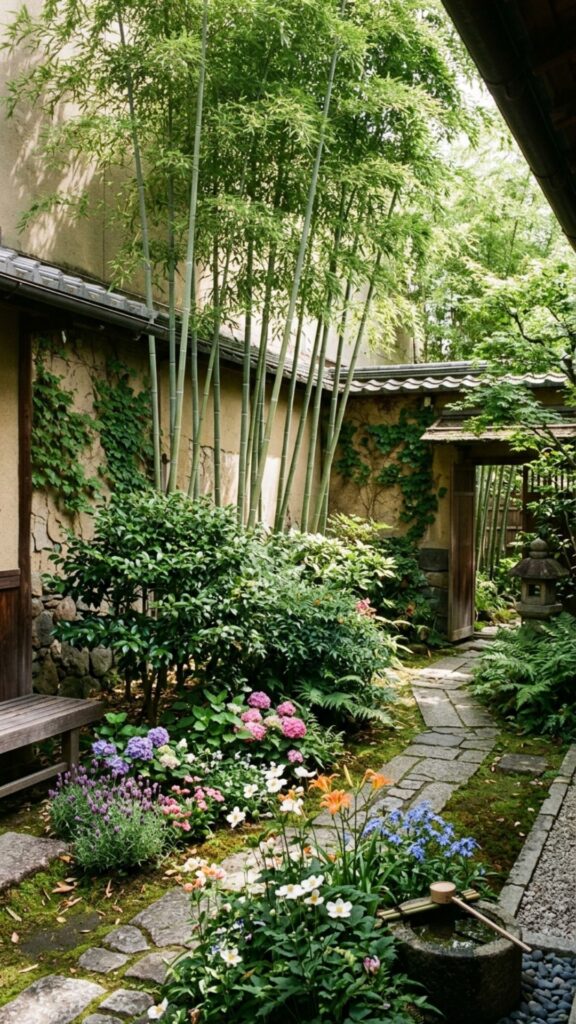
Flat, single-height planting makes a courtyard feel smaller. Instead, stack your greenery in layers. Place tall plants like bamboo or a slender tree at the back, medium shrubs in the middle, and low groundcover or flowers up front.
This trick fools the eye into seeing more space than there is. It also gives you year-round interest, since different plants peak in different seasons. Mix leaf shapes and textures so the arrangement stays lively even when nothing is in bloom.
4. Install a Small Water Feature
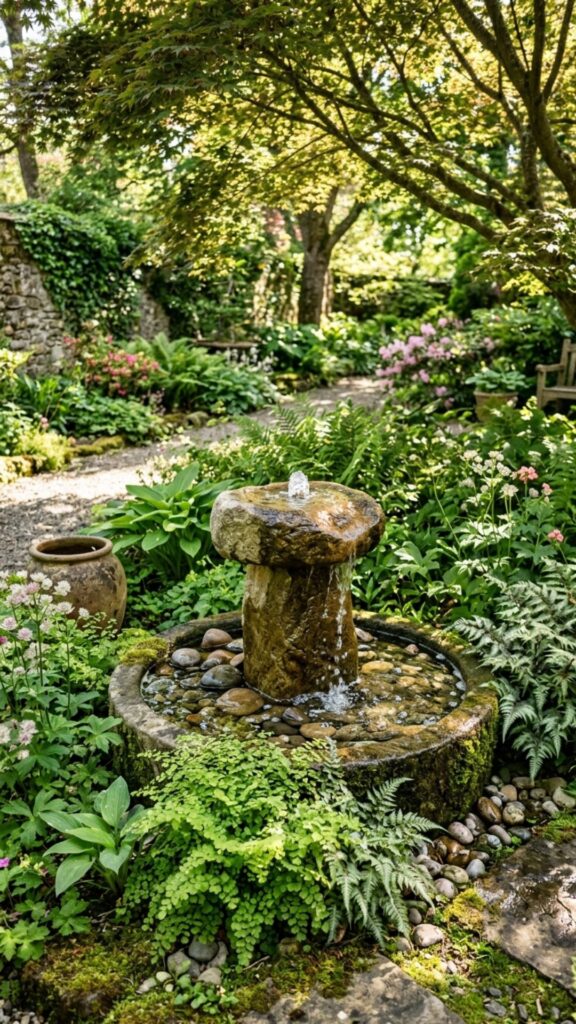
Nothing masks traffic noise quite like moving water. A compact fountain, a bubbling urn, or a wall-mounted spout brings a gentle sound that instantly relaxes the space. You don’t need plumbing, since many models simply recirculate from a hidden reservoir.
Water features also attract birds, which adds life and movement to your courtyard. Choose a size that fits your scale, a bowl fountain suits tiny spaces, while a slim rill works well along one edge of a larger yard.
5. Use Mirrors to Expand the Space
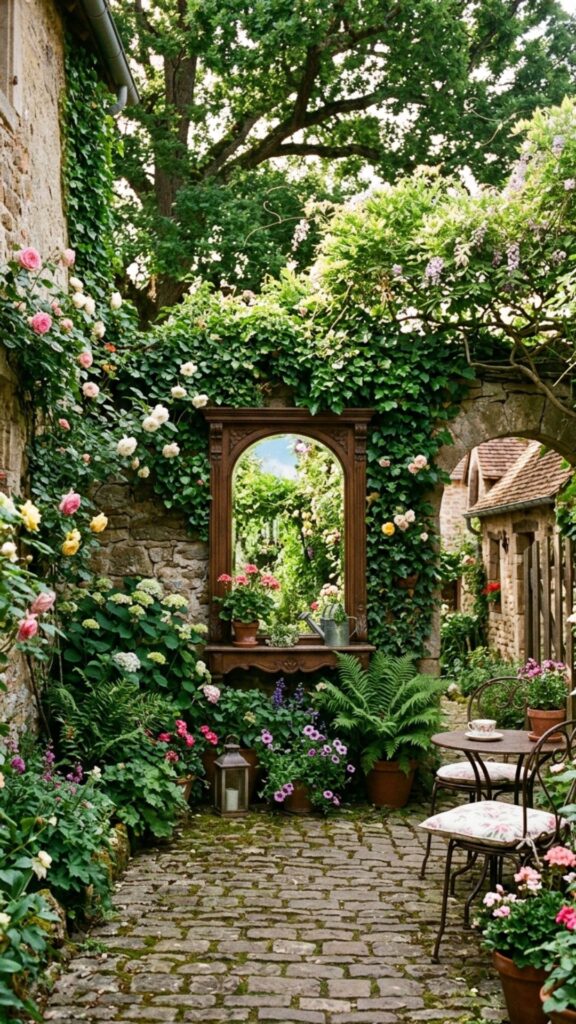
Mirrors aren’t just for indoors. An outdoor-rated mirror on a wall reflects light and greenery, making a cramped courtyard feel twice its size. Position it to catch a view of your best plants for the strongest effect.
Frame the mirror like a window or gate to make the illusion convincing. Just avoid pointing it straight at bright sun, which can scorch nearby leaves. A shaded wall usually gives the best, safest result.
6. Plant a Container Herb Garden
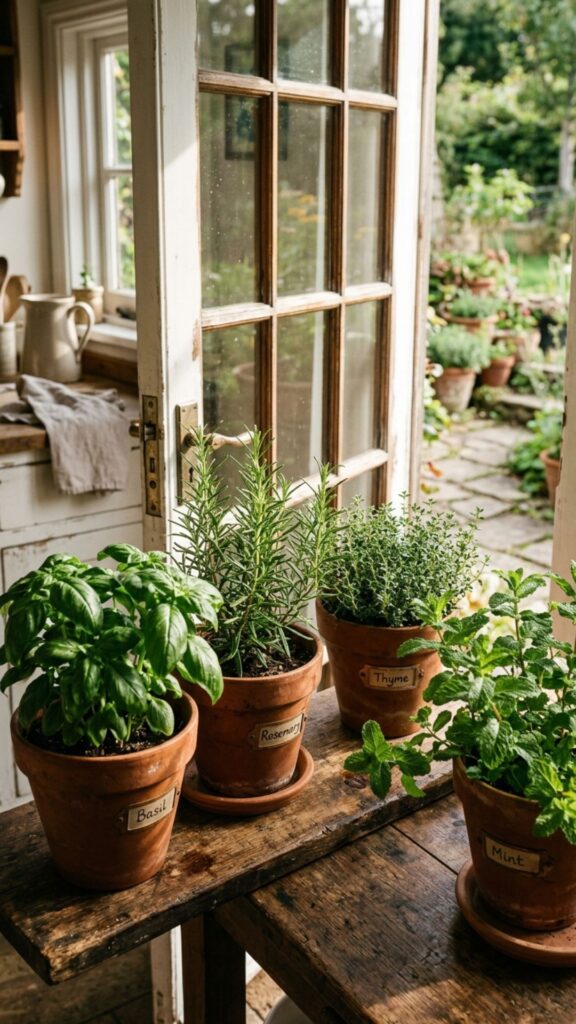
Fresh herbs steps from your kitchen are one of the great joys of courtyard living. Group pots of basil, rosemary, thyme, and mint on a sunny shelf or windowsill. Most herbs are forgiving and thrive in small containers.
Keep mint in its own pot, though, since it spreads aggressively and will crowd out neighbors. Snip regularly to keep plants bushy, and you’ll have flavor for cooking plus a wonderful scent every time you brush past.
7. Add Warm Ambient Lighting
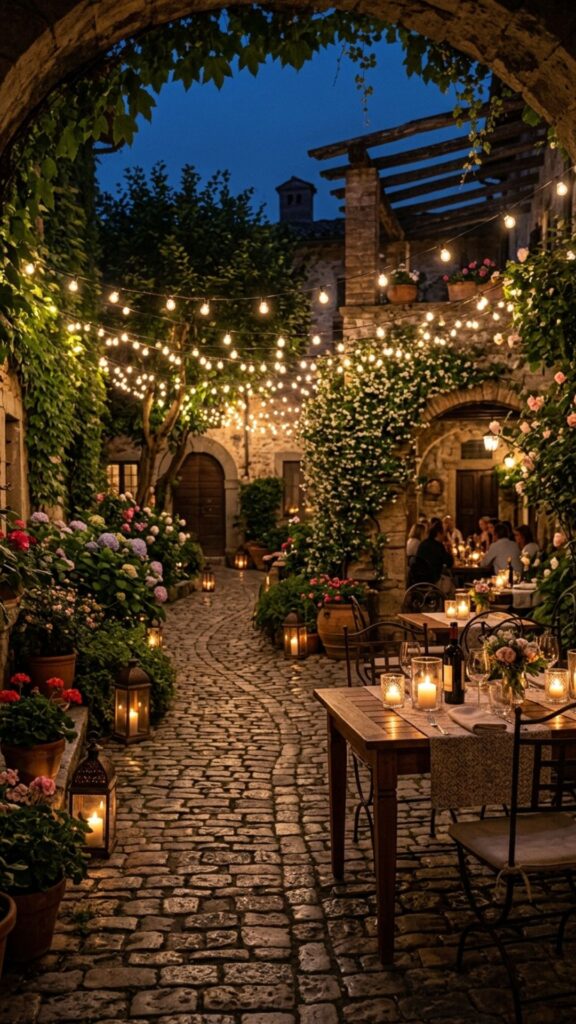
Good lighting turns a daytime courtyard into an evening destination. Skip harsh floodlights and choose soft, layered sources instead. Warm-toned string lights overhead, a few lanterns on the ground, and a candle or two create a magical glow.
Solar-powered fixtures are perfect here because they need no wiring and switch on automatically at dusk. Aim for pools of light rather than one bright blast, which keeps the mood relaxed and highlights your favorite features.
8. Choose a Statement Tree
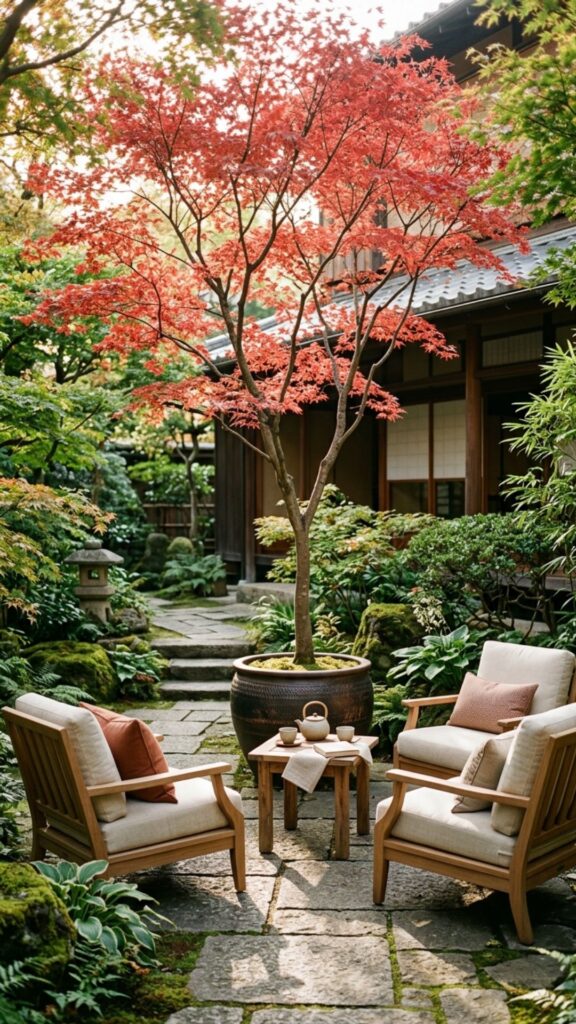
A single well-placed tree anchors the whole courtyard. Compact varieties like Japanese maple, olive, or a dwarf citrus offer shade, structure, and a focal point without overwhelming a small area. Plant it in a large container if your ground is paved.
A tree also brings vertical interest and seasonal change, from spring blossom to autumn color. Pick a species suited to your climate and sunlight, and check its mature size so it won’t outgrow the space in a few years.
9. Build Raised Garden Beds
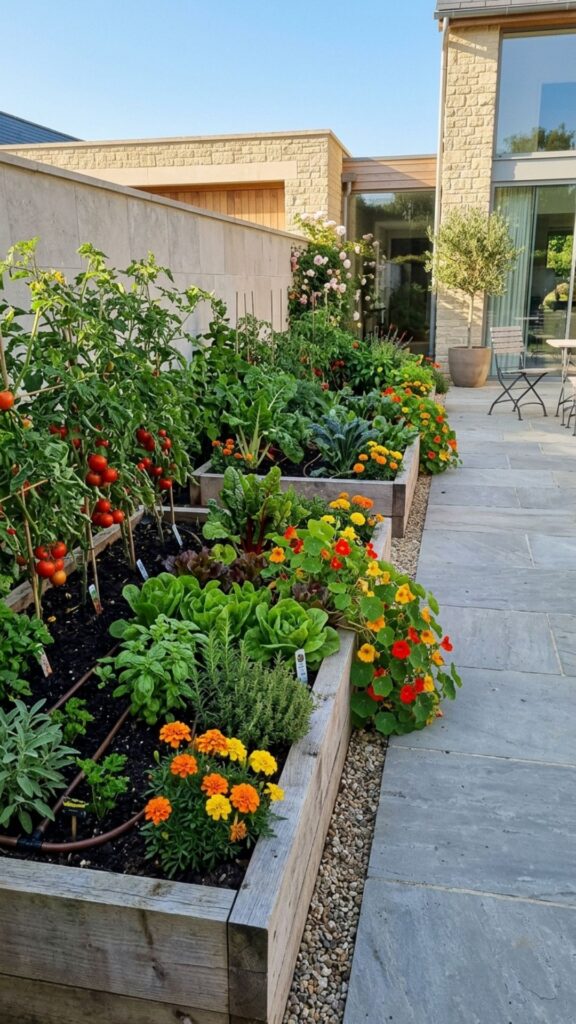
Raised beds bring order and easy access to a courtyard. Build them from timber, brick, or corten steel to match your style, then fill them with vegetables, flowers, or a mix. Waist-high beds are especially kind on your back.
Beds also solve poor-soil problems common in city courtyards, where you’re often working over old concrete. Fill them with quality compost and you control exactly what your plants grow in. Line the interior to protect the walls from moisture.
10. Define Zones for Different Uses
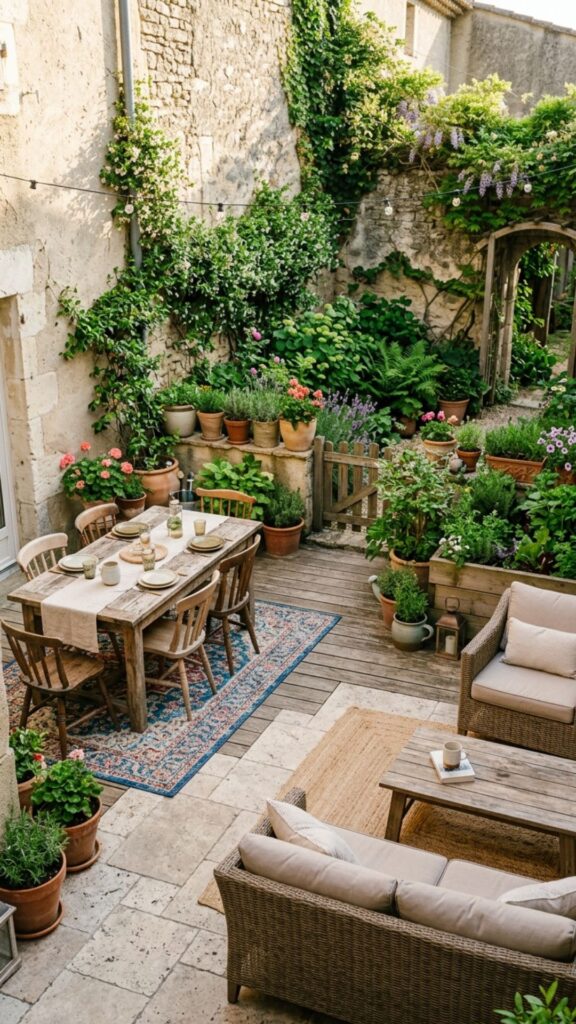
Even a small courtyard works harder when you divide it into zones. Mark out one area for dining, another for lounging, and maybe a slim strip for planting. Different flooring, a rug, or a low planter can signal where one zone ends and another begins.
Zoning makes the space feel intentional and larger, not cluttered. Think about how you actually spend time outside, then design around those habits. A morning-coffee corner and an evening-dinner spot can share the same courtyard beautifully.
11. Embrace Climbing Plants
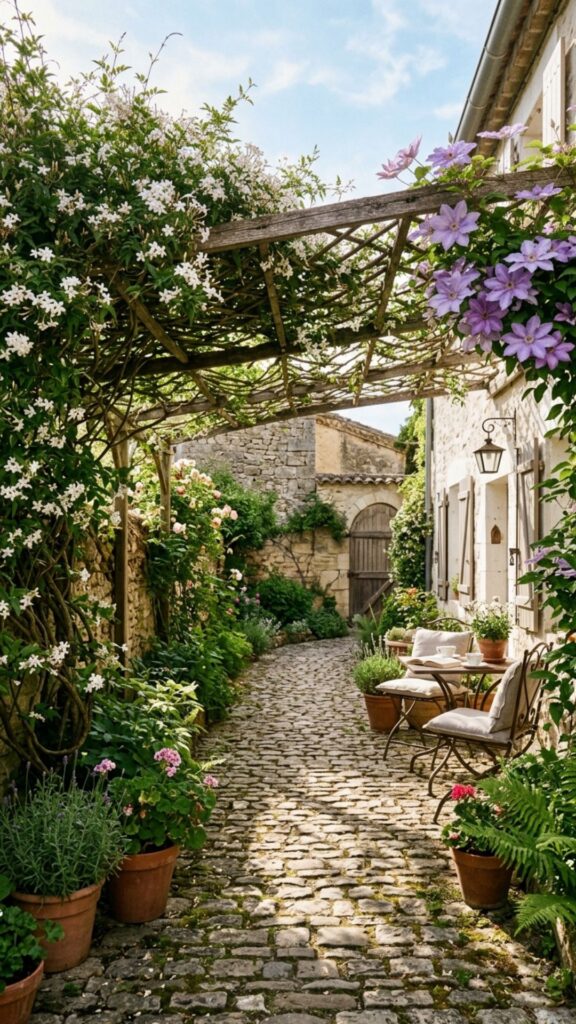
Bare walls are wasted potential. Train climbers like jasmine, clematis, or star jasmine up a trellis to add lush greenery without giving up floor space. Fragrant varieties fill the air with scent on warm evenings.
Fix a sturdy support a few inches off the wall so air can circulate behind the foliage. Guide new shoots as they grow, and within a season or two you’ll have a living green backdrop that changes with the calendar.
12. Pick Weather-Resistant Furniture
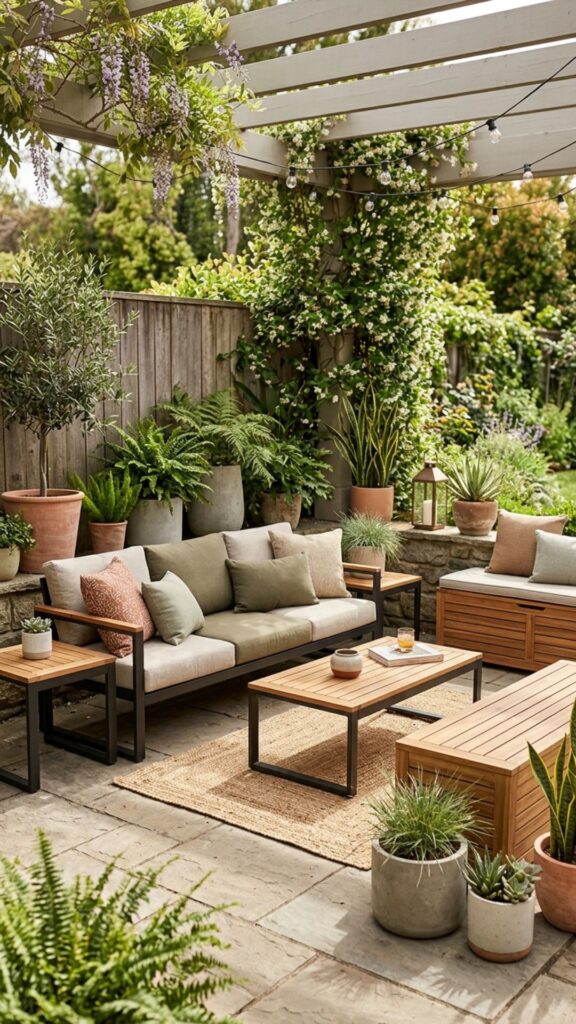
Furniture takes a beating outdoors, so choose materials built to last. Powder-coated aluminum, teak, and quality resin wicker all handle rain and sun without falling apart. Fold-away or stackable pieces are smart for tight spaces.
Scale matters as much as durability. Bulky sofas swallow a small courtyard, so opt for slim profiles and pieces that pull double duty, like a storage bench or a table that doubles as a planter stand. Comfort keeps you coming back outside.
13. Add a Splash of Color With Tiles
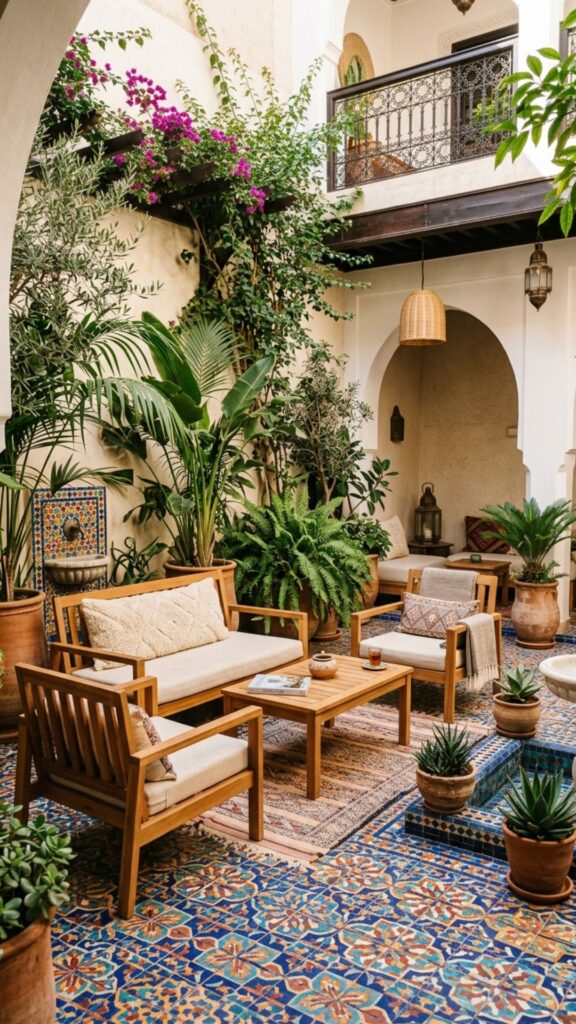
Flooring sets the tone for the whole courtyard. Patterned or brightly colored tiles bring instant personality and hide the plain concrete underneath. Moroccan-style or terracotta tiles are popular for a warm, welcoming feel.
If replacing the whole floor feels like too much, tile just one section as a feature or use an outdoor rug instead. Color on the ground draws the eye and can make a shaded courtyard feel sunnier and more cheerful.
14. Grow Vegetables in Small Spaces
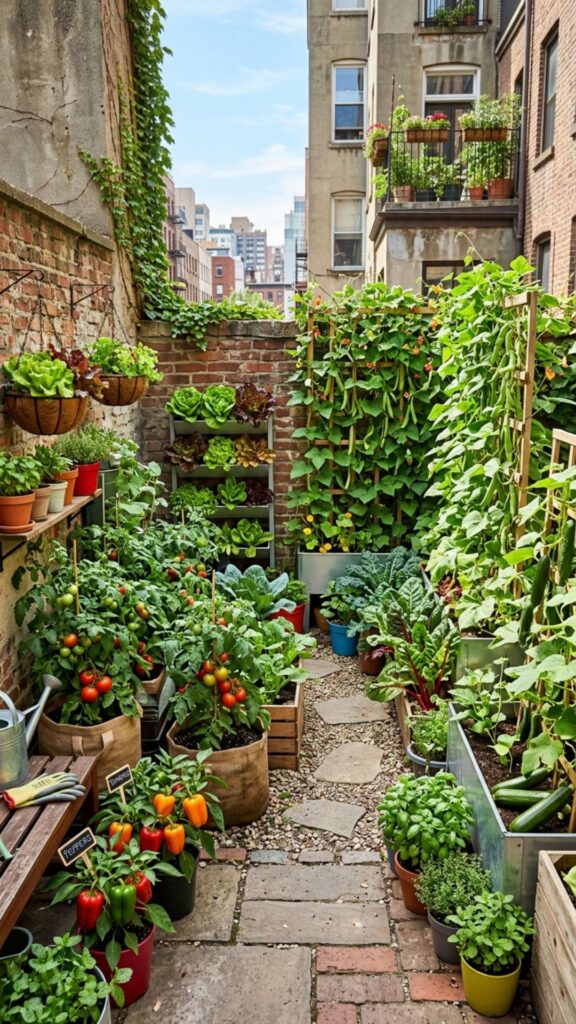
You don’t need a big plot to grow your own food. Tomatoes, peppers, lettuce, and beans all thrive in pots and grow bags on a sunny courtyard. Vertical planters and hanging baskets stretch your growing space even further.
Position edibles where they’ll get at least six hours of sun a day. Water consistently, since containers dry out faster than garden soil, and feed regularly through the season. Harvesting your own salad in the heart of the city is deeply satisfying.
15. Create Privacy With Screens
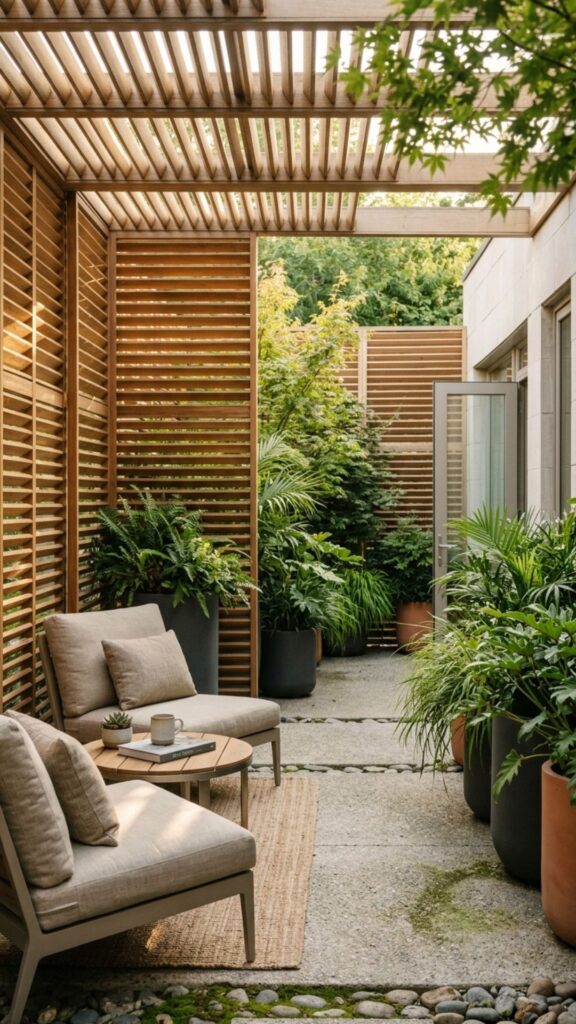
City courtyards often sit close to neighbors. Screens restore your sense of seclusion without making the space feel boxed in. Slatted timber panels, bamboo screens, or a row of tall planters block sightlines while still letting light through.
Combine screening with climbing plants for a softer, greener barrier. Position screens where overlooking is worst rather than walling off the entire space. The goal is comfort and calm, not a fortress.
16. Use Reflective and Light Colors
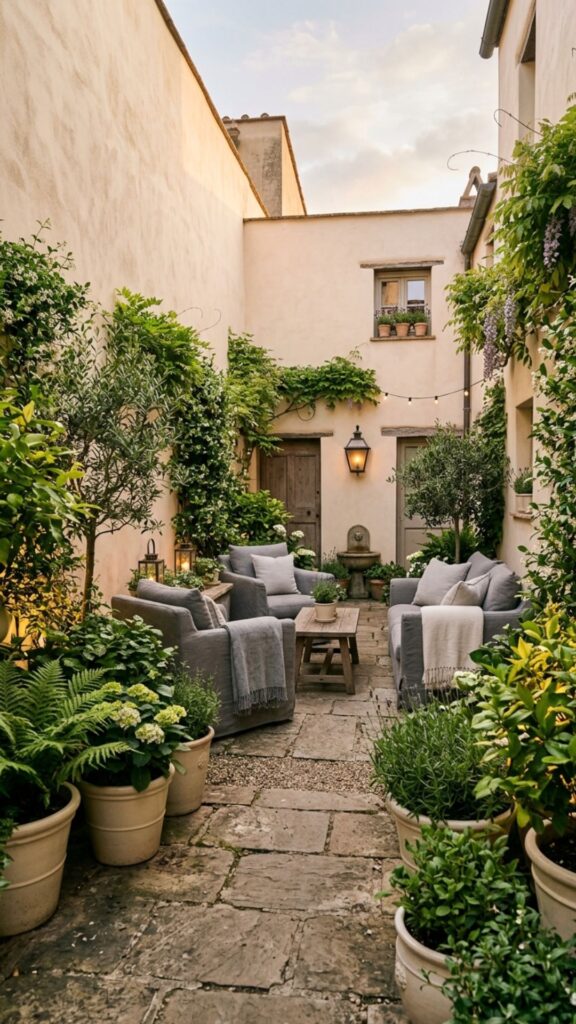
Dark walls absorb light and can make a small courtyard feel gloomy. Painting surfaces in pale, warm tones bounces light around and instantly brightens the space. White, cream, and soft grey are reliable choices.
Light colors also make plants pop against the background. If you rent and can’t paint, use light-colored planters, furniture, and cushions to achieve a similar effect. Every bit of reflected light makes the area feel more open.
17. Design a Low-Maintenance Gravel Garden
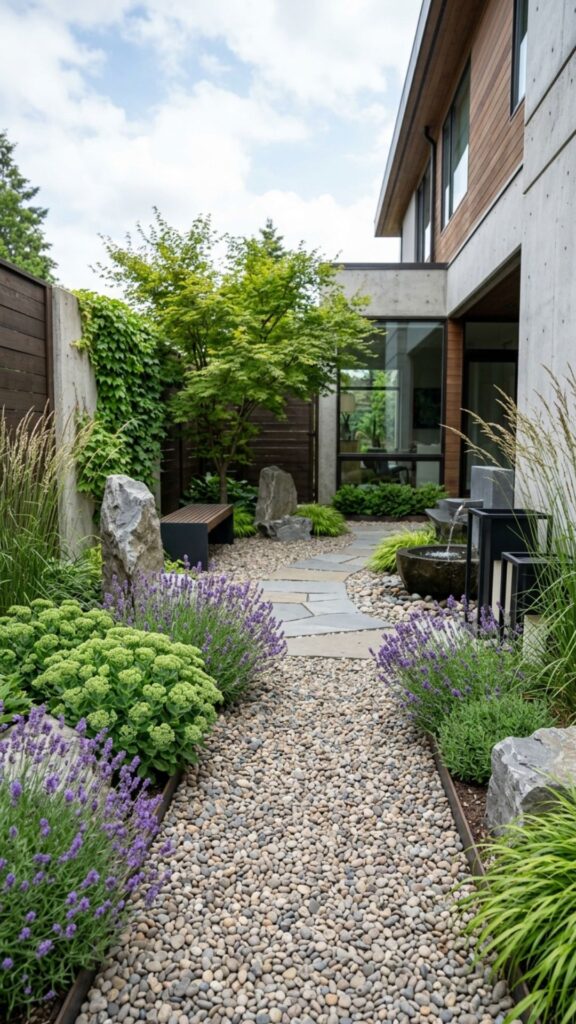
Not everyone wants to fuss over plants every weekend. A gravel garden delivers style with very little upkeep. Spread decorative gravel over a weed membrane, then dot it with drought-tolerant plants like lavender, sedum, and ornamental grasses.
Gravel drains well, suppresses weeds, and adds a pleasant crunch underfoot. Add a few large stones or a sculpture for structure. This approach suits busy urbanites who want greenery without a demanding routine.
18. Hang Baskets and Wall Planters
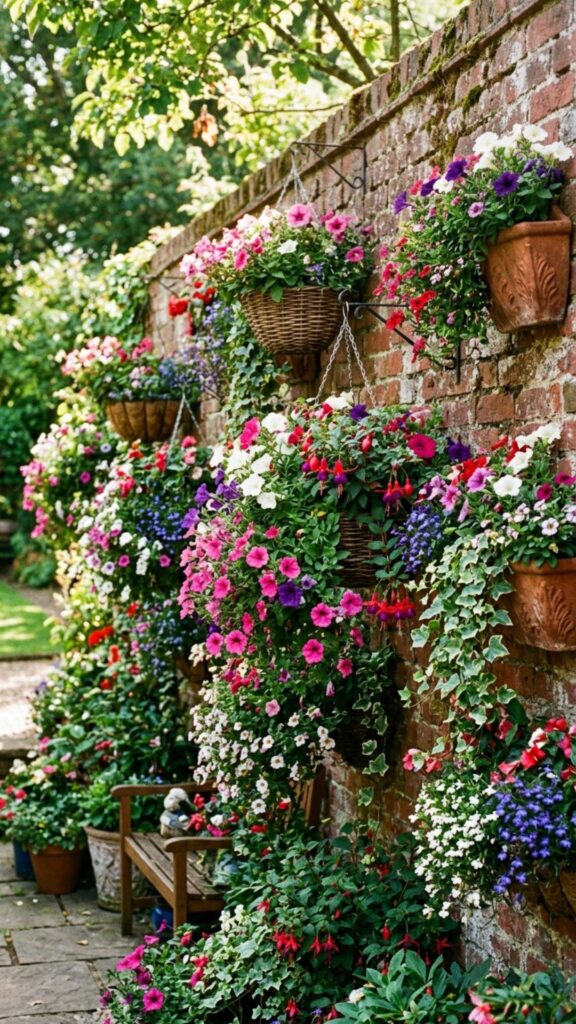
When the floor is full, the walls and overhead space are still fair game. Hanging baskets and wall-mounted planters add cascading color at eye level and above. Trailing plants like petunias, fuchsia, and ivy look stunning spilling over the edges.
Use a mix of heights to create a layered, three-dimensional display. Line baskets to retain moisture, since they dry quickly in sun and wind. A few well-placed hangers can transform a bare wall into a flowering feature.
19. Incorporate a Fire Feature
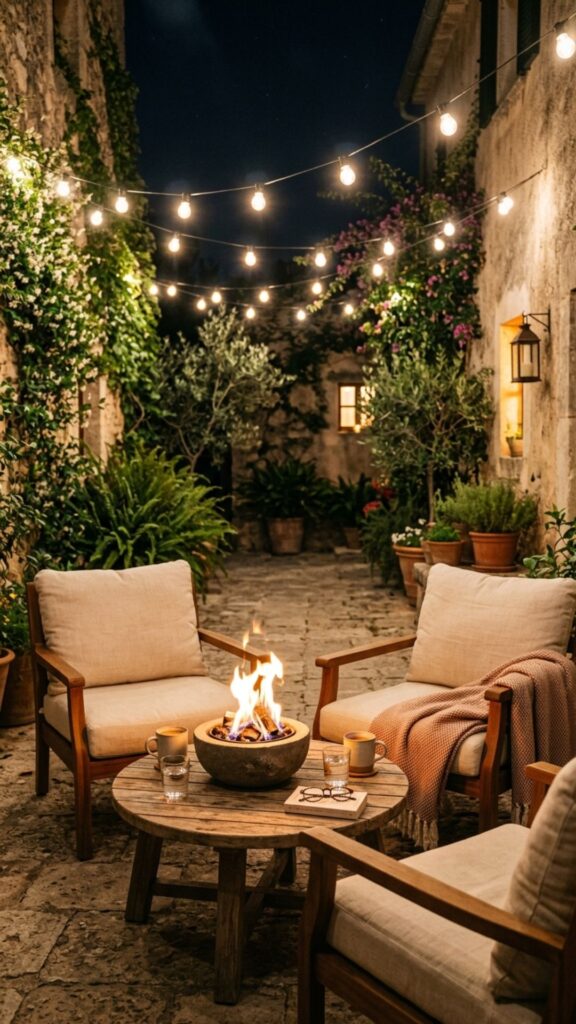
A fire pit or tabletop fire bowl extends your courtyard’s use well into cooler evenings. The warmth and flicker draw people in and make the space feel welcoming year-round. Choose a compact, portable model for smaller areas.
Always check clearances from walls and overhanging plants, and pick a bioethanol or gas model if smoke would bother close neighbors. Pair it with a ring of comfortable seating, and your courtyard becomes the natural gathering spot after dark.
20. Add Personal Touches and Art
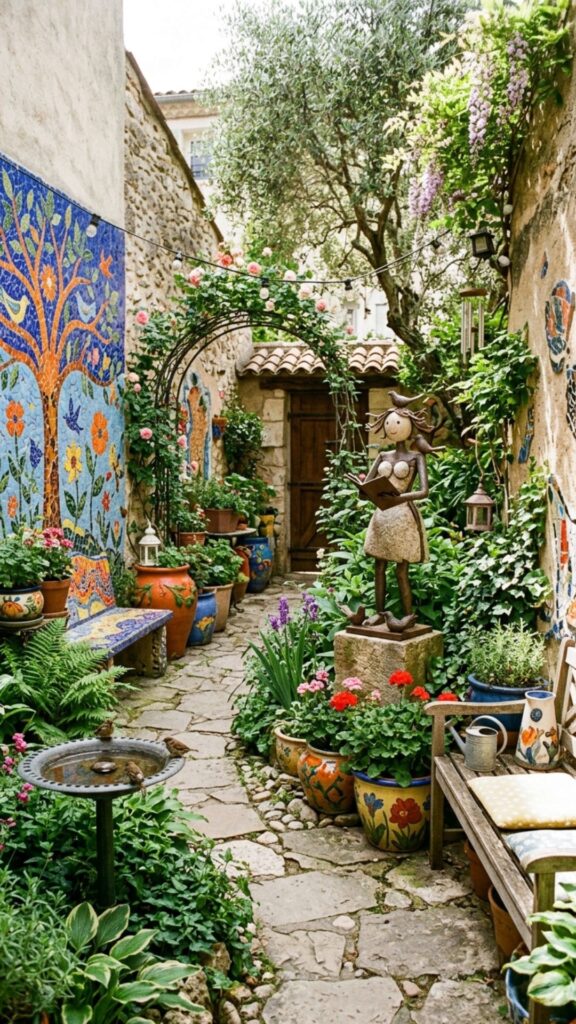
The best courtyards feel like an extension of your home, not a generic patio. Weatherproof art, a collection of interesting pots, or a handmade sculpture gives the space character that’s uniquely yours. Small details make a big difference.
Mix in items with meaning, a piece picked up on holiday, a family heirloom planter, or a birdhouse you built yourself. These finishing touches turn a well-designed space into one that genuinely feels like you.
Bring Your Courtyard to Life
A courtyard garden is proof that great outdoor spaces have nothing to do with square footage. Whether you go vertical, add water, or simply layer a few clever containers, small changes add up to a place you’ll want to spend time in every day.
Pick two or three ideas from this list that suit your space and start there. You don’t have to do everything at once, gardens grow best in stages, and so do the ones we love most. Grab a notebook, sketch your courtyard, and take the first step this weekend. Your future favorite spot is waiting.
What is the best plant for a small courtyard garden?
For most small courtyards, compact and shade-tolerant plants work best. Ferns, boxwood, hostas, and Japanese maple thrive in tight, partly shaded urban spaces. For sunny courtyards, lavender, olive trees, and ornamental grasses are excellent low-maintenance choices.
How do I make a small courtyard look bigger?
Use light-colored walls and flooring, layer plants by height, and add an outdoor mirror to reflect greenery and light. Keeping furniture slim and dividing the space into clear zones also makes a small courtyard feel more open and larger than it is.
How much does a courtyard garden cost to design?
Costs vary widely based on size and materials. A simple DIY refresh with containers and lighting can cost a few hundred dollars, while a full professional redesign with paving, planting, and water features can run into the thousands. Starting with containers keeps costs low.
What can I plant in a shaded courtyard?
Shaded courtyards suit ferns, hostas, hydrangeas, ivy, and impatiens. These plants tolerate low light and still add lush greenery and color. Choose light-colored pots and reflective surfaces to brighten the area and help your shade-loving plants stand out.
Do courtyard gardens need much maintenance?
It depends on your design. Gravel gardens and drought-tolerant planting need very little care, while vegetable beds and container displays require regular watering and feeding. Choosing hardy plants and adding drip irrigation keeps upkeep minimal even in a busy schedule.