Working from home has changed how people think about unused spaces in their houses. A basement that was once used for storage can become a comfortable, productive, and inspiring workspace with the right planning. Whether you have a small basement corner or a large finished area, thoughtful design choices can help create an office that feels professional and inviting.
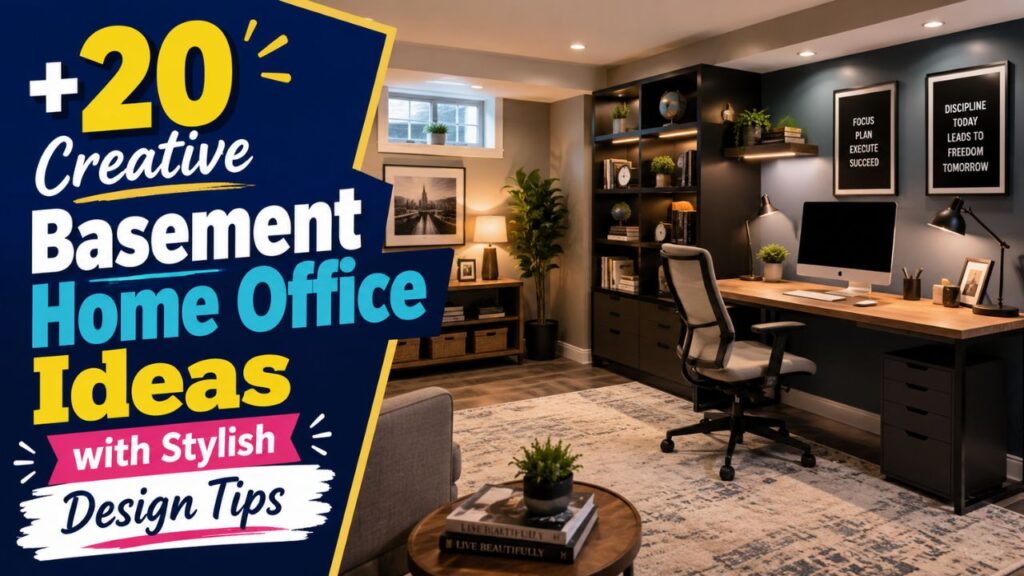
The best home office ideas basement designs focus on more than just placing a desk and chair. They consider lighting, storage, furniture placement, wall colors, comfort, and personal style.

In this guide, you will discover creative basement office ideas that can help you transform a lower-level room into a functional workspace that supports focus and creativity.
1. Create a Bright Basement Office with Natural Lighting
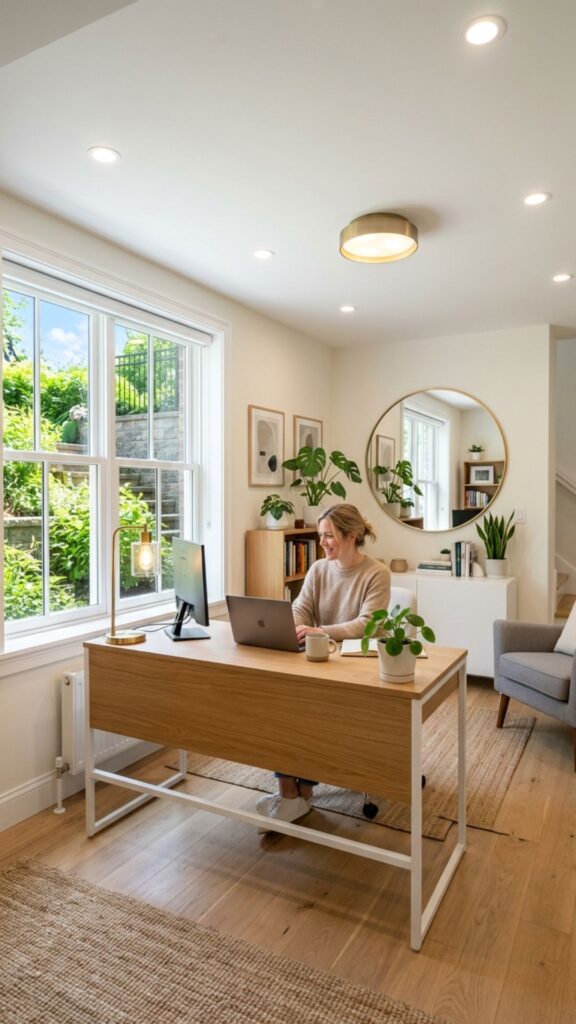
One of the biggest challenges of a basement workspace is limited natural light. A bright environment can improve mood, reduce eye strain, and make the office feel larger. If your basement has windows, arrange your desk near them to take advantage of available daylight.
For basements without large windows, combine different lighting sources. Use ceiling lights, desk lamps, and wall lighting to create a balanced atmosphere. Light-colored walls, mirrors, and reflective surfaces can also help distribute brightness throughout the room.
2. Design a Minimalist Basement Home Office
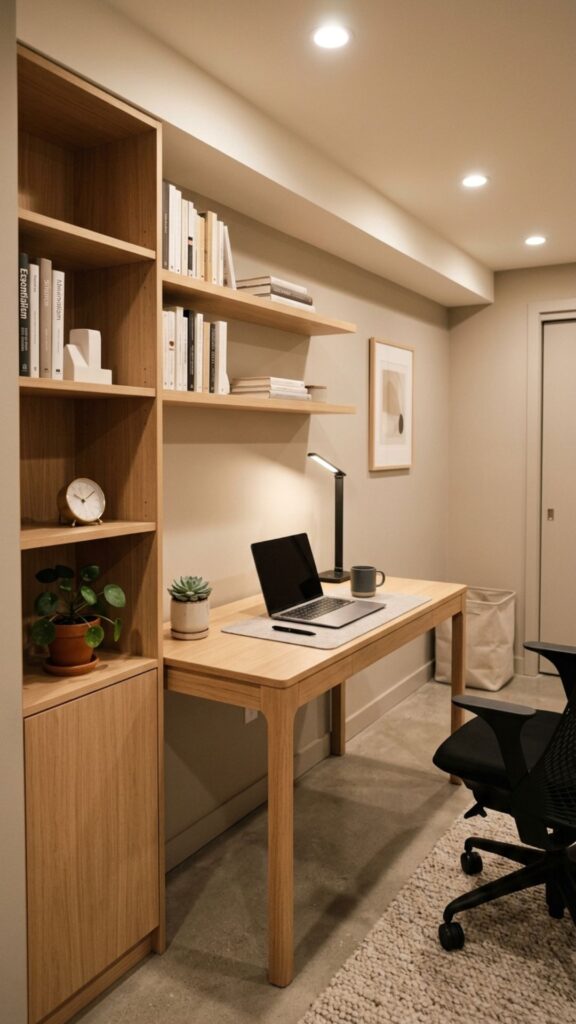
A minimalist design creates a clean environment where distractions are reduced. Choose simple furniture with practical features, such as a compact desk, comfortable chair, and organized storage units. Avoid overcrowding the space with unnecessary decorations.
Neutral colors like white, beige, gray, or soft earth tones can make a basement office feel calm and modern. Add a few personal touches, such as artwork, plants, or a stylish desk accessory, to create a workspace that feels comfortable without becoming cluttered.
3. Use Built-In Storage for Better Organization
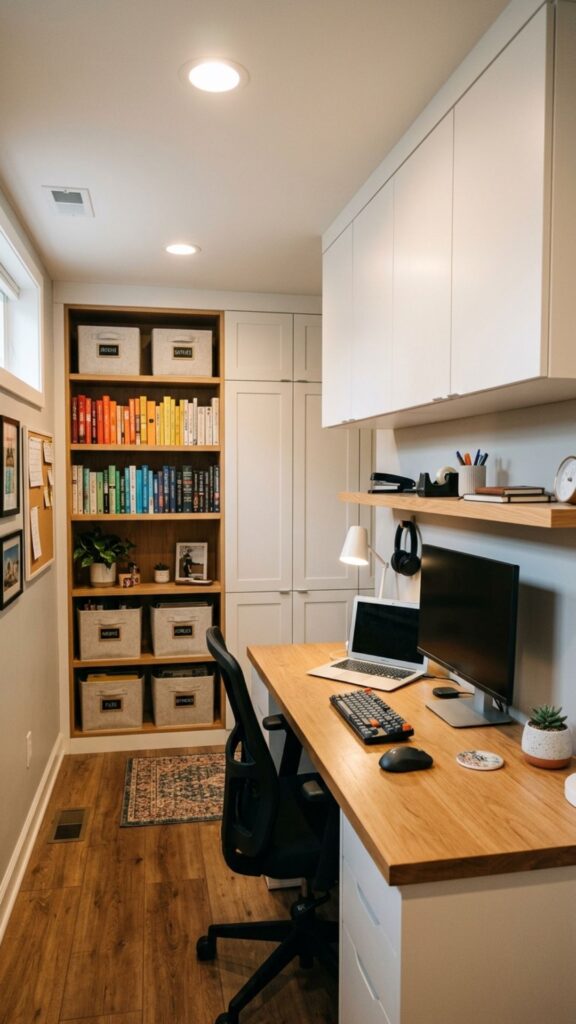
Storage is an important part of any productive workspace. A basement office often has unique walls or corners that can be used creatively for storage solutions. Built-in shelves, wall cabinets, and floating shelves help keep documents, books, and office supplies organized.
Good storage design also keeps the desk area clear. When everything has a dedicated place, it becomes easier to focus on important tasks and maintain a professional-looking office environment.
4. Add a Modern Industrial Basement Office Style
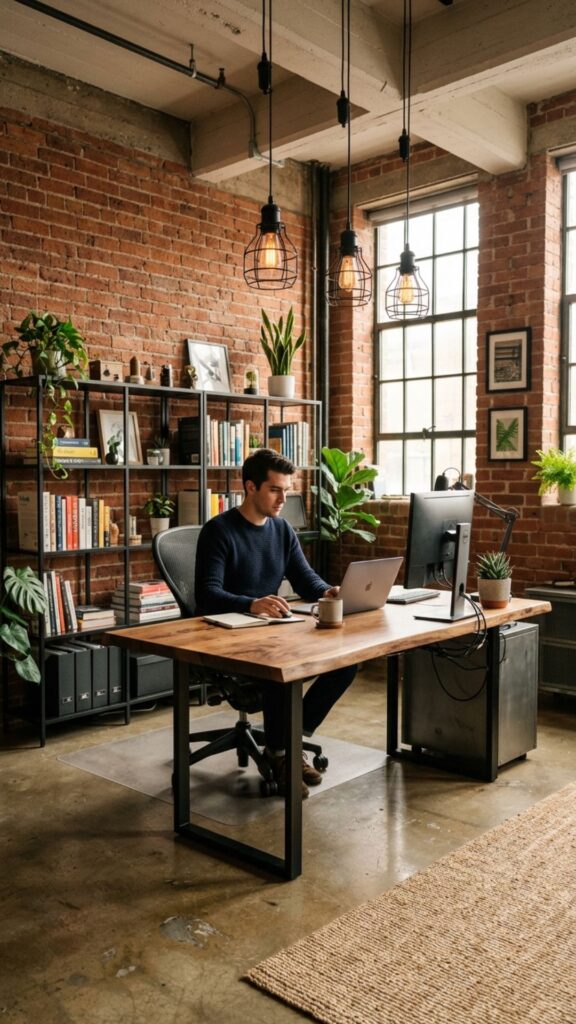
Basements naturally work well with industrial-inspired designs. Exposed brick walls, metal shelves, wooden furniture, and simple lighting fixtures can create a stylish and modern workspace.
This style works especially well for people who prefer a bold and creative environment. Combining warm wood textures with modern materials creates a balanced look that feels both professional and welcoming.
5. Create a Small Basement Office Corner
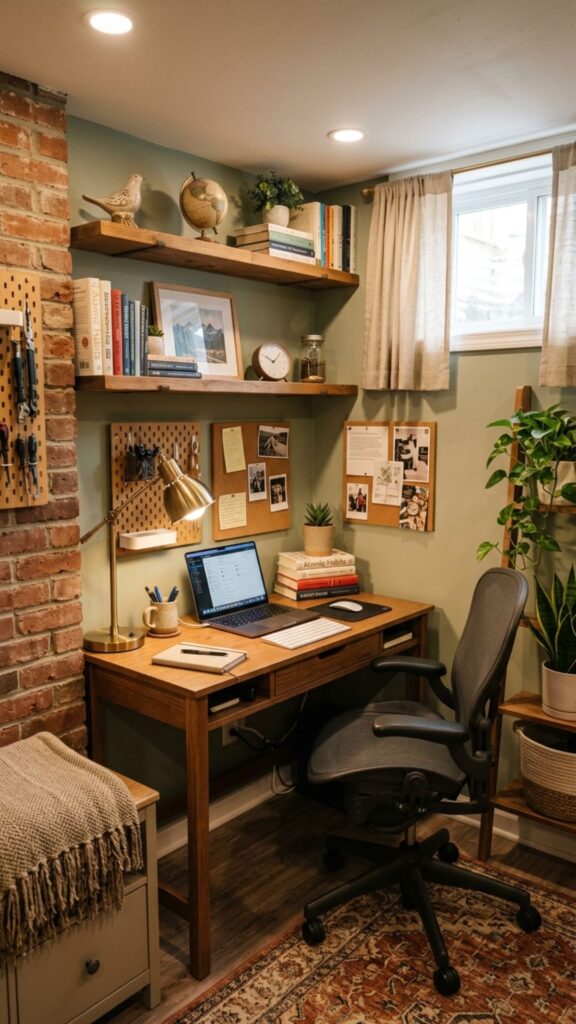
Not every basement needs a full renovation to become a workspace. A small corner can be transformed into an efficient office area with smart planning. A narrow desk, wall-mounted shelves, and a comfortable chair can create a practical setup.
For compact spaces, choose furniture that serves multiple purposes. Foldable desks, vertical storage, and cable management solutions can help maximize available space while keeping the area organized.
6. Build a Cozy Basement Workspace
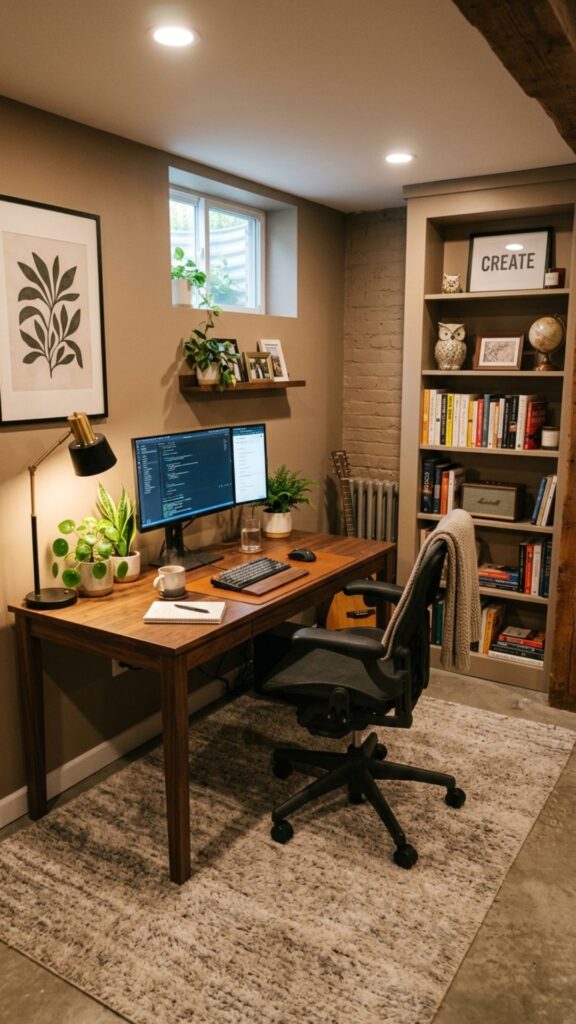
A basement office does not have to feel cold or plain. Adding comfortable elements can make the space more enjoyable for long working hours. Soft rugs, comfortable seating, warm lighting, and textured fabrics can create a cozy atmosphere.
Plants are another simple way to improve the appearance of a basement office. Greenery adds freshness, improves visual appeal, and helps create a more relaxing work environment.
7. Use Scandinavian Design Principles
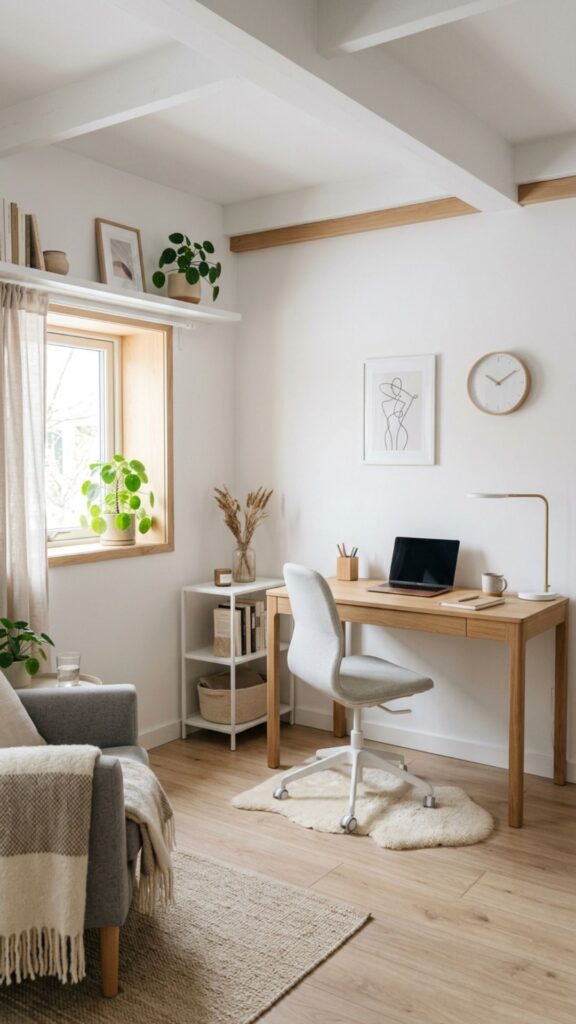
Scandinavian-style offices focus on simplicity, functionality, and comfort. This approach uses light colors, natural materials, clean furniture designs, and organized layouts.
A Scandinavian basement home office can feel spacious even when the area is limited. Wooden desks, white walls, soft lighting, and minimal decorations create a peaceful environment suitable for focused work.
8. Create a Dual-Purpose Basement Office
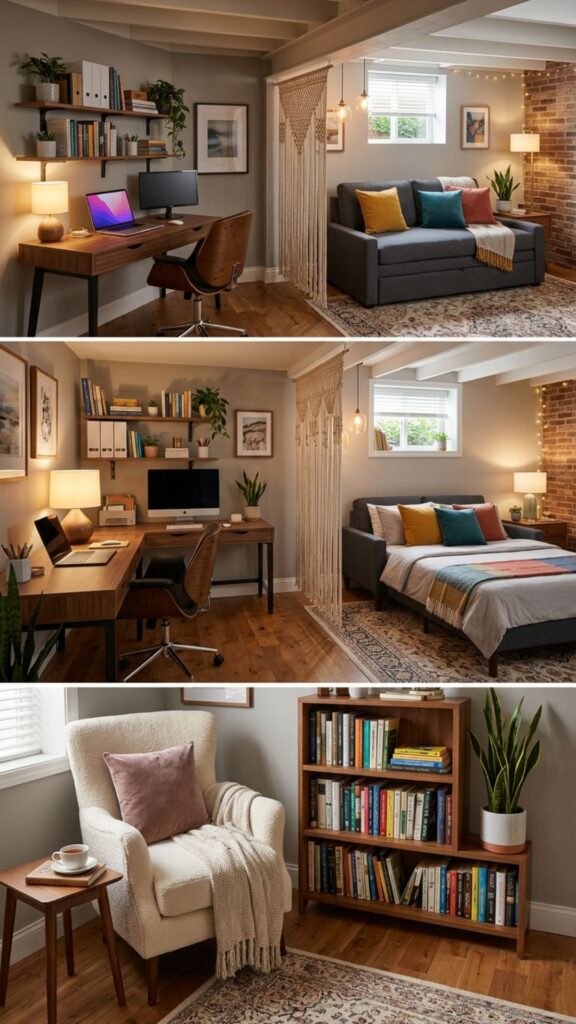
Many homeowners need their basement to serve multiple functions. A home office can share space with a guest room, reading area, hobby room, or entertainment zone when designed properly.
Use furniture placement to separate different areas. A bookshelf, room divider, or strategic desk position can create a clear workspace without requiring permanent walls.
9. Add a Feature Wall Behind Your Desk
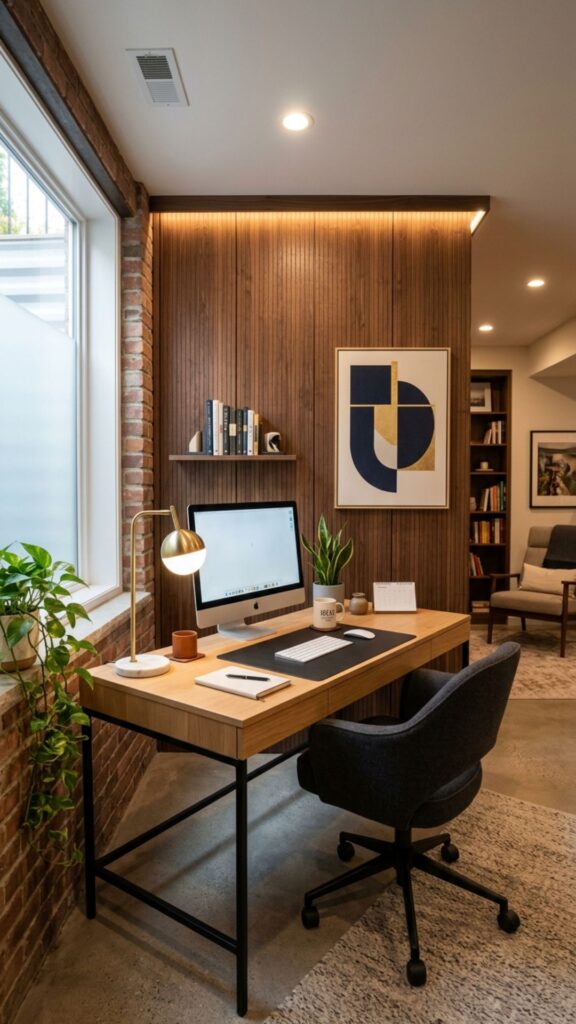
A feature wall can instantly improve the appearance of a basement office. Wallpaper, wooden panels, painted designs, or framed artwork can create a professional background for video meetings.
Choose a design that matches your personality and work style. A simple feature wall can make the office feel more complete while adding character to an otherwise plain basement area.
10. Choose Ergonomic Office Furniture
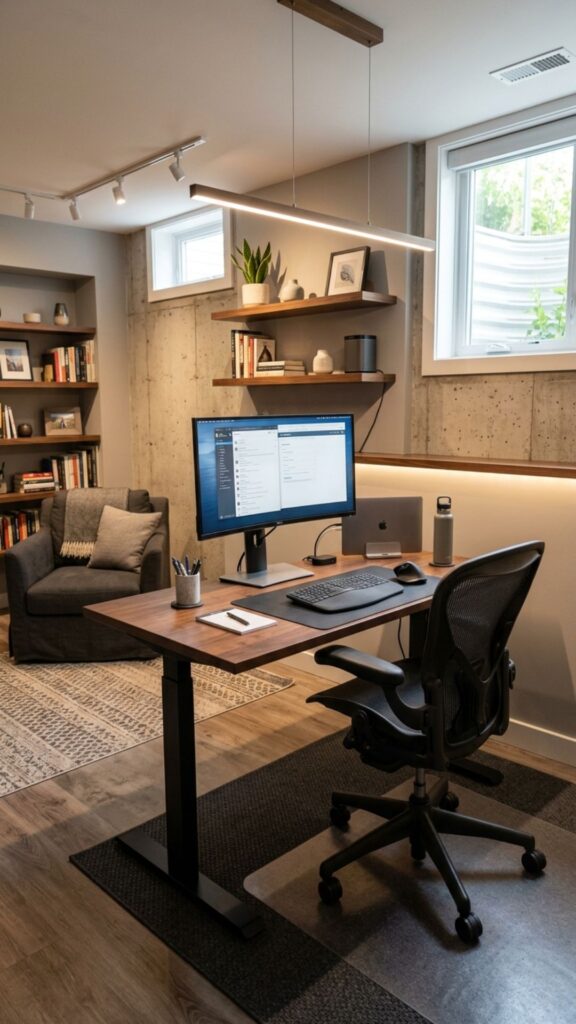
Comfort plays a major role in productivity. Spending hours at a desk requires furniture that supports good posture and reduces physical strain. An adjustable chair, proper desk height, and monitor positioning are essential.
Investing in ergonomic furniture is especially important for people who work remotely every day. A comfortable setup can improve concentration and make long work sessions easier.
11. Add Smart Technology Features
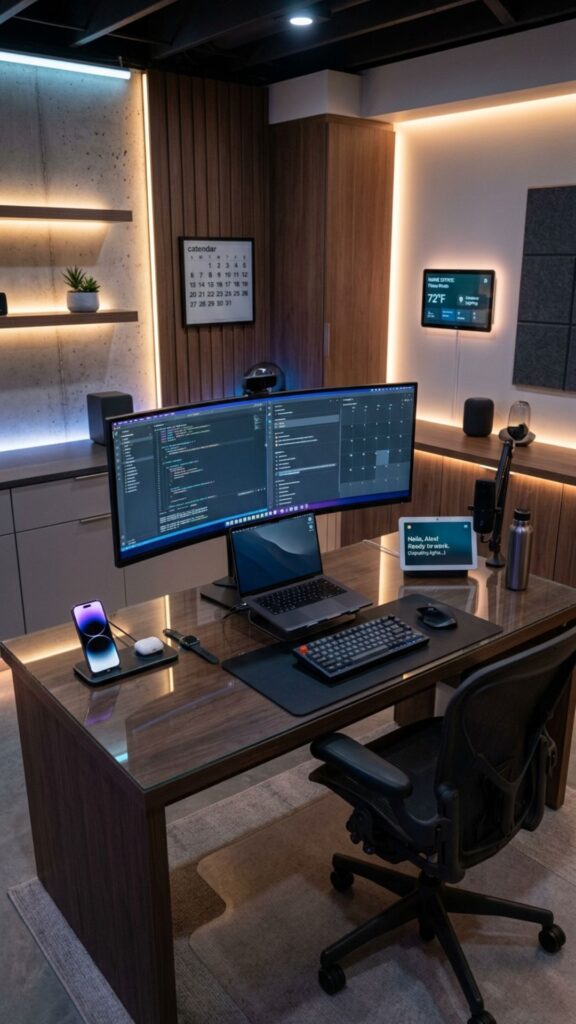
Modern basement offices can benefit from smart technology. Wireless charging stations, smart lighting controls, cable organizers, and efficient computer setups can improve convenience.
Technology should support your workflow rather than create distractions. A well-planned setup keeps devices organized and allows you to work efficiently.
12. Create a Professional Video Call Background
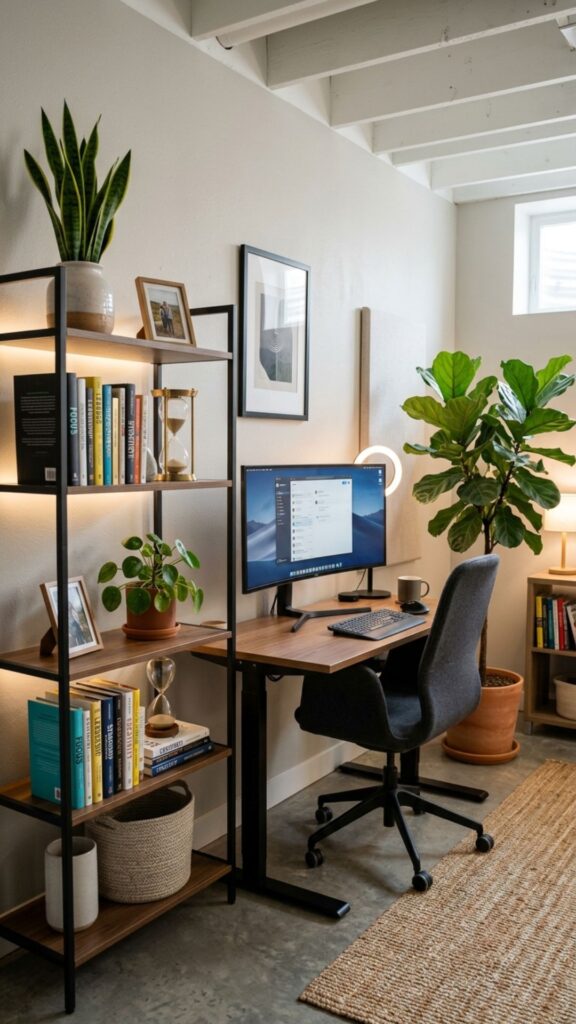
Remote meetings have become a regular part of many careers. Designing a professional background can help create a better impression during online meetings.
Place your desk against a clean wall and add simple decorations like shelves, plants, or artwork. Good lighting and an organized background can make your basement office look polished and professional.
13. Use Warm Colors for a Comfortable Atmosphere
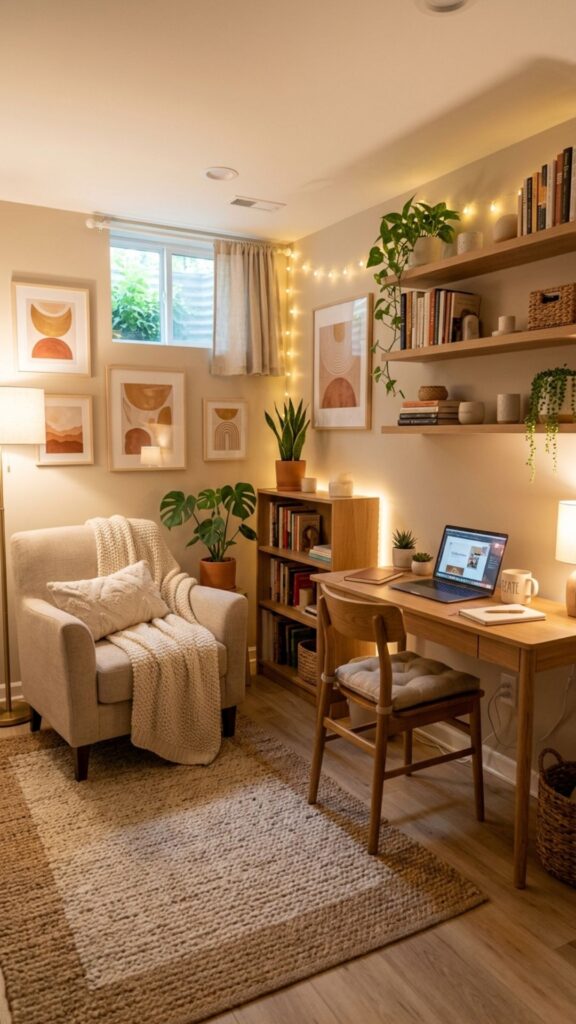
Color selection can influence how a room feels. Warm shades such as soft brown, cream, muted green, or warm gray can make a basement workspace feel inviting.
Avoid using very dark colors throughout a small basement because they may make the room appear smaller. Instead, combine darker accents with lighter walls and proper lighting.
14. Add a Reading and Relaxation Area
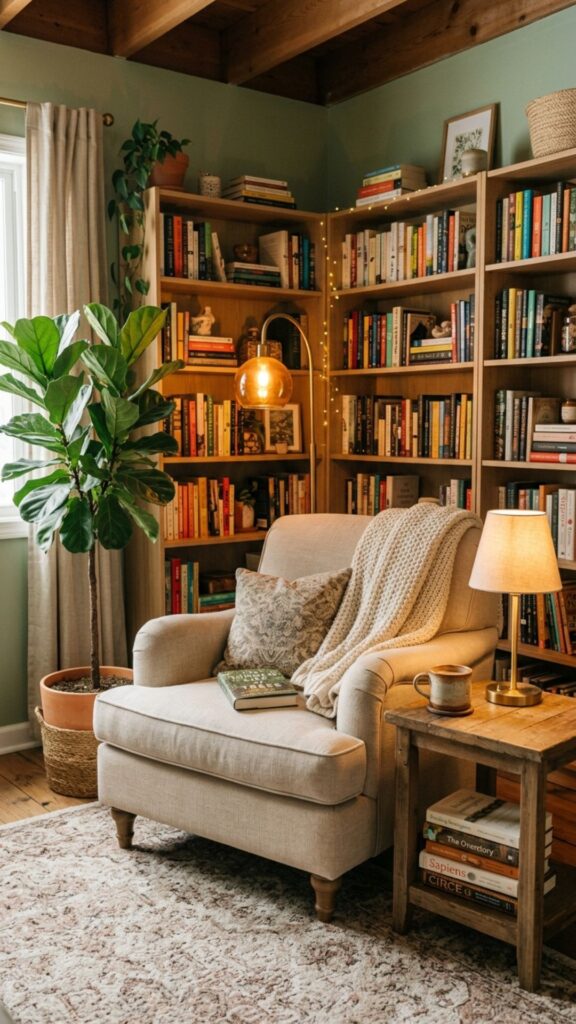
A productive office also needs moments of relaxation. Adding a small reading chair, side table, or comfortable seating area can create a space for breaks and creative thinking.
This approach works well for professionals who spend long hours working. A dedicated relaxation corner can help separate focused work time from rest periods.
15. Create a Budget-Friendly Basement Office
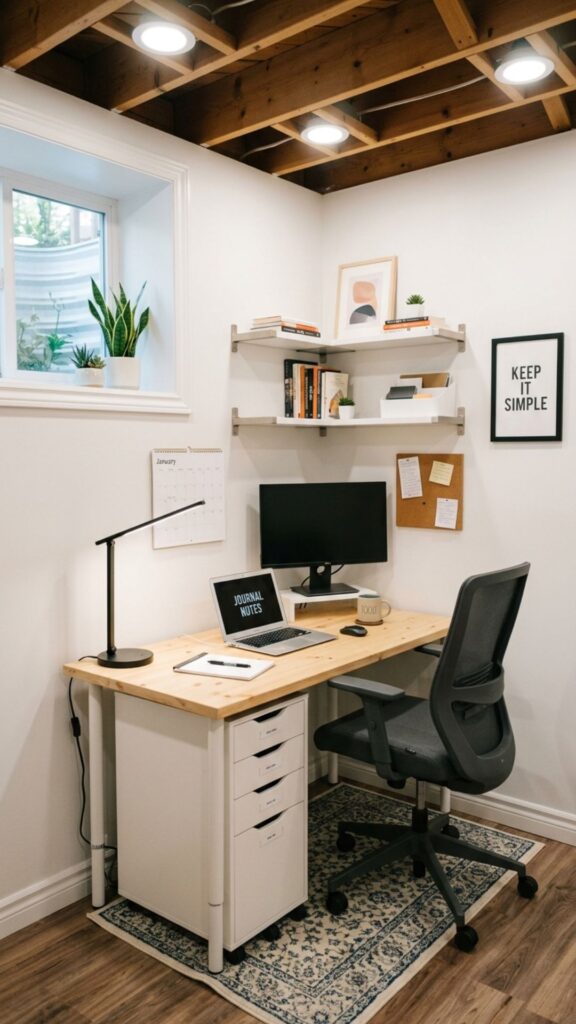
A stylish workspace does not always require a large investment. Many affordable basement home office ideas focus on using existing furniture, repainting walls, improving lighting, and adding simple storage solutions.
Start with essential items first, such as a desk, chair, and lighting. You can gradually improve the space with decorative upgrades as your needs change.
16. Design a Creative Office for Inspiration
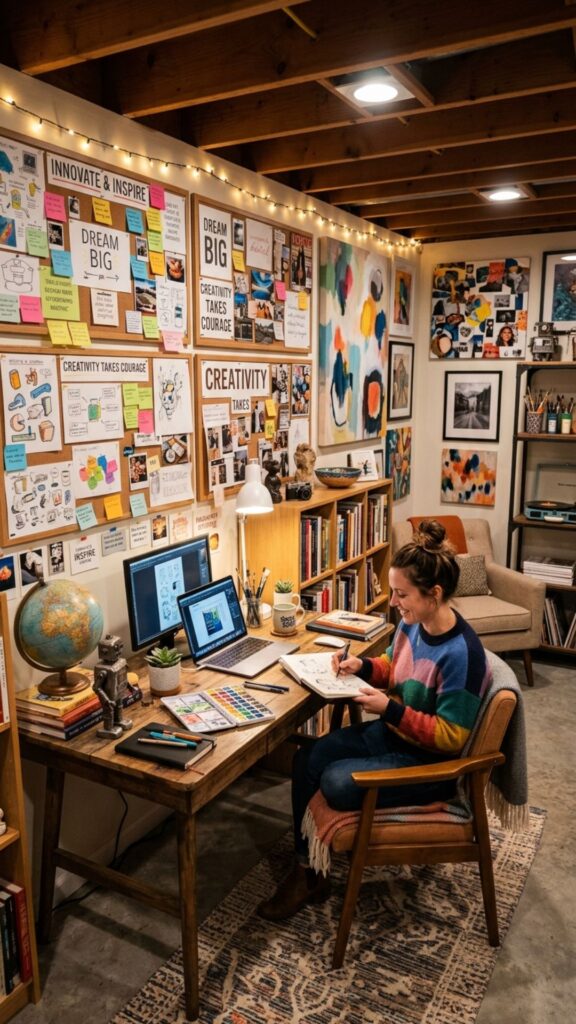
Creative professionals often need an environment that encourages new ideas. Add vision boards, artwork, bookshelves, or display areas to personalize the workspace.
A creative basement office should reflect your interests while remaining organized. The goal is to create an environment that feels inspiring without becoming distracting.
17. Improve Basement Comfort with Proper Insulation
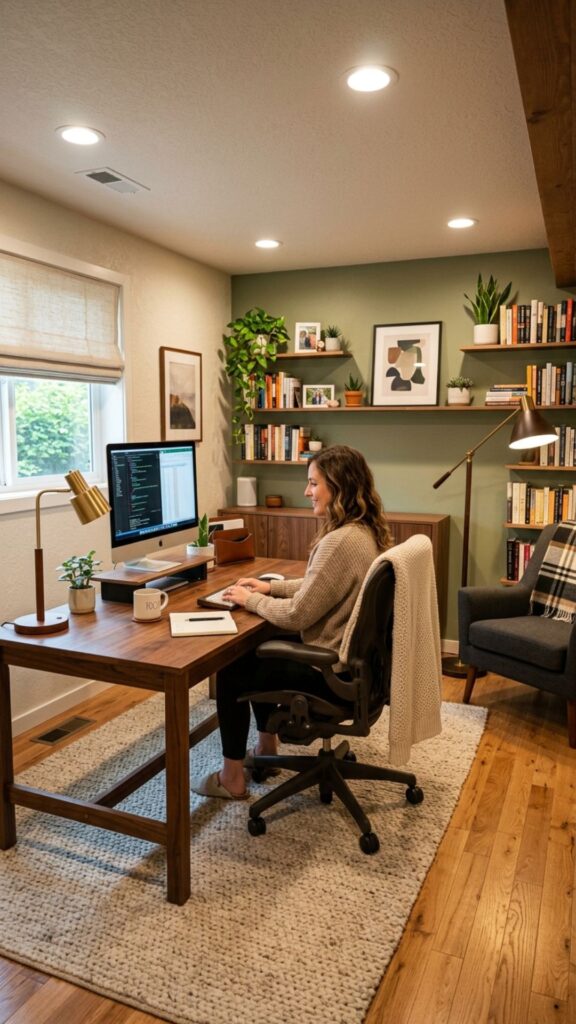
Basements can sometimes feel colder than other areas of the home. Proper insulation, comfortable flooring, and temperature control can make the office more enjoyable throughout the year.
A comfortable temperature helps maintain productivity. Before decorating, consider addressing practical issues such as moisture control, ventilation, and heating.
18. Create a Luxury Basement Office Design
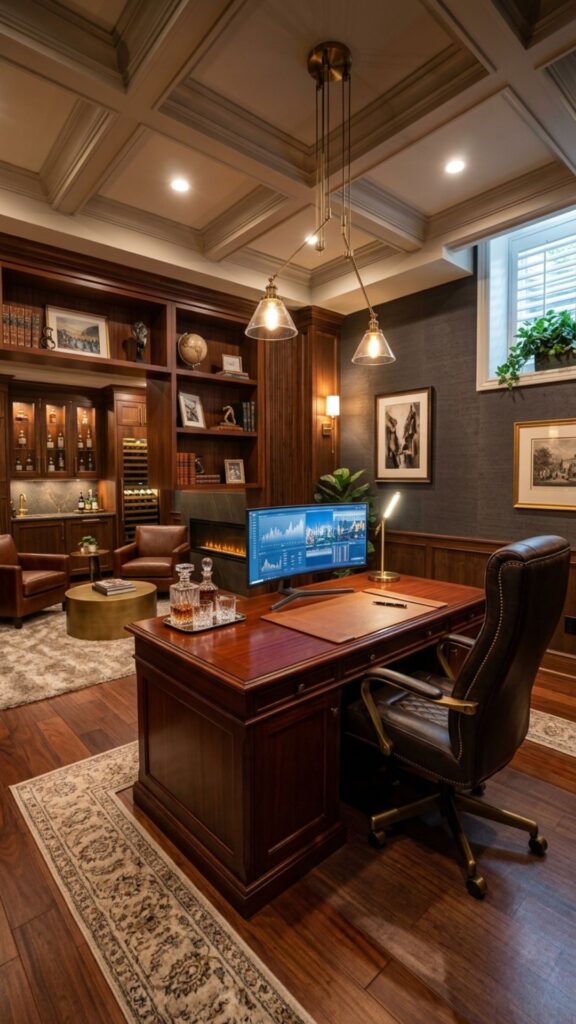
A luxury basement workspace focuses on premium materials, elegant furniture, and refined details. A high-quality desk, stylish lighting fixtures, and custom storage can create an executive-style office.
Luxury does not always mean excessive decoration. A carefully designed layout with quality materials can create a sophisticated and professional atmosphere.
19. Add Green Elements to Your Basement Office
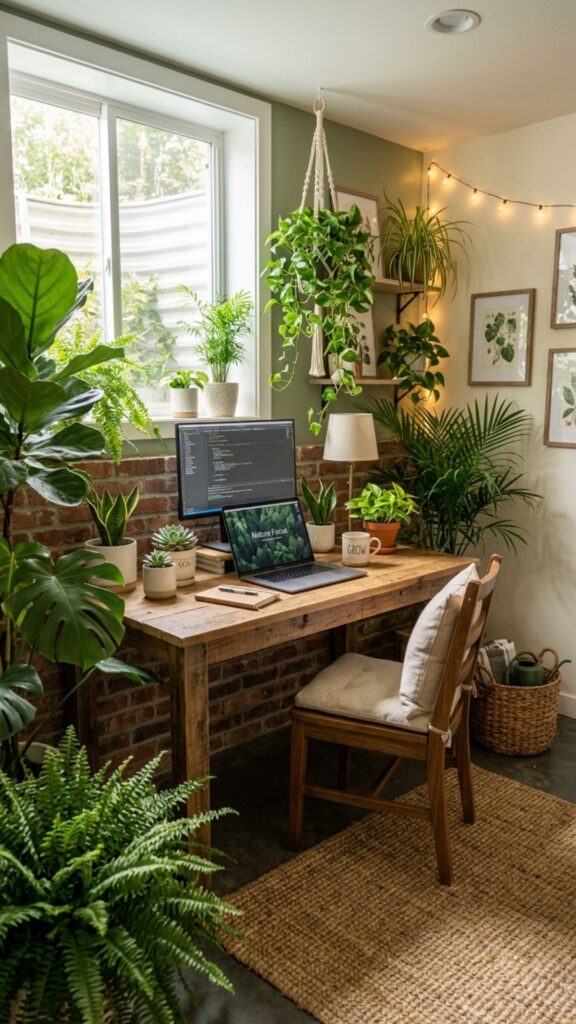
Indoor plants can completely change the feeling of a basement workspace. They add color, improve visual appeal, and create a more natural environment.
Choose low-maintenance plants if your basement receives limited sunlight. Artificial greenery can also work well when natural plants are difficult to maintain.
20. Personalize Your Basement Home Office Design
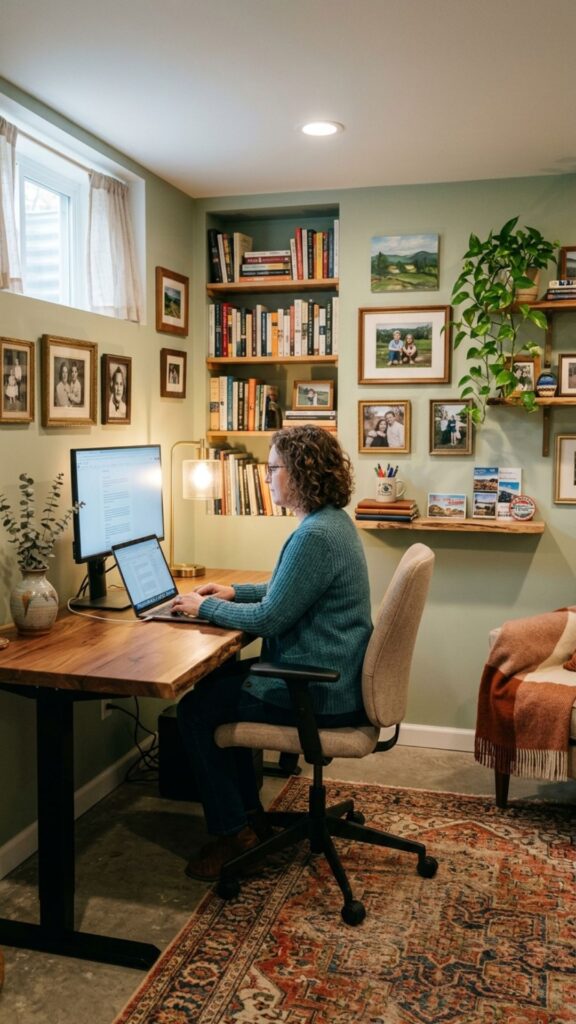
The best workspace reflects the person using it. Add items that motivate you, such as family photos, favorite books, artwork, or meaningful decorations.
Personal touches make the office feel less like a temporary workspace and more like a place where you enjoy spending time. A comfortable and personalized environment can improve both productivity and satisfaction.
Conclusion
Transforming an unused basement into a functional workspace is a practical way to add value and comfort to your home. The right basement home office ideas can help you create a productive environment that matches your lifestyle, whether you prefer a minimalist setup, a cozy retreat, or a modern professional office.
Start by planning your layout, improving lighting, selecting comfortable furniture, and adding personal design elements. With thoughtful choices, your basement can become a workspace where you feel focused, organized, and inspired every day.
Ready to redesign your basement? Explore these ideas, choose a style that fits your needs, and begin creating a home office you will enjoy using.
How can I make my basement office brighter?
Use a combination of natural light, LED ceiling lights, desk lamps, mirrors, and light-colored walls. These elements help make a basement office feel more open and comfortable.
What is the best layout for a basement home office?
The best layout depends on your available space. Place the desk near windows when possible, keep storage accessible, and create enough room for comfortable movement.
Can a small basement become a functional office?
Yes. Even a small basement area can become a useful workspace with a compact desk, vertical storage, proper lighting, and organized furniture placement.
What furniture is essential for a basement office?
A comfortable ergonomic chair, suitable desk, proper lighting, and storage solutions are the main essentials. Additional items can be added based on your work requirements.
How do I make a basement office feel less like a basement?
Improve lighting, add warm colors, include plants, use comfortable furniture, and decorate the walls. These changes can make the space feel like a professional and welcoming office.