A home office should help you focus without feeling cold, formal, or disconnected from the rest of your home. The right setup can make everyday work more comfortable while creating a space you genuinely enjoy spending time in.
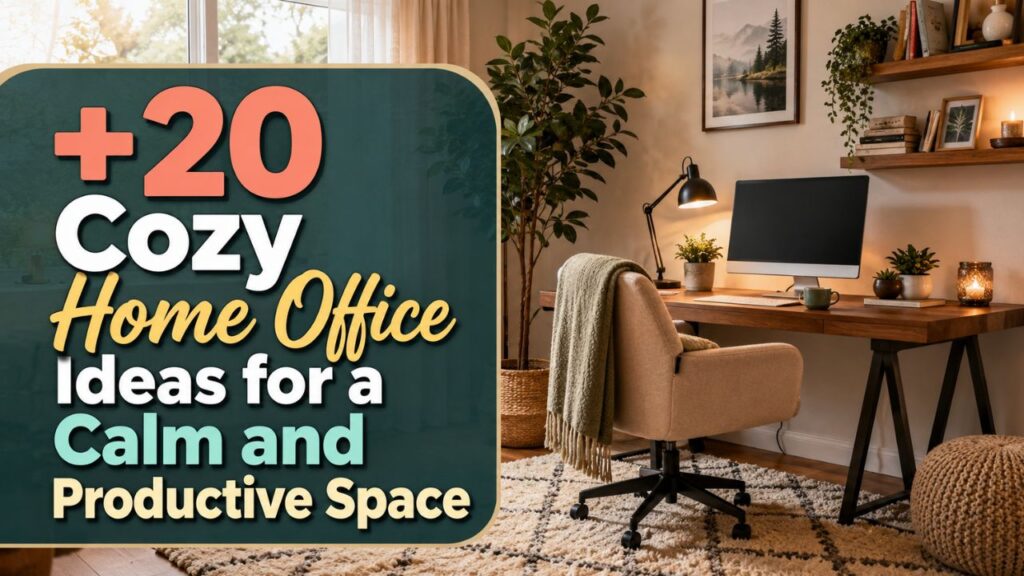
The best home office ideas cozy spaces use warmth, comfort, practical storage, and thoughtful lighting instead of relying only on decoration.
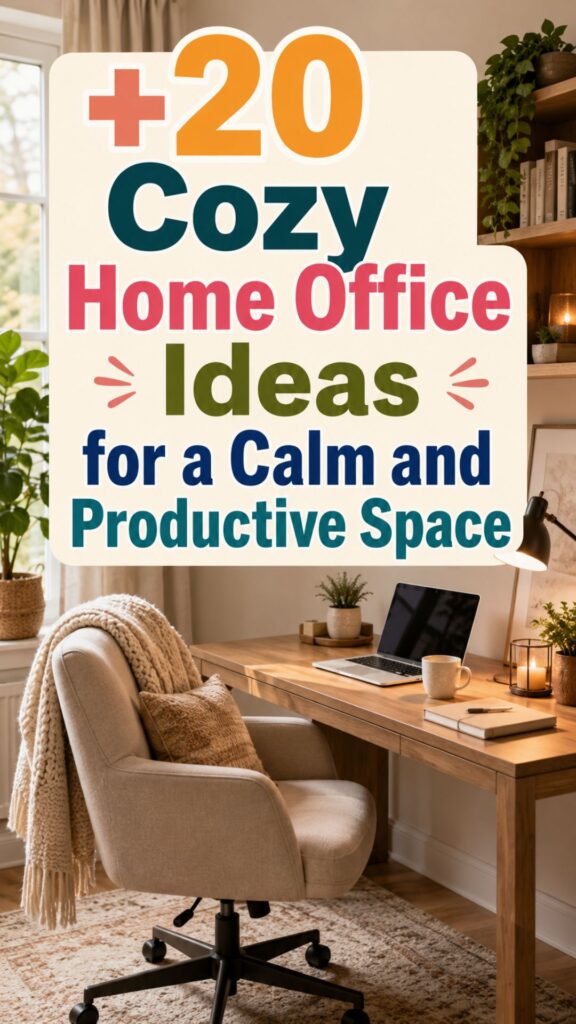
You do not need a large room or an expensive renovation either. A comfortable chair, warm lamp, natural materials, and a few personal details can completely change how your workspace feels.
Below are 20 practical ideas for creating a calm, welcoming, and productive home office.
1. Choose a Warm Neutral Color Palette
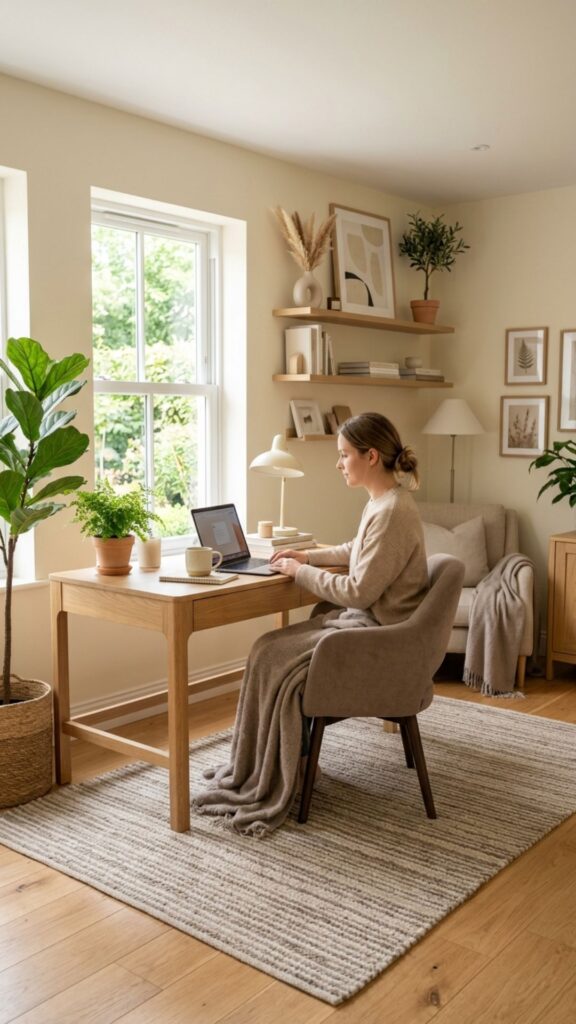
Start with warm neutral shades such as cream, beige, soft taupe, warm white, or light greige. These colors create a calmer atmosphere than harsh white walls while still keeping the office bright enough for focused work.
You can introduce deeper tones through furniture, artwork, or accessories. Brown, terracotta, muted green, and soft charcoal work particularly well. Keeping the main palette simple also makes it easier to update your office later without repainting the entire room.
2. Add a Comfortable Ergonomic Chair
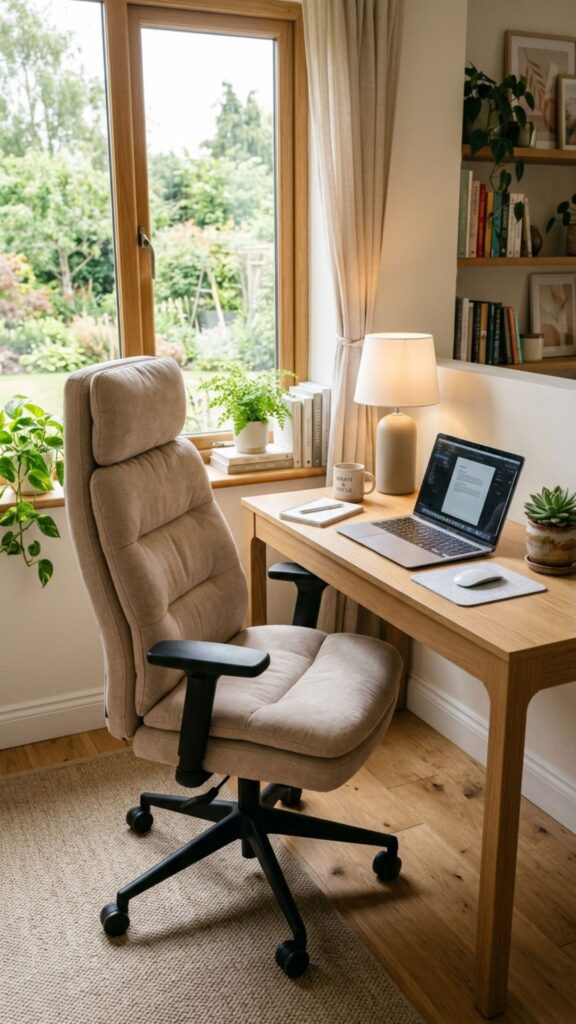
A cozy office still needs to support your body properly. Choose an ergonomic chair with good back support, an adjustable seat height, and enough cushioning for long working sessions.
If traditional black office chairs feel too corporate, consider upholstered designs in beige, brown, grey, or muted green. The goal is to combine comfort with proper posture rather than choosing appearance at the expense of everyday usability.
3. Use Warm Task Lighting
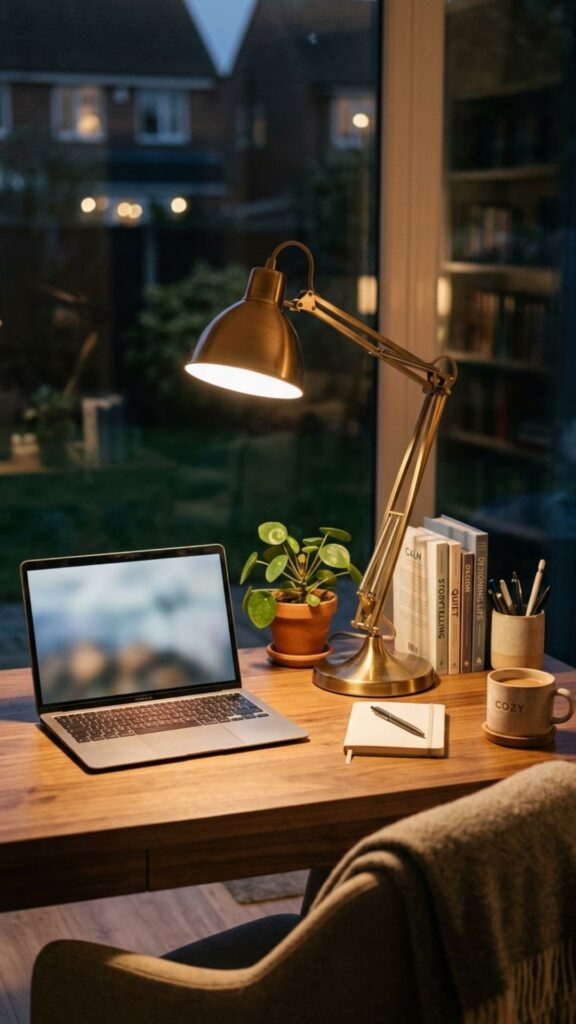
Lighting can completely change the atmosphere of a workspace. Instead of depending only on bright ceiling lights, place a table lamp or adjustable desk lamp beside your computer.
Warm or soft-white lighting generally creates a more relaxing environment during early mornings and evenings. Position your task light so it illuminates your work surface without reflecting directly onto your screen or creating distracting shadows.
4. Place Your Desk Near Natural Light
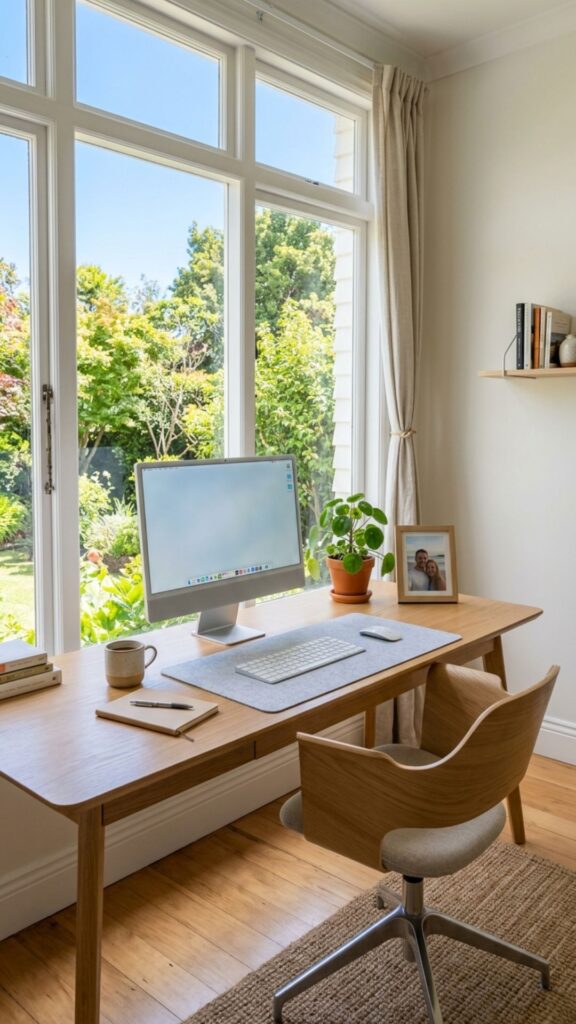
One of the simplest home office ideas cozy rooms benefit from is positioning the desk near a window. Natural daylight can make even a small office feel fresher, brighter, and more pleasant.
Avoid placing your monitor directly in front of intense sunlight if glare becomes a problem. Positioning the desk perpendicular to the window often provides a good balance between daylight, visibility, and screen comfort.
5. Introduce Natural Wood Furniture
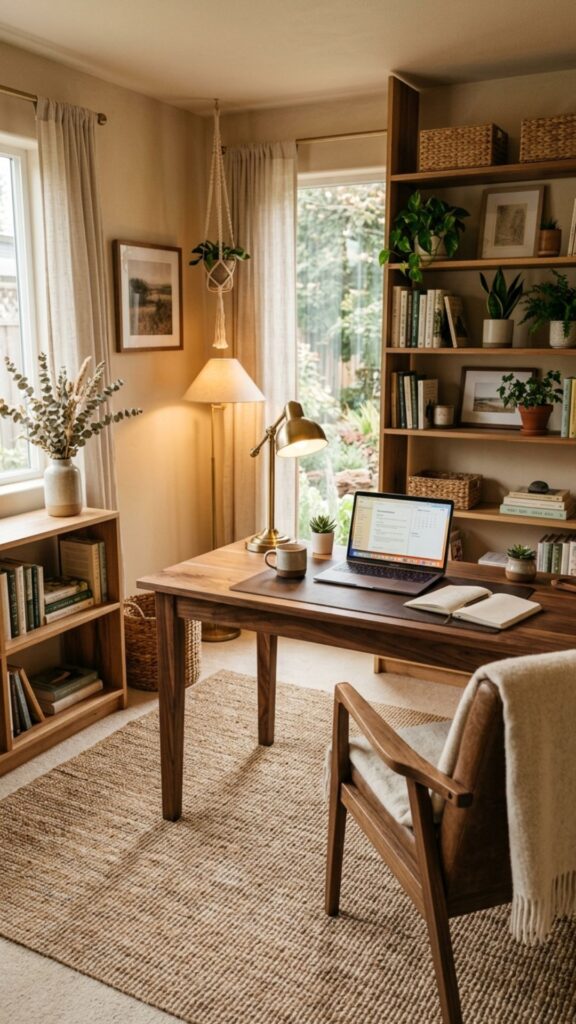
Wood immediately adds warmth and texture to an office. A wooden desk, shelving unit, side table, or storage cabinet can soften a room filled with screens and technology.
You do not need every furniture piece to match. Mixing similar wood tones often creates a more relaxed, lived-in appearance. Oak, walnut, pine, and medium brown finishes work especially well in cozy home offices.
6. Add a Soft Area Rug
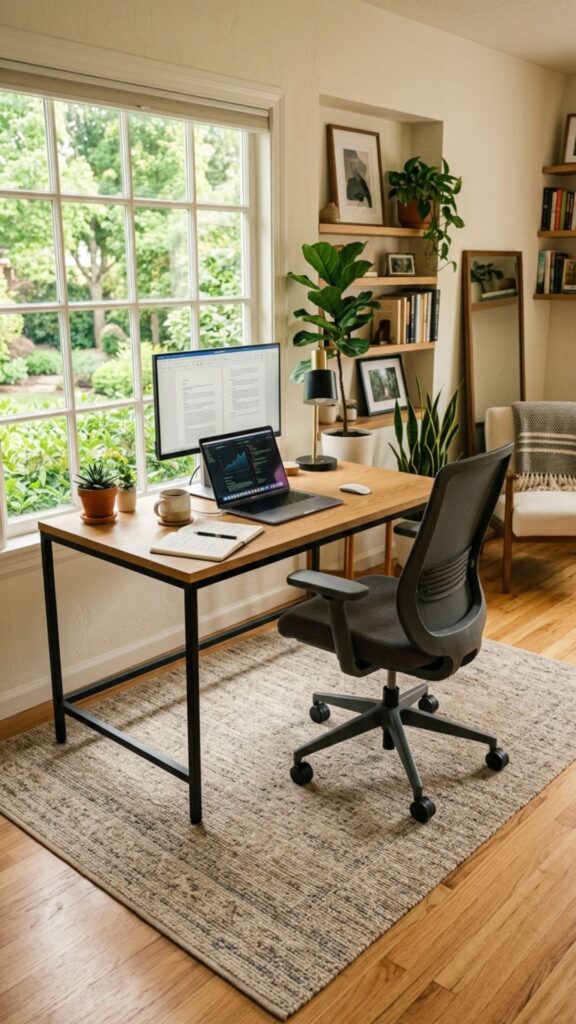
Hard flooring can make an office feel slightly unfinished. Adding a rug helps define the working area while making the room feel softer and more comfortable.
Choose a low-pile rug if your office chair needs to move regularly. Neutral patterns, faded vintage designs, or subtle geometric styles can introduce visual interest without making the room feel crowded.
7. Decorate With Indoor Plants
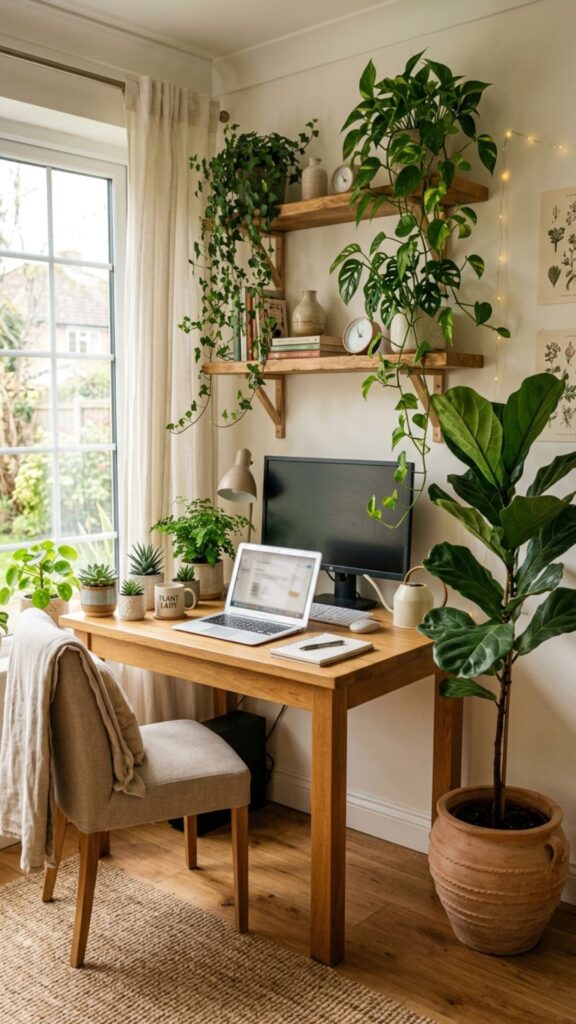
Plants bring color and natural texture into a workspace without requiring major decorating changes. Even one small plant beside your monitor can make a desk feel more inviting.
If your office receives limited sunlight, choose plants suited to lower-light environments or use realistic artificial greenery. Place larger plants in empty corners and smaller varieties on shelves to create balance without sacrificing working space.
8. Create a Small Reading Corner
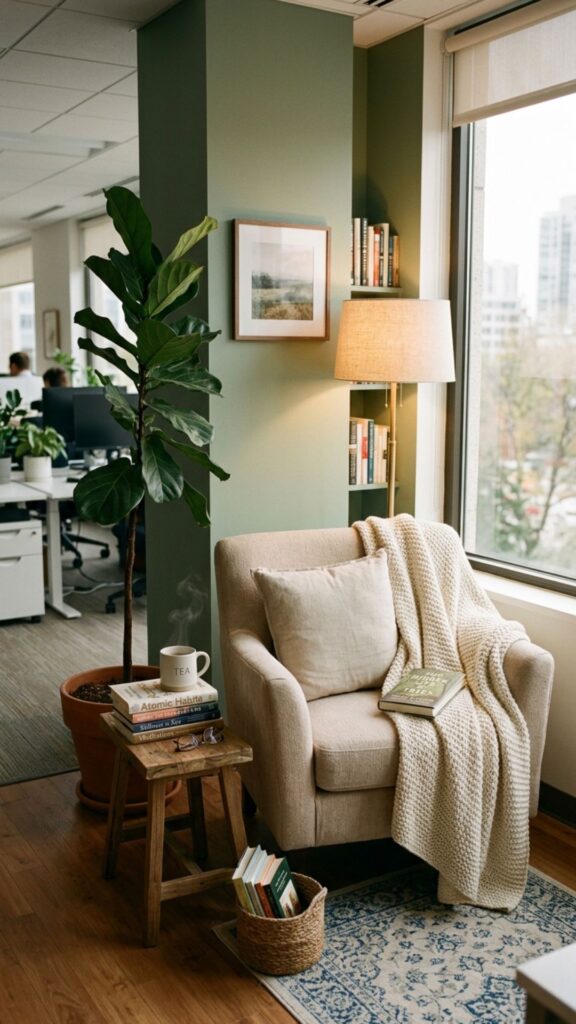
If space allows, add a comfortable armchair beside a lamp or small side table. This gives you somewhere to read reports, make phone calls, brainstorm ideas, or simply move away from the desk for a few minutes.
A reading corner works especially well in larger offices where one desk can otherwise make the room feel empty. Add a cushion or lightweight throw to make the area feel connected to the overall cozy design.
9. Keep Your Desk Visually Simple
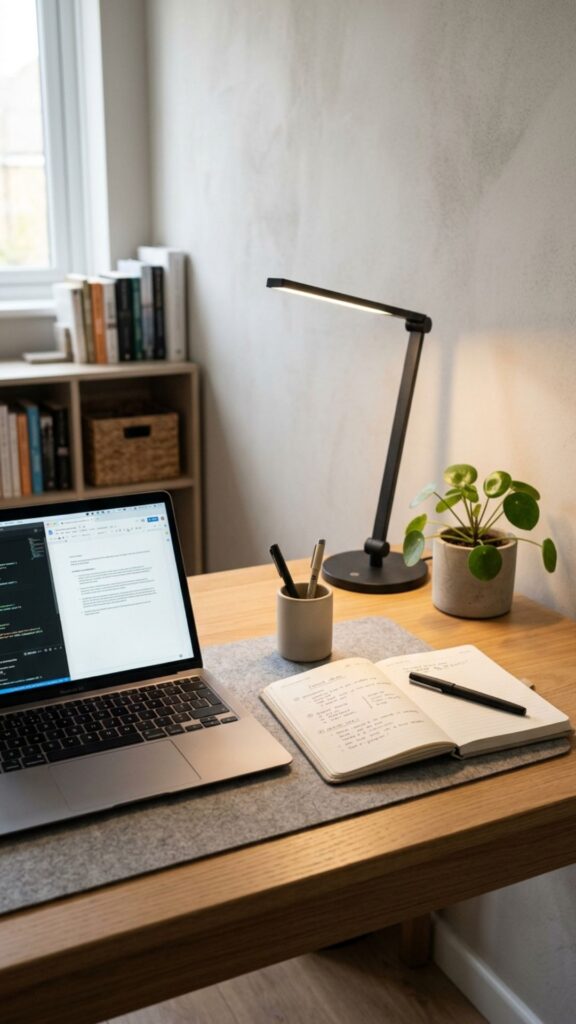
Too many objects around your keyboard can quickly make a peaceful office feel stressful. Keep the everyday workspace limited to items you genuinely use, such as your computer, notebook, lamp, and essential stationery.
Store chargers, paperwork, cables, and occasional supplies in drawers or containers. Among practical home office ideas cozy spaces need, reducing visual clutter is one of the easiest ways to create a calmer working environment.
10. Add Floating Shelves Above the Desk
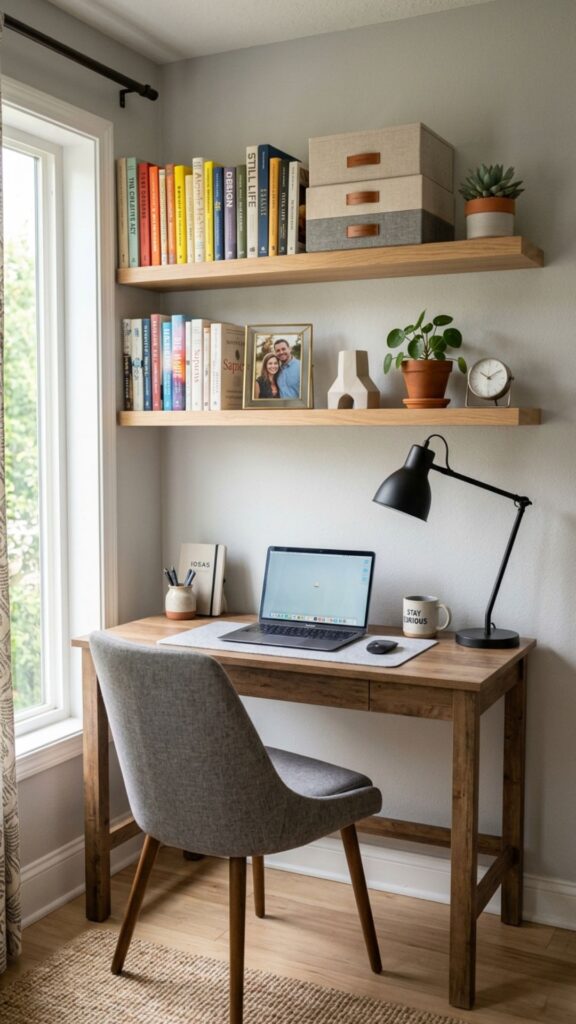
Floating shelves provide useful vertical storage without taking up valuable floor space. They are particularly helpful in small bedrooms, apartments, or office corners where traditional bookcases may feel too bulky.
Use the shelves for books, storage boxes, photographs, plants, and a few decorative objects. Leave some empty space between items so the arrangement feels intentional instead of crowded.
11. Include Personal Artwork and Photographs
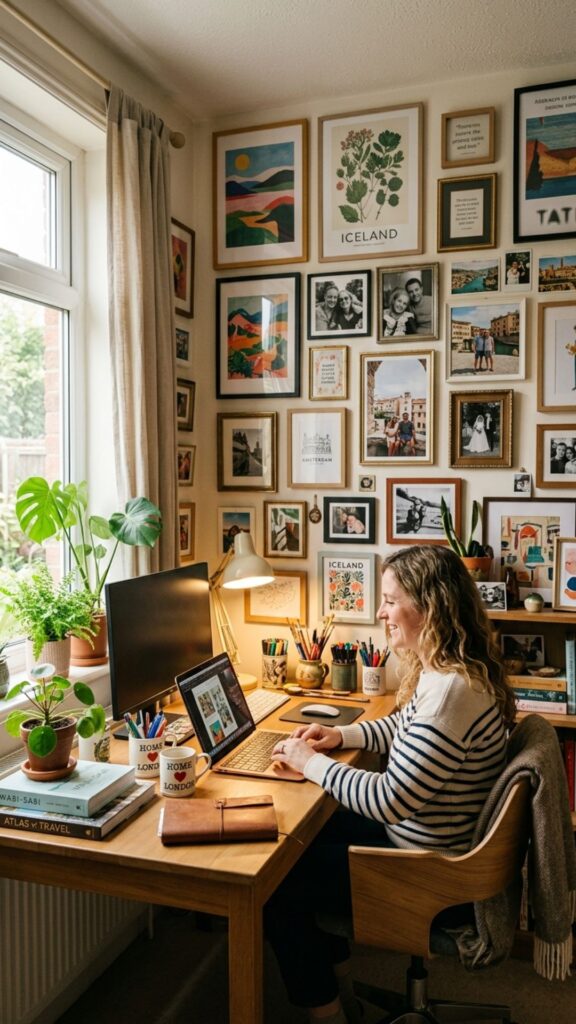
Your office should feel different from a generic commercial workspace. Displaying artwork, family photographs, travel memories, or prints you genuinely enjoy can give the room more personality.
Choose a few meaningful pieces rather than covering every available wall. A simple gallery arrangement above the desk or one larger framed print can provide enough visual interest while maintaining a calm atmosphere.
12. Bring in Soft Textures
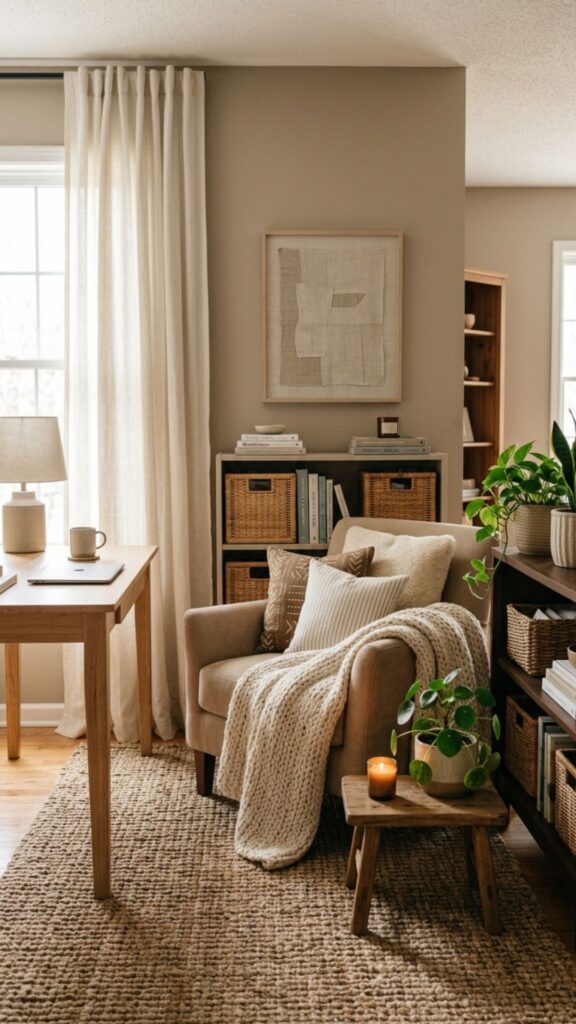
Texture creates warmth even when your color scheme is minimal. Consider adding linen curtains, woven baskets, upholstered furniture, cushions, rugs, or a soft throw blanket.
These materials help balance the hard surfaces usually found in offices, including desks, monitors, storage cabinets, and electronics. Layering different textures can make a neutral room feel comfortable without requiring strong colors or complicated decoration.
13. Use Attractive Storage Baskets
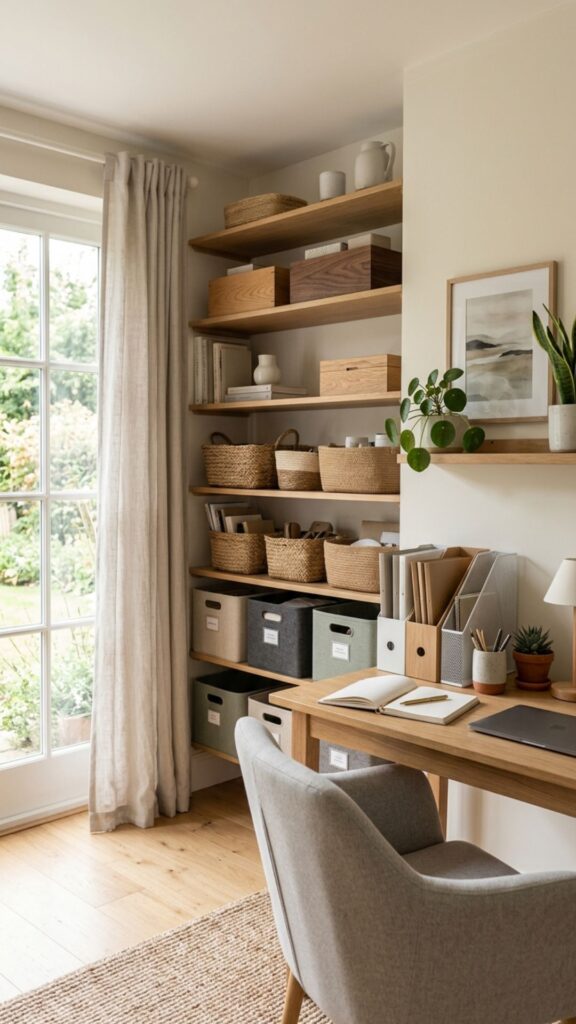
Office storage does not need to look purely functional. Woven baskets, fabric bins, wooden boxes, or attractive document holders can keep supplies organized while contributing to the room’s overall design.
Group similar items together so you can find them easily. For example, keep charging accessories in one container, notebooks in another, and paperwork in dedicated folders instead of allowing everything to collect across your desk.
14. Create an Office Inside a Small Nook
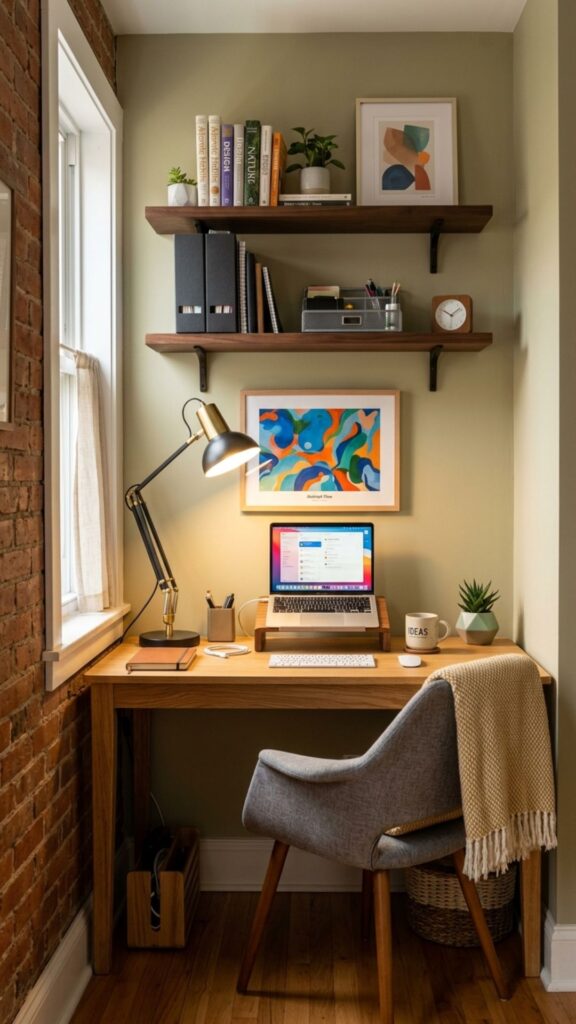
You do not need a separate room to experiment with home office ideas cozy enough for daily work. An unused corner, alcove, landing, or section of a bedroom can become an effective workstation.
Choose a desk that fits the available width and add wall-mounted storage above it. A small lamp, framed print, and comfortable chair can visually separate the office area from the surrounding room without requiring permanent construction.
15. Use Curtains to Soften the Room
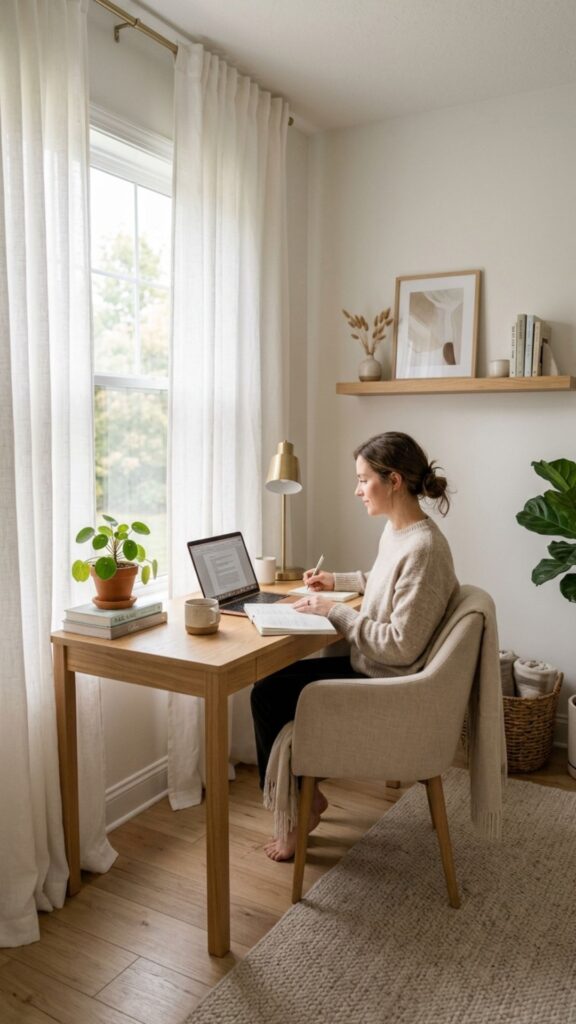
Bare windows can make an office look unfinished, particularly when the room contains minimal furniture. Curtains add softness while also helping you control brightness throughout the working day.
Choose lightweight linen or cotton-style fabrics if you want natural light to enter. For stronger sunlight, combine sheer curtains with blinds or heavier panels so you can adjust the amount of light depending on the time of day.
16. Add a Cozy Desk Lamp for Evening Work
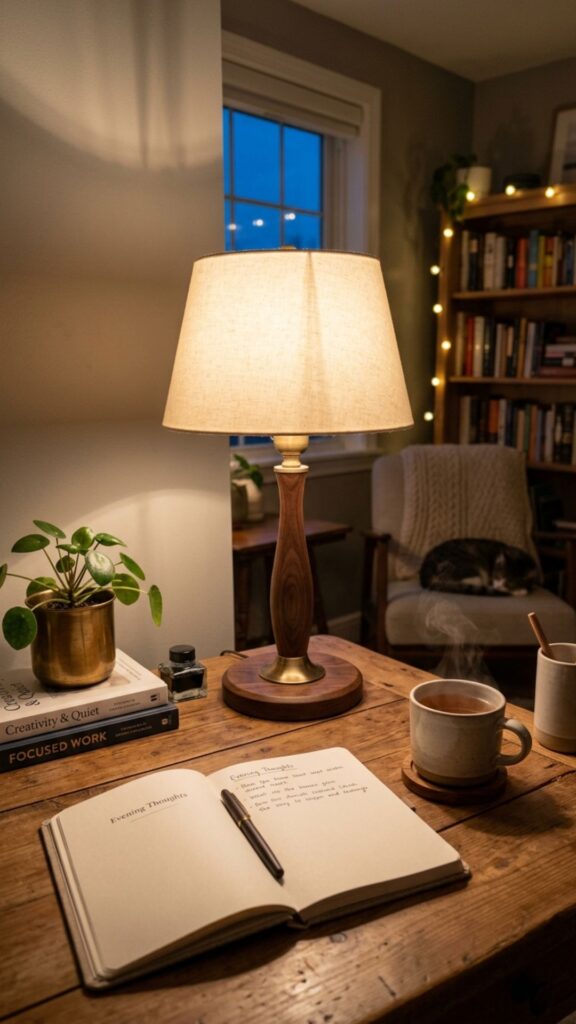
People who work after sunset should think beyond basic overhead lighting. A dedicated desk lamp creates a smaller pool of light that feels more comfortable when the rest of the room is dim.
An adjustable lamp is especially useful because you can direct light toward paperwork or away from your monitor. Designs with wood, brass, ceramic, or fabric elements can also add visual warmth to a simple desk.
17. Hide Unnecessary Cables
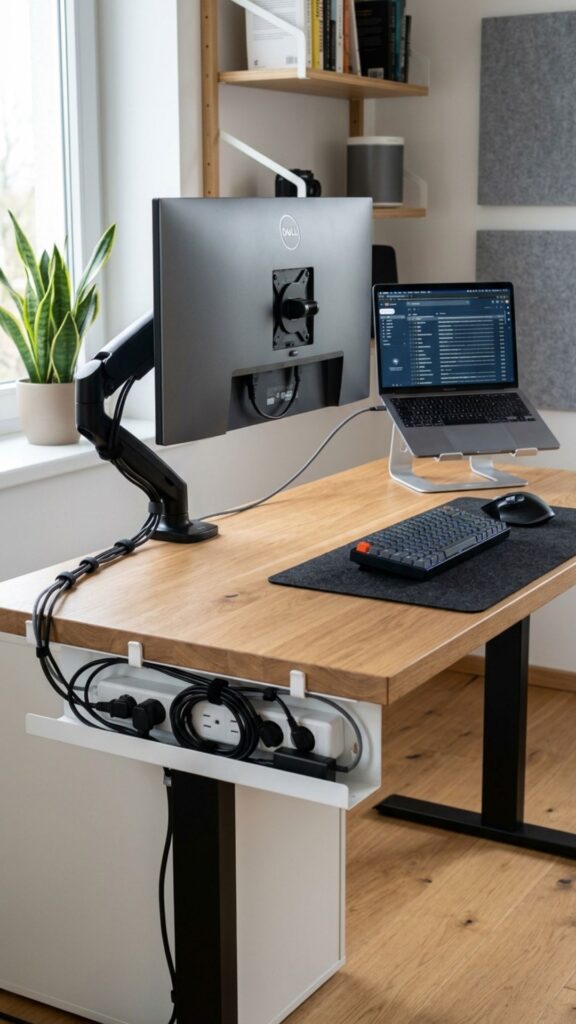
Visible cables can make an otherwise well-designed office feel messy. Use cable clips, trays, sleeves, or small cable boxes to keep wires organized behind or underneath the desk.
Leave enough flexibility to disconnect devices when necessary. Good cable management is not only about appearance; it also makes cleaning easier and reduces the chances of pulling or damaging chargers accidentally.
18. Create a Coffee or Tea Station
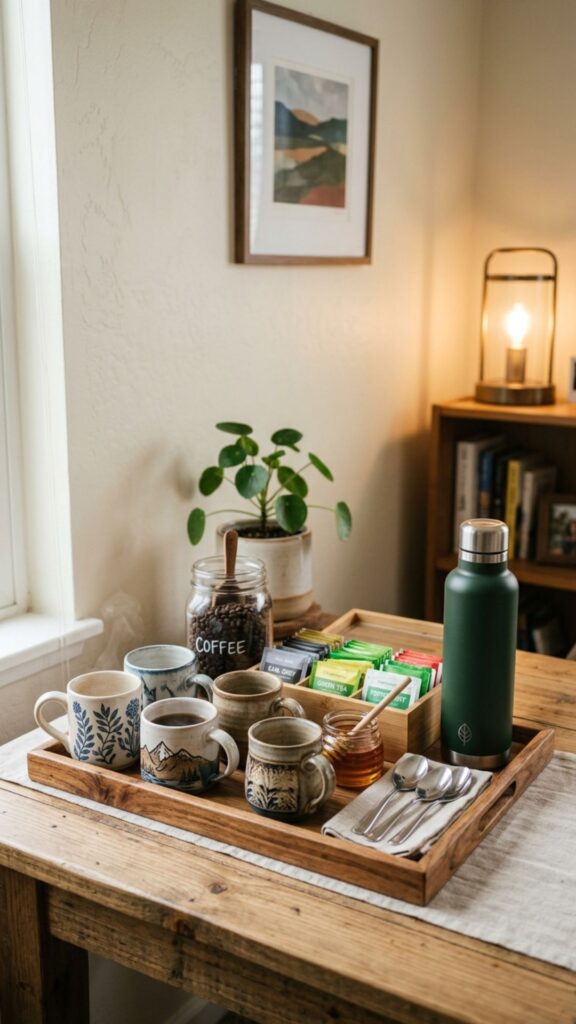
If your office is large enough, dedicate a small corner to drinks. A compact tray with your favorite mugs, tea, coffee supplies, and a water bottle can make your working routine feel more comfortable.
Keep electrical appliances appropriate for the room and avoid cluttering a small office simply for decoration. Sometimes a tray with a thermos and mug is enough to create the same relaxed feeling without requiring additional furniture.
19. Use Scent Carefully
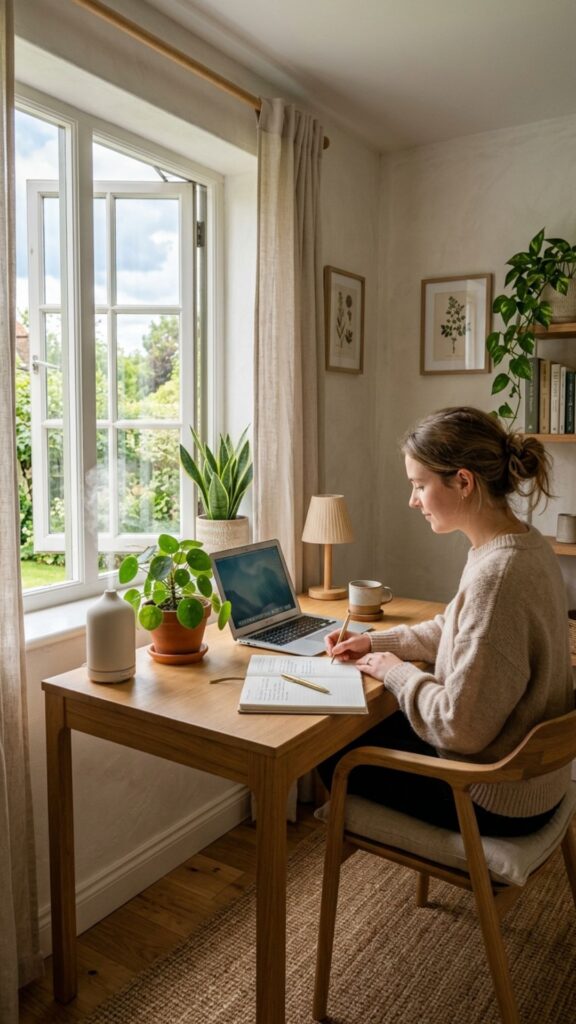
A subtle scent can contribute to a welcoming atmosphere, particularly if you spend several hours working from home. Light fragrances such as citrus, lavender, cedar, or eucalyptus are popular choices.
However, fragrance should never become distracting. Avoid overpowering candles or diffusers, especially in smaller rooms. Good ventilation should always come first when creating a healthy and comfortable workspace.
20. Design the Office Around Your Working Habits
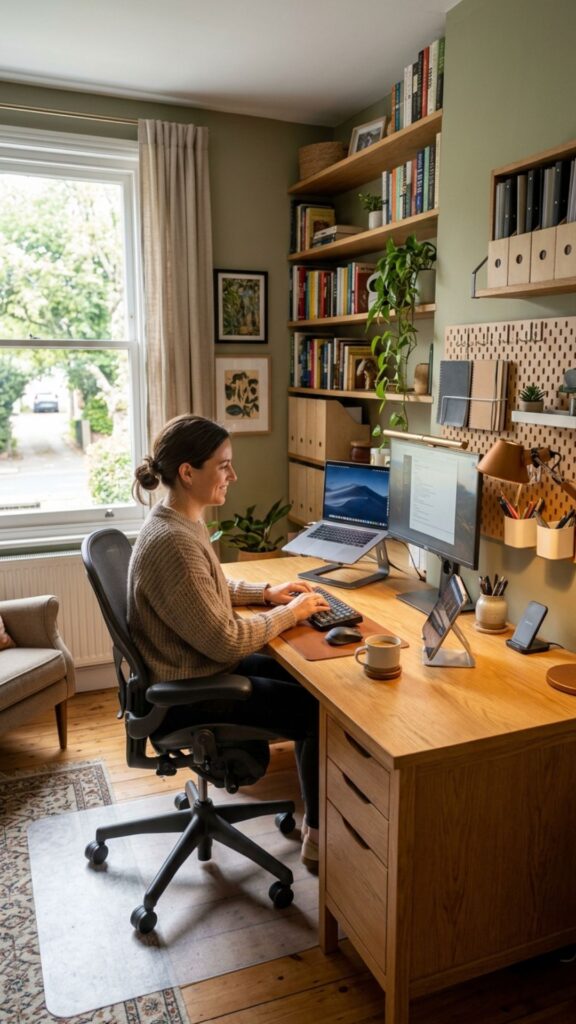
The most successful home office ideas cozy setups are built around how you actually work. Someone who handles paperwork needs different storage from a person who works entirely from a laptop.
Before buying additional furniture or decorations, consider what regularly interrupts your productivity. If documents create clutter, improve filing. If your back becomes uncomfortable, upgrade your chair. If lighting causes eye strain, improve your desk placement and lighting before adding decorative accessories.
Creating a Cozy Home Office Without Sacrificing Productivity
A cozy workspace should feel comfortable, but it still needs to function as an office. Avoid filling the room with so many cushions, decorations, or accessories that everyday tasks become inconvenient.
Prioritize your desk, seating, lighting, storage, and technology first. Once these essentials work properly, add softer elements such as plants, rugs, artwork, curtains, and personal objects. This approach creates a balanced environment that supports both comfort and concentration.
Conclusion
Creating a welcoming workspace does not require a complete renovation. Many of the best home office ideas cozy interiors use simple changes such as warmer lighting, natural wood, organized storage, softer textures, plants, and personal artwork.
Start by identifying what makes your current office uncomfortable or distracting. Improve one area at a time instead of buying everything at once. With thoughtful choices, even a small corner can become a calm, organized workspace where you can focus comfortably throughout the day.
Ready to refresh your workspace? Choose two or three ideas from this list and start with the changes that will make the biggest difference to your daily routine.
How can I make my home office feel cozy?
Use warm lighting, comfortable seating, natural materials, soft textiles, plants, and personal artwork. Keeping your workspace organized is equally important because excessive clutter can make even a beautifully decorated office feel stressful.
What colors are best for a cozy home office?
Warm white, cream, beige, taupe, muted brown, sage green, and soft grey are versatile choices. Darker colors can also work when balanced with adequate natural or artificial lighting.
How do I make a small home office cozy without cluttering it?
Choose compact furniture and use vertical storage such as floating shelves. Keep decorations limited to a few meaningful items and select accessories that serve both practical and decorative purposes.
Can a cozy home office still look professional?
Yes. Focus on clean organization, quality furniture, coordinated colors, and thoughtful lighting. Cozy does not have to mean casual or cluttered; it simply means creating a comfortable environment that supports focused work.
What should I add first when creating a cozy home office?
Begin with the items that affect comfort and productivity most: a supportive chair, suitable desk, proper lighting, and practical storage. Add rugs, plants, curtains, artwork, and decorative accessories once the essential setup works well.