There’s something about a dining room built in bench that makes people want to linger at the table a little longer. It pulls the room together, creates a sense of warmth that chairs alone rarely deliver, and quietly solves problems like cramped seating, dead corner space, and clutter with nowhere to go. If you’ve been thinking about adding one to your home, you’re in good company — this is one of the most searched dining room upgrades for a reason.
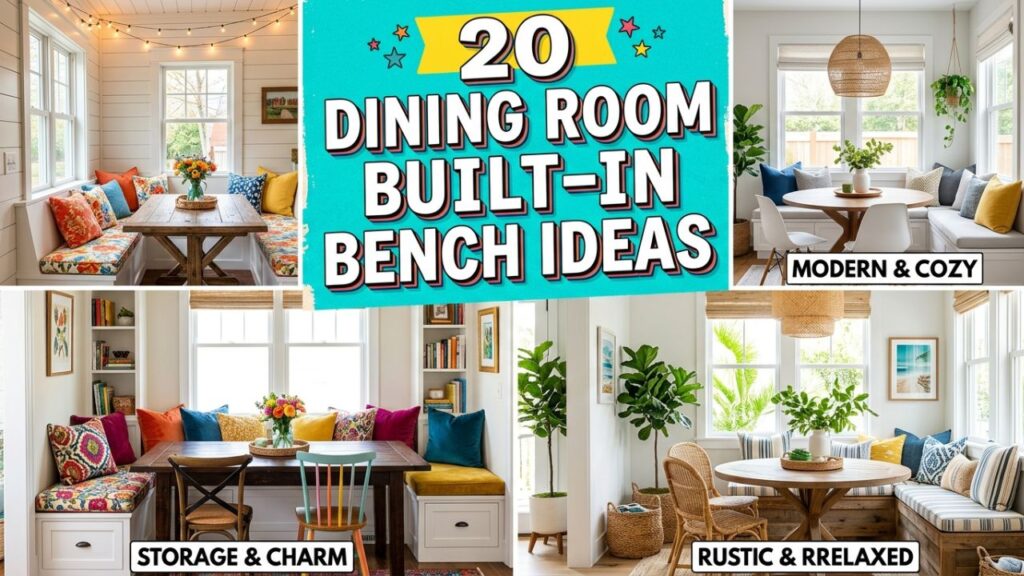
What is a dining room built in bench? It’s a fixed seating structure — attached to a wall, tucked into a corner, or framed into a nook — that provides permanent seating at your dining table.
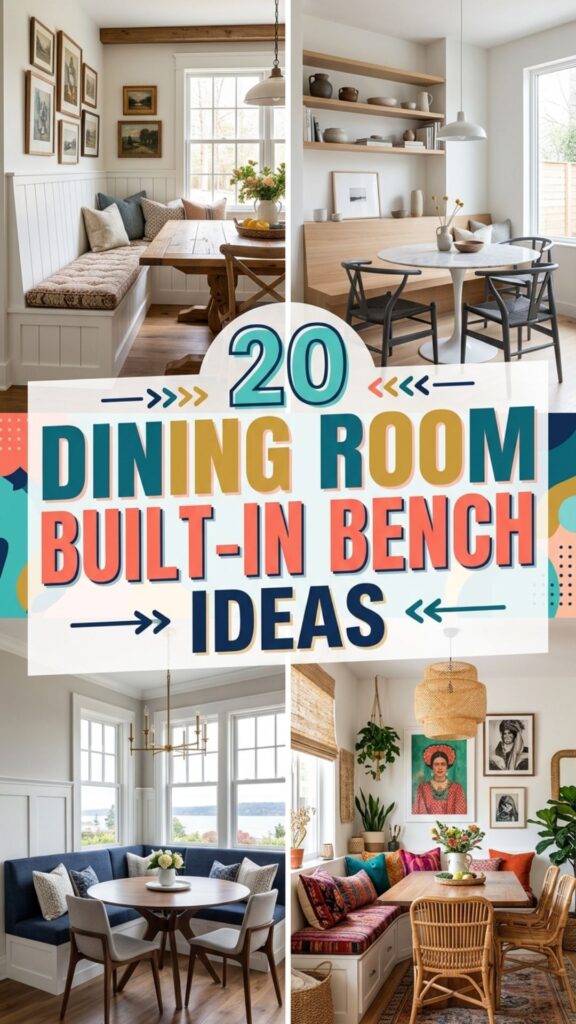
Unlike freestanding chairs, it becomes part of the room itself. It typically seats more people per linear foot, often includes storage underneath, and adds architectural character that transforms an ordinary dining room into something intentional and cohesive.
In this guide, you’ll find 20 distinct ideas covering styles from farmhouse to modern, storage solutions, material choices, layout tips, and approaches for both small and large spaces. Whether you’re renovating or just exploring options, there’s something here for every home.
1. The Classic Corner Nook
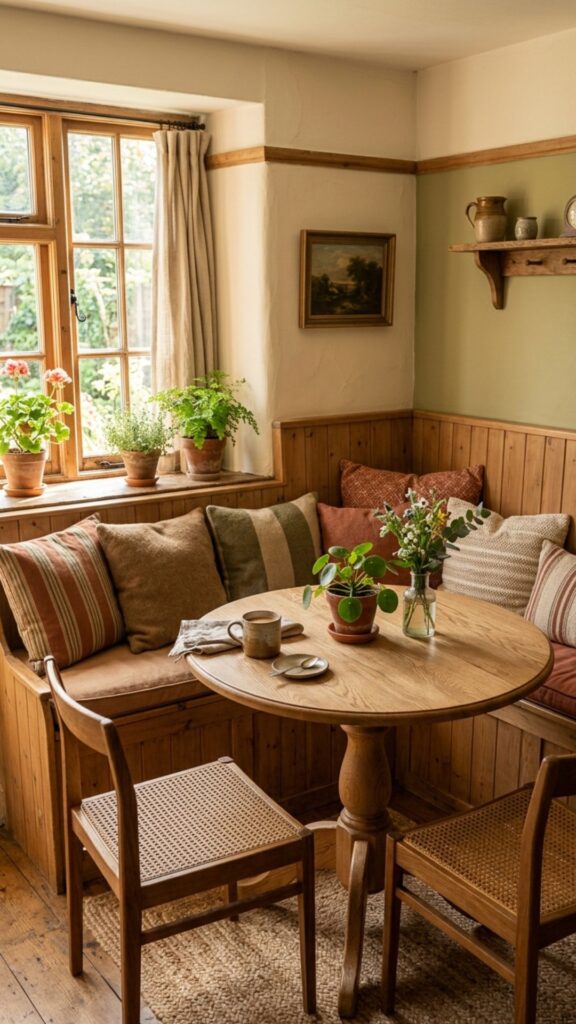
A corner dining bench wraps two adjacent walls and creates an enclosed, booth-like atmosphere that feels immediately cozy. It makes use of a corner that might otherwise sit empty or collect odds and ends, and it seats significantly more people than chairs in the same footprint.
Pair it with a round or square pedestal table so everyone can slide in and out without difficulty. For a seamless look, paint the bench the same shade as your walls, or add wood paneling behind it for warmth and texture.
2. Bench With Lift-Up Storage
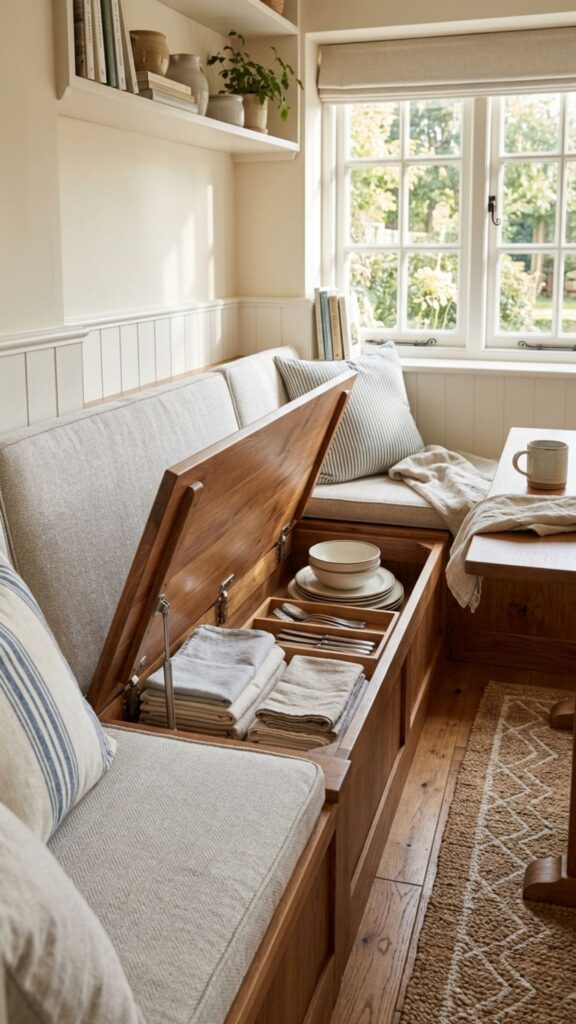
Building the bench seat as a hinged lid over a deep storage cavity is one of the smartest moves in small-home design. It gives you a place to tuck away table linens, placemats, seasonal items, or kids’ craft supplies without adding a single piece of extra furniture.
Choose soft-close hinges so the lid doesn’t slam, and use a gas-lift mechanism if the seat is wide and heavy. This addition alone can make a modest dining room feel considerably more organized and intentional.
3. Farmhouse Shiplap Bench
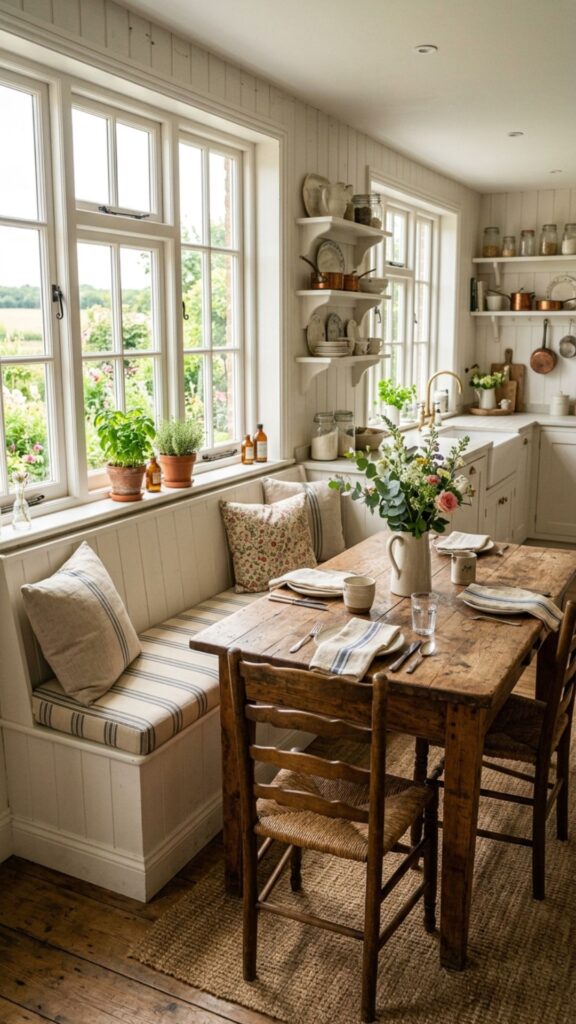
Horizontal shiplap cladding on the bench frame and back panel creates an instant farmhouse feel that suits kitchens and casual dining rooms equally well. Paint it white or a soft sage green to keep the look fresh and airy.
Add a long cushion in buffalo check, linen, or ticking stripe fabric and the result looks straight out of a renovated country home. This style pairs naturally with natural wood tables, black iron hardware, and open shelving nearby.
4. Built In Bench With Pull-Out Drawers
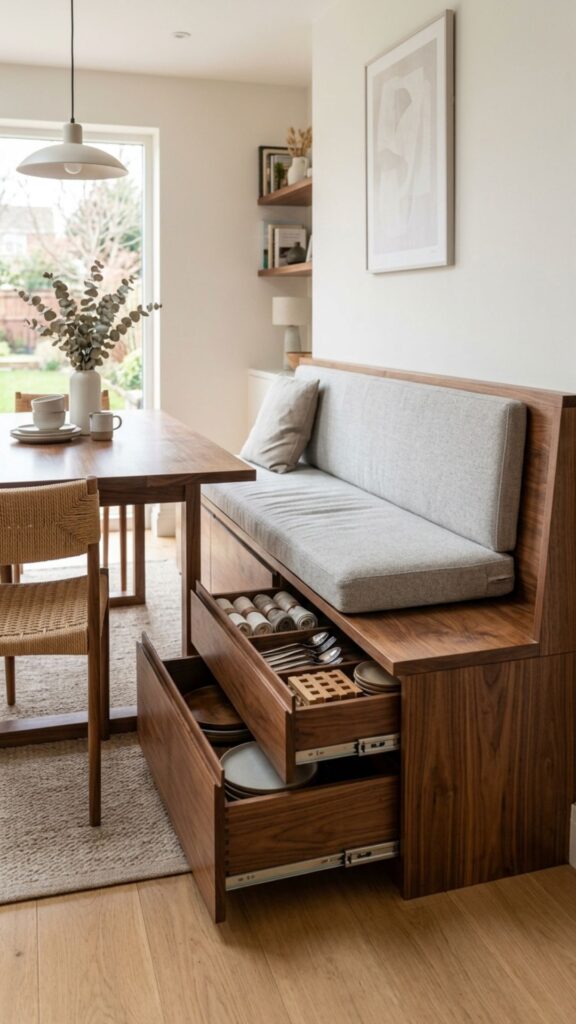
Instead of a lift-up lid, install pull-out drawers beneath the bench seat for storage that’s easier to access and organize. Drawers let you separate categories — napkins here, kids’ items there — without digging through a single deep cavity.
This works best along a straight wall where the bench can run long enough to fit at least two or three drawers side by side. Add wooden knobs for a classic touch or flat metal pulls for a more modern finish.
5. Upholstered Banquette in Neutral Tones
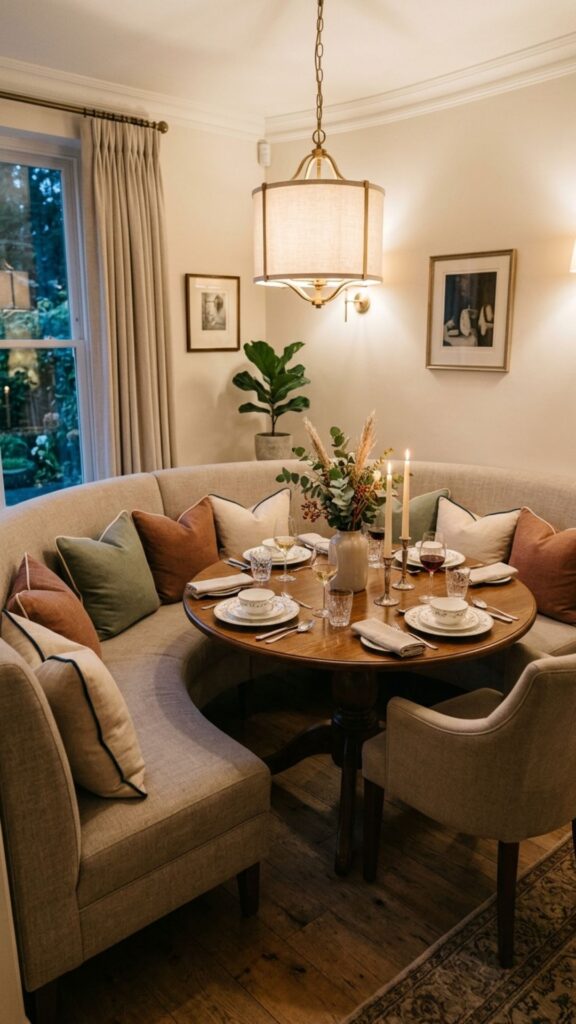
An upholstered dining room bench brings a restaurant-quality feel to a home dining space without a full renovation. Choose a performance fabric — boucle, stain-resistant velvet, or a tight-weave linen blend — so it holds up to daily use and the occasional spill.
Keep the upholstery neutral: warm white, greige, soft taupe, or oatmeal. These tones stay flexible across seasons and work with almost any table finish or accent color you introduce later. Tufted buttons give a traditional feel; clean piping edges look more contemporary.
6. Modern Floating Bench
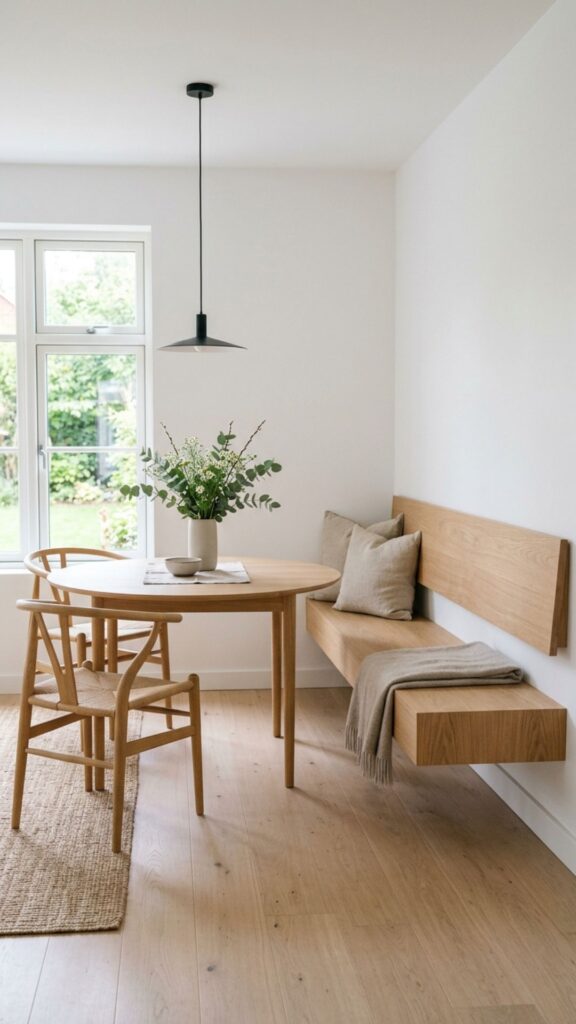
A floating bench anchored directly to the wall with no visible legs creates a sleek, minimalist look that suits modern and Scandinavian-inspired homes. The open floor space beneath it makes a small dining room read as larger than it is.
Use solid timber or a painted MDF frame for the seat. This style works especially well with concrete floors, white walls, and simple pendants overhead. It’s a confident design choice that delivers visual impact with very little material.
7. Bench With Built-In Shelving on Each Side
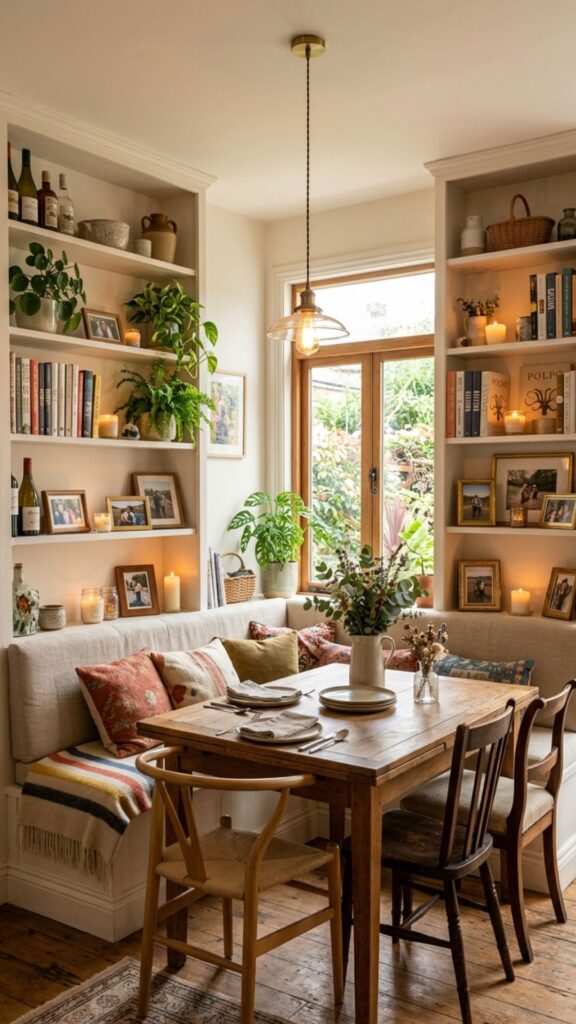
Framing the bench with shelving units on either end creates a furniture-wall effect that’s both functional and visually striking. Use the shelves for cookbooks, plants, candles, framed photos, or a small bar setup.
Paint the shelving and bench frame in one unified color — navy, forest green, or warm charcoal all work beautifully — so the whole unit reads as one cohesive piece rather than a collection of separate elements.
8. Window Seat Dining Bench
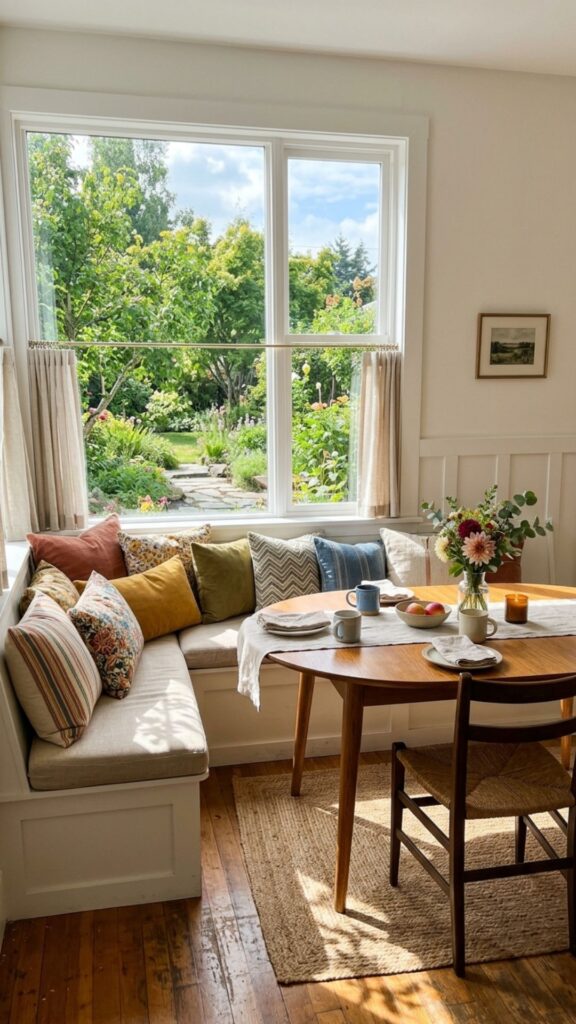
If your dining area sits beside a large window, a built in bench directly below the sill takes full advantage of the light and the view. It becomes the most coveted seat in the room on a sunny morning.
Use a thick padded cushion and a few throw pillows to make it as comfortable as an upholstered chair. Position the dining table parallel to the bench so guests face outward while they eat. This layout works particularly well in homes with garden or landscape views.
9. L-Shaped Bench for Long Rectangular Tables
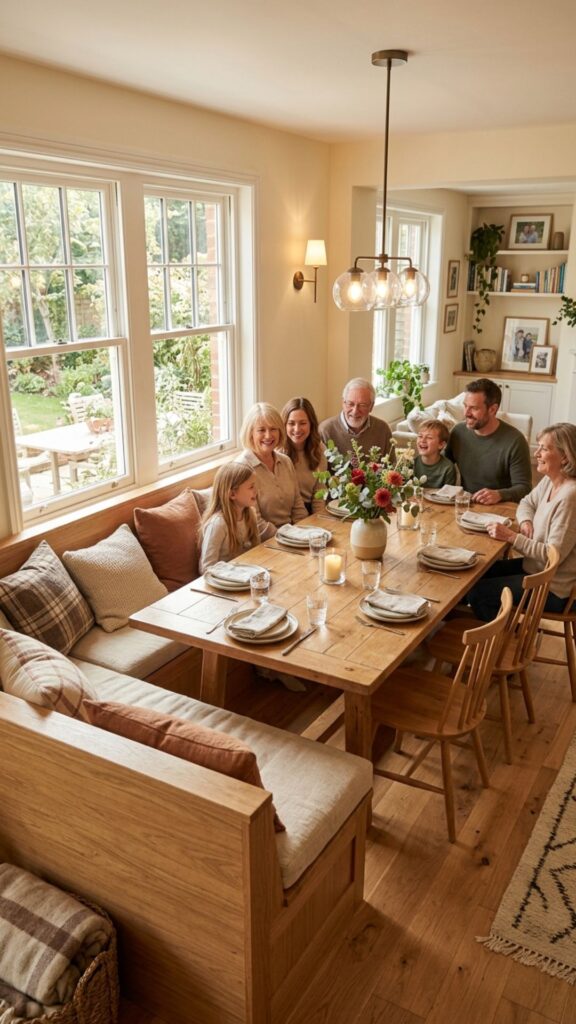
An L-shaped dining bench runs along two walls and seats considerably more people than chairs alone, making it ideal for families who host often. It defines the dining zone clearly in open-plan spaces without needing a wall to do the work.
Keep one short side of the table open with standard chairs so the arrangement doesn’t feel too enclosed. Use the same finish on the bench as your cabinetry or wainscoting so it integrates naturally into the room.
10. Bold Accent Color Bench
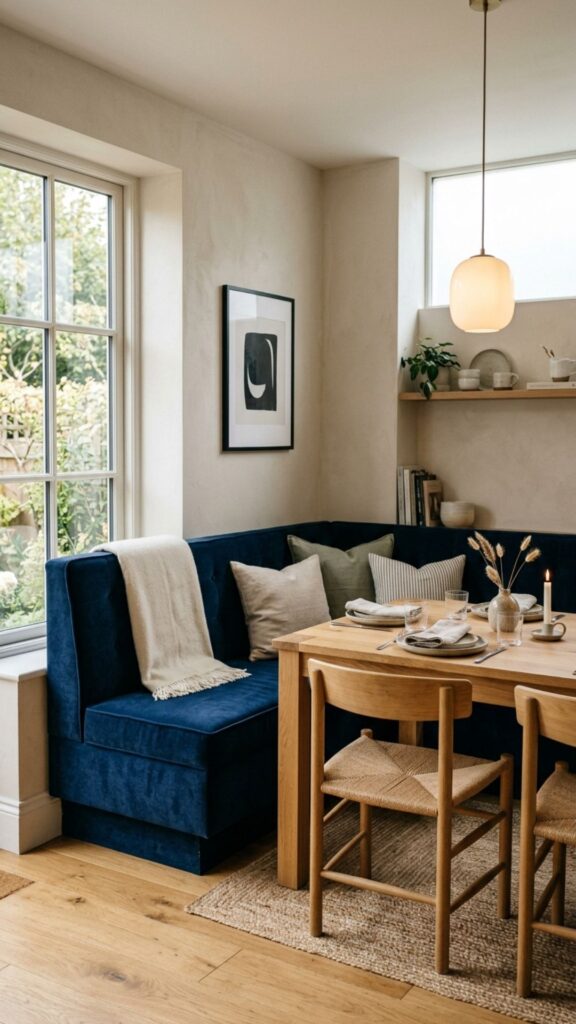
A dining room built in bench is an excellent place to introduce a confident accent color without overwhelming the whole room. Deep navy, terracotta, forest green, and warm mustard all make strong, inviting statements against white or natural wood tables.
Keep the walls and floor neutral and let the bench carry the color. This approach adds personality to a room without requiring a full redecoration. One well-chosen hue often does more than a room full of decorative accessories.
11. Reclaimed Wood Bench
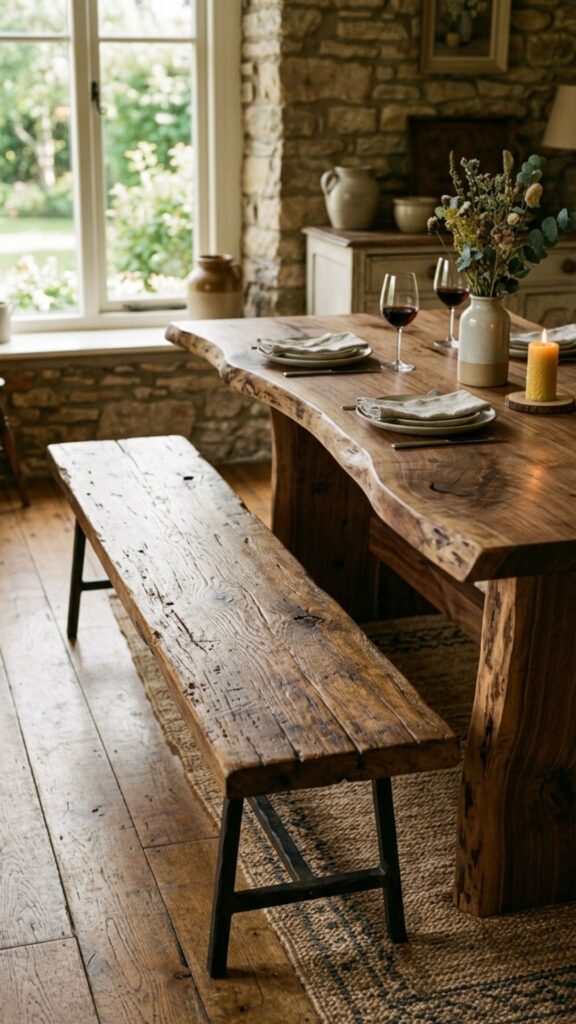
Building the bench from rough-sawn or reclaimed lumber adds organic character that new materials rarely replicate. The natural variations — knots, grain patterns, subtle imperfections — give the piece a lived-in quality from day one.
Leave the wood lightly sanded and sealed rather than heavily lacquered, so the texture stays visible. This style suits open-plan homes with exposed brick, concrete floors, or timber ceiling beams, and it pairs especially well with a live-edge dining table.
12. Bench With Wainscoting Back Panel
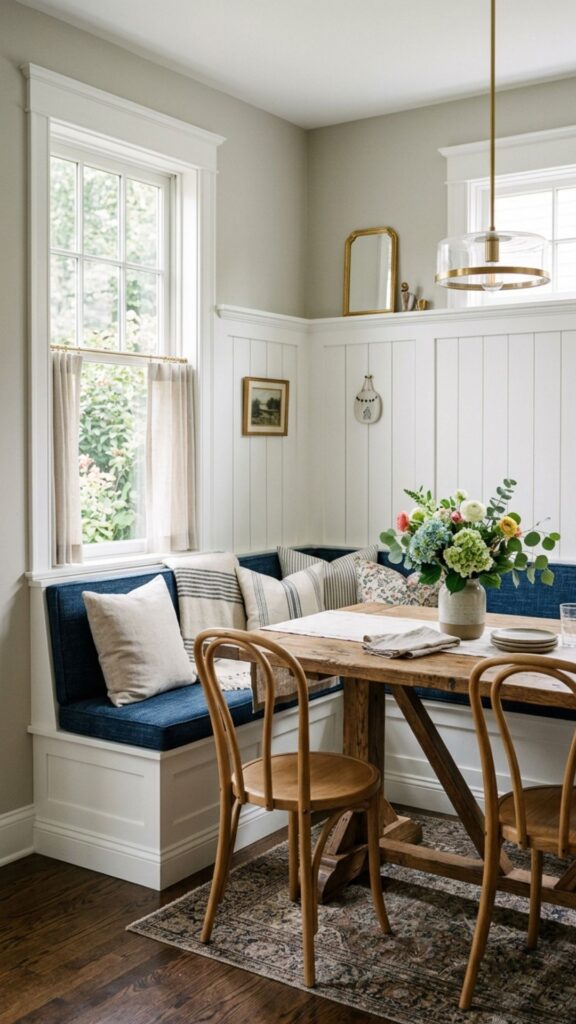
Adding wainscoting panels to the wall behind the bench elevates the entire dining area and gives it a finished, architectural quality. It’s one of the simplest ways to make a basic bench look custom-built.
Paint the wainscoting and bench in complementary tones for a layered effect, or match them exactly for a cleaner look. This detail works in transitional and traditional homes and makes a modest dining room feel considerably more intentional.
13. Breakfast Nook Alcove Bench
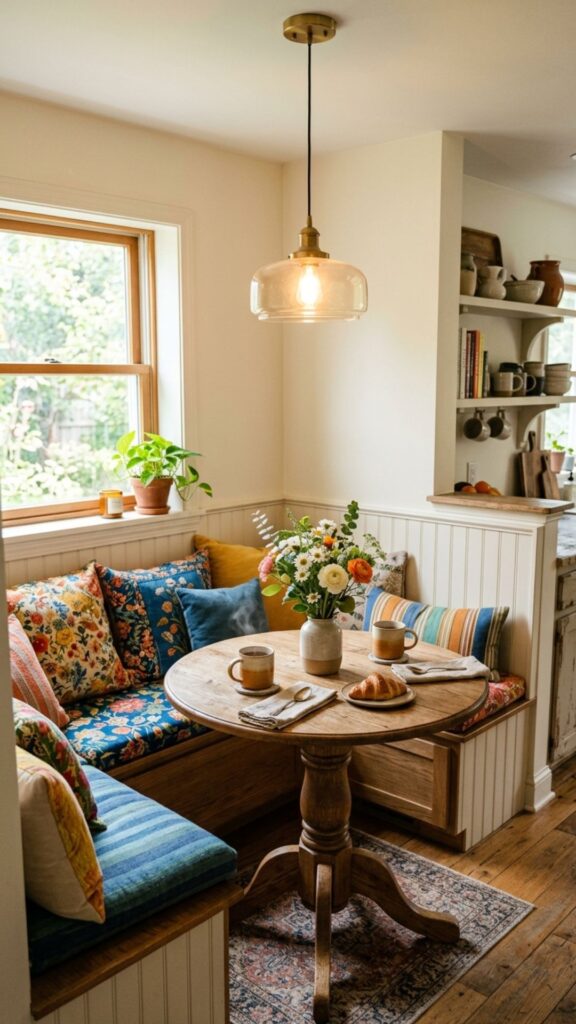
If your home has a recessed alcove near the kitchen, a dining room built in bench is the most natural way to fill and activate it. The enclosed shape of an alcove creates a natural sense of coziness that open rooms rarely achieve on their own.
Keep the table small — a 36-inch round typically works best — so movement in and out stays comfortable. Add a pendant light directly above and a few cushions along the back, and the nook becomes a genuine destination in the home.
14. Backless Bench Against a Half Wall
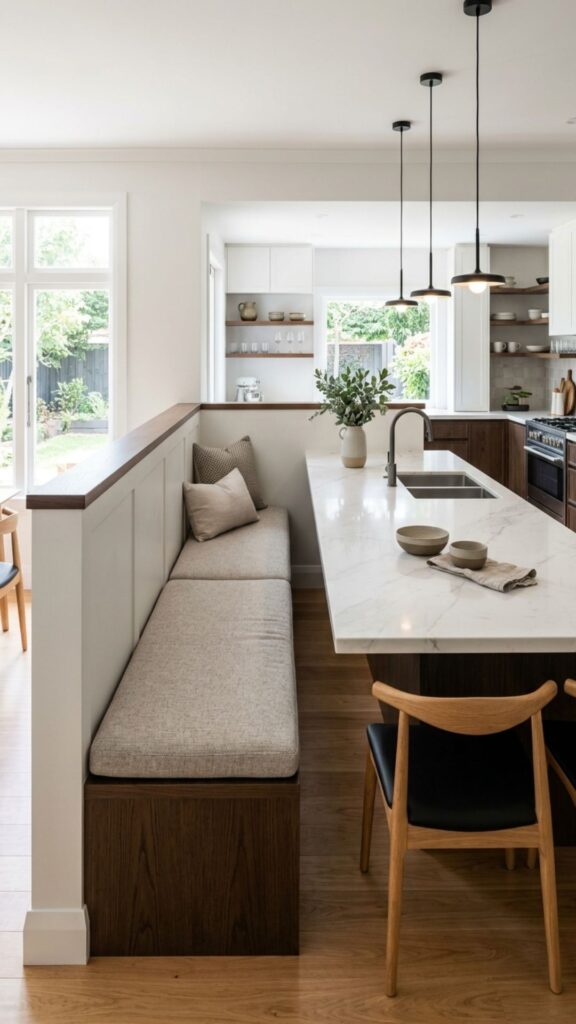
A backless bench built along a half wall or kitchen island partition creates seating on the dining side while keeping the other face clean and architectural. It’s a smart room-dividing solution in open-plan homes.
Use the same materials as the adjacent island or cabinetry so the bench reads as part of a considered whole rather than an afterthought. A firmly padded cushion compensates for the lack of back support and keeps the seat comfortable during longer meals.
15. Bench With Integrated Charging Station
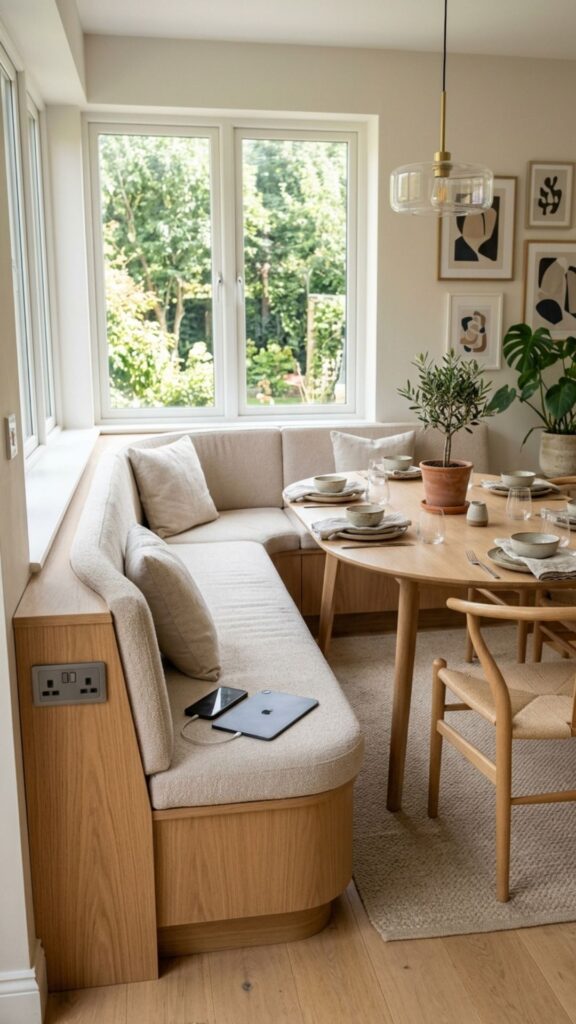
Adding a discreet USB port or flush-mounted outlet to the side panel or interior of a drawer makes the bench genuinely useful for modern family life. Homework sessions, phone charging, and tablet use at the table all become tidier without visible cords trailing across the floor.
Keep the hardware as subtle as possible — a small flush plate blends far better than a bulky adapter. This is a small, relatively affordable upgrade at the building stage that would be much more disruptive to add later.
16. Simple Padded Bench Without a Back
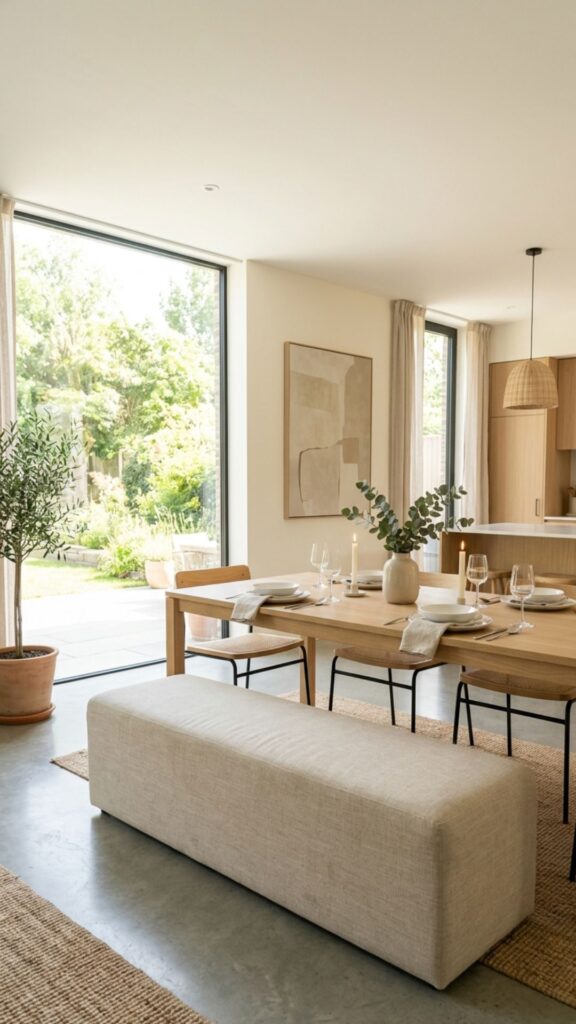
Not every dining bench needs a back panel. A clean, firmly cushioned bench without back support keeps the visual profile light and works well in spaces where an enclosed feel would be too heavy.
Choose a cushion at least three inches thick and secure it with fabric ties so it stays in place during use. This approach suits modern and Scandinavian-influenced interiors where clean lines and open space are central to the design.
17. Dual-Sided Bench as a Room Divider
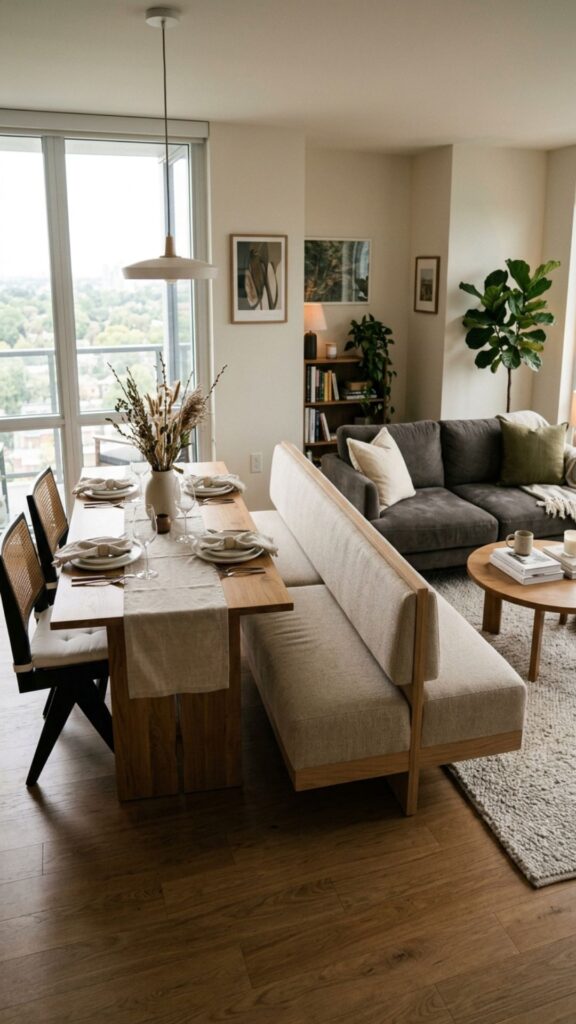
In open-plan homes, a dual-sided bench can face two directions at once — dining table on one side, living area or kitchen on the other. Both sides get a functional seat and the bench quietly separates two zones without blocking light or sightlines.
Use the same cushion fabric on both faces for visual cohesion. The back panel between the two seating sides can include storage slots, a low shelf, or simply serve as a clean structural divider.
18. Beadboard Bench for a Cottage Feel
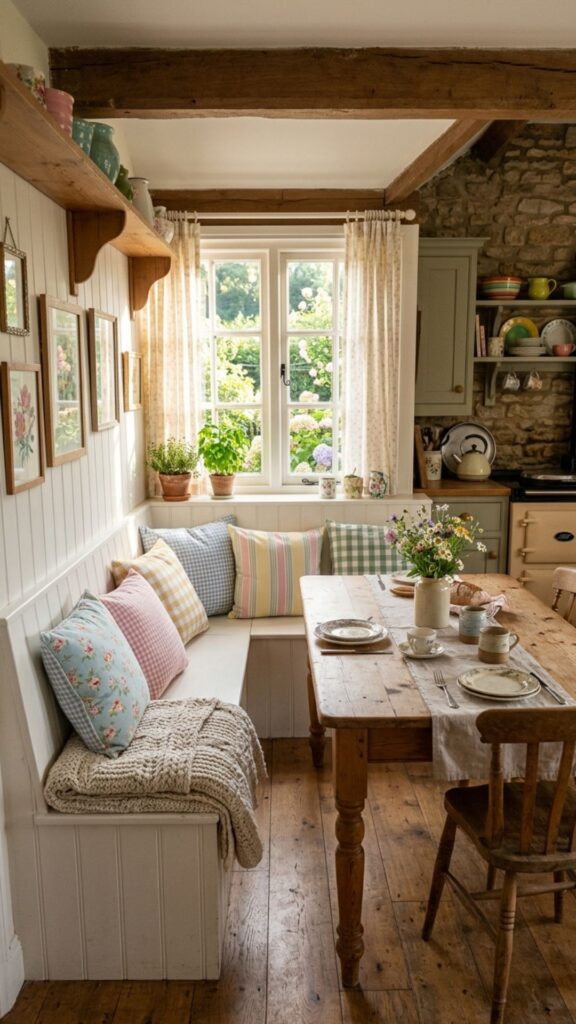
Beadboard paneling on the sides and back of a dining bench creates a cottage or coastal aesthetic that’s hard to replicate with any other material. Paint it white and it works with almost any color scheme in the room.
This style suits both older homes with character woodwork and newer builds looking for warmth. Add a cushion in a stripe, check, or floral pattern in navy, red, or sage green and the result feels considered and genuinely inviting.
19. Vertical Shiplap Backing for a Taller Look
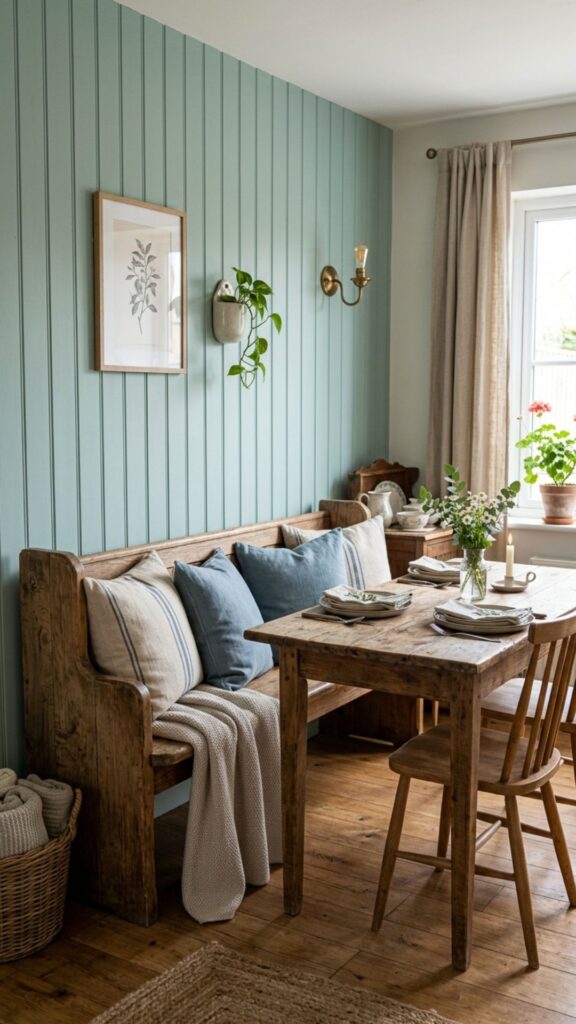
Vertical shiplap behind the bench — rather than horizontal — draws the eye upward and makes ceiling heights feel more generous than they actually are. It gives a slightly more contemporary result while retaining the warmth of natural wood detailing.
Paint it in a mid-tone — dusty blue, sage, warm clay, or soft terracotta — and the bench wall becomes a genuine accent feature. This is especially effective in dining rooms that lack architectural detail and need a focal point.
20. Multi-Height Bench for Families With Young Children
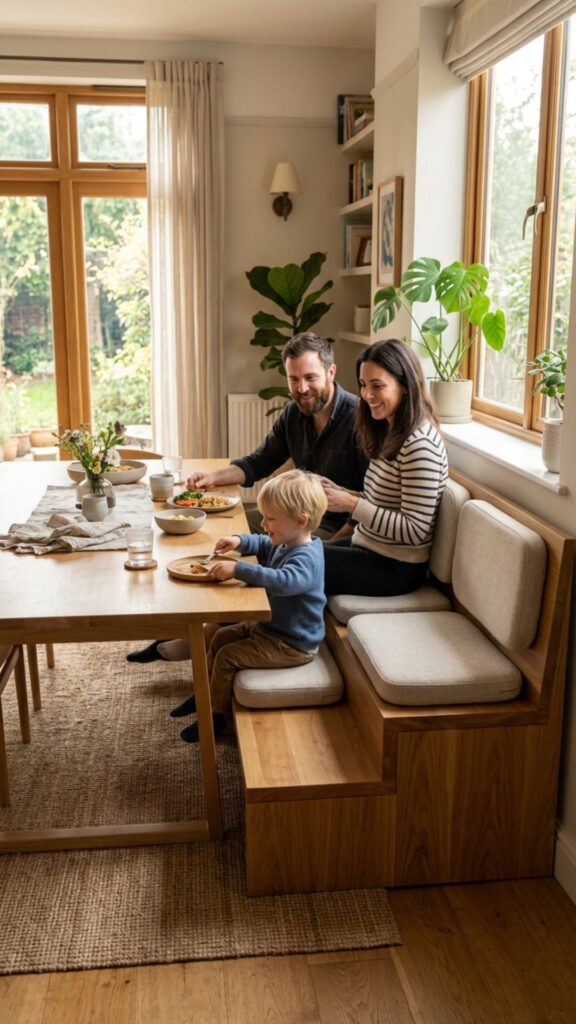
Designing the bench with two seat heights — a standard section for adults at around 18 inches and a slightly lower section for younger children — makes the dining table genuinely comfortable for everyone at the same time.
Use the same cushion fabric across both levels so the piece reads as one unit. This is a practical, thoughtful detail that guests notice immediately, and it removes one of the most common friction points in family mealtimes.
Bringing It All Together
A dining room built in bench is one of those upgrades that earns its place quickly and keeps paying off. It solves real, everyday problems — not enough seating, awkward corners, nowhere to store linens — and does it in a way that makes the room look better in the process. Whether you lean toward a rustic reclaimed wood nook or a sleek upholstered banquette, the right bench can become the most used and most loved feature in your dining room.
Start by identifying which style fits your home’s existing character. Then choose one or two practical features — storage, upholstery, built-in shelving — that match your lifestyle. A well-built bench, even a simple one, will reward you every single day.
Sketch out your space, measure your wall, and pick the idea that excites you most. You may be closer to your ideal dining room than you realize.
What is a dining room built in bench and how is it different from a regular bench?
A dining room built in bench is permanently fixed to a wall or built into a corner, making it part of the room’s structure rather than a piece of furniture you can move. It typically seats more people per foot of space, often includes storage underneath, and creates a custom look that freestanding furniture doesn’t achieve.
How much does it cost to add a built in bench to a dining room?
A basic DIY dining bench using plywood and trim usually costs between $200 and $600 in materials. A professionally built custom bench with upholstery, drawers, and detailed millwork can range from $1,500 to $5,000 or more depending on size, materials, and your location.
What dimensions work best for a dining bench?
The seat height should be between 17 and 19 inches from the floor, which aligns with standard dining chair height. A seat depth of 16 to 20 inches suits most adults comfortably. If you’re adding a cushion, factor in the added height so the finished seat still lines up properly with your table.
Can I get the built-in look without permanent installation?
Yes. Freestanding bench units pushed against a wall and styled with cushions and pillows can closely mimic the built-in aesthetic. Some modular storage bench systems also replicate the look without wall attachment — a practical option for renters or anyone who wants flexibility to rearrange later.