There’s something about cooking outdoors under a sturdy roof that just feels right. You get fresh air without worrying about a surprise rain shower. You get the crackle of a wood fire without the smoke filling your living room. And when you wrap it all in natural wood, stone, and warm lighting, you get a space that feels less like a project and more like a retreat.
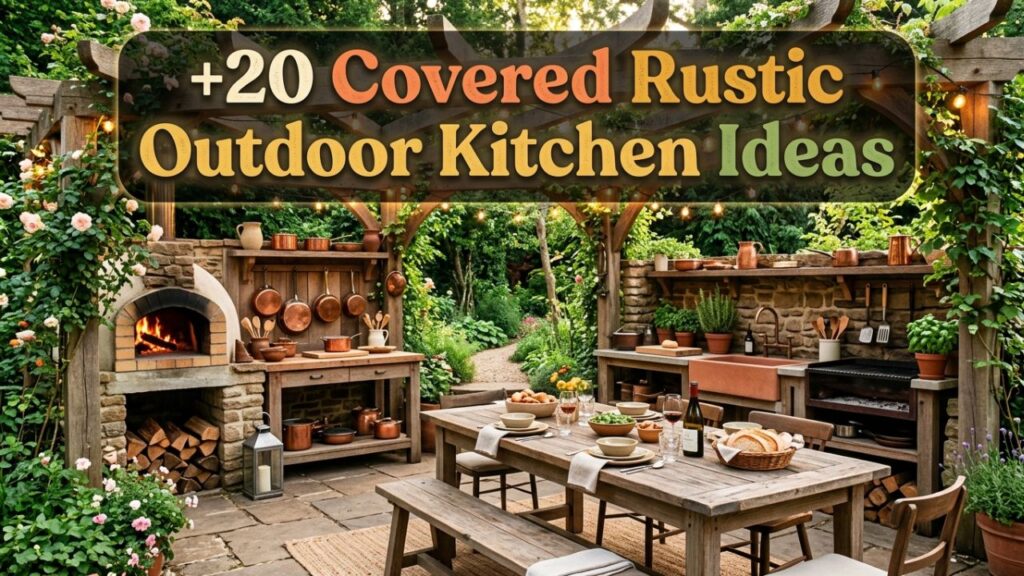
If you’ve been dreaming about a backyard spot where friends gather and meals slow down, you’re in the right place.
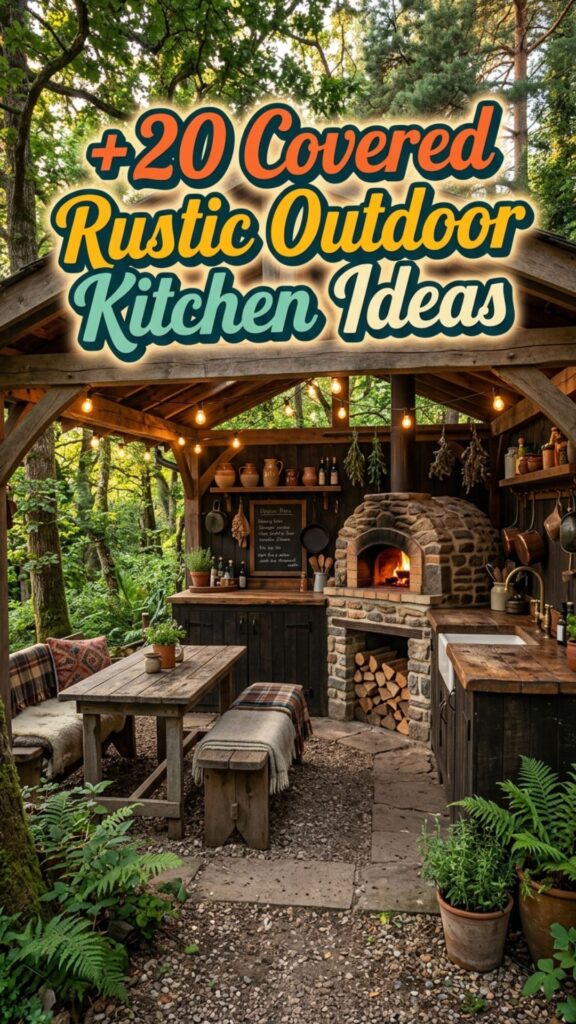
Below are 20 covered rustic outdoor kitchen ideas, each one packed with real details you can actually use. We’ve helped plan and build spaces like these, so we know what holds up over time and what people regret skipping. Let’s get into it.
1. Start With a Reclaimed Wood Pergola Roof
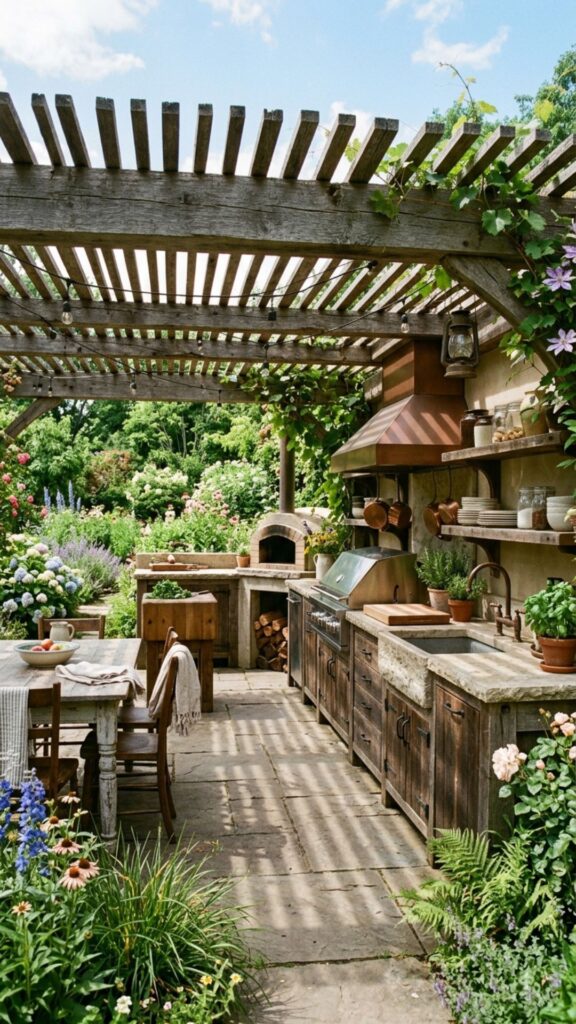
A pergola topped with reclaimed barn wood sets the whole rustic mood before you cook a single thing. The weathered grain adds instant history, and slatted beams let dappled light through during the day. For real rain protection, add a clear polycarbonate panel above the slats so you stay dry without losing that open feel.
Look for salvaged wood from local demolition yards or reclaimed lumber suppliers. Older oak and cedar resist rot better than fresh softwoods, and each plank carries its own marks. Seal it with a UV-resistant outdoor finish every couple of years, and it’ll age gracefully instead of falling apart.
2. Anchor the Space With a Stone Fireplace
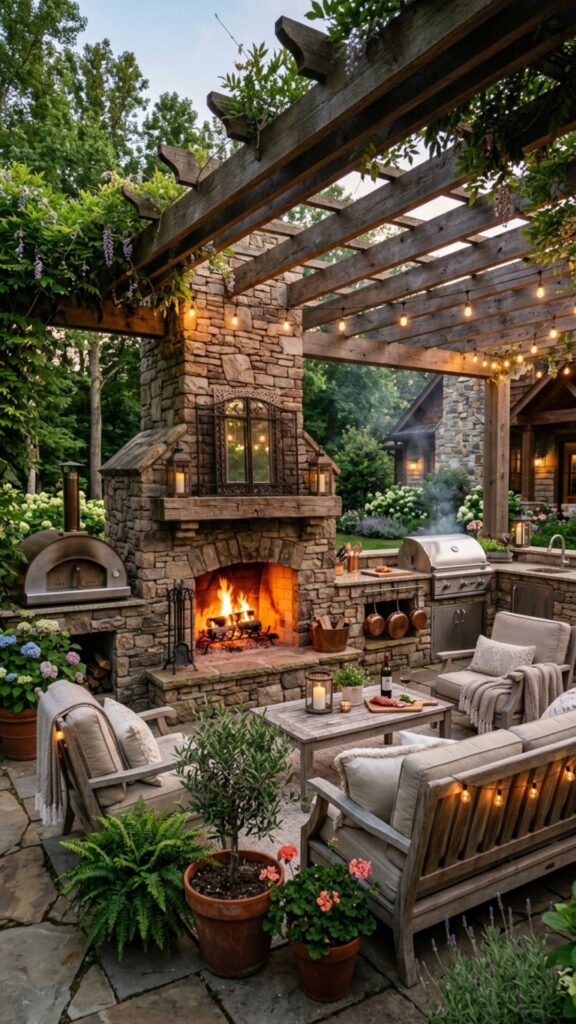
Nothing says cozy like a stacked-stone fireplace at the heart of your cook area. It pulls double duty as a heat source on chilly evenings and a striking focal point year-round. Position seating in a loose semicircle around it so guests naturally drift toward the warmth.
Fieldstone and river rock give that hand-built, timeworn look. If a full masonry build feels out of budget, stone veneer panels deliver the same texture at a fraction of the weight and cost. Just make sure your covered roof has proper clearance and a spark arrestor if you’re burning wood.
3. Install a Wood-Fired Pizza Oven
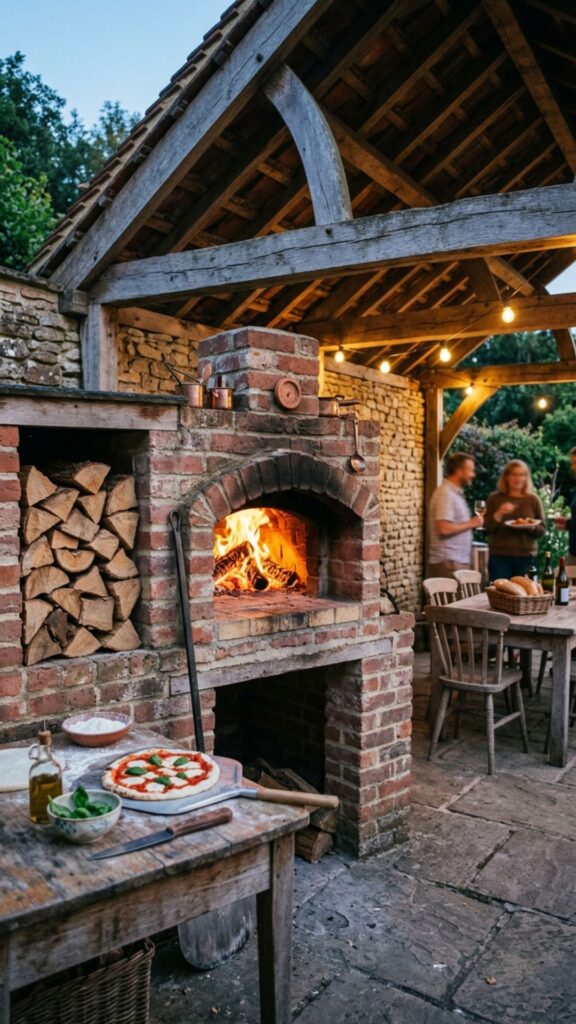
A wood-fired pizza oven turns any covered kitchen into a weekend destination. The domed shape reads rustic on its own, and the smell of blistering crust brings everyone outside. You can buy a prefab oven or commission a bricklayer to build one from firebrick.
Give the oven a covered corner with a non-combustible surround like brick or tile. Store your firewood in a nearby cubby so it stays dry and doubles as decor. Once you learn the rhythm of feeding the fire, you’ll be turning out pizzas, roasted vegetables, and even slow-cooked meats.
4. Choose Rough-Hewn Timber Beams for the Frame
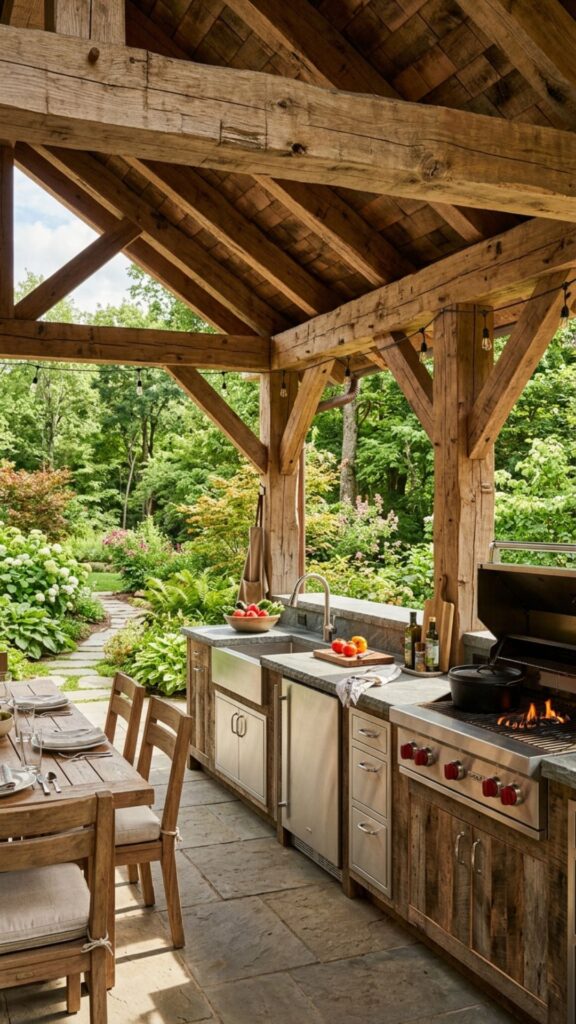
Thick timber beams are the backbone of the rustic look. Rough-sawn posts and exposed rafters feel solid and honest, like the structure was built to last generations. Douglas fir and cedar are popular choices because they’re strong and naturally resist decay.
Leave the beams slightly rough rather than sanding them glass-smooth. That texture catches shadows and gives the ceiling depth. If you want extra character, ask your lumber supplier about hand-hewn or bandsawn finishes that mimic old-world craftsmanship.
5. Add a Live-Edge Countertop
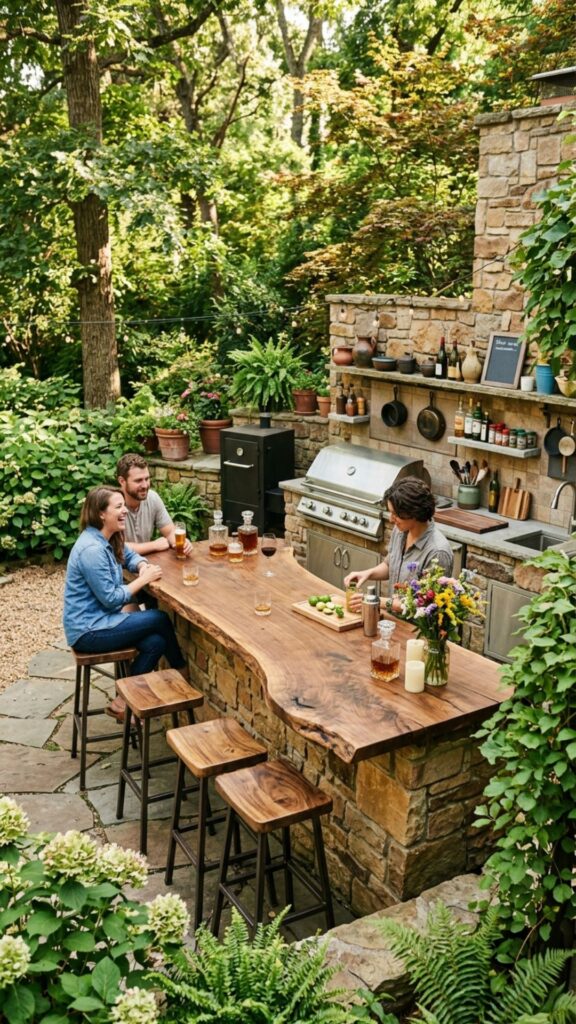
A live-edge slab counter keeps the natural shape of the tree right at your prep station. The organic curve breaks up all the straight lines in a kitchen and instantly softens the space. Walnut and elm slabs are gorgeous, though any hardwood sealed properly will work.
Since this counter lives outdoors, seal it with a food-safe, waterproof finish and re-oil it seasonally. Keep the live-edge counter for a bar or serving ledge, and use stone or concrete for zones near heat and heavy prep. That way you get beauty where it shows and durability where it counts.
6. Layer in Warm String Lights
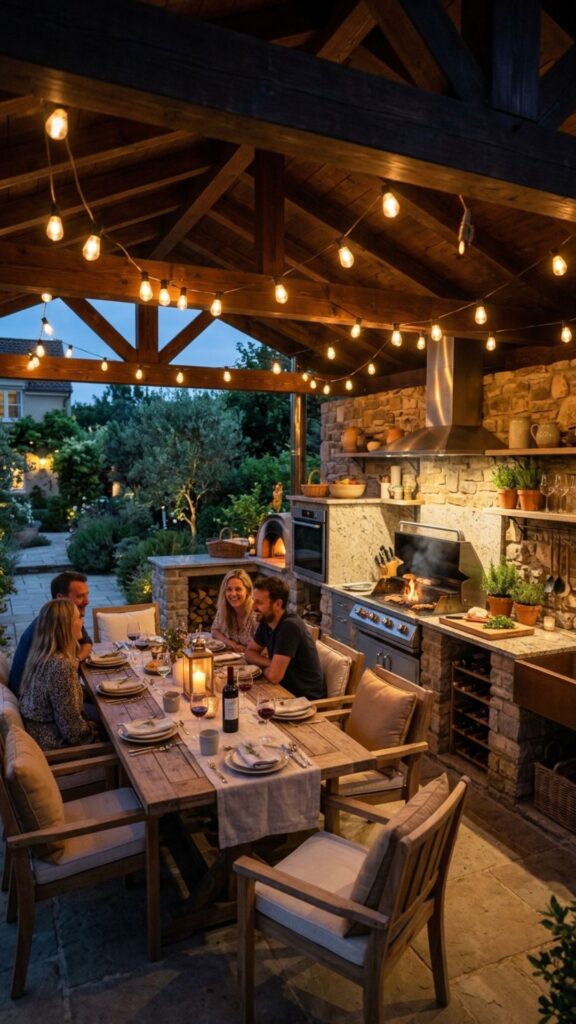
Lighting makes or breaks the evening mood. Warm-white string lights draped along the beams cast a soft glow that flatters food and faces alike. They’re affordable, easy to hang, and they make the whole space feel intimate the moment the sun drops.
Choose commercial-grade bulbs rated for outdoor use so they survive weather and wind. Run them on a dimmer or smart plug so you can dial the brightness up for cooking and down for lingering. A few strands go a long way toward that cabin-porch feeling.
7. Build a Stone or Brick Cooking Island
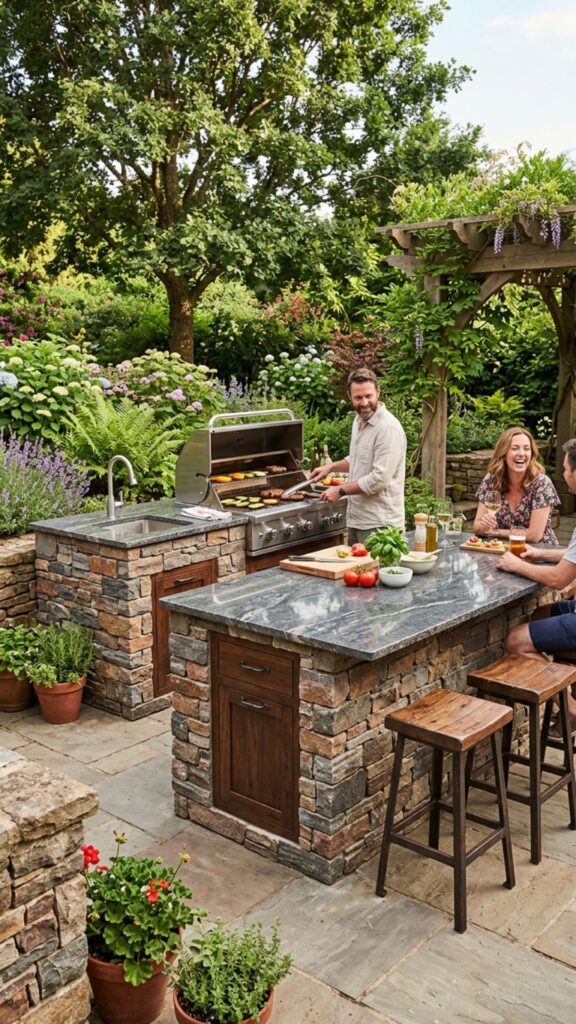
A masonry island grounds your kitchen and hides all the working parts. Wrap your grill, burners, and storage in stacked stone or reclaimed brick, and top it with a slab counter for prep and serving. The mass of the stone also holds up beautifully against heat and time.
Plan the layout around the classic work triangle: grill, prep space, and cleanup within easy steps of each other. Add a few open shelves or cabinet doors for tools and plates. This single feature does more heavy lifting for the rustic look than almost anything else.
8. Include a Sink for Real Convenience
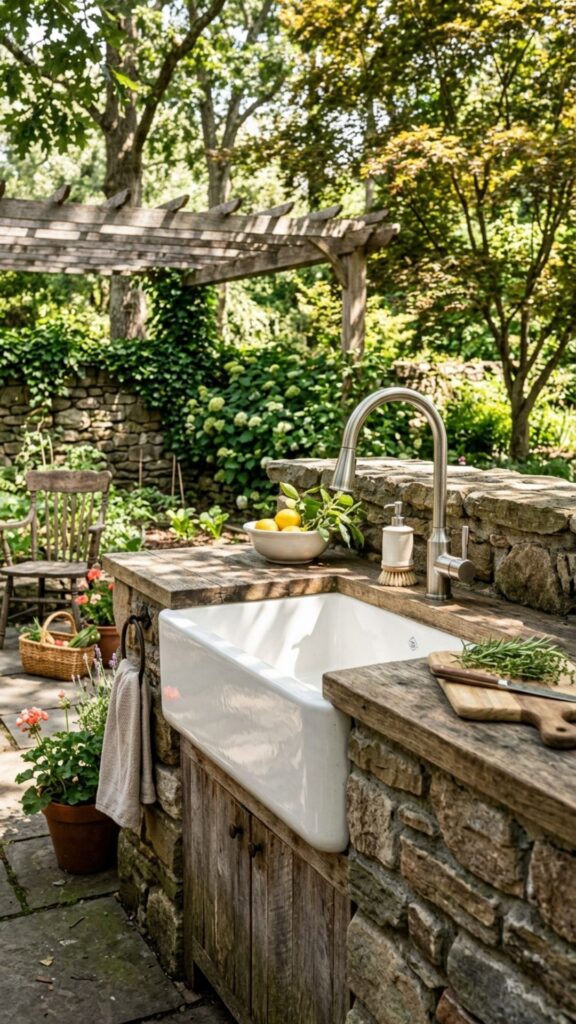
An outdoor sink saves you from running back and forth to the house with dirty hands and messy platters. A deep farmhouse-style basin fits the rustic theme and handles big pots with ease. Run a cold-water line at minimum, and add hot water if your budget and plumbing allow.
Set the sink into a stone or wood counter and pair it with a gooseneck faucet for clearance. In colder climates, install a shutoff valve so you can drain the line before winter. Trust us, once you have a sink out here, you’ll wonder how you managed without one.
9. Hang a Cast-Iron Pot Rack
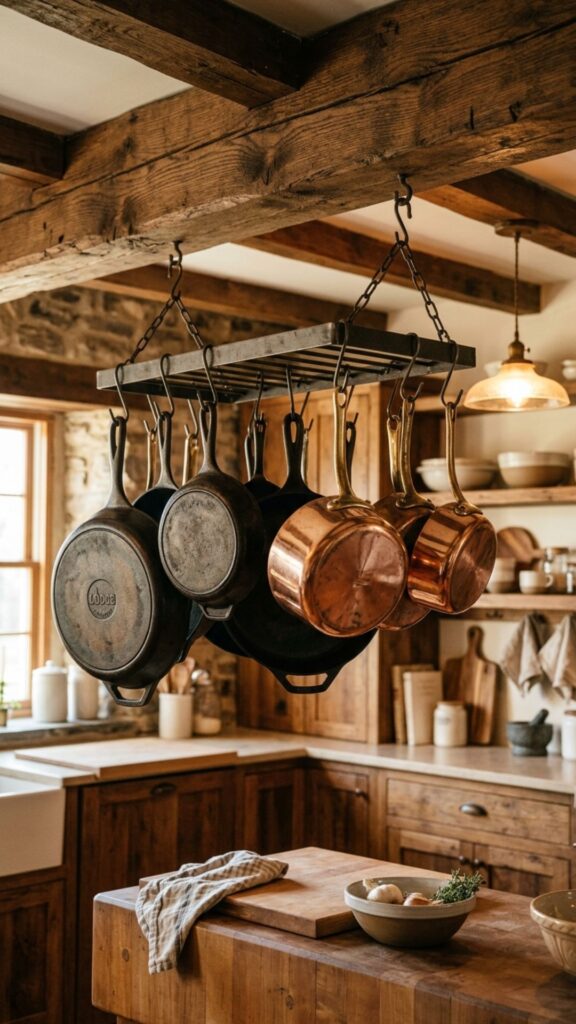
A hanging pot rack keeps your cast-iron skillets and copper pans within reach and adds serious rustic charm. Suspended from a timber beam, it turns everyday cookware into part of the decor. It also frees up counter and cabinet space in a compact kitchen.
Mount the rack into solid framing, not just decorative trim, since cast iron gets heavy fast. Season and store your pans well, because outdoor humidity can encourage rust. A quick wipe of oil after each use keeps them ready to go.
10. Use Weathered Metal Roofing
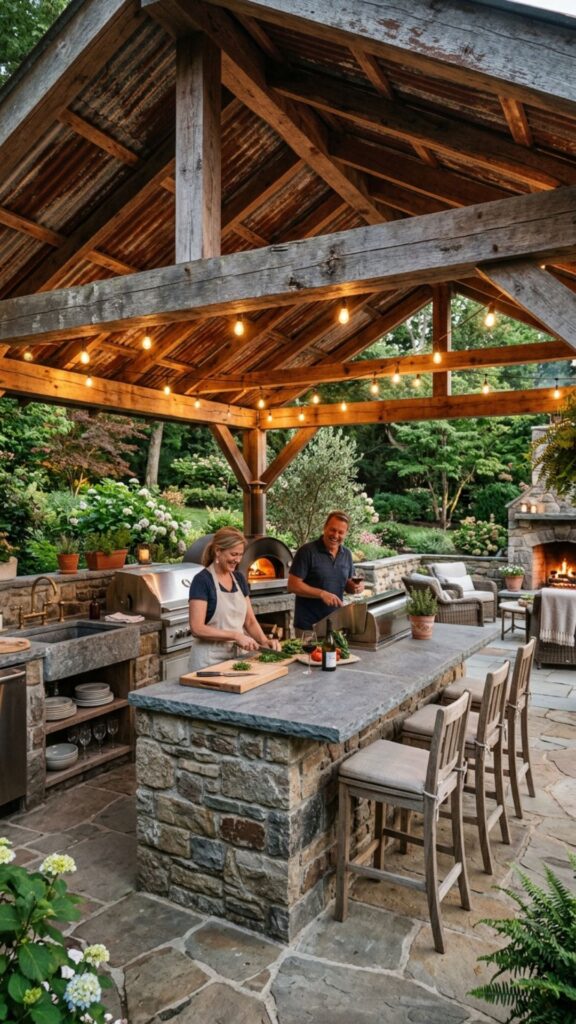
A corrugated or standing-seam metal roof shrugs off rain and snow while adding a farmhouse edge. The sound of rain tapping on metal is oddly comforting, and the material lasts for decades with almost no upkeep. Aged or galvanized finishes lean rustic without looking flashy.
Pitch the roof enough to shed water and add gutters to direct runoff away from your seating. Pair the metal above with warm wood below to balance the hardness. This combo is a favorite because it’s practical, affordable, and genuinely low-maintenance.
11. Create a Cozy Dining Nook With a Farmhouse Table
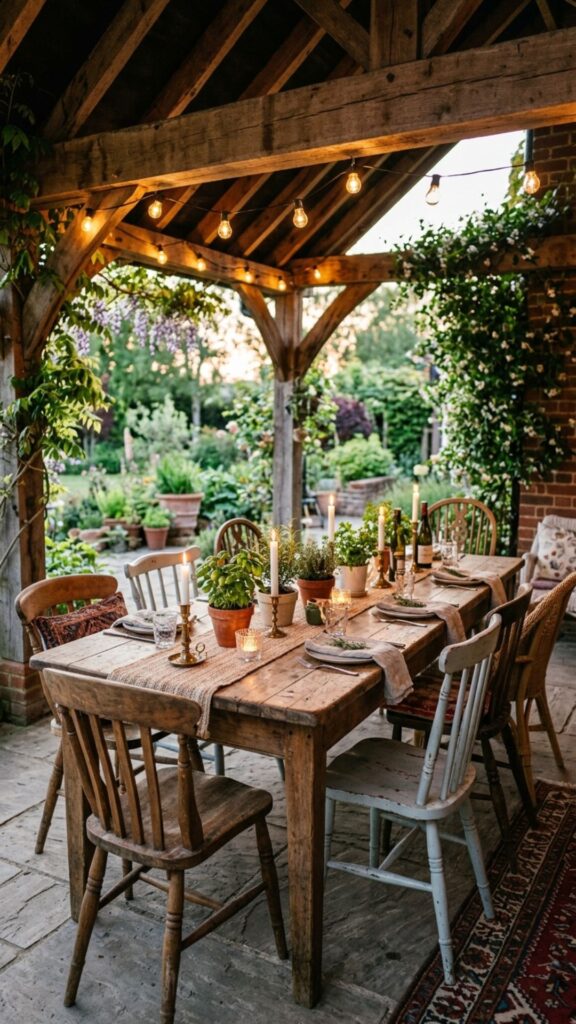
Your outdoor kitchen needs a place to actually sit and eat. A long farmhouse table built from thick planks invites big gatherings and lazy Sunday breakfasts. Pair it with mismatched chairs or a simple bench for that lived-in, welcoming feel.
Position the table under the covered section so meals aren’t cut short by weather. Add a runner, a few candles, and a centerpiece of potted herbs. The table quickly becomes the spot where people linger long after the plates are cleared.
12. Incorporate Natural Stone Flooring
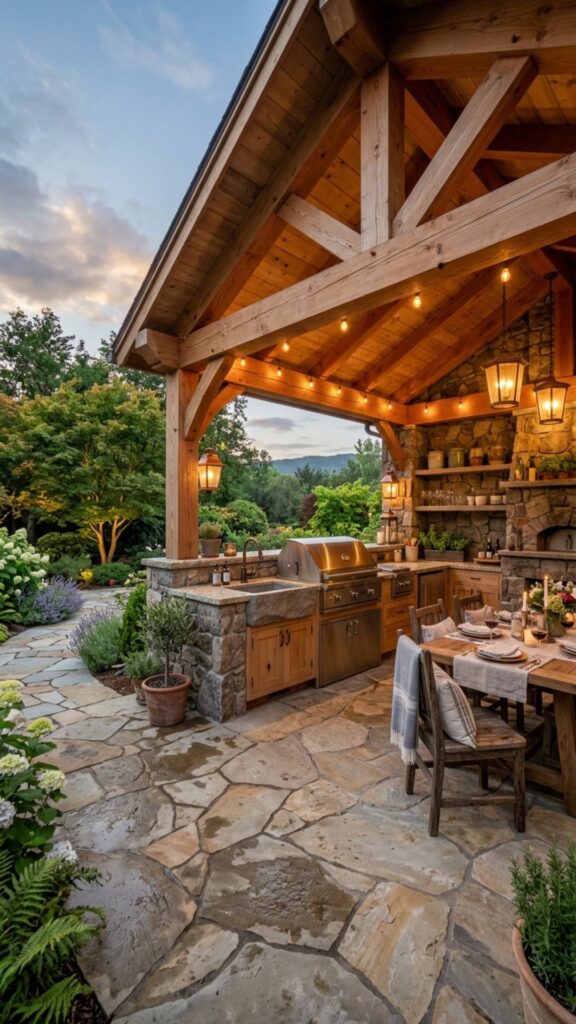
Flooring ties the whole space together and takes a real beating, so choose something tough. Flagstone, slate, or tumbled pavers handle foot traffic, grease drips, and weather while looking rugged and grounded. Their uneven surfaces also add grip underfoot.
Set the stone over a proper base with slight drainage slope so water never pools. Sweep and rinse it occasionally, and reseal every few years to guard against stains. Unlike wood decking, stone won’t splinter or need annual refinishing.
13. Add a Built-In Wood Storage Nook
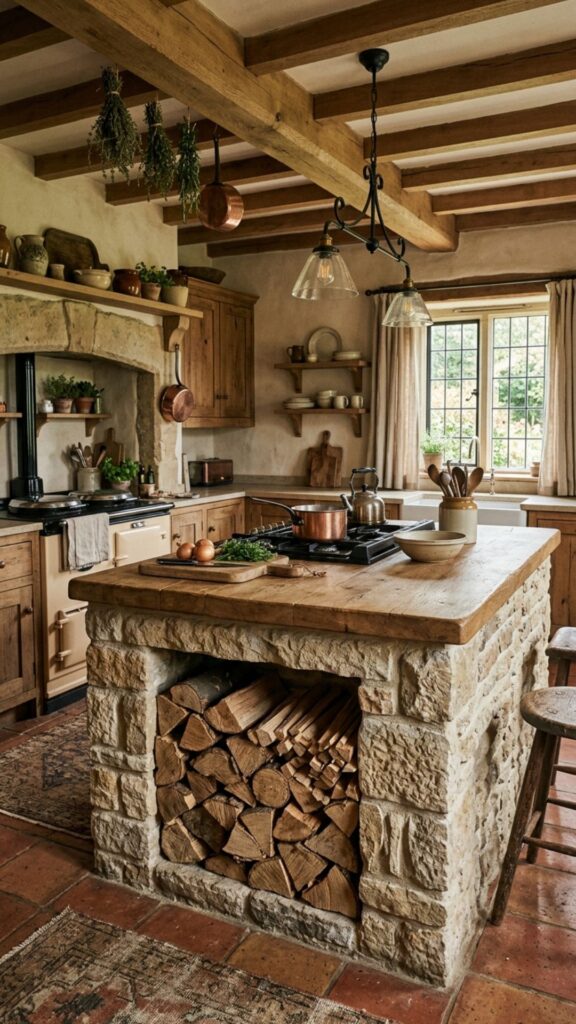
If you’re cooking with fire, dry wood is non-negotiable. A built-in log store keeps fuel handy, dry, and looking intentional rather than cluttered. Tuck it into the base of your cooking island or beside the fireplace for easy reach.
Neatly stacked firewood is also a design element in its own right. The cut ends and warm tones reinforce the rustic story you’re telling. Keep the stack rotated so the oldest, driest logs are always the ones you grab first.
14. Warm the Space With Overhead Heaters
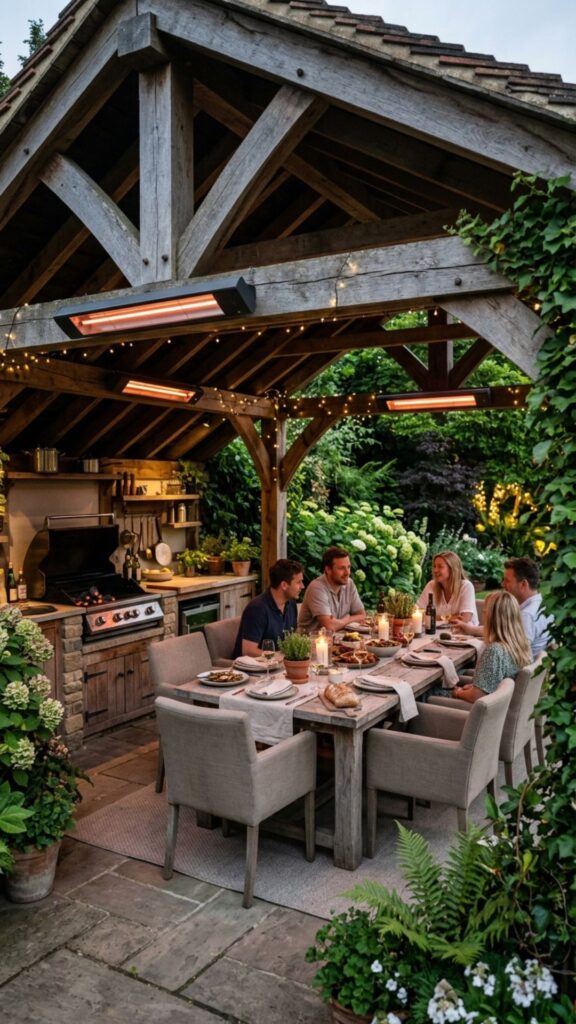
To stretch your season into fall and winter, plan for heat. Mounted infrared heaters tuck under the roofline and warm people without taking up floor space. They kick on instantly and target the seating zones where warmth matters most.
Electric infrared units are clean and easy near a covered ceiling, while propane options work where power is limited. Combine a heater or two with your fireplace, and suddenly a frosty evening feels perfectly comfortable. That comfort is what keeps people coming back outside.
15. Mix in Vintage and Salvaged Accents
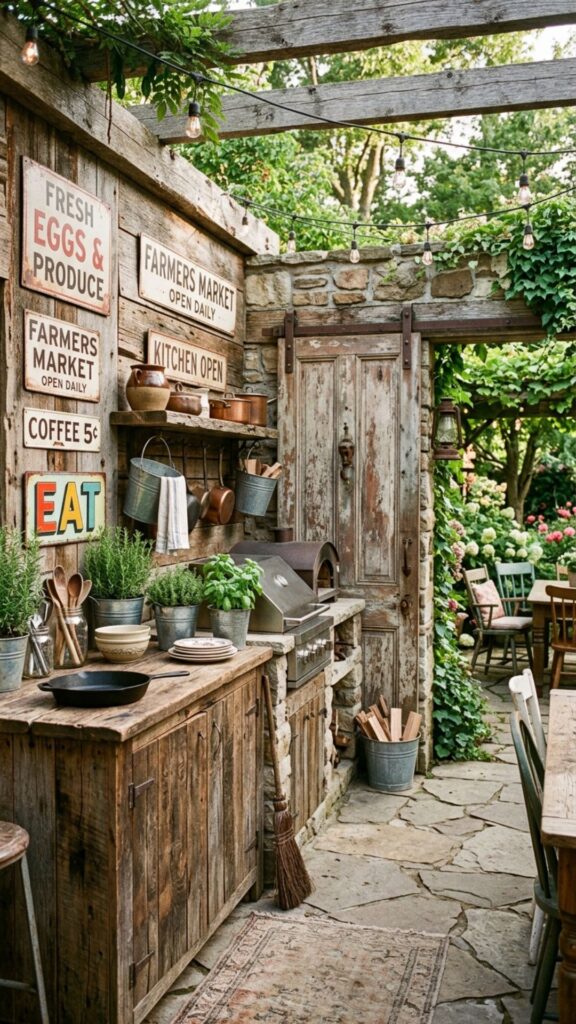
The details are what make a rustic kitchen feel personal instead of staged. Hunt down vintage enamel signs, an old barn door for a pantry, or galvanized buckets for utensil storage. These finds add soul and stories you can’t buy new.
Check flea markets, estate sales, and reclaimed building suppliers for one-of-a-kind pieces. Mix a few genuine antiques with sturdy new gear so the space works as hard as it looks. A little imperfection is exactly what gives rustic its charm.
16. Grow a Living Herb Wall
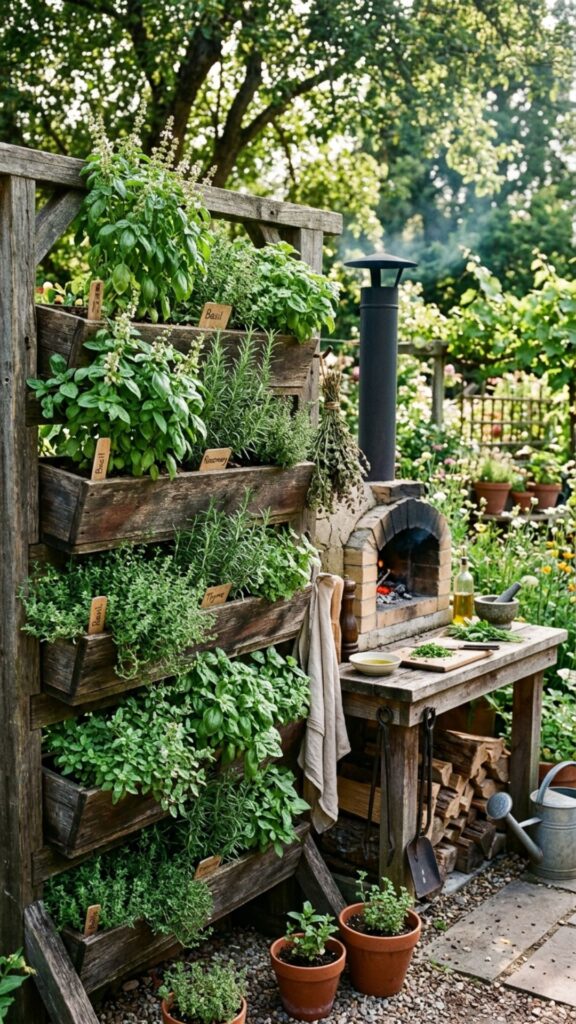
Fresh herbs steps from your grill are both practical and pretty. A vertical planter or mounted rail of pots keeps basil, rosemary, and thyme within snipping distance. The greenery softens hard stone and wood surfaces and smells wonderful.
Position the herb wall where it catches morning light but stays shaded from harsh afternoon sun. Water regularly, since planters dry out faster than garden beds. You’ll cook better and cheaper when the seasoning is growing right beside you.
17. Frame the Space With Timber Posts and Open Sides
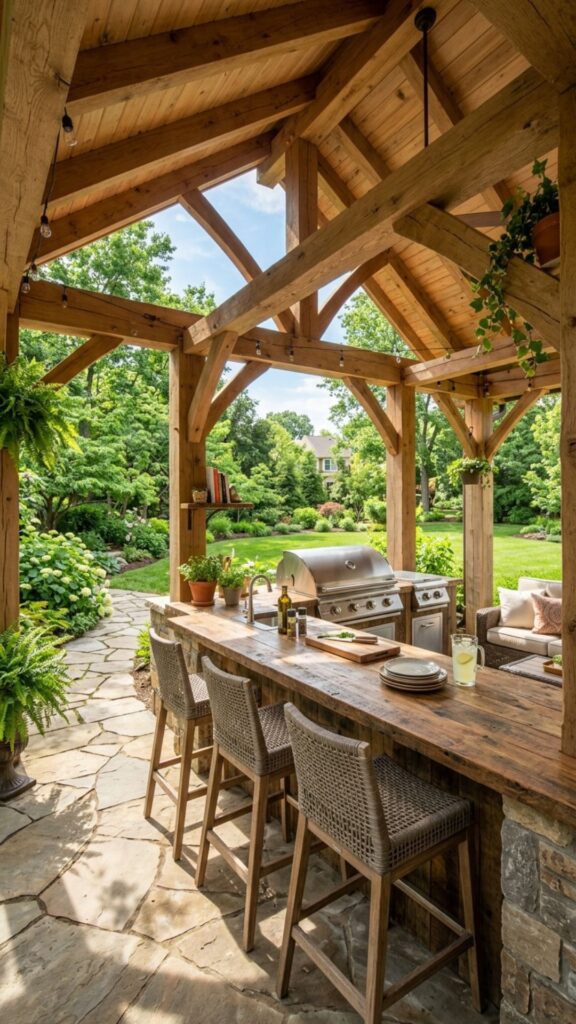
Open sides keep your covered kitchen from feeling closed in. Sturdy timber posts hold up the roof while letting breezes and views flow through. This open-air layout is ideal for warm climates and for anyone who wants to feel connected to the yard.
Add roll-down shades or outdoor curtains between the posts for privacy and sun control. On breezy days you tie them back; on hot afternoons you let them down. It’s a simple way to make one space work in many conditions.
18. Choose Rustic Bar Seating
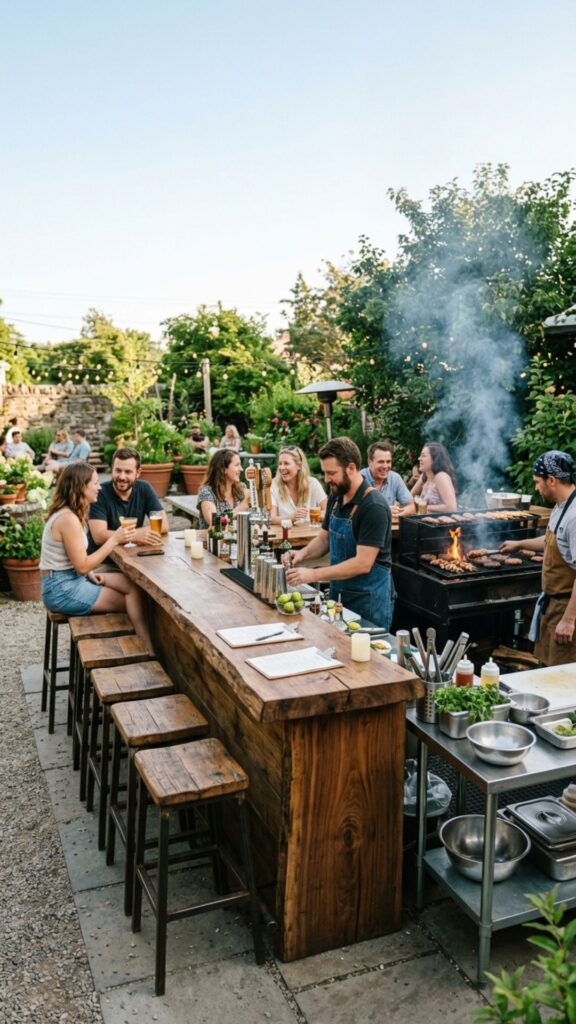
A raised counter with stools invites guests to hang out while you cook. Bar seating keeps company close without crowding your work zone. Thick wood or stone counters with backless stools fit the relaxed rustic vibe.
Leave about 24 inches of width per stool and a foot of knee clearance below the counter. Tuck the stools fully under the overhang so they stay dry. This little social zone turns cooking from a chore into the main event.
19. Add Textiles for Softness and Warmth
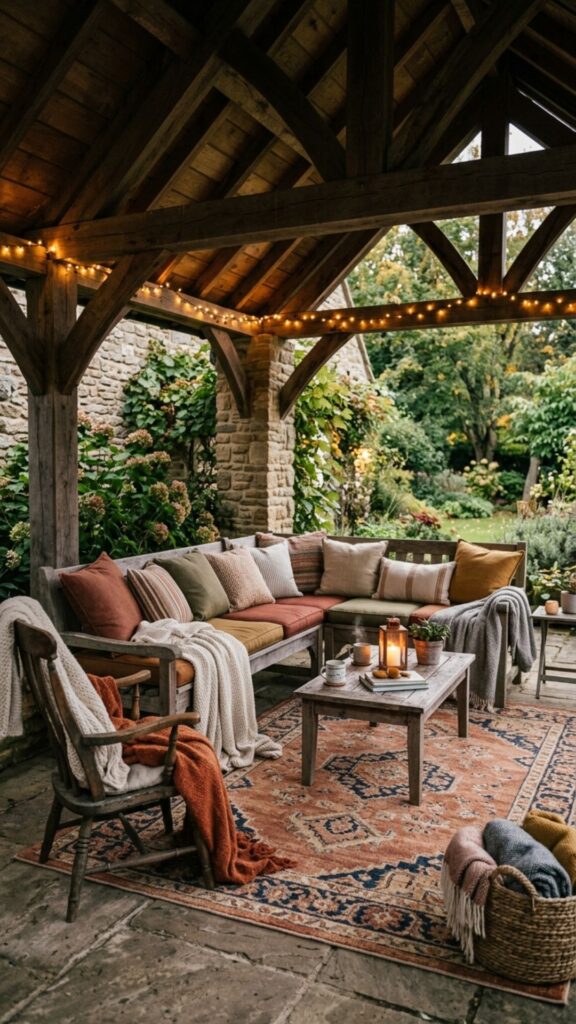
Hard surfaces dominate outdoor kitchens, so a few textiles bring welcome softness. Weather-resistant cushions, a wool-look outdoor rug, and a couple of throw blankets make the seating area feel like a room. They also add color and pattern to all that wood and stone.
Choose fabrics rated for outdoor use so they resist fading and mildew. Store cushions in a deck box during long stretches of bad weather. These small touches are what turn a functional space into a cozy one people never want to leave.
20. Finish With a Rustic Bar Cart or Beverage Station
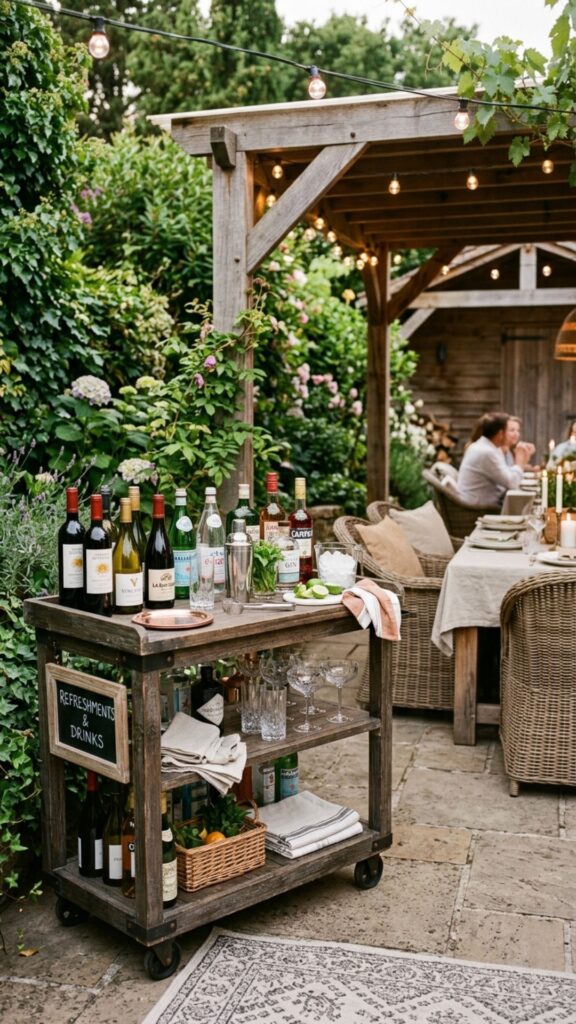
A dedicated drink station keeps guests served and out of your way at the grill. A rolling bar cart, a small outdoor fridge tucked into stonework, or a simple ice bin does the trick. Stock it with glassware, a bottle opener, and whatever your crowd loves.
Build it near the seating so refills don’t interrupt the flow of the meal. A weathered wood cart on casters lets you roll drinks wherever the party moves. It’s the finishing touch that makes hosting feel effortless.
Bringing Your Cozy Backyard to Life
A covered rustic outdoor kitchen is more than a place to grill. It’s where slow dinners happen, where friends stay late, and where your backyard finally earns its keep in every season. The best part is that you don’t need all 20 of these ideas at once. Start with a solid roof and one strong feature, then build out as your budget and confidence grow.
Ready to get cooking? Grab a notebook, walk your yard, and mark the spot that gets the right mix of shade, breeze, and views. Sketch a rough layout using two or three ideas from this list, then talk to a local contractor or landscape designer about what your space can handle. Your cozy backyard is closer than you think, so take that first step this weekend.
How much does a covered rustic outdoor kitchen cost?
A covered rustic outdoor kitchen typically costs between $10,000 and $50,000 or more. Simple setups with a pergola, grill, and basic counters land on the lower end. Full builds with masonry islands, stone fireplaces, plumbing, and premium roofing push toward the higher range.
What materials work best for a rustic outdoor kitchen?
The best materials are natural stone, reclaimed or rough-hewn wood, brick, and weathered metal. Stone and brick handle heat and weather well, while wood adds warmth and character. Use durable surfaces like stone or concrete near heat and cooking zones for the longest life.
Do I need a permit to build a covered outdoor kitchen?
In most areas, yes. Permanent roofs, gas lines, electrical work, and plumbing usually require permits and inspections. Check with your local building department before you start, since rules vary by region and skipping them can cause problems when you sell your home.
How do I protect an outdoor kitchen from rain?
Install a solid roof such as metal, polycarbonate, or shingles with a proper pitch and gutters. Choose weather-resistant materials, seal wood surfaces, and add roll-down shades or curtains on open sides. Draining water lines before winter prevents frozen, cracked pipes in cold climates.
Can I use an outdoor kitchen in winter?
Yes, with the right setup. A covered roof, a fireplace or infrared heaters, and windbreaks like curtains or partial walls keep the space usable in cold weather. Just remember to drain any water lines and store cushions to protect them from freezing temperatures.