There’s something about cooking near the water that makes food taste better. Maybe it’s the salt air, or the way the light softens as the sun drops toward the horizon. Whatever it is, a well-designed outdoor kitchen turns your backyard into a permanent vacation spot.
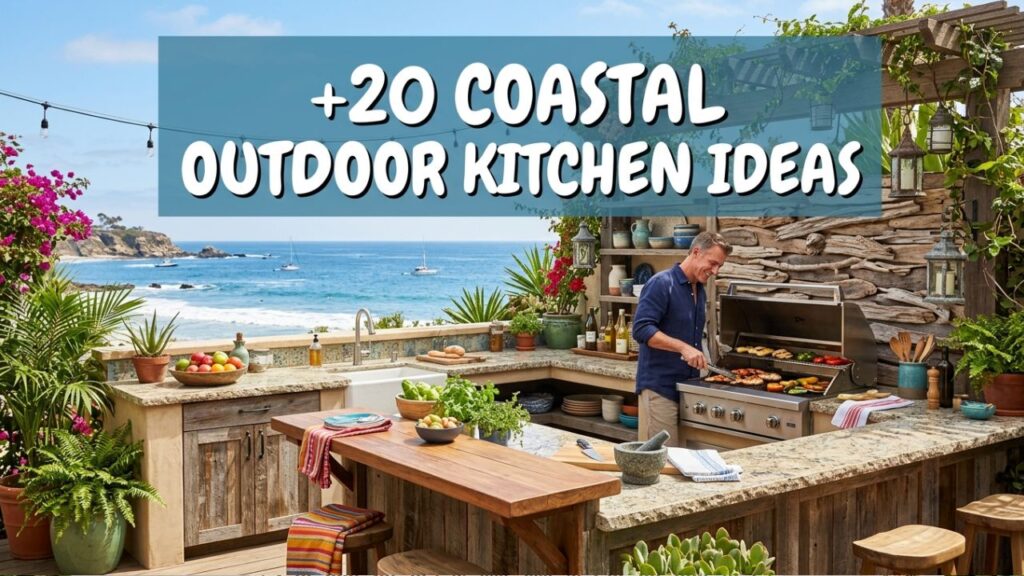
The tricky part? Coastal environments are tough on materials. Salt, humidity, and strong sun wear down anything that isn’t built to handle them. So the best coastal outdoor kitchen ideas blend that easy, breezy look with smart choices that actually last.
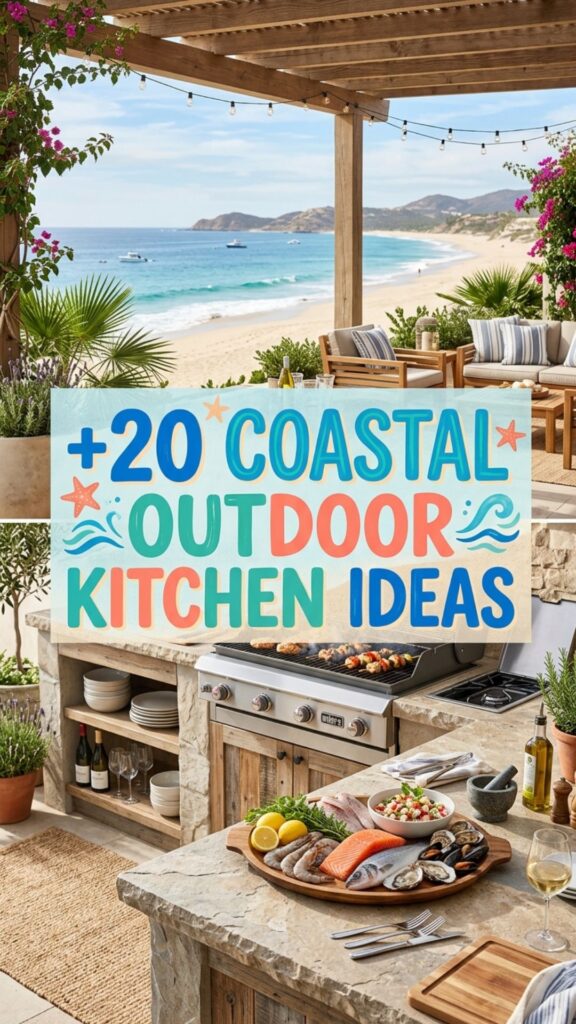
In this guide, you’ll find 20 practical ideas to help you plan a seaside-inspired outdoor kitchen. We’ll cover colors, materials, layouts, lighting, and finishing touches. Whether you’re steps from the shore or just chasing that beach-house feel, you’ll walk away with plenty of inspiration and real-world tips.
1. Start With a Weathered White Base
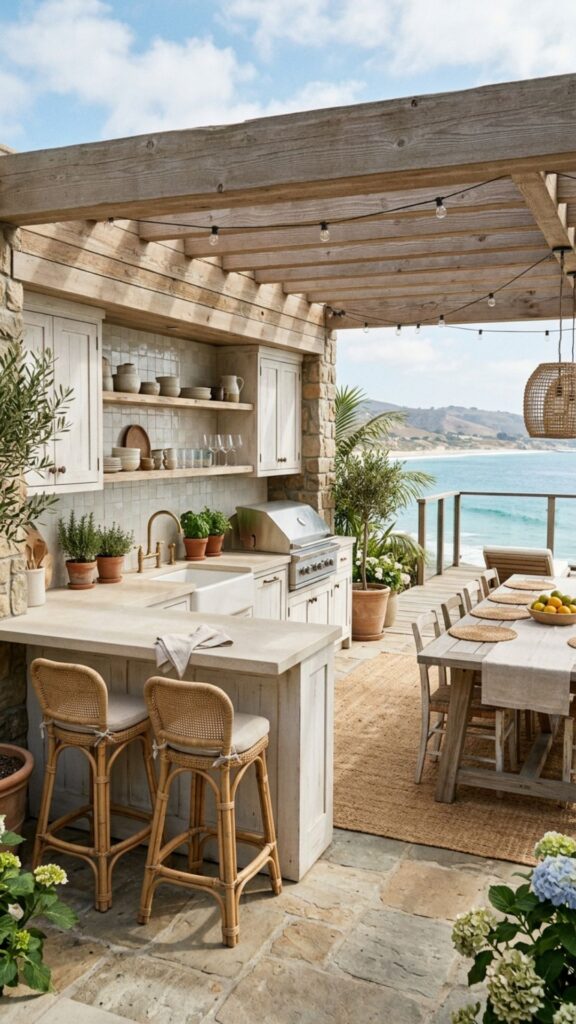
White is the anchor color of coastal design. It reflects sunlight, keeps surfaces cooler, and instantly reads as fresh and clean. Use whitewashed cabinetry, pale countertops, or crisp painted trim to build your foundation. A slightly weathered or matte finish looks more relaxed than glossy bright white.
To keep it practical, choose marine-grade paints or powder-coated finishes that resist salt and moisture. I’ve seen glossy lacquer peel within two seasons near the shore, so matte, breathable coatings tend to hold up better. Pair your white base with natural textures so the space feels warm instead of sterile.
2. Bring in Driftwood and Reclaimed Wood
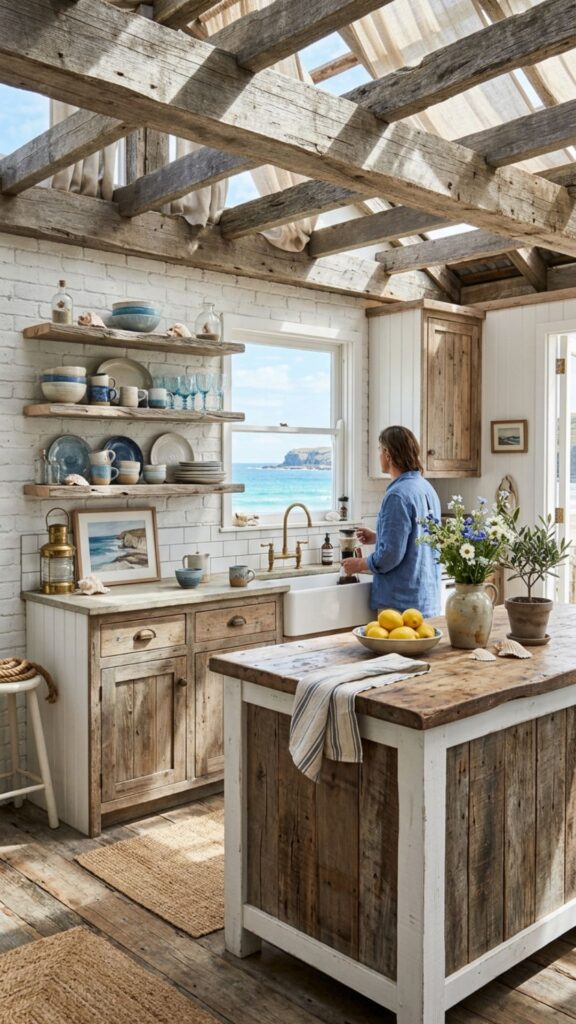
Few materials say “coast” like weathered wood. Reclaimed timber or driftwood-style finishes add character and a lived-in charm that new lumber can’t match. Use it for a bar front, open shelving, or a rustic pergola overhead.
Seal any real wood with a UV-resistant, water-repellent finish, and reapply every year or two. If maintenance worries you, composite boards that mimic driftwood tones offer the same look with far less upkeep. They handle salt spray and humidity without warping or splitting.
3. Choose a Soft Blue and Sea-Glass Palette
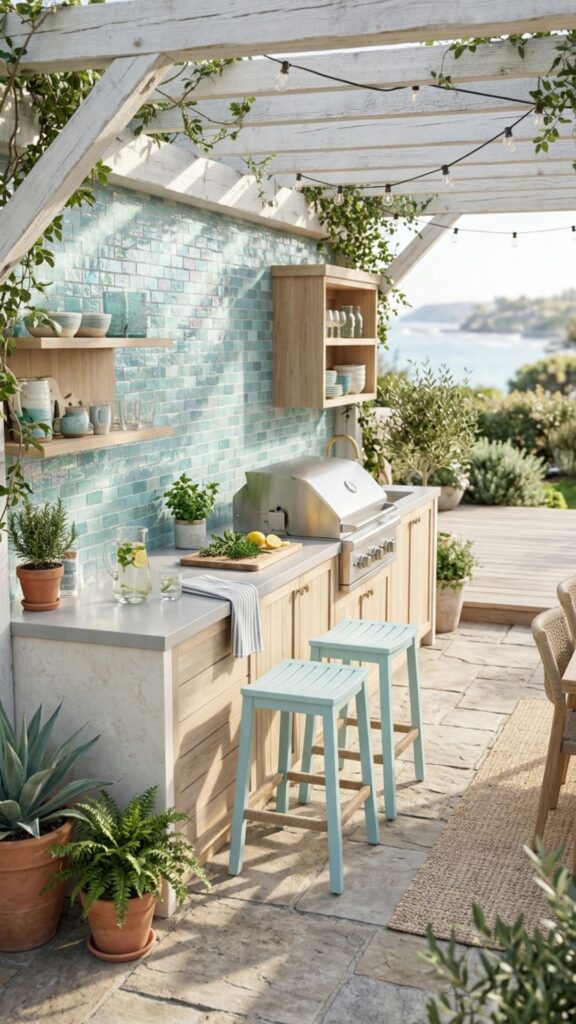
Coastal outdoor kitchen ideas often lean on ocean-inspired blues and greens. Think pale aqua, seafoam, and soft cornflower. These shades feel calm and cool, perfect for a space where you want to unwind.
Add color through tile backsplashes, painted stools, or cushioned seating rather than large permanent surfaces. That way you can refresh the look later without a full renovation. A sea-glass tile backsplash, for instance, catches the light beautifully and ties the whole area together.
4. Install a Stainless Steel Grill Station
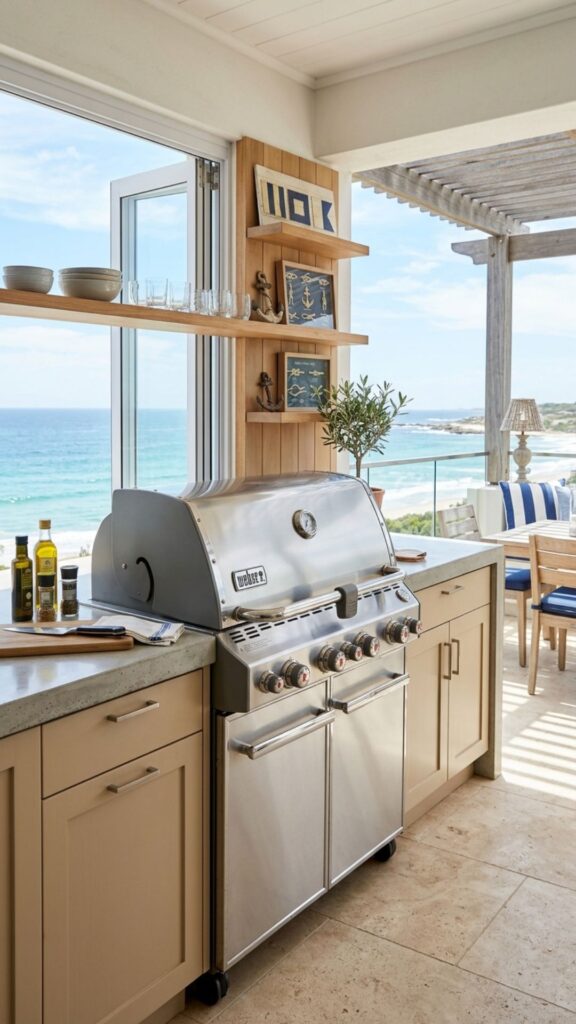
Stainless steel is a coastal workhorse. It resists rust when properly maintained and pairs cleanly with lighter cabinetry. A built-in grill station gives you a solid cooking core to design the rest of the kitchen around.
Look for marine-grade 316 stainless rather than standard 304, since it handles salt exposure far better. Wipe surfaces down regularly and use a stainless cleaner to prevent corrosion. This small habit makes a huge difference near the water.
5. Add a Shaded Pergola or Cabana
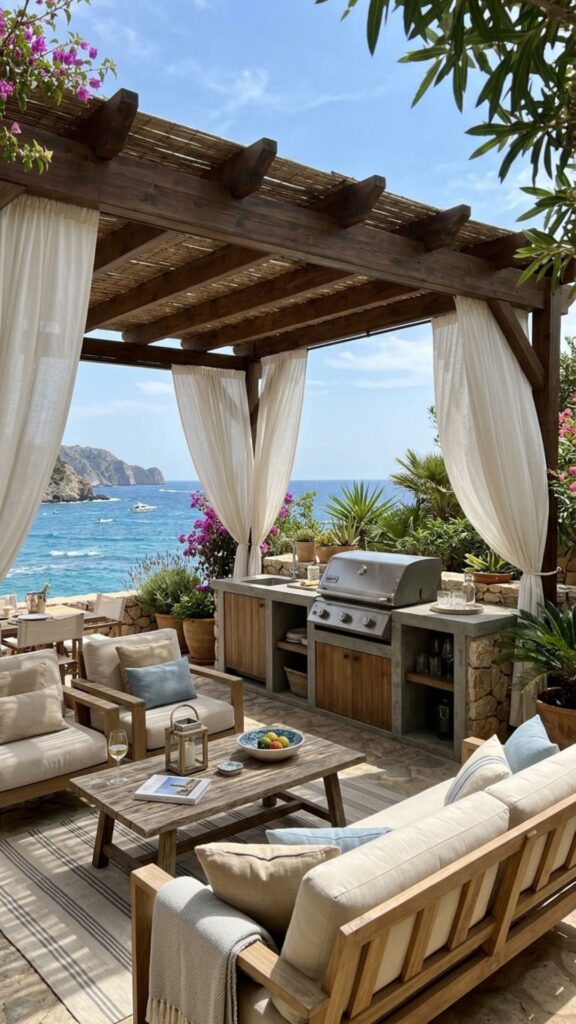
Sun is relentless by the coast, so shade isn’t optional. A pergola creates a defined roofline and softens the harsh midday light. Drape it with breezy outdoor curtains for extra shade and a resort-like feel.
Choose aluminum or treated wood framing that stands up to weather. If you want full protection from rain and sun, a solid-roof cabana or retractable canopy gives you more control. Either way, shade extends how often you’ll actually use the space.
6. Layer in Natural Stone Countertops
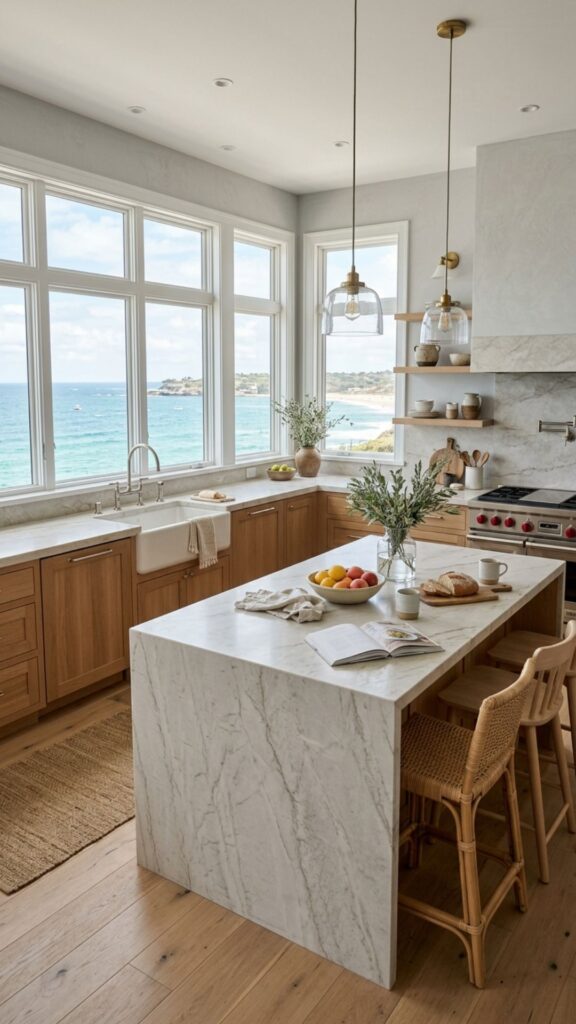
Stone counters bring durability and an organic look that suits coastal design. Light-colored granite, quartzite, or honed limestone all work well. Their neutral tones keep the palette airy while standing up to daily use.
Seal porous stones properly to prevent stains and salt damage. Quartzite is a favorite of mine for coastal builds because it resists heat and etching better than marble. It gives you that soft, natural look without the fragility.
7. Use Woven and Rattan-Style Seating
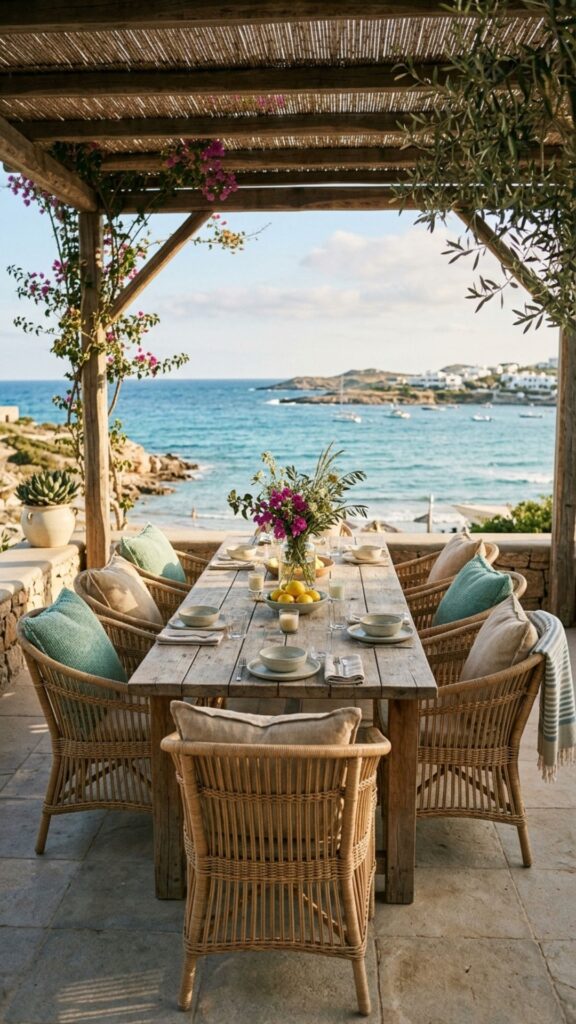
Seating sets the mood, and woven textures scream relaxed seaside living. All-weather wicker or rattan-look furniture adds warmth without heaviness. Cluster chairs around a low table for that easy, gather-round vibe.
Pick synthetic resin wicker rather than natural fiber, which breaks down fast outdoors. Add plush cushions in fade-resistant fabrics like solution-dyed acrylic. They keep their color through seasons of sun and stay comfortable through long dinners.
8. Create a Casual Bar Counter With Stools
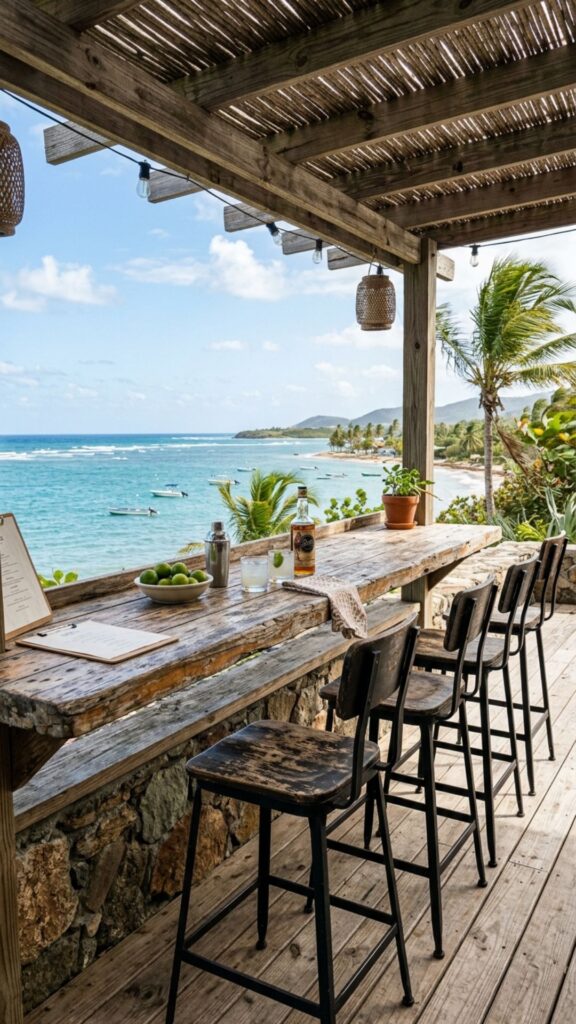
A bar counter turns your kitchen into a social hub. Guests can sit and chat while you cook, which is exactly the point of an outdoor kitchen. Overhang the counter by about 12 inches to make room for knees and stools.
Match your stools to the coastal theme with weathered wood seats or rope-wrapped bases. Backless stools tuck away neatly and keep sightlines open. It’s a small detail that keeps the whole space feeling breezy.
9. Light It With Warm String Lights
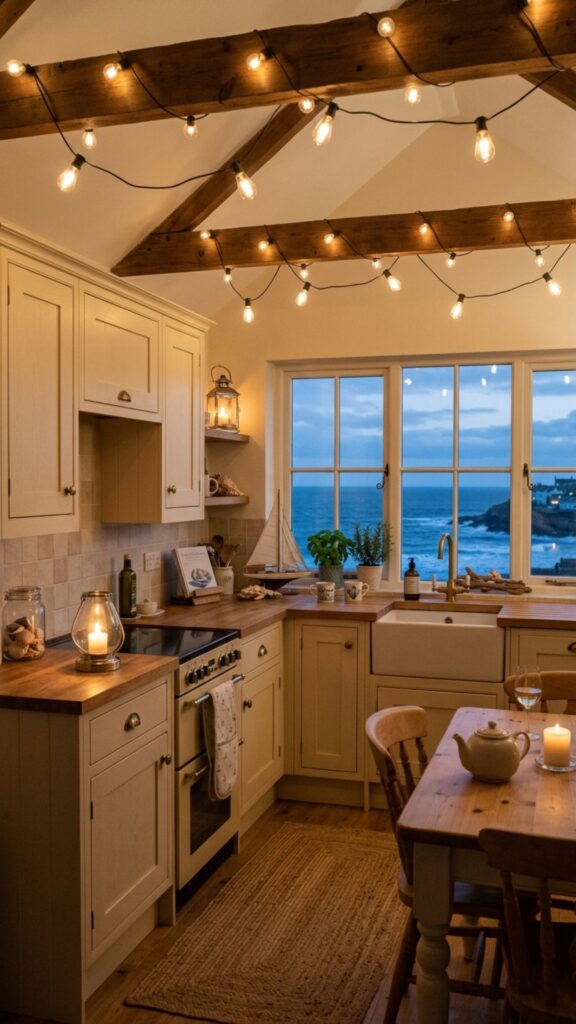
Lighting shapes the entire mood after sunset. Warm-white string lights draped overhead cast a soft glow that feels festive and calm at once. They’re an easy, affordable way to make the space inviting.
Choose outdoor-rated LED strands with sealed sockets to handle moisture. Add a dimmer or smart plug so you can adjust the mood for dinners or late-night hangouts. Layer in a few lanterns for extra charm and backup light.
10. Add a Fire Feature for Cool Evenings
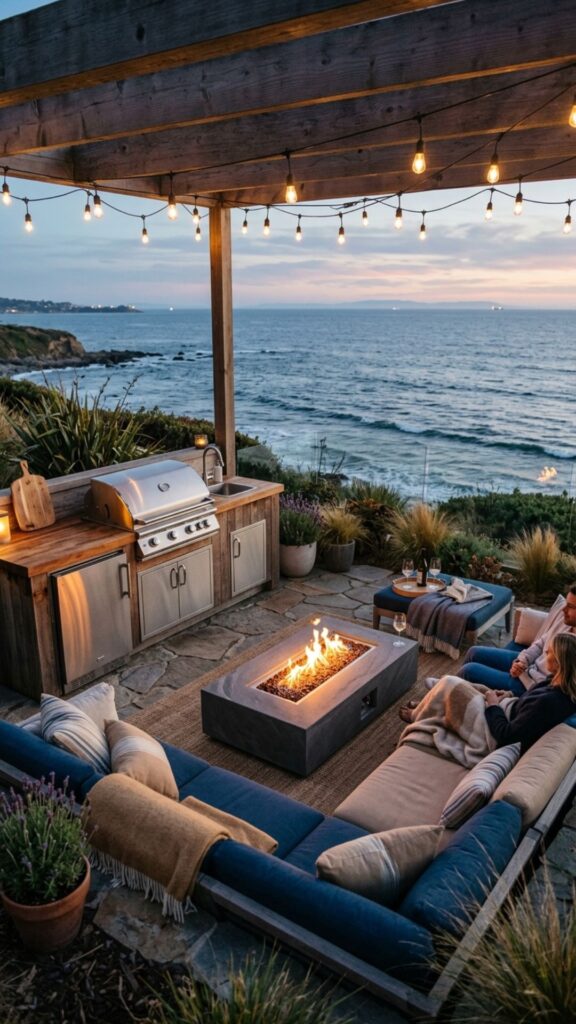
Coastal nights can get chilly once the sun sets and the breeze picks up. A fire pit or built-in fireplace keeps everyone cozy and extends your season. It also gives the space a natural gathering point.
Gas fire features are cleaner and easier to control than wood, and they won’t leave smoke on your food or clothes. Surround the fire with low seating and a heat-safe stone base. It becomes the spot everyone drifts toward after dinner.
11. Incorporate Rope and Nautical Accents
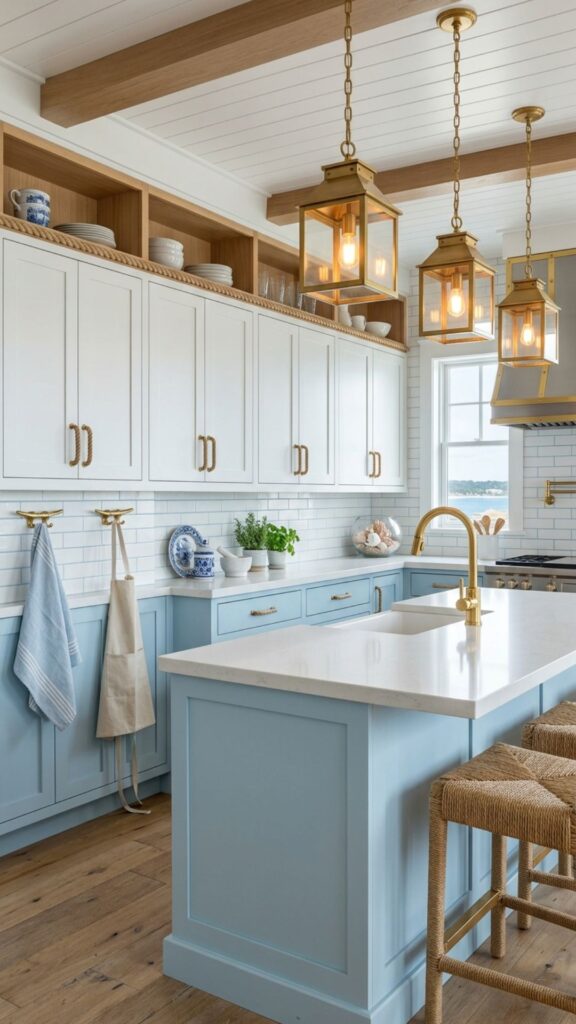
Nautical touches add personality without going overboard. Think rope-wrapped railings, cleat hooks, or a few well-placed lanterns. These details nod to the sea without turning your kitchen into a theme park.
Keep it subtle and let one or two accents do the work. A single rope-detail bar front or a set of brass fixtures reads as intentional. Restraint is what separates coastal-chic from coastal-kitsch.
12. Plan an Open, Airy Layout
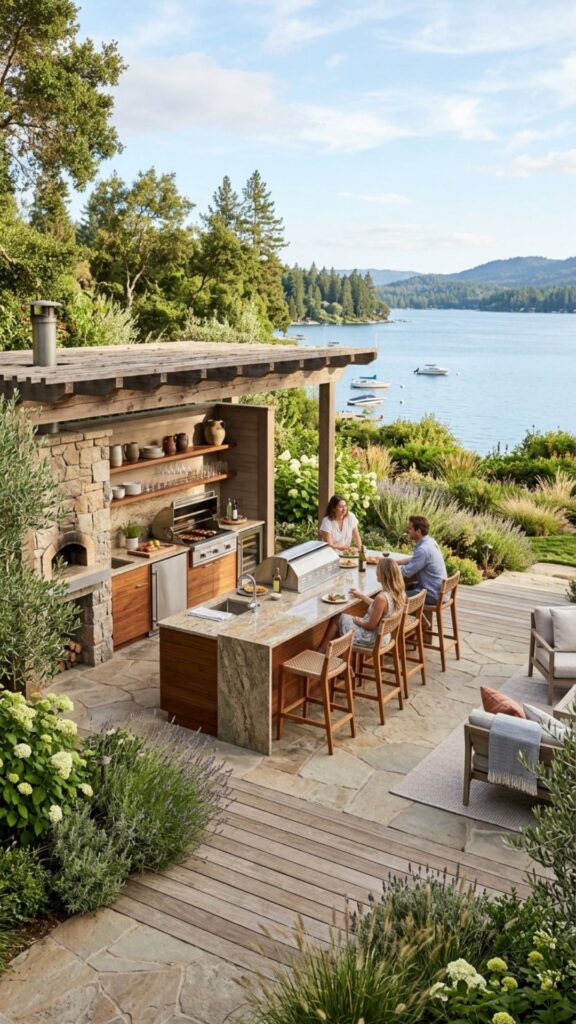
Coastal design thrives on openness. Arrange your kitchen so sightlines flow toward the view, whether that’s the water or a lush garden. Avoid crowding the space with bulky cabinets that block the breeze.
Use the classic work triangle, keeping the grill, prep area, and sink within easy reach. Leave generous walkways so guests can move freely. An open layout feels relaxed and works better for entertaining crowds.
13. Add a Prep Sink With a Coastal Faucet
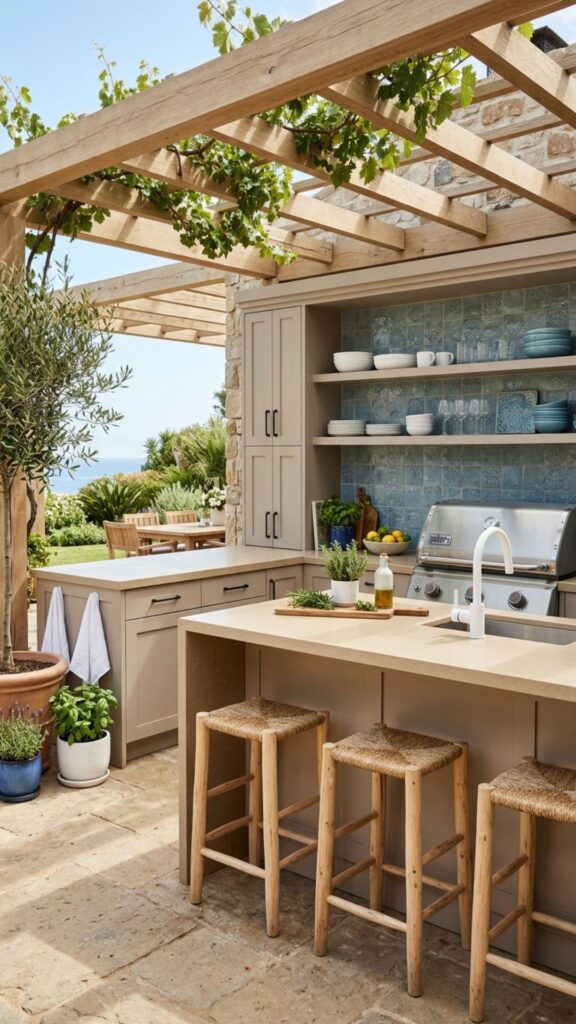
A dedicated sink saves countless trips inside. It’s one of the most practical upgrades you can make to an outdoor kitchen. Rinse produce, wash hands, and clean up without leaving the party.
Choose a brushed nickel or matte black faucet that resists corrosion and complements the palette. Make sure your plumbing includes proper drainage and a shut-off for winter. This bit of planning saves headaches down the road.
14. Mix in Sandy and Tan Neutrals
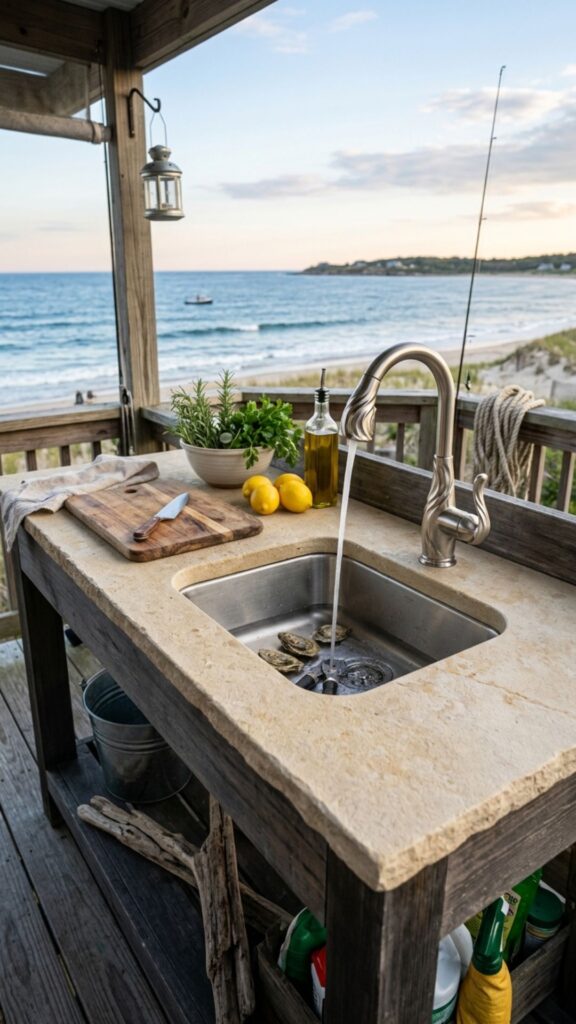
Beyond white and blue, warm sandy tones ground the space and echo the beach itself. Tan, beige, and soft taupe add depth so the design doesn’t feel cold. Use them in stone, tile, or upholstery.
Balance is key here. Pair one or two sandy neutrals with your whites and blues for a natural, sun-bleached feel. It mimics the way sand, sky, and sea blend on a real shoreline.
15. Include Built-In Storage and Coolers
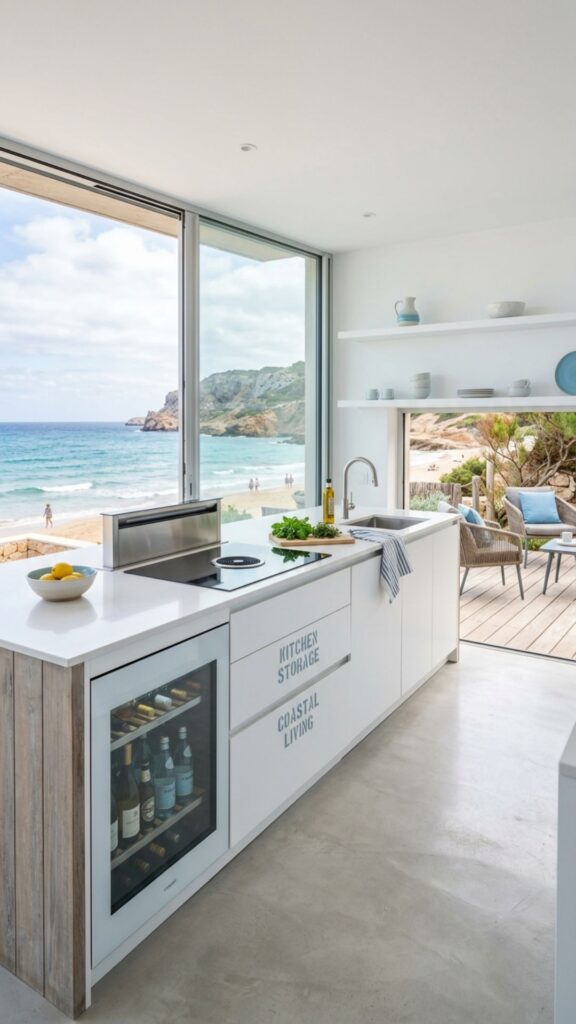
Storage keeps your kitchen tidy and functional. Built-in drawers and cabinets protect tools, dishes, and grilling gear from the elements. A dedicated cooler drawer keeps drinks cold without hauling a bulky ice chest around.
Go with sealed, weatherproof storage in stainless or marine-grade polymer. Soft-close drawers feel like a luxury but really do reduce wear over time. Good storage is the difference between a showpiece and a space you actually use daily.
16. Grow a Coastal Herb Garden
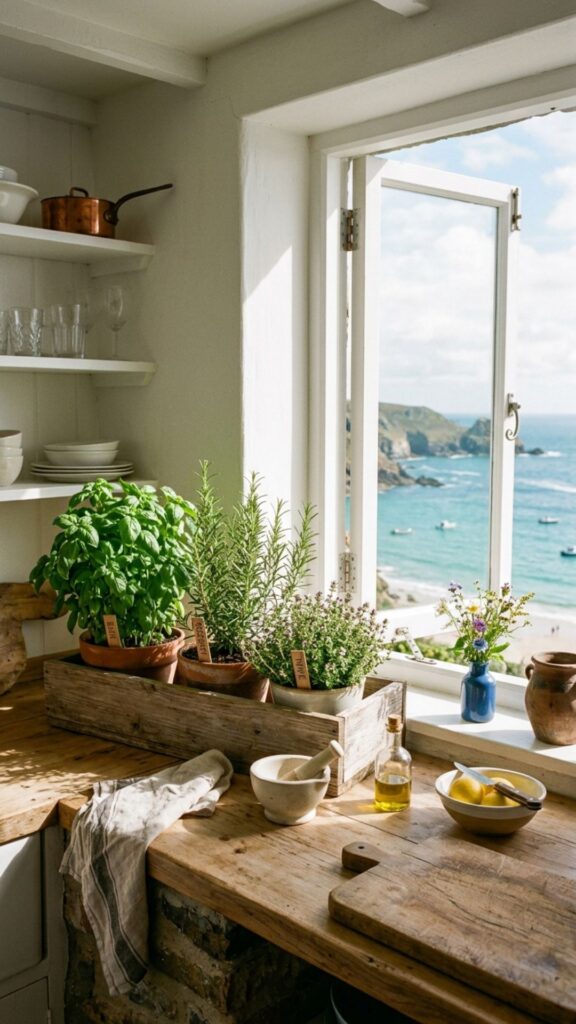
Fresh herbs steps from the grill make cooking a joy. A small planter box or vertical garden fits almost anywhere. Basil, rosemary, thyme, and mint all thrive in sunny coastal spots.
Choose salt-tolerant varieties if you’re very close to the water, and use raised beds for better drainage. Herbs add greenery, scent, and flavor all at once. It’s a functional detail that also softens the hardscape.
17. Use Terracotta or Ceramic Tile Flooring
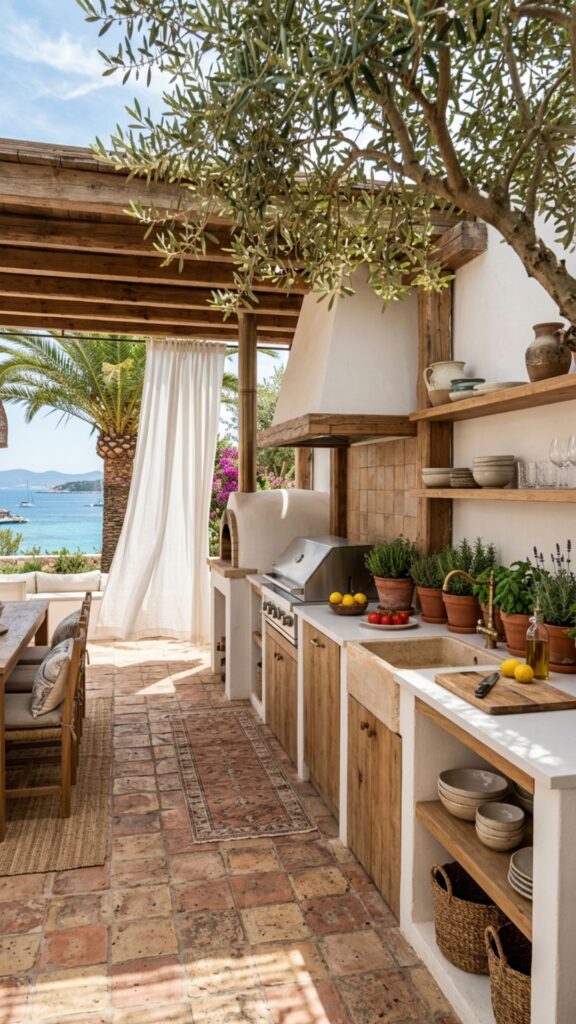
Flooring sets the tone underfoot and needs to handle water and traffic. Terracotta and ceramic tiles bring warmth and a Mediterranean-coastal feel. They’re durable, easy to clean, and slip-resistant when textured.
Pick tiles rated for outdoor use with a matte, non-slip surface for safety near the sink and grill. Lighter grout lines keep the look bright, though slightly darker grout hides dirt better. Balance appearance with practicality here.
18. Frame the View With Open Sightlines
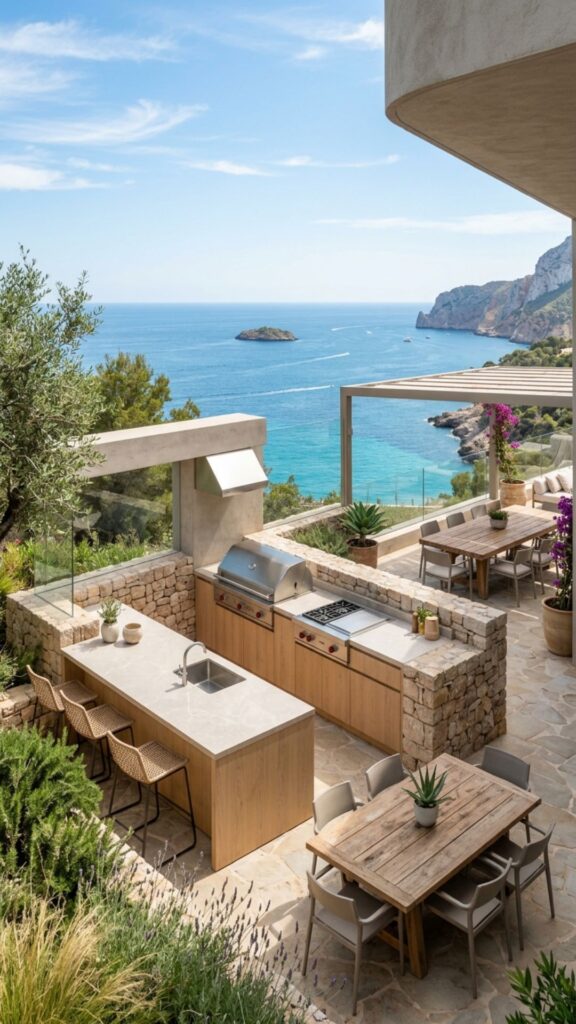
Your view is the best design element you have, so don’t hide it. Position tall cabinets and appliances to one side, leaving the horizon open. Low walls and glass panels protect from wind without blocking the scenery.
If you don’t have a water view, create one with layered plants, a water feature, or a garden focal point. The goal is to draw the eye outward. That sense of openness is what makes coastal spaces feel so calming.
19. Add Breezy Textiles and Cushions
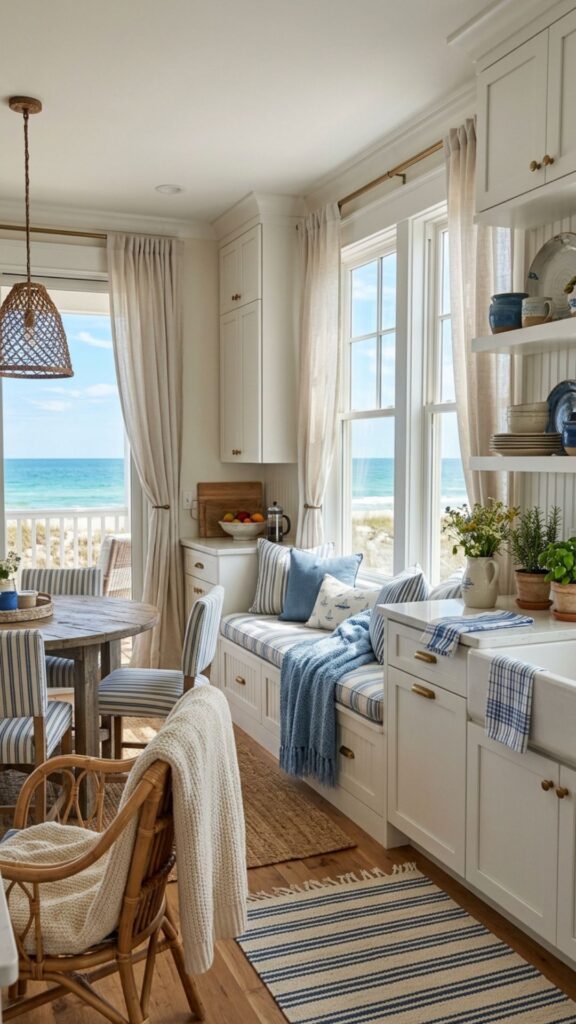
Soft textiles bring comfort and instant coastal charm. Striped cushions, linen-look throws, and light curtains all add that relaxed, beach-house feel. They also make hard surfaces more inviting.
Stick to fade- and mildew-resistant outdoor fabrics so they survive humidity and sun. Blue-and-white stripes are a timeless coastal choice, but soft solids work beautifully too. Store cushions in a deck box during storms to extend their life.
20. Finish With Potted Palms and Grasses
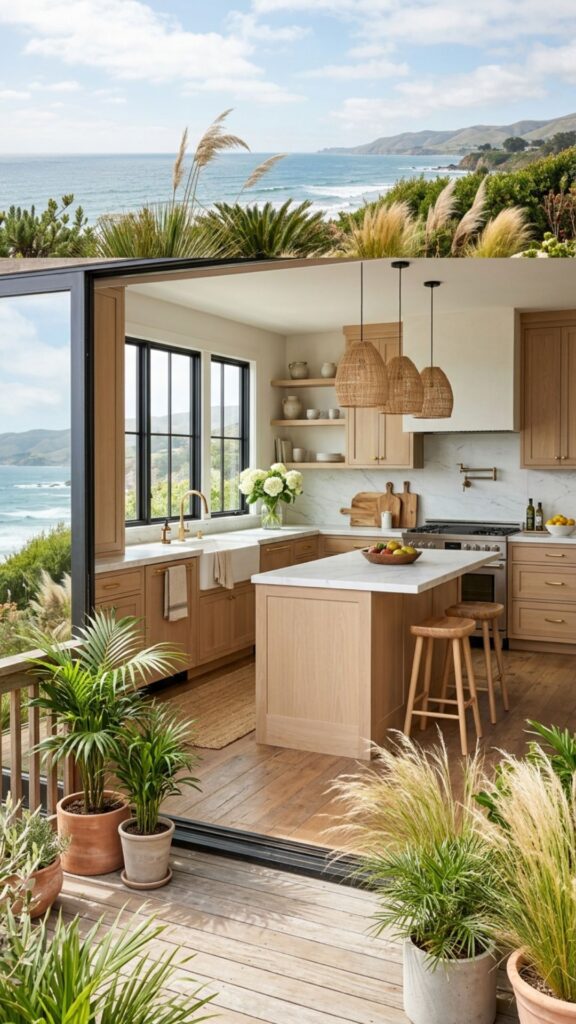
Plants tie the whole space together and reinforce the seaside theme. Potted palms, ornamental grasses, and succulents add movement and greenery. They soften edges and bring life to the hardscape.
Choose salt- and wind-tolerant species, and group pots in odd numbers for a natural look. Grasses sway with the breeze and add a gentle, calming motion. A few well-placed planters make the entire kitchen feel finished.
Bringing Your Coastal Outdoor Kitchen Together
A great coastal kitchen balances beauty with durability. Start with a light, airy base, choose materials that stand up to salt and sun, and layer in textures, plants, and warm lighting. Keep sightlines open, prioritize shade, and let a few nautical touches carry the theme without overdoing it.
The best coastal outdoor kitchen ideas serve both style and function. Focus on the pieces that matter most to how you cook and entertain, then build outward from there. Take a moment now to sketch your dream layout, set a budget, and pick two or three ideas from this list to start with. Ready to build? Reach out to a local outdoor kitchen designer for a quote, and turn that seaside vision into your new favorite place to gather.
What materials are best for a coastal outdoor kitchen?
Marine-grade 316 stainless steel, sealed natural stone like quartzite, powder-coated aluminum, and synthetic resin wicker are best. These materials resist salt, humidity, and UV damage far better than standard alternatives, so they last longer near the water.
How do I protect an outdoor kitchen from salt air?
Rinse metal surfaces regularly with fresh water, apply protective sealants to stone and wood, and choose corrosion-resistant materials from the start. Covering appliances when not in use and reapplying finishes yearly also helps prevent salt damage.
What colors work best for a coastal outdoor kitchen?
Soft whites, ocean blues, seafoam greens, and sandy neutrals work best. This palette reflects sunlight, keeps the space cool, and creates the relaxed, airy feel that defines coastal design.
How much does a coastal outdoor kitchen cost?
Costs vary widely, but most outdoor kitchens range from about $5,000 for a basic setup to $30,000 or more for high-end builds. Marine-grade materials add cost upfront but save money by lasting longer in harsh coastal conditions.
Do I need shade for a coastal outdoor kitchen?
Yes. Coastal areas get intense sun, so a pergola, cabana, or retractable canopy is essential. Shade protects both you and your appliances while making the space usable throughout the day.