A coastal home office can make the working day feel noticeably lighter. Soft colors, natural materials, plenty of daylight, and simple beach-inspired details create a space that feels relaxed without becoming distracting.

The best home office ideas coastal interiors use restraint. You do not need seashells covering every shelf or nautical decorations on every wall. Instead, focus on colors and textures that remind you of the coast: weathered wood, warm white, sand, pale blue, woven fibers, linen, and glass.
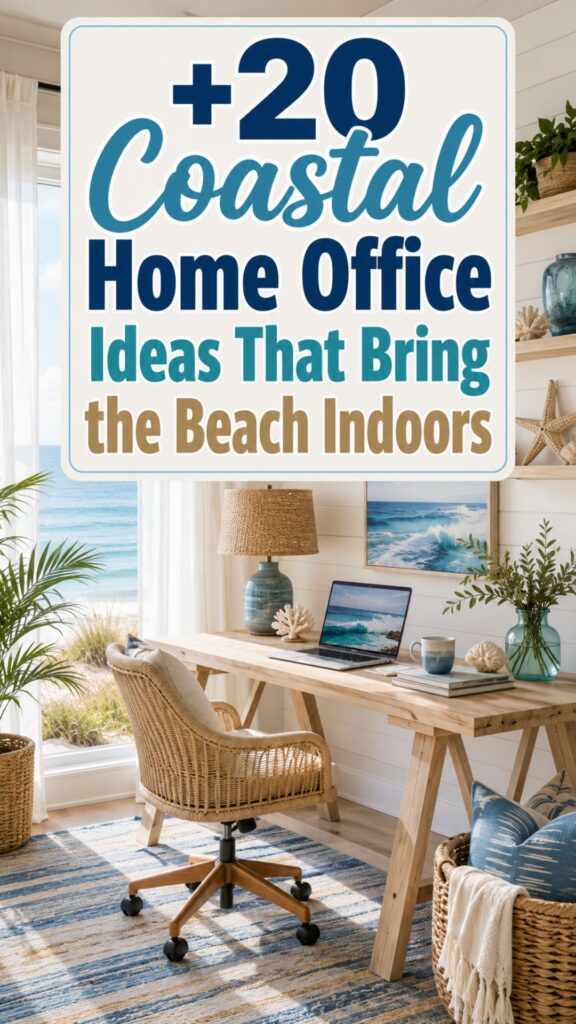
Whether you have a dedicated room or a compact desk in the corner of your bedroom, these coastal home office ideas will help you create a workspace that feels calm, practical, and comfortable.
1. Start With a Soft White and Blue Color Palette
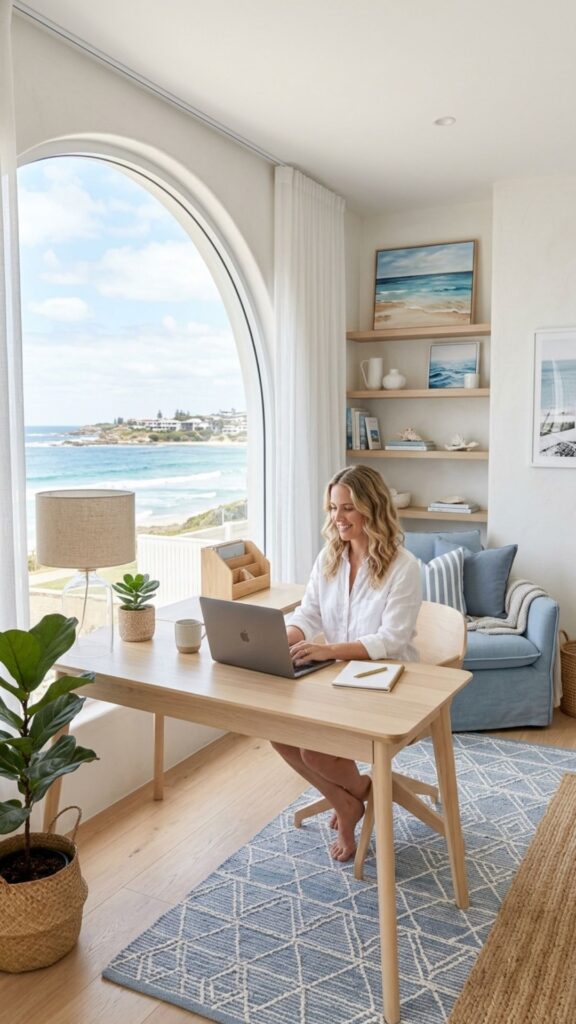
White and blue are natural starting points for a coastal workspace, but softer shades tend to work better than bold nautical colors. Try warm white walls with dusty blue, sea-glass green, or pale grey-blue accents. The combination keeps the room bright while adding enough color to make it interesting.
You can introduce blue through a desk chair, rug, curtains, artwork, or storage boxes instead of painting every wall. Keeping the larger surfaces neutral also gives you more freedom to change accessories later without completely redecorating your office.
2. Choose a Light Wood Desk
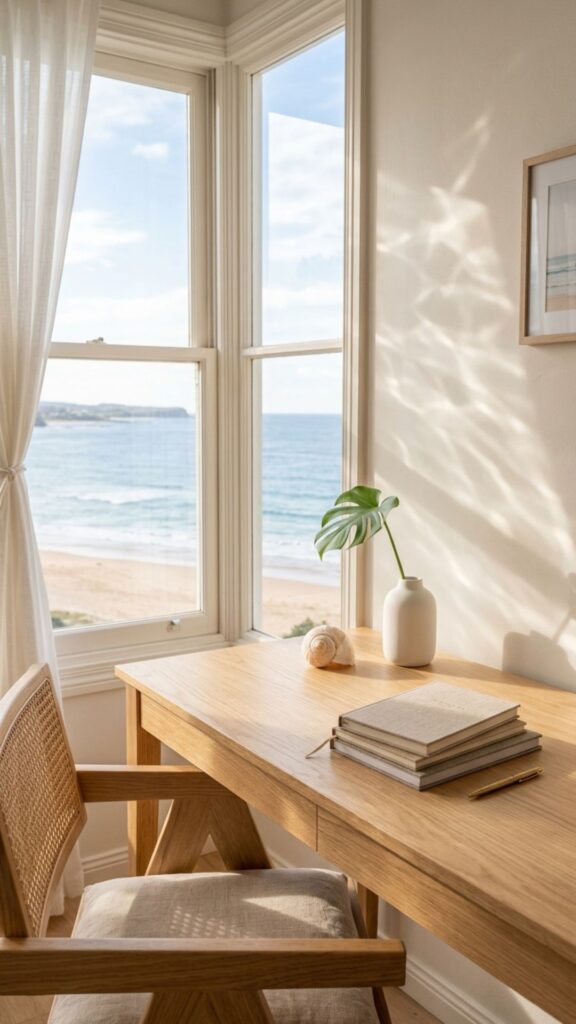
A light wood desk instantly brings warmth into a coastal office. Oak, ash, pine, bamboo, and natural wood finishes work particularly well because they resemble driftwood, boardwalks, and sun-bleached coastal interiors.
Choose a desk that matches the way you work rather than focusing only on appearance. A wide desk works well for multiple monitors, while a slim writing desk may be enough for laptop-based work. Keeping the surface relatively uncluttered helps maintain the relaxed coastal look.
3. Bring in Woven Storage Baskets
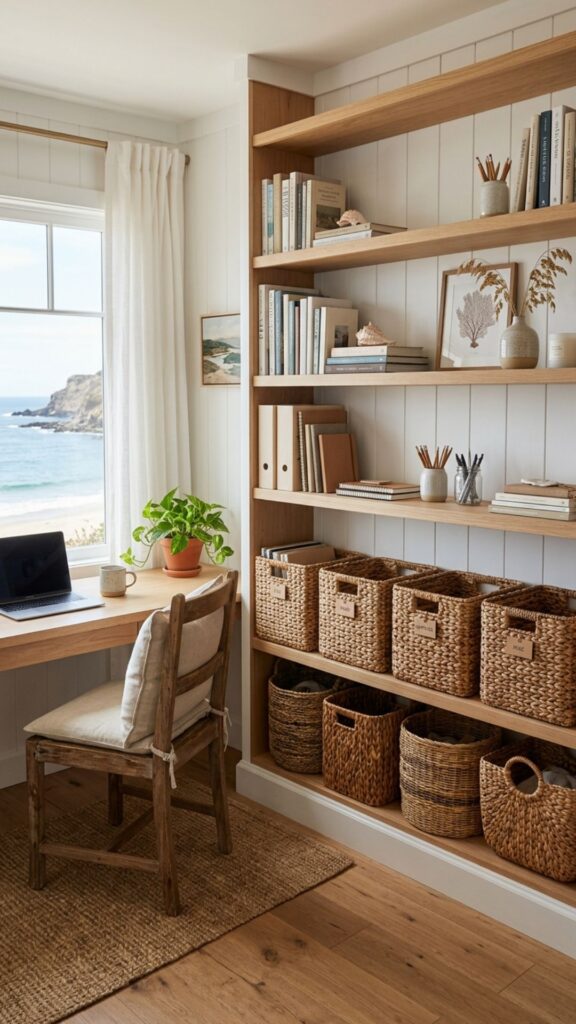
Storage is essential in a working office, but plastic containers can sometimes make a coastal room feel too functional. Woven baskets made from seagrass, jute, rattan, or water hyacinth provide storage while adding natural texture.
Use them for paperwork, chargers, stationery, notebooks, or spare office supplies. Place larger baskets beneath shelving and smaller ones inside cabinets. Matching baskets can also make open shelves look more organized without requiring everything to be hidden.
4. Position Your Desk Near Natural Light
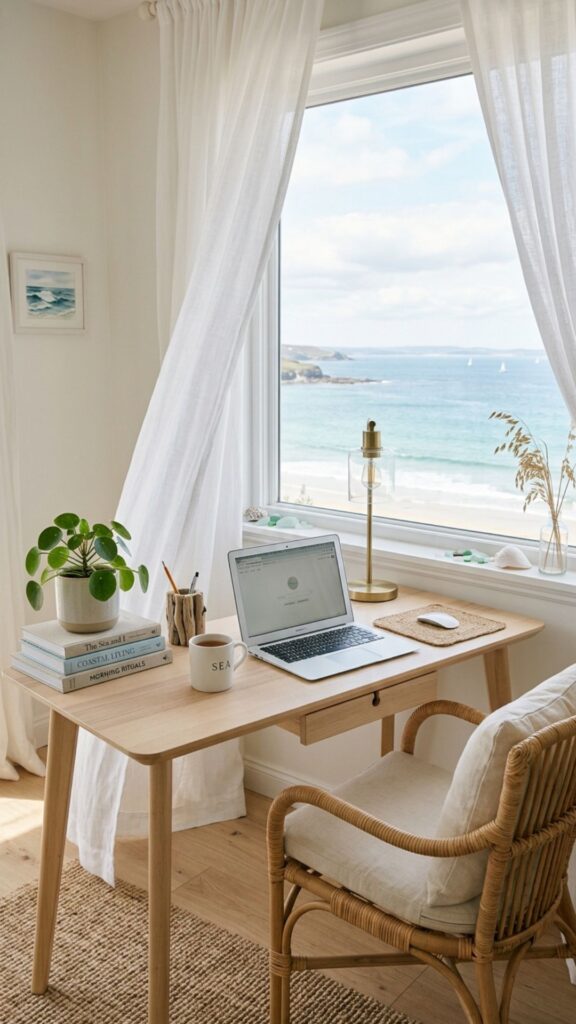
Natural light is one of the most effective ways to create the airy feeling associated with coastal interiors. When possible, position your desk close to a window where daylight can reach your workspace throughout the day.
Avoid placing your monitor directly opposite strong sunlight because glare can make working uncomfortable. A desk positioned sideways to the window often provides a good balance. Lightweight curtains or blinds can soften harsh afternoon light while keeping the room bright.
5. Add a Natural Fiber Rug
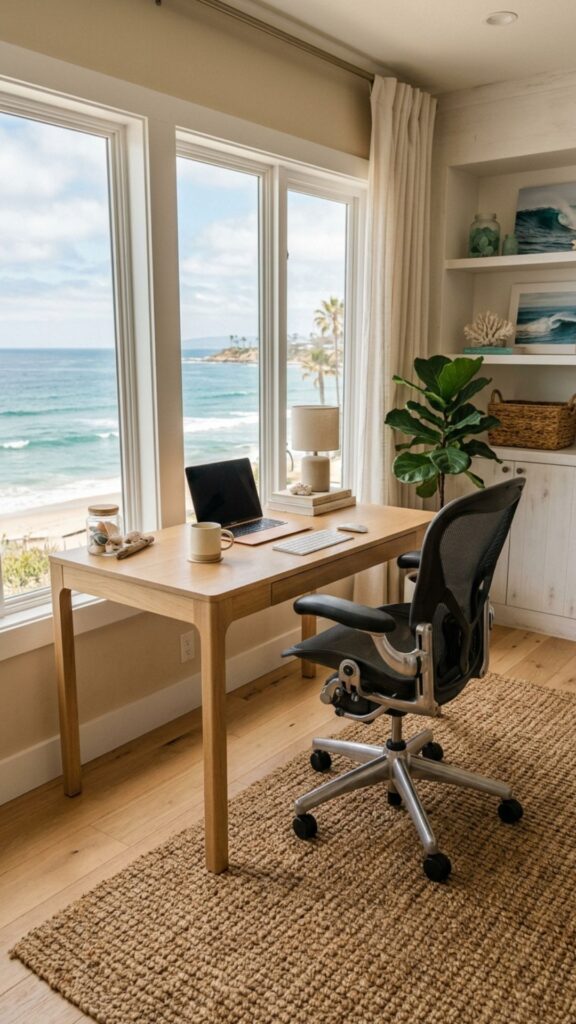
A rug can define your workspace while adding warmth underfoot. Jute, sisal, woven cotton, and other natural-looking materials fit naturally into coastal home office ideas because they introduce sandy tones and visible texture.
Choose a size large enough for your desk and chair rather than using a small rug that floats awkwardly in the middle of the room. If you use a rolling office chair, look for a tightly woven rug that allows the chair to move comfortably.
6. Use Linen or Cotton Curtains
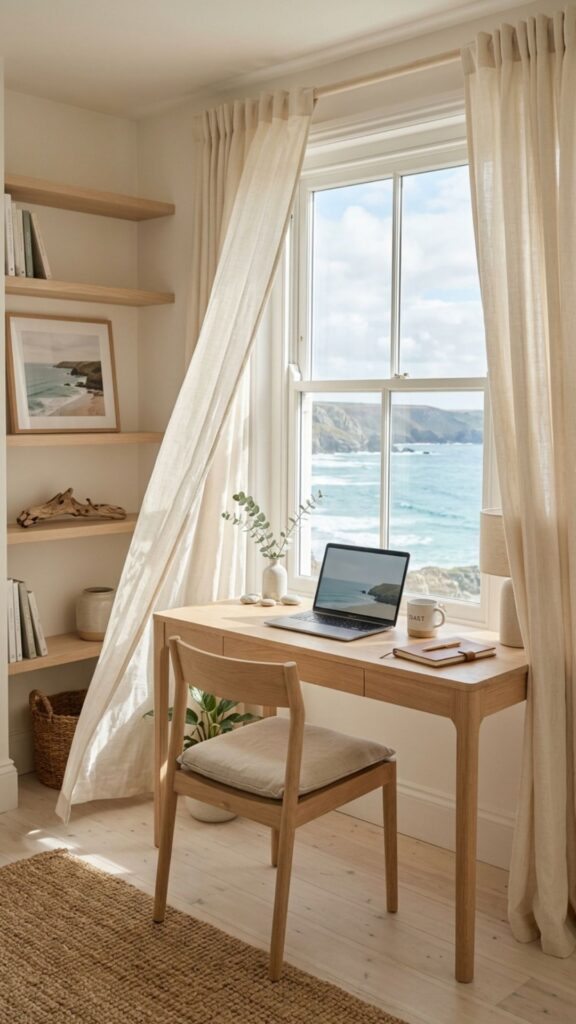
Heavy curtains can make an office feel dark and enclosed. Lightweight linen or cotton curtains allow natural light to filter through while providing privacy and softness around the windows.
White, cream, oatmeal, pale grey, and muted blue are dependable choices. Full-length curtains hung slightly above the window can also make the room appear taller, which strengthens the open and breezy character of a coastal workspace.
7. Create a Sea-Glass Inspired Accent
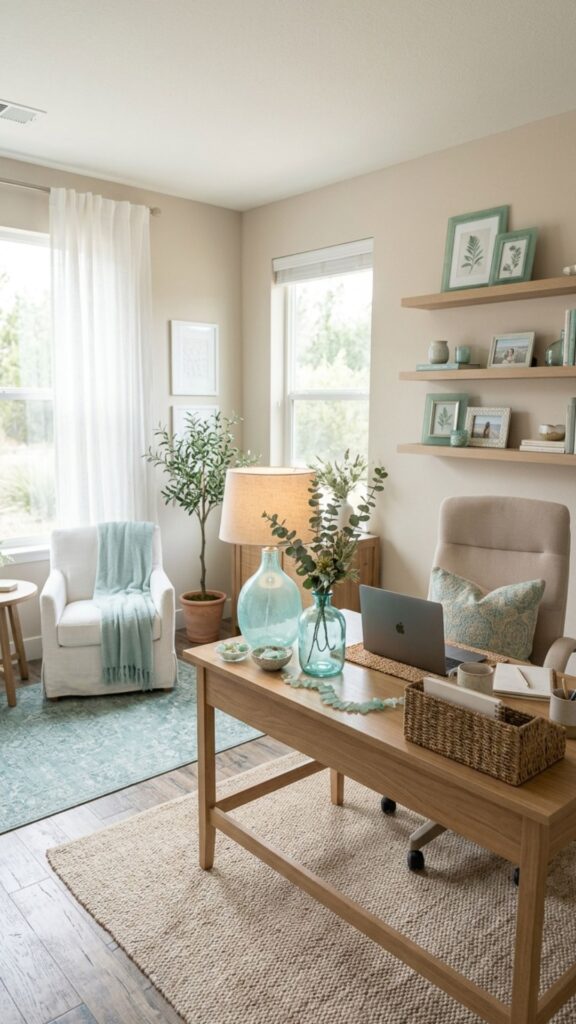
Sea-glass colors offer a subtle way to introduce coastal character without making your office look themed. Think muted turquoise, soft aqua, cloudy blue, and translucent green.
Use these shades sparingly through a desk lamp, vase, pen holder, framed artwork, or glass accessory. A few carefully selected pieces are usually more effective than filling every shelf with blue decorations.
8. Decorate With Coastal Landscape Art
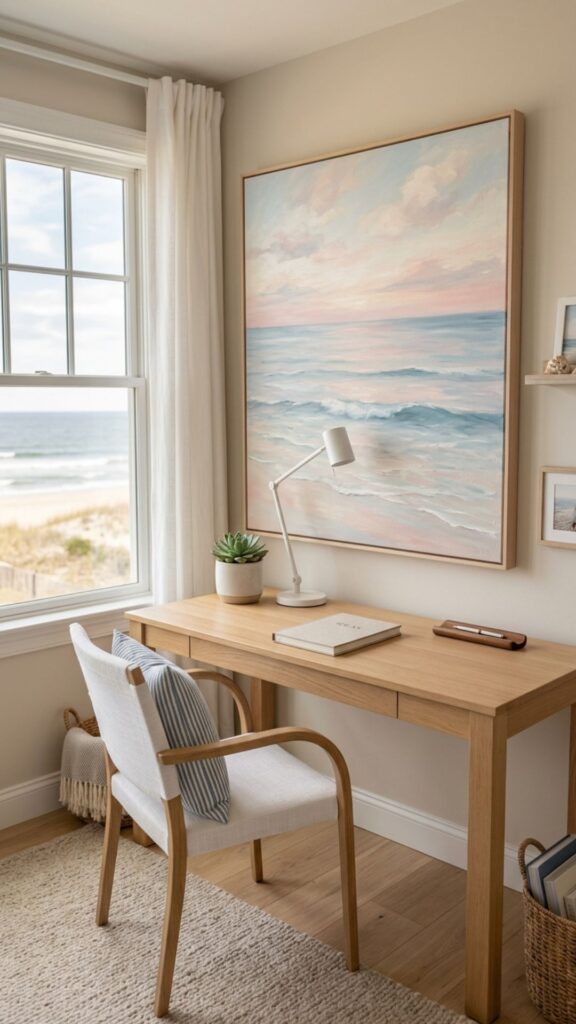
Artwork can establish the atmosphere of a room immediately. Choose photographs or paintings featuring beaches, dunes, ocean horizons, cliffs, boats, or quiet coastal landscapes.
For a sophisticated look, select one large statement piece rather than creating an overcrowded gallery wall. A peaceful horizon positioned opposite your desk can also provide somewhere pleasant to rest your eyes during screen breaks.
9. Add Rattan or Cane Furniture
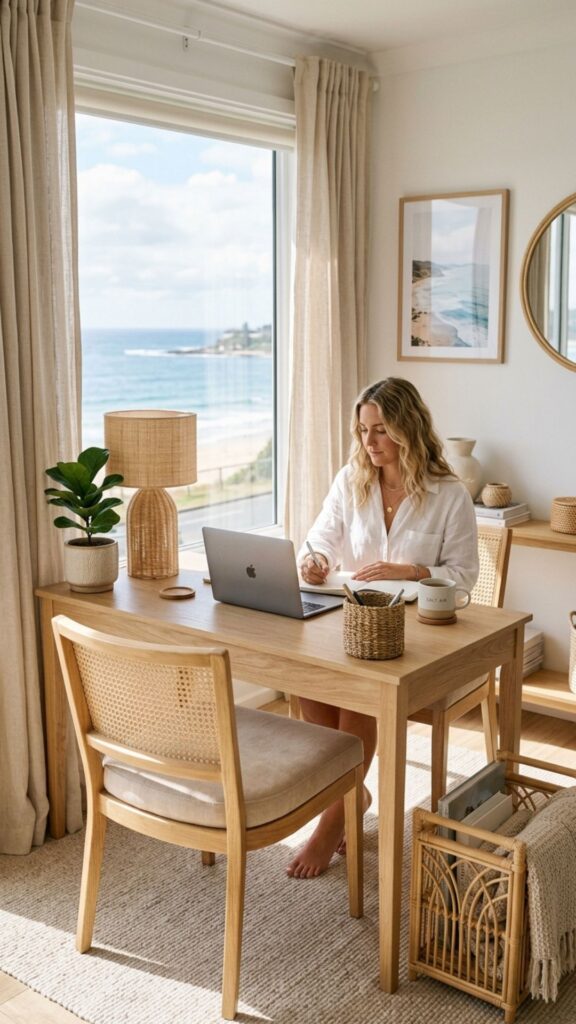
Rattan and cane furniture introduce texture without adding visual heaviness. A cane-backed office chair, rattan side table, woven cabinet, or small storage unit can bring a relaxed coastal influence into the room.
You do not need several woven furniture pieces. One noticeable element is often enough. Pair it with simple wooden furniture and neutral fabrics so the office remains polished rather than looking like a fully themed beach room.
10. Create Coastal Open Shelving
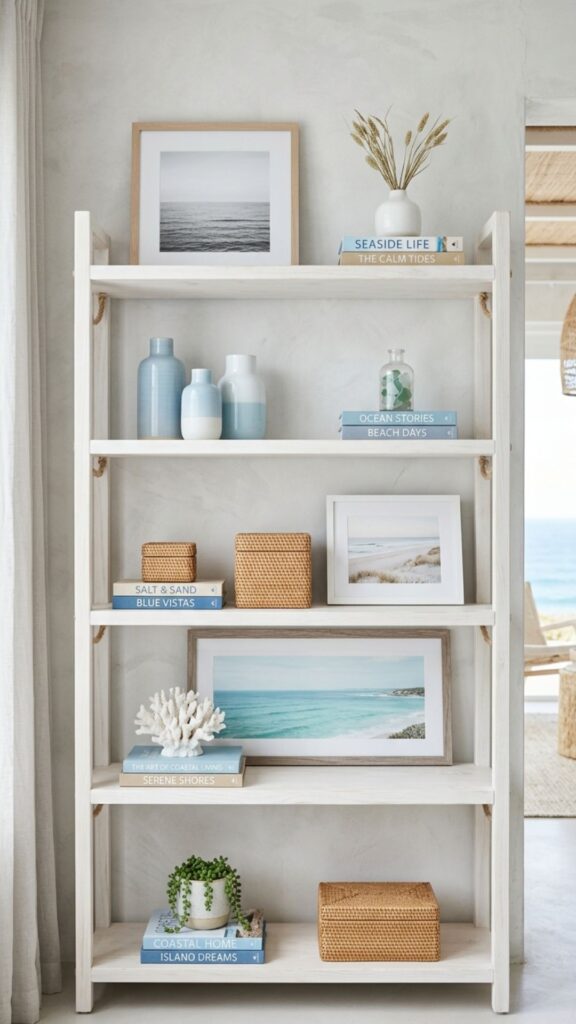
Open shelves are useful for books, paperwork, plants, and decorative objects, but they can quickly become cluttered. Coastal styling works best when shelves have some breathing room.
Combine practical items with a small number of decorative pieces. For example, place books beside a ceramic vase, woven box, framed photograph, or piece of natural wood. Leaving some empty space keeps the shelves calm and visually balanced.
11. Use Weathered Wood Carefully
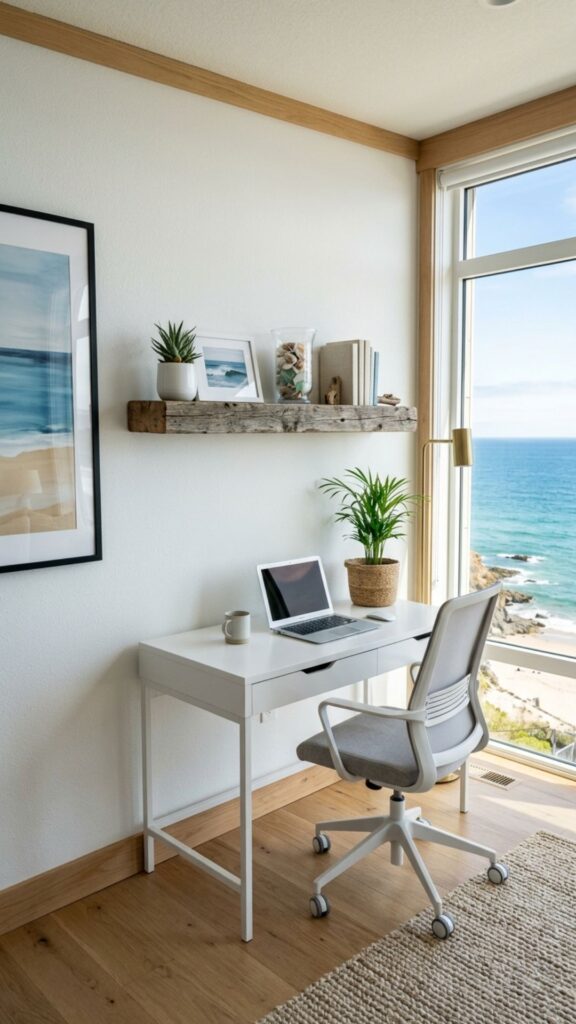
Weathered and whitewashed wood can add the relaxed character often found in beach cottages. Consider a weathered bookshelf, picture frame, floating shelf, or small cabinet rather than filling the office with distressed furniture.
The key is moderation. Too much distressed wood can make the space look rustic instead of coastal. Mixing one weathered element with cleaner contemporary furniture creates a more versatile and updated appearance.
12. Introduce Indoor Greenery
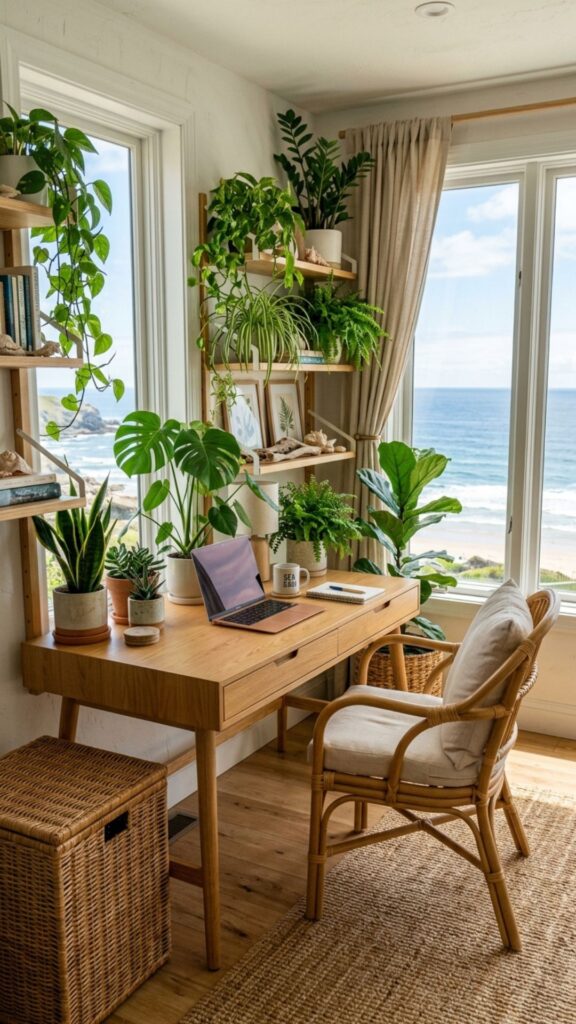
Plants bring freshness to coastal home offices and work particularly well alongside light wood, woven textures, and neutral walls. Even one healthy plant can make a desk area feel more welcoming.
Try an easy-care plant on a shelf, windowsill, or nearby floor space. Choose the plant according to the amount of natural light available rather than appearance alone. Healthy greenery will always look better than a struggling plant chosen simply for decoration.
13. Add a Comfortable Reading Corner
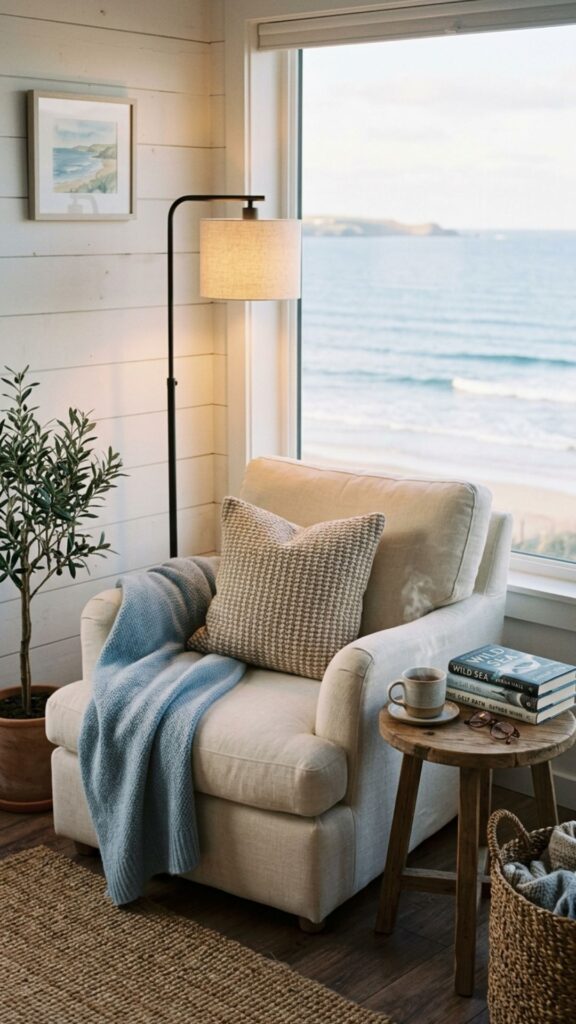
If your office has extra space, create a small area away from the main desk for reading, planning, or taking short breaks. A comfortable armchair with a side table and floor lamp can be enough.
Choose upholstery in cream, pale blue, sandy beige, or soft grey. Add one textured cushion or lightweight throw for comfort. Separating focused computer work from reading tasks can also make a larger office more functional.
14. Use Coastal-Inspired Desk Accessories
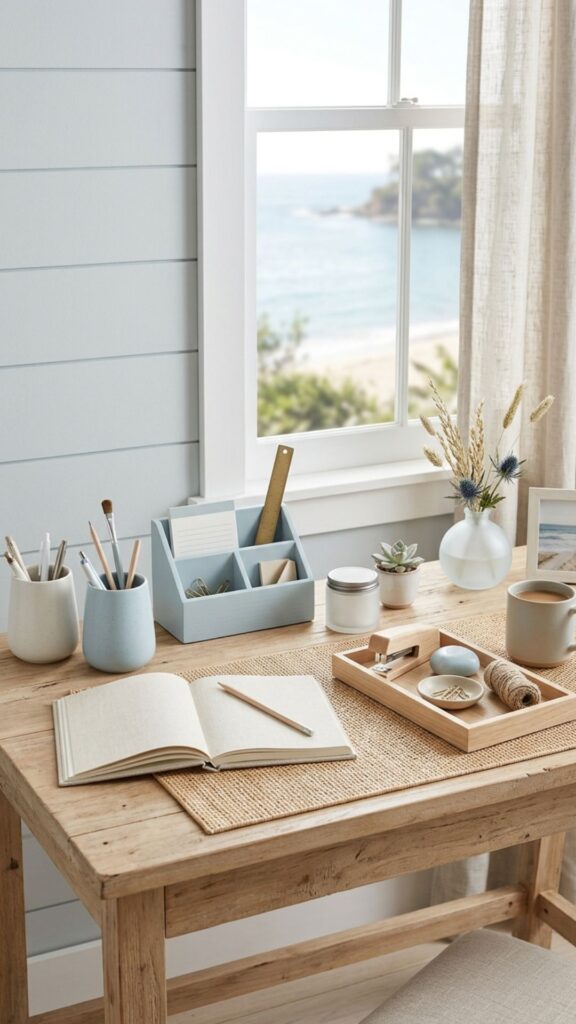
Small accessories can reinforce your design without interfering with productivity. Consider ceramic pen cups, wooden trays, pale blue organizers, linen-covered notebooks, or frosted glass containers.
Keep the desktop practical. Decorative shells, miniature boats, and similar objects can work in moderation, but they should not occupy valuable working space. A coastal office should still function as an office first.
15. Try a Soft Blue Accent Wall
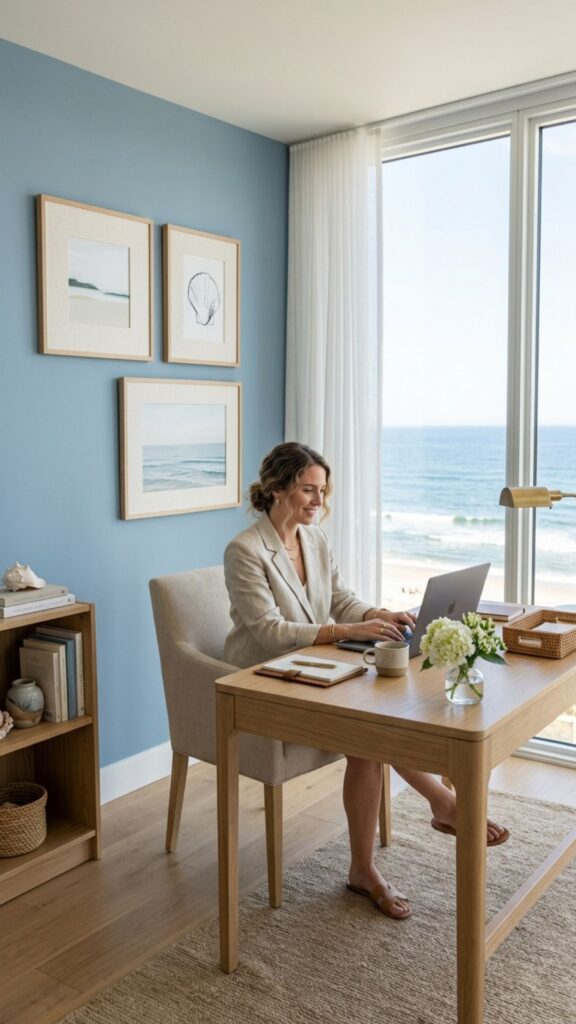
If an entirely white room feels too plain, a muted blue accent wall can introduce depth. Coastal blues with grey or green undertones generally feel calmer than bright turquoise or navy.
The wall behind your desk is often a good location, particularly if it appears during video calls. Pair it with light furniture and simple artwork so the color becomes a backdrop rather than competing for attention.
16. Incorporate Warm Sand and Beige Tones
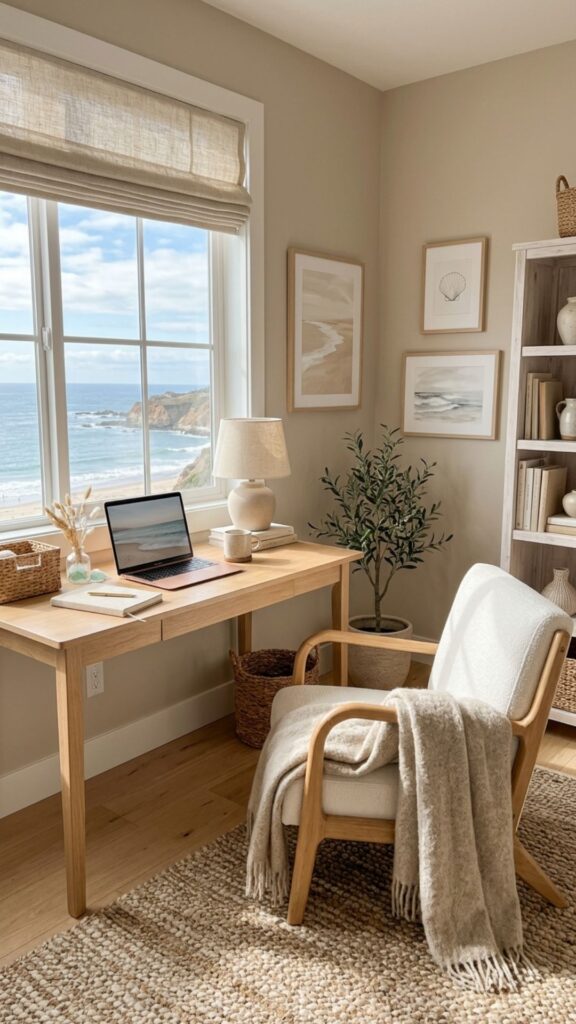
Coastal design does not have to revolve around blue. Sand, oatmeal, warm beige, ivory, and light taupe can create an equally convincing beach-inspired workspace.
These shades work particularly well in offices where you want a warmer atmosphere. Layer several neutral tones through the rug, chair upholstery, curtains, storage, and desk accessories to stop the room from looking flat.
17. Keep Your Office Furniture Visually Light
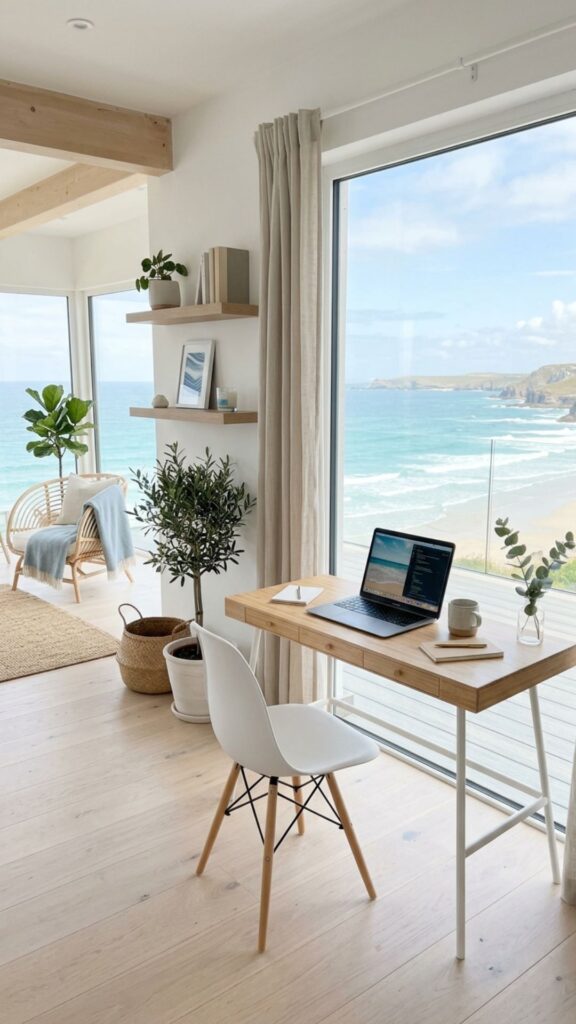
Bulky furniture can make even a bright room feel crowded. Furniture with slim legs, open bases, and simple silhouettes helps preserve the spacious appearance that defines many coastal interiors.
Consider floating shelves instead of a large bookcase or a desk with an open frame instead of heavy drawers on both sides. You can still include plenty of storage by combining lighter furniture with concealed cabinets or baskets.
18. Use Simple Coastal Lighting
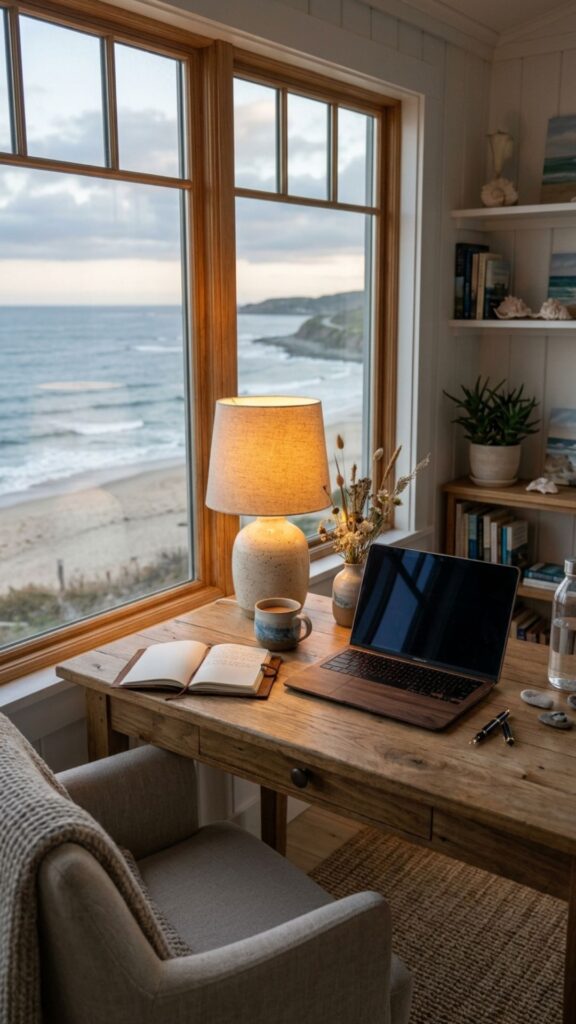
Good task lighting matters even in rooms with large windows. Choose a desk lamp or floor lamp with a simple shape and materials that complement the rest of your space.
Ceramic, glass, woven, brushed metal, and light wood finishes can all work well. Warm lighting is usually more comfortable in the evening than harsh bright-white bulbs, particularly when the office also serves as a reading or creative space.
19. Hide Cables and Technology
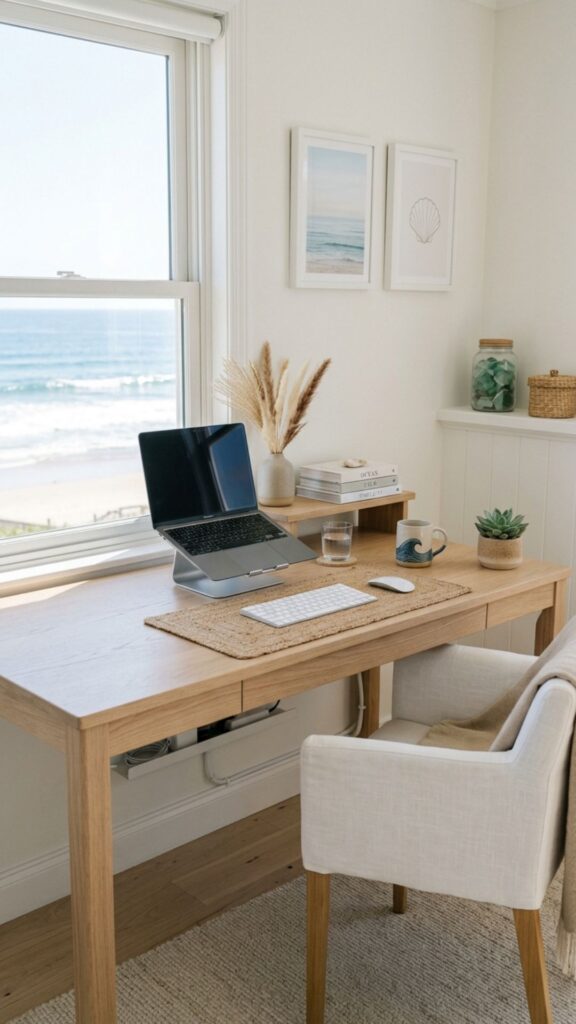
Computers, chargers, routers, and cables can interrupt an otherwise peaceful coastal setup. Simple cable management can make a surprisingly large difference.
Run cables beneath the desk, use clips to guide charging wires, and store infrequently used electronics inside cabinets. You do not need to hide every piece of technology. The goal is simply to prevent cords and equipment from becoming the room’s strongest visual feature.
20. Finish With Personal Coastal Details
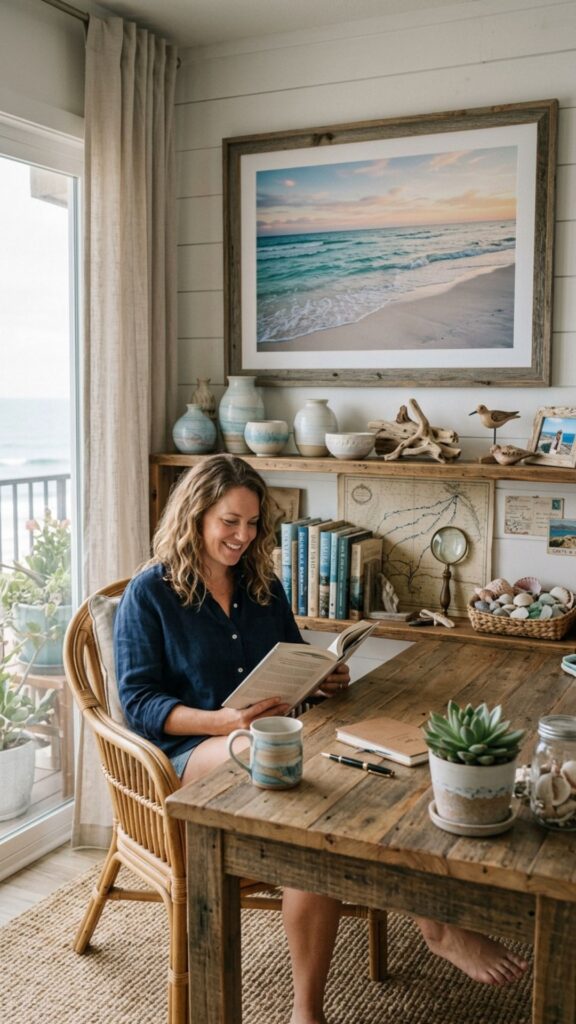
The most successful home office ideas coastal spaces feel personal rather than copied directly from a showroom. Add a few objects connected to places, memories, or experiences that genuinely mean something to you.
That might include a photograph from a favorite coastal holiday, locally made pottery, a framed map, a piece of driftwood, or a book about a destination you love. Personal details give the room character while keeping the overall design authentic and comfortable.
Creating a Coastal Office That Still Works Hard
A beautiful workspace only succeeds when it also supports your daily routine. Before decorating, consider where you need storage, how much desk space you use, where natural light falls, and which items need to remain within easy reach.
The strongest coastal offices balance those practical requirements with a calm visual style. Start with neutral colors and functional furniture, then layer in wood, woven textures, blue accents, plants, and meaningful decorative details.
You do not need to complete the entire room at once. Begin with one or two changes, such as repainting the walls or adding a light wood desk, and build your coastal style gradually.
Ready to refresh your workspace? Choose three ideas from this list that suit your room and budget, then use them as the foundation for a coastal home office that feels inviting every time you sit down to work.
What colors are best for a coastal home office?
Warm white, cream, sandy beige, soft blue, sea-glass green, and light grey are excellent choices. Use lighter shades for large surfaces and stronger coastal colors as smaller accents.
How can I make my home office look coastal without using beach decorations?
Focus on materials rather than obvious beach symbols. Light wood, linen, rattan, jute, woven baskets, pale colors, natural light, and greenery can create a coastal feeling without seashell or anchor decorations.
Can coastal home office ideas work in a small room?
Yes. Coastal design is particularly suitable for small spaces because its lighter colors and visually simple furniture can make a room feel more open. Use wall-mounted shelving, a compact desk, and limited accessories to avoid clutter.
How do I make a coastal office look modern rather than themed?
Use coastal influences selectively. Combine clean-lined furniture with natural materials, muted blue accents, and one or two beach-inspired details. Avoid filling the room with nautical signs, ropes, anchors, or matching themed decorations.
What is the easiest way to give an existing office a coastal look?
Start with inexpensive changes such as neutral curtains, a woven basket, coastal artwork, pale blue accessories, or a natural fiber rug. These additions can change the atmosphere of the room without replacing your existing desk or storage.