Choosing the right window treatment for your dining room is one of those decisions that affects the space more than most people expect. The wrong blinds can make a bright room feel dim, a formal space feel casual, or a carefully styled interior feel unfinished. Get it right, and your dining room feels pulled together in a way that’s hard to pinpoint but immediately noticeable.
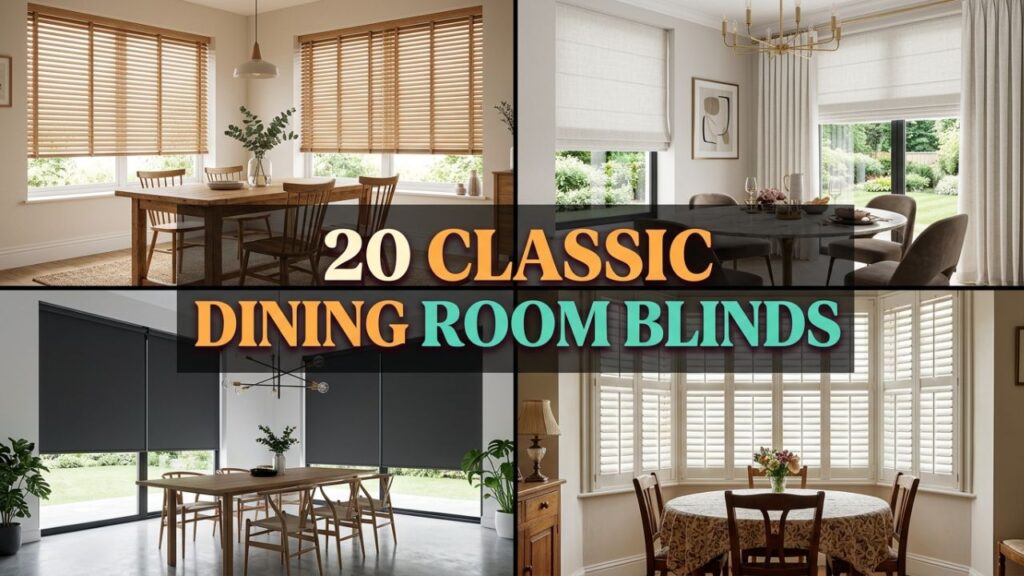
What are dining room blinds, and how do you choose them? Dining room blinds are window coverings — typically slatted, rolled, or layered — that control light, maintain privacy, and contribute to the room’s overall style.
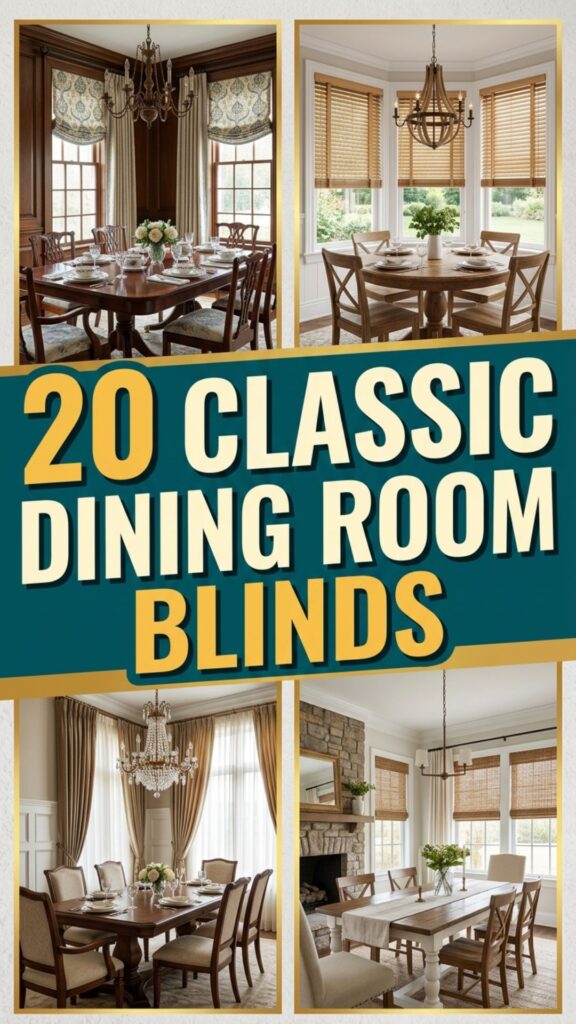
The best choice depends on four things: how much natural light the room gets, how much privacy you need, the room’s existing décor, and your maintenance tolerance. A south-facing room with afternoon sun needs different treatment than a north-facing dining nook.
In this guide, you’ll find 20 distinct blind styles — ranging from timeless classics to modern statement pieces — with practical advice on where each works best, what to pair it with, and what to watch out for.
1. Wooden Venetian Blinds
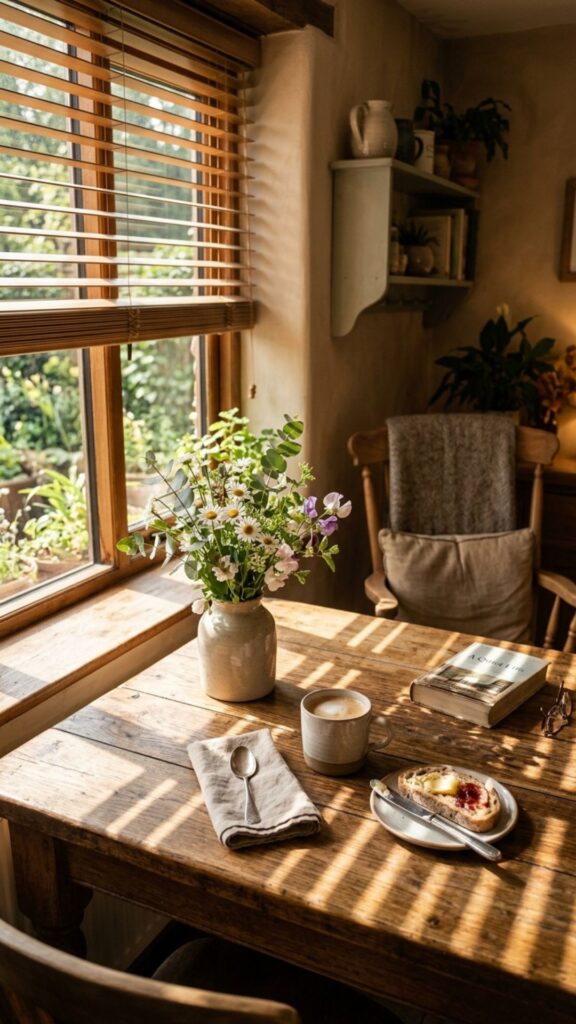
Wooden Venetian blinds are one of the most versatile options for a dining room. The horizontal slats let you dial in exactly how much light enters the room, from fully open to completely closed, giving you precise control throughout the day.
Real wood slats add warmth and texture that synthetic materials rarely replicate. They suit farmhouse, traditional, and mid-century modern interiors equally well. One caveat: avoid them in rooms with high humidity or direct steam, as untreated wood can warp over time.
2. Faux Wood Venetian Blinds
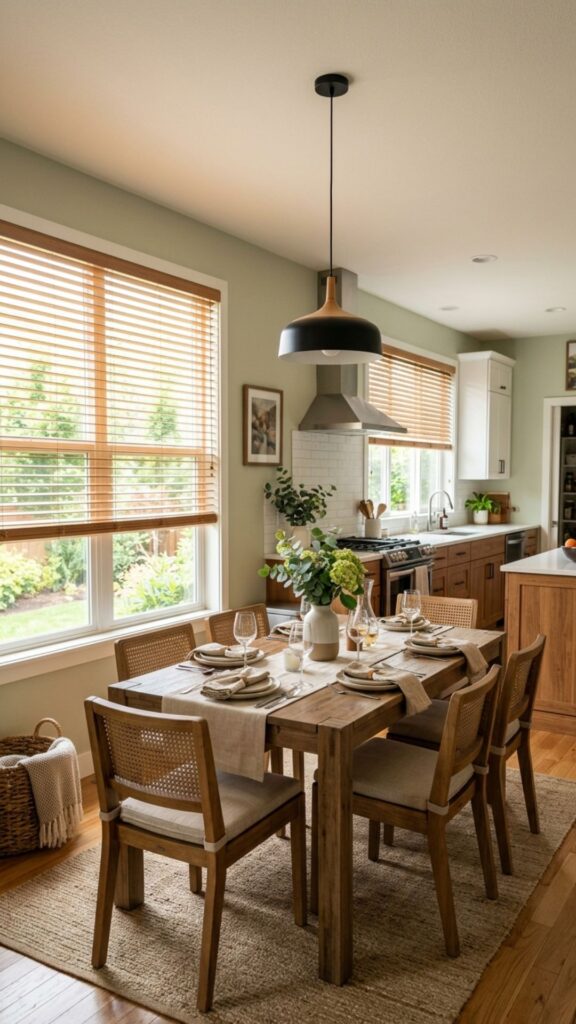
Faux wood Venetians deliver the same clean, tailored look as real wood at a lower price point and with considerably better moisture resistance. If your dining room adjoins an open kitchen, this is worth factoring in.
They’re available in a wide range of finishes — white, warm oak, dark walnut, and grey — so matching your existing flooring or cabinetry is straightforward. For a cohesive look, choose a faux wood finish that echoes your table or chairs rather than contrasting sharply.
3. Roman Blinds
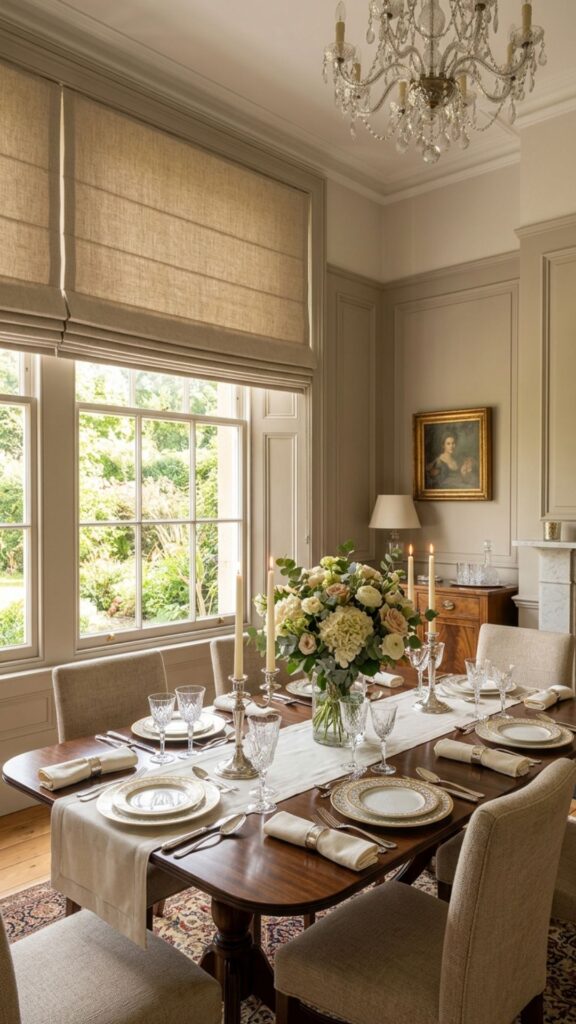
Roman blinds fold into soft horizontal pleats when raised and lie flat when lowered, creating a clean, fabric-forward look that suits both casual and formal dining rooms. The flat fold style is slightly more contemporary; the hobbled fold has a fuller, more traditional feel.
Choose a heavier fabric like linen or cotton canvas for dining rooms that get strong afternoon sun — lighter weaves can look washed out when backlit. Patterned Roman blinds also work well as a low-cost way to introduce color or print into an otherwise neutral room.
4. Roller Blinds
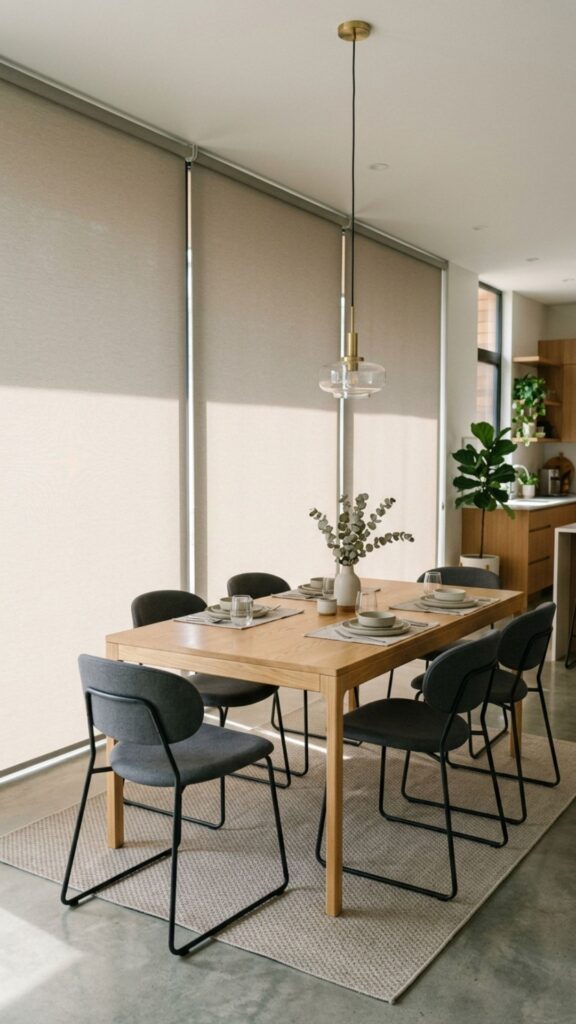
Roller blinds are the most streamlined window treatment available, and in a dining room with large windows or multiple panes, that simplicity is genuinely useful. A single tube mechanism keeps the profile slim and the operation easy.
For dining rooms, a blackout roller blind in a kitchen-dining space gives full light control for daytime meals or evening entertaining. A light-filtering version softens glare without plunging the room into darkness. Roller blinds in a block color or subtle texture blend into the background; a bold print makes them a focal point.
5. Cellular (Honeycomb) Blinds
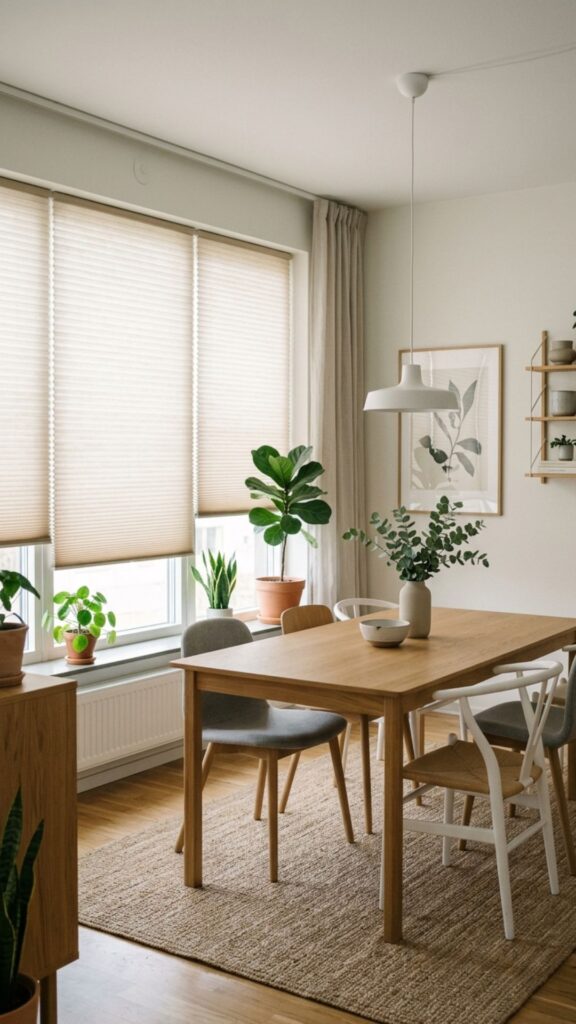
Cellular blinds trap air in their honeycomb-shaped cells, which provides better insulation than most other blind types. In a dining room with large windows or drafty older frames, this translates to a noticeably more comfortable space in both winter and summer.
The clean, uniform face of a cellular blind suits modern and Scandinavian-influenced interiors particularly well. Choose single-cell for a lighter look or double-cell for improved thermal performance. They’re also available in top-down/bottom-up configurations, which is useful for dining rooms at street level where you want light without sacrificing privacy.
6. Sheer Roller Blinds
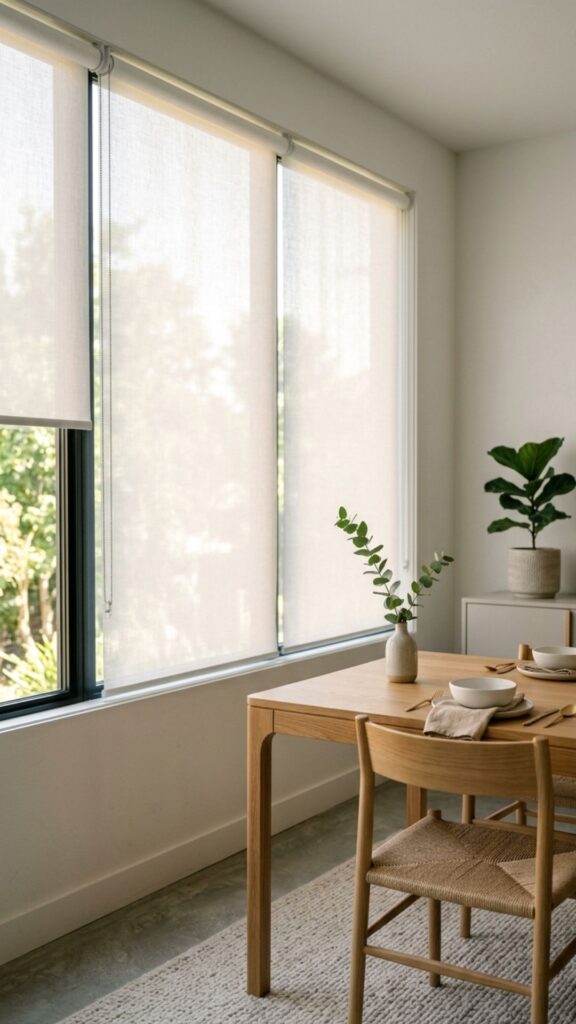
Sheer roller blinds — sometimes called solar blinds — filter light rather than block it, softening the quality of natural light without reducing the sense of openness in the room. They’re made from an open-weave fabric that blurs the view from outside while allowing you to see out clearly during the day.
This is a practical solution for dining rooms where you want a bright, airy atmosphere during meals but don’t want passersby looking in. They work especially well in contemporary homes with clean-lined furniture and minimal window dressing.
7. Woven Wood (Bamboo) Blinds
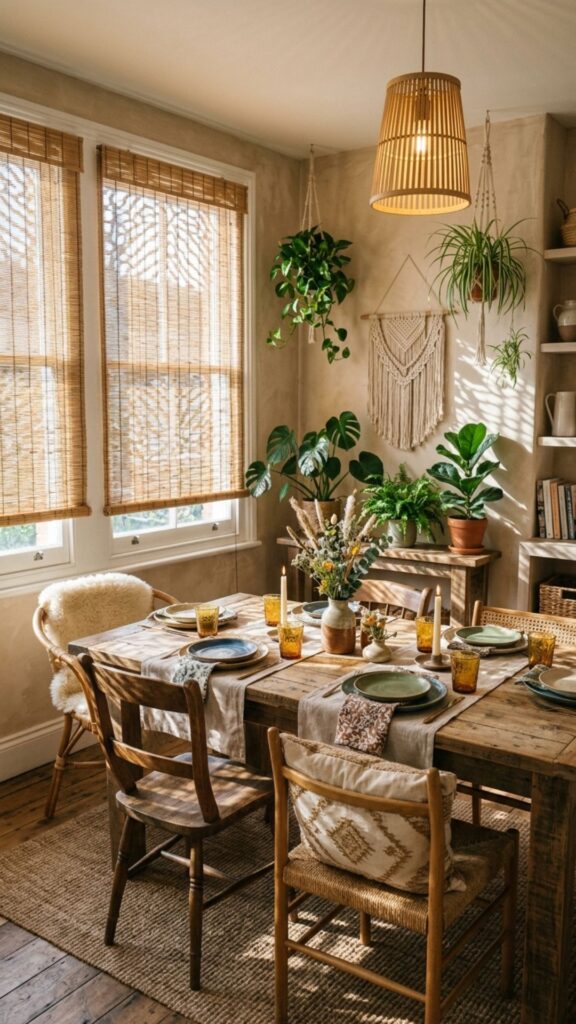
Woven wood blinds bring natural texture and an organic, relaxed quality to a dining room that painted or synthetic alternatives simply can’t match. Bamboo and grass weaves filter light attractively — casting warm, dappled patterns into the room when the sun is low.
They suit boho, coastal, and nature-inspired interiors best, but pair equally well with rattan furniture, linen dining chairs, or an unpainted wooden table. Keep in mind that most woven wood blinds don’t offer complete privacy, so they work better in rooms that don’t face directly onto a pavement or neighboring window.
8. Motorized Blinds
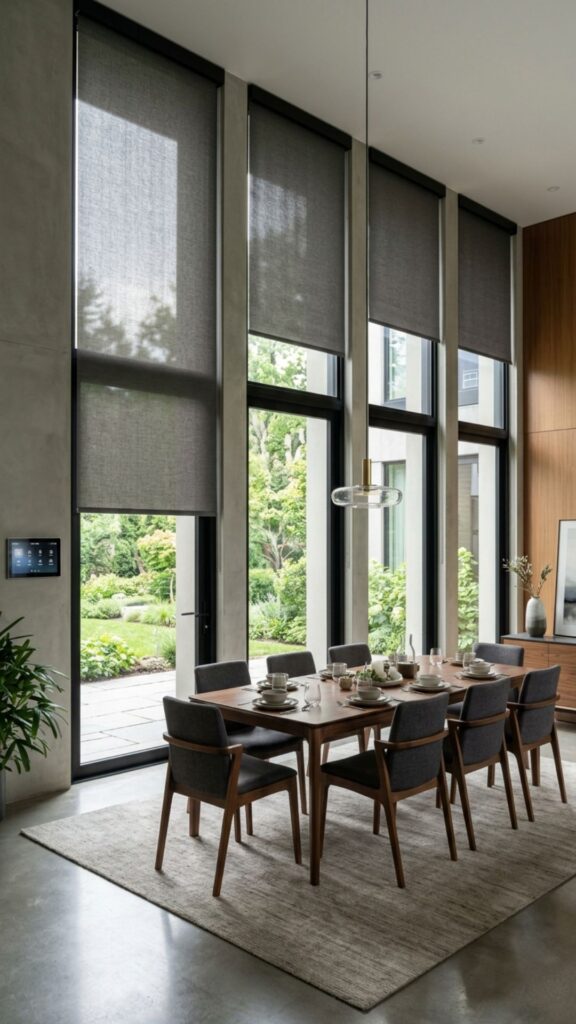
Motorized dining room blinds remove the need for cords or wands entirely, which is both safer for households with young children and considerably more convenient in rooms with hard-to-reach windows. A tap on your phone or a voice command raises or lowers them in seconds.
The upfront cost is higher than manual options, but for large windows, high ceilings, or multiple blinds on a single wall, the convenience is worth it. Most motorized blind systems integrate with smart home platforms, so you can set schedules — useful for managing afternoon sun during regular mealtimes.
9. Day and Night (Zebra) Blinds
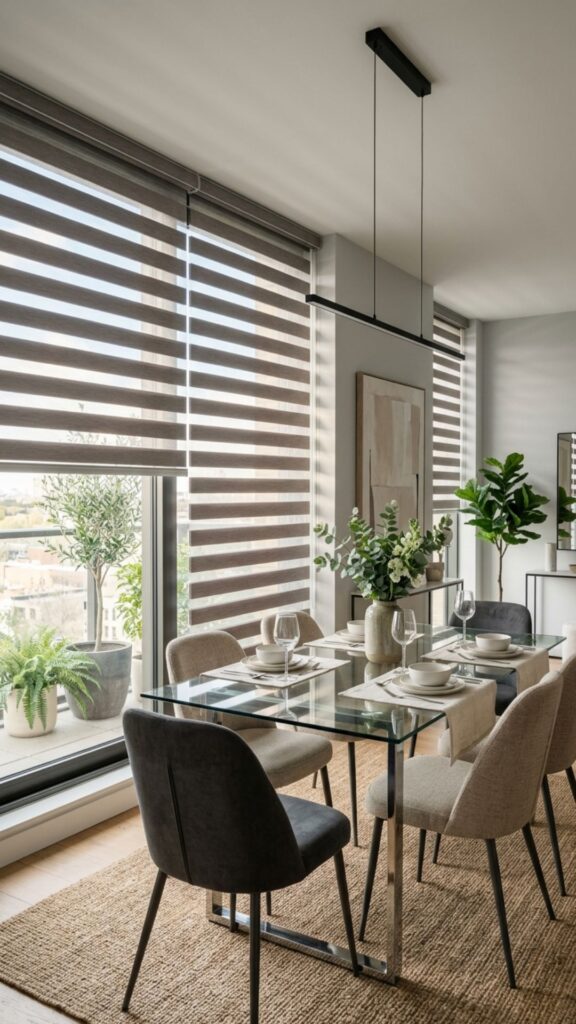
Day and night blinds alternate between sheer and opaque fabric bands, letting you adjust from filtered light to near-complete privacy by shifting the alignment of the two layers. The striped pattern this creates is subtle and contemporary.
In dining rooms that double as home working or living spaces, the ability to switch between light states without swapping treatments is genuinely practical. The ribbed visual effect works well in modern and minimalist interiors where texture takes the place of pattern.
10. Venetian Blinds in Aluminum
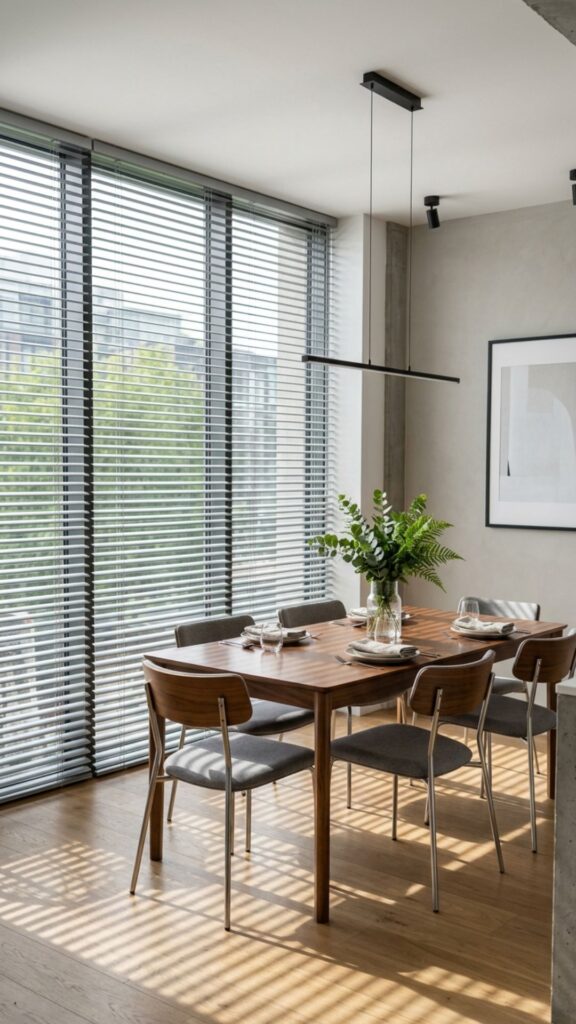
Aluminum Venetian blinds are lighter and thinner than their wood counterparts and suit contemporary, industrial, or minimal dining rooms where a cleaner, sharper finish is preferable to natural materials. The narrow slat versions — 16mm — have a particularly sleek profile.
They’re also the most affordable Venetian option and easy to wipe clean, which matters more in dining rooms than most other rooms in the home. Stick to white, silver, or anthracite for a timeless result; bright colors tend to date quickly.
11. Blackout Roller Blinds
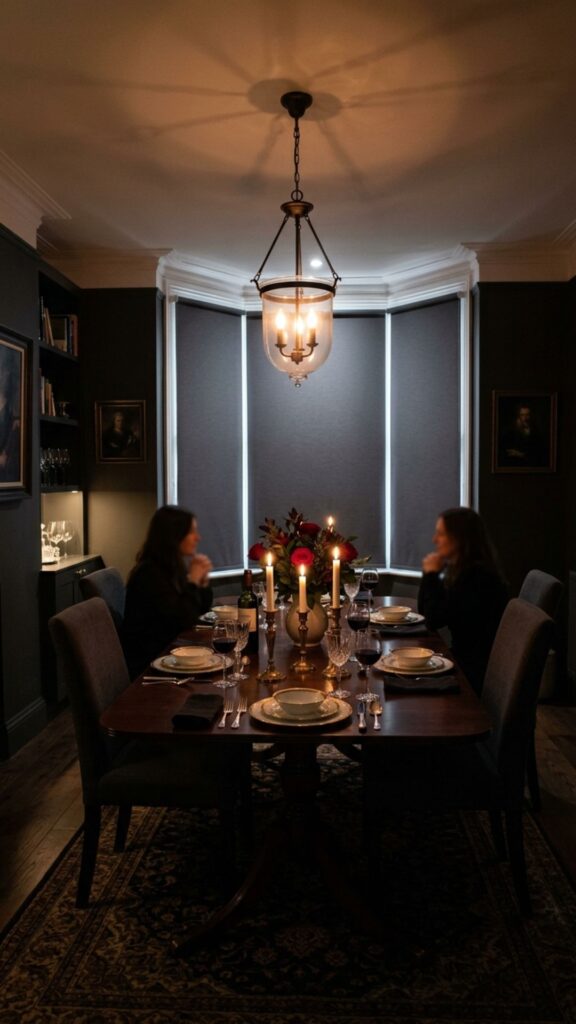
If your dining room faces east and catches early morning sun, or if you host evening dinner parties where overhead lighting should set the mood, a blackout roller blind gives you genuine control over the room’s atmosphere. Fully opaque, they block external light completely when lowered.
Pair them with a sheer blind or curtain on the same window if you want to keep the room light during the day and dark in the evening. This layered approach is one of the most practical solutions for dining rooms that get used at multiple times of day.
12. Panel Track Blinds
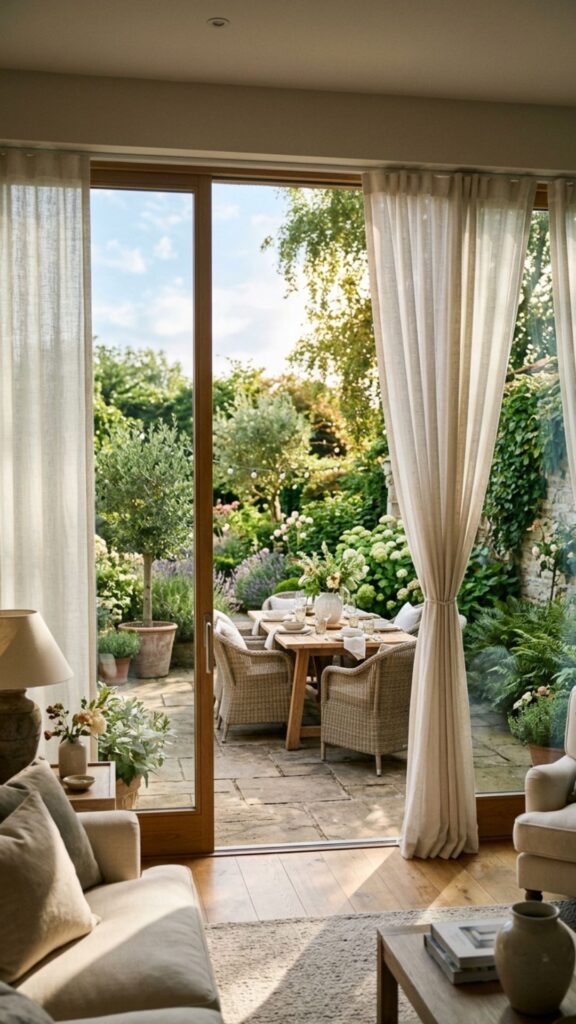
Panel track blinds use wide fabric panels that slide on a track — a format borrowed from Japanese shoji screens — and work beautifully across wide windows or glass sliding doors that open onto a garden or terrace. They’re among the cleanest-looking options for large openings.
The panels can be drawn to one side or split in the middle, making them practical as well as decorative. Choose a fabric with a subtle weave or print, as large flat panels have a lot of visual surface area and an interesting texture rewards close attention.
13. Top-Down Bottom-Up Blinds
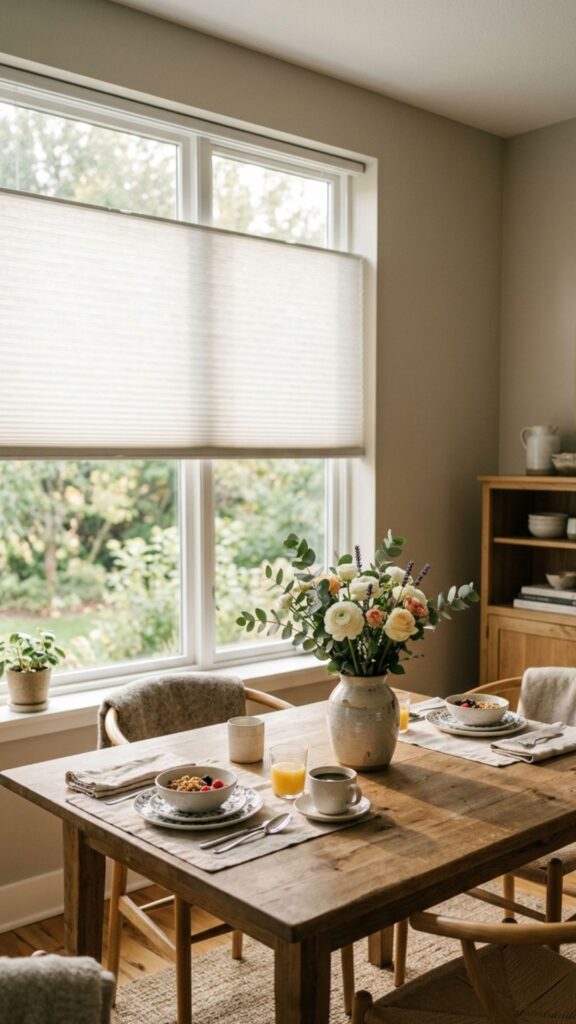
Top-down/bottom-up blinds can be lowered from the top as well as raised from the bottom, giving you precise control over where the light enters and where the blind sits. In a dining room at street level, this lets you bring daylight in from the upper half of the window while keeping the lower half private.
Most blind types — cellular, Roman, roller — are available in this configuration. It’s a modest upgrade in cost but a significant gain in flexibility, especially in urban homes where ground-floor privacy is a real concern.
14. Linen Roman Blinds
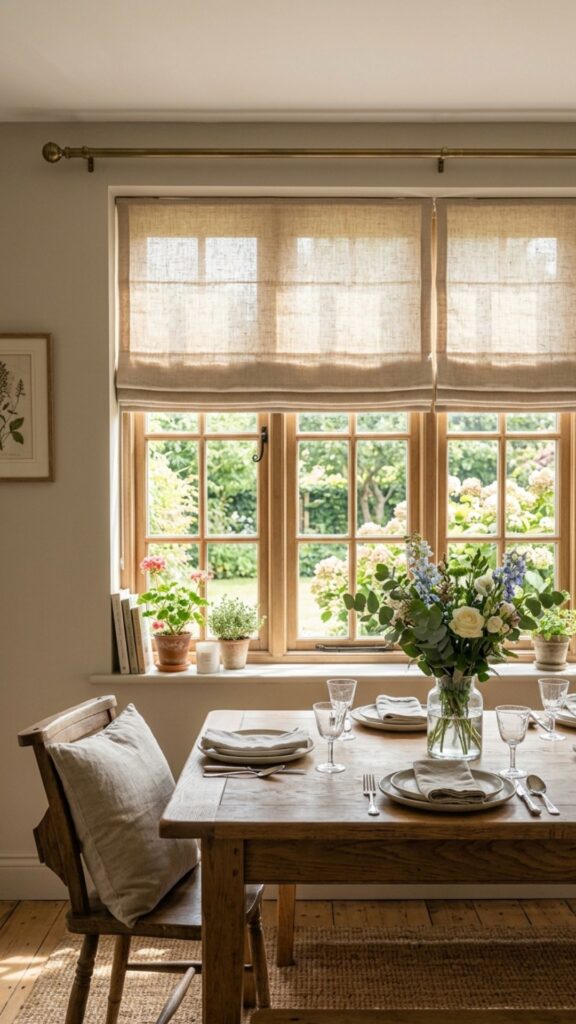
Linen is one of the best fabrics for dining room blinds. It’s a natural material that drapes well, softens with age, and handles strong sunlight better than many synthetic weaves without fading or looking tired.
A linen Roman blind in a warm natural, ivory, or soft sage tone suits almost any dining room style — traditional, contemporary, or coastal. It also works well in open-plan spaces because linen reads as understated and never competes with other textures in an adjoining kitchen or living area.
15. Printed Pattern Roller Blinds
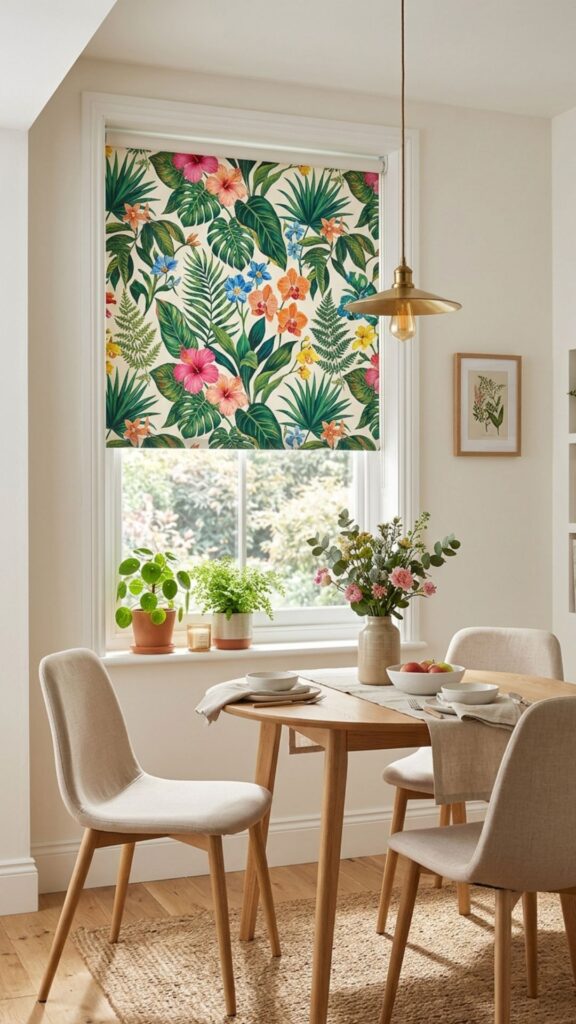
A printed roller blind is one of the easiest ways to add personality to a plain dining room without committing to wallpaper or a bold paint color. A simple geometric, botanical print, or abstract brushstroke can do a lot of work from a relatively small surface area.
Keep the rest of the window treatment simple — no pelmet, no layering — so the print has room to make its point. If you’re uncertain about scale, order a sample and hold it against your window before committing. Small patterns get lost on large windows; larger repeats can overpower a small dining nook.
16. Pinoleum Blinds
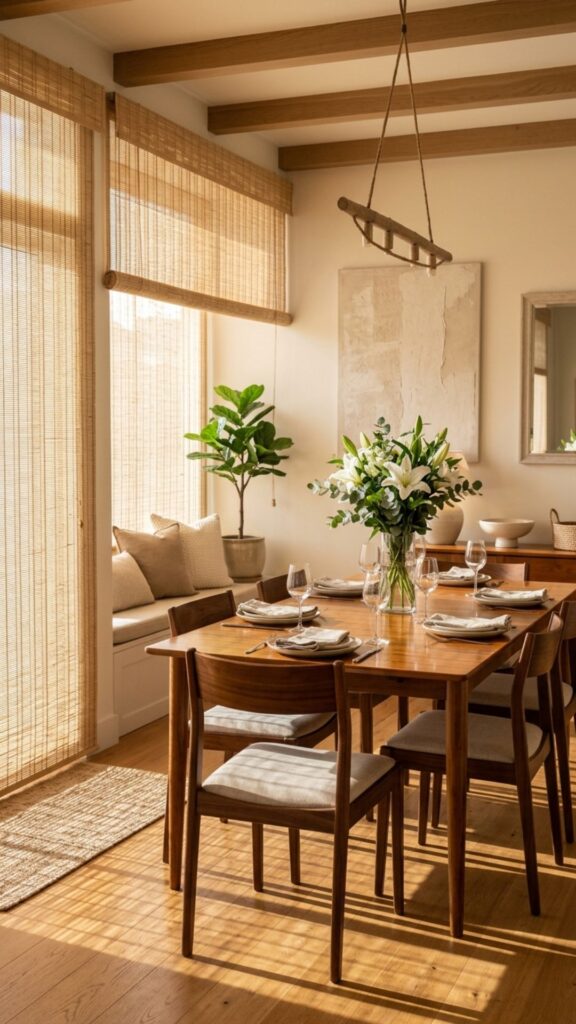
Pinoleum blinds are woven from fine grass or reed strips and sit in a similar category to bamboo blinds but with a tighter, flatter weave that gives a slightly more tailored finish. They’re popular in dining rooms that lean toward a natural, organic aesthetic without the full boho commitment.
They filter light pleasantly and are lighter in hand than most fabric blinds, which makes them easier to raise and lower repeatedly without wear on the mechanism. Pair with unpainted wooden furniture, neutral walls, and natural fiber rugs for a harmonious result.
17. Heritage Fabric Roman Blinds
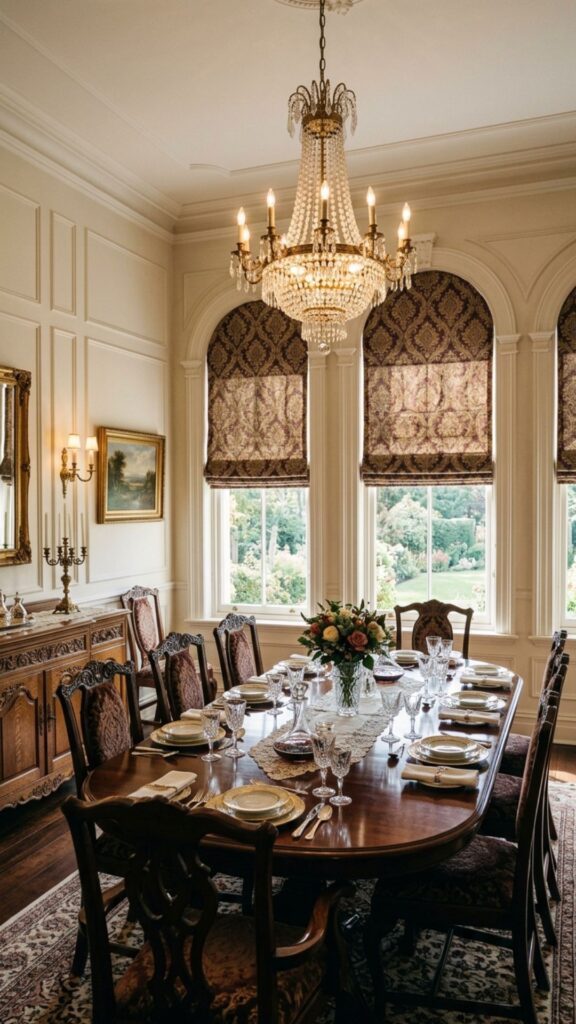
A heritage or archive-print fabric — small geometric repeats, classic trellis patterns, traditional florals — applied to a Roman blind brings an instant sense of history and craftsmanship to a formal dining room. This works particularly well in older properties with original coving, sash windows, or paneled walls.
Choose a fabric colorway that pulls from existing tones in the room — the warm terracotta in a rug, the soft blue of a painted sideboard — rather than introducing an entirely new palette. Careful color connection is what makes a room feel considered rather than assembled.
18. Sheer Panel Blinds for Bay Windows
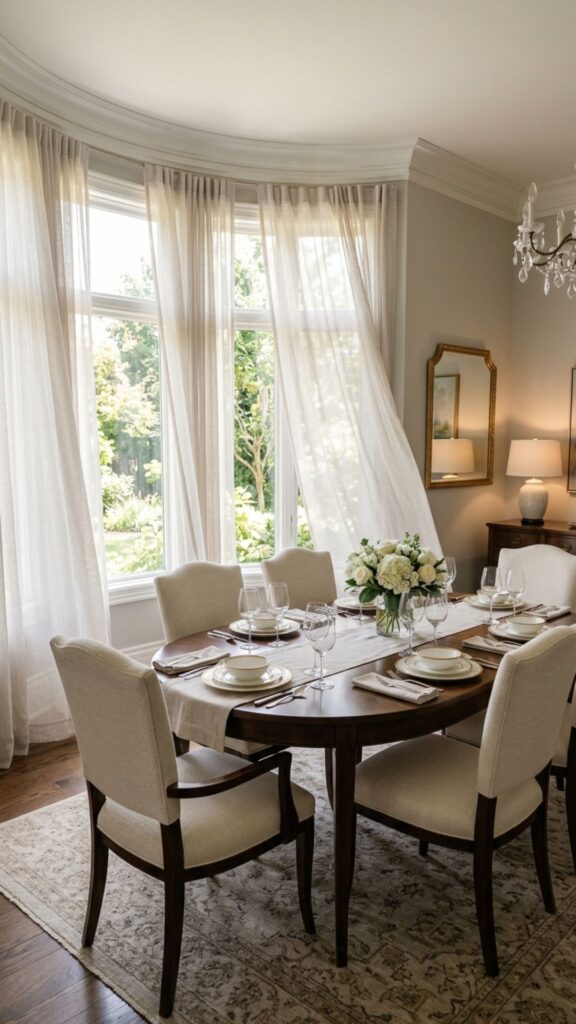
Bay windows in dining rooms are one of the more challenging situations to dress well. A sheer panel blind system — with individual panels for each section of the bay — allows the bay’s architecture to remain visible while softening the light across the whole window.
Avoid a single blind across a bay unless you’re happy losing the shape entirely. Individual panels that follow each facet of the bay respect the architecture and give a more tailored result. White or off-white sheers keep things bright; a warm ecru adds a softer, more intimate atmosphere.
19. Bold Color Roller Blinds
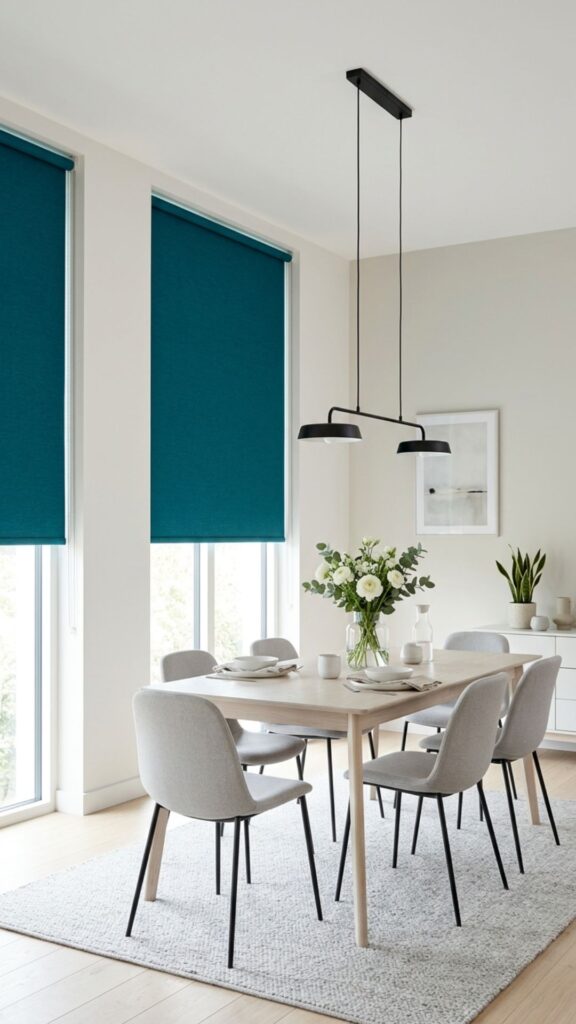
A single flat color — deep teal, warm terracotta, forest green, or charcoal — applied to a roller blind in a pale dining room creates a grounded, composed focal point. It works like an accent wall but takes up far less space and costs considerably less.
This approach suits modern dining rooms that are deliberately minimal in their furniture and décor. When the walls and table are quiet, the blinds earn their place as the room’s visual anchor. Choose a matte or semi-matte finish; gloss surfaces can look cheap in residential settings.
20. Layered Blinds and Curtains
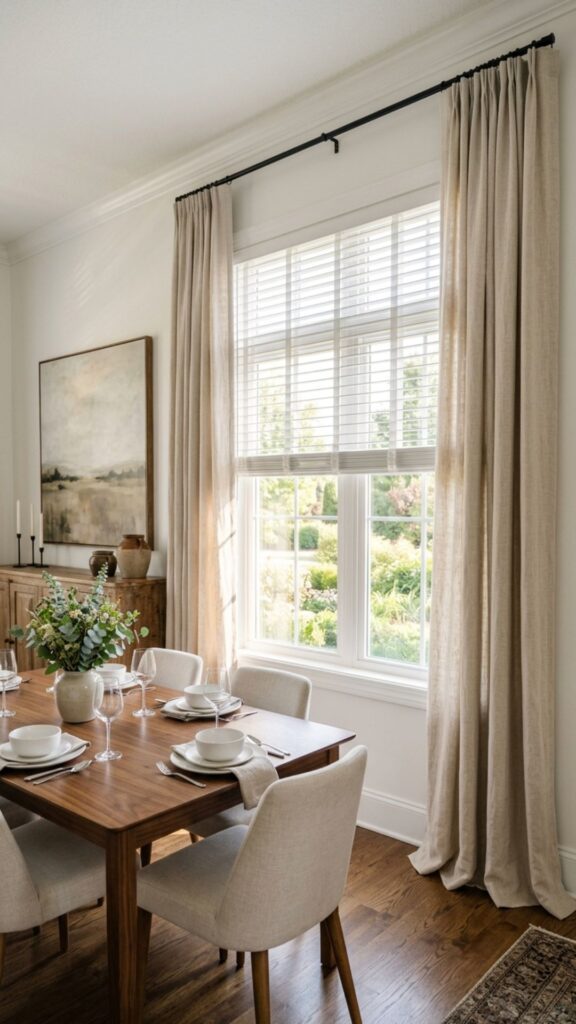
Combining dining room blinds with curtains gives you the most flexible light-and-privacy setup of any window treatment. The blinds handle daily light control; the curtains frame the window, add insulation, and shift the atmosphere for evening meals or entertaining.
Keep the combination balanced — a simple roller or cellular blind behind a full-length curtain panel works better than pairing two busy textures. A linen or velvet curtain flanking a clean white roller is one of the most adaptable combinations for almost any dining room style.
Finding the Right Fit for Your Dining Room
Dining room blinds are a practical purchase and a design decision at the same time. The good news is that with 20 strong options to consider, there’s a solution for every situation — whether you’re managing harsh afternoon glare, dressing a bay window in a heritage home, or adding the final layer of warmth to an open-plan space.
Start by identifying your primary need: light control, privacy, insulation, or style. Then narrow down by material and mechanism. From there, it’s a matter of color and proportion. Most blind suppliers offer free samples, so take advantage of them before ordering — seeing the fabric in your room’s actual light is worth the extra few days.
Pick the one or two ideas from this list that genuinely solve a problem in your space. The best dining room blind is the one you’ll enjoy every day.
What type of blinds work best in a dining room?
The best dining room blinds balance light control with style. Wooden Venetians, Roman blinds in natural fabrics, and roller blinds in light-filtering or blackout fabrics are the most popular choices because they handle variable light conditions well, are easy to operate, and suit a wide range of interior styles.
How do I choose dining room blinds for a room with a lot of natural light?
In a bright dining room, light-filtering or solar-screen fabrics reduce glare without darkening the space. If you host meals at different times of day, consider a day and night blind or a layered combination of a sheer and blackout roller that gives you full control across both light states.
Are blinds or curtains better for a dining room?
Blinds are generally the more practical option in dining rooms because they sit within the window recess, leave the wall space free, and are easier to clean. Curtains add softness and insulation but take up more visual and physical space. Many designers recommend combining both for maximum flexibility, especially in formal dining rooms.
How do I keep dining room blinds clean?
Most roller, Venetian, and cellular blinds can be wiped down with a damp cloth or lightly vacuumed. Fabric Roman blinds often need dry cleaning or gentle hand washing. In dining rooms where steam, grease, or cooking smells are a factor, faux wood, aluminum, or roller blinds with wipeable coatings are the lowest-maintenance options available.