Working from home feels much better when your workspace is comfortable, practical, and visually inviting. While desks, chairs, and storage usually get most of the attention, window treatments can completely change how a room looks and feels.
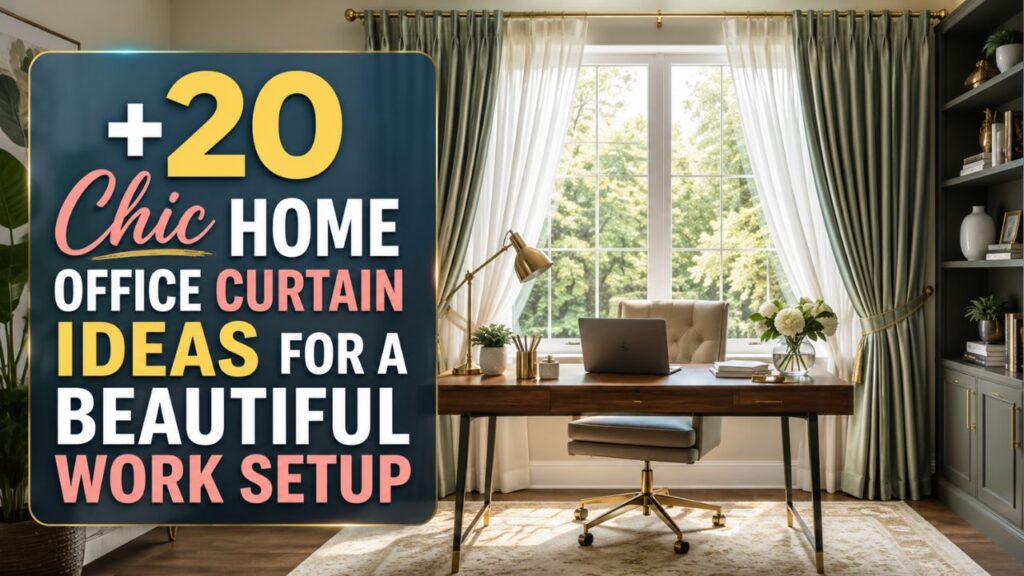
The right curtains can soften harsh sunlight, reduce screen glare, provide privacy, and make even a small office feel finished. They can also introduce color, texture, or pattern without taking up valuable floor space.

If you are exploring home office ideas curtains can play a surprisingly important role. The following options cover everything from light-filtering sheers to dramatic floor-length panels, helping you find a style that suits both your work routine and your décor.
1. Choose Airy White Sheer Curtains
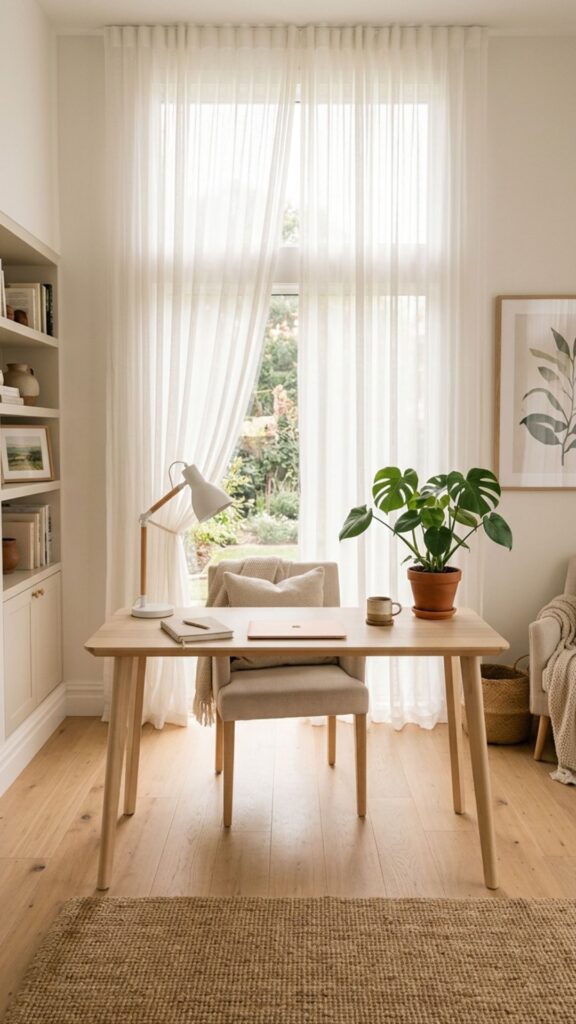
White sheer curtains are ideal when you want plenty of natural daylight without leaving your windows completely uncovered. They gently diffuse direct sunlight, creating a softer atmosphere that feels calm and comfortable during long working hours.
They work particularly well in smaller offices because the light fabric does not visually crowd the room. Pair them with white walls, pale wood furniture, or neutral accessories for a clean workspace that feels bright throughout the day.
2. Try Floor-Length Linen Curtains
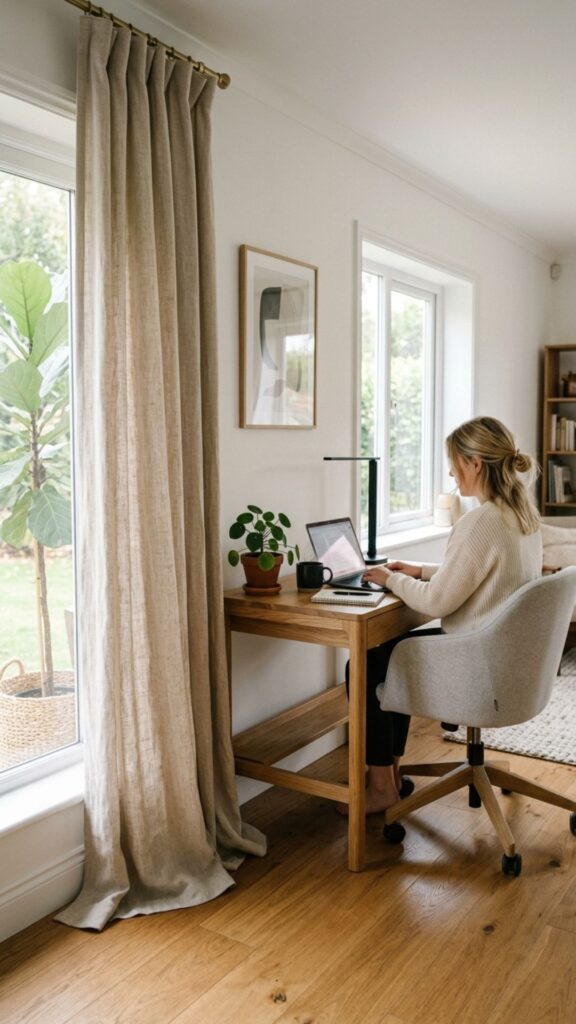
Linen curtains bring natural texture and an easy, sophisticated character to a home workspace. Their slightly relaxed appearance works beautifully with modern, Scandinavian, farmhouse, and organic interior styles.
Hang the curtain rod several inches above the window and allow the panels to nearly touch the floor. This simple technique makes ceilings appear higher and gives an ordinary office window a much more intentional appearance.
3. Add Blackout Curtains for Better Screen Visibility
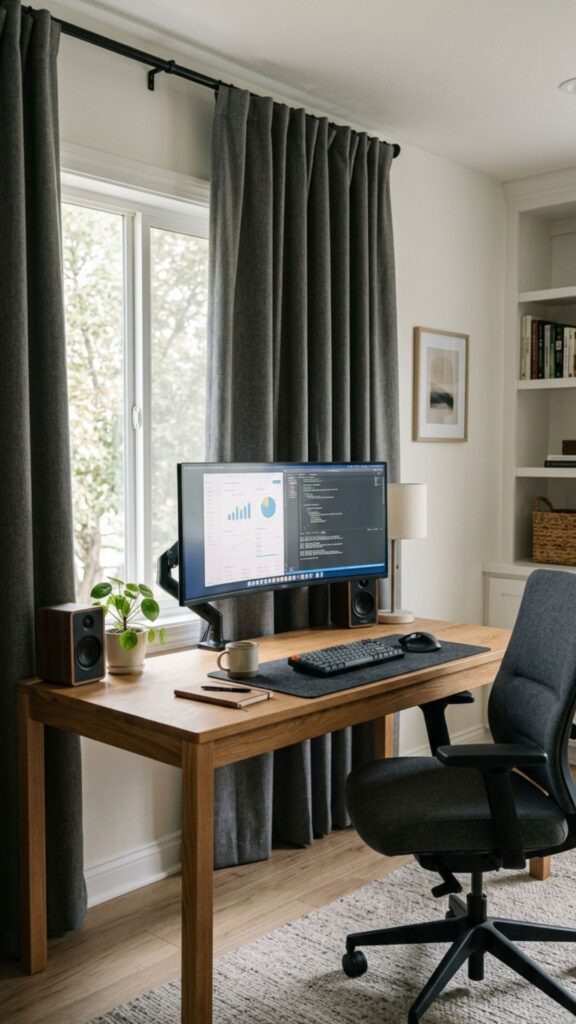
Sunlight is welcome in an office until it begins reflecting directly across your laptop or monitor. Blackout curtains give you greater control over brightness, especially when your desk faces a sunny window.
Among practical home office ideas curtains with blackout lining are particularly useful for video editors, designers, gamers, and professionals who work with multiple screens. Choose a softer neutral shade instead of very dark fabric if you want to keep the room feeling spacious.
4. Create Warmth With Beige Curtains
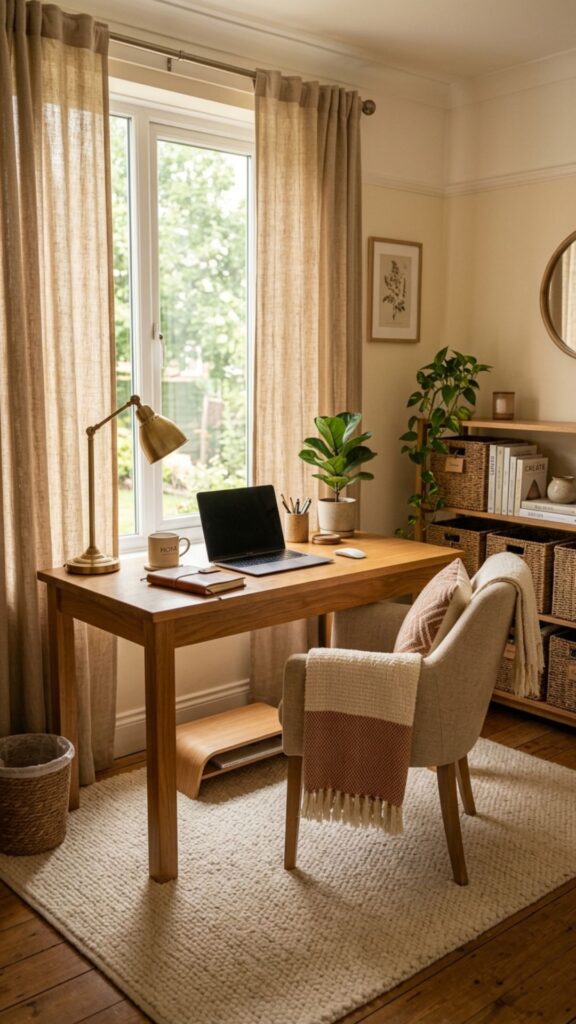
Beige is easy to decorate with because it adds warmth without competing with the rest of the room. Warm beige curtains can soften white walls while blending naturally with wood desks, woven baskets, cream rugs, and neutral office chairs.
For a more layered appearance, select curtains with visible woven texture rather than completely flat fabric. Small variations in the material help the workspace feel comfortable and lived-in without making it appear busy.
5. Use Sage Green for a Calm Workspace
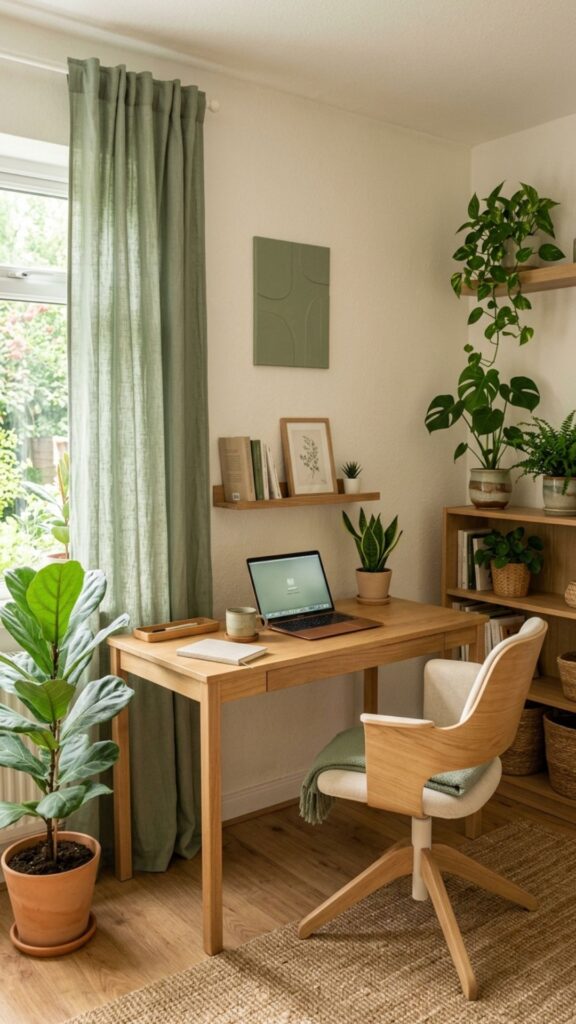
Sage green has a gentle, grounded quality that works naturally in spaces designed for concentration. Curtains in this muted shade add color while remaining subtle enough for everyday working environments.
Combine sage curtains with off-white walls, natural timber, simple artwork, and a few indoor plants. The result feels relaxed rather than overly styled, making this option suitable for both professional offices and creative workspaces.
6. Make a Statement With Dark Green Curtains
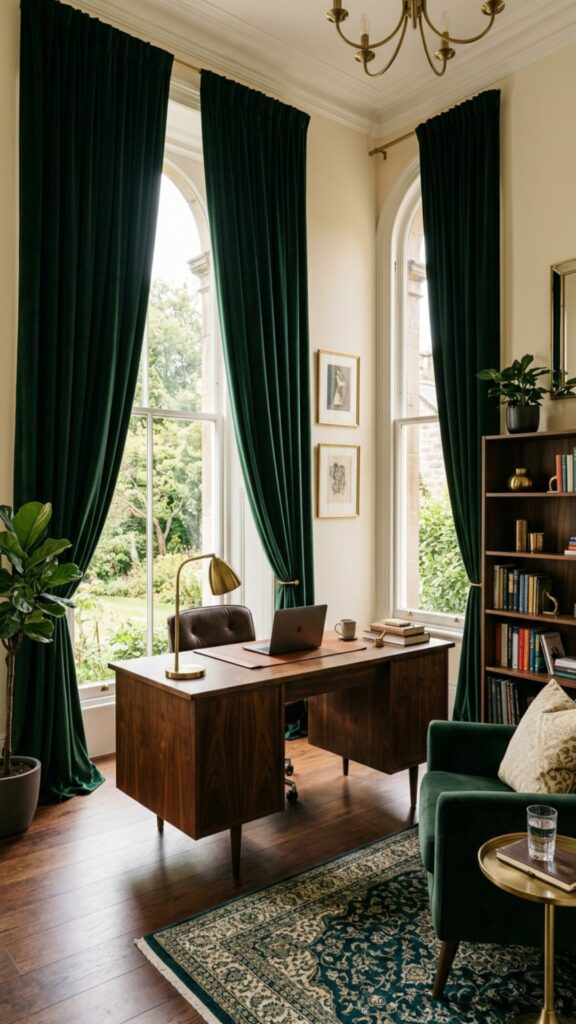
If your office has good natural light, deep green curtains can create a richer and more dramatic look. Colors such as forest, olive, and bottle green pair especially well with warm wood and brass details.
Keep surrounding décor relatively simple so the curtains become an intentional focal point. A cream wall, walnut desk, neutral chair, and dark green panels can create an office that feels polished without becoming too formal.
7. Bring Softness With Blush Pink Curtains
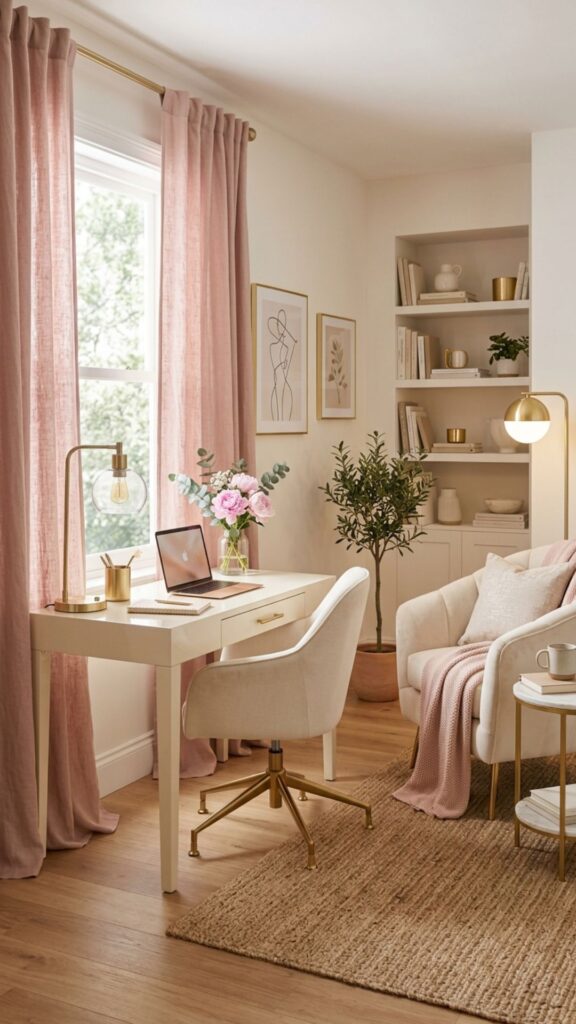
Blush pink curtains provide a softer alternative to bold pink tones. They work particularly well in feminine offices, cozy study corners, creative rooms, and bedrooms that double as working spaces.
When experimenting with home office ideas curtains in blush can be paired with cream, beige, light grey, white, or warm metallic details. Choosing dusty or muted pink usually creates a more sophisticated finish than very bright shades.
8. Keep Things Modern With Light Grey Curtains
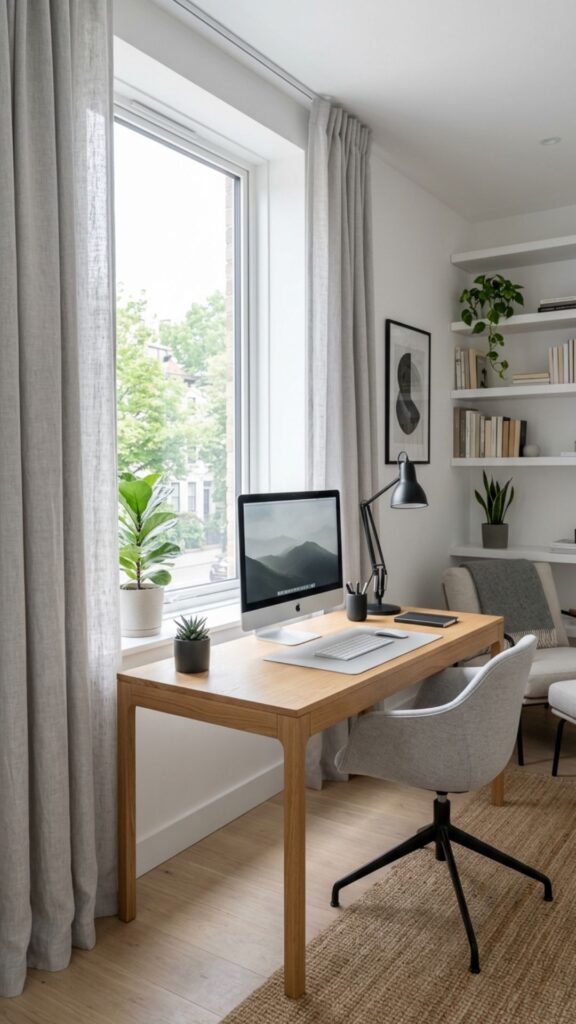
Grey curtains remain a dependable choice for modern home offices because they coordinate easily with many furniture finishes. Light grey feels particularly suitable when you want something slightly deeper than white but still visually quiet.
Try pairing them with a black desk frame, light wooden desktop, white shelving, and minimal accessories. They can also help balance offices containing stronger accent colors because grey creates a calm visual background.
9. Add Contrast With Charcoal Curtains
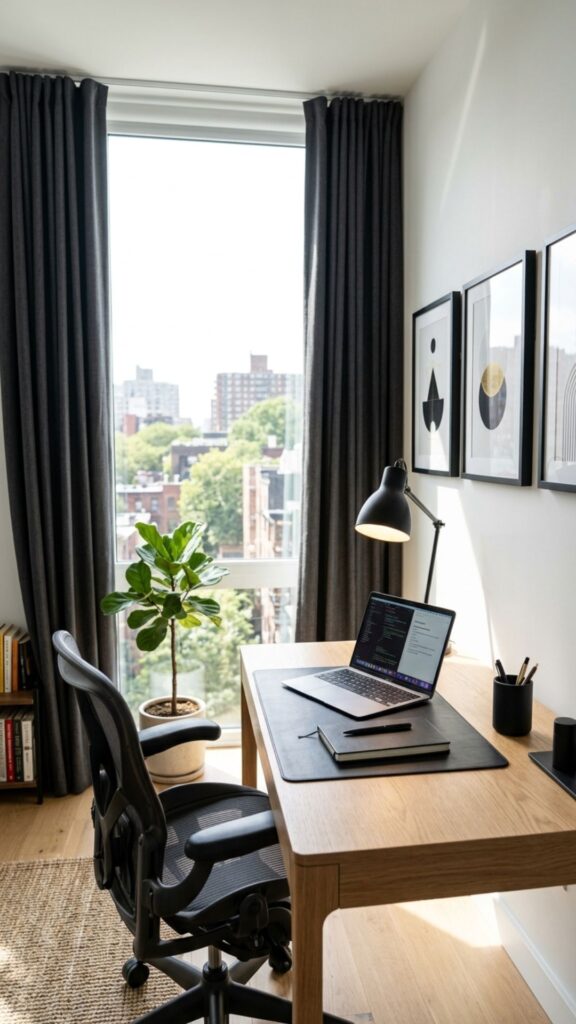
Charcoal curtains can give a bright office more definition. Against pale walls, they frame the window beautifully and create stronger contrast without requiring patterned fabrics or decorative details.
This style works best when you repeat a few darker elements elsewhere. A black lamp, dark chair frame, picture frames, or desk accessories can connect the curtains with the rest of the workspace.
10. Layer Sheers With Blackout Panels
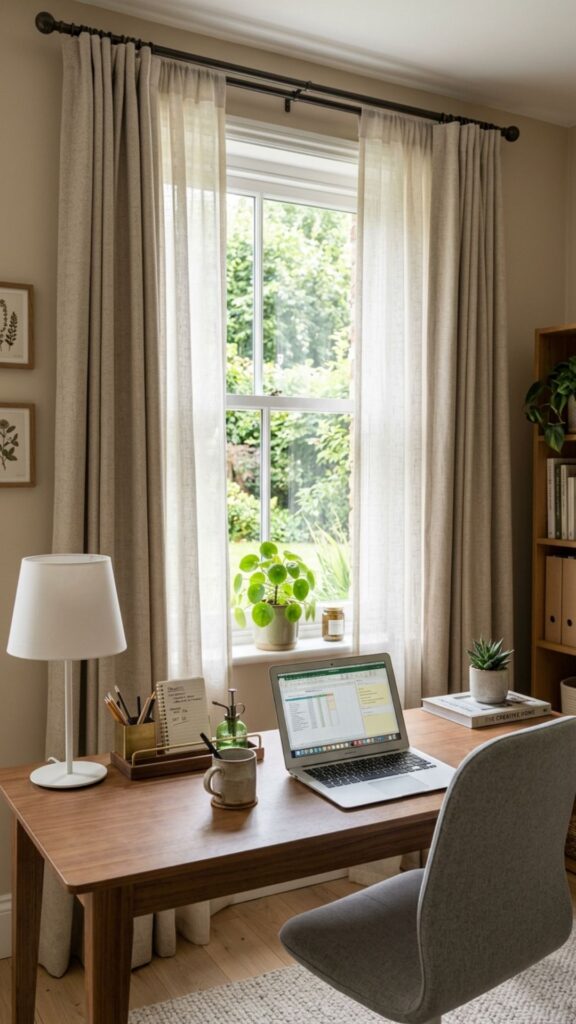
Layering two types of window treatments gives you flexibility throughout the working day. Sheers can stay closed when you want diffused daylight, while heavier curtains can be drawn when direct sun becomes distracting.
This combination is one of the most functional home office ideas curtains can offer because lighting conditions often change from morning to evening. It also creates more visual depth than using a single curtain panel.
11. Introduce Subtle Striped Curtains
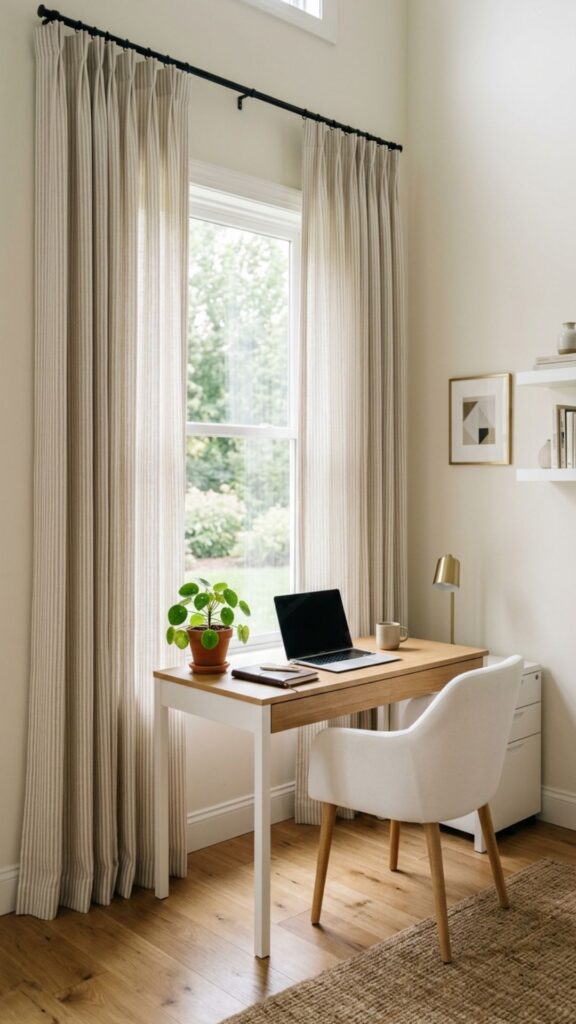
Striped curtains can add personality without overwhelming a professional workspace. Thin vertical stripes are particularly useful because they visually draw the eye upward and can make the ceiling seem taller.
Choose understated combinations such as beige and white, grey and cream, or muted blue and ivory. Smaller patterns are generally easier to live with than bold contrasting stripes, especially when you already have artwork or decorative shelving.
12. Use Soft Blue Curtains for a Fresh Look
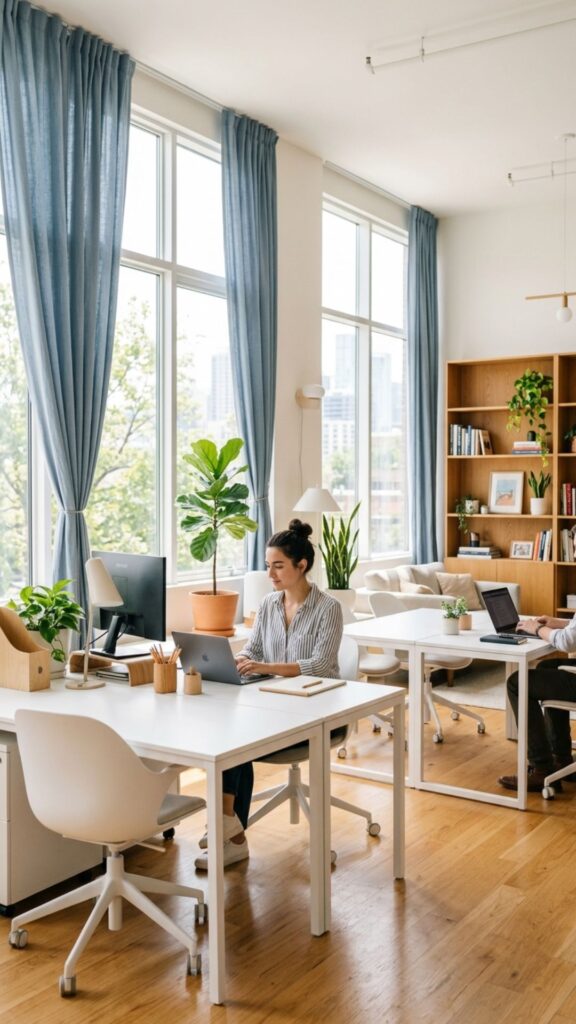
Soft blue curtains can give an office a clean, refreshing character. Powder blue, dusty blue, and blue-grey shades work well when you want color that still feels understated.
Pair blue curtains with white furniture for a brighter appearance or natural wood for additional warmth. This combination is particularly effective in rooms that receive plenty of daylight because the color remains fresh without appearing overpowering.
13. Choose Warm Terracotta Curtains
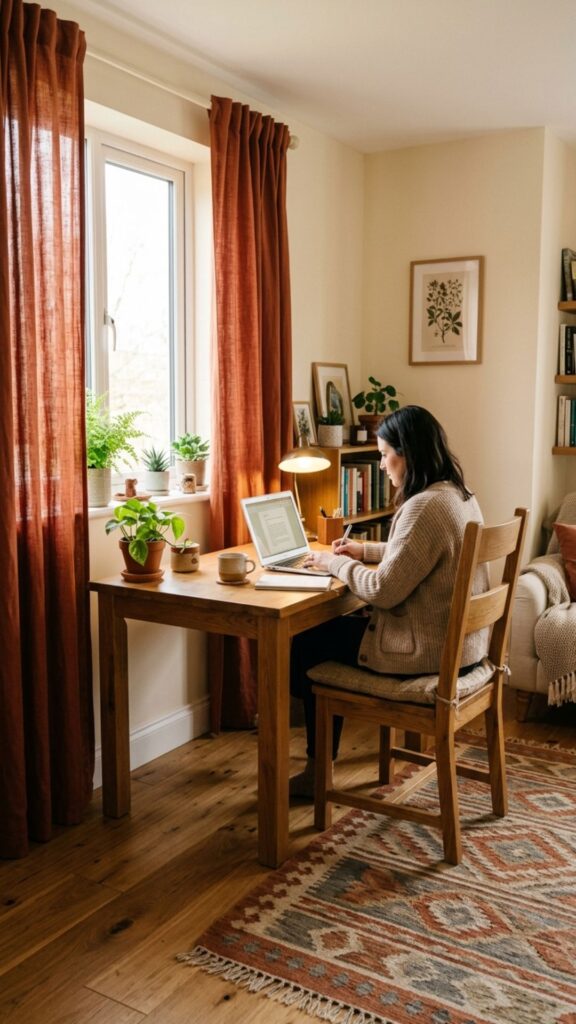
Terracotta curtains introduce an earthy warmth that can make a simple workspace feel more distinctive. Their rusty orange undertones look especially attractive alongside cream walls, warm timber furniture, and natural textiles.
If full terracotta panels seem too strong, use curtains with a softer clay or muted cinnamon tone. These shades still provide character while remaining suitable for an office where you spend several hours every day.
14. Add Character With Botanical Prints
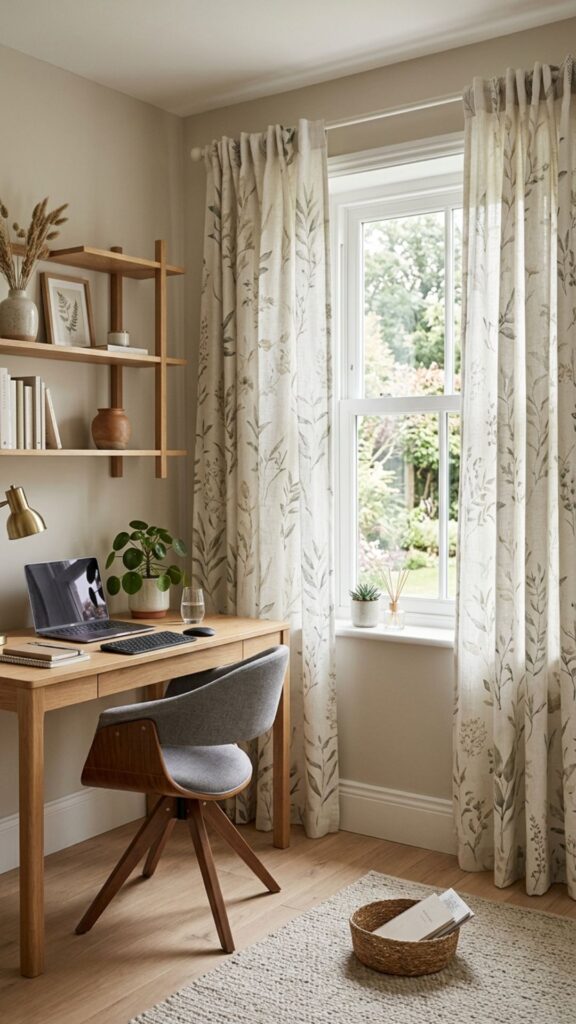
A subtle botanical pattern can bring energy to an otherwise plain workspace. Leaf designs, delicate branches, or small floral prints work particularly well in offices with simple furniture and neutral walls.
When considering patterned home office ideas curtains should complement rather than compete with your surroundings. If your wallpaper, rug, or artwork already contains strong patterns, keep the curtains simpler to avoid visual clutter.
15. Install Ceiling-to-Floor Curtains
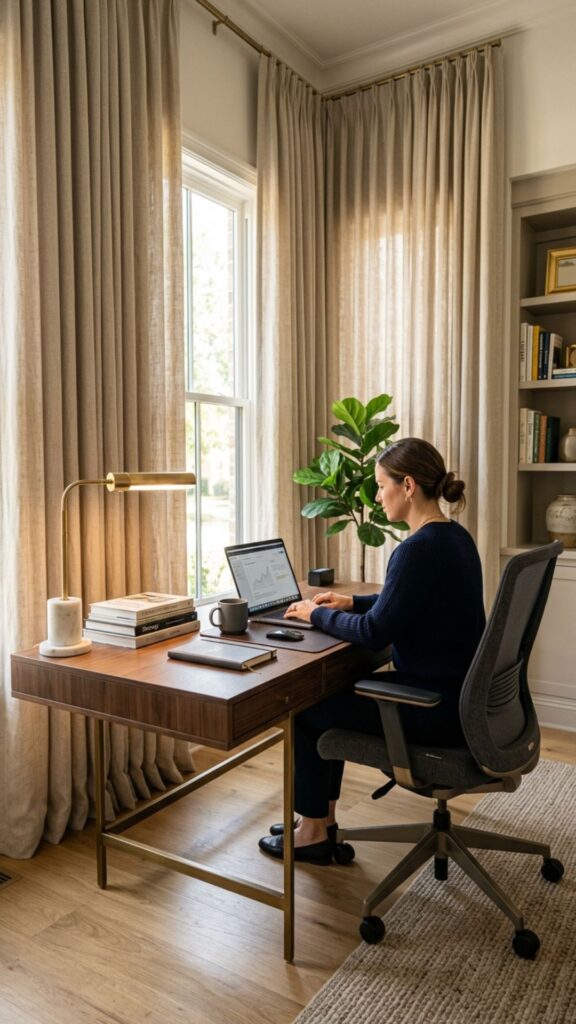
Curtains installed close to the ceiling can instantly make a home office appear taller and more refined. Rather than placing the rod directly above the window frame, position it higher whenever the room layout allows.
Choose panels that extend almost to the floor for a clean finish. This approach is particularly helpful for smaller windows because it creates the impression of a larger architectural feature rather than emphasizing the window’s actual dimensions.
16. Use Curtains to Hide an Unattractive View
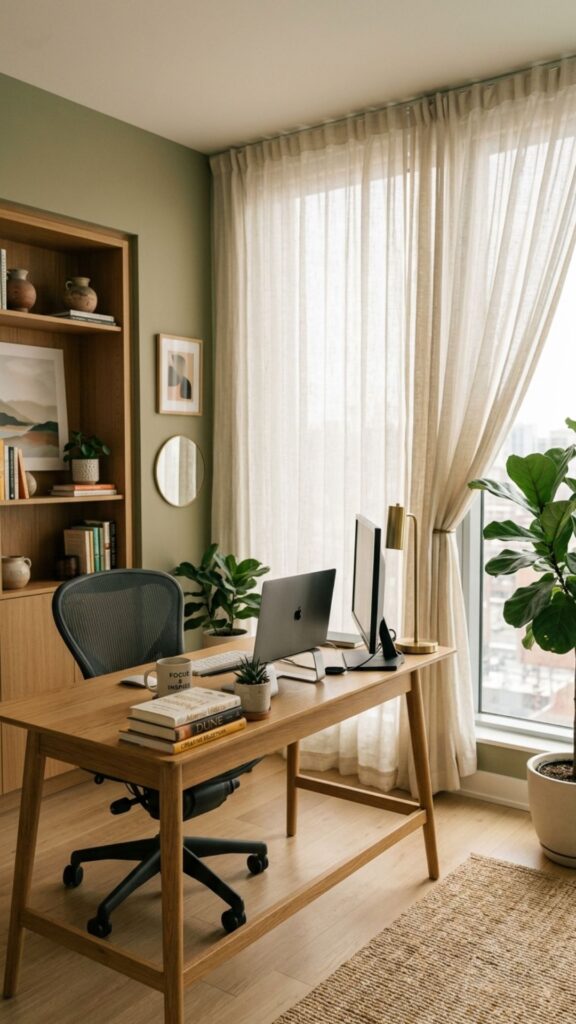
Not every home office window overlooks a beautiful garden or city skyline. If your view includes another building, a wall, or a busy street, curtains can help redirect attention back into the room.
Light-filtering curtains are often preferable to keeping heavy panels closed all day. They provide a level of privacy and disguise distracting views while still allowing enough daylight to keep your workspace comfortable.
17. Pick Café Curtains for Small Office Windows
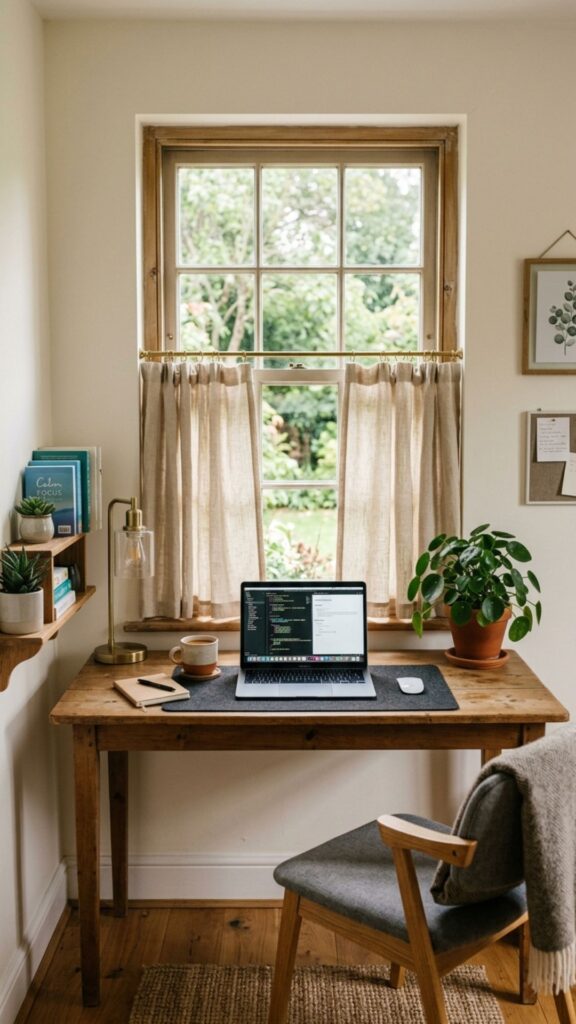
Café curtains cover only the lower portion of a window, making them useful when you need privacy without blocking overhead daylight. They work particularly well on smaller windows or offices facing neighboring properties.
For a contemporary version, choose simple linen or cotton fabric rather than heavily decorated café curtains. Neutral colors help this traditionally casual window treatment fit into a modern workspace.
18. Coordinate Curtains With Your Office Chair
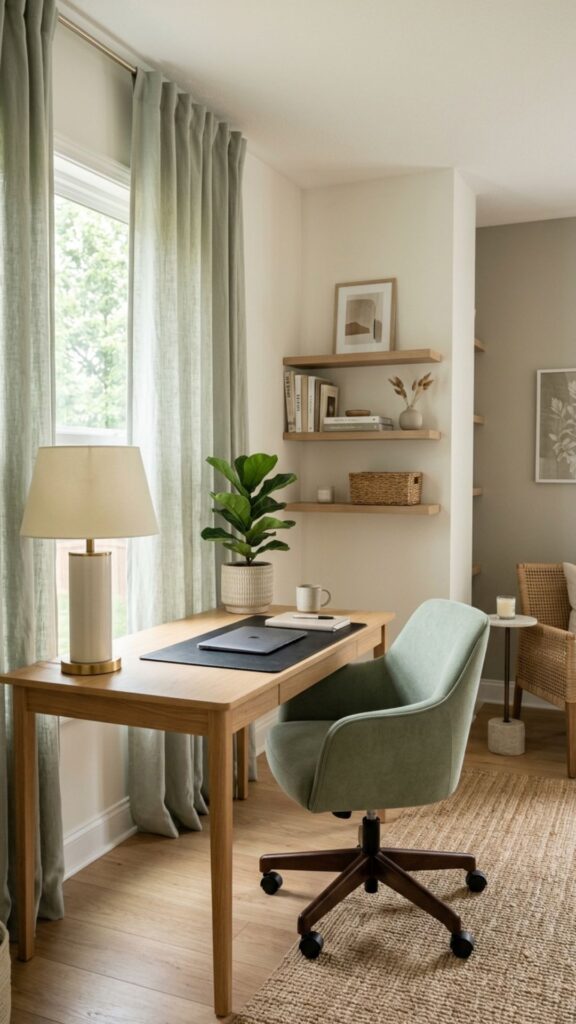
Connecting curtain color with another element in the room can make the office feel intentionally designed. Your chair is a natural starting point because it is usually one of the largest visible furnishings.
You do not need an exact color match. For example, a muted green chair can work with pale sage curtains, while a tan leather chair can pair beautifully with warm beige or oatmeal-colored fabric.
19. Select Patterned Curtains for a Creative Office
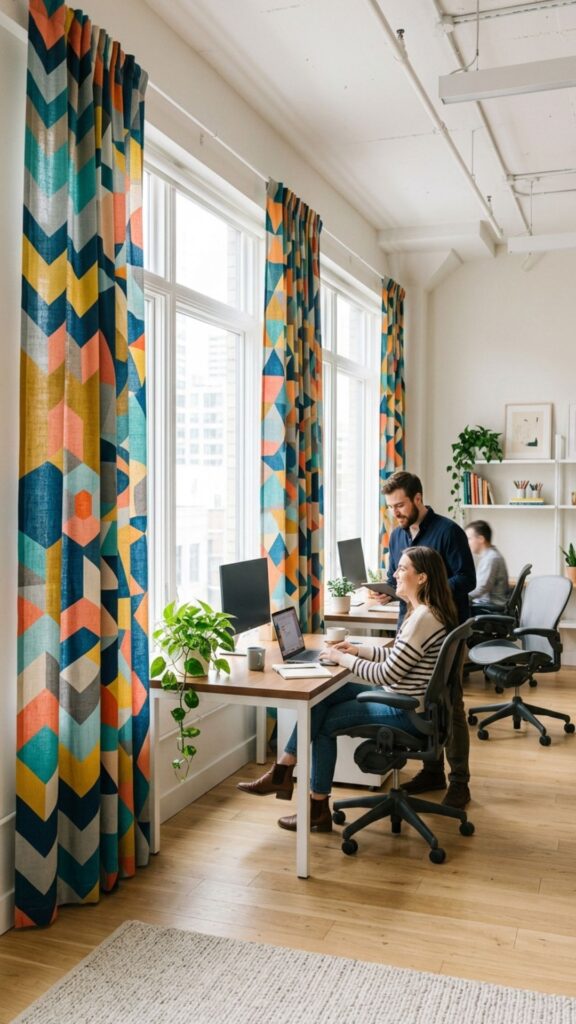
Creative offices allow more freedom with pattern and personality. Geometric prints, abstract shapes, understated checks, or artistic motifs can make the workspace feel more inspiring.
The key is balance. When using bold home office ideas curtains can become the main decorative feature, so keep large furniture pieces relatively simple. This prevents the room from becoming distracting when you need to concentrate.
20. Match Curtains to the Wall Color
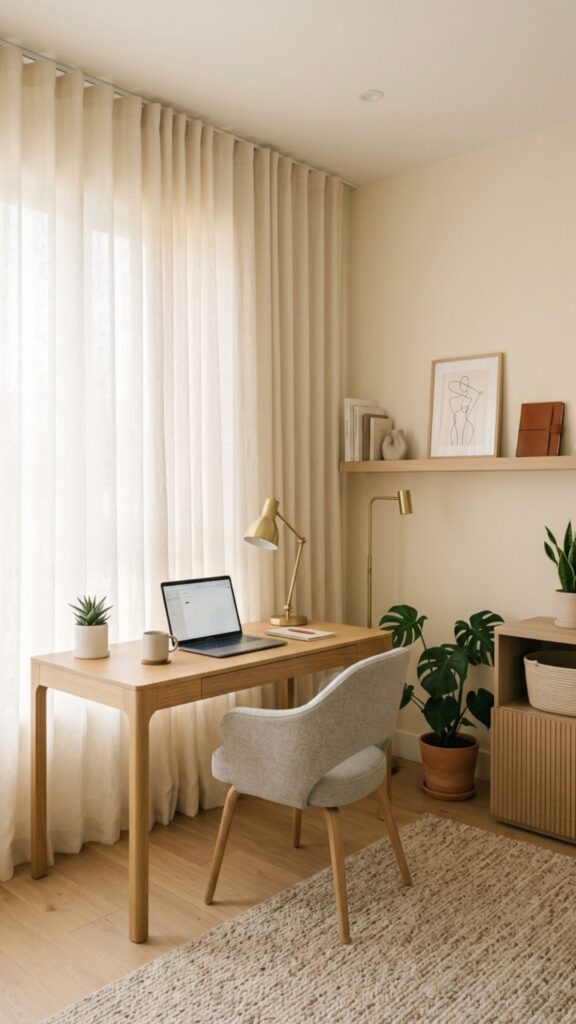
Using curtains in a shade close to your wall color creates a seamless, spacious effect. Instead of sharply outlining the window, the fabric becomes part of the surrounding room.
This technique works particularly well in compact home offices. Cream walls with ivory curtains, warm white walls with oatmeal curtains, or soft grey walls with slightly deeper grey panels can create an elegant, cohesive appearance.
How to Choose the Right Curtains for a Home Office
The best office curtains should balance light control, privacy, comfort, and appearance. Start by observing how sunlight enters your workspace throughout the day. If direct sun causes monitor glare, consider lined or blackout curtains. If the room already feels dark, lighter fabrics are usually more appropriate.
Fabric length also matters. Floor-length panels create a polished appearance, while shorter curtains can work around desks, radiators, or furniture positioned beneath windows. Before buying anything, measure both your window and available wall space carefully rather than relying only on the dimensions of the window frame.
Final Thoughts on Home Office Ideas Curtains
Curtains may seem like a finishing detail, but they can significantly influence how comfortable and functional your workspace becomes. The right fabric can soften sunlight, improve privacy, reduce distractions, and connect your furniture and color palette.
When exploring home office ideas curtains should support the way you actually work. Choose sheers for brightness, blackout panels for stronger light control, neutral linen for timeless style, or patterned fabric when your office needs more personality.
Start with your biggest practical concern—light, privacy, glare, or appearance—and choose your curtains around that need. A thoughtful window treatment can turn a basic work corner into a space you genuinely enjoy using every day.
What type of curtains are best for a home office?
Light-filtering curtains are suitable for most home offices because they soften daylight while maintaining brightness. Blackout curtains are better when direct sunlight causes glare or when stronger privacy is required.
What color curtains make a small office look bigger?
White, cream, beige, pale grey, and other light shades can make a small office feel more open. Hanging the curtains high and extending them toward the floor can also create the impression of taller ceilings.
Should home office curtains match the walls?
They do not have to match exactly. Curtains one or two shades lighter or darker than the walls often create a coordinated appearance while adding enough contrast to keep the room interesting.
Are blackout curtains good for working from home?
Yes. Blackout curtains can reduce glare, control bright afternoon sunlight, and improve screen visibility. Consider pairing them with sheer curtains so you can adjust the amount of natural light throughout the day.
Should office curtains touch the floor?
Floor-length curtains generally create a cleaner, more polished appearance. Ideally, the fabric should finish just above the floor or lightly touch it, especially in a workspace where easy cleaning and movement are important.