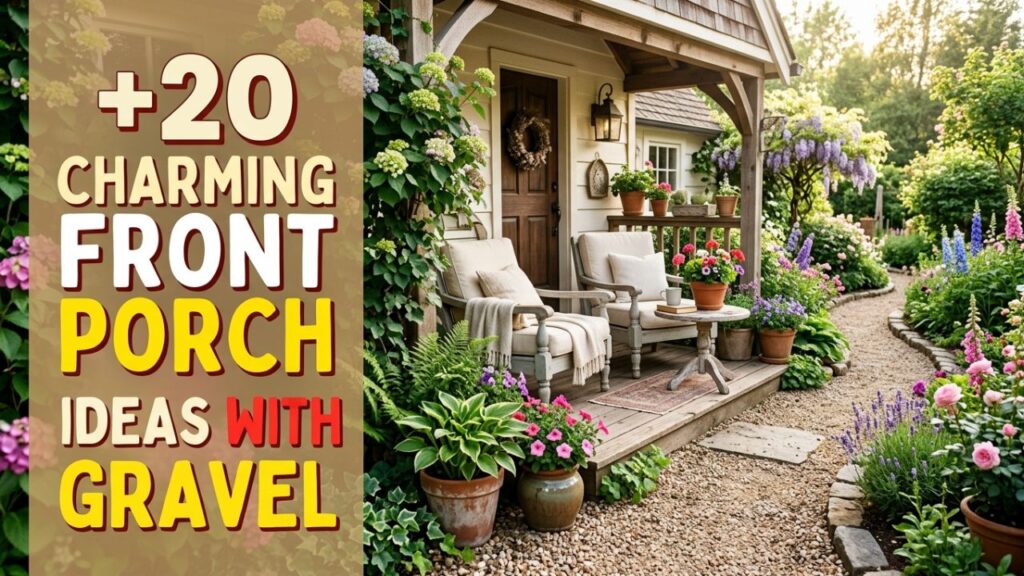
Gravel might be one of the most underrated materials for your front porch. It’s affordable, drains well, and gives your entryway a relaxed, welcoming feel that concrete simply can’t match.
After years of helping homeowners rethink their outdoor spaces, I’ve seen gravel transform tired, muddy entrances into porches people actually want to linger on.
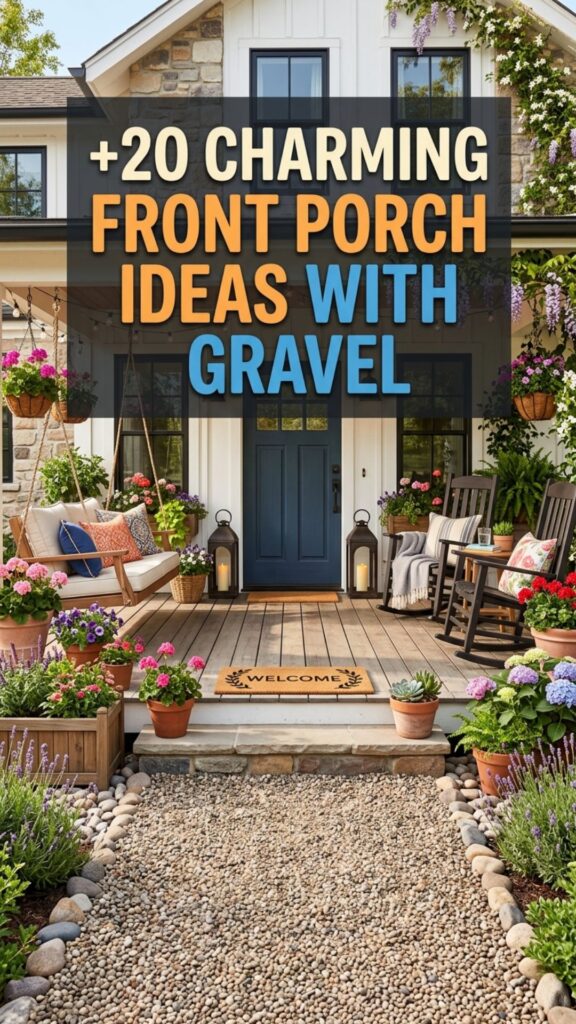
If you’re searching for front porch ideas with gravel, you’re in the right place. Below, you’ll find 20 practical, good-looking ways to use gravel around your porch. Each idea includes real details you can act on this weekend, plus tips to avoid common mistakes. Let’s dig in.
1. Create a Gravel Pathway to Your Door
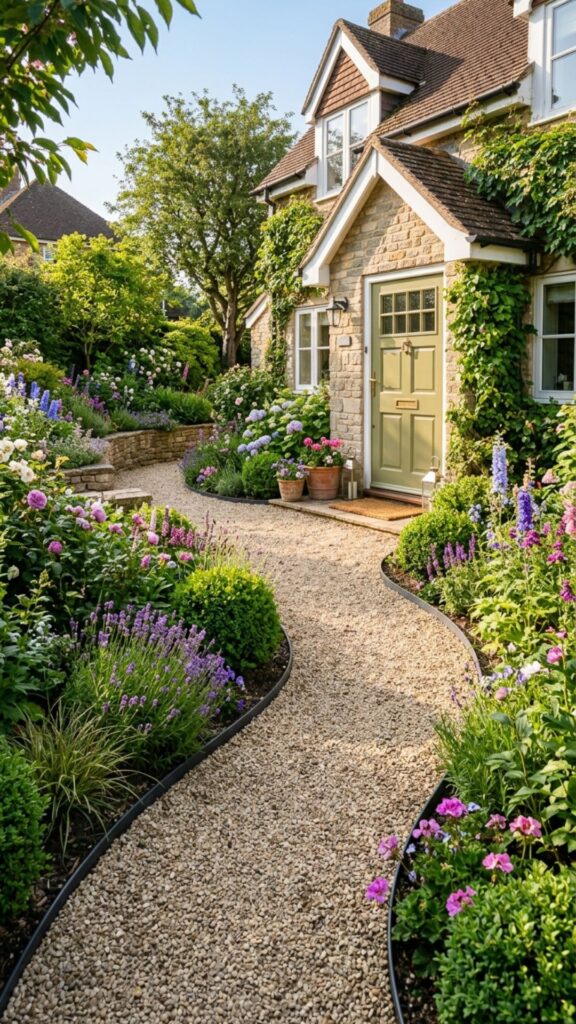
A gravel path leading to your front door instantly softens a hard entrance. Pea gravel works beautifully here because it feels smooth underfoot and looks tidy year-round. Lay a compacted base of crushed stone first, then top it with about two inches of pea gravel for a clean, stable surface.
To keep the gravel from wandering, add steel or aluminum edging along both sides. This simple step keeps stones off your lawn and makes mowing easier. Curve the path slightly rather than running it dead straight; a gentle bend feels more inviting and natural.
2. Frame the Porch With a Gravel Border
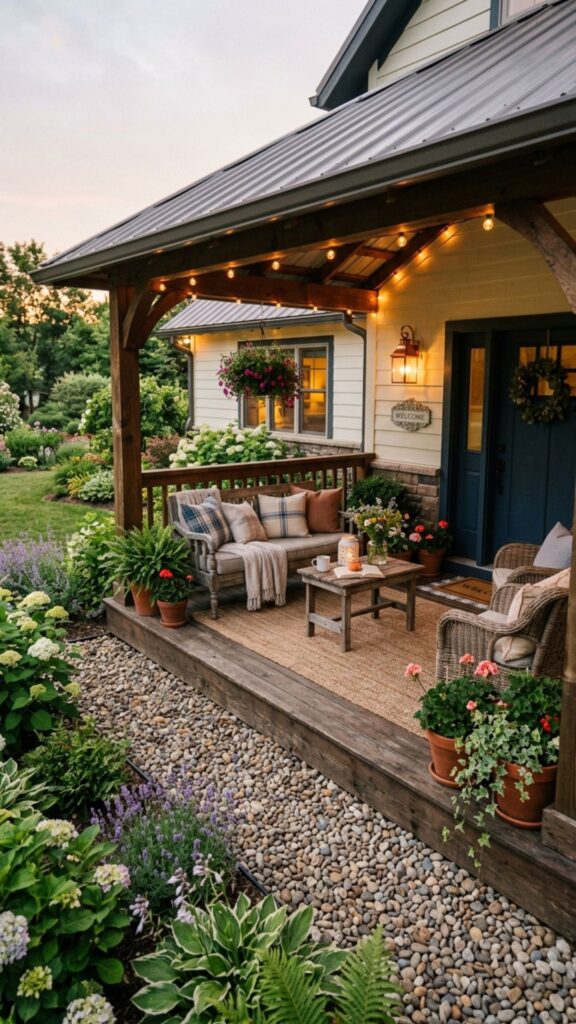
If your porch sits on a concrete slab or wooden deck, a slim gravel border around the edge adds texture and definition. This strip acts like a picture frame, drawing the eye toward your entry. Keep it around 12 to 18 inches wide for the best proportion.
A gravel border also solves practical problems. It catches rainwater dripping off the roofline, preventing splash-back stains on your siding. Choose a contrasting color, like light gray gravel against dark brick, to make the effect pop.
3. Build a Gravel Sitting Area
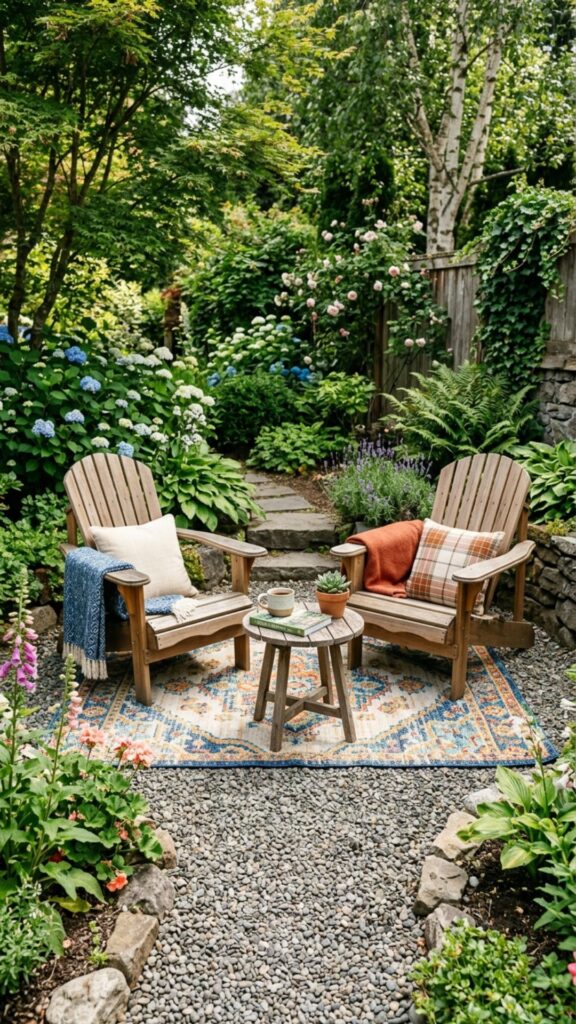
Extend your porch outward with a small gravel patio for chairs and a side table. This low-cost expansion gives you room to enjoy morning coffee without pouring a slab. Angular crushed gravel compacts firmly, so furniture legs won’t sink or wobble.
For comfort, keep the layer shallow and level. An outdoor rug over the gravel adds softness and color while defining the seating zone. Two Adirondack chairs and a lantern turn this corner into a favorite spot.
4. Mix Gravel With Stepping Stones
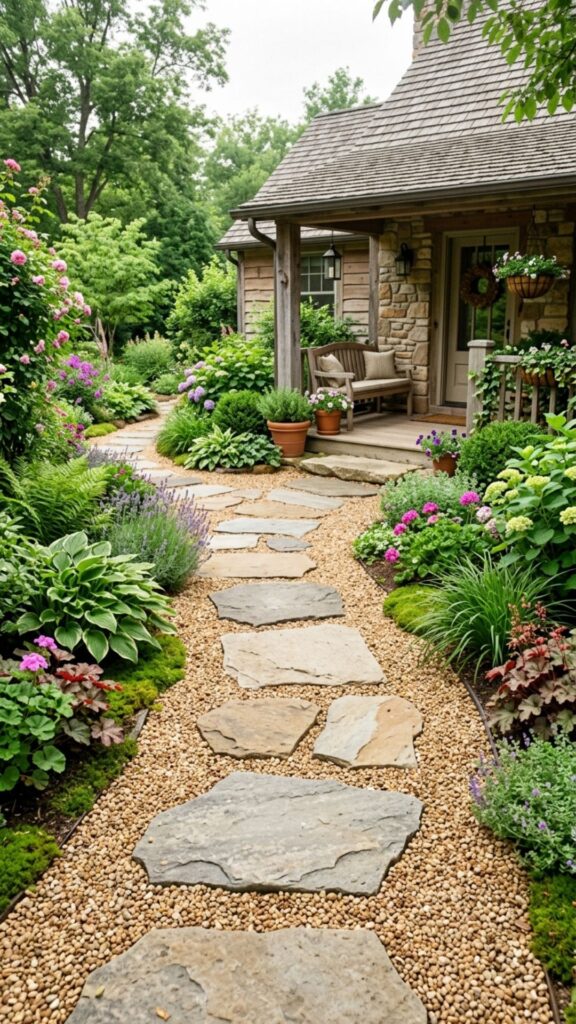
Large flat pavers set into gravel create a stylish, functional walkway. The stones give you solid footing, while the gravel fills the gaps and handles drainage. Space the pavers a comfortable stride apart, usually about 24 inches center to center.
This combination looks especially good in cottage and modern homes alike. Play with paver shapes: irregular flagstone reads rustic, while square concrete pavers feel crisp and contemporary. Both pair nicely with warm-toned gravel.
5. Surround Porch Planters With Gravel
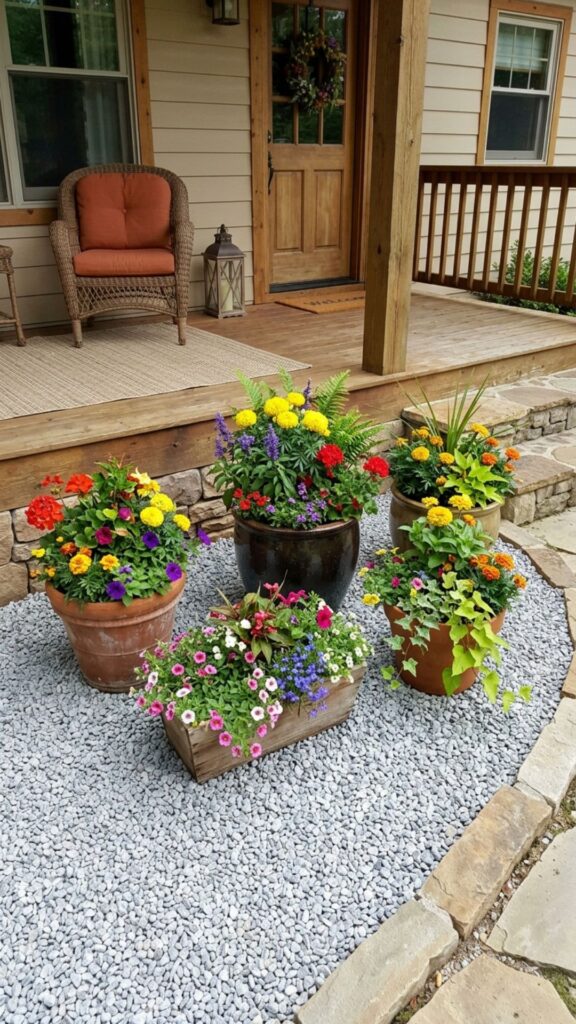
Cluster potted plants near your steps and nestle the bases in a bed of gravel. The gravel keeps pots off wet ground, reduces rot, and gives the whole grouping a finished look. It’s an easy way to tie mismatched containers together.
Gravel around planters also helps with drainage during heavy rain. Water flows through instead of pooling around your pots. Refresh the top layer once a year to keep it looking bright and clean.
6. Design a Low-Maintenance Gravel Garden Bed
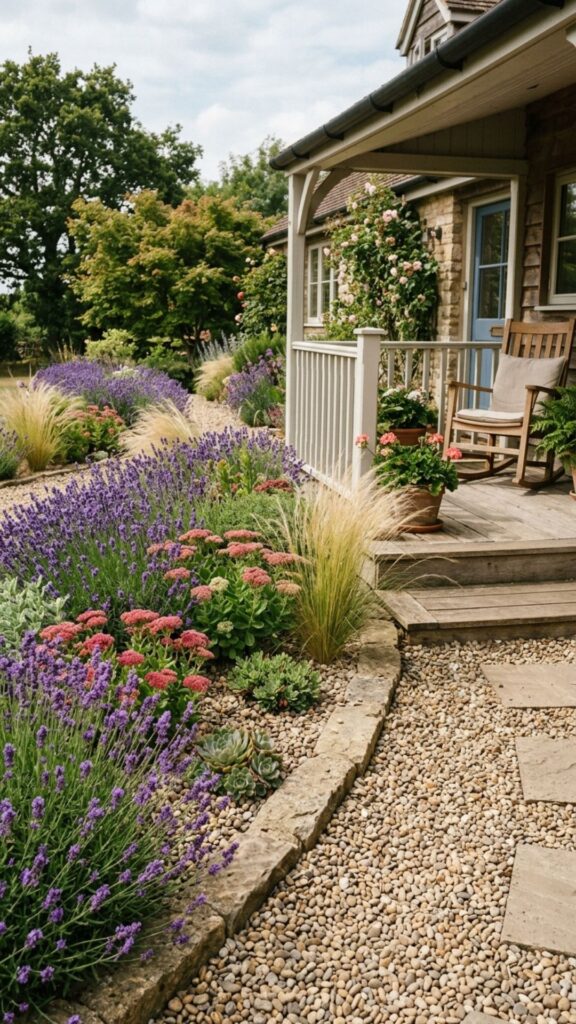
Skip the thirsty grass beside your porch and plant a gravel garden instead. Drought-tolerant plants like lavender, sedum, and ornamental grasses thrive in well-draining gravel. Once established, these beds need very little water or weeding.
Lay landscape fabric under the gravel to block weeds, then cut small openings for each plant. This approach saves hours of yard work every month. The result is a tidy, textured bed that looks great in every season.
7. Add a Gravel Drip Edge Under the Roofline
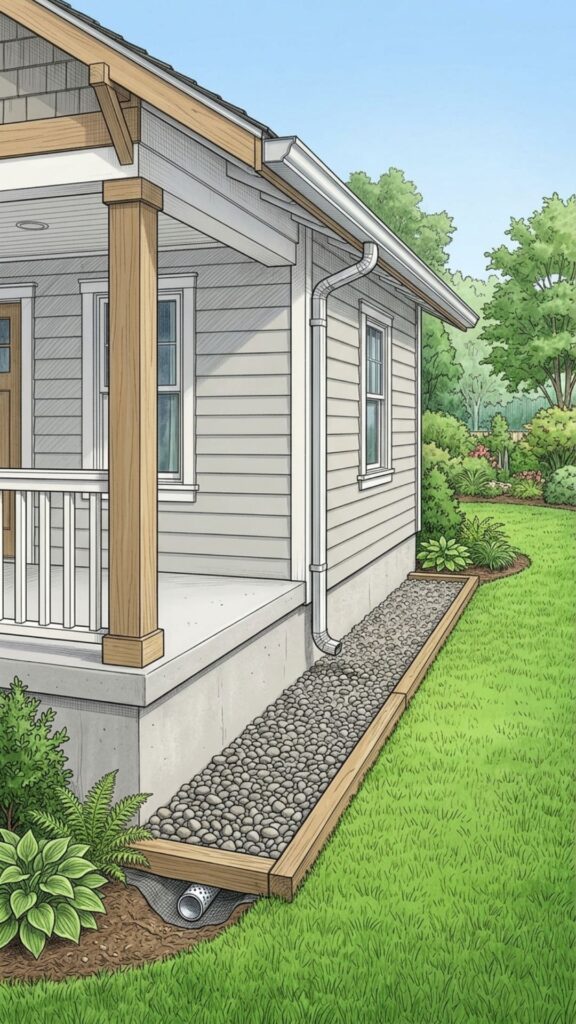
Rain pouring off your porch roof can carve ruts into soil and splatter mud onto walls. A narrow gravel drip edge running along the eave catches that runoff and lets it soak in slowly. This is a small project with a big protective payoff.
Dig a shallow trench, line it with fabric, and fill it with medium gravel. The stones break the force of falling water and keep your foundation drier. It’s a smart fix that also looks intentional and neat.
8. Pair Gravel With Wooden Sleepers
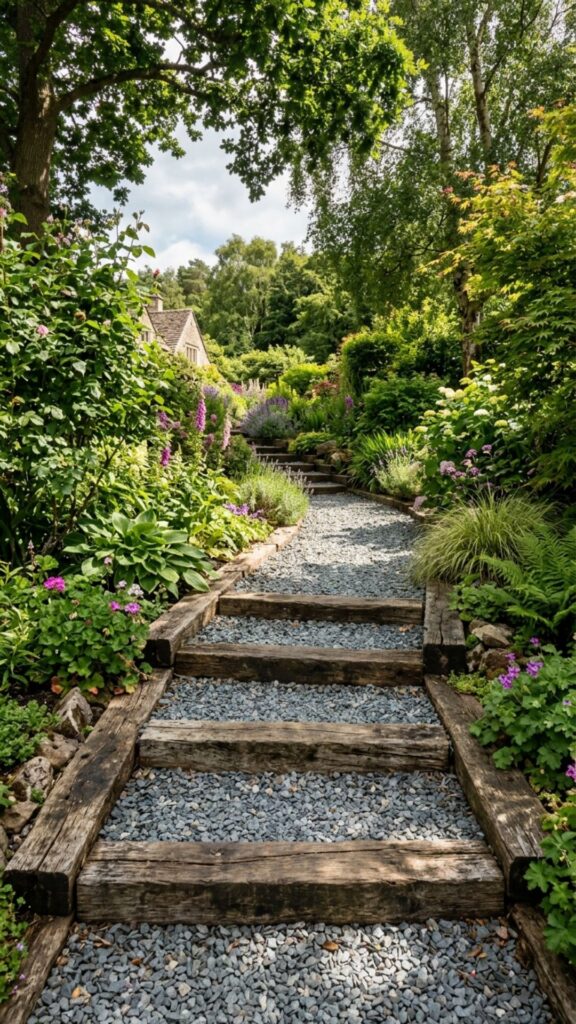
Reclaimed wooden railway sleepers set into gravel create bold, chunky steps or borders. The warm wood contrasts against cool gray stone for a look that feels grounded and rustic. This works well on sloped entries that need terracing.
Secure each sleeper firmly and backfill with gravel for stability. Over time, the wood weathers to a soft silver that blends beautifully with the stone. It’s a durable, characterful choice for country and farmhouse homes.
9. Use Colored Gravel for Personality
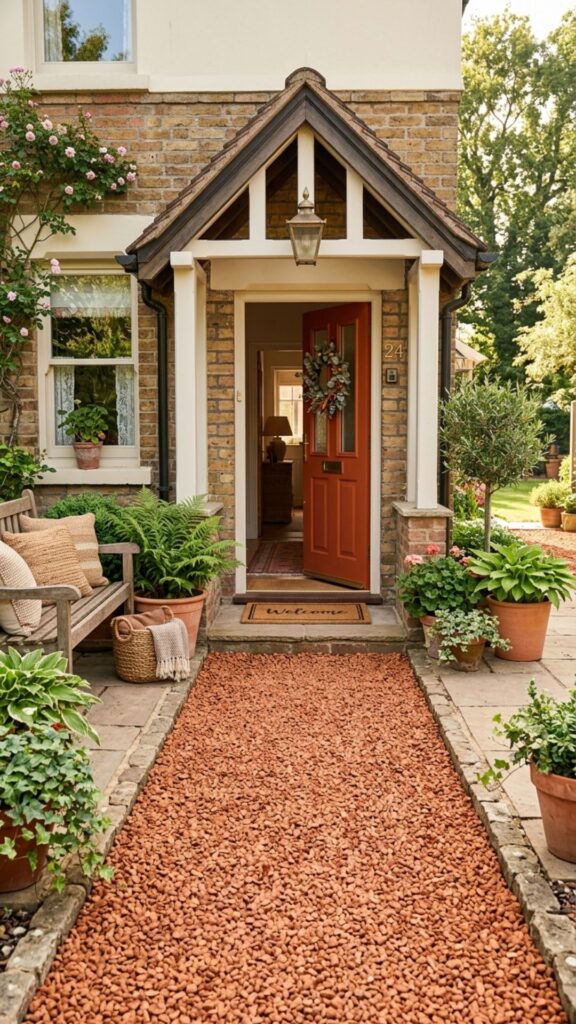
Gravel comes in more shades than you might expect, from golden buff to slate blue to rich terracotta. Choosing a color that complements your front door or trim ties your whole entrance together. A pop of warm gravel can make a plain porch feel custom.
Test a small bag before committing to a full load. Colors often look different wet versus dry and in bright sun versus shade. Order a little extra so you can top up later and match perfectly.
10. Create a Gravel Fire Pit Nook
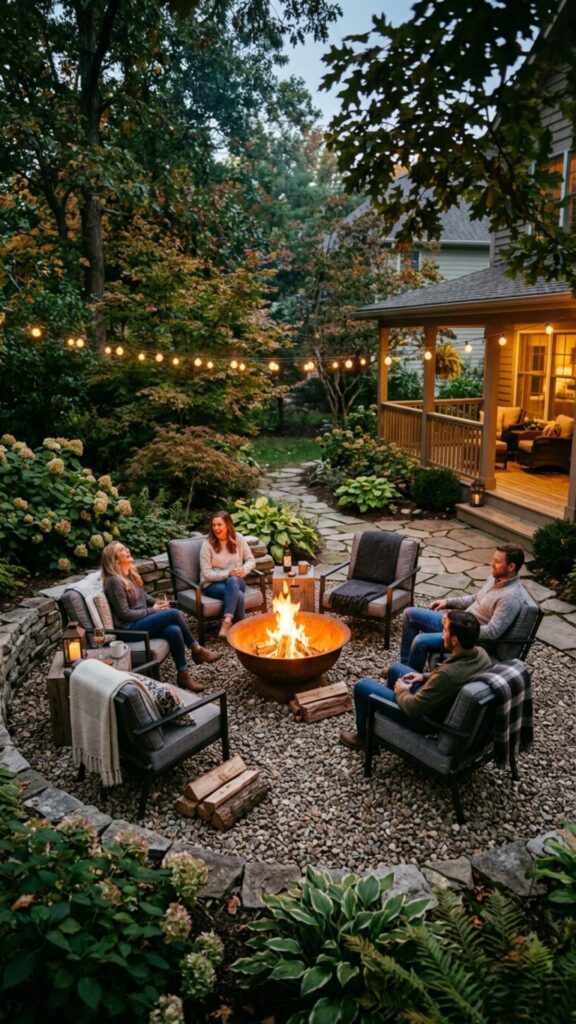
If your porch opens onto a yard, tuck a small gravel fire pit area nearby. Gravel is naturally fire-resistant and gives you a safe, level base for a fire bowl or pit. Ring the space with a few chairs for cozy evenings.
Keep the gravel layer generous here, around three inches, to handle stray sparks and heat. Angular gravel stays put better than round pea gravel under foot traffic. This nook extends the life of your porch into cool nights.
11. Line Your Porch Steps With Gravel
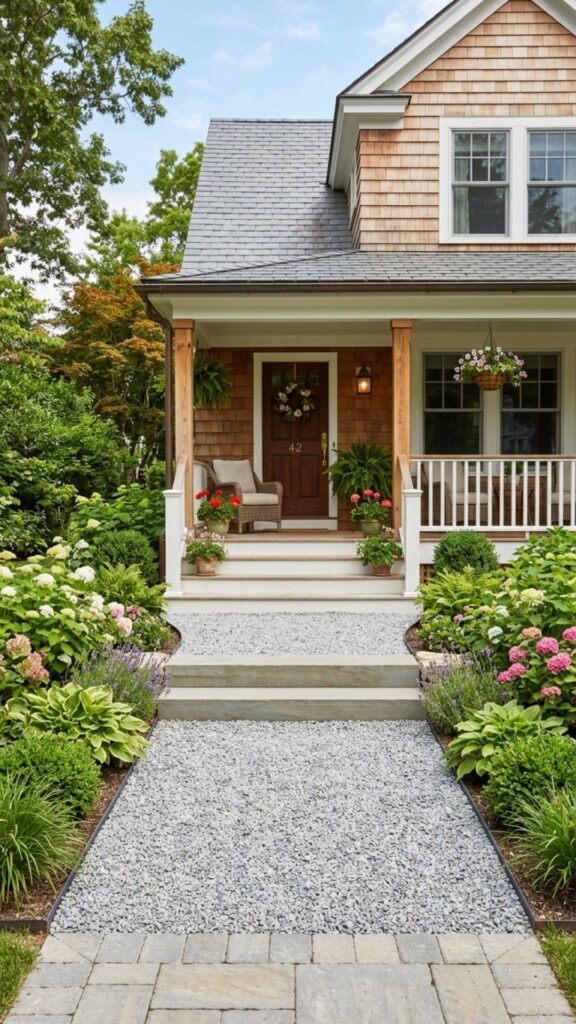
The sides of your porch steps often turn into muddy dead zones. Filling these spots with gravel keeps them clean and dry while framing your stairs. It’s a quick fix that instantly sharpens the whole entry.
Install edging to hold the gravel against the steps. Choose a stone size around half an inch so it stays put and doesn’t scatter onto the treads. This small detail makes your steps look freshly landscaped.
12. Build a Gravel and Brick Combination
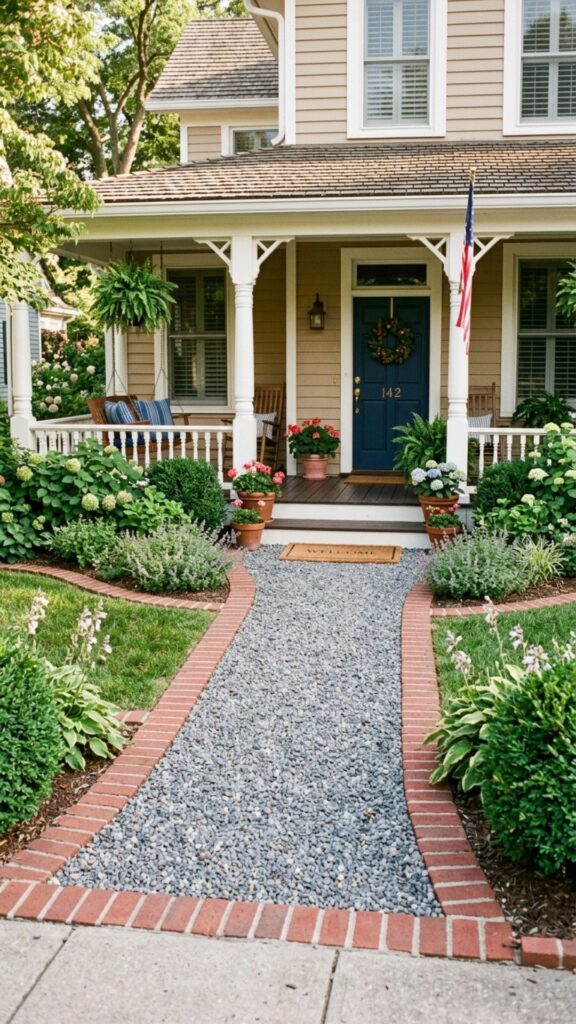
Combining gravel with brick borders gives your porch surround a classic, timeless feel. The brick creates crisp lines while the gravel fills the space with texture and drainage. This pairing suits traditional and colonial homes especially well.
Lay bricks in a soldier course along the edges, then fill between with matching gravel. The two materials age gracefully together. Sweep the brick occasionally and rake the gravel to keep the whole area looking sharp.
13. Try a Zen-Inspired Gravel Entry

For a calm, minimalist welcome, rake fine gravel into gentle patterns near your door. A few sculptural boulders and a single ornamental tree complete the peaceful, Japanese-inspired look. This style rewards simplicity over clutter.
Use light gray or white gravel and a small rake to maintain the design. Keep plants sparse and intentional. Every time you tidy the patterns, you get a quiet moment of calm before stepping inside.
14. Install Gravel Around a Water Feature
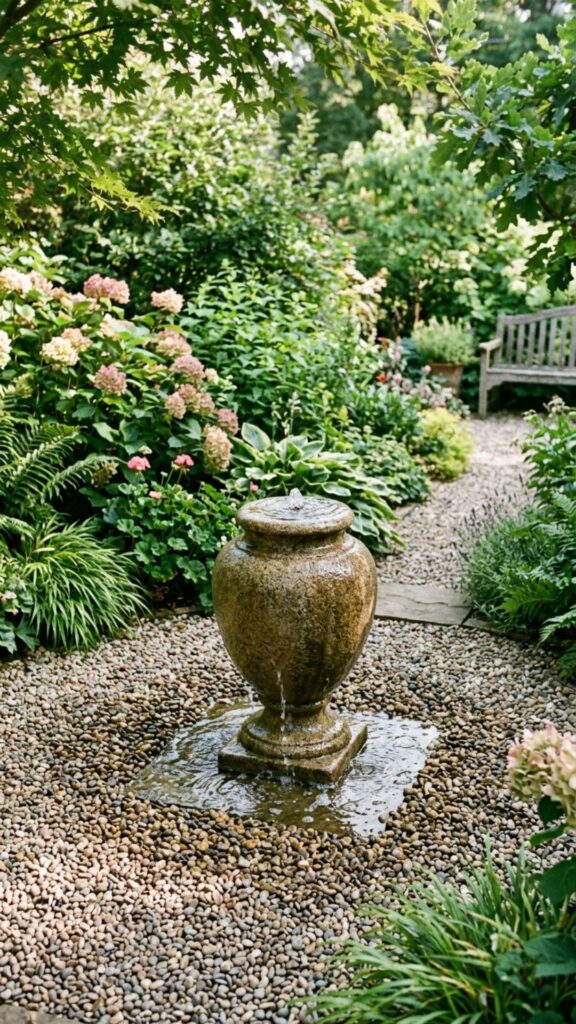
A small fountain or bubbling urn near your porch pairs perfectly with gravel. The stones catch splashes, hide the pump base, and keep the area from turning muddy. The sound of water makes your entry feel like a retreat.
Choose smooth pea gravel around water features so it feels pleasant and looks polished. Slope the gravel slightly toward a drain or gravel-filled reservoir. This keeps things dry and low-maintenance all year.
15. Define a Gravel Parking Strip Beside the Porch
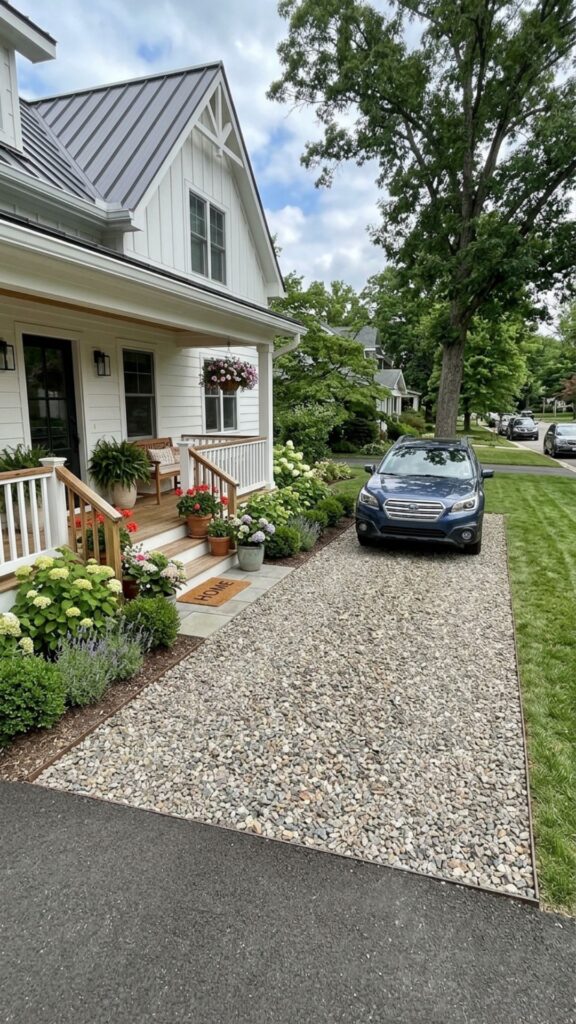
If cars park near your entry, a gravel strip handles the traffic better than grass ever could. Gravel drains fast, resists ruts, and gives you a firm surface without the cost of paving. It’s practical and surprisingly attractive.
Use larger, angular gravel over a compacted base for strength under tires. Edge it firmly to hold the stones in place. This keeps mud off your porch steps and your shoes cleaner too.
16. Blend Gravel With Ground-Cover Plants
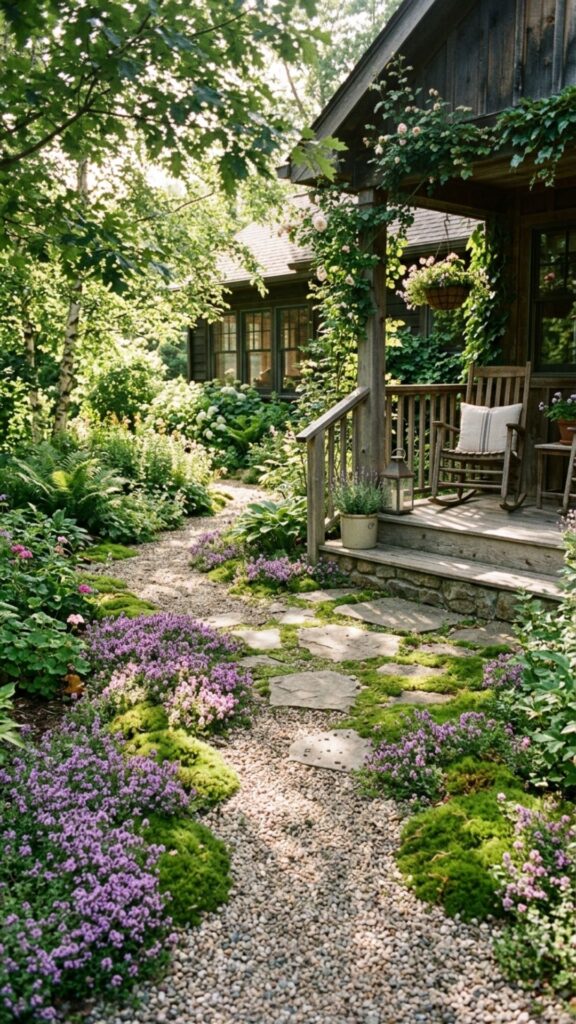
Let low creeping plants like thyme or moss weave through your gravel for a soft, living surface. As the plants spread, they release fragrance underfoot and fill gaps with green. This mix feels both wild and welcoming.
Choose tough, low-growing species that tolerate foot traffic. Water them until they establish, then enjoy a nearly self-sufficient carpet. The blend of stone and greenery gives your porch surround real character.
17. Add Solar Lights in the Gravel
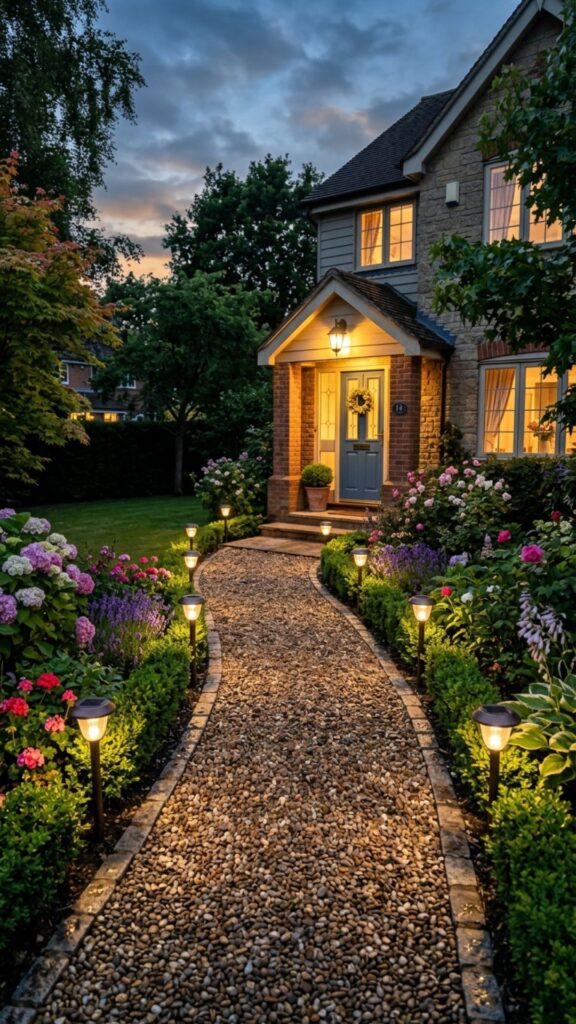
Push solar path lights directly into your gravel to line the walkway to your door. Gravel makes installation simple: no digging or wiring required. At dusk, the lights create a warm, welcoming glow along your entry.
Space the lights evenly for a balanced effect, roughly every three feet. Choose fixtures with wide bases so they stay upright in loose stone. This small upgrade improves both safety and curb appeal.
18. Create a Gravel Mudroom Zone Outdoors
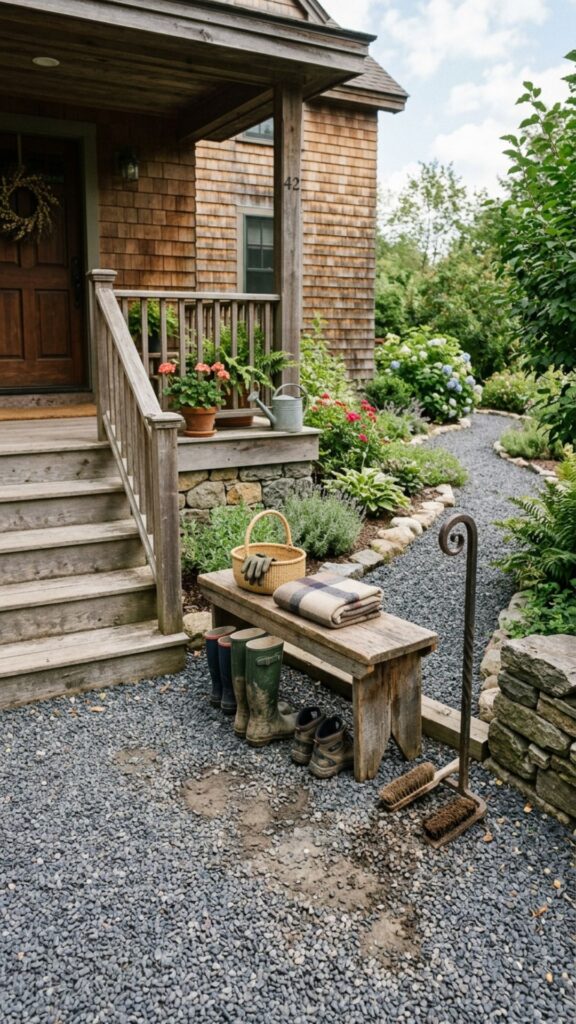
Set aside a gravel patch right at your steps as an outdoor drop zone. It’s the perfect place to knock dirt off boots before heading inside. Add a bench and a boot scraper to make it truly functional.
This zone keeps grit and mud out of your home. Use fine, comfortable gravel here since it sees plenty of foot traffic. A little planning at the threshold saves your floors indoors.
19. Frame Gravel With Metal Edging for a Modern Look
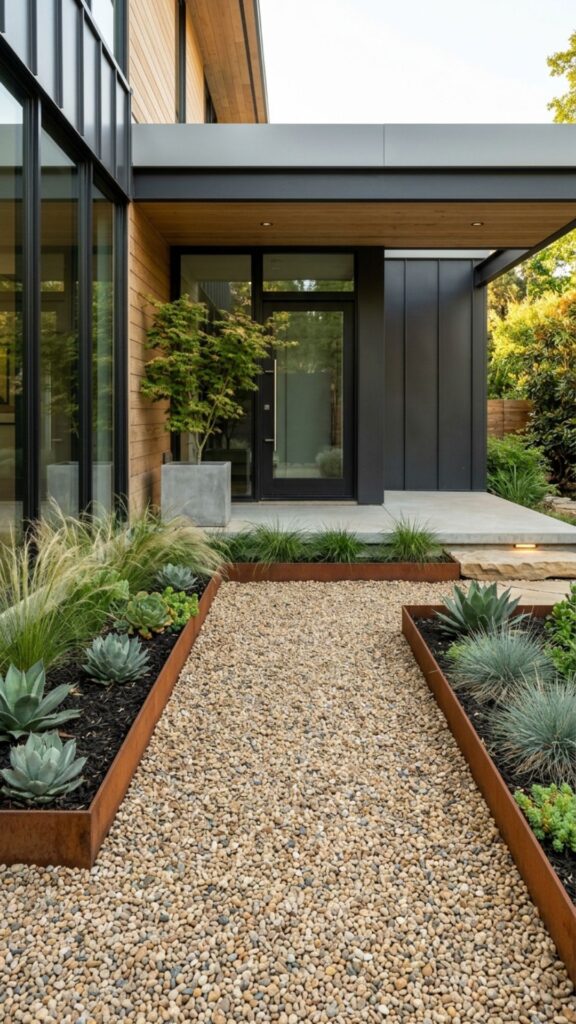
Sleek metal edging paired with fine gravel creates a clean, contemporary porch surround. The crisp lines suit modern and mid-century homes beautifully. Corten steel adds a warm, rusted tone that ages into a rich patina.
Metal edging holds tight curves and sharp corners better than plastic. Set it flush with the gravel for a seamless finish. This combination reads high-end while staying budget-friendly.
20. Combine Gravel With a Covered Porch Rug
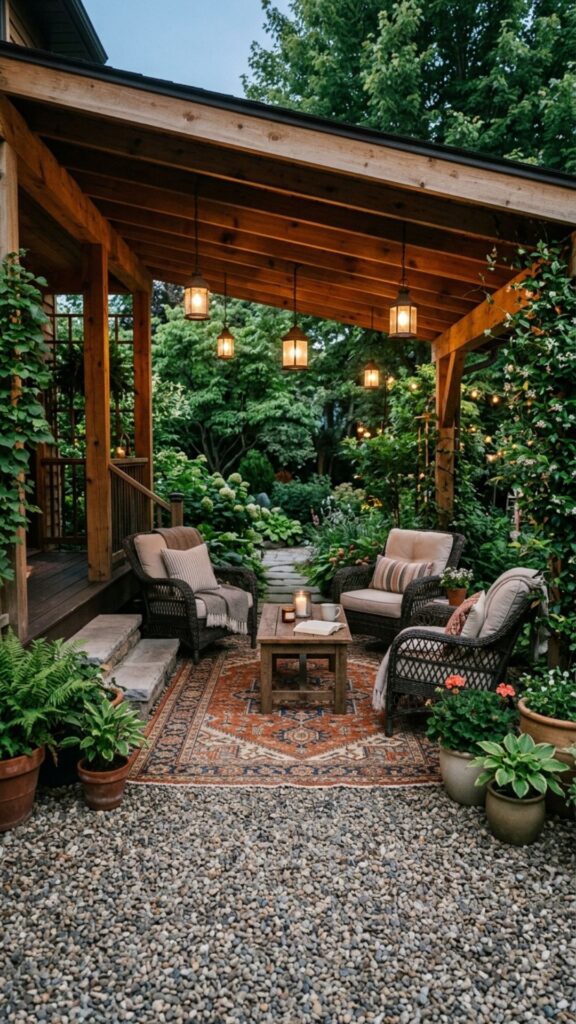
Layer a durable outdoor rug over a leveled gravel base to soften your seating area. The rug adds warmth and pattern, while the gravel handles drainage underneath. Together they create a comfortable, styled space on a budget.
Choose a flat-weave polypropylene rug that shrugs off rain and sun. Shake it out now and then and rake the gravel to keep everything fresh. This finishing touch makes your porch feel like an outdoor room.
Conclusion
Gravel gives you an affordable, flexible, and genuinely charming way to upgrade your front porch. Whether you want a simple drip edge, a full sitting area, or a lush gravel garden, there’s an idea here to match your home and budget. Best of all, most of these projects take just a weekend and very few tools.
Ready to get started? Pick one idea from this list, measure your space, and order a sample of gravel to test the color before you buy in bulk. Small steps add up to a porch you’ll be proud to come home to.
What is the best gravel for a front porch?
Pea gravel is best for walkways and sitting areas because it’s smooth and comfortable underfoot. Angular crushed gravel works better where you need firm footing, like parking strips or high-traffic zones, since it compacts and stays put.
How deep should gravel be for a front porch area?
Aim for about two inches of gravel over a compacted base for walkways and borders. For driveways or parking strips, use three inches or more of angular gravel to handle weight and prevent ruts.
Does gravel need edging?
Yes, edging is highly recommended. Steel, aluminum, brick, or plastic edging keeps gravel contained, stops stones from scattering onto lawns and steps, and gives the whole area a clean, finished look.
How do I stop weeds from growing in porch gravel?
Lay landscape fabric under the gravel before you spread it. The fabric blocks most weeds while still letting water drain through. Pull any stray weeds promptly and refresh your gravel layer every few years.
Is gravel a low-maintenance option for a front porch?
Absolutely. Gravel drains well, resists mud, and needs little more than occasional raking and a yearly top-up. With proper edging and fabric underneath, it stays looking neat with minimal effort.