There’s something about a cottage kitchen that just feels like a warm hug. The soft colors, the worn wood, the sense that meals have been shared here for generations. And right at the heart of it all sits the island—a piece that can pull the whole room together or feel like an awkward afterthought.
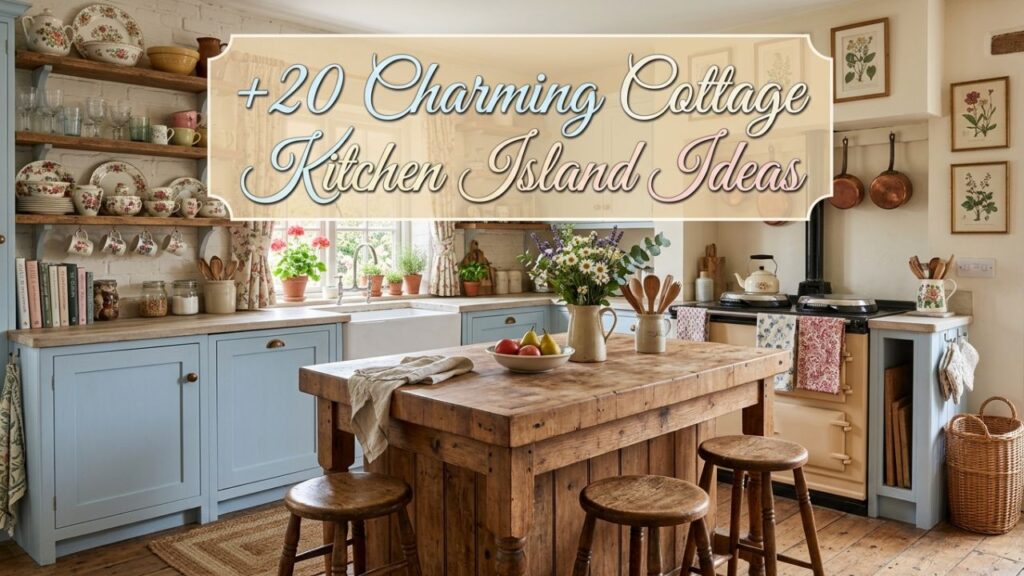
I’ve spent years helping homeowners rethink their kitchens, and the island is almost always the piece people struggle with most. Too big, and the room feels cramped. Too plain, and it kills the charm. So I pulled together 20 cottage kitchen island ideas that balance beauty and function, whether you’re renovating from scratch or refreshing what you already have.
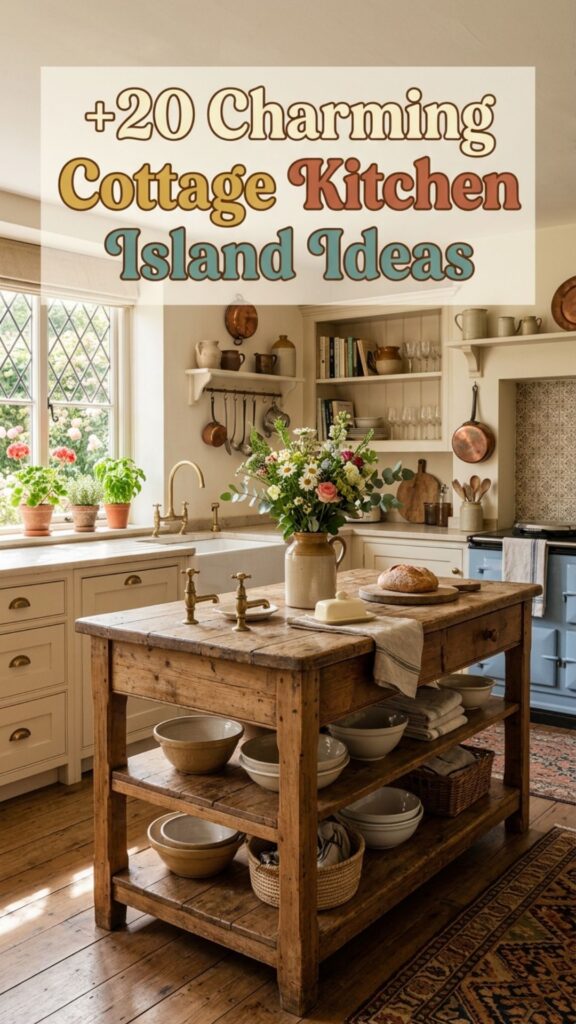
By the end, you’ll know which style suits your space, how to add storage without sacrificing character, and a few tricks to make even a small kitchen feel special.
1. Reclaimed Wood for Instant History
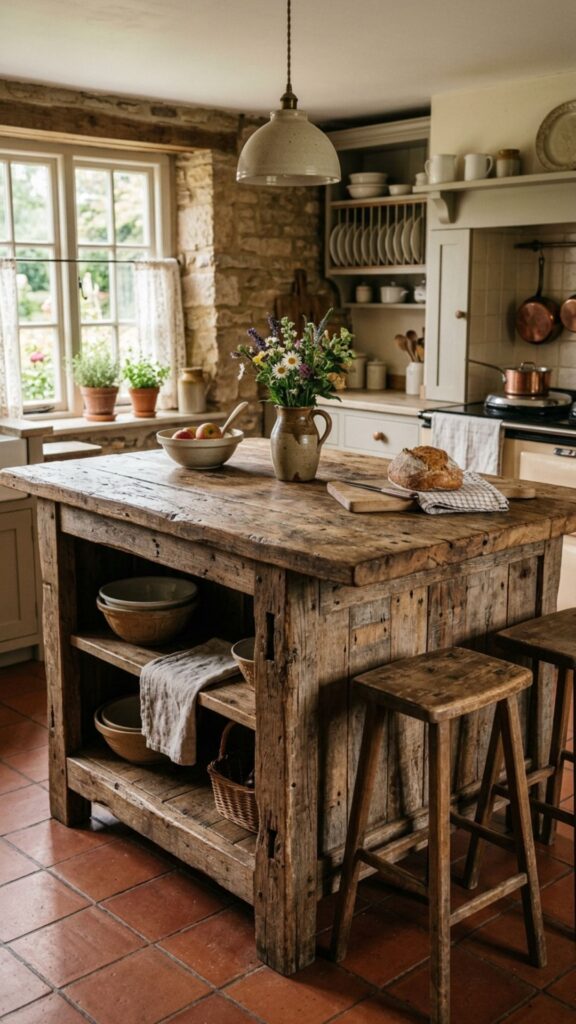
Nothing says cottage quite like reclaimed wood. A base or countertop made from salvaged barn beams or old flooring brings texture and a story that new materials simply can’t fake. The little dings and color variations are the whole point—they make the island look like it’s always been there.
If you’re on a budget, check local salvage yards or architectural reclamation shops before buying new. I once helped a client build an island top from an old workbench, and it became the most complimented piece in her home. Just seal the surface properly so it holds up to daily cooking and spills.
2. A Freestanding Kitchen Cart
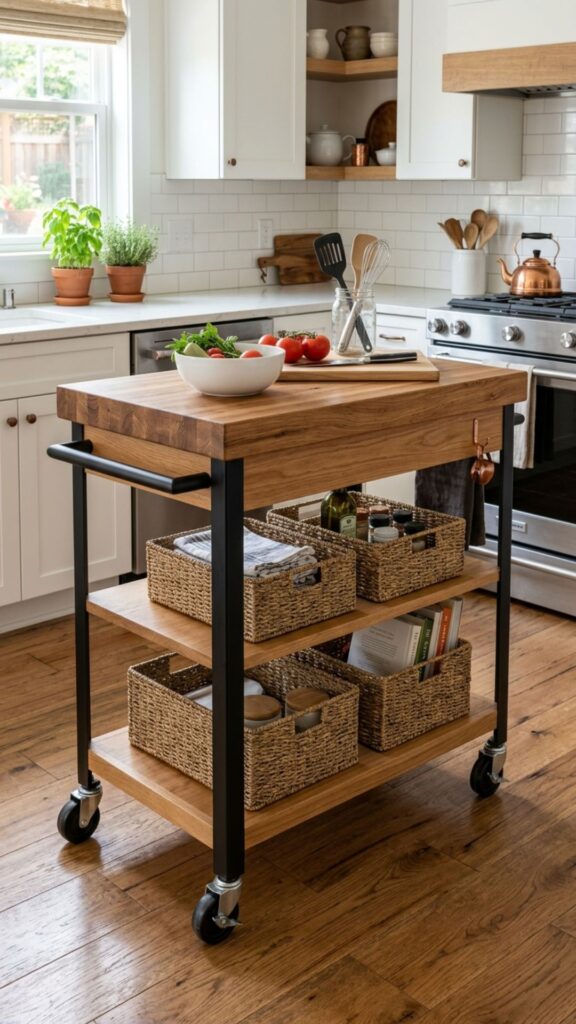
Not every cottage kitchen needs a built-in island. A freestanding cart on wheels gives you flexibility, which matters a lot in smaller rooms. Roll it near the stove while cooking, then push it against the wall when you need floor space.
Look for carts with open shelving and a butcher block top. They fit the casual, unfussy feel of cottage design and cost far less than a permanent install. This is my go-to suggestion for renters or anyone unsure about committing to a fixed layout.
3. Paint It a Soft, Muted Color
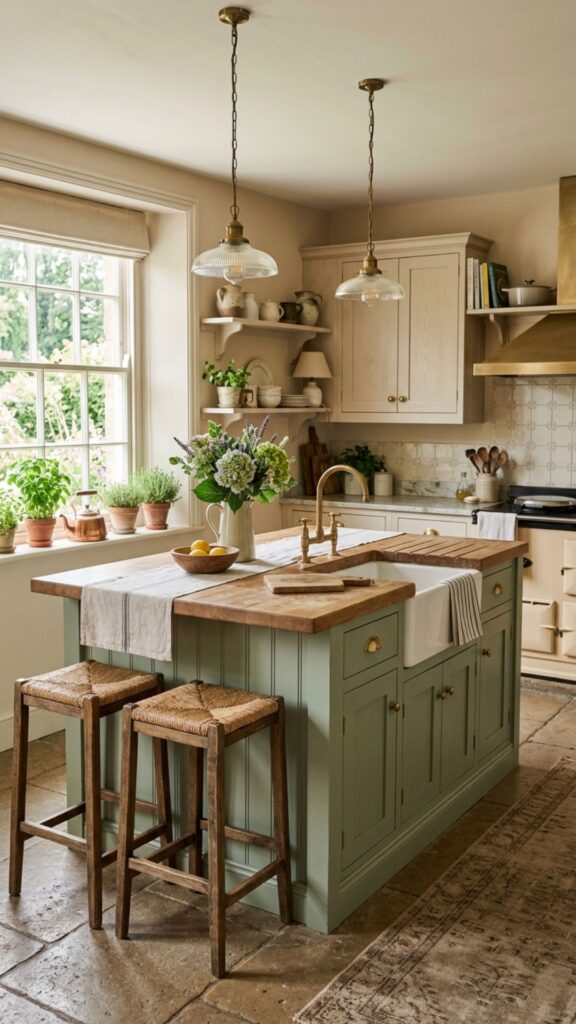
A gentle sage green, dusty blue, or buttery cream instantly softens a kitchen. Painted islands are a cottage staple because they add color without overwhelming the space. The trick is choosing muted, slightly grayed tones rather than bright, saturated ones.
Test paint samples on the actual cabinet in different light before committing. Morning light and evening light can make the same shade look completely different. A matte or eggshell finish tends to read more authentic than high gloss.
4. Add a Butcher Block Countertop
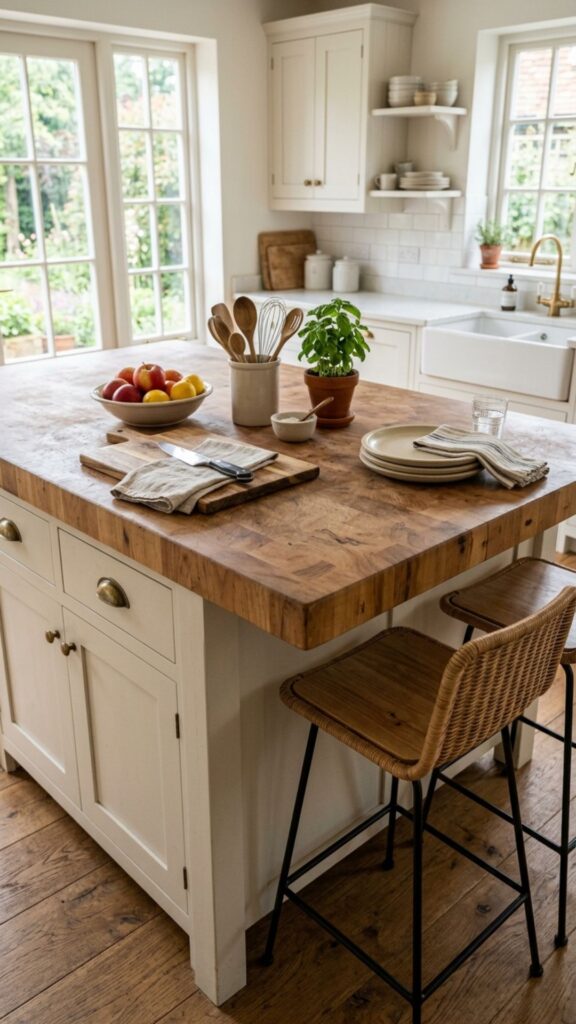
Warm wood countertops are practically synonymous with cottage kitchens. Butcher block feels friendly underfoot and gets better with age, developing a lived-in patina you can’t buy.
Maple and walnut are popular choices, but reclaimed oak works beautifully too. Oil it regularly with food-safe mineral oil to keep it from drying out. Yes, it needs a little upkeep, but that small ritual is part of the charm.
5. Open Shelving for Everyday Dishes
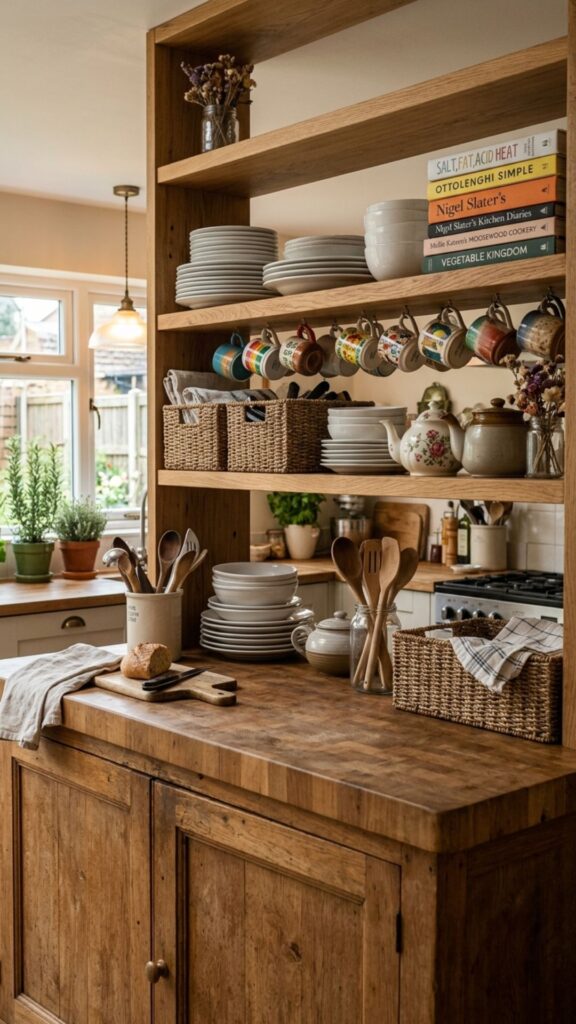
Swap closed cabinets for open shelves on your island and you’ll add both function and personality. Displaying stacked white plates, mismatched mugs, or a few well-loved cookbooks makes the space feel homey rather than staged.
Keep it practical by storing things you actually use daily. That way the shelves stay natural and lived-in instead of becoming a dusting chore. A basket or two tucked underneath handles the clutter you’d rather hide.
6. Incorporate a Farmhouse Sink
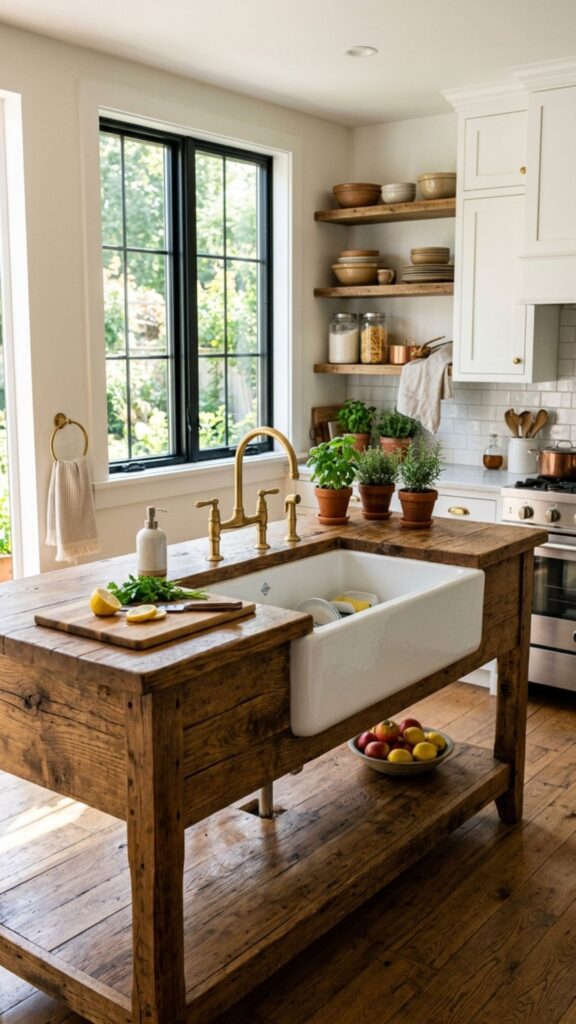
Placing a deep apron-front sink in your island turns a workhorse feature into a focal point. The exposed front adds that classic country look while the roomy basin makes washing pots far easier.
Position it so whoever’s at the sink faces the room or a window. Cottage kitchens are all about connection, and nothing beats chatting with family while you rinse vegetables. Just plan your plumbing early, since relocating water lines can get pricey.
7. Mix in Vintage Furniture Pieces
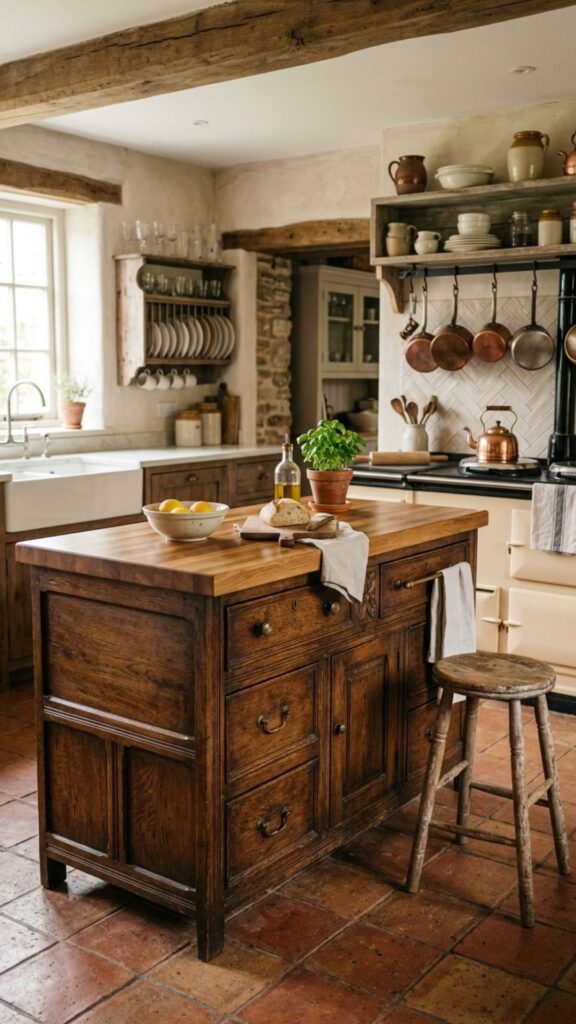
Repurposing an old dresser, workbench, or console table into an island brings unmatched character. These pieces already carry age and craftsmanship that new cabinetry struggles to imitate.
Measure carefully and add a durable top if the original surface isn’t cooking-friendly. I’ve seen a Victorian sideboard transformed into a stunning island—the drawers held cutlery, and the whole thing looked like a treasured heirloom because it was one.
8. Choose Turned Legs for Classic Charm
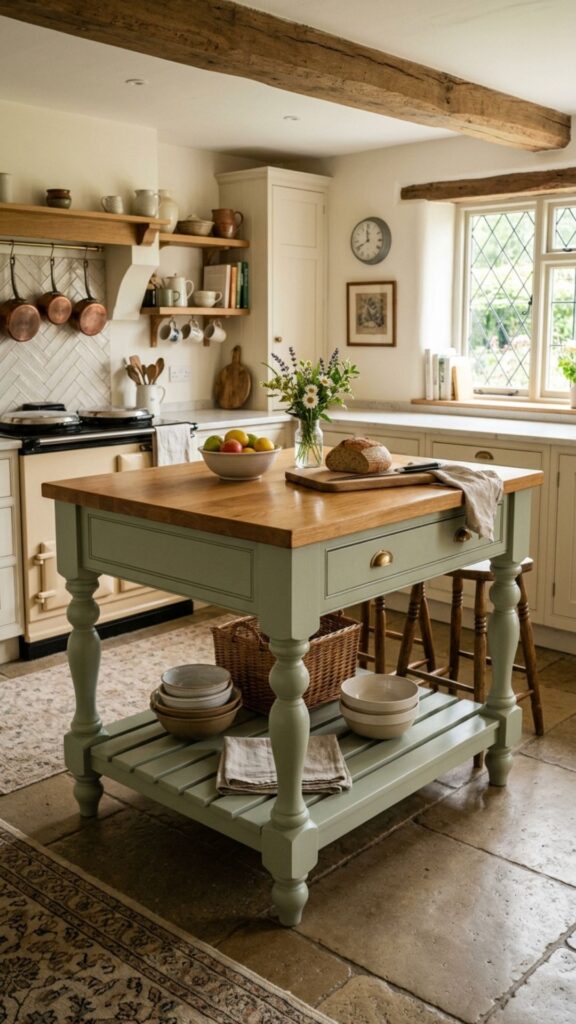
Turned wooden legs give an island that furniture-like quality cottage kitchens love. Instead of looking like a boxy cabinet, the island reads as a genuine piece of furniture that happens to live in the kitchen.
You can buy pre-made turned legs at most home improvement stores and attach them to a custom base. Pair them with a painted body and wood top for a look that feels collected over time rather than bought all at once.
9. Install a Small Prep Island for Tight Spaces
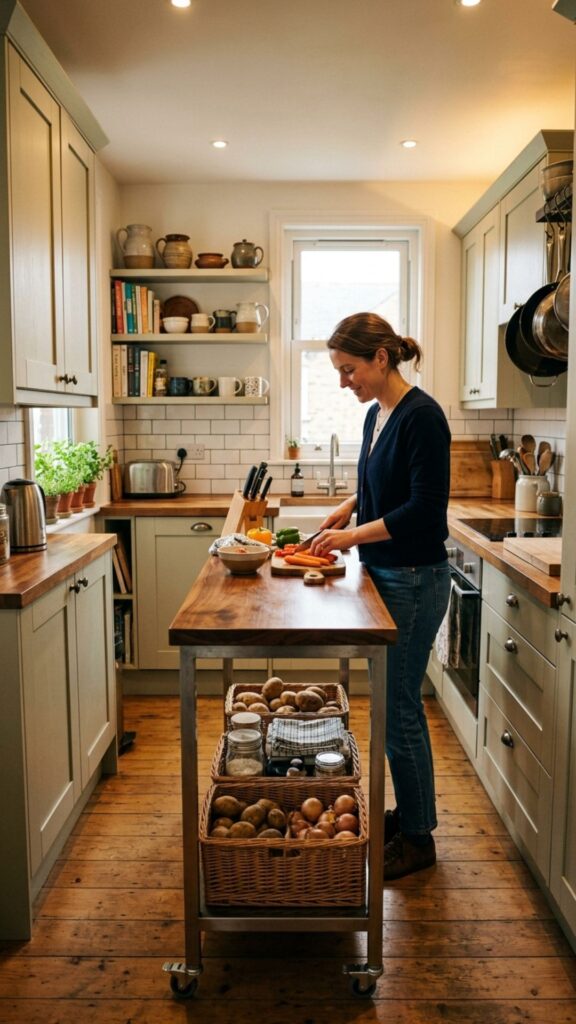
Not every kitchen can fit a grand island, and that’s fine. A compact prep island—even just two by three feet—gives you extra counter space without crowding the room. It’s a smart move for galley or cottage-sized kitchens.
Choose a slim design with a shelf below for baskets or cookware. The goal is added function without blocking foot traffic. Leave at least 36 inches of walkway around it so the space still breathes.
10. Add Beadboard Paneling
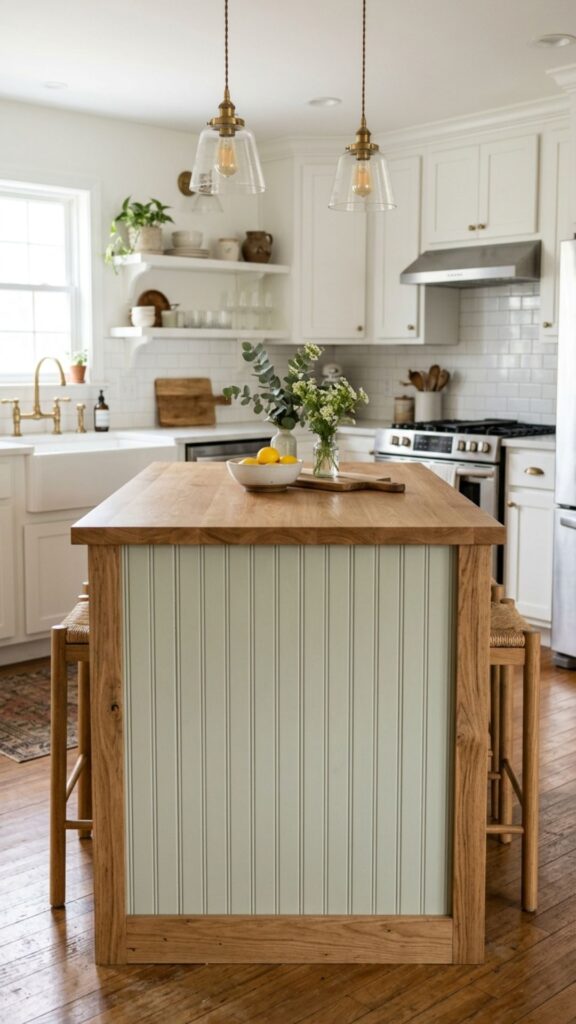
Beadboard on the sides of your island adds instant cottage texture. Those vertical grooves catch light and shadow, giving flat surfaces a bit of depth and old-fashioned charm.
It’s an affordable upgrade you can often tackle yourself in a weekend. Paint it to match or contrast with your cabinets. This trick works especially well for dressing up a plain, builder-grade island you already own.
11. Include Built-In Seating
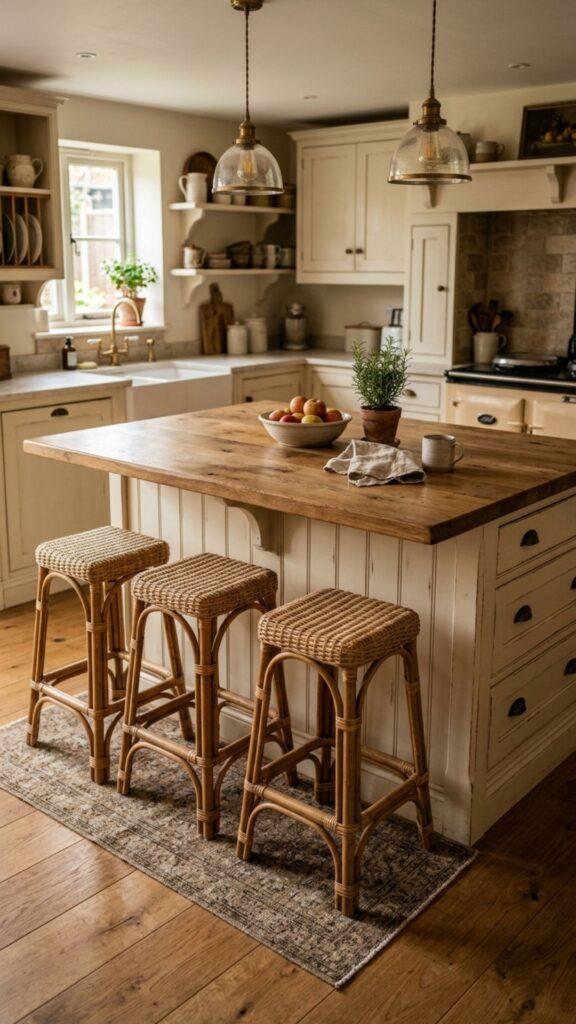
Adding an overhang for stools turns your island into a gathering spot. Cottage kitchens thrive on togetherness, and a spot to perch with morning coffee makes the room feel welcoming.
Allow about 12 to 15 inches of overhang for comfortable knee room and 24 inches of width per seat. Woven or wooden stools suit the relaxed vibe better than sleek modern bar chairs.
12. Use a Contrasting Island Color
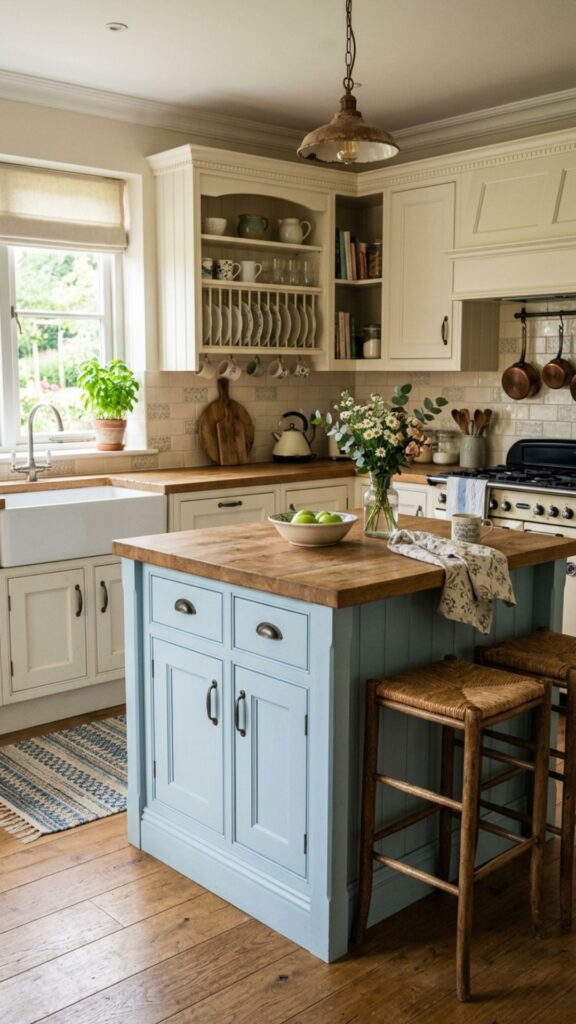
Painting your island a different shade from the surrounding cabinets creates a lovely focal point. Think cream cabinets with a soft blue island, or white walls with a warm wood-toned centerpiece.
This trick adds depth without a full remodel. Keep the contrast gentle rather than jarring—cottage style leans cozy, not bold. A single accent color repeated elsewhere, like in a rug or curtains, ties the whole look together.
13. Hang Pendant Lights Above
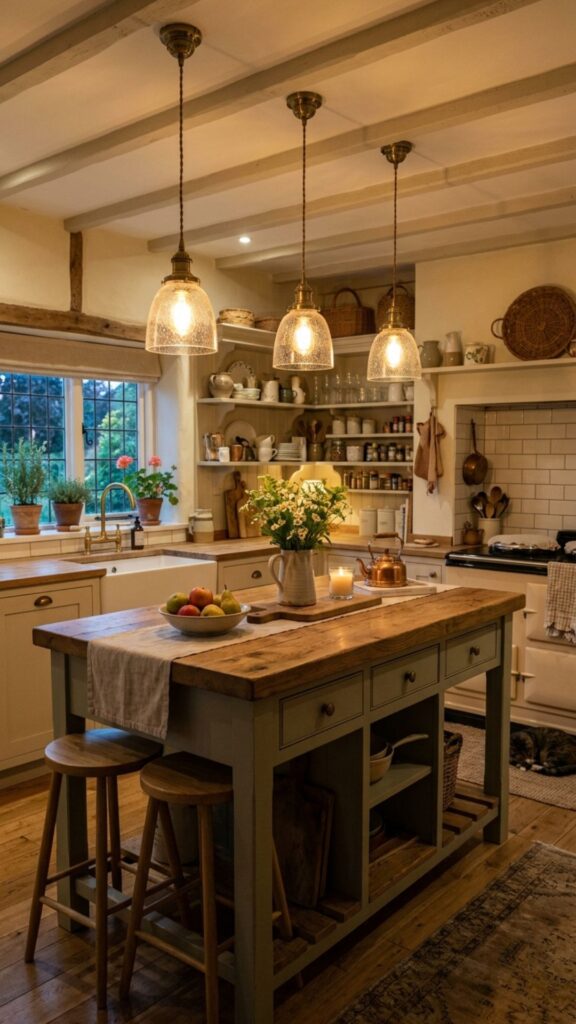
Lighting shapes the whole mood of a cottage kitchen. Two or three pendant lights over the island add warmth and highlight the space as the room’s heart.
Choose fixtures with a handmade feel—think seeded glass, aged brass, or woven shades. Hang them about 30 to 36 inches above the counter so they light your work without blocking sightlines across the room.
14. Build in a Wine Rack or Cubbies
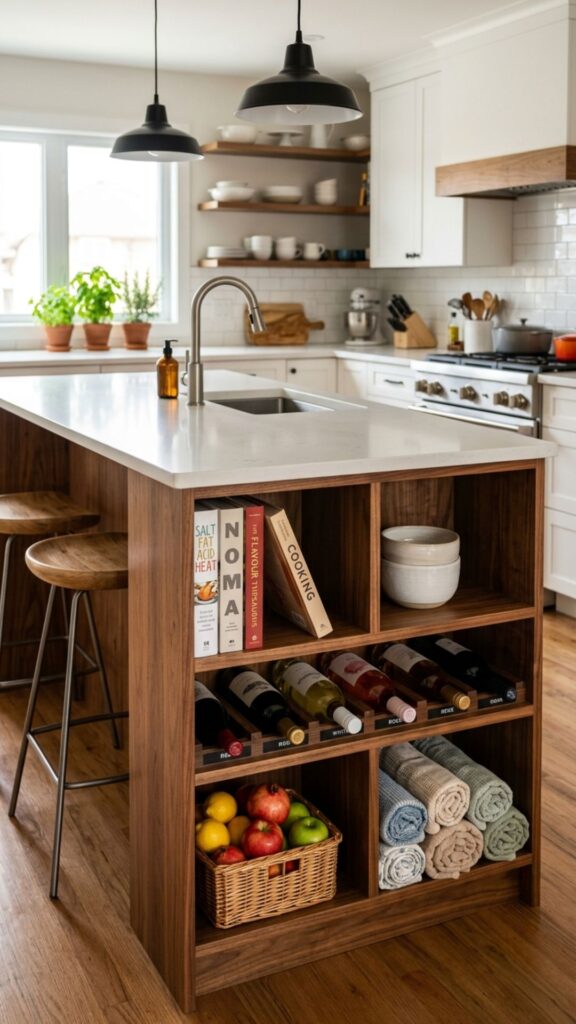
Tucking a small wine rack or open cubbies into the island end makes clever use of otherwise dead space. It’s practical and adds that curated, lived-in look cottages do so well.
Use the cubbies for cookbooks, rolled tea towels, or a basket of onions and garlic. The idea is easy access to things you reach for often, keeping the kitchen both charming and genuinely usable.
15. Go for a Distressed Finish
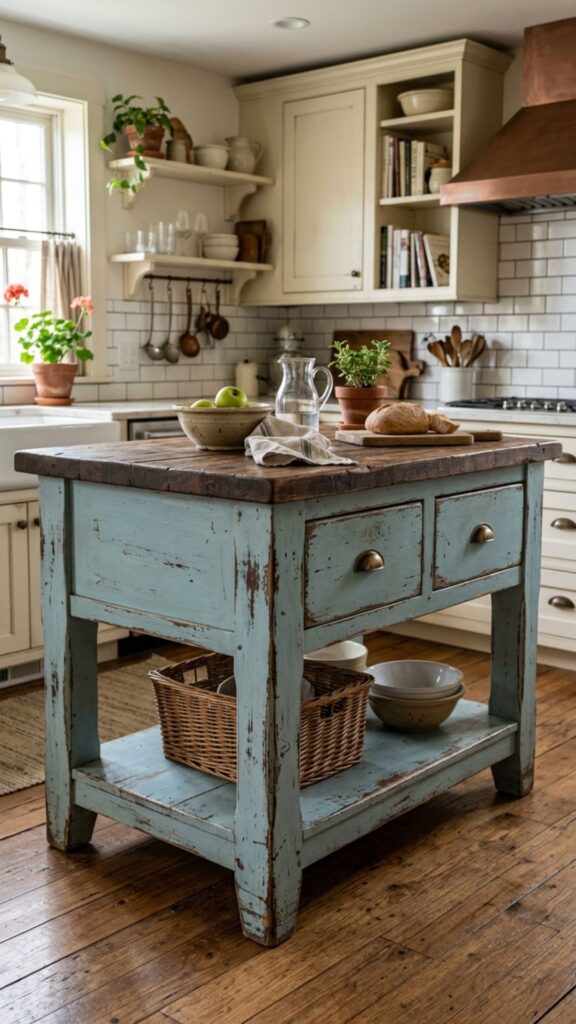
A lightly distressed or weathered finish makes a new island look like a cherished antique. Sanding edges and corners where natural wear would occur gives it that gentle, aged softness.
Do this sparingly. A touch of distressing reads authentic, while overdoing it looks staged. My advice: focus on the spots hands actually touch, like corners and around handles, for the most believable result.
16. Add a Marble or Stone Top
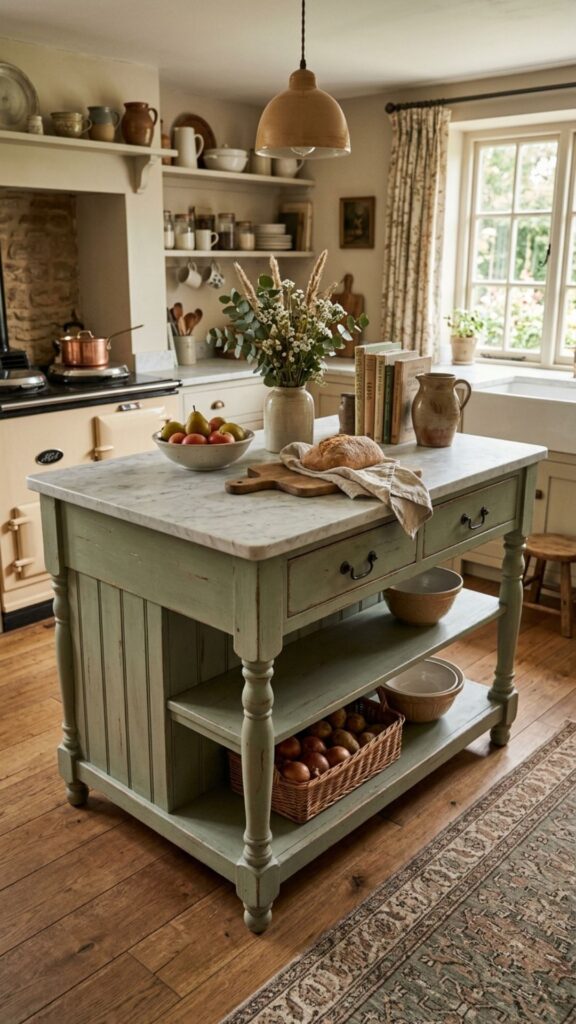
For a slightly more polished cottage feel, a marble or honed stone top brings elegance without losing warmth. It pairs beautifully with a painted or rustic wood base.
Marble does stain, so if you’re a busy cook, consider quartz that mimics the veined look. Honed rather than polished finishes suit the softer cottage aesthetic and hide small scratches better.
17. Include a Slide-Out Trash Bin
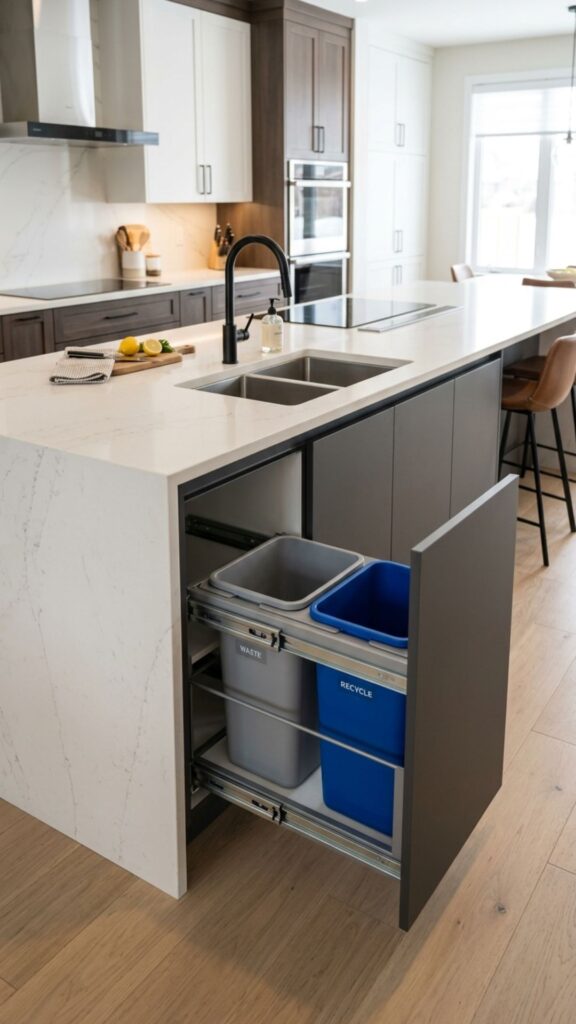
Function matters as much as looks. A hidden slide-out bin keeps waste out of sight and your kitchen tidy—a small detail that makes daily life easier.
Plan this into the cabinet design early. Position it near your prep zone or sink so cleanup stays effortless. It’s the kind of quiet upgrade you’ll appreciate every single day without ever noticing it.
18. Style with Fresh Flowers and Greenery
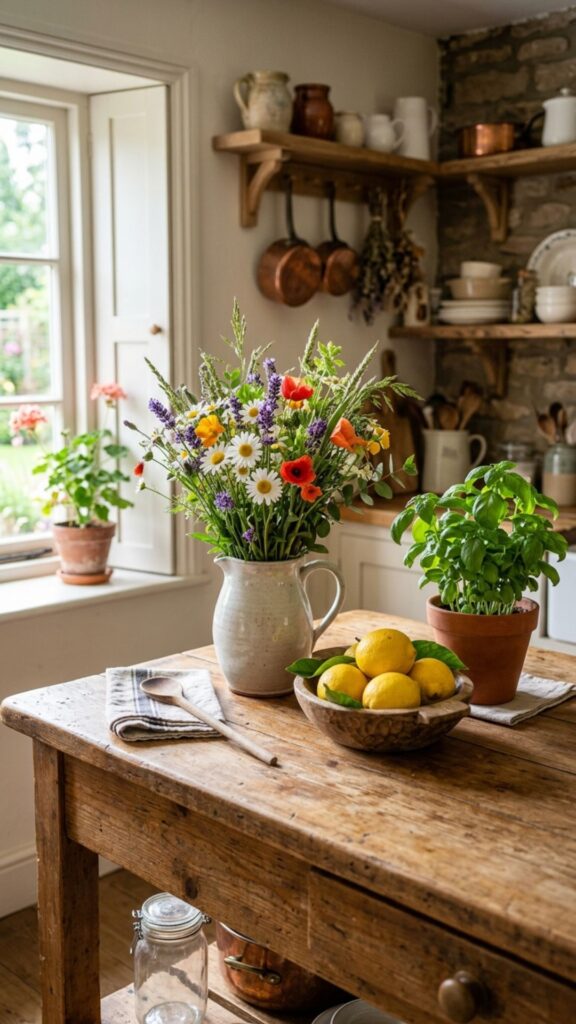
Never underestimate a simple pitcher of wildflowers or a bowl of lemons. These finishing touches breathe life into a cottage kitchen and cost next to nothing.
Rotate seasonal picks—tulips in spring, hydrangeas in summer, branches in fall. A small potted herb like basil or rosemary is both pretty and handy while you cook. Little details like these are what make a house feel like home.
19. Choose a Rounded or Curved Edge
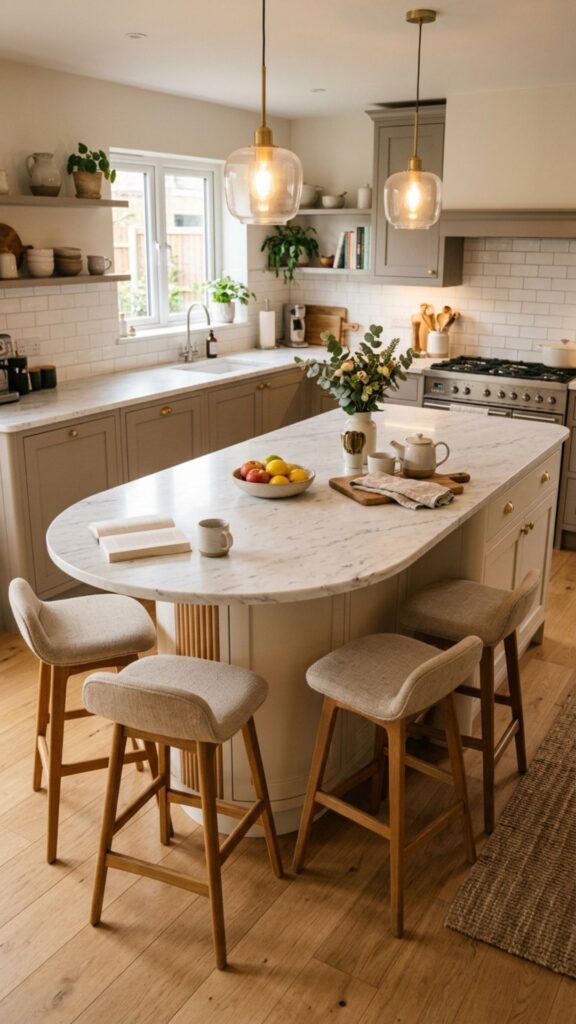
Softening your island’s corners with a rounded or curved edge feels gentler and more welcoming. It also happens to be safer in busy homes with kids running around.
A curved end can double as a casual seating nook too. This subtle shape breaks up the boxy lines many kitchens have and reinforces that relaxed, unhurried cottage feeling.
20. Layer in Mismatched Hardware
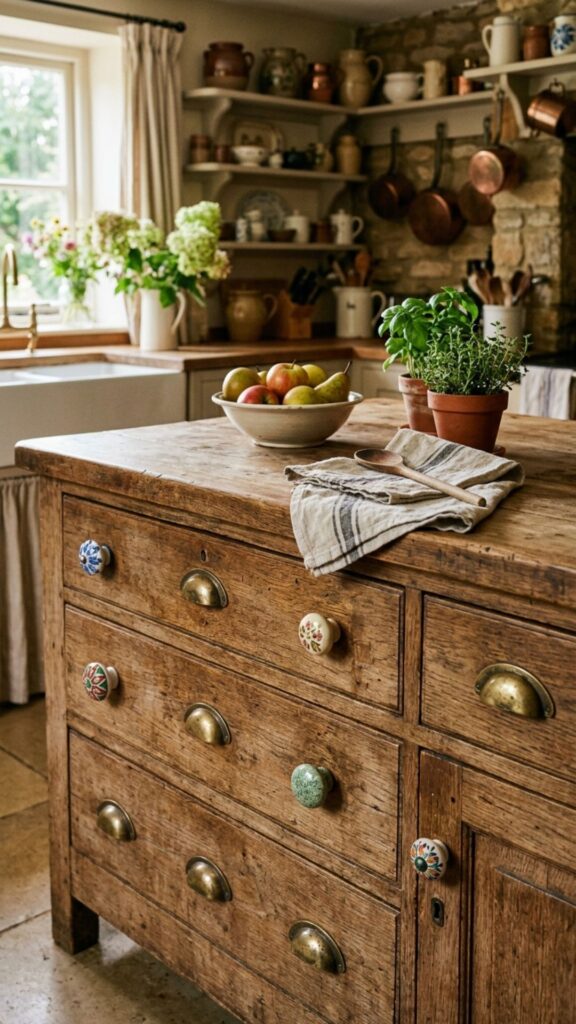
Skip the perfectly matched knobs and pulls. Mixing a few different vintage-style hardware pieces gives your island collected-over-time character that feels genuine.
Stick to one metal finish, like aged brass or oil-rubbed bronze, so the mix looks intentional rather than random. Small details like ceramic knobs or cup pulls can completely shift the personality of an island for very little money.
Bringing It All Together
Your kitchen island doesn’t have to be big or expensive to feel charming—it just has to feel like you. Whether you start with a fresh coat of muted paint, a reclaimed wood top, or a few mismatched knobs, these cottage kitchen island ideas prove that small changes add up to real warmth. Pick one or two that speak to you and start there.
Ready to give your kitchen that cozy cottage heart? Grab a notebook, measure your space, and sketch out which ideas fit your home. Start with the simplest change this weekend, and let your island grow into a space you’ll love for years.
What makes a kitchen island look like a cottage style?
A cottage-style island usually features warm materials like reclaimed or painted wood, soft muted colors, furniture-like legs, and vintage details. Open shelving, beadboard, and handmade hardware add to the relaxed, lived-in charm.
How much space do I need for a kitchen island in a small cottage kitchen?
Aim for at least 36 to 42 inches of clearance around your island so people can move and open cabinets comfortably. In tight spaces, a compact prep island or a rolling cart works better than a large fixed one.
What is the best countertop material for a cottage kitchen island?
Butcher block is a popular choice for its warmth and classic country look, though it needs regular oiling. Honed marble or quartz that mimics stone also suits cottage kitchens if you prefer a more polished, low-maintenance surface.
Can I turn old furniture into a kitchen island?
Yes. Dressers, workbenches, and console tables make wonderful cottage islands. Just confirm the height works for cooking, reinforce the structure if needed, and add a durable, food-safe top before use.
How do I add storage to a cottage kitchen island?
Combine open shelving for everyday dishes with baskets or cubbies for hidden clutter. Slide-out bins, wine racks, and drawers built into the base maximize function while keeping the charming, uncluttered look.