A kitchen island does more than add counter space. It sets the mood for the whole room. And if you want warmth, character, and a look that never feels cold or clinical, brown is a color worth considering. It pairs with nearly everything, hides everyday wear better than white, and brings a natural coziness that other shades struggle to match.
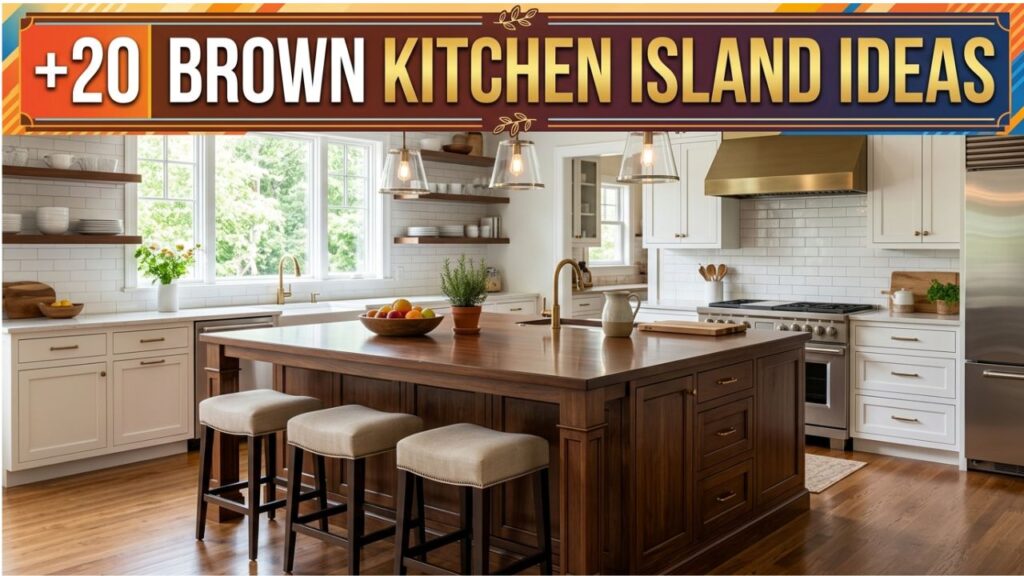
I’ve spent years helping homeowners rethink their kitchens, and the same request comes up again and again: people want a space that feels inviting without looking dated.
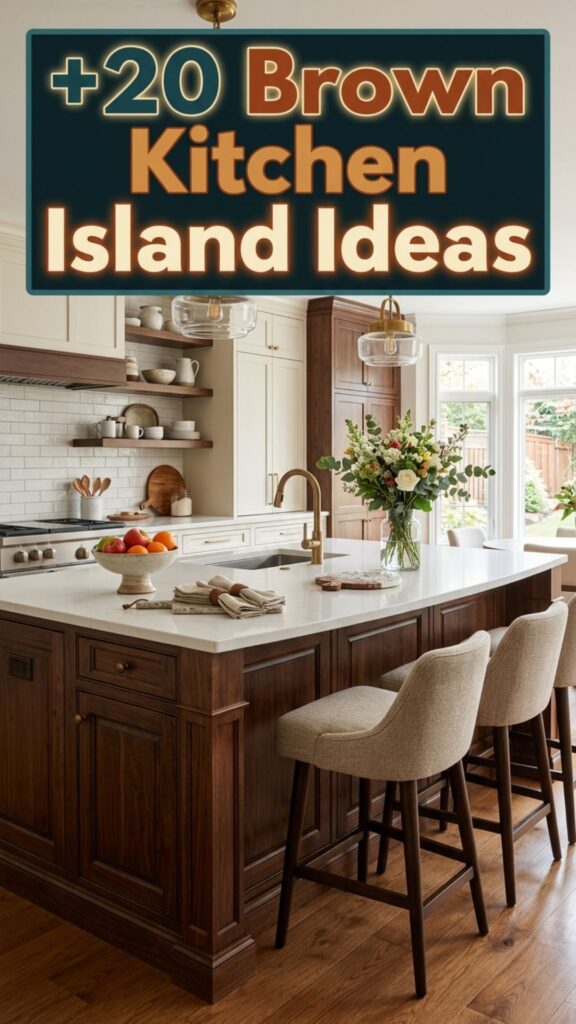
Brown delivers exactly that. In this guide, you’ll find 20 brown kitchen island ideas, from deep espresso finishes to soft caramel wood tones. Each one includes practical tips so you can picture it in your own home and decide what actually works for your layout, budget, and style.
1. Rich Walnut Wood Island
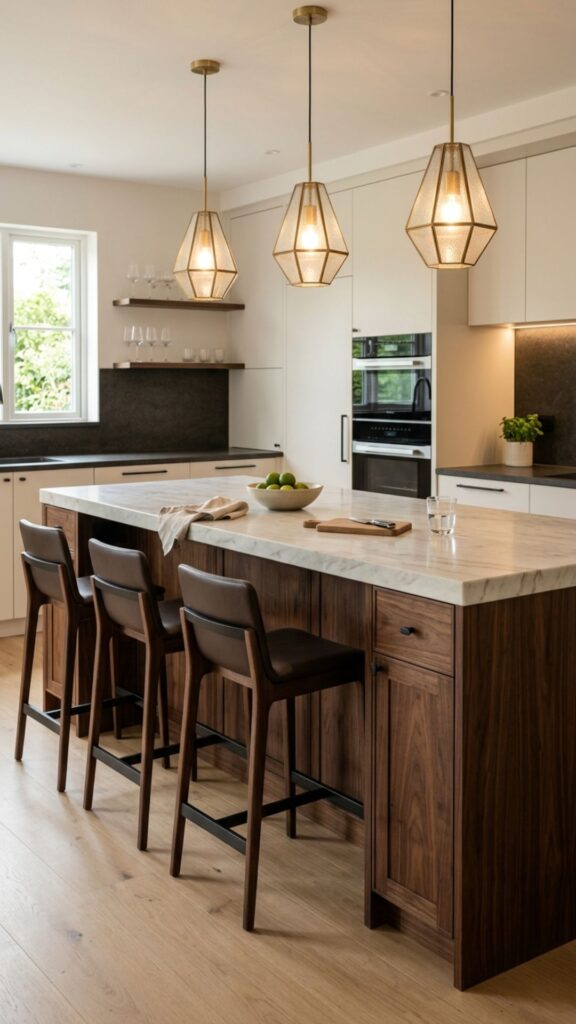
Walnut is a classic for a reason. Its deep, chocolate-brown grain adds instant luxury and works beautifully in both modern and traditional kitchens. The natural variation in the wood means no two islands look exactly alike, giving your space a one-of-a-kind feel.
To keep walnut looking its best, seal it with a matte or satin finish that highlights the grain without adding shine. Pair it with lighter countertops, like white quartz or pale marble, so the wood becomes the star. This contrast keeps the room from feeling too heavy.
2. Distressed Reclaimed Wood Island
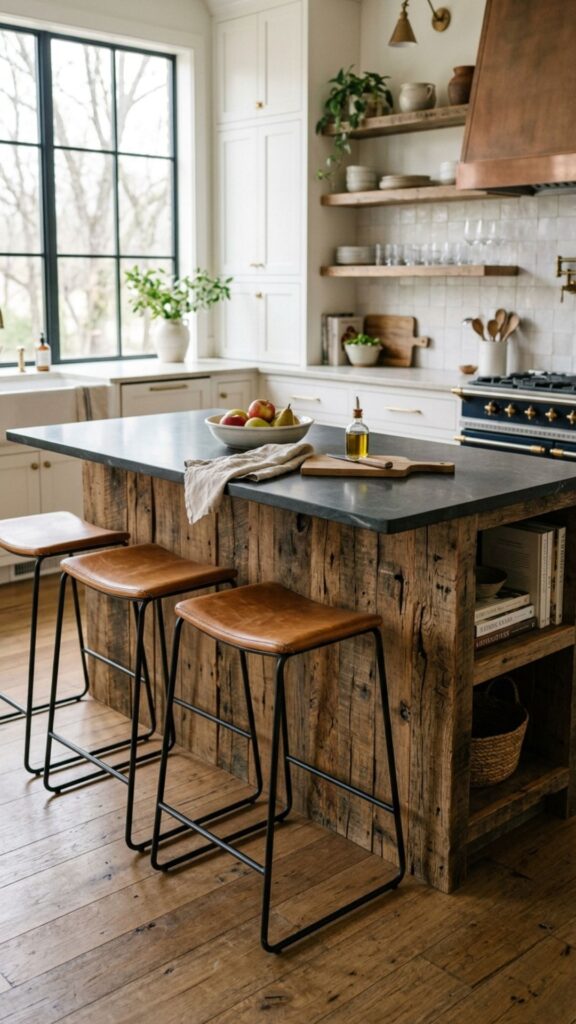
If you love character, reclaimed wood is hard to beat. Weathered planks in mixed brown tones bring history and texture into your kitchen. Each mark and knot tells a story, and the eco-friendly angle is a nice bonus.
Reclaimed wood works especially well in farmhouse and rustic kitchens. Balance the rough texture with sleek hardware and clean-lined stools so the look feels intentional rather than unfinished. A simple stone or butcher-block top completes the effect.
3. Espresso-Stained Shaker Island
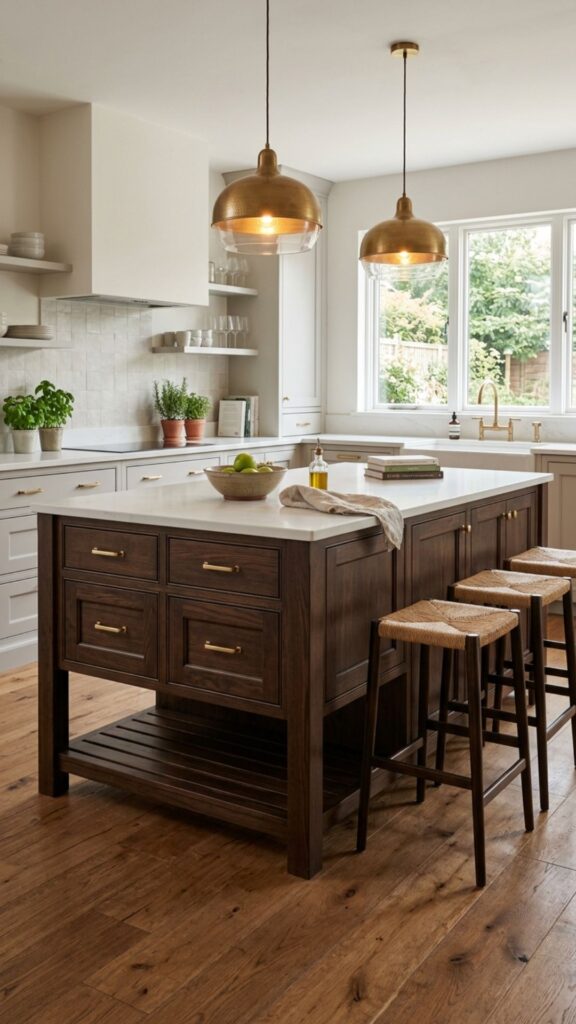
Espresso is one of the most versatile brown kitchen island ideas out there. This deep, near-black brown reads as sophisticated and modern while still feeling warm. Shaker-style doors keep it timeless and easy to match with different decor.
Because espresso is so dark, lighting matters. Add under-counter LED strips or pendant lights above the island to keep the area bright and functional. Brushed brass or matte black hardware finishes the look with a touch of polish.
4. Two-Tone Brown and Cream Island
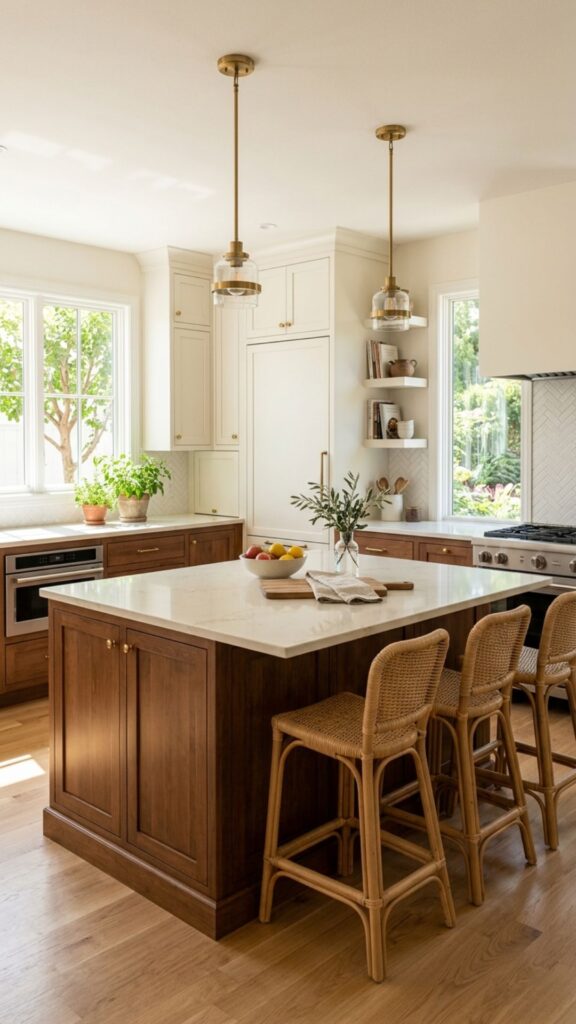
Can’t decide between light and dark? A two-tone island gives you both. Pair brown cabinetry on the base with a creamy or off-white countertop, or reverse it for a bold statement.
This approach breaks up a large island and adds visual interest without overwhelming the space. It also lets you tie the island into surrounding cabinets while still making it feel like a focal point. Two-tone designs work well in kitchens that need a little more dimension.
5. Butcher-Block Top Island
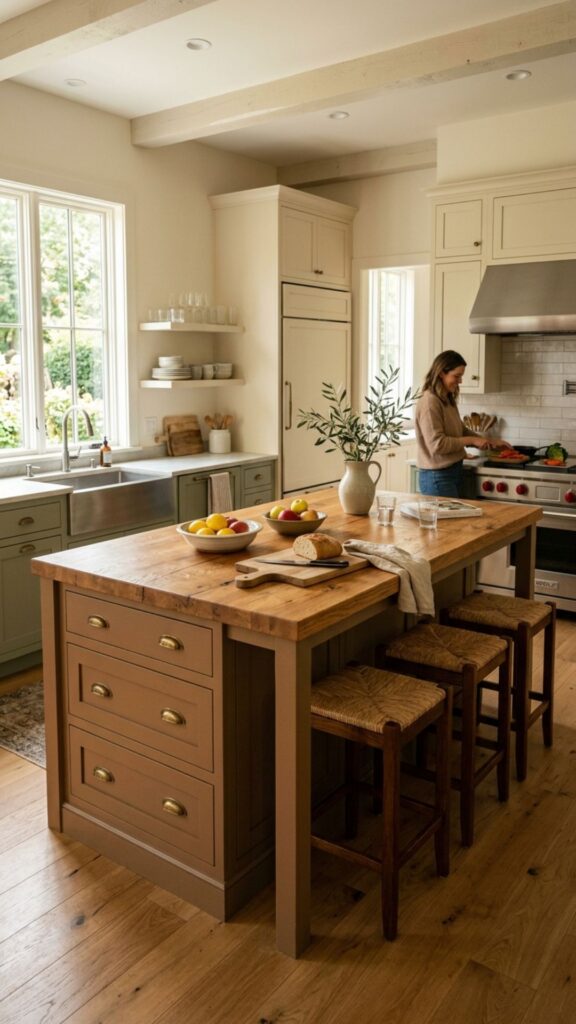
A warm wood butcher-block surface brings tactile comfort to any kitchen. The honey and caramel tones of maple, oak, or acacia add richness while giving you a practical prep surface for everyday cooking.
Keep in mind that butcher block needs regular oiling to stay water-resistant and beautiful. If you cook often, this is a small tradeoff for a surface that ages gracefully and only gets more charming over time. Pair it with a painted base in a complementary earth tone.
6. Rustic Farmhouse Island with Turned Legs
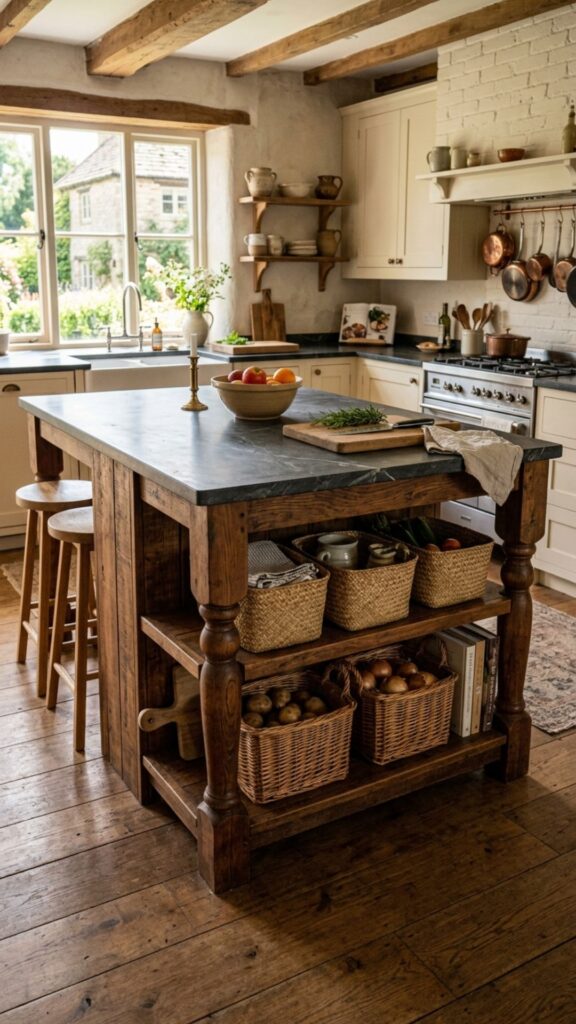
Turned legs and a chunky wood frame give this island real farmhouse charm. The warm brown finish feels lived-in and welcoming, perfect for homes that value comfort over sleek minimalism.
Add open shelving or a lower shelf for stacking cookbooks and baskets. This not only looks great but keeps essentials within reach. Top it with a soapstone or wood counter to complete the cozy, country-kitchen vibe.
7. Modern Flat-Panel Brown Island
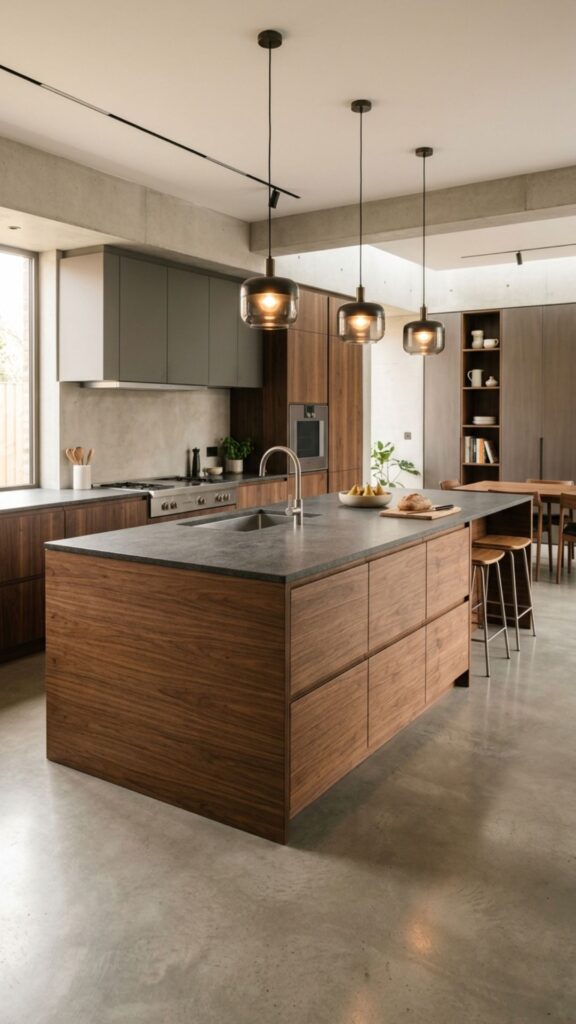
For a contemporary kitchen, flat-panel doors in a smooth brown finish deliver clean lines and understated warmth. This style skips the fussy details and lets the wood tone speak for itself.
Choose a horizontal wood grain to emphasize the modern look, and keep hardware minimal or hidden with push-to-open mechanisms. The result feels sleek, uncluttered, and undeniably warm compared to stark all-white kitchens.
8. Weathered Oak Island
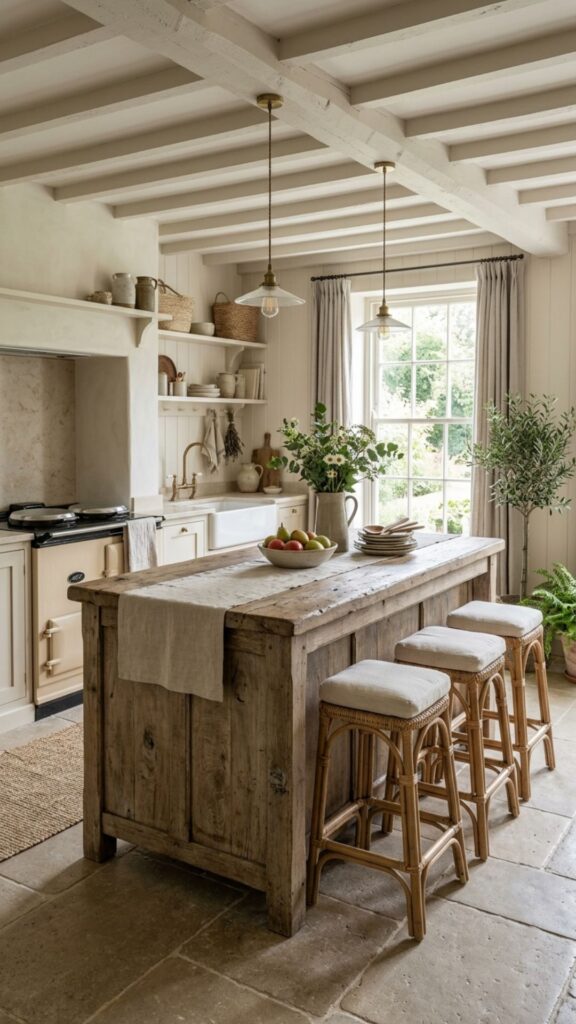
Weathered oak strikes a lovely middle ground between rustic and refined. Its light-to-medium brown tones carry subtle gray undertones that feel current and calm.
This finish pairs effortlessly with neutral palettes and natural materials like linen, stone, and rattan. If you want a relaxed, coastal-meets-country feel, weathered oak is a smart choice that won’t overpower the rest of your kitchen.
9. Brown Island with Marble Waterfall Edge
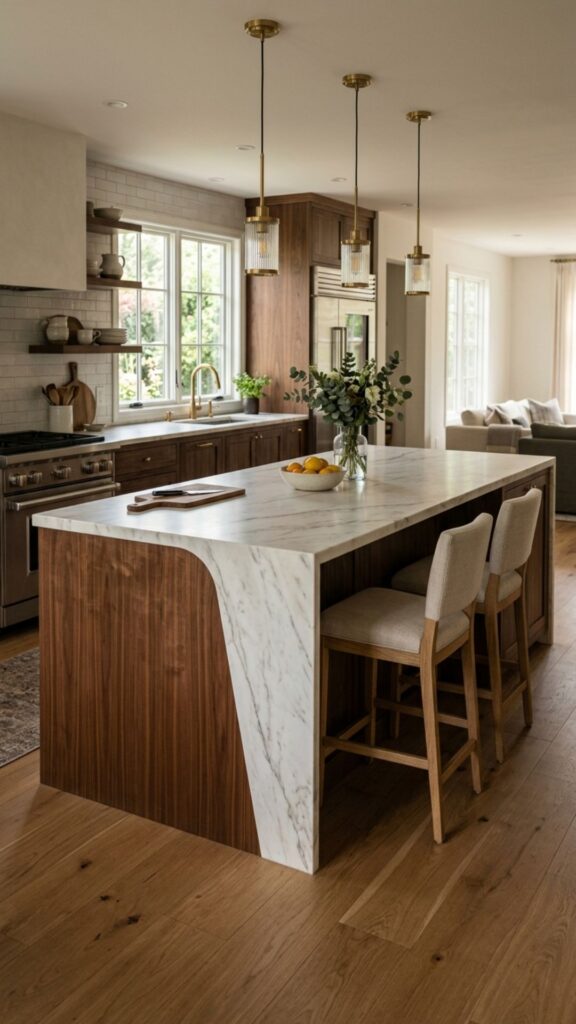
Want a showstopper? Combine a brown wood base with a marble waterfall countertop that flows down the sides. The mix of natural wood and cool stone creates a stunning contrast.
This look feels high-end but stays grounded thanks to the warm wood. It’s ideal for open-concept homes where the island is always in view. Choose marble with soft veining so the brown base still gets its moment to shine.
10. Painted Chocolate-Brown Island
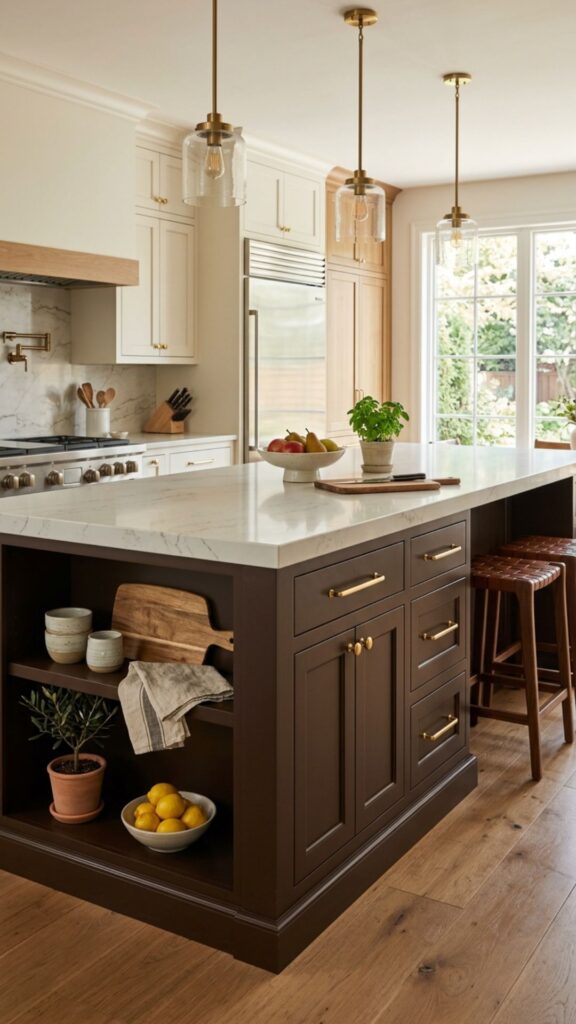
Not every brown island needs to show wood grain. A smooth, painted chocolate-brown finish offers a rich, saturated color that feels bold and cozy at once.
This works especially well as an accent island in a mostly neutral kitchen. The painted surface is easy to wipe clean and lets you play with fun hardware and countertop combinations. Try a light quartz top to keep things balanced.
11. Mid-Century Modern Teak Island
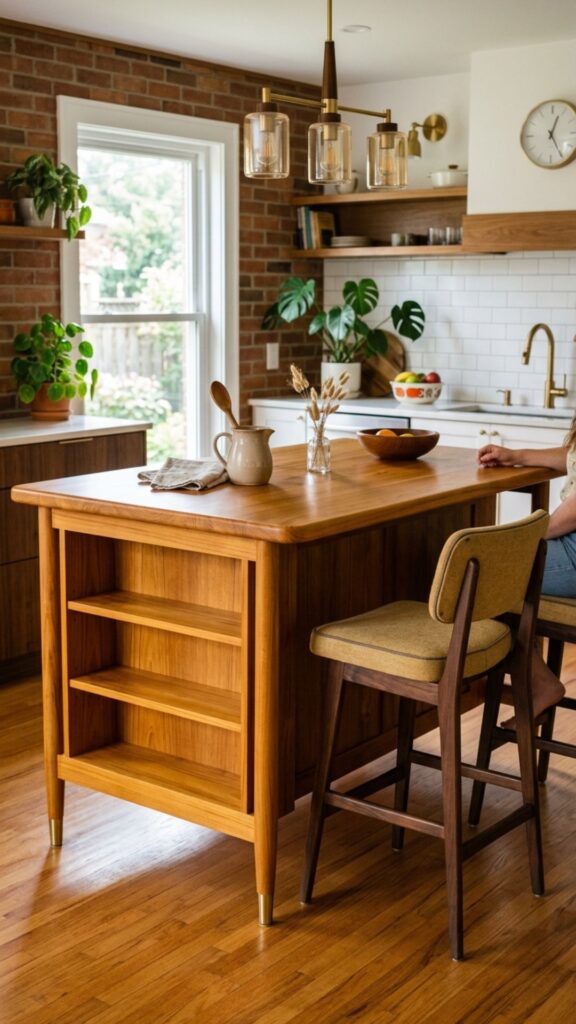
Teak’s warm, golden-brown color and smooth grain make it a natural fit for mid-century modern kitchens. It brings retro charm without feeling like a costume.
Look for clean, tapered legs and simple geometric shapes. Teak is also naturally durable and moisture-resistant, so it holds up well in busy kitchens. Style it with vintage-inspired stools for a cohesive throwback look.
12. Brown Island with Open Shelving
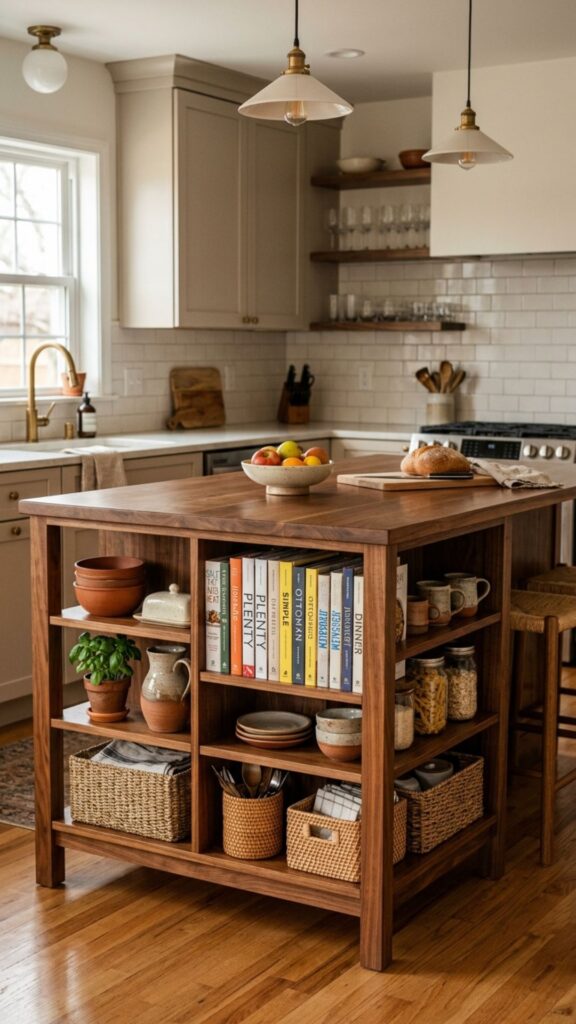
Open shelving on a brown island adds function and warmth in equal measure. Use the shelves to display cookbooks, ceramics, or woven baskets that echo the wood tones.
This design keeps everyday items accessible while showing off your personality. To avoid clutter, curate what you display and leave a little breathing room. The mix of wood and styled objects makes the island feel homey and intentional.
13. Dark Brown Island with Waterfall Wood Grain
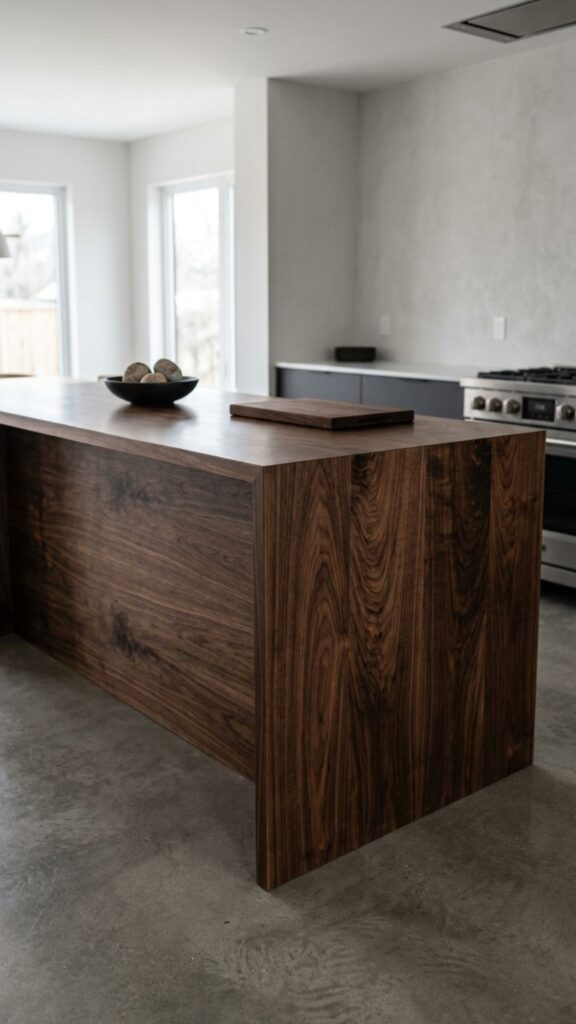
A continuous wood grain that wraps around the entire island creates a seamless, sculptural effect. In a dark brown tone, this look feels dramatic and luxurious.
Because the grain flows uninterrupted, the craftsmanship really shows. Pair it with minimal hardware so nothing distracts from the wood. This is a great pick for design-forward kitchens that want a true centerpiece.
14. Warm Brown Island with Brass Accents
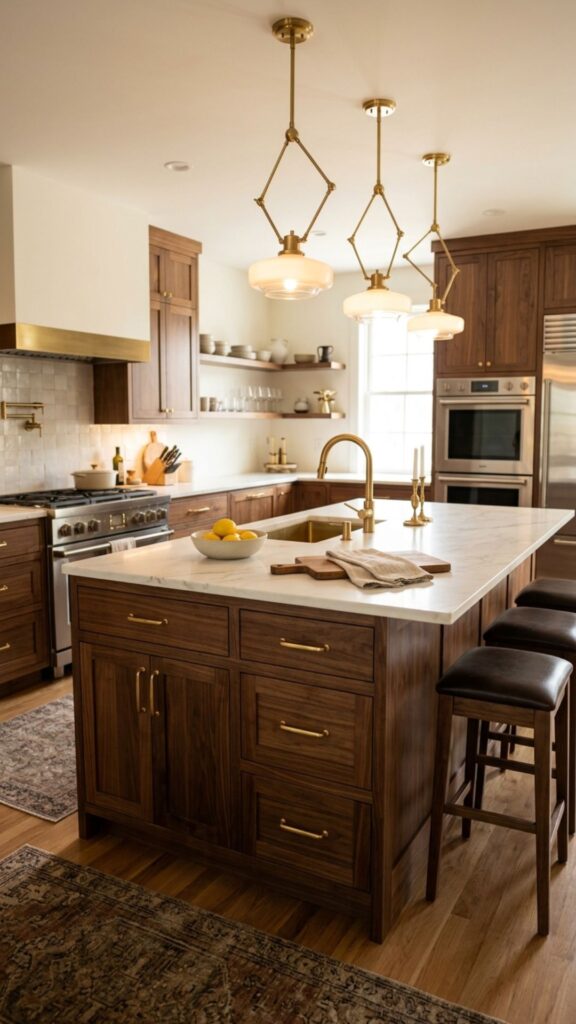
Brass and brown are a match made in kitchen heaven. The warm metallic glow of brass hardware, faucets, or pendant lights amplifies the coziness of a brown island.
Mix polished and brushed brass finishes for depth, but keep it consistent across the room. This combination feels timeless and slightly glamorous without trying too hard. It’s an easy way to elevate a simple brown island.
15. Barnwood-Style Island for Industrial Kitchens
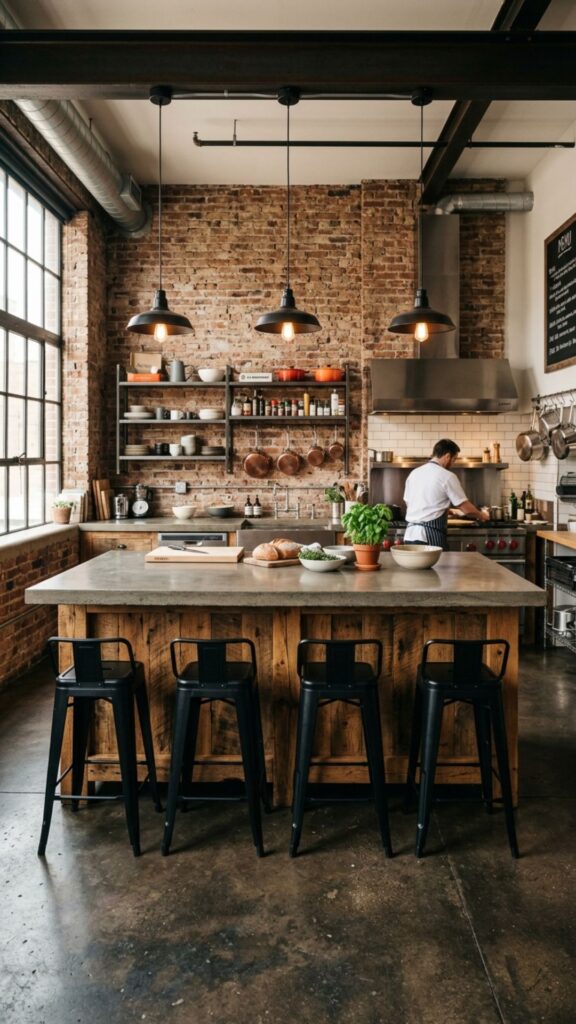
Barnwood’s rugged brown texture pairs perfectly with industrial elements like exposed brick, black metal, and concrete. The weathered look adds warmth to spaces that might otherwise feel cold.
Combine the wood base with a metal or concrete countertop for authentic industrial appeal. Add stools with metal frames and leather seats to complete the look. This style suits lofts, city apartments, and modern renovations alike.
16. Caramel-Toned Hickory Island
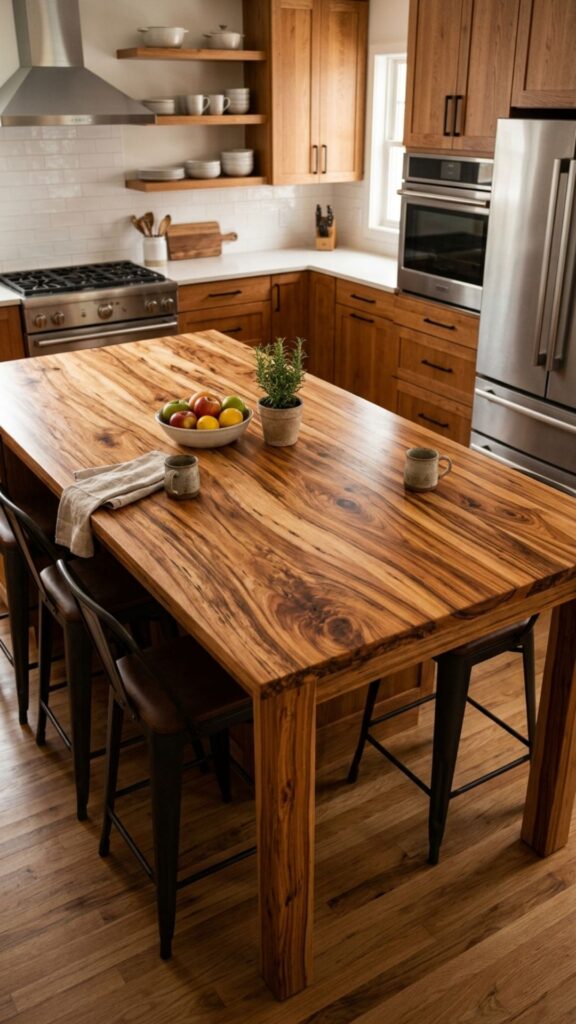
Hickory offers rich caramel and cinnamon tones with bold grain patterns. It’s one of the most eye-catching brown kitchen island ideas for anyone who wants warmth and drama.
Because hickory is so distinctive, keep the surrounding kitchen simpler to let it shine. It’s also an extremely hard, durable wood, so it handles heavy daily use with ease. This is a great long-term investment for busy family kitchens.
17. Brown Island with a Built-In Seating Nook
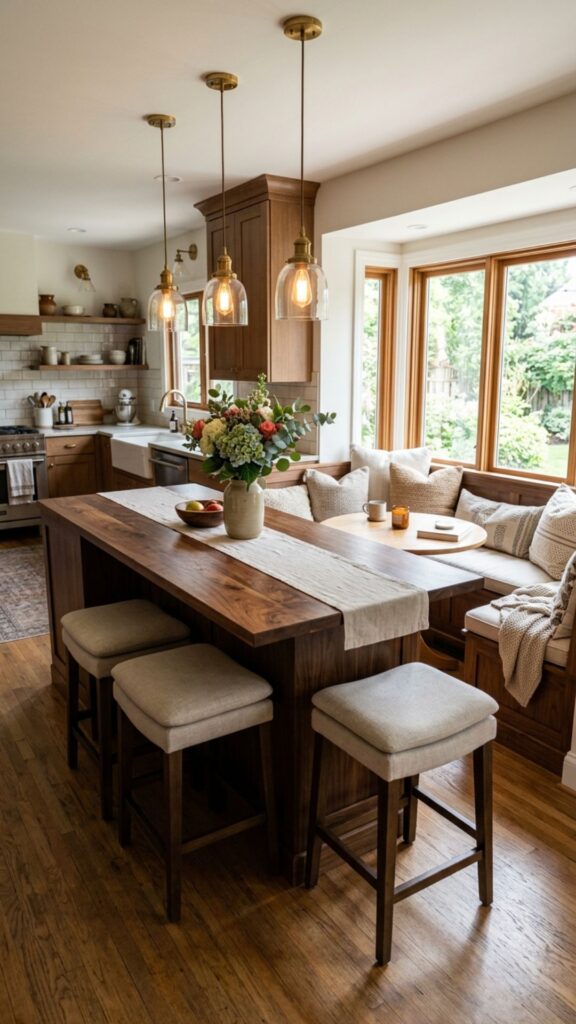
Extend one side of your brown island to create a cozy seating nook. This turns the island into a gathering spot for meals, homework, or morning coffee.
Add cushioned stools or a small banquette in a complementary fabric. The warm wood tone makes the space feel inviting, encouraging family and guests to linger. It’s a smart use of space in open kitchens.
18. Light Brown Ash Wood Island
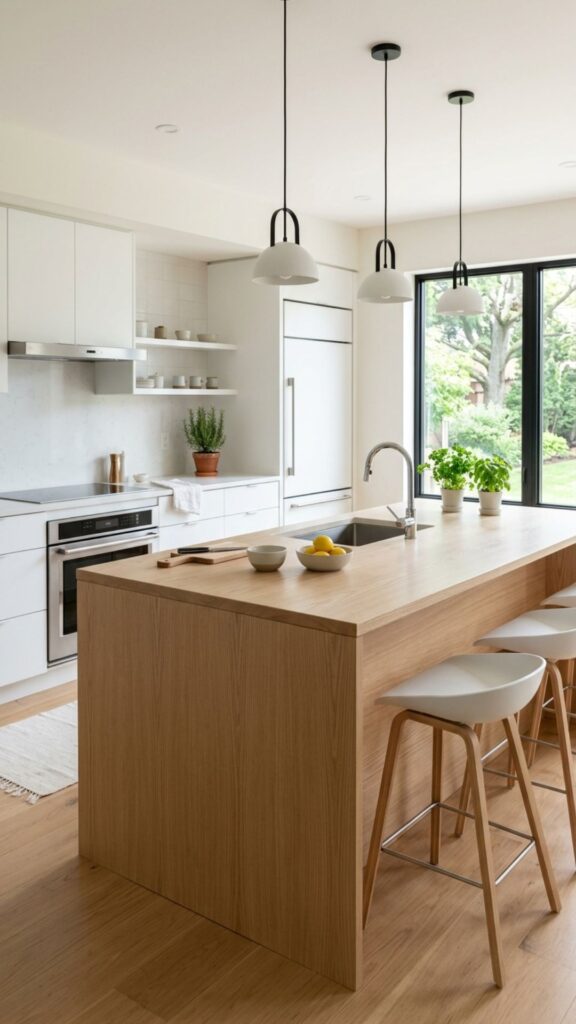
Ash wood brings a soft, pale-brown tone with a subtle, straight grain. It feels airy and fresh while still adding natural warmth to your kitchen.
This lighter brown works beautifully in smaller kitchens where darker tones might feel heavy. Pair it with white or light gray surroundings to keep the room bright and open. Ash is a great choice for Scandinavian-inspired spaces.
19. Brown Island with Fluted Wood Detailing
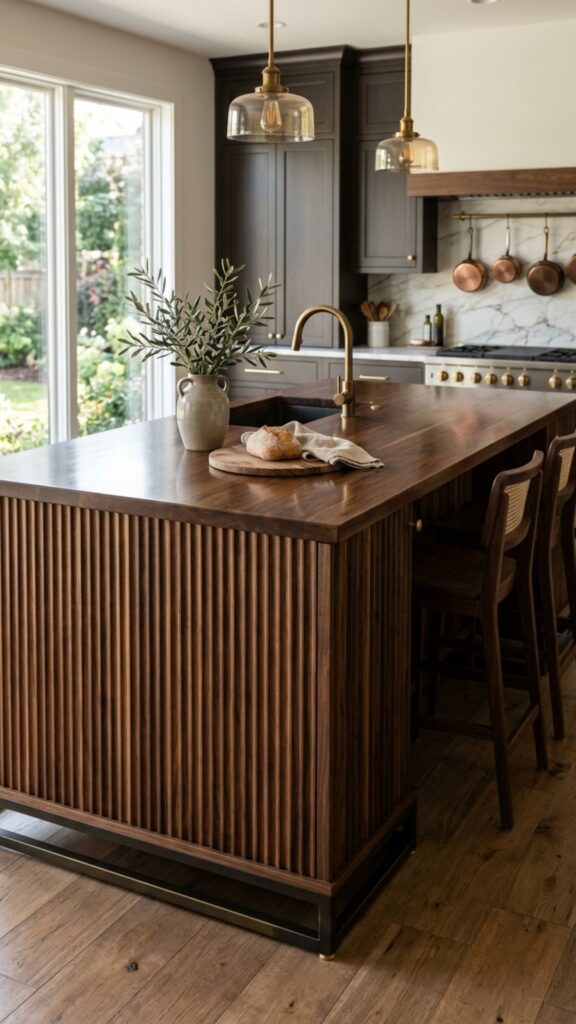
Fluted, or ribbed, wood panels add texture and a designer touch to a brown island. The vertical grooves catch light and shadow, creating subtle movement across the surface.
This trend feels fresh yet warm, especially in a rich brown tone. Keep the rest of the island simple so the fluting stays the focus. It’s a wonderful way to add character without color.
20. Painted Base with Natural Wood Top
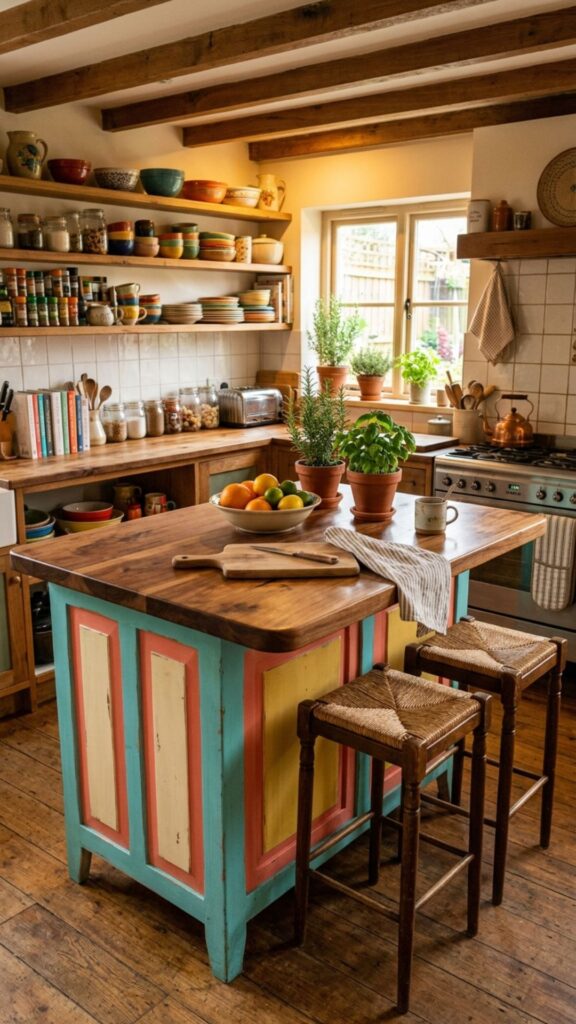
For a flexible option, pair a painted base in your favorite shade with a natural brown wood top. This lets you update the color later while keeping the warm wood surface constant.
The wood top ties the island into the rest of your kitchen, while the painted base adds personality. It’s an affordable, adaptable approach that works in almost any style. Refinish or repaint the base as your taste evolves.
Conclusion
Brown brings warmth, versatility, and lasting appeal to any kitchen island, and these 20 ideas prove just how much range the color offers. Whether you lean toward rustic reclaimed wood, sleek espresso finishes, or a two-tone design, there’s a brown island that fits your home and your lifestyle. The key is choosing a finish that complements your existing space and matches how you actually cook and gather.
Ready to warm up your kitchen? Pick two or three ideas from this list, gather samples of your favorite wood tones and countertops, and see how they look in your own light before you commit. A little planning now leads to an island you’ll love for years.
What countertop colors go best with a brown kitchen island?
Light countertops like white quartz, cream marble, or pale granite work best with brown islands because they create balance and keep the space from feeling heavy. For a bolder look, soapstone or dark stone can add drama while keeping the warm, cozy feel intact.
Are brown kitchen islands going out of style?
No. Brown is a timeless, neutral choice that adapts to changing trends. Because it comes in so many shades and finishes, from light oak to deep espresso, a brown island stays relevant far longer than trendier colors that quickly feel dated.
What is the best wood for a brown kitchen island?
Walnut, hickory, oak, and teak are all excellent choices. Walnut offers rich color and luxury, hickory provides durability and bold grain, oak is versatile and widely available, and teak brings warmth with natural moisture resistance. Your pick depends on your budget and style.
How do I keep a wood brown island looking good?
Wipe up spills quickly, use cutting boards to protect the surface, and reapply oil or sealant as needed, especially for butcher-block tops. Regular light maintenance keeps the finish rich and prevents drying, staining, or water damage over time.
Can a brown island work in a small kitchen?
Yes. Choose lighter brown tones like ash or weathered oak to keep a small kitchen feeling open and bright. Adding open shelving or a slim profile also helps the island feel functional without crowding the space.