There’s something magical about watching rain fall while you stay warm and dry with a cup of chai in hand. But too many patios turn into soggy, unusable spaces the moment the clouds roll in. After years of helping homeowners rethink their outdoor areas, I’ve learned that a great patio doesn’t hide from the rain—it embraces it.

The good news? You don’t need a full renovation to enjoy your patio during the wet season. With smart material choices, thoughtful layouts, and a few clever additions, you can build a space that stays functional and inviting no matter how hard it pours.
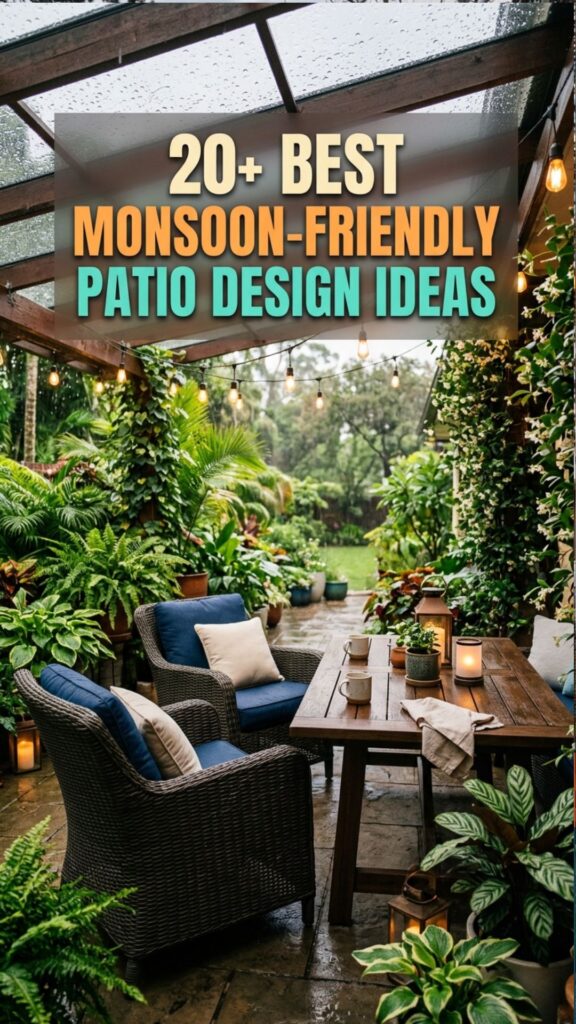
Below, you’ll find 20 monsoon-friendly patio design ideas that balance beauty, comfort, and practicality. Let’s turn that rainy view into your favorite spot at home.
1. Install a Waterproof Pergola with a Retractable Canopy
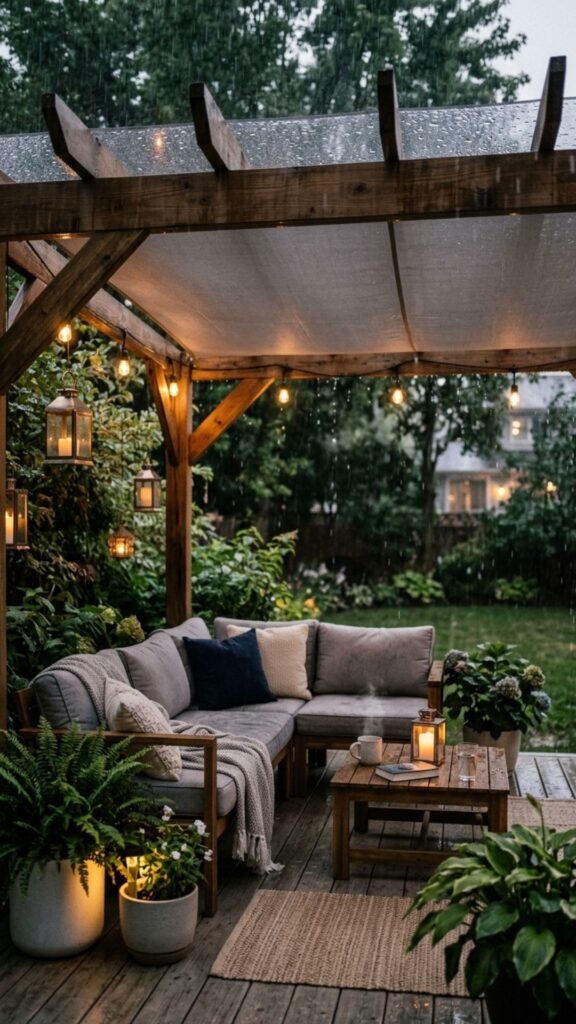
A pergola gives your patio structure and shade, but during monsoon season, an open lattice roof simply won’t cut it. Adding a retractable waterproof canopy lets you control your exposure. On dry days, roll it back for sunshine; when the sky darkens, pull it across for instant protection.
Look for canopies made from PVC-coated polyester or acrylic fabric, since these resist mold and shed water quickly. I’ve seen homeowners pair motorized versions with rain sensors that close automatically at the first drop. It’s a small investment that saves you from dashing outside to rescue cushions every time the weather shifts.
2. Choose Slip-Resistant Porcelain or Textured Tiles
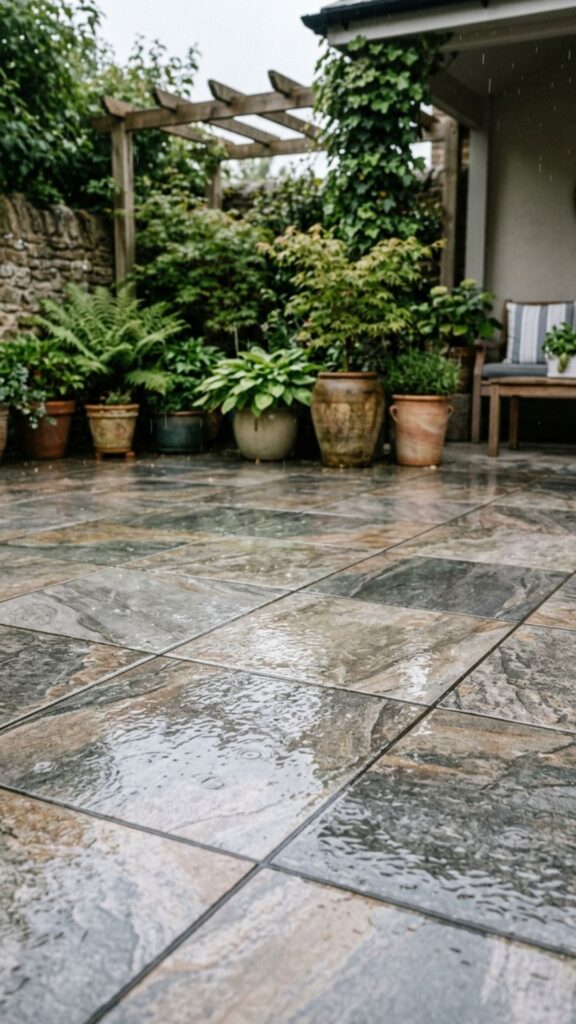
Flooring is where most patios fail during heavy rain. Smooth stone and glossy tiles become dangerously slick when wet. Textured porcelain tiles or slip-resistant pavers solve this problem while keeping your space stylish and easy to clean.
Porcelain also handles water absorption beautifully, so it won’t crack or stain the way natural stone sometimes does. Aim for tiles with an R11 slip rating or higher, which is the standard recommended for wet outdoor areas. Your feet—and your guests—will thank you.
3. Add a Sloped Roof or Awning for Runoff
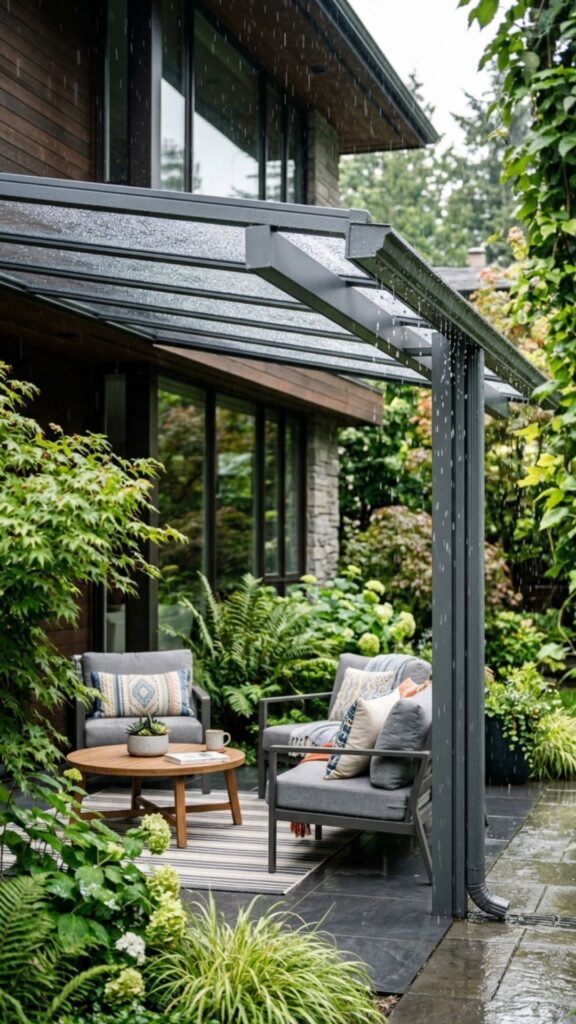
Standing water is the enemy of any patio. A gently sloped roof or fixed awning directs rain away from your seating area instead of letting it pool overhead. Even a modest slope of a few degrees makes a noticeable difference.
Metal awnings with a matte finish give a modern look while lasting for decades. If you prefer something softer, a canvas awning treated with waterproof coating blends into more traditional homes. Just remember to position the runoff toward a drain or garden bed, not your back door.
4. Incorporate Built-In Drainage Channels
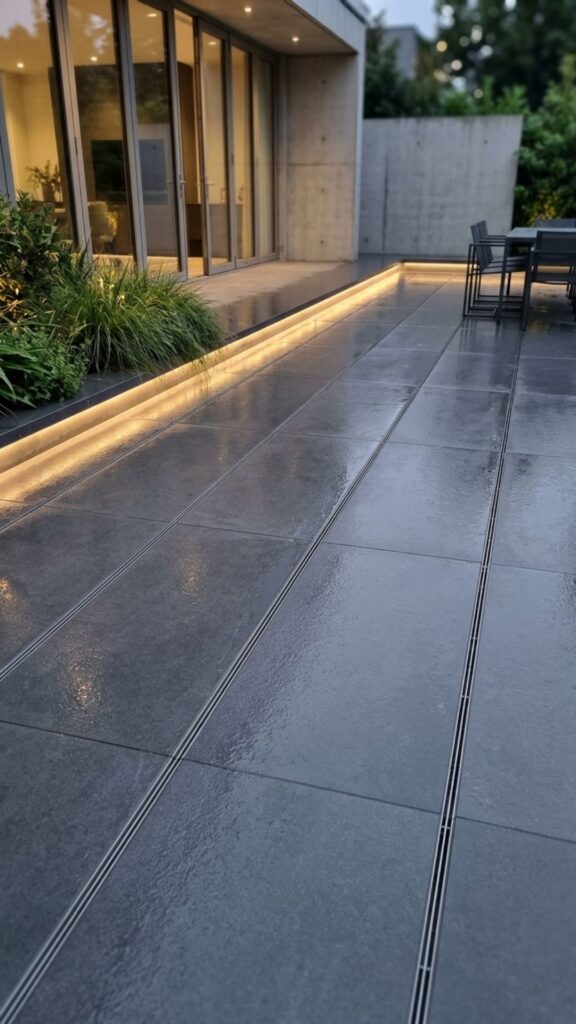
Even the best roof can’t stop wind-driven rain. Built-in drainage channels quietly move water off your patio before it becomes a puddle. These narrow linear drains sit flush with your flooring and blend into the design almost invisibly.
I always recommend planning drainage before laying any surface, since retrofitting is far more expensive. A properly graded patio with channel drains keeps moisture from seeping into walls or foundations, protecting your home long after the storm passes.
5. Use Weatherproof Outdoor Furniture
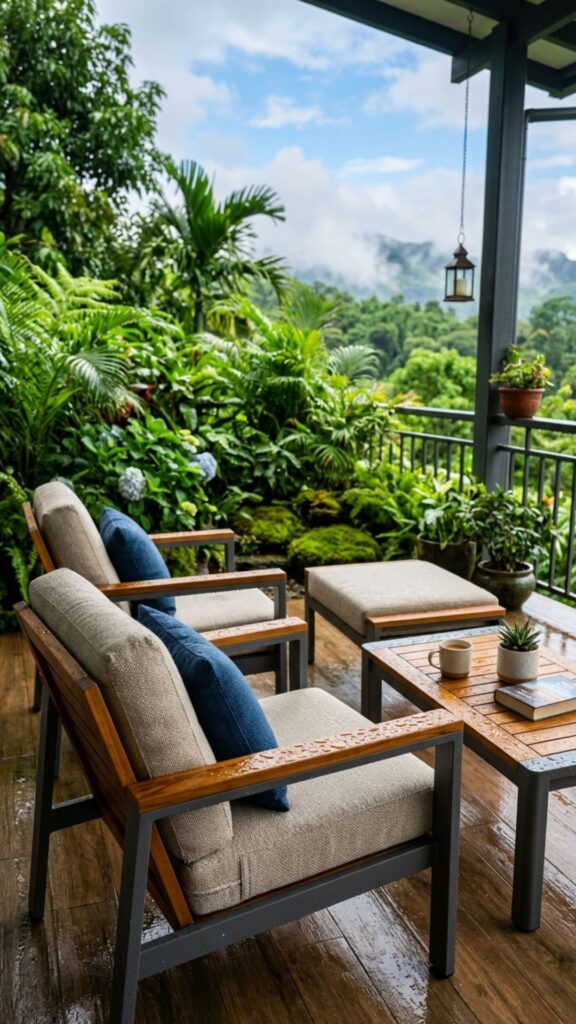
Wicker that soaks up water and wooden chairs that warp have no place in a monsoon-ready patio. Instead, choose furniture built to handle constant moisture. Powder-coated aluminum, teak, and synthetic resin all shrug off rain without complaint.
Teak deserves special mention because its natural oils repel water and resist rot for years. Pair sturdy frames with quick-dry foam cushions wrapped in marine-grade fabric. This combination means you can sit down minutes after a downpour instead of waiting for everything to dry.
6. Hang Outdoor Curtains for Wind Protection
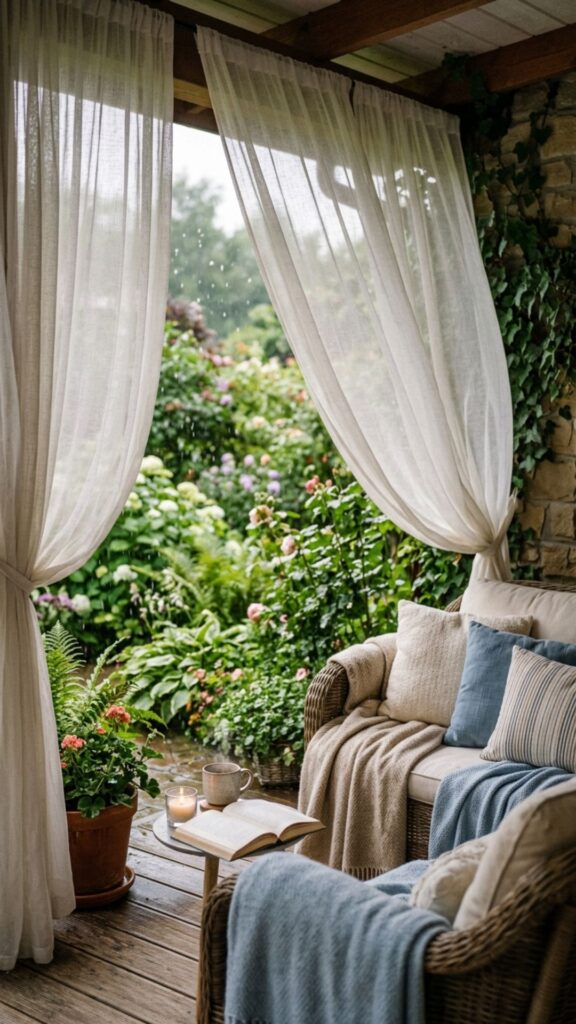
Rain rarely falls straight down. Gusty monsoon winds push water sideways, soaking anything near the edges. Weatherproof outdoor curtains act as a flexible shield, blocking spray while adding a soft, cozy feel.
Choose fabrics labeled water-repellent and fade-resistant, then mount them on rust-proof rods. You can tie them back on calm days and draw them shut when the weather turns. Beyond function, they create a private, intimate atmosphere that makes rainy evenings feel special.
7. Create a Covered Seating Nook
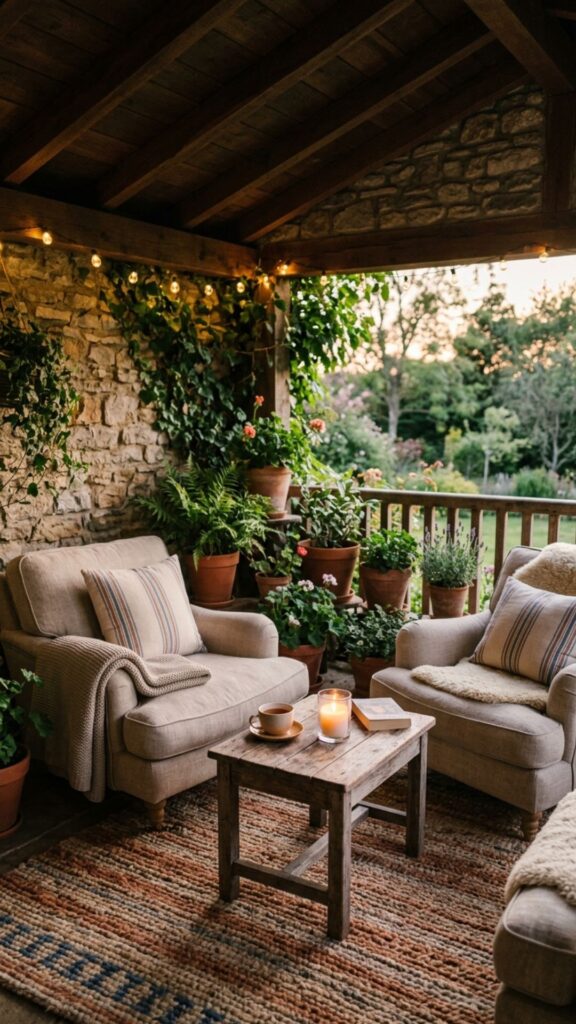
A dedicated covered nook gives you a guaranteed dry zone no matter what the forecast says. Tuck a small sofa or a pair of armchairs beneath a solid roof section, and you’ve built the perfect rainy-day retreat.
Add a side table for your book and drink, plus a soft rug rated for outdoor use. This is the spot where you’ll spend hours listening to the rain. Keep it close to the house so you can dash inside easily, but far enough to feel like a getaway.
8. Install Proper Outdoor Lighting
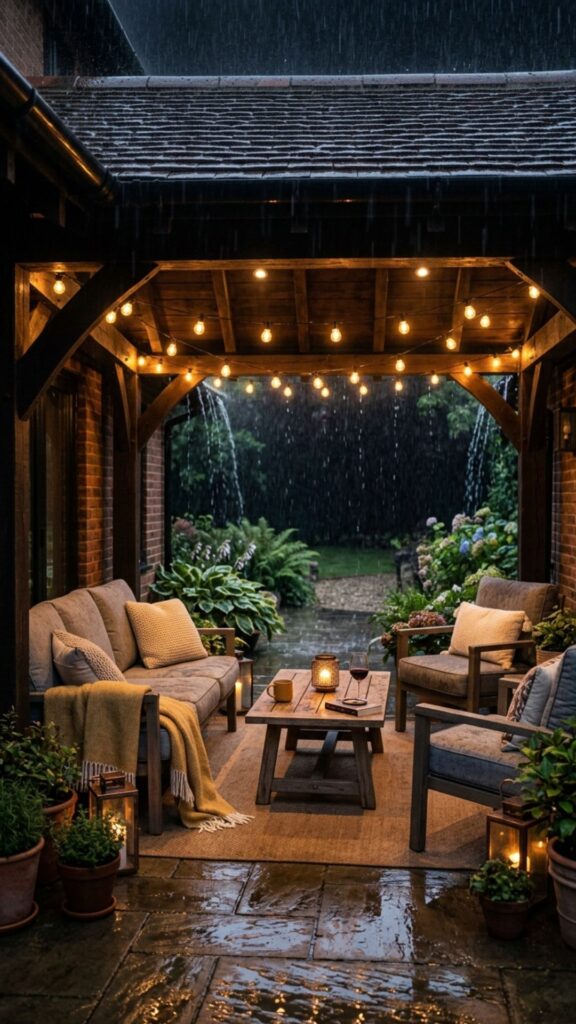
Monsoon skies stay dark and gloomy, so good lighting transforms the mood entirely. Warm LED fixtures rated for wet locations keep your patio glowing through the grayest afternoons and stormiest nights.
String lights under a covered roof add charm, while recessed downlights offer practical brightness. Always check that fixtures carry an IP65 rating or higher, which confirms they resist water intrusion. Well-placed light turns a dreary evening into a warm, welcoming scene.
9. Add a Waterproof Outdoor Rug
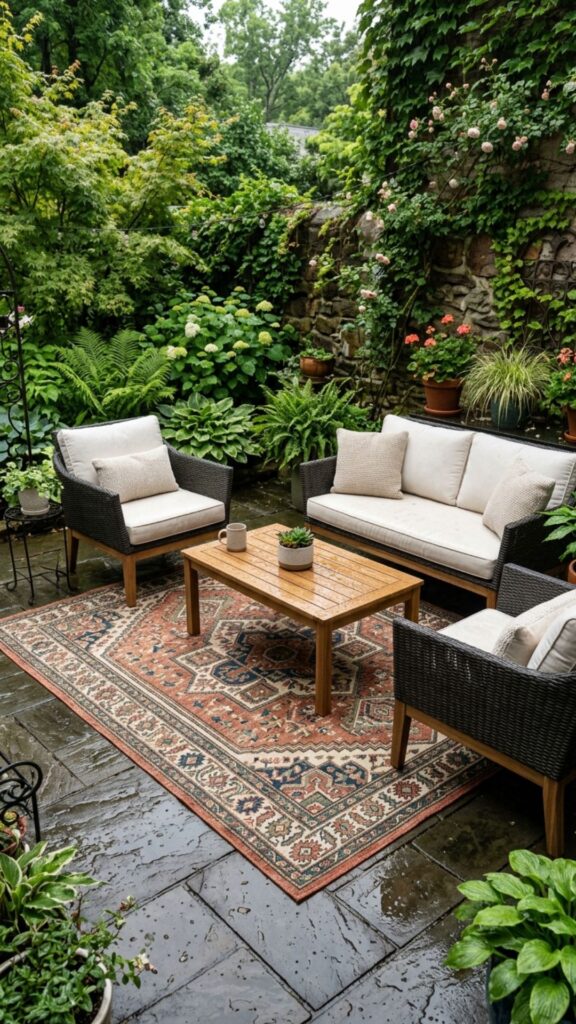
Bare flooring feels cold and uninviting during the wet season. A waterproof outdoor rug adds warmth and texture without absorbing moisture. Modern polypropylene rugs dry fast, resist mold, and come in patterns that hide the odd splash.
Layer a rug beneath your seating area to define the space and soften hard tiles underfoot. When it gets grimy, simply hose it down and let it drip dry. It’s one of the easiest ways to make a patio feel like a genuine room.
10. Include a Heat Source for Cooler Days
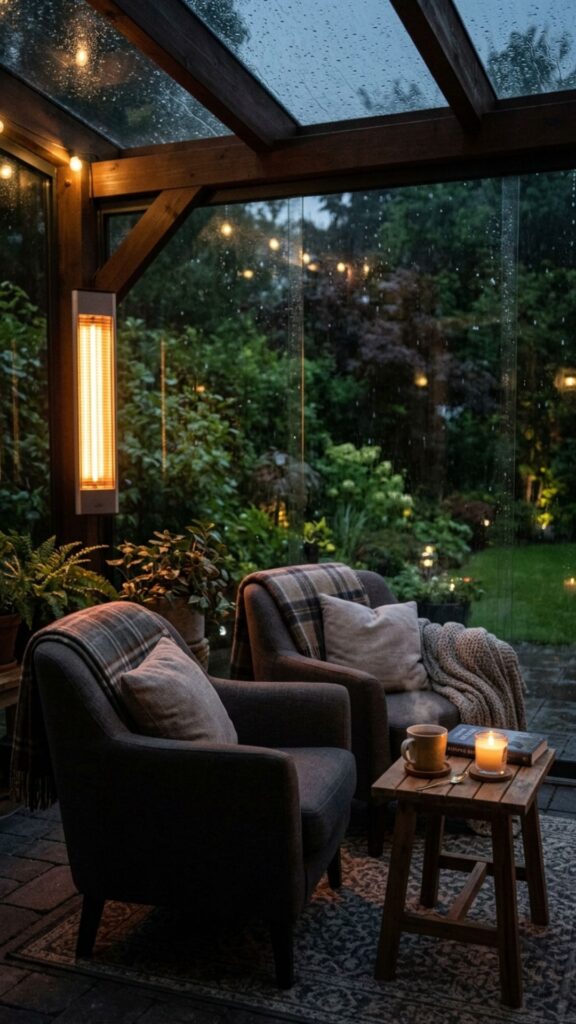
Monsoon weather often brings a chill along with the rain. An electric patio heater or a sealed gas unit keeps you comfortable when temperatures drop. For covered patios, a wall-mounted infrared heater saves floor space and warms you instantly.
If your local rules allow it, a small enclosed fireplace or ethanol burner adds cozy ambiance too. Just ensure any flame-based heater sits under proper ventilation. Warmth invites you to linger outside even when the weather would normally send you indoors.
11. Plant Moisture-Loving Greenery

Rain is a gift for the right plants. Surround your patio with species that thrive in wet conditions, like ferns, cannas, elephant ears, and hostas. These lush plants turn heavy rainfall into vibrant growth rather than a drainage headache.
Use raised planters or well-draining containers to prevent roots from drowning. A green border also absorbs some runoff and muffles the noise of nearby traffic. The result feels like a private tropical hideaway right outside your door.
12. Set Up a Covered Dining Area
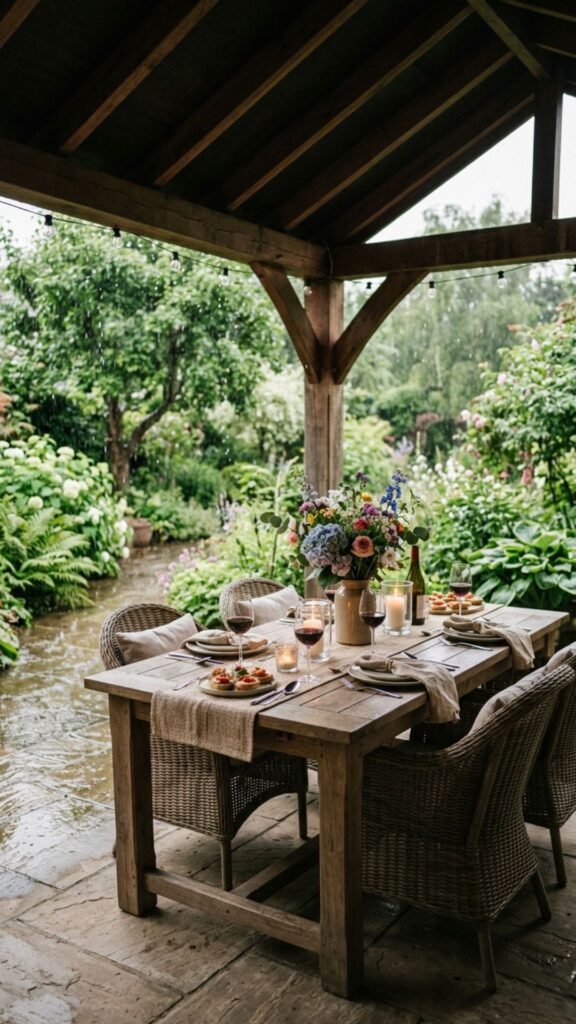
Sharing a meal while rain patters overhead is one of life’s quiet pleasures. A covered dining zone lets you host lunches and dinners without watching the sky. Position a solid table beneath your roofed section and pair it with weatherproof chairs.
Choose a table surface like sealed teak or tempered glass that wipes clean easily. Add a hanging light above it for evening meals. This setup keeps your outdoor entertaining plans on track no matter the season.
13. Use Vertical Gardens to Save Space
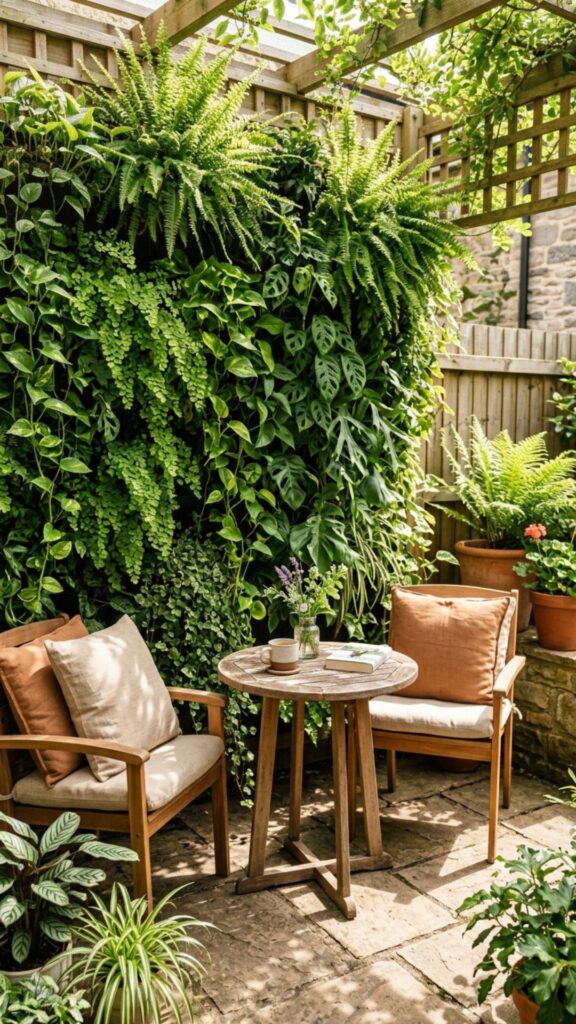
Small patios benefit from thinking upward. Vertical gardens mounted on walls or freestanding frames add greenery without eating into your seating area. They also handle rain well, since gravity carries excess water down and away.
Install a simple drip system or let the rain do the watering naturally. Choose hardy plants like ferns and pothos that tolerate moisture. A living wall softens hard surfaces and gives your rainy retreat a fresh, calming backdrop.
14. Add a Fire Pit Under a Ventilated Cover
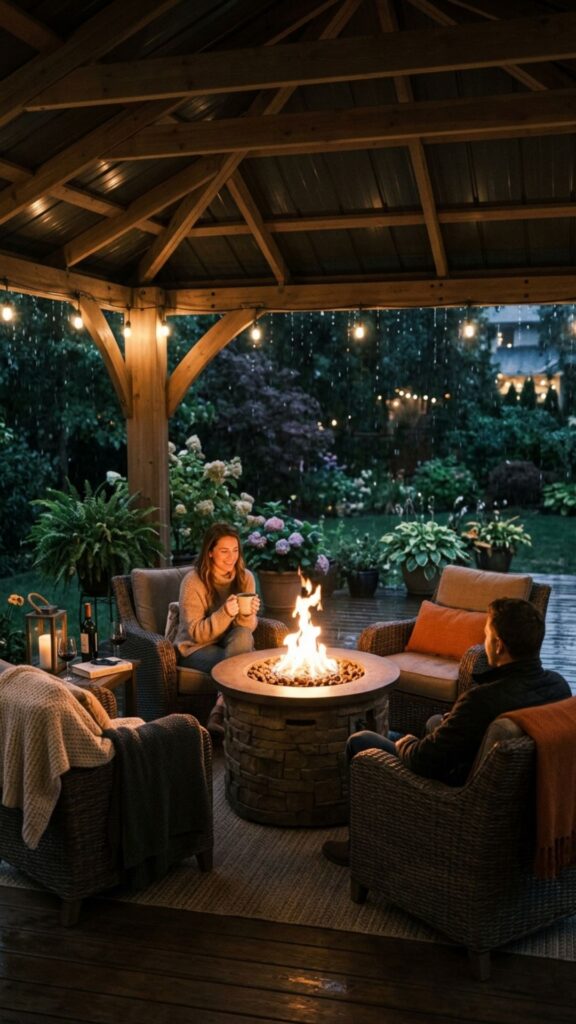
A fire pit brings warmth and a natural gathering point, but rain and open flames don’t usually mix. The solution is a ventilated cover or a specially designed rain-safe fire feature that keeps sparks contained while venting smoke.
Gas fire pits work especially well here, since they light instantly and don’t leave soggy ashes behind. Arrange your seating in a circle around it for that campfire feeling. There’s nothing quite like flickering flames against the sound of steady rain.
15. Choose Quick-Dry Cushions and Fabrics
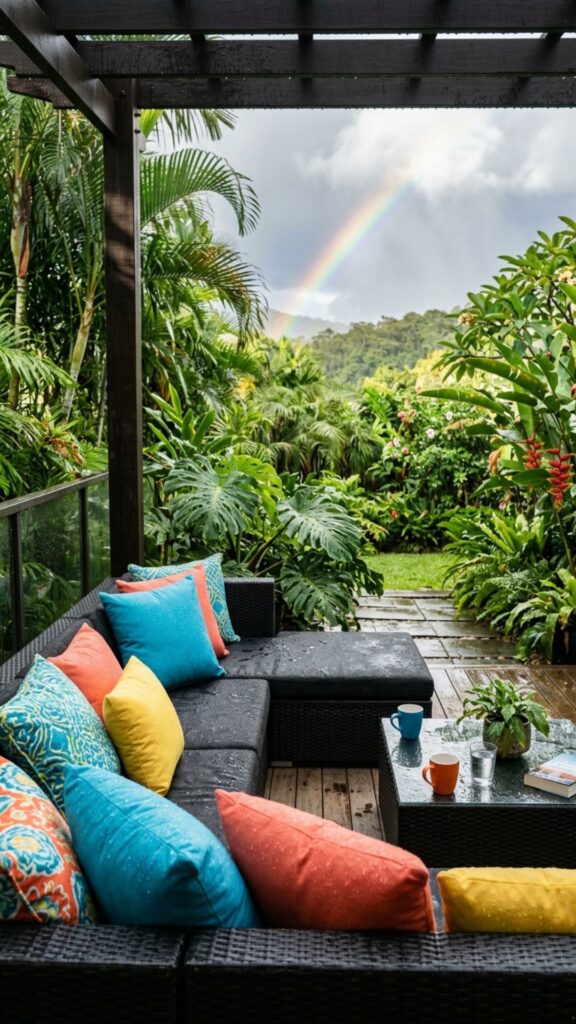
Nothing ruins a patio faster than a damp, mildewed cushion. Quick-dry foam paired with breathable, water-resistant fabric solves the problem. These materials let water pass through and evaporate quickly instead of soaking in.
Brands offering marine-grade or solution-dyed acrylic fabrics deliver the best results. They resist fading, stains, and mold even after repeated soakings. Invest here once, and you’ll skip the annual ritual of replacing ruined cushions.
16. Install Gutters Along the Patio Roof
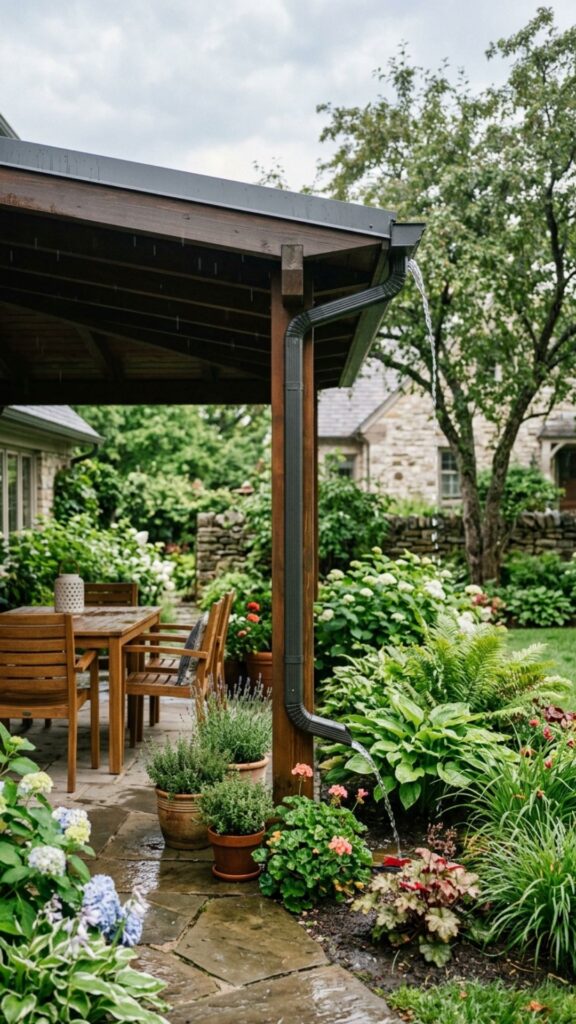
If your patio has any kind of roof, gutters are non-negotiable. Without them, rain sheets off the edge in a curtain that soaks anyone walking past. Gutters collect that water and route it safely to a drain or rain barrel.
Seamless aluminum gutters resist rust and blend into the roofline. Pair them with a downspout that directs water into your garden. This simple upgrade keeps your patio edges dry and prevents unsightly erosion around the base.
17. Create a Rain-Chain Water Feature
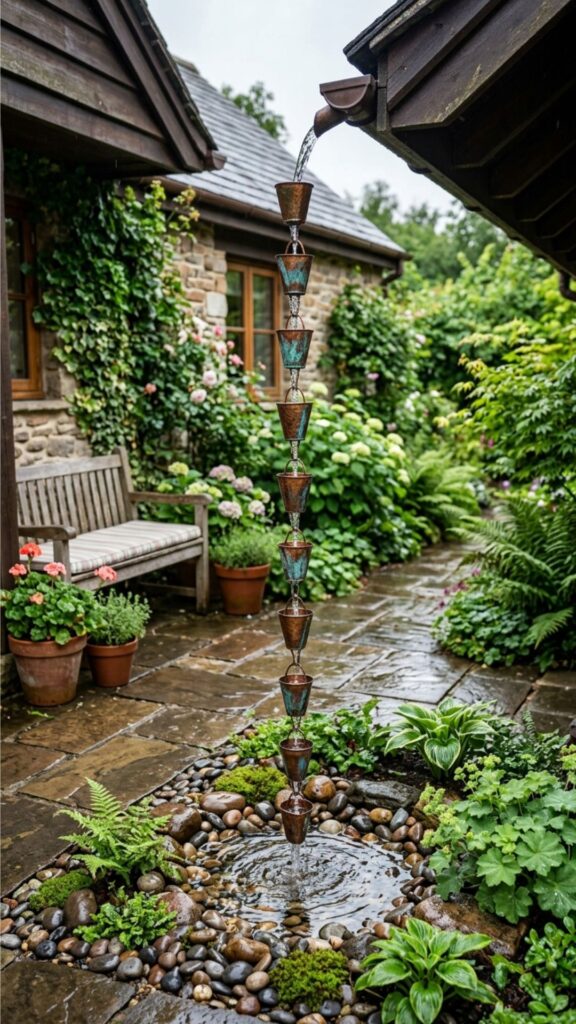
Turn drainage into decor with a rain chain. These decorative chains replace a downspout and guide water downward in a graceful, visible cascade. Watching rain trickle through copper cups adds a meditative touch to any patio.
Position a small basin or gravel bed beneath the chain to catch the flow. Beyond looks, rain chains slow runoff and reduce splashing. It’s a beautiful way to celebrate the very weather most people try to hide from.
18. Add Enclosed or Screened Panels
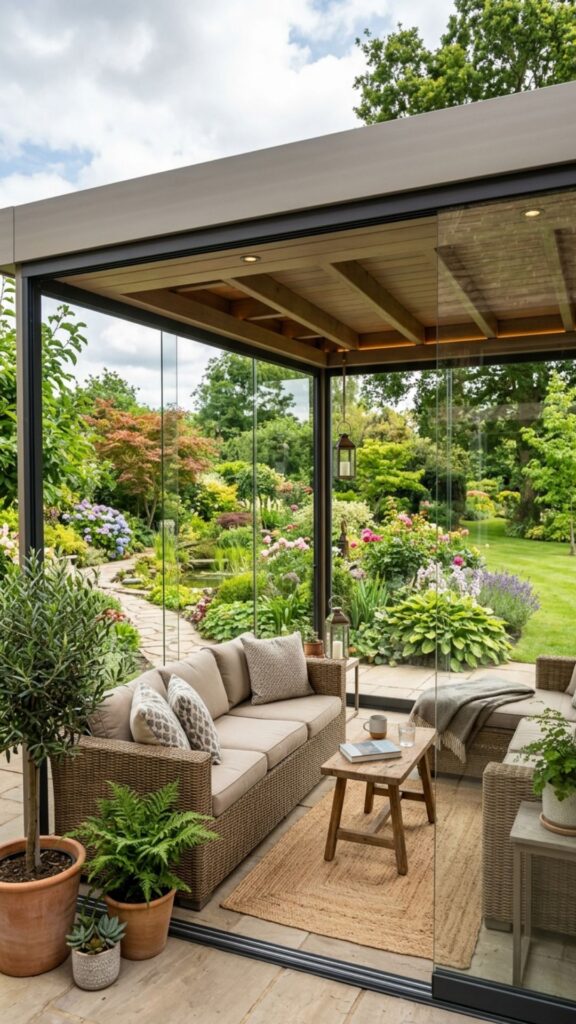
For maximum protection, enclose part of your patio with clear vinyl or screened panels. These barriers block rain and wind while preserving your view. On mild days, you can roll them up or slide them open.
Clear panels keep the space bright even under stormy skies, so it never feels closed in. This approach essentially creates a three-season room without the cost of full construction. It’s ideal if you want to use your patio year-round.
19. Incorporate Smart Weather Sensors
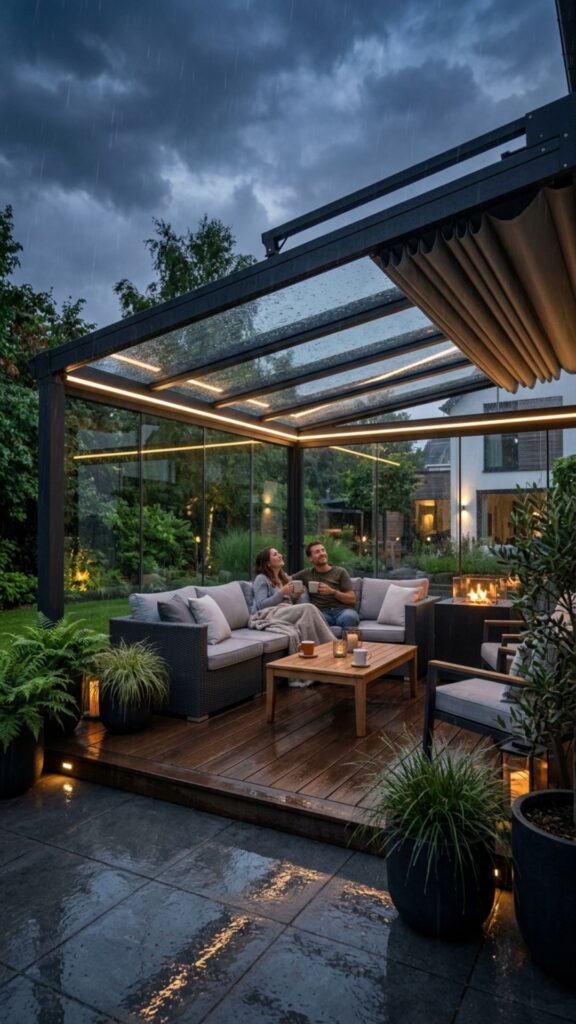
Technology makes monsoon living easier. Smart weather sensors connect to motorized awnings, lights, and fans, adjusting them automatically as conditions change. When rain begins, your canopy closes and your lights brighten without you lifting a finger.
Many systems link to your phone, so you can check conditions or make changes from inside. This level of automation keeps your patio ready at all times. It’s a modern convenience that pays off during unpredictable weather.
20. Design a Cozy Reading Corner
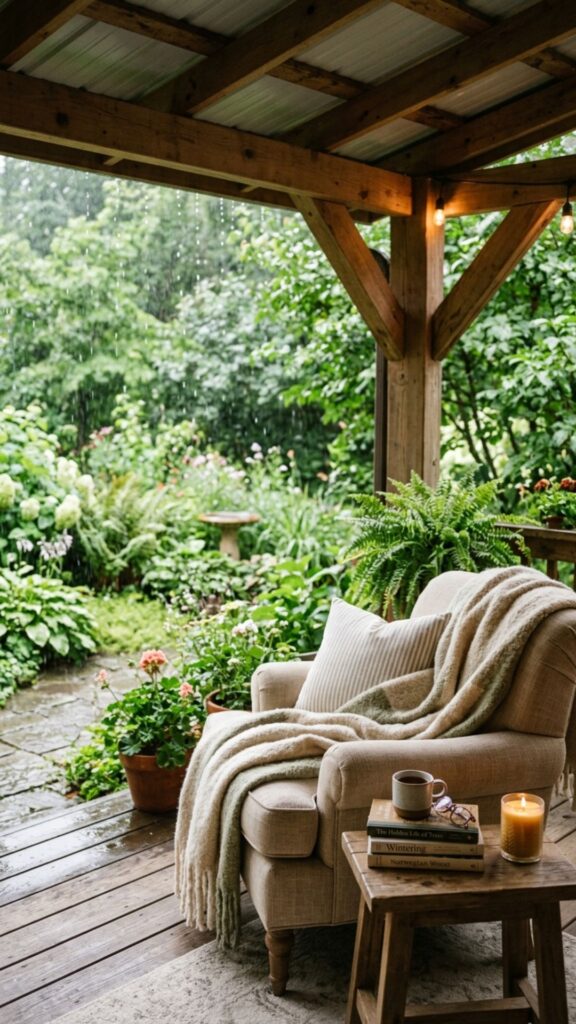
Finally, carve out a quiet corner just for relaxing. A comfortable chair, a warm throw, a small shelf, and good lighting turn a patio nook into your personal rainy-day escape. Face it toward the garden so you can watch the rain roll in.
Keep this corner under solid cover and away from wind-driven spray. Add a waterproof storage box for books and blankets nearby. This is the space that makes all your monsoon planning worthwhile—a true retreat from the world.
Conclusion: Build a Patio That Loves the Rain
A monsoon-ready patio isn’t about fighting the weather—it’s about designing a space that welcomes it. From slip-resistant flooring and waterproof furniture to cozy reading nooks and smart sensors, these monsoon-friendly patio design ideas prove you can enjoy the outdoors all season long. The secret lies in choosing the right materials and planning for water from the start.
Ready to transform your soggy outdoor space into a cozy rainy retreat? Start with one or two ideas from this list, then build from there. Grab a notebook, measure your patio, and pick the upgrades that fit your style and budget. Your perfect rainy-day getaway is closer than you think—so start planning today and enjoy every raindrop.
What materials work best for a monsoon-friendly patio?
The best materials resist water and dry quickly. Choose slip-resistant porcelain tiles for flooring, powder-coated aluminum or teak for furniture, and marine-grade acrylic for cushions. These options handle constant moisture without warping, staining, or growing mold.
How do I stop water from pooling on my patio?
Prevent pooling by grading your patio surface at a slight slope and installing linear drainage channels. Adding gutters along any roof and directing runoff toward a garden bed or drain keeps water moving away from your seating area and your home’s foundation.
Can I use my patio during heavy rain?
Yes, with the right setup. A waterproof canopy or sloped roof, side curtains for wind protection, and a covered seating nook let you enjoy your patio even during a downpour. Adding a heater keeps you comfortable when the temperature drops.
How can I keep patio furniture from getting moldy?
Use quick-dry foam cushions wrapped in water-resistant fabric, and store items in waterproof boxes when not in use. Choose furniture frames made from teak, aluminum, or resin that don’t absorb water, and clean surfaces regularly to prevent buildup.
Are outdoor rugs safe to use in wet weather?
Waterproof outdoor rugs made from polypropylene are safe and practical for monsoon season. They resist mold, dry fast, and clean easily with a hose. Just avoid natural fiber rugs like jute, which absorb water and break down quickly.