The color of your home office can affect far more than how the room looks. The right palette can make a small workspace feel brighter, help a busy room feel calmer, and create an atmosphere that makes sitting down to work more enjoyable.

When exploring home office ideas colors, think about natural light, room size, furniture, and the type of work you do.

A creative studio may benefit from energetic accents, while a workspace used for long meetings might feel better in softer, calmer shades. These 20 ideas offer practical ways to build a stylish office without making the room feel overly designed.
1. Warm White for a Bright and Flexible Workspace
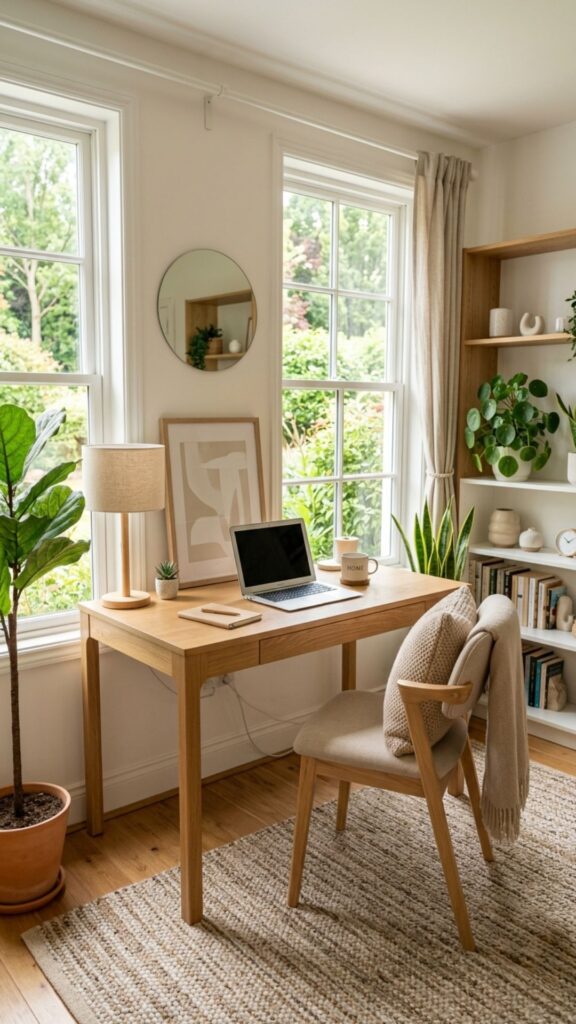
Warm white is one of the safest home office ideas colors when you want a clean room without the cold feeling that sometimes comes with pure white. Creamy undertones soften the space and work particularly well with natural wood, beige fabrics, and woven accessories.
This choice is also useful for smaller offices because it reflects available light. Add contrast through a darker desk, framed artwork, plants, or a textured rug so the room still has personality instead of looking unfinished.
2. Soft Beige for a Calm and Comfortable Office
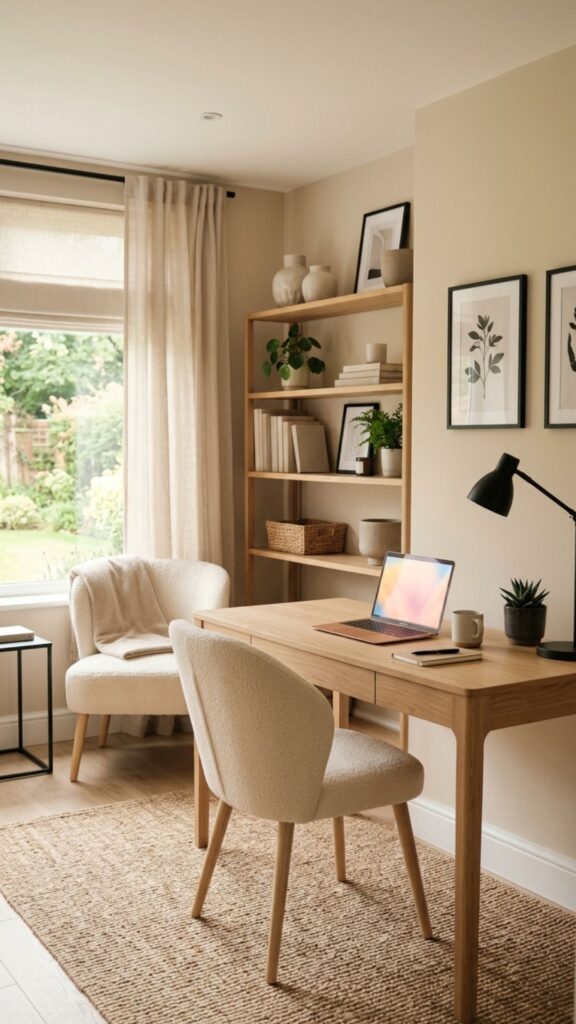
Beige has become much more versatile than the plain neutral once associated with traditional interiors. Modern beige tones contain warm undertones that create a relaxed environment without distracting from your work.
Pair beige walls with light oak furniture, black hardware, cream upholstery, and simple ceramics. Among neutral home office ideas colors, this combination works especially well when your office shares space with a bedroom or living area.
3. Sage Green for a Relaxed Natural Feel
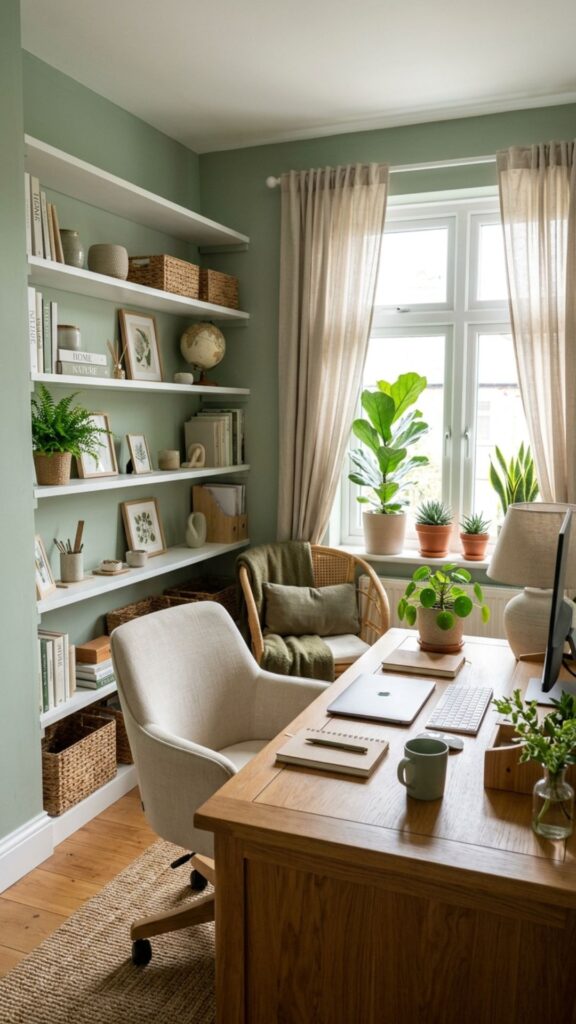
Sage green brings subtle color into a workspace while remaining soft enough for everyday use. Its connection to natural landscapes makes it particularly suitable for offices where you want a peaceful atmosphere.
Try sage walls with white shelving and warm wooden furniture. Plants, linen curtains, and neutral accessories can continue the natural theme without making everything green. The result feels fresh but still professional.
4. Navy Blue for a Polished Professional Look
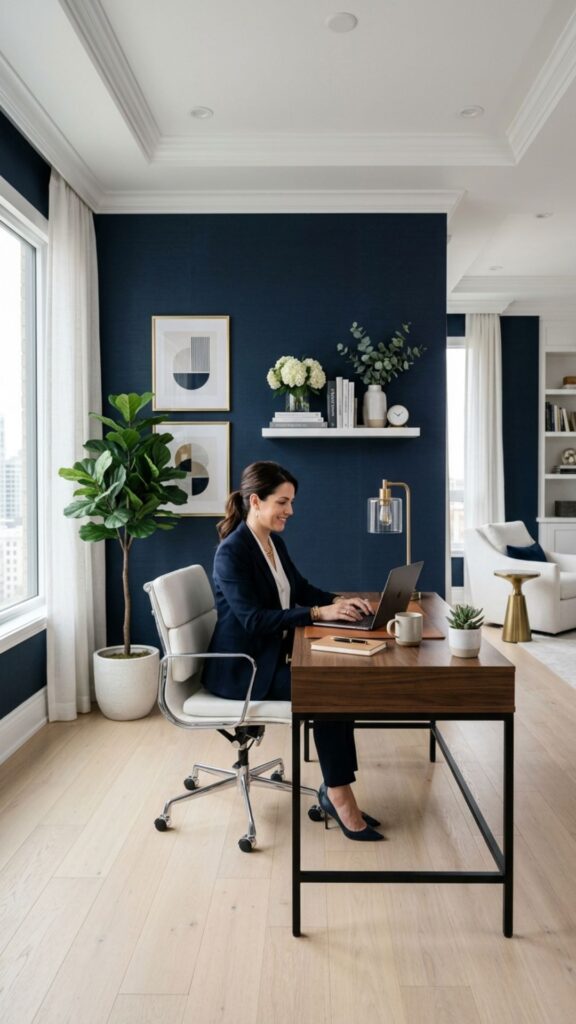
Navy gives a home office depth and character. It works particularly well behind a desk, built-in bookcase, or video-call background because it creates a strong visual anchor.
Dark colors absorb more light, so balance navy with pale flooring, white trim, or lighter furniture. If the entire room feels too dark, use navy on one wall and keep the remaining surfaces soft white or light grey.
5. Dusty Blue for a Peaceful Work Environment
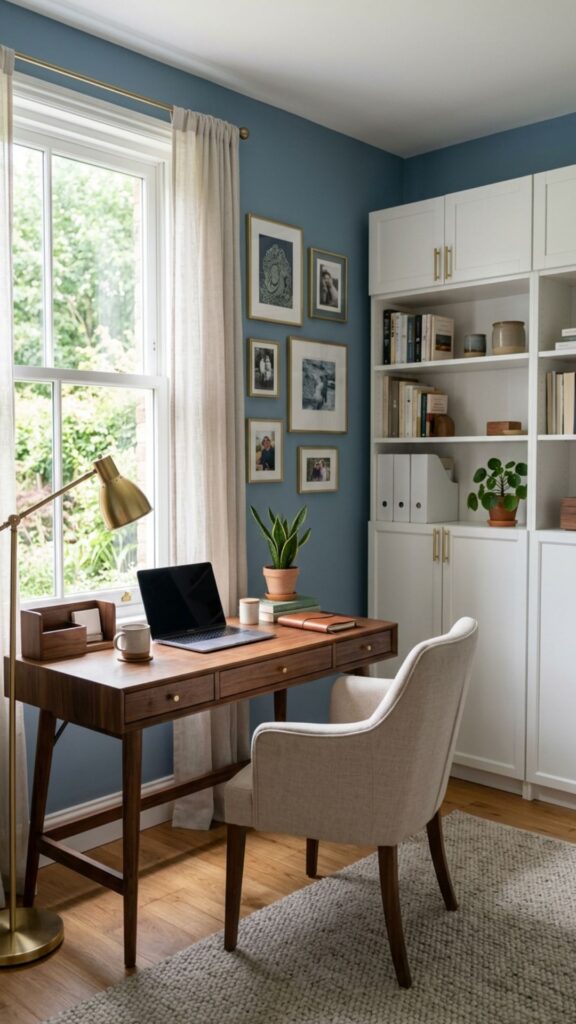
Dusty blue sits between soft blue and muted grey, making it easier to live with than brighter shades. It can create a calm atmosphere without making the space feel too formal.
For practical home office ideas colors, combine dusty blue with walnut furniture, brass details, or white storage. This palette works beautifully in offices that receive plenty of daylight because the color subtly changes throughout the day.
6. Light Grey for a Clean Modern Office
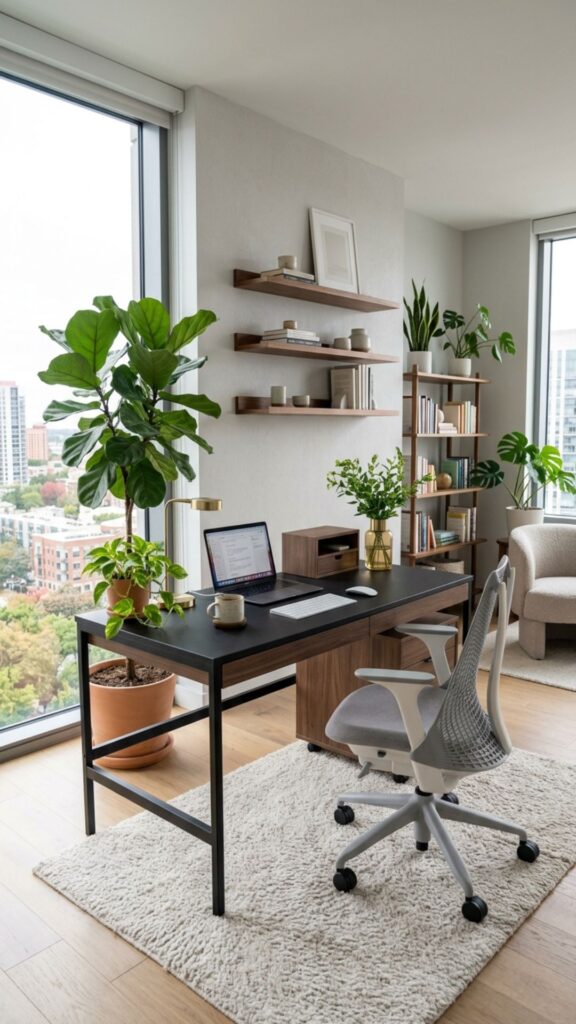
Light grey provides a simple backdrop for modern office furniture and technology. It can help computer monitors, shelves, and darker desks look more intentional rather than visually cluttered.
Choose a grey with warm undertones if your office receives limited sunlight. Very cool greys can sometimes appear dull in darker rooms. Warm wood, soft fabrics, and greenery help make this palette more welcoming.
7. Charcoal Grey for a Sophisticated Workspace
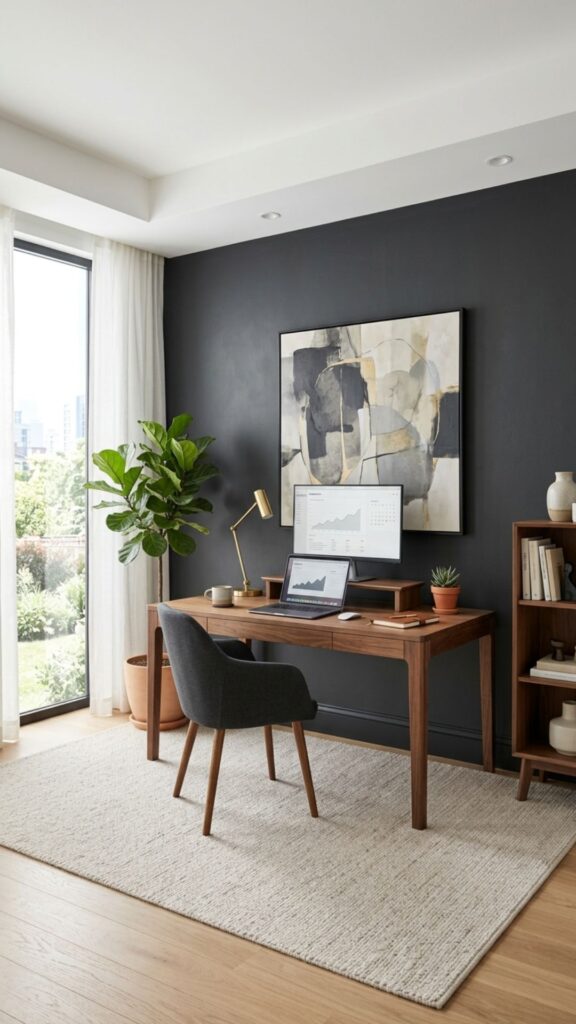
Charcoal creates drama without requiring a bright statement color. It works well in larger offices, masculine interiors, and rooms where you want a sleek, focused atmosphere.
Instead of painting everything charcoal, consider using it behind shelving or on the main desk wall. Lighter ceilings, pale rugs, and natural wood prevent the darker shade from making the workspace feel enclosed.
8. Forest Green for a Rich and Grounded Office
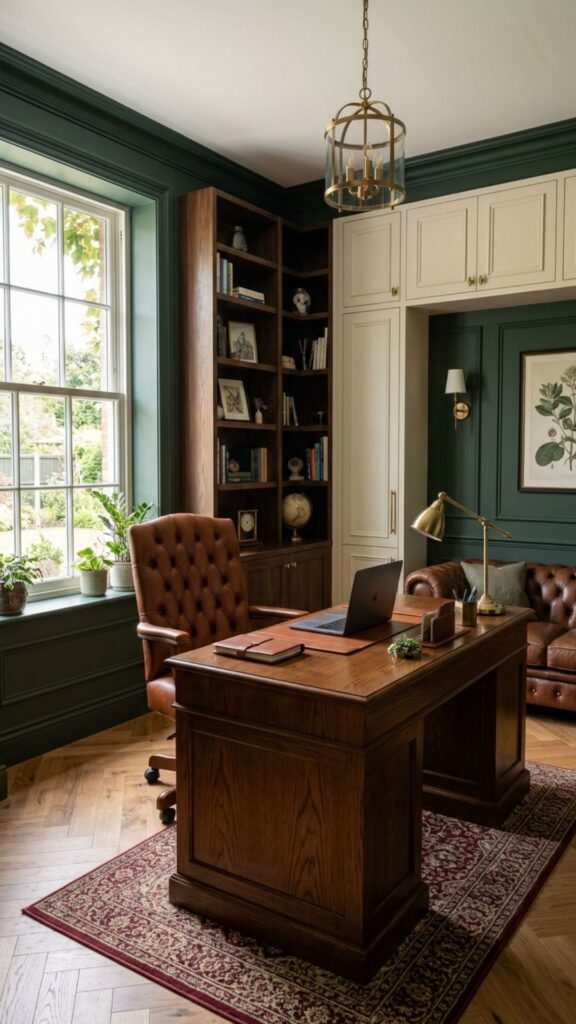
Forest green is an excellent choice when you want something bolder than sage but softer than black. The deep tone pairs naturally with wood furniture, leather chairs, and warm metallic finishes.
This is one of the stronger home office ideas colors for traditional studies or contemporary offices with plenty of natural light. Cream walls or cabinetry can provide balance if using forest green throughout the entire room feels too intense.
9. Terracotta for a Warm Creative Workspace
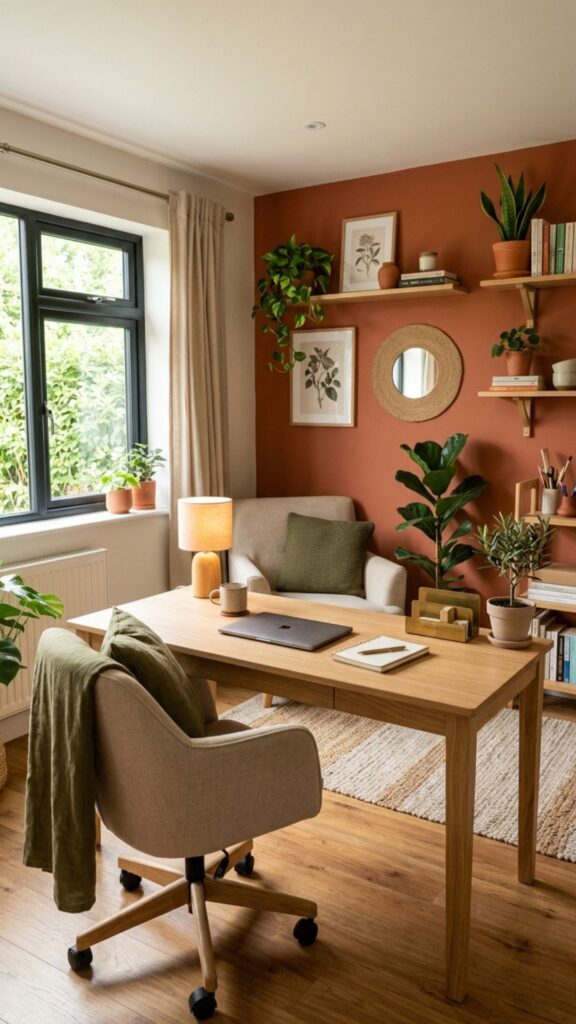
Terracotta introduces warmth through earthy orange and clay undertones. It can make a home office feel energetic while still maintaining the grounded character of natural colors.
Use terracotta with beige, cream, light wood, or muted olive accents. You can also introduce the shade through one painted wall, curtains, storage boxes, or artwork rather than committing to a fully terracotta room.
10. Soft Pink for an Elegant Home Office
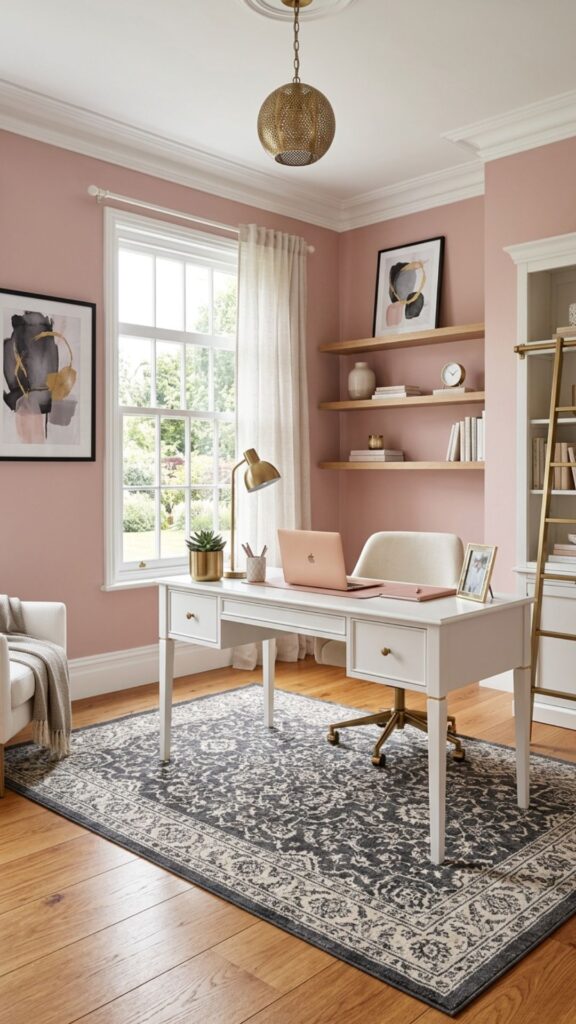
Soft pink can create a sophisticated workspace when you choose muted, dusty, or slightly beige-based shades instead of bright pink. These softer versions add warmth without overwhelming the room.
Pair blush walls with white furniture, brass accessories, natural wood, or charcoal details. This combination keeps the office balanced and works particularly well for stylish bedroom offices or dedicated creative spaces.
11. Greige for a Balanced Neutral Palette
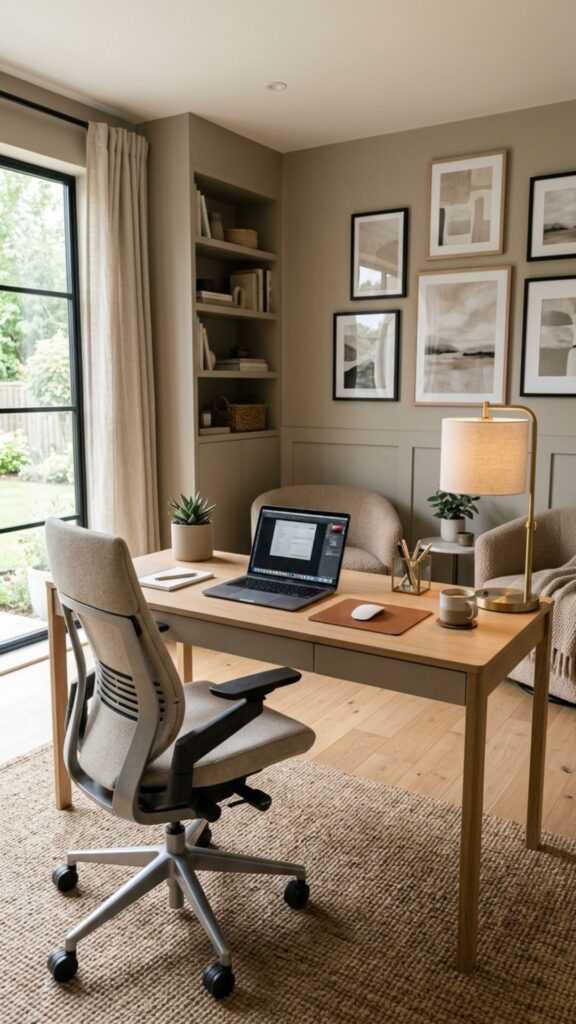
Greige combines the softness of beige with the modern appearance of grey. It is especially useful when your furniture includes both cool and warm finishes because it can connect the different tones visually.
For homeowners unsure about stronger home office ideas colors, greige offers plenty of flexibility. You can easily update the room later by changing artwork, cushions, lighting, or desk accessories rather than repainting the walls.
12. Olive Green for a Warm Earthy Office
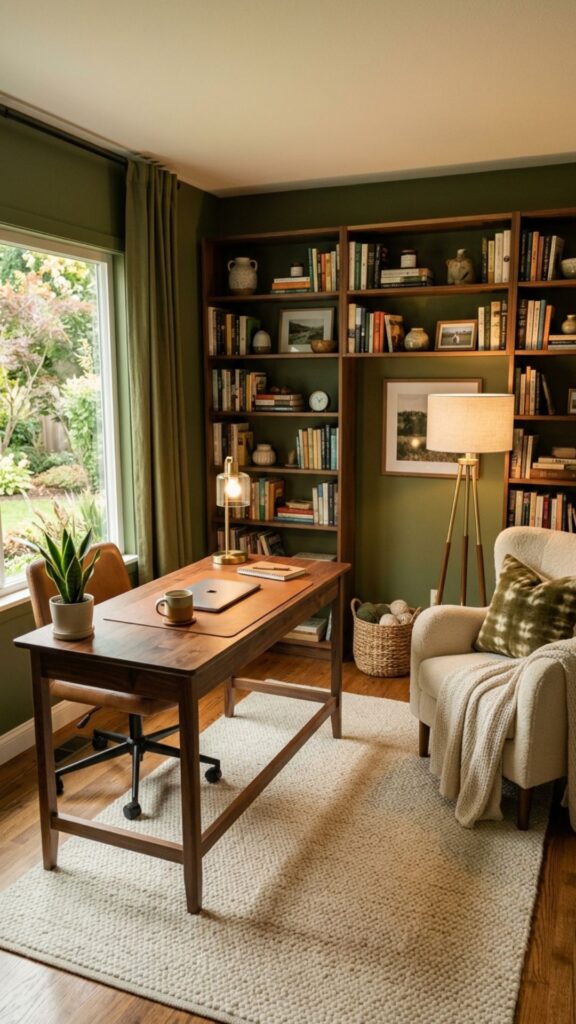
Olive green has more warmth than many traditional green shades. It feels relaxed, established, and slightly vintage, making it a good match for wooden desks and open bookshelves.
Try combining olive with cream, camel, black, or walnut. Warm lighting is particularly important with this palette because it highlights the earthy undertones and keeps the room feeling comfortable during evening work sessions.
13. Pale Yellow for a Cheerful Workspace
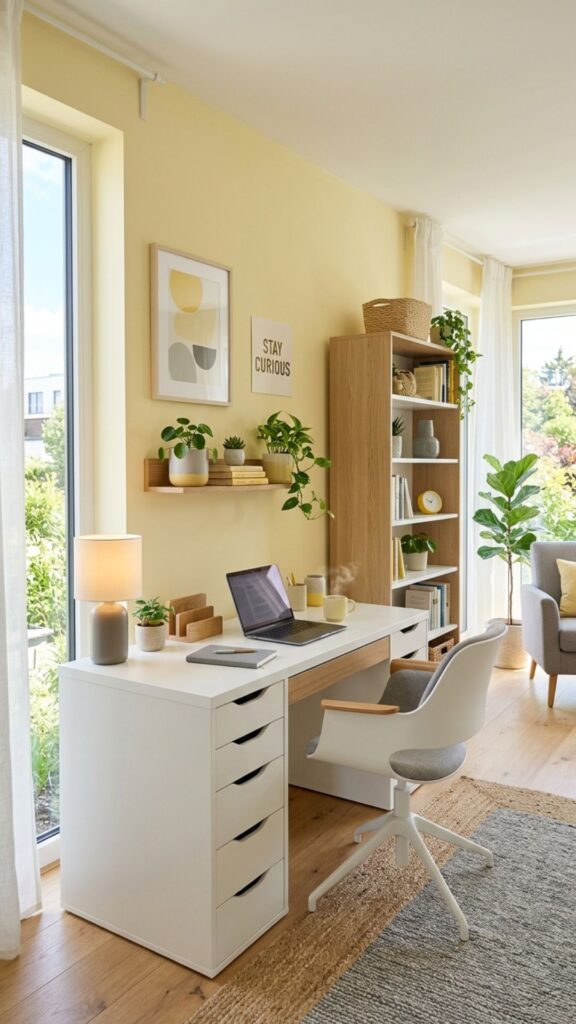
A soft yellow can brighten an office that feels dark or uninspiring. The key is choosing a gentle buttery or muted shade rather than a strong primary yellow that may become distracting.
Use yellow alongside white, pale wood, and subtle grey accents. It is one of the more cheerful home office ideas colors for rooms used for creative work, writing, studying, or other activities where you want an uplifting atmosphere.
14. Muted Teal for a Creative Statement
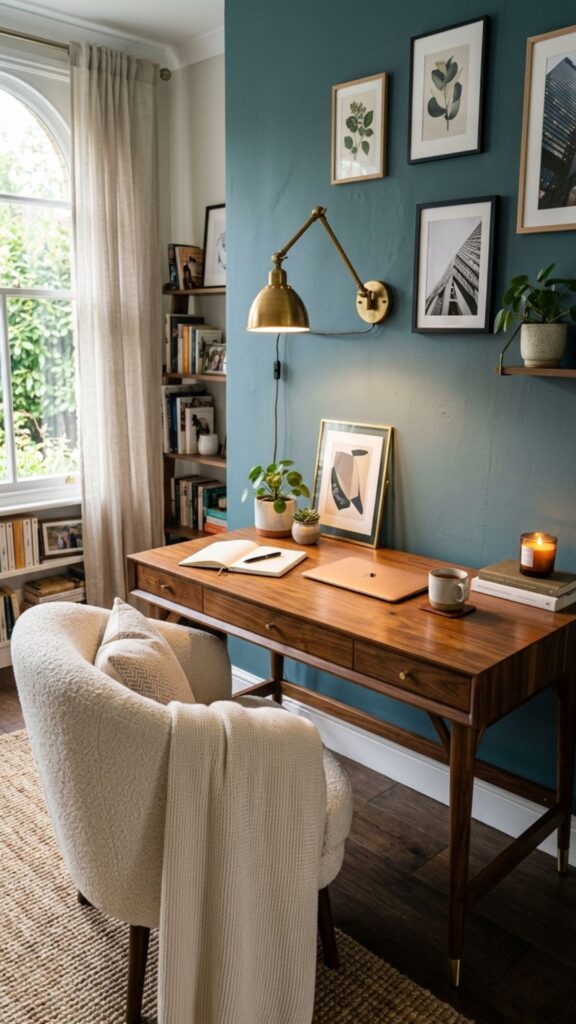
Muted teal combines blue and green, giving a workspace more personality than standard neutral colors. It feels distinctive without becoming overly bright when you choose a slightly greyed-down version.
A teal accent wall can sit beautifully behind a wooden or white desk. Brass lighting, cream fabrics, and darker storage furniture can complete the look while keeping the workspace sophisticated.
15. Chocolate Brown for a Cozy Office
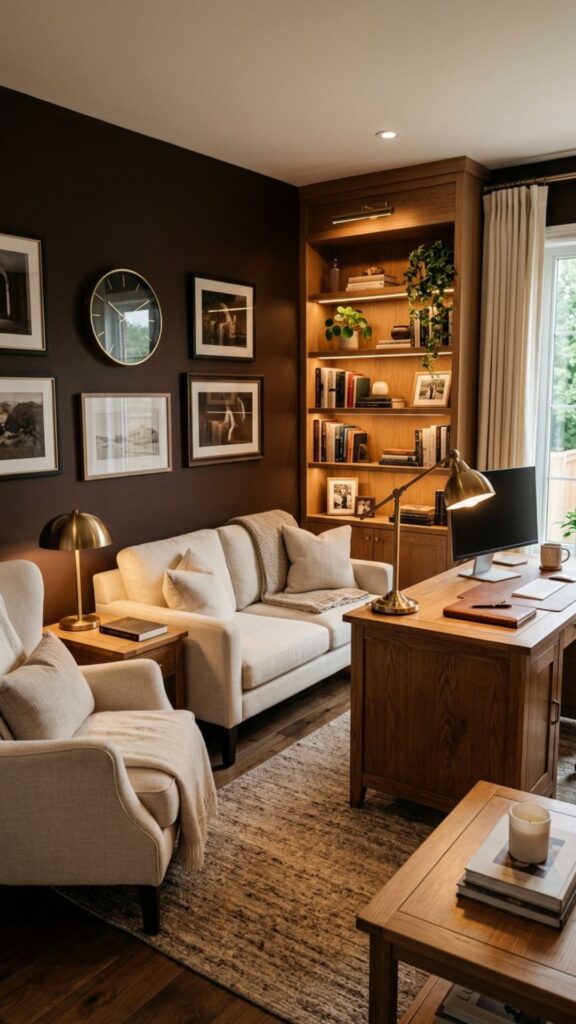
Brown is returning to interiors because of its natural warmth and ability to create cozy spaces. Rich chocolate walls can make a home office feel more like a private study than a standard workstation.
Because brown is visually heavy, consider using it in rooms with good daylight. Pair it with cream, camel, oak, or brushed metal details. Strategic lighting will also help prevent the space from feeling too dark.
16. Black and White for a Sharp Modern Look
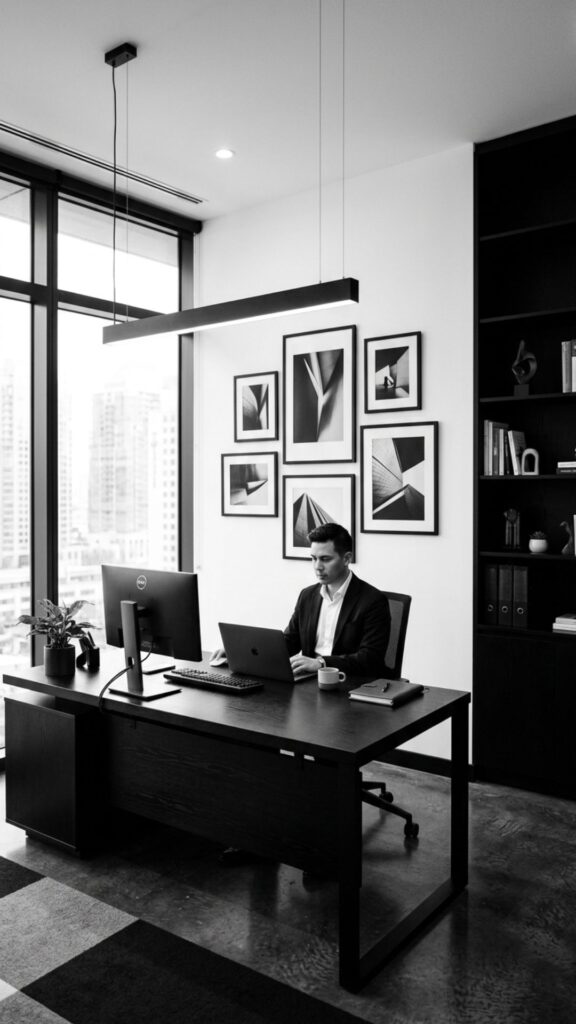
Black and white remains one of the easiest combinations to adapt across different decorating styles. White keeps the room bright, while black provides definition around furniture, frames, shelves, and lighting.
Instead of creating an equal split, make one color dominant. White walls with a black desk and shelving generally feel lighter, while a black feature wall provides a stronger, more dramatic video-call background.
17. Cream and Natural Wood for a Soft Organic Office
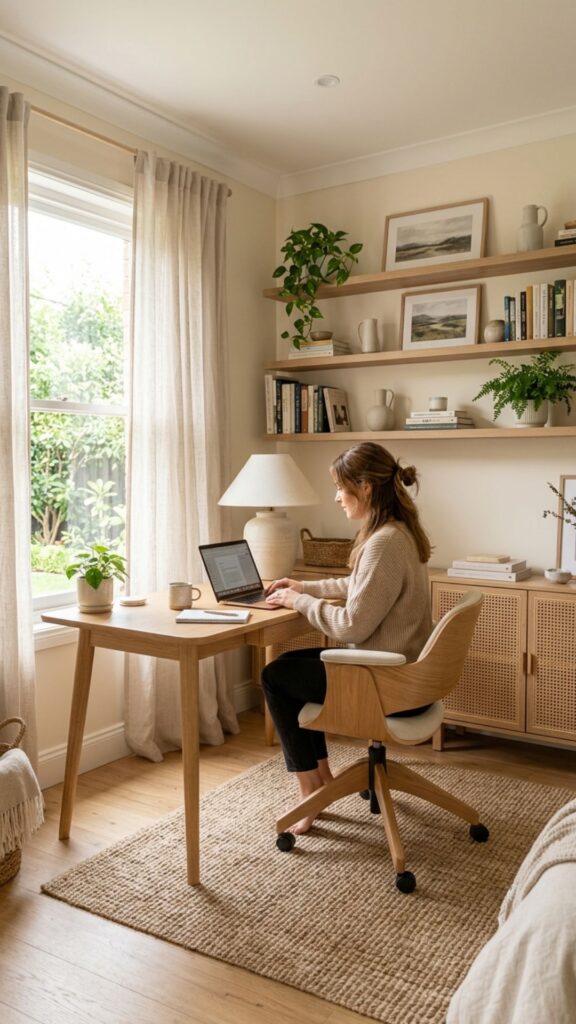
Cream walls paired with natural wood furniture create an understated workspace that feels comfortable for long working hours. The combination is simple but gains visual interest through texture.
Use cane storage, linen curtains, timber shelving, and a woven rug to build depth. For people who prefer subtle home office ideas colors, this palette provides warmth without relying on obvious statement shades.
18. Deep Burgundy for a Classic Study Feel
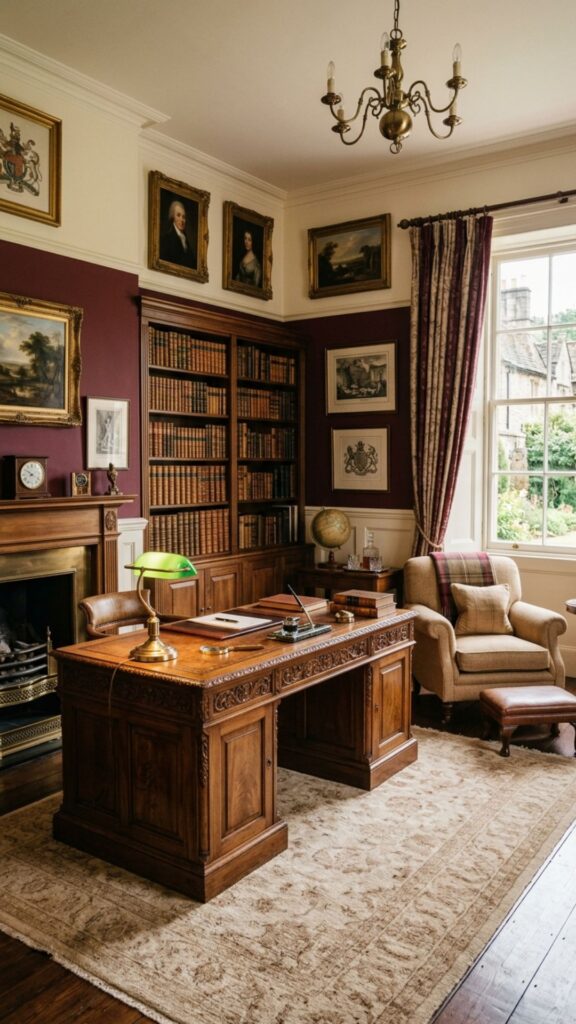
Burgundy creates a rich, traditional appearance that suits home libraries, executive-style offices, and spaces with classic furniture. It can make even a simple desk area feel more established.
Balance burgundy with warm white, beige, walnut, or antique brass. In smaller offices, use the shade on a feature wall or built-in cabinetry rather than every surface to maintain a comfortable sense of space.
19. Lavender Grey for a Soft Contemporary Office
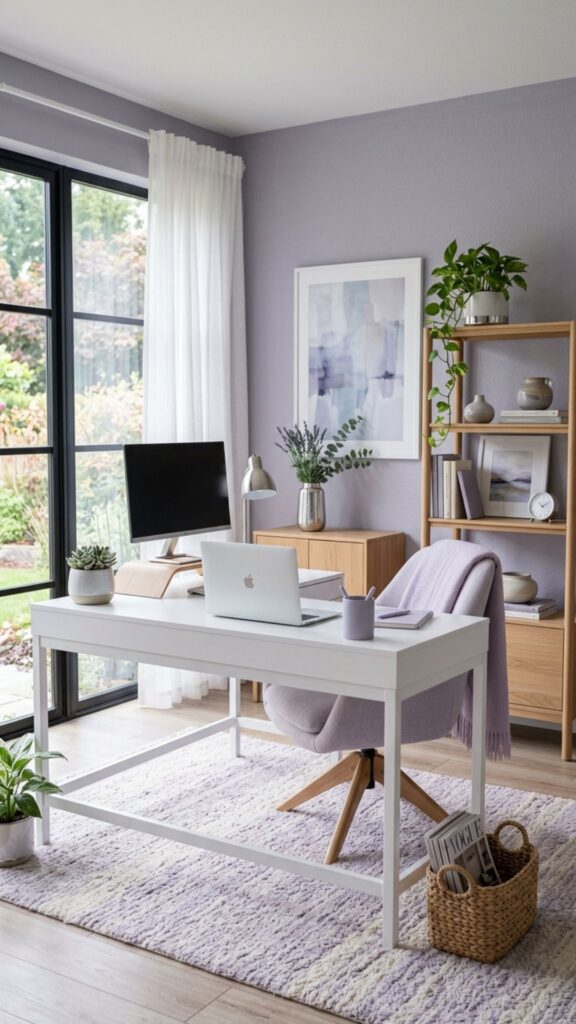
Lavender grey adds just enough color to distinguish itself from standard neutral walls. Depending on the lighting, it can appear slightly purple in the morning and more grey later in the day.
This subtle quality works well with white desks, light oak, silver accents, and soft textiles. It can be an excellent choice for people who want home office color without committing to a bold or saturated palette.
20. Two-Tone Walls for More Visual Interest
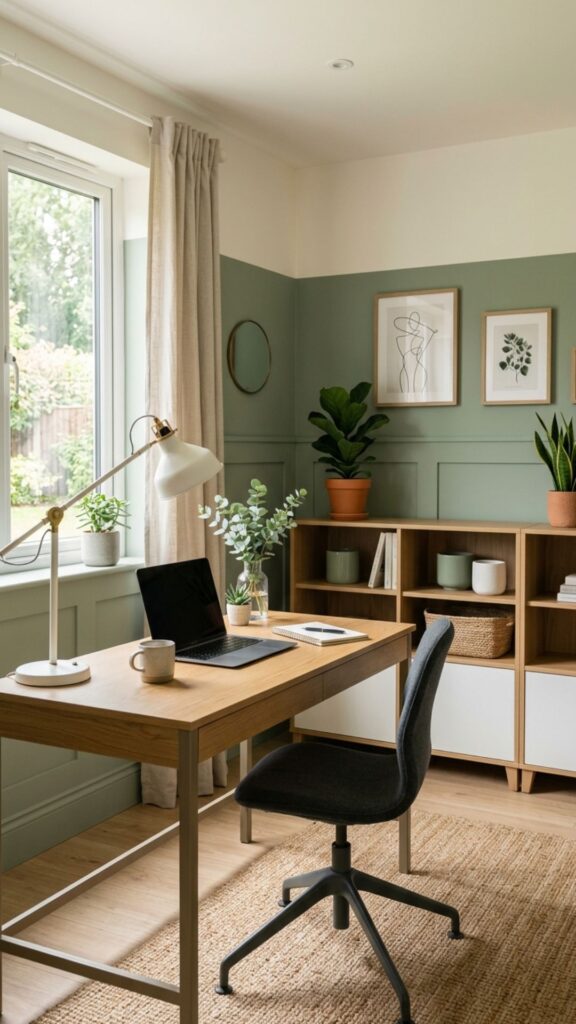
You do not have to choose a single shade when considering home office ideas colors. Two-tone walls can add character while helping define separate areas for working, storage, reading, or creative activities.
Try beige with white, sage with cream, navy with pale grey, or terracotta with warm white. Keep the stronger shade on the lower portion or feature section and use the lighter color elsewhere to maintain visual balance.
How to Choose the Best Color for Your Home Office
Start by observing your room at different times of day. North-facing or darker offices often benefit from warm neutrals and earthy shades, while rooms receiving strong daylight can handle deeper blues, greens, greys, and browns more easily.
Also think about what will remain in the room. Flooring, desks, cabinets, curtains, and technology all contribute to the final palette. The best home office ideas colors connect these existing elements instead of competing with them. Testing paint samples on several walls before making your final choice can prevent expensive mistakes.
Conclusion: Create a Workspace That Feels Right for You
There is no single perfect home office color. A productive workspace should reflect the room, your working habits, and the atmosphere you enjoy spending time in. Warm neutrals can create comfort, greens can introduce a natural feeling, while deeper blues and charcoal shades provide a more focused, professional appearance.
Use these home office ideas colors as a starting point rather than strict decorating rules. Choose two or three shades that work together, test them in your actual lighting, and build the room gradually with furniture and accessories. Start with the wall or area you notice most while working, then create the rest of your color scheme around it.
What is the best color for a home office?
There is no universal best color, but soft greens, warm whites, muted blues, beige, and greige are popular because they create comfortable backgrounds for long working hours. The right choice depends on your lighting, room size, furniture, and personal preference.
What colors make a small home office look bigger?
Light warm white, cream, pale beige, soft grey, and muted pastel shades can help a small office feel more open because they reflect more available light. Using similar colors across walls, furniture, and curtains can also reduce visual breaks.
Should a home office be light or dark?
Either can work. Light offices generally feel airy and flexible, while darker rooms can feel cozy and focused. If you choose dark home office ideas colors, make sure the space has sufficient natural or artificial lighting and use lighter furniture or accessories for contrast.
What color is best for a professional video-call background?
Muted navy, sage green, soft grey, greige, or warm white often create clean backgrounds without becoming distracting. A simple shelf, plant, or framed artwork can add depth while maintaining a professional appearance.
How many colors should a home office have?
Two or three main colors are usually enough. Choose one dominant color for the walls, a secondary shade for furniture or larger accessories, and a smaller accent color for artwork, décor, or textiles. This keeps the workspace visually connected without making it feel overly coordinated.