Your bedroom should feel like a deep breath at the end of a long day. Yet for many of us, it ends up as a catch-all for laundry, gadgets, and stress. The way you arrange and care for this space affects how well you rest, recharge, and even how you feel when you wake up.

That’s where bedroom feng shui comes in. This ancient practice is really about creating harmony, flow, and calm in the spaces you live in. You don’t need to follow strict rules or buy expensive things to feel the difference.

In this guide, you’ll learn 20 simple, practical bedroom feng shui ideas to tackle clutter, awkward layouts, harsh lighting, screen overload, and poor sleep. Let’s turn your bedroom into the peaceful retreat it was meant to be.
1. Position Your Bed in the Command Position
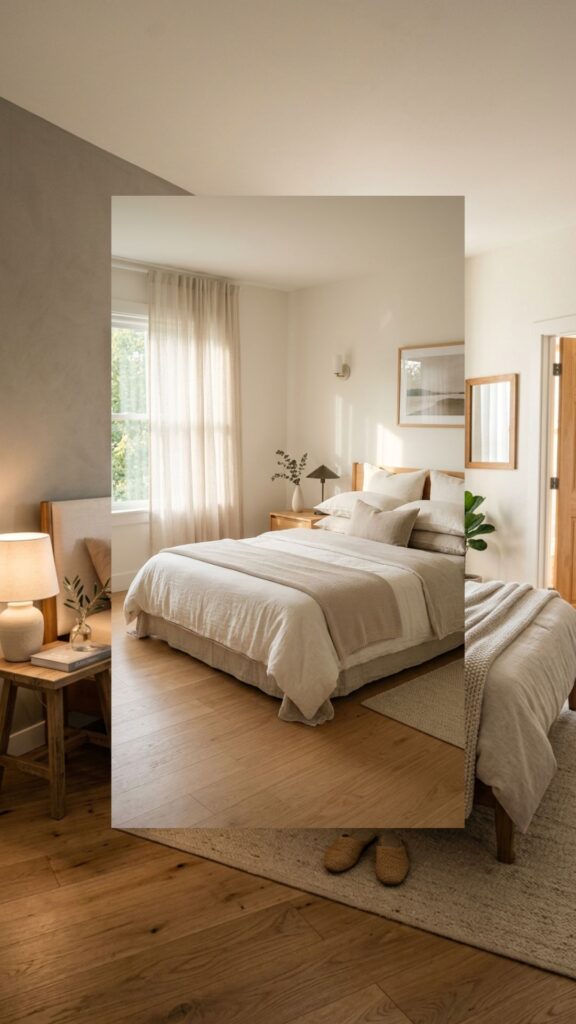
The command position is the heart of bedroom feng shui. Place your bed so you can see the door from where you sleep, without being directly in line with it. This gives you a sense of safety and control, which helps your mind relax.
Ideally, your bed sits diagonally across from the door with a solid wall behind the headboard. If you can’t move it, hang a mirror to reflect the doorway. This small shift often makes people feel more settled almost immediately.
2. Clear the Clutter Under Your Bed
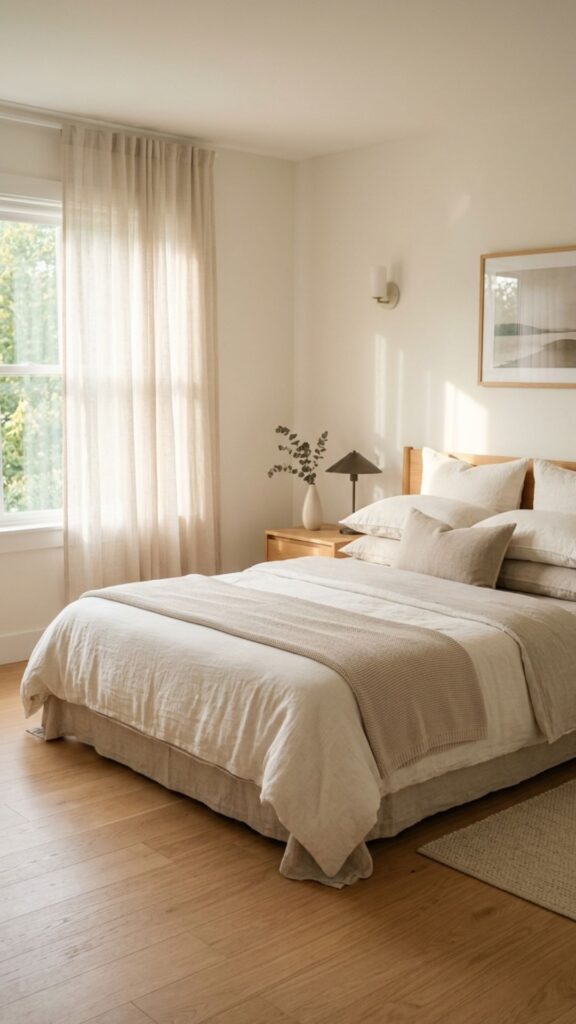
What lives under your bed matters more than you’d think. Feng shui teaches that stagnant clutter blocks the flow of calming energy, and the space directly beneath you affects your sleep most of all.
Keep this area as empty as possible. If you need the storage, limit it to soft, sleep-related items like spare bedding or pillows. Avoid stashing old paperwork, shoes, or anything tied to stress or unfinished tasks.
3. Choose a Solid, Supportive Headboard

A sturdy headboard symbolizes stability and support in your life. It also gives you a physical sense of being grounded, which makes the bed feel safer and more restful.
Pick a solid wood or upholstered headboard rather than one with bars, gaps, or sharp metal edges. Make sure it’s firmly attached to the bed so it doesn’t wobble. A strong headboard quite literally has your back.
4. Soften Harsh Lighting

Bright, cold lighting keeps your brain alert when it should be winding down. Good bedroom feng shui relies on warm, layered light that you can adjust throughout the evening.
Swap harsh overhead bulbs for soft, warm-toned ones, and add a dimmer if you can. Bedside lamps and a few candles create gentle pools of light that signal your body it’s time to rest.
5. Pick Calming, Skin-Tone Colors

Color shapes mood more than almost anything else in a room. Feng shui favors warm, earthy, skin-inspired tones like soft beige, sandy tan, gentle peach, and muted brown to create a nurturing, restful feel.
If you love color, add it in small doses through pillows or art. Avoid bright reds and intense blues on large surfaces, as they tend to feel either too stimulating or too cold for deep relaxation.
6. Keep Technology Out of the Bedroom

Phones, TVs, and laptops fill your room with restless, busy energy and blue light that disrupts sleep. Reducing technology is one of the most powerful bedroom feng shui changes you can make.
Charge devices in another room if possible, or at least keep them off your nightstand. If you can’t remove the TV, cover it with a cloth or place it inside a cabinet at night to quiet its presence.
7. Balance Both Sides of the Bed
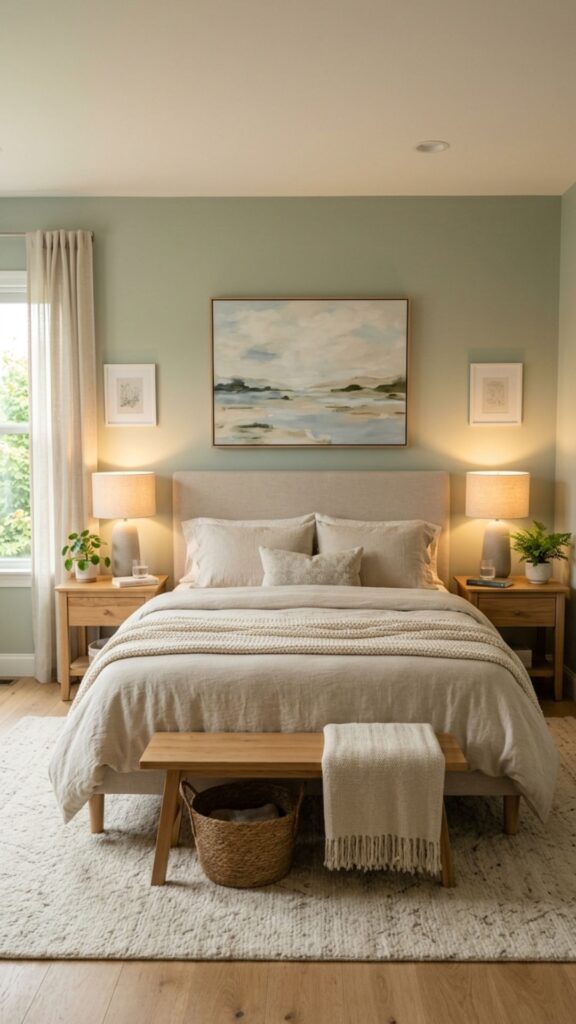
Matching nightstands and lamps on each side of the bed create balance and harmony, especially for couples. This symmetry represents equal space and respect within a relationship.
Even if you sleep alone, balanced sides keep the room feeling grounded rather than lopsided. Two small tables, two lamps, and a centered bed instantly make the space feel calmer and more intentional.
8. Let Fresh Air and Natural Light In

Stale air and dark corners trap heavy, stagnant energy. Opening windows regularly and welcoming daylight keeps the room feeling alive, fresh, and uplifting.
Open the curtains each morning to invite sunlight in. Crack a window for a few minutes daily, even in cooler months. Fresh air clears the space and supports better breathing and deeper sleep at night.
9. Remove or Reposition Mirrors
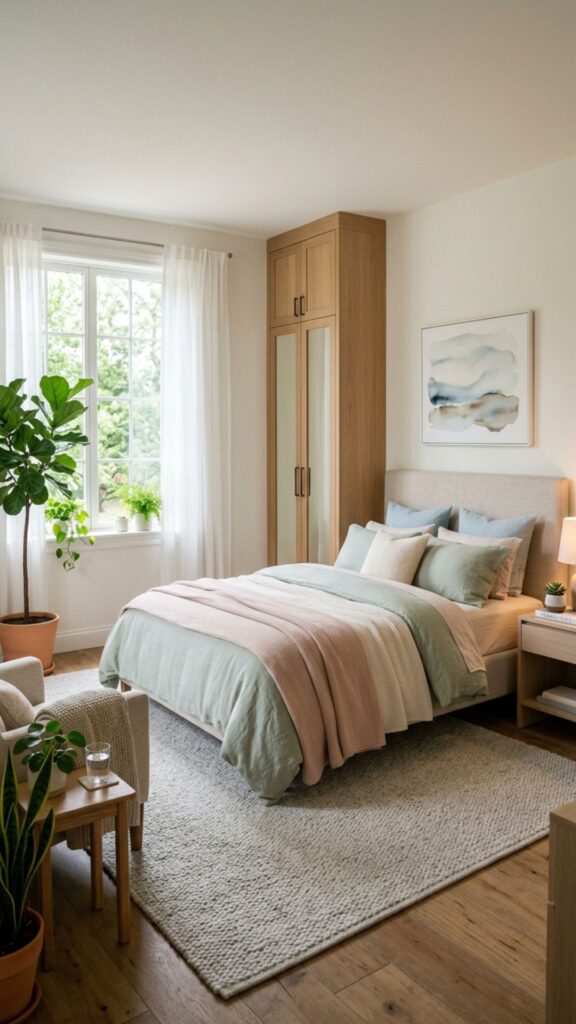
Mirrors are tricky in bedroom feng shui. They bounce energy around the room, which can feel too active when you’re trying to rest. A mirror facing the bed is thought to disturb sleep most.
If you have a mirror facing your bed, try moving it or covering it at night. Inside a wardrobe door is a great spot. You still get the function without the restless energy reflecting back at you.
10. Add Living Plants for Gentle Energy
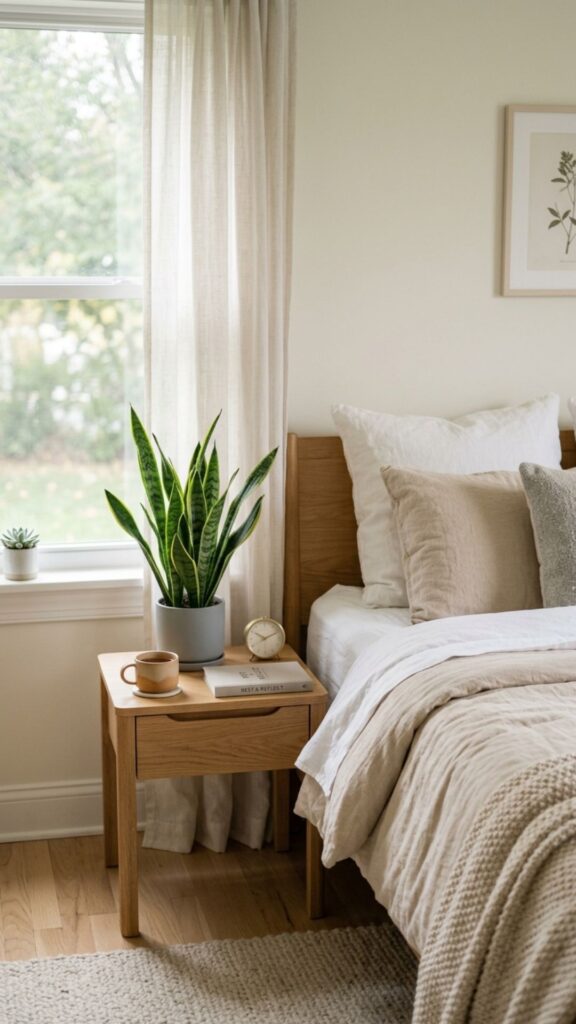
A few healthy plants bring fresh, growing energy and improve the air you breathe. They add a calming, natural touch that helps the room feel alive and balanced.
Choose easy, soft-leaved plants like a snake plant or peace lily, and keep the number small. Avoid spiky cacti near the bed, and remove any wilting plants quickly, since dying foliage drains the room’s energy.
11. Make Space Around the Bed

Cramming your bed against a wall or into a tight corner limits flow on both sides. Bedroom feng shui encourages open space around the bed so energy, and you, can move freely.
Leave room to walk on both sides whenever possible. In small bedrooms, even a narrow gap helps. This balance prevents one partner from feeling trapped and keeps the whole space feeling more relaxed.
12. Tidy and Close Your Closets
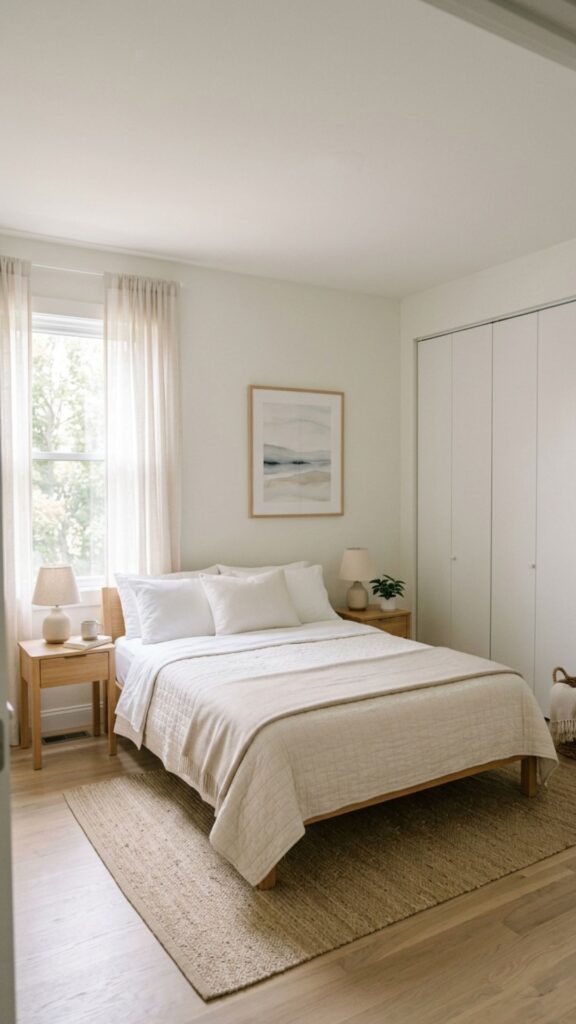
An overflowing, open closet sends a constant message of disorder to your mind. Keeping closets organized and doors closed at night helps your bedroom feel calm and contained.
You don’t need a perfect system. Simply closing doors hides visual clutter, while a quick declutter of clothes you no longer wear lightens the room’s energy and frees up valuable space.
13. Avoid Sharp Corners Pointing at the Bed

Sharp furniture edges aimed at the bed create what feng shui calls “poison arrows,” sending harsh energy toward you while you sleep. This can leave you feeling subtly tense or unsettled.
Reposition furniture so corners don’t point directly at the bed. If you can’t, soften the edge with a trailing plant or a draped fabric. Rounded furniture is always a gentler choice in the bedroom.
14. Use Soft, Layered Textiles

Texture adds warmth and comfort that hard surfaces can’t. Layering soft bedding, a cozy throw, and a plush rug makes the room feel nurturing and inviting, which supports rest.
Natural fabrics like cotton and linen breathe well and feel calming against the skin. A soft rug underfoot also grounds the room, especially over cold hardwood or tile floors.
15. Keep Work Out of the Sleep Space
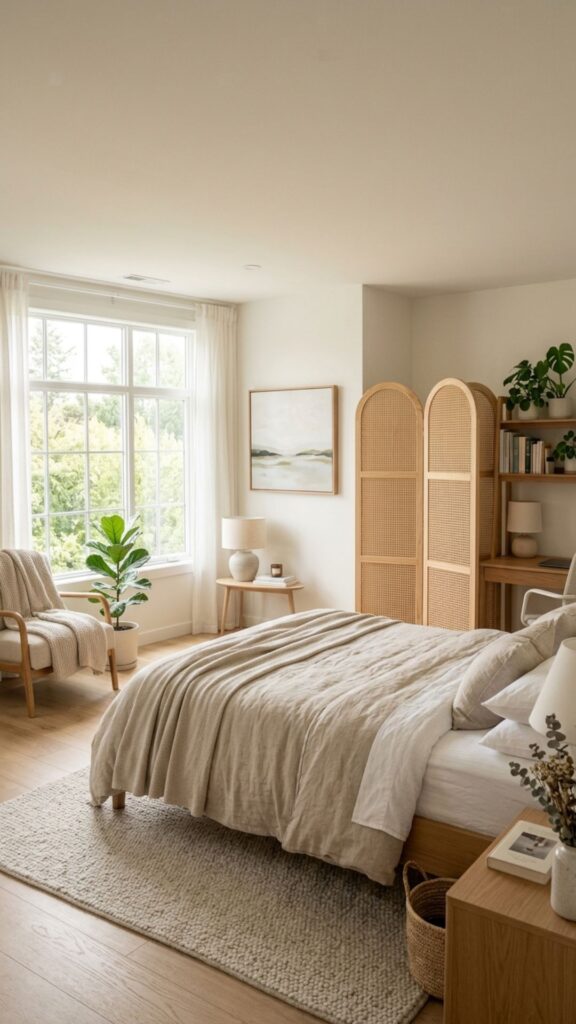
A desk piled with work brings deadlines and stress straight into your rest zone. For good bedroom feng shui, separate where you work from where you sleep whenever you can.
If your bedroom must double as an office, hide the work area at night. Tuck the desk behind a screen or close a laptop and cover it. The goal is to mentally clock out the moment you lie down.
16. Hang Art That Feels Peaceful

The images on your walls quietly shape your mood every day. Choose art that feels serene and uplifting, like soft landscapes, gentle abstracts, or anything that brings you genuine joy.
Avoid sad, lonely, or aggressive imagery in the bedroom. For couples, pairs of objects or two figures symbolize togetherness, while a single sad image can subtly reinforce isolation.
17. Mind What’s Above Your Bed
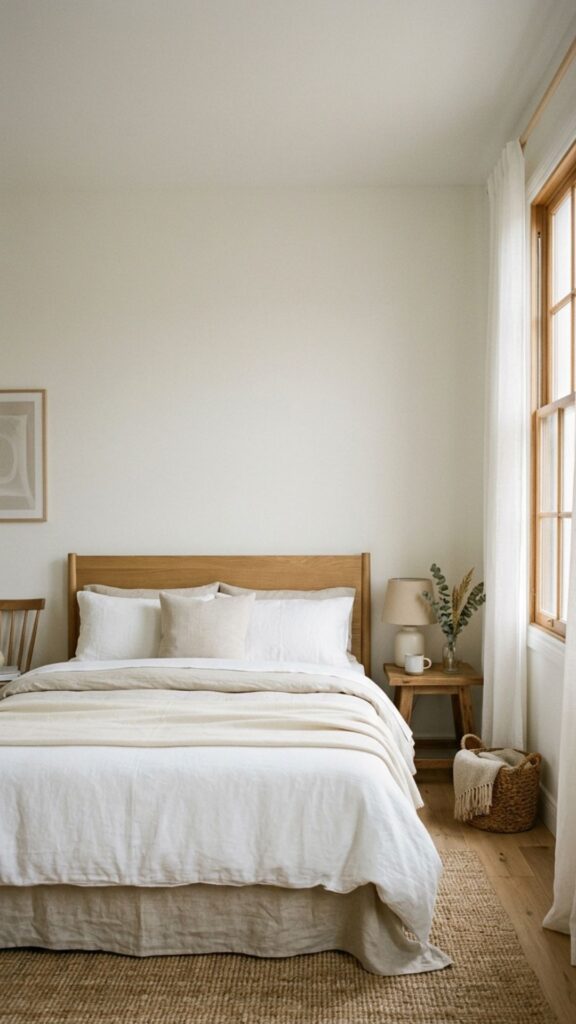
Heavy beams, shelves, or large objects hanging over the bed create a feeling of pressure, even if you don’t notice it consciously. This unease can interrupt truly restful sleep.
Keep the space above your head clear and light. If a beam runs over your bed, drape fabric to soften it or reposition the bed. An open, uncluttered ceiling helps your mind feel free and safe.
18. Bring in Calming Scents
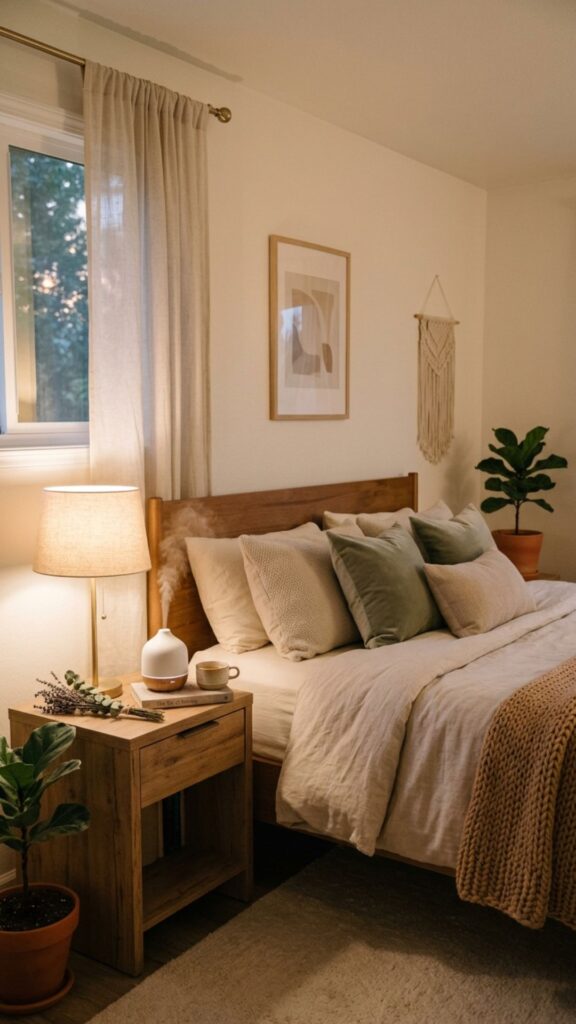
Scent has a direct line to your nervous system and can shift your mood in seconds. Gentle, natural aromas help signal your body that it’s time to relax and unwind.
Try lavender, chamomile, or sandalwood through an essential oil diffuser or a linen spray. Keep scents subtle rather than overpowering, and avoid anything sharp or energizing close to bedtime.
19. Maximize Calm in a Small Bedroom
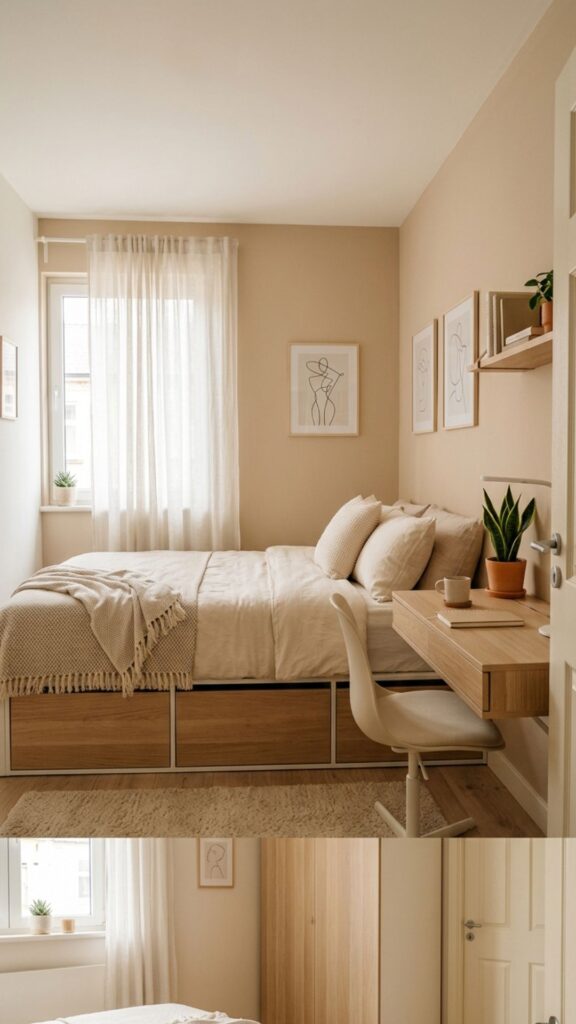
Small bedrooms can absolutely feel peaceful with a few smart choices. The trick is keeping things light, simple, and free of clutter so the limited space breathes.
Use light, warm wall colors and multi-use furniture to save room. Keep surfaces clear and limit decorative pieces. In tight spaces, less truly is more, and restraint creates an instantly calmer feeling.
20. Make the Bed Every Morning

This small daily habit sets the tone for your whole room. A made bed signals order and care, and it greets you with calm energy each night instead of chaos.
It takes just two minutes. Smooth the sheets, fluff the pillows, and straighten the throw. This tiny ritual reinforces that your bedroom is a respected, restful retreat rather than an afterthought.
Conclusion
Good bedroom feng shui isn’t about strict rules or expensive makeovers. It’s about creating a space that feels safe, balanced, and genuinely restful. From positioning your bed in the command spot to clearing clutter, softening light, and limiting technology, each small change adds up to deeper relaxation and better sleep.
Ready to create your own retreat? Pick just one idea from this list and try it tonight, whether that’s tidying under your bed or swapping in a warmer light bulb. Notice how the room feels afterward, then build from there. Save this guide for your next refresh, and share it with someone who could use a calmer bedroom too.
What is the best position for a bed in feng shui?
Place your bed in the command position, where you can see the bedroom door without being directly in line with it. A solid wall behind the headboard adds support and makes you feel safe and grounded for better sleep.
What should you avoid in a feng shui bedroom?
Avoid clutter under the bed, mirrors facing the bed, sharp corners pointing at you, work materials, and too much technology. Steer clear of harsh overhead lighting and overly stimulating colors on large surfaces.
What are the best colors for bedroom feng shui?
Warm, earthy, skin-inspired tones work best, including soft beige, sandy tan, gentle peach, and muted brown. These create a calming, nurturing feel. Add bolder colors only in small accents like pillows or art.
Can you do feng shui in a small bedroom?
Yes. Keep the space light, simple, and clutter-free. Use warm wall colors, multi-use furniture, and clear surfaces. Leaving even a little room around the bed helps energy flow and makes the room feel calmer.
Why are mirrors bad in a feng shui bedroom?
Mirrors bounce energy around the room, which can feel too active for rest, especially when facing the bed. If you have one, move it or cover it at night, or place it inside a closet door instead.