There’s something about a Mediterranean courtyard that makes you want to slow down. Maybe it’s the sound of trickling water, the shade of an olive tree, or the warm glow of terracotta at sunset. These spaces feel like a little slice of Spain, Italy, or Greece tucked right into your backyard.
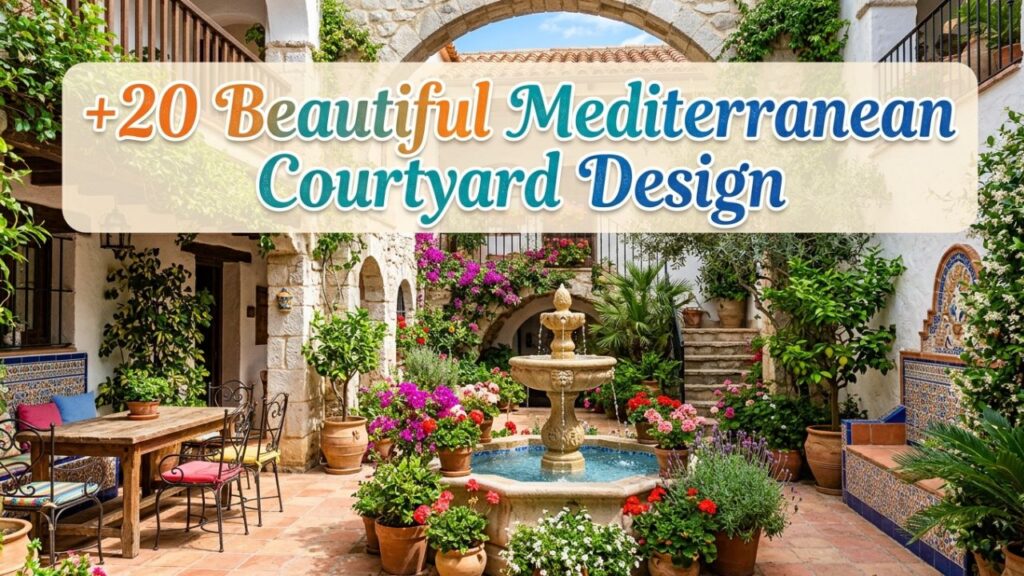
I’ve spent years designing outdoor spaces, and Mediterranean courtyards remain my favorite project. They work in almost any climate with the right plant choices, and they turn even a small patch of ground into a relaxing escape.
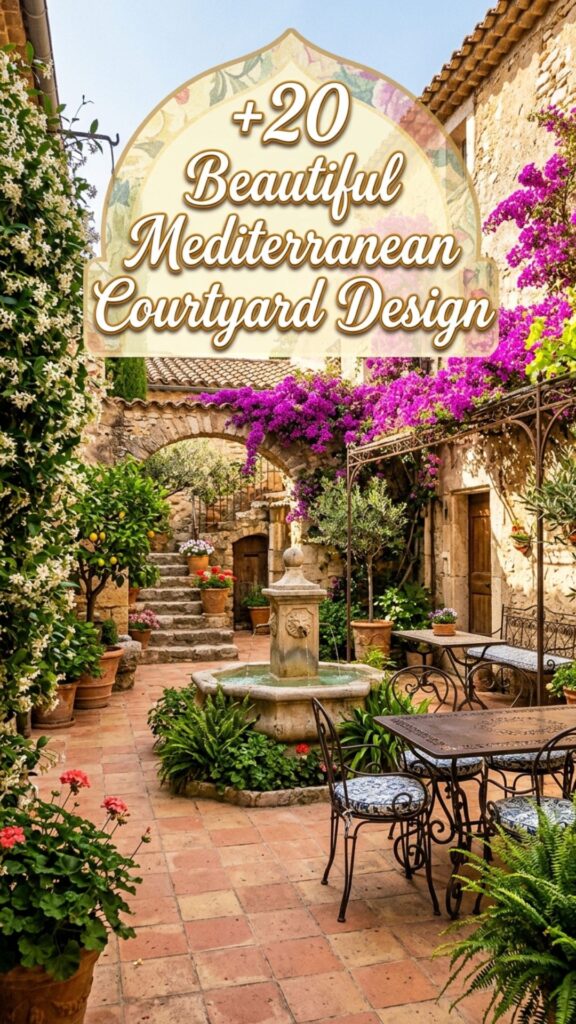
Below, you’ll find 20 practical Mediterranean courtyard ideas you can actually use, whether you’re starting from scratch or refreshing what you already have. Let’s dig in.
1. Start with Terracotta Tile Flooring
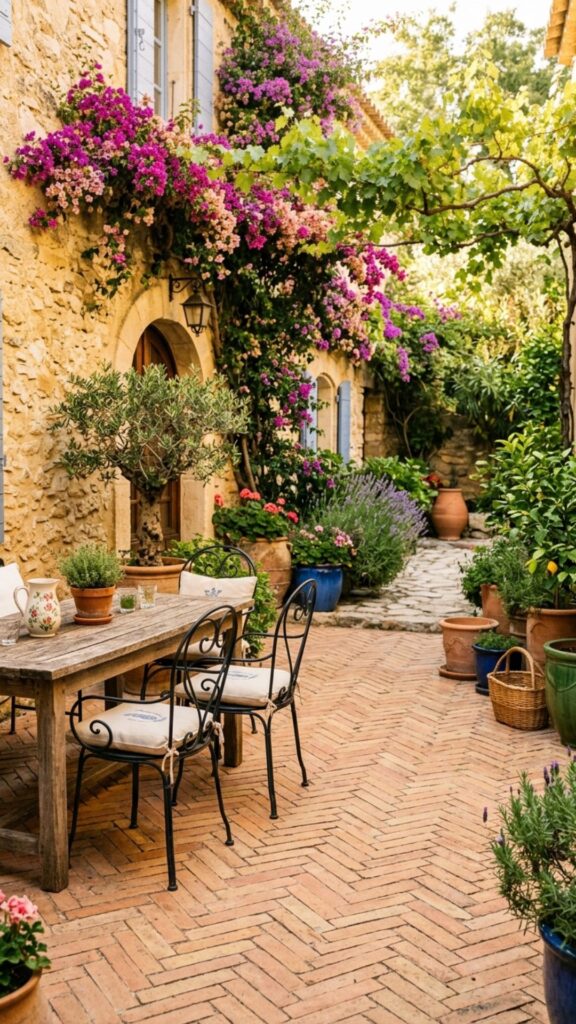
Terracotta tiles are the foundation of any authentic Mediterranean courtyard. Their warm, earthy reds and oranges soak up the sun and stay beautiful for decades. Real clay tiles develop a lovely patina over time, so they only look better as the years pass.
If you’re on a budget, porcelain tiles that mimic terracotta hold up well against frost and stains. Lay them in a classic offset pattern, or try a herringbone layout for a bit more visual interest. Seal them properly and they’ll shrug off spills from your morning coffee or evening glass of wine.
2. Add a Central Water Fountain
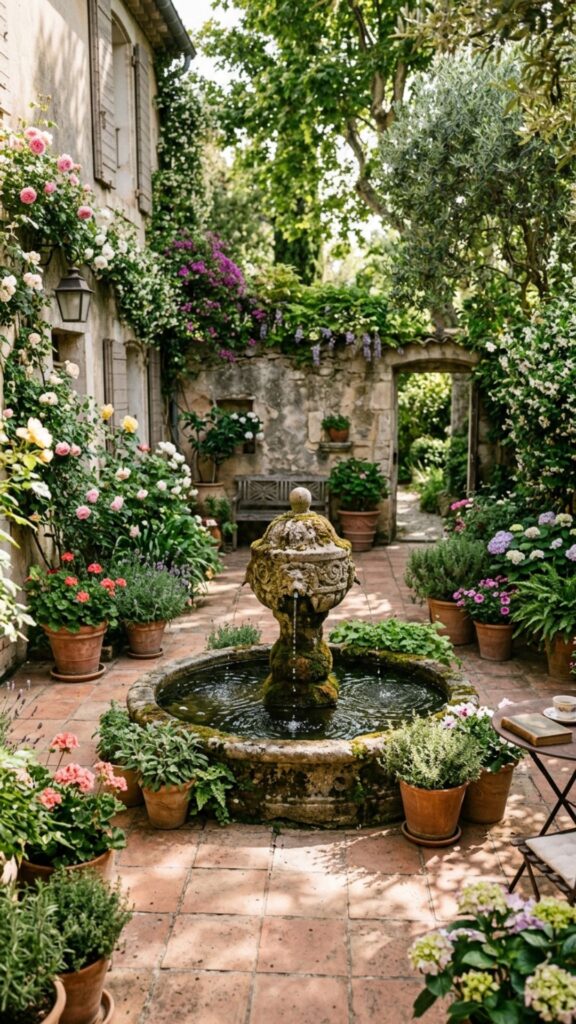
Water is the heart of Mediterranean design. A central fountain cools the air, masks street noise, and gives your courtyard a gentle soundtrack. Even a small tiered fountain can transform how a space feels the moment you step in.
Look for fountains with hand-painted tiles or aged stone finishes. If space is tight, a wall-mounted spout that pours into a shallow basin works beautifully. Just make sure you have access to a power outlet nearby for the pump, and clean it regularly to keep the water clear.
3. Install a Shady Pergola
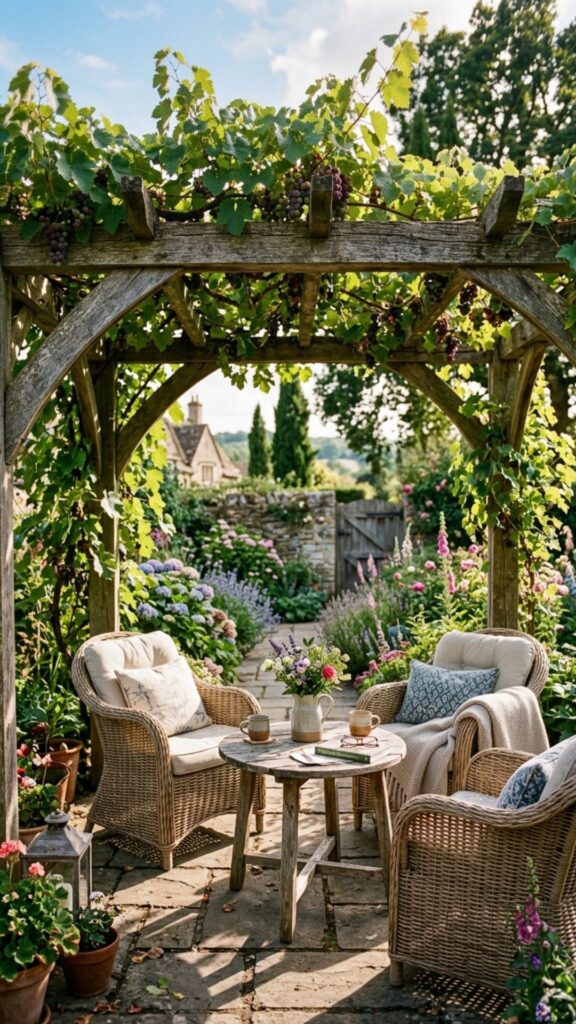
A pergola gives you structure, shade, and a frame for climbing plants all at once. Build it from weathered timber or wrought iron, then let grapevines or wisteria scramble across the top. By midsummer, you’ll have a living roof that filters the harsh sun.
Position your pergola over your main seating or dining area. String a few weatherproof lights along the beams, and you’ve got a spot that works just as well for a lazy lunch as a late dinner with friends. The dappled shade it creates is pure Mediterranean magic.
4. Grow an Olive Tree Centerpiece
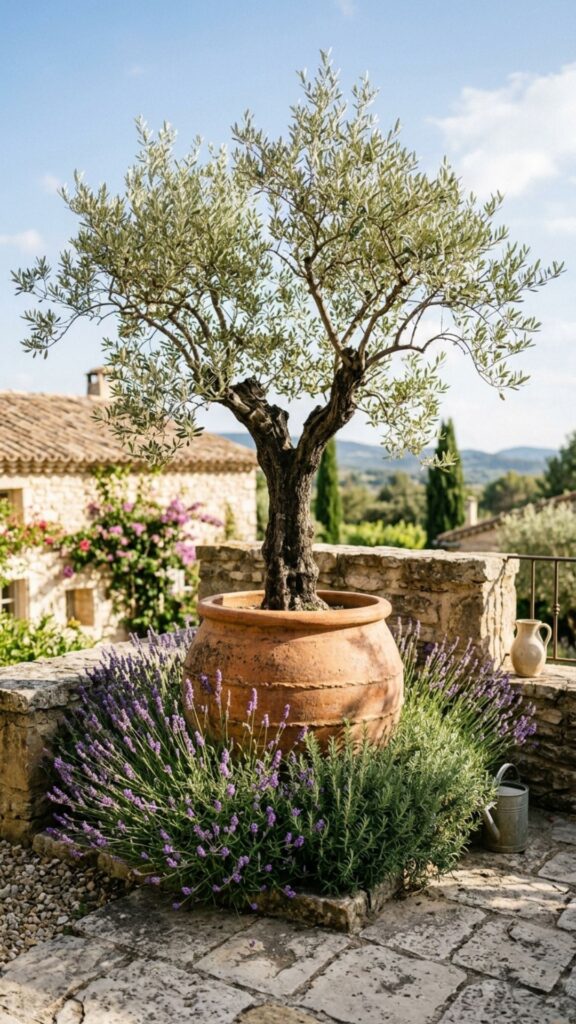
Nothing says Mediterranean quite like an olive tree. Their silvery-green leaves and gnarled trunks bring instant character, and mature specimens act as a natural focal point. Plant one in the ground or keep it potted if your winters get cold.
Olive trees are surprisingly tough once established. They handle drought well and need little fussing. Underplant with lavender or rosemary for a fragrant, low-water combination that thrives in the same sunny, well-drained conditions.
5. Use Whitewashed Walls
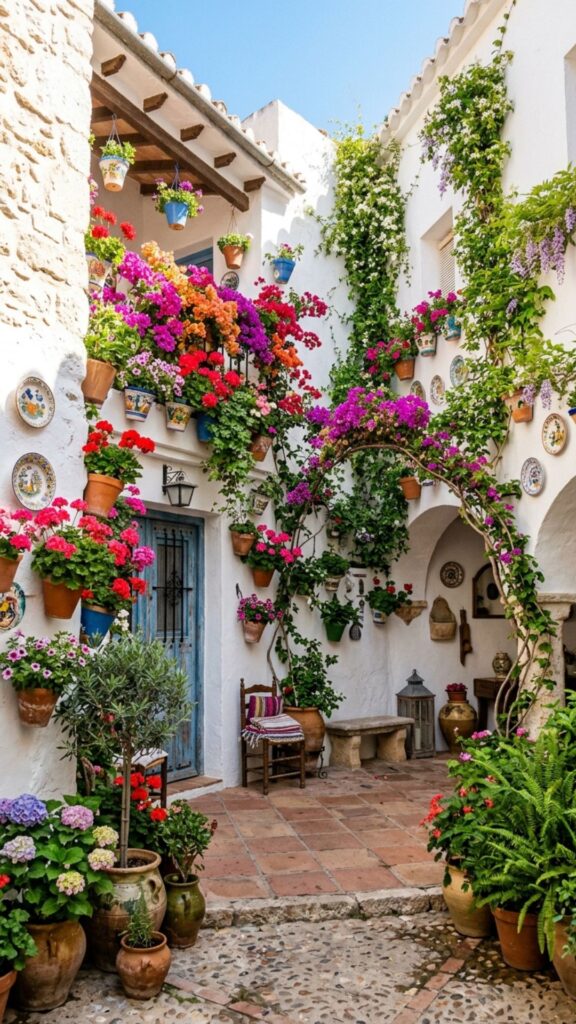
Bright white walls are a hallmark of Greek island courtyards. They reflect sunlight, keep the space cool, and make your plants and blue accents pop. A fresh coat of limewash gives that slightly textured, sun-bleached look you see across the Aegean.
If pure white feels too stark, soften it with a warm cream or pale sand tone. Whitewashed walls also make a fantastic backdrop for colorful ceramic pots, hanging plants, or a splash of bougainvillea. The contrast is what makes the whole scene sing.
6. Layer in Colorful Ceramic Pots
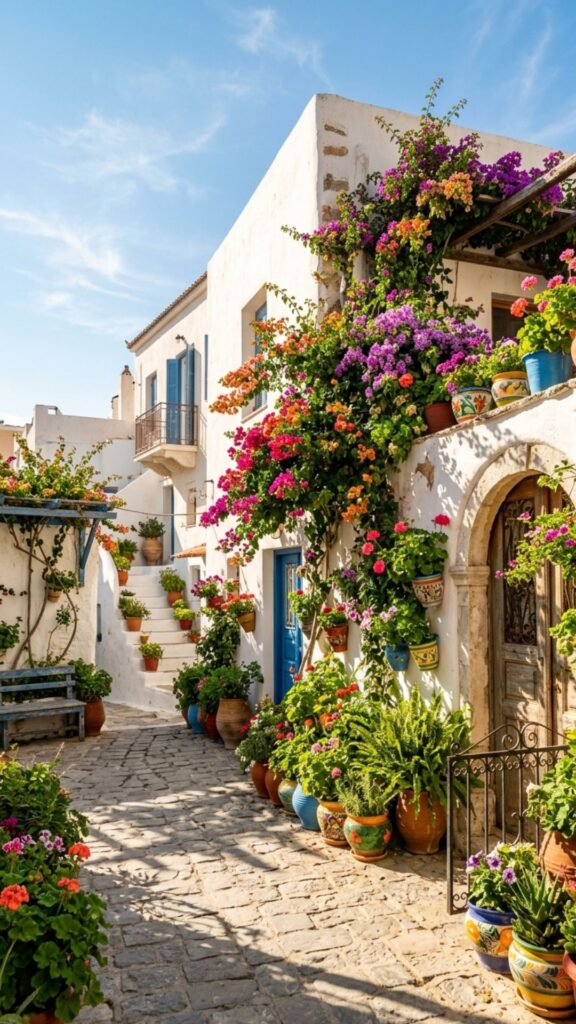
Hand-painted ceramic pots add color, pattern, and a handmade touch. Group them in odd numbers, mixing tall and short shapes for a relaxed, collected look. Blue and yellow glazes are especially at home in a Mediterranean setting.
Fill them with herbs, citrus trees, or trailing geraniums. Because pots dry out faster than garden beds, check them every day or two in summer. Raising them on small feet improves drainage and keeps the bases from staining your tiles.
7. Plant a Fragrant Herb Garden
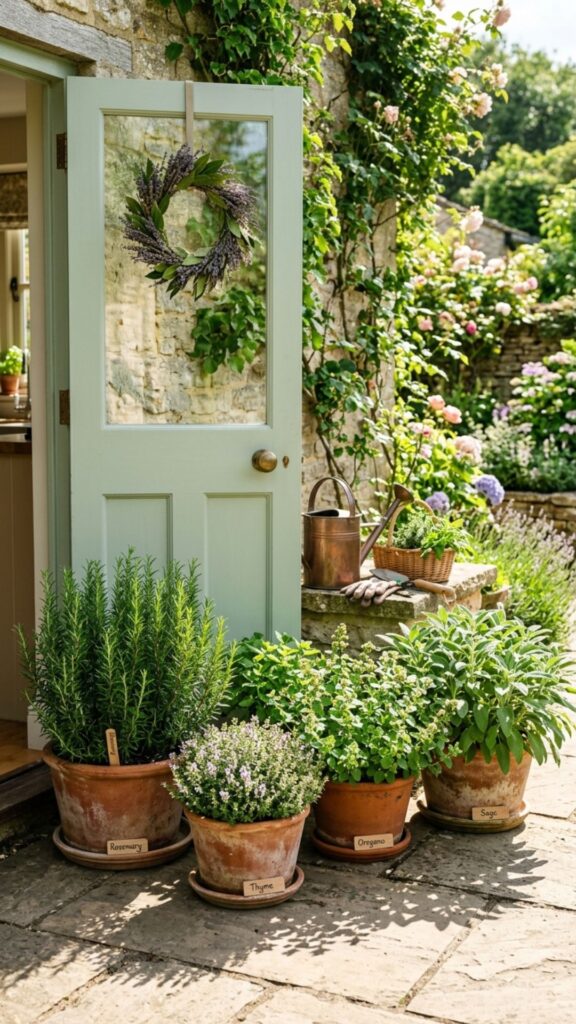
A dedicated herb corner brings both beauty and function. Rosemary, thyme, oregano, and sage all love the sun and reward you with scent every time you brush past. Snip a few sprigs while cooking and you’ll never buy dried herbs again.
Plant them in raised beds or terracotta troughs near your kitchen door for easy picking. These Mediterranean natives need little water once settled, making them one of the most rewarding low-effort additions to any courtyard.
8. Create a Cozy Dining Nook
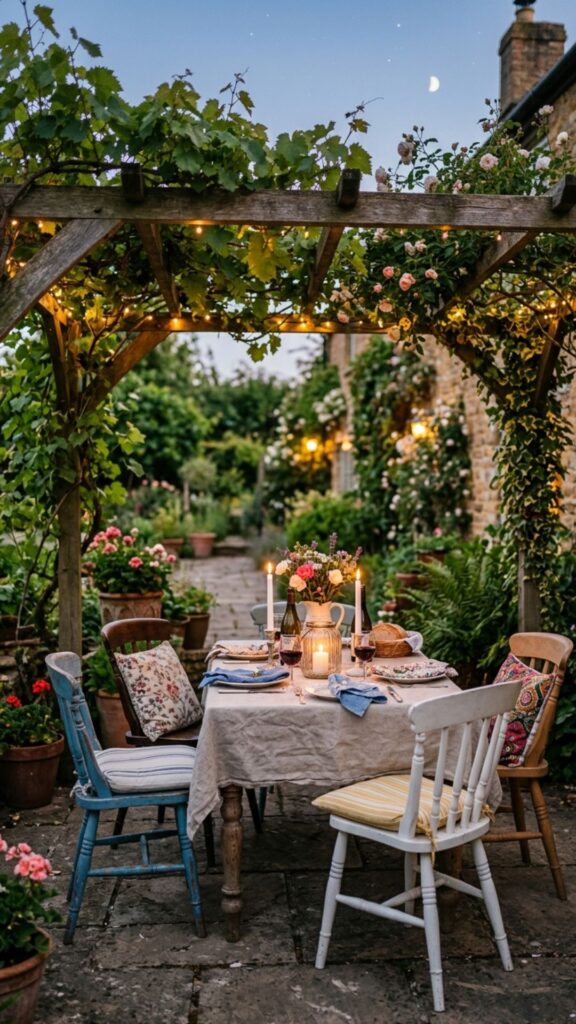
An outdoor dining area turns your courtyard into a true extra room. A sturdy wooden or wrought-iron table with mismatched chairs feels warm and lived-in. Add a linen tablecloth and some candles, and dinner outside becomes an event.
Tuck the table against a wall or under your pergola for shelter. Keep a few cushions and a throw nearby for cooler evenings. This is the kind of spot where meals stretch on for hours, exactly as they should.
9. Hang Bougainvillea and Climbing Vines
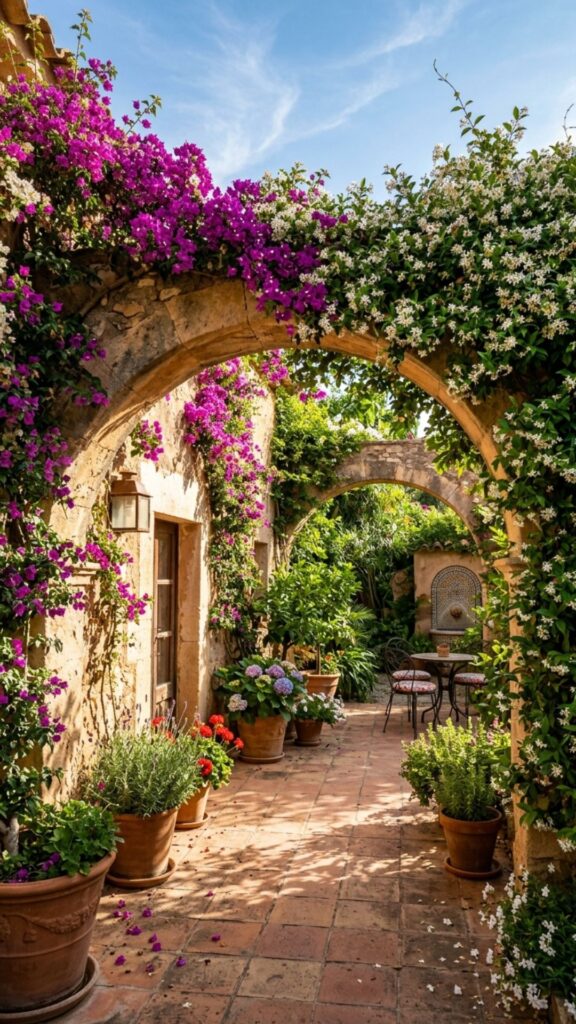
Bougainvillea drapes walls and arches in explosions of pink, purple, and orange. It’s the flower most people picture when they think of a Mediterranean courtyard, and for good reason. Give it sun and a bit of support, and it rewards you with months of color.
Train it along walls, over doorways, or up a trellis. It handles heat and drought like a champ, though it appreciates a good prune to keep it tidy. Pair it with jasmine for evening fragrance that lingers in the warm air.
10. Build a Tiled Bench Along the Wall
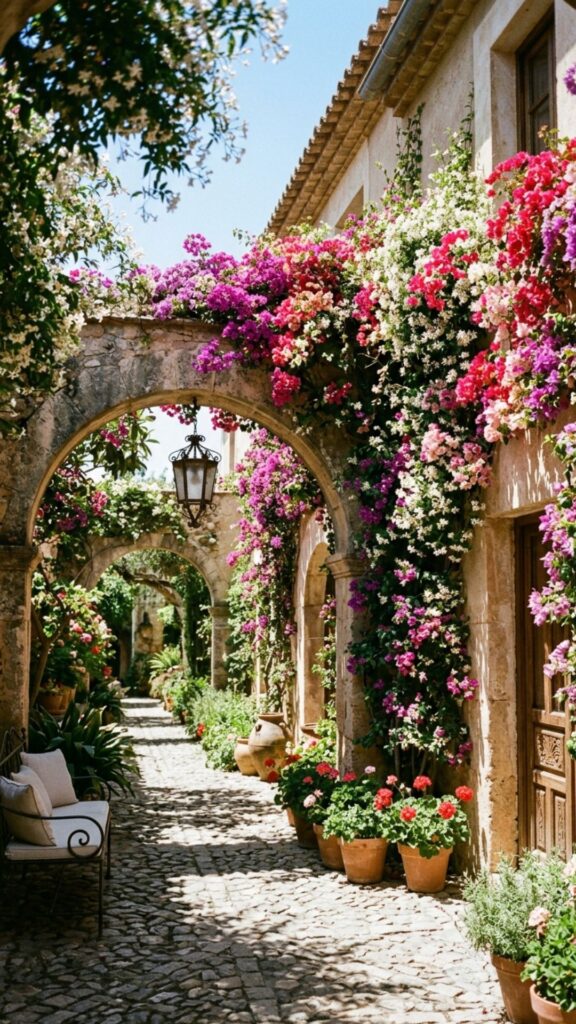
A built-in bench saves space and doubles as a design feature. Cover the seat and backrest with hand-painted tiles for a pop of pattern that echoes the fountain or floor. Toss on a few cushions and it becomes the comfiest seat in the yard.
These benches work perfectly along a courtyard edge or wrapped around a corner. Because they’re fixed, they never blow over or clutter the space. Store extra cushions indoors during rainy spells to keep them fresh.
11. Add Wrought-Iron Details
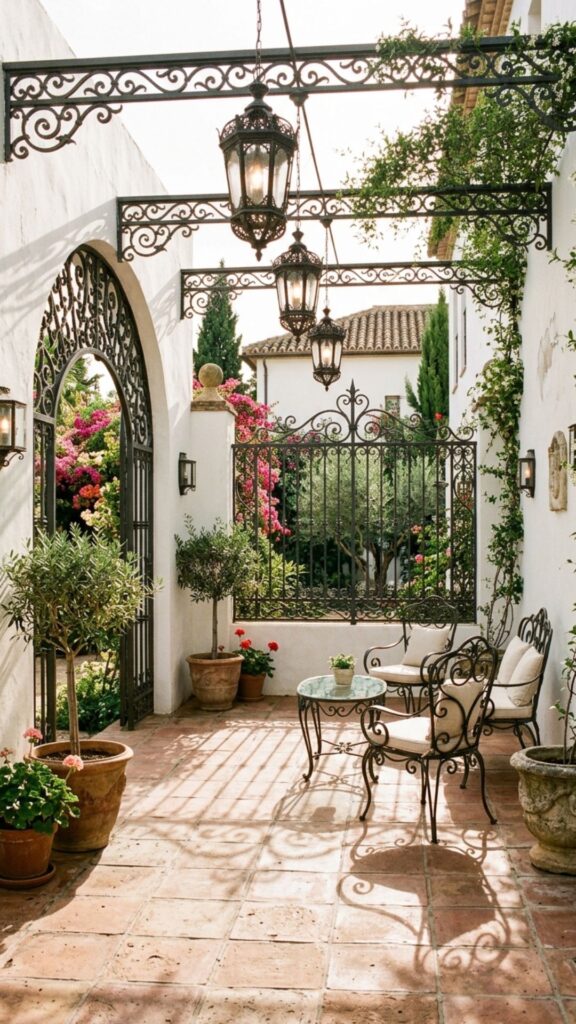
Wrought iron brings elegance and a sense of history. Use it for gates, window grilles, railings, or furniture. Its dark, curling lines contrast beautifully against pale walls and warm tile.
You don’t need much to make an impact. A single ornate gate or a pair of iron lanterns can anchor the whole look. Choose powder-coated finishes if you live near the coast, since salt air speeds up rusting.
12. Include a Small Reflecting Pool
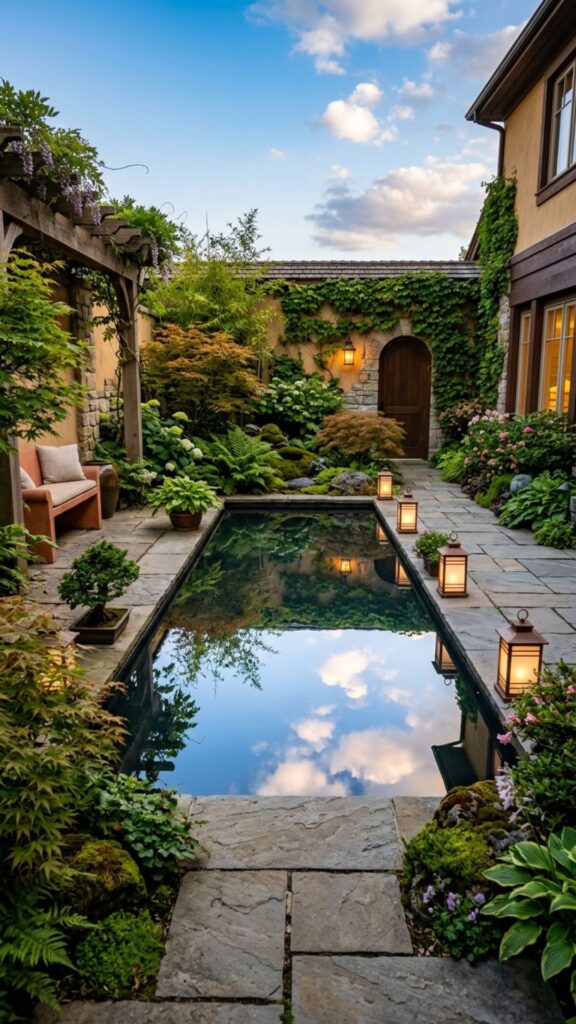
If a fountain feels like too much, a still reflecting pool offers calm instead of movement. Its glassy surface mirrors the sky and surrounding plants, doubling the sense of space. Even a shallow rectangular basin makes a striking centerpiece.
Line it with dark tile or stone to deepen the reflection. Float a few candles or lily pads for special evenings. Add a small solar pump if you want to prevent stagnant water and keep mosquitoes away.
13. Layer Textured Gravel Paths
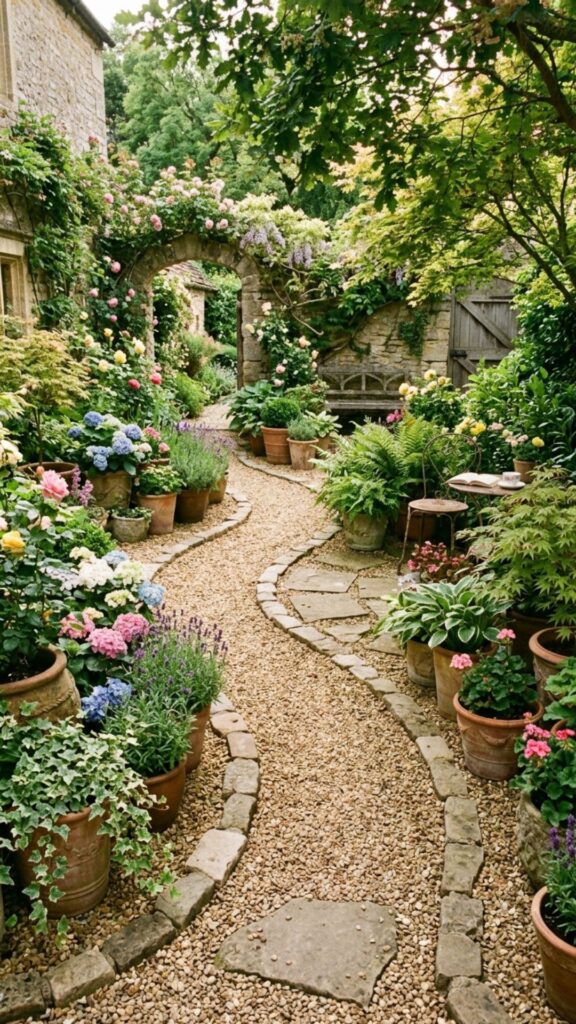
Gravel is affordable, drains well, and makes a satisfying crunch underfoot. Use warm-toned pea gravel to tie paths into the overall palette. It’s ideal for filling awkward corners where tile would be tricky.
Edge your gravel with stone or brick to keep it in place. Set stepping stones through it for a clear walking route. This is one of the easiest and cheapest ways to give a courtyard that relaxed, sun-drenched feel.
14. Frame Views with Arched Doorways
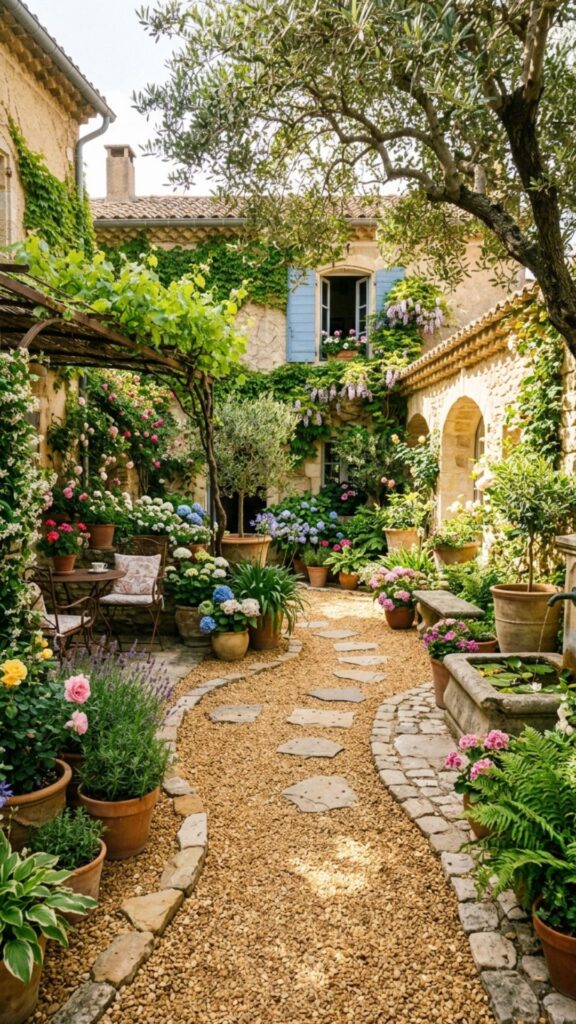
Arches are pure Mediterranean architecture. A rounded doorway or archway between spaces adds romance and draws the eye through the courtyard. Even a faux arch built into a wall creates depth and interest.
Frame an arch with climbing plants or hang a lantern in its center. If you’re renovating, replacing a square opening with a curved one is a small change that makes a big difference to the overall mood.
15. Set Up a Shaded Lounge Area
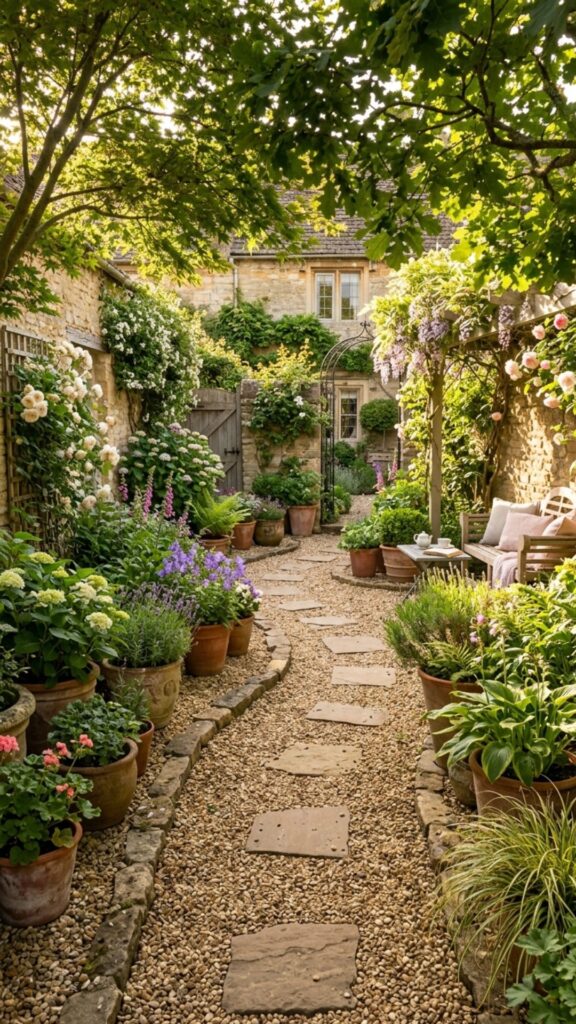
Beyond dining, you want a spot purely for relaxing. A pair of low loungers or a daybed under shade invites afternoon naps and lazy reading sessions. Choose weather-resistant fabrics in creams and earthy tones.
Position this zone where it stays cool during the hottest part of the day. A large parasol or shade sail works well if you don’t have a pergola. Add a side table for your book and a cold drink, and you’re set.
16. Decorate with Lanterns and Candles
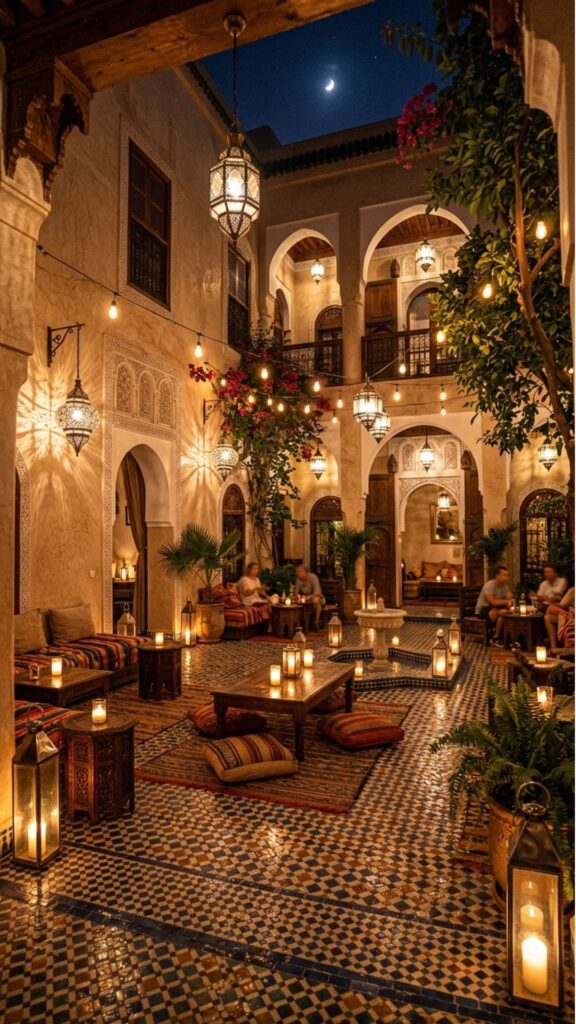
Lighting sets the mood once the sun goes down. Moroccan-style lanterns cast beautiful patterns across walls and floors. Cluster them on tables, hang them from beams, or line them along steps.
Mix candlelight with warm LED string lights for a soft, inviting glow. Solar options save on wiring and switch on automatically at dusk. Good lighting is what lets you enjoy your courtyard long into the evening.
17. Plant Citrus Trees in Pots
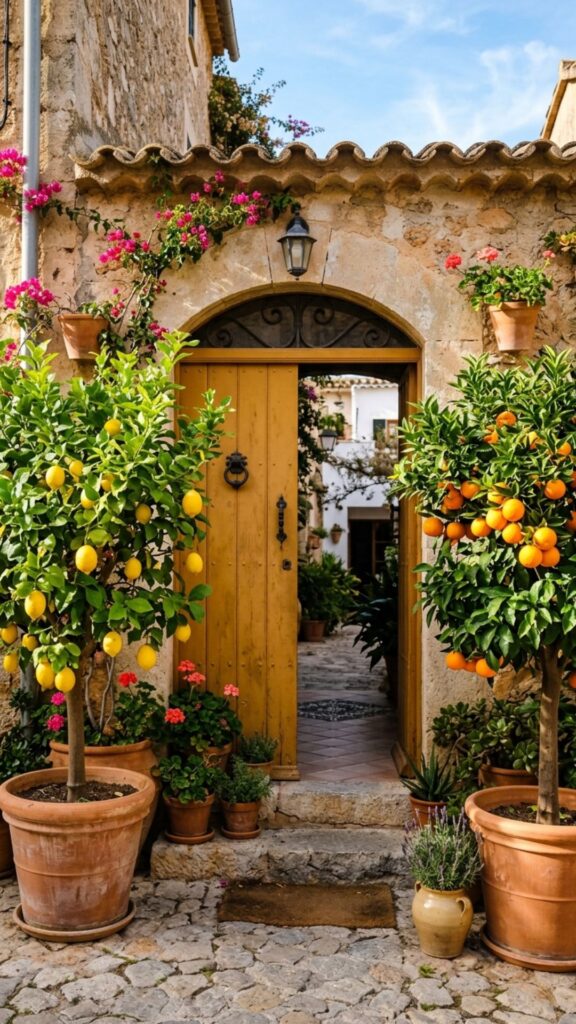
Lemon and orange trees bring glossy leaves, fragrant blossoms, and fruit you can actually use. Grown in large pots, they can be moved to shelter during cold snaps. Their scent in spring is unforgettable.
Feed them regularly and water consistently, since citrus dislikes drying out completely. A pair flanking a doorway makes a classic, welcoming statement that feels straight out of an Italian villa.
18. Mix in Mosaic Accents
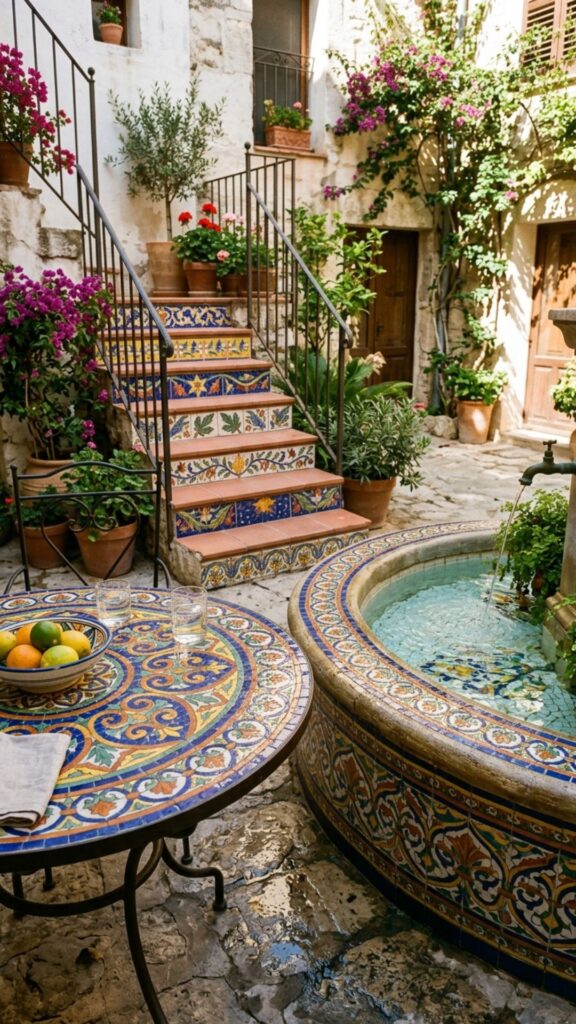
Mosaic tilework adds artistry and color to small details. Use it on a tabletop, a fountain surround, a stair riser, or a wall inset. Even a modest mosaic feature reads as handcrafted and special.
You can buy ready-made mosaic panels or try a simple DIY project with broken tiles. Stick to a consistent color story so the pattern feels intentional rather than busy. These little touches are where a courtyard’s personality shines.
19. Add a Rustic Outdoor Kitchen
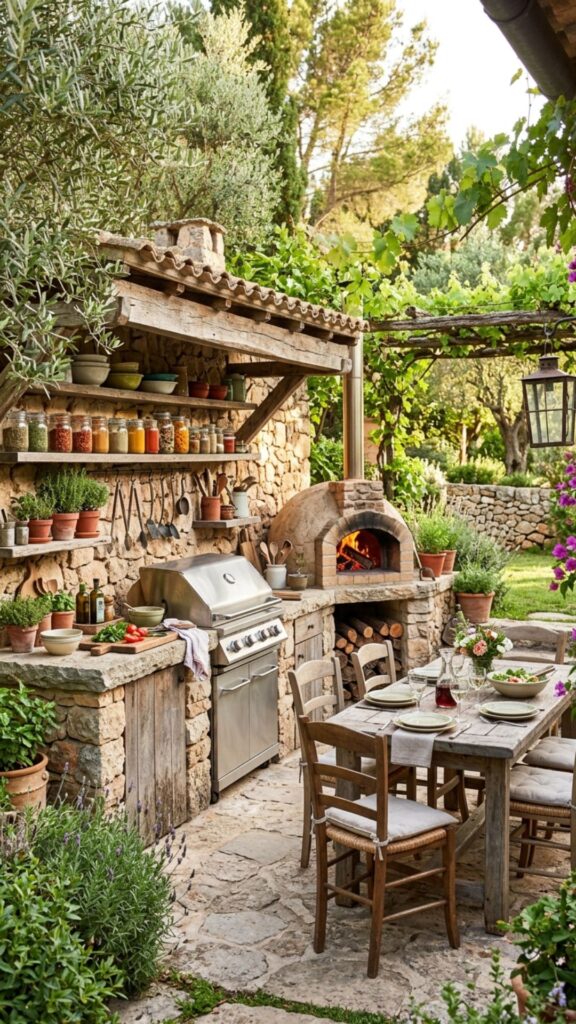
If you love entertaining, a simple outdoor kitchen elevates the whole space. A built-in grill, a stone countertop, and a wood-fired pizza oven turn your courtyard into a gathering hub. Nothing beats cooking under the open sky.
Keep the materials natural, think stone, brick, and aged wood, so the kitchen blends in rather than dominating. Position it near your dining nook so the cook stays part of the conversation. It’s an investment, but one you’ll use constantly in warm months.
20. Finish with Cascading Greenery
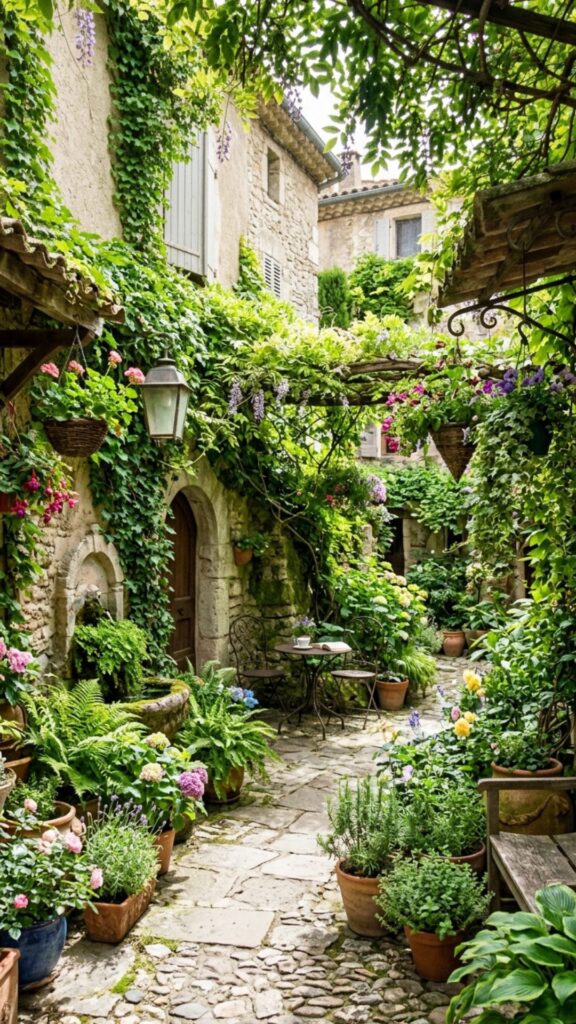
Trailing plants soften hard edges and add lushness. Let ivy spill from wall pockets, plant creeping thyme between pavers, or hang ferns from a shaded corner. Greenery at different heights makes the space feel full and established.
Choose drought-tolerant varieties suited to your climate so upkeep stays low. The goal is that slightly wild, romantic look, as if the garden has been thriving there for generations. That relaxed abundance ties every other element together.
Bringing Your Mediterranean Courtyard to Life
A great Mediterranean courtyard isn’t about copying a postcard. It’s about layering warm materials, water, greenery, and cozy seating into a space that feels like your own private retreat. Start with one or two of these Mediterranean courtyard ideas, then build from there as your budget and time allow.
Ready to get started? Pick your three favorite ideas from this list, sketch out a rough plan, and choose one project to tackle this weekend. Whether it’s planting an olive tree or hanging a string of lanterns, every small step brings you closer to your own sun-soaked escape. Grab a measuring tape and begin today.
What plants work best in a Mediterranean courtyard?
The best plants for a Mediterranean courtyard are drought-tolerant, sun-loving varieties like olive trees, lavender, rosemary, bougainvillea, citrus trees, and geraniums. These thrive in warm, dry conditions and need little water once established.
How much does a Mediterranean courtyard cost to create?
Costs vary widely based on size and materials. A simple refresh with pots, gravel, and plants can cost a few hundred dollars, while a full renovation with tiling, a fountain, and an outdoor kitchen can run into the thousands. Start small and expand over time.
Can I create a Mediterranean courtyard in a cold climate?
Yes. Use frost-resistant porcelain tiles instead of clay, grow tender plants like citrus and olives in pots you can move indoors, and choose hardy alternatives such as boxwood and lavender for year-round structure.
What colors define a Mediterranean courtyard?
Warm terracotta, whitewashed walls, deep blues, sunny yellows, and earthy greens define the Mediterranean palette. These colors reflect the region’s landscape of sun, sea, and clay.
How do I keep a Mediterranean courtyard low-maintenance?
Choose drought-tolerant plants, use gravel and tile to reduce lawn care, install drip irrigation, and pick durable materials like stone and wrought iron. Grouping potted plants also makes watering quicker and easier.