Gray kitchen cabinets have a special way of making a kitchen feel polished without making it feel overly formal. They can be soft and calming, dark and dramatic, warm and welcoming, or crisp and contemporary. That versatility is exactly why gray continues to work in kitchens of almost every size and style.
But choosing gray cabinets is only the beginning. The real magic happens when you pair the right gray tone with countertops, backsplashes, hardware, flooring, lighting, and natural materials.
If your kitchen is starting to feel dated or you simply want a fresh new look without relying on a passing trend, these 20 beautiful gray kitchen cabinet ideas will give you plenty of inspiration. From subtle light-gray cabinetry to statement-making charcoal finishes, there is an idea here for almost every kitchen.
1. Choose Soft Light Gray Cabinets for an Airy Kitchen
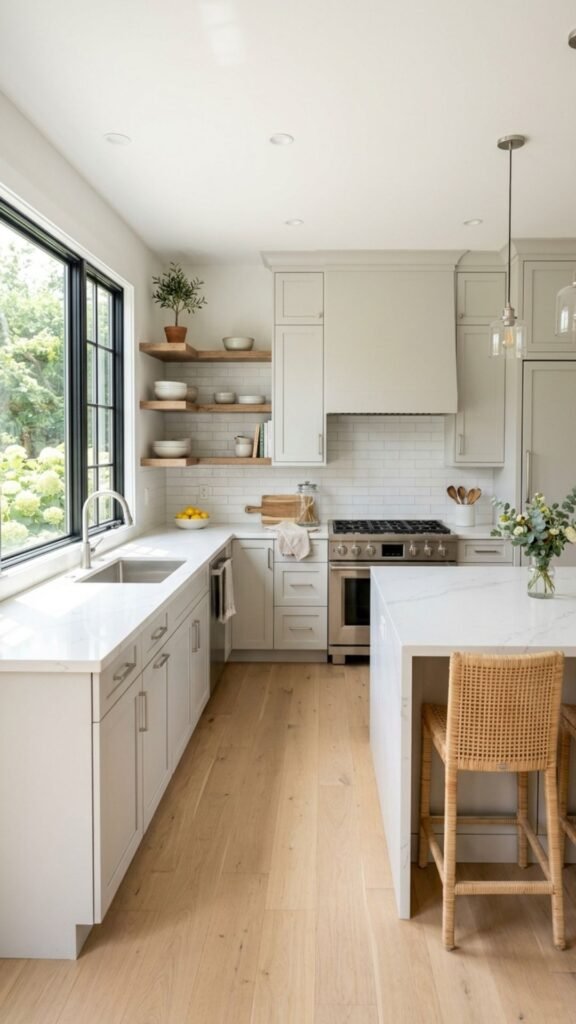
Light gray cabinets are perfect when you want something slightly warmer and more interesting than plain white.
A pale gray shade reflects plenty of natural light, helping the kitchen feel open and spacious. It works especially well in smaller kitchens where darker cabinetry might feel too heavy.
Pair light gray cabinets with white quartz countertops, pale wood flooring, and simple hardware for a clean and timeless result.
The overall look feels fresh without becoming stark.
2. Pair Gray Cabinets With White Marble Countertops
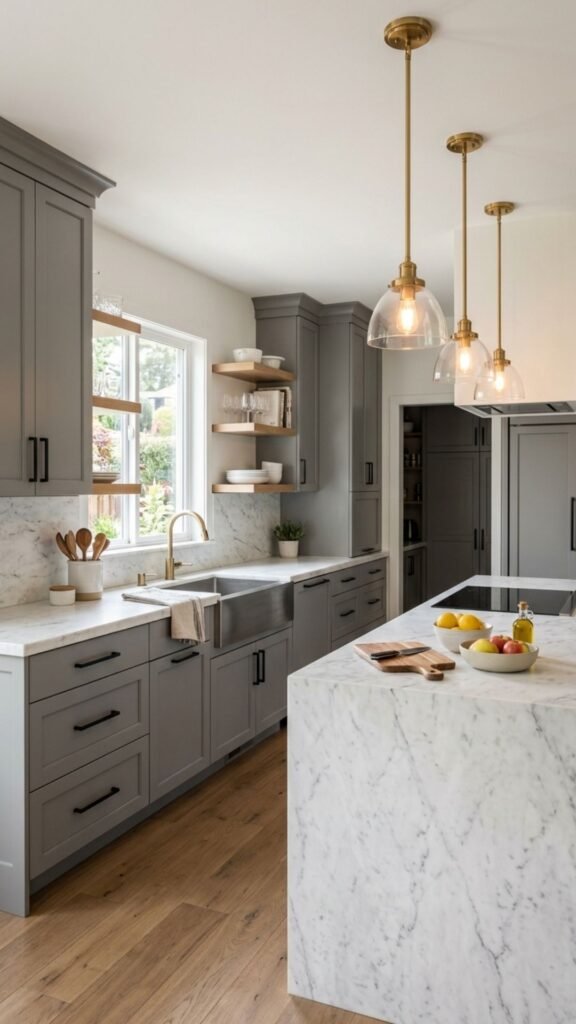
Few combinations look as elegant as gray cabinetry paired with white marble.
The subtle veining in marble adds movement and texture while the gray cabinets create a sophisticated backdrop.
You don’t necessarily need real marble, either. Quartz with marble-inspired veining can deliver a similar appearance while being easier to maintain.
Complete the look with understated metal hardware and warm pendant lighting.
3. Add Warmth With Brass Hardware

Gray can occasionally feel cool, especially when used throughout a large kitchen. Brass hardware is an easy way to introduce warmth.
Try brushed brass cabinet pulls, knobs, faucets, or pendant lights against medium-gray cabinetry.
The warm metallic finish creates a beautiful contrast without overpowering the room.
For a softer appearance, choose aged or brushed brass rather than highly polished gold.
4. Create Drama With Charcoal Gray Cabinets
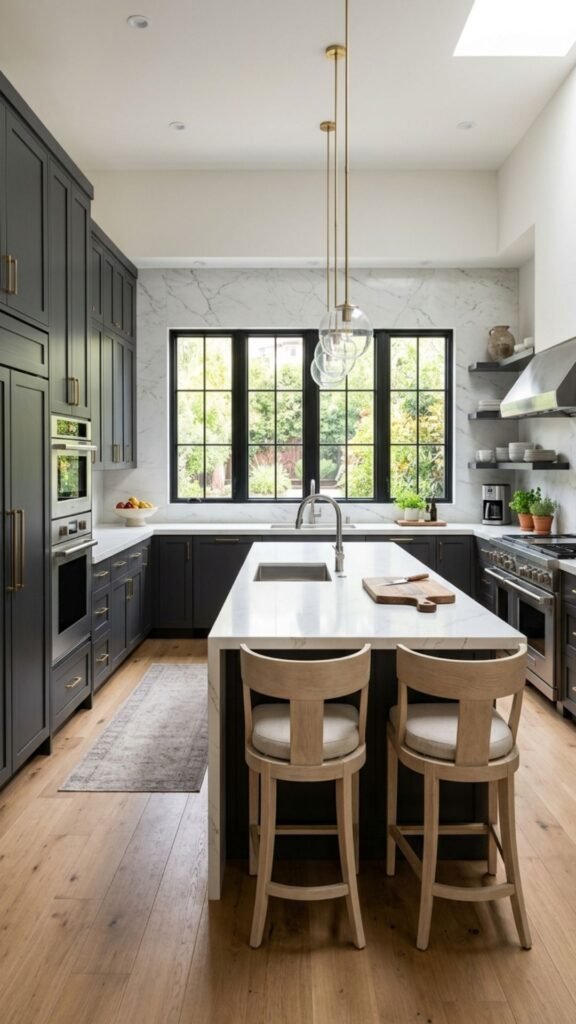
If you prefer bold interiors, consider going several shades darker.
Charcoal gray cabinets can instantly make a kitchen feel luxurious and dramatic. They work particularly well in large kitchens with generous windows or strong artificial lighting.
Balance the darkness with lighter countertops and backsplashes.
White quartz, creamy stone, or pale wood can prevent charcoal cabinetry from making the room feel overly heavy.
5. Combine Gray Cabinets With Natural Wood
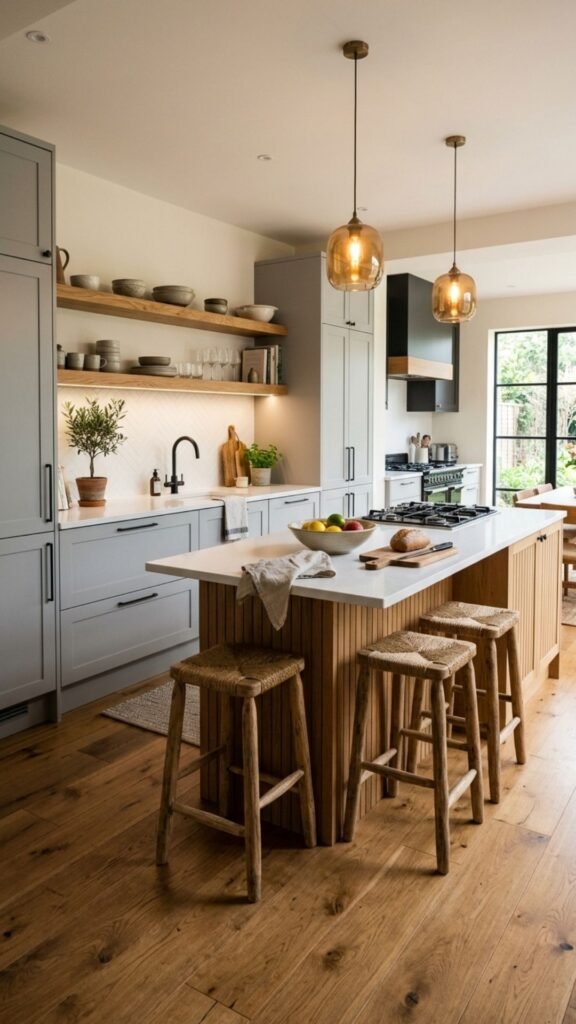
One of the easiest ways to make gray cabinetry feel welcoming is to introduce wood.
Natural wood shelves, butcher-block countertops, ceiling beams, stools, or flooring add warmth and texture.
You can also combine gray lower cabinets with wood upper cabinets for a more customized appearance.
Oak, walnut, and warm-toned woods look especially beautiful against cool or neutral gray shades.
6. Try Gray Shaker Cabinets for a Timeless Look
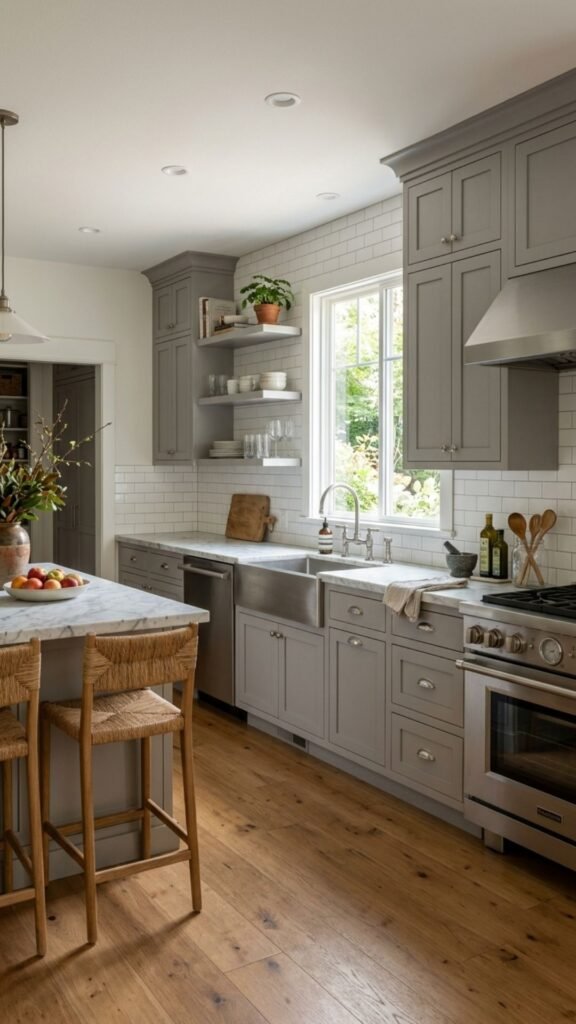
Shaker cabinets are simple enough to work in modern kitchens but detailed enough to suit traditional spaces.
Paint them gray and you get a combination that is extremely versatile.
Light-gray Shaker cabinets feel relaxed and classic, while darker gray versions create a more sophisticated effect.
Add simple handles, stone countertops, and subway tile to create a kitchen that is unlikely to feel dated anytime soon.
7. Use Gray Cabinets With a White Subway Tile Backsplash
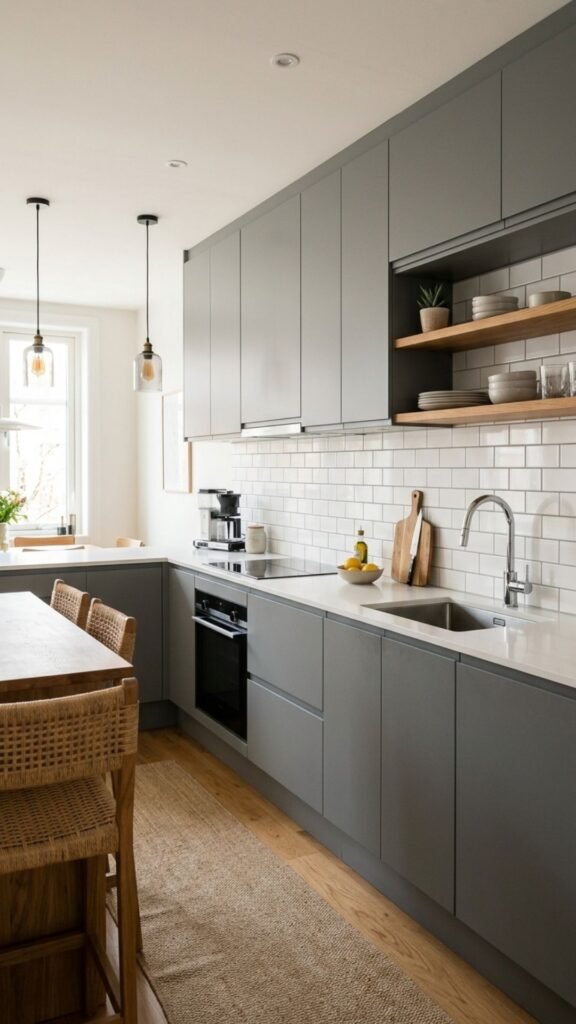
Sometimes the simplest combinations work best.
Gray cabinets and white subway tile create a clean background that allows other kitchen details to stand out.
You can install traditional horizontal subway tiles or experiment with vertical, stacked, or herringbone layouts.
For additional contrast, consider medium-gray grout instead of bright white.
This subtle detail can make the backsplash feel more intentional.
8. Go Two-Tone With White and Gray Cabinets
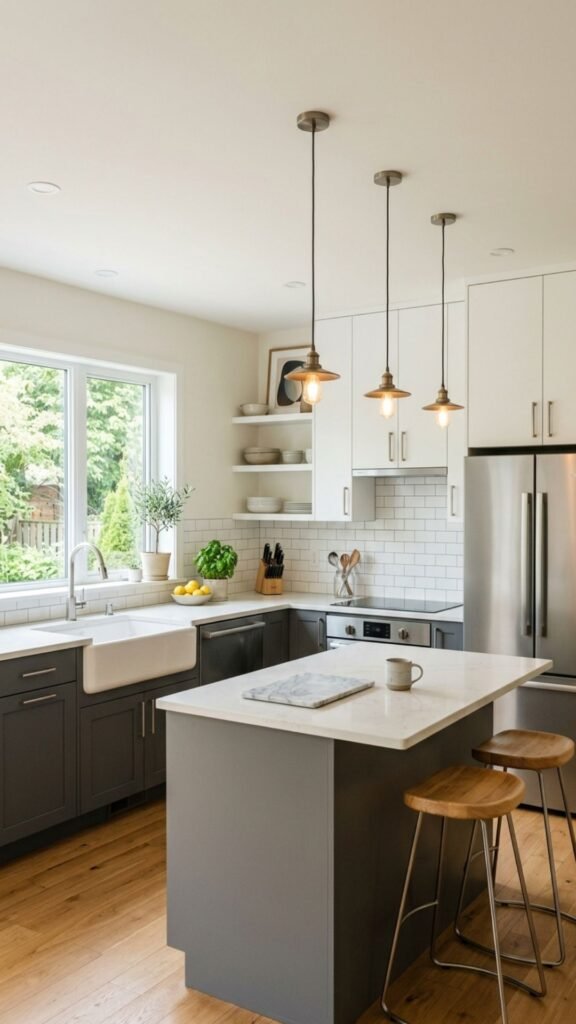
Can’t decide between white and gray? Use both.
A popular approach is to install white upper cabinets and gray lower cabinets. The white keeps the upper portion of the room feeling bright while the gray grounds the kitchen visually.
Another option is to keep the perimeter cabinets white and paint the kitchen island gray.
Either approach adds dimension without introducing too many colors.
9. Make a Gray Kitchen Island the Focal Point

You don’t have to commit to gray cabinetry throughout the entire kitchen.
A gray island can become a beautiful focal point in an otherwise white or wood-toned space.
Try a deep gray island with a light countertop and statement pendant lights above it.
The contrast creates definition and makes the center of the kitchen feel more substantial.
10. Pair Gray Cabinets With Black Hardware

For a clean modern look, combine gray cabinets with matte black hardware.
Black handles and knobs create crisp contrast, particularly against light and medium-gray cabinetry.
You can continue the black accents through faucets, lighting fixtures, bar stools, or window frames.
Just avoid using too many dark elements in a small kitchen. A few strategically placed black details usually create a stronger result than filling the entire space with them.
11. Choose Greige Cabinets for a Warmer Feel
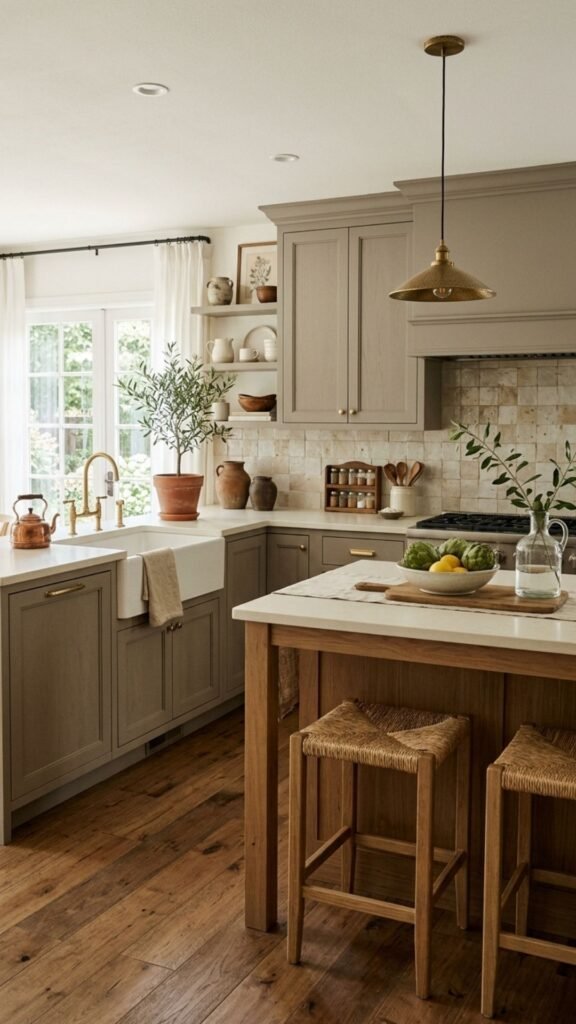
If standard gray feels slightly too cool for your home, greige could be the answer.
Greige combines gray and beige, creating a softer and warmer neutral.
It pairs beautifully with cream countertops, warm wood flooring, textured stone, and earthy accessories.
Greige cabinets are particularly suitable for transitional, farmhouse, Scandinavian, and organic modern kitchens.
They also work well in rooms that receive warm afternoon sunlight.
12. Add Open Wood Shelving Above Gray Cabinets
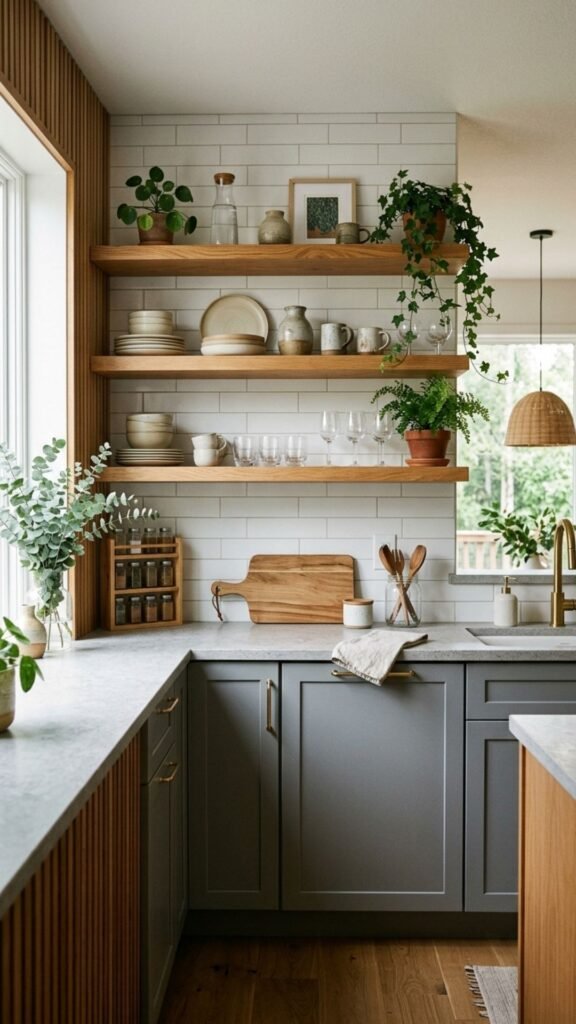
Replacing a few upper cabinets with open shelves can make a gray kitchen feel lighter.
Warm wooden shelving provides contrast while giving you space to display everyday dishes, glasses, plants, artwork, or decorative objects.
Keep the styling simple so the shelves don’t become visually cluttered.
A few carefully chosen items will create a more relaxed and lived-in appearance.
13. Pair Dark Gray Cabinets With Light Wood Floors
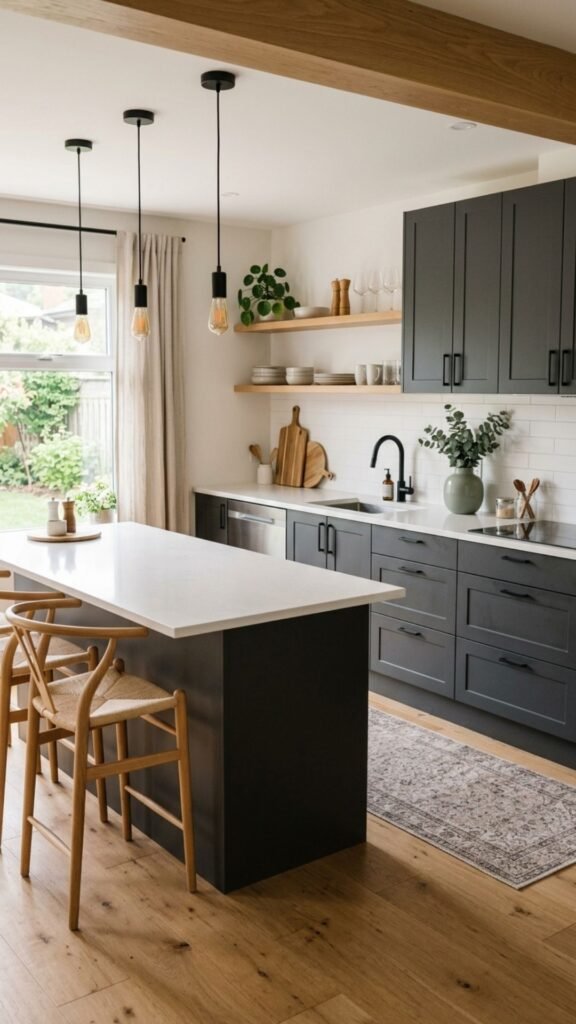
Dark cabinetry doesn’t automatically require dark flooring.
In fact, light wood floors can create the perfect balance.
Pale oak or natural wood visually lifts the space and prevents charcoal cabinets from dominating the room.
This combination works beautifully in modern, Scandinavian-inspired, and transitional kitchens.
Finish the space with white countertops and subtle lighting for an inviting contrast.
14. Use Gray Cabinets With a Statement Backsplash
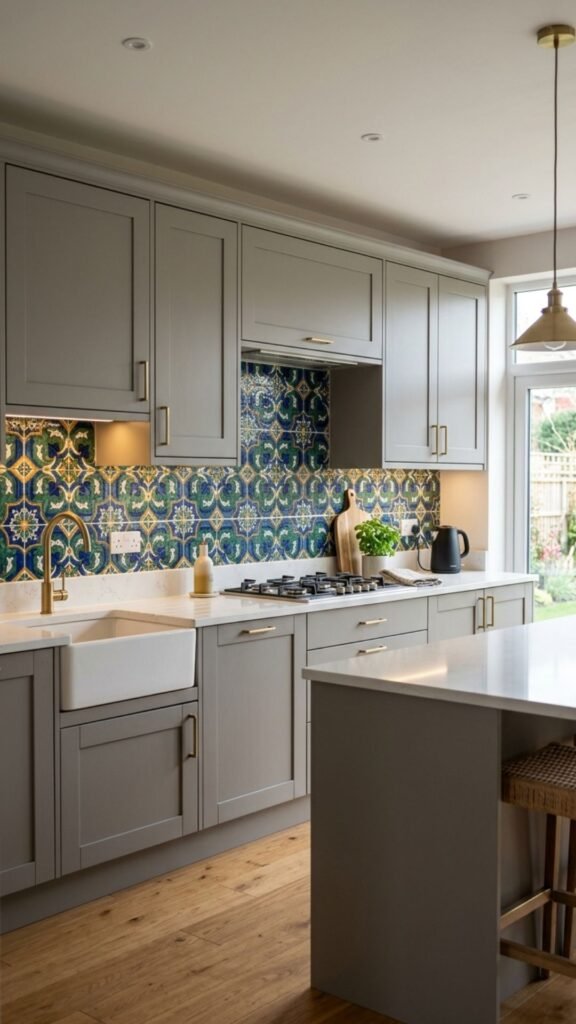
Because gray is neutral, it gives you plenty of freedom to experiment with your backsplash.
Try patterned tiles, marble slabs, geometric designs, handcrafted tiles, or subtle colors.
Blue, green, cream, and even terracotta can look beautiful beside gray cabinets.
If the backsplash has a bold pattern, keep countertops and hardware relatively simple so the kitchen doesn’t feel overly busy.
15. Create a Monochromatic Gray Kitchen

A monochromatic kitchen doesn’t mean every surface needs to be exactly the same shade.
Instead, layer several gray tones.
You might combine pale gray walls with medium-gray cabinets, darker gray stone, and charcoal accessories.
Different textures are essential here.
Matte cabinetry, glossy tile, natural stone, metal hardware, and soft fabrics can give the room depth even when the color palette remains restrained.
16. Add Glass-Front Cabinets

Glass-front cabinets can break up a long wall of solid gray cabinetry.
Use them to display attractive glassware, ceramics, or serving pieces.
Interior cabinet lighting can make the feature even more impressive during the evening.
For a sophisticated look, combine dark gray frames with clear or lightly textured glass.
This small change can make the cabinetry feel more custom and visually interesting.
17. Pair Gray Cabinets With Stainless Steel Appliances
Gray cabinetry works naturally with stainless steel.
Because both finishes share cool undertones, they create a cohesive contemporary look.
The key is preventing the space from feeling too industrial.
Introduce warmer materials through wooden stools, cutting boards, flooring, woven pendant lights, or warm-colored accessories.
These elements soften the metal and make the kitchen feel more comfortable.
18. Try Blue-Gray Cabinets for Subtle Color
Gray doesn’t have to be completely neutral.
Blue-gray cabinetry introduces just enough color to make the kitchen memorable while remaining easy to decorate around.
Soft blue-gray looks beautiful with white countertops and brushed nickel hardware.
Darker slate-blue gray cabinets pair wonderfully with brass accents and warm wood.
The color can shift throughout the day depending on the natural light, giving the kitchen additional character.
19. Extend Gray Cabinets All the Way to the Ceiling
Floor-to-ceiling cabinets create an impressive built-in appearance while maximizing storage.
Using gray instead of a very dark color keeps tall cabinets from feeling too overwhelming.
Consider using this idea around refrigerators, pantry areas, or entire cabinet walls.
Matching crown molding or trim can make the cabinetry look completely integrated into the architecture.
It is both practical and visually polished.
20. Mix Gray Cabinets With Warm, Earthy Details
One of the best ways to update a gray kitchen is through accessories rather than major remodeling.
Introduce natural textures such as wooden bowls, woven baskets, ceramic pottery, linen towels, greenery, and warm lighting.
Earthy colors like tan, cream, muted green, rust, and brown soften gray beautifully.
These finishing touches help turn a stylish gray kitchen into a space that actually feels comfortable and welcoming.
How to Choose the Right Gray for Your Kitchen
Before selecting your cabinet paint or finish, look carefully at the lighting in your kitchen.
Gray can change dramatically depending on its undertone.
Cool grays may contain hints of blue, green, or violet, while warm grays often contain beige or brown undertones.
Always test several samples directly in your kitchen. Look at them in natural daylight, afternoon light, and artificial evening lighting before making your final choice.
You should also consider the permanent finishes already in the space. Flooring, countertops, backsplash materials, and appliances can all influence whether a particular gray feels harmonious.
Conclusion
Gray kitchen cabinets prove that neutral doesn’t have to mean boring.
From soft greige and airy pale gray to dramatic charcoal and subtle blue-gray, there are countless ways to make this versatile color feel completely different. The secret is choosing complementary finishes that bring personality and warmth into the room.
Natural wood can soften gray cabinetry. Brass can make it feel luxurious. Black accents can sharpen it. White countertops can brighten it, while colorful backsplashes can turn neutral cabinets into the perfect background for something more adventurous.
Most importantly, choose a gray that works with your home’s lighting, materials, and overall personality rather than selecting a shade simply because it is popular.
With the right combination, gray kitchen cabinets can give your space exactly what the title promises—a beautiful, fresh new look that you can enjoy for years.
Are gray kitchen cabinets still popular?
Yes. Gray remains a versatile cabinet color because it works with modern, traditional, farmhouse, and transitional kitchen styles.
What countertop looks best with gray cabinets?
White quartz, marble-look quartz, natural stone, and light-colored countertops all pair beautifully with gray cabinetry.
What hardware color works with gray kitchen cabinets?
Brass adds warmth, black creates contrast, and chrome or brushed nickel offers a clean contemporary appearance.
What wall colors go with gray cabinets?
White, cream, greige, soft beige, muted green, and other light neutrals work especially well with gray cabinets.
How can I make gray cabinets feel warmer?
Add natural wood, brass accents, warm lighting, woven textures, greenery, and cream or beige accessories.