A small backyard doesn’t mean you have to give up on cooking outside. I’ve helped design more than a few tight patios over the years, and the truth is simple: the size of your space matters far less than how you plan it.
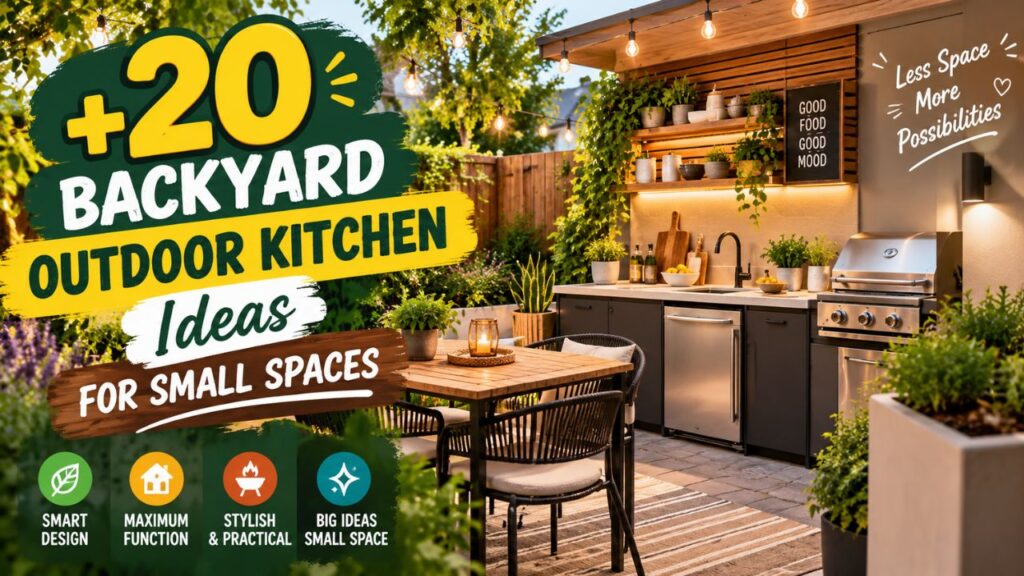
A galley the width of a hallway can hold a grill, a prep counter, and a spot to sip your drink while dinner sizzles.
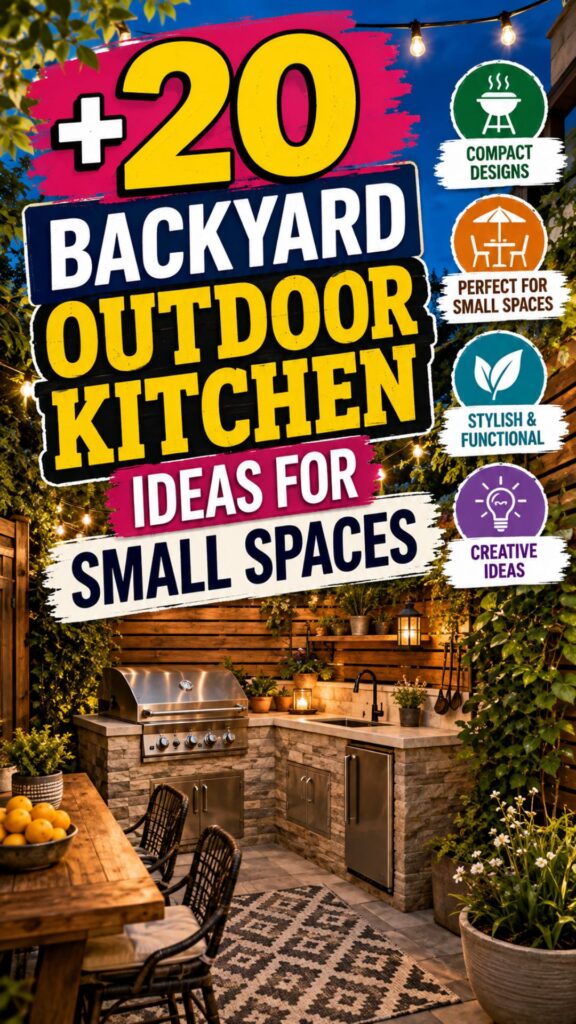
Below, you’ll find 20 outdoor kitchen ideas for small spaces that actually work in the real world. Some are cheap weekend fixes. Others are worth saving up for. Each one is built to squeeze value from every square foot you’ve got. Let’s get into it.
1. Build a Compact L-Shaped Layout
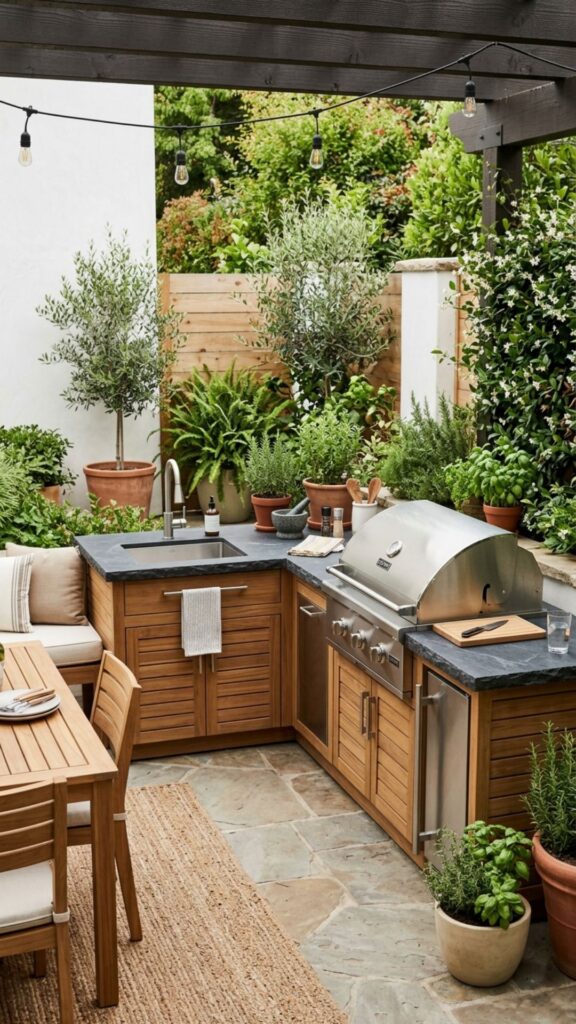
An L-shape is a workhorse for tiny yards. It tucks into a corner, uses two walls or fence lines for support, and gives you a natural split between cooking and prep. One leg holds the grill, the other handles chopping and plating. You keep foot traffic out of the hot zone, which matters a lot when the space is cramped.
Keep each leg short, around four to five feet, so it never feels bulky. Cap the counters with a durable surface like concrete or tile that shrugs off heat and weather. A corner install also frees up the middle of your patio for a small table, so nobody’s bumping elbows while you flip burgers.
2. Choose a Slim Built-In Grill
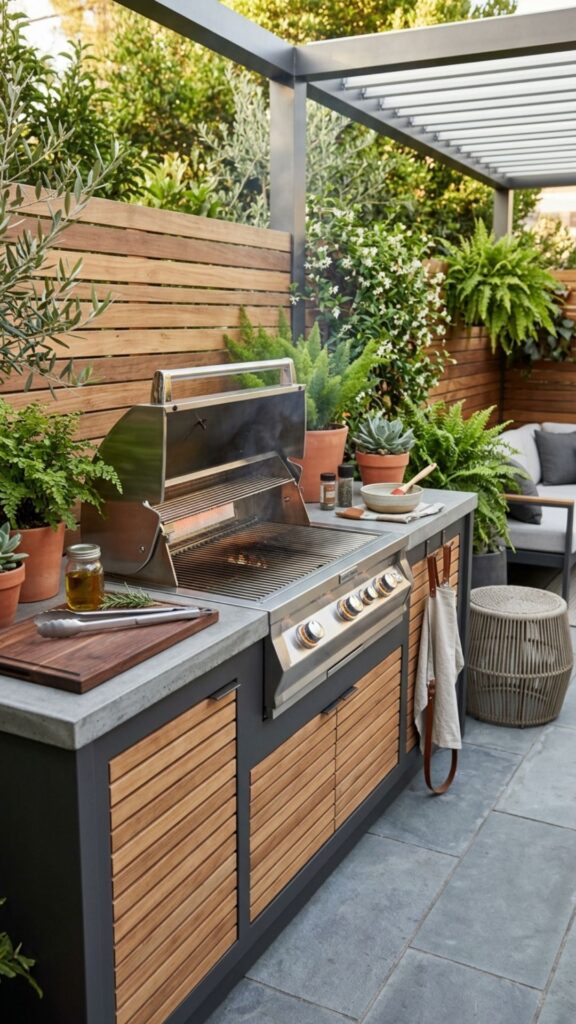
A standard freestanding grill eats floor space with its side wheels and bulky cart. Swap it for a slim built-in unit dropped into a masonry or steel frame instead. You reclaim the footprint and get a cleaner, finished look that reads like a real kitchen rather than a patio afterthought.
Look for a built-in around 24 to 30 inches wide. That’s plenty of grate for a family of four, and it leaves room for counters on either side. Bonus: a built-in sits at counter height, so your back thanks you after a long grilling session.
3. Add Foldable Wall-Mounted Counters
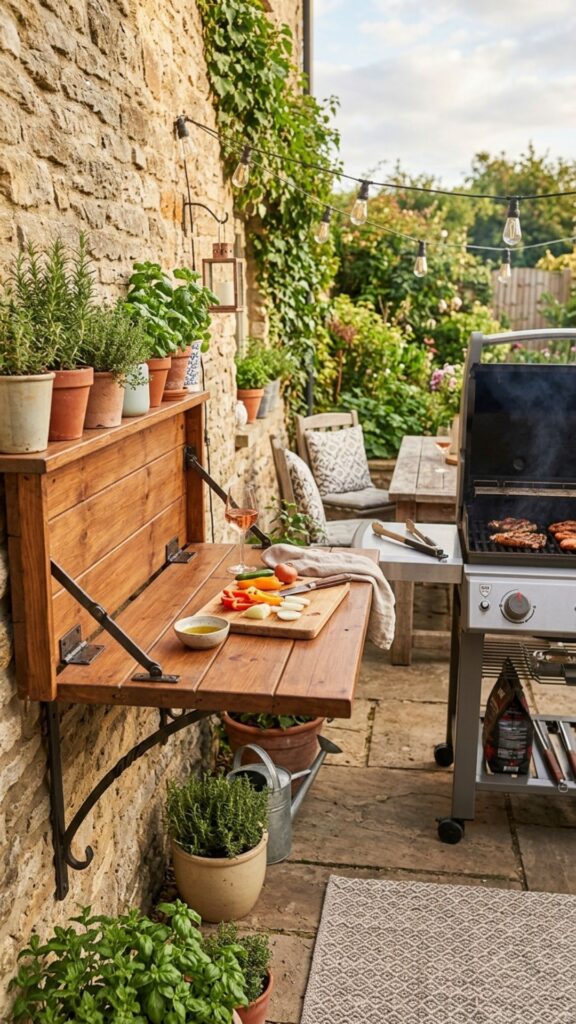
When you’re not cooking, a drop-leaf counter folds flat against the wall and disappears. Flip it up when you need prep space, and you’ve instantly doubled your working surface. This is one of my favorite tricks for patios that pull double duty as a play area or lounge.
Mount it at a comfortable working height, usually 36 inches, and pick a marine-grade material that handles rain. A single sturdy bracket per side keeps it stable enough for kneading dough or carving a roast. Cheap, reversible, and renter-friendly too.
4. Install Vertical Storage and Hanging Racks
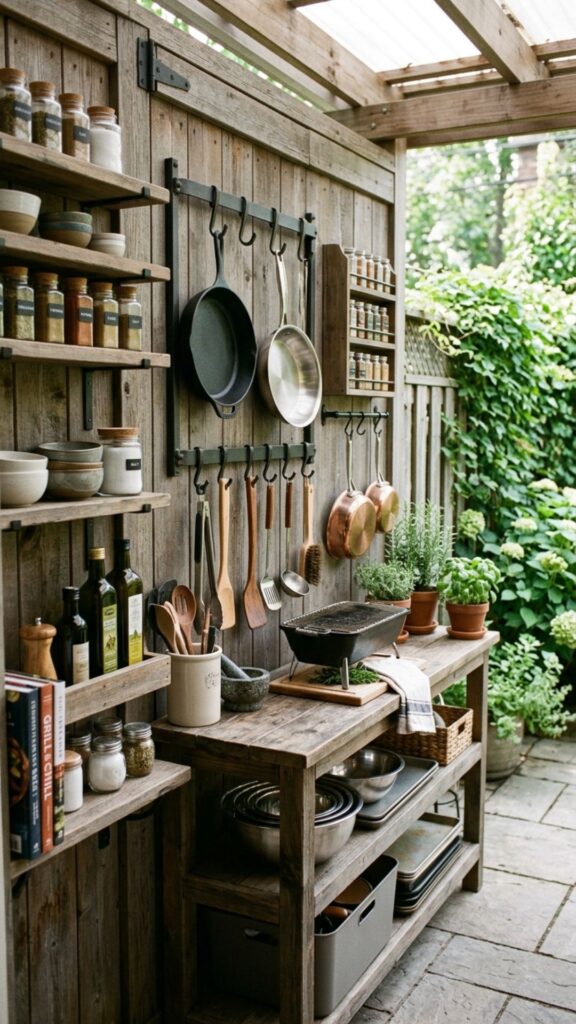
Floor space is precious, so build upward. A pegboard, a metal grid, or a simple rail with S-hooks turns an empty wall into a home for tongs, spatulas, and pans. Everything stays within arm’s reach, and your limited counters stay clear for actual cooking.
Add a narrow shelf or two above the rail for oils, rubs, and a stack of plates. Weatherproof bins keep smaller items dry. The goal is to keep the horizontal surfaces open while the vertical ones do the heavy lifting.
5. Use a Rolling Prep Cart
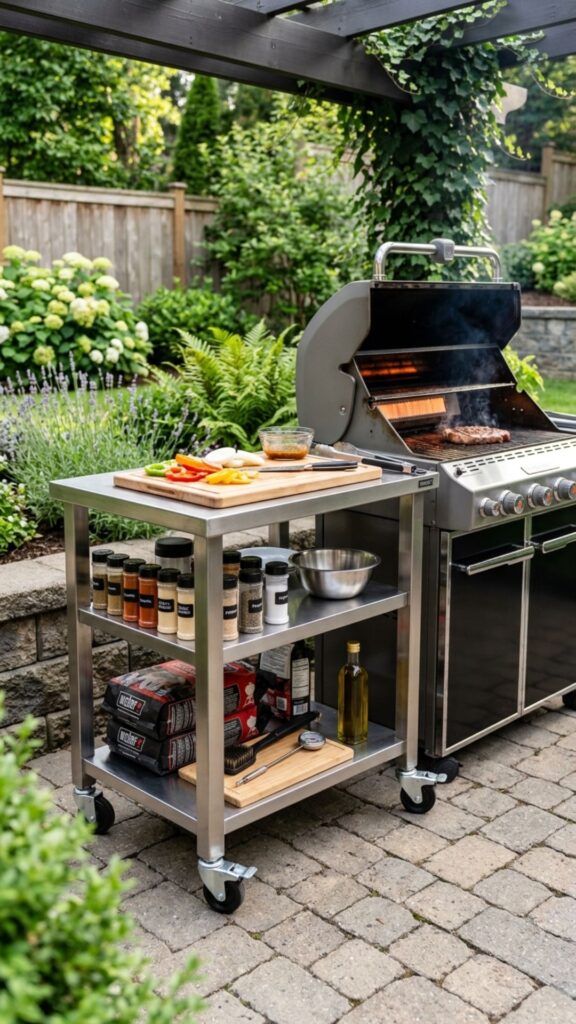
A cart on locking wheels is the Swiss Army knife of small outdoor kitchens. Roll it next to the grill while you cook, then tuck it against the fence when guests arrive. It adds counter space, storage, and flexibility without a permanent footprint.
Pick one with a stainless top and a lower shelf for propane, charcoal, or serving trays. Because it moves, you can reconfigure your whole setup in seconds depending on whether you’re cooking for two or twelve. For renters, it’s a genuine game-changer.
6. Go Galley-Style Along a Fence
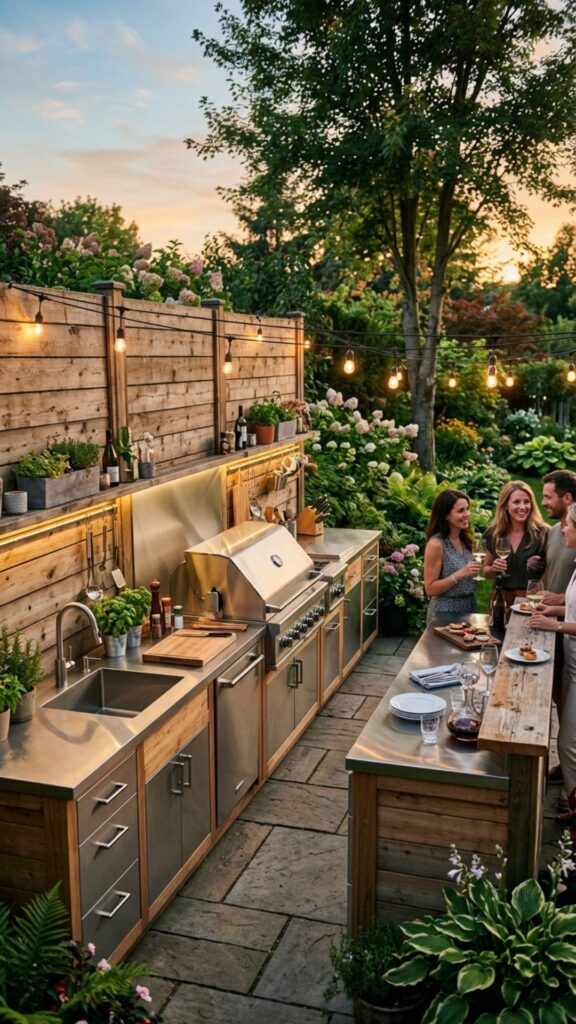
If your yard is long and narrow, run a single line of counters and appliances against one fence. A galley layout keeps everything on one axis, so you’re never twisting or reaching across a hot grill. It’s the most efficient use of a slim strip of ground.
Line up your zones in cooking order: prep, then grill, then plating. That flow saves steps and keeps hot pans moving in one direction. Finish the fence behind it with heat-safe backing board, and you’ve got a tidy, professional-looking cook line.
7. Pick a Compact Kamado or Kettle Grill
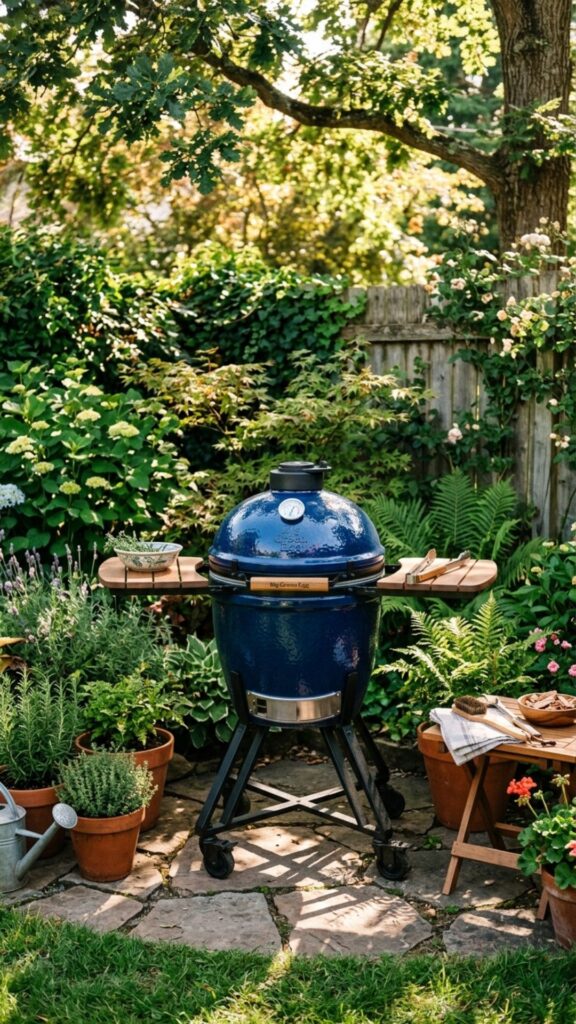
You don’t need a six-burner beast. A ceramic kamado or a classic kettle grill has a small round footprint and cooks nearly anything, from steaks to slow-smoked ribs to pizza. These units pack serious range into a shape that fits in a corner.
Set it on a heat-safe pad or a small stand to keep it stable. A kamado also holds temperature for hours on little fuel, which is handy when you don’t have room to store bags of charcoal. Small grill, big results.
8. Add a Bar-Height Ledge for Seating
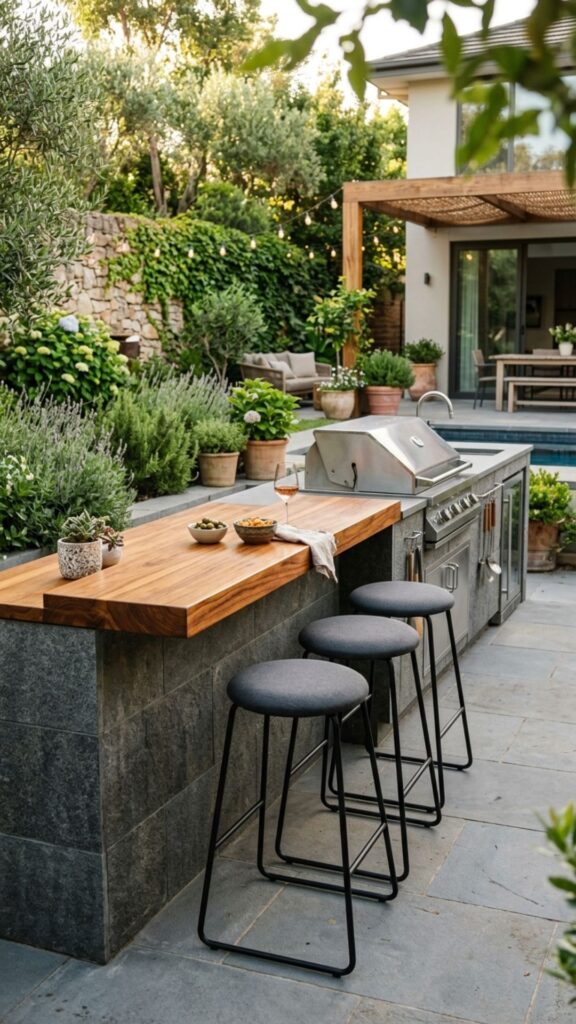
Turn the back of your counter run into a bar. A slim overhang, just 10 to 12 inches deep, gives you space for two or three stools without adding a bulky dining table. Guests sit, chat, and keep you company while you cook.
Choose stools that slide fully under the ledge so nothing juts into the walkway. This trick blends your kitchen and dining zones into one, which is exactly what you want when every foot counts. It also keeps conversation flowing across the grill.
9. Build a Corner Kitchen Around Existing Walls
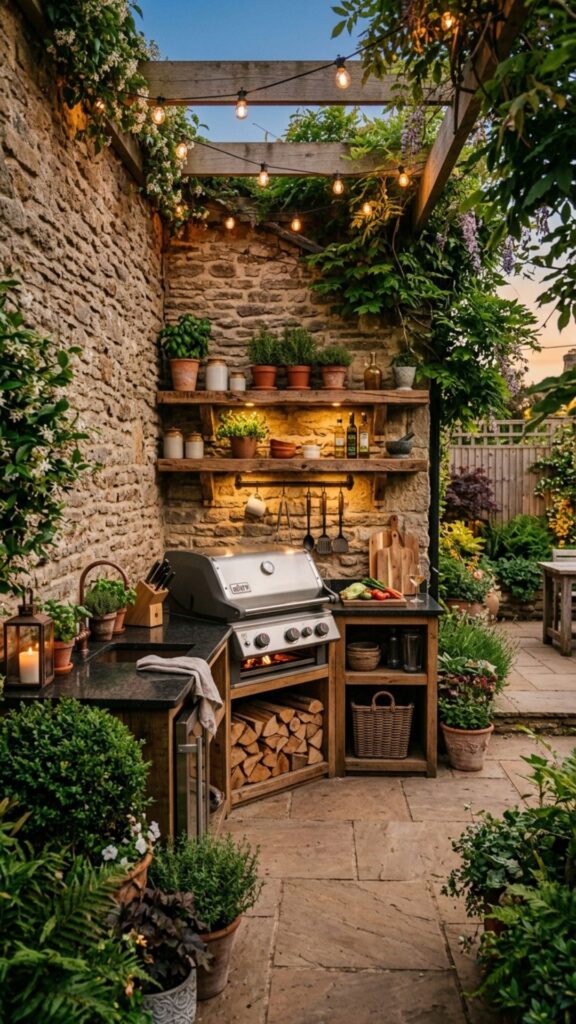
Every corner in your yard is a free two-sided frame. Building into it means you only construct one open side, which cuts your materials and cost while boosting stability. House walls and privacy fences make natural anchors.
Use the vertical surfaces for shelving, hooks, or a mounted light. A corner setup also shields your flame from wind, so your grill lights faster and cooks more evenly. Work with the bones your yard already gives you.
10. Incorporate a Small Under-Counter Fridge
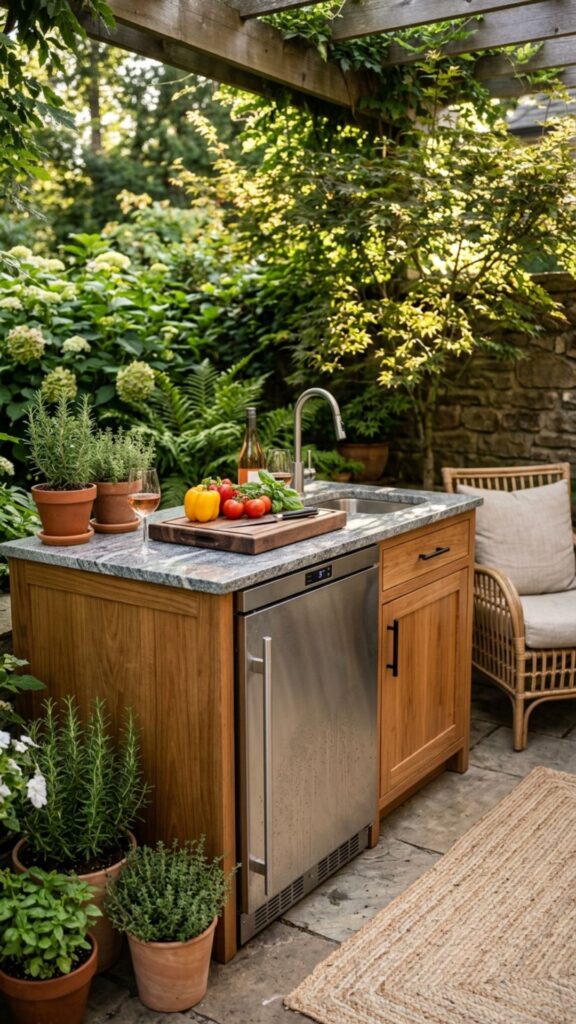
A mini fridge tucked beneath the counter keeps drinks and marinades cold without a trip inside. Fewer trips mean you stay with your food and your guests. For small kitchens, an outdoor-rated unit around 24 inches wide fits neatly into a cabinet gap.
Make sure it’s rated for outdoor use so moisture and temperature swings don’t wreck it. Position it away from the grill’s direct heat. It’s a small upgrade that makes the whole space feel like a true kitchen rather than a glorified grill stand.
11. Use Modular Stackable Units
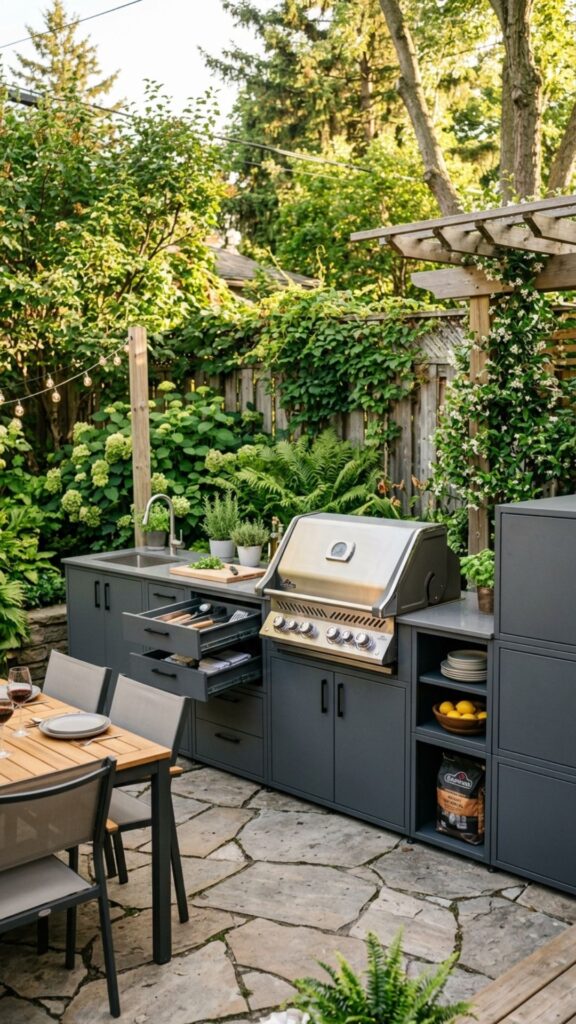
Modular outdoor cabinets snap together like building blocks. Start with a grill module and a single counter, then add storage or a sink later as your budget allows. This flexibility suits small spaces where you’re testing what actually works.
Because they’re pre-built, installation is fast and mistake-proof. If you move or rethink the layout, you rearrange the modules instead of tearing out concrete. Growth-friendly and forgiving, which is exactly what a first-time setup needs.
12. Add a Fold-Down Sink Station
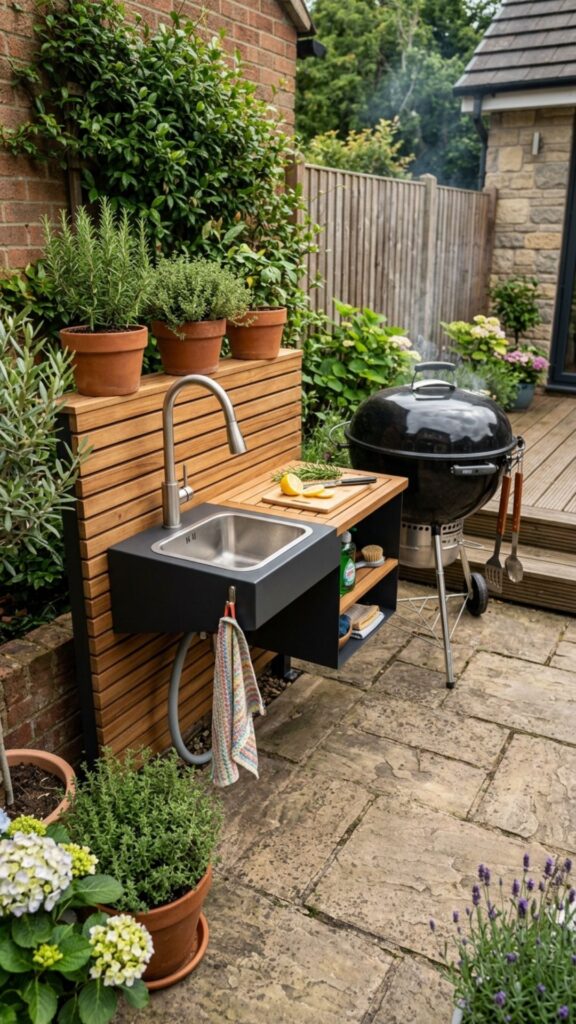
A compact sink saves you countless trips to the indoor kitchen. A fold-down or drop-in bar sink takes minimal room and connects to a garden hose for supply, draining into a bucket or a simple gray-water line. Rinse hands, wash produce, and clean tools right where you cook.
Keep the plumbing basic and the basin small. Even a 15-inch sink handles most tasks. When space is tight, hygiene often gets ignored, so a little running water goes a long way toward safer, easier cooking.
13. Choose Light, Reflective Finishes
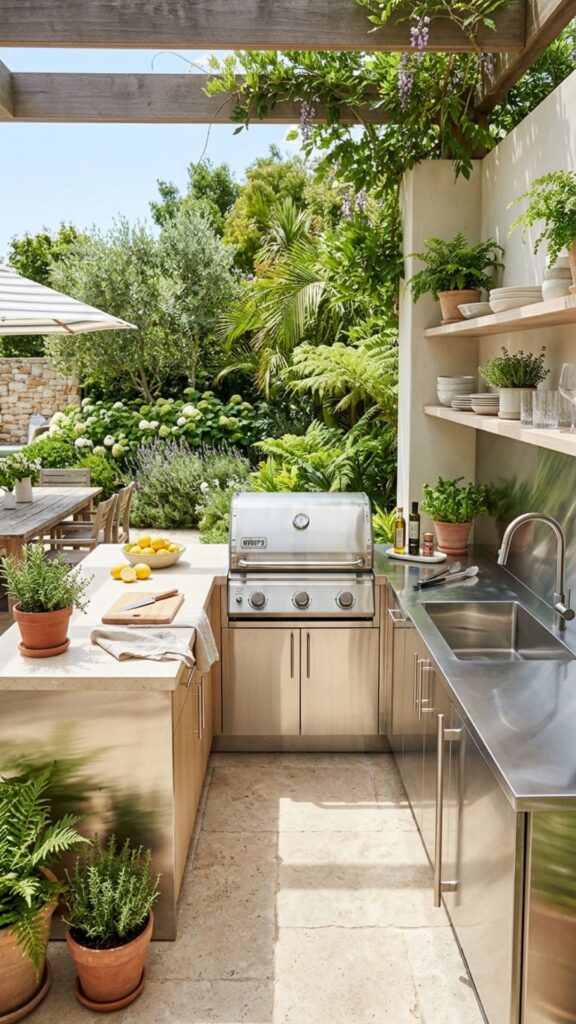
Pale counters, light stone, and stainless steel bounce sunlight around and make a cramped patio feel bigger. Dark, heavy materials do the opposite, closing the space in. Color is a cheap, powerful tool for visual breathing room.
Pair light surfaces with a simple, uncluttered layout. The eye reads openness when finishes are consistent and bright. It’s a designer trick that costs nothing extra once you’re already choosing materials.
14. Install Overhead Lighting on a Slim Frame
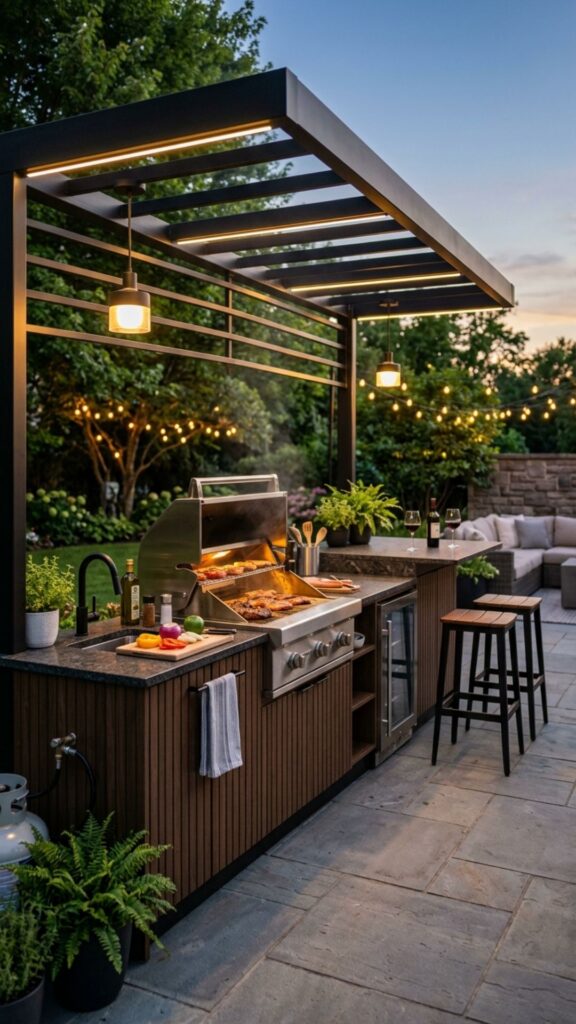
Good lighting extends your cooking hours and makes a small kitchen feel intentional rather than cobbled together. String lights, a slim pergola with mounted fixtures, or a couple of wall sconces do the job without eating floor space.
Aim task lighting at the grill and prep zones, then add softer ambient light for the seating area. Warm LEDs keep the mood relaxed and use little power. Overhead solutions light the space without a single fixture touching the ground.
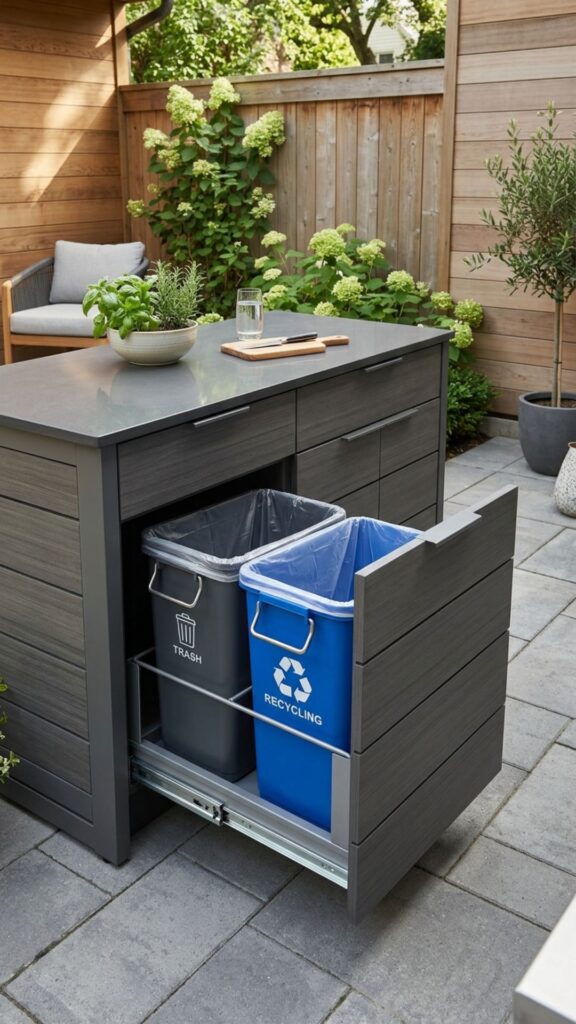
15. Add a Pull-Out Trash and Recycling Bin
Nothing clutters a small kitchen faster than a stray garbage can. A pull-out bin hidden inside a cabinet keeps waste out of sight and off the counter. Two compartments handle trash and recycling in one slim slot.
Line it with a lid to keep pests and smells in check. This is the kind of small detail people skip, but in a tight space it’s the difference between tidy and chaotic. Function first, always.
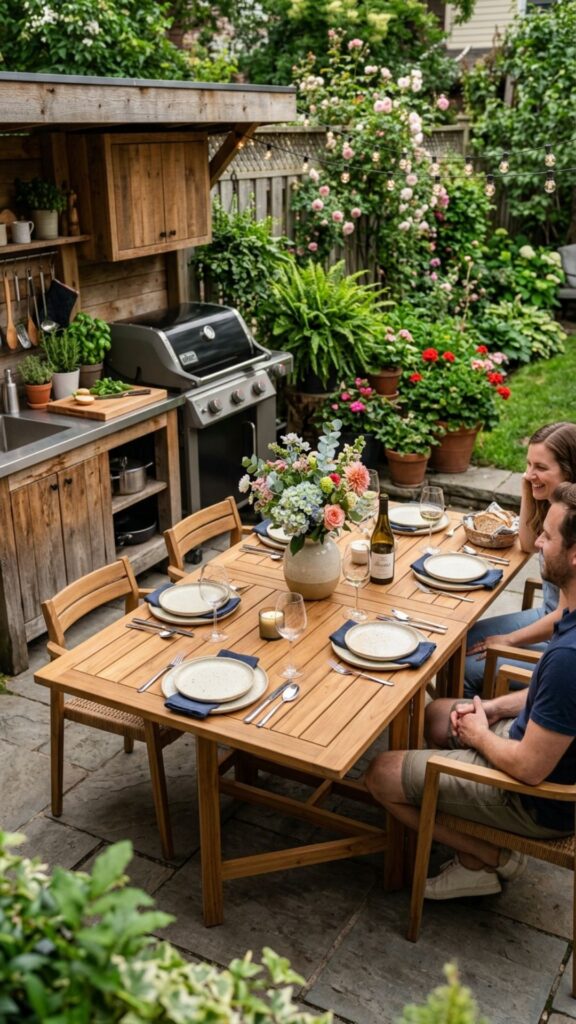
16. Use a Convertible Dining Table
A drop-leaf or extendable table flexes with your guest list. Keep it small for weeknight dinners, then open it up when friends come over. In a small yard, furniture that shifts with your needs beats a fixed table you can’t move.
Look for a folding or nesting design you can store against a wall when the space becomes a lounge or play zone. Multi-use furniture is the heart of smart small-space living. One piece, many jobs.
17. Create a Combo Grill and Smoker
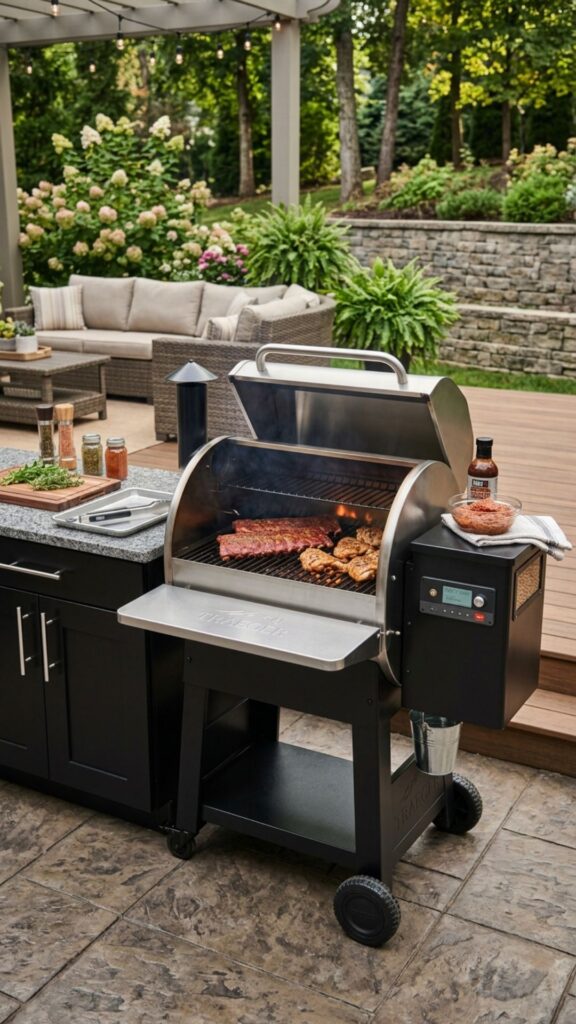
If you love variety but hate clutter, a combo unit gives you a grill and a smoker in one body. You skip owning two bulky machines and free up serious room. Many pellet grills handle high-heat searing and low-and-slow smoking in the same box.
Set it where smoke drifts away from seating and neighbors. One appliance covering two jobs is the essence of small-space design. Fewer things, more capability.
18. Add a Vertical Herb Garden Nearby
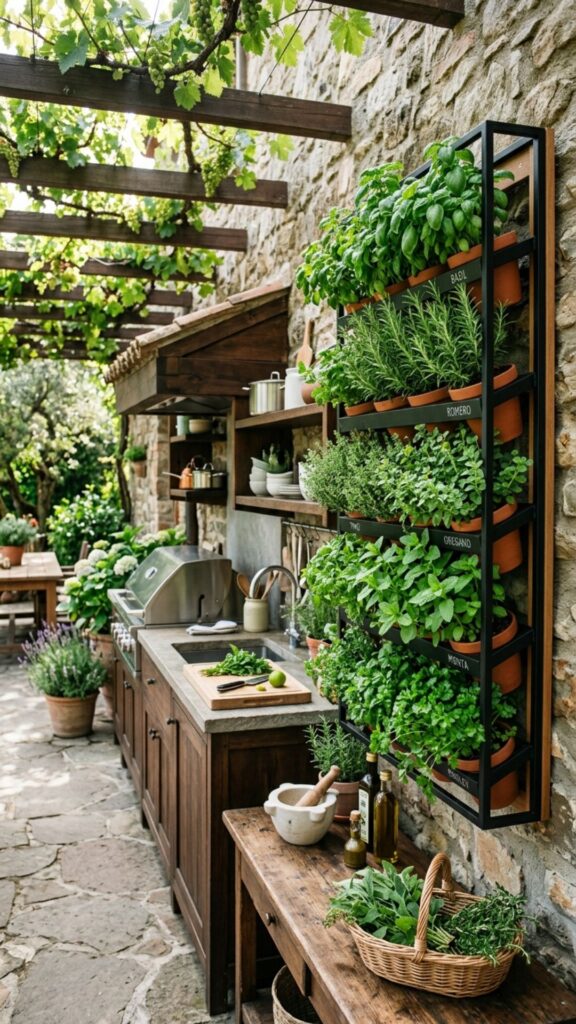
Fresh herbs steps from the grill make every meal better, and a vertical planter keeps them off your counters. A wall-mounted pocket planter or a stacked tower holds basil, rosemary, thyme, and mint in a footprint smaller than a cutting board.
Place it where it catches sun but stays clear of direct grill heat. Snipping fresh herbs as you cook feels great, and it turns a bare fence into something alive and useful. Small effort, big flavor.
19. Define the Space with Flooring
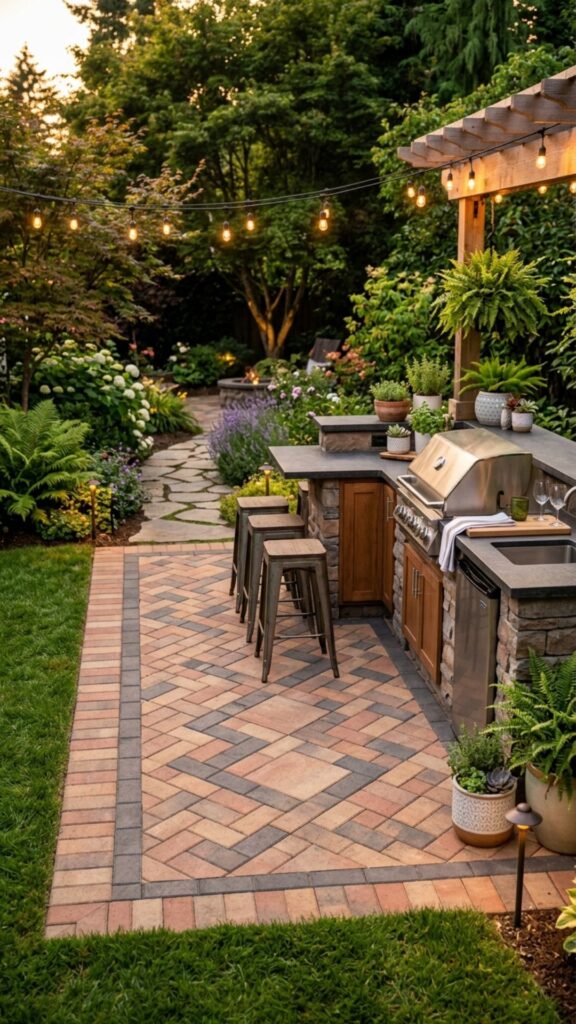
A defined floor makes even a tiny kitchen feel like its own room. Pavers, composite decking, or a weatherproof outdoor rug set the cooking zone apart from the rest of the yard. That visual boundary brings order to a small area.
Choose a slip-resistant, easy-clean surface since grease and spills happen. A contrasting material under the kitchen tells the eye where one zone ends and another begins. Structure makes small spaces feel purposeful, not cramped.
20. Add a Compact Pizza Oven
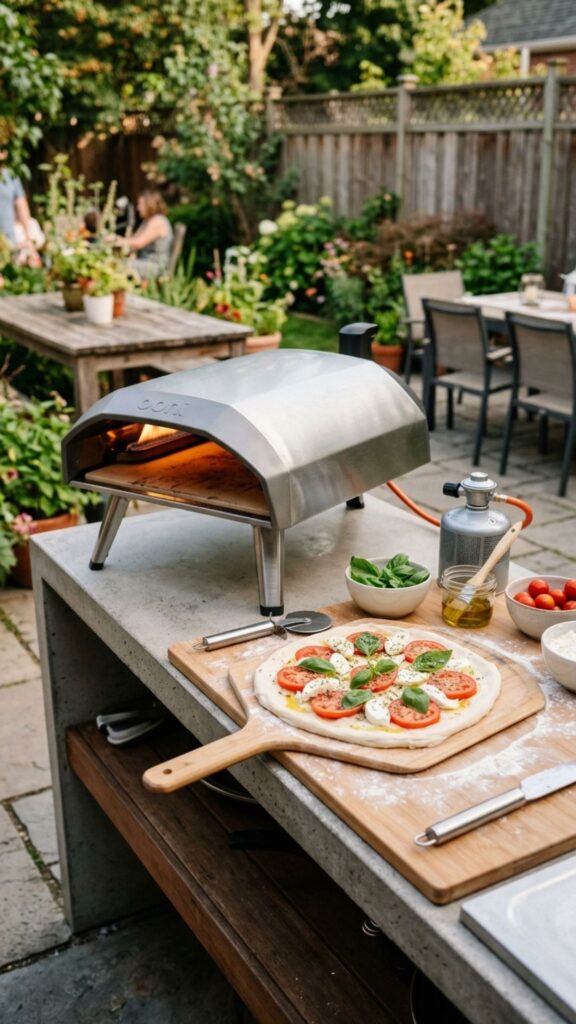
A countertop or small freestanding pizza oven brings a fun, high-value feature without demanding much room. Modern gas and wood models heat up in minutes and sit on a counter or a slim stand. Pizza night becomes the reason friends keep coming over.
Position it on a heat-safe surface with clearance from anything flammable. It’s proof that a small kitchen can still deliver a standout feature. Sometimes one great appliance defines the whole space.
Conclusion
A small backyard is an opportunity, not a limitation. The best outdoor kitchen ideas for small spaces all share one thing: they treat every inch as valuable and give each piece more than one job. Whether you start with a single foldable counter or commit to a full L-shaped build, the payoff is the same, more meals outside with the people you love.
Pick two or three ideas from this list that fit your yard and your budget, sketch a rough plan, and start small. You can always add a module or an appliance later. Ready to build? Grab a tape measure, map your space this weekend, and take the first step toward the outdoor kitchen you’ll actually use.
How much space do you need for a small outdoor kitchen?
You can build a functional outdoor kitchen in as little as 6 to 8 feet of linear counter space. A compact grill, a two-foot prep area, and some vertical storage fit comfortably along a single wall or fence. The key is a smart layout, not a big footprint.
What is the cheapest way to build an outdoor kitchen in a small space?
The cheapest route is a rolling prep cart paired with a compact freestanding grill and wall-mounted storage. This setup skips permanent construction and plumbing, often costing a few hundred dollars while still giving you counter space, tools, and flexibility.
Do outdoor kitchens need plumbing and electricity?
Not always. Many small outdoor kitchens run without either. You can use a garden hose for a simple sink, propane for cooking, and solar or battery lighting. Plumbing and electricity are upgrades that add convenience, not requirements for a working setup.
What is the best grill for a small outdoor kitchen?
A slim built-in grill around 24 to 30 inches, a ceramic kamado, or a classic kettle grill all work well. They have small footprints yet handle everything from quick weeknight dinners to slow smoking, making them ideal for tight spaces.
How do I protect a small outdoor kitchen from the weather?
Use weatherproof materials like stainless steel, concrete, and marine-grade surfaces, and cover appliances when not in use. Adding a slim pergola or overhead cover shields the space from sun and rain while keeping your floor footprint clear.