The bathroom is one of the most personal rooms in any home, yet it often gets overlooked when we daydream about renovations. That’s a shame, because a well-designed bathroom can feel like a daily retreat.
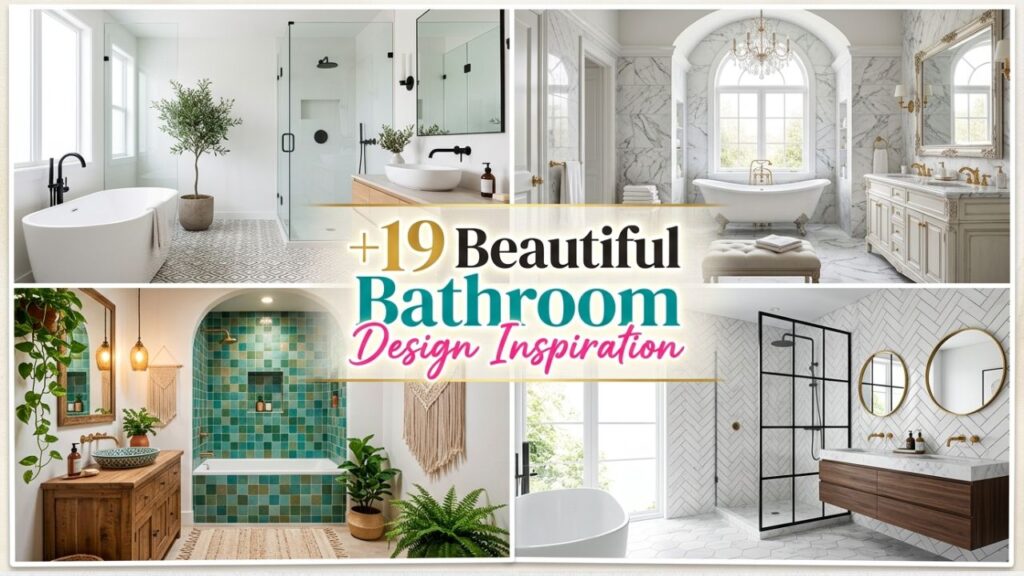
Whether you’re working with a cramped powder room or a sprawling primary suite, the right design choices make a huge difference in how the space looks and feels. After years of helping homeowners reimagine their spaces, I’ve learned that the best ideas are usually the ones you can actually pull off.
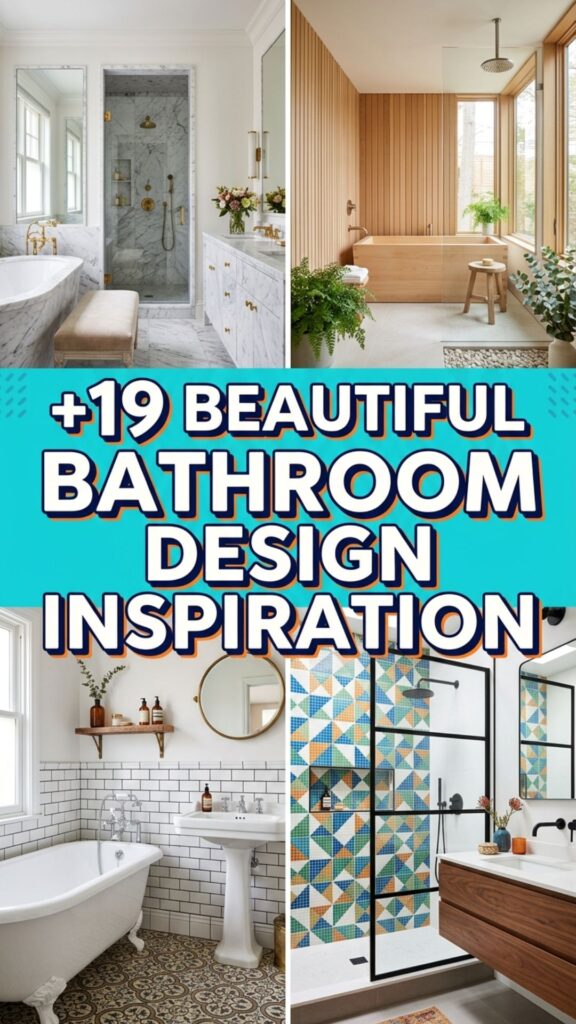
So in this guide, you’ll find 19 practical bathroom design inspiration ideas worth copying. Each one comes with real tips you can use, whether you’re planning a full remodel or just freshening things up over a weekend.
1. Go Bold With a Statement Floor Tile
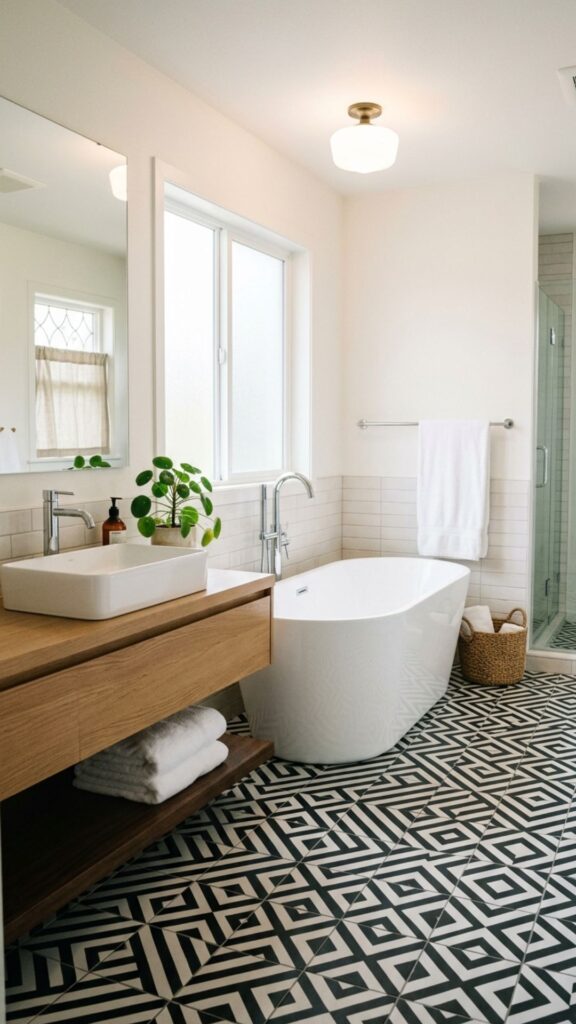
Floor tile is the easiest way to add personality without overwhelming the room. Patterned cement tiles, hexagons, or classic black-and-white checkerboard designs instantly draw the eye and give your bathroom a custom feel. Because floors are mostly covered by fixtures, you can be a little daring here without it feeling like too much.
If you’re nervous about commitment, peel-and-stick vinyl tiles offer a low-risk way to test a look. I’ve seen renters transform plain floors in an afternoon with these. For a permanent option, porcelain holds up best against moisture and foot traffic, so it’s a smart long-term investment.
2. Embrace a Spa-Inspired Soaking Tub
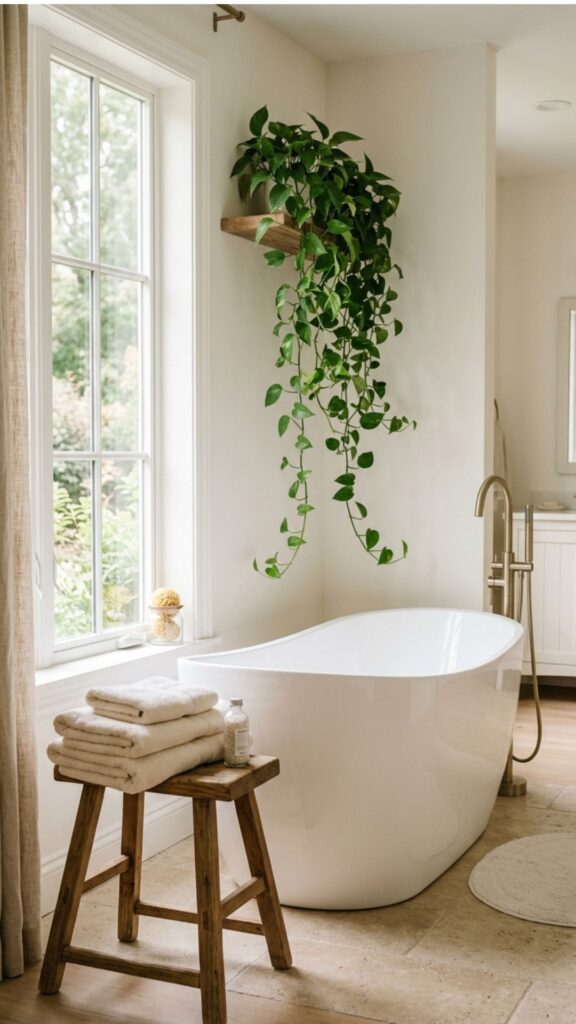
Nothing says relaxation like a freestanding soaking tub set in its own little nook. These tubs work beautifully as a focal point and pair well with both modern and traditional styles. Position one near a window if you can, so you get natural light during a long soak.
Keep the surrounding area uncluttered to lean into that spa feeling. A small wooden stool, a stack of rolled towels, and a single trailing plant are all you need. Avoid crowding the tub with shelves or cabinets, since the openness is exactly what makes it feel luxurious.
3. Mix Metals for a Curated Look
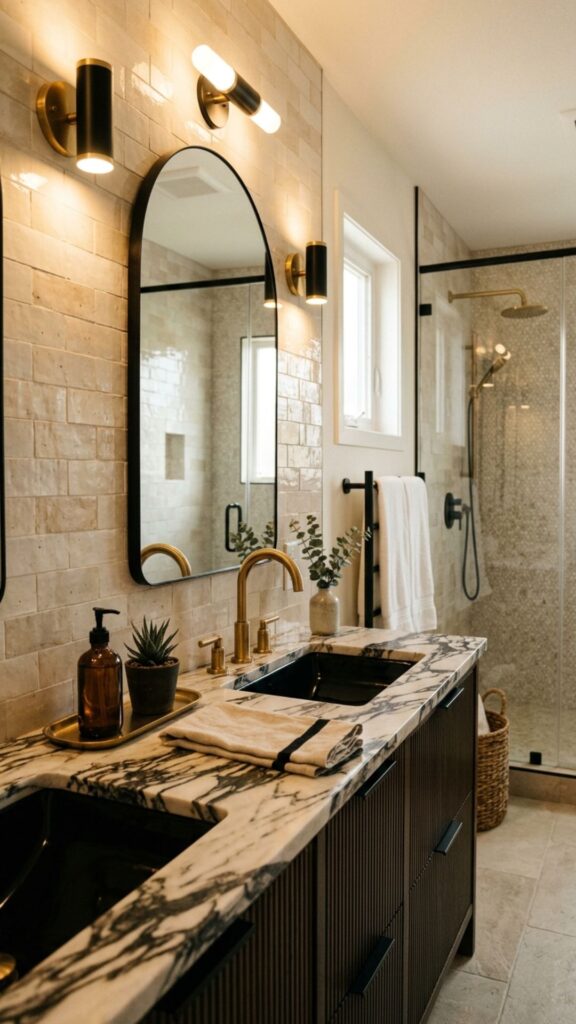
Matching every fixture to the same finish can feel flat. Mixing metals, such as brass faucets with matte black hardware, adds depth and a designer’s touch. The trick is to choose one dominant metal and use a second as an accent rather than splitting things 50/50.
A good rule of thumb is to repeat each metal at least twice so the choice looks intentional. For example, brass on the faucet and mirror frame, with black on the towel bars and light fixtures. This small detail signals careful planning and elevates the whole room.
4. Add Warmth With Natural Wood
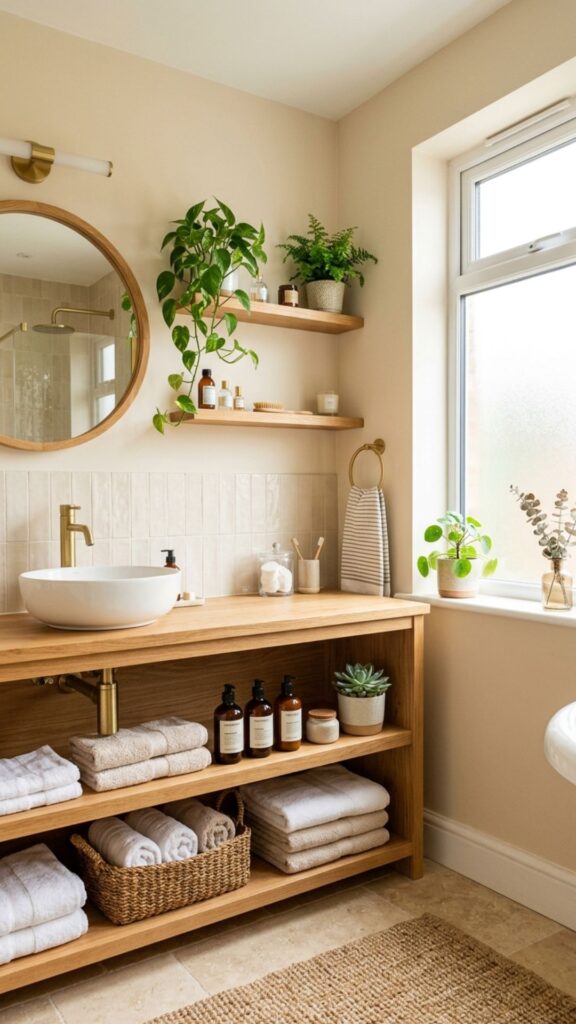
Wood brings instant warmth to a space that can otherwise feel cold and clinical. A teak vanity, wooden shelving, or even a slatted bath mat softens hard surfaces like tile and porcelain. Warmer wood tones also pair nicely with greenery and earthy color palettes.
Just be sure to choose moisture-resistant woods like teak or sealed oak. Bathrooms are humid by nature, so untreated wood can warp or stain over time. A quick reseal every couple of years keeps everything looking fresh and prevents long-term damage.
5. Install a Walk-In Rainfall Shower
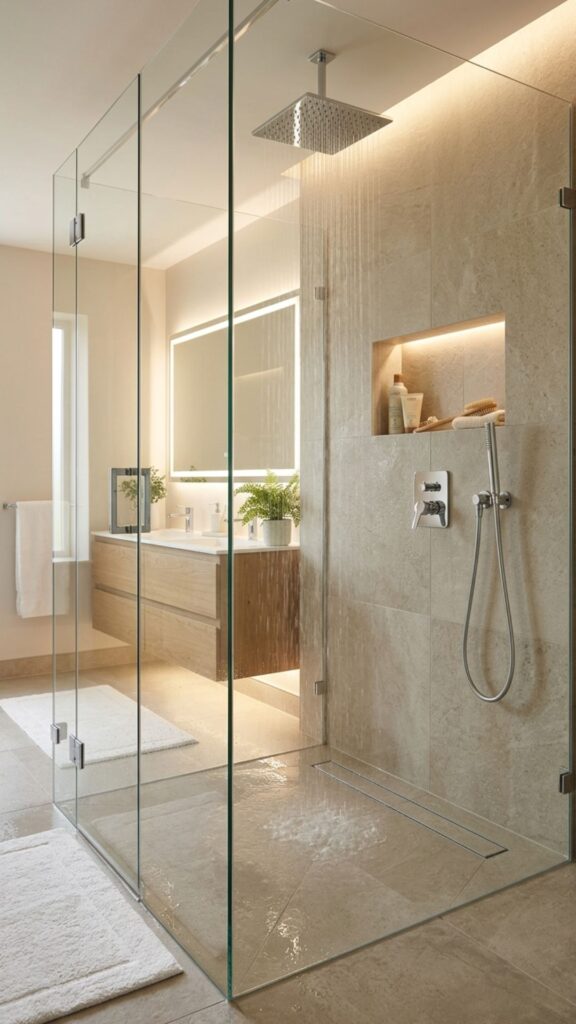
A frameless walk-in shower with a rainfall showerhead feels indulgent and looks sleek. Removing the tub-shower combo opens up the room visually and makes daily routines feel more spacious. This is one of the most requested upgrades I hear about from homeowners.
For smaller bathrooms, a glass partition instead of a full door keeps sightlines open. Add a built-in bench or niche for storage, and you’ve got a shower that’s both functional and beautiful. Linear drains also give the floor a clean, modern finish.
6. Create a Feature Wall With Textured Tile
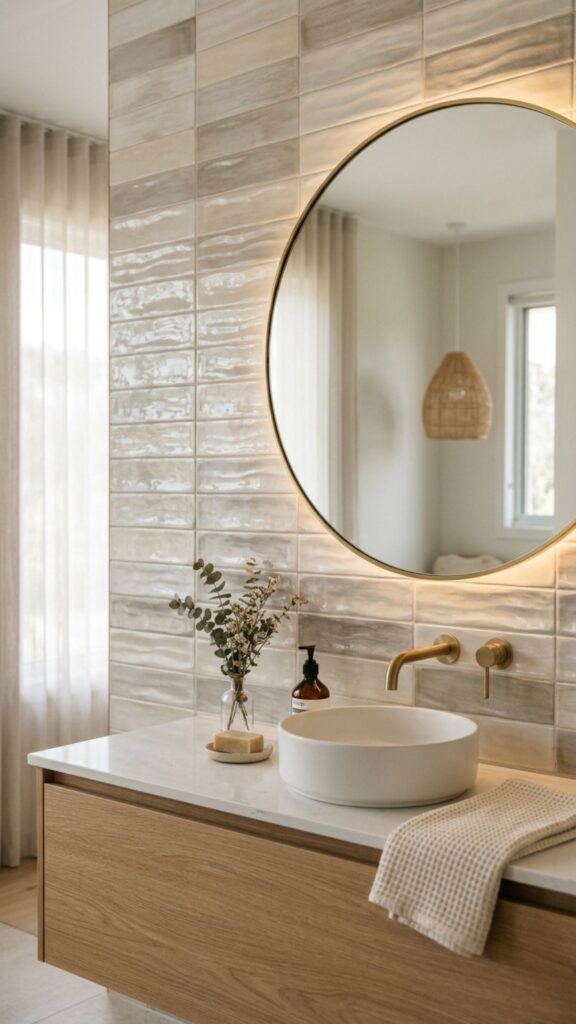
A single accent wall covered in textured or fluted tile adds drama without much effort. Zellige tiles, with their handmade ripple, catch light in a way that flat tiles never could. Use this technique behind the vanity or inside the shower for maximum impact.
Keep the rest of the room simple so the feature wall stays the star. Neutral paint and plain flooring let the texture do the talking. This approach is especially effective in small bathrooms where one bold surface feels intentional rather than busy.
7. Brighten Up With Smart Lighting
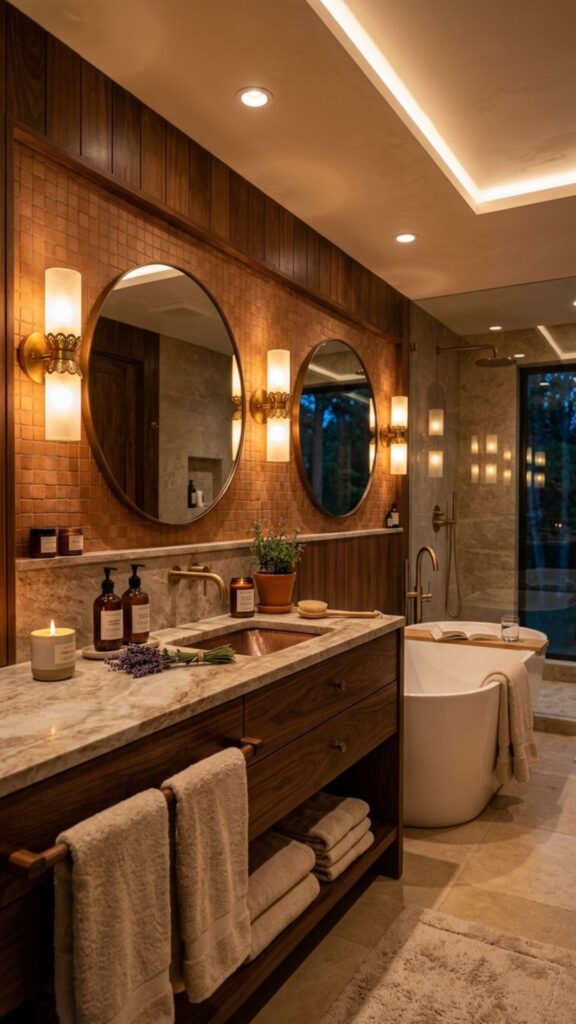
Lighting can make or break a bathroom. Layering it, with overhead lights, vanity sconces, and a dimmer switch, lets you shift from bright morning routines to a relaxing evening glow. Sconces placed on either side of the mirror reduce shadows and flatter your face.
Warm white bulbs around 2700K to 3000K feel cozy without distorting color. If you can, add a window or skylight for free natural light during the day. Good lighting design is something people feel even if they can’t quite name why a room works.
8. Maximize Storage With Built-In Niches
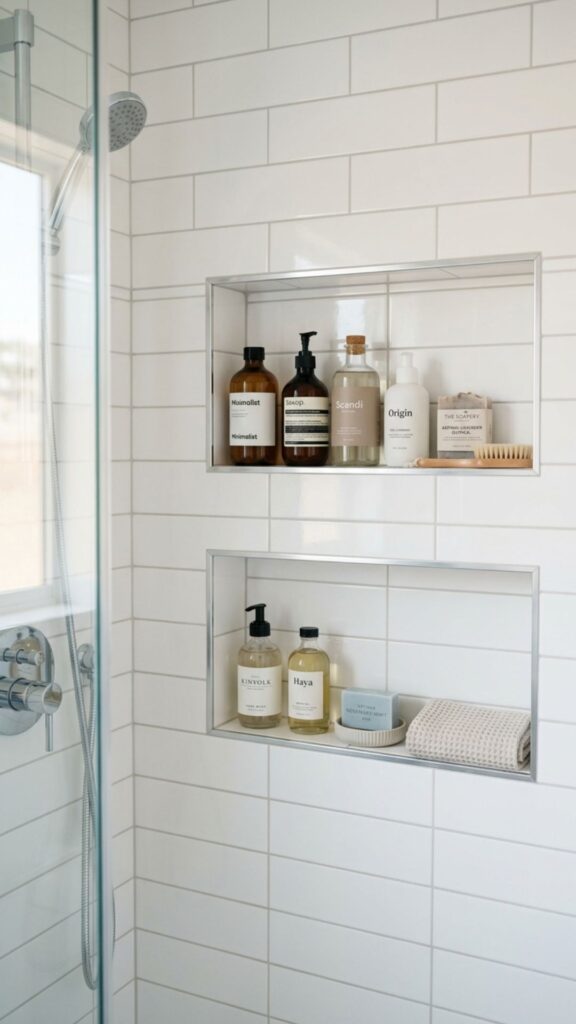
Recessed niches built into the shower or wall give you storage without bulky shelving. They keep shampoo bottles and soaps tidy while maintaining clean lines. Tiling the inside in a contrasting color turns a practical feature into a design detail.
Plan niche placement before tiling, since adding them later is far more expensive. Set them at a comfortable reaching height, and add a small ledge for items you grab daily. This is one of those quiet upgrades that makes everyday life noticeably easier.
9. Try a Moody Dark Color Scheme
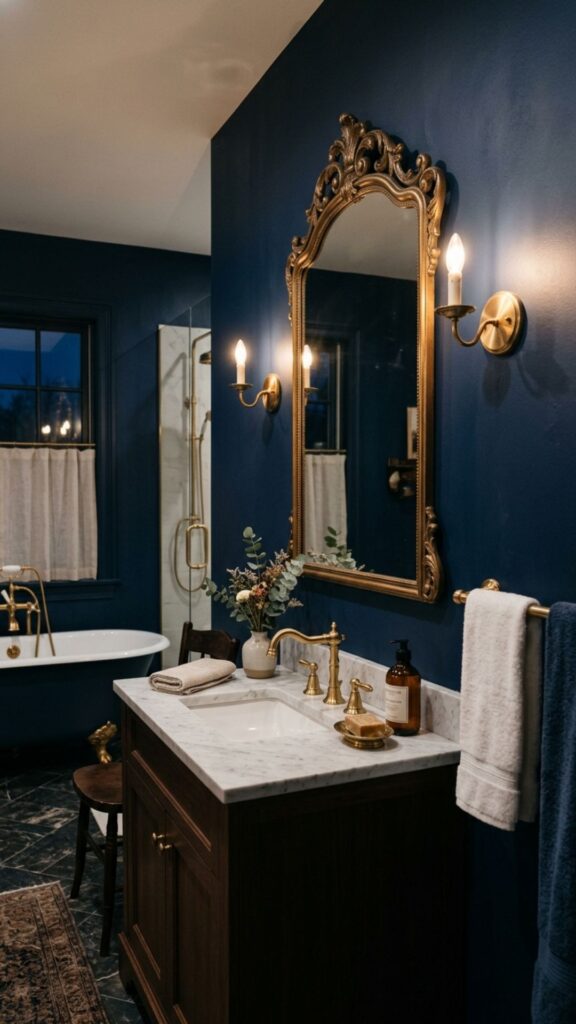
Dark bathrooms have a cozy, dramatic appeal that lighter spaces can’t match. Deep navy, charcoal, or forest green walls create a sense of intimacy, especially in powder rooms. Pair dark walls with brass or gold accents to keep things from feeling heavy.
Balance is key here. Use lighter flooring or a large mirror to bounce light around and prevent the room from feeling like a cave. Done well, a moody bathroom feels intentional and sophisticated rather than gloomy.
10. Float Your Vanity for a Modern Edge
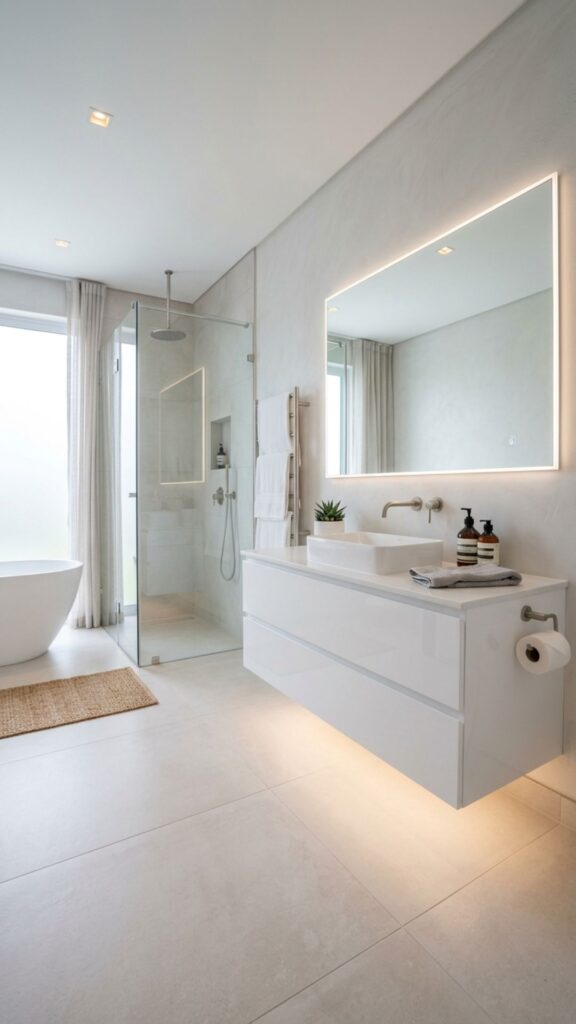
A wall-mounted floating vanity makes the floor visible beneath it, which tricks the eye into seeing more space. This works wonders in small bathrooms. The look is clean, modern, and surprisingly practical for sweeping up dust.
Add under-cabinet lighting for a soft nighttime glow that doubles as a nightlight. Make sure the wall behind it can support the weight, since floating vanities need solid backing or extra framing. The payoff is a room that feels lighter and more open.
11. Bring the Outdoors In With Plants
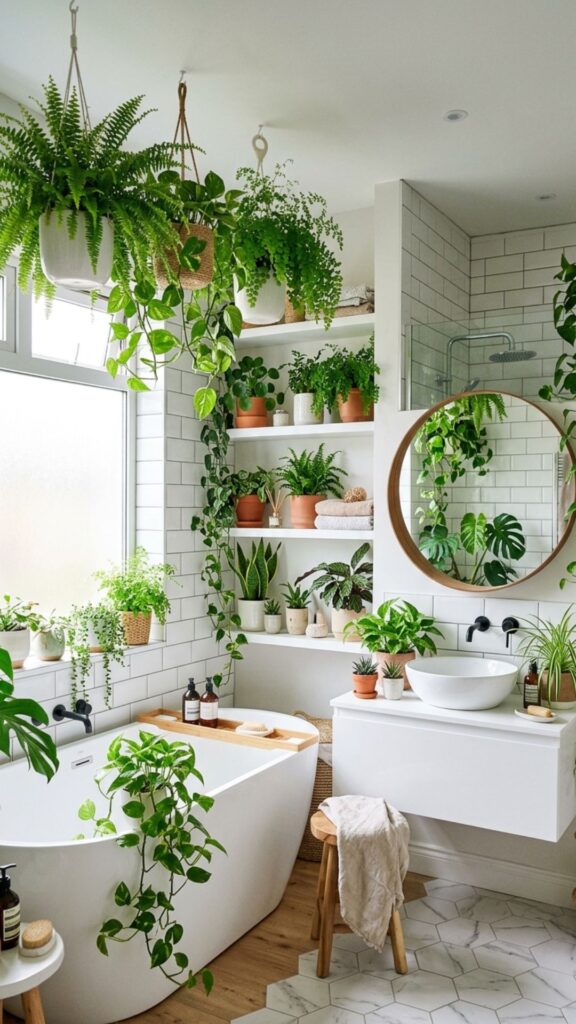
Greenery softens hard surfaces and adds life to a room full of tile and glass. Humidity-loving plants like ferns, pothos, and snake plants thrive in bathroom conditions with minimal fuss. Even one plant on a windowsill changes the whole vibe.
If your bathroom lacks natural light, choose low-light varieties or rotate plants in and out. Hanging planters and small shelf-top pots work when counter space is tight. This is the cheapest bathroom design inspiration idea here, and one of the most rewarding.
12. Choose a Striking Vessel Sink
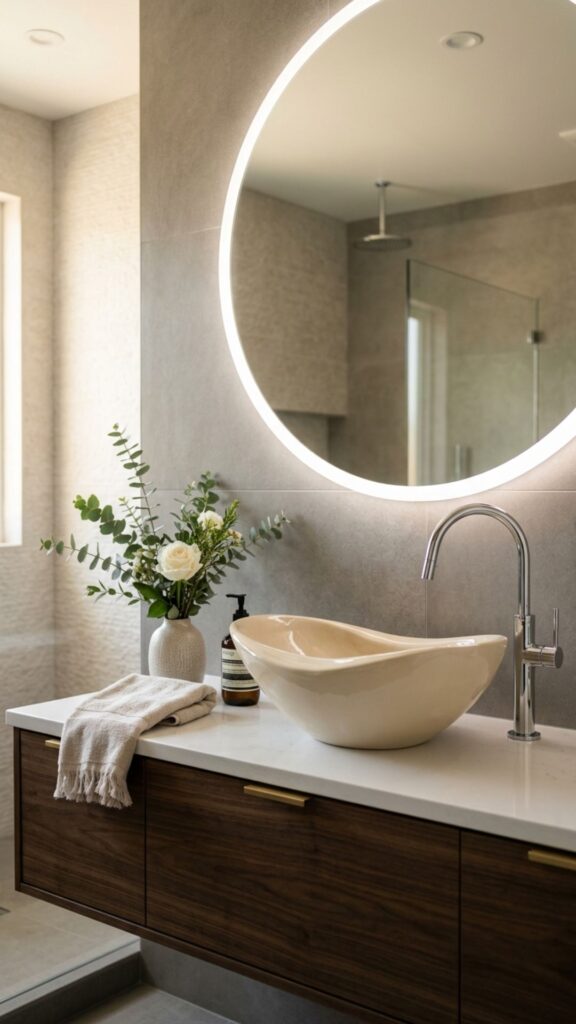
A vessel sink that sits on top of the counter acts like sculpture, adding instant character. Available in stone, ceramic, glass, and concrete, these sinks let you show off real personality. They’re a favorite in guest bathrooms where you want a memorable detail.
Pair a vessel sink with a tall faucet designed for the extra height. Keep in mind they sit higher than standard sinks, so factor that into your vanity height. The result is a focal point that guests notice the moment they walk in.
13. Lay Herringbone or Chevron Patterns
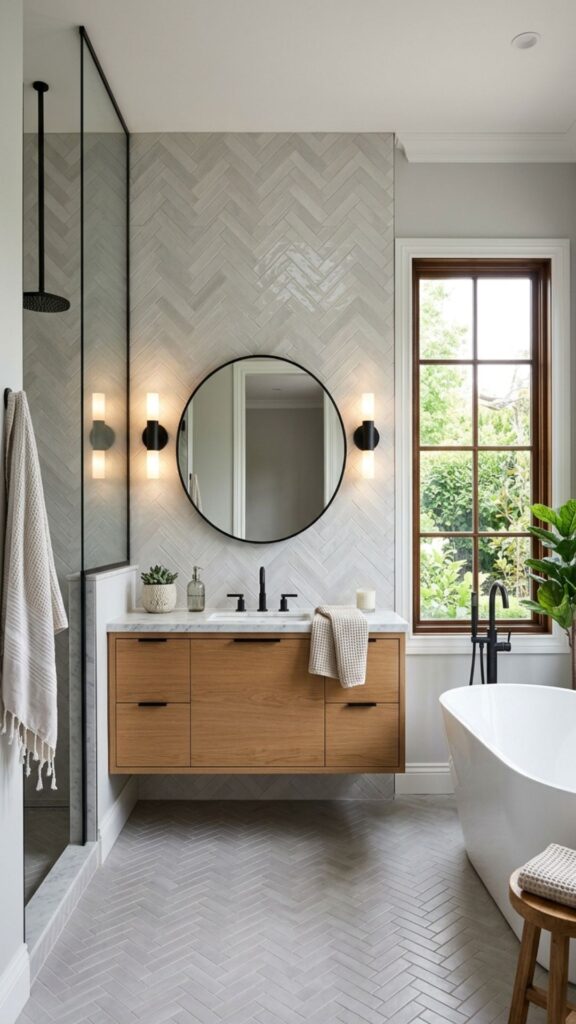
Arranging tiles in a herringbone or chevron pattern adds movement and craftsmanship to walls and floors. These classic layouts feel timeless yet fresh, working with everything from subway tiles to natural stone. The diagonal lines also make narrow rooms feel longer.
Pattern installation takes more skill and a bit more tile, so budget accordingly. For a subtle version, use the same color tile in a herringbone layout, letting texture rather than color carry the design. It’s an elegant detail that reads as high-end.
14. Install Heated Floors for Everyday Luxury
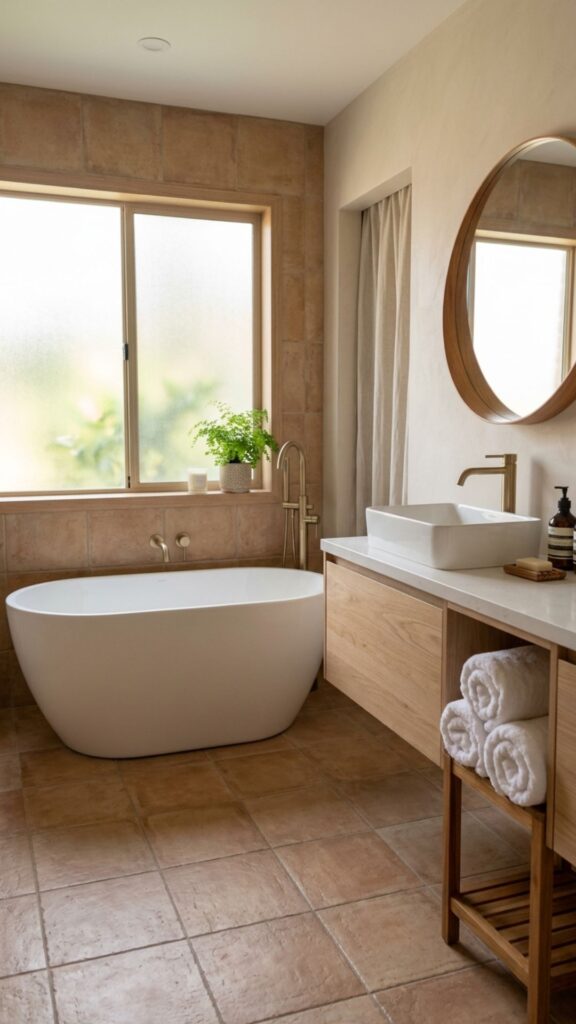
Stepping onto a warm floor on a cold morning is a small luxury that quickly feels essential. Radiant floor heating slips under tile and keeps the whole room comfortable. It’s surprisingly energy efficient since heat rises evenly from the ground up.
This upgrade is easiest during a full renovation when floors are already coming up. Pair it with a programmable thermostat so the floor warms before you wake. Homeowners who add this almost never regret it, even with the upfront cost.
15. Make the Mirror a Focal Point
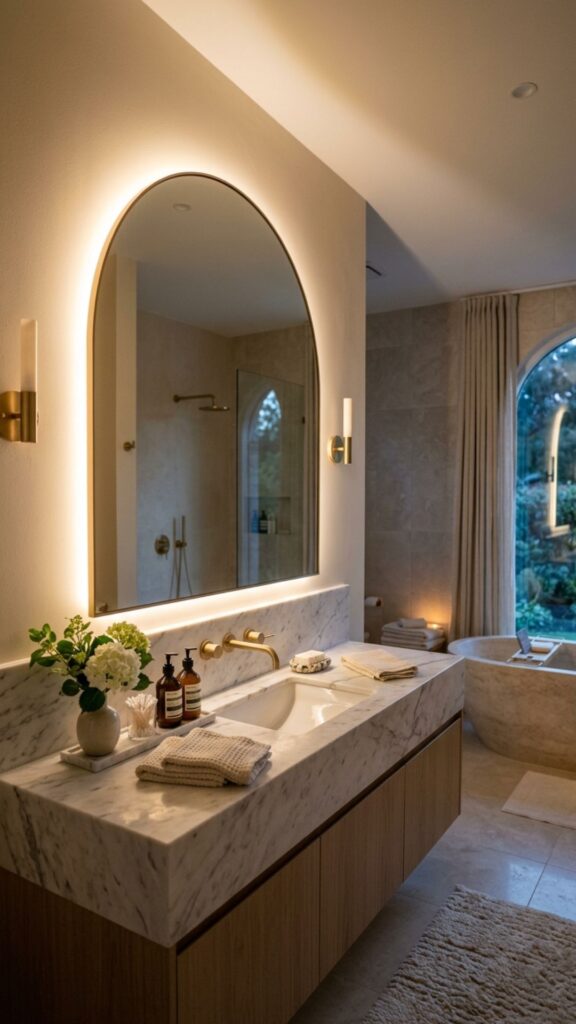
A unique mirror can anchor the entire room. Skip the plain rectangle and try an arched, round, or ornately framed option instead. Oversized mirrors also reflect light and make small bathrooms feel twice as large.
Backlit LED mirrors add a modern, hotel-like glow and often include anti-fog features. Choose a shape that contrasts with your room’s lines, like a round mirror against square tiles, for visual interest. The mirror is one accessory worth splurging on.
16. Use Wainscoting for Classic Charm
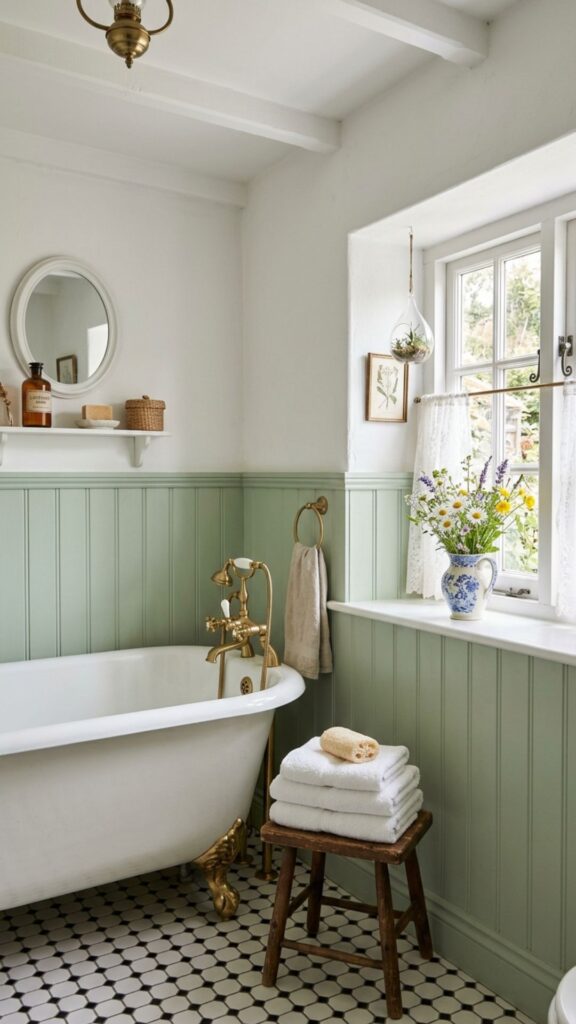
Wainscoting or beadboard along the lower walls adds texture and a touch of tradition. It protects walls from splashes while giving plain rooms architectural detail. Paint it a contrasting color from the upper wall for a crisp, polished look.
This treatment suits cottage, farmhouse, and transitional styles beautifully. Keep proportions in mind, with paneling typically covering the lower third of the wall. It’s an affordable way to make builder-grade bathrooms feel custom and considered.
17. Design a Double Vanity for Shared Spaces
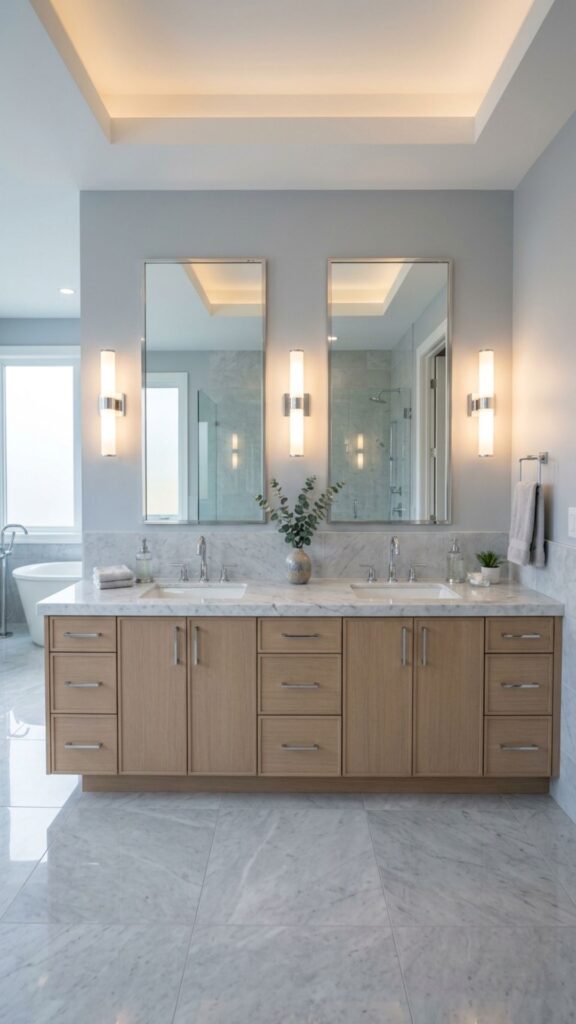
If two people share a bathroom, a double vanity ends the morning bottleneck. Two sinks and plenty of counter space make daily routines smoother and reduce clutter. This is a top priority for couples planning a primary bathroom remodel.
Make sure you have at least 60 inches of width to fit two sinks comfortably. Add separate storage drawers for each person to keep things organized. A shared bathroom that functions well is worth the extra planning every single morning.
18. Add Personality With Wallpaper
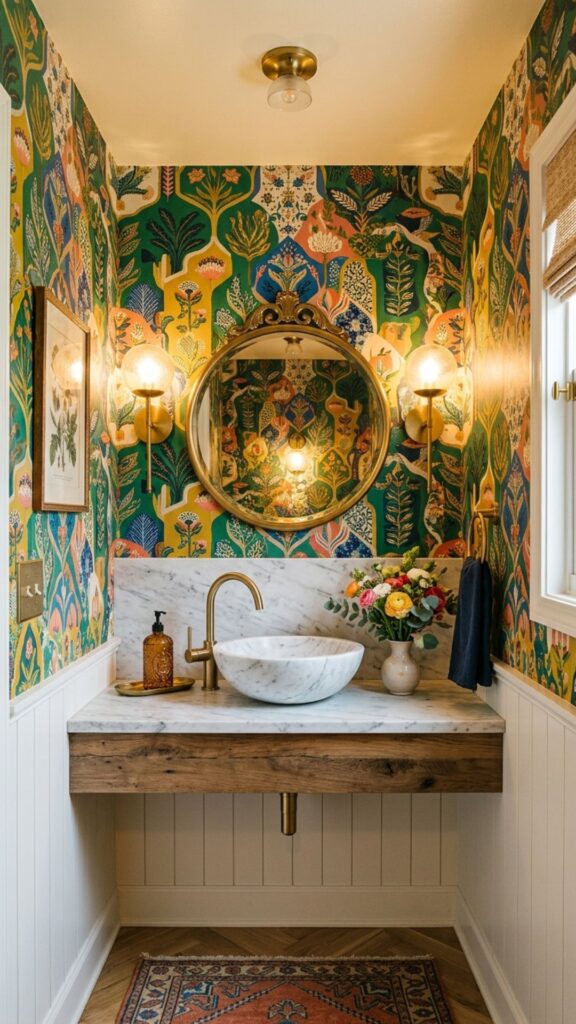
Moisture-resistant wallpaper has made a major comeback in bathrooms. Bold florals, geometric prints, or subtle textures bring instant personality that paint can’t match. Powder rooms are the perfect testing ground since they avoid direct water exposure.
Choose vinyl-coated or specifically bathroom-rated wallpaper to handle humidity. For high-moisture areas, keep paper away from the shower and tub splash zones. A patterned half-bath always sparks conversation and shows off your style.
19. Keep It Simple With Minimalist Design
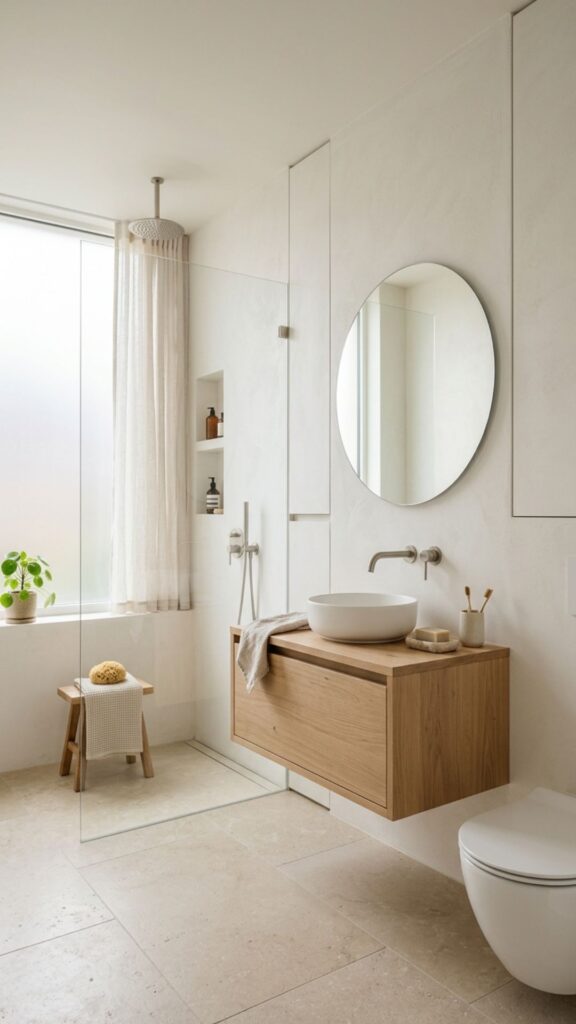
Sometimes the most striking bathroom design inspiration comes from restraint. A minimalist palette of white, gray, and natural textures feels calm and timeless. Clean lines, hidden storage, and a clutter-free counter create a serene, easy-to-maintain space.
Invest in quality over quantity here, since fewer elements means each one matters more. A single beautiful faucet, well-chosen hardware, and good lighting carry the whole room. Minimalism ages gracefully and never goes out of style.
Bring Your Dream Bathroom to Life
A beautiful bathroom doesn’t require a massive budget or a complete tear-down. Often, one or two thoughtful changes, like a statement mirror, fresh tile, or layered lighting, transform the entire feel of the space. The 19 ideas above give you a starting point whether you’re refreshing a rental or planning a full renovation.
Pick the ideas that match your style and budget, then start small. Save inspiration photos, measure your space carefully, and consult a trusted contractor for anything involving plumbing or electrical work. Ready to get started? Grab a notebook, choose your three favorite ideas from this list, and begin sketching out your dream bathroom today.
What is the most popular bathroom design trend right now?
Spa-inspired bathrooms lead the way, featuring walk-in rainfall showers, freestanding soaking tubs, and natural materials like wood and stone. Homeowners increasingly want their bathrooms to feel like a personal retreat rather than just a functional space.
How can I make a small bathroom look bigger?
Use large mirrors, light colors, and a floating vanity to create the illusion of space. Glass shower partitions instead of curtains keep sightlines open, and consistent flooring throughout makes the room feel more expansive.
What is the best flooring for a bathroom?
Porcelain and ceramic tile are the best choices because they resist moisture, stand up to heavy use, and come in endless styles. For warmth and comfort, pair them with radiant floor heating underneath.
How much does a bathroom remodel typically cost?
Costs vary widely based on size and finishes, but most mid-range remodels fall between $10,000 and $25,000. Cosmetic updates like new paint, fixtures, and hardware can refresh the space for a few hundred dollars.
Can I update my bathroom without a full renovation?
Absolutely. Swapping out the mirror, updating hardware, adding plants, or applying peel-and-stick tile all make a big impact with minimal cost and effort. Small changes often deliver the biggest visual payoff.