The door you choose for your bathroom does more than close off a room. It sets the tone, saves space, and protects your privacy in ways most people never think about until something feels off. A cramped swing door in a tiny powder room or a flimsy slab that lets every sound through can sour the whole experience.
I’ve helped homeowners rethink dozens of bathrooms, and the entrance is almost always an afterthought, right up until it becomes the thing they regret. So let’s fix that now.
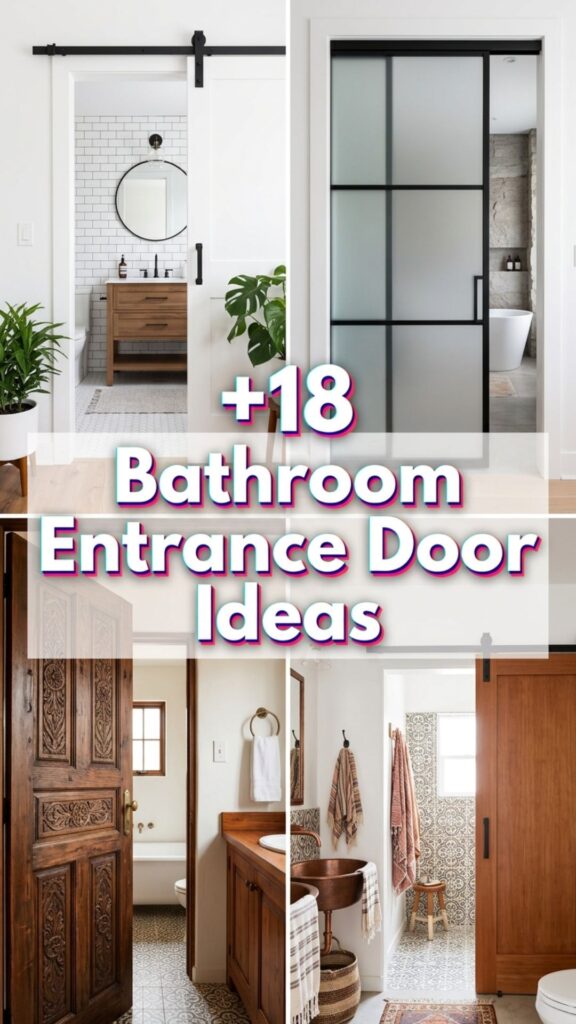
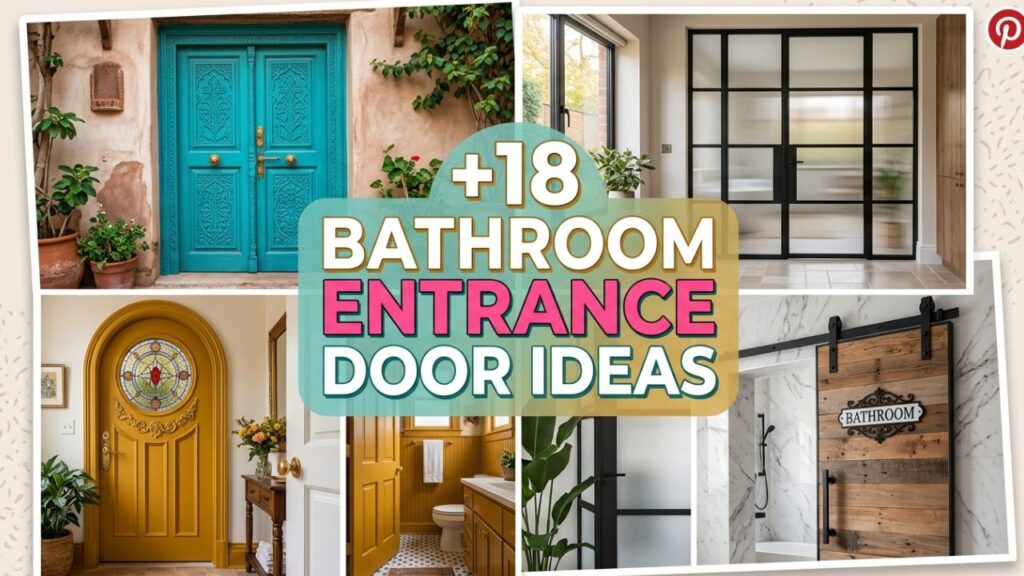
Below you’ll find 18 bathroom entrance ideas, each one balancing privacy, looks, and how the space actually functions. You’ll learn which doors work for tight floor plans, which ones add a designer touch, and how to match a door to your home’s style without overspending.
1. Classic Hinged Panel Door
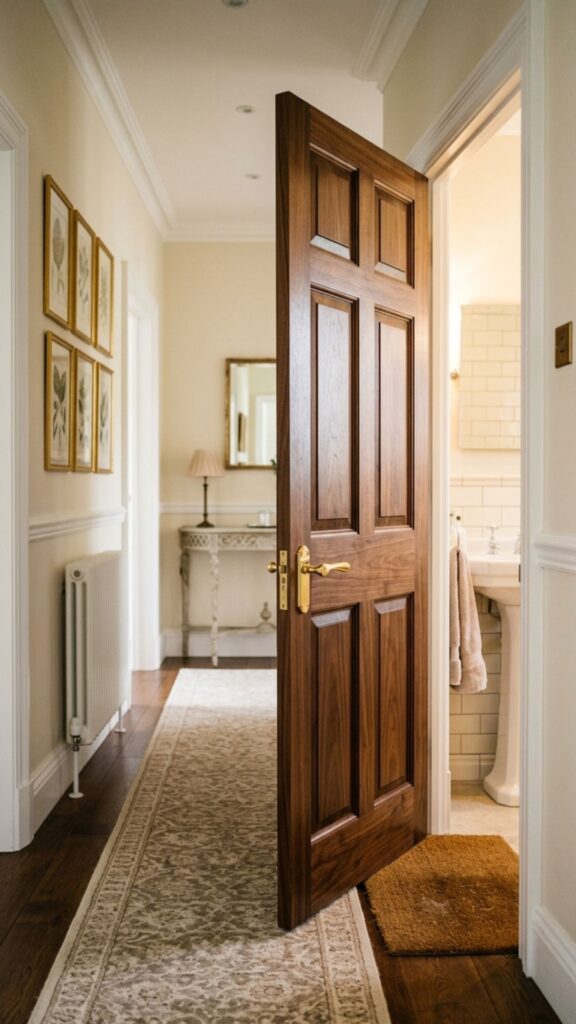
The standard hinged door is the workhorse of most homes for good reason. It seals tightly, blocks sound, and offers complete privacy when shut. A solid-core version feels heavier and muffles noise far better than a hollow one, which matters more than people expect in a shared bathroom.
The catch is the swing radius. You need roughly three feet of clear floor for the door to open, so it’s a poor fit for cramped spaces. If your bathroom entrance opens into a hallway with traffic, consider which direction it swings. Hinging it to open inward keeps the hallway clear and avoids the awkward dance of someone walking into a swinging door.
2. Sliding Barn Door
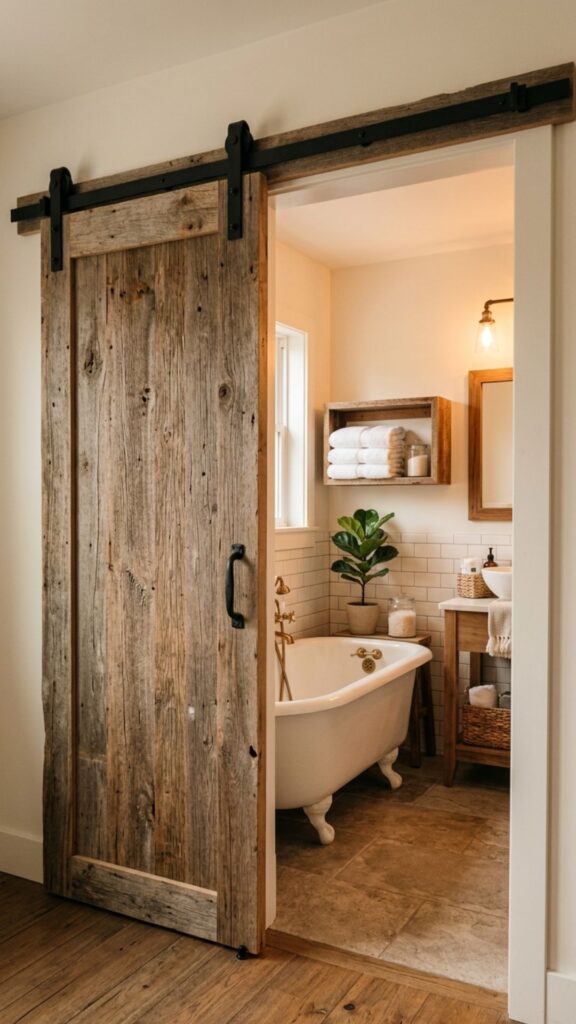
Barn doors have stayed popular because they save space and make a statement. Mounted on an exterior track, they glide along the wall instead of swinging out, freeing up the floor entirely. They suit farmhouse, industrial, and even modern interiors depending on the wood tone and hardware finish.
Privacy is the trade-off worth flagging. A standard barn door leaves a small gap along the edges, so it won’t fully block sound or light. For a primary bathroom entrance, add a soft-close mechanism and a privacy latch, and choose a panel slightly wider than the opening to minimize gaps. They shine best for ensuite bathrooms where total soundproofing isn’t critical.
3. Pocket Door
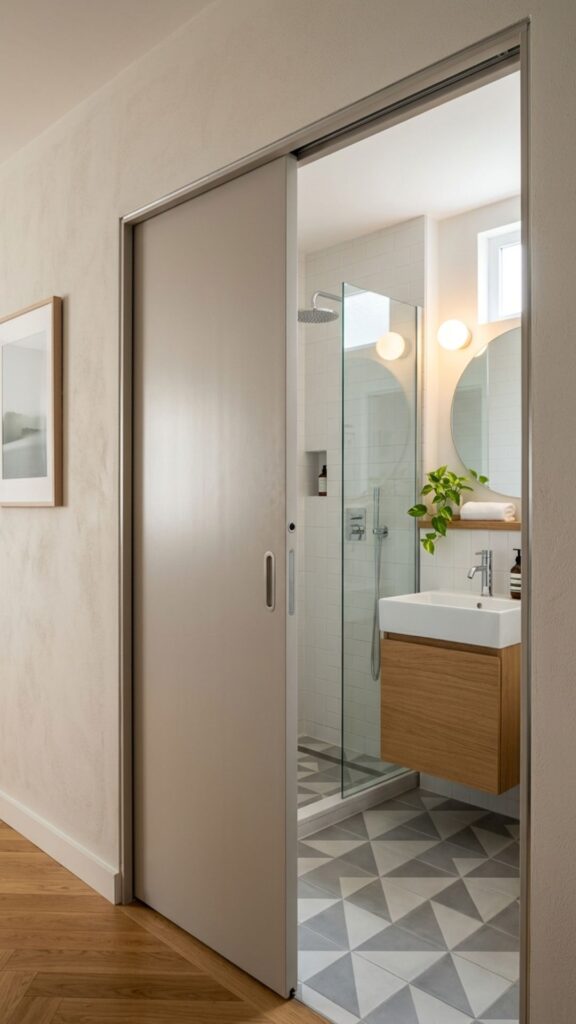
Pocket doors slide directly into the wall cavity, vanishing completely when open. This is the ultimate space-saver and a favorite for small bathrooms, ensuites, and tight hallways. When you need every square inch, a pocket door can reclaim the floor a swing door would steal.
Installation is the hurdle since the wall must be hollow enough to house the door. That usually means a renovation rather than a quick swap. Once in, choose quality rollers and a sturdy edge pull, because cheap hardware tends to jam over time. A well-built pocket door is one of the cleanest looks you can give a bathroom entrance.
4. Frosted Glass Door
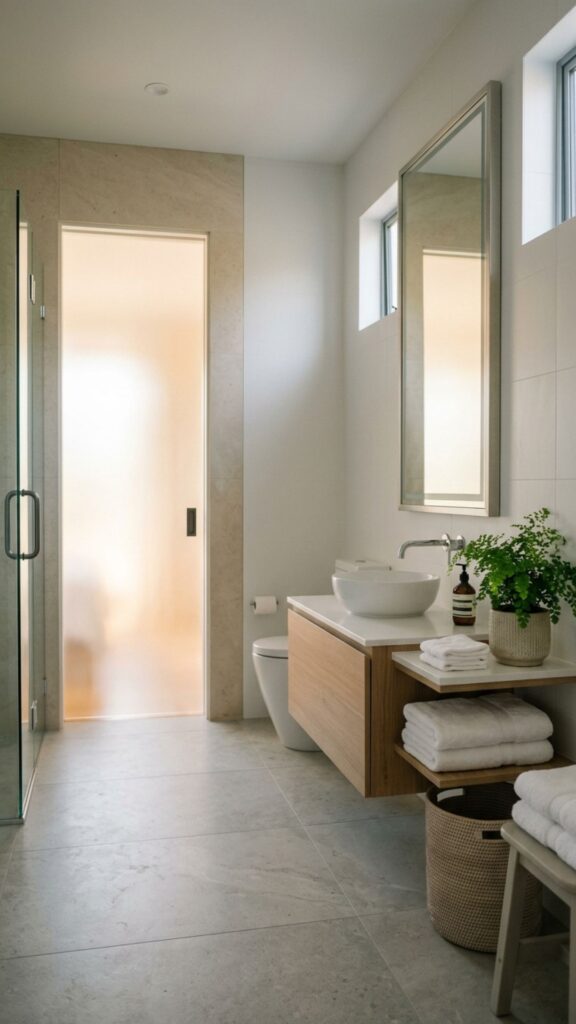
A frosted glass door brings light into windowless bathrooms while keeping things private. The obscured surface lets daylight pass without revealing what’s behind it, which makes a windowless interior bathroom feel far less like a closet. It’s a smart pick for ensuites that border a sunlit bedroom.
You can dial in the level of privacy by choosing the frost density or adding a textured, reeded, or fluted pattern. Reeded glass in particular has surged in popularity for its retro-modern look. Just remember glass shows water spots and fingerprints, so it asks for a quick wipe-down more often than a painted panel.
5. Double French Doors
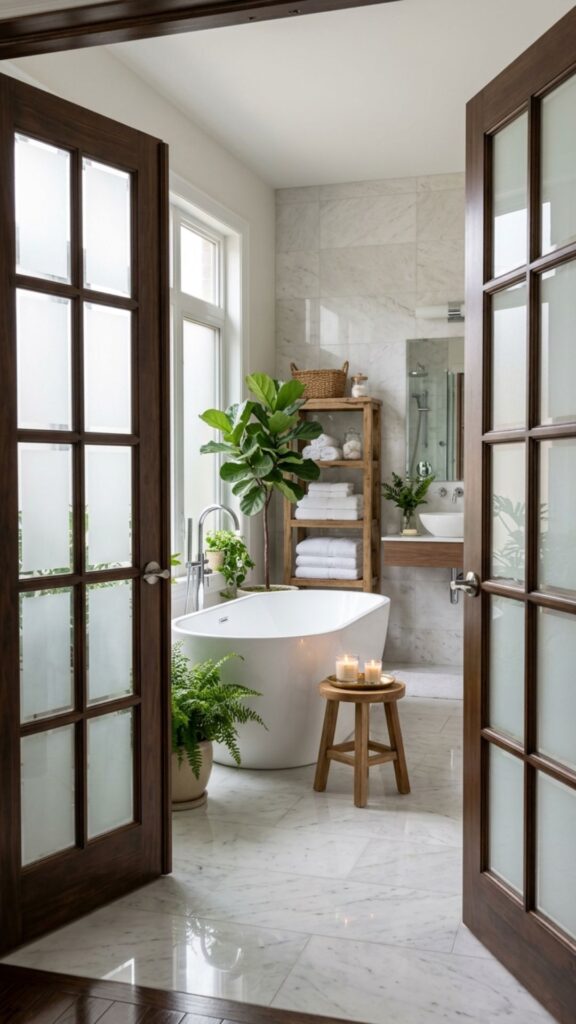
French doors aren’t only for living rooms. In a spacious primary suite, a pair of glass-paned doors can turn the bathroom entrance into a striking focal point. They suggest luxury and openness, especially when paired with a spa-style soaking tub visible beyond.
Privacy depends entirely on the glazing. Clear glass works only if the bathroom is private from the rest of the home, while frosted or curtained panels restore seclusion. These doors need ample clearance to swing open together, so reserve them for larger rooms. Done right, they make an everyday bathroom feel like a retreat.
6. Bi-Fold Door
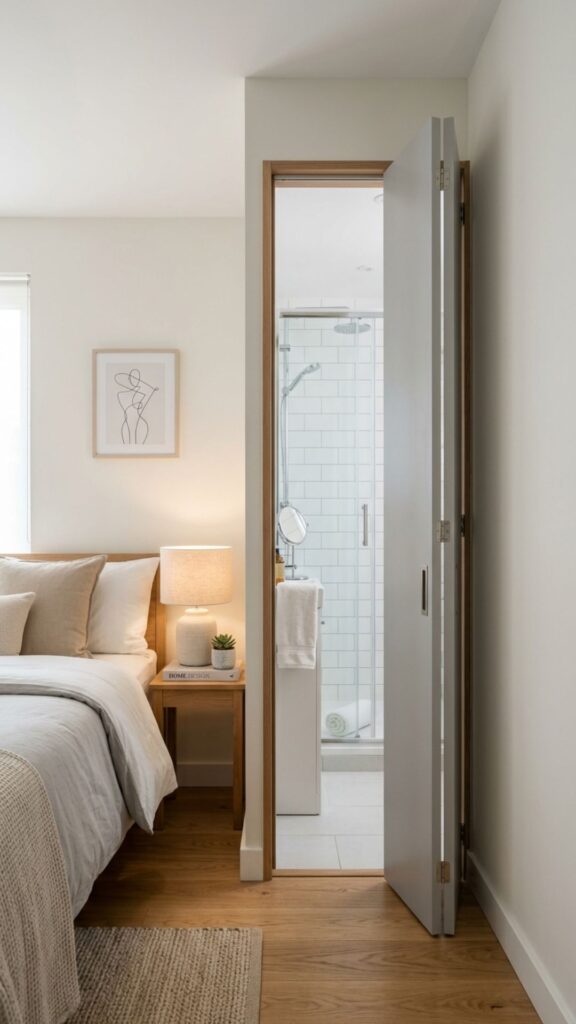
Bi-fold doors fold in on themselves like an accordion, needing only half the swing space of a standard door. That makes them a practical answer for narrow ensuites or bathrooms tucked behind a bedroom where a full swing won’t fit.
They work best as a budget-friendly fix rather than a luxury feature. The hinges and tracks can feel less solid over years of use, and they don’t seal as tightly as a single panel. If you go this route, pick a louvered version for ventilation or a solid one for better privacy in a powder room.
7. Dutch Door
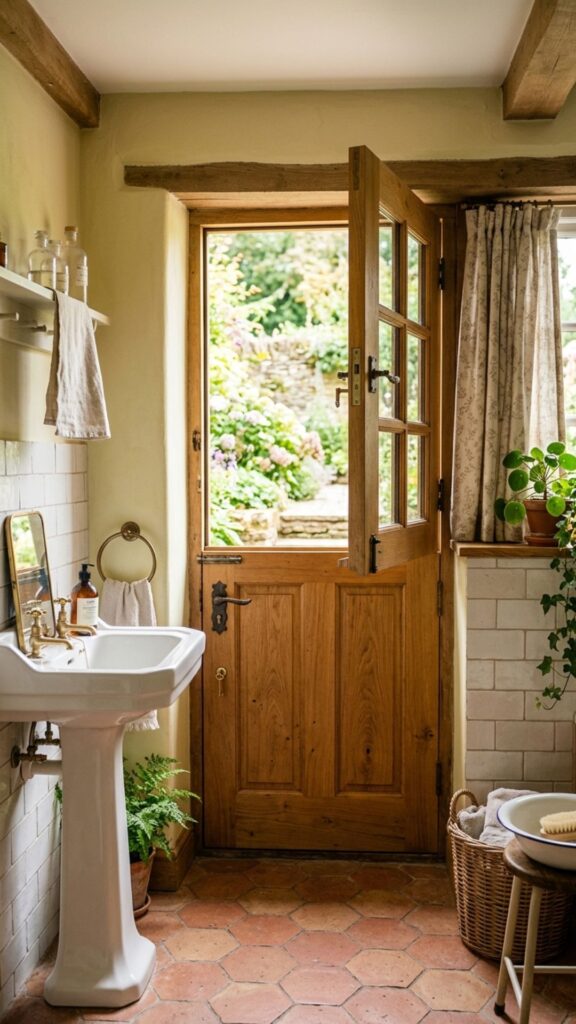
A Dutch door splits horizontally so the top and bottom open independently. It’s an unexpected choice that adds charm and lets you vent steam through the open top while keeping the lower half closed. Cottage and coastal homes carry the look especially well.
This style fits a primary bathroom or a kids’ bathroom where you might want airflow and a little supervision without leaving the whole door ajar. Full privacy means closing both halves, so it leans more decorative than purely functional. Still, few options spark as much conversation.
8. Mirrored Door
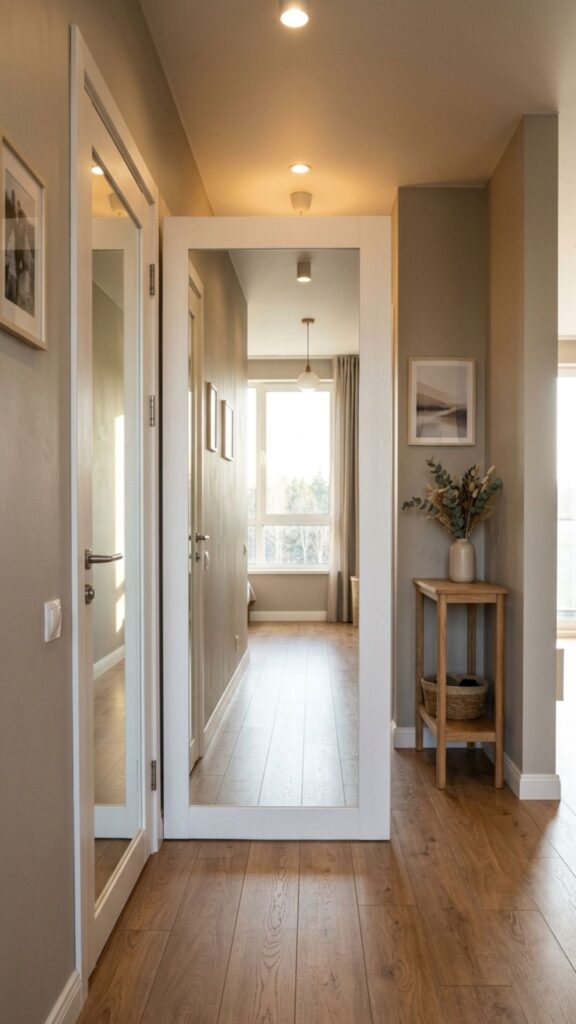
Mounting a full-length mirror onto the bathroom entrance pulls double duty in a small home. You get a dressing mirror and a door in one, and the reflection visually doubles the perceived size of a tight hallway or bedroom.
Mirrored doors look sleek on both sliding and hinged frames. Pair them with a solid core so the surface stays stable and the mirror doesn’t rattle when shut. The downside is upkeep, since the glass needs regular cleaning to stay smudge-free, but the space-expanding payoff is hard to beat.
9. Reclaimed Wood Door
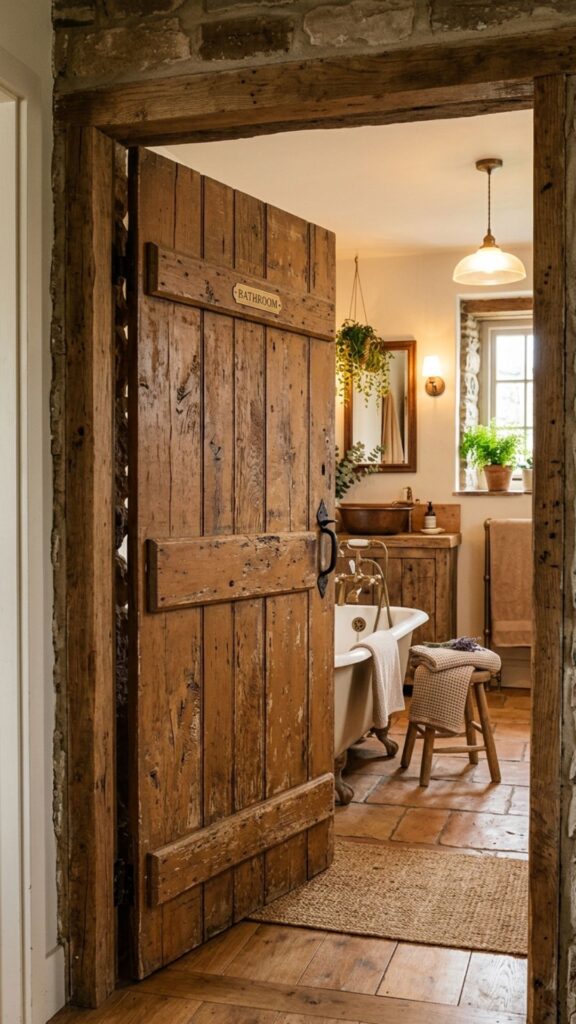
A salvaged wood door carries texture and history that a factory panel can’t fake. The grain, knots, and weathered finish add instant warmth and make the bathroom entrance feel like an intentional design choice rather than an afterthought.
Source these from architectural salvage yards or reclaimed lumber suppliers, then have a carpenter fit and seal the wood properly. Bathrooms hold moisture, so a good finish matters to prevent warping. The result is a one-of-a-kind piece that grounds a rustic, eclectic, or transitional space.
10. Painted Statement Door
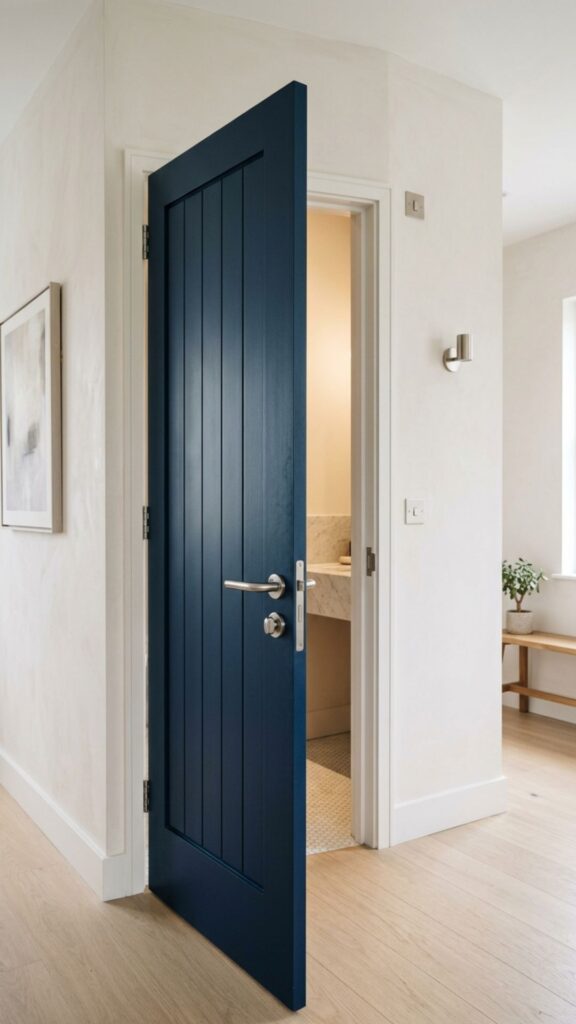
Sometimes the door itself becomes the art. A bold color, deep navy, forest green, or even matte black, turns an ordinary panel into a focal point that anchors the whole hallway. It’s the cheapest upgrade on this list and one of the most effective.
Choose a durable, washable paint finish that stands up to humidity and the occasional splash. Semi-gloss or satin resist moisture better than flat. Coordinate the hue with your hardware and trim, and you’ve transformed the bathroom entrance for the price of a paint can and an afternoon.
11. Louvered Door
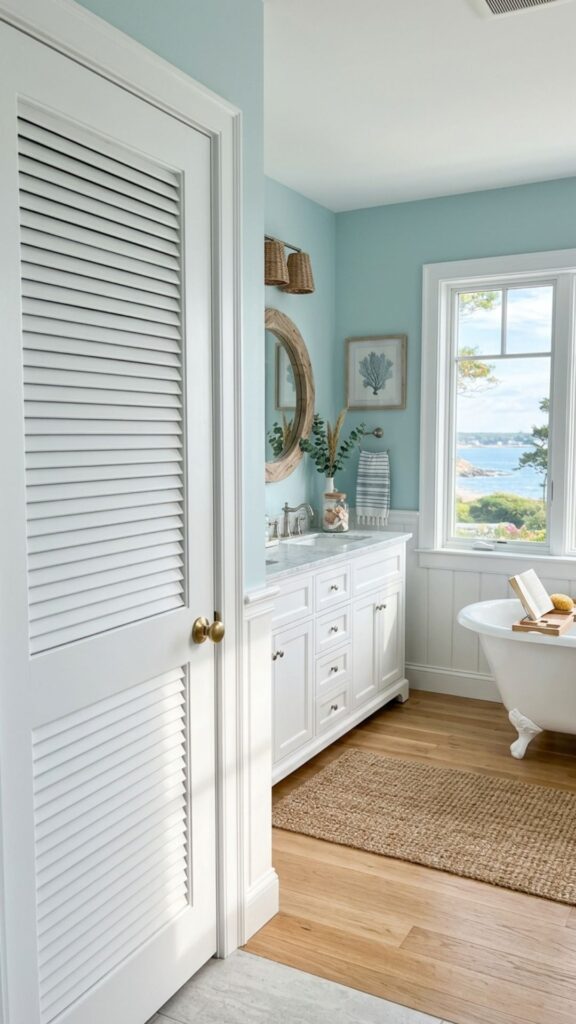
Louvered doors feature angled slats that allow air to flow even when the door is closed. That ventilation cuts down on trapped humidity and lingering odors, which is why you’ll often see them on bathrooms without an exhaust fan or window.
The slats do let sound and some light through, so they’re better suited to a guest bathroom or a laundry-adjacent space than a primary suite needing quiet. They lean coastal, cottage, or traditional in style. Keep in mind the slats collect dust and need occasional cleaning with a brush or cloth.
12. Frameless Glass Pivot Door
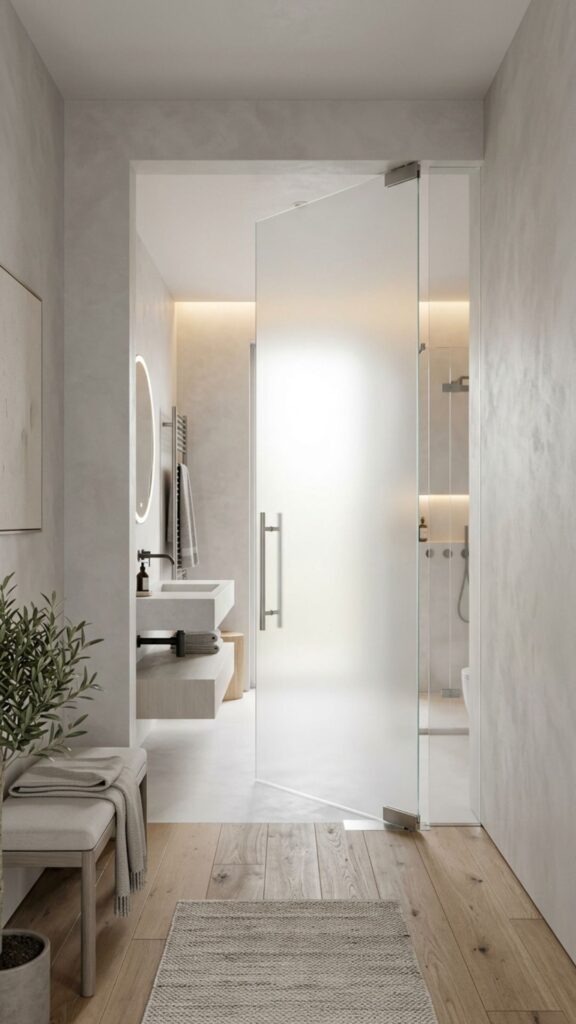
For a fully modern, high-end look, a frameless glass pivot door spins on a central or offset hinge instead of side hinges. It reads as architectural and minimal, ideal for contemporary homes where the bathroom is part of an open primary suite.
Privacy comes from acid-etched or smart-tinting glass that frosts at the flip of a switch. This is a premium option with a premium price, and it demands professional installation to get the pivot balanced correctly. When budget allows, it delivers a wow factor few other doors match.
13. Sliding Glass Pocket Wall
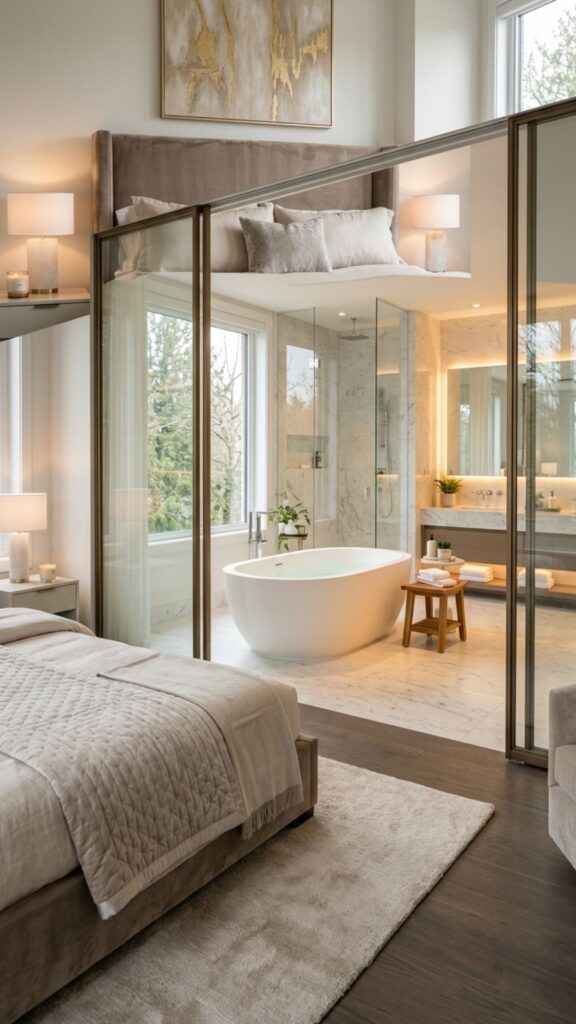
In luxury ensuites, an entire glass wall can slide away to merge the bathroom with the bedroom. This creates a seamless, open spa feel and floods both rooms with light. It’s a bold architectural move best suited to larger homes.
Smart glass that switches from clear to opaque solves the obvious privacy concern. The investment is significant and requires structural planning, so it’s a renovation decision rather than a simple door swap. For homeowners chasing a hotel-suite atmosphere, nothing else compares.
14. Arched Doorway With Door
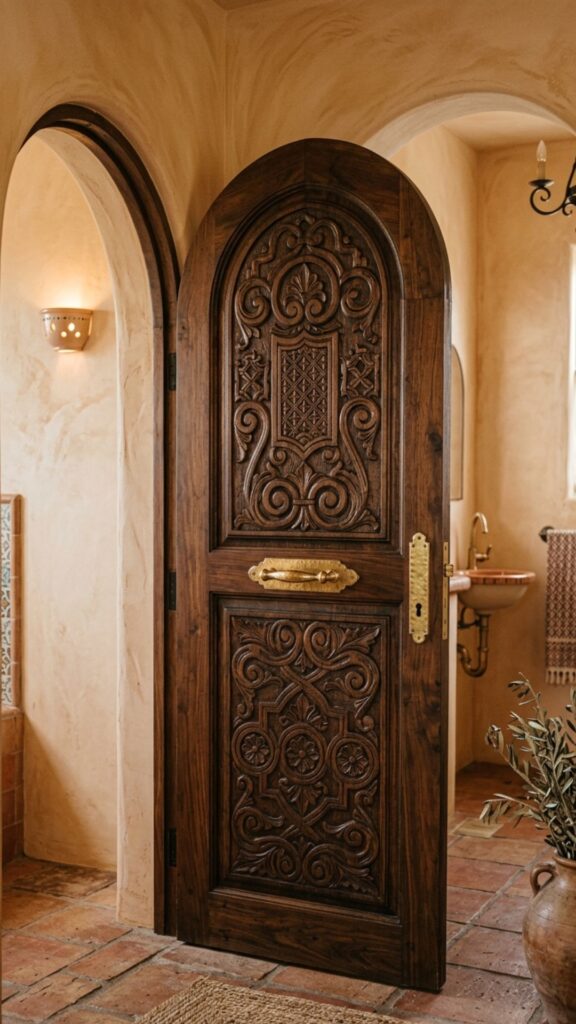
An arched top softens the hard lines of a standard rectangular opening and adds an Old World or Mediterranean elegance. Pairing an arched frame with a custom-cut door gives the bathroom entrance a sculpted, architectural quality.
Custom arched doors cost more because they aren’t off-the-shelf, but they elevate the entire space. They pair beautifully with plaster walls, terracotta tile, and wrought-iron hardware. If you’re after character that feels collected rather than catalog-ordered, this is worth the splurge.
15. Hidden Jib Door
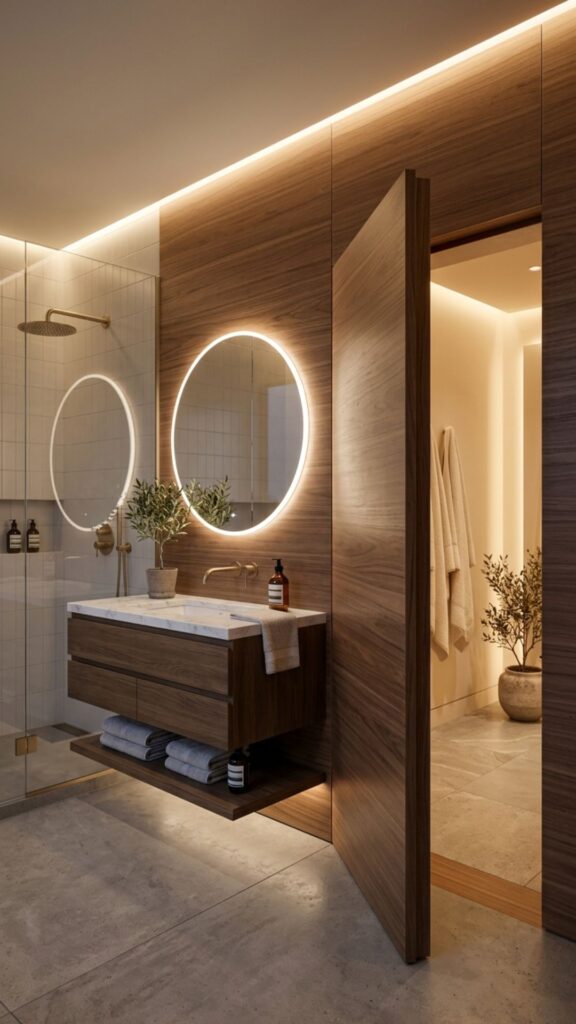
A jib door blends seamlessly into the wall, with no visible frame or trim, so it disappears into the surrounding paneling or paint. It’s a clever way to hide a powder room that sits in a prominent living area where you don’t want a door breaking the flow.
These require precise carpentry and a discreet touch latch instead of a knob. The effect feels almost magical when guests can’t spot the entrance until you press it open. It’s a high-end detail, but in the right home it adds genuine intrigue.
16. Steel and Glass Door
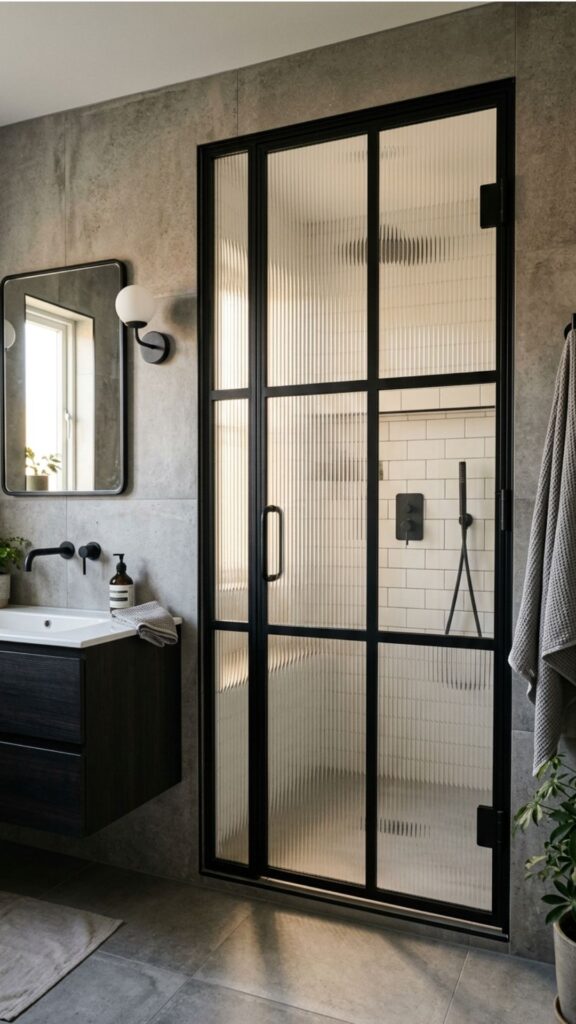
Black-framed steel doors with glass panels deliver that crisp, industrial-loft aesthetic that’s become a design staple. The slim metal grids create structure and contrast, making the bathroom entrance feel intentional and current.
Frosted or reeded glass within the frame keeps the interior private while preserving the look. Steel doors are heavier and pricier than wood, so confirm your framing can support the weight. They suit modern, industrial, and transitional homes, and they age well without going out of style quickly.
17. Curtain or Drapery Panel
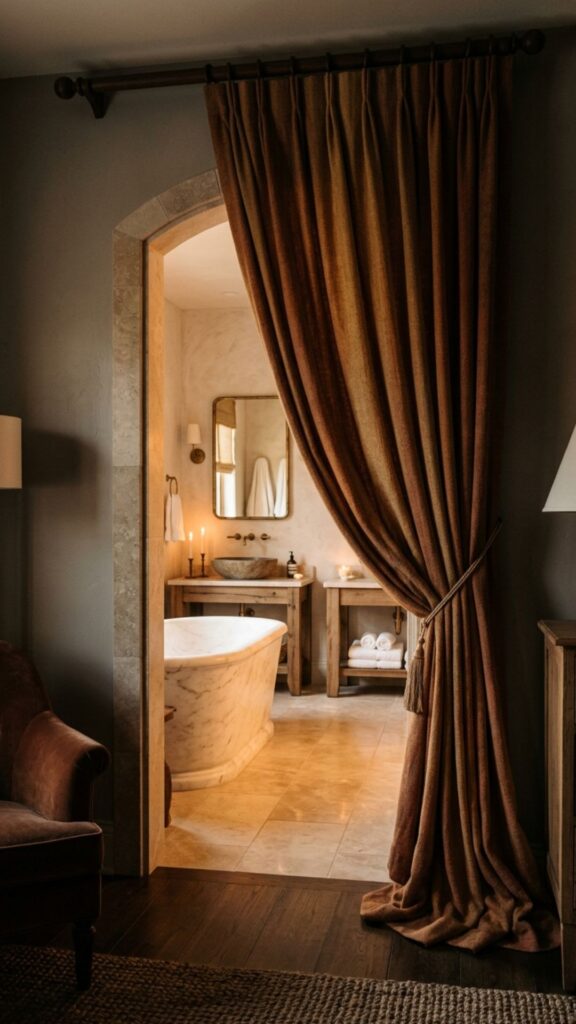
A floor-length curtain is the most flexible and affordable bathroom entrance solution, especially for ensuites or temporary setups. Hung on a sturdy rod, a heavy fabric panel softens the room and adds texture without any swing or track requirements.
The obvious limit is privacy and sound, so this works only where the bathroom adjoins a private bedroom. Choose a thick, lined fabric for the best coverage and a quality rod that won’t sag. It’s also a great stopgap during a renovation while you decide on a permanent door.
18. Telescoping Sliding Doors
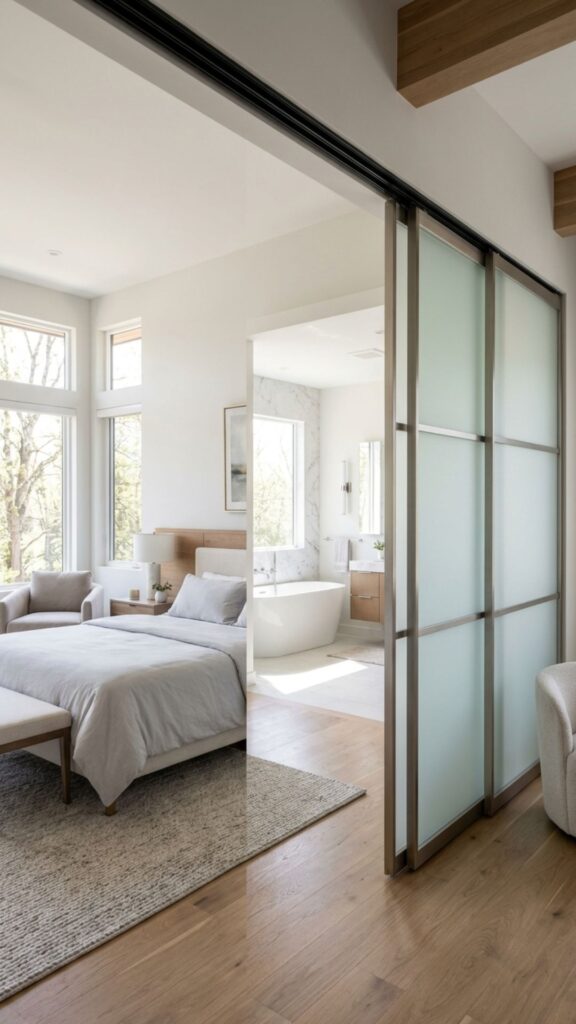
Telescoping doors stack two or more panels that slide and overlap, covering a wide opening while taking up minimal wall space. They’re a smart fit when a single sliding door would be too large to be practical, such as a wide bathroom entrance off a primary suite.
Because the panels overlap rather than disappear into the wall, you avoid the wall-cavity demands of a pocket door. Quality tracks and rollers keep the motion smooth, so don’t skimp on hardware. This option blends the space savings of sliding doors with coverage for unusually wide openings.
Conclusion: Choose the Door That Fits Your Space and Style
Your bathroom entrance shapes how the room feels every single day, from the privacy it offers to the first impression it gives. Whether you need a pocket door to reclaim floor space, a frosted panel to borrow light, or a barn door to make a statement, there’s an option here for every layout and budget.
Start by measuring your available swing space and identifying your top priority, whether that’s privacy, light, or saving room. Then narrow your list to two or three styles and price them out before committing. Ready to upgrade your bathroom entrance? Take measurements this weekend, set a budget, and talk to a contractor or visit a showroom to see your favorites in person.
What is the best door for a small bathroom entrance?
A pocket door is the best choice for a small bathroom because it slides into the wall and uses zero floor space. If wall-cavity installation isn’t possible, a barn door or bi-fold door are the next best space-saving options.
How much space does a bathroom entrance door need to swing open?
A standard hinged bathroom door needs roughly 30 to 36 inches of clear floor space to swing open fully. If you don’t have that clearance, choose a sliding, pocket, or bi-fold door instead.
Do barn doors give enough privacy for a bathroom?
Barn doors offer moderate privacy but leave small gaps along the edges that let light and sound through. For better privacy, choose a panel wider than the opening, add a privacy latch, and reserve them for ensuite bathrooms.
What kind of glass is best for a bathroom door?
Frosted, acid-etched, or reeded glass works best for bathroom doors because it lets in light while obscuring the view. Smart glass that switches from clear to opaque is a premium option for total privacy on demand.
How do I add privacy to a bathroom door without replacing it?
You can add privacy by applying frosted window film to glass panels, installing a privacy lock, hanging a curtain over the opening, or adding weather stripping to reduce sound. These quick fixes cost far less than a full door replacement.