If you want a space that feels warm, modern, and deeply personal, living room heartopia style gives you a strong place to start. It blends comfort with clean design, so your living room looks polished without feeling cold or staged.
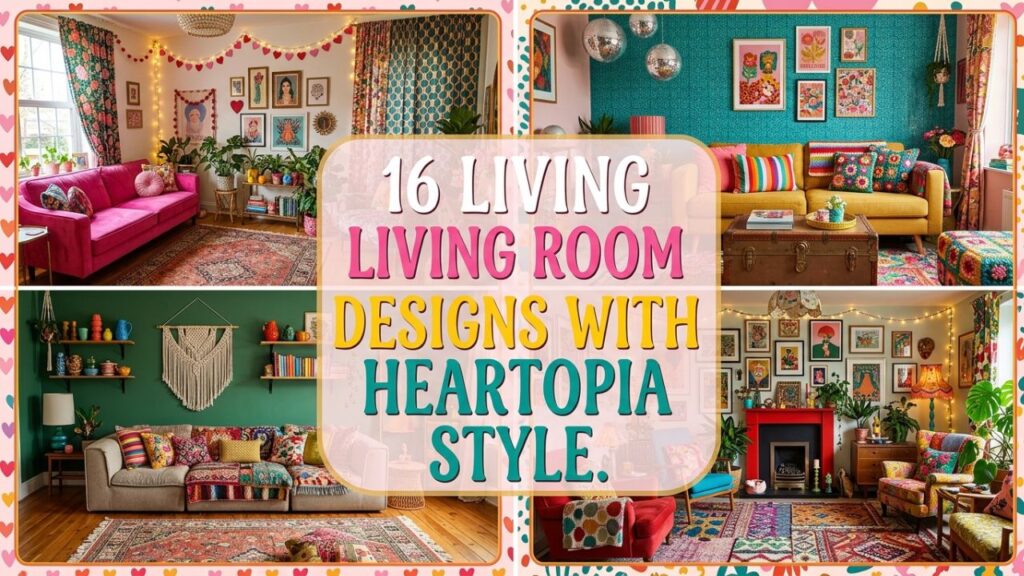
That balance is where many homeowners get stuck. A room can look trendy online but still feel flat in real life. Or it can feel cozy, yet appear cluttered and outdated. Heartopia style solves that by pairing modern lines with soft textures, natural light, and thoughtful details.
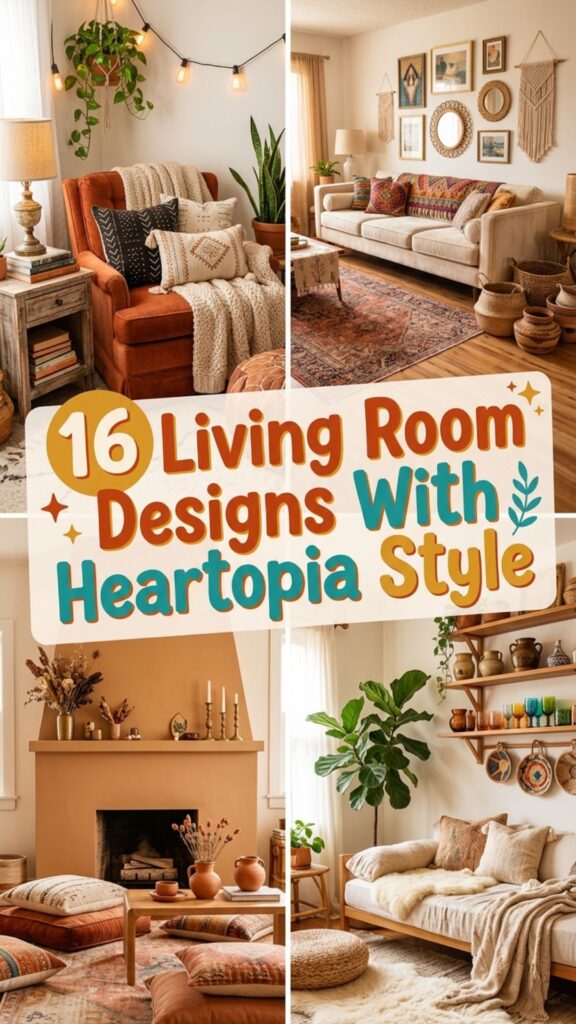
In this guide, you’ll find 16 practical living room heartopia ideas you can actually use. We’ll cover layouts, color palettes, furniture choices, lighting, and finishing touches that help you build a space that feels modern, welcoming, and easy to live in.
What Is Living Room Heartopia Style?
Living room heartopia style is a modern design approach that combines simplicity, comfort, and emotional warmth. It favors clean shapes, soft layers, natural materials, and intentional decor over crowded rooms or overly formal setups.
In simple terms, it’s modern design with a human feel.
A strong living room heartopia design often includes:
- Soft neutral or earthy color palettes
- Comfortable seating with clean lines
- Natural textures like wood, linen, wool, or stone
- Layered lighting instead of one harsh overhead fixture
- Decor that feels personal, not excessive
That matters because a living room should do more than look good. It should support daily life, from quiet mornings to movie nights to hosting guests.
1. Start With a Soft Neutral Base for Living Room Heartopia Modern Style
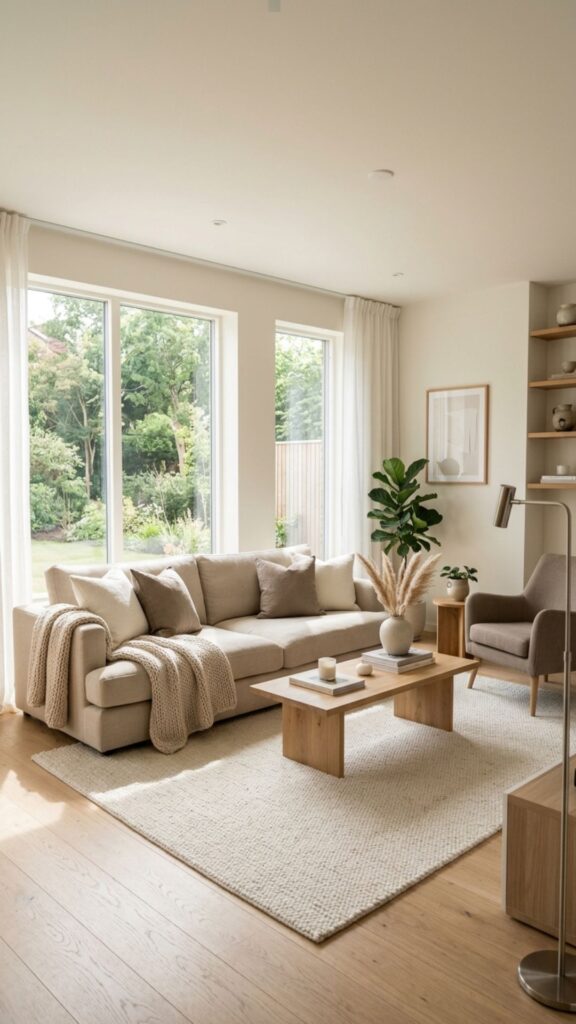
A neutral base gives your room flexibility and calm. Think warm white, beige, taupe, greige, soft clay, or muted sand.
These shades help modern furniture feel less sharp and make the room look brighter. They also let texture stand out, which is a key part of living room heartopia modern styling.
Best way to use it
- Paint walls in a warm neutral tone
- Choose a large rug in ivory, oatmeal, or light gray
- Use a sofa in cream, stone, or light tan
- Add depth with darker wood or matte black accents
This works well because it creates a clean backdrop without making the room feel plain.
2. Choose a Low-Profile Sofa With Deep Comfort
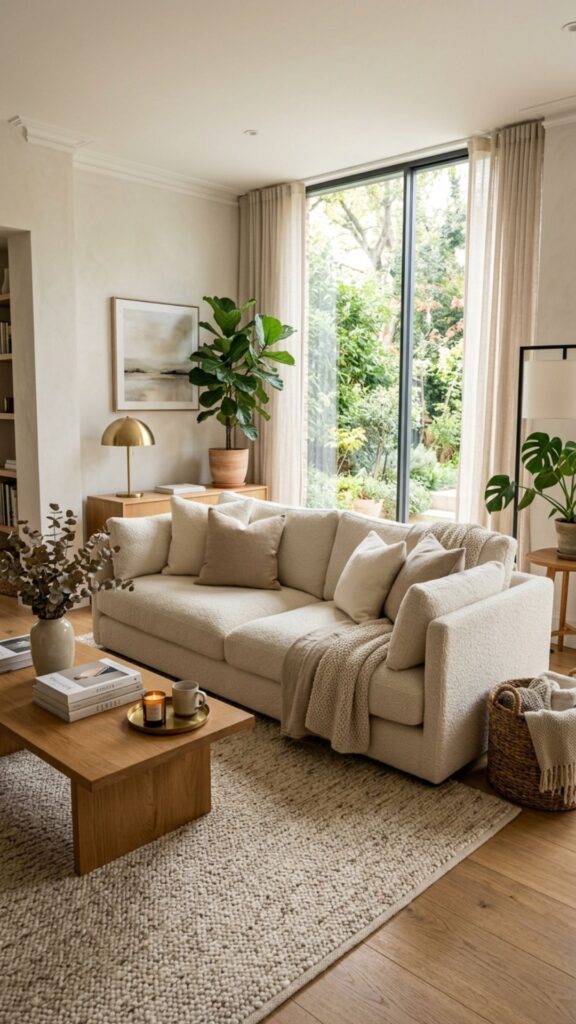
In many modern spaces, the sofa becomes the visual anchor. For a strong living room heartopia design, choose one that looks streamlined but feels inviting.
Look for:
- Low arms or clean square arms
- Deep seats
- Textured upholstery like boucle, chenille, or linen blends
- Soft but structured cushions
Most people do this wrong by picking a sofa that looks impressive but feels stiff. Heartopia style works best when beauty and comfort carry equal weight.
3. Use Layered Lighting Instead of a Single Ceiling Fixture
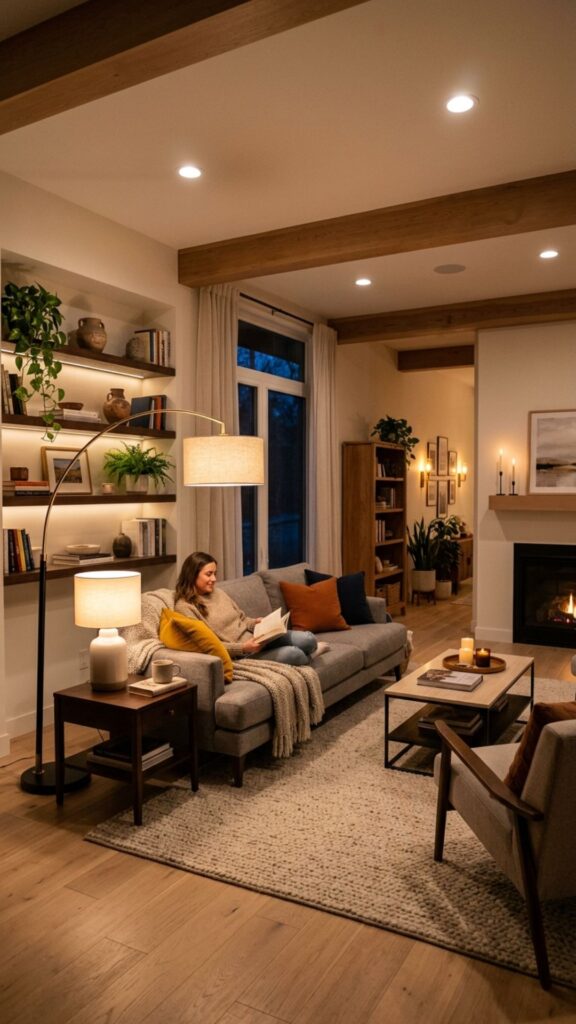
Good lighting changes everything. One overhead light can flatten the room and make it feel colder than it is.
A better living room heartopia idea is to layer light across the space.
Build lighting in three levels
- Ambient light: ceiling fixture or recessed lighting
- Task light: reading lamp or adjustable floor lamp
- Accent light: table lamps, wall sconces, or shelf lighting
This setup helps the room shift with the day. It also makes the space feel softer and more intentional at night.
4. Add Natural Wood to Warm Up Modern Lines
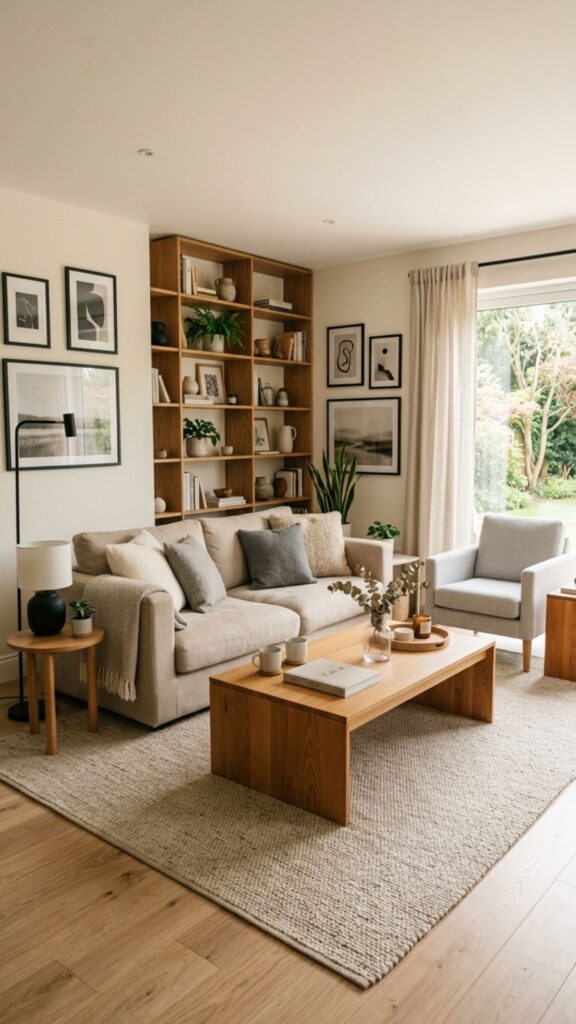
Modern rooms can feel too sharp if every surface is sleek. Wood fixes that fast.
Use wood through:
- A coffee table
- Open shelving
- Side tables
- Picture frames
- Ceiling beams, if your home allows it
Lighter oak gives a clean Scandinavian feel. Walnut adds richness. Reclaimed wood brings more character. In living room heartopia, wood acts as a bridge between minimal design and lived-in comfort.
5. Build Around One Statement Piece
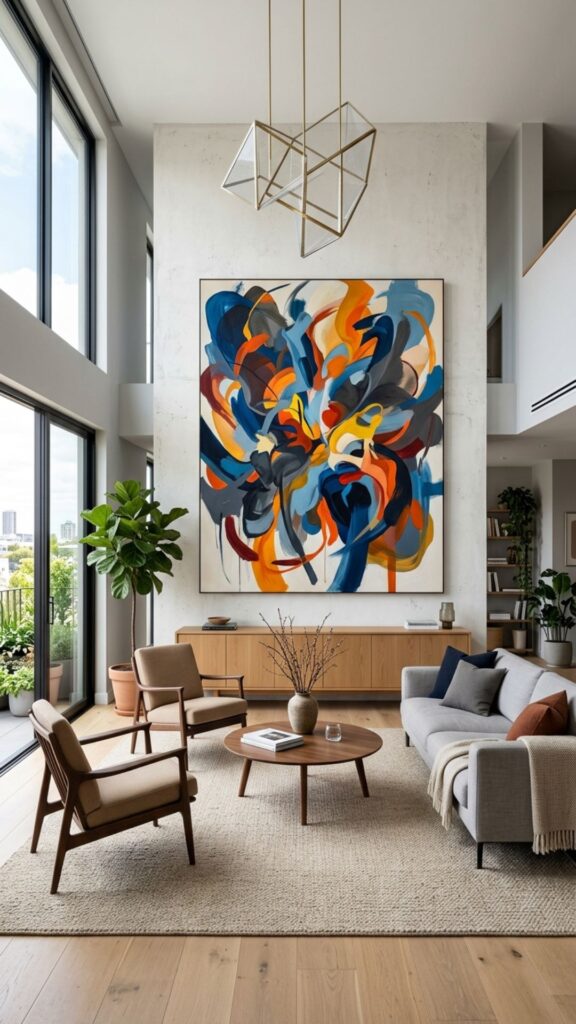
Every room needs a focal point. Without one, the space can look scattered.
A smart living room heartopia design often centers on one statement element, such as:
- A sculptural light fixture
- An oversized piece of art
- A stone fireplace
- A curved sofa
- A dramatic coffee table
Here’s the catch: one standout feature is enough. If everything competes for attention, the room loses its calm.
6. Use Curves to Soften the Room
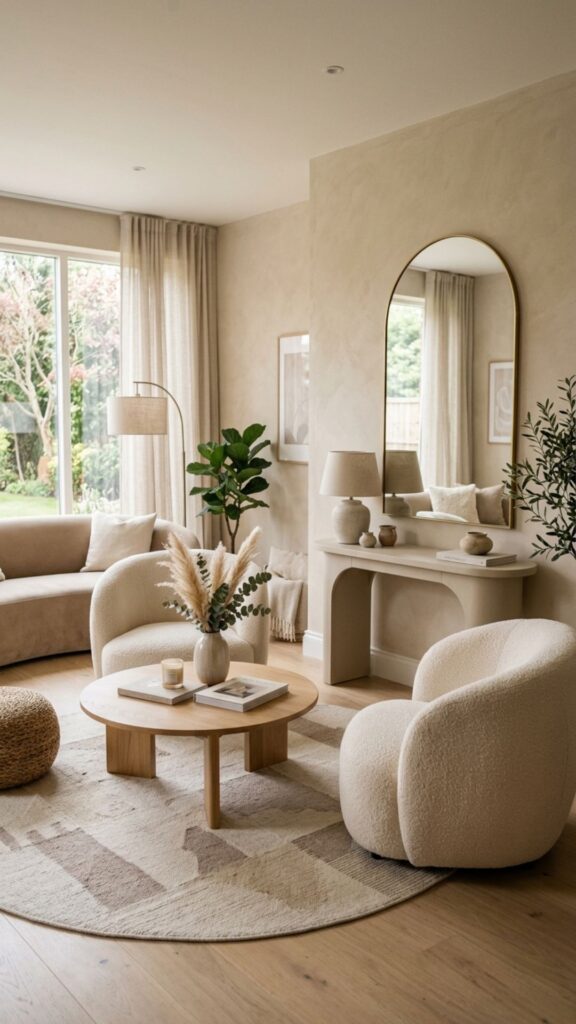
Modern rooms often rely on straight lines, but too many can feel rigid. Curved shapes add movement and warmth.
Try this with:
- Rounded coffee tables
- Curved armchairs
- Arched mirrors
- Soft-edged sofas
- Circular rugs or pendant lights
This is one of the easiest living room heartopia ideas to apply because even one curved piece can shift the mood of the room.
7. Keep the Layout Open but Anchored
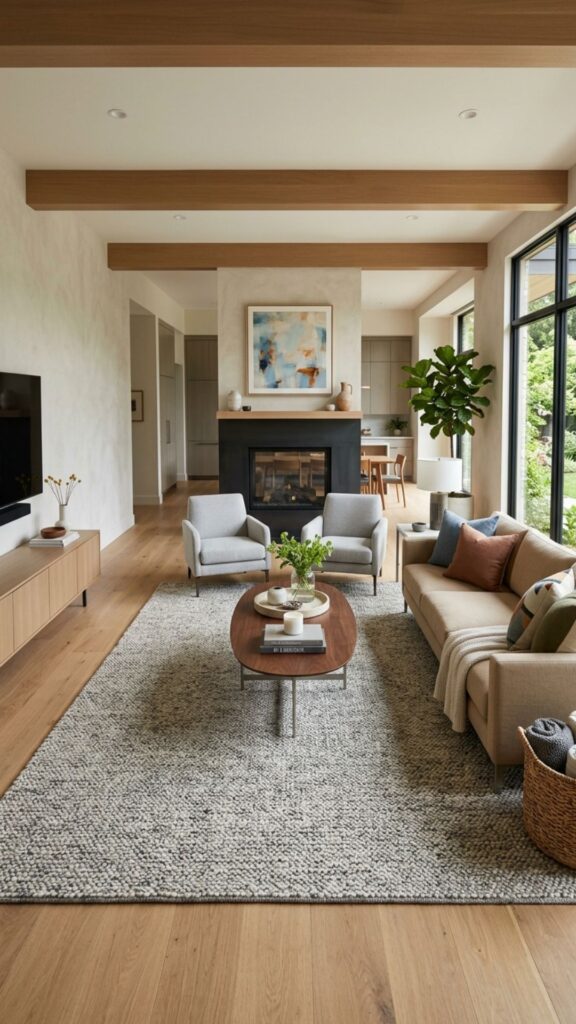
A beautiful room can still fail if the layout is off. Furniture pushed against every wall often creates dead space in the middle. On the other hand, floating pieces without purpose can make the room feel disconnected.
Quick layout test
Ask yourself:
- Can people move easily through the room?
- Is the seating close enough for conversation?
- Does the rug connect the main furniture pieces?
- Is there a clear focal point?
A solid living room heartopia modern layout feels open, but each zone still makes sense.
8. Mix Textures for a Lived-In Look
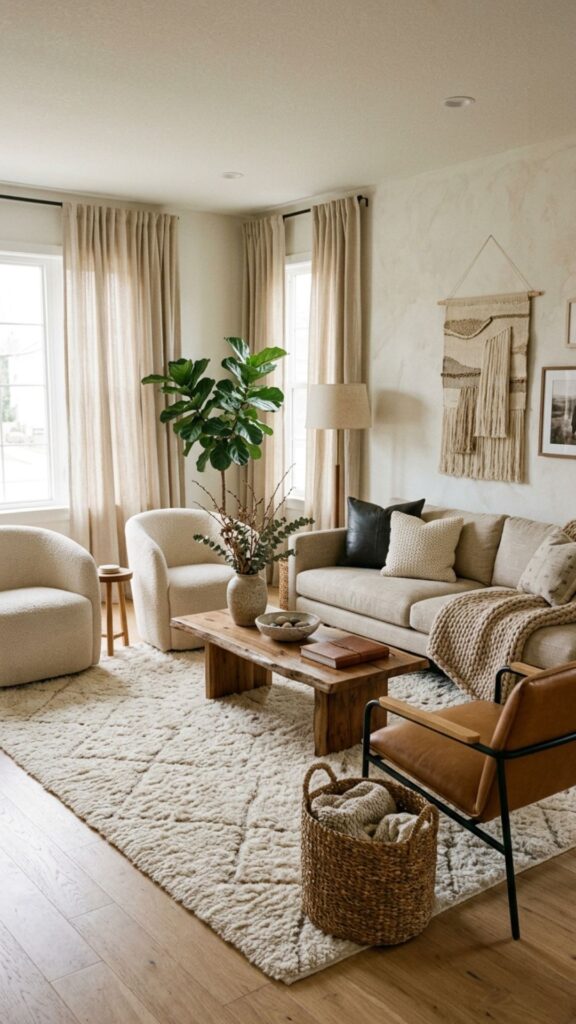
Texture is what keeps a neutral room from feeling flat. It adds depth without relying on loud color.
Layer in materials like:
- Linen curtains
- Knit throws
- Boucle chairs
- Wool rugs
- Ceramic decor
- Leather accents
Quick tip: if your room feels bland, you may not need more furniture. You may just need better texture contrast.
9. Bring in Greenery for Life and Balance
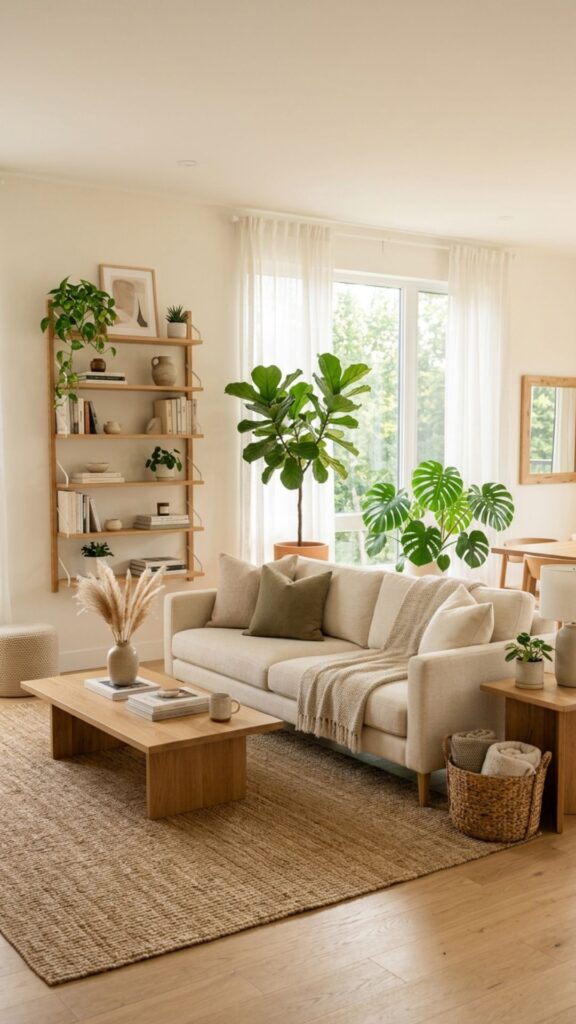
Plants help a modern room feel fresh and grounded. They also soften corners and break up hard surfaces.
Good choices include:
- Olive trees
- Rubber plants
- Snake plants
- Pothos
- Fiddle leaf figs
In living room heartopia, greenery should feel natural, not overstyled. A few well-placed plants usually work better than many small ones scattered around the room.
10. Choose Decor With Meaning, Not Just Trend Appeal
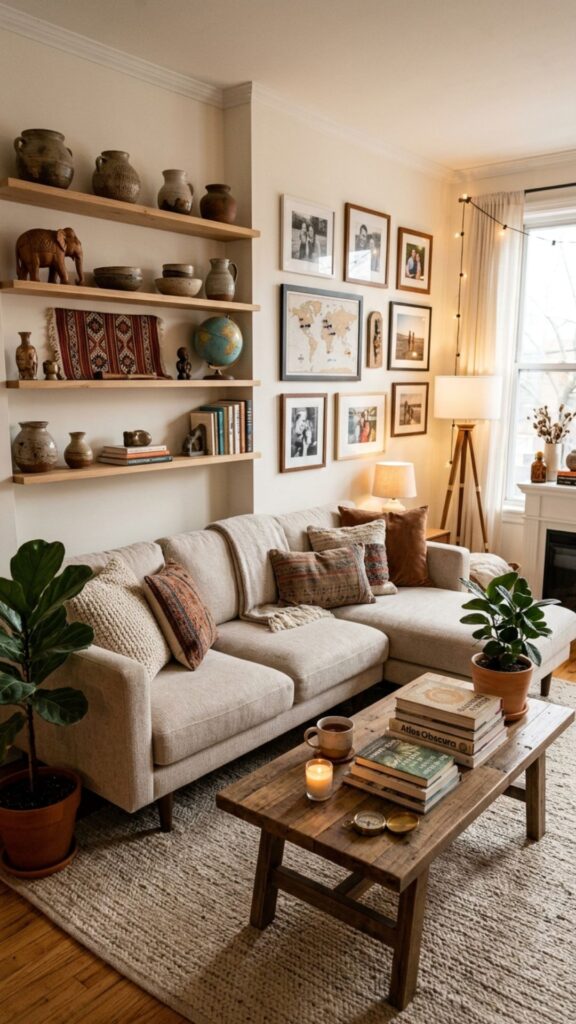
Heartopia style is not about filling shelves for the sake of styling. It’s about choosing items that give the room character.
Use decor such as:
- Travel finds
- Handmade ceramics
- Framed family photos in clean frames
- Favorite books
- Vintage objects with texture or story
This approach helps your living room heartopia design feel personal and lasting instead of copied from a showroom.
11. Use a Rug Large Enough to Ground the Room
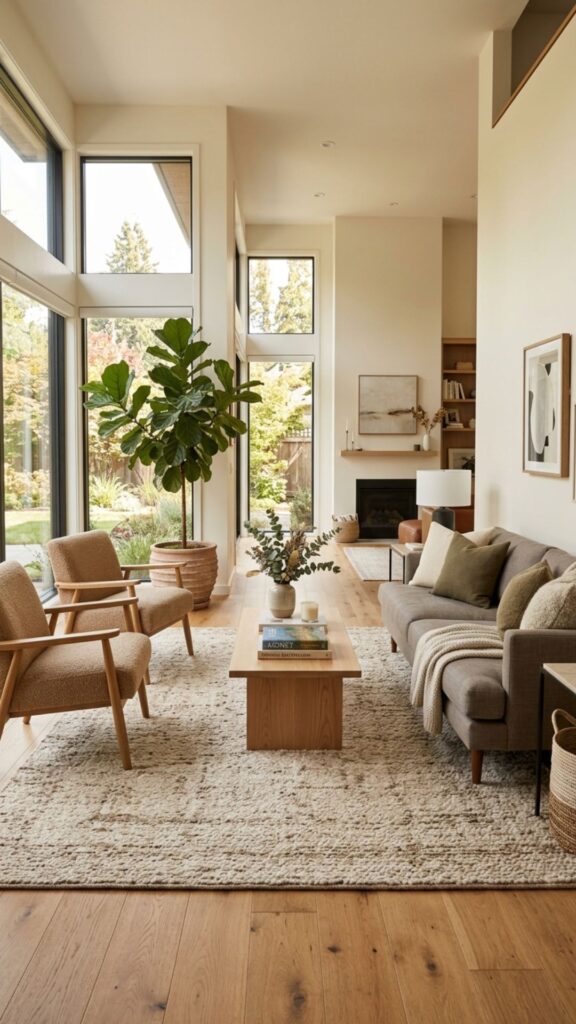
An undersized rug is one of the most common design mistakes. It can make even expensive furniture look disconnected.
Rug rule that usually works
At least the front legs of your sofa and chairs should sit on the rug. In many living rooms, bigger is better.
A large rug helps:
- Define the seating area
- Add softness underfoot
- Tie colors together
- Make the room look more finished
If you want a quick visual upgrade, start here.
12. Blend Black Accents for Contrast
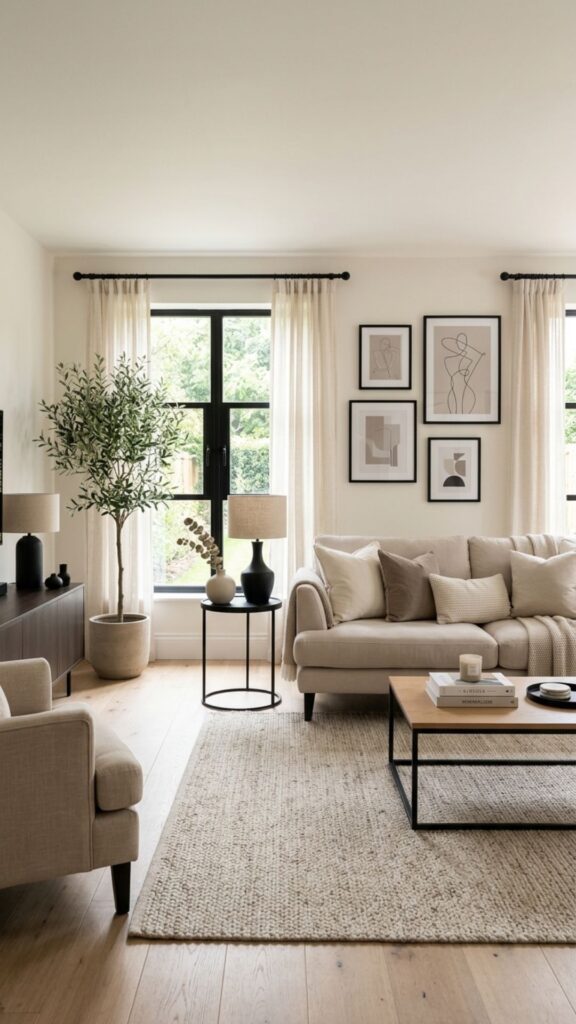
A room full of soft colors can still need contrast. Black accents add structure and help the eye move through the space.
Use them through:
- Lamp bases
- Curtain rods
- Picture frames
- Side tables
- Metal shelving
- Fireplace details
In living room heartopia modern spaces, black works best in small doses. It should sharpen the room, not overpower it.
13. Create a Cozy Conversation Zone
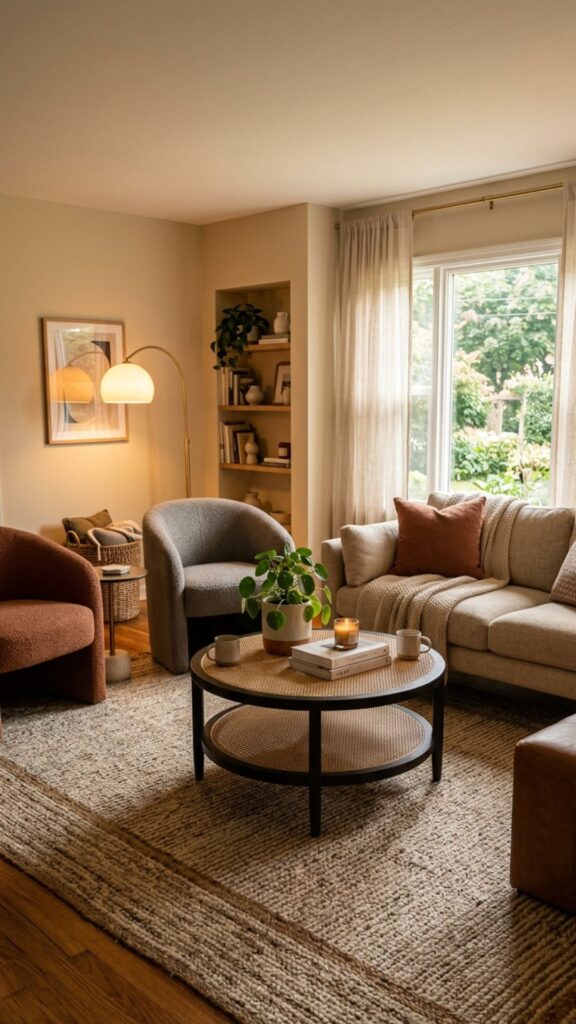
Many living rooms are designed around the TV alone. That makes sense for daily life, but it can limit the room’s function.
A better living room heartopia idea is to create a conversation-friendly arrangement too.
Simple ways to do it
- Place two chairs across from the sofa
- Add a round coffee table for easy reach
- Keep seating within comfortable talking distance
- Use lighting to make the zone feel intimate
This matters because the best living rooms support both connection and comfort.
14. Try Wall Art That Adds Calm, Not Clutter
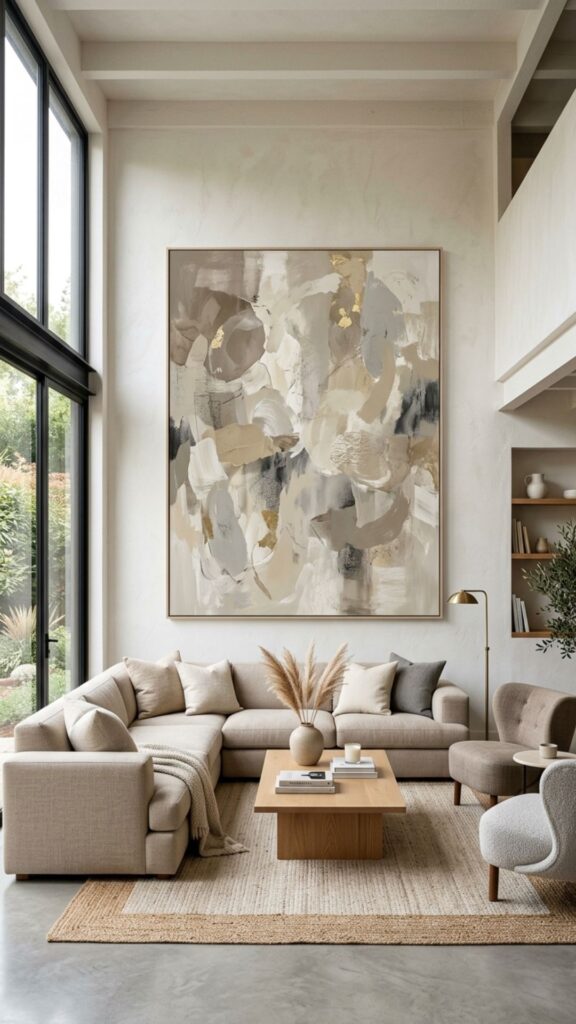
Art can shape the tone of the room fast. For Heartopia style, choose pieces that support the mood you want.
Good options include:
- Abstract neutrals
- Nature photography
- Black-and-white prints
- Oversized canvas art
- Minimal line drawings
Most people hang art too high or choose pieces that are too small. A larger piece placed at eye level usually feels more modern and confident.
15. Add Storage That Hides the Mess
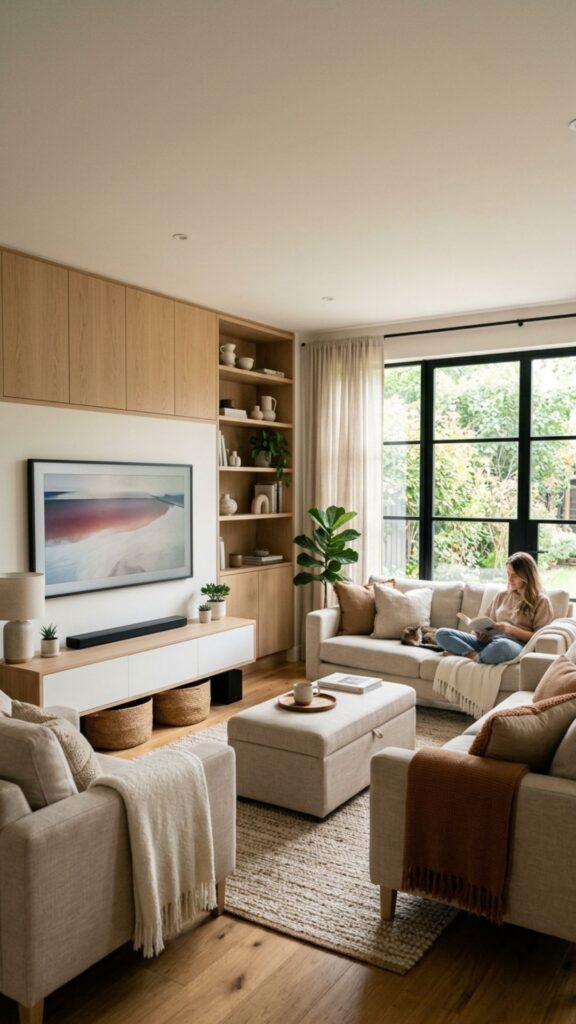
A calm room is hard to maintain without smart storage. Blankets, remotes, games, chargers, and toys need a home.
Use:
- Closed media consoles
- Storage ottomans
- Baskets with texture
- Built-in cabinets
- Sideboards with doors
A practical living room heartopia design is not just pretty. It also makes daily cleanup easier, which helps the room stay usable.
16. Finish With One or Two Warm Accent Colors
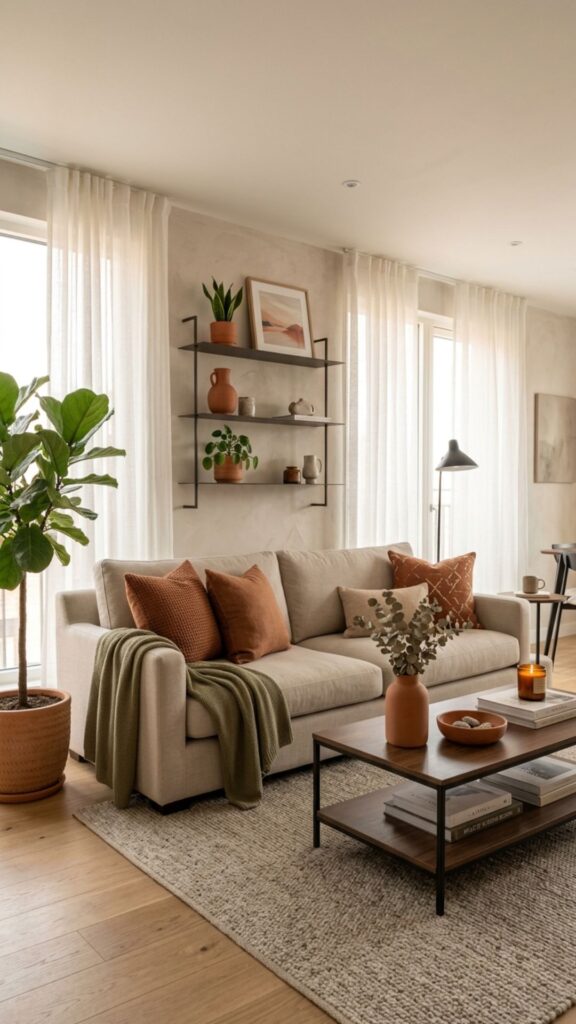
Neutrals create the base, but accent colors make the room feel complete. The key is restraint.
Try tones like:
- Rust
- Olive
- Terracotta
- Dusty blue
- Muted sage
- Cinnamon
Use them in pillows, art, throws, or a single chair. This gives your living room heartopia space personality without losing its calm look.
Common Living Room Heartopia Design Mistakes to Avoid
Even a strong concept can fall apart in execution. These are the most common issues homeowners face.
Too much decor
More accessories do not always create warmth. They often create visual noise.
Furniture that is too small
Tiny pieces can make the room feel unfinished. Scale matters.
Cold lighting
Bulbs that are too bright or too cool can strip away the cozy feel. Warm white lighting usually works best.
Ignoring comfort
A modern room should still invite people to sit down and stay awhile.
Following trends too closely
Trendy details age fast. Build the room around timeless shapes and materials, then update smaller accents over time.
How to Create a Living Room Heartopia Look on Any Budget
You do not need a full renovation to get the effect. Start with changes that have the biggest visual impact.
- Paint the walls a warm neutral.
- Replace a small rug with a larger one.
- Add two new light sources.
- Swap shiny decor for textured pieces.
- Bring in wood, greenery, and one soft accent color.
Even a few updates can move your room toward a more balanced living room heartopia modern feel.
Conclusion
A great living room heartopia space feels calm, modern, and easy to live in. It uses clean lines, warm materials, thoughtful lighting, and personal details to create a room that looks refined without losing comfort.
You do not need to copy every trend or buy all new furniture. Start with one or two ideas that fit your space, then build from there. Focus on layout, texture, and warmth first.
If you’re updating your living room now, use this list as your checklist and choose the three design moves that will make the biggest difference this week.
What is living room heartopia?
Living room heartopia is a modern interior style that blends clean design with warmth and comfort. It uses soft colors, natural textures, practical layouts, and personal details to make a living room feel both stylish and welcoming.
How do I make my living room heartopia modern?
Start with a neutral base, choose streamlined furniture, layer your lighting, and add warmth through wood, textiles, and greenery. Keep decor simple and meaningful.
What colors work best for a living room heartopia design?
Warm neutrals work best, including cream, taupe, beige, greige, and soft earth tones. You can then add muted accent colors like olive, rust, or dusty blue.
Can small spaces use living room heartopia ideas?
Yes. Small spaces can use Heartopia style very well. Focus on a light color palette, scaled furniture, multi-use storage, and a simple layout that keeps the room open.
What is the biggest mistake in living room heartopia design?
The biggest mistake is creating a room that looks modern but feels cold. Heartopia style only works when comfort, texture, and real-life function are part of the design.