A dining room bay window is one of the most versatile architectural features a home can have. It adds natural light, creates a natural focal point, and opens up design possibilities that a flat wall simply can’t offer. But knowing how to make the most of it? That’s where most people get stuck.

Maybe you’re wondering whether to build a window seat, how to hang curtains on angled frames, or which style actually fits your dining room.

This guide answers all of that. You’ll find 15 elegant bay window ideas — from cozy banquette nooks to minimalist modern setups — each with specific, practical advice you can act on right away.
1. Classic Built-In Window Seat with Hidden Storage
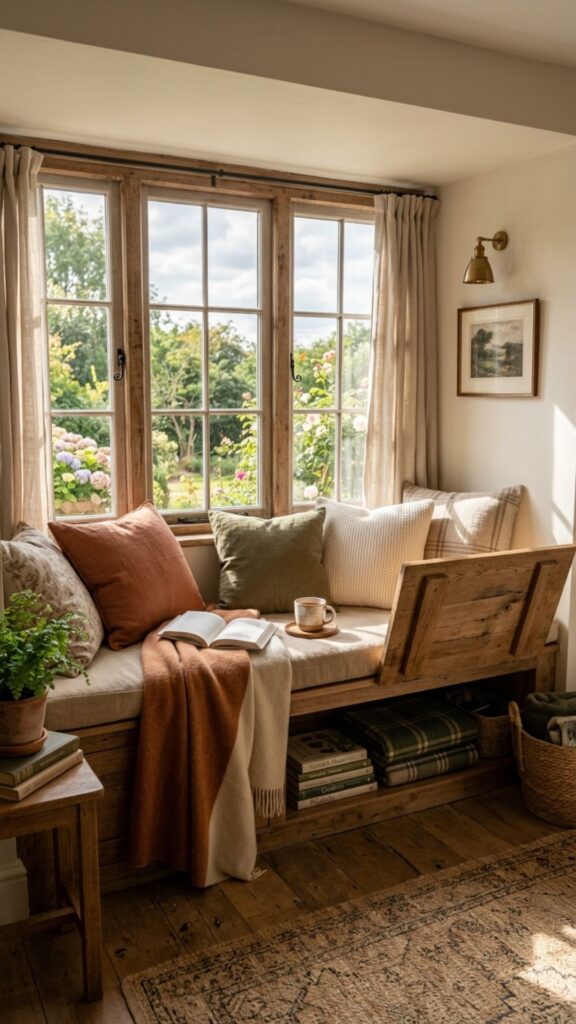
A built-in window seat is the most popular treatment for a dining room bay window, and it earns that reputation. It adds seating, storage, and visual warmth all in one clean installation. The lift-top bench lid conceals compartments that are perfect for table linens, candles, and spare place settings.
For everyday durability, upholster the seat in a performance fabric like treated cotton or performance velvet — materials that wipe clean and resist wear. Layer on a few cushions in coordinating colors to soften the look. It’s a practical solution that also makes the bay feel intentional and designed.
2. Floor-to-Ceiling Curtains for Maximum Drama
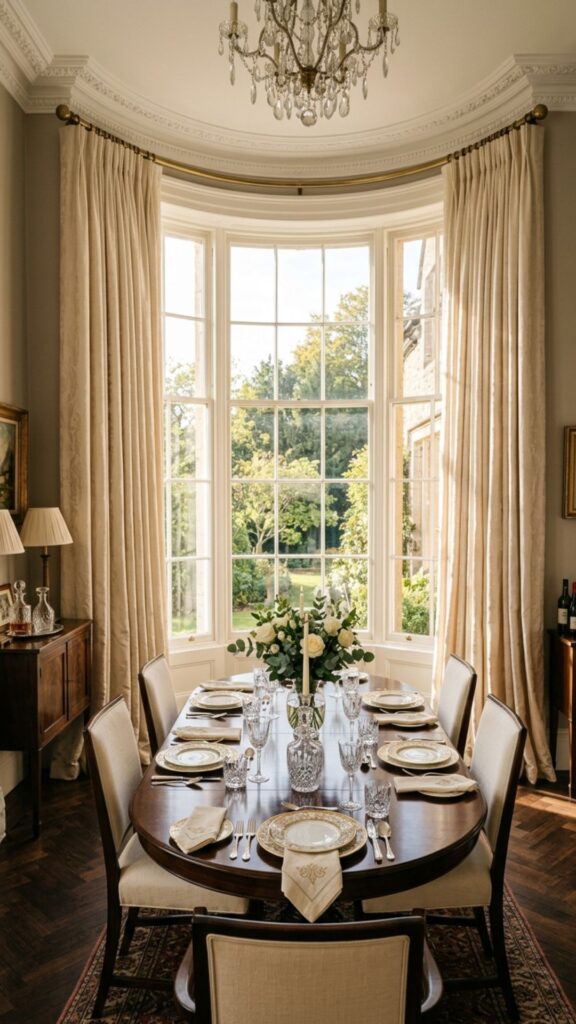
Tall curtains hung from a ceiling-mounted rod that follows the bay’s angle create a truly striking effect. The vertical lines draw the eye upward, making the ceiling feel higher and the window feel grander. This works especially well in formal dining rooms where you want the space to feel elevated.
Use a heavyweight fabric — linen, velvet, or silk — for maximum visual impact. A curved or angled curtain track lets the panels follow the bay’s shape without bunching. Neutral tones keep things timeless, while deep jewel tones like emerald or navy add richness and intimacy for evening meals.
3. Full Banquette Dining Nook Built Into the Bay
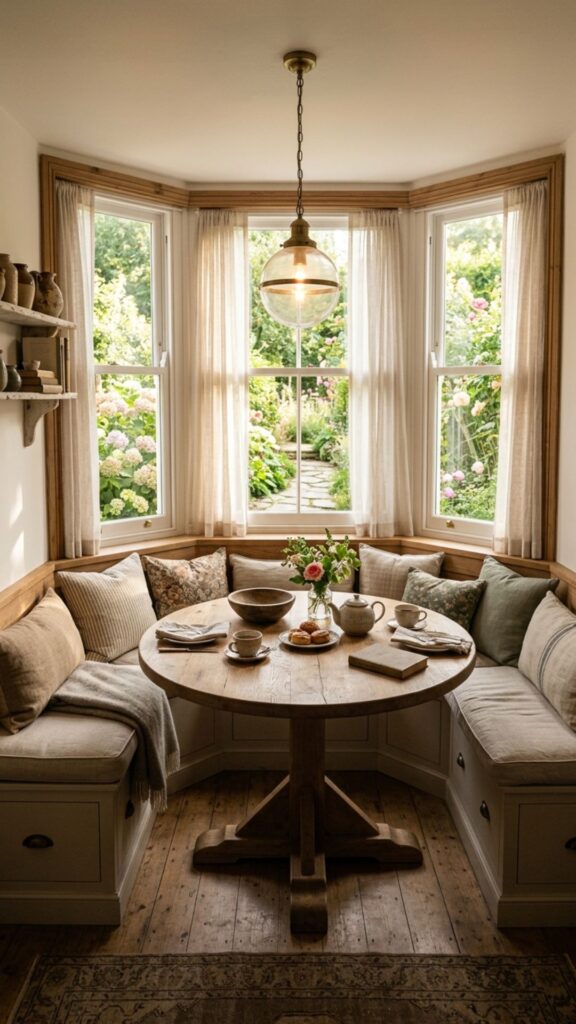
Turning a dining room bay window into a banquette nook is one of the smartest ways to use the space. A U-shaped or L-shaped bench arrangement seats more people than a standard chair setup and turns the window area into the social heart of the room.
Keep the table proportional to the bay’s depth — a round or oval table usually works best because it allows easy movement around the bench. Hang a pendant light directly above the table to anchor the nook and signal that this is a defined, intentional dining space.
4. Sheer Layered Window Treatments
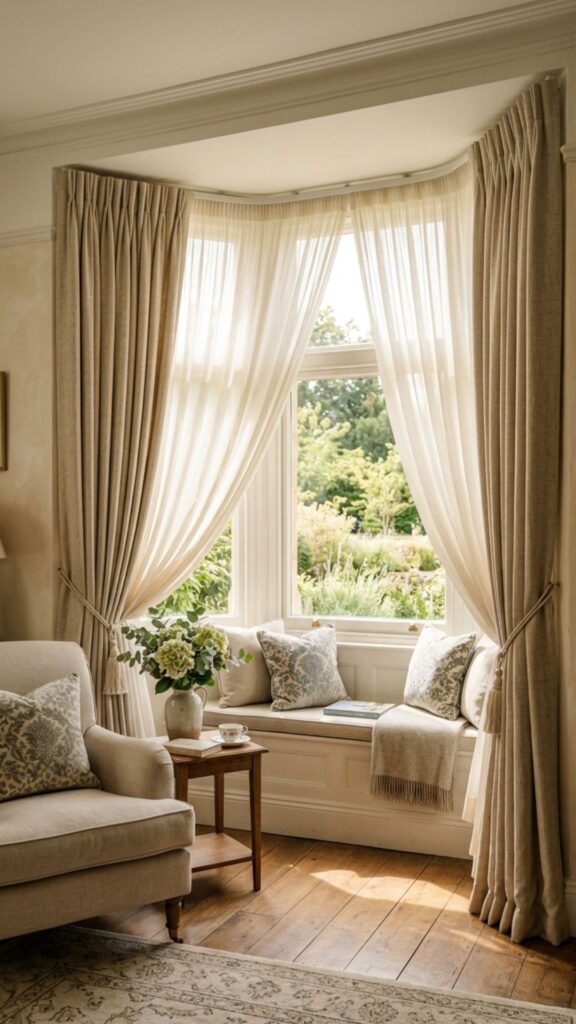
Layering sheer curtains beneath heavier outer panels gives a dining room bay window a soft, light-filled quality without sacrificing privacy or control. During the day, sheers diffuse sunlight beautifully across the dining table. In the evening, drawing the outer panels closed shifts the atmosphere toward something more intimate.
A double curtain rod on each bay facet lets both layers move independently, giving you flexibility throughout the day. White or ivory sheers paired with warm-toned outer panels is a reliable, timeless combination that suits most dining room styles, from traditional to contemporary.
5. Minimalist Bay Window with Clean Lines
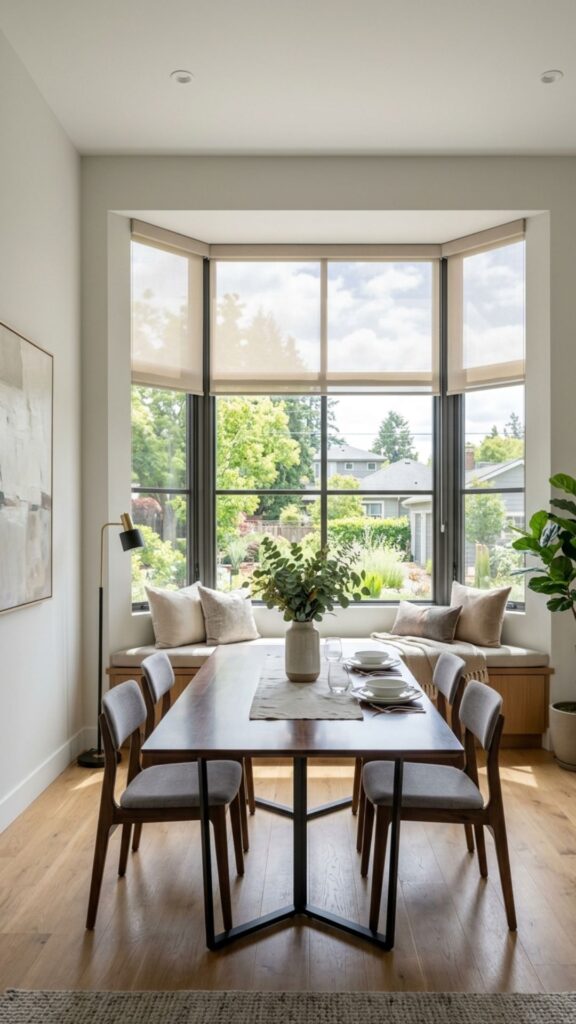
Not every dining room bay window needs elaborate treatments or built-in furniture. In modern and Scandinavian-inspired spaces, a clean, unadorned bay can be the most powerful statement of all. Slim roller blinds or cellular shades provide light control without adding visual clutter.
Keep the surrounding walls neutral and let the window’s architecture do the work. A sleek dining table positioned close to the bay strengthens the connection between the room and natural light. The result is calm, bright, and genuinely contemporary — no construction required.
6. Greenhouse-Style Bay Lined with Indoor Plants
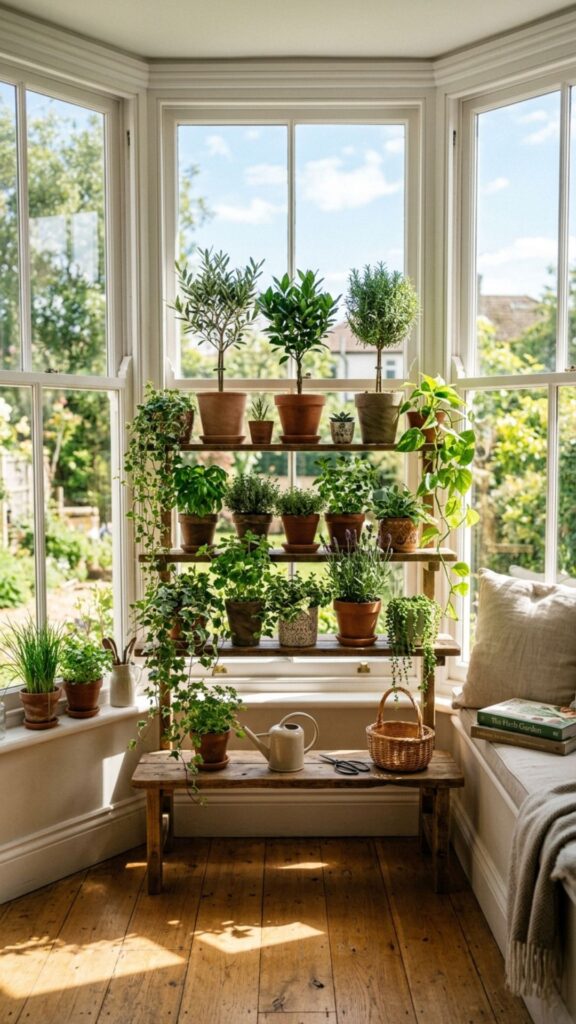
A dining room bay window receives exceptional light, which makes it ideal for growing herbs, trailing plants, or small potted citrus trees. A greenhouse-style arrangement — narrow shelves or a low bench lined with plants — turns the bay into a living, breathing feature.
Match your plant selection to the window’s light conditions. South-facing bays suit sun-loving herbs like basil and rosemary. North-facing windows work better for trailing pothos, ferns, or peace lilies. Plants add color, texture, and a sense of freshness that no decorative object can replicate — and they change beautifully with the seasons.
7. Formal Bay with Wainscoting and Decorative Molding
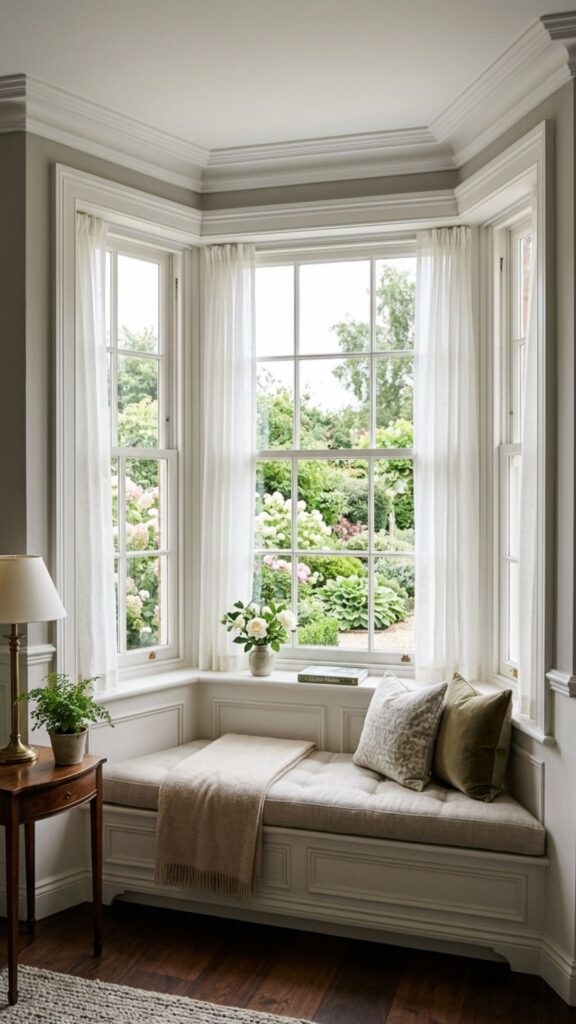
Adding wainscoting panels and crown molding around a dining room bay window instantly gives it an architectural presence. This treatment suits traditional dining rooms, Victorian homes, or any space where craftsmanship and permanence matter.
Paint the wainscoting in a contrasting tone to the upper walls — soft white paneling against deep green or navy is particularly elegant. Crown molding at the top and a built-in bench below complete the look without requiring additional furniture. It’s a classic approach that adds real value to the room.
8. Roman Blinds for a Tailored, Polished Finish
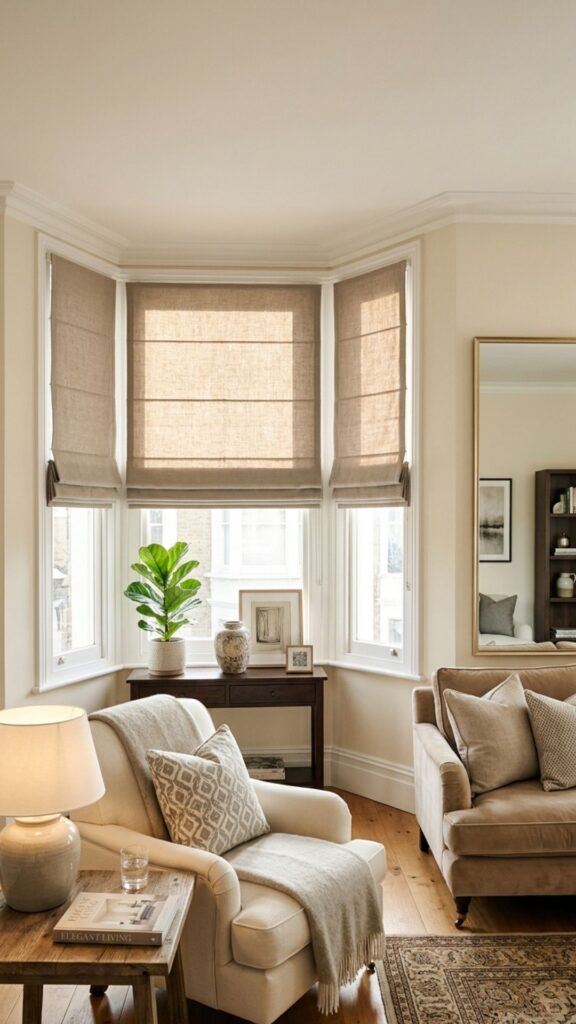
Roman blinds are one of the cleanest solutions for a dining room bay window. Each facet of the bay gets its own blind, which can be raised or lowered independently to manage light and privacy throughout the day. When raised, they stack neatly and keep the window feeling open.
Choose a fabric that complements your dining room’s color palette. A subtle texture or soft geometric pattern adds interest without competing with other elements in the room. Linen and cotton Roman blinds are especially popular for their clean, slightly relaxed look that works in both modern and traditional spaces.
9. Interior Plantation Shutters for Lasting Style
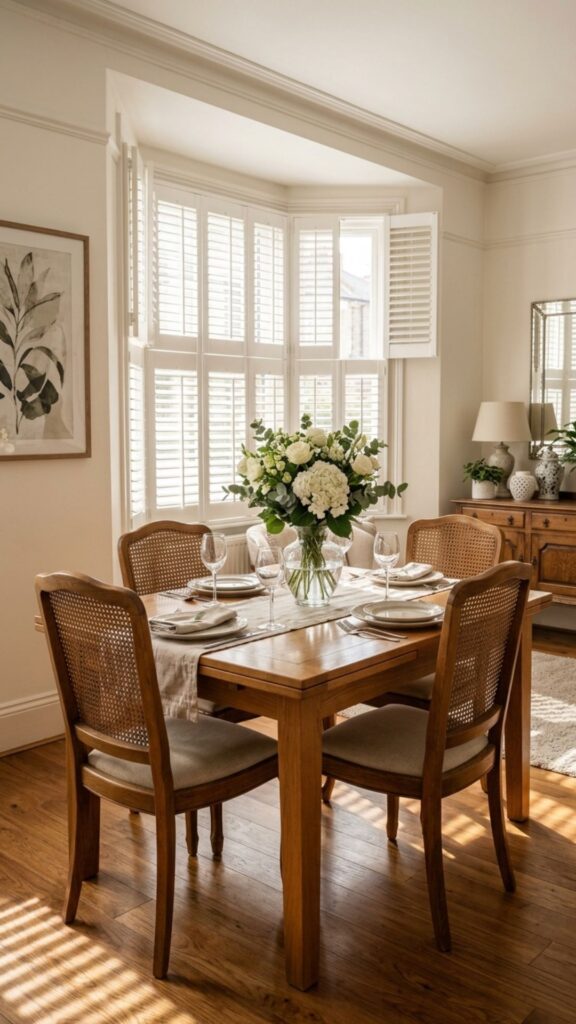
Plantation shutters installed across each panel of a dining room bay window create a crisp, architectural look that suits both casual and formal dining rooms. Adjusting the louvers lets you direct sunlight away from the table during a bright afternoon meal without blocking the view entirely.
Painted shutters in white or soft off-white are the most versatile option. Stained wood shutters in walnut or oak add warmth and pair exceptionally well with natural wood dining furniture. Unlike curtains, shutters require almost no maintenance and hold their look for decades.
10. Curved Bay with a Round Dining Table
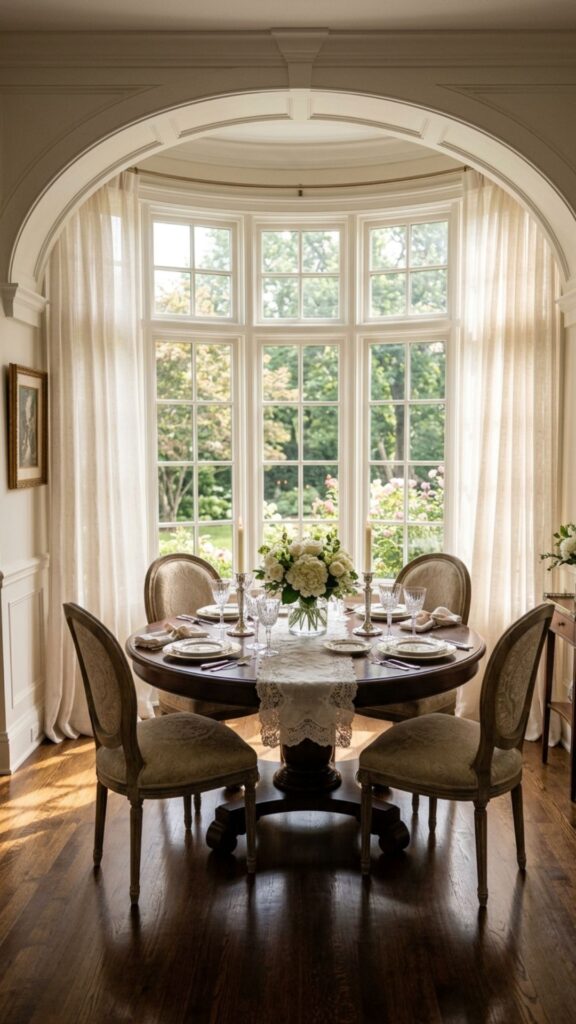
If your dining room features a curved or bowed bay window, a round dining table placed directly beneath it creates a natural symmetry that feels effortlessly elegant. The curves echo each other, and the arrangement makes the most of the bay’s full depth.
Keep the window treatment simple in a curved bay. A continuous curved curtain rod with floor-length panels or individual roller blinds on each pane both work well. Avoid anything that interrupts the smooth line of the window or fights the natural curve of the architecture.
11. Upholstered Window Bench with a Back Panel
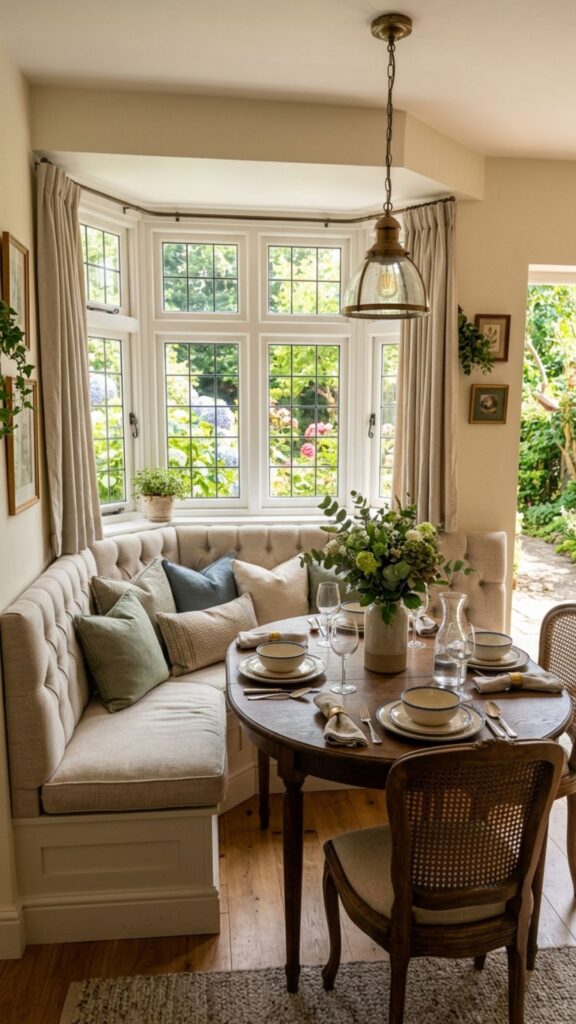
Take the standard window seat further by adding an upholstered back panel along the wall of the bay. This turns the bench into something closer to a proper dining banquette — with real back support that makes it comfortable for long meals and extended gatherings.
Use a durable upholstery fabric that ties into your dining room’s color scheme. A buttoned, tufted finish looks formal and classic. A smooth, flat panel in a bold solid color reads as more contemporary. Either way, the bay feels fully designed rather than merely functional.
12. Bistro-Inspired Dining Nook
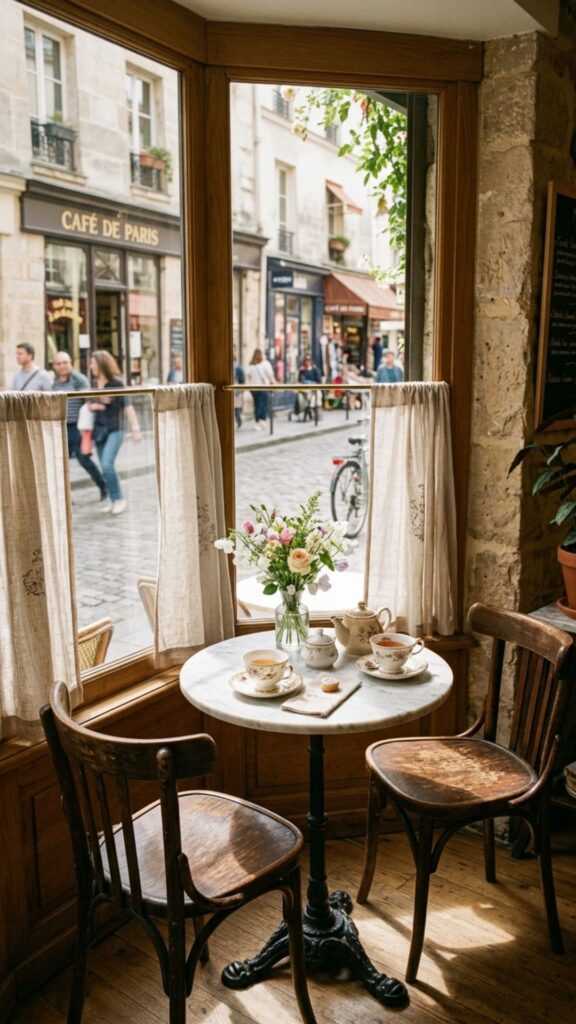
Draw inspiration from a French café by creating a bistro-style nook in your dining room bay window. A small marble-topped table, two or three café chairs, and a simple café curtain hung across the lower half of the window creates an intimate, effortlessly chic vignette.
This works especially well in smaller dining rooms or kitchen-dining spaces where a large formal table isn’t practical. The bistro nook becomes the default spot for everyday meals, while the lightness of the furniture keeps the room open and airy. It’s low-commitment, low-cost, and genuinely stylish.
13. Bay Window as a Seasonal Display Shelf
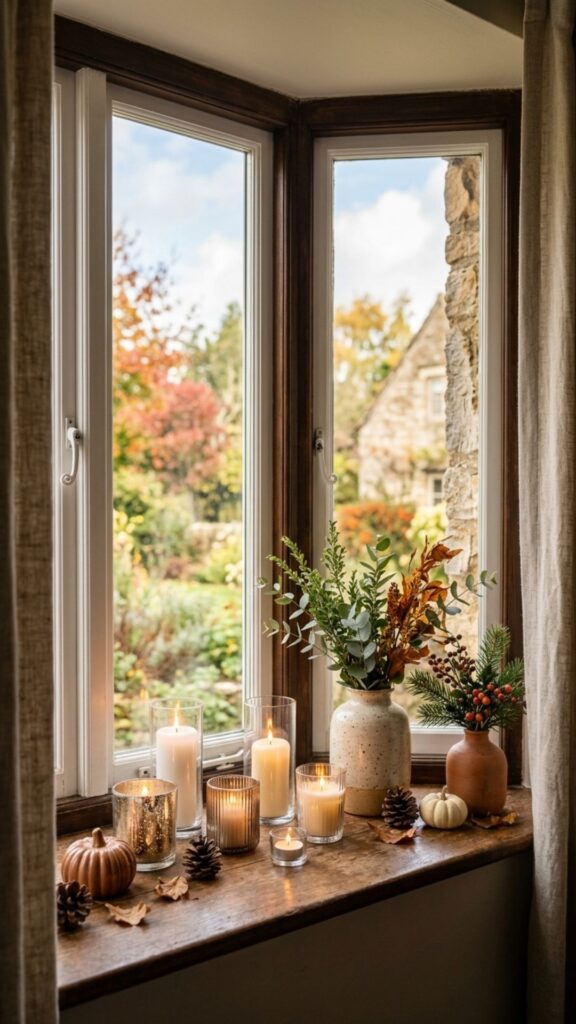
A narrower dining room bay window can serve beautifully as a curated display rather than a seating area. Line the sill with candles, ceramics, small sculptures, and a trailing plant or two. Keep the arrangement edited — three to five objects per facet — so it feels intentional rather than cluttered.
Rotate the display seasonally to keep the dining room feeling fresh and alive. In autumn, bring in warm terracotta tones and dried botanicals. In winter, add candlelight and evergreen sprigs. This approach requires no construction, no major investment, and can be updated any time you want a change.
14. Scandinavian Bay with Natural Wood Accents
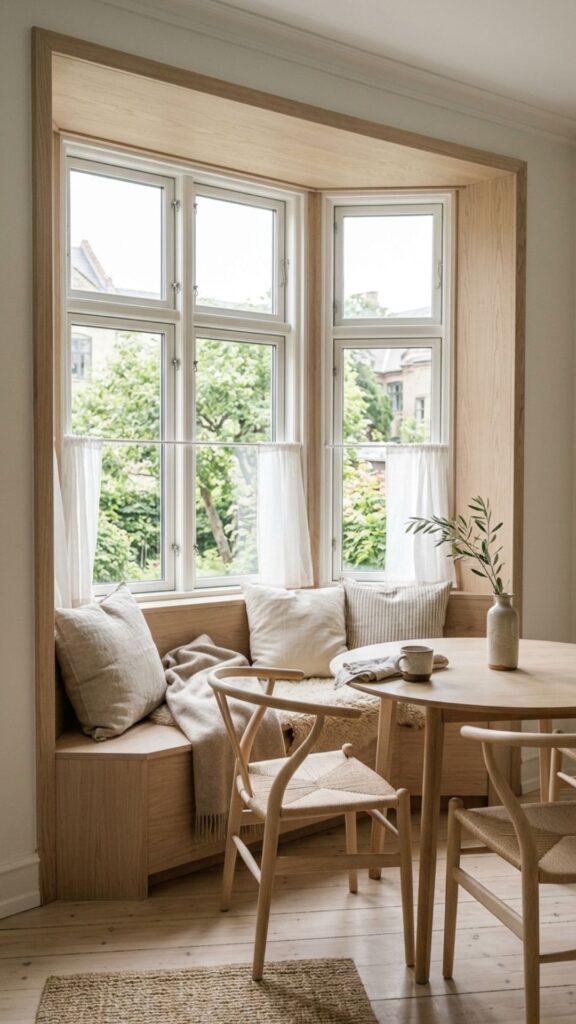
A Scandinavian approach to the dining room bay window leans on simplicity, natural materials, and abundant light. A low, clean-lined window seat in pale oak or birch, paired with minimal hardware and a neutral cushion, creates a look that feels warm without being heavy.
Leave the window largely undressed — simple linen panels or no treatment at all lets the light flood in freely. A round wooden dining table and a few pendant lights in brass or matte black complete the look. The overall effect is calm, considered, and genuinely livable.
15. Bay Window Framed with Statement Lighting
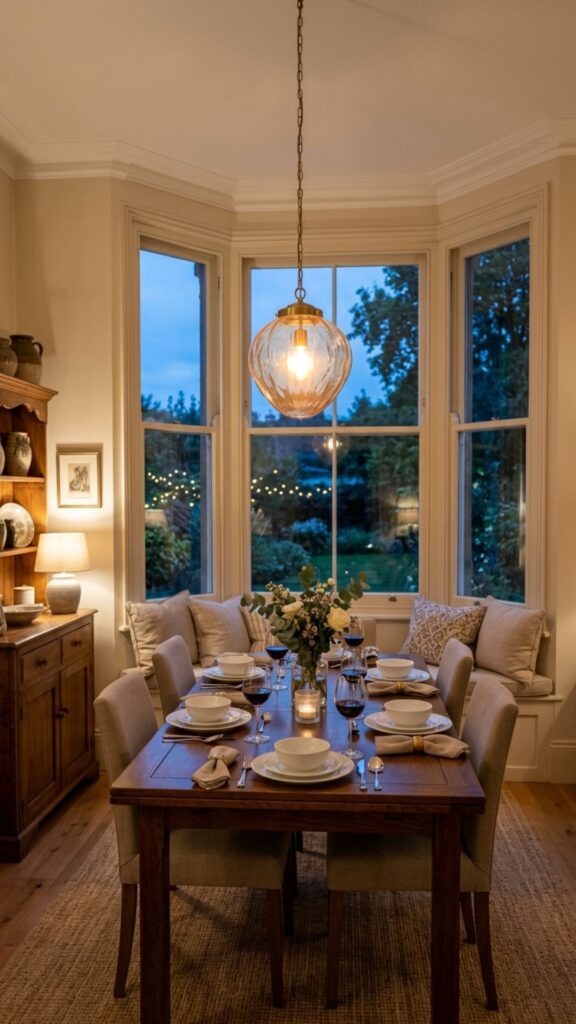
One often-overlooked way to elevate a dining room bay window is through lighting. A statement pendant or a cluster of pendants hung at varying heights within the bay creates a warm, layered glow that makes the whole window area feel curated and intentional.
Choose a fixture that complements your window’s scale — an oversized pendant in a large bay, or a trio of smaller pendants in a narrower one. In the evenings, the light reflects beautifully off the glass and draws attention to the window as a feature in its own right. It’s a simple upgrade with a significant visual payoff.
Conclusion
A dining room bay window is one of the most rewarding design opportunities in any home. Whether you build a full banquette nook, keep things minimal and modern, or fill the sill with plants, the key is choosing an approach that fits how you actually use the space. Start with one idea from this list, match it to your room’s style and scale, and go from there. Small, deliberate choices add up to a dining room that genuinely feels like yours.
Ready to transform your dining space? Pick the bay window design that resonates most, gather a few inspiration images, and take your first concrete step — whether that’s measuring the bay, sourcing fabric samples, or calling a carpenter for a built-in quote.
What is the best use of a dining room bay window?
The best use depends on your space and lifestyle. A built-in window seat with storage is the most versatile option — it adds seating, organization, and style without making the room feel cramped. If you have young children or need flexible seating, a banquette nook works especially well.
How do you hang curtains on a bay window in a dining room?
Use individual curtain rods mounted on each facet of the bay, or install a continuous angled or curved curtain track that follows the window’s shape. Both methods allow full coverage. For a cleaner look, match the rod finish to your other hardware and use floor-length panels on each panel of the bay.
What window treatments work best for a dining room bay window?
Roman blinds, plantation shutters, and layered curtains are the most popular choices. Roman blinds offer a tailored, polished finish. Shutters provide long-lasting durability and excellent light control. Layered curtains give you flexibility between a light, open daytime look and a more enclosed evening atmosphere.
How deep does a bay window need to be to fit a dining table?
Most bay windows project between 18 and 36 inches from the main wall. A projection of at least 24 inches gives you enough depth for a narrow bistro table and chairs. For a full banquette nook with a proper dining table, a depth of 36 inches or more is ideal. Always measure the bay’s usable floor space before selecting furniture.