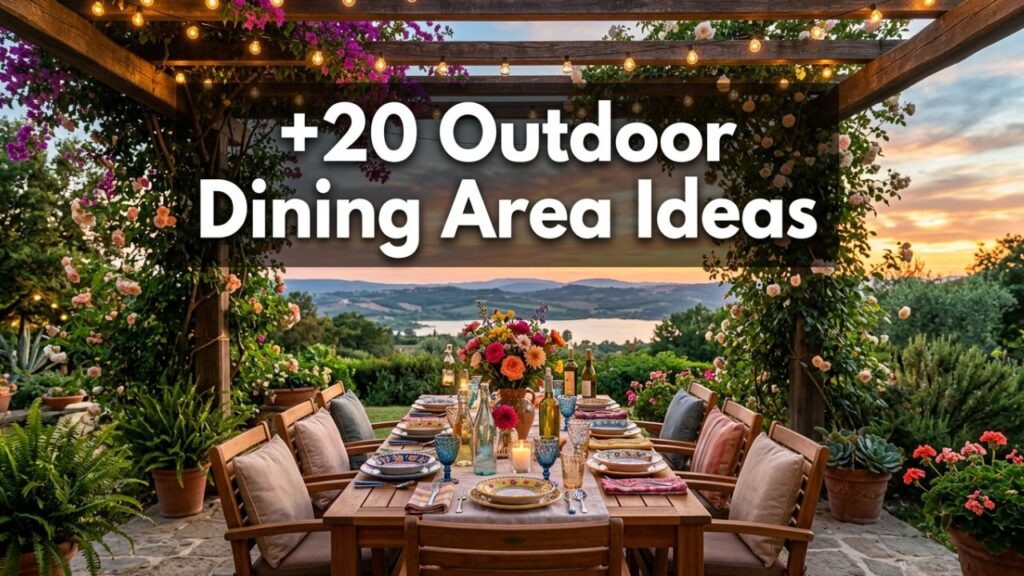
There’s something special about eating outside. The fresh air, the natural light, the way food seems to taste a little better under an open sky. Yet so many backyards, patios, and balconies sit unused simply because people don’t know where to start.
After years of helping homeowners rethink their outdoor spaces, I’ve learned that a great dining area doesn’t require a huge budget or a massive yard. It just needs a bit of planning and a few smart choices.
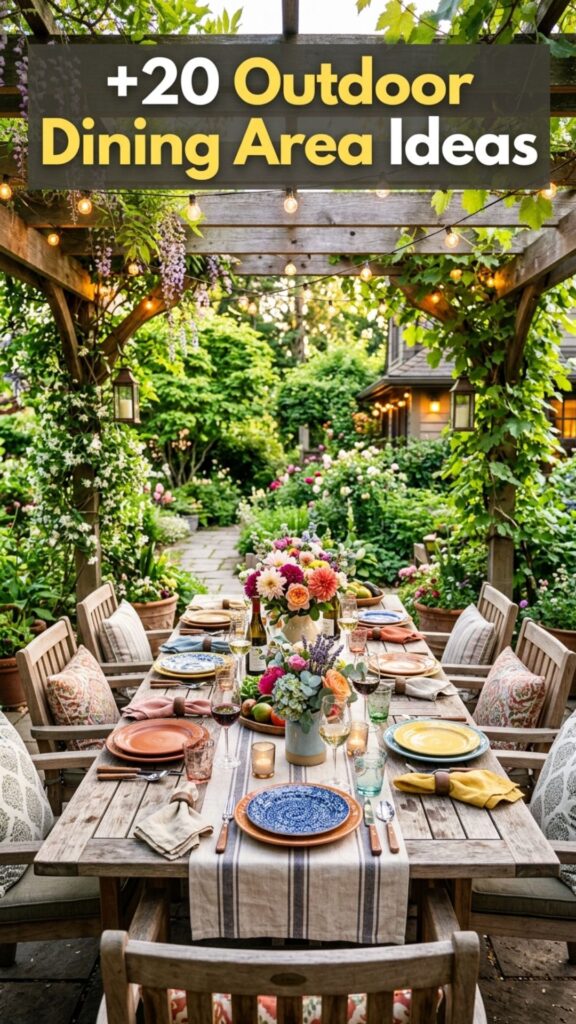
Below you’ll find 20 practical, tested outdoor dining area ideas that work whether you’re spending $50 or $5,000. Some are quick weekend projects, others are bigger investments. Each one is designed to help you create a space where you’ll actually want to linger. Let’s dig in.
1. Start With a Simple Patio Table Set
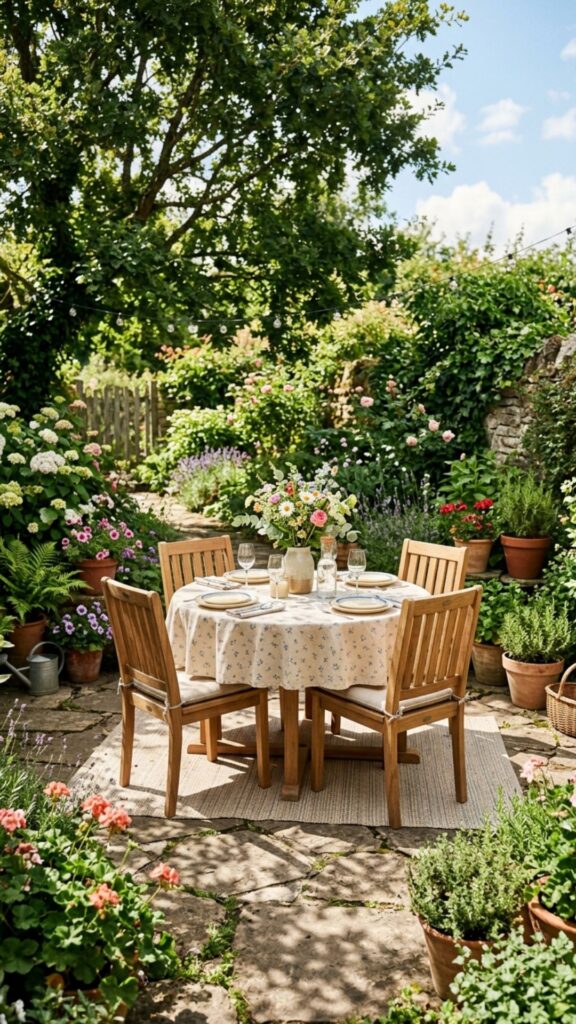
The easiest way to build an outdoor dining spot is with a dedicated table and chairs. A basic four-seat set can cost under $200, and it instantly defines the space. Look for weather-resistant materials like powder-coated steel, teak, or all-weather resin so you’re not replacing it every season.
Before you buy, measure your area and leave at least three feet around the table for chairs to pull out comfortably. I always tell people to sit in the chairs before purchasing if possible. A set that looks great in photos can feel cramped or wobbly in person, and comfort matters when you’re hosting a long dinner.
2. Build a Cozy Corner With String Lights
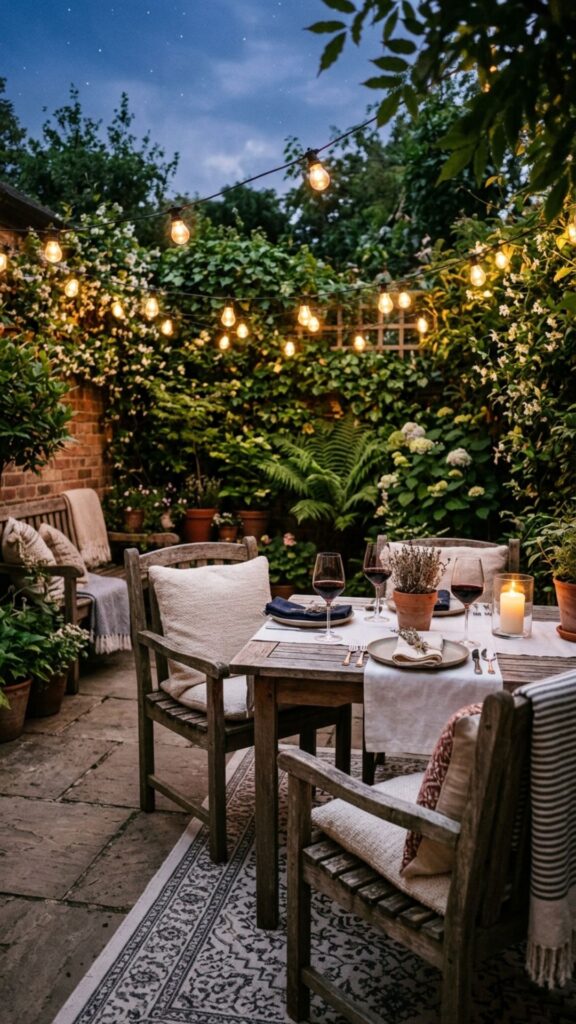
Nothing transforms an outdoor area faster than warm lighting. String lights cost as little as $20 and turn an ordinary patio into a spot that feels like a European café. Drape them across a fence, wrap them around a pergola, or run them between two poles for an instant canopy of glow.
For the best effect, choose warm white bulbs over cool white, and pick a set rated for outdoor use. Solar-powered options save on electricity, though I recommend plug-in models if you dine after dark regularly since they stay bright all evening.
3. Create Shade With a Market Umbrella
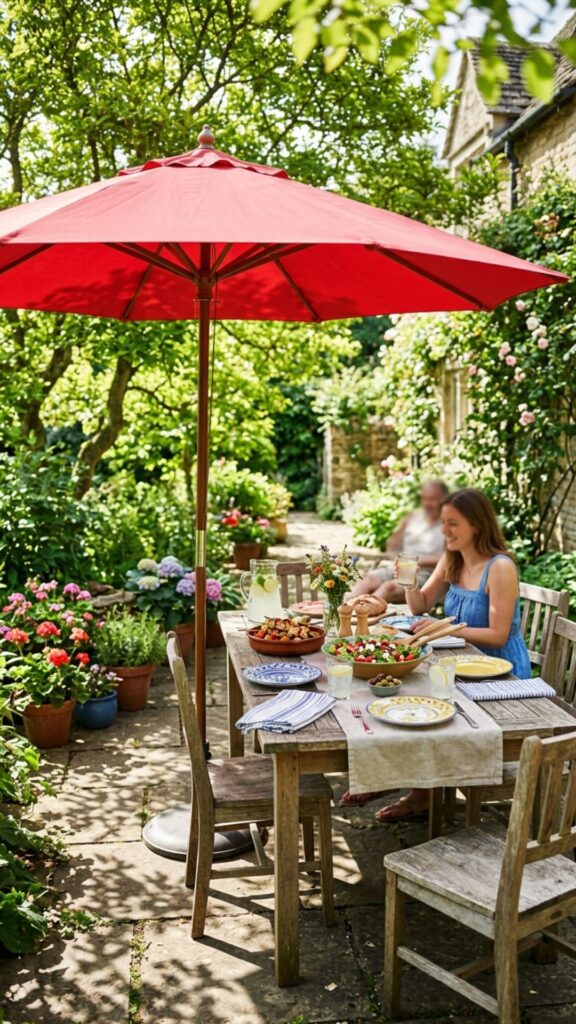
A large umbrella is one of the most budget-friendly ways to make daytime dining comfortable. Prices start around $40 for a basic model, and it protects your guests from harsh sun and light drizzle alike. Tilting versions let you adjust as the sun moves across the sky.
Anchor it properly. A heavy base is essential, especially in windy areas where an unsecured umbrella can become a hazard. Choose a canopy color that resists fading, and store it during storms to extend its life for many seasons.
4. Repurpose a Picnic Table for Rustic Charm
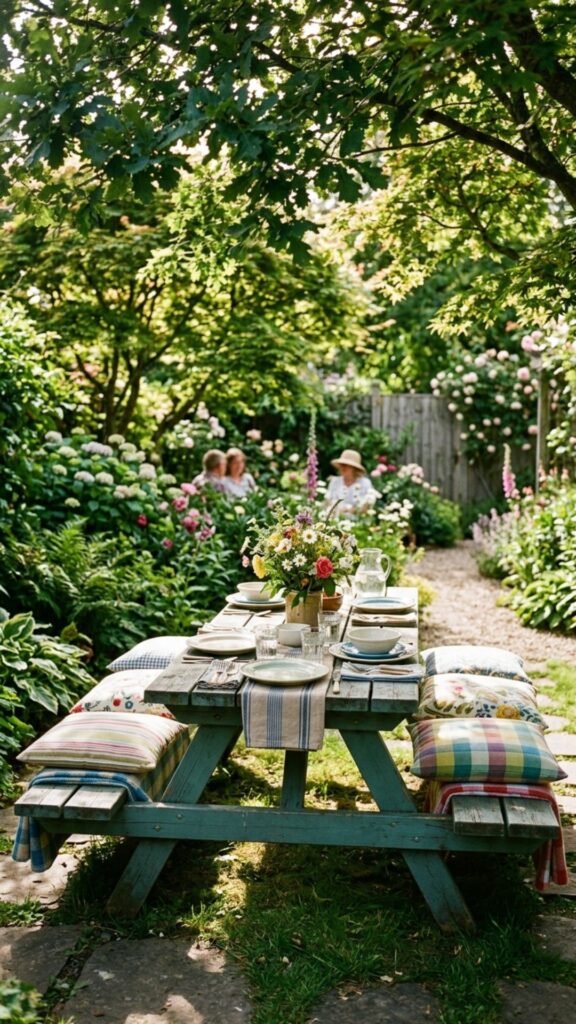
The humble picnic table is a classic for a reason. It seats a crowd, handles spills, and brings a relaxed, communal feel to any meal. You can buy one for under $150 or build your own from lumber for even less.
Give it personality with a coat of exterior paint or wood stain. I’ve seen plain pine tables come alive with a soft sage green or a rich walnut finish. Add cushions to the benches, and suddenly it’s comfortable enough for those slow Sunday brunches.
5. Design a Built-In Bench Seating Area
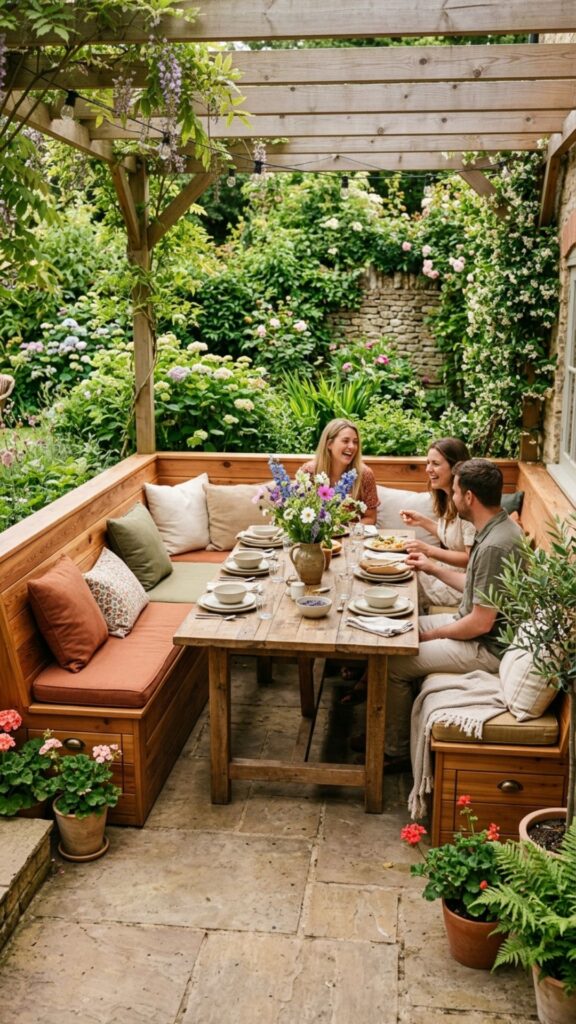
If you want a permanent feature, built-in benches maximize seating in tight spaces. They hug the perimeter of a patio, freeing up the center for a table. This idea works beautifully for small yards where floating chairs would eat up room.
You can construct benches from pressure-treated wood, cinder blocks topped with cushions, or even repurposed pallets. Build storage underneath for cushions and outdoor games, and you’ve solved two problems at once.
6. Add a Pergola for Structure and Style
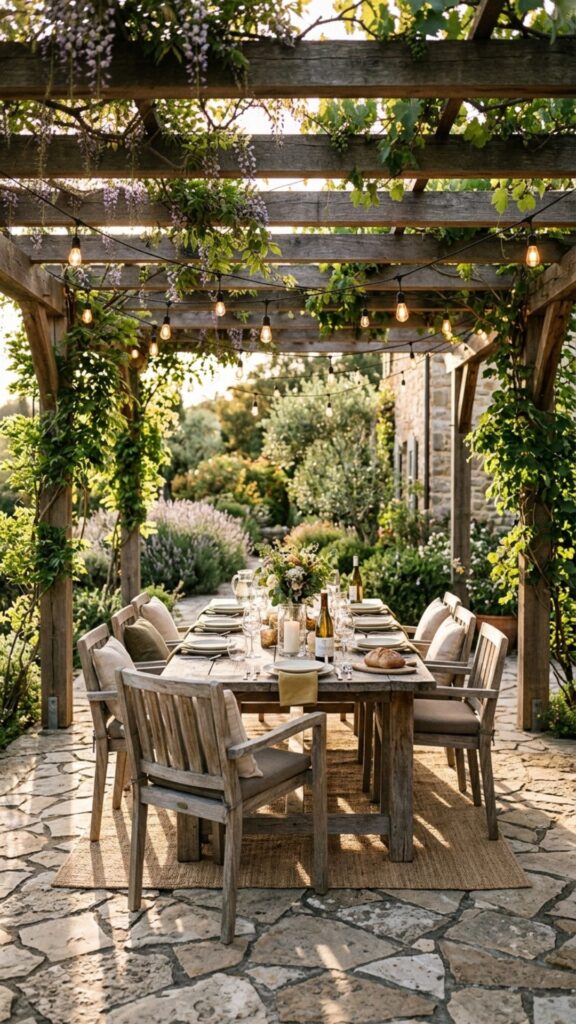
A pergola gives your dining area a sense of “room” without closing it in. It provides partial shade, a place to hang lights or plants, and a striking focal point. Kits range from a few hundred dollars to several thousand depending on material and size.
Train climbing plants like wisteria, jasmine, or grapevines up the posts for natural shade that improves each year. If you want quicker coverage, attach a retractable canopy so you control how much sun reaches your table.
7. Go Bohemian With Floor Cushions and a Low Table
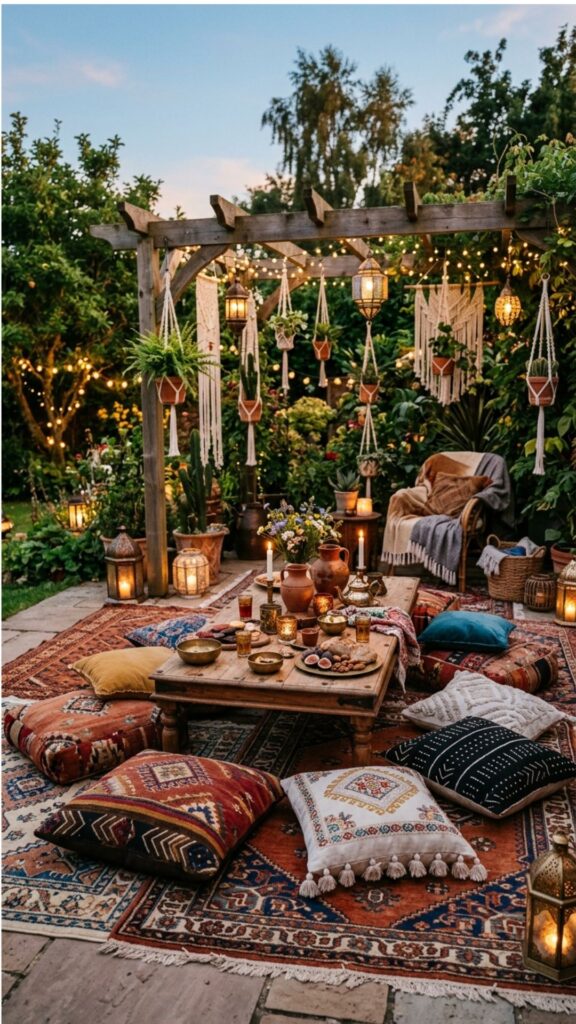
For a laid-back, casual vibe, skip the traditional table and chairs entirely. A low table surrounded by floor cushions and outdoor rugs creates a relaxed lounge-style dining spot that’s perfect for younger crowds or intimate gatherings.
Choose water-resistant cushion covers and bring them inside when not in use. Layer a few textured throws and lanterns to complete the look. This setup costs little and packs away easily, making it ideal for renters.
8. Install a Fire Pit Dining Zone
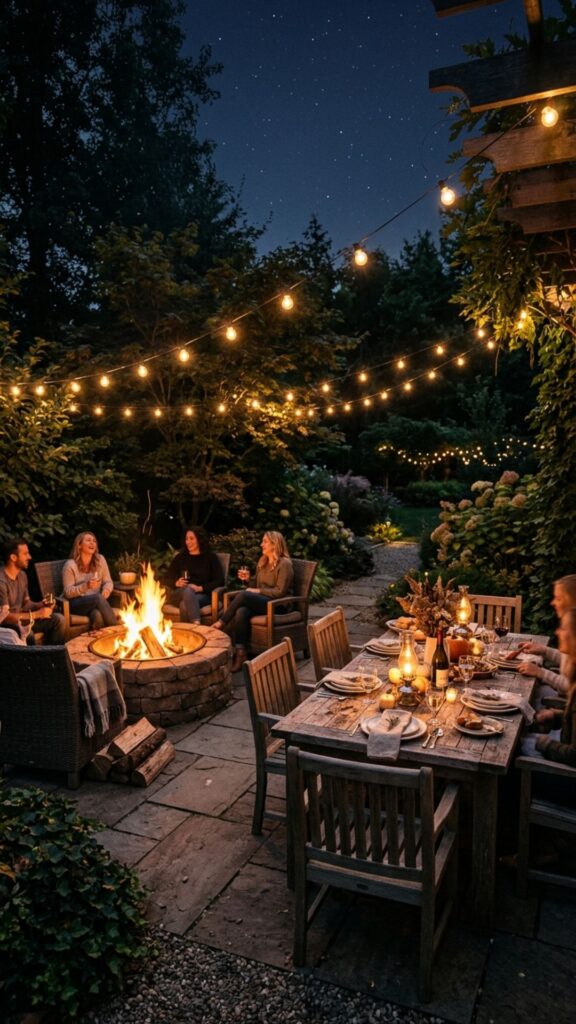
Combining warmth and food keeps guests outside long after the sun sets. A fire pit surrounded by seating extends your dining season well into cooler months. Portable propane pits start around $100, while built-in stone versions cost more but add lasting value.
Always keep the fire a safe distance from your table and follow local fire regulations. I like pairing a fire pit with a nearby dining table so guests can move from dinner to dessert and drinks around the flames.
9. Use an Outdoor Rug to Anchor the Space
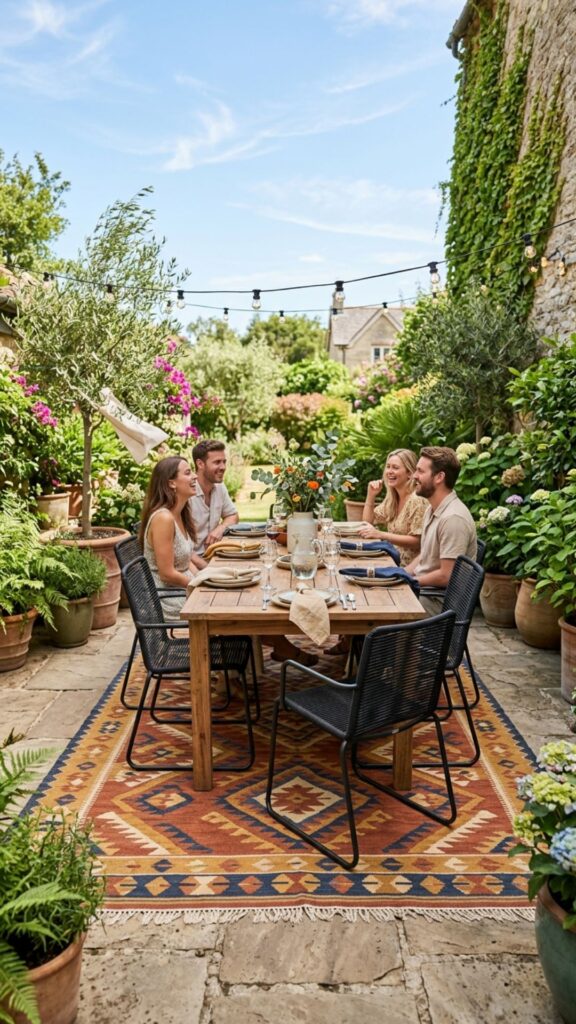
An outdoor rug is the fastest way to make a patio feel finished. It defines the dining zone, adds color, and makes bare concrete or decking far more inviting. Prices start under $50 for smaller sizes.
Pick a polypropylene rug designed for outdoor use since it resists mold and fading. Choose a pattern that hides crumbs and dirt between cleanings, and shake it out regularly to keep it looking fresh.
10. Set Up a Balcony Bistro Nook
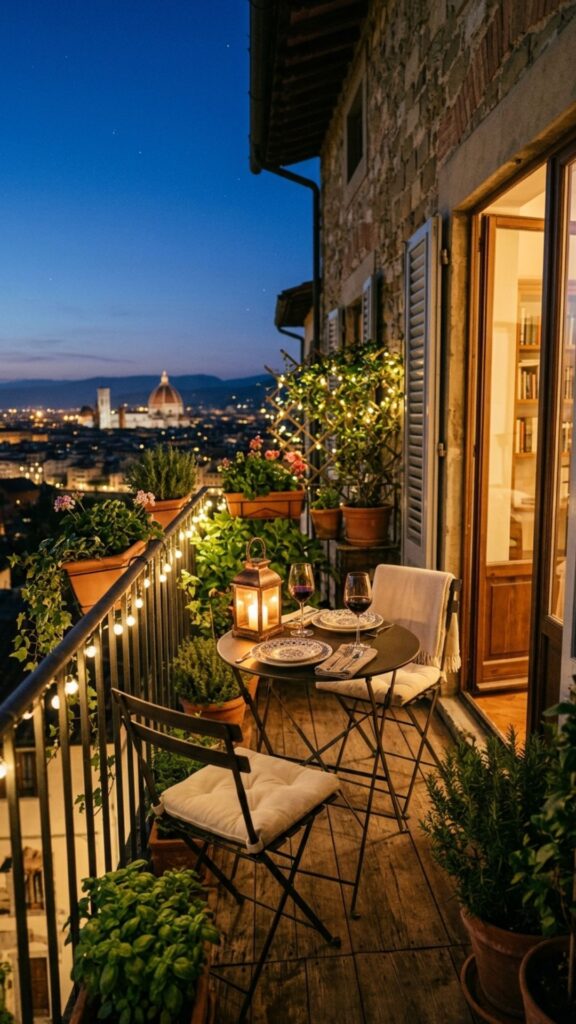
No yard? No problem. A small balcony can host a charming bistro set with two folding chairs and a compact table. This is one of the most space-savvy outdoor dining area ideas for apartment living.
Add a railing planter with herbs, a single lantern, and a folding tray for extra surface. The goal is to create a spot that feels intentional rather than cramped, proving that great outdoor dining isn’t about square footage.
11. Build a Dining Deck Extension
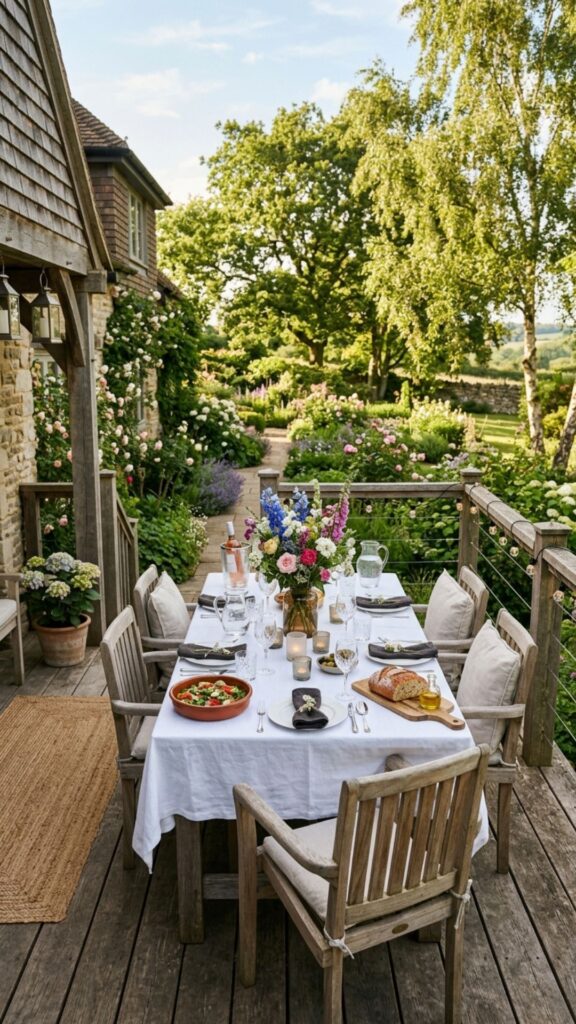
If your home lacks a natural gathering spot, adding a small deck creates one. A modest platform deck raises your dining area, defines it clearly, and adds usable living space that boosts property value.
Composite decking costs more upfront but requires almost no maintenance, while pressure-treated wood is cheaper to install. Either way, factor in permits and railings if the deck sits above ground level.
12. Create Privacy With Planters and Screens
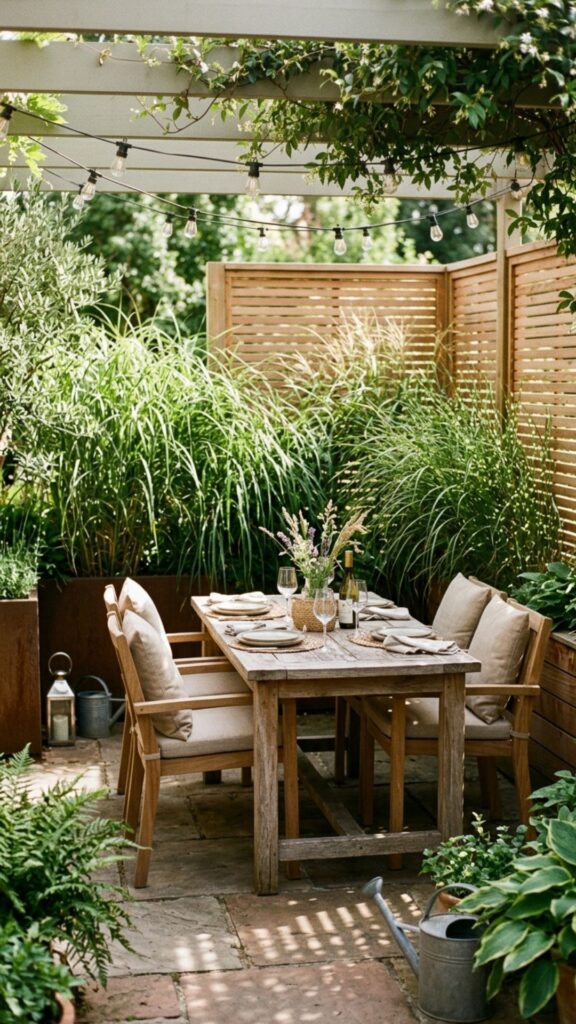
Nobody enjoys dining while feeling watched. Tall planters filled with bamboo, arborvitae, or ornamental grasses create a living privacy wall. Lattice screens and slatted panels work well too, and both add texture to your space.
Position screens on the sides facing neighbors or streets. I often recommend planters on wheels so you can adjust the layout for different occasions, moving them aside for larger parties.
13. Add a Bar Cart or Serving Station
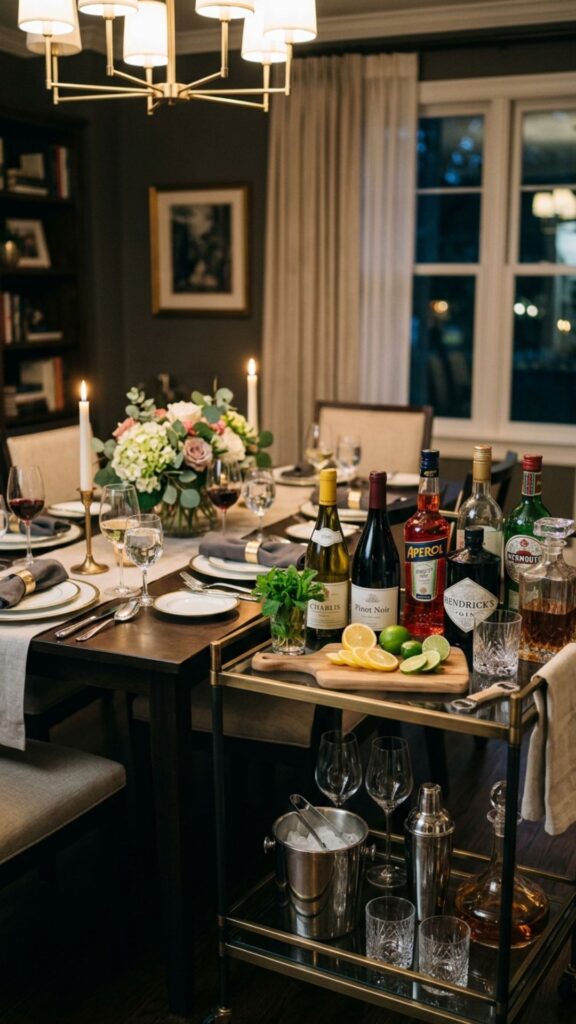
A dedicated serving surface makes hosting far easier. A rolling bar cart keeps drinks, plates, and utensils within reach so you’re not running back and forth to the kitchen. Budget options start around $60.
For a permanent solution, a built-in counter or repurposed dresser works well. Add a small ice bucket and a few glasses, and your outdoor dining area suddenly feels like a proper entertaining space.
14. Incorporate a Water Feature for Ambiance
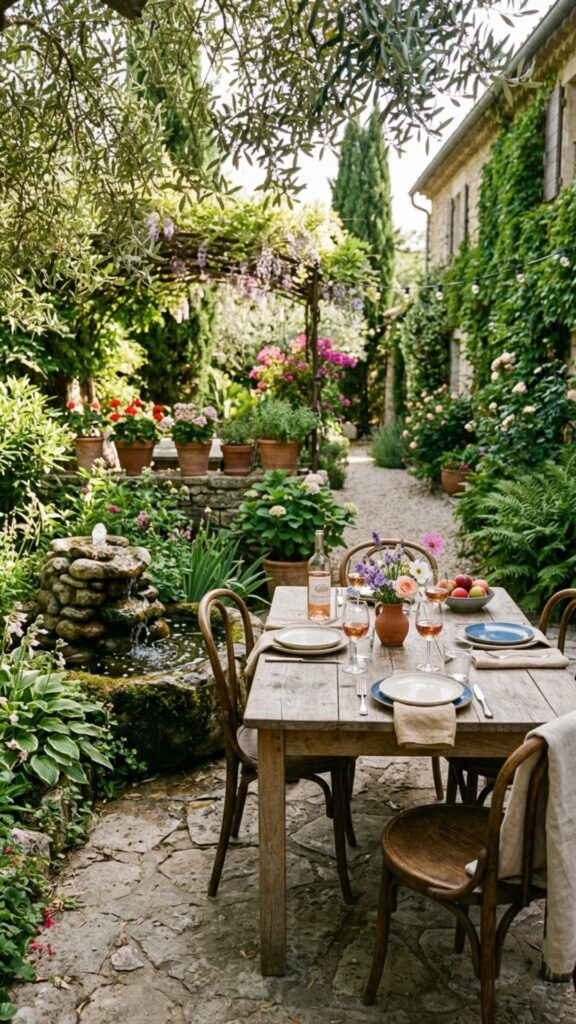
The gentle sound of running water masks street noise and adds a calming backdrop to meals. A small fountain or bubbling urn costs less than you’d expect and needs minimal upkeep.
Place it near your table but not so close that splashing becomes a nuisance. Solar-powered fountains skip the wiring altogether, making them easy to add to almost any layout.
15. Design an Outdoor Kitchen Adjacent to Dining
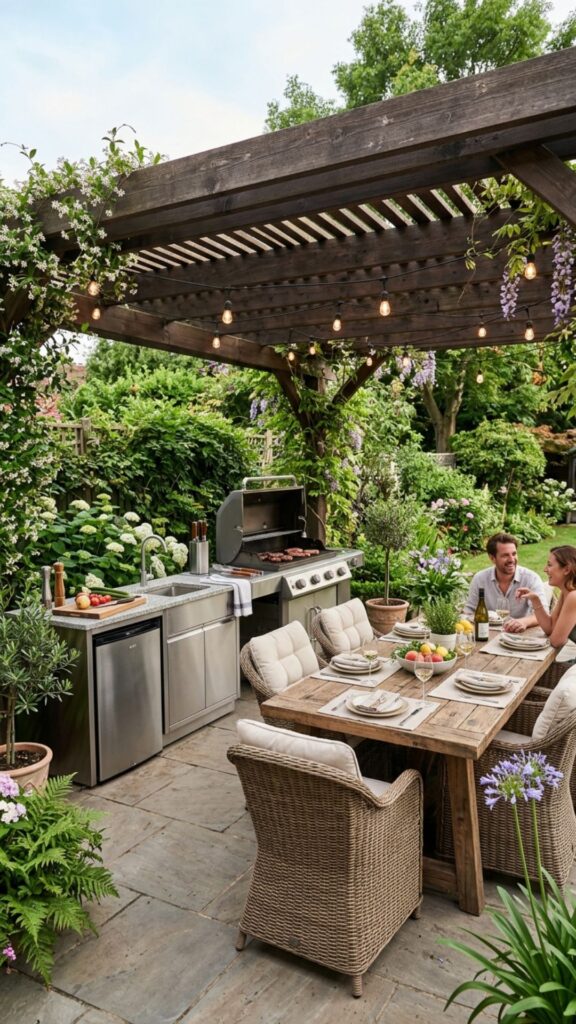
For serious entertainers, an outdoor kitchen beside the dining area is the ultimate upgrade. Even a simple setup with a grill, prep counter, and mini fridge means the cook stays part of the party instead of stuck indoors.
Start small if the budget is tight. A grill station with a weatherproof counter covers the basics, and you can expand with a sink or pizza oven later. Keep the cooking zone close enough for convenience but far enough that smoke drifts away from diners.
16. Hang a Canopy or Sail Shade
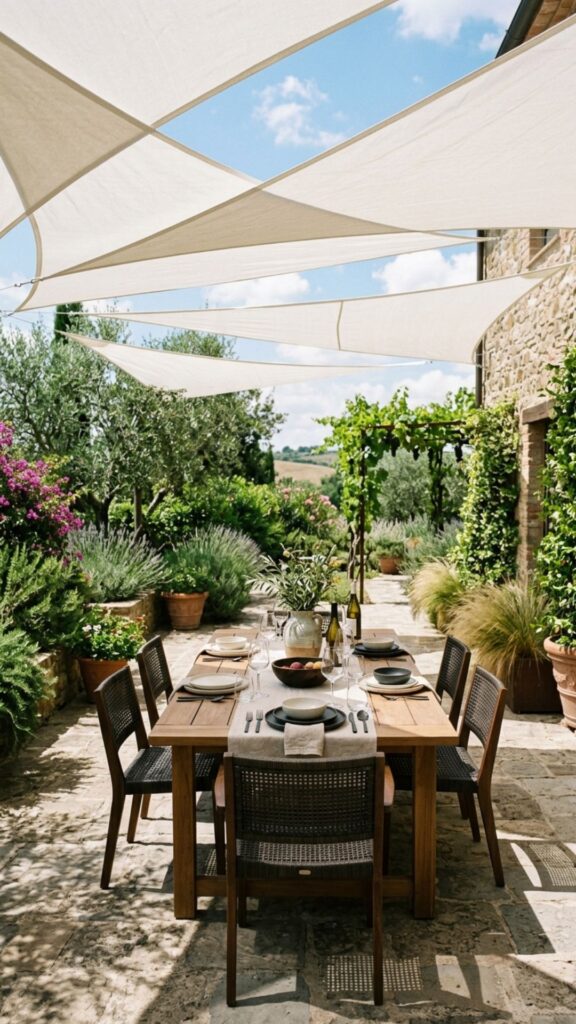
Sail shades offer modern style and serious sun protection at a fraction of a pergola’s cost. Their triangular shapes create striking overhead angles and can be arranged to cover large areas. Expect to spend $40 to $150 per sail.
Mount them at slightly different heights so rainwater runs off instead of pooling. Combine two or three overlapping sails for both coverage and a designer look that draws the eye upward.
17. Furnish With Pallet Furniture
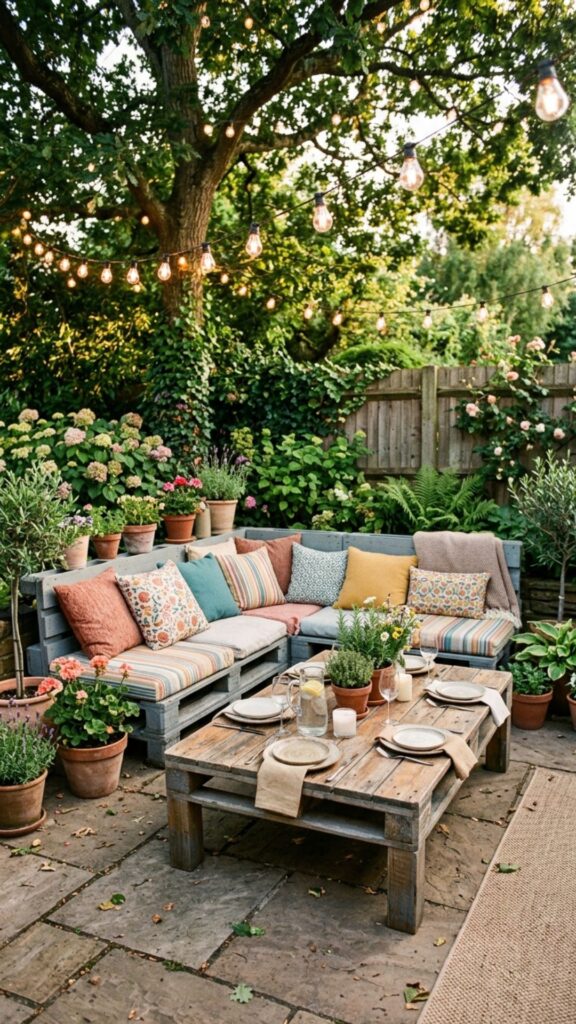
Wooden pallets are a favorite among DIY fans, and often free from local businesses. Sanded, stacked, and finished, they become sofas, tables, and benches for next to nothing. It’s a rewarding weekend project.
Sand thoroughly to prevent splinters and seal the wood against moisture. Add thick cushions for comfort. The rustic result pairs perfectly with string lights and greenery for a relaxed backyard hangout.
18. Add Potted Plants and Greenery
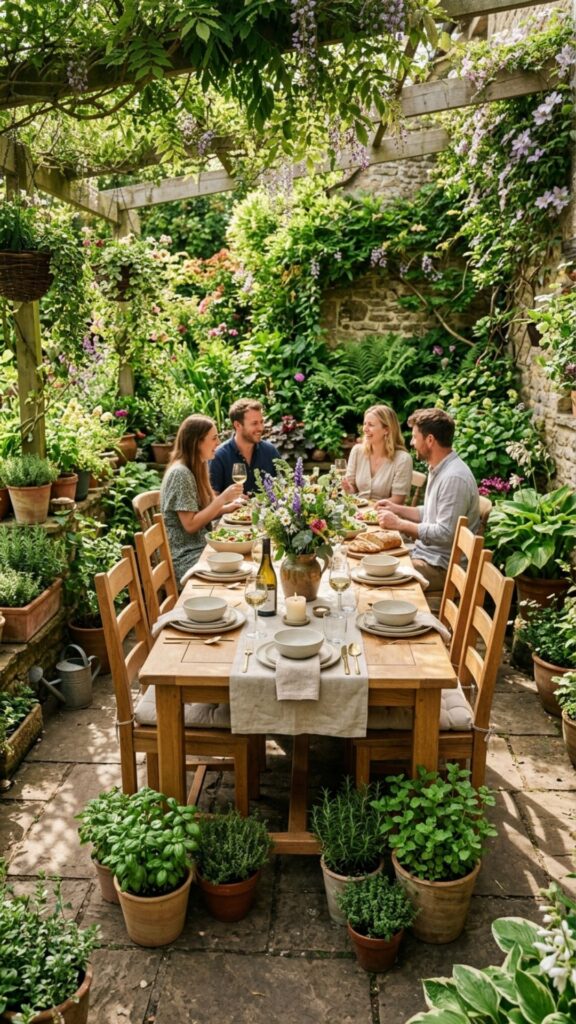
Plants soften hard surfaces and bring life to any dining area. Group pots of varying heights in corners, line steps with herbs, or hang trailing vines from a pergola. Fresh greenery makes the whole space feel welcoming.
Herbs like basil, rosemary, and mint do double duty, looking lovely while flavoring your meals. Choose low-maintenance varieties if you tend to forget watering, and cluster pots together to make care easier.
19. Install a Retractable Awning
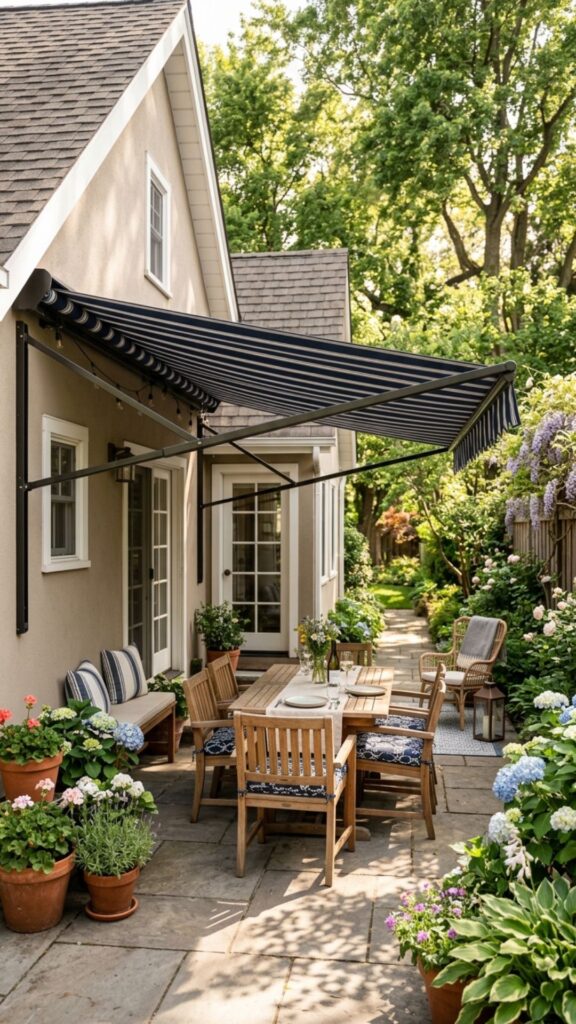
An awning gives you flexible shade on demand. Extend it during the midday heat, retract it to enjoy the evening stars. Motorized versions add convenience, while manual crank models keep costs lower.
This works especially well for dining areas attached to the house. Choose a fabric with a high UV rating, and angle it so rain runs off cleanly rather than collecting in the center.
20. Splurge on a Statement Dining Set
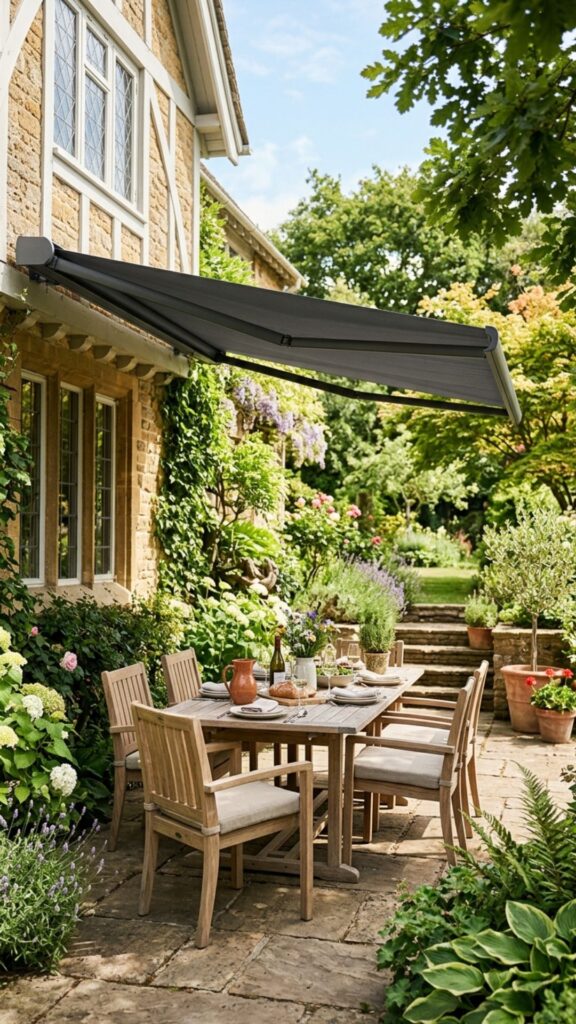
If you have room in the budget, a high-quality dining set becomes the heart of your outdoor space. Solid teak, wrought iron, or premium woven pieces last for years and elevate the entire area with their presence.
Invest in comfortable, deep-seating chairs and a table sized for your typical gatherings. Quality furniture pays off over time, resisting weather and staying comfortable through countless dinners with family and friends.
Bringing It All Together
You don’t need to tackle everything at once. The best outdoor dining area ideas come from starting with one change, living with it, and building from there. Maybe you begin with string lights and a rug this month, then add a pergola next spring. Small steps add up to a space you’ll use for years.
Ready to transform your backyard, patio, or balcony? Pick one idea from this list that fits your budget and start this weekend. Your future self, enjoying a long dinner under the stars, will thank you. Grab a measuring tape, set your budget, and take that first step today.
What is the cheapest way to create an outdoor dining area?
The cheapest approach combines an affordable table set or DIY pallet furniture with string lights and an outdoor rug. For under $150, you can define and light a comfortable dining space that feels intentional and inviting.
How much space do I need for an outdoor dining area?
Allow at least three feet of clearance around your table so chairs can slide out and people can walk by. A four-person setup typically needs about 10 by 10 feet, while a six-to-eight person area works best with 12 by 12 feet or more.
What is the best material for outdoor dining furniture?
Teak, powder-coated aluminum, and all-weather resin wicker are the most durable choices. Teak weathers beautifully with minimal care, aluminum resists rust, and resin wicker handles sun and rain without fading quickly.
How do I make my outdoor dining area more private?
Use tall planters with bamboo or arborvitae, install lattice or slatted screens, or hang outdoor curtains. Positioning greenery and screens on the sides facing neighbors gives you a cozy, secluded feel without blocking light.
Can I set up an outdoor dining area on a small balcony?
Absolutely. A compact bistro set with two chairs, a railing planter, and a folding tray creates a charming spot even in tight quarters. Choose foldable furniture so you can adjust the layout whenever you need extra room.