Your rooftop might be the most underused space you own. While city dwellers pack indoors, that flat expanse above your head sits empty, waiting for a second life. With the right approach, it can become a private lounge, a dinner spot under the stars, or a green retreat that makes you forget the traffic below.

I’ve spent years helping homeowners and renters reimagine tight urban spaces, and rooftops always surprise people with their potential. You don’t need a huge budget or a designer on speed dial. You just need a few smart choices.

Below you’ll find 20 rooftop outdoor living ideas, each with practical steps and real examples. Whether you have a sprawling terrace or a modest ledge, there’s something here to inspire your next project. Let’s climb up and get started.
1. Build a Cozy Lounge Zone with Weatherproof Seating
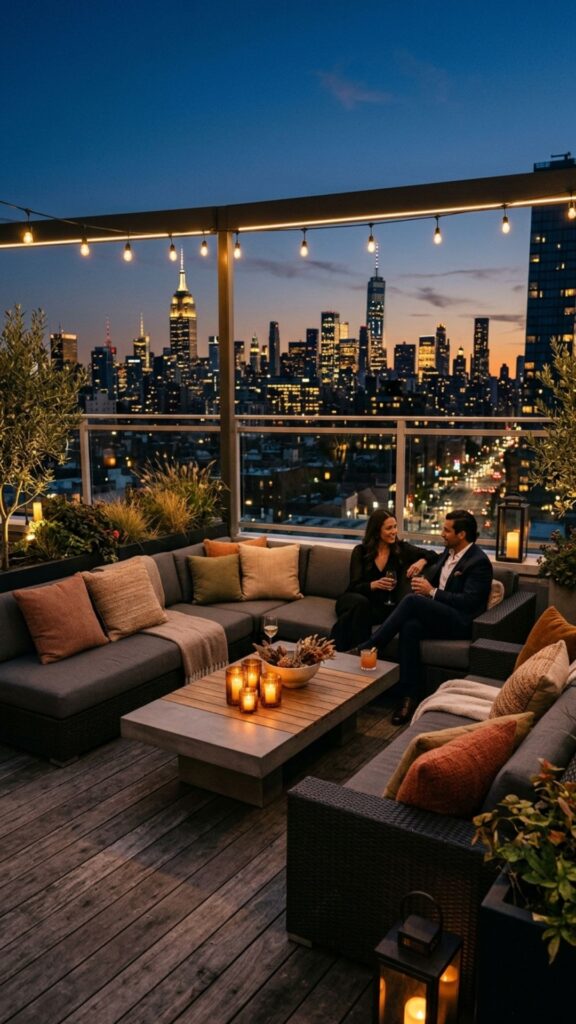
The fastest way to make a rooftop feel like an extension of your home is comfortable seating. Skip flimsy plastic chairs and invest in weatherproof sectionals or modular sofas made from powder-coated aluminum or synthetic rattan. These materials handle sun, rain, and temperature swings without fading or cracking.
Arrange your pieces to encourage conversation, facing them inward rather than lining them against a wall. Add outdoor-rated cushions in warm tones and toss in a few throw pillows. A low coffee table anchors the space and gives guests somewhere to set a drink. Suddenly, your rooftop feels like a living room with a skyline view.
2. Create Shade with a Pergola or Retractable Awning
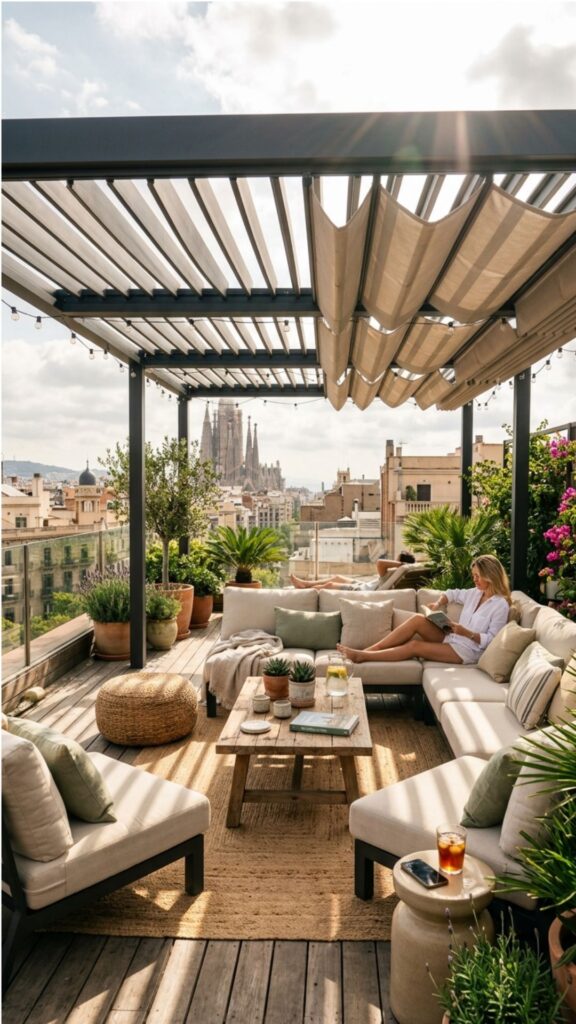
Sun exposure can turn a rooftop into an oven by midday. A pergola solves this while adding architectural charm. You can leave the slats open for dappled light or add a canopy for full coverage. Cedar and aluminum are both popular choices because they resist rot and rust.
If you rent or want flexibility, a retractable awning gives you control. Pull it out during peak heat, roll it back at sunset. Many models now come with motorized controls and wind sensors, so they retract automatically during gusts. This small upgrade extends how long you can actually enjoy your space.
3. Grow a Container Garden for Instant Greenery
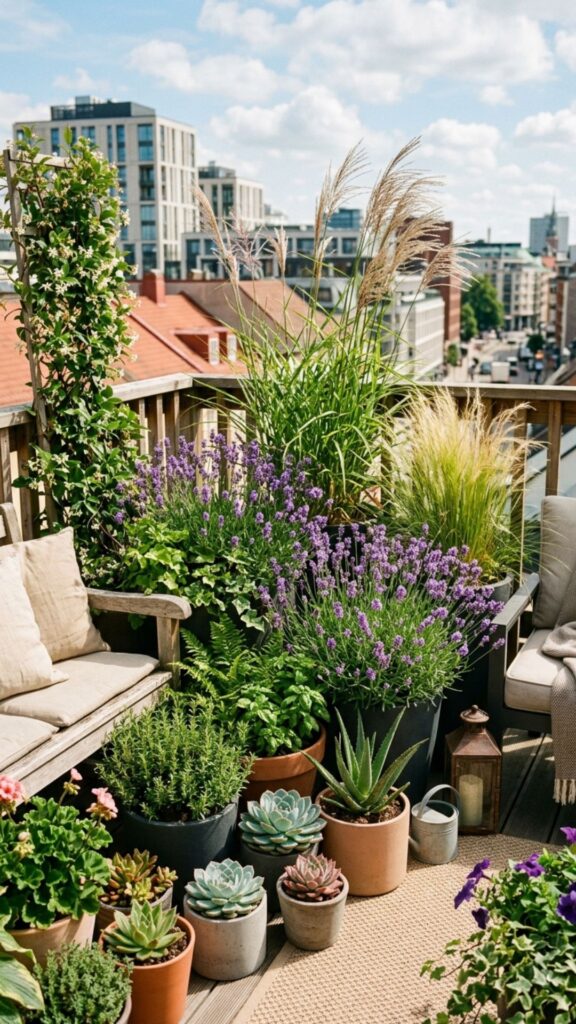
Nothing softens hard rooftop surfaces like plants. Since you likely can’t dig into the roof, container gardening is your friend. Use lightweight fiberglass or resin pots to avoid overloading the structure, and always check your building’s weight limits first.
Choose hardy plants that tolerate wind and full sun, such as lavender, ornamental grasses, or succulents. Group containers in odd numbers for a natural look, and vary the heights to add depth. Within a season, you’ll have a lush corner that attracts bees, butterflies, and plenty of compliments.
4. Install Outdoor Rugs to Define Spaces
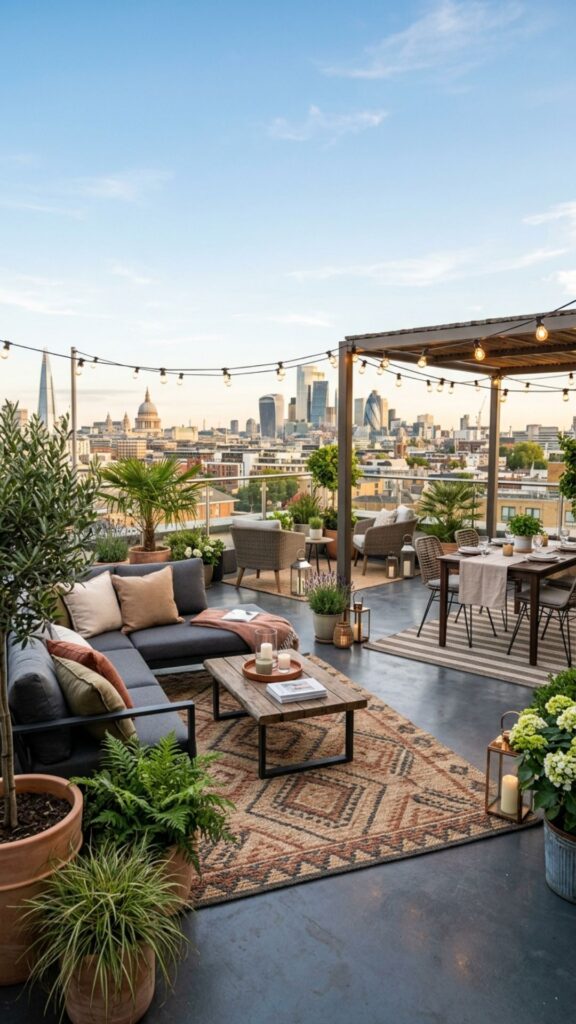
An outdoor rug does more than add color. It carves your rooftop into distinct zones, telling the eye where the lounge ends and the dining area begins. Rugs made from polypropylene handle moisture and clean up with a quick hose-down.
Pick patterns that complement your furniture without competing with the view. A neutral base with subtle texture works in almost any setting. Layering a smaller patterned rug over a larger plain one adds visual interest and warmth underfoot, especially on bare concrete.
5. Set Up a Dining Area for Alfresco Meals
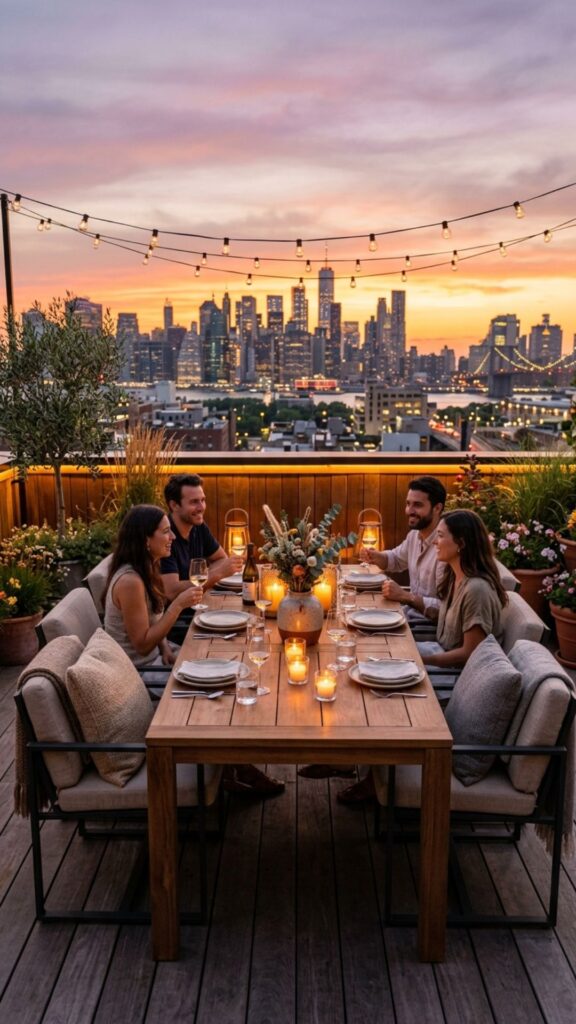
Eating outside transforms an ordinary dinner into an event. Dedicate a corner to a weather-resistant table with enough chairs for your usual crowd. Teak, aluminum, and concrete-look composite tables all hold up well against the elements.
Keep the setup practical. Store cushions in a deck box nearby so cleanup takes seconds. If your rooftop gets breezy, weighted tablecloths or placemats stop everything from blowing away. Add a lazy Susan for shared dishes, and you’ve got a spot that rivals any restaurant patio.
6. Add String Lights for Warm Evening Ambiance

Lighting turns a daytime deck into a nighttime destination. String lights are affordable, easy to hang, and instantly cozy. Drape them along railings, zigzag them overhead, or wrap them around a pergola beam for a soft, glowing canopy.
Choose LED bulbs rated for outdoor use, and look for warm white tones around 2700K for that golden restaurant feel. Solar-powered strands save you the hassle of finding an outlet, while plug-in versions offer steady brightness for regular gatherings.
7. Incorporate a Fire Feature for Cool Nights
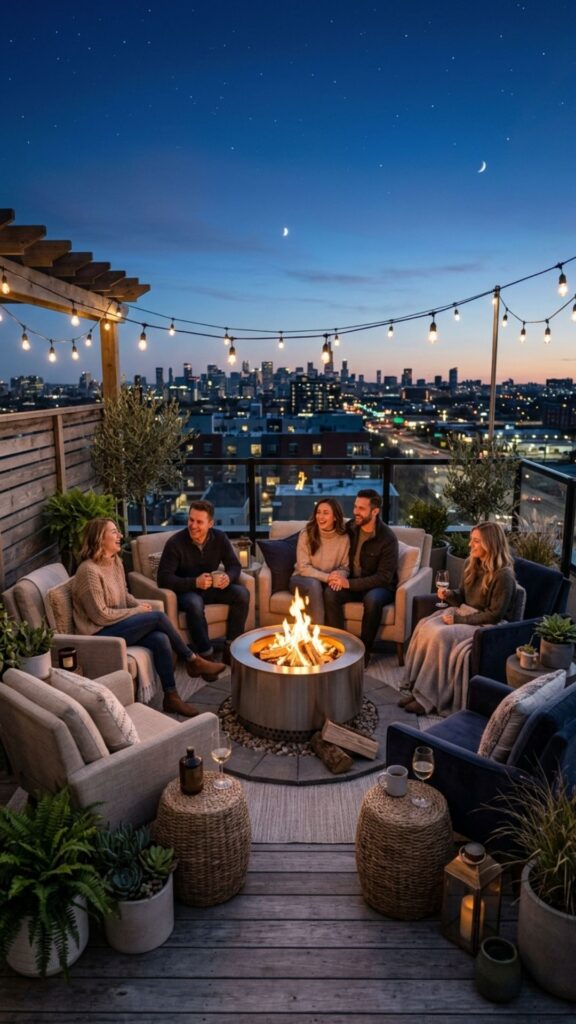
A fire pit or tabletop fire bowl extends your rooftop season well into fall. It creates a natural gathering point and takes the chill off cool evenings. Always confirm your building allows open flames, and stick to propane or bioethanol units if wood-burning isn’t permitted.
Position the feature away from overhangs and flammable materials, keeping clearance on all sides. Surround it with your seating for a campfire vibe minus the smoke. On a crisp night, there’s nothing better than gathering close with a blanket and a warm glow overhead.
8. Screen Off Privacy with Panels or Plants
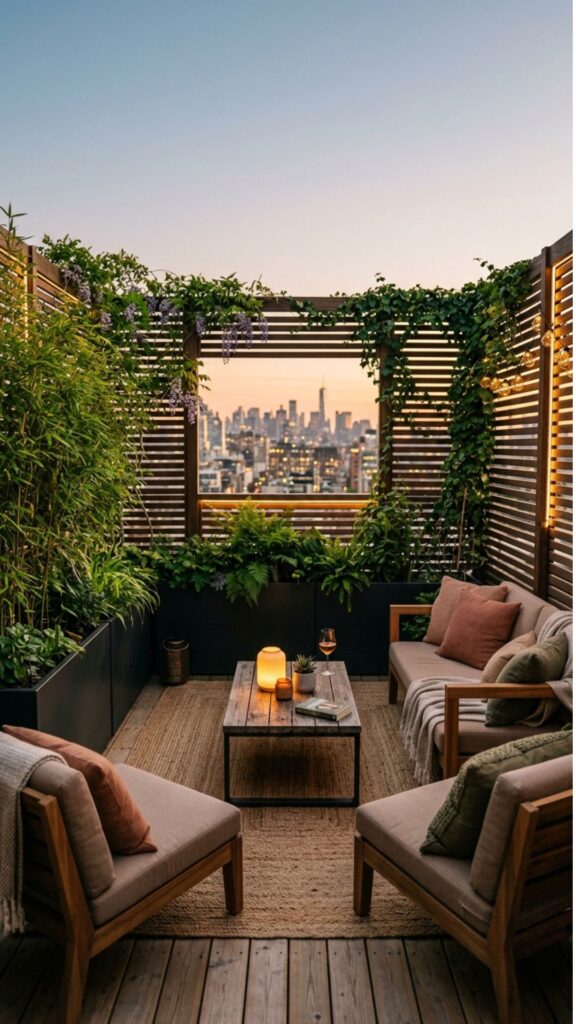
Rooftops often face neighboring windows, which can make relaxing feel like performing. Privacy screens fix this. Slatted wood panels, bamboo fencing, or metal trellises block sightlines while adding structure and style.
For a softer approach, use tall planters filled with bamboo, arborvitae, or climbing vines. These living walls grow denser over time and double as noise buffers. Combining a screen with greenery gives you both immediate coverage and natural beauty that improves each season.
9. Build a Vertical Garden to Save Floor Space
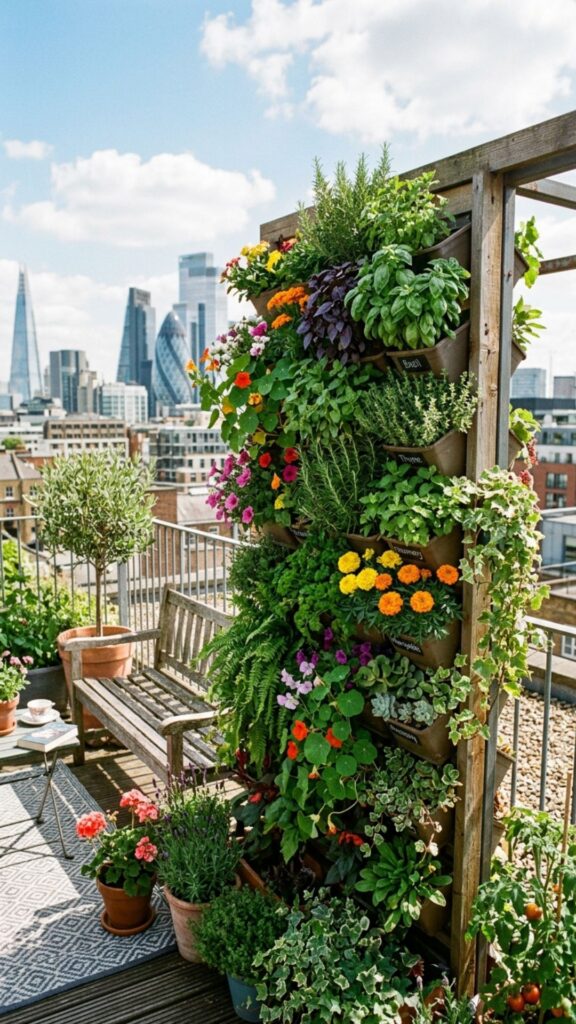
When floor space is tight, go up. Vertical gardens let you grow herbs, flowers, and leafy greens on walls and railings without sacrificing precious square footage. Modular pocket planters and stacked shelving systems make installation simple.
Herbs like basil, mint, and thyme thrive in vertical setups and keep fresh flavor within arm’s reach of your outdoor kitchen. Water them with a drip irrigation kit on a timer, and maintenance becomes nearly effortless. It’s a smart way to add life to blank surfaces.
10. Install a Compact Outdoor Kitchen or Bar
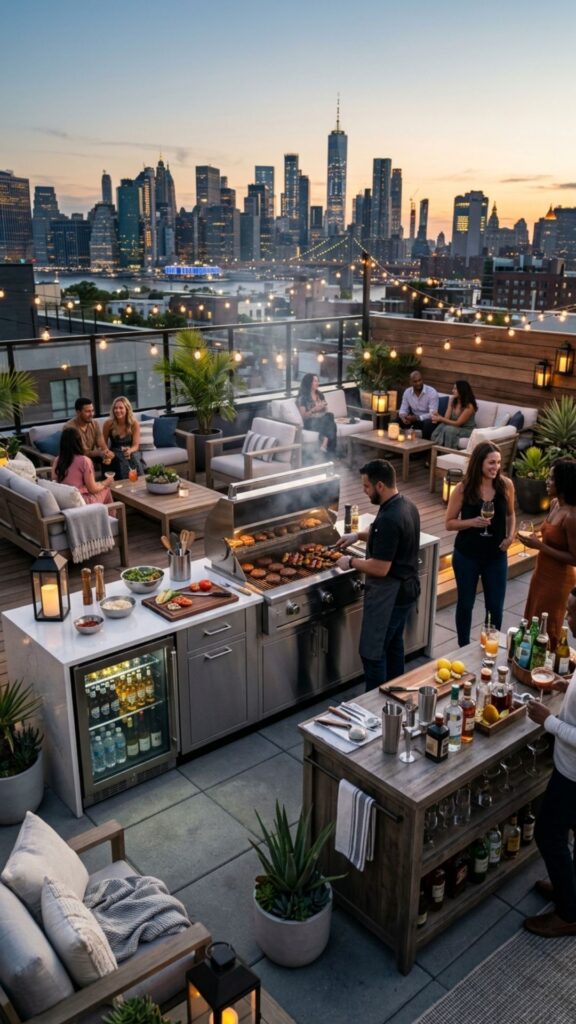
Cooking and mixing drinks on the roof keeps the party where the view is. A compact outdoor kitchen might include a built-in grill, a small counter, and a mini fridge. For tighter spaces, a rolling bar cart or grill station gives you flexibility without permanent commitment.
Choose stainless steel appliances that resist corrosion, and add storage for utensils and glassware. Position your setup with wind direction in mind so smoke drifts away from guests. Even a simple grill and prep table can turn weekend cookouts into a rooftop tradition.
11. Add Water Features for a Calming Soundtrack
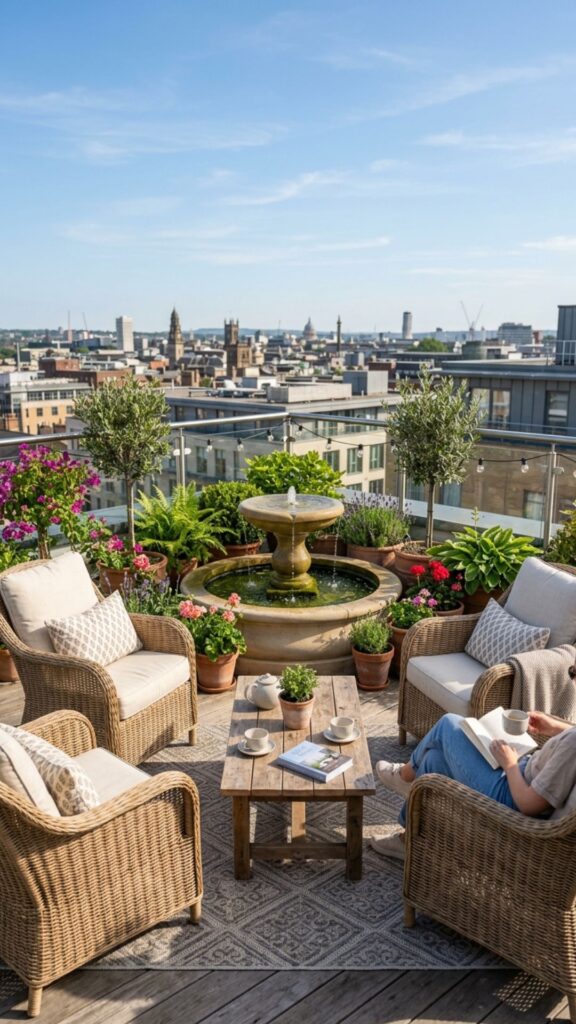
City noise fades fast when you introduce the gentle sound of moving water. A small fountain or freestanding water wall masks traffic hum and creates a spa-like atmosphere. Solar and recirculating models keep water use minimal.
Place your feature near seating so you can actually hear it. Lightweight resin designs mimic stone without the crushing weight, which matters on a roof. The soft trickle turns your escape into a genuine retreat, perfect for morning coffee or unwinding after a long day.
12. Choose Modular Furniture for Flexible Layouts
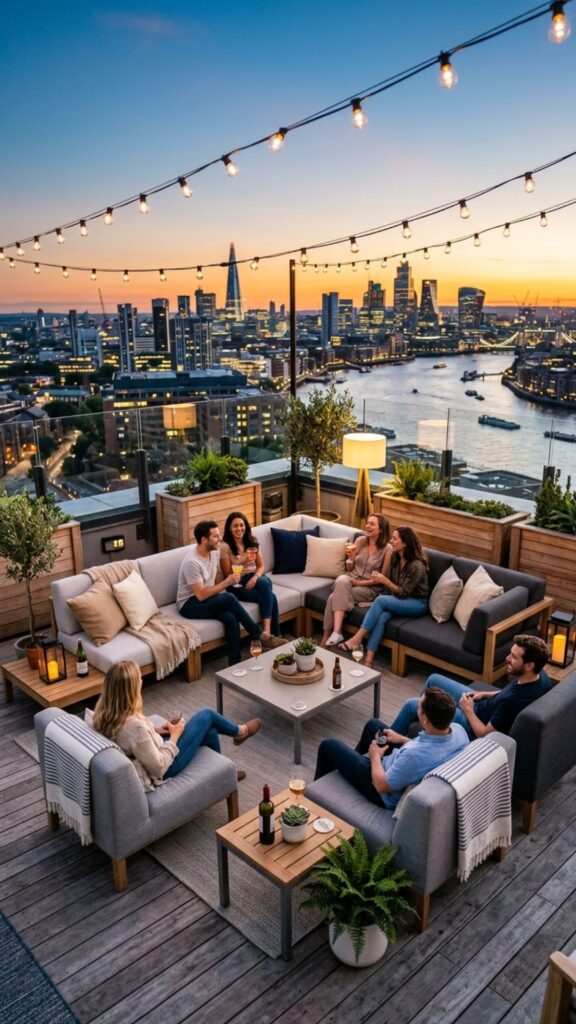
Rooftops often serve many purposes, from quiet reading to lively parties. Modular furniture adapts to whatever the day demands. Rearrange sectional pieces into a big lounge for guests, then break them apart for an intimate evening.
Look for lightweight designs you can move without a workout. Ottomans that double as storage or extra seating earn their keep in small spaces. This flexibility means your rooftop never feels stuck in one configuration, and you get more value from every piece.
13. Layer in Textiles for Comfort and Color
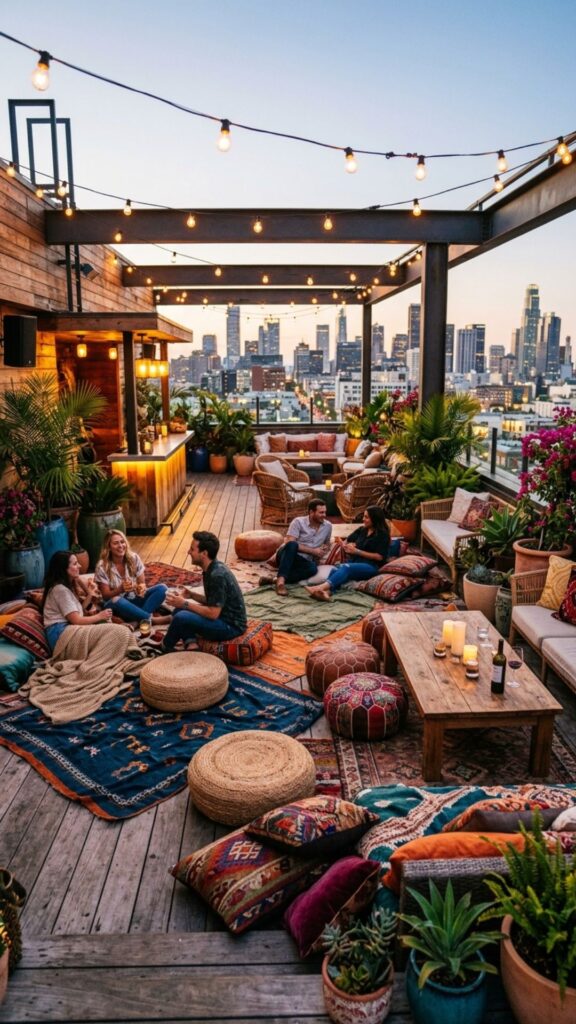
Soft textiles make a hard rooftop feel welcoming. Outdoor throw blankets, poufs, and floor cushions invite people to linger. They also let you refresh your color scheme cheaply as trends or seasons change.
Stick with fade-resistant fabrics like solution-dyed acrylic, which shrugs off sun and spills. Keep a basket of blankets nearby for cool evenings. Mixing textures, such as a chunky knit against smooth linen, adds a layered, curated look without much effort or expense.
14. Set Up a Shaded Reading or Meditation Nook
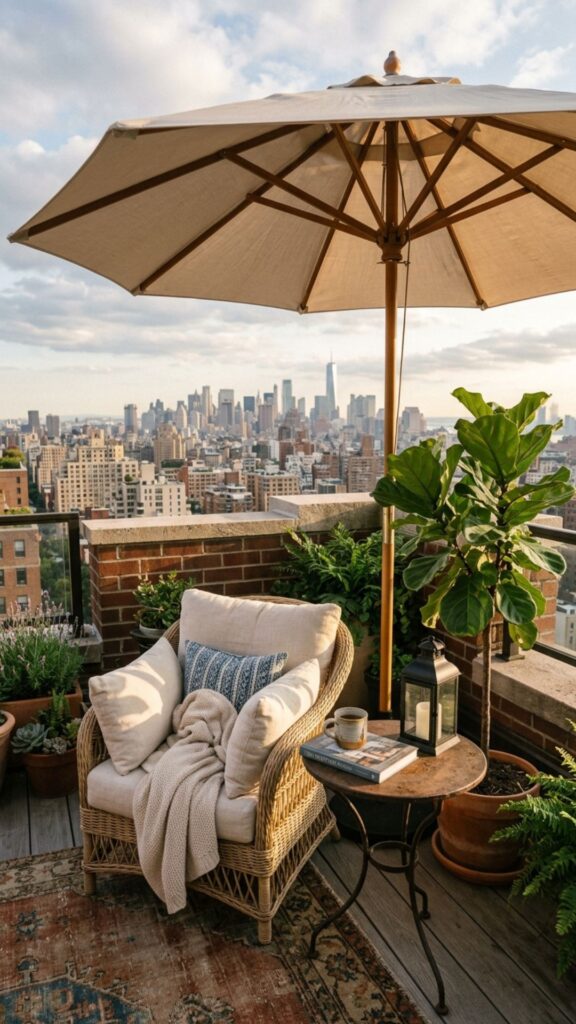
Everyone needs a quiet corner. Carve out a small nook with a comfortable chair, a side table, and a bit of shade from an umbrella or trellis. This becomes your go-to spot for reading, journaling, or simply breathing.
Add a small plant, a lantern, and a soft cushion to complete the retreat. Facing the chair toward the best view or away from busy sightlines helps you truly disconnect. Even in a bustling city, this pocket of calm feels like a personal sanctuary.
15. Use Container Trees for Height and Structure
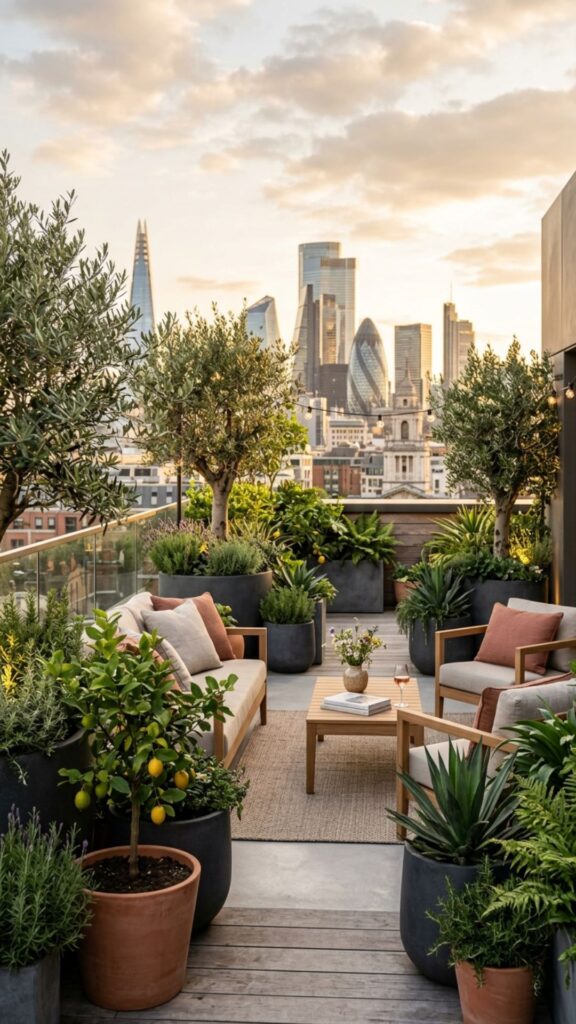
Small trees in large planters bring drama and shade to a rooftop. Olive trees, Japanese maples, and dwarf citrus varieties handle container life well and add year-round structure. Their height draws the eye upward and softens harsh building edges.
Anchor heavy planters against wind and check drainage so roots don’t sit in water. These trees also frame views nicely, guiding attention toward the skyline. Over time, they become the signature feature that gives your rooftop a mature, established feel.
16. Install Deck Tiles for a Polished Floor
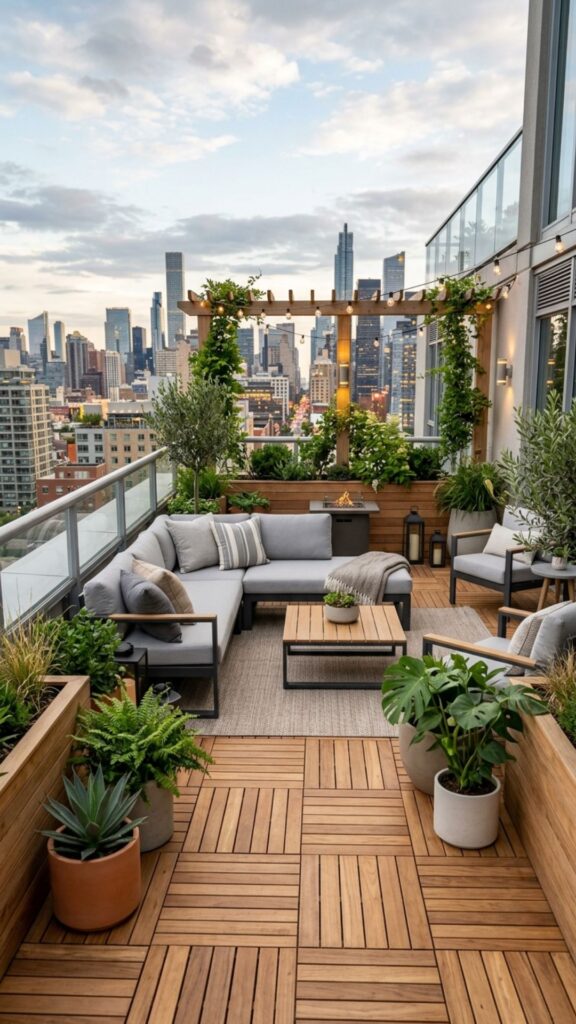
Bare rooftop surfaces rarely look inviting. Interlocking deck tiles snap together over concrete or membrane roofing to create a warm, finished floor. Options include wood, composite, and stone-look styles, all installed without tools or glue.
They’re a renter’s dream because they lift out just as easily when you move. Elevated tiles also allow water to drain underneath, protecting the roof below. In an afternoon, you can transform gray concrete into a floor that looks like it belongs in a design magazine.
17. Create a Green Roof Section for Insulation
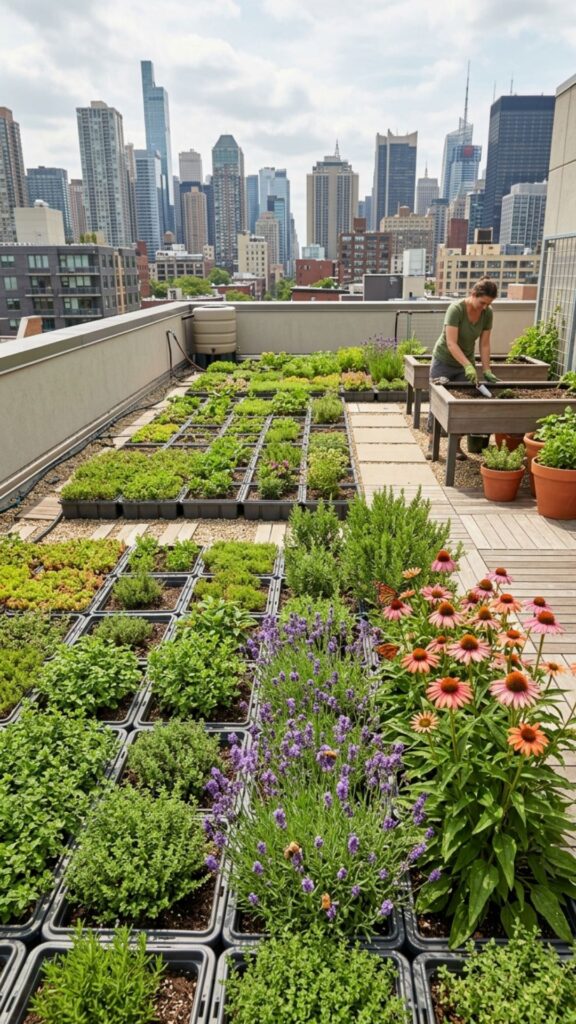
If your structure supports it, a green roof section brings serious benefits. Beyond looking beautiful, planted areas insulate your home, reduce runoff, and cool the surrounding air during summer. Sedum and other low-growing plants need little maintenance once established.
This is a bigger project, so consult a structural engineer before committing. Modular green roof trays offer a lower-risk starting point, letting you test the concept in one zone. The payoff is a lush, living surface that supports pollinators and lowers your energy bills.
18. Add Weather-Resistant Art and Décor
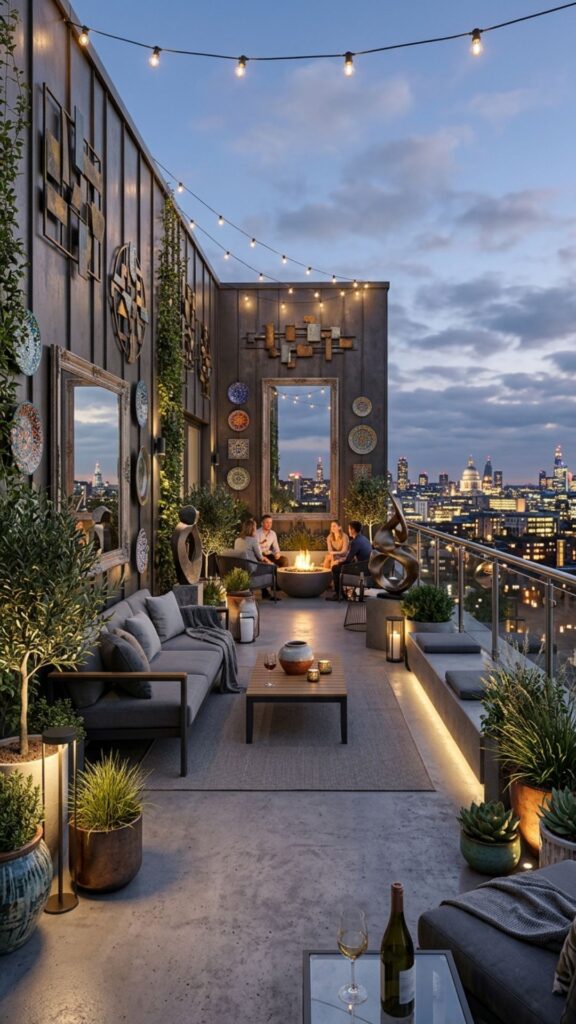
Personal touches make a rooftop feel like yours. Weatherproof art, metal sculptures, and ceramic accents inject personality without worrying about rain damage. Look for pieces made from powder-coated metal, treated wood, or all-weather resin.
Hang a mirror to bounce light and make the space feel larger, or mount a bold sculpture as a focal point. Even a few well-chosen accessories signal that this is a designed, cared-for space rather than a forgotten rooftop. Details always make the difference.
19. Plan for Wind with Sturdy, Anchored Pieces
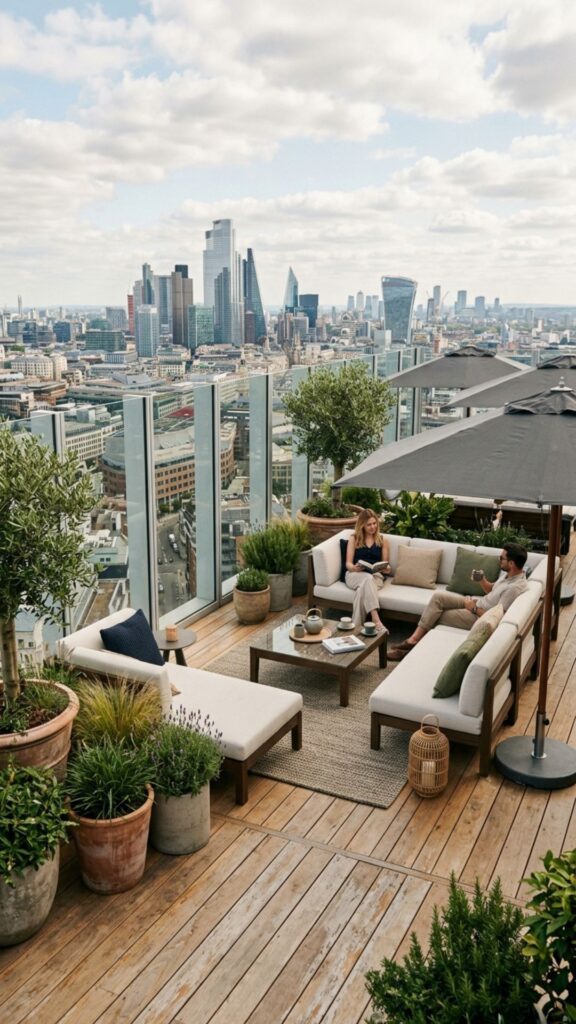
Wind is the rooftop factor people forget until an umbrella sails off the edge. Choose heavy, low-profile furniture and anchor tall items securely. Weighted bases for umbrellas and planters prevent tipping during gusts.
Windbreaks like glass panels or dense hedging protect your seating without blocking the view. Store lightweight cushions and décor when strong storms roll in. Planning for wind from the start saves money, prevents accidents, and keeps your rooftop safe for everyone who visits.
20. Layer Lighting for Function and Mood
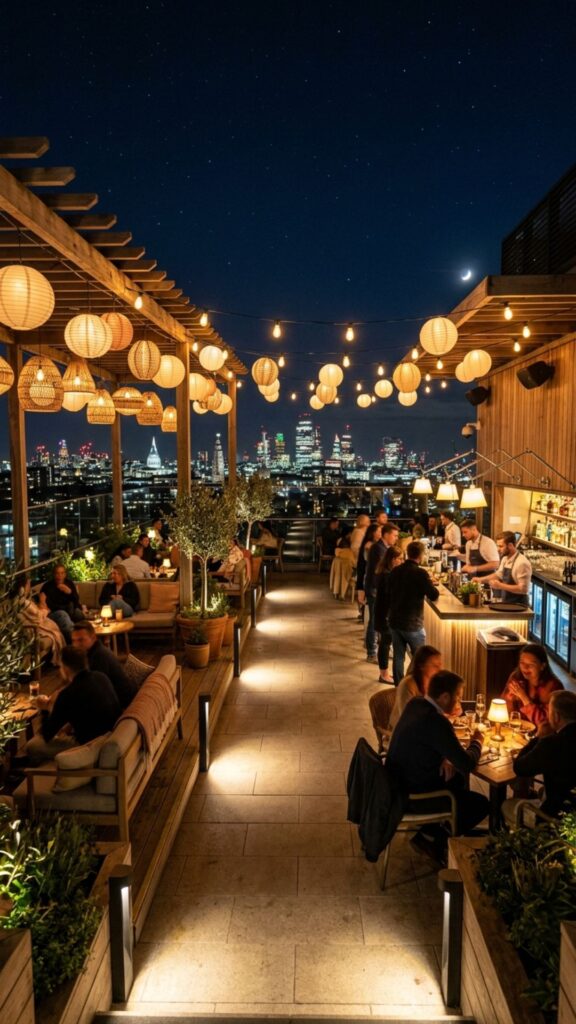
Great rooftop lighting works on multiple levels. Combine task lighting near cooking and dining areas with softer ambient sources for atmosphere. Lanterns, path lights, and dimmable fixtures let you shift the mood from dinner party to quiet nightcap.
Solar options reduce wiring headaches, while low-voltage systems give you dependable brightness. Use warm tones throughout for a cohesive feel. Thoughtful layering means you can safely navigate the space after dark while keeping that magical, glowing ambiance that makes rooftops so memorable.
Bring Your Rooftop to Life
A rooftop is one of the rare urban luxuries you can shape entirely to your taste. From cozy lounges and container gardens to fire features and layered lighting, these ideas prove you don’t need a massive budget to create something special. Start small, respect your building’s weight and safety limits, and build your space one project at a time.
Ready to reclaim your rooftop? Pick two or three ideas from this list that fit your space and lifestyle, then map out a simple plan this weekend. Your stylish urban escape is closer than you think, so grab a notebook and start designing today.
How much weight can a rooftop hold for furniture and planters?
It depends entirely on your building’s construction. Most residential rooftops handle standard furniture, but heavy planters, water features, and green roofs require a structural engineer’s assessment. Always confirm load limits before adding significant weight.
Do I need permission to create a rooftop living space?
Often, yes. Renters should check with landlords, and owners may need approval from a homeowners association or a city permit, especially for structures, wiring, or plumbing. Verify local codes before starting any permanent project.
What are the best plants for a windy, sunny rooftop?
Hardy, sun-loving plants perform best. Lavender, ornamental grasses, succulents, olive trees, and sedum all tolerate wind and heat with minimal fuss. Group containers together to shield roots and reduce moisture loss.
How do I protect rooftop furniture from harsh weather?
Choose weatherproof materials like powder-coated aluminum, teak, and synthetic rattan. Use fade-resistant cushions, store textiles in deck boxes, and anchor lightweight pieces. Covering furniture during storms extends its lifespan significantly.
Can renters build a rooftop escape without permanent changes?
Absolutely. Interlocking deck tiles, freestanding planters, modular furniture, solar string lights, and rolling bar carts all deliver style without alterations. Everything lifts out cleanly when you move, making them ideal for temporary spaces.