Eco-friendly kitchen decoration is about creating a beautiful, practical space while making choices that are kinder to the planet. You do not need a full remodel, a huge budget, or a perfect zero-waste lifestyle to start.
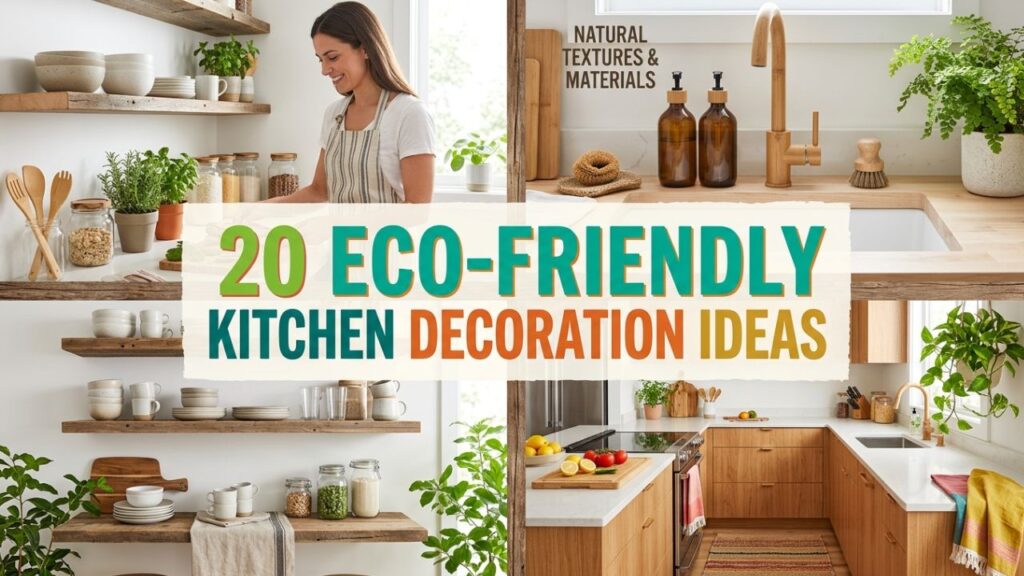
Small updates, such as choosing natural materials, reusing what you already own, and buying secondhand, can make your kitchen feel fresh without creating unnecessary waste.
The kitchen is one of the busiest rooms in the home. It is where we cook, gather, clean, store, and often spend the most energy.
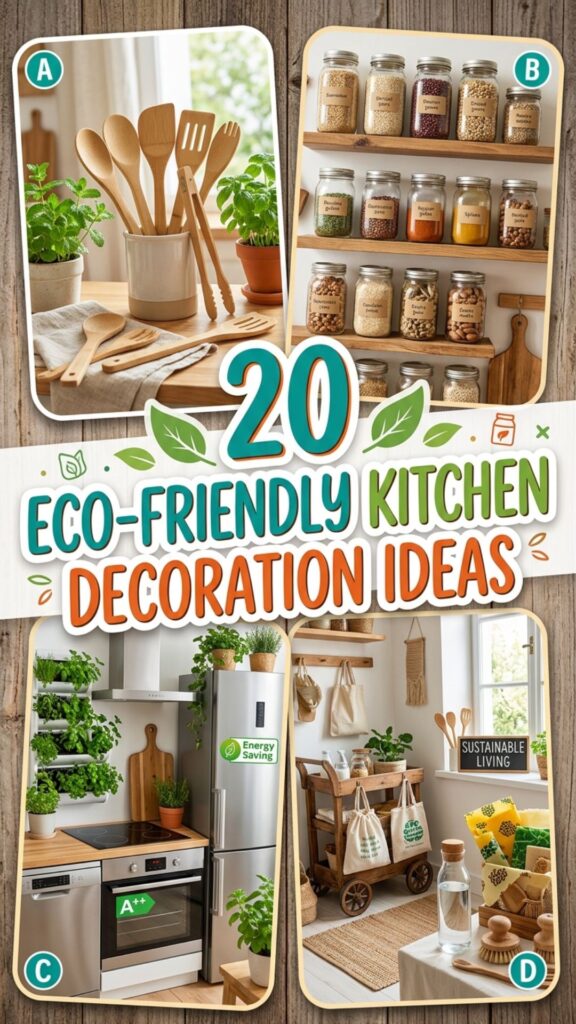
That makes it a smart place to focus on sustainable living. In this guide, you will find 20 simple and stylish kitchen decoration ideas that help reduce waste, save money, and bring warmth into your home.
What Is Eco-Friendly Kitchen Decoration?
Eco-friendly kitchen decoration means choosing decor, materials, and design updates that have a lower impact on the environment. This can include recycled materials, natural textures, energy-saving lighting, secondhand furniture, low-waste storage, and durable items that last for years.
The goal is not to make your kitchen look plain or unfinished. Sustainable design can be modern, rustic, colorful, minimalist, or cozy. The best approach is to decorate with intention: buy less, choose better, and give old pieces a second life when possible.
1. Use Reclaimed Wood Shelves
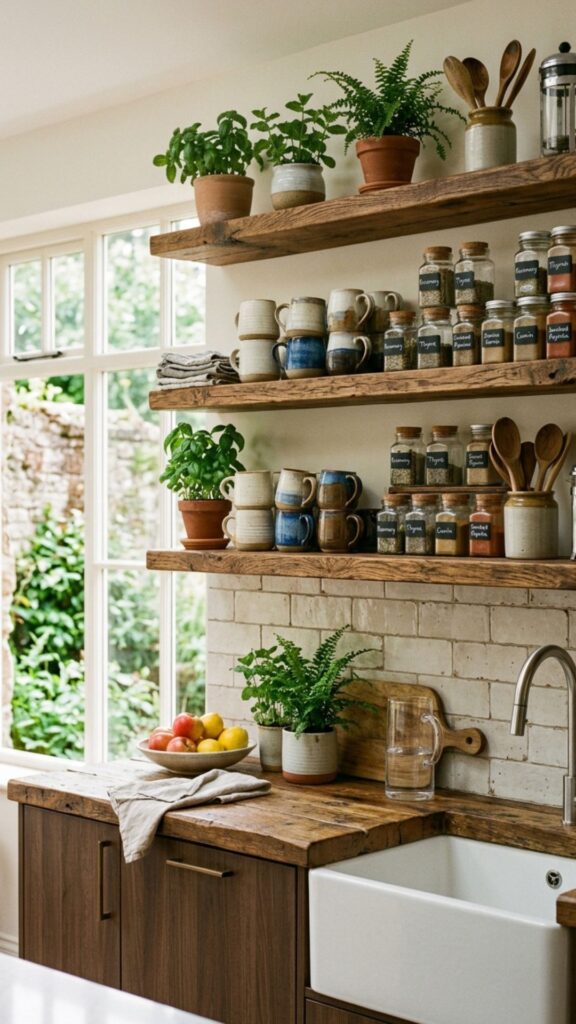
Reclaimed wood shelves add warmth, texture, and character to your kitchen. Each piece has its own grain, color, and history, which makes your kitchen decoration feel unique. You can use reclaimed wood for open shelving, a small spice rack, or a display ledge for mugs and plants.
Look for salvaged wood from local reuse centers, old furniture, or building supply stores. Before installing, sand the wood and seal it with a low-VOC or natural finish to protect it from moisture and stains.
2. Decorate With Indoor Herbs
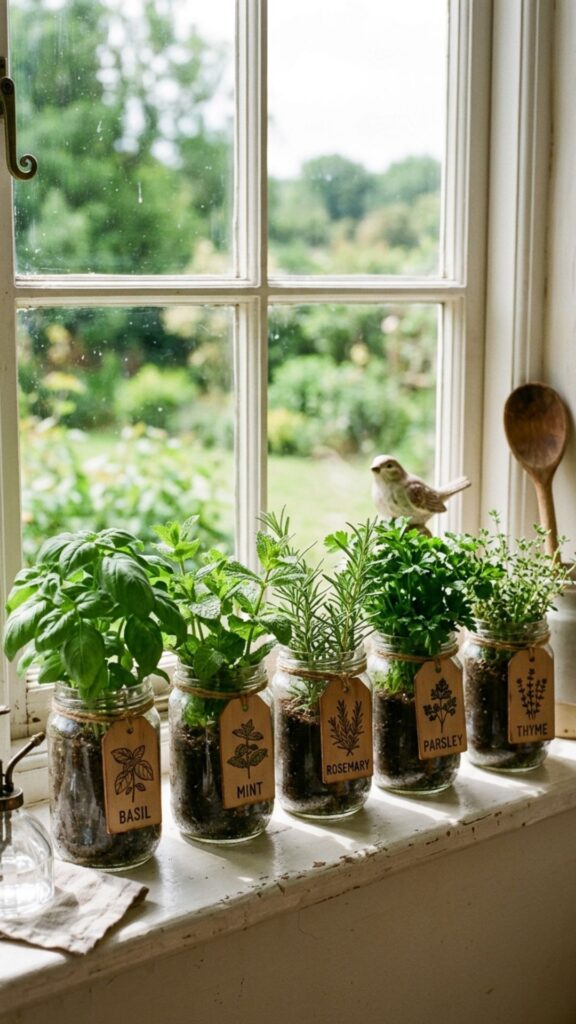
Indoor herbs are one of the easiest eco-friendly kitchen decoration ideas because they are both beautiful and useful. Basil, mint, parsley, rosemary, and thyme can brighten a windowsill while giving you fresh flavor for meals.
Use recycled jars, ceramic pots, or old mugs as planters. Place them near natural light and label each one with small wooden tags. This creates a fresh, lived-in look while cutting down on plastic herb packaging from the grocery store.
3. Choose Bamboo Accessories
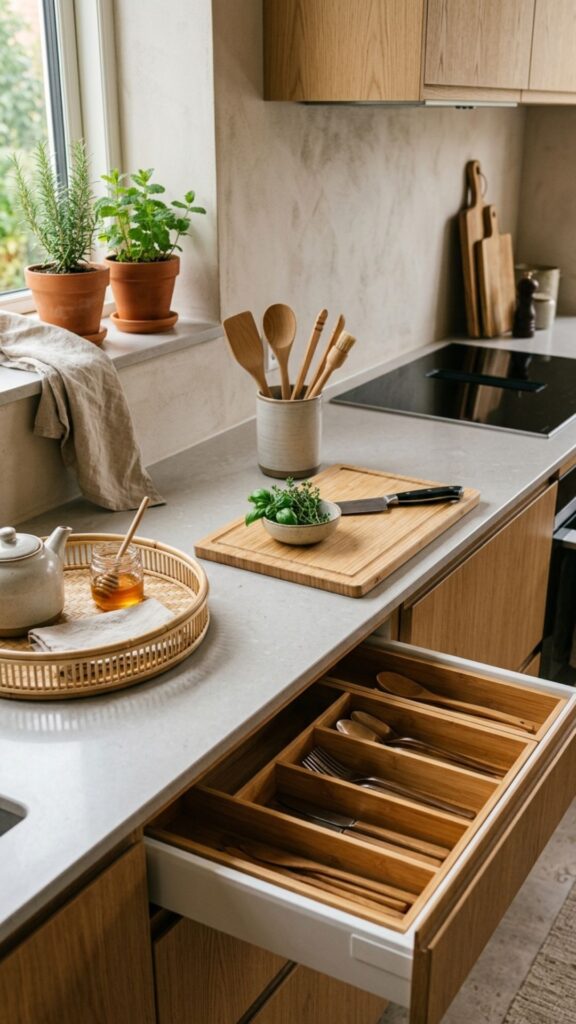
Bamboo grows quickly and is often used as a sustainable alternative to slower-growing hardwoods. Bamboo cutting boards, utensil holders, drawer organizers, and serving trays can bring a clean, natural look to your kitchen.
For a balanced design, mix bamboo with white, black, or soft green accents. This keeps your kitchen decoration simple and modern without feeling cold. Choose quality bamboo pieces that can handle daily use.
4. Add Secondhand Bar Stools or Chairs
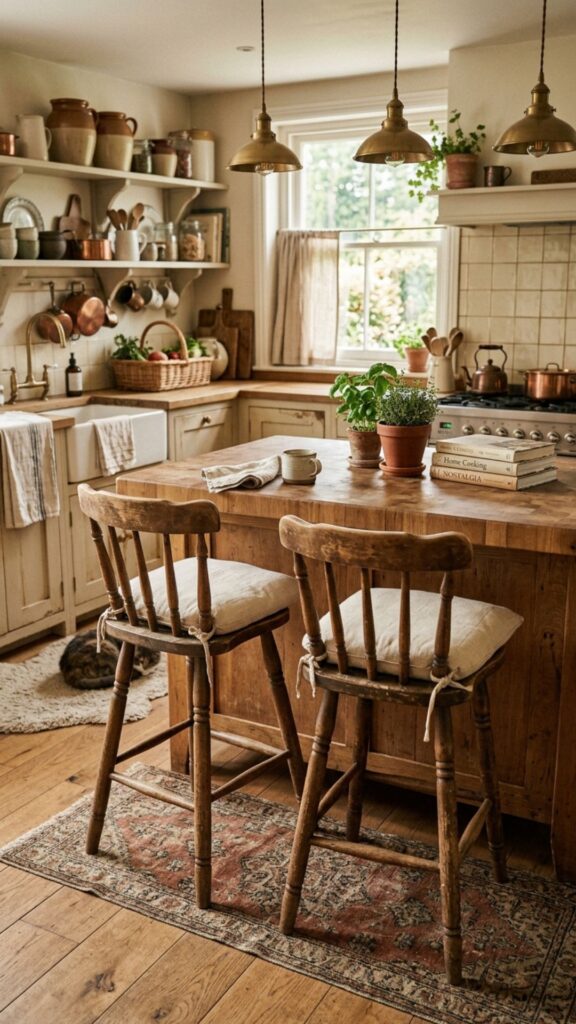
Buying secondhand furniture reduces demand for new materials and keeps usable items out of landfills. Vintage bar stools, wooden chairs, or a small breakfast table can add personality to your kitchen.
If the piece looks worn, refresh it with sanding, a non-toxic paint, or a new seat cushion made from natural fabric. A secondhand item often becomes the most interesting piece in the room because it does not look mass-produced.
5. Use Glass Jars for Open Storage
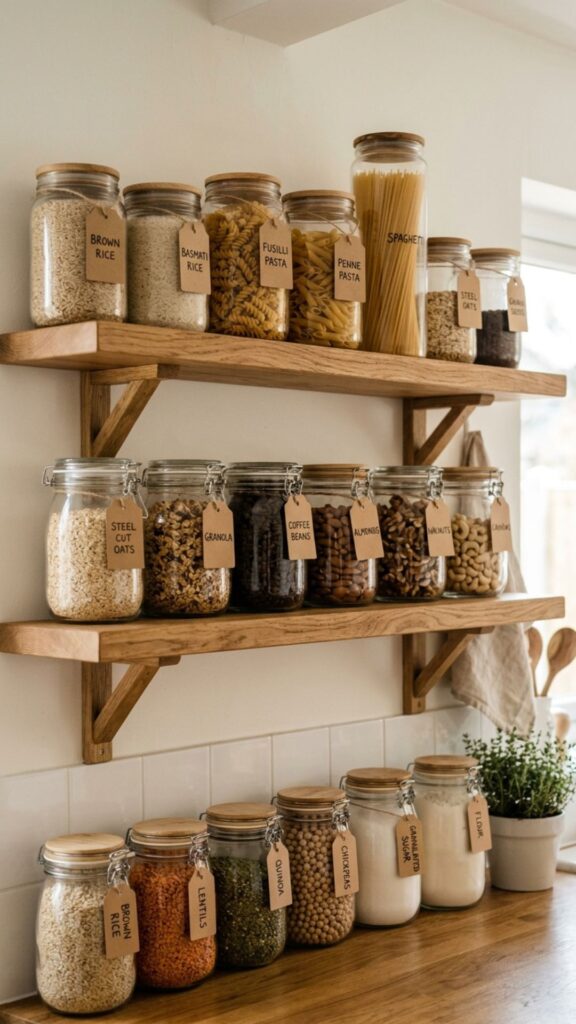
Glass jars make pantry storage look neat while reducing the need for single-use plastic containers. They are great for flour, rice, oats, pasta, coffee, tea, nuts, and dried fruit.
This kitchen decoration idea works especially well on open shelves. Use matching labels for a clean look, or keep it relaxed with handwritten tags. You can reuse pasta sauce jars, mason jars, or thrifted glass containers.
6. Switch to Cloth Towels and Napkins
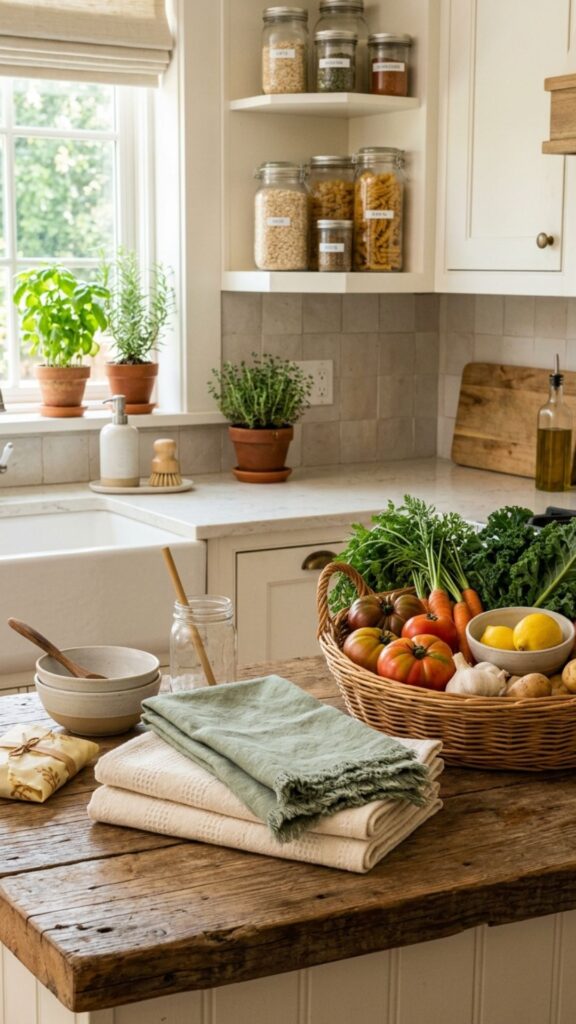
Paper towels and disposable napkins create daily waste. Replacing them with cotton, linen, or hemp cloth options is a simple sustainable swap that also adds softness and color to your kitchen.
Choose patterns that match your kitchen decoration style. Striped towels can feel farmhouse-inspired, while solid linen napkins create a calm, modern look. Keep a small basket nearby for used towels so they are easy to wash and reuse.
7. Paint Cabinets With Low-VOC Paint
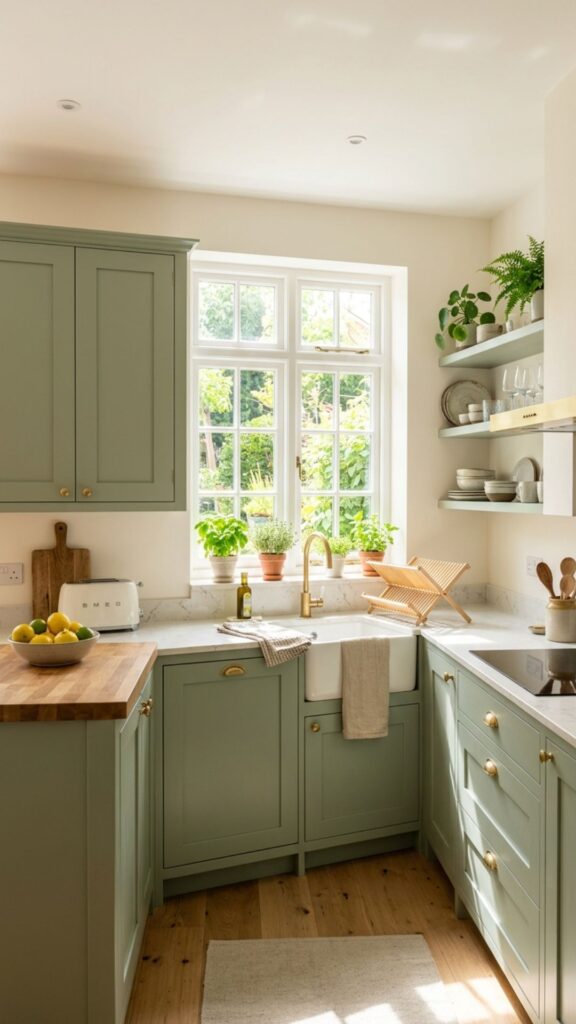
If your cabinets look dated, painting them can transform the whole kitchen without replacing anything. Low-VOC paint releases fewer harmful chemicals into the air, making it a better choice for your home.
Soft white, sage green, navy, warm gray, and earthy beige are popular colors for sustainable kitchen decoration. Clean and sand the cabinets first, then use a durable finish designed for kitchens so the paint lasts.
8. Display Wooden Cutting Boards
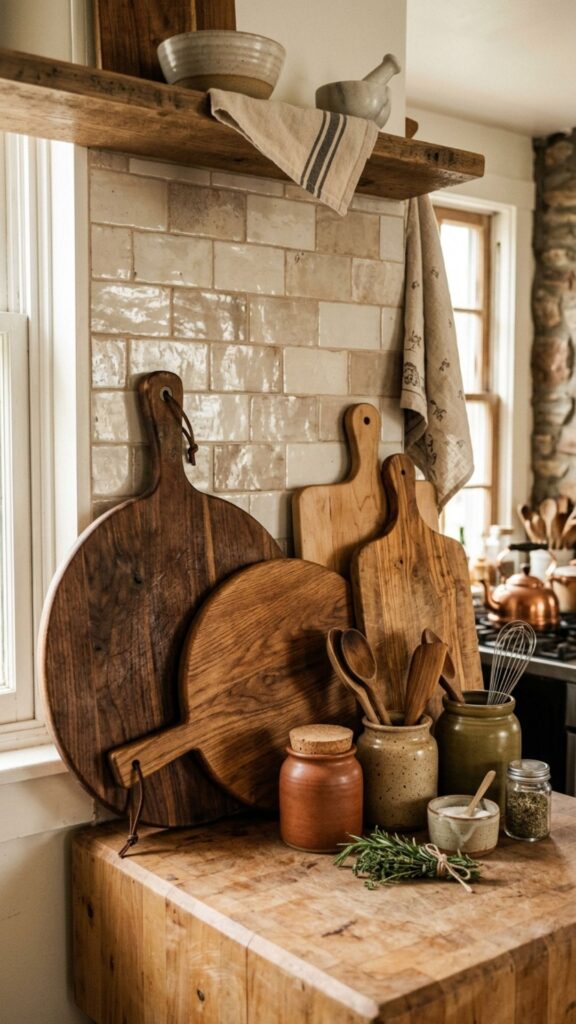
Wooden cutting boards are practical, long-lasting, and beautiful enough to display. Lean a few boards against the backsplash to add warmth and texture to your counter space.
Choose boards made from responsibly sourced wood or buy them secondhand. To extend their life, wash them by hand and treat them with food-safe oil. This simple habit keeps them from drying or cracking.
9. Install Energy-Efficient Lighting
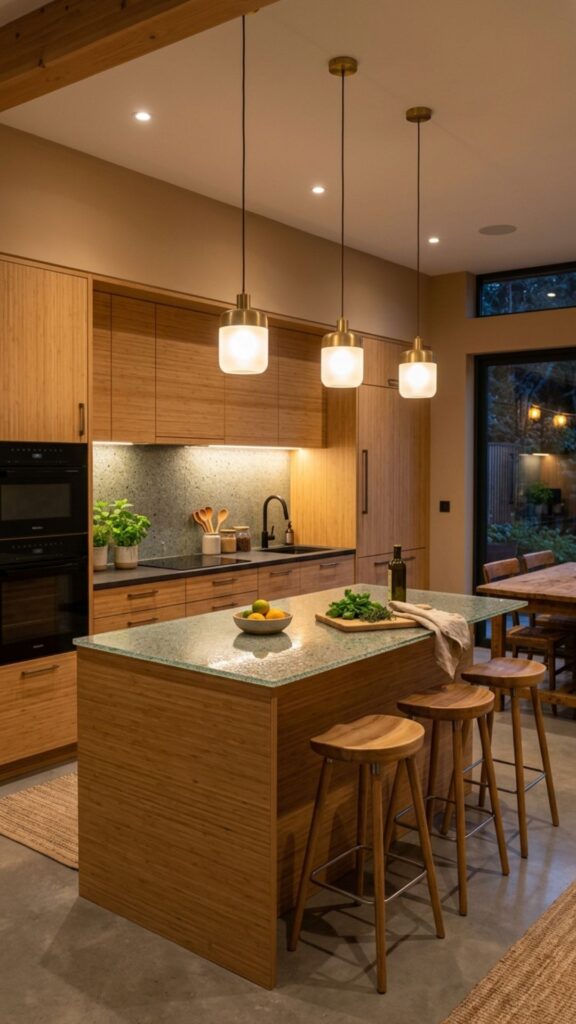
Lighting changes the mood of a kitchen quickly. LED bulbs use less energy and last longer than traditional bulbs, making them a smart eco-friendly update.
For decoration, try pendant lights over an island, under-cabinet lighting, or a small lamp on a counter if you have space. Warm white bulbs create a cozy feel, while brighter bulbs work well for cooking areas.
10. Bring in Natural Fiber Rugs
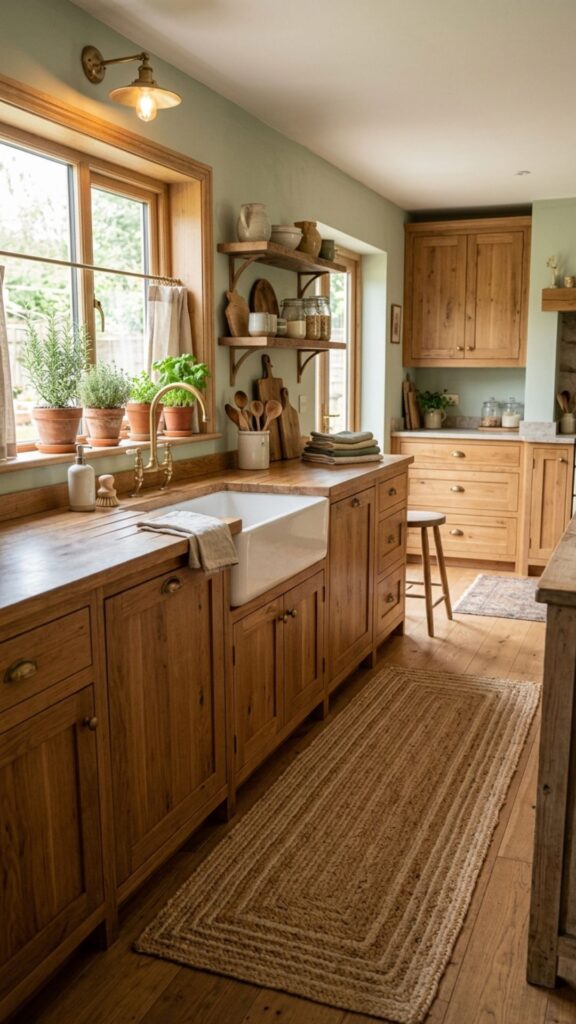
A rug can soften a kitchen and make it feel more welcoming. Choose natural fibers like jute, sisal, cotton, or wool when possible. These materials add texture and often have a lower environmental impact than synthetic rugs.
Place a washable cotton runner in front of the sink or a small jute rug near a breakfast nook. Make sure the rug has a non-slip pad for safety, especially in busy cooking areas.
11. Repurpose Old Furniture as Kitchen Storage
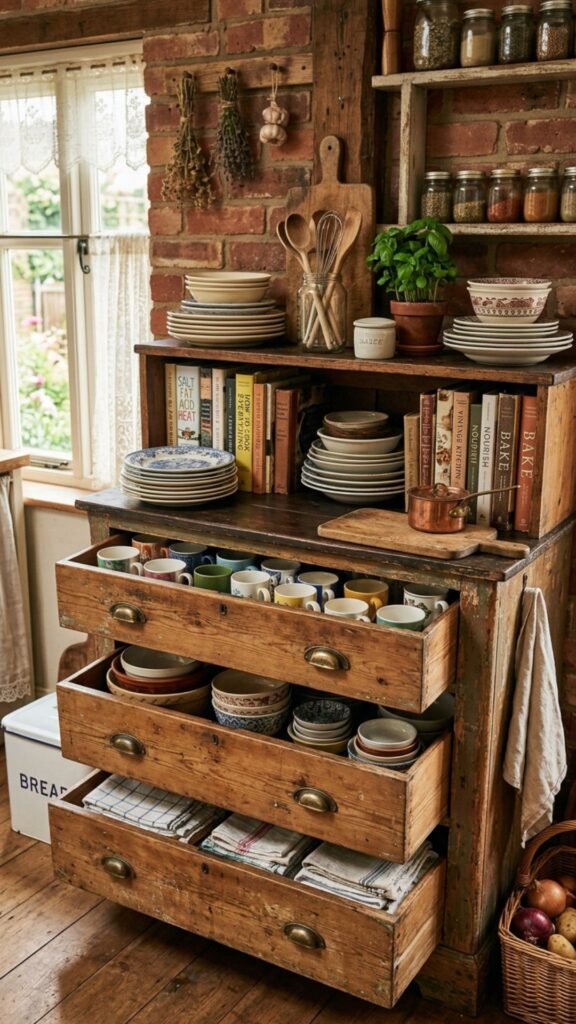
An old dresser, bookshelf, or sideboard can become useful kitchen storage. This is a great kitchen decoration solution if you need more space but do not want to buy new cabinets.
Use a small dresser for table linens, baking tools, or pantry items. A vintage cabinet can hold dishes or cookbooks. Repurposing furniture gives your kitchen a custom look while saving money and resources.
12. Add a Compost Station That Looks Good
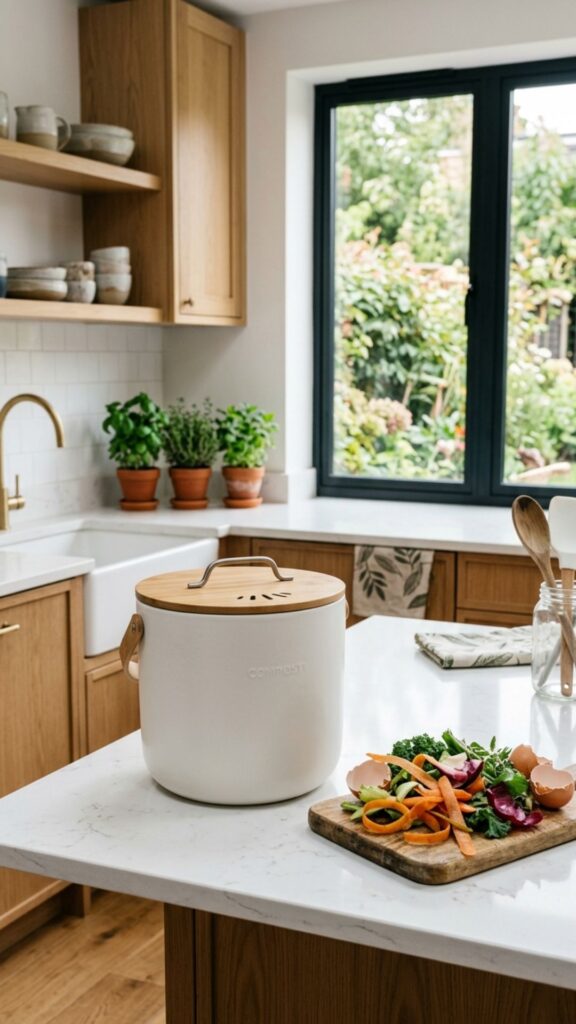
Composting is practical, but your compost bin does not have to be ugly. Choose a small countertop compost container made from stainless steel, ceramic, or bamboo.
Place it near your prep area so it is easy to use while cooking. A simple, attractive compost station supports sustainable habits and blends into your kitchen decoration instead of feeling like an afterthought.
13. Choose Recycled Glass Decor
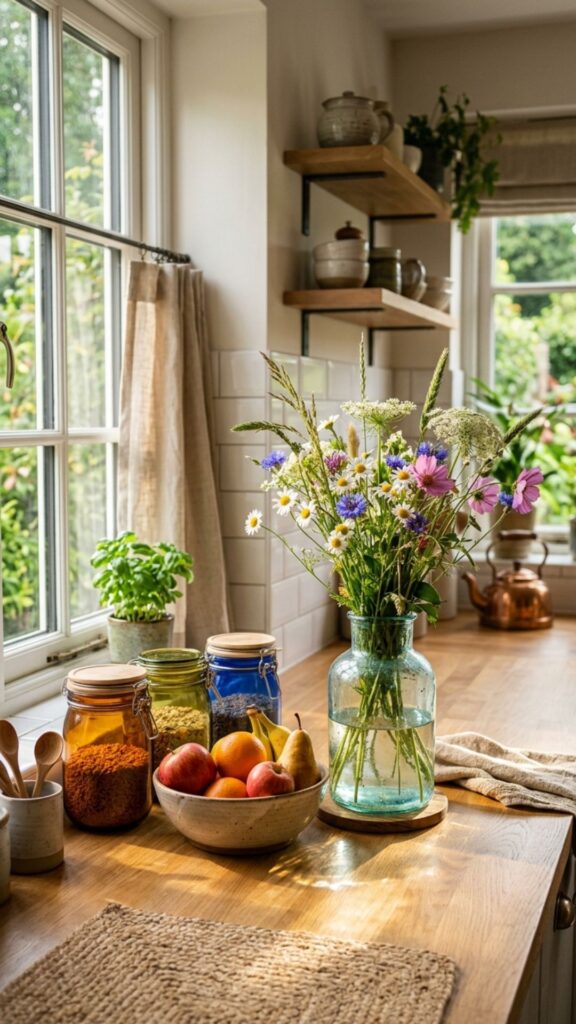
Recycled glass can be used in vases, bowls, pendant lights, jars, and decorative containers. It brings shine and color without relying on brand-new raw materials.
Try a recycled glass vase filled with seasonal branches, a bowl for fruit, or colored glass jars for tea bags and snacks. These small touches make the kitchen feel curated without adding clutter.
14. Create a Seasonal Fruit and Vegetable Display
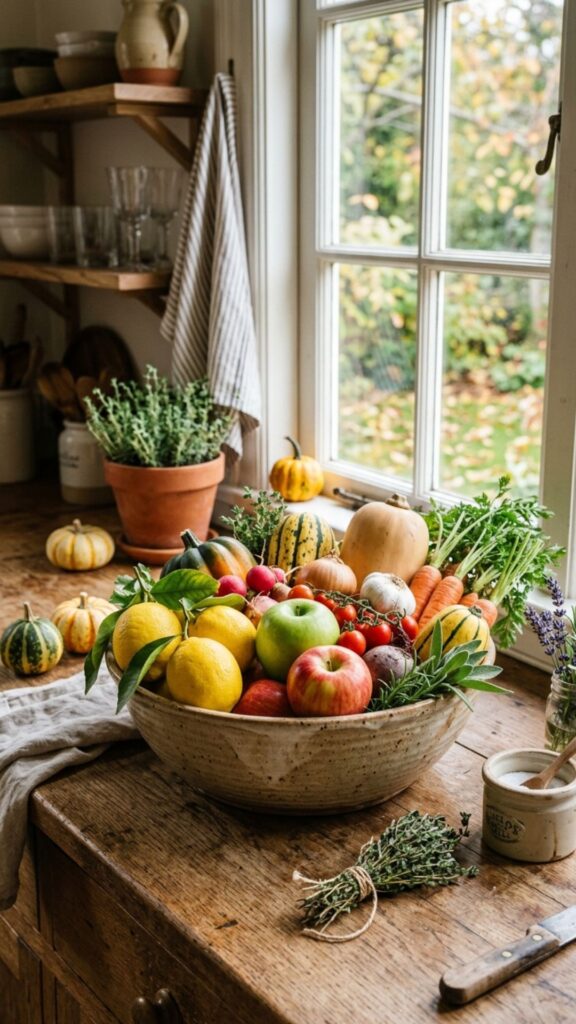
Fresh produce can act as natural decor. A bowl of lemons, apples, oranges, onions, or squash adds color to the kitchen while keeping healthy ingredients within reach.
Use a ceramic bowl, woven basket, or wooden tray for the display. Rotate items based on the season to keep the look fresh. This is one of the simplest kitchen decoration ideas because it uses food you already plan to eat.
15. Use Peel-and-Stick Tiles With Care
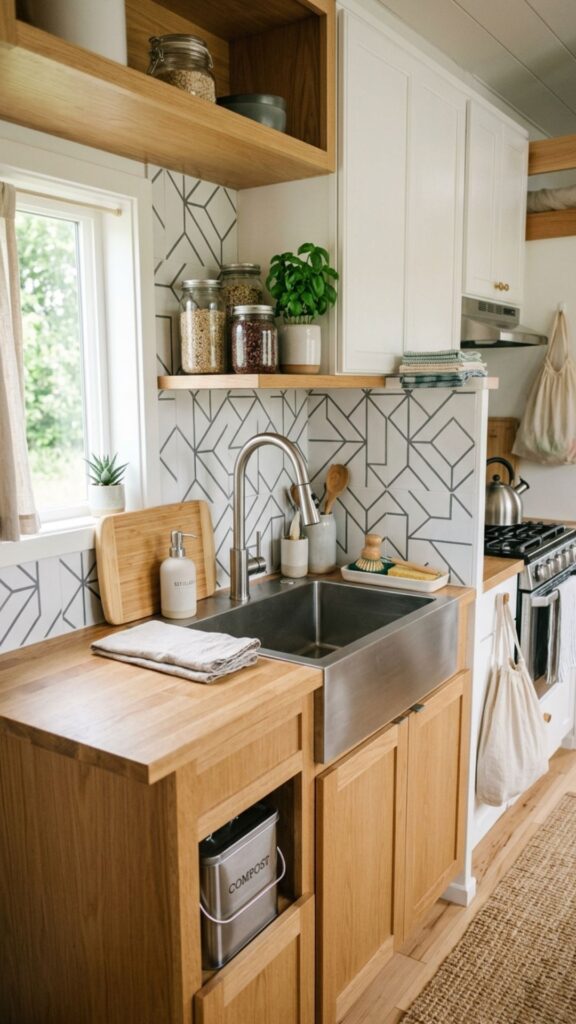
Peel-and-stick backsplash tiles can update a kitchen without demolition. To make this choice more sustainable, look for durable options made with recycled content or low-VOC materials.
Use them in a small area, such as behind the sink or stove, rather than covering every wall. A focused update reduces waste and still gives your kitchen a fresh focal point.
16. Decorate With Vintage Dishes
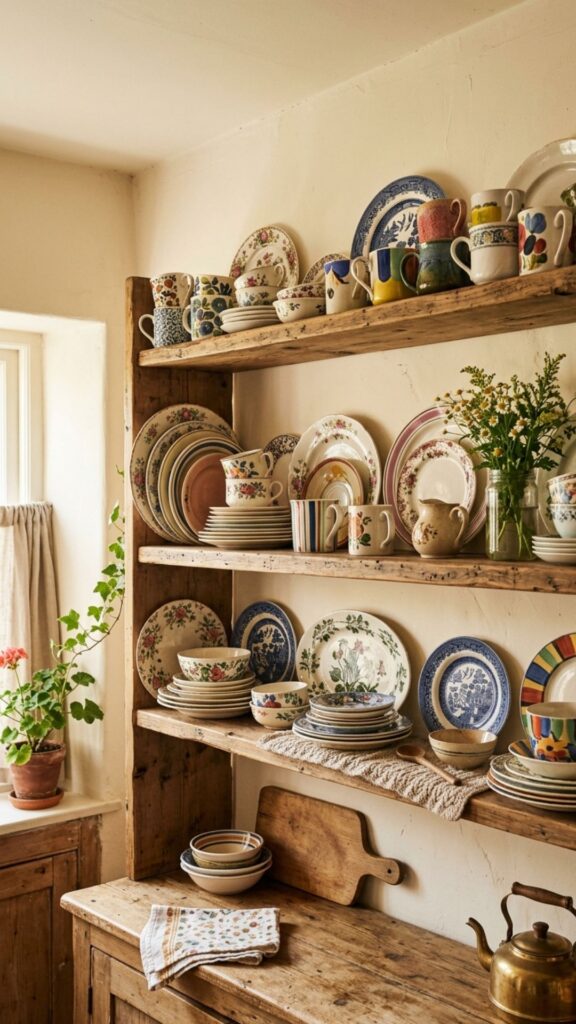
Vintage plates, bowls, and mugs can add charm to open shelves or glass-front cabinets. Instead of buying new decorative items, use secondhand dishes that are both functional and beautiful.
Mixing patterns can work well if you keep a shared color palette. For example, blue-and-white plates, earth-toned bowls, or simple cream ceramics can create a collected look without feeling messy.
17. Pick Natural Window Treatments
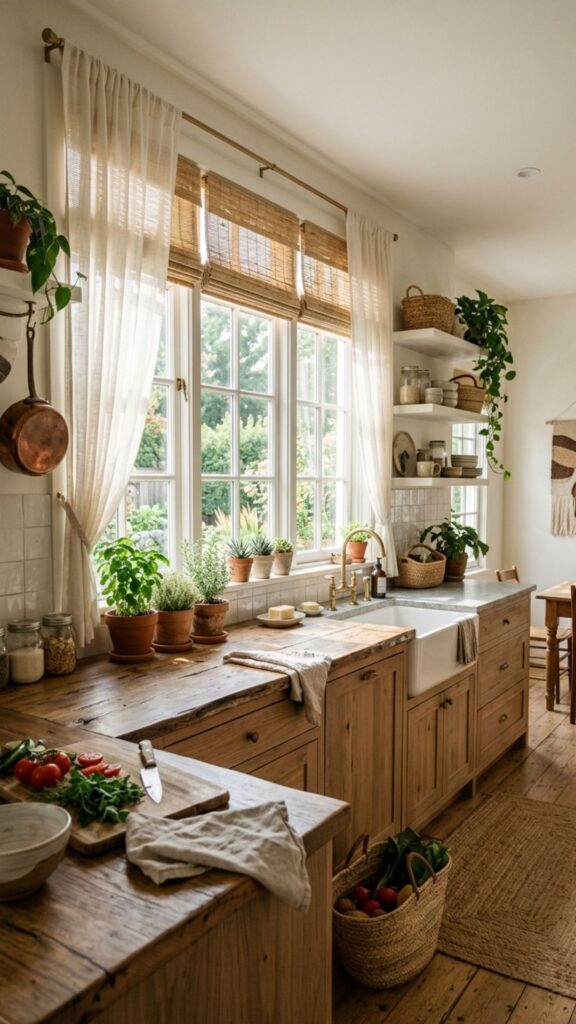
Kitchen windows need coverings that are easy to clean and let in light. Natural options like linen curtains, bamboo shades, or cotton cafe curtains can make the room feel softer and more inviting.
Choose light colors if your kitchen is small or dark. Natural light helps reduce the need for artificial lighting during the day, which supports a more energy-conscious home.
18. Use Open Shelving Thoughtfully
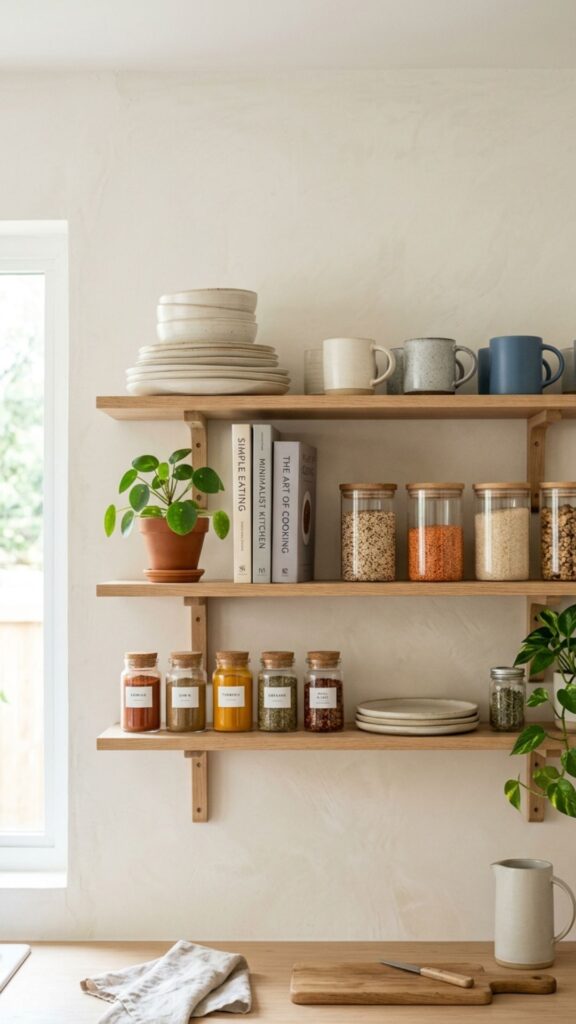
Open shelving can reduce the need for bulky cabinets and create a lighter look. It works best when you display items you use often, such as plates, bowls, mugs, jars, and cookbooks.
To keep this kitchen decoration idea practical, avoid overcrowding the shelves. Leave some empty space so items are easy to reach and clean. A few plants or wooden accents can add warmth without adding clutter.
19. Choose Durable, Timeless Pieces
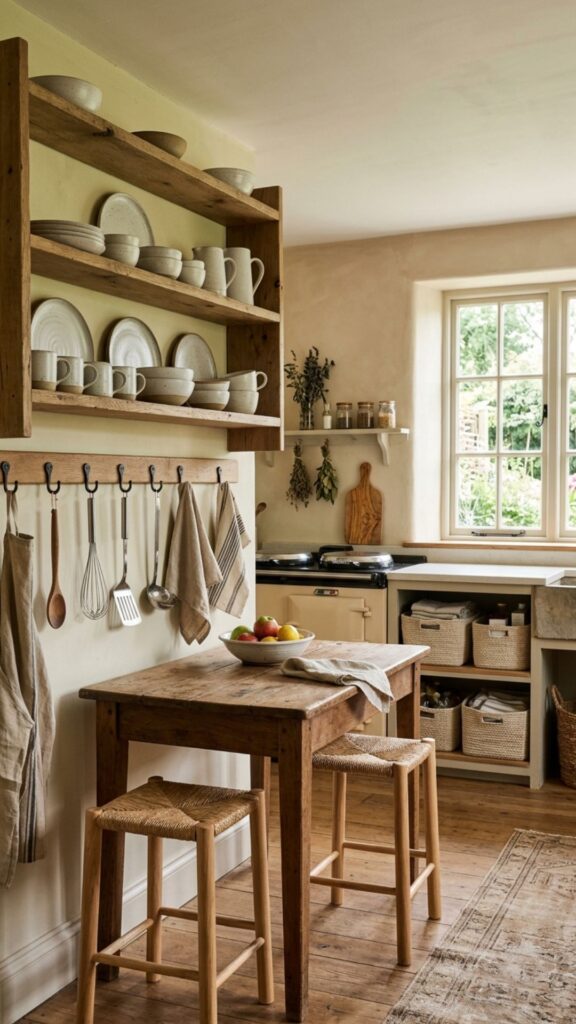
Sustainable decoration is not only about the material. It is also about how long something lasts. Trendy decor that gets replaced every year creates more waste and costs more over time.
Choose timeless items like simple ceramic dishes, metal hooks, solid wood stools, and neutral storage baskets. You can still add personality through smaller seasonal pieces, but your main decor should be built to last.
20. Support Local Makers and Sustainable Brands
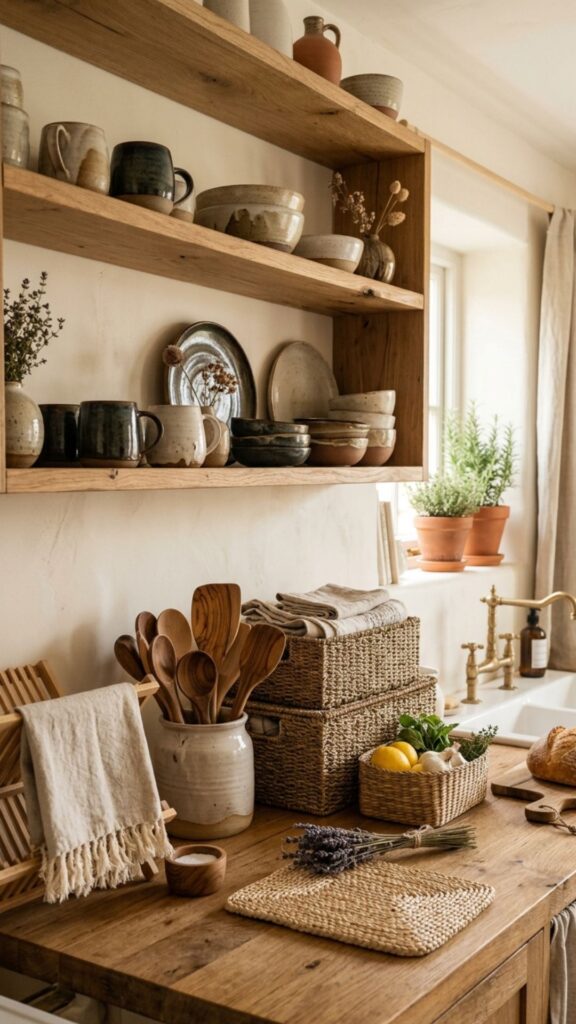
When you do buy something new, consider buying from local makers or brands that focus on responsible materials and ethical production. Handmade pottery, woven baskets, wooden utensils, and linen textiles can make your kitchen feel special.
Local pieces often have a smaller shipping footprint and support craftspeople in your area. They also help your kitchen decoration feel more personal than mass-produced decor.
Simple Tips for Sustainable Kitchen Decoration
Before you buy anything, take a quick inventory of what you already own. You may have jars, baskets, trays, dishes, or furniture that can be reused in a new way. Moving items around can refresh the space without spending money.
Also, focus on one area at a time. Start with your counters, shelves, lighting, or dining nook. Small changes are easier to manage, and they help you avoid impulse buys that do not fit your long-term style.
Conclusion: Create a Kitchen That Looks Good and Does Good
Eco-friendly kitchen decoration is not about perfection. It is about making thoughtful choices that improve your space and reduce waste. Reclaimed wood shelves, indoor herbs, glass storage, natural textiles, vintage furniture, and energy-saving lighting can all help you build a kitchen that feels warm, practical, and sustainable.
Start with one idea from this list this week. Reuse something you already have, visit a thrift store, plant herbs on your windowsill, or switch to cloth towels. With each small step, your kitchen can become a more beautiful and earth-friendly place to cook, gather, and live.
What is the easiest eco-friendly kitchen decoration idea?
The easiest idea is to reuse glass jars for storage. They organize pantry items, reduce plastic use, and create a clean, attractive look on shelves or counters.
Are bamboo kitchen products eco-friendly?
Bamboo can be eco-friendly because it grows quickly and is durable. For the best choice, look for well-made bamboo products from responsible brands.
How do I make my kitchen look stylish without creating waste?
Use what you already own first. Rearrange shelves, display useful items, choose vintage pieces, and invest in durable decor that will not go out of style quickly.
How do I make my kitchen look stylish without creating waste?
Use what you already own first. Rearrange shelves, display useful items, choose vintage pieces, and invest in durable decor that will not go out of style quickly.