Raising kids in a small living room feels like a constant tug-of-war. You want a space that looks pulled-together, but you also need room for toys, blankets, snacks, and the occasional cardboard fort.
Sound familiar? I’ve spent years helping families rethink tight spaces, and the good news is you don’t have to choose between a beautiful room and a kid-friendly one.
Below, you’ll find 20 small living room decor ideas with kids in mind. Each one tackles a real problem, whether that’s toy clutter, tiny square footage, or the worry that everything nice will get wrecked. Let’s turn your cramped, chaotic room into a spot the whole family actually enjoys.
1. Choose a Sofa With Hidden Storage
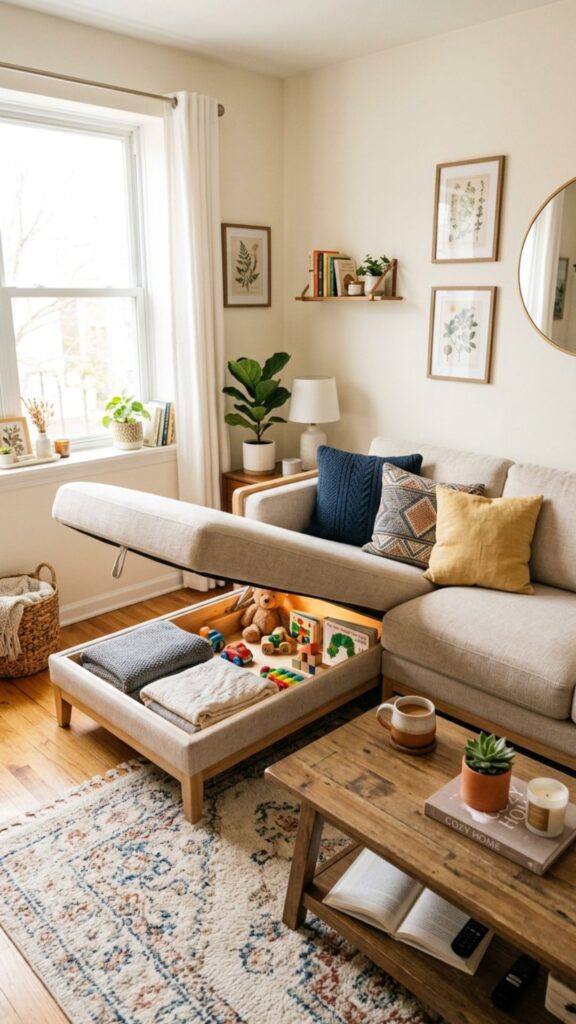
A sofa that pulls double duty is a lifesaver in a small home. Look for styles with lift-up seats or built-in drawers underneath. You can tuck away toys, extra blankets, or board games in seconds, which keeps the floor clear for playtime.
Sectionals with storage ottomans work especially well because they define the seating area without walls. When guests arrive, you flip the toy chaos out of sight and reset the room in under two minutes. That kind of quick cleanup is gold when you have little ones.
2. Use a Storage Ottoman as a Coffee Table
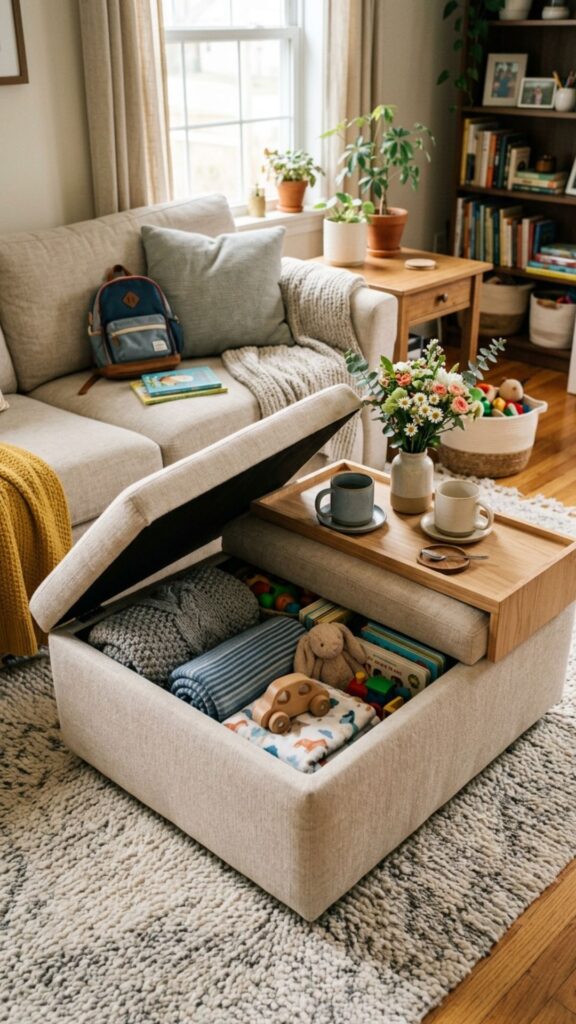
Swap your regular coffee table for a padded storage ottoman. It removes sharp corners that toddlers love to bump into, and the soft top doubles as extra seating when friends visit. Inside, you get a roomy bin for stuffed animals or blankets.
Pick one with a removable tray on top so you still have a flat surface for drinks or books. Fabric options in darker tones or patterns hide stains better, which matters when juice spills are part of daily life.
3. Go Vertical With Wall Shelves
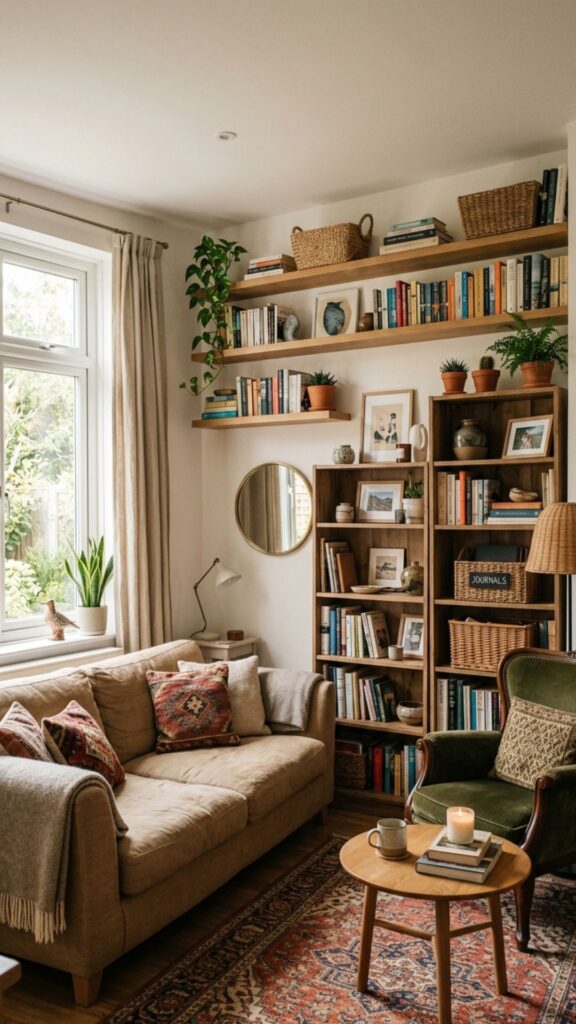
When floor space is tight, build up instead of out. Floating shelves and tall bookcases free up the ground while giving you room to display and store things. Keep breakables and fragile decor on the top shelves, well out of little hands’ reach.
Reserve the lower shelves for kid-friendly items like picture books, baskets of toys, or soft bins. This teaches children where their things belong and makes cleanup part of their routine. Anchor every tall unit to the wall for safety.
4. Pick a Washable, Kid-Proof Rug
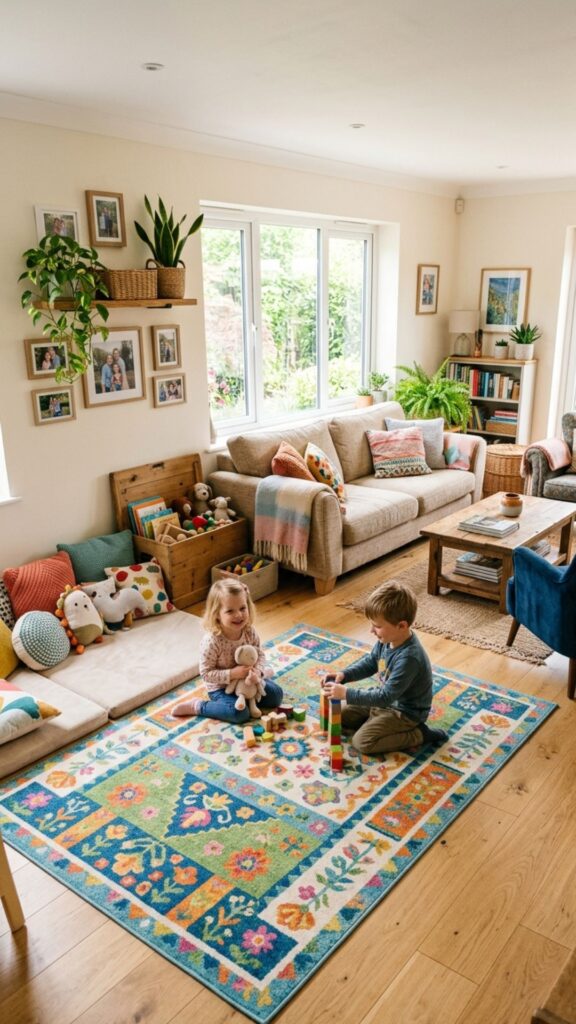
A good rug anchors a small living room and softens the space for crawling babies and playing kids. Choose machine-washable or indoor-outdoor rugs made from polypropylene, which shrug off spills and stains. Patterns and darker colors hide the inevitable messes.
Layering a smaller washable rug over a larger base rug gives you flexibility. If one gets ruined by markers or mud, you swap just that piece instead of replacing the whole thing. Your wallet will thank you.
5. Embrace a Neutral Base With Pops of Color
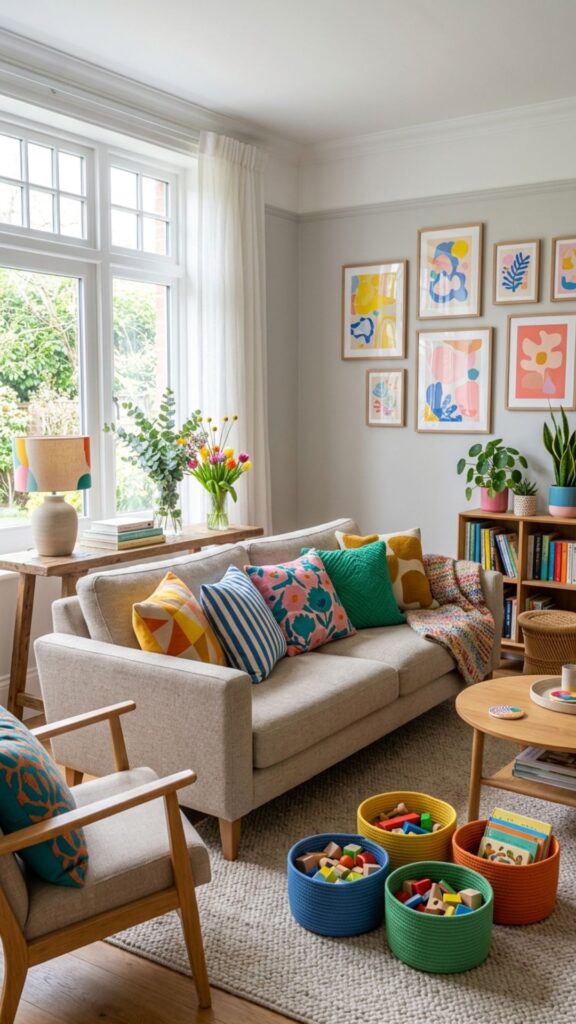
Keep your big-ticket items like the sofa, walls, and curtains in calm neutral tones. This creates a clean backdrop that feels larger and less busy, which is key in a small room. Neutrals also let you change the look easily as your kids grow.
Add personality through cheap, swappable accents like throw pillows, wall art, and toy baskets in bright colors. Kids love vibrant hues, and you can update them cheaply. When the toddler-themed decor no longer fits, you refresh the pops without repainting.
6. Add a Toy Storage Bench by the Window
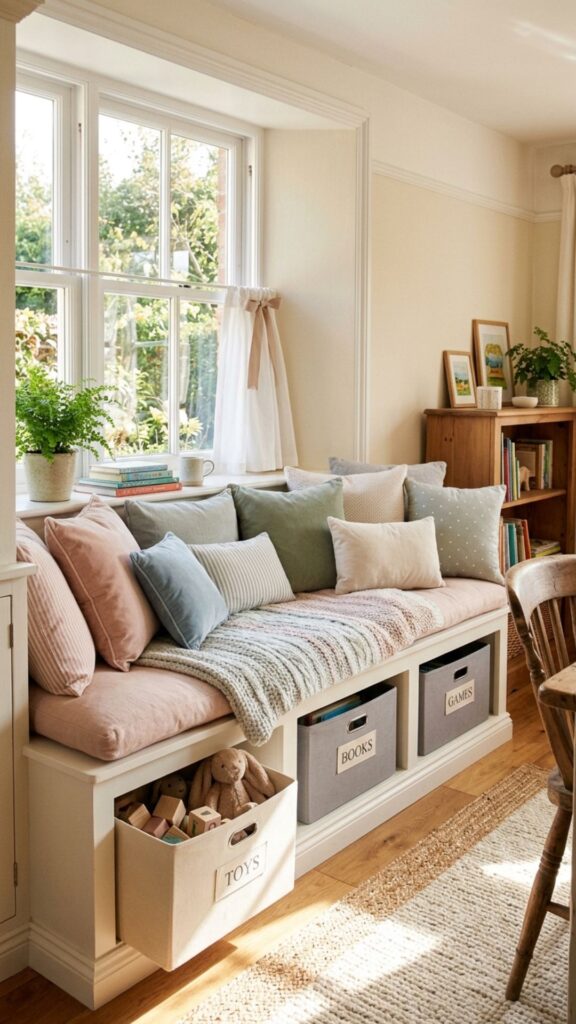
A window bench with hidden storage gives you a cozy reading nook and a hiding spot for toys. Kids get a spot to curl up with a book, and you get another place to stash the clutter that seems to multiply overnight.
Top it with a cushion and a few pillows to make it inviting. Under the seat, use labeled bins so everyone knows where the blocks, cars, or crayons go. This small addition delivers big storage value without eating up floor space.
7. Mount a TV to Free Up Floor Space
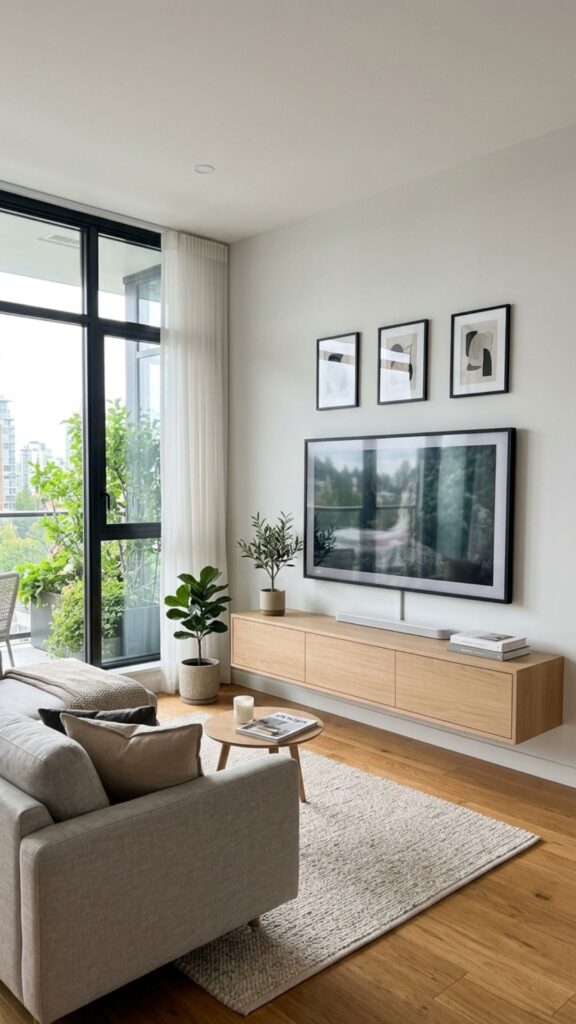
Wall-mounting your television removes the need for a bulky media console. This clears precious floor space and keeps cords and gadgets away from curious hands. Position it high enough that toddlers can’t grab or smudge the screen.
If you still need storage below, add a slim floating cabinet instead of a large stand. It holds remotes, chargers, and streaming devices while keeping the look clean and the walkway open for busy little feet.
8. Use Baskets for Fast Cleanup
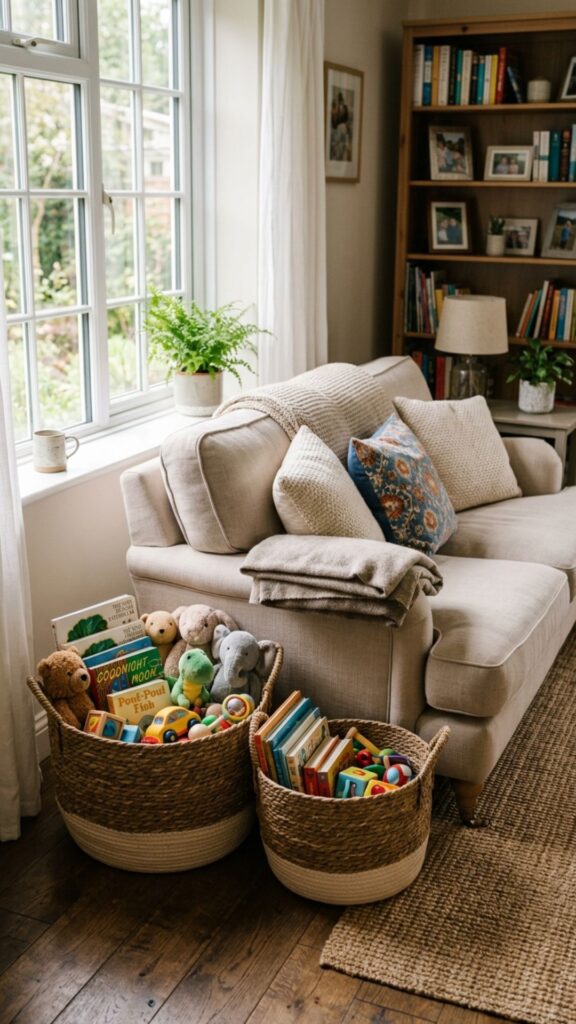
Woven baskets are the unsung hero of small living room decor ideas with kids. They look stylish tucked beside the sofa or under a console, and they hold a surprising amount of stuff. When toys explode across the room, you scoop everything into a basket in one sweep.
Choose a few different sizes and give each a job. One for stuffed animals, one for books, one for random bits and bobs. The natural texture warms up the space, so your storage doubles as decor.
9. Install Floating Corner Shelves
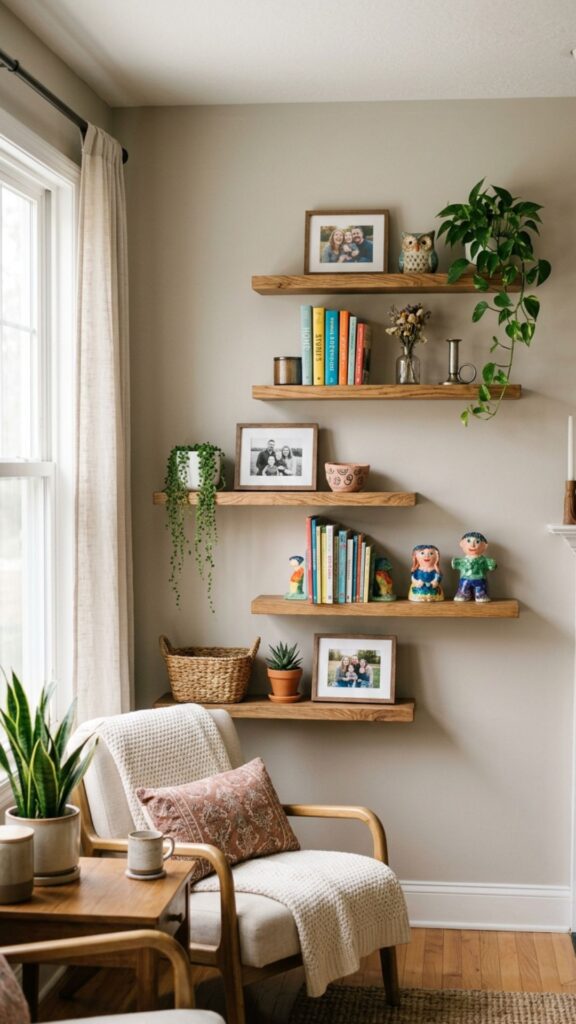
Corners often go to waste in small rooms. Floating corner shelves reclaim that space for plants, framed photos, or a small collection of books. Mounting them higher keeps decor safe from bumps and grabs.
You can also use corner shelves to create a mini display zone your kids help arrange. Let them rotate favorite drawings or small treasures. It gives them ownership of the space without cluttering surfaces they can reach easily.
10. Opt for Rounded, Soft Furniture
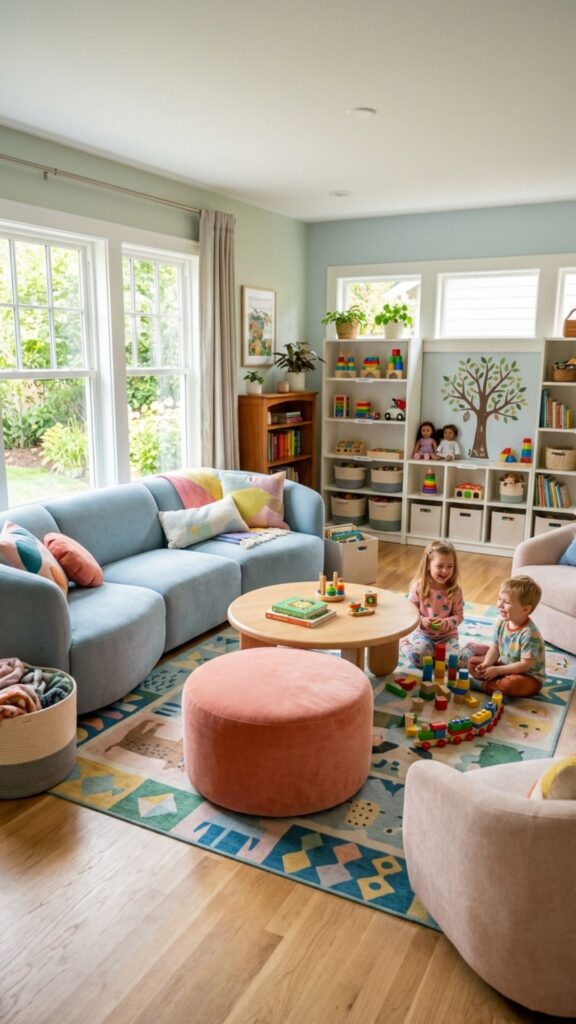
Sharp corners and small kids don’t mix. Choose coffee tables, ottomans, and side tables with rounded edges to lower the risk of injury during rough play. Curved furniture also softens the visual feel of a tight room.
Upholstered pieces with soft edges add comfort and safety at once. If you already own furniture with hard corners, silicone corner guards offer a quick, affordable fix while you save up for kid-friendly replacements.
11. Create Zones With Furniture Placement
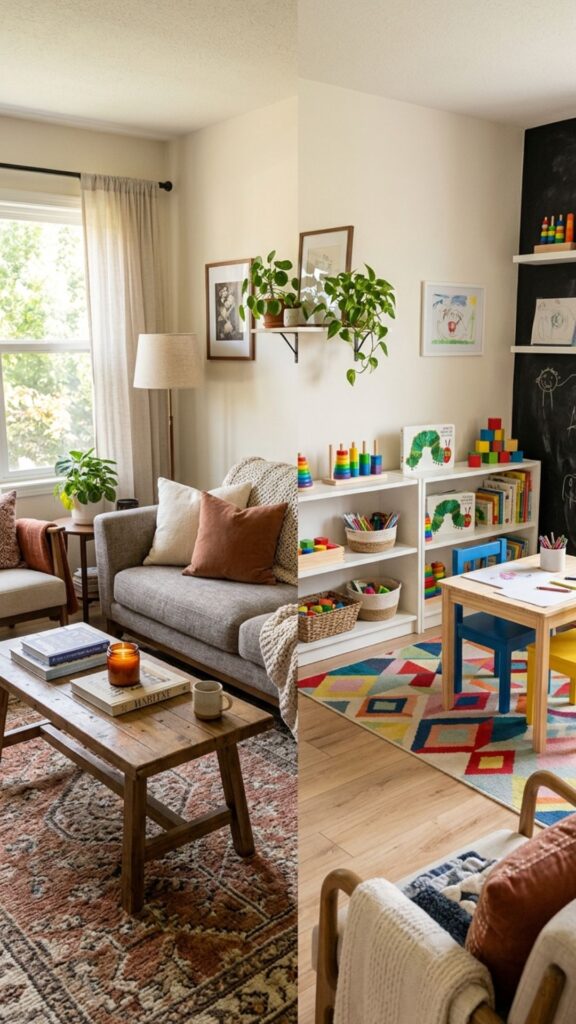
Even in a small space, you can carve out separate areas for lounging and playing. Angle a sofa or use a rug to mark a play zone in one corner. This keeps toys contained and helps kids understand where activities happen.
Zoning also makes the room feel more organized and intentional. Adults get a relaxing seating area, kids get their own spot, and the room feels bigger because everything has a clear purpose. It’s a simple trick with a big payoff.
12. Choose Stain-Resistant Slipcovers
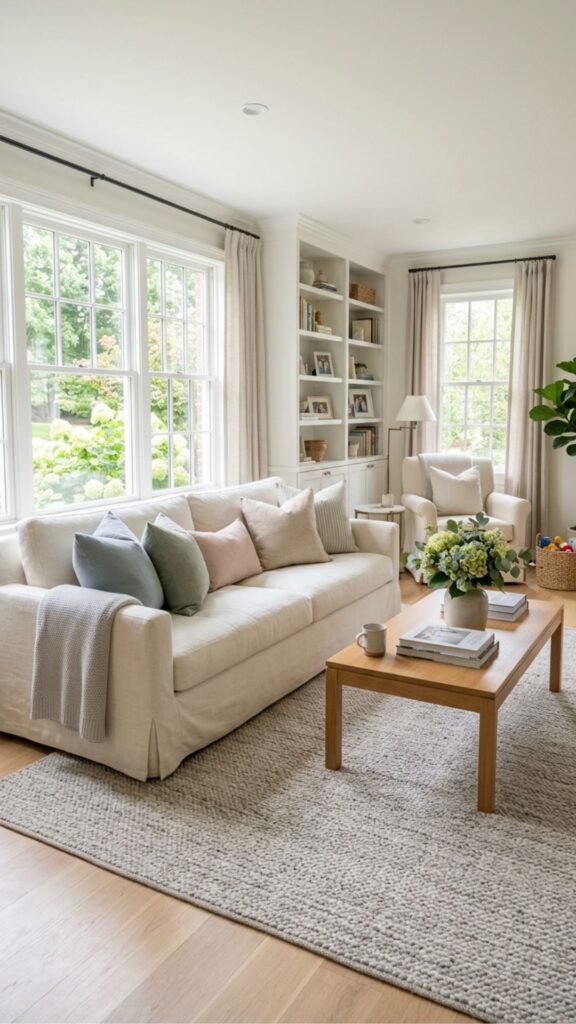
Slipcovered sofas and chairs are a parent’s best friend. When spills, crumbs, or mystery stains appear, you pull the cover off and toss it in the wash. Look for performance fabrics labeled stain-resistant or spill-proof.
Keeping a spare set of slipcovers means your living room always looks fresh, even mid-mess. Neutral or patterned covers hide wear well, so your furniture stays looking nice through years of daily family life.
13. Add a Fold-Down Wall Desk for Homework
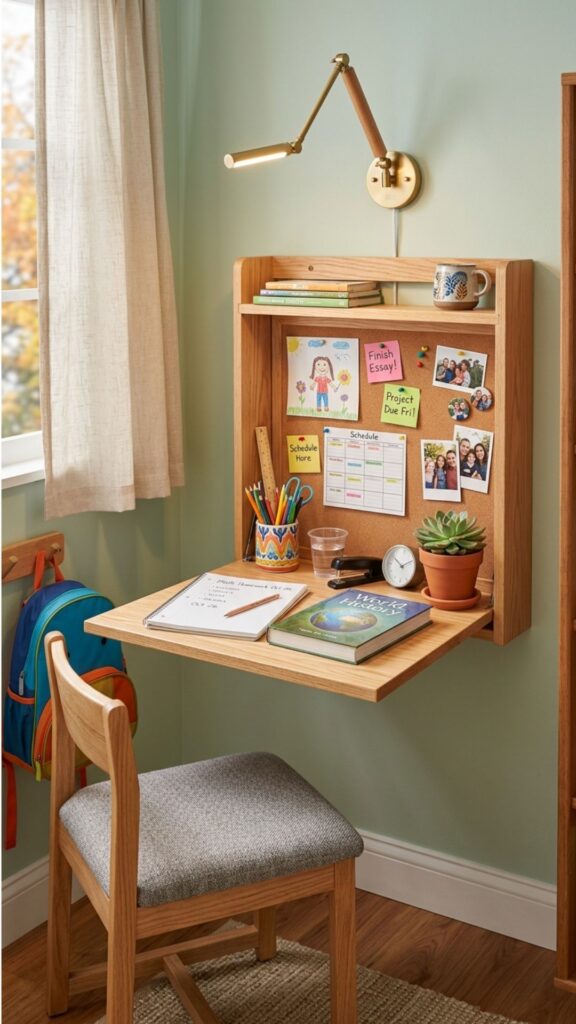
A fold-down wall desk gives older kids a spot for homework or crafts without a permanent bulky desk. When it’s not in use, you fold it flat against the wall and reclaim the floor. It’s perfect for rooms that serve many purposes.
Pair it with a lightweight, stackable chair that tucks away easily. Add a small shelf above for supplies. This setup keeps schoolwork contained to one tidy area instead of spreading across the coffee table.
14. Use Mirrors to Make the Room Feel Bigger
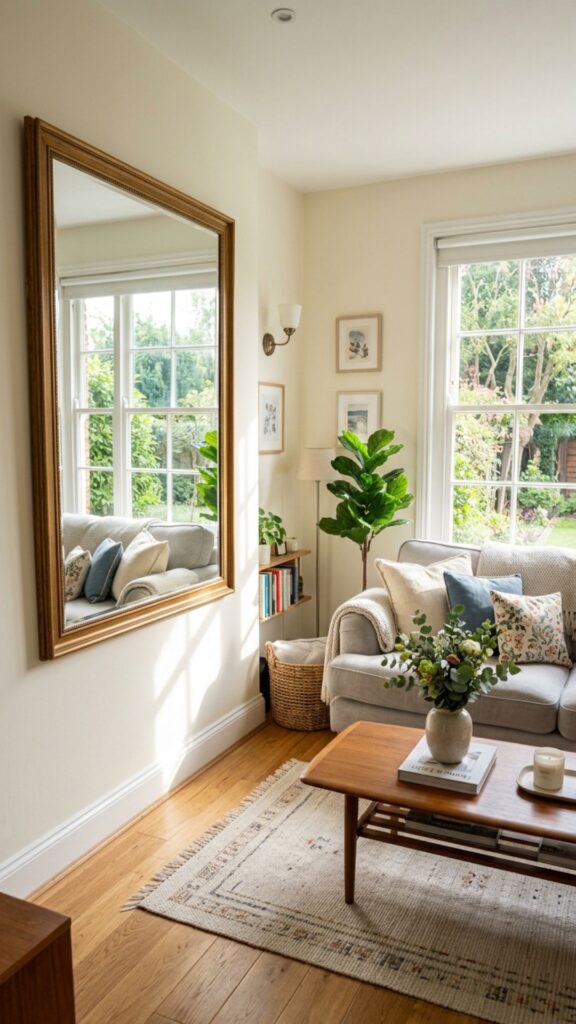
A large mirror bounces light around and creates the illusion of more space. Hang one across from a window to double the natural light. This instantly makes a cramped living room feel more open and airy.
For safety, choose shatter-resistant acrylic mirrors or secure heavy glass mirrors firmly to the wall. Position them higher up, away from active play zones, so an errant ball or toy won’t cause an accident.
15. Pick Multi-Functional Furniture
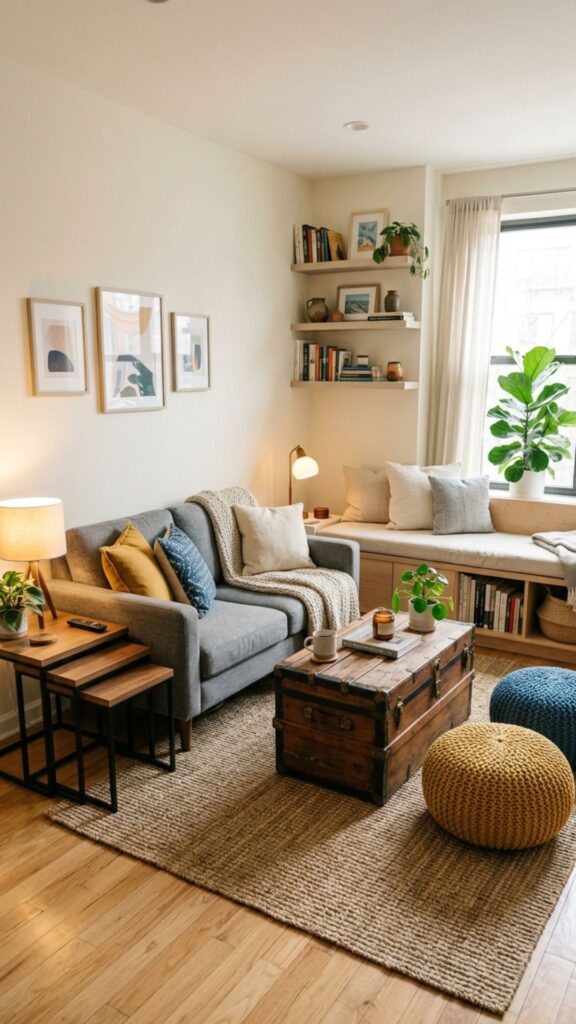
In tight quarters, every piece should earn its keep. A nesting table set, a bench that stores toys, or a pouf that works as seating and a footrest all save space. Multi-functional furniture keeps you from overcrowding the room.
Think about how each item can do two jobs. A trunk becomes a coffee table and a toy box. A daybed offers seating and a nap spot. These smart choices help you fit family needs into limited square footage.
16. Keep Cords and Outlets Safe
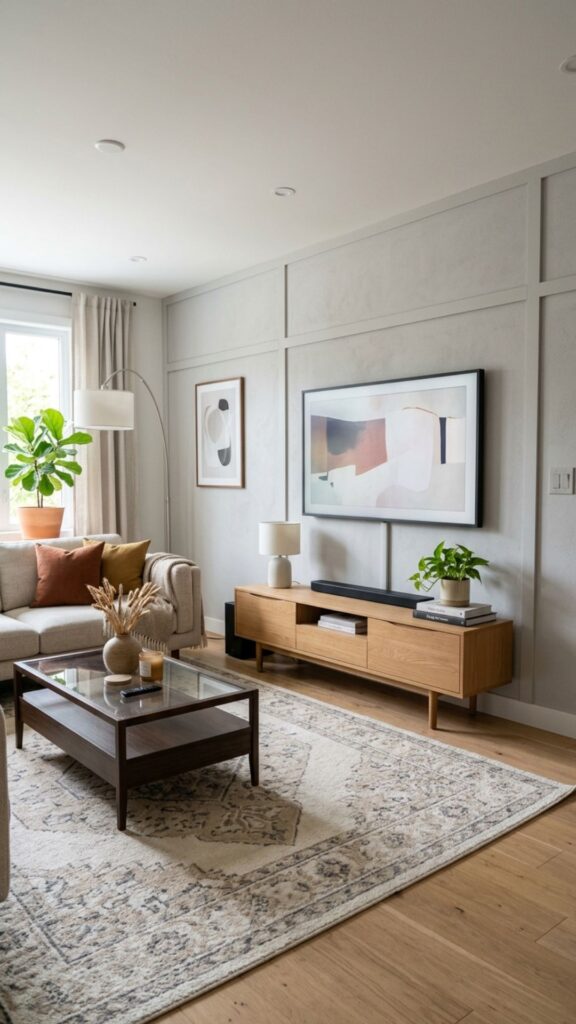
Small rooms often have furniture pushed close to outlets and cords. Use cord covers, cable boxes, and outlet plugs to keep everything tidy and safe from curious toddlers. Hidden cables also make the room look cleaner and more polished.
Route cords behind furniture or along baseboards with clips. Bundle excess length so nothing dangles. This small step protects your kids and instantly reduces the visual clutter that makes tight spaces feel messy.
17. Add Soft Lighting for a Cozy Feel
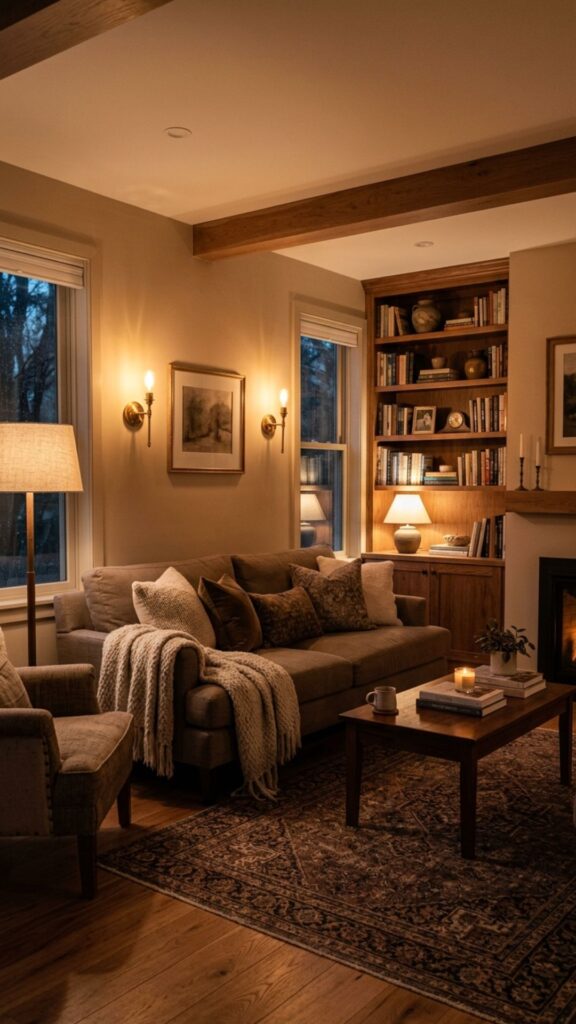
Harsh overhead lighting makes a small room feel cold. Layer in warm lamps and wall sconces to create a soft, welcoming glow. Choose LED bulbs that stay cool to the touch for extra safety around kids.
Place lamps on high shelves or mount sconces so they’re out of reach. Dimmable options let you shift from bright playtime to calm bedtime routines. Good lighting makes even the tiniest room feel warm and inviting.
18. Use Wall Hooks for Everyday Items
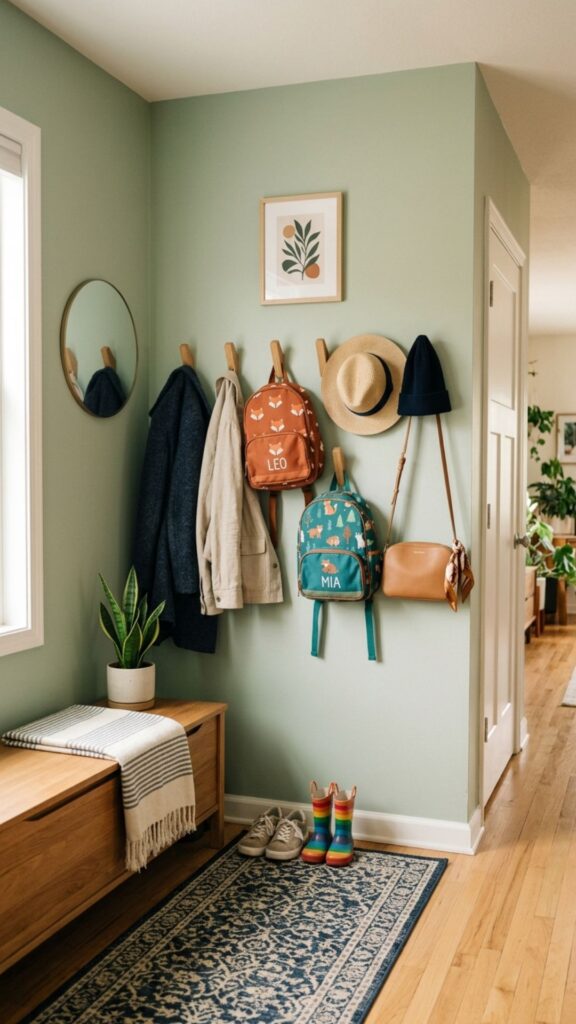
Wall hooks near the entry or seating area keep jackets, bags, and hats off the floor and furniture. Mount a low row at kid height so children can hang their own things. This builds good habits and cuts down on daily clutter.
Decorative hooks add a stylish touch while doing real work. You’ll grab your keys or a kid’s backpack in seconds instead of digging through piles. In a small space, keeping surfaces clear makes a huge difference.
19. Display Kids’ Art in a Gallery Wall
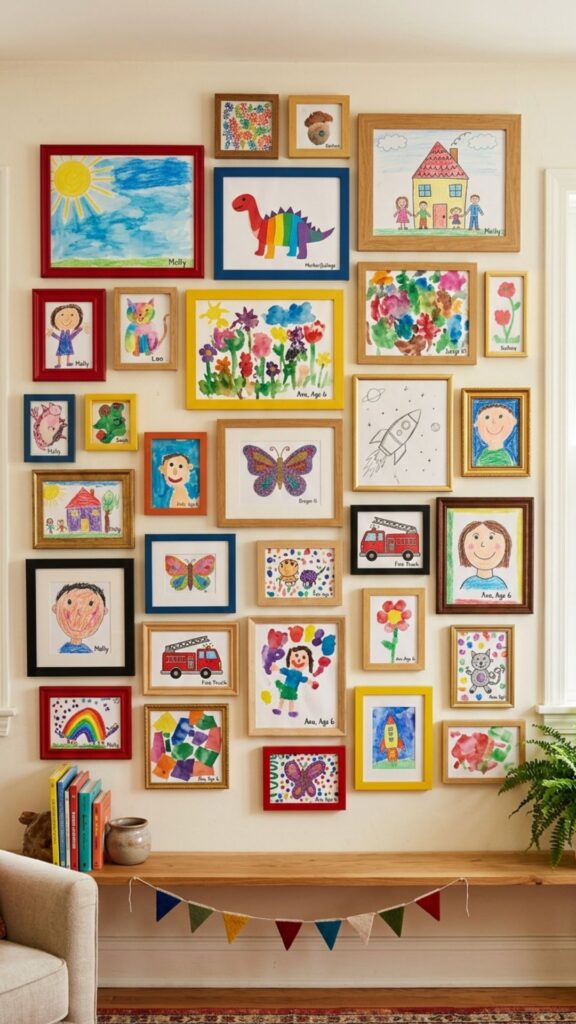
Kids create endless artwork, and a gallery wall turns it into decor. Use inexpensive frames with swappable fronts so you can rotate new masterpieces easily. This celebrates your children while adding warmth and color to the room.
Cluster frames in one dedicated area to keep the display tidy rather than scattering art everywhere. Let your kids help choose which pieces go up. It makes them proud and keeps the fridge from becoming a paper avalanche.
20. Declutter Regularly With Your Kids
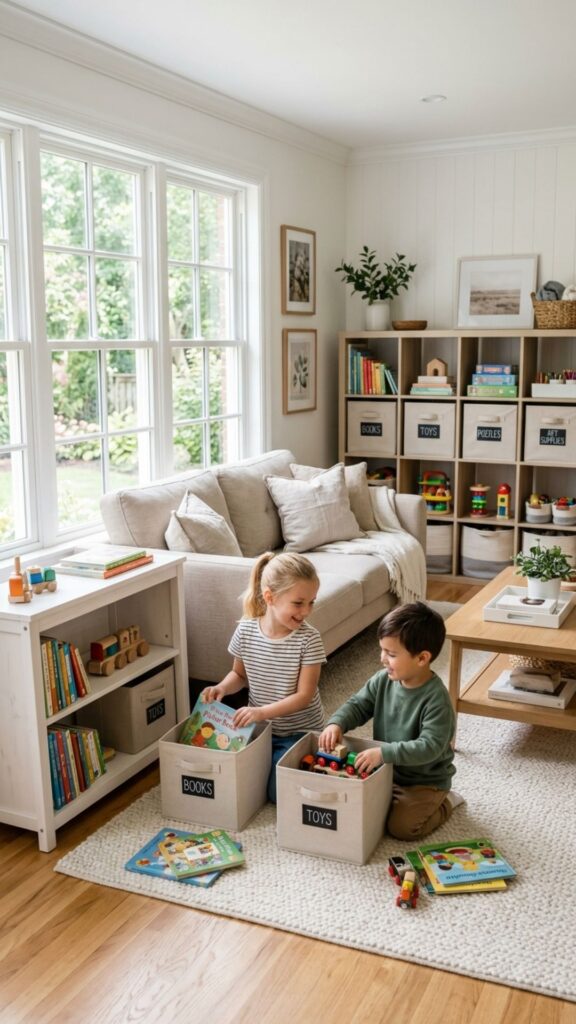
The best decor strategy is fewer things. Set a routine to sort through toys and books every few months. Involve your kids in deciding what to keep, donate, or store. Less stuff means less clutter and more breathing room.
Rotate toys instead of displaying them all at once. Keep half in storage and swap them monthly. Kids stay interested, the room stays tidy, and you avoid the overwhelming pile-up that makes small spaces feel impossible.
Conclusion
A small living room and a busy family can absolutely coexist. With smart storage, safe furniture, and a few clever design tricks, you’ll create a space that looks good and works hard for everyone. Start with one or two of these small living room decor ideas with kids, then build from there as you see what fits your family’s rhythm.
Ready to reclaim your space? Pick your favorite idea from this list and tackle it this weekend. Small changes add up fast, and before you know it, you’ll have a living room that feels calm, cozy, and truly yours.
How do I decorate a small living room with kids without it feeling cluttered?
Focus on hidden storage, multi-functional furniture, and regular decluttering. Use baskets and storage ottomans to hide toys quickly, keep a neutral base color, and rotate toys so only some are out at once. Fewer visible items make a small room feel open and calm.
What furniture is safest for a small living room with young children?
Choose furniture with rounded edges, soft upholstered surfaces, and stain-resistant slipcovers. Storage ottomans, padded benches, and low bookcases anchored to the wall reduce injury risks. Add corner guards to any sharp-edged pieces you already own.
How can I make a small living room look bigger?
Use large mirrors to reflect light, keep walls and big furniture in neutral tones, and mount your TV to free up floor space. Vertical shelving draws the eye upward, and clear walkways make the room feel more open and spacious.
How do I store toys in a small living room?
Use storage benches, ottomans with hidden compartments, woven baskets, and vertical shelving with labeled bins. Keep kids’ items on lower shelves so they can help tidy up, and rotate toys to reduce the overall amount out at any time.
How often should I declutter a family living room?
Aim to sort through toys, books, and decor every three to four months. Involve your kids in deciding what to keep or donate, and rotate toys monthly to keep the space fresh and prevent clutter from building up.