A small living room and a television don’t have to fight for attention. In fact, with the right approach, your TV can blend right into a cozy, stylish space instead of dominating it.

I’ve spent years helping friends and clients rework tight spaces, and the truth is that clever placement and a few smart tricks make all the difference.

Below you’ll find 20 practical small living room decor ideas with TV setups that actually work. Each one comes with real, doable steps you can start on this weekend. Whether you rent or own, you’ll walk away with fresh ways to make your room feel bigger, brighter, and far more welcoming.
1. Mount the TV on the Wall to Free Up Floor Space
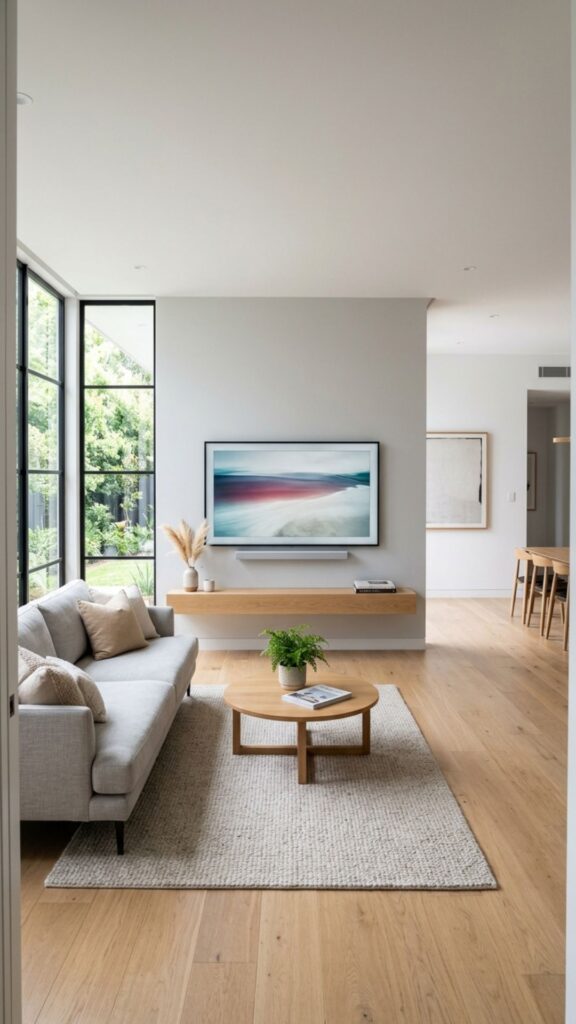
The fastest way to open up a cramped room is to get the TV off the floor. A wall mount removes the need for a bulky stand and instantly gives you back precious square footage. Low-profile brackets sit almost flush, so the screen looks intentional rather than tacked on.
Before drilling, check your wall type and find the studs. For drywall without studs, use heavy-duty toggle anchors rated well above your TV’s weight. Route the cables through a paintable cord cover or an in-wall kit for a clean finish that keeps the whole setup looking polished.
2. Build a Gallery Wall Around the Screen
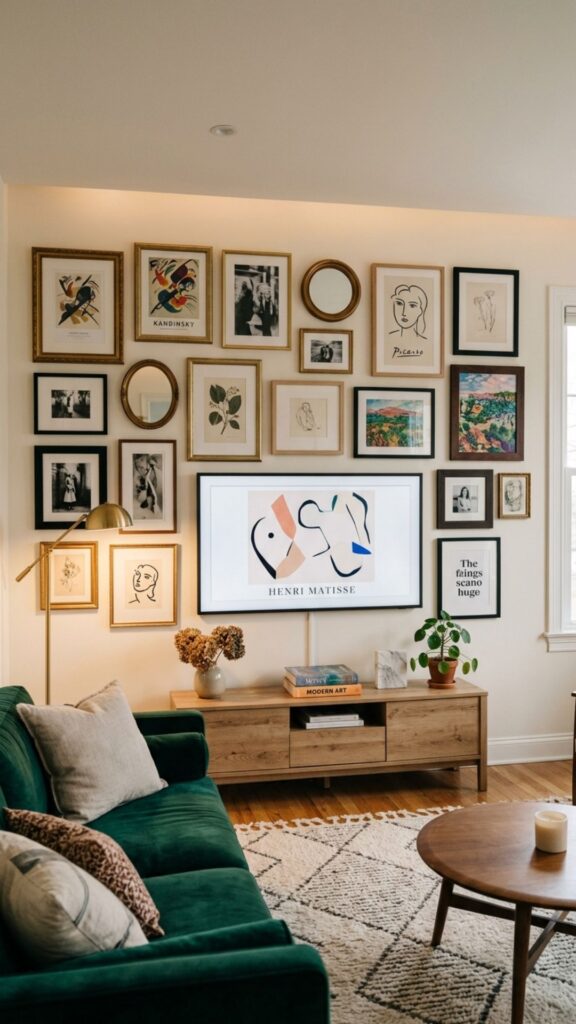
One reason a TV feels awkward in a small space is that it sits alone like a black hole on the wall. Surround it with framed prints, small mirrors, and art to soften that effect. The screen becomes just one piece in a bigger, more interesting display.
Keep your frames in a similar color family so the arrangement feels calm rather than busy. Lay everything out on the floor first, then measure twice before hanging. The goal is balance, not symmetry, so let the artwork wrap naturally around the screen.
3. Use a Slim Floating Shelf Instead of a Media Console
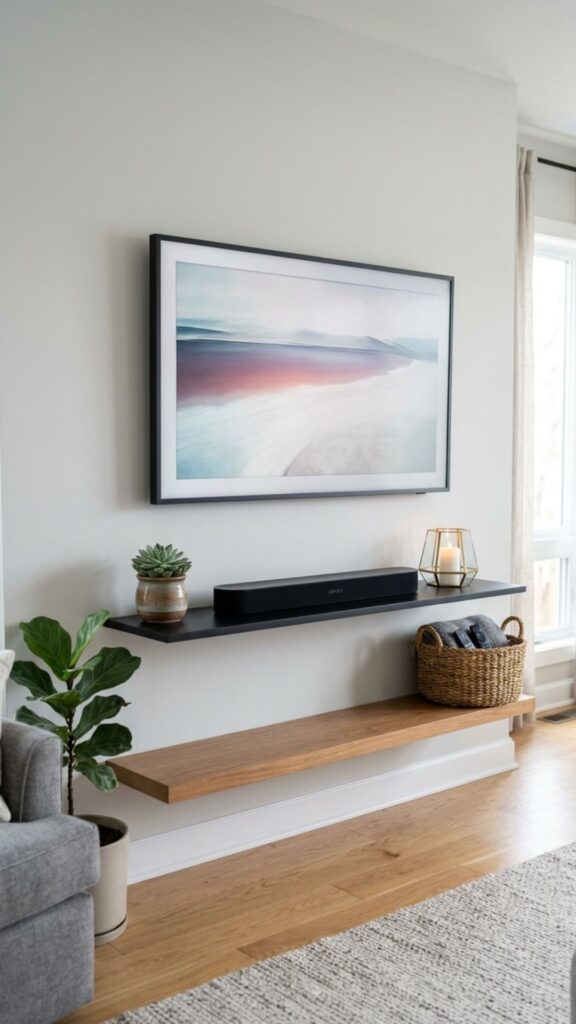
A deep entertainment center eats into a small room fast. Swap it for a slim floating shelf mounted below the TV. It holds your soundbar, streaming box, and a few decorative items without touching the floor, which tricks the eye into seeing more open space.
Choose a shelf that matches your wall trim or flooring tone for a seamless look. Add a small woven basket to hide remotes and cables. This keeps surfaces tidy while giving the whole wall a light, airy feel.
4. Pick a Corner Placement to Save the Main Wall
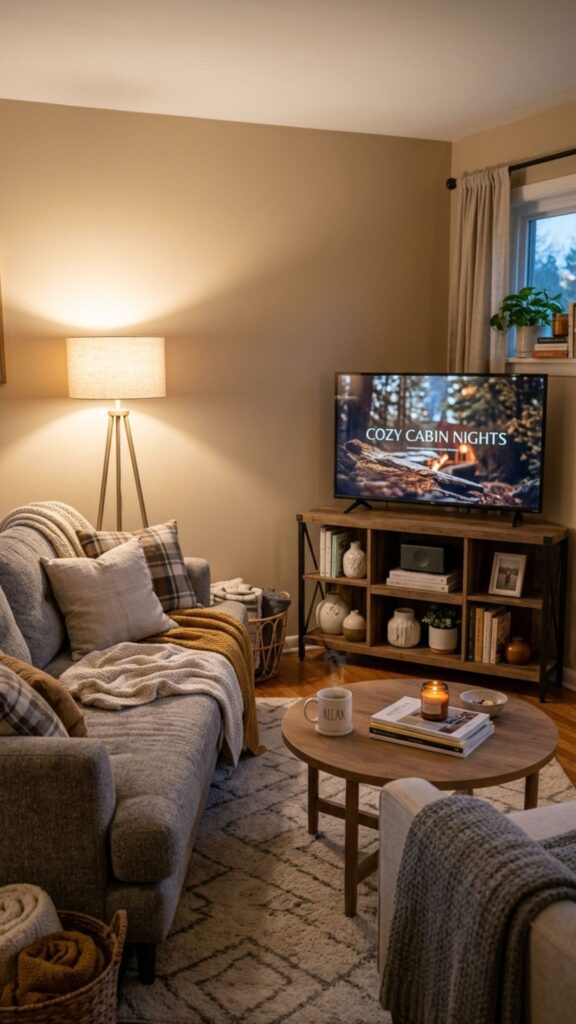
Corners are often wasted space, so putting your TV there frees up your longer walls for seating or storage. A corner setup also creates a natural viewing angle from a sofa placed diagonally across the room. It’s a simple shift that changes the whole flow.
Angle the screen slightly toward your main seat to cut down on glare. A small corner unit or a swivel wall mount gives you flexibility. This works especially well in square rooms where no single wall feels like the obvious focal point.
5. Blend the TV into a Dark Accent Wall
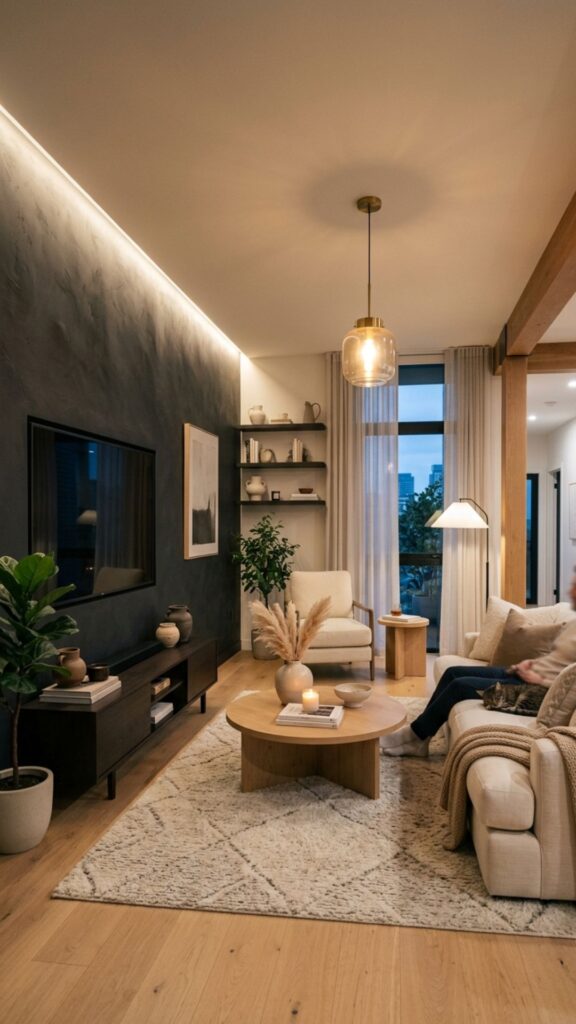
A glossy black screen stands out sharply against a light wall. Paint the wall behind it a deep charcoal, navy, or forest green, and the TV visually disappears when it’s off. This trick makes the screen feel smaller and the room feel cozier.
Balance the dark wall with light furniture and plenty of soft lighting so the space doesn’t feel closed in. A matte paint finish reduces reflections too. The result is a moody, high-end look that hides the tech beautifully.
6. Choose Multi-Functional Furniture
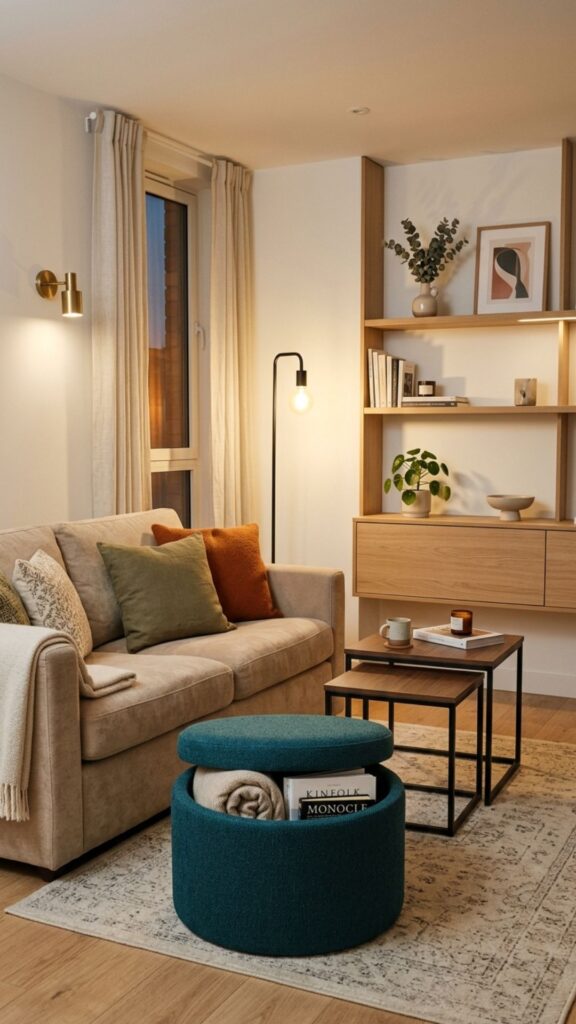
In tight quarters, every piece should earn its keep. Look for a storage ottoman that doubles as a coffee table, or a media unit with drawers for blankets and games. Furniture that pulls double duty keeps clutter down and floor space open.
Nesting tables are another smart pick, since you can tuck them away when not in use. A bench with hidden storage under the window works well for extra seating too. These choices help your living room stay flexible without feeling packed.
7. Add a Large Mirror to Bounce Light Around
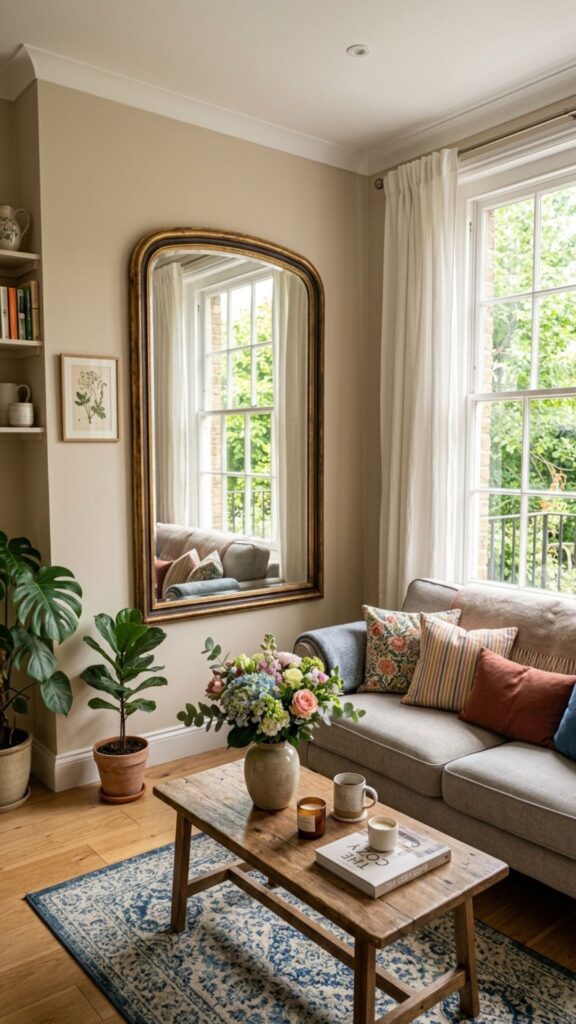
Mirrors are a decorator’s best friend in small spaces. Placed across from a window, a large mirror reflects daylight and makes the room feel twice as big. It also draws the eye away from the TV, balancing the visual weight.
Lean an oversized floor mirror against a wall for a relaxed vibe, or hang one to reflect a favorite corner. Just avoid placing it directly opposite the screen, since it can create distracting reflections during movie night.
8. Keep the Color Palette Light and Consistent
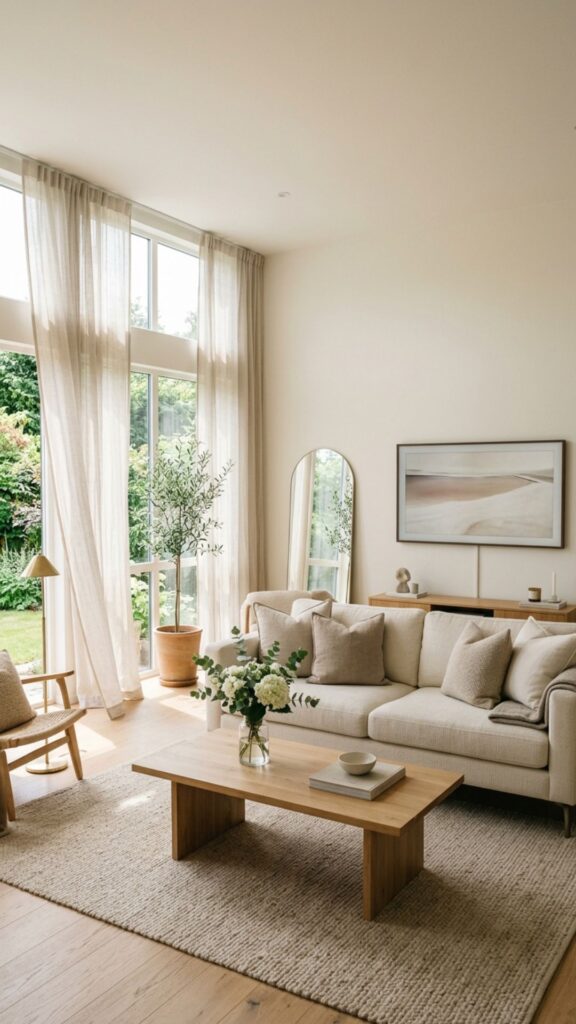
Light, unified colors open up a small room instantly. Stick to soft whites, warm beiges, and gentle grays for walls and larger furniture. This creates a smooth backdrop that lets the TV and your favorite accents stand out without crowding.
Bring in color through pillows, throws, and small decor you can swap out cheaply. A consistent palette makes the space feel bigger and more pulled together. It also gives you freedom to update the look with the seasons.
9. Float the Sofa Slightly Off the Wall
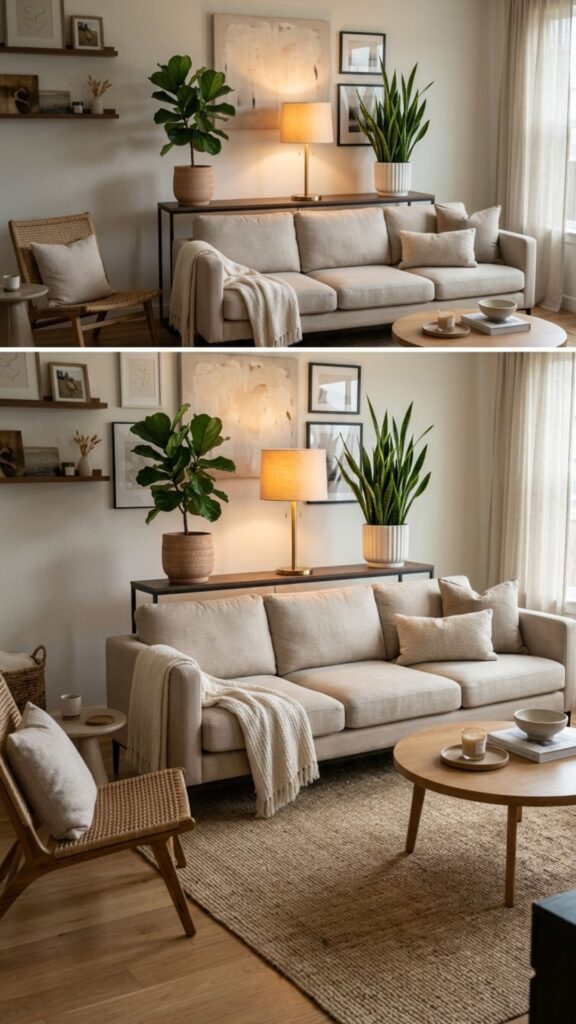
Pushing every piece against the walls seems space-saving, but it often makes a room feel flat. Pulling the sofa a few inches forward adds depth and a touch of intentional design. Even in a small room, that little gap reads as thoughtful.
Use the space behind the sofa for a slim console table holding a lamp or plants. This creates a soft zone between seating and the rest of the room. The whole layout feels more like a designed space and less like a waiting area.
10. Install Hidden Cable Management
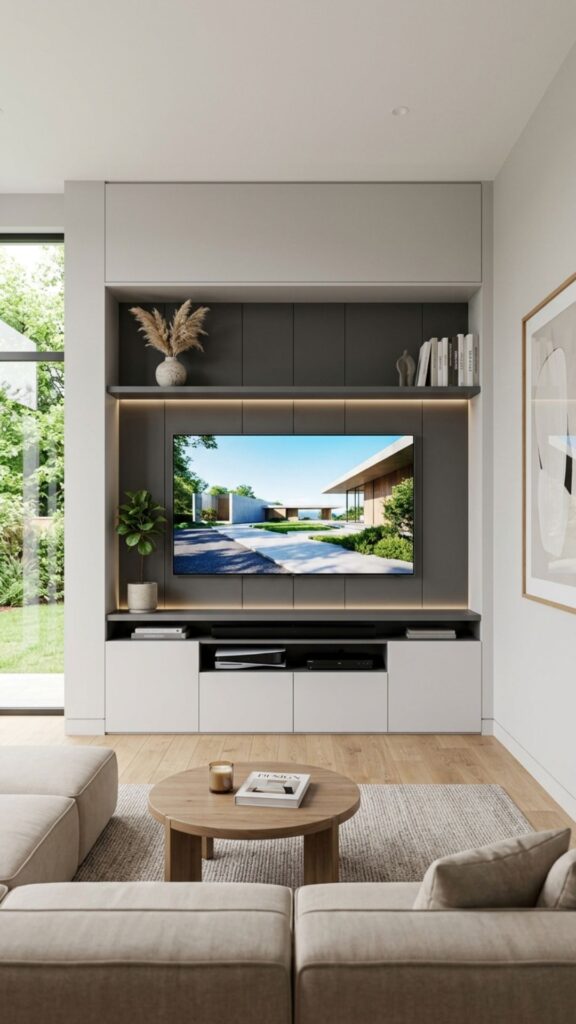
Nothing shrinks a room like a tangle of visible wires. Tidy cables make even a busy media wall look calm and controlled. Run cords through an in-wall kit or hide them behind a cable raceway painted to match the wall.
Bundle loose cables with velcro ties and label them so future changes are easy. Tuck power strips into a drawer or behind furniture. This small effort pays off with a clean, professional-looking setup every single day.
11. Use Vertical Storage to Draw the Eye Up
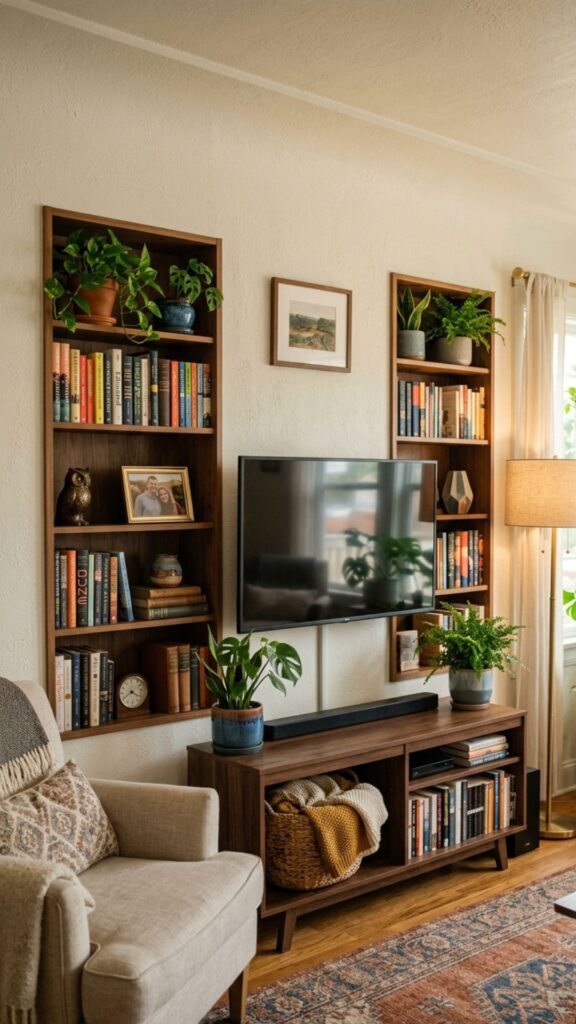
When floor space is limited, build upward. Tall, narrow shelving beside the TV draws attention toward the ceiling, making the room feel taller. It also gives you storage without stealing walking room.
Fill shelves with a mix of books, small plants, and a few personal objects, leaving some empty space so it doesn’t look crammed. Group items in odd numbers for a natural, curated feel. Vertical lines are a proven way to stretch a small room visually.
12. Layer Warm, Adjustable Lighting
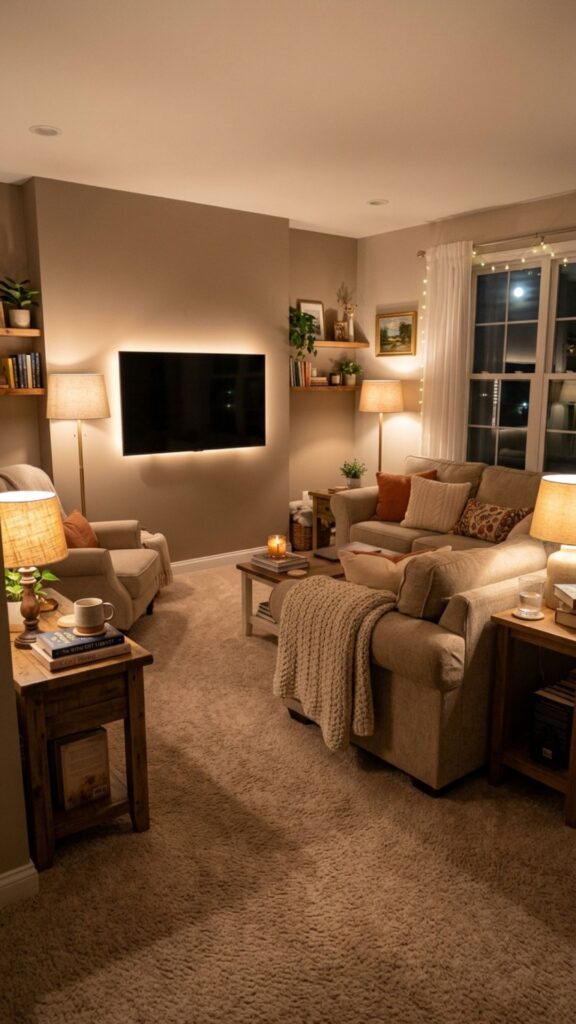
One harsh overhead light flattens a room and highlights every tight corner. Instead, layer your lighting with a floor lamp, a table lamp, and maybe a small LED strip behind the TV. Soft, warm bulbs create depth and a cozy mood.
An LED backlight behind the screen reduces eye strain during evening viewing and adds a subtle glow. Put lamps on dimmers if you can. Good lighting makes a small living room feel richer and far more inviting.
13. Try a Rolling TV Stand for Flexibility
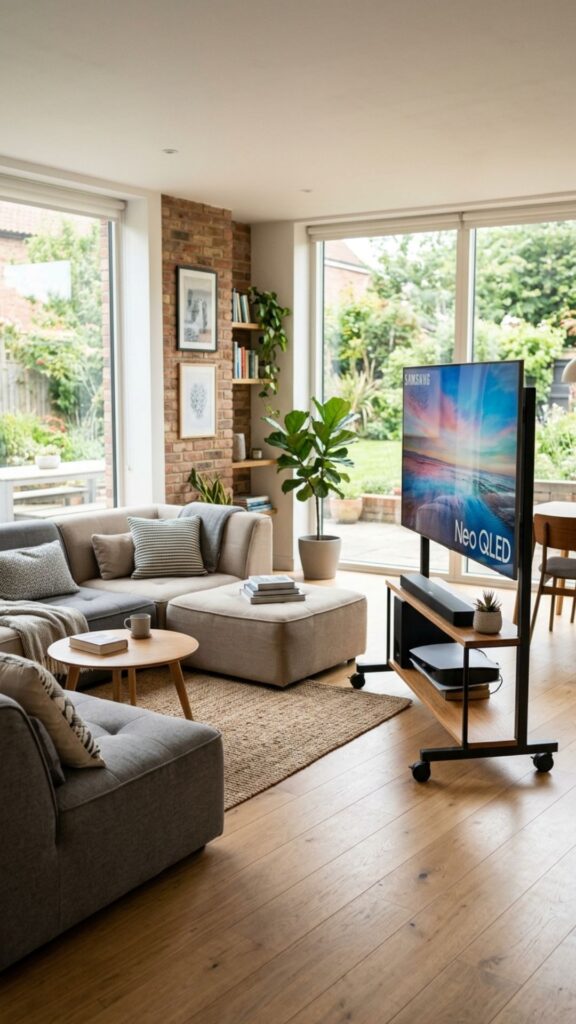
If your room serves double duty, a rolling TV stand lets you move the screen wherever you need it. Wheel it toward the sofa for movies, then tuck it aside when guests arrive. This flexibility is gold in a tight, multi-use space.
Pick a slim design with a small footprint and lockable wheels for safety. Many models include shelves for your devices too. It’s a renter-friendly option since it needs no drilling or permanent setup.
14. Anchor the Space with a Well-Sized Rug
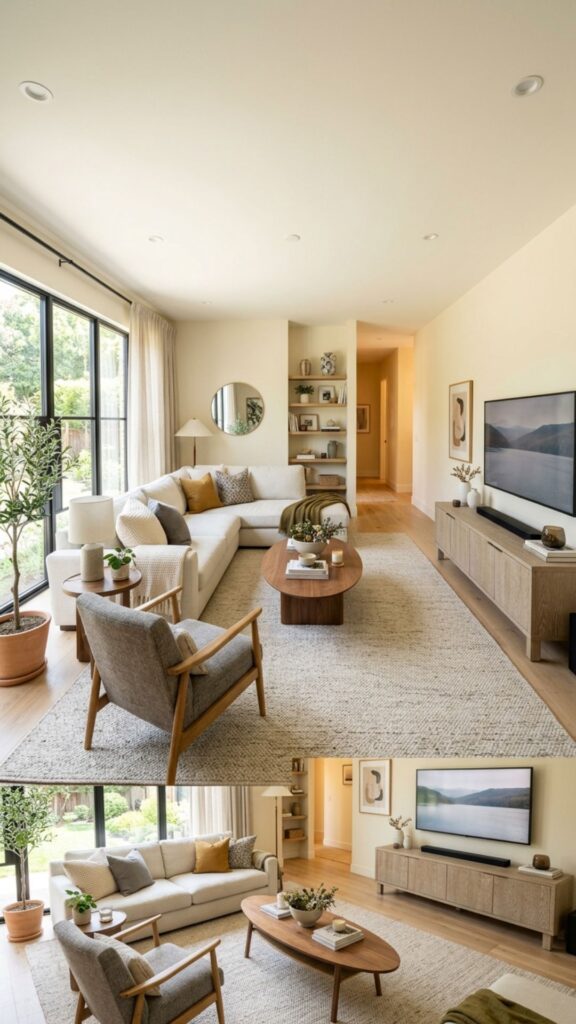
A rug that’s too small makes furniture float awkwardly and shrinks the room. Choose one large enough to sit under at least the front legs of your seating. This anchors the whole arrangement and defines your living zone clearly.
Stick with a light or medium tone and a simple pattern to keep things open. A rug with subtle stripes can even make a narrow room feel wider. It’s an easy way to tie the TV area and seating together.
15. Frame the TV to Look Like Art
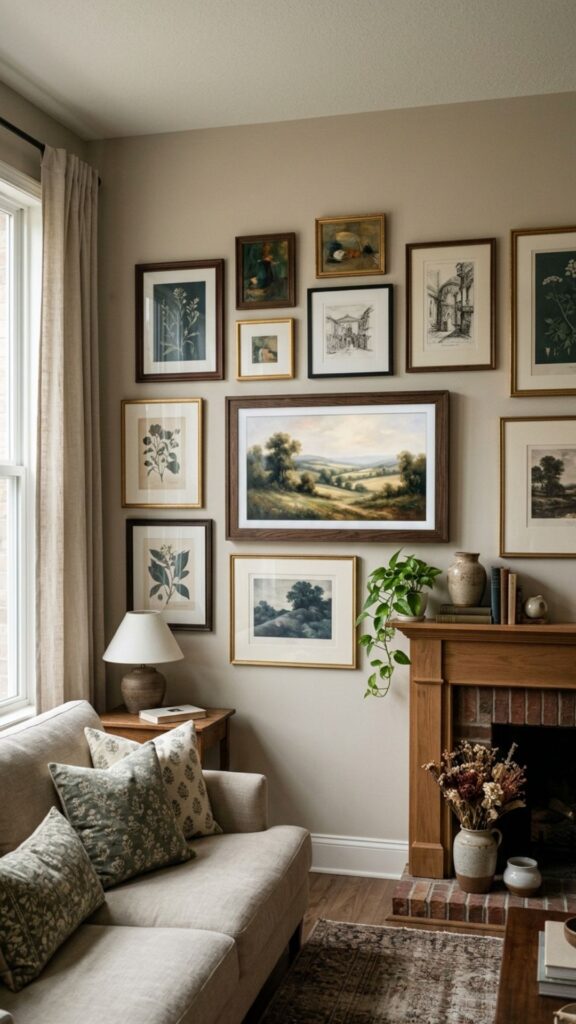
Frame-style TVs or add-on bezels turn your screen into a piece of wall art when it’s off. Displaying a painting or photo on the screen helps it blend into your decor instead of announcing itself. It’s a favorite trick for style-focused small spaces.
If a frame TV isn’t in the budget, build a simple wooden frame around your existing screen. Match it to nearby picture frames for a cohesive gallery feel. This small upgrade completely changes how the TV reads in the room.
16. Use Curtains to Add Height and Softness
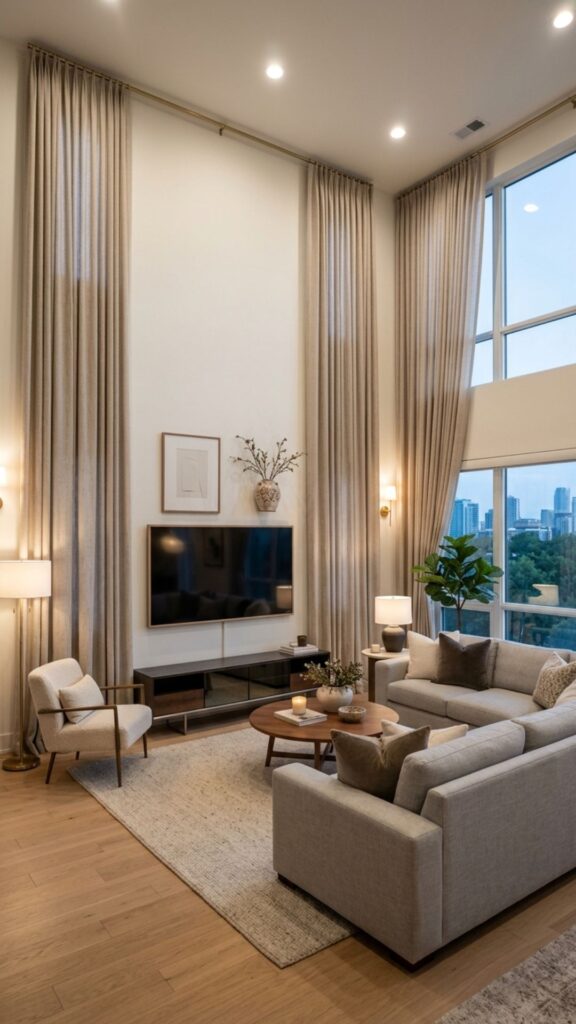
Hanging curtains high and wide, well above and beyond the window, tricks the eye into seeing taller walls and larger windows. Light, flowing fabric softens the hard lines of a TV and shelving nearby. The room feels calmer and more finished.
Choose sheer or lightweight fabrics in a pale shade to keep the space bright. Floor-length panels look more polished than short ones. This simple styling move brings warmth and a sense of height to any small living room.
17. Create a Cozy Reading or Plant Nook
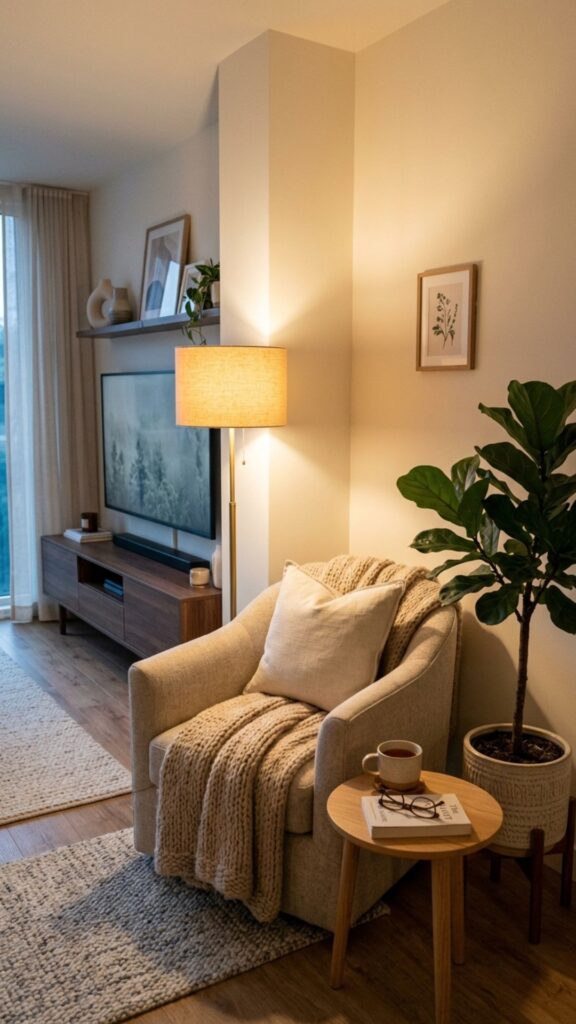
Balance the tech of a TV with a soft, human corner. Tuck a small chair, a floor lamp, and a plant into an unused nook. This gives the eye somewhere gentle to land and makes the room feel lived-in rather than screen-centered.
Even a single trailing plant on a stand adds life and freshness. Keep the nook simple so it doesn’t crowd the space. A small personal corner like this adds real character to a compact room.
18. Match the Media Unit to the Wall Color
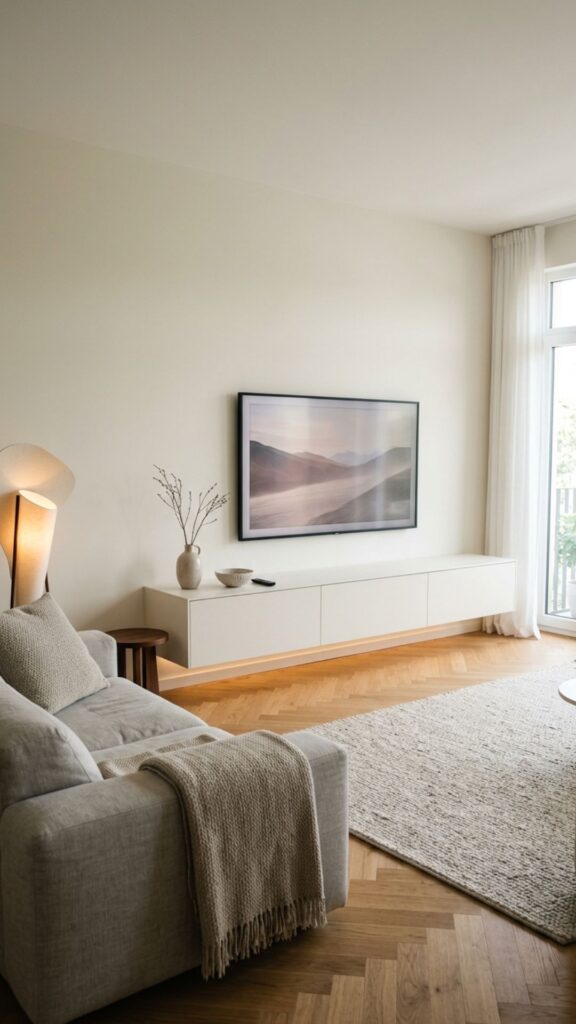
A media console that blends with the wall almost vanishes, keeping the focus on your seating and decor. Paint or choose a unit in the same tone as the wall behind it. This reduces visual clutter in a big way.
Low, horizontal units work best since they don’t chop up the wall. Keep the top surface mostly clear, with just a couple of styled objects. The camouflaged look is a subtle, sophisticated choice for tight rooms.
19. Zone the Room with Furniture Placement
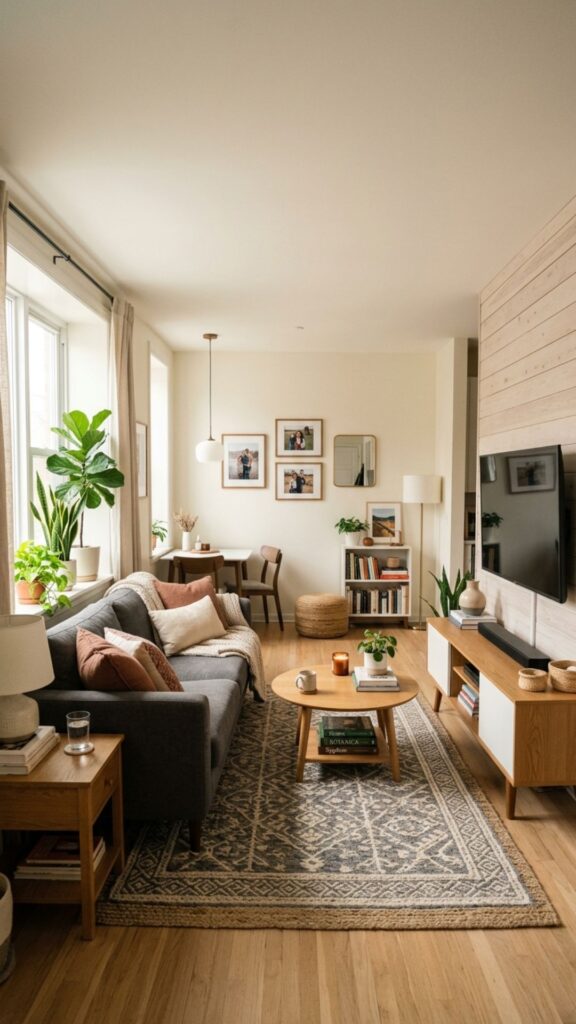
Even one small room can feel organized when you create clear zones. Use the sofa’s back or a slim console to gently separate the TV area from a dining spot or entryway. Defined zones make a small space feel purposeful and larger.
Keep pathways clear so movement feels natural. A rug or a change in lighting can also signal a new zone. Thoughtful placement turns a cramped room into several small, functional areas.
20. Edit Ruthlessly and Keep Surfaces Clear
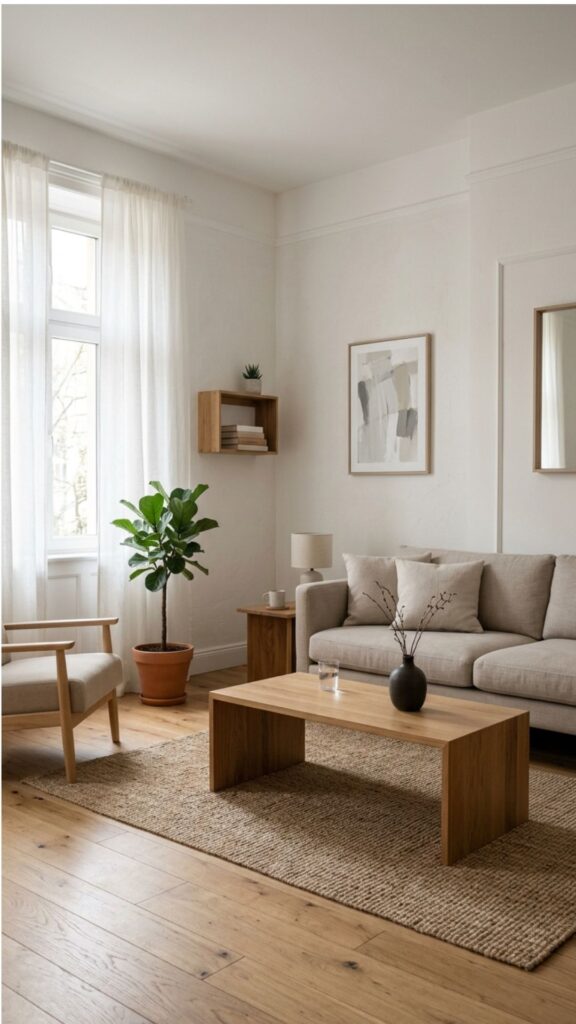
The biggest secret to a great small living room is restraint. Clutter shrinks a space faster than anything else. Regularly edit your decor down to the pieces you truly love, and keep tabletops mostly clear.
Give every item a home, whether in a basket, drawer, or on a chosen shelf. A few meaningful objects always beat a dozen random ones. This habit keeps your room feeling open, calm, and effortlessly styled.
Conclusion
Making a small living room work with a TV comes down to smart choices, not big budgets. Mount the screen, lighten your palette, use multi-tasking furniture, and edit out the clutter, and you’ll be amazed at how much bigger and warmer the space feels. Every idea here has been tested in real homes, so you can trust that these steps genuinely deliver.
Pick two or three of these ideas and try them this week. Start small, see how the room changes, then build from there. Your cozy, stylish living room is closer than you think, so grab a tape measure and get started today.
Where should I put the TV in a small living room?
Mount it on the wall or place it in a corner across from your main seat. This saves floor space and creates a comfortable viewing angle. Keep it at eye level when seated for the best comfort.
How can I make my TV less noticeable in a small space?
Paint the wall behind it a dark shade, frame it like art, or surround it with a gallery wall. These tricks help the black screen blend in instead of dominating the room when it’s off.
What size TV works best in a small living room?
Measure your viewing distance in inches and divide by roughly 1.6 to find a comfortable screen size. For most small rooms, a 40 to 55-inch TV fits well without overwhelming the space.
How do I hide TV cables in a small room?
Use an in-wall cable kit or a paintable cord cover to conceal wires. Bundle loose cables with velcro ties and tuck power strips behind furniture for a clean, clutter-free look.
Can I have a stylish living room and a TV at the same time?
Absolutely. With a mounted screen, a light color palette, layered lighting, and smart storage, your TV becomes part of a well-designed room rather than the only thing people notice.