Think a sectional is too big for your tiny living room? That belief keeps a lot of people stuck with mismatched chairs and awkward seating. But the right sectional can actually make a small space feel roomier, more organized, and far more comfortable.

I’ve helped design layouts for studio apartments and cramped urban living rooms for years, and a well-chosen sectional almost always wins. These small living room decor ideas with a sectional focus on shape, scale, and clever placement so you get maximum seating without a cramped result.
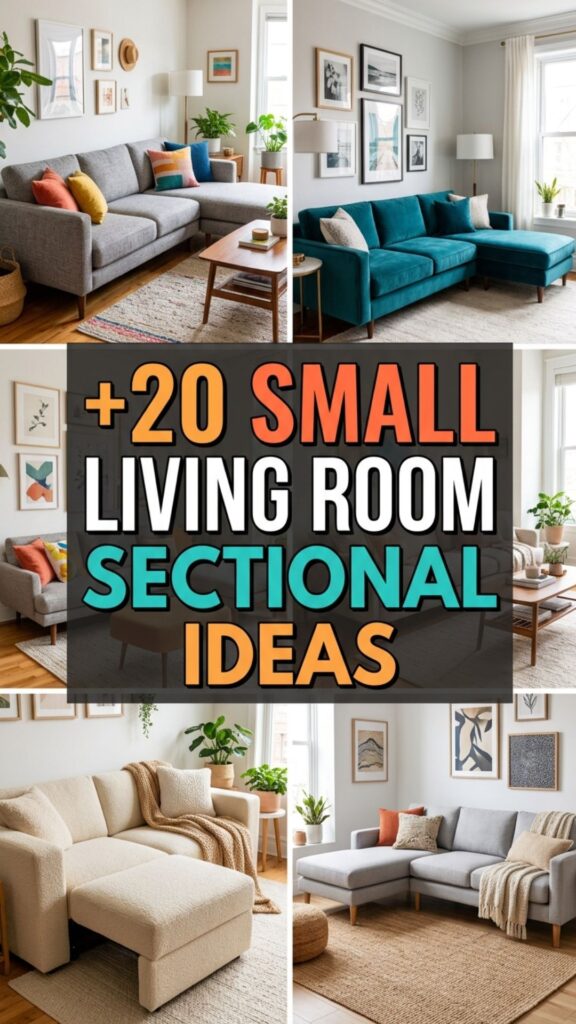
Below you’ll find 20 practical ideas, complete with examples and quick tips you can use today. Whether you rent or own, there’s something here for your floor plan.
1. Choose a Compact L-Shaped Sectional
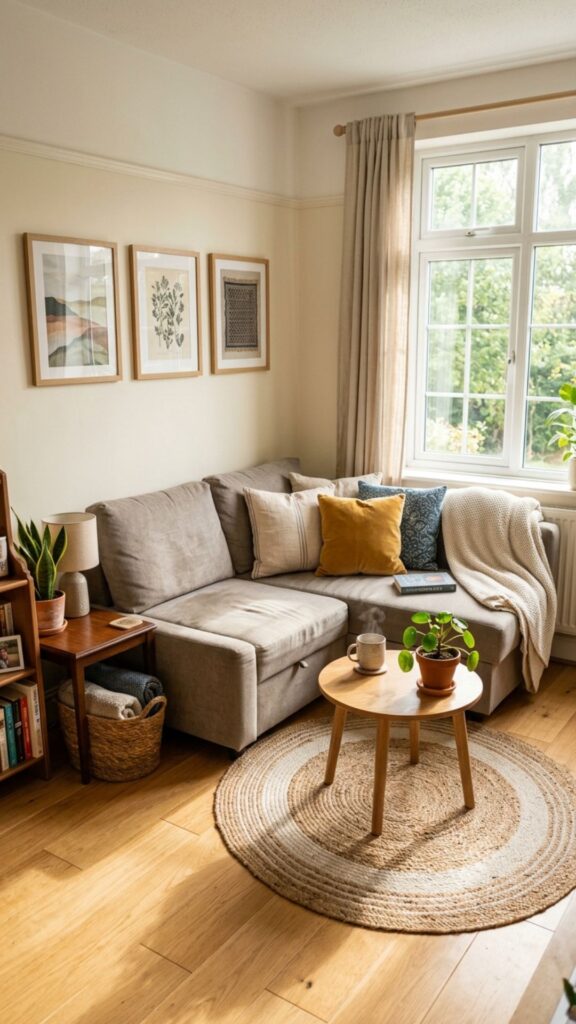
An L-shaped sectional tucks neatly into a corner, using space that often sits empty. This shape keeps your walkways clear while still offering seating for three or four people.
Look for models under 80 inches on the longest side. Brands like IKEA and Article make apartment-scale versions that fit rooms as small as 10 by 10 feet without swallowing the whole space.
2. Float the Sectional Away From the Wall
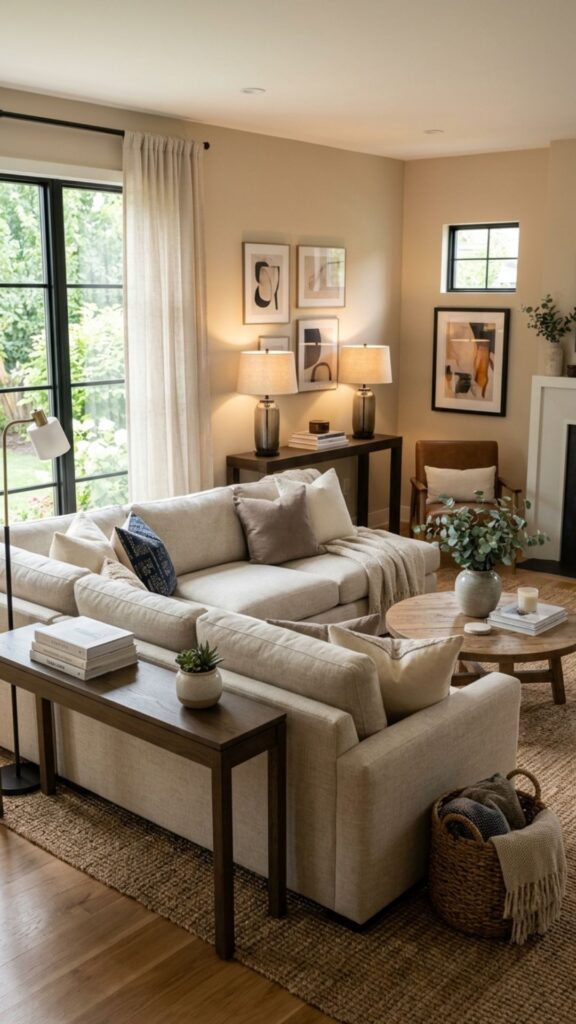
Pushing furniture against the wall feels natural, but a small float can actually open a room up. Leaving a few inches of breathing room creates visual depth and makes the space feel intentional.
Try pulling the sectional forward about 6 to 12 inches. Add a slim console table behind it to store books, chargers, or a lamp, doubling your function without adding clutter.
3. Pick a Sectional With Exposed Legs
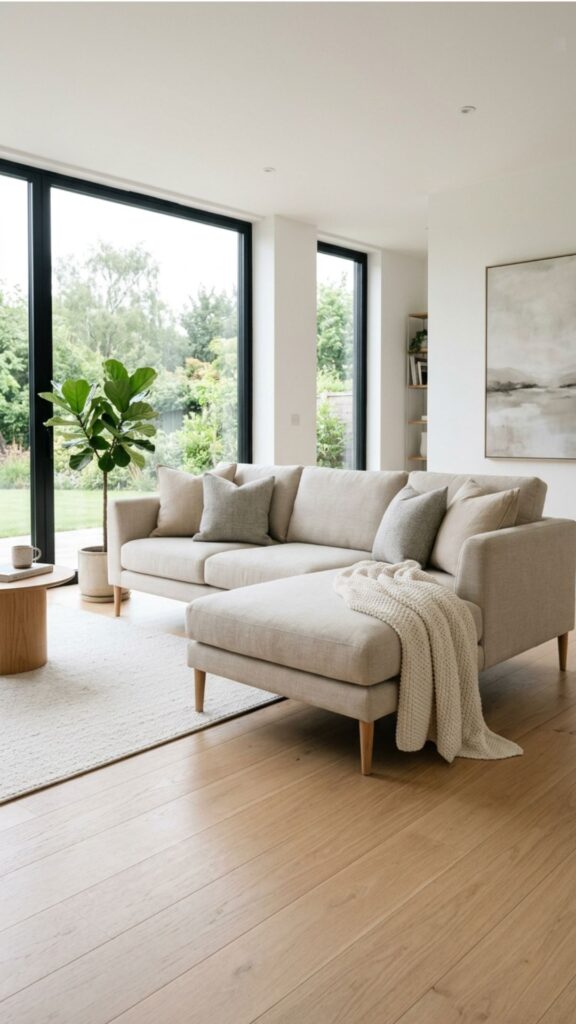
Furniture that sits flat on the floor visually blocks space. Raised legs let light and floor show through, tricking the eye into seeing more room.
Choose a sectional with slim wooden or metal legs at least 4 inches tall. This simple detail makes the piece feel lighter and easier to clean underneath, which matters in tight quarters.
4. Go With a Light, Neutral Upholstery
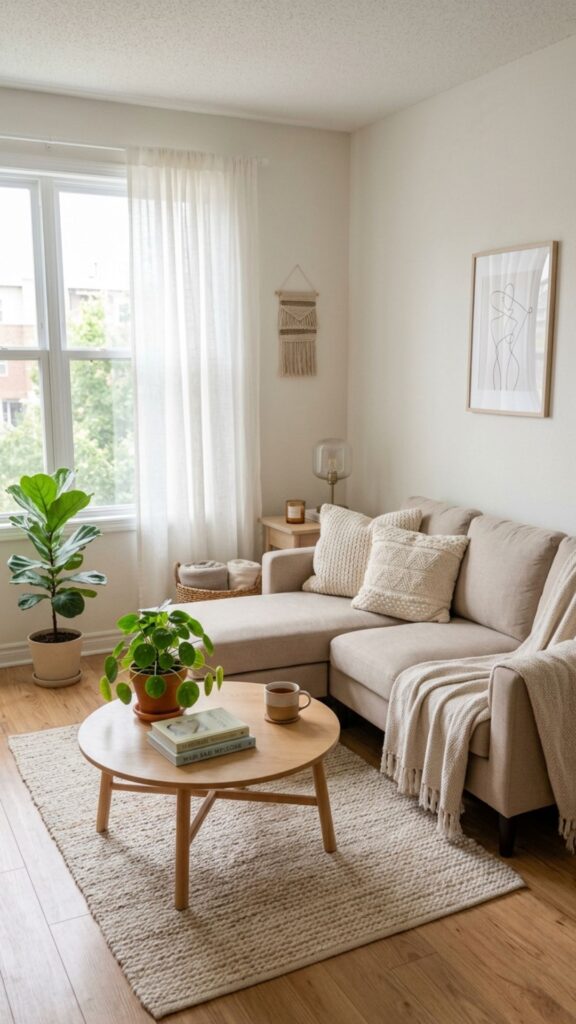
Dark, bulky upholstery can shrink a small room fast. Lighter tones reflect natural light and blend into walls, softening the visual weight of a large piece.
Consider soft greys, oatmeal, or warm beige. If you worry about stains, look for performance fabrics or slipcovers you can toss in the wash. Function and style don’t have to compete.
5. Use a Reversible Chaise Design
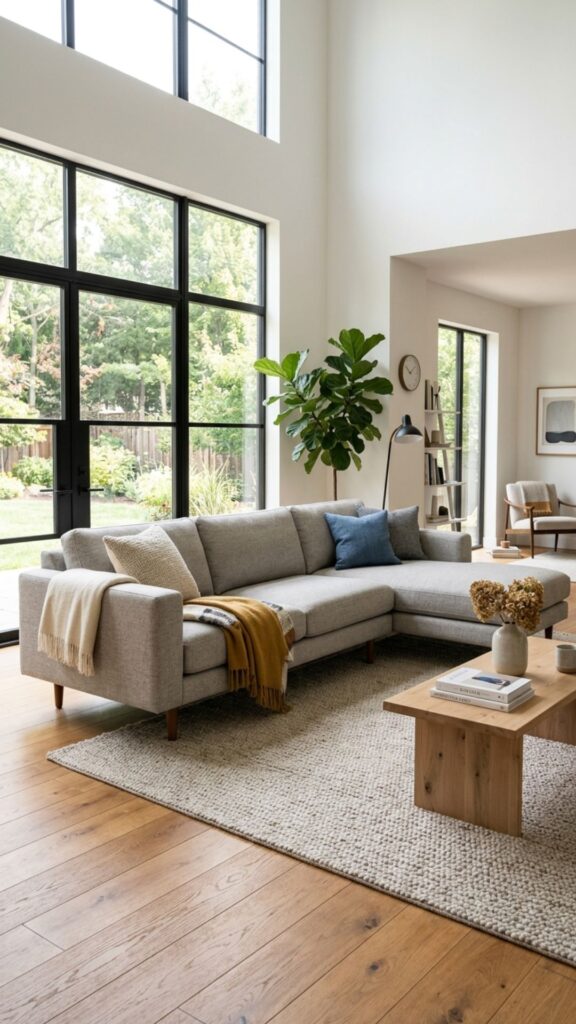
A reversible chaise lets you flip the long side to either end of the sectional. This flexibility is gold when you move or rearrange, which happens often in small spaces.
You can adapt the layout to fit doorways, windows, or foot traffic. It’s a smart buy for renters who don’t know their next floor plan yet.
6. Try a Curved Sectional for Awkward Corners
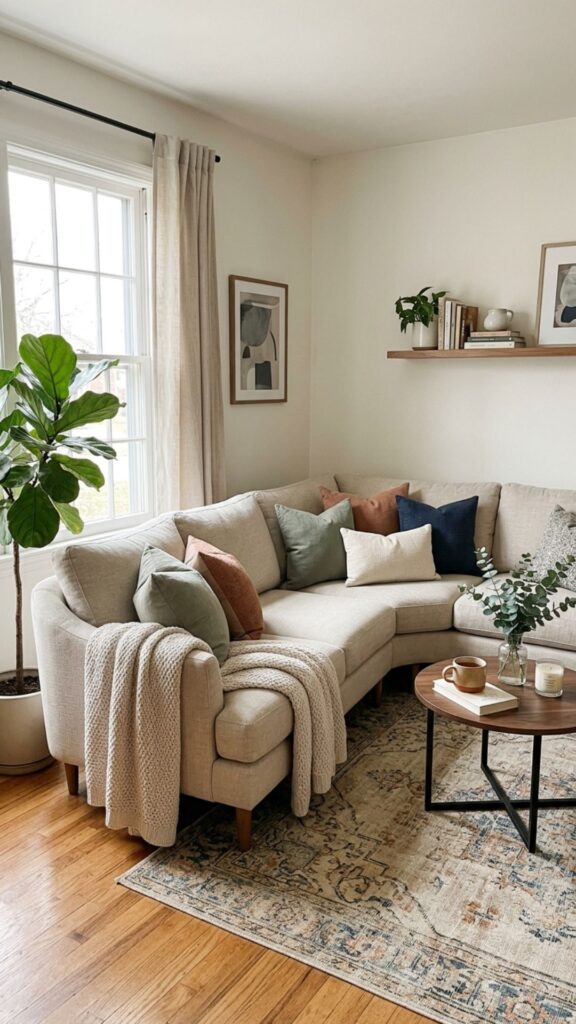
Rooms with odd angles or open floor plans benefit from a curved sectional. The soft shape guides conversation and fills space gracefully without hard edges poking into walkways.
A curved piece works especially well when it faces a focal point like a window or TV. Keep the curve gentle so it doesn’t dominate the room.
7. Add a Sleeper Sectional for Overnight Guests
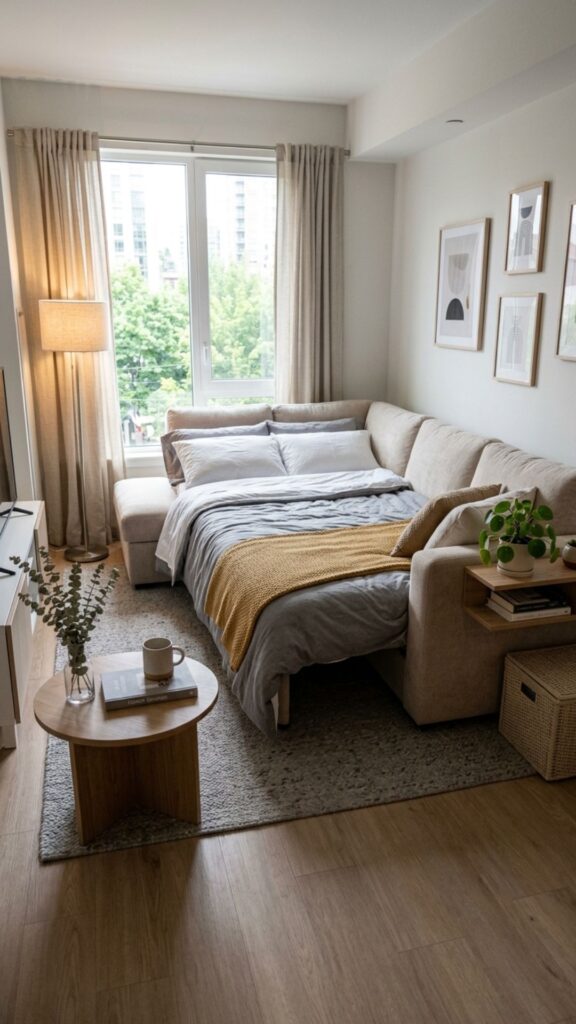
If guests crash at your place, a sleeper sectional saves you from buying a separate bed. You get everyday seating plus a bed that hides in plain sight.
Modern sleeper models are far more comfortable than the lumpy pull-outs of the past. Look for ones with memory foam mattresses and a smooth fold-out mechanism.
8. Match the Sectional Color to Your Walls
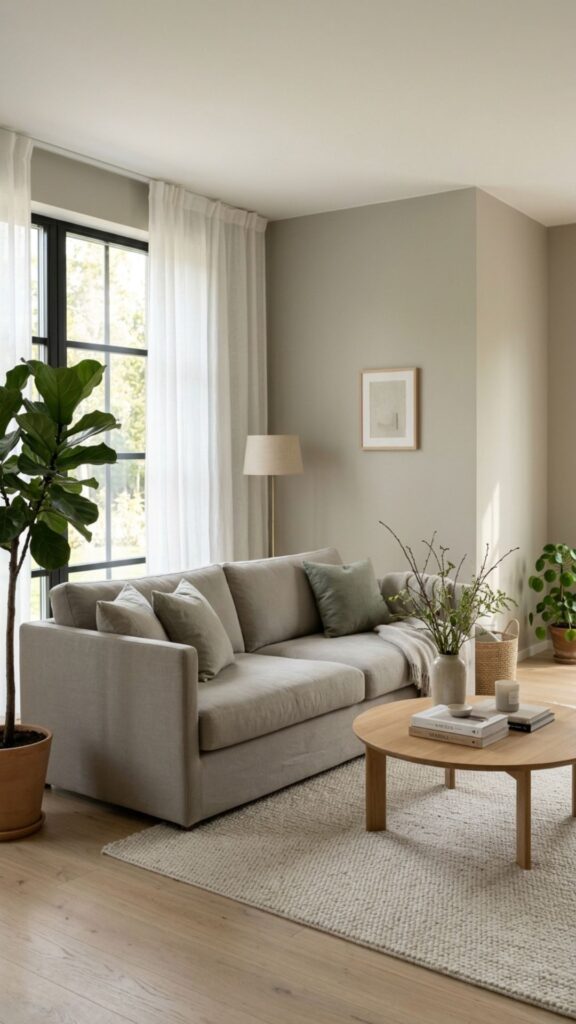
When your sofa matches the wall behind it, the piece seems to disappear into the background. This blending effect makes a small room feel more spacious and calm.
Pick an upholstery shade within a step or two of your wall color. The result feels cohesive and gives your eye fewer hard stops to trip over.
9. Layer in a Slim Storage Ottoman
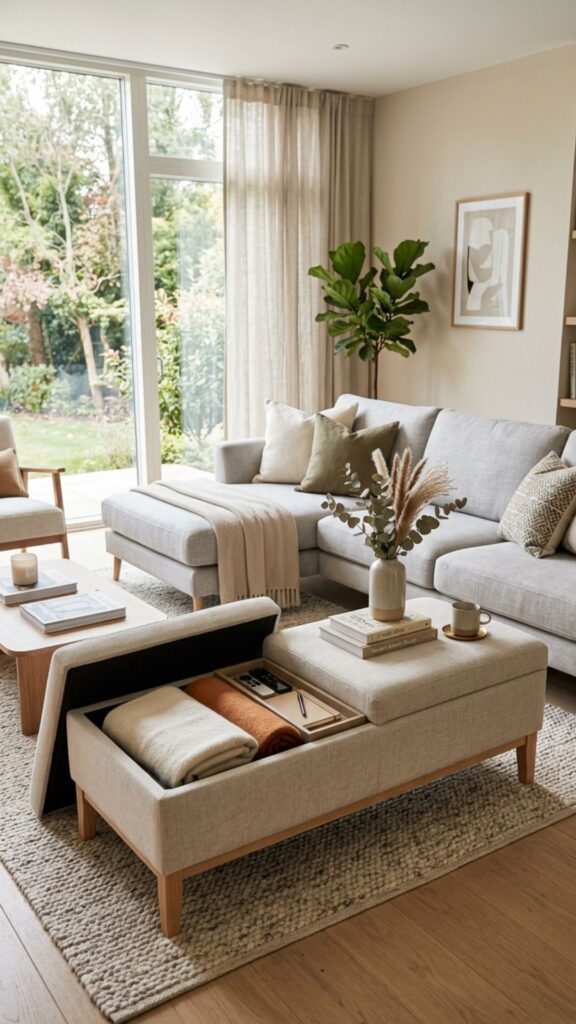
Small living rooms rarely have enough storage. A storage ottoman doubles as a coffee table, footrest, and hidden bin for blankets or remotes.
Choose one that matches the scale of your sectional. A lift-top or two smaller ottomans give you flexible surface space when friends come over.
10. Opt for a Modular Sectional You Can Reshape
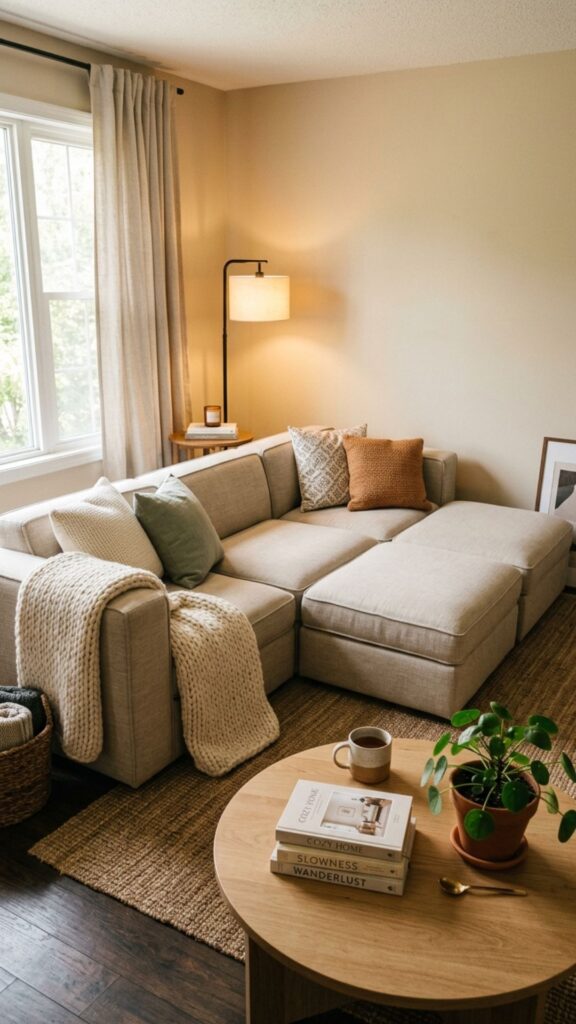
Modular sectionals break into separate pieces you can rearrange anytime. Need extra chairs for a party? Split them apart. Want a cozy corner? Push them together.
This adaptability makes modular styles perfect for people who like to refresh their setup. Many brands let you add pieces later as your needs grow.
11. Keep the Coffee Table Small and Round
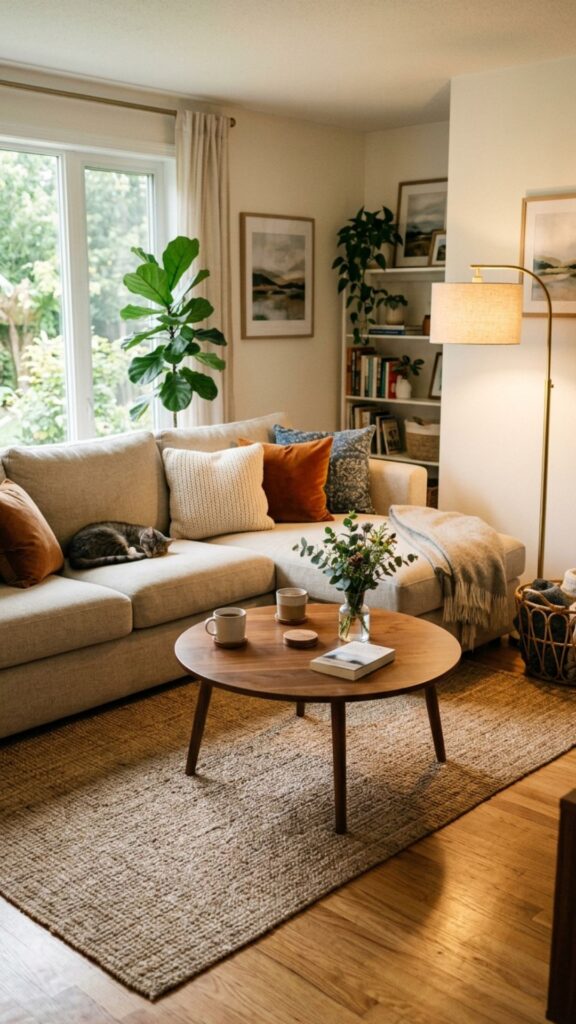
A round coffee table has no sharp corners to bump into, which helps in tight walkways. Its smaller footprint pairs nicely with a sectional’s larger form.
Nesting tables work great too, since you can tuck them away when not in use. Pull them out only when you need extra surface for drinks or snacks.
12. Use Vertical Space With Tall Decor
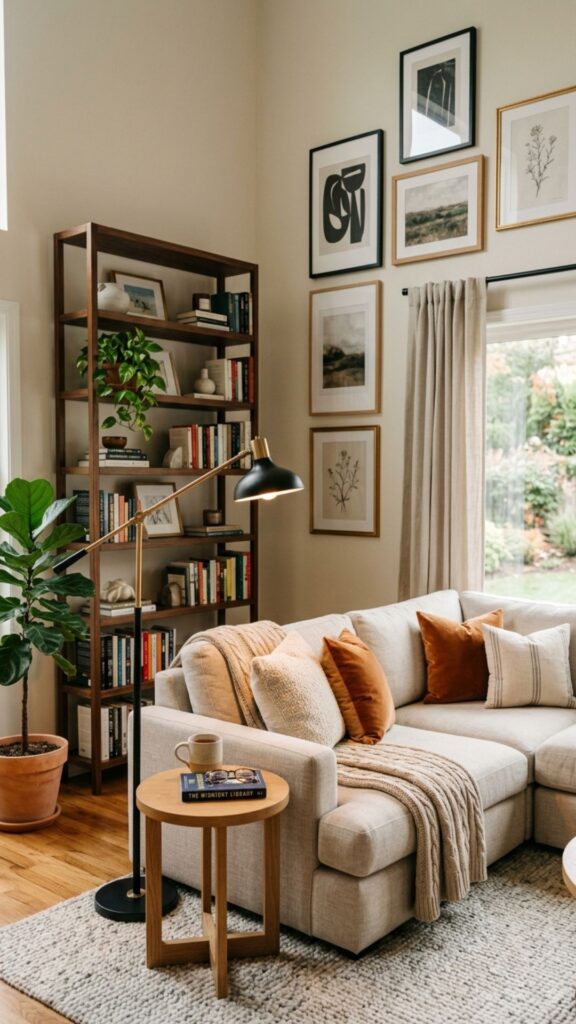
When floor space is limited, look up. Tall shelves, floor lamps, and hanging art draw the eye upward and make ceilings feel higher.
Place a slim bookshelf beside the sectional instead of a wide one. This keeps storage without eating into your precious floor area.
13. Define the Zone With a Right-Sized Rug
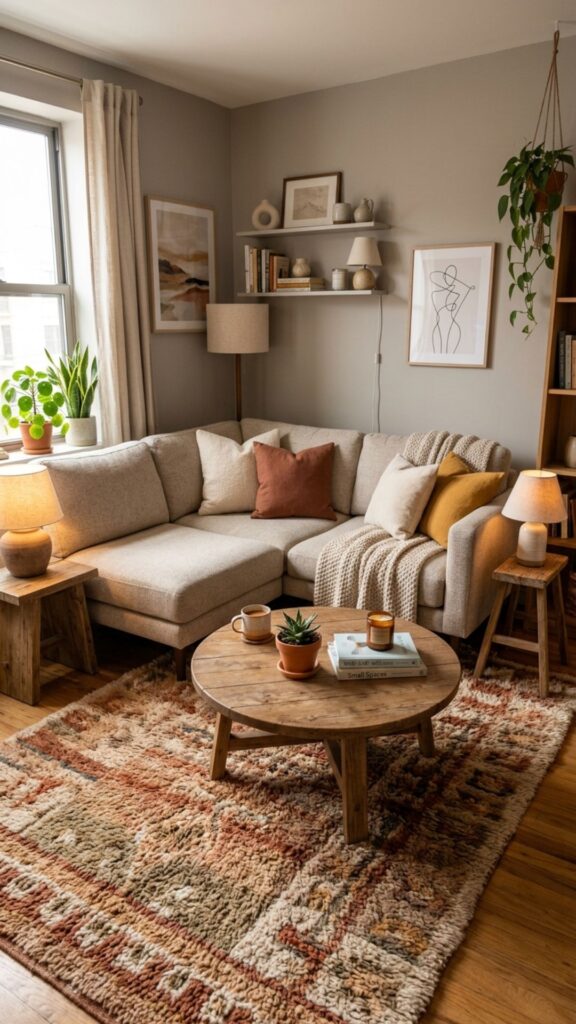
A rug that’s too small makes a room feel choppy. Choose one large enough that at least the front legs of the sectional rest on it.
This anchors the seating area and creates a defined, cozy zone. In a small room, a rug roughly 5 by 8 feet often does the trick.
14. Mount the TV to Free Up Floor Space
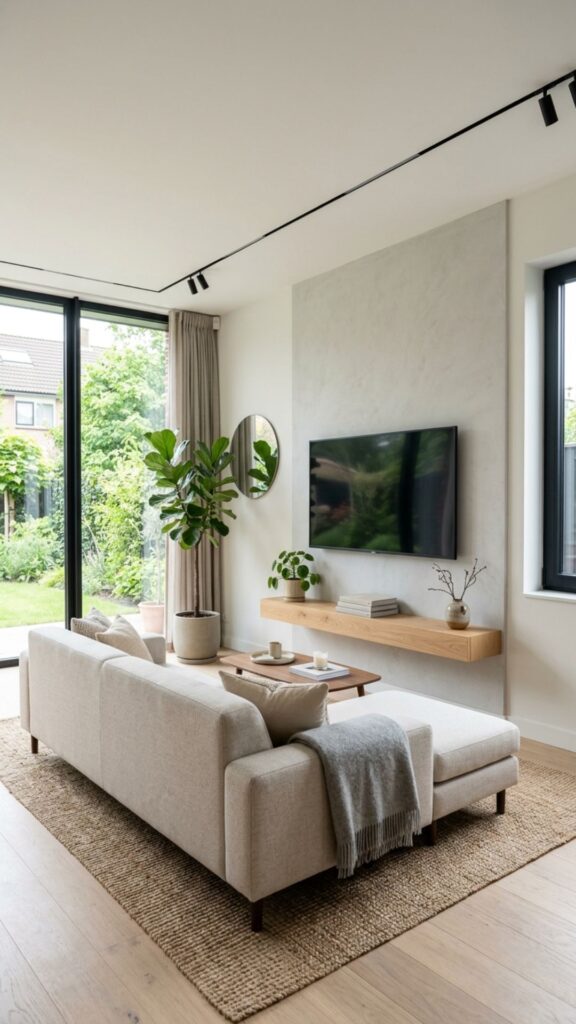
A TV stand takes up valuable square footage. Mounting your television on the wall clears the floor and keeps sightlines open across the room.
Position the screen at eye level from your seated spot on the sectional. Add a floating shelf underneath for your streaming devices and remotes.
15. Add Mirrors to Double the Perceived Space
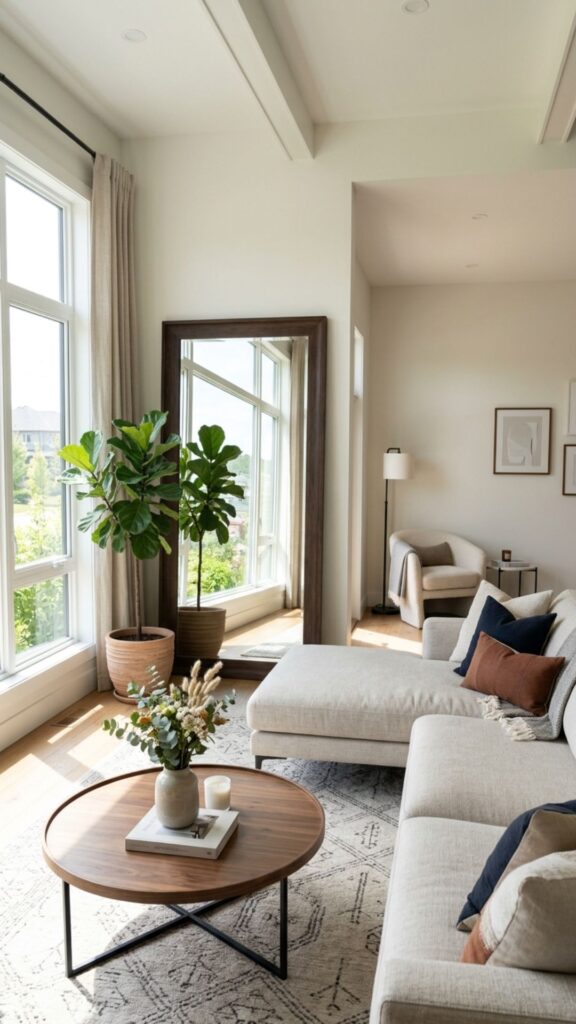
Mirrors bounce light and reflect the room, making it feel twice as big. Placed across from a window, they pull daylight deep into the space.
Hang a large mirror behind or beside your sectional. It’s one of the oldest tricks in interior design because it genuinely works.
16. Choose Low-Profile Sectionals
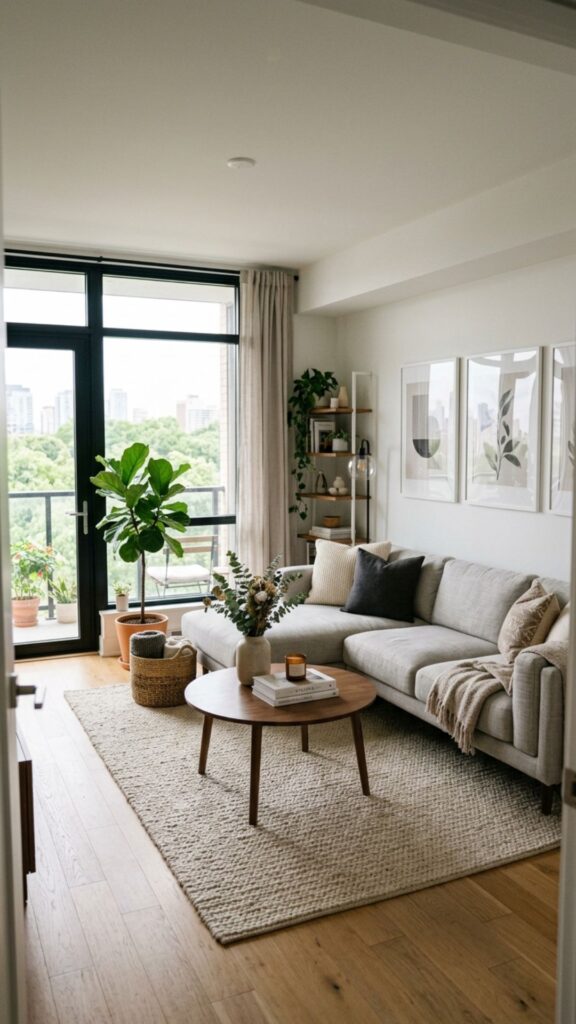
Bulky, high-backed sofas can feel like walls in a small room. A low-profile sectional keeps the eye moving and preserves the sense of openness above it.
Look for backs under 33 inches tall. These styles feel modern and airy while still offering plenty of comfort for lounging.
17. Pair the Sectional With Leggy Accent Chairs
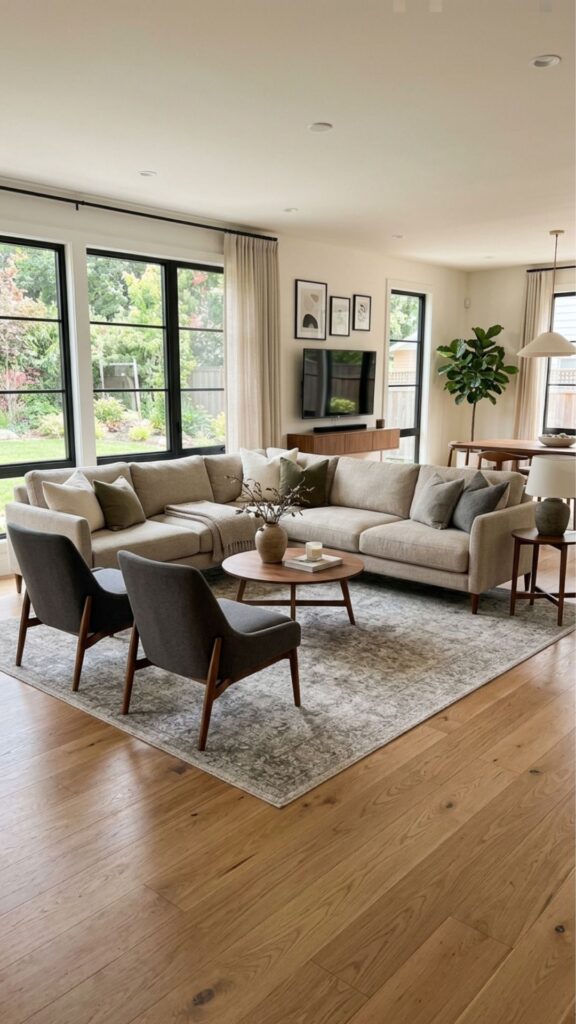
Adding one or two slim accent chairs gives you extra seating without another bulky piece. Chairs with visible legs keep the arrangement feeling light.
Choose chairs you can move around easily. They fill gaps during gatherings and slide back against a wall when you need open floor.
18. Use a Sectional to Divide an Open Studio
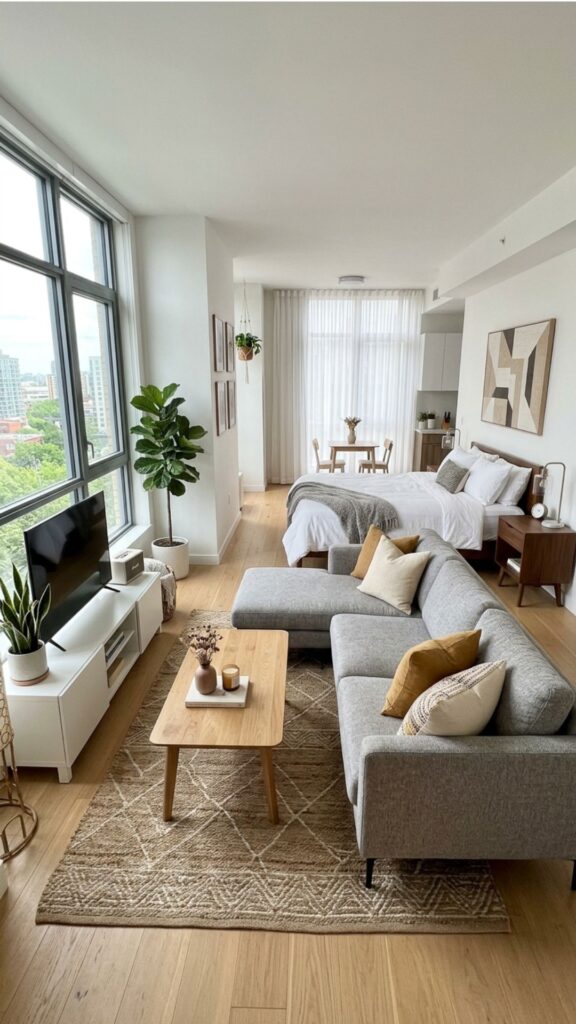
In a studio apartment, a sectional can act as a room divider. Position the back of it to separate your living zone from your sleeping or dining area.
This creates structure in an open layout without building walls. Add a narrow console behind it to reinforce the division and add function.
19. Stick to a Cohesive, Simple Color Palette
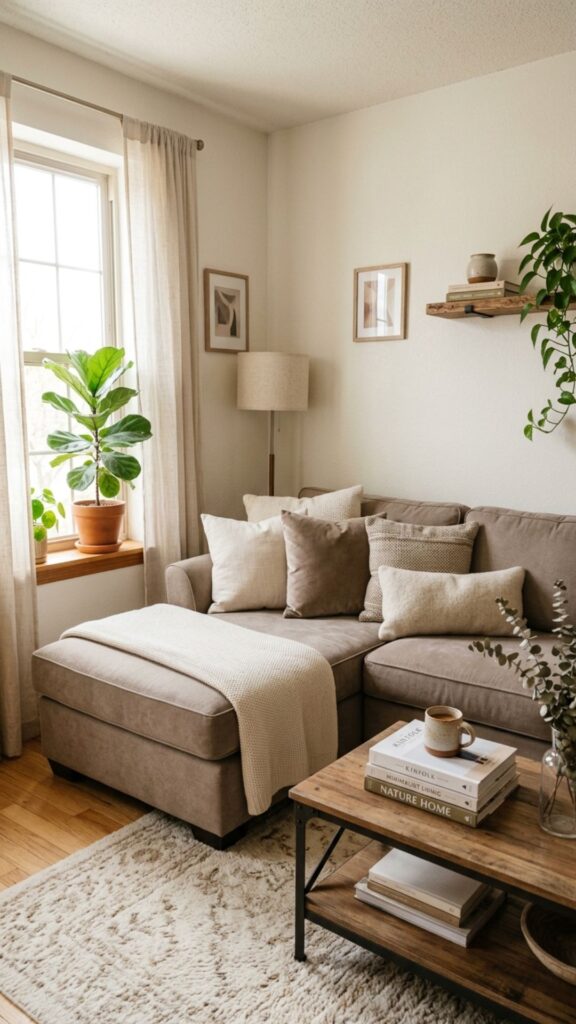
Too many colors make a small room feel busy and cluttered. A tight palette of two or three shades keeps things calm and visually spacious.
Build around your sectional’s color, then add texture through pillows and throws instead of loud patterns. Subtle variety beats visual chaos every time.
20. Let in Natural Light and Keep Windows Clear
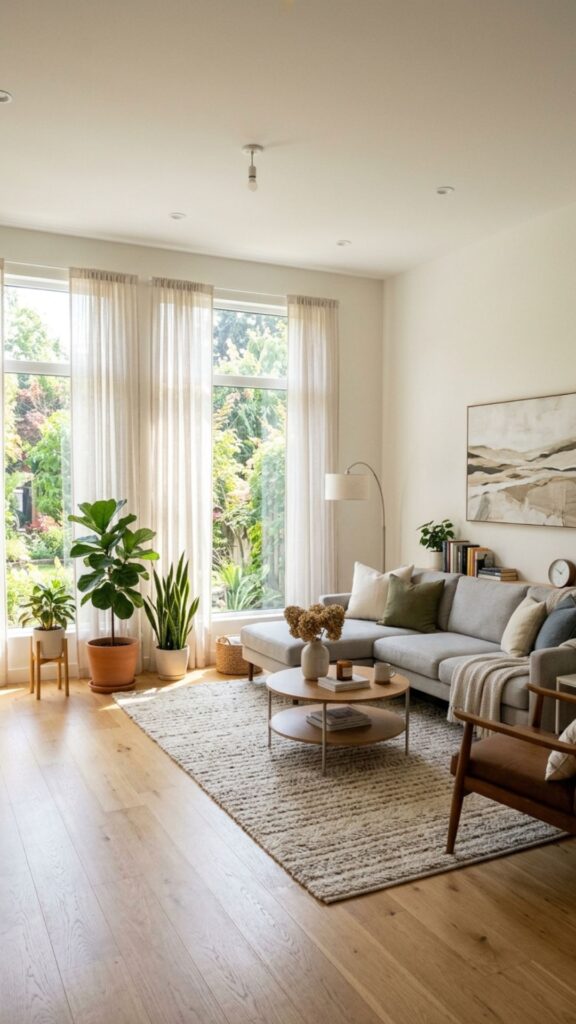
Nothing opens a small living room like natural light. Avoid blocking windows with tall furniture or heavy drapes that swallow the glow.
Use sheer curtains or simple blinds that pull fully open. Position your sectional so it doesn’t sit in front of the main light source.
Conclusion
A sectional isn’t the enemy of a small living room. With the right scale, shape, and placement, it becomes the anchor that makes your space feel bigger and more welcoming.
Focus on compact L-shapes, exposed legs, light colors, and smart storage. Free up the floor with wall-mounted TVs, mirrors, and clear windows to keep everything feeling open.
Start with one change today. Measure your room, pick the idea that fits your biggest pain point, and build from there. Your small living room has more potential than you think.
Can a sectional work in a small living room?
Yes. A compact L-shaped or modular sectional with exposed legs fits small rooms well. Keep it under 80 inches on the longest side and float it slightly off the wall to preserve openness.
What size sectional is best for a small space?
Aim for a low-profile sectional with a back under 33 inches and a footprint that leaves clear walkways of at least 30 inches. Apartment-scale models are built specifically for tight rooms.
How do I make my small living room look bigger with a sectional?
Choose light upholstery, add mirrors, mount the TV, and keep windows clear. Matching the sofa color to your walls helps the piece blend in and expands the perceived space.
Should a sectional go against the wall in a small room?
Not always. Floating it a few inches forward adds depth, and in studios, placing the back toward another zone helps divide the space naturally.
Is a sleeper sectional a good idea for small apartments?
Absolutely. A sleeper sectional gives you everyday seating plus a hidden guest bed, saving space you’d otherwise lose to a separate mattress or futon.