Small living rooms come with a funny kind of challenge. You want them to feel cozy, but not cramped. You want personality, but not clutter. And you want it all to look pulled together without spending a fortune. After years of helping friends, family, and readers rework their tight spaces, I’ve found that a neutral palette is one of the smartest starting points you can pick.
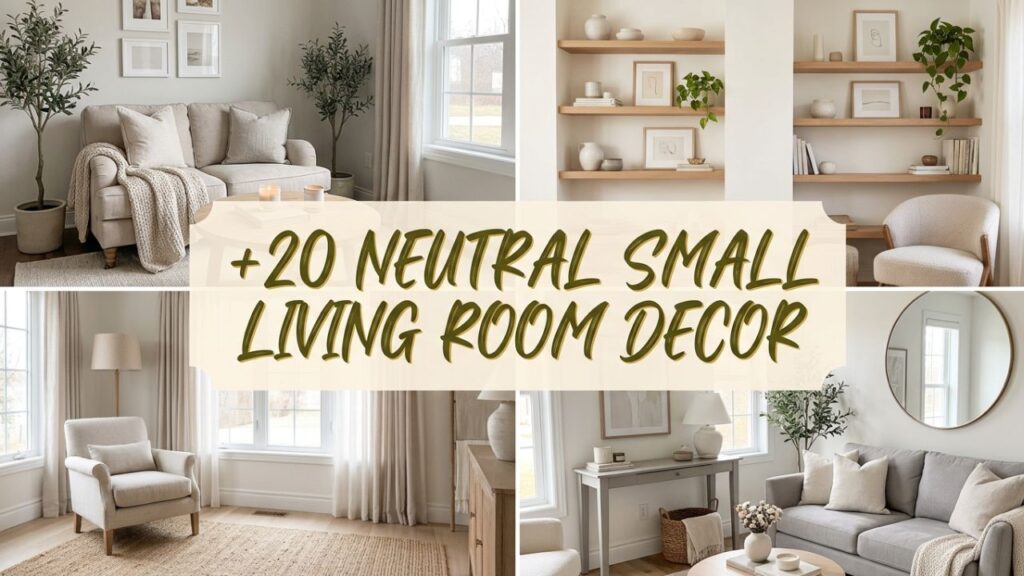
Neutral tones do something almost magical in a small room. They bounce light around, blur the lines between walls and furniture, and give your eyes a chance to rest.
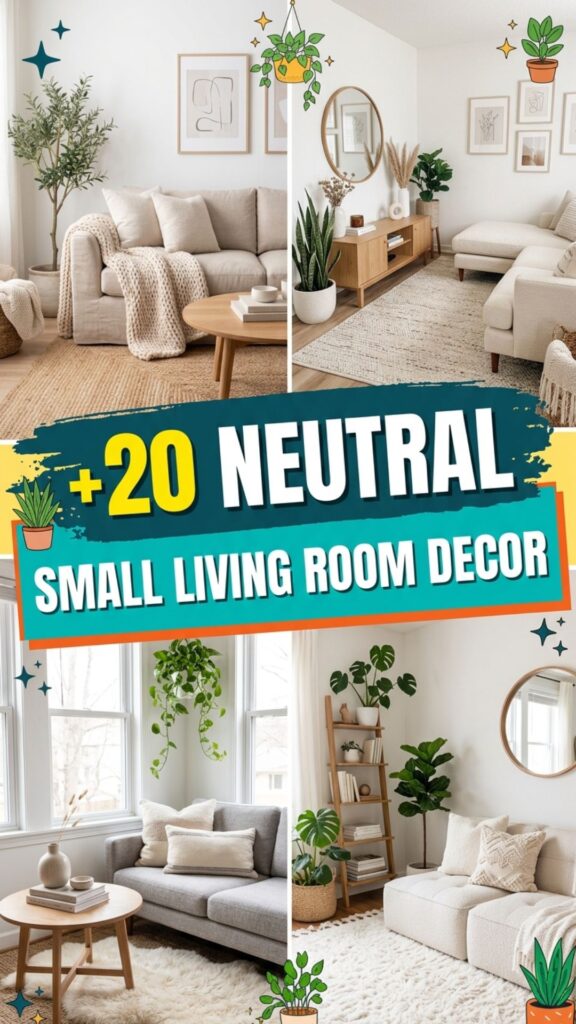
The result feels open and calm, even when the square footage says otherwise. In this guide, you’ll get 20 practical neutral small living room decor ideas you can use right away. Some cost nothing but an afternoon. Others might involve a quick shopping trip. All of them work.
1. Start With a Soft White Wall Color
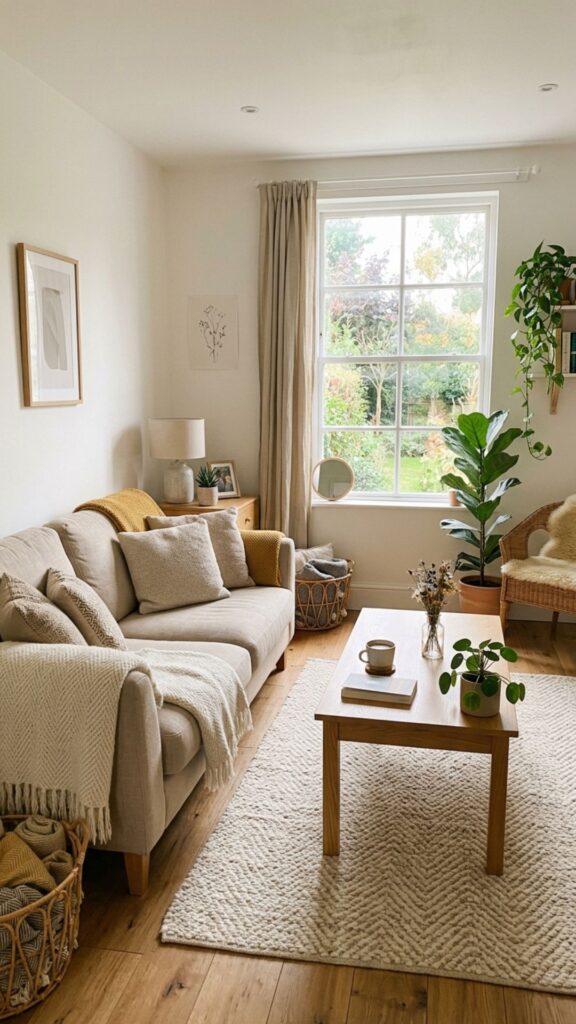
Paint is the fastest way to change how a room feels, and a soft white sets the perfect base. Skip the stark, hospital-style whites and reach for shades with a warm undertone, like a gentle cream or a barely-there greige. These tones reflect natural light without feeling cold, which instantly makes a small space breathe.
I once repainted a friend’s tiny apartment living room from a dull beige to a warm white, and she swore the room looked twice as big. Test a few sample patches on different walls first, since light shifts throughout the day. What looks perfect at noon can turn gray by evening.
2. Layer Different Shades of Beige
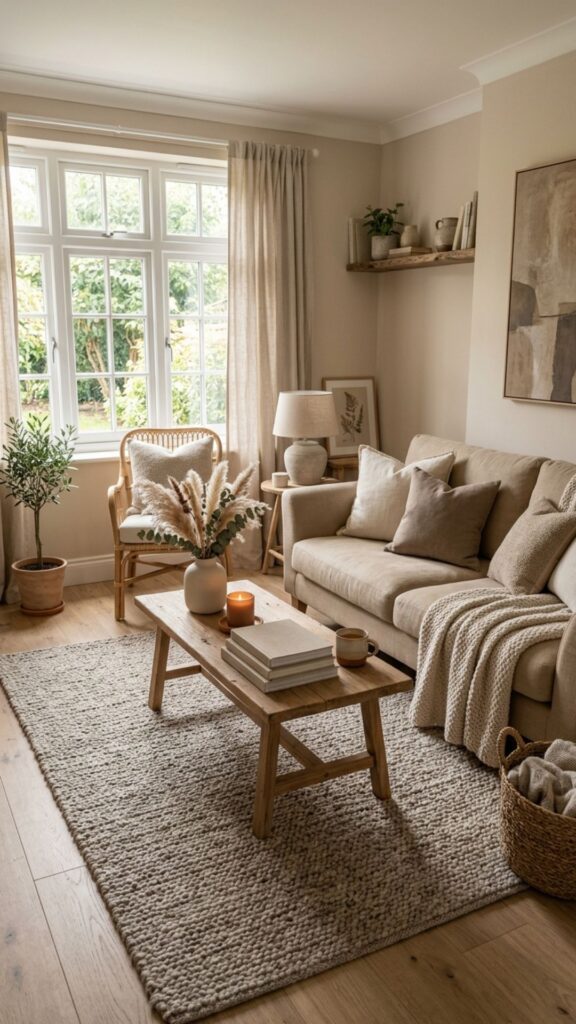
Neutral doesn’t mean flat. The trick to keeping a beige-heavy room interesting is layering several tones instead of matching everything perfectly. Think sandy tan on the sofa, oatmeal on a throw, and a deeper mushroom shade on the rug. The subtle contrast adds depth without breaking the calm feeling.
This approach works because your eye reads the variation as texture and dimension. A room where everything matches too closely can feel dull, while a thoughtful mix of warm neutrals feels rich and considered. Pull three or four shades from the same family and spread them around the space.
3. Choose a Multi-Functional Neutral Sofa
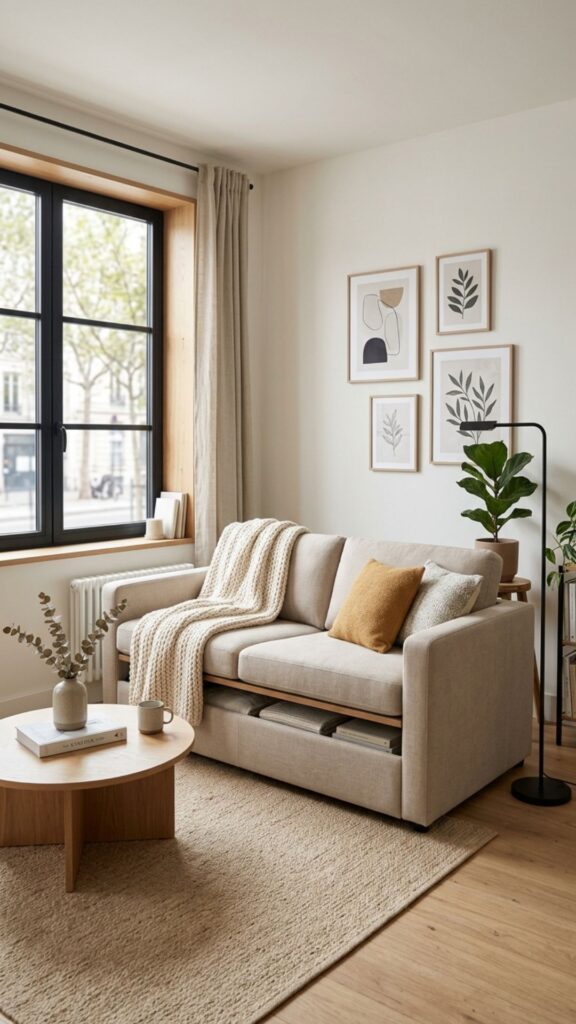
Your sofa is the anchor of a small living room, so it needs to earn its spot. A neutral slipcovered sofa in linen or cotton is a favorite of mine because you can toss the cover in the wash when life happens. Choose a design with clean lines and slim arms to save precious inches.
Look for pieces with hidden storage or a pull-out function if you host guests. A sofa in a soft dove gray or warm sand blends into the walls, which makes the room feel less crowded. Bulky, dark furniture tends to eat up visual space, so keep it light and streamlined.
4. Add Warmth With Natural Wood Tones
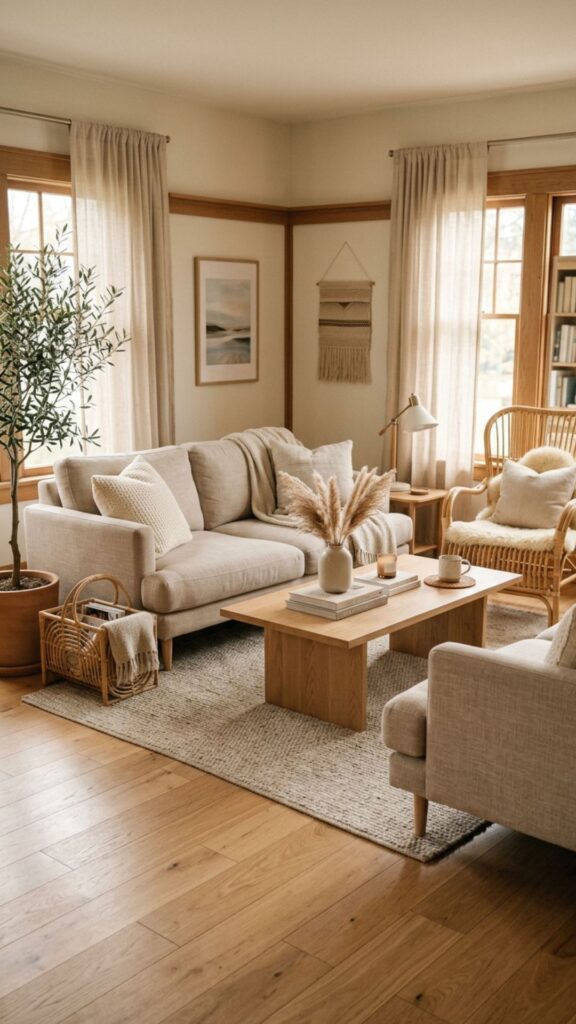
All-neutral rooms can drift toward boring if you’re not careful. Natural wood fixes that in seconds. A light oak coffee table, a walnut side table, or a rattan chair introduces organic warmth that keeps the space grounded and lived-in.
Wood also brings a subtle pattern through its grain, which counts as decor without adding clutter. I like to mix two wood tones for a collected look, maybe a pale ash shelf paired with a richer teak stool. It reads intentional rather than matchy.
5. Use Mirrors to Double the Light
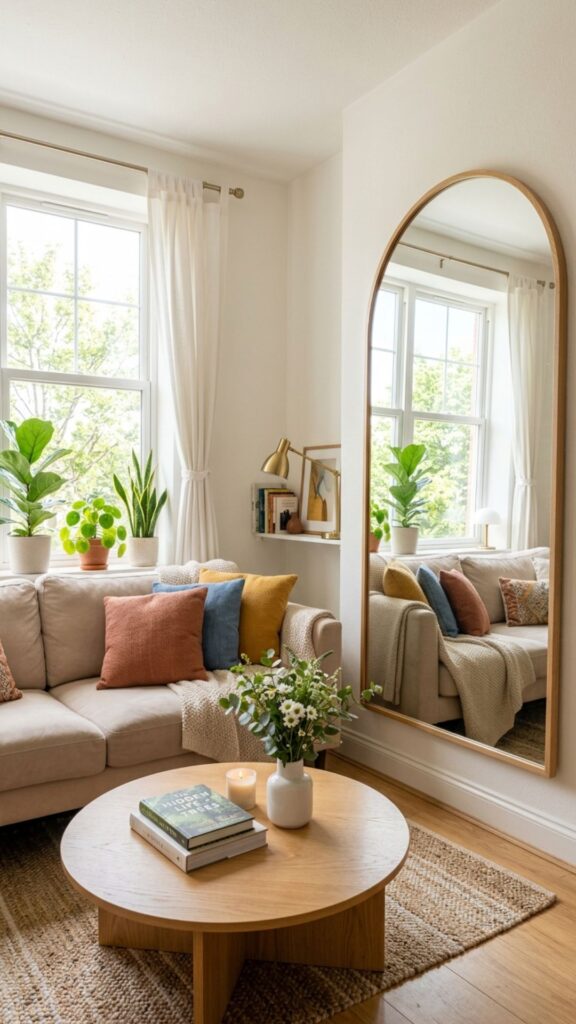
A well-placed mirror is one of the oldest tricks in the decorating book, and it still works. Hang a large mirror opposite a window and watch your small room fill with reflected daylight. It creates the illusion of a second window and instantly expands the space.
Choose a frame in a neutral finish like brushed brass, natural wood, or matte white so it blends with your palette. A leaning floor mirror also works beautifully in a corner. Just make sure it’s anchored safely to the wall if you have kids or pets around.
6. Keep Window Treatments Light and Airy
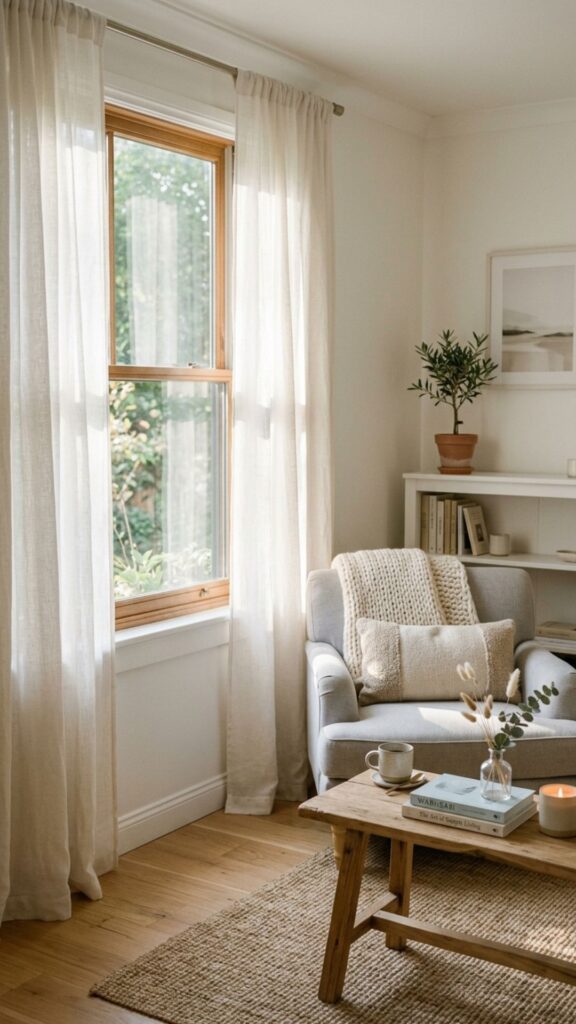
Heavy curtains in a small room can feel like a weight pressing down. Swap them for sheer or lightweight linen panels in a neutral tone. They filter sunlight softly while keeping the space feeling open and bright.
Hang your curtain rod higher and wider than the window frame itself. This simple move makes your windows look bigger and your ceilings taller. When you draw the curtains back, they should barely cover the glass so you catch every bit of natural light.
7. Bring in Texture Through Throw Pillows
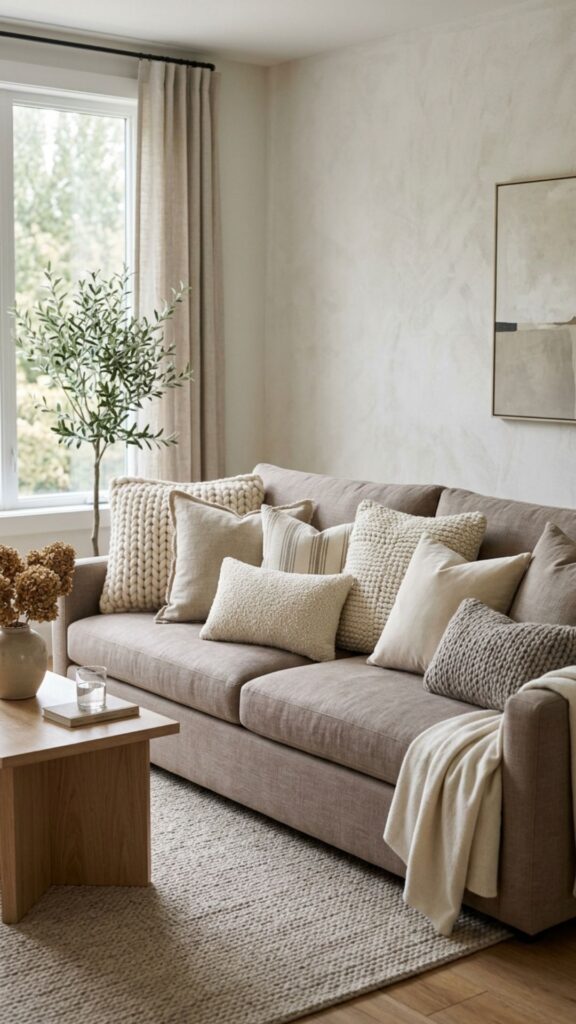
Texture is your best friend in a neutral room. Since you’re working with a quiet color story, the interest comes from how things feel. Mix chunky knit pillows with smooth cotton and a nubby boucle for a cozy, layered sofa.
Stick to two or three neutral shades so the look stays cohesive. A cream cable-knit next to a taupe linen cover reads warm and inviting. Rotate a couple of pillows seasonally to freshen the space without buying anything major.
8. Ground the Space With a Neutral Area Rug
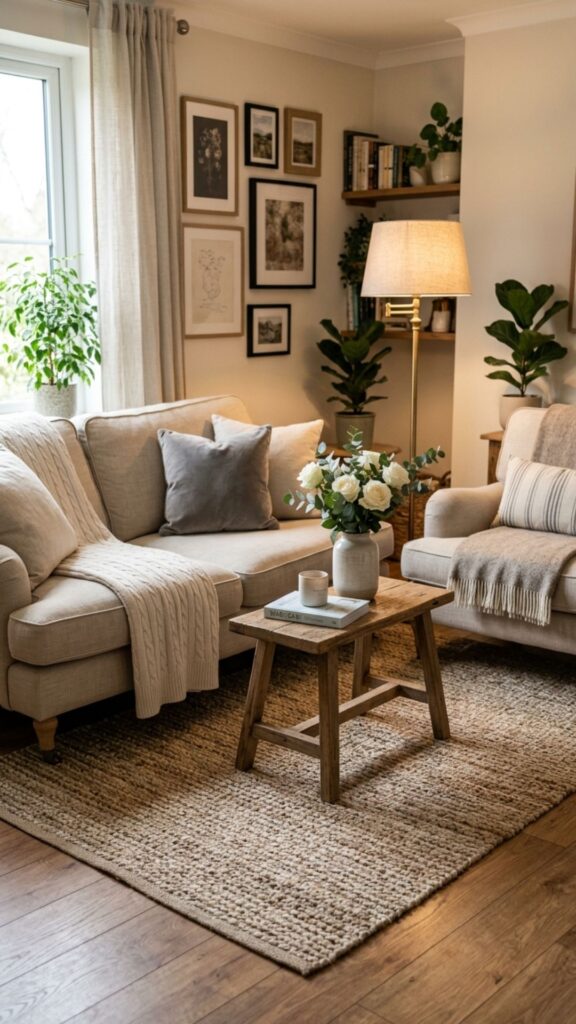
A rug defines your seating zone and softens a small room underfoot. Go for a neutral jute, wool, or flatweave in a shade that complements your floor. In tight spaces, a slightly larger rug actually helps, since a too-small one makes everything feel disconnected.
Aim to have at least the front legs of your furniture resting on the rug. This visual trick pulls the seating together and makes the area feel purposeful. A low-pile option is easier to clean and won’t overwhelm the room’s scale.
9. Install Floating Shelves for Storage
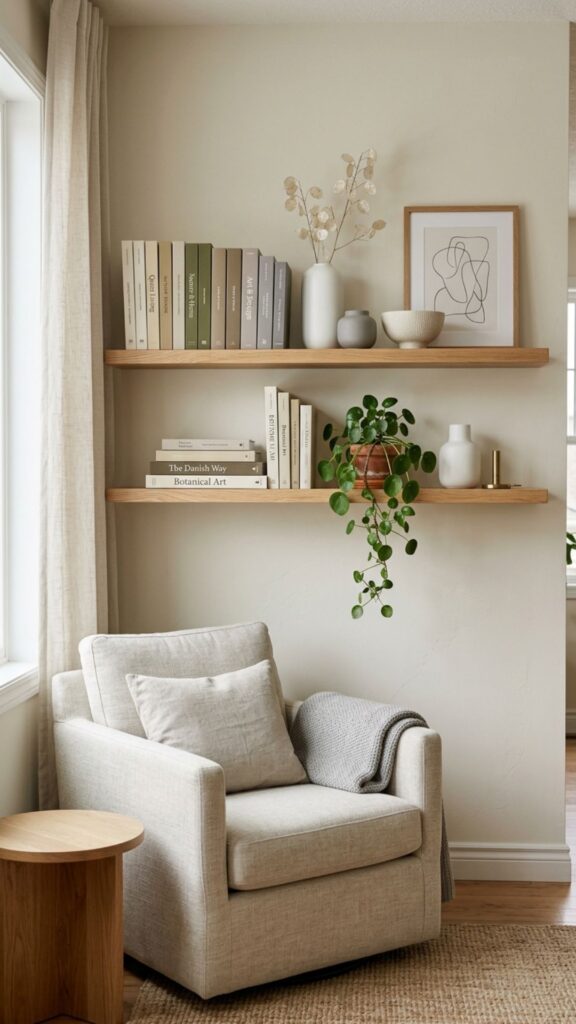
Floor space is gold in a small living room, so build up instead of out. Floating shelves in a neutral finish give you room to store and display without taking up an inch of floor. They keep clutter off surfaces while showing off a few favorite pieces.
Style them loosely with a mix of books, a small plant, and one or two ceramic objects. Leave breathing room between items so the shelves don’t look cramped. A tidy, well-spaced shelf actually makes the whole room feel more organized.
10. Pick Furniture With Exposed Legs
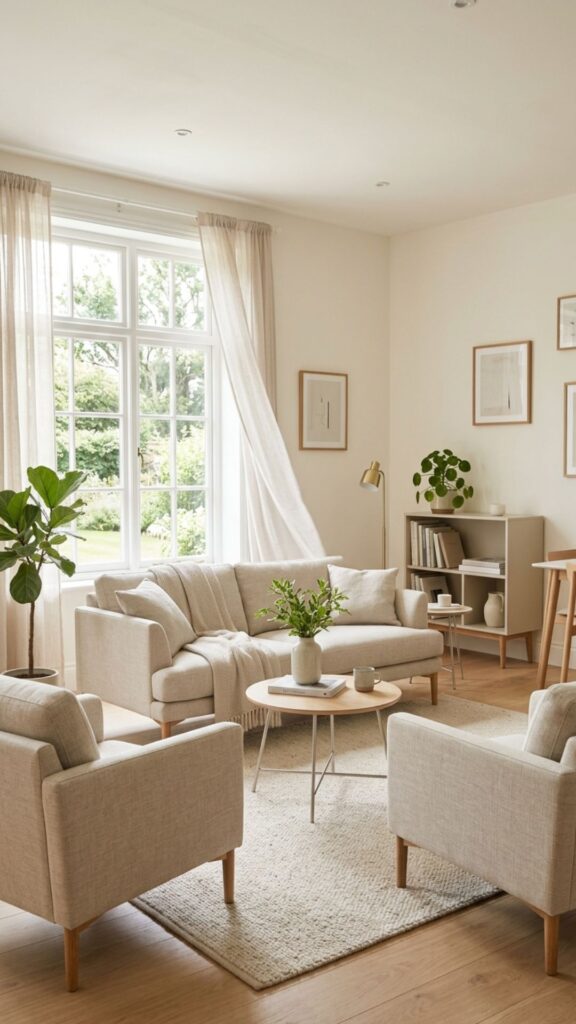
Furniture that sits directly on the floor blocks light and makes a room feel heavier. Pieces with visible legs let your eye travel underneath, which creates a sense of openness. This tiny detail has an outsized effect in small spaces.
Look for sofas, chairs, and consoles raised on slim wooden or metal legs. You’ll see more of the floor, which tricks the brain into reading the room as larger. It’s a subtle choice that pays off big.
11. Add Greenery for a Fresh Touch
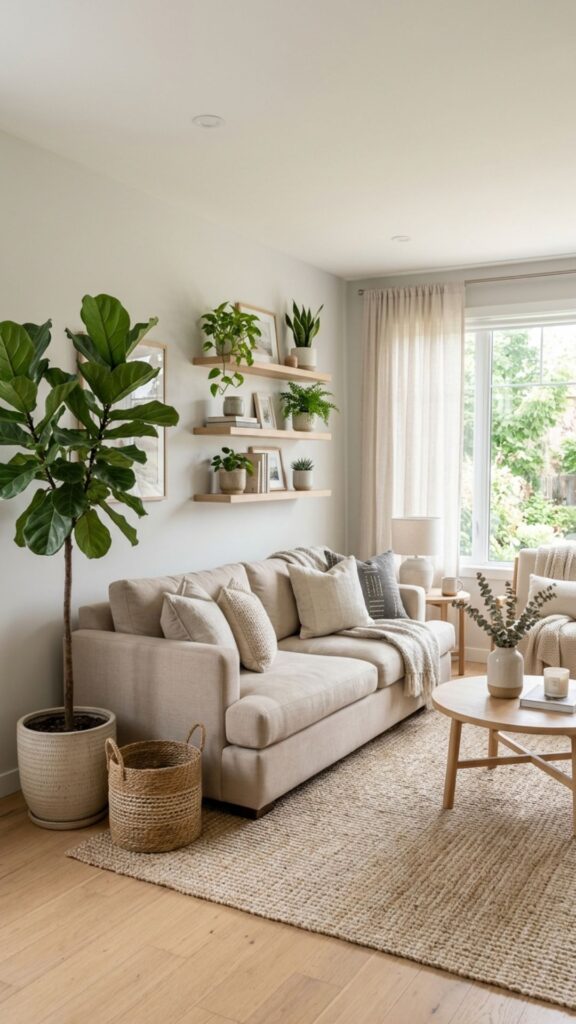
Plants breathe life into any neutral scheme. A pop of green against a soft palette feels crisp and natural without disturbing the calm mood. Even one healthy plant can shift the whole energy of a room.
Choose low-maintenance options like a snake plant, pothos, or ZZ plant if you’re not the green-thumb type. Place taller plants in empty corners to draw the eye upward. Small potted herbs on a shelf work well if floor space is tight.
12. Create a Cozy Reading Nook
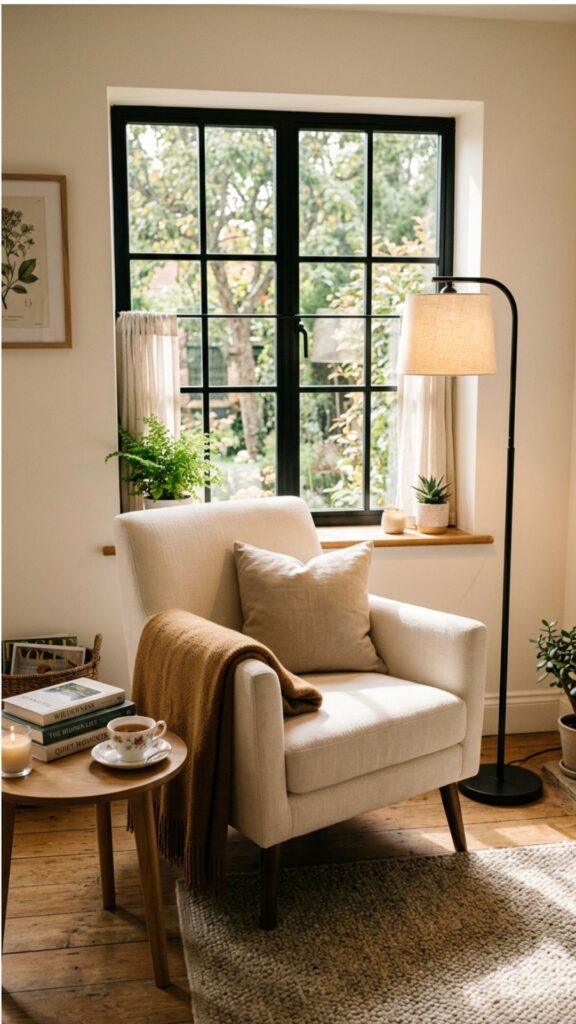
Even the smallest living room can fit a little nook. Tuck a slim armchair near a window with a floor lamp and a soft throw. It carves out a purposeful spot without demanding much room at all.
Keep the palette neutral here too, maybe a cream chair with a caramel throw. A tiny side table holds your coffee and current book. This kind of intentional corner makes a small space feel richer and more thoughtfully used.
13. Use Wall Art in Muted Tones
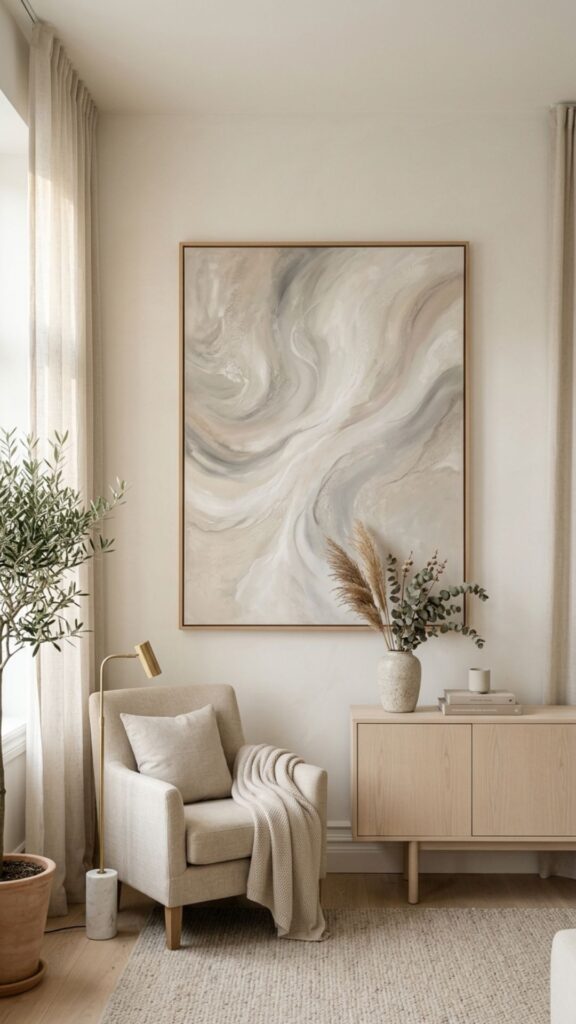
Blank walls in a small room can feel unfinished, but overly busy art competes for attention. Choose pieces in soft, muted tones that blend with your palette. Abstract prints, gentle landscapes, or simple line drawings all work beautifully.
A single large piece often looks better than a scattered gallery wall in tight quarters. It keeps things clean and gives the eye one clear focal point. Frame your art in slim neutral frames to keep the look light.
14. Choose a Neutral Ottoman That Works Overtime
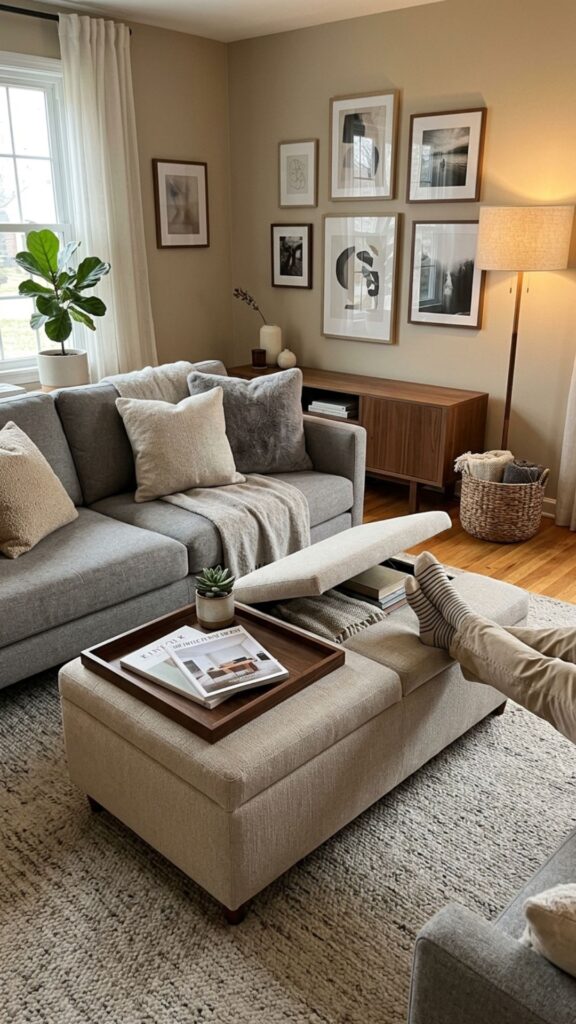
An ottoman is a small-space hero. It serves as a footrest, extra seating, and a surface for a tray of drinks. Pick one in a neutral fabric that ties into your sofa and rug.
Better yet, choose a storage ottoman with a lifting lid. You can stash blankets, remotes, or magazines inside and keep surfaces clear. In a small room, every piece should pull double duty like this.
15. Maximize Corners With Slim Storage
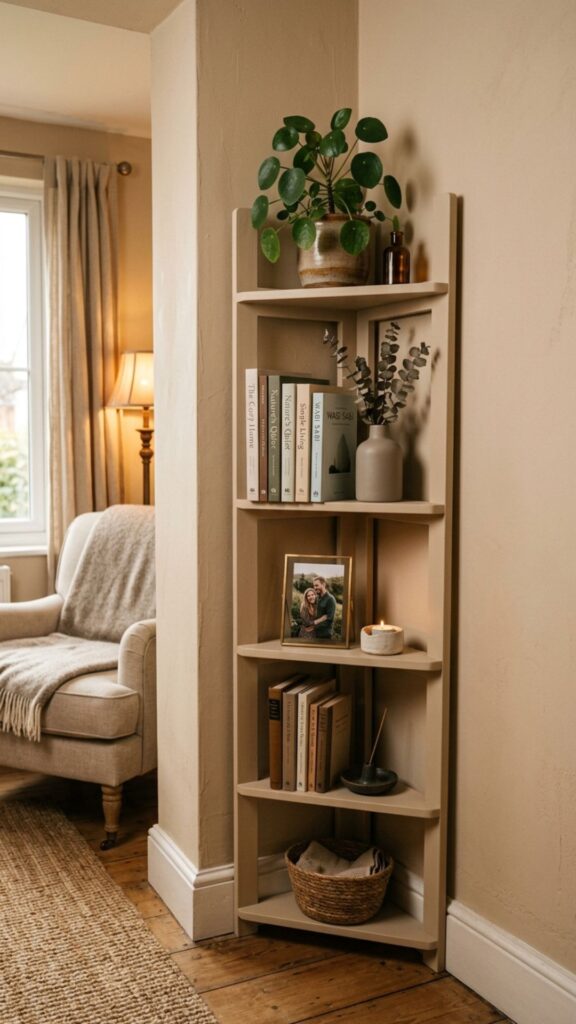
Corners are often wasted space, but they hold real potential. A slim corner shelf or narrow cabinet adds storage without cutting into your walking paths. Keep the finish neutral so it blends rather than dominates.
Use these spots for the things you reach for daily, or to display a plant and a couple of books. Rounded or angled corner pieces feel softer and help traffic flow. It’s a smart way to gain function in a tight footprint.
16. Keep the Color Palette to Three Tones
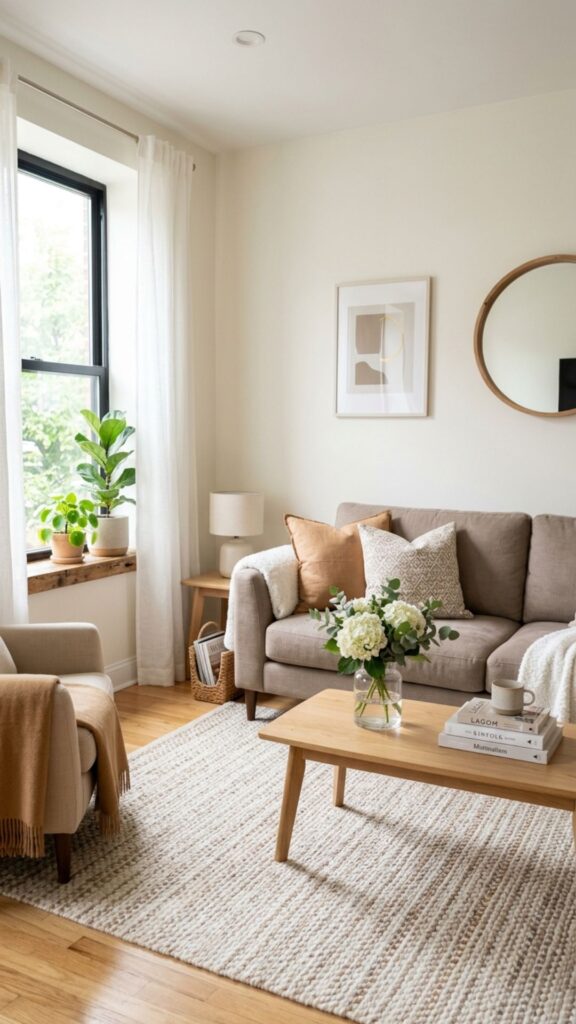
Restraint is powerful in a small room. Limit yourself to three main neutral tones and repeat them throughout the space. This creates a seamless, calming flow that makes the room feel bigger.
For example, pair warm white walls with taupe furniture and touches of soft caramel. When colors repeat, your eye moves smoothly around the room instead of stopping at every contrast. The effect is soothing and cohesive.
17. Add a Statement Light Fixture
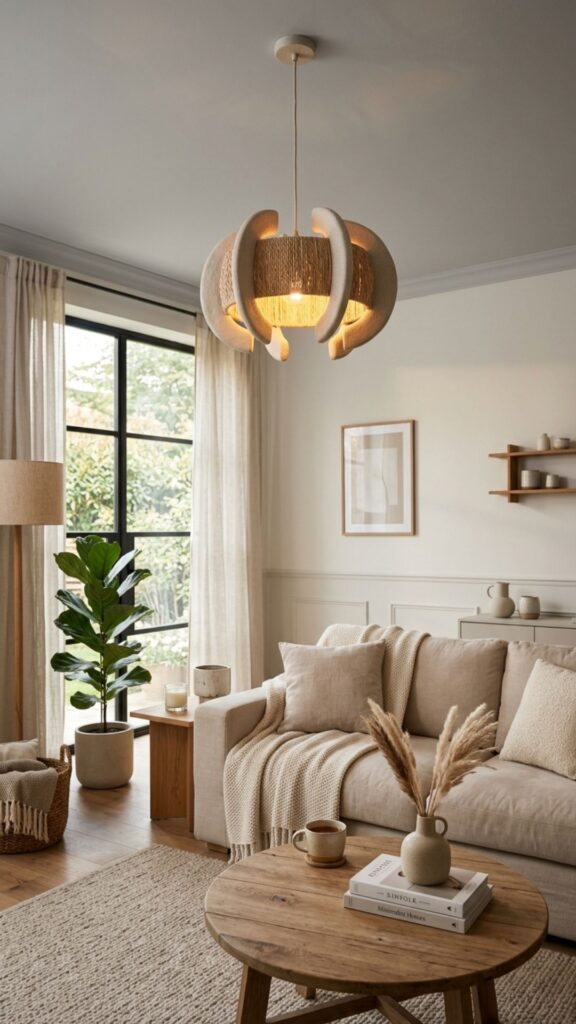
Lighting sets the whole mood, and a beautiful fixture doubles as decor. A neutral pendant or a sculptural floor lamp adds personality without cluttering surfaces. In small rooms, this draws the eye up and adds a designer touch.
Warm-toned bulbs make a neutral space feel cozy rather than sterile. Layer your lighting with a mix of overhead, table, and floor sources. Soft, layered light always beats a single harsh ceiling bulb.
18. Declutter and Embrace Negative Space
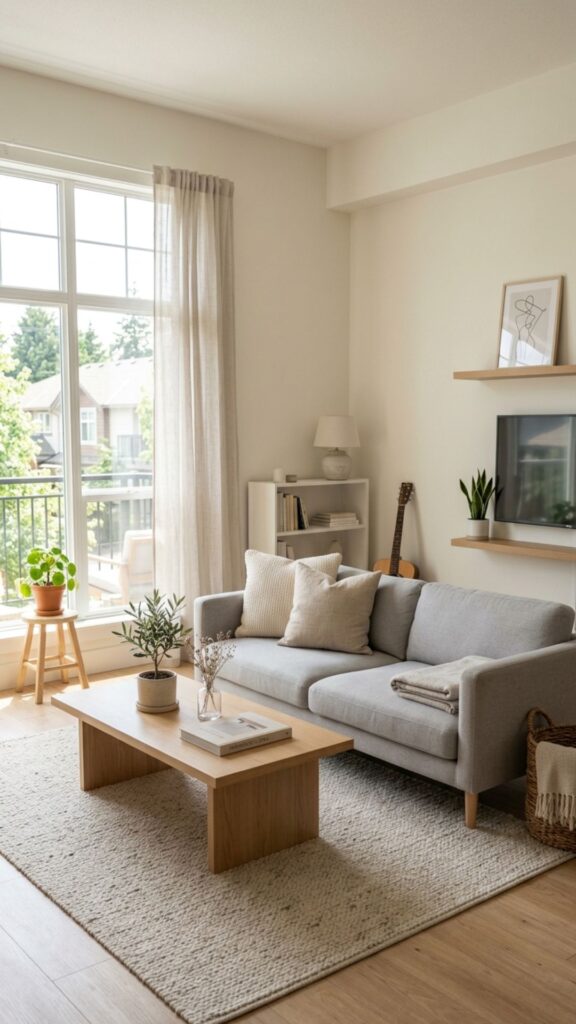
The most underrated decor idea costs nothing. Empty space is a design feature, not a flaw. In a neutral small living room, breathing room lets each piece shine and keeps the mood calm.
Be honest about what you actually use and love. Clear the surfaces, edit the shelves, and resist the urge to fill every corner. A tidy, spacious room always feels more welcoming than a crowded one.
19. Introduce Subtle Pattern Through Textiles
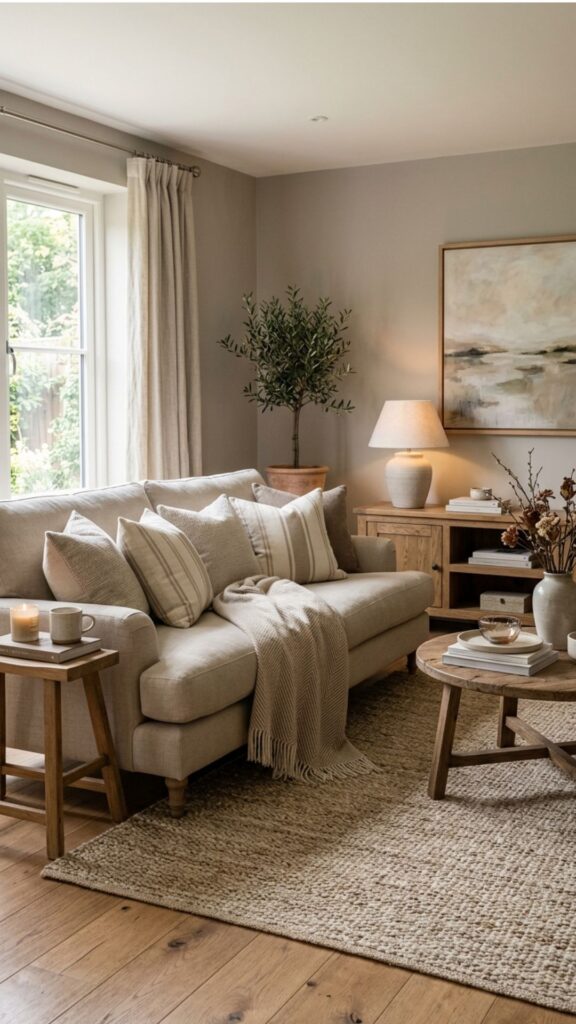
Neutral doesn’t have to mean pattern-free. A soft herringbone throw, a subtle striped pillow, or a woven rug adds visual interest while staying within your calm palette. The key is keeping patterns low-contrast.
Tone-on-tone patterns work best here, like cream stripes on a beige background. They add just enough movement to keep the room from feeling flat. Stick to one or two patterns so the space stays serene.
20. Style With a Few Personal Touches
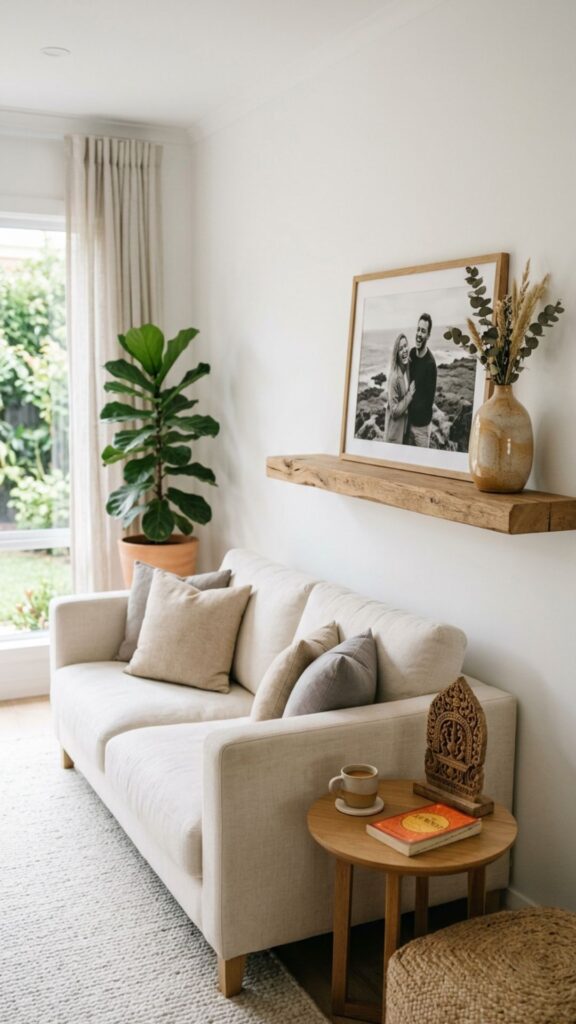
A neutral room should still feel like yours. A handful of personal items, a framed photo, a travel souvenir, a favorite ceramic mug, gives the space soul. Just keep the styling light and meaningful.
Choose objects that fit your palette and mean something to you. Three or four thoughtful pieces beat a dozen random ones. This final layer is what turns a nicely decorated room into a genuine home.
Bringing It All Together
Decorating a small living room in neutral tones is all about balance. You’re mixing light colors, natural textures, and smart, multi-functional furniture to make a tight space feel open and warm. The ideas above have worked in countless real homes, including my own, and they don’t require a big budget or a design degree.
Start with one or two changes this week, maybe a fresh coat of soft white paint or a well-placed mirror. Notice how the room shifts, then build from there. Ready to transform your space? Pick your favorite idea from this list and try it today. Your calm, spacious living room is closer than you think.
What colors make a small living room look bigger?
Soft, light neutrals like warm white, cream, beige, and greige make a small living room look bigger. These shades reflect natural light and blur the lines between walls and furniture, creating an open, airy feeling.
How do I add personality to a neutral living room?
Add personality through texture, natural wood, greenery, and a few meaningful personal items. Mixing different fabrics like linen, knit, and boucle keeps a neutral room interesting without adding clutter or bold color.
Should furniture match the wall color in a small room?
Yes, keeping furniture close to your wall color helps a small room feel larger. When furniture blends with the walls, the space reads as more open because there are fewer visual breaks for the eye to catch.
What is the best rug size for a small living room?
Choose a rug large enough that at least the front legs of your furniture rest on it. This connects the seating area and makes the space feel intentional and larger rather than choppy.
How many colors should I use in a neutral living room?
Stick to three main neutral tones and repeat them throughout the space. Limiting your palette creates a calm, cohesive flow that makes a small living room feel bigger and more restful.