A small living room doesn’t have to feel cramped or chaotic. In fact, tight spaces and minimalist style are a perfect match. When you strip away the clutter and focus on what matters, even the tiniest room can feel open, calm, and surprisingly roomy.
I’ve spent years helping people rethink their spaces, and the same truth comes up again and again: less really is more.
Below, you’ll find 20 practical small living room decor ideas rooted in minimalist principles. Each one is easy to try, budget-friendly, and designed to make your space breathe. Let’s get into it.
1. Start With a Neutral Color Palette
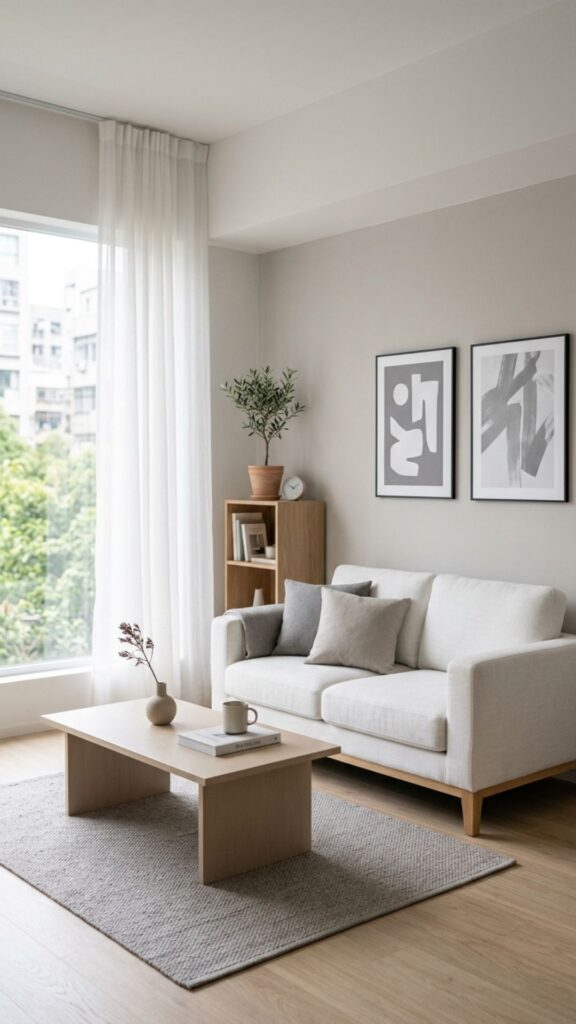
Neutral colors are the backbone of minimalist design. Whites, soft grays, warm beiges, and gentle taupes reflect light and make walls seem to recede. That visual trick instantly makes a small room feel larger than its square footage suggests.
Stick to two or three tones and layer them across your walls, furniture, and textiles. If you crave a little personality, add warmth through natural materials like wood or linen rather than bold paint. The result is a cohesive, calming space that never feels busy.
2. Choose Multi-Functional Furniture
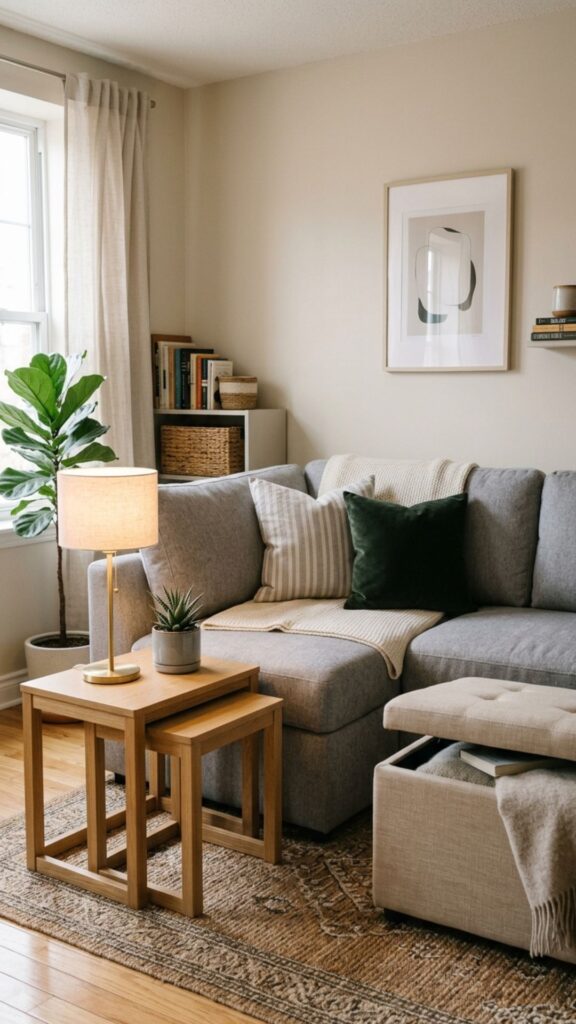
Every piece in a small room should earn its place. A storage ottoman doubles as seating and a coffee table. A sofa bed handles guests without a spare room. These clever choices cut down on clutter while keeping your space flexible.
Look for furniture that hides storage inside or folds away when not in use. Nesting tables, lift-top coffee tables, and benches with built-in bins are all great options. The fewer standalone items you need, the more open your floor stays.
3. Keep Furniture Low and Streamlined
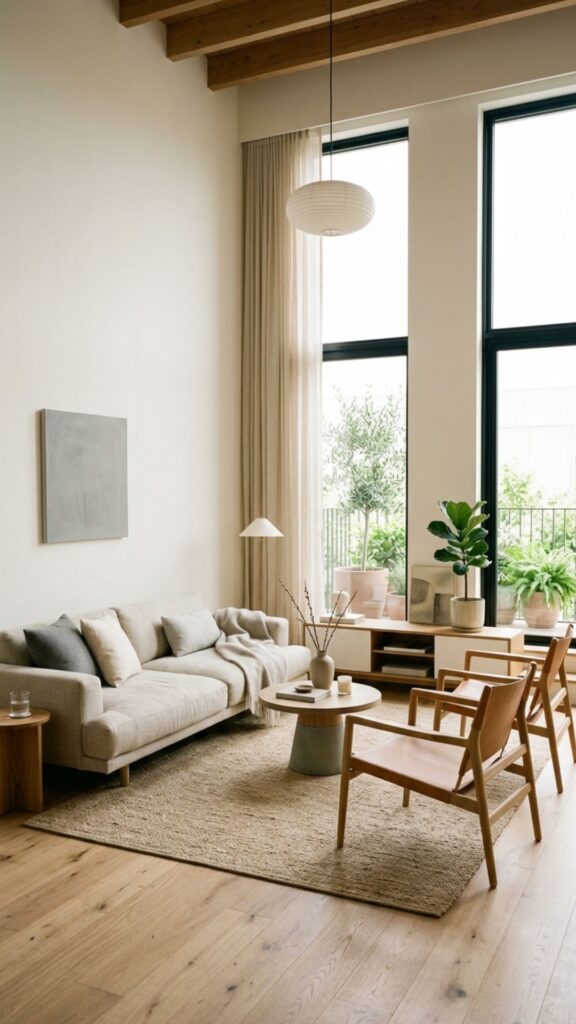
Low-profile furniture creates the illusion of higher ceilings and more air above your head. A sofa with slim arms and short legs takes up less visual weight than a bulky, overstuffed one. That openness is exactly what small spaces need.
Choose clean lines over ornate details. Pieces raised slightly off the floor on legs let light pass underneath, which makes the room feel less crowded. This small change has a big impact on how spacious a room reads.
4. Use Mirrors to Expand the Space
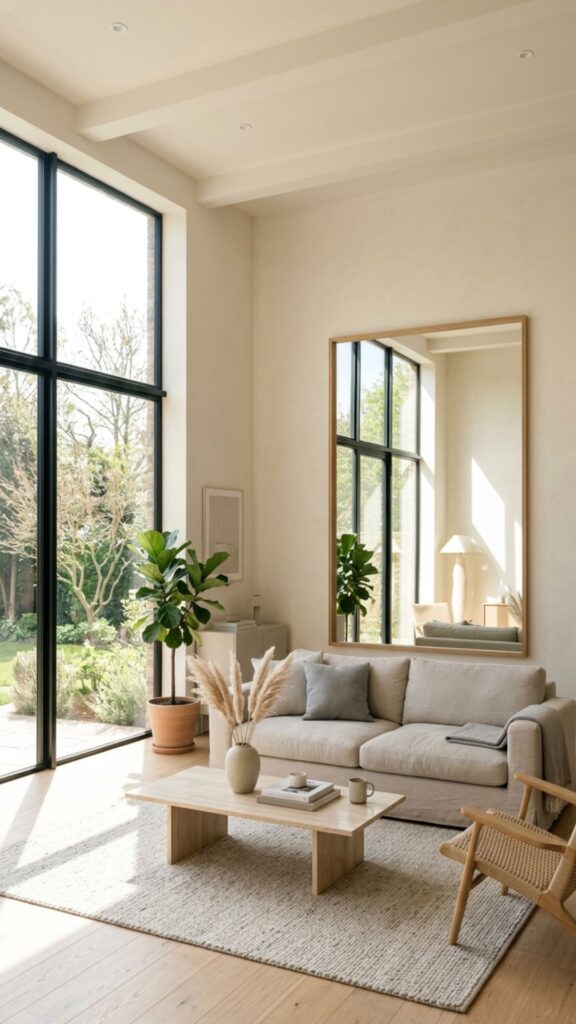
Mirrors are a minimalist’s secret weapon. A large mirror reflects light and view, effectively doubling the sense of space in a snug room. Place one across from a window and watch the room brighten instantly.
For the cleanest look, choose a frameless mirror or one with a thin, simple border. Lean a full-length mirror against the wall for a relaxed vibe, or hang a round mirror as a soft focal point. Either way, you gain depth without adding a single bulky object.
5. Let Natural Light Lead
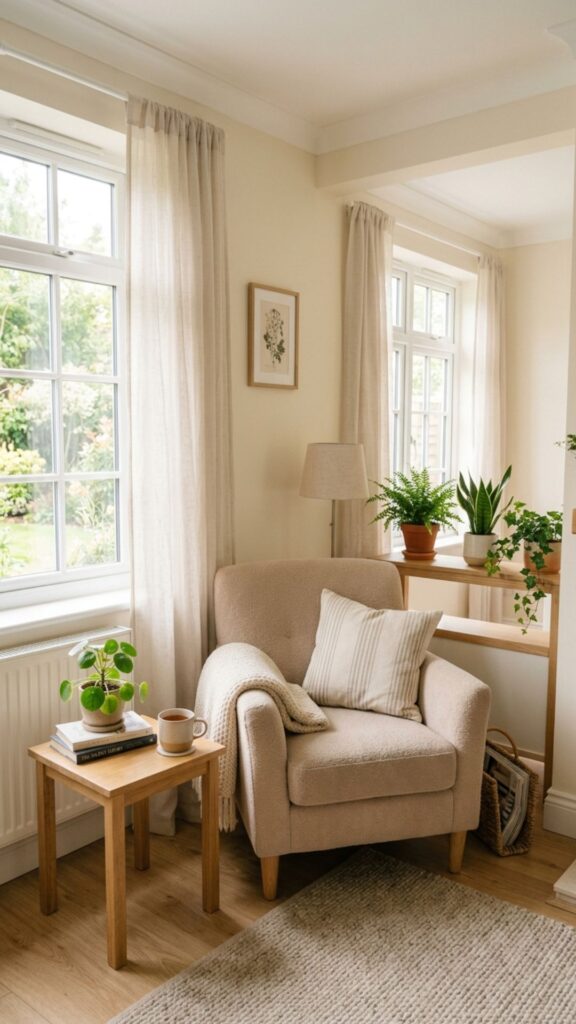
Nothing opens a room quite like sunlight. Keep window treatments light and airy, or skip heavy drapes altogether. Sheer curtains or simple roller blinds let daylight flood in while still offering privacy when you need it.
Avoid blocking windows with tall furniture. Instead, arrange your seating so the view and the light stay clear. A bright room feels bigger, cleaner, and more welcoming, which is the whole point of minimalist living.
6. Embrace Negative Space
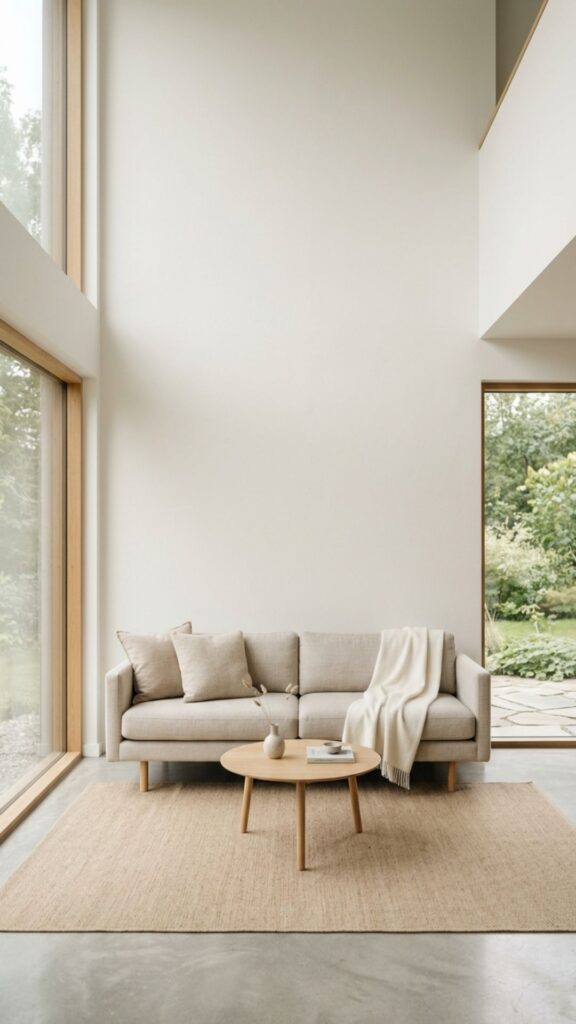
Negative space is the empty area around and between your things. It’s not wasted space; it’s what gives your eyes room to rest. In minimalist design, those gaps are just as important as the furniture itself.
Resist the urge to fill every corner. Leave breathing room around your sofa, keep shelves half-empty, and let a blank wall stay blank. This restraint is what separates a minimalist room from a merely tidy one.
7. Add Hidden and Vertical Storage
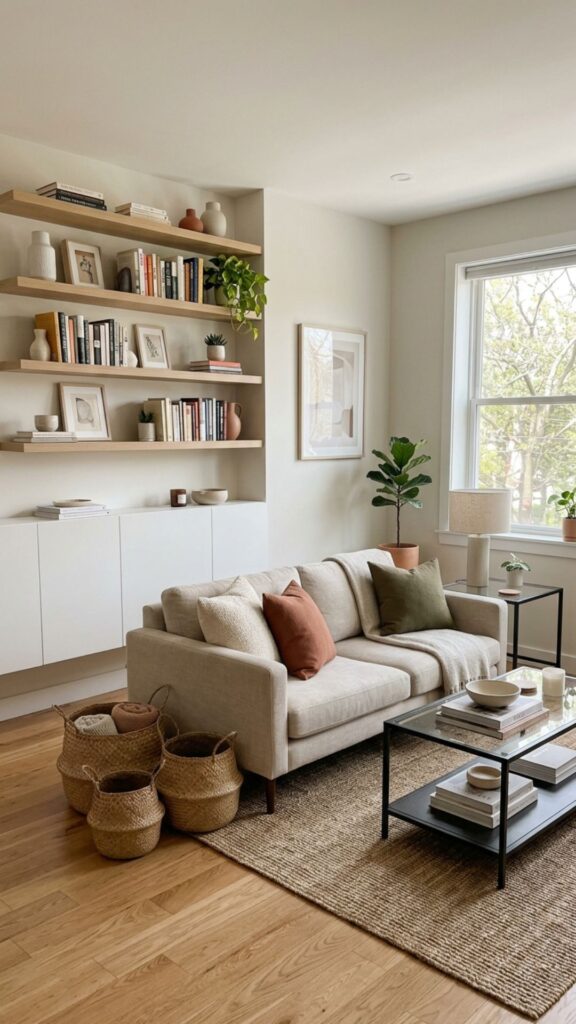
Clutter is the enemy of any small space. Hidden storage keeps your daily mess out of sight, while vertical storage uses the walls you already have. Together, they free up precious floor space.
Floating shelves, wall-mounted cabinets, and tall narrow bookcases draw the eye upward and make ceilings feel higher. Baskets and boxes tucked under tables or behind sofas hide the rest. Aim to keep surfaces clear so the room always looks composed.
8. Pick One Statement Piece
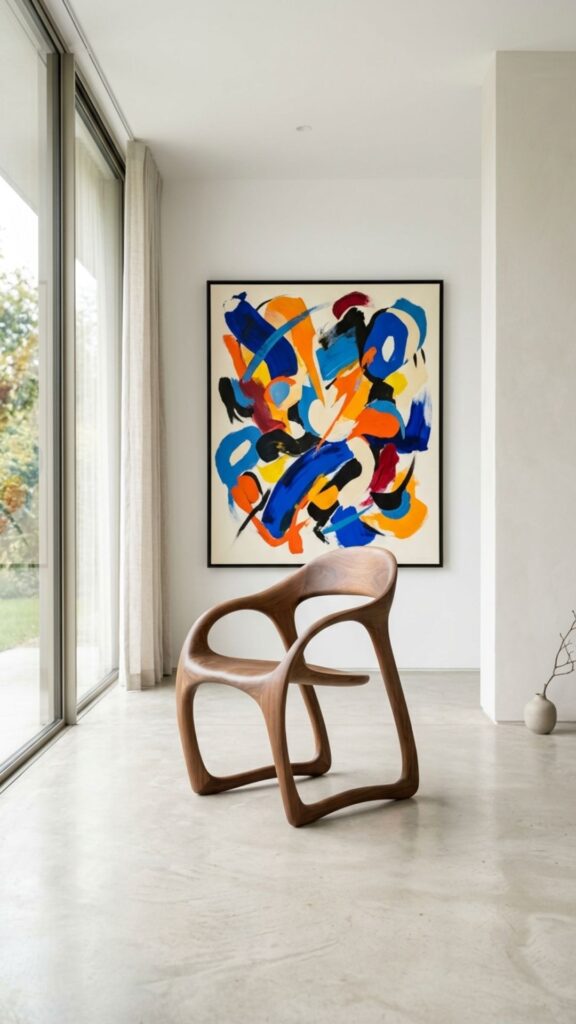
Minimalism doesn’t mean boring. A single standout item, like a sculptural chair, a bold piece of art, or a striking light fixture, gives the room character without cluttering it. One focal point is enough.
Let that piece breathe by keeping everything around it simple. When your eye has one clear place to land, the whole room feels intentional and calm. This approach adds interest while honoring your small footprint.
9. Go Green With a Few Plants
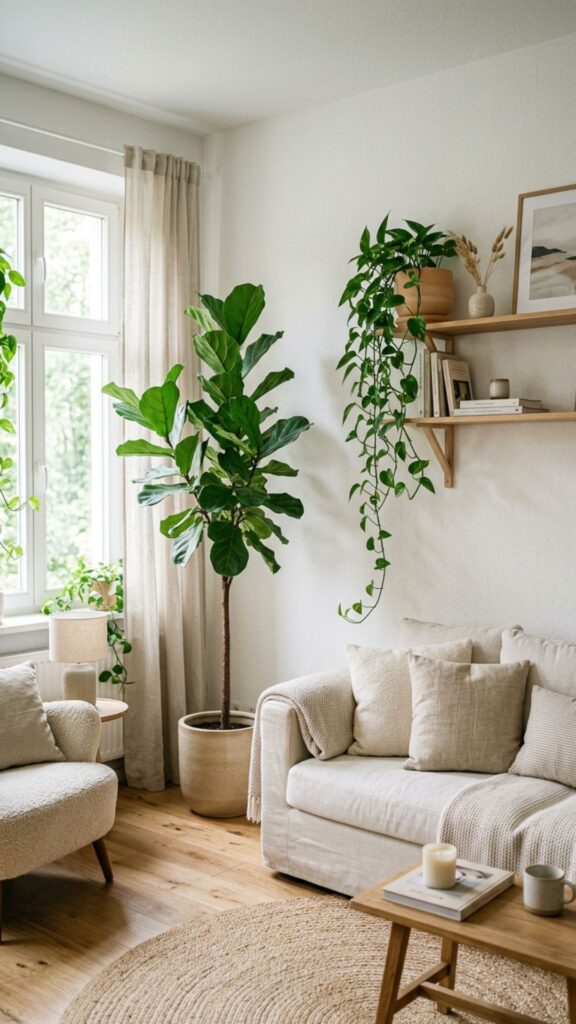
Plants bring life, color, and a sense of freshness that no decor can match. A couple of well-placed greens soften hard lines and connect your space to nature. They’re the easiest way to warm up a minimalist room.
Stick to one or two statement plants rather than a jungle. A tall fiddle-leaf fig in a corner or a small trailing pothos on a shelf works beautifully. Choose simple pots in neutral tones so the greenery stays the star.
10. Define Zones With a Rug
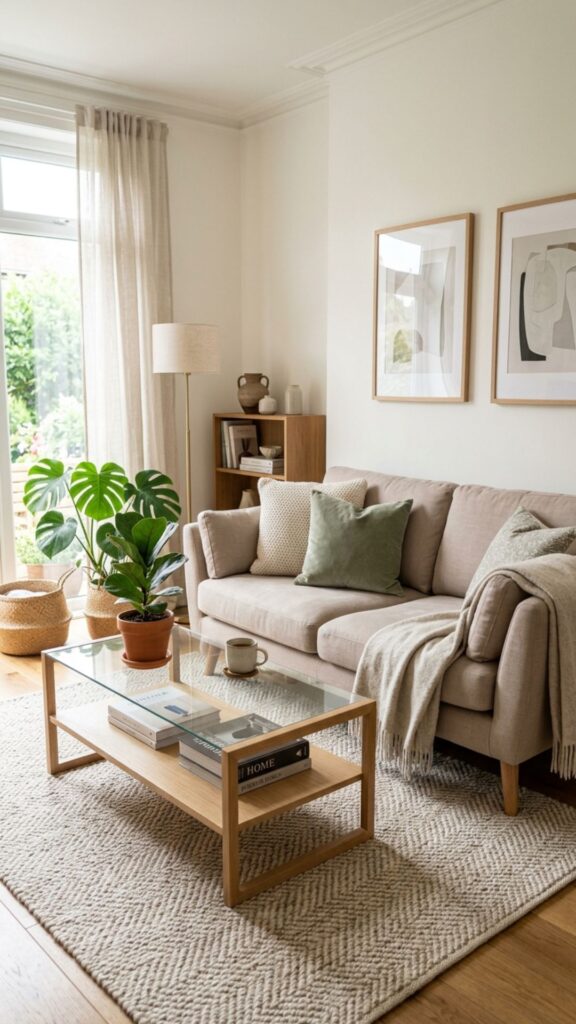
A rug can anchor your seating area and quietly define your living zone, even in an open layout. It signals where one space ends and another begins without adding walls or dividers.
Choose a rug large enough that the front legs of your furniture rest on it. Keep the pattern subtle or solid to maintain that clean minimalist feel. The right rug adds warmth underfoot while pulling the whole room together.
11. Float Your Furniture Off the Walls
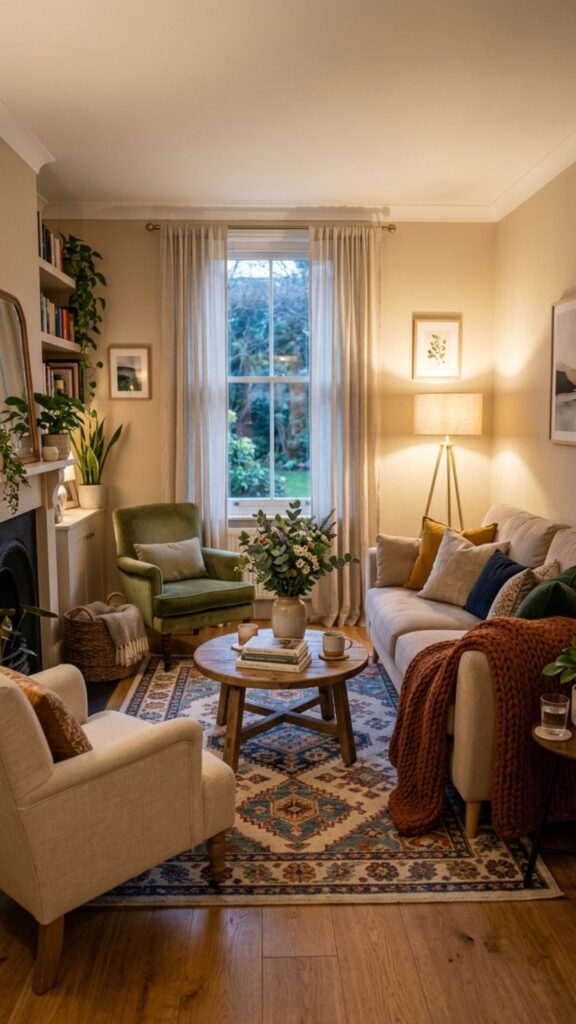
It sounds counterintuitive in a small room, but pushing everything against the walls can actually make it feel smaller and awkward. Pulling furniture in slightly creates a cozy, intentional arrangement.
Even a few inches of space behind the sofa gives the room a sense of flow. This small shift makes the layout feel curated rather than crammed. Experiment until the seating feels balanced and easy to move around.
12. Stick to a Limited Decor Set
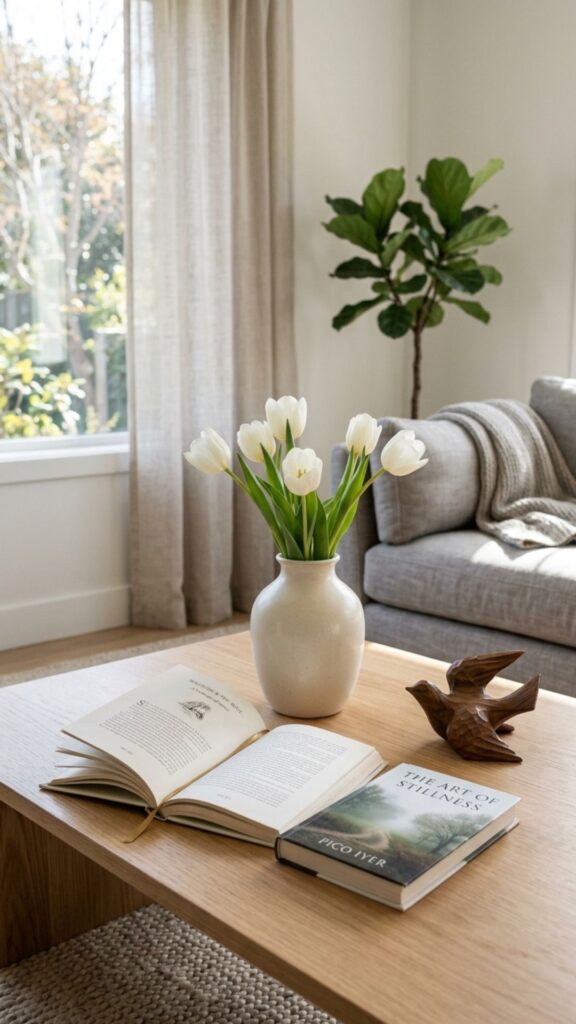
Every accessory should have a reason to be there. Rather than scattering trinkets everywhere, choose a small collection of meaningful objects. A few quality pieces beat a dozen cheap ones every time.
Group items in odd numbers and vary their heights for visual interest. Then stop. Knowing when to quit is the heart of good minimalist styling, and it keeps your surfaces feeling calm instead of cluttered.
13. Use Wall-Mounted Lighting
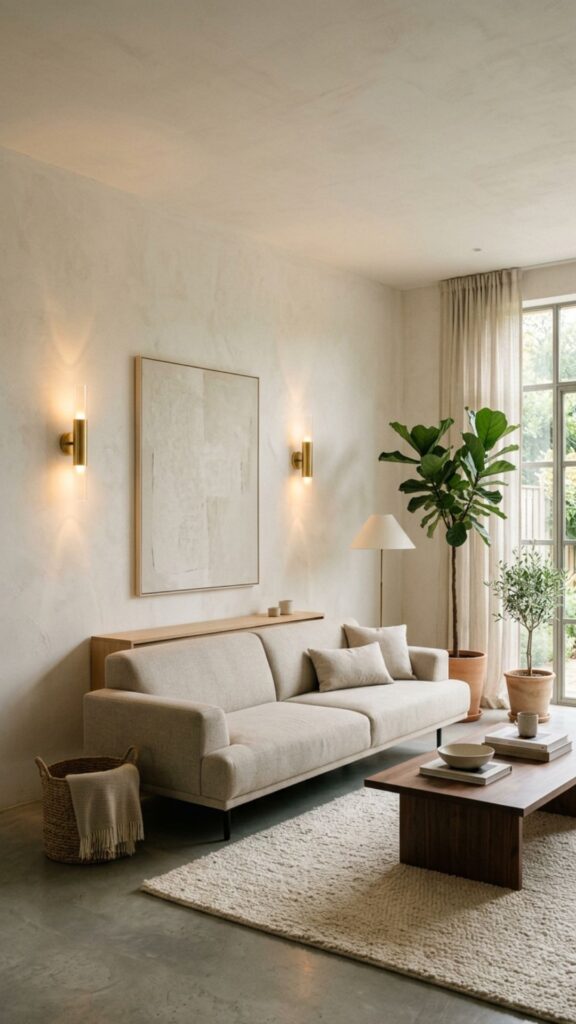
Table and floor lamps eat up valuable surface and floor space. Wall sconces and pendant lights deliver the same warm glow while freeing up room to move. They’re a smart swap in tight quarters.
Choose fixtures with slim, simple profiles that match your palette. Layered lighting, one bright source plus a softer accent, adds depth and mood. Good light makes even the smallest room feel polished and inviting.
14. Choose Furniture With Exposed Legs
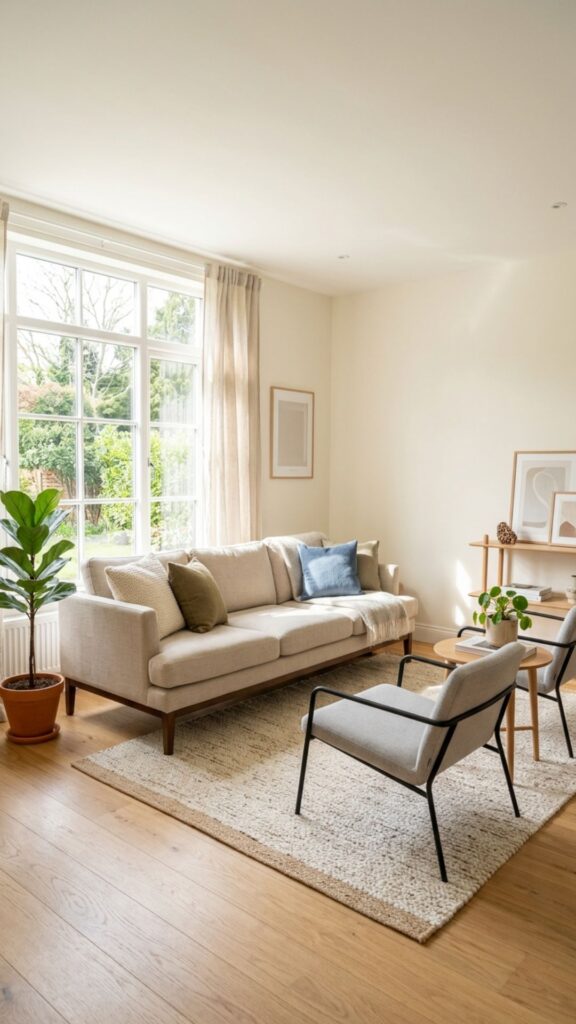
Chairs, sofas, and tables that stand on visible legs let light and floor show through. That openness tricks the eye into seeing more space than there really is. Skirted or boxy pieces do the opposite.
This visual lightness keeps the room from feeling top-heavy. Pair leggy furniture with a low console or slim side table to maintain the airy effect throughout the room.
15. Keep Cords and Tech Hidden
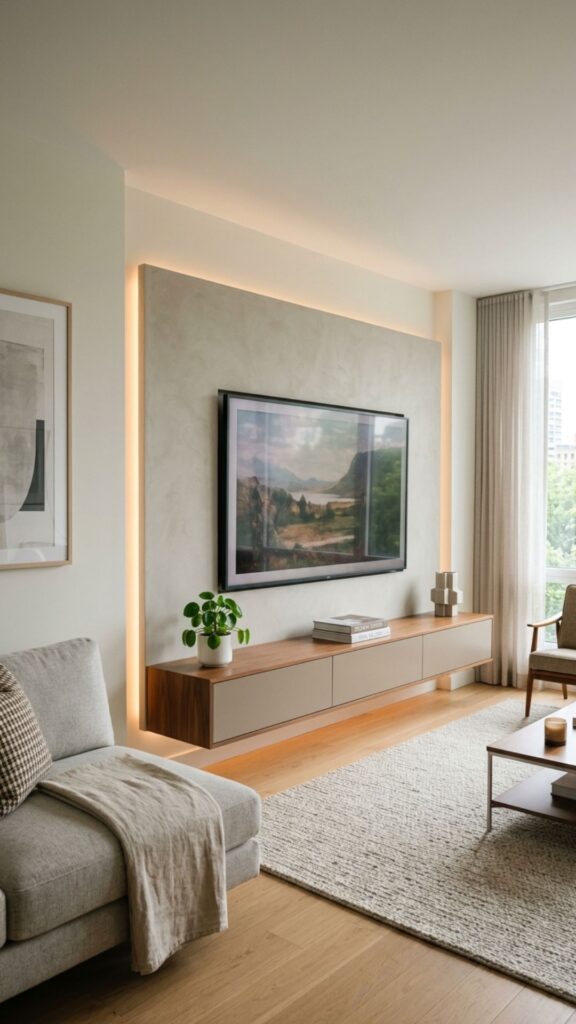
Nothing breaks a clean look faster than a tangle of cables. Tuck cords behind furniture, run them through cable organizers, or mount your TV flush to the wall. A tidy tech setup keeps the whole space feeling calm.
Consider a media console with a back panel to hide devices and wires. The less visible technology you have, the more restful your minimalist room will feel. Small effort, big payoff.
16. Add Texture Instead of Color
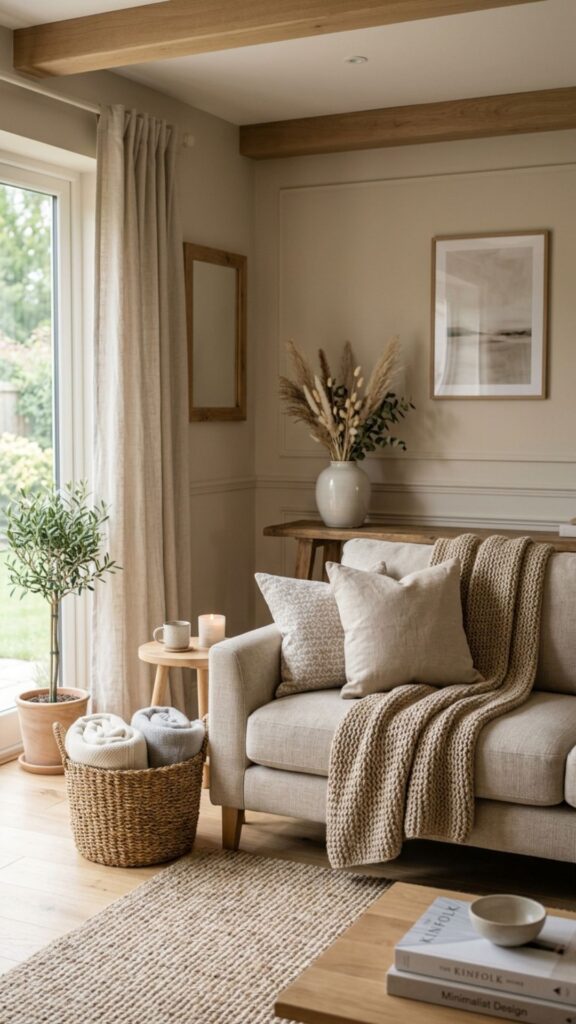
When your palette is neutral, texture becomes your best friend. A chunky knit throw, a linen cushion, or a woven basket adds warmth and depth without introducing bold color or clutter.
Mix soft and rough finishes to keep things interesting. A smooth ceramic vase beside a nubby wool blanket creates quiet contrast. This layering keeps a minimalist room from ever feeling cold or flat.
17. Try a Slim Console or Ledge
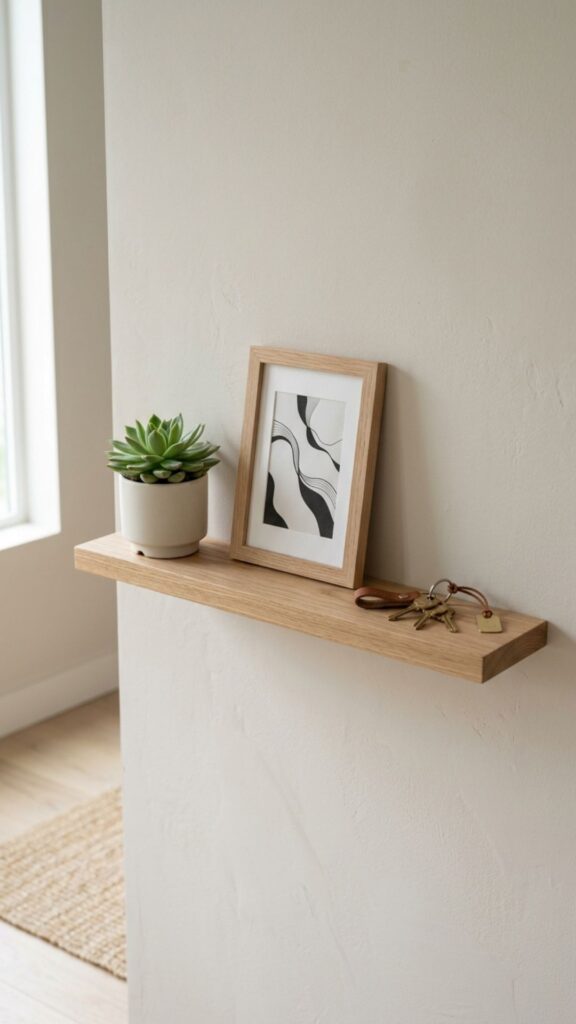
A shallow console table or a picture ledge gives you a spot for essentials without stealing floor space. These slim pieces fit against a wall and still offer useful surface area.
Use one for keys, a small plant, or a single framed print. Keep it styled sparingly, and it becomes a functional feature that never overwhelms the room.
18. Match Furniture to Your Wall Color
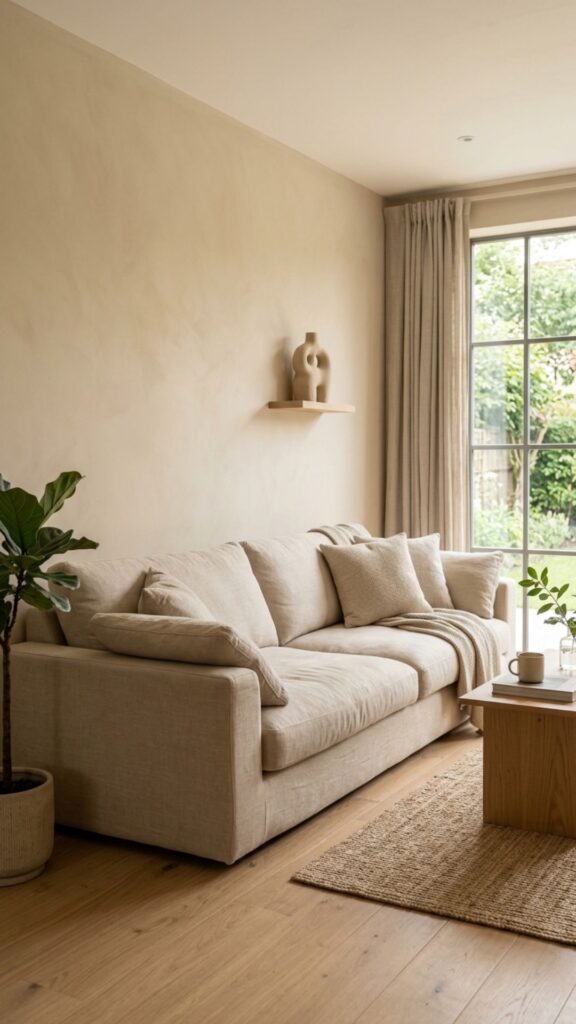
When your sofa or cabinets blend into the wall behind them, the furniture almost disappears. This trick reduces visual clutter and makes the room feel more open and unified.
Choose upholstery and storage in tones close to your wall color. The eye glides across the space instead of stopping at every piece. It’s a subtle move that delivers a big sense of calm.
19. Declutter Regularly
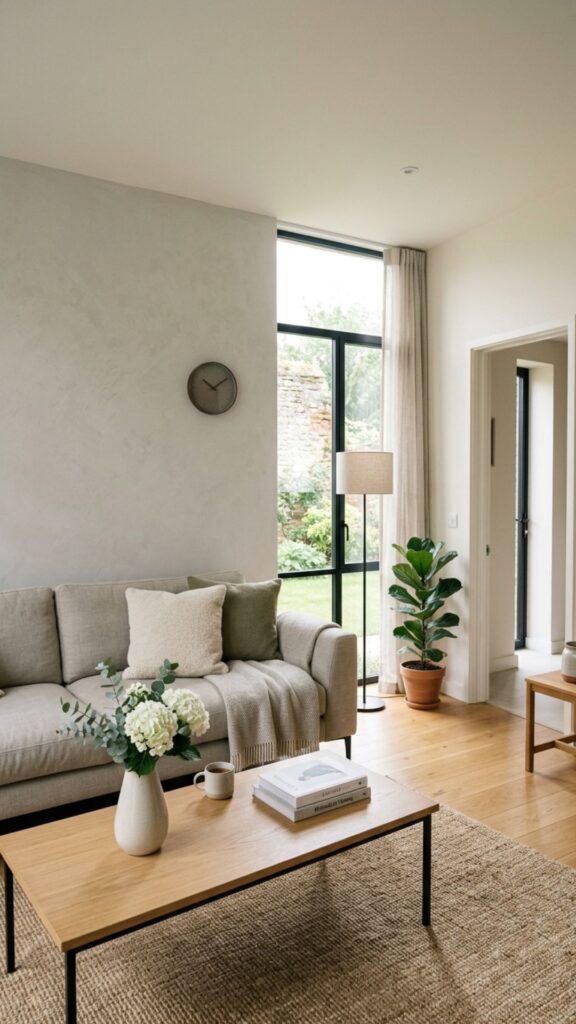
Minimalism is a habit, not a one-time project. A quick monthly edit keeps new clutter from creeping back in. Ask yourself if each item is useful, meaningful, or beautiful, then let go of the rest.
The direct answer to keeping a small living room minimalist is simple: own less and store smart. Fewer things mean less to clean, less to organize, and more space to enjoy. Regular editing keeps your room feeling effortlessly serene.
20. Focus on Quality Over Quantity
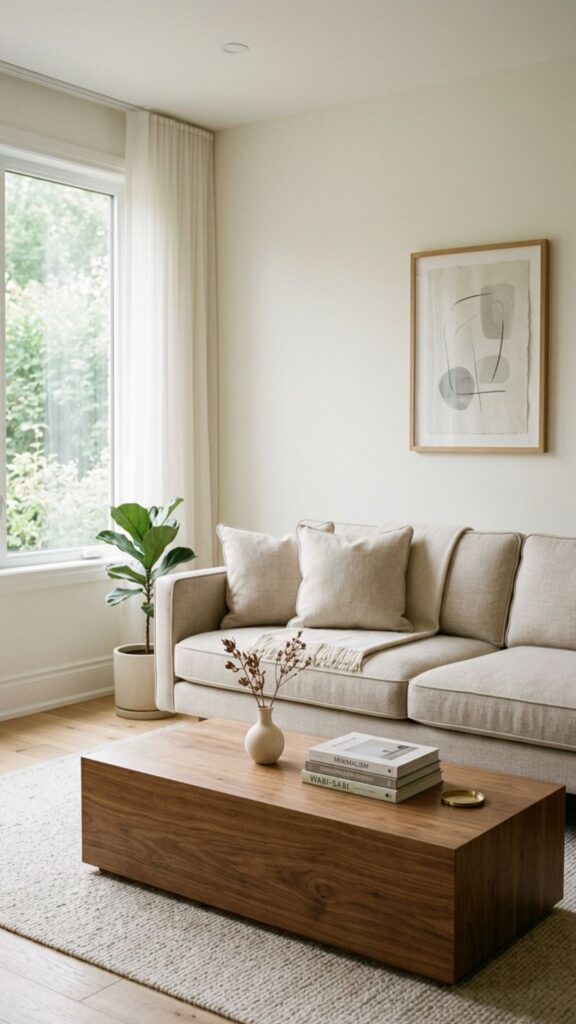
One well-made sofa outlasts and out-styles three cheap ones. Investing in fewer, better pieces is the most sustainable and satisfying part of minimalist living. Quality shows, and it lasts.
Save up for items you truly love and use every day. When everything in your room is chosen with care, the whole space feels intentional. That sense of purpose is what makes minimalist design so rewarding.
Conclusion
A small living room is a genuine opportunity, not a limitation. With a neutral palette, smart storage, plenty of light, and a firm commitment to owning less, you can create a space that feels open, calm, and completely you. These small living room decor ideas prove that minimalist style works beautifully in tight quarters.
Ready to transform your space? Pick just three ideas from this list and try them this weekend. Start small, stay consistent, and watch your room open up. Your calmer, clutter-free living room is closer than you think.
How do I make my small living room look minimalist?
Start with a neutral color palette, clear away clutter, and keep only furniture and decor that serve a purpose. Add mirrors and maximize natural light to open up the space, then stick to a few meaningful accessories rather than filling every surface.
What colors work best for a small minimalist living room?
Light, neutral tones work best. Whites, soft grays, warm beiges, and gentle taupes reflect light and make the room feel larger. Add warmth through natural materials and texture instead of bold colors.
How can I add storage without cluttering a small space?
Use hidden storage like ottomans with compartments and media consoles with closed backs. Then go vertical with floating shelves and tall, narrow bookcases. This keeps your floor clear and draws the eye upward.
Can minimalist design feel warm and cozy?
Absolutely. Layer different textures like knit throws, linen cushions, and woven baskets, and add a plant or two. Soft lighting and natural wood tones bring warmth without adding clutter.
How often should I declutter a minimalist living room?
A quick edit once a month is enough for most people. Regularly review your items and remove anything that isn’t useful, meaningful, or beautiful to keep the space feeling calm and open.