Dark walls in a small room? It sounds like a decorating mistake waiting to happen. But after years of helping people rethink cramped spaces, I’ve watched deep, moody colors do the exact opposite of what most folks expect.
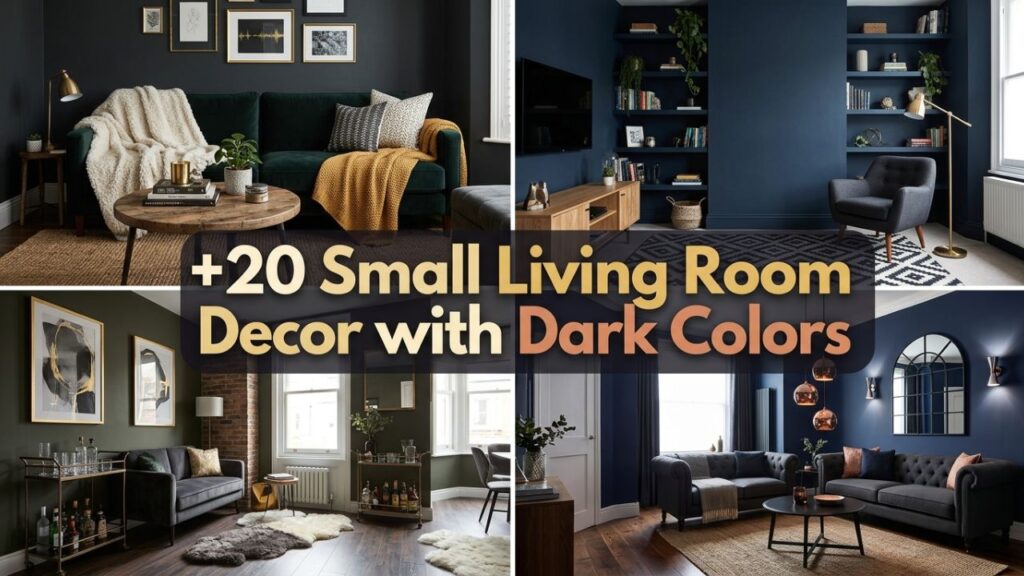
Instead of shrinking a room, the right dark palette can wrap it in warmth and make the walls feel like they melt away.
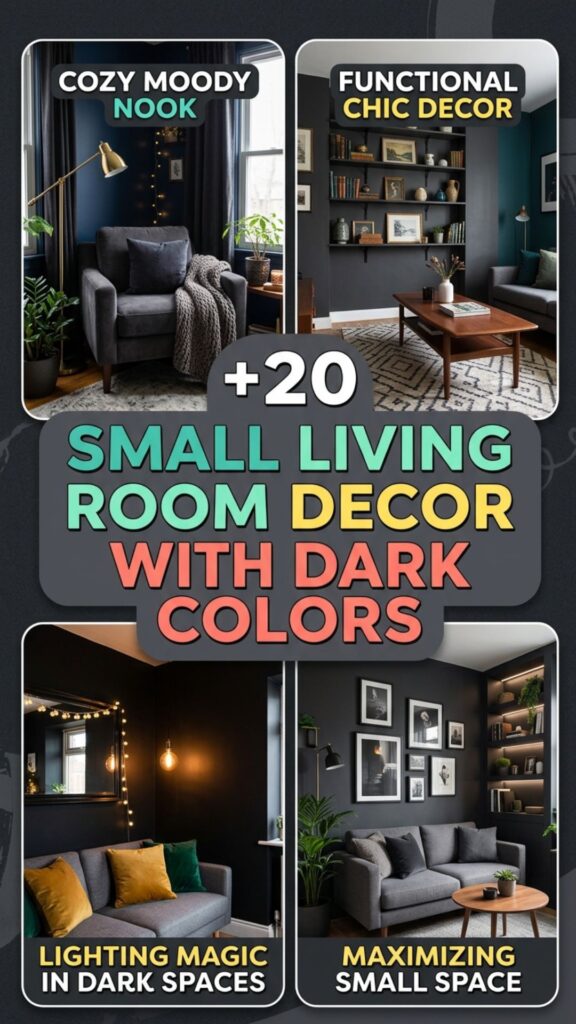
The trick lies in the details—lighting, texture, contrast, and smart furniture choices. Below, you’ll find 20 practical small living room decor ideas that lean into dark colors without making your space feel like a cave. Each one comes with specific, tested advice you can put to work this weekend.
1. Paint the Walls a Deep Charcoal
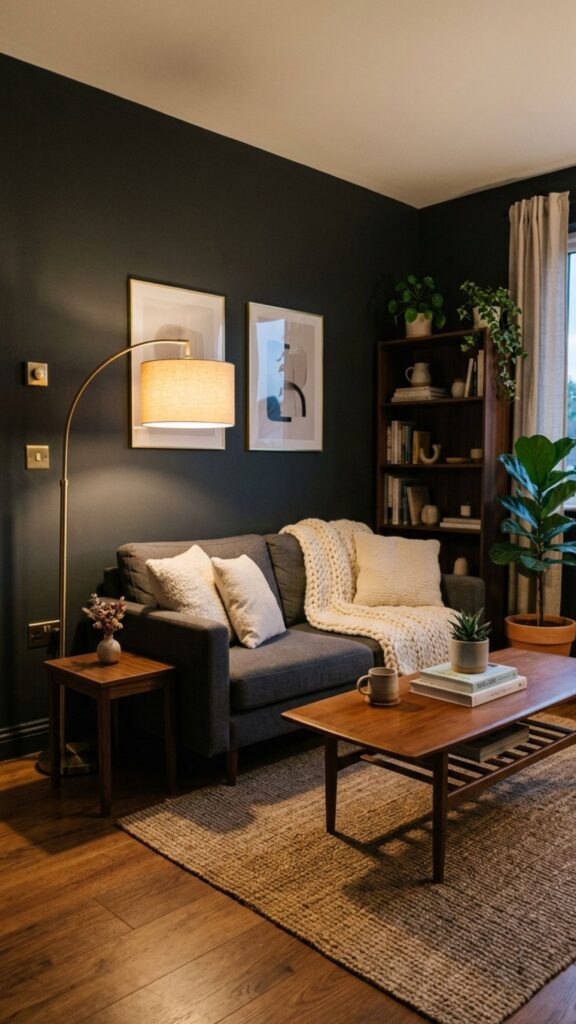
Charcoal gray sits in that sweet spot between black and neutral. It’s dramatic enough to feel intentional but soft enough that it won’t overwhelm a tight room. I’ve used shades like Benjamin Moore’s Kendall Charcoal in rooms barely wider than a hallway, and the depth actually blurs the edges where walls meet, making boundaries harder to spot.
Pair charcoal with warm wood tones and a few brass accents. The metal catches light and keeps the space from feeling flat. Add a cream rug or light throw pillows so your eye has somewhere bright to land, and the contrast will do all the heavy lifting.
2. Go All-In With a Navy Blue Accent Wall
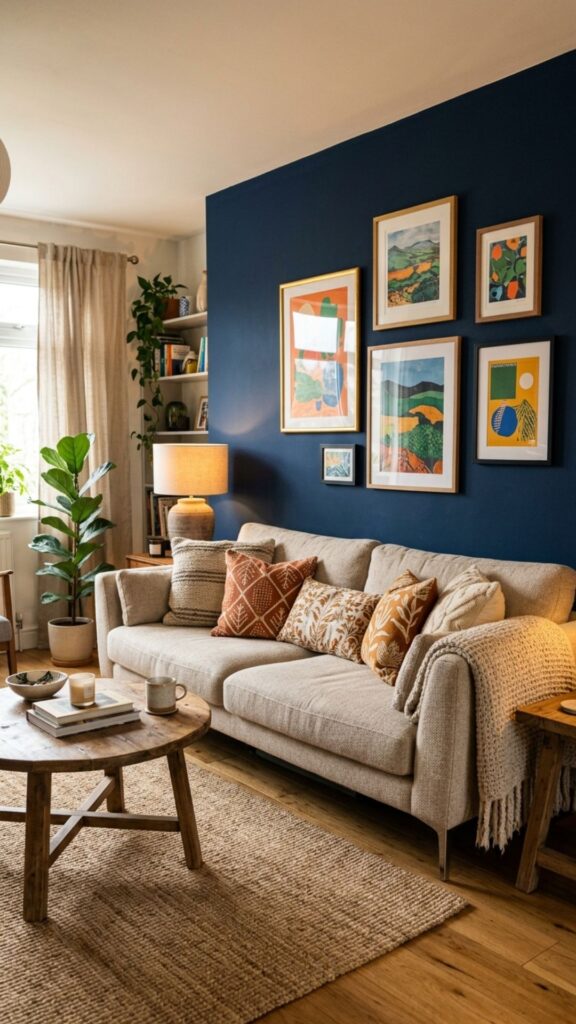
Navy brings a calm, almost bottomless quality to a room. Painting a single wall—usually the one behind your sofa or TV—creates a focal point that draws the eye without closing everything in. This works especially well when the other three walls stay light.
Layer in natural textures like a jute rug or a woven basket to soften the richness of the blue. If you want extra dimension, hang framed prints with white matting against the navy. The bright borders pop and give the wall a gallery feel that pulls attention upward.
3. Use Black Trim for Sharp Definition
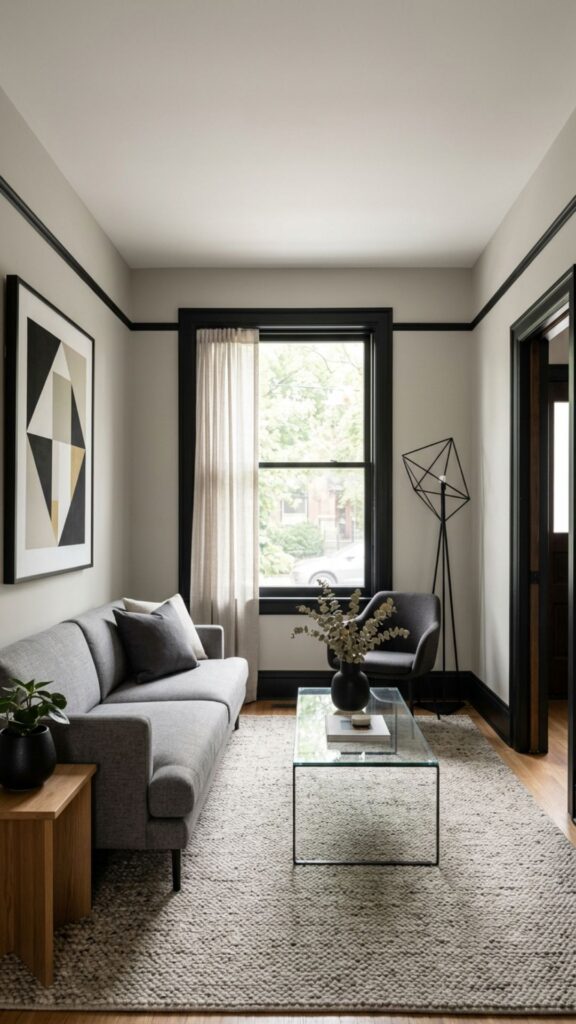
Painting your baseboards, window frames, and door casings black is a small change with a big payoff. It outlines the architecture of the room and gives even a plain space a tailored, custom look. Think of it like eyeliner—it defines without demanding the whole spotlight.
This approach works beautifully with lighter walls too, so you don’t have to commit to a fully dark room. In one project, we kept the walls a soft greige and used matte black trim throughout. The result felt polished and modern, and it made the ceilings appear taller than they were.
4. Choose a Dark Velvet Sofa
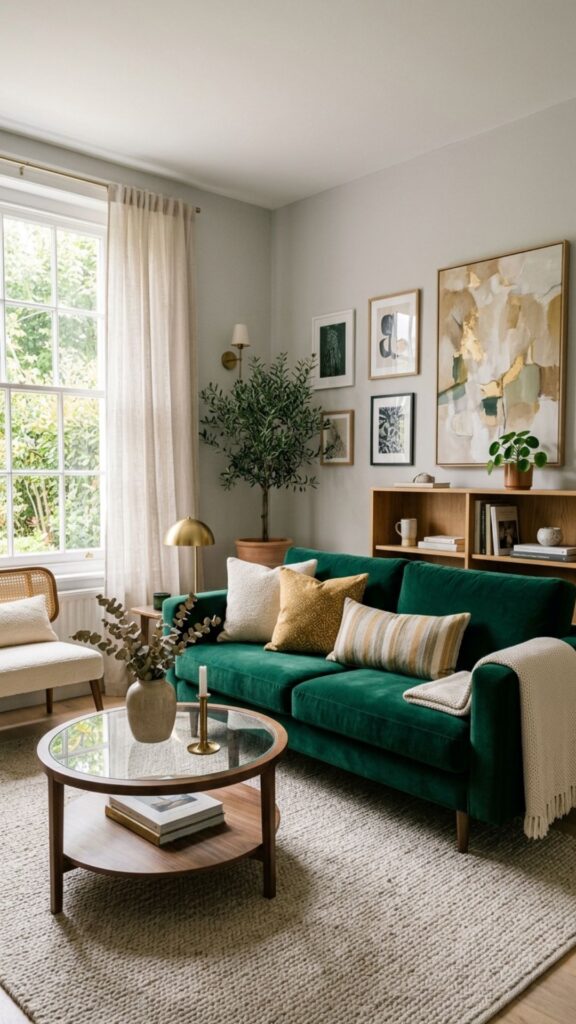
Velvet in a deep emerald, plum, or forest green becomes the anchor of a small living room. The fabric catches and shifts light as you move, adding a subtle glow that flat upholstery can’t match. A dark sofa also hides everyday wear far better than pale fabrics.
Keep the surrounding pieces slim and airy to balance the visual weight. A glass or acrylic coffee table, for example, lets the sofa shine without crowding the room. Toss in a couple of textured cushions in mustard or blush for warmth.
5. Layer Warm, Ambient Lighting
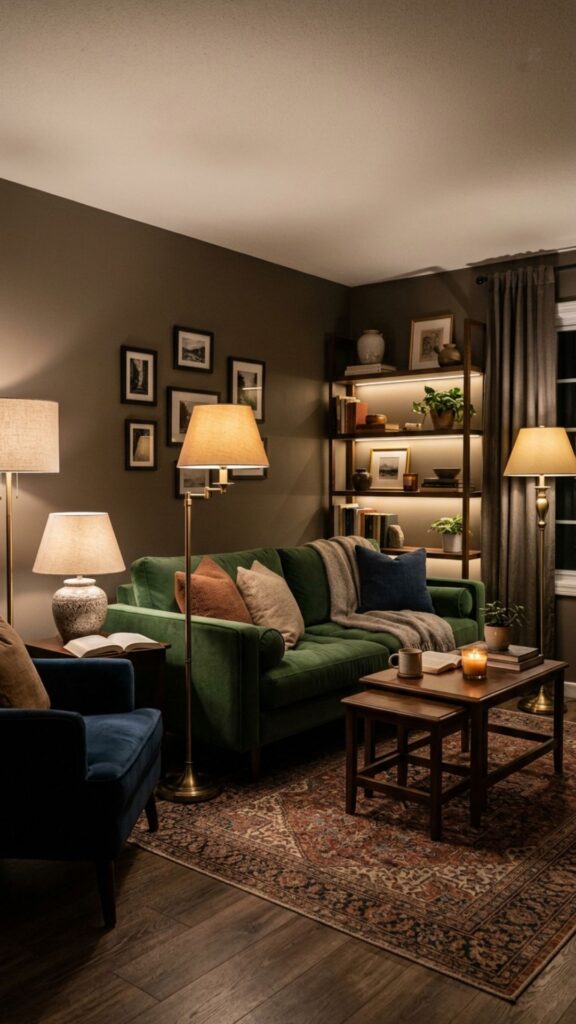
Dark rooms live and die by their lighting. Skip the single harsh overhead bulb and build layers instead: a floor lamp in one corner, a table lamp on a side table, maybe a string of soft LED lights along a shelf. Warm bulbs around 2700K give that cozy, golden feeling.
Place lights at different heights to create pools of glow rather than one flat wash. This depth tricks the eye into reading the room as larger and more inviting. I always tell clients that in a dark space, lighting isn’t decoration—it’s the whole game.
6. Add a Large Mirror Opposite a Window
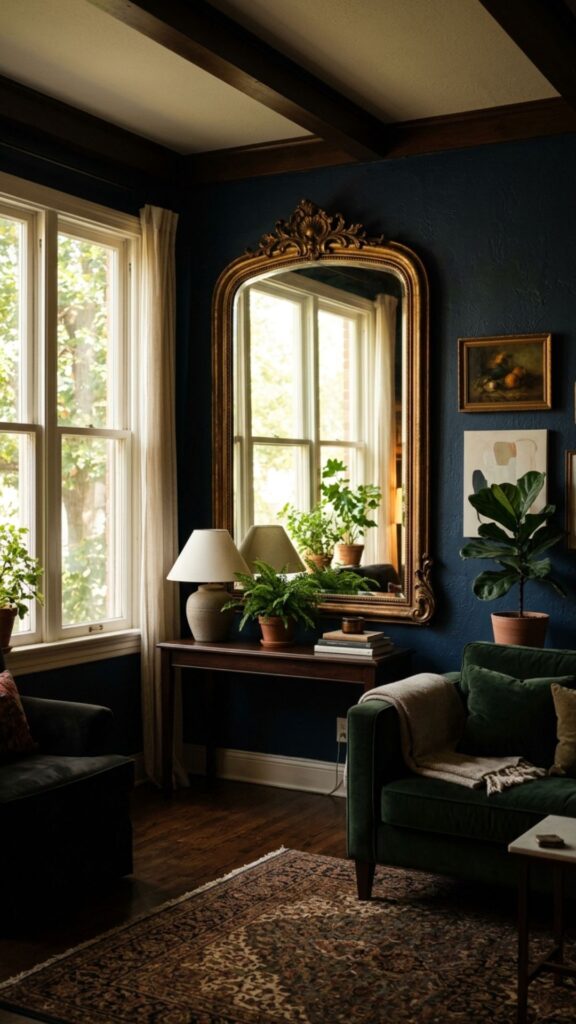
Mirrors are a small-space classic for good reason. Positioned across from a window, a big mirror bounces daylight deep into the room and visually doubles the sense of space. In a dark living room, that reflected light keeps things from feeling gloomy.
Choose a frame that matches your palette—a black or aged-brass border blends in and looks intentional. A leaning floor mirror works well too, adding height and reflecting your dark walls to make the color feel expansive rather than heavy.
7. Bring in Deep Green Plants
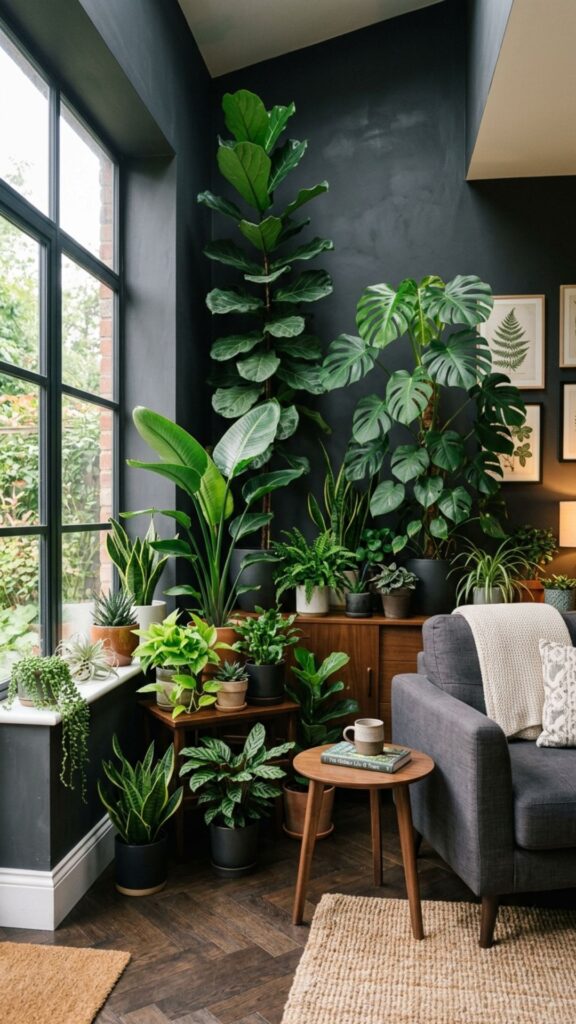
Living plants add life and a fresh contrast to dark decor. Their organic shapes break up straight lines, and the green reads as a natural counterpoint to charcoal or navy. Snake plants, pothos, and rubber trees all thrive in lower light, which suits many small rooms.
Group a few in varying heights near a window or in an empty corner. The greenery softens the mood and stops a dark room from feeling too serious. Even a couple of well-placed pots can shift the whole atmosphere.
8. Try a Moody Monochrome Palette
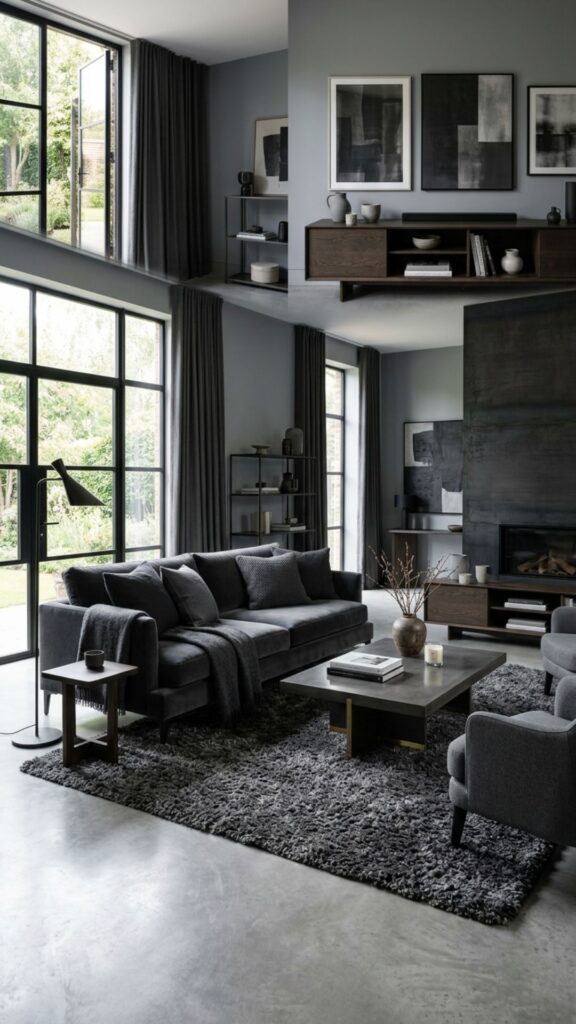
Sticking to one dark color family—say, layers of gray from slate to graphite—creates a seamless, sophisticated look. Without sharp color breaks, the eye glides across the room instead of stopping at every boundary, which makes the space feel bigger.
Vary your textures to keep monochrome from feeling flat. A nubby wool throw, a smooth leather chair, and a matte-painted wall all read as the same color but feel completely different. That interplay adds richness you can practically touch.
9. Install Floating Shelves in a Dark Finish
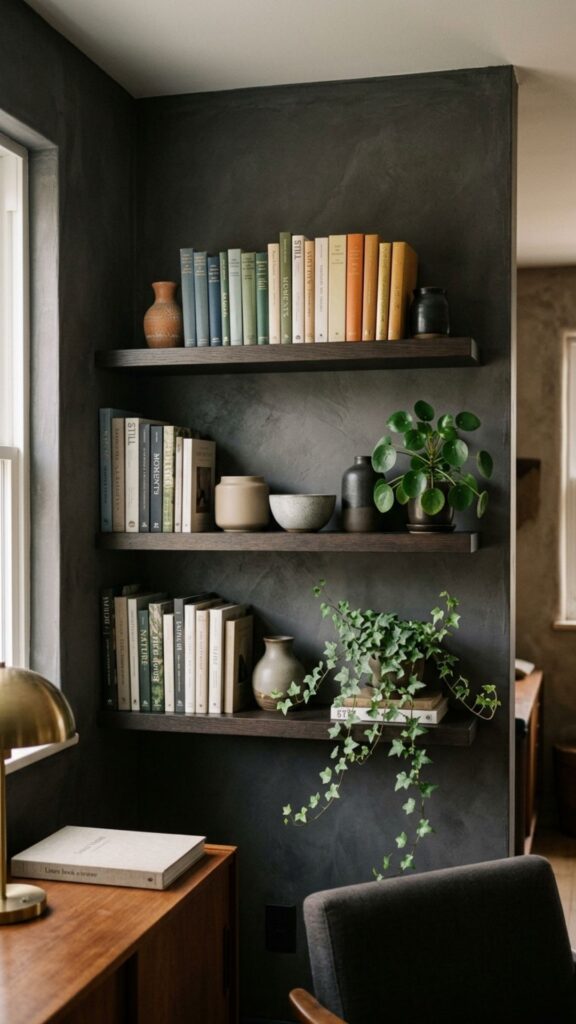
Floating shelves keep your floor clear, which instantly opens up a small room. In a dark wood or black finish, they blend into a moody wall and let your books and objects float in space. This is one of the easiest small living room decor ideas for renters, since many options just need a few screws.
Style them with a light touch—a few books, a small plant, one ceramic piece. Leave breathing room between items so the shelves don’t feel cluttered. Negative space matters just as much as what you display.
10. Ground the Space With a Dark Area Rug
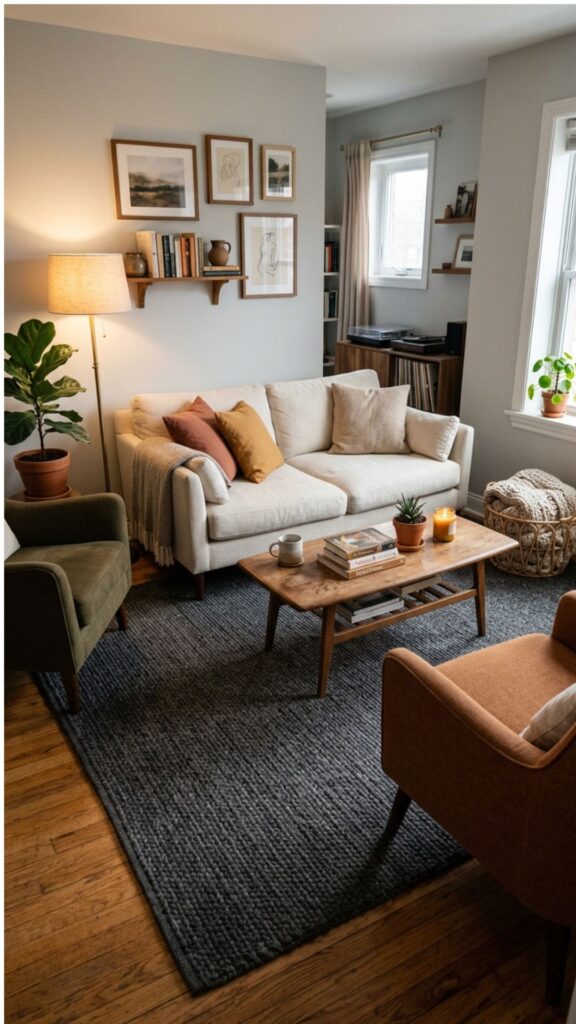
A dark rug can define your seating area and add a cozy foundation underfoot. Deep charcoal, midnight blue, or a patterned rug with black tones anchors the furniture and creates a sense of intentional design.
Make sure the rug is large enough that at least the front legs of your sofa and chairs sit on it. A too-small rug makes everything look disjointed. Sizing it right visually ties the room together and, oddly enough, makes the floor feel more spacious.
11. Highlight One Wall With Textured Wallpaper
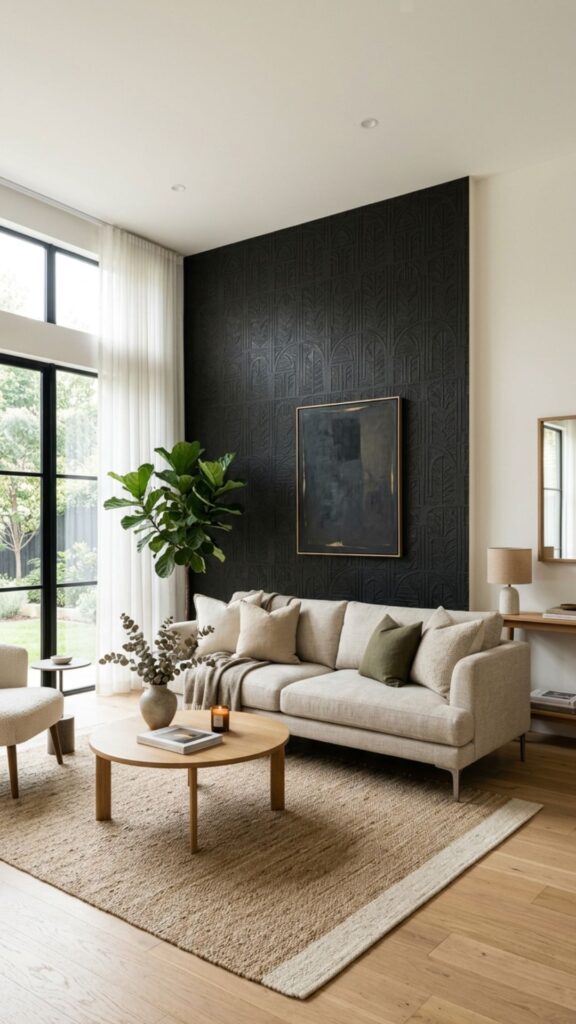
Dark textured wallpaper—think grasscloth, faux plaster, or a subtle geometric print—adds depth without shrinking the room. The texture catches light in interesting ways and gives your walls personality that flat paint can’t.
Reserve it for a single feature wall to keep the effect from overwhelming a tight space. Behind a bed-like daybed or the main sofa, that one wall becomes the star while the rest of the room stays quiet and open.
12. Mix in Metallic Accents
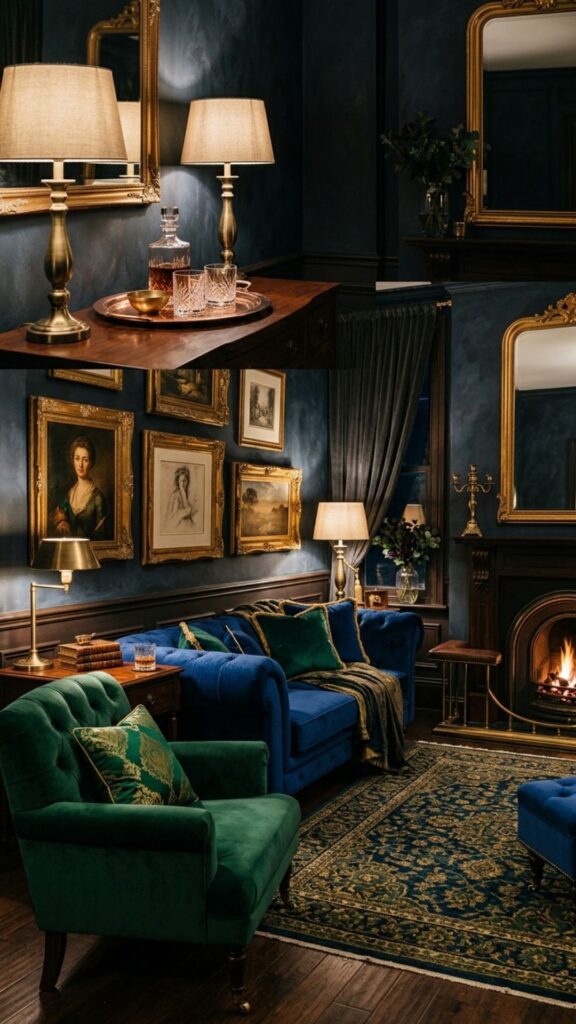
Gold, brass, and copper are your best friends in a dark room. These warm metals reflect light and add small sparks of brightness that keep deep colors feeling luxurious instead of dreary. A brass floor lamp or gold picture frames go a long way.
Scatter these accents at different levels—a metallic tray on the coffee table, a lamp on a shelf, drawer pulls on a cabinet. The repetition creates a subtle rhythm that draws the eye around the whole room.
13. Keep Window Treatments Light and Airy
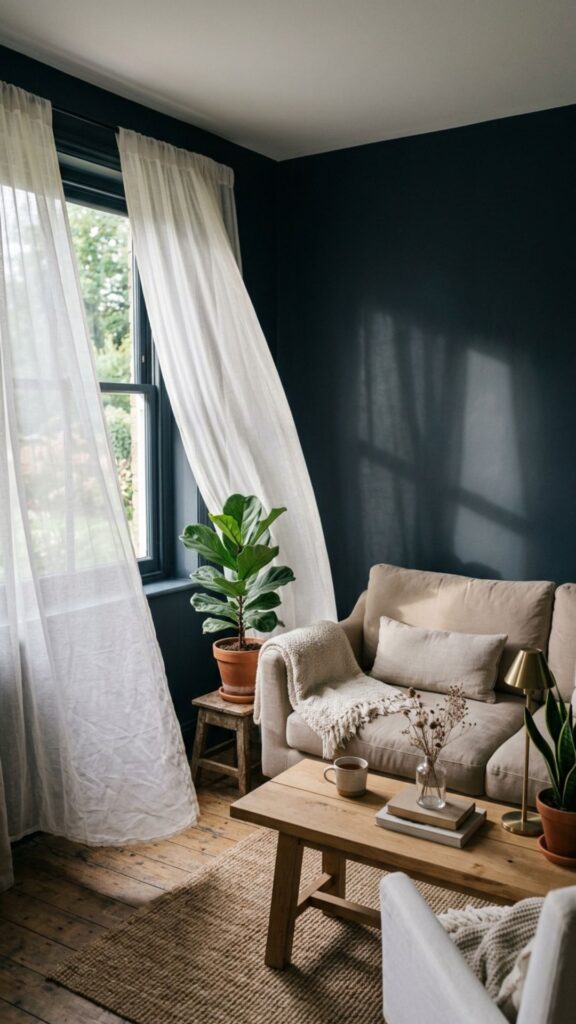
If your walls are dark, your curtains can provide relief. Sheer or light-colored drapes let daylight pour in and create a soft contrast against moody walls. Hang the rod high and wide—close to the ceiling and beyond the window frame—to make windows look larger.
This simple move maximizes natural light, which every small dark room needs. The floaty fabric also adds movement and keeps the space from feeling boxed in.
14. Use Dark Colors on the Ceiling
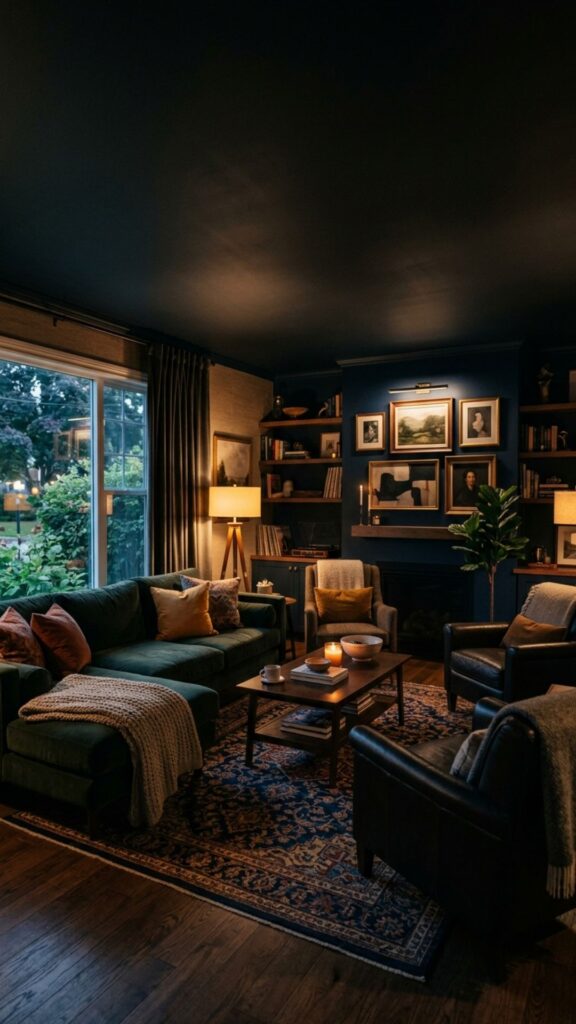
Painting the ceiling a dark shade sounds bold, but it can actually make a room feel more expansive by blurring where the walls end. When the ceiling recedes into shadow, its exact height becomes harder to pin down, which reads as more airy, not less.
This works best in rooms with decent natural light or strong lamp lighting. Pair a dark ceiling with lighter walls for a cocooning effect, or go full-drama with matching walls if you’re feeling brave.
15. Choose Multi-Functional Furniture
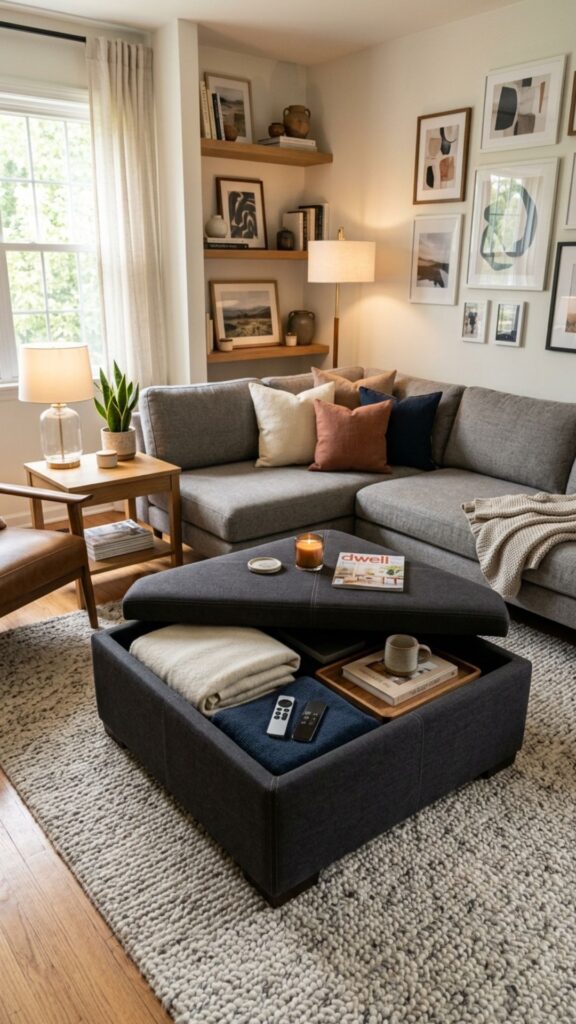
In any small room, every piece should earn its place. Ottomans with hidden storage, nesting tables, and sofas with built-in compartments help you cut clutter while keeping the room looking sleek. In dark finishes, these pieces feel grounded and intentional.
Look for a dark storage ottoman that doubles as a coffee table and footrest. Tucking blankets and remotes inside keeps surfaces clear, and clear surfaces always make a small space feel bigger and calmer.
16. Add Warmth With Wood Tones
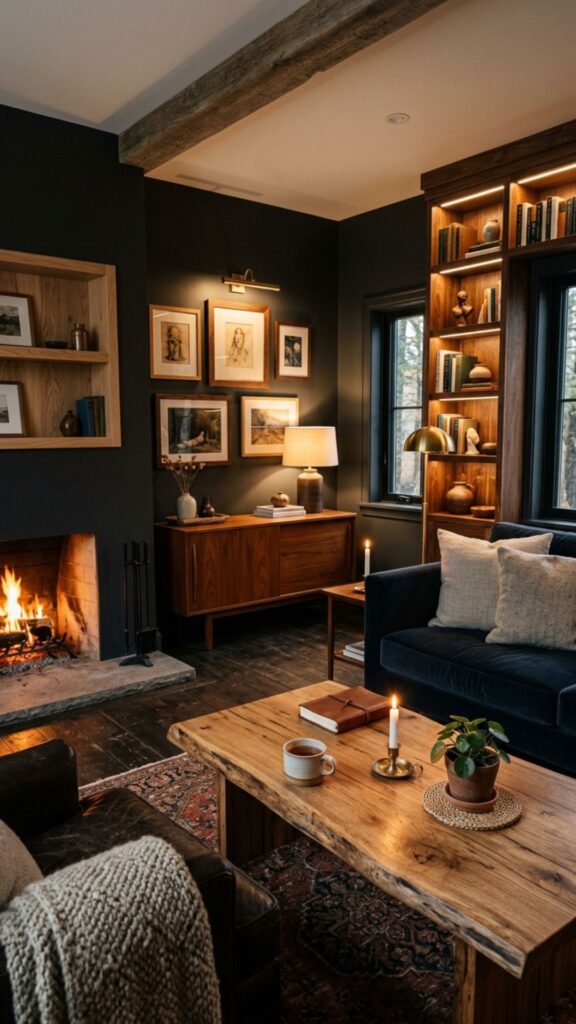
Natural wood balances the coolness of dark paint and adds an organic, lived-in feel. A wooden coffee table, floating shelf, or picture frame introduces warmth that keeps a moody room from feeling cold or stark.
Mix wood tones for a collected look rather than matching everything. A walnut side table next to an oak stool feels more natural and inviting. The grain and warmth cut through the dark palette beautifully.
17. Create a Cozy Reading Nook
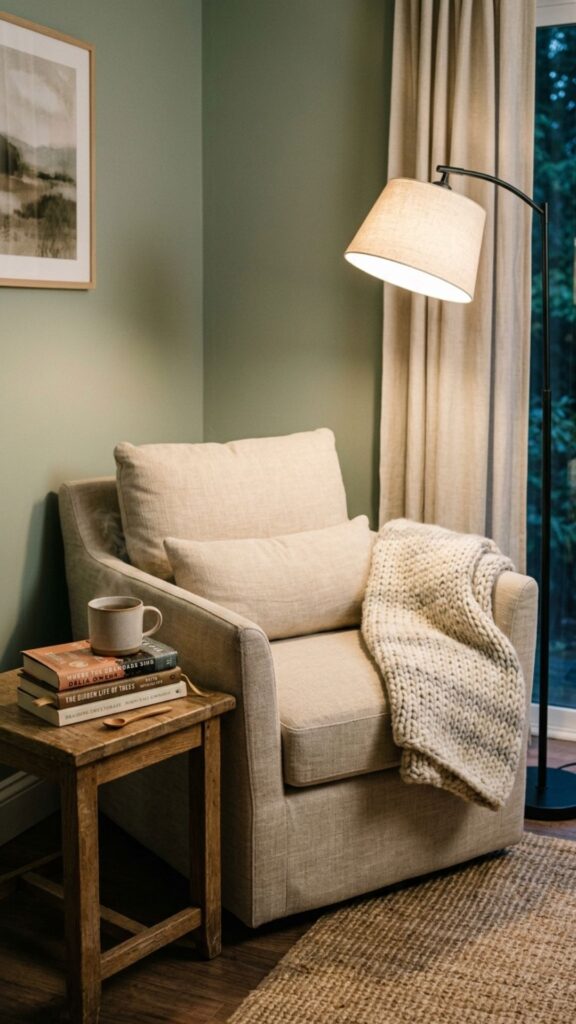
A small corner can become a favorite spot with a single armchair, a floor lamp, and a small side table. In a dark room, a nook feels intimate and tucked-away, like a little retreat carved out just for you.
Add a soft throw and a cushion in a contrasting texture to make it inviting. Position it near a window if you can, so natural light supports reading during the day. Small nooks make a compact room feel thoughtfully designed rather than simply small.
18. Display Art With Bright Contrast
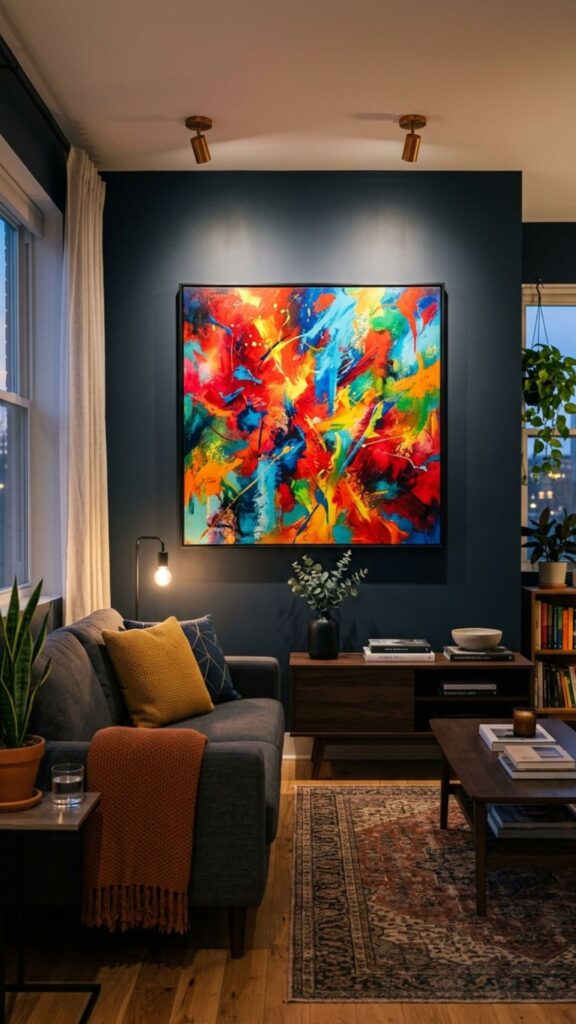
Artwork with light backgrounds or vibrant colors stands out dramatically against dark walls. A single large piece often works better than many small ones in a tight space, since it reads as calm rather than busy.
Choose frames that match your metal accents for a cohesive look. Bold abstract prints, black-and-white photography, or a light landscape all pop against a moody backdrop and give the eye a resting point.
19. Keep the Floor Clutter-Free
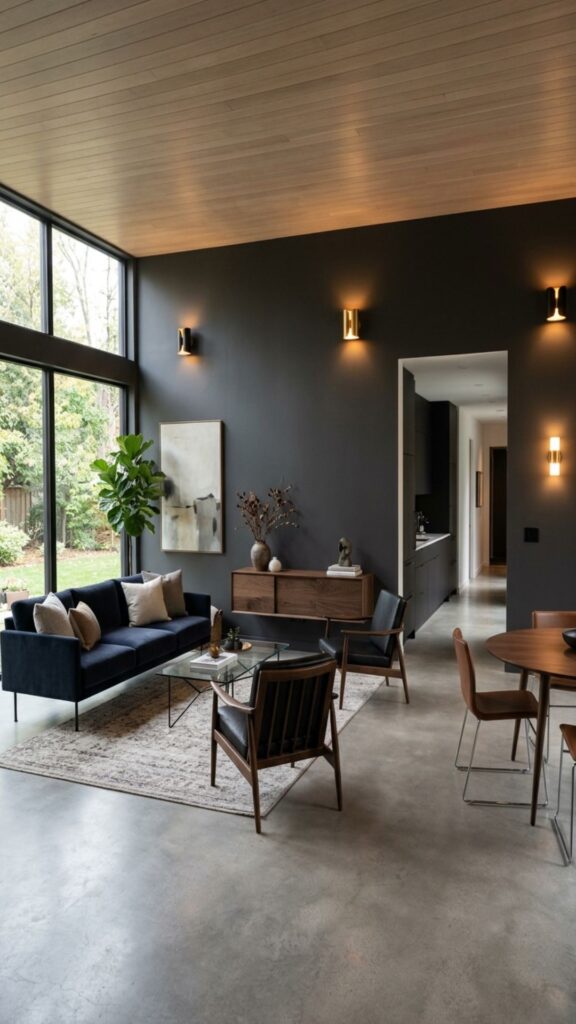
Nothing shrinks a small room faster than a crowded floor. Wall-mounted lighting, floating furniture, and slim-legged pieces let you see more of the ground, which reads as more space. This matters even more with dark decor, where visual weight can build up fast.
Opt for a sofa and chairs raised on legs so light and floor show underneath. That little bit of visible floor space keeps the whole room feeling open and breathable, even with deep colors on the walls.
20. Finish With Personal, Cozy Touches
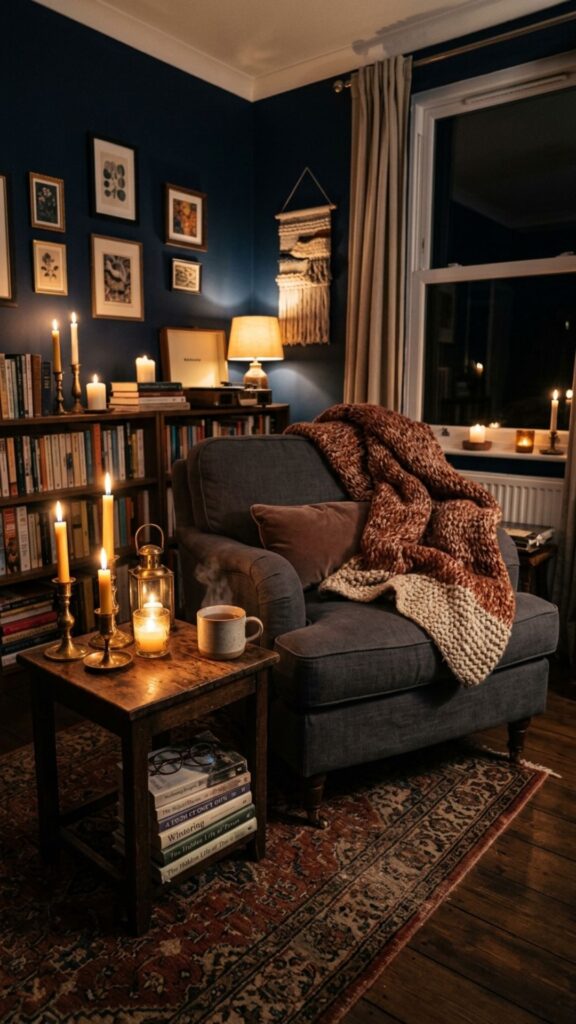
The final layer is what makes a room truly yours. A few candles, a stack of favorite books, a soft blanket draped just so—these small details turn a dark room into a warm, welcoming haven. Cozy touches soften all that moody drama.
Don’t overdo it, though. In a small space, a handful of meaningful items beats a shelf full of knickknacks. Edit ruthlessly, keep what you love, and let the dark backdrop make those pieces feel special.
Conclusion
Dark colors and small living rooms aren’t enemies—they’re a surprisingly great match when you handle light, texture, and balance with care. From charcoal walls and velvet sofas to strategic mirrors and warm lighting, these small living room decor ideas prove that going bold can make a compact space feel cozier and more polished, not smaller.
Ready to transform your space? Pick two or three ideas from this list that fit your room best and try them out this weekend. Start with lighting and one dark accent wall, then build from there. Your small living room has more potential than you think—so grab a paintbrush and see where these dark decor ideas take you.
Do dark colors make a small living room look smaller?
No, dark colors don’t automatically make a small room look smaller. When paired with good lighting, mirrors, and light contrast elements, dark shades can blur the room’s boundaries and create a cozy, expansive feel.
What is the best dark color for a small living room?
Deep charcoal gray and navy blue are the best dark colors for small living rooms. They offer drama and depth while still pairing easily with wood tones, metallic accents, and light textiles that keep the space balanced.
How do I keep a dark living room from feeling gloomy?
Layer warm lighting at different heights, add a large mirror to reflect natural light, and include bright or metallic accents. Light curtains and a few green plants also stop a dark room from feeling heavy.
Should I paint all four walls dark in a small room?
You don’t have to. A single dark accent wall creates a focal point while keeping the room open, but painting all four walls dark can work well if you have strong natural or layered lighting to balance it.
What furniture works best in a small dark living room?
Choose multi-functional, slim-legged furniture like storage ottomans, nesting tables, and raised sofas. These keep floors visible and clutter low, which makes the space feel bigger even with dark decor.