Small living rooms come with a reputation they don’t deserve. People assume tight square footage means cramped, cluttered, and impossible to style.
After years of helping friends rework their apartments and testing ideas in my own 400-square-foot rental, I can tell you the opposite is true. A small room forces you to make smart choices, and smart choices almost always look better.
Below you’ll find 20 small living room decor ideas for an aesthetic home that actually work in real spaces. No expensive renovations, no impossible layouts. Just practical moves that make your room feel bigger, brighter, and put-together. Let’s get into it.
1. Choose a Light, Neutral Base Color
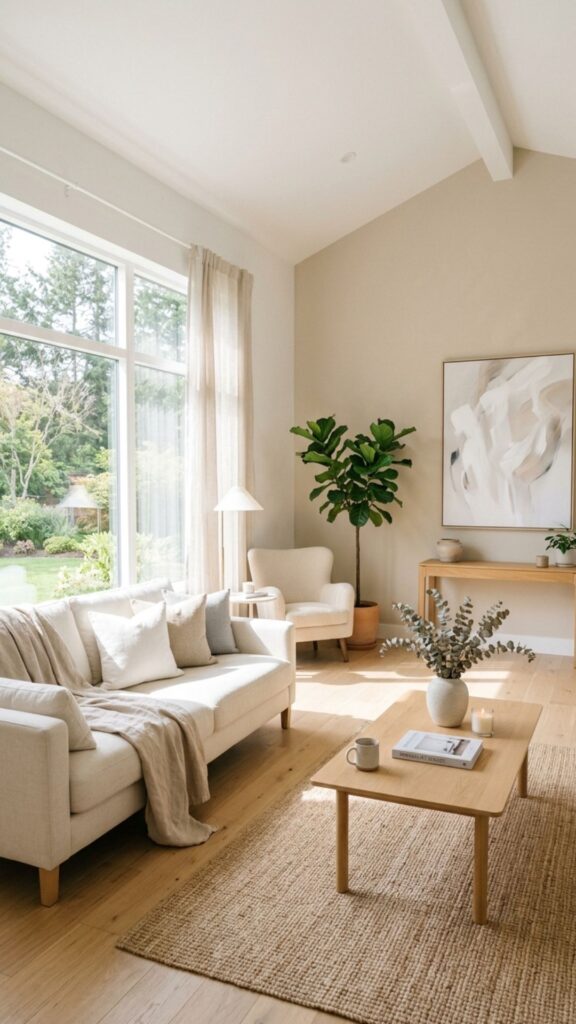
Light walls bounce sunlight around instead of swallowing it. Soft whites, warm greiges, and pale sage tones open up a room without feeling cold. I painted a dark tan wall a creamy off-white once and the space instantly looked twice its size.
Keep your base neutral and save bold color for accents you can swap out. Throw pillows, art, and a single accent chair carry personality far better than a heavy wall color that closes everything in.
2. Float Your Furniture Away From the Walls
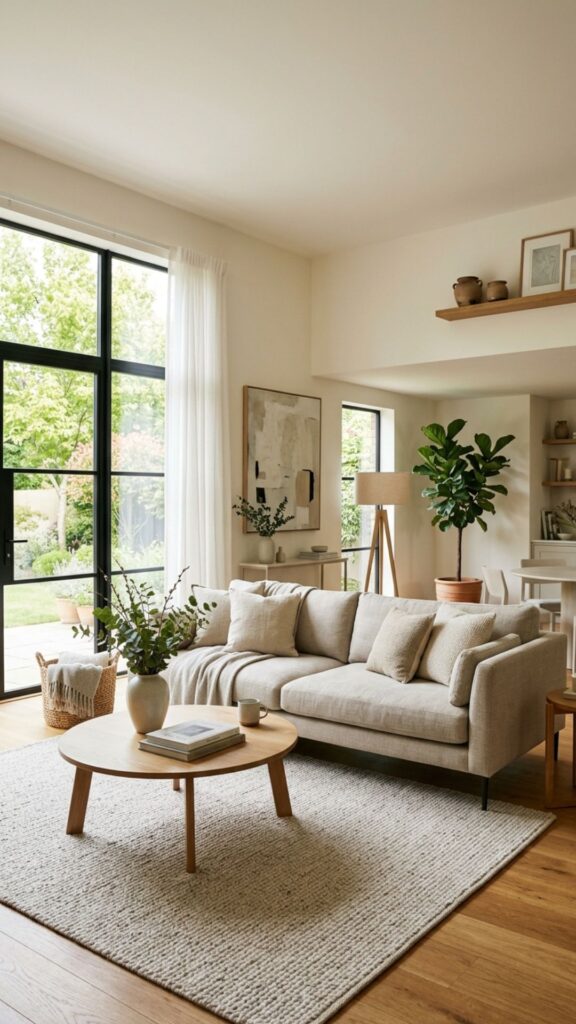
It sounds backward, but pushing everything against the walls actually makes a room feel smaller. A few inches of breathing space behind your sofa creates the illusion of depth and gives the eye room to move.
Pull your seating slightly inward and angle it toward a focal point. Even a two-inch gap changes how open the space feels. Try it before you commit to a full rearrange.
3. Use a Large Mirror as a Statement Piece
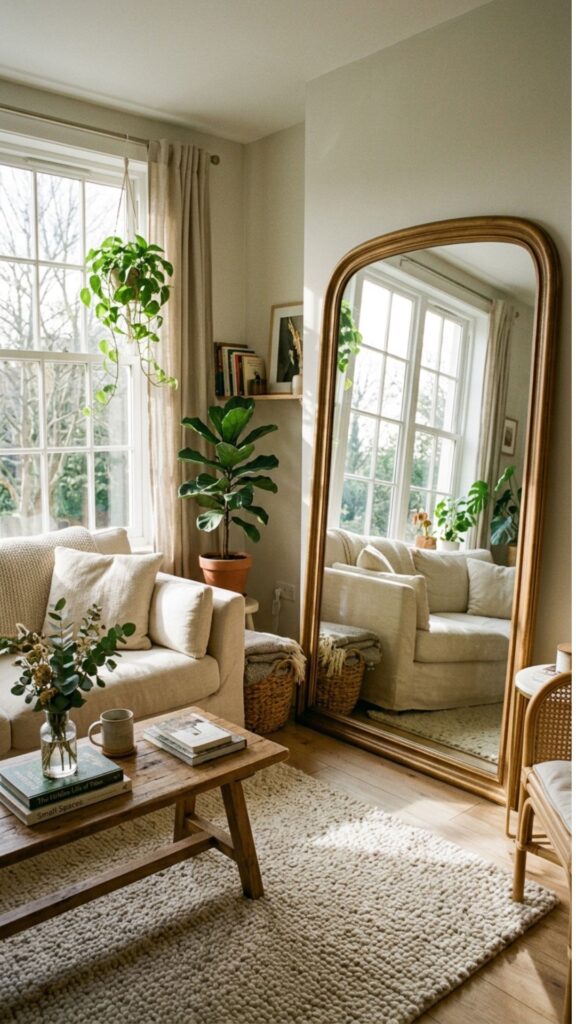
Mirrors are the oldest trick in the book because they work. A big mirror reflects light and doubles the visual size of your room. Lean a floor mirror against the wall or hang one across from a window for maximum effect.
Skip a bunch of tiny mirrors that create visual clutter. One large, well-placed piece does more than five small ones. An arched or thin-framed mirror keeps things modern.
4. Pick Furniture With Exposed Legs
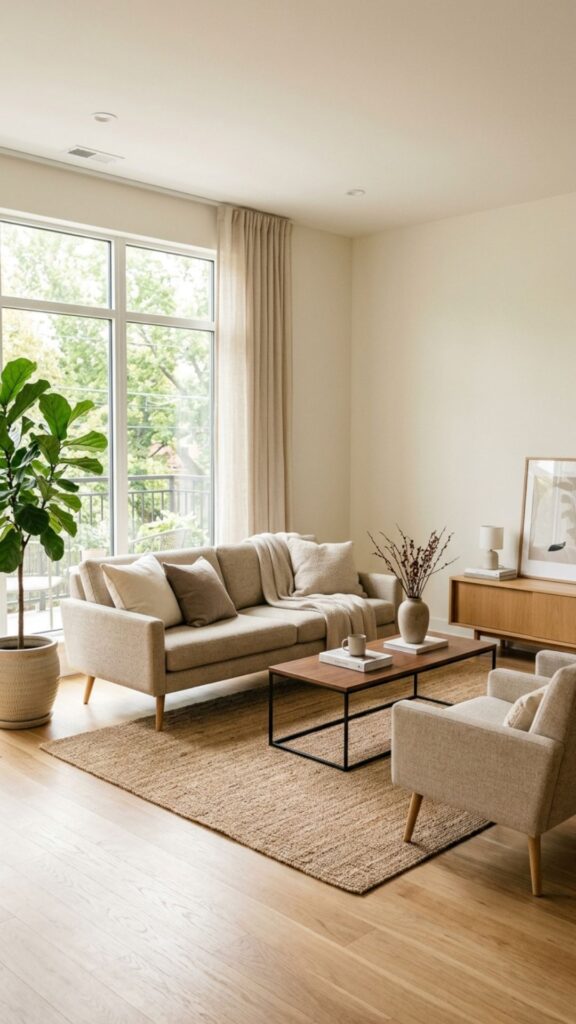
Chunky, floor-hugging sofas eat up visual space. Furniture with slim, raised legs lets light and floor show underneath, which tricks the eye into seeing more room.
Look for sofas, chairs, and consoles that sit up off the ground. Mid-century and Scandinavian styles do this beautifully. The airiness underneath makes a genuine difference in how open everything reads.
5. Go Vertical With Shelving
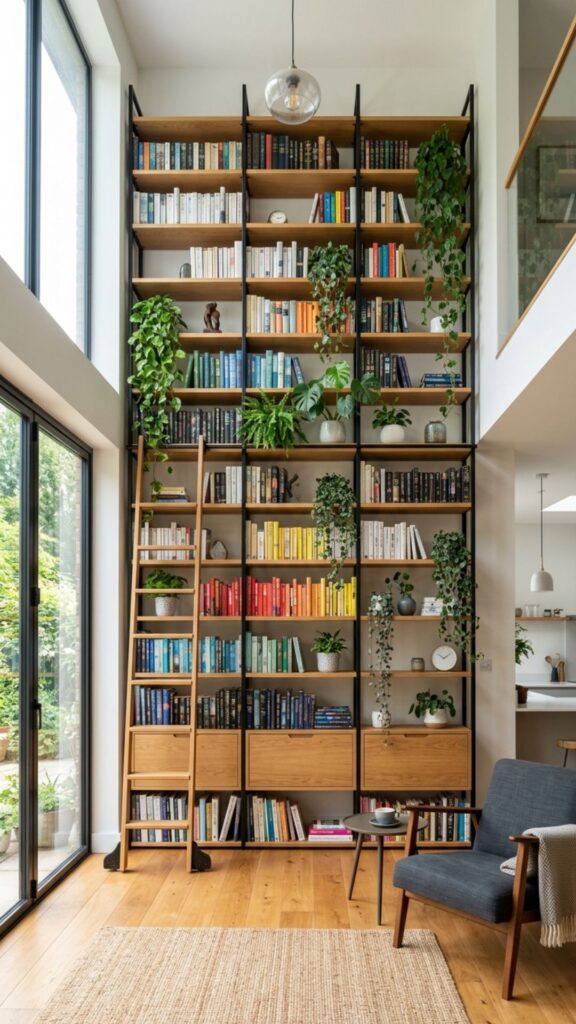
When floor space runs out, build upward. Tall shelves draw the eye toward the ceiling and make walls feel higher. Floating shelves are especially good since they don’t add bulk at floor level.
Style them with a mix of books, small plants, and a couple of decorative objects. Leave some empty space so it never feels crammed. Negative space is a design element too.
6. Layer Different Light Sources
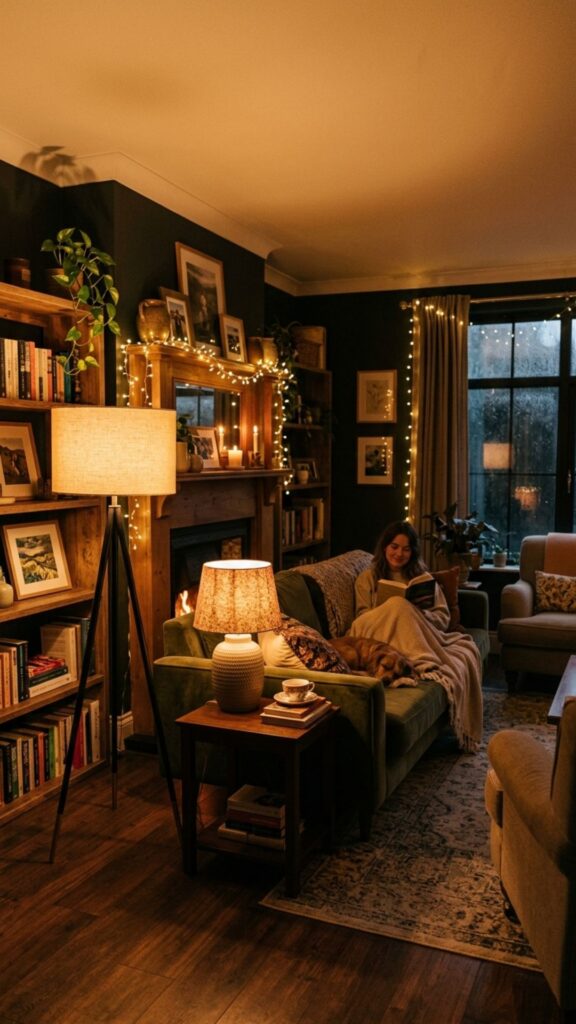
One harsh overhead light flattens a room. Instead, layer your lighting with a floor lamp, a table lamp, and maybe a string of warm fairy lights. Multiple soft sources create depth and a cozy glow.
Warm bulbs around 2700K feel welcoming, while cool white can look clinical in a small space. Dimmable options give you control over the mood, from bright afternoon reading to a relaxed movie night.
7. Choose a Multifunctional Coffee Table
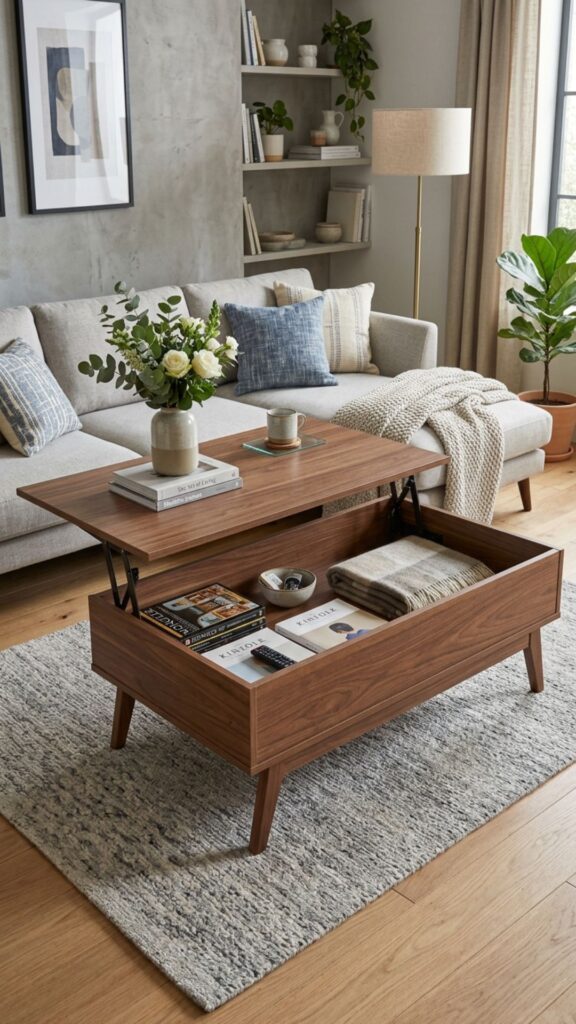
Every piece in a small living room should earn its place. A coffee table with hidden storage or a lift-top surface handles clutter and doubles as a workspace or dining spot.
Ottomans with removable tops are another favorite of mine. They work as a footrest, extra seating, and a storage bin all at once. Function and looks don’t have to compete.
8. Hang Curtains High and Wide
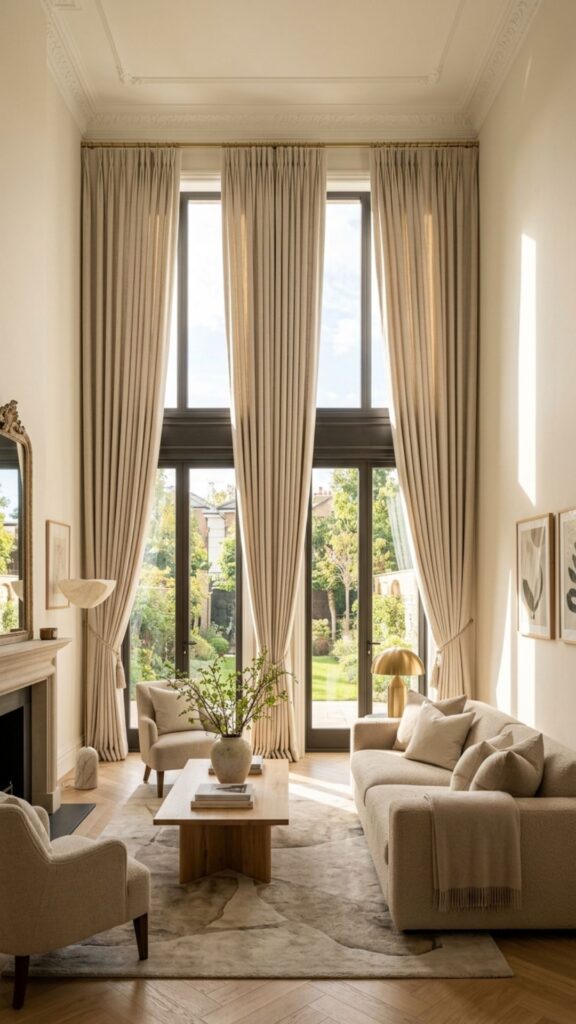
Mount your curtain rod close to the ceiling and extend it past the window frame. This simple move makes windows look taller and wider, and it pulls the whole room upward.
Choose light, flowing fabrics like linen or cotton. Heavy drapes overwhelm a small space, while sheer panels let light filter through and keep things feeling airy.
9. Add Greenery for Life and Freshness
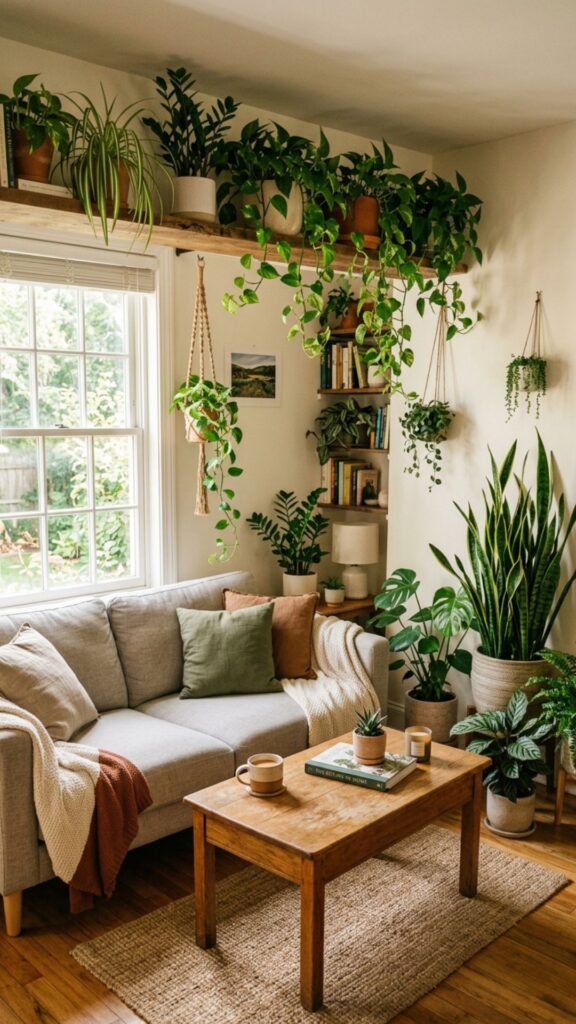
Plants bring color, texture, and a sense of calm that no other decor piece can match. A small living room feels instantly more inviting with a bit of green. Even one healthy plant changes the energy of a room.
If you struggle with plant care, go for low-maintenance options like a snake plant, pothos, or ZZ plant. Trailing plants on a high shelf add movement without taking up floor space.
10. Stick to a Cohesive Color Palette
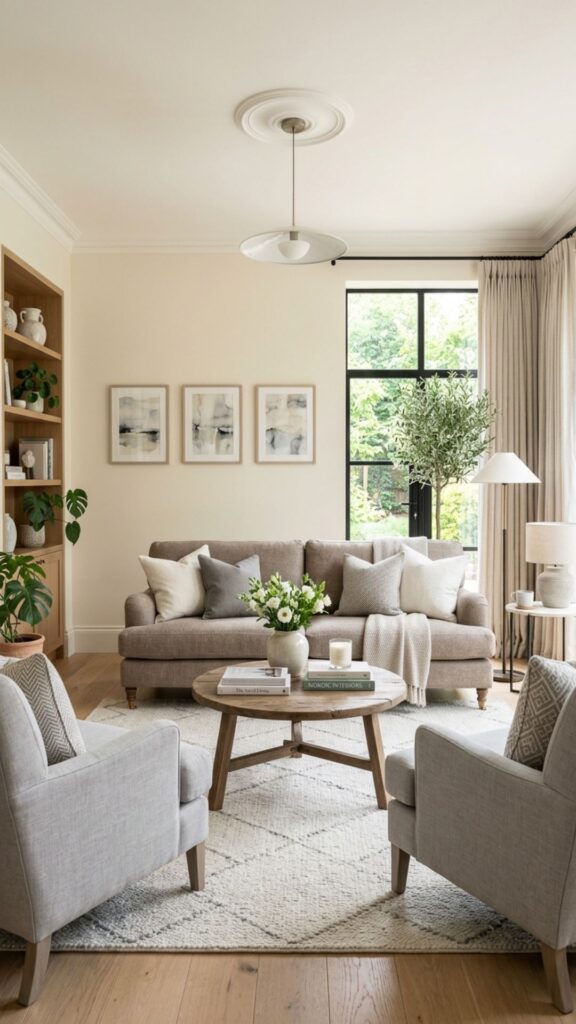
A tight, consistent color scheme makes a small room feel calm and intentional. Pick three to four colors and repeat them across furniture, textiles, and accents. Cohesion reads as sophistication.
Too many competing colors chop the space into busy fragments. When your palette flows, the eye moves smoothly from one area to the next, and the whole room feels larger and more relaxed.
11. Use a Rug to Define the Space
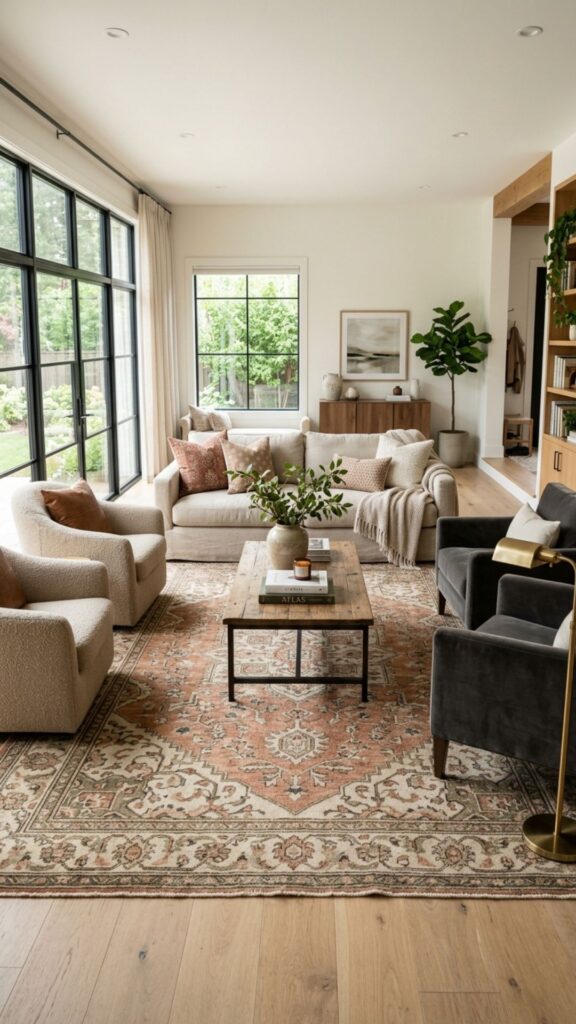
A well-sized rug anchors your seating and creates a defined zone, which is especially helpful in open-plan layouts. The trick is choosing the right size. A rug that’s too small makes everything feel disconnected.
Aim for a rug large enough that at least the front legs of your furniture sit on it. Light or neutral patterns keep things open, while a subtle texture adds warmth underfoot.
12. Embrace Wall Art the Right Way
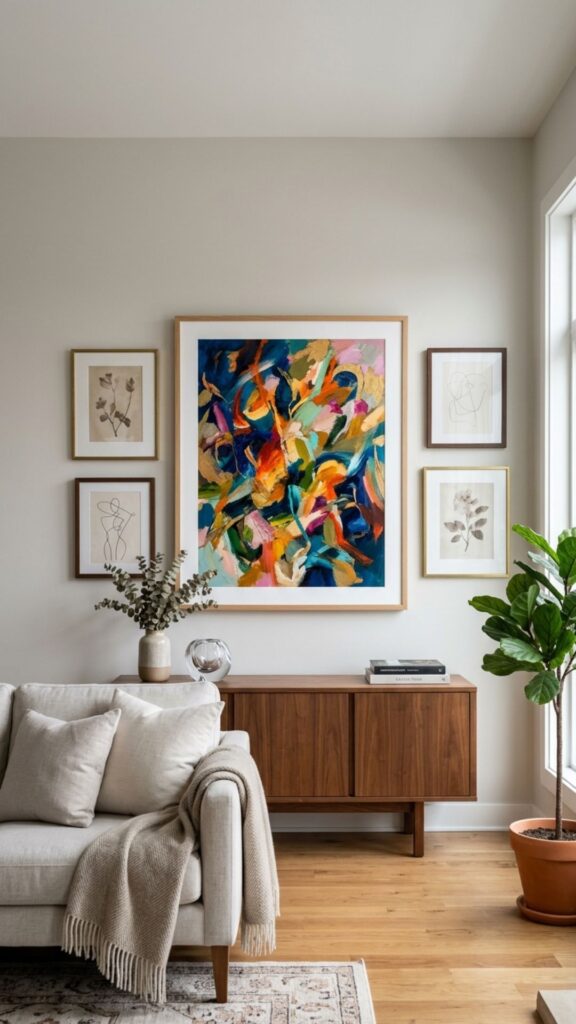
Blank walls waste opportunity, but overcrowded ones create chaos. One larger piece or a tidy gallery wall gives your room a personal, curated feel. Art draws the eye and adds character without taking floor space.
Hang pieces at eye level and keep frames in a consistent style or color for cohesion. In tight spaces, vertical arrangements guide the eye up and make ceilings feel higher.
13. Opt for Glass and Acrylic Furniture
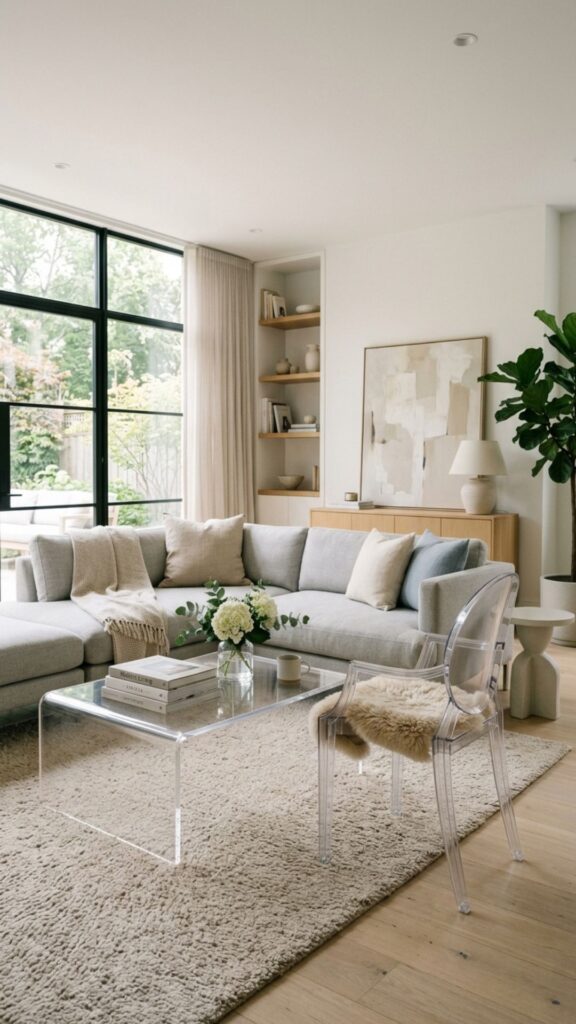
Transparent pieces take up physical space without visually blocking the room. A glass coffee table or an acrylic side chair lets your eye pass right through, which keeps things feeling open.
These materials work beautifully in small rooms because they almost disappear. Just keep them clean, since fingerprints show. The payoff is a light, uncluttered look that heavier pieces can’t match.
14. Create a Focal Point
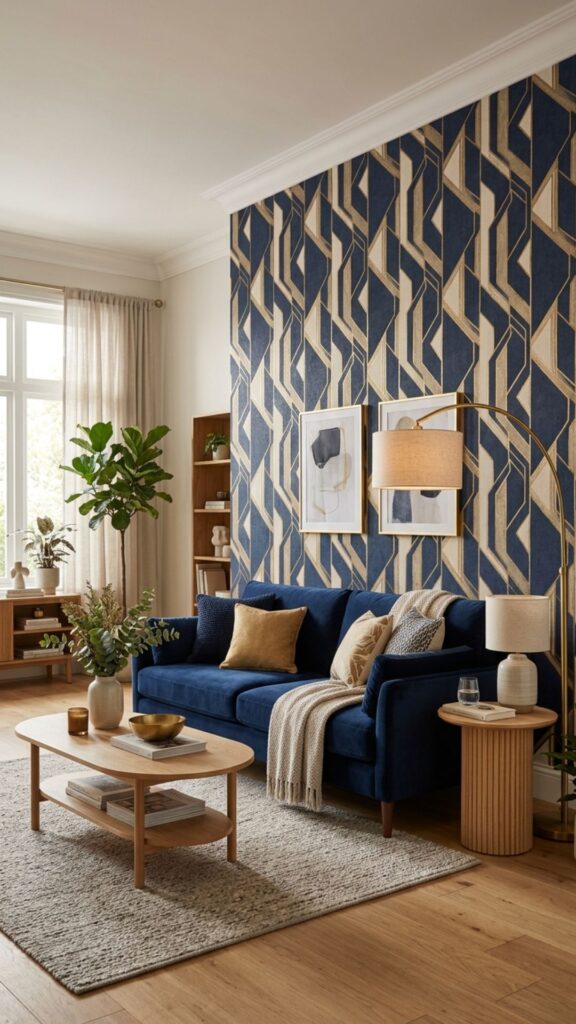
Every room needs one spot that anchors the eye. In a small living room, this might be a piece of art, a stylish shelf, or a well-dressed sofa. A clear focal point keeps the space from feeling scattered.
Once you’ve chosen it, arrange everything else to support it. This gives your room a sense of order and purpose, which reads as thoughtful design rather than random decorating.
15. Declutter and Edit Ruthlessly
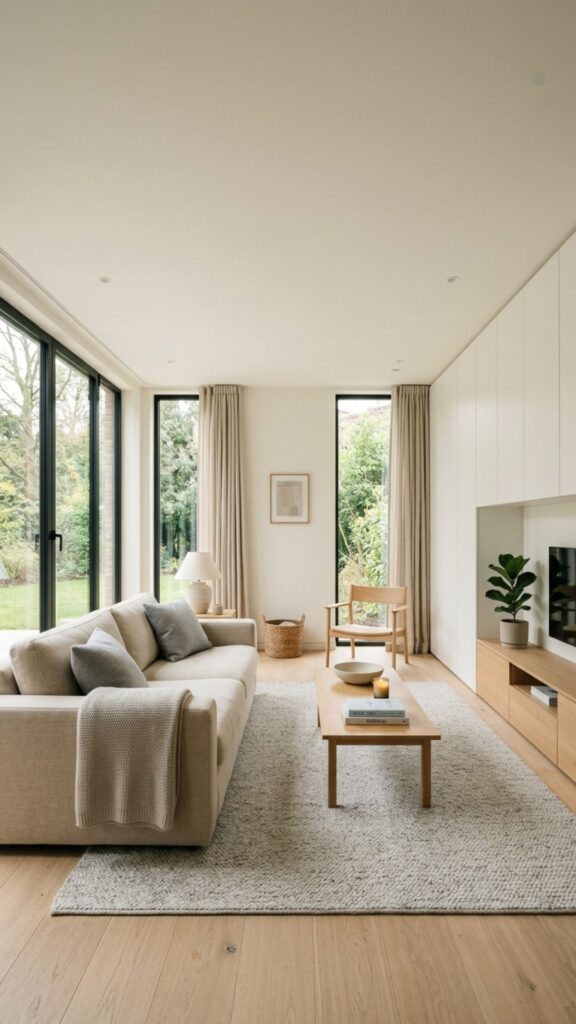
The fastest way to an aesthetic small living room is owning less. Clutter shrinks a space faster than anything. Clear surfaces, tucked-away cords, and hidden storage instantly elevate the look.
Go through your decor and keep only what you love or use. Empty space isn’t a problem to fill. In a small room, breathing room is part of what makes it feel calm and intentional.
16. Use Mirrored or Reflective Accents
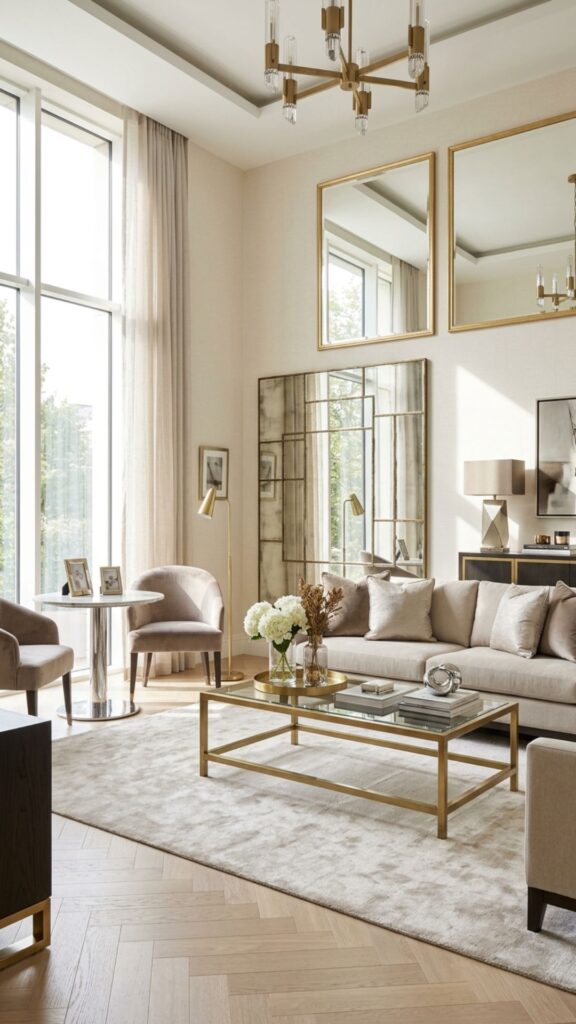
Beyond a big statement mirror, small reflective touches add sparkle and light. Think metallic vases, a mirrored tray, or glossy ceramic pieces. These catch light and add subtle dimension.
Scatter a few across your space without overdoing it. Reflective surfaces make a room feel brighter and more polished, which is exactly the aesthetic most small spaces are missing.
17. Choose Sofas With a Slim Profile
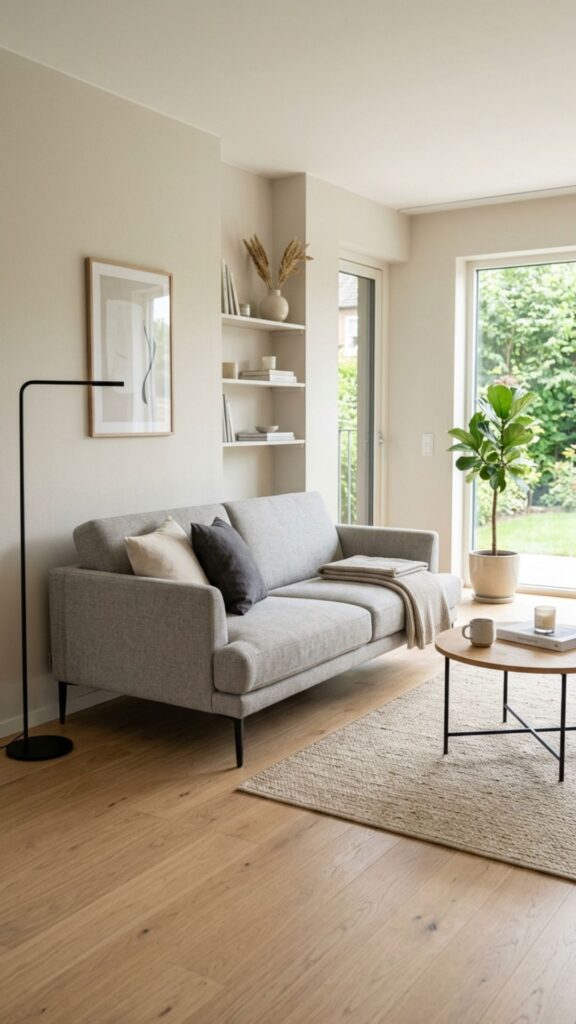
A giant sectional in a small living room fights the space. Instead, look for a compact loveseat or an apartment-sized sofa with clean lines. A slimmer silhouette leaves room to move and breathe.
Two-seaters and armless sofas are great options. You can always add floor cushions or a pouf for extra seating when guests come over, then tuck them away afterward.
18. Add Texture for Depth and Warmth
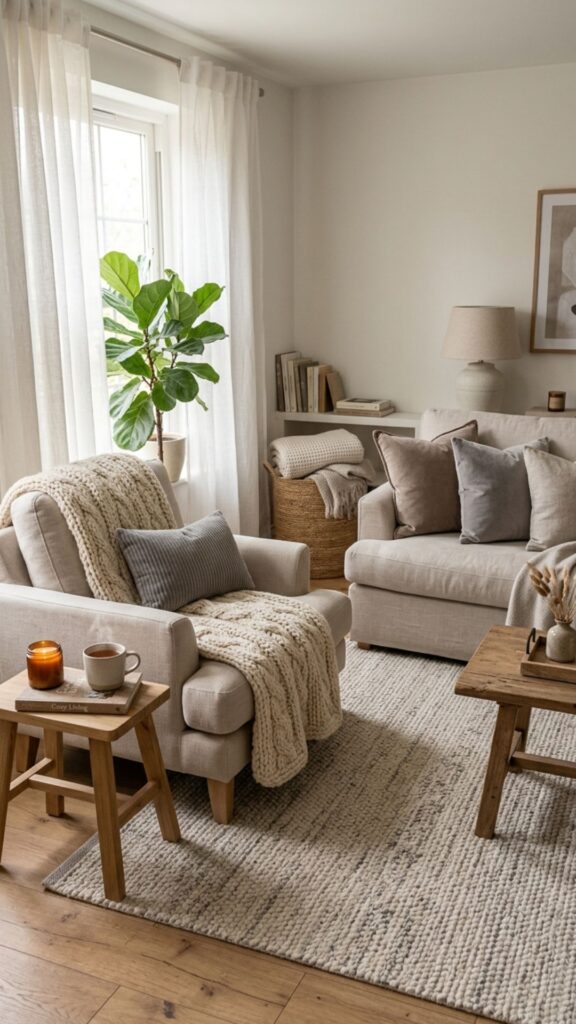
When you keep colors neutral, texture does the heavy lifting. Mix a chunky knit throw, a woven basket, a velvet pillow, and a linen curtain. Layered textures make a space feel rich and cozy.
Without texture, a neutral room can feel flat. These tactile details create visual interest that keeps a small living room from looking bland, all while maintaining a clean and airy aesthetic.
19. Try a Corner Reading Nook
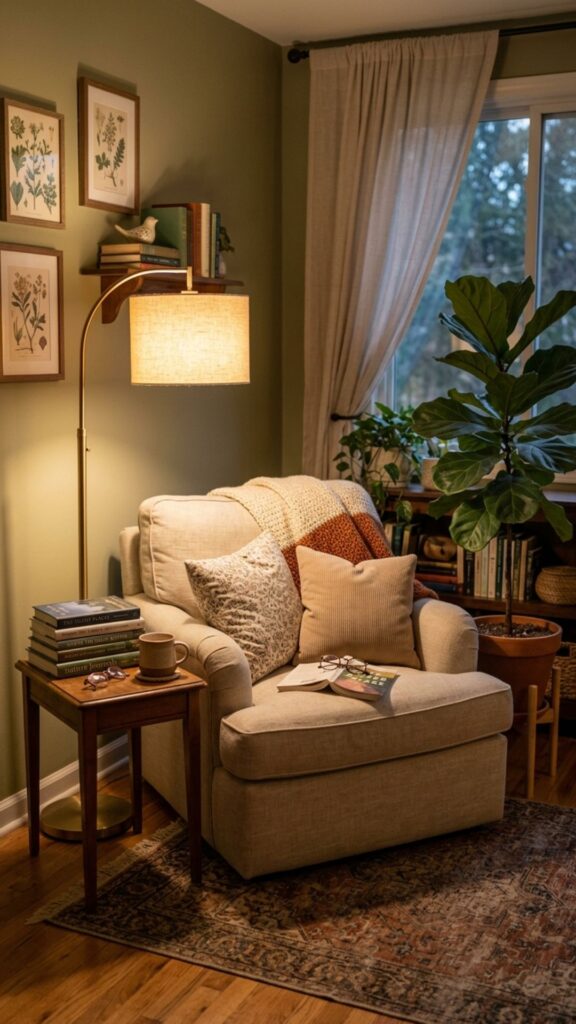
Corners often go to waste in small rooms, but they’re perfect for a cozy reading nook. A comfortable chair, a small side table, and a lamp turn dead space into something useful and charming.
Add a soft throw and a plant nearby, and you’ve created a little retreat. This makes your living room feel more functional and thoughtfully designed without stealing your main seating area.
20. Keep the Floor as Clear as Possible
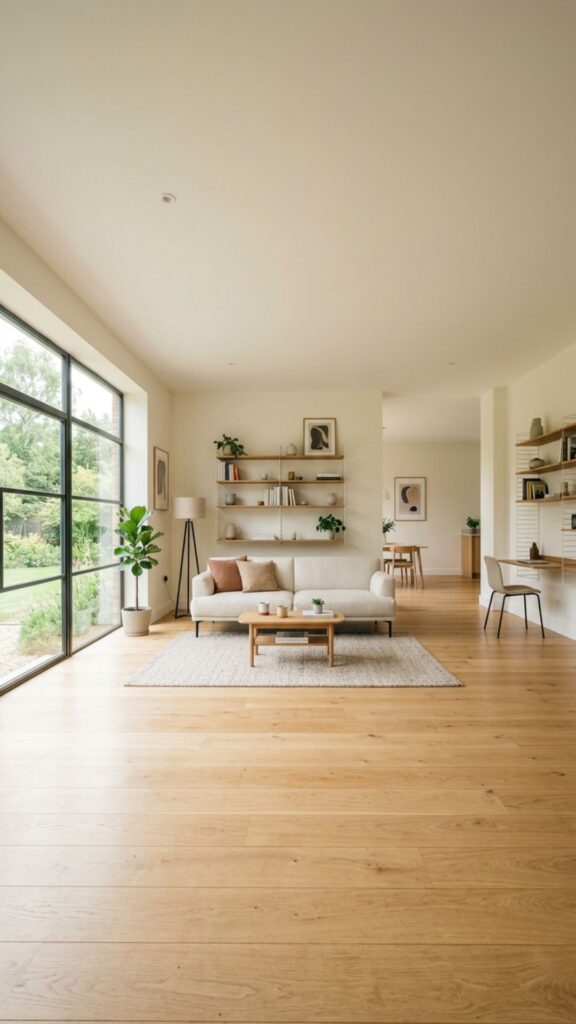
Visible floor equals visible space. The more floor you can see, the bigger your room feels. Wall-mounted shelves, floating consoles, and leggy furniture all help keep the ground open.
Resist the urge to fill every corner. A clear floor gives your eye room to rest and makes the entire room feel more spacious. Sometimes the best decor decision is what you choose to leave out.
Conclusion
Styling a small living room isn’t about squeezing in more. It’s about choosing well. Light colors, smart furniture, good lighting, and a little restraint go a long way toward creating a space that feels both bigger and more beautiful than its size suggests.
Pick two or three ideas from this list and try them this weekend. You don’t need a full makeover to see a difference. Start small, notice what works in your space, and build from there. Your dream aesthetic living room is closer than you think, so grab a paintbrush, rearrange that sofa, and get started today.
How can I make my small living room look bigger?
Use light, neutral wall colors, add a large mirror, keep the floor clear, and choose furniture with exposed legs. These four moves reflect light and create visual space, instantly making a small room feel more open and airy.
What colors are best for a small living room?
Light and neutral shades like soft white, warm beige, pale gray, and gentle sage work best. They reflect natural light and make walls recede, which helps a small room feel larger. Save bold colors for easily swappable accents.
How do I decorate a small living room on a budget?
Focus on high-impact, low-cost changes. Rearrange your furniture, declutter surfaces, add a few plants, and swap in new throw pillows or a rug. A fresh coat of light paint is affordable and dramatically transforms the space.
Should I put a rug in a small living room?
Yes. A properly sized rug defines your seating area and adds warmth. Choose one large enough that at least the front legs of your furniture rest on it. Light colors and subtle textures keep the space feeling open.
How much furniture is too much for a small living room?
If you can’t move comfortably or the floor is barely visible, you have too much. Stick to essential pieces with slim profiles and multifunctional features. Leaving open space is key to an airy, aesthetic look.