A cramped living room can make even the coziest apartment feel like it’s shrinking around you. But here’s the good news: after years of styling tight spaces and helping renters transform boxy rooms into airy retreats, I can tell you that square footage isn’t everything.
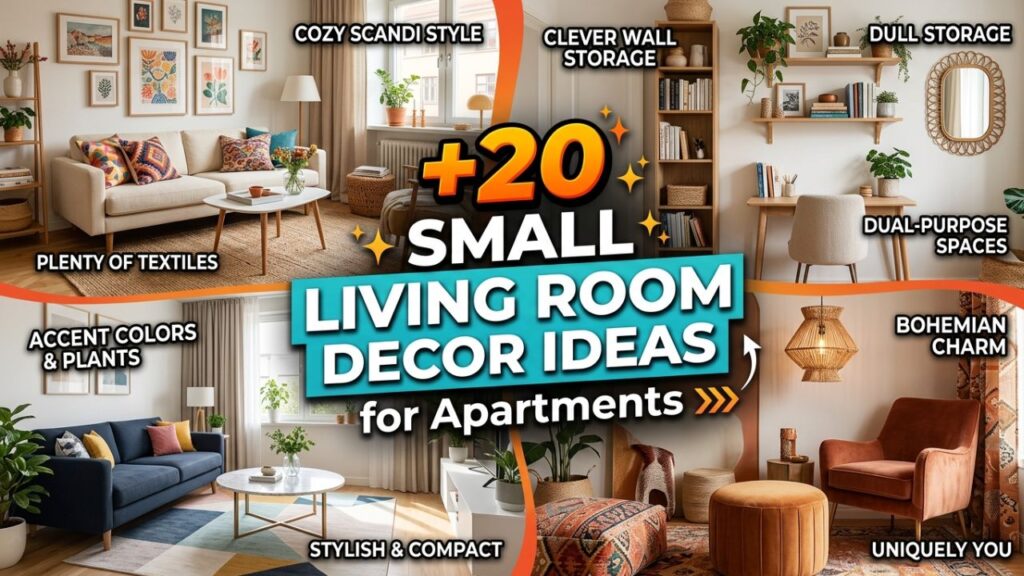
The right small living room decor ideas for your apartment can trick the eye, open up the walls, and give you room to breathe—without knocking down a single wall.
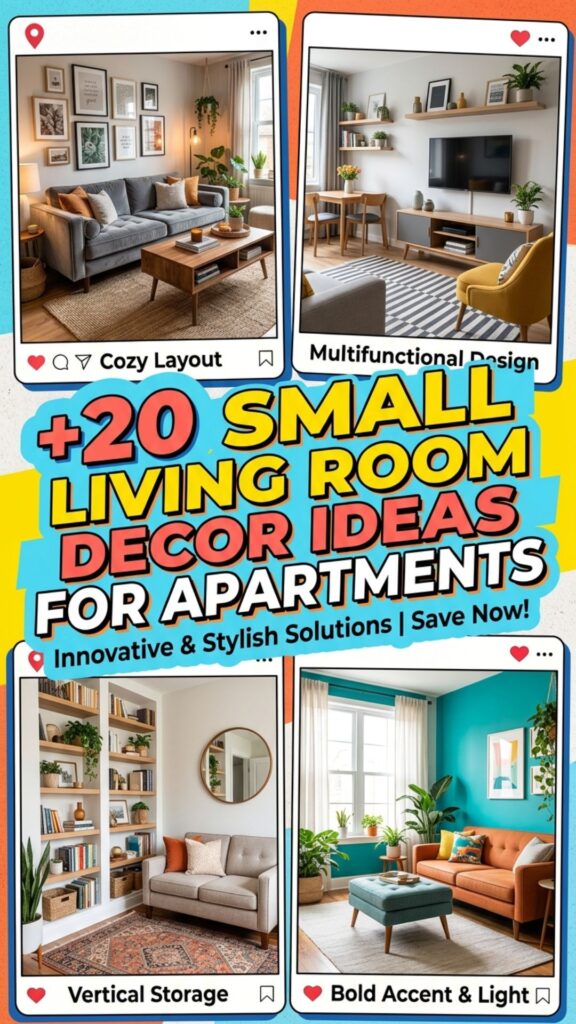
Below, you’ll find 20 practical, tested ideas you can start using this weekend. Some cost nothing but an afternoon of rearranging. Others involve a smart purchase or two. All of them are designed to help your apartment feel bigger, brighter, and more like home.
1. Choose a Light, Cohesive Color Palette
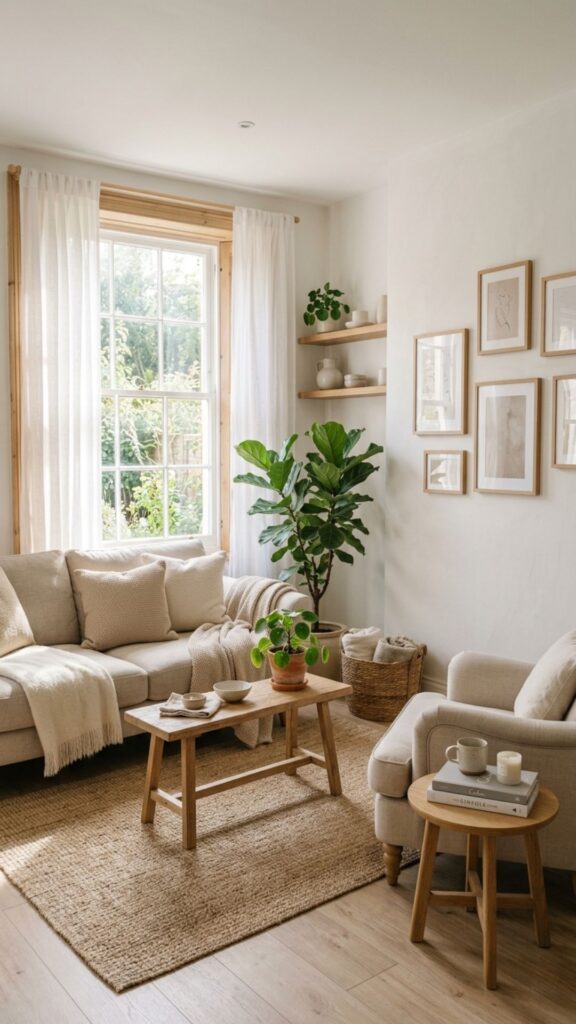
Light colors bounce sunlight around a room, which instantly makes walls feel further apart. Soft whites, warm greys, pale blues, and gentle beige tones all work beautifully in compact spaces. Sticking to two or three shades across your walls, furniture, and textiles keeps the eye moving smoothly instead of stopping at every color change.
I once painted a client’s dim north-facing living room a warm off-white, and she swore we’d added a window. That’s the power of a unified palette. If you rent and can’t paint, layer in light-toned throws, cushions, and curtains to get a similar effect without losing your deposit.
2. Hang Curtains High and Wide
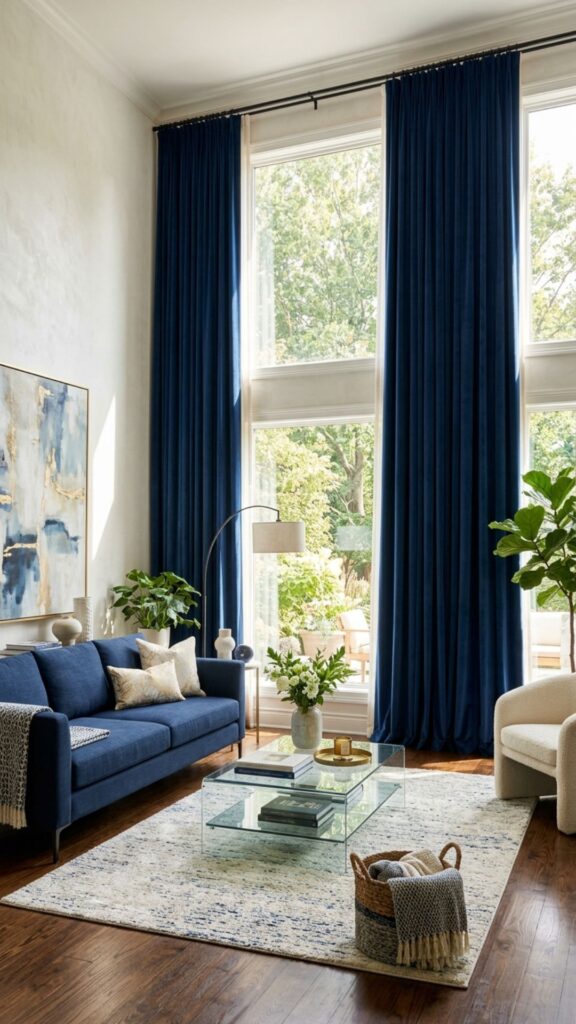
Where you mount your curtain rod matters more than the curtains themselves. Fix the rod close to the ceiling and extend it a few inches past each side of the window. This draws the eye upward and makes windows look grander than they are.
Floor-length panels that just kiss the floor add height too. Skip short, cafe-style curtains in small rooms—they chop the wall in half and make ceilings feel lower. Sheer fabrics are a bonus because they let daylight flood in.
3. Use Mirrors to Double the Space
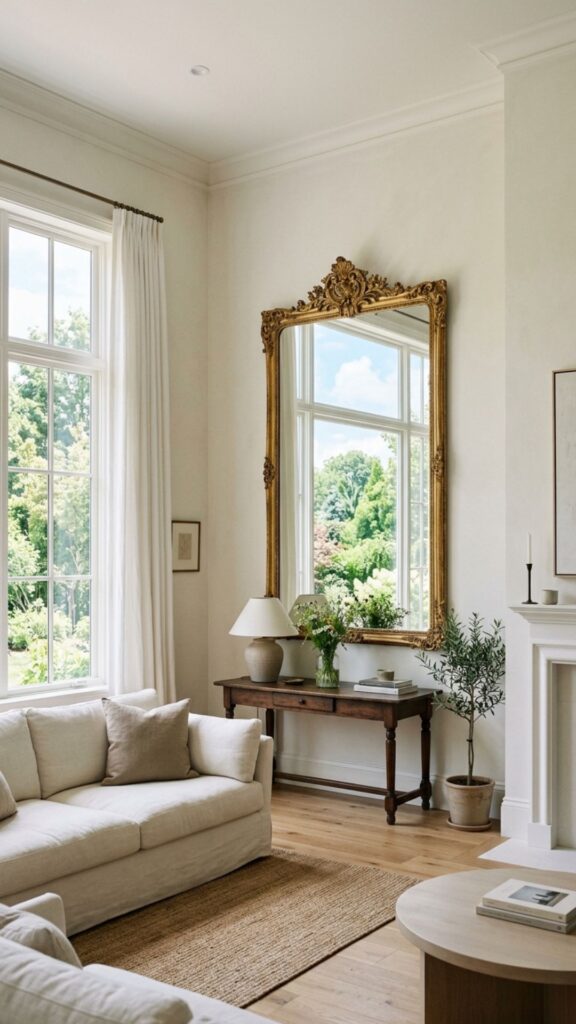
A well-placed mirror is the oldest trick in the designer’s book, and it still works. Position a large mirror opposite a window, and it reflects natural light and outdoor views back into the room, essentially doubling your sense of space.
For maximum impact, lean an oversized floor mirror against a wall or hang a grouping of smaller mirrors as a gallery. Round mirrors soften boxy rooms, while a full-length rectangular mirror can make a low ceiling feel taller.
4. Pick Furniture With Exposed Legs
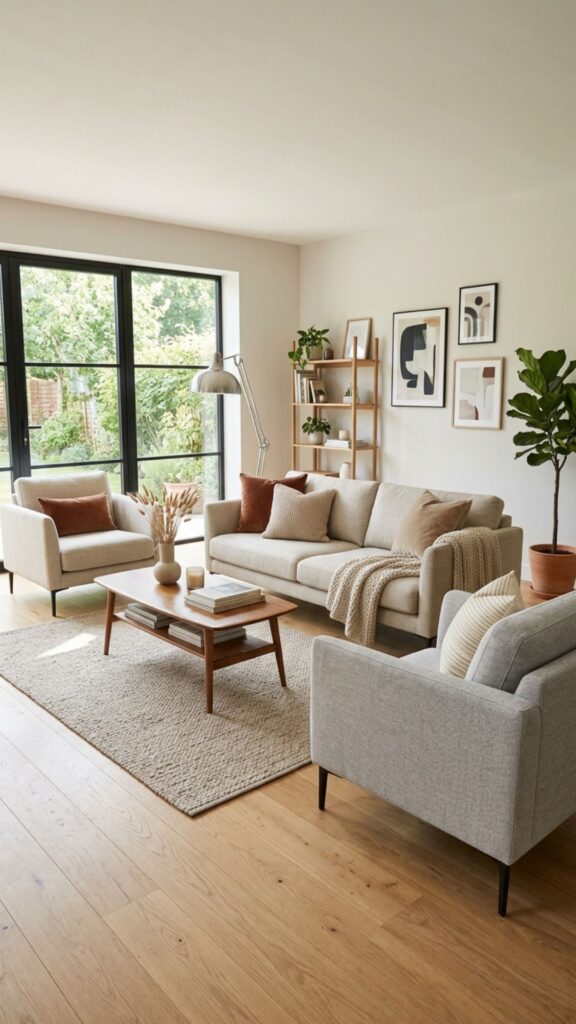
Chunky, skirted sofas that sit flush to the floor eat up visual space. Furniture raised on slim legs lets light and air flow underneath, which makes the whole room feel lighter.
Look for sofas, chairs, and consoles with tapered wooden or metal legs. That little glimpse of floor beneath your pieces goes a long way. It’s a subtle change, but stand back and you’ll notice the room instantly feels more open.
5. Scale Down With Apartment-Sized Sofas
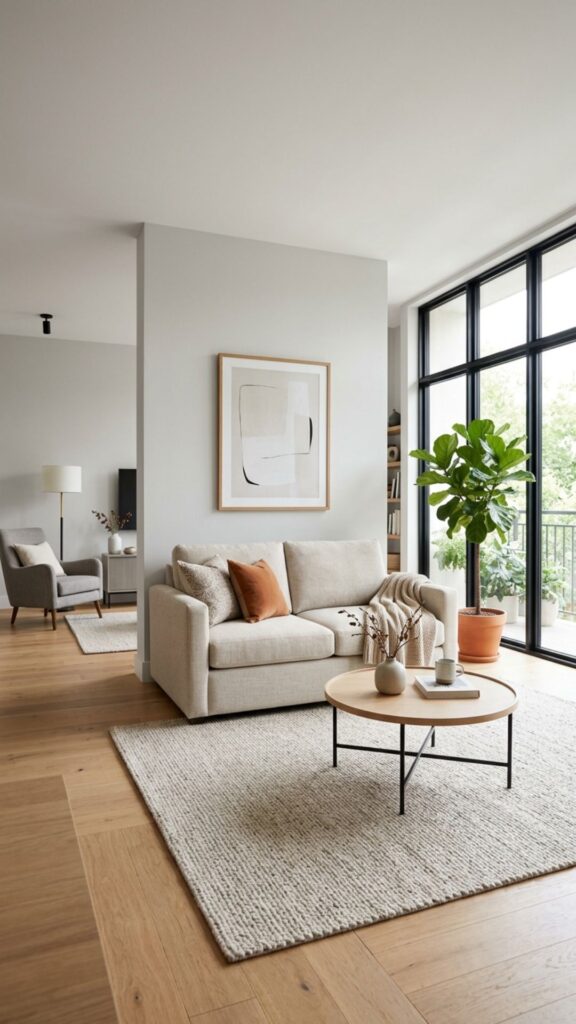
A giant sectional in a tiny living room is a common mistake. Instead, hunt for loveseats or apartment-scale sofas measuring around 70 to 80 inches wide. They still seat two or three people comfortably without dominating the floor.
Measure your space before you buy, and use painter’s tape to outline the footprint on the floor. This quick experiment shows you exactly how much walking room you’ll have left. Your future self, carrying groceries around a bulky couch, will thank you.
6. Embrace Multi-Functional Furniture
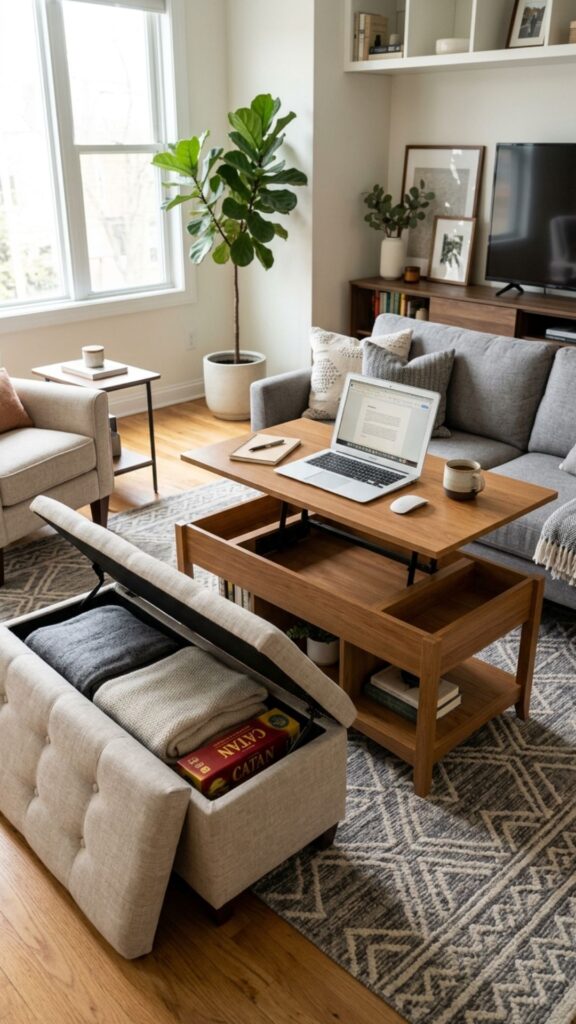
In small apartments, every piece should earn its keep. A storage ottoman doubles as a coffee table, footrest, and hidden bin for blankets. A sofa bed welcomes overnight guests without a spare room.
Nesting tables tuck away when you don’t need them and spread out when you host. Look for lift-top coffee tables that hide clutter or convert to a workspace. These clever hybrids cut down on the number of items you need, freeing up precious floor space.
7. Go Vertical With Shelving
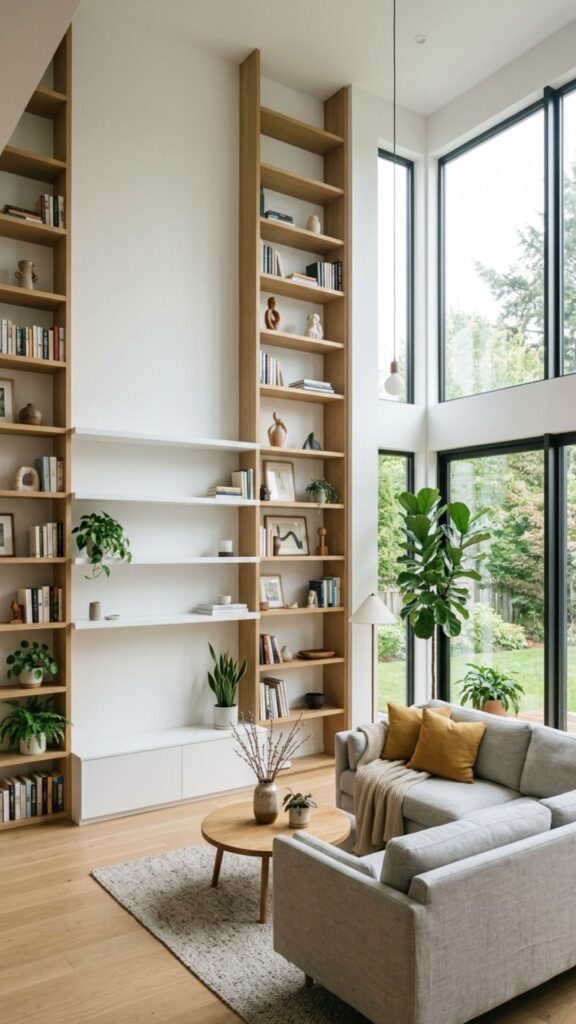
When floor space runs out, look up. Tall, narrow bookshelves draw the eye toward the ceiling and add storage without spreading across the room. Wall-mounted floating shelves keep the floor clear entirely.
Style shelves with a mix of books, small plants, and a few decorative objects—but leave some empty space so they don’t feel cluttered. A vertical arrangement makes your ceilings feel higher and gives your living room a custom, built-in look.
8. Let in as Much Natural Light as Possible
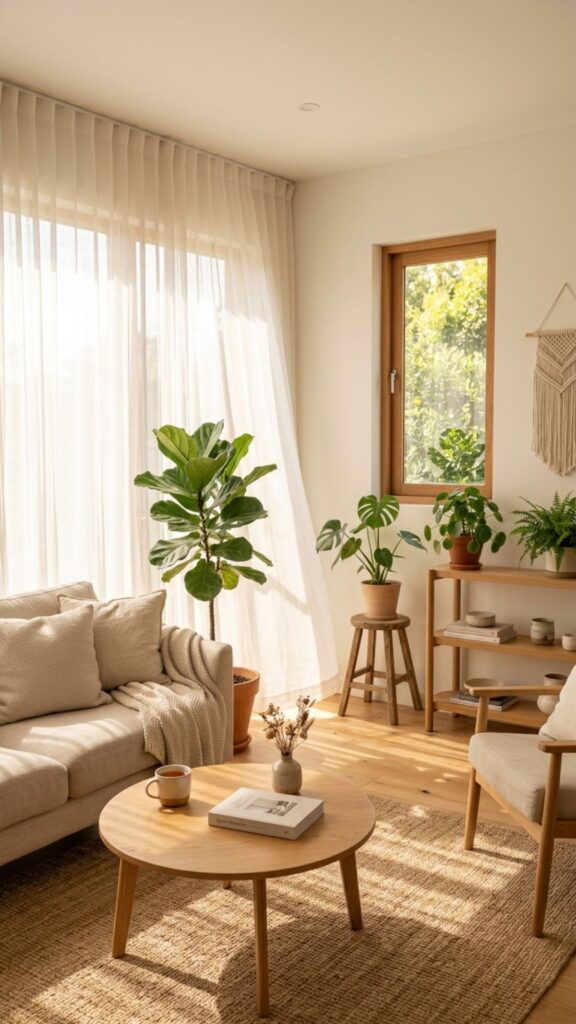
Nothing opens a room like sunlight. Keep windows clear of bulky furniture and heavy drapes. Trade dark blinds for sheer shades or simple roller blinds that disappear when raised.
Clean your windows regularly—it sounds obvious, but grime dulls the light noticeably. If privacy is a concern, frosted window film lets light through while keeping prying eyes out. More light equals a bigger-feeling room, every time.
9. Keep the Floor Clear
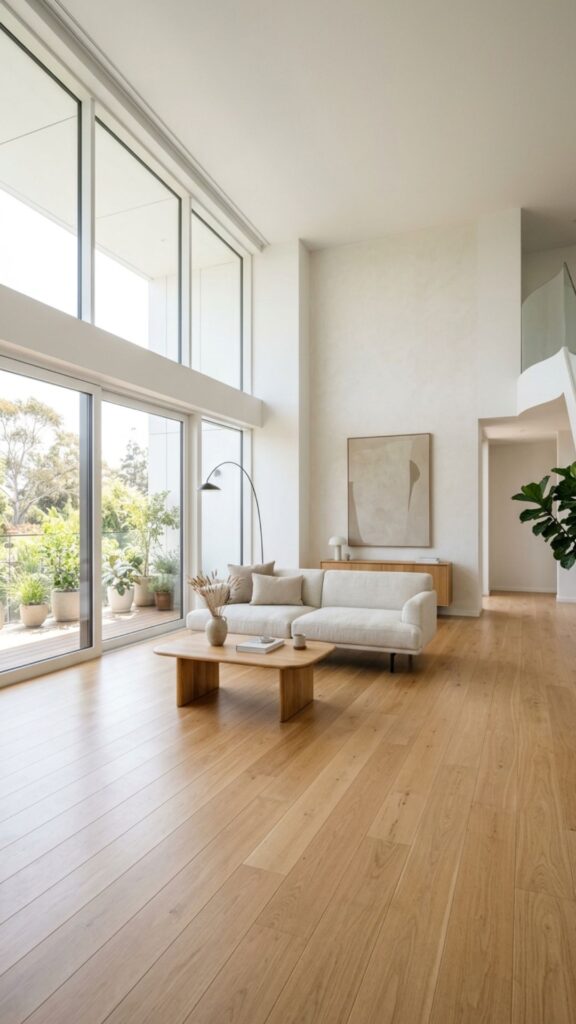
Visible floor space signals openness to the brain. The more bare floor you can see, the larger the room reads. Wall-mount your TV instead of using a bulky stand, and choose furniture that floats on legs rather than sitting flat.
Resist the urge to fill every corner. A little breathing room around your pieces feels intentional and calm. Store extra items in closets or under the bed so your living room stays visually light.
10. Add a Large Area Rug
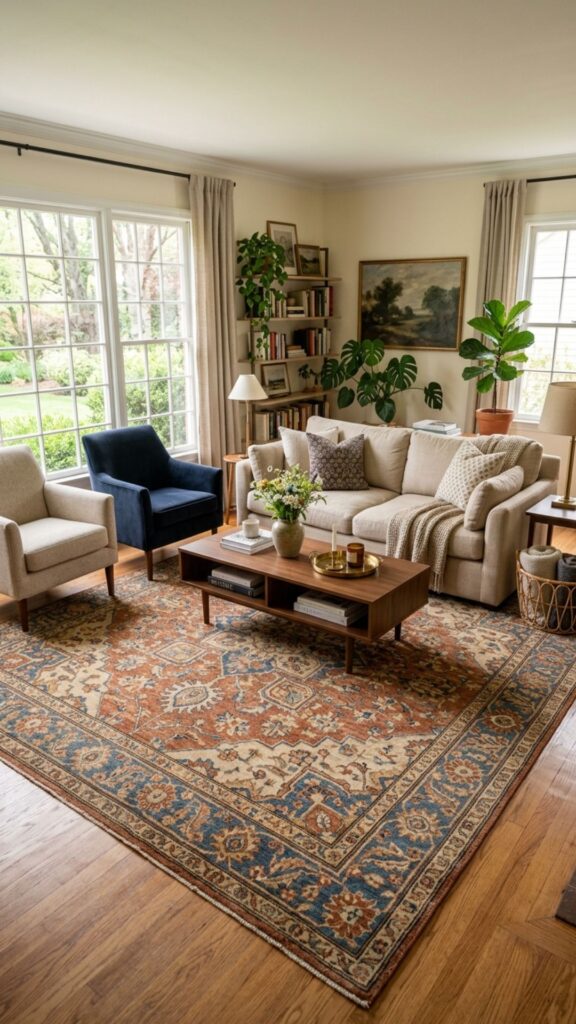
It feels counterintuitive, but a small rug actually makes a room look smaller. A too-tiny rug floating in the center creates a choppy, disconnected feel. Instead, choose a rug large enough that at least the front legs of your furniture sit on it.
A generous rug ties the seating area together and defines the space as one cohesive zone. Light, low-contrast patterns work best in small rooms. Save the bold, busy prints for larger spaces where they have room to breathe.
11. Use Vertical Lines to Add Height
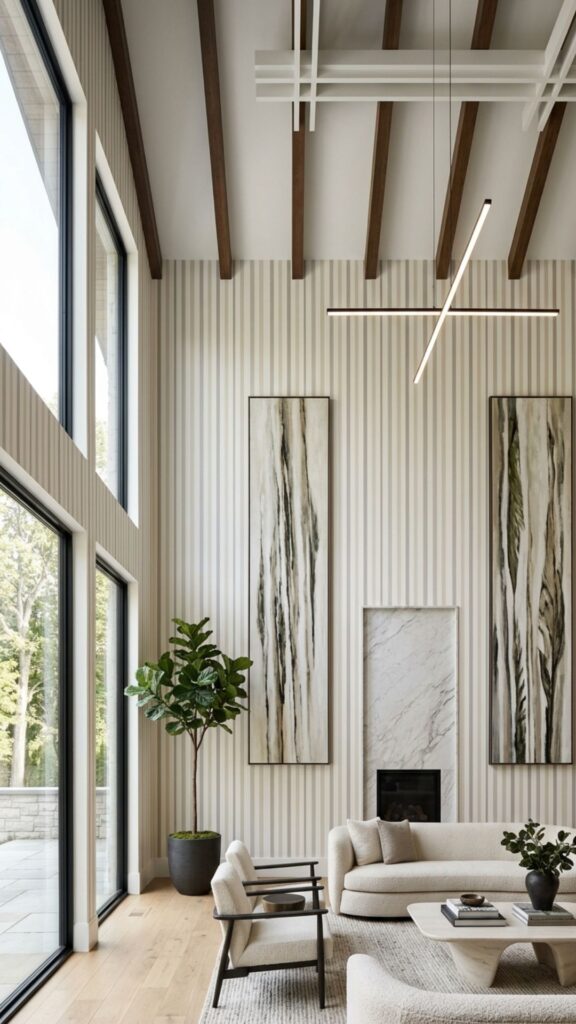
Striped wallpaper, tall bookcases, and vertical wall art all trick the eye into perceiving more height. A single column of framed prints stacked vertically can make an eight-foot ceiling feel noticeably taller.
Vertical paneling or board-and-batten treatments (renter-friendly versions use removable adhesives) create the same lifting effect. The idea is simple: guide the eye upward, and the whole room feels more spacious.
12. Choose Transparent and Reflective Materials
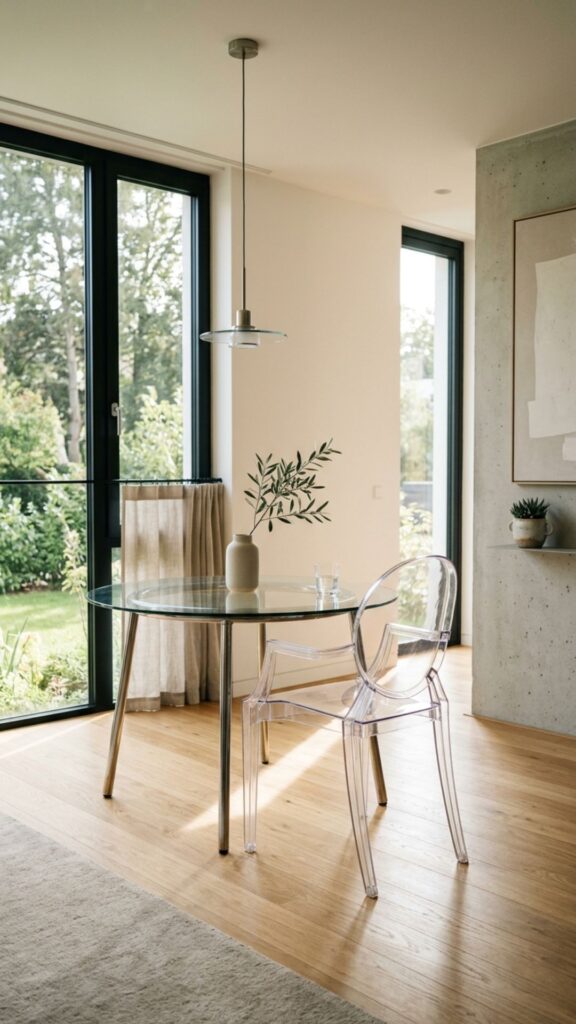
Glass and acrylic furniture practically vanish in a room, making them ideal for tight spaces. A glass coffee table or a clear acrylic chair provides function without adding visual bulk.
Metallic accents and glossy finishes reflect light, adding a sense of airiness. A mirrored side table or a lucite console keeps sightlines open. Because you can see through or around these pieces, the room never feels crowded.
13. Declutter Ruthlessly and Often
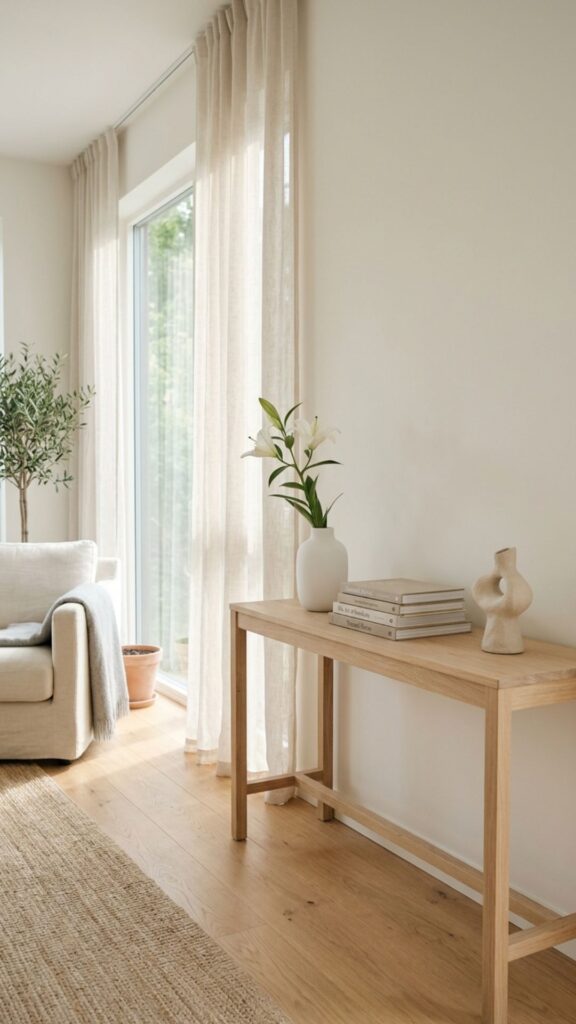
The fastest way to make any small living room feel bigger costs nothing at all. Clutter shrinks a space visually and mentally. Do a monthly sweep and donate or store anything you haven’t used.
Keep surfaces mostly clear, with just a few curated items on display. Baskets and closed storage hide the odds and ends that pile up. A tidy room instantly feels roomier, and it’s far easier to relax in.
14. Create a Focal Point
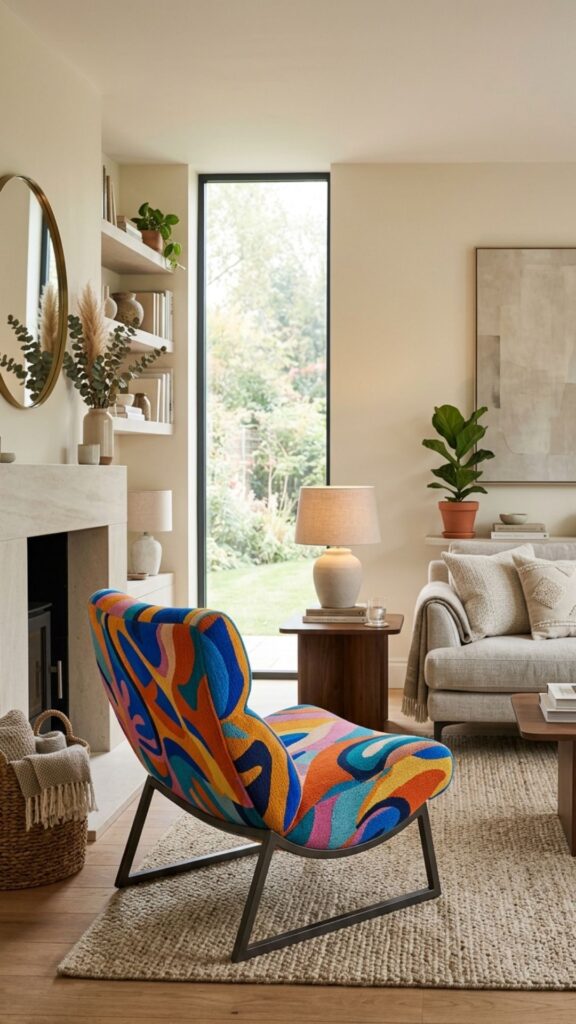
Every room needs one spot for the eye to land. A statement piece of art, a bold accent chair, or a framed window view gives the room purpose and stops it from feeling scattered.
In small spaces, one strong focal point beats several competing ones. Arrange your furniture to face it. This creates a sense of order and makes the room feel designed rather than cramped, even when space is tight.
15. Float Your Furniture
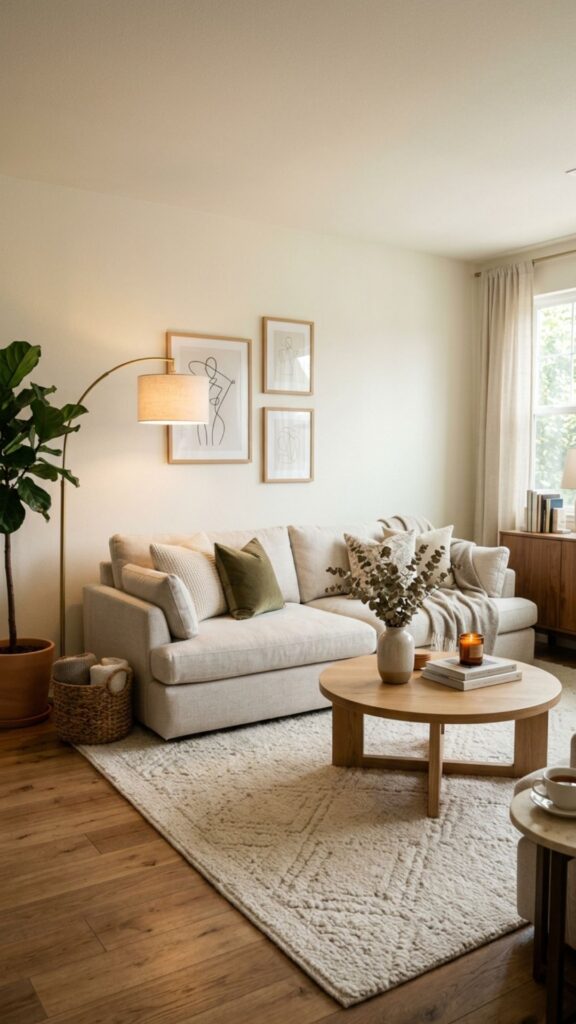
Pushing every piece against the wall seems space-smart, but it often makes rooms feel boxy and awkward. Pulling seating a few inches away from the walls creates gentle flow and a cozier conversation area.
Angle a chair or position your sofa to define zones within an open layout. Even in a studio, this technique separates your living area from the rest of the room. Give it a try—the difference in how the space feels is surprising.
16. Bring in Greenery Thoughtfully
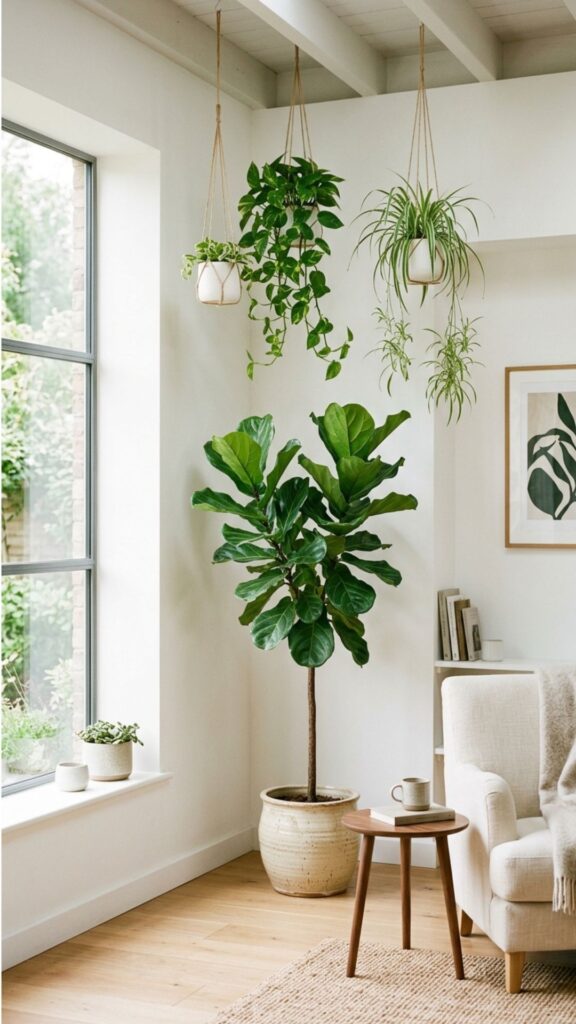
Plants add life and color without eating up much room. A tall plant like a fiddle-leaf fig in a corner draws the eye upward, while trailing pothos on a shelf softens hard edges.
Stick to a few well-chosen plants rather than a jungle. Hanging planters and wall-mounted pots keep surfaces free. Greenery also improves air quality and adds a fresh, welcoming vibe to your apartment living room.
17. Layer Your Lighting
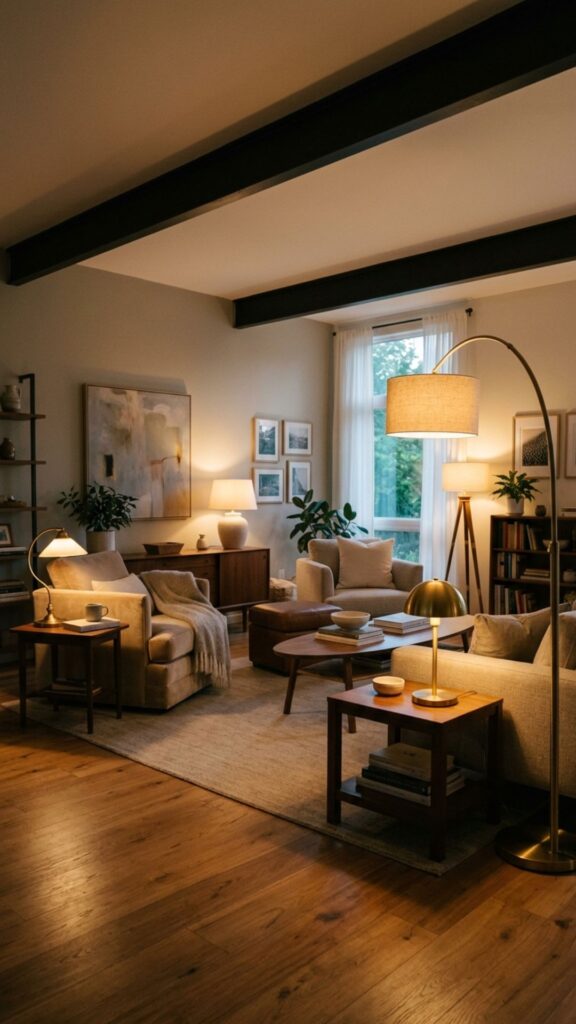
One harsh overhead light flattens a room and highlights how small it is. Instead, layer lighting at different heights—a floor lamp, a table lamp, and maybe some string lights or a wall sconce.
This creates depth and shadow, which makes a space feel larger and more inviting. Wall sconces and pendant lights free up table space too. Warm bulbs (around 2700K) cast a cozy glow that flatters both the room and your guests.
18. Match Your Furniture to the Walls
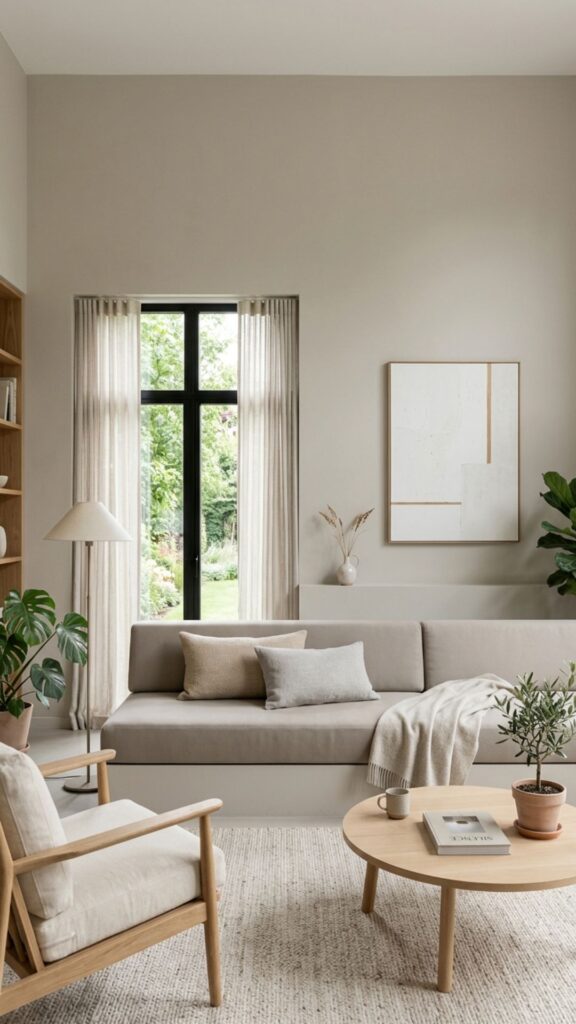
When your sofa and larger pieces blend with your wall color, the furniture seems to recede rather than stand out. This monochromatic approach keeps the room from looking chopped up.
A grey sofa against a soft grey wall, for example, reads as one smooth surface. You can still add personality through cushions, throws, and art. The base layer stays calm, and the room feels bigger and more serene.
19. Use Wall-Mounted and Fold-Down Solutions
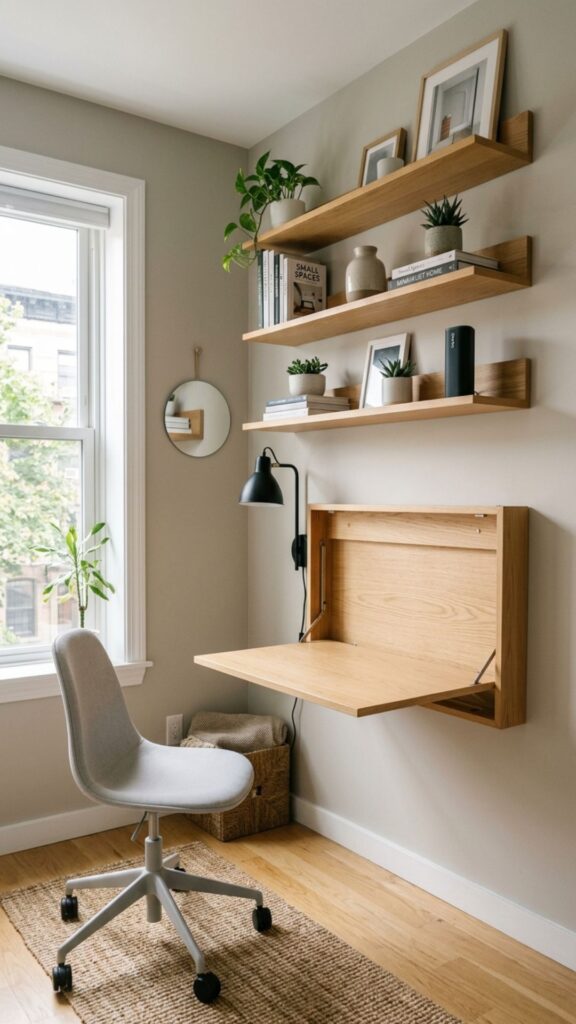
When floor space is at a premium, take advantage of your walls. A wall-mounted desk folds down when you need it and disappears when you don’t. Floating nightstands and wall shelves keep the floor open.
These solutions are especially handy in studio apartments where the living room does double duty. Renters can find plenty of no-drill, adhesive-mounted options that protect walls. The result is a flexible space that adapts to your day.
20. Keep Décor Proportional
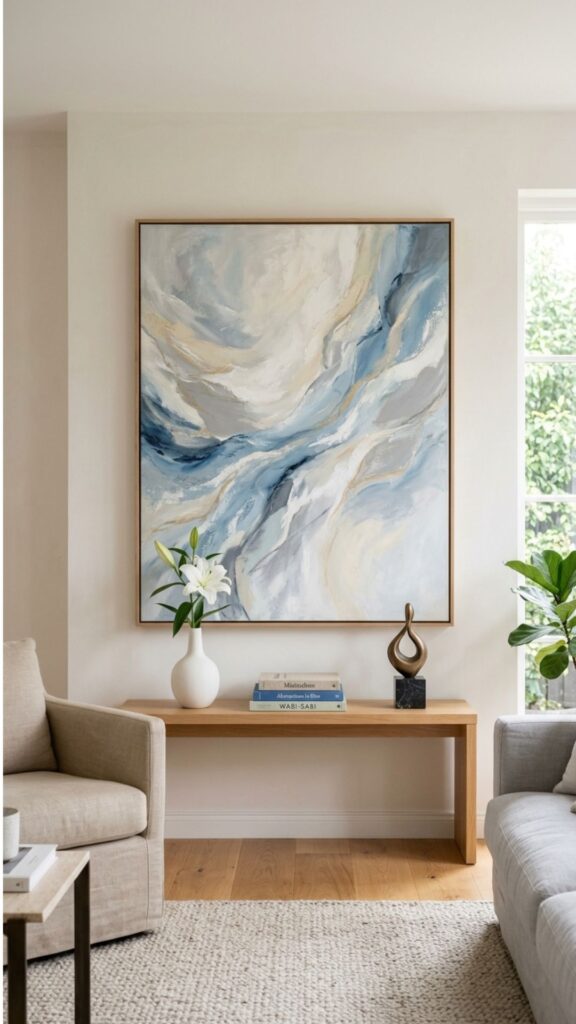
Oversized art and giant accessories overwhelm a small room, while too many tiny items create visual noise. Aim for a balance—one large piece of art can anchor a wall better than a dozen little frames.
Choose a few well-scaled accessories rather than crowding every surface. Proportion is the quiet secret behind rooms that feel calm and spacious. When each item fits the room’s scale, everything looks intentional and open.
Bringing It All Together
You don’t need a bigger apartment to enjoy a living room that feels open, bright, and welcoming. By combining a few of these small living room decor ideas—light colors, smart furniture, clever storage, and thoughtful lighting—you can completely transform how your space feels and functions.
Start with one or two changes this week. Declutter a surface, rehang your curtains, or float your sofa away from the wall. Small tweaks add up fast. Ready to reclaim your space? Pick your favorite idea from this list and put it into action today—your bigger-feeling living room is waiting.
How can I make my small apartment living room look bigger?
To make a small apartment living room look bigger, use light paint colors, hang mirrors opposite windows, choose furniture with exposed legs, keep the floor clear, and maximize natural light. These simple changes create the illusion of more space without any renovation.
What color makes a small living room look bigger?
Light, cool tones like soft white, pale grey, and light blue make a small living room look bigger because they reflect more light. A cohesive, monochromatic palette across walls and furniture keeps the eye moving smoothly, which expands the sense of space.
What furniture is best for a small apartment living room?
The best furniture for a small apartment living room includes apartment-scale sofas (70–80 inches wide), multi-functional pieces like storage ottomans and sofa beds, and items with slim, exposed legs. Transparent glass or acrylic tables also work well because they add function without visual bulk.
Should I push furniture against the wall in a small room?
Not always. Pulling furniture a few inches away from the walls often makes a small room feel larger and cozier by creating better flow. Floating your sofa or angling a chair helps define zones and stops the space from feeling boxy.
How do I decorate a small living room on a budget?
Decorate a small living room on a budget by decluttering, rearranging existing furniture, adding affordable mirrors and plants, and swapping short curtains for high-hung, floor-length panels. Removable wallpaper and thrifted accessories add style without a big spend.