Kitchen blinds do more than block glare. They shape how your kitchen feels, how much privacy you get, and how easy the room is to clean day to day. If you want a warm, lived-in look, wooden kitchen blinds are one of the simplest ways to add rustic charm without a full remodel.
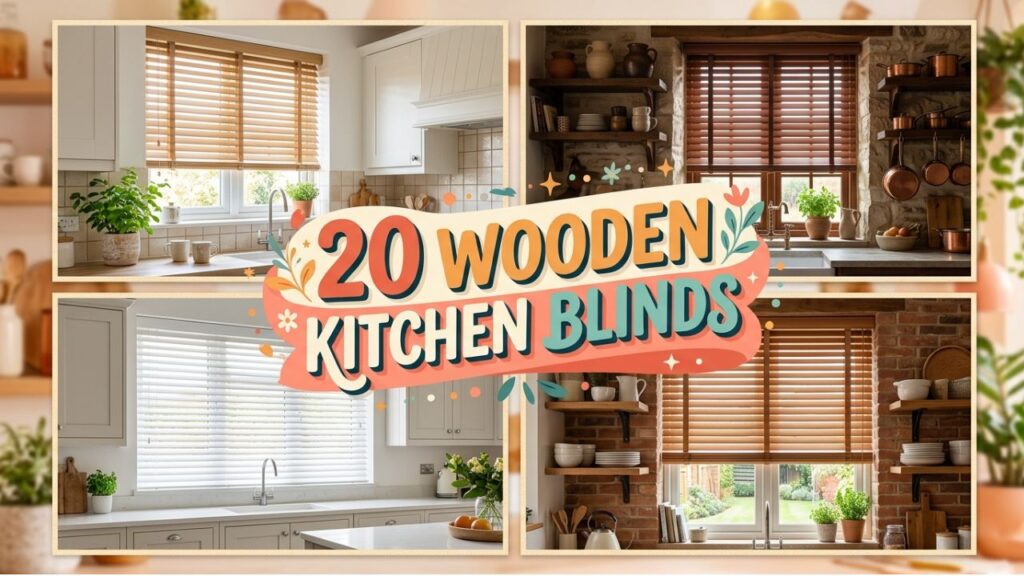
In this guide, you’ll find 20 wooden kitchen blinds ideas that blend style and function.
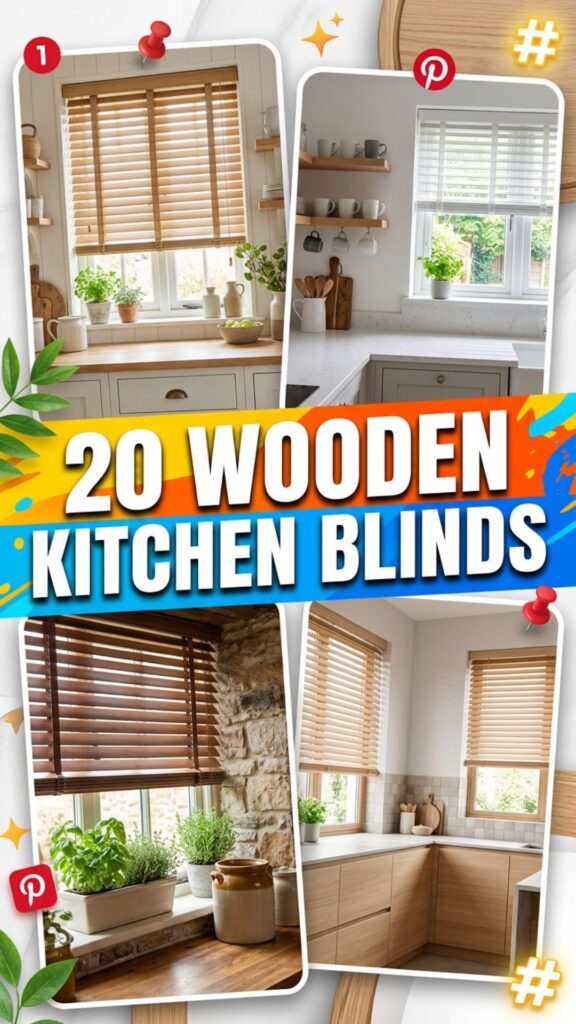
We’ll cover finishes, slat sizes, colors, and practical details that matter in a busy kitchen. You’ll also learn how to choose kitchen blinds that suit rustic spaces, handle moisture, and tie the whole room together.
Why wooden kitchen blinds work so well in rustic kitchens
Wood brings instant warmth to a space that can otherwise feel hard and cold. Kitchens often have tile, stone, metal, and painted cabinets, so wooden kitchen blinds help soften those surfaces and create balance. Even a small window can feel more finished with a natural wood texture.
They are also flexible in style. Some kitchen blinds lean farmhouse, while others feel more country, cottage, or modern rustic. The right stain, paint finish, and slat width can help you match your cabinets, flooring, beams, or dining furniture without making the room feel too busy.
How to choose kitchen blinds for a rustic look
Most people focus on color first, but texture matters just as much. A rich grain, matte finish, or slightly weathered look often feels more rustic than a smooth, glossy surface. If your kitchen gets a lot of steam or splashes, faux wood can give you the same look with better durability.
Before you buy, think about these basics:
- Moisture exposure: Choose faux wood near sinks or stoves
- Light control: Wider slats usually offer a stronger visual impact
- Color match: Tie blinds to floors, shelves, beams, or cabinet tones
- Cleaning needs: Smooth finishes are easier to wipe down
- Privacy: Consider liner options or tighter slat closure if needed
With that in mind, here are 20 kitchen blinds ideas that bring in rustic style.
1. Natural oak kitchen blinds for a light rustic feel
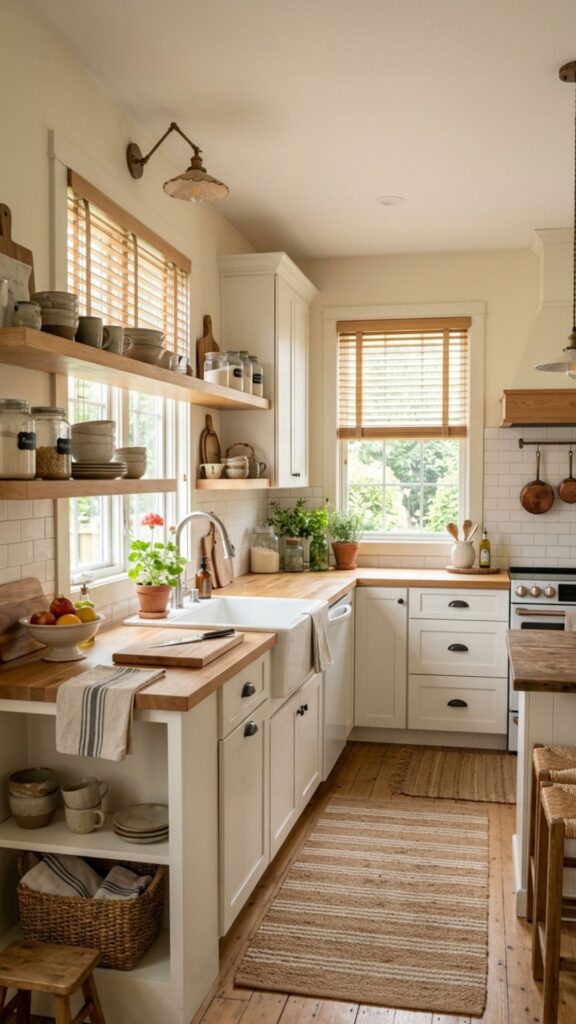
Natural oak kitchen blinds are a safe choice if you want warmth without making the room feel dark. Their soft golden tone works well with white cabinets, cream walls, and open shelving. They add texture in a subtle way, which makes them ideal for smaller kitchens.
This style also suits homes that mix rustic and modern details. If you have black hardware, marble-look counters, or simple shaker cabinets, oak blinds help bridge old and new. They feel relaxed rather than heavy.
2. Dark walnut kitchen blinds for rich contrast
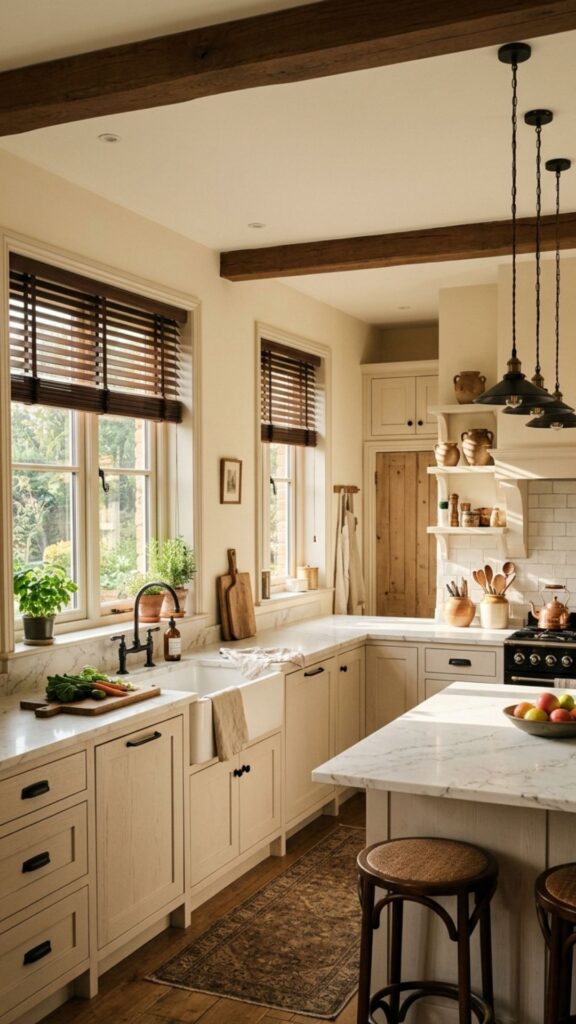
Dark walnut kitchen blinds create depth fast. They stand out beautifully against pale walls and light cabinetry, giving the room a more grounded look. If your kitchen feels too plain, this deeper wood tone can make it look more layered and intentional.
These blinds work especially well in larger kitchens with lots of natural light. In a dim room, they can feel a bit weighty, so it helps to pair them with lighter textiles or open upper shelving. That keeps the rustic style balanced.
3. Whitewashed wooden blinds for a farmhouse kitchen
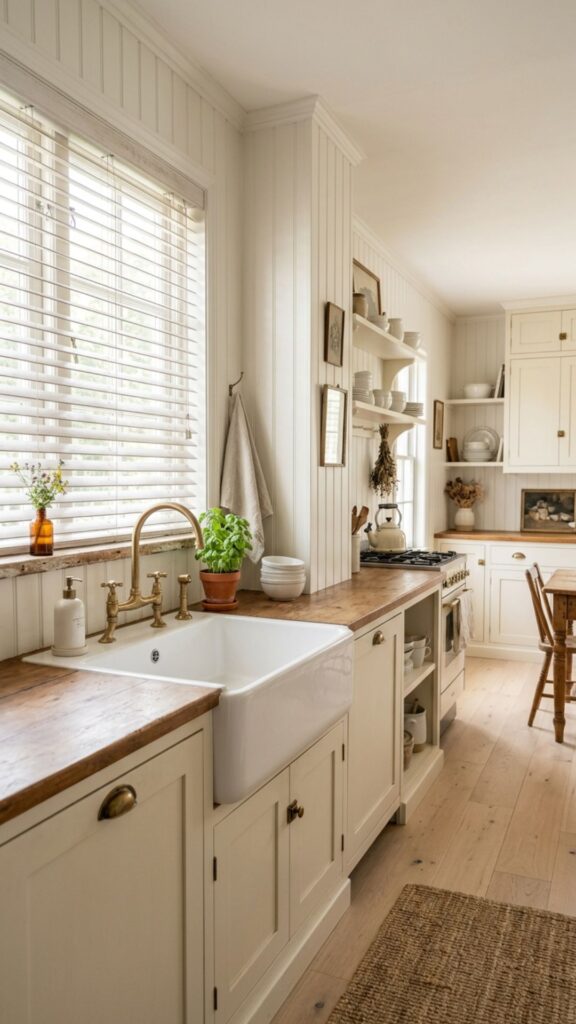
Whitewashed kitchen blinds bring in wood texture while keeping the palette airy. They are a smart fit for farmhouse kitchens where you want a touch of age and character but still want the room to feel bright and clean.
This finish looks great with beadboard, apron-front sinks, and vintage-style fixtures. It also pairs well with pale wood floors and soft gray accents. The result feels relaxed and welcoming, not overly styled.
4. Reclaimed-look kitchen blinds with visible grain
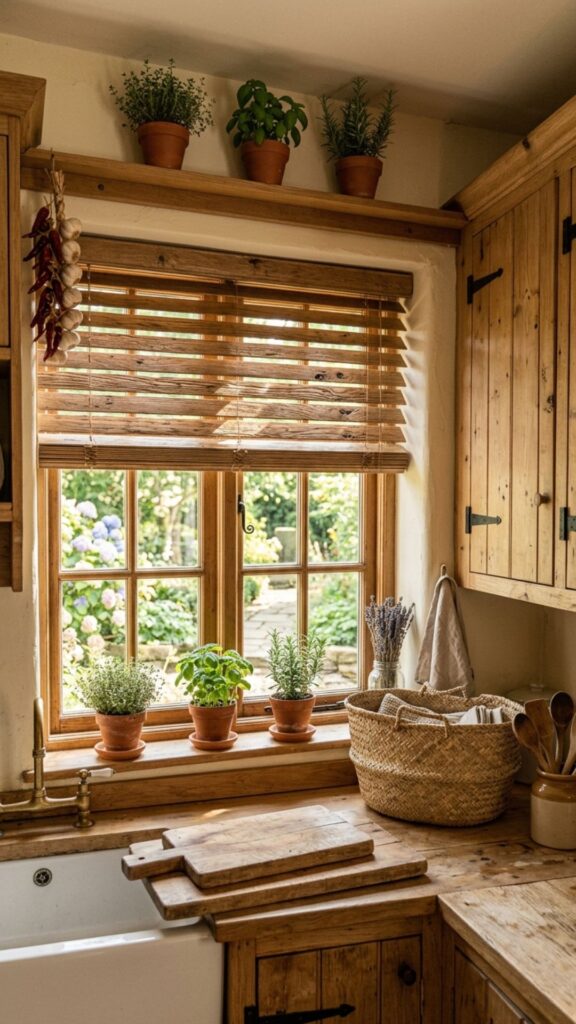
If you love weathered finishes, reclaimed-look kitchen blinds are worth a close look. They mimic the charm of old wood, complete with visible grain and worn color variation. That texture can make a newer kitchen feel more established.
These kitchen blinds are best when the rest of the room stays fairly simple. Too many distressed surfaces can start to compete. Let the blinds be the rustic feature, then support them with small touches like woven baskets or wood cutting boards.
5. Honey-toned wooden blinds for cozy warmth
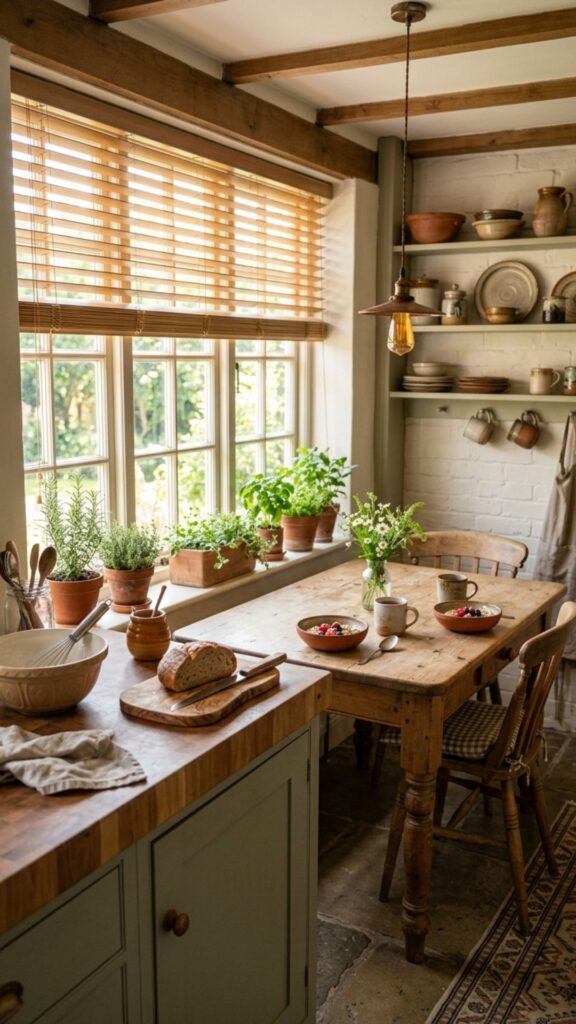
Honey-toned wood adds warmth that feels inviting and easy to live with. These kitchen blinds are ideal if your space gets cool morning light or has a lot of gray surfaces that need softening.
They also blend well with traditional wood tables, butcher block counters, and terracotta accessories. If you want a kitchen that feels comfortable rather than sharp, this tone can do a lot of work without drawing too much attention.
6. Faux wood kitchen blinds for busy cooking zones
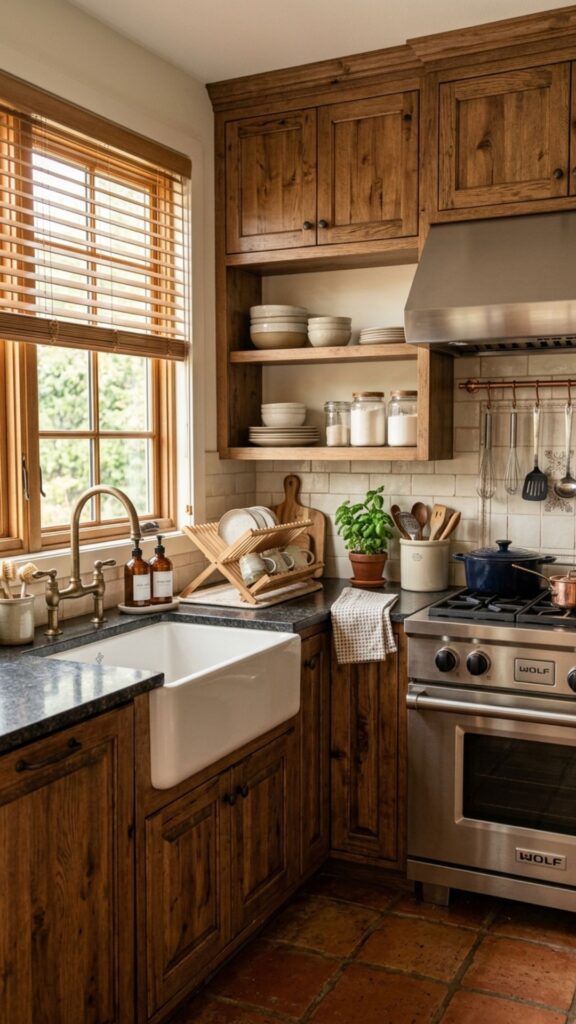
Here’s the catch: real wood is beautiful, but not every window is a good place for it. Near the sink, stove, or dishwasher, faux wood kitchen blinds often make more sense because they resist moisture and are easier to clean.
You still get the look of wood, which matters in a rustic kitchen. Many faux wood options now have convincing grain patterns and matte finishes. For homes with kids, pets, or heavy daily use, they are often the most practical choice.
7. Wide-slat kitchen blinds for a bold rustic statement
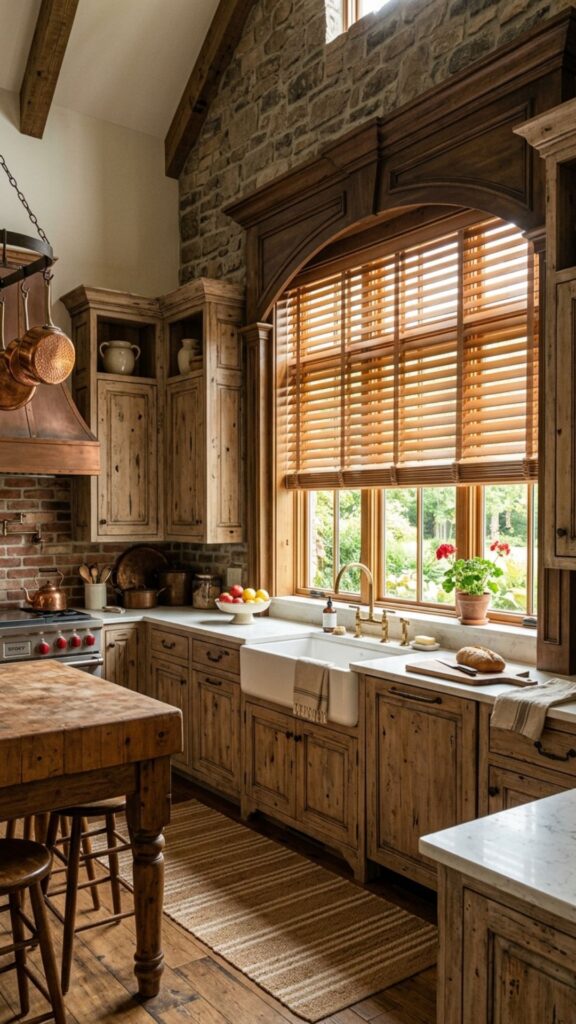
Wider slats create a stronger visual presence. If your window sits above the sink or acts as a focal point, wide-slat kitchen blinds can help anchor that wall and make the space look more designed.
They also give you flexible light control. You can tilt them to let in daylight while limiting harsh glare during cooking or breakfast. In rustic kitchens, wider slats often feel more substantial and architectural than narrow ones.
8. Narrow-slat wooden blinds for small kitchen windows
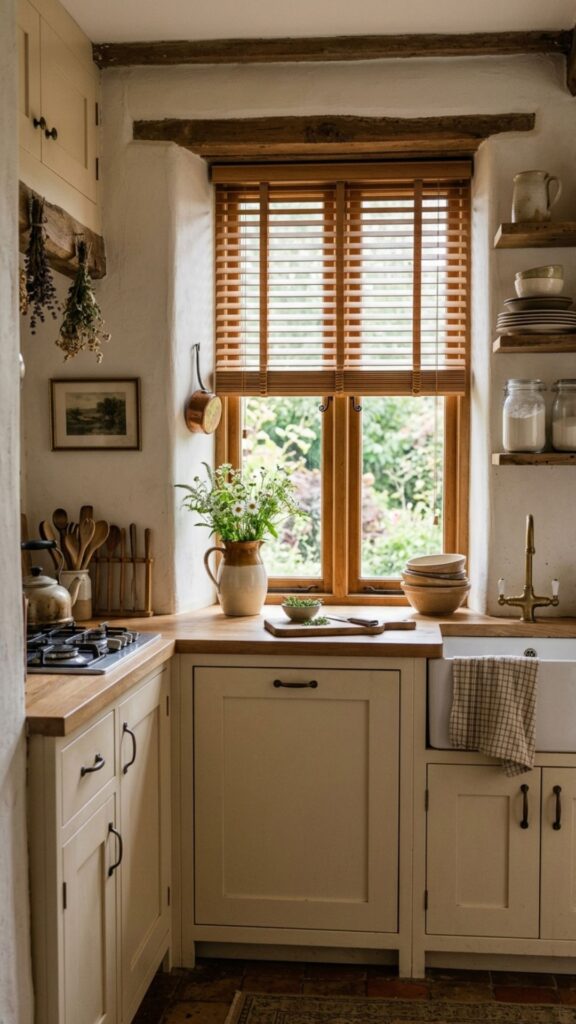
Not every kitchen has a large showcase window. Narrow-slat kitchen blinds can fit better on small windows, especially in older homes where openings are compact or oddly shaped.
They offer a cleaner, lighter look and don’t overwhelm tight spaces. If you want rustic character without making the kitchen feel crowded, this style can strike the right balance.
9. Rustic gray kitchen blinds for a softer wood look
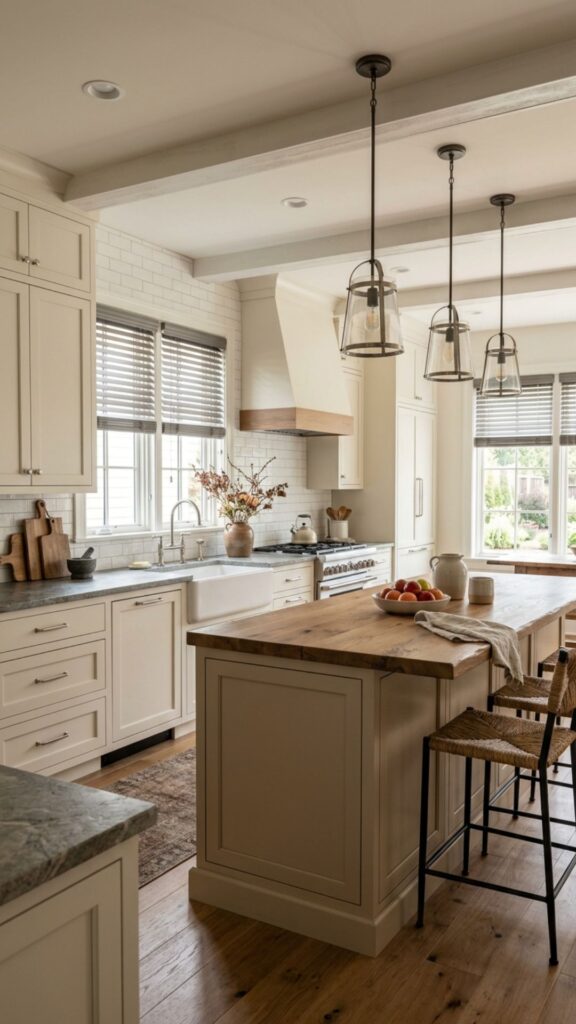
Gray-toned wood blinds are useful when you want a rustic feel but don’t want warm brown tones everywhere. They work well with stone counters, brushed nickel hardware, and muted cabinet colors.
This finish can also suit transitional kitchens that mix farmhouse and contemporary elements. It feels more understated than classic brown wood, which helps if you want texture without too much visual weight.
10. Espresso kitchen blinds with white cabinets
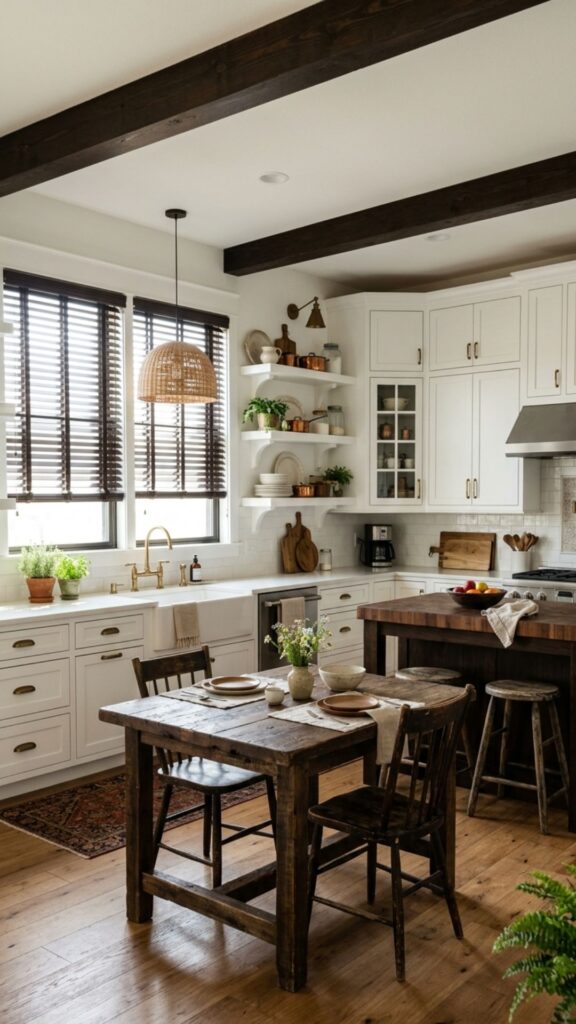
Espresso kitchen blinds offer dramatic contrast, especially in kitchens with white cabinets and pale walls. They add a clean edge while still feeling warm enough for rustic decor.
To keep the room from feeling too stark, repeat the dark tone in a few other places. Bar stools, picture frames, or a dark wood table can help the blinds feel connected to the rest of the design.
11. Bamboo-style wooden blinds for natural texture
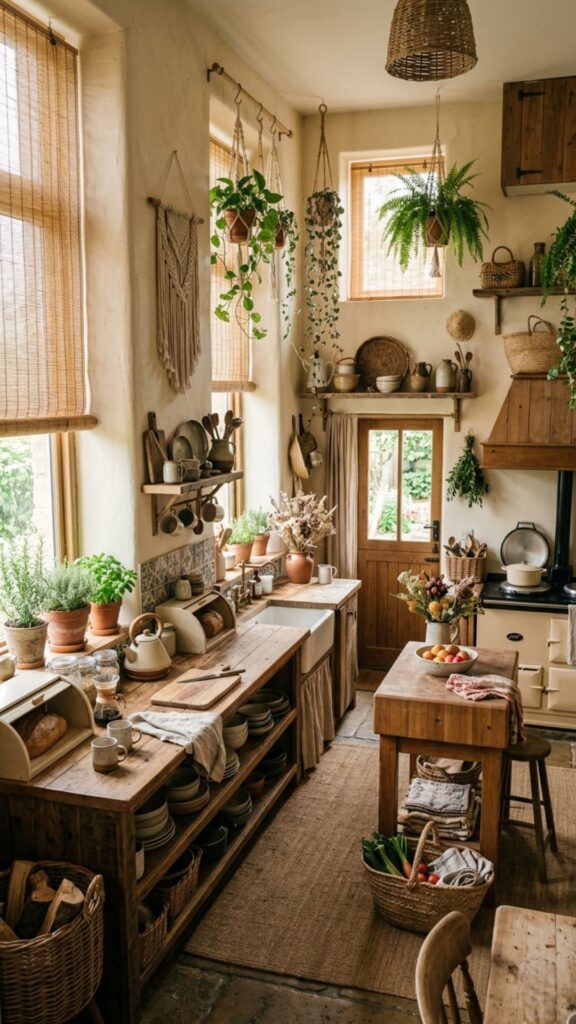
Bamboo-style wood blinds bring a more organic, relaxed rustic look. They often have visible texture and tonal variation, which can make the kitchen feel casual and inviting.
These are a strong match for earthy color palettes, greenery, and handmade decor. If your rustic style leans a little coastal, boho, or cottage, this is an easy way to blend those influences.
12. Distressed painted kitchen blinds for vintage charm
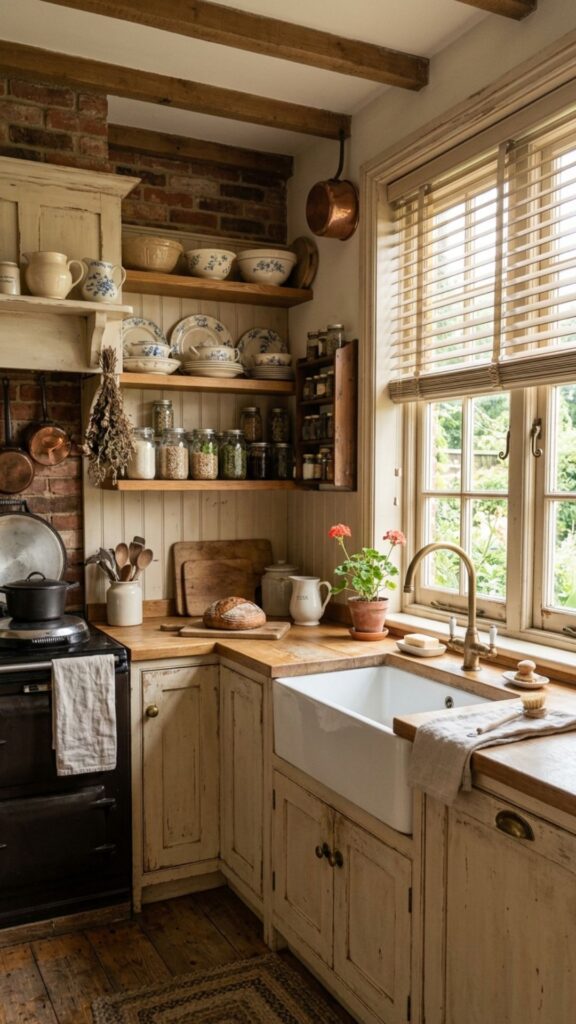
Distressed painted kitchen blinds can add character fast. Soft cream, faded sage, or muted blue finishes work especially well in vintage-inspired rustic kitchens.
The key is moderation. When blinds already have a distressed finish, keep surrounding details clean and useful. That way, the room feels charming instead of cluttered.
13. Cherry wood kitchen blinds for a classic rustic kitchen
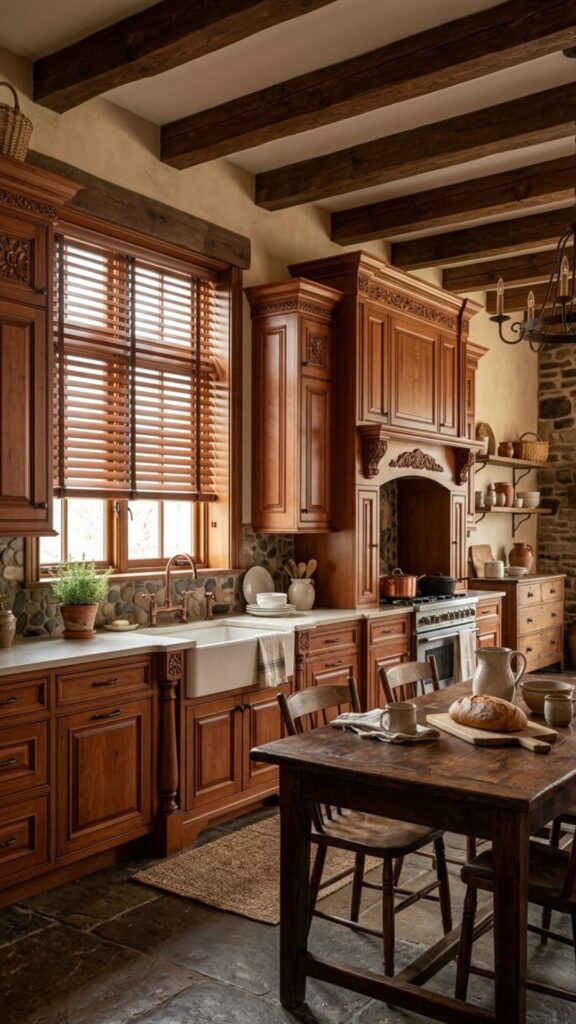
Cherry wood kitchen blinds have a richer red undertone that can make a kitchen feel traditional and well crafted. They pair nicely with older furniture, detailed cabinetry, and classic hardware finishes.
If you choose cherry, make sure the tone works with your existing woods. Mixing wood finishes is fine, but they should still feel related. Similar warmth levels usually make that easier.
14. Matte-finish kitchen blinds for a more natural look
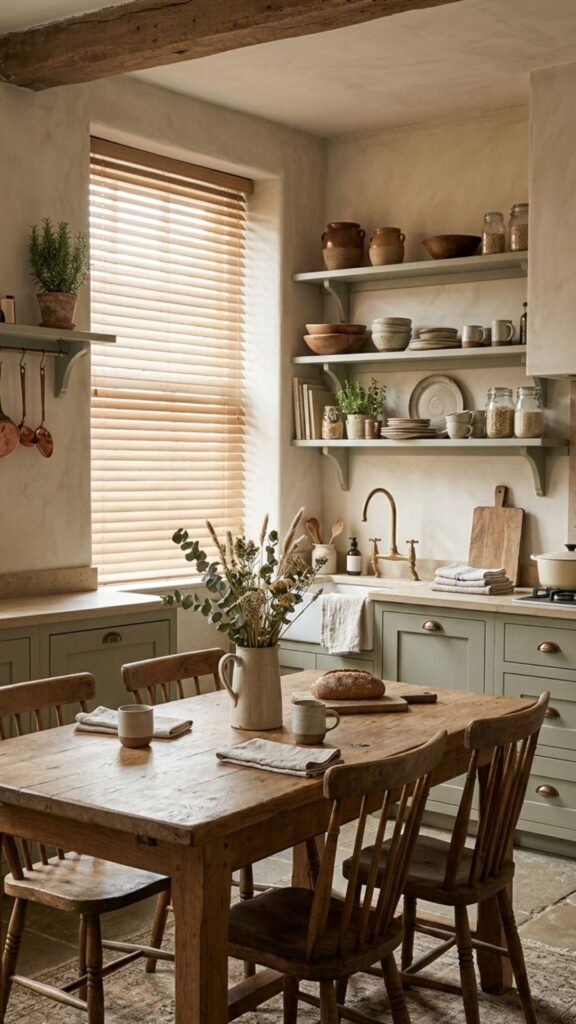
Glossy surfaces can fight against rustic style. Matte-finish kitchen blinds feel more natural, more relaxed, and often more expensive than shiny alternatives.
They are also practical because they tend to hide fingerprints and minor dust better. In a working kitchen, that small benefit can make a big difference over time.
15. Cordless wooden blinds for a cleaner window
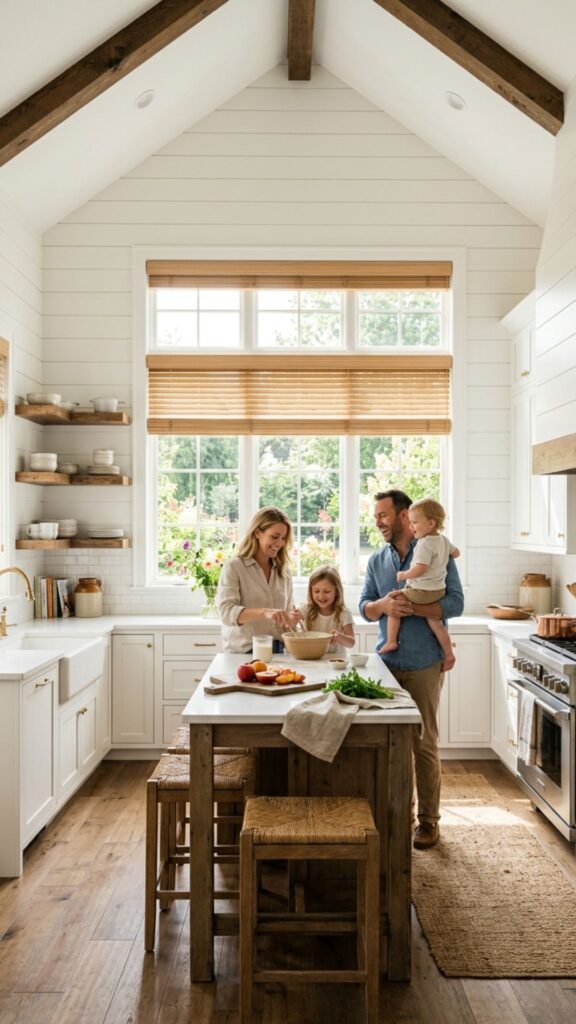
Cordless kitchen blinds offer a simple, uncluttered look that suits both modern rustic and classic farmhouse spaces. Without dangling cords, the window area looks neater and safer for homes with children or pets.
This style also makes daily use easier. You can quickly raise or lower the blinds when you need more light while cooking, then close them again for privacy in the evening.
16. Two-tone kitchen blinds for layered rustic style
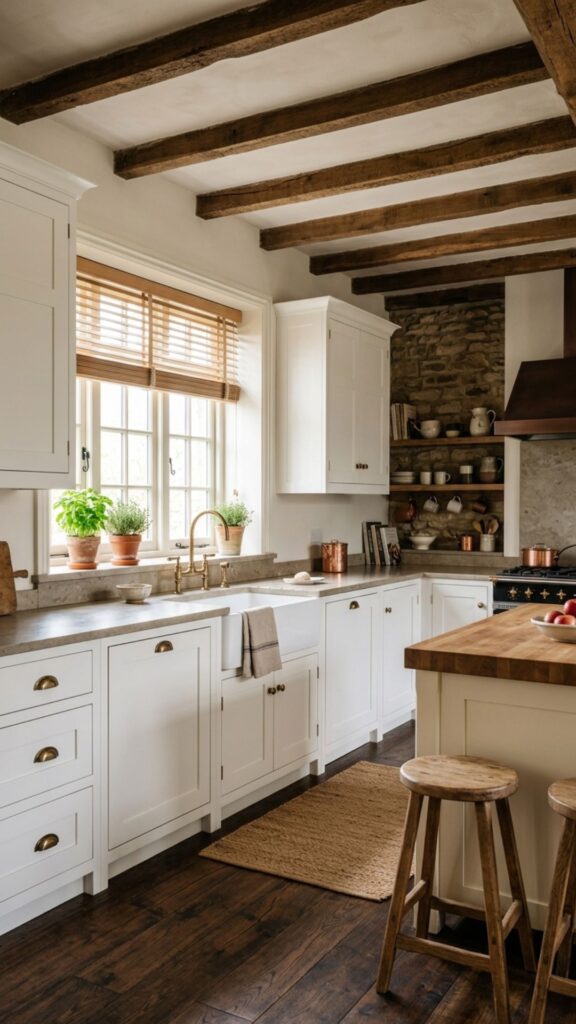
Two-tone kitchen blinds combine painted and stained finishes, or blend a neutral outer frame with wood-toned slats. This can be a smart choice if your kitchen already mixes colors and materials.
They help tie together contrasting elements, like white cabinets and dark floors. If you struggle to choose between warm wood and a painted finish, a two-tone design can give you both.
17. Soft beige wood blinds for understated warmth
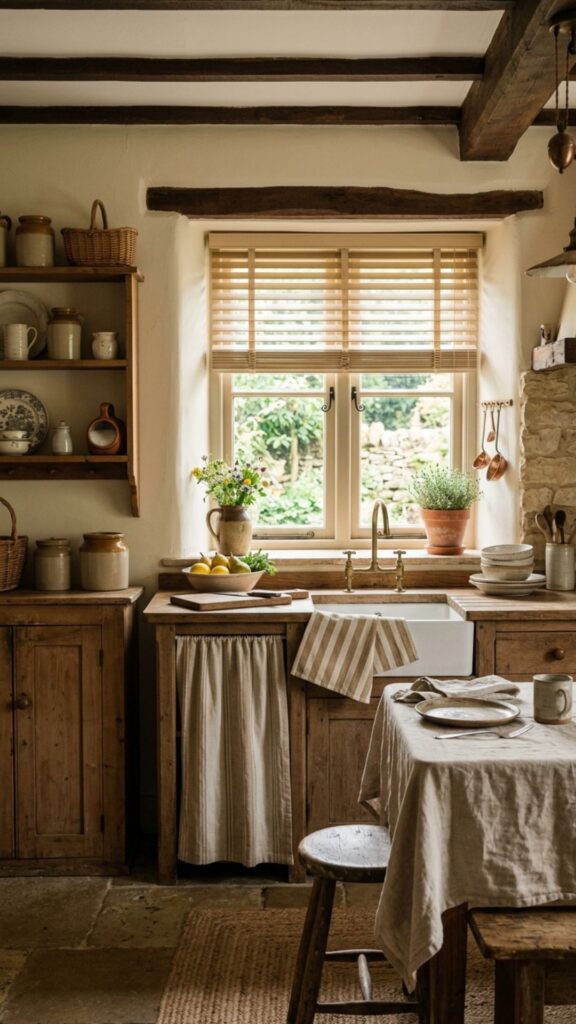
Some kitchens need a gentle touch rather than a dramatic feature. Soft beige kitchen blinds add warmth while staying neutral, which makes them easy to pair with many rustic materials.
They work especially well in kitchens with limestone tones, cream walls, or natural linen accents. The effect is calm and easy on the eyes, perfect for a space used from morning to night.
18. Weathered brown kitchen blinds for cabin-inspired charm
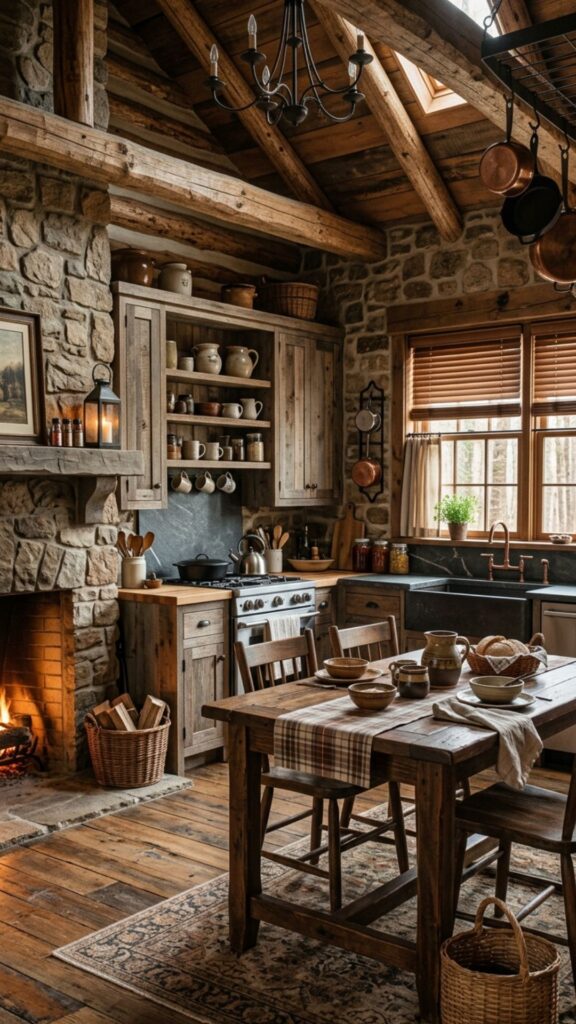
Weathered brown kitchen blinds can bring a more rugged rustic look. They fit beautifully in homes with exposed beams, stone features, or handcrafted wood furniture.
This finish often has a relaxed, slightly aged quality that feels authentic. It is a good choice if you want the kitchen to feel cozy and grounded rather than polished.
19. Wooden blinds with decorative tapes for extra detail
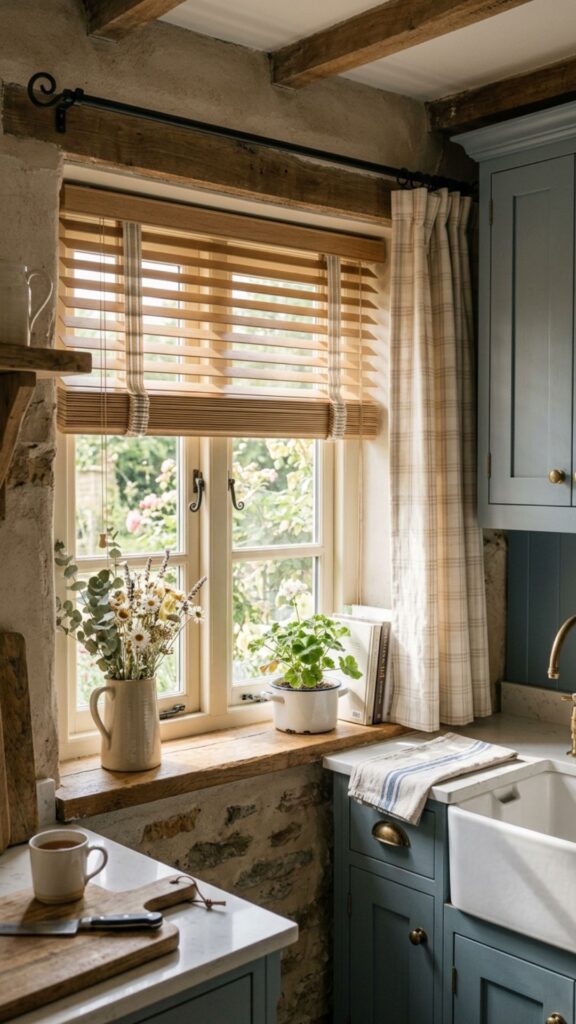
Most people miss this option. Wooden kitchen blinds with decorative fabric tapes can soften the lines of the slats and add another layer of design. In a rustic kitchen, choose simple tapes in neutral stripes, grain sack patterns, or earthy solids.
This detail works best when you want the window treatment to feel more finished. It can also help connect your blinds to seat cushions, table linens, or nearby curtains.
20. Custom-fit kitchen blinds for awkward window spaces
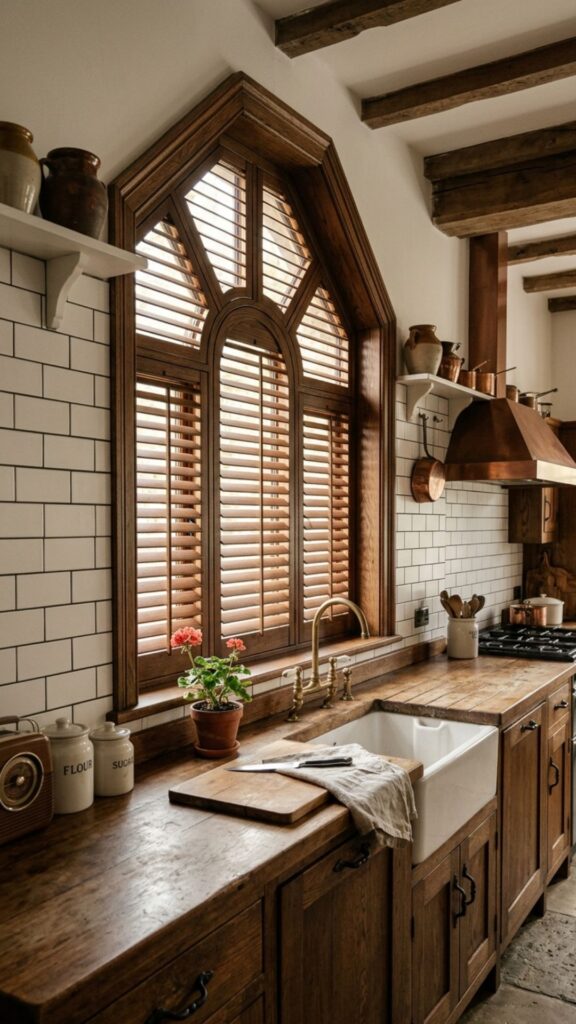
Rustic kitchens in older homes often come with unusual windows. Custom-fit kitchen blinds are worth considering if you have shallow frames, uneven openings, or windows placed close to trim or tile.
A precise fit looks better and usually works better too. The blinds open more smoothly, block light more evenly, and give the whole kitchen a cleaner, more tailored finish.
Common mistakes to avoid when buying kitchen blinds
A beautiful blind can still be the wrong choice for your space. The biggest mistake is picking style over function, especially in a room with heat, grease, and moisture.
Avoid these common issues:
- Choosing real wood for high-moisture spots without checking durability
- Ignoring cleanability in a kitchen used every day
- Picking a stain that clashes with floors or cabinets
- Buying blinds that are too dark for a small or low-light kitchen
- Skipping exact measurements and ending up with gaps or poor fit
If you want the best result, treat your kitchen blinds as both a design feature and a working tool.
Pro tips for styling wooden kitchen blinds
The best rustic kitchens feel collected, not overdone. Your blinds should support that look, not compete with every other wood surface in the room.
A few simple tips can help:
- Repeat the wood tone in one or two other places
- Mix smooth and rough textures for balance
- Keep nearby decor practical, like crocks, bowls, or boards
- Use soft natural colors to let the wood stand out
- Choose matte or low-sheen finishes for a more authentic feel
That approach keeps the space warm and functional.
Final thoughts on choosing wooden kitchen blinds
The right kitchen blinds can do more than finish a window. They can bring warmth, texture, and a rustic feel that makes the whole kitchen more inviting. Whether you prefer natural oak, weathered brown, or low-maintenance faux wood, the best choice is one that fits your daily routine as well as your style.
If you’re updating your kitchen, start by measuring your windows and narrowing down the wood tone that works with your cabinets and floors. Then choose kitchen blinds that give you the right mix of light control, durability, and rustic charm.
What are the best kitchen blinds for moisture-prone areas?
The best kitchen blinds for moisture-prone areas are usually faux wood blinds. They resist warping, handle steam better than real wood, and are easier to wipe clean around sinks and cooking areas.
Are wooden kitchen blinds hard to clean?
No, wooden kitchen blinds are fairly easy to clean if you stay on top of dust and grease. A microfiber cloth, light vacuum attachment, or gentle wipe with a barely damp cloth usually does the job.
Do kitchen blinds work in small kitchens?
Yes, kitchen blinds work well in small kitchens, especially when you choose lighter wood tones or narrow slats. They add warmth and privacy without taking up the visual space that heavier curtains can.
Should kitchen blinds match cabinets or flooring?
Kitchen blinds do not need to match exactly. It is usually better for them to coordinate with your cabinets, flooring, or furniture through similar undertones rather than identical color.
Are wooden blinds good for rustic farmhouse kitchens?
Yes, wooden blinds are an excellent fit for rustic farmhouse kitchens. They add natural texture, soften hard finishes, and help create the warm, welcoming look that farmhouse style is known for.