Grey gets a bad rap sometimes. People think it’s dull or cold. But spend a little time around well-designed spaces and you’ll see why it’s become the go-to color for bathrooms everywhere. Grey works hard. It hides water marks better than stark white, pairs with almost any accent color, and creates that spa-like calm so many of us crave after a long day.

I’ve spent years helping homeowners refresh their bathrooms, and grey comes up again and again as a smart, lasting choice. The trick is knowing which shade to use, where to use it, and how to keep things feeling warm rather than clinical.

Below, you’ll find 20 bathroom grey ideas covering everything from paint and tile to fixtures and finishing touches. Whether you’re planning a full remodel or just want a quick weekend update, there’s something here for you.
1. Soft Dove Grey Walls for Instant Calm
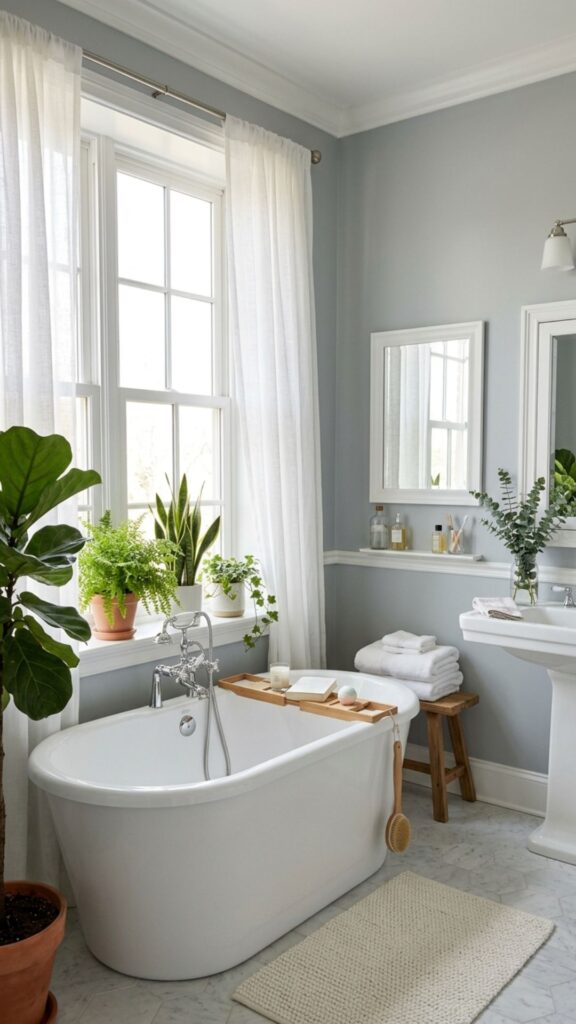
Dove grey sits right in that sweet spot between warm and cool. It’s pale enough to keep a room feeling open and bright, yet it has enough depth to look intentional rather than washed out. Painting your walls in this gentle shade instantly softens the whole space.
This works especially well in bathrooms with limited natural light. Dove grey reflects what little light there is without bouncing it around harshly. Pair it with white trim and a few green plants, and you’ve got a room that feels fresh every single morning.
2. Charcoal Accent Wall for Drama
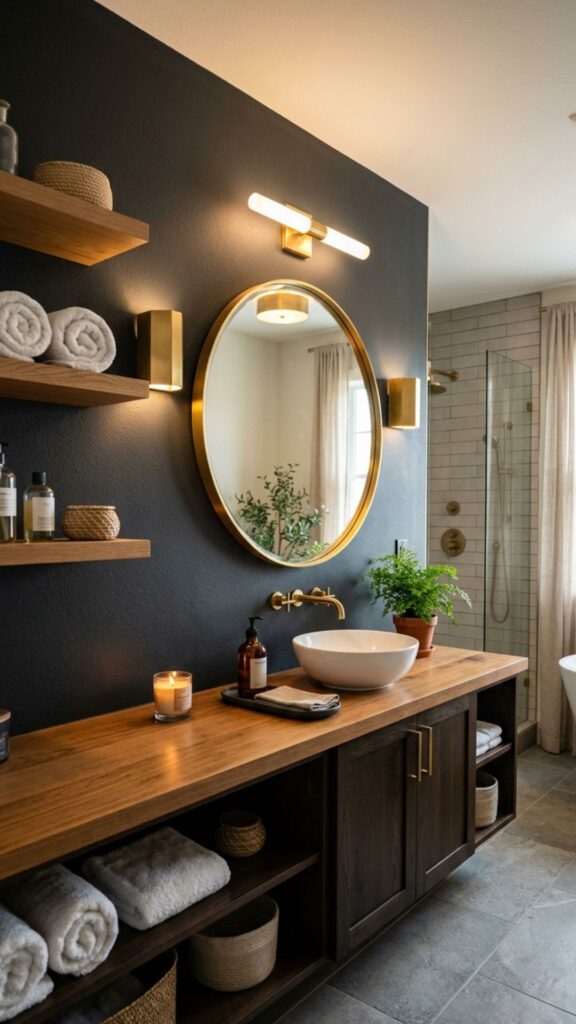
If an all-grey room feels too safe, try a single charcoal wall. Painting the wall behind your vanity or bathtub in a deep, near-black grey creates a striking focal point. It draws the eye and adds real personality.
Keep the other three walls light to balance things out. Charcoal can shrink a small space if you overdo it, so use it strategically. A brass mirror or warm wood shelf against that dark backdrop looks absolutely stunning.
3. Grey Subway Tiles That Never Date
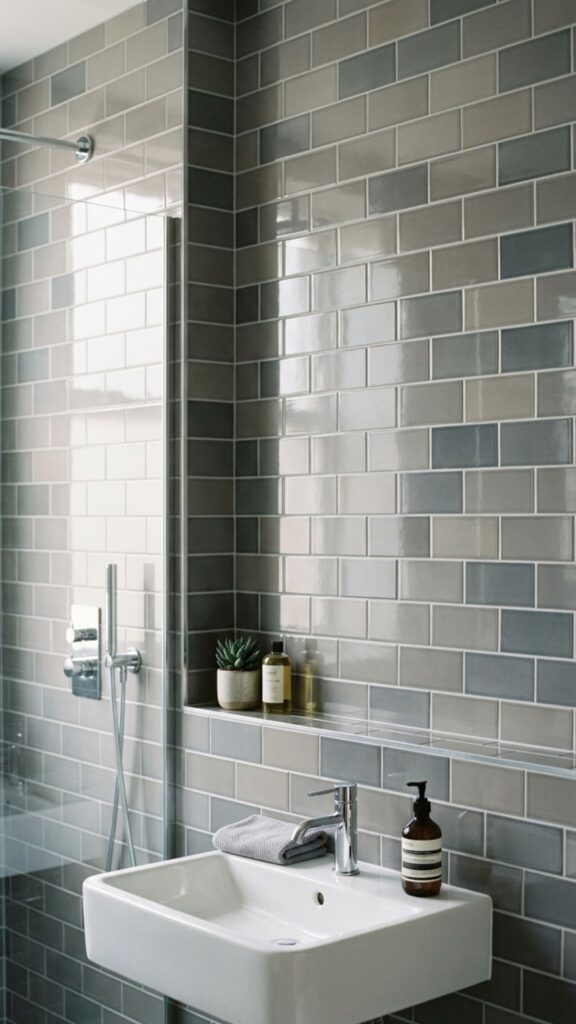
Subway tiles are a classic for good reason, and grey gives them a modern twist. Whether you choose a glossy or matte finish, grey subway tiles bring texture and visual interest without overwhelming the room.
Lay them in a traditional brick pattern for a timeless feel, or go vertical for something more contemporary. Pair light grey tiles with darker grout to highlight the layout, or matching grout for a seamless, calming look. Either way, you get a finish that’ll still look great in ten years.
4. Concrete-Effect Grey Floors
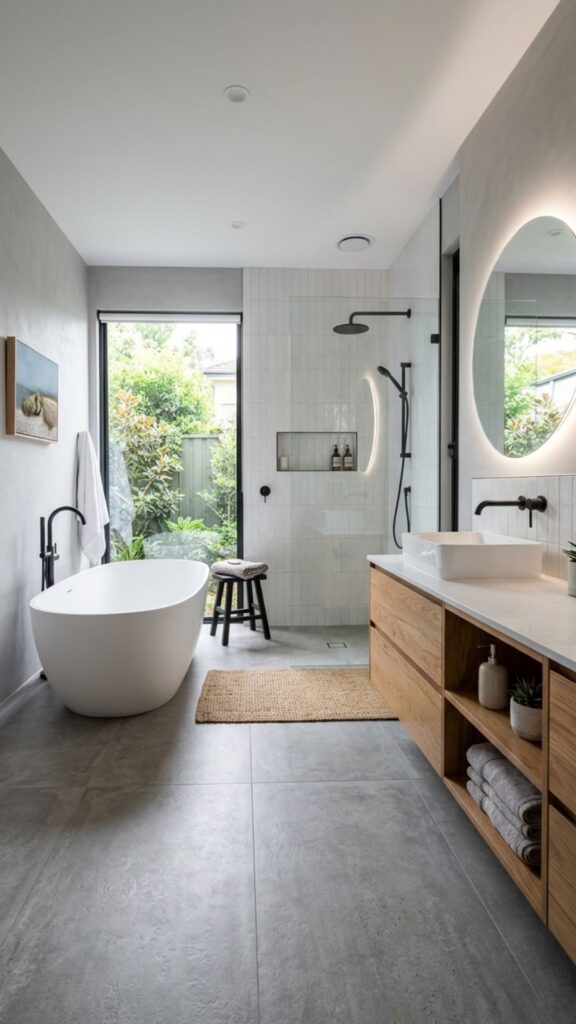
Concrete flooring has a cool, industrial edge that suits modern bathrooms beautifully. The good news is you don’t need actual poured concrete. Porcelain tiles with a concrete look give you the same raw, textured appearance with far less hassle and better water resistance.
These floors feel grounded and sturdy underfoot. They pair wonderfully with both warm wood vanities and sleek white fixtures. Add underfloor heating if your budget allows, since grey floors can feel a touch cool on bare feet in winter.
5. Warm Greige for a Cozy Twist
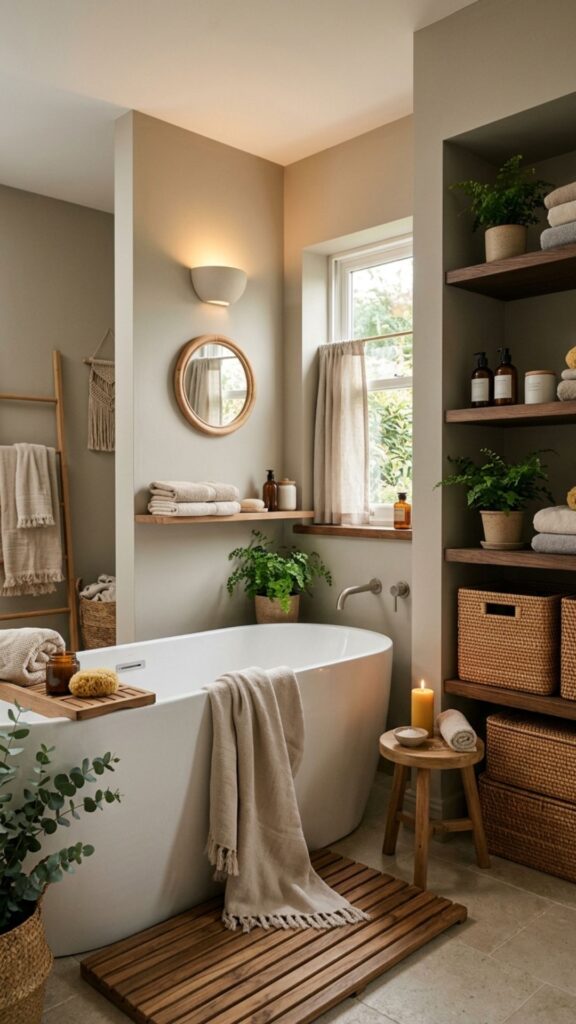
Greige is the lovechild of grey and beige, and it’s perfect for anyone who finds pure grey too cold. This blended tone adds warmth while keeping that sophisticated, neutral feel. It’s a safe bet for rooms that get a lot of use.
Greige works as a wonderful backdrop for natural materials like rattan baskets, linen towels, and wooden stools. The overall effect is relaxed and inviting, like a boutique hotel spa you never want to leave.
6. Two-Tone Grey Walls
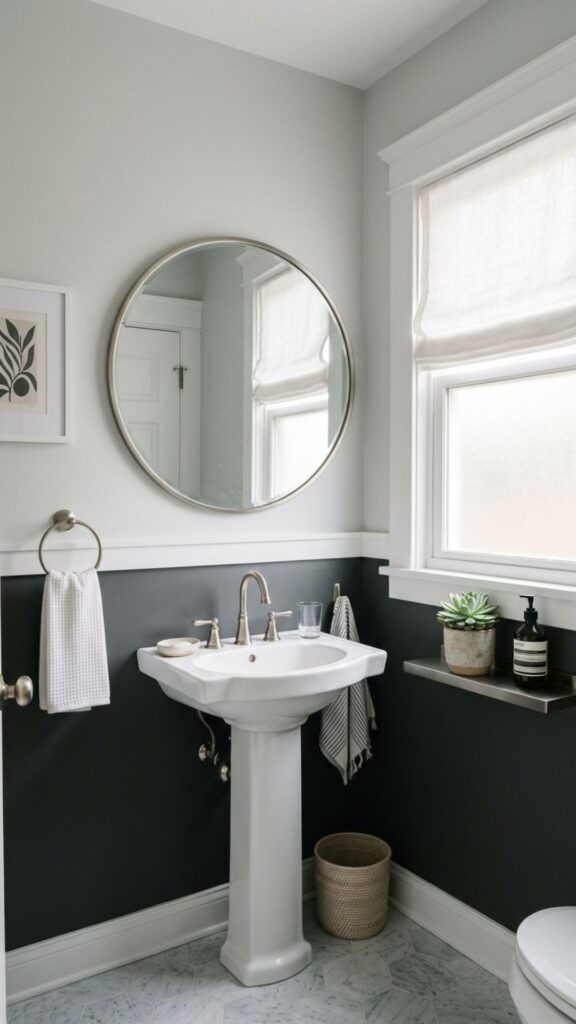
Splitting your walls into two shades of grey adds depth without much effort. A common approach uses a darker grey on the lower half and a lighter shade above, divided by a simple rail or tile border. It’s a classic look with plenty of charm.
This technique also has a practical side. The darker lower section hides splashes and scuffs that naturally happen near sinks and tubs. You get a smart design feature that also makes cleaning easier over time.
7. Grey Marble for Quiet Luxury
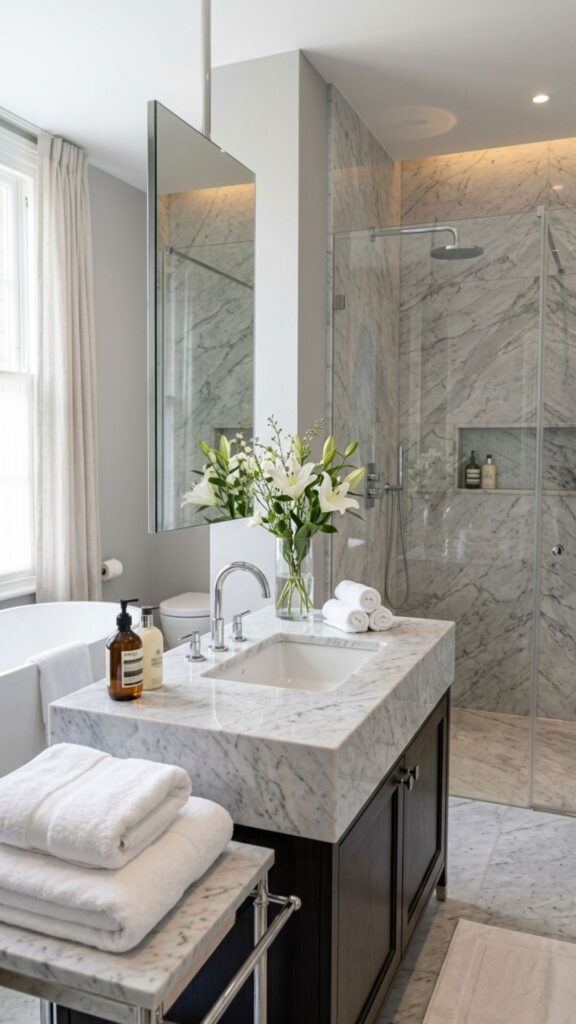
Grey-veined marble brings instant elegance. Those soft, swirling lines feel both natural and refined, making any bathroom look more expensive than it actually was. Use it on countertops, shower walls, or even a feature floor.
If real marble stretches your budget, marble-effect porcelain delivers the look at a fraction of the price. It’s also more durable and far less fussy to maintain. Either choice gives your bathroom that calm, high-end finish people notice the moment they walk in.
8. Matte Grey Cabinetry
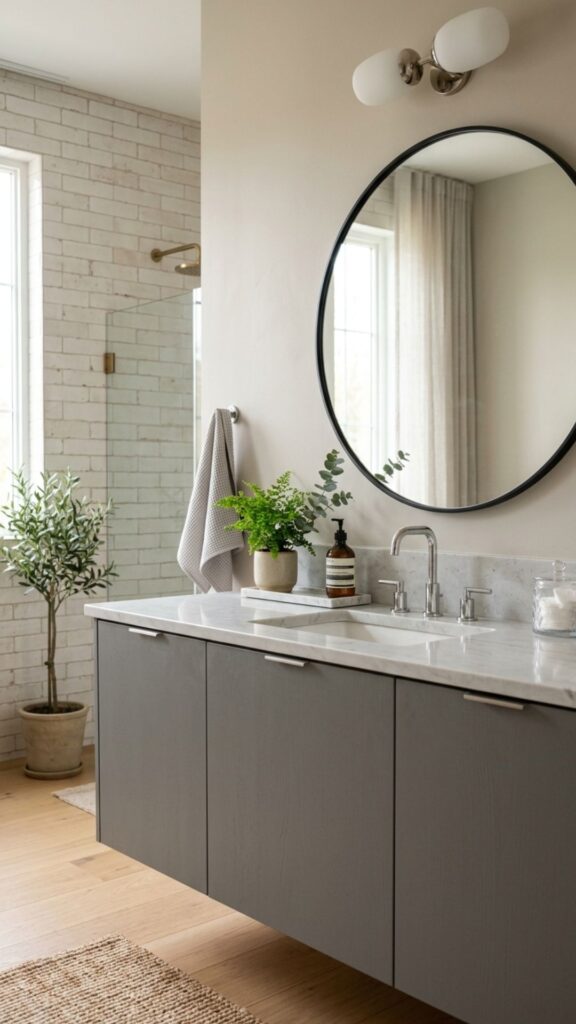
Vanity cabinets in a matte grey finish feel modern and grounded. Matte hides fingerprints better than gloss and gives the room a soft, contemporary touch. It’s a great way to introduce grey without committing to grey walls.
Pair grey cabinets with a white or pale stone countertop for contrast. Choose handles in brass, matte black, or brushed nickel depending on the mood you want. The cabinet becomes a quiet anchor that ties the whole space together.
9. Grey and White for Timeless Contrast
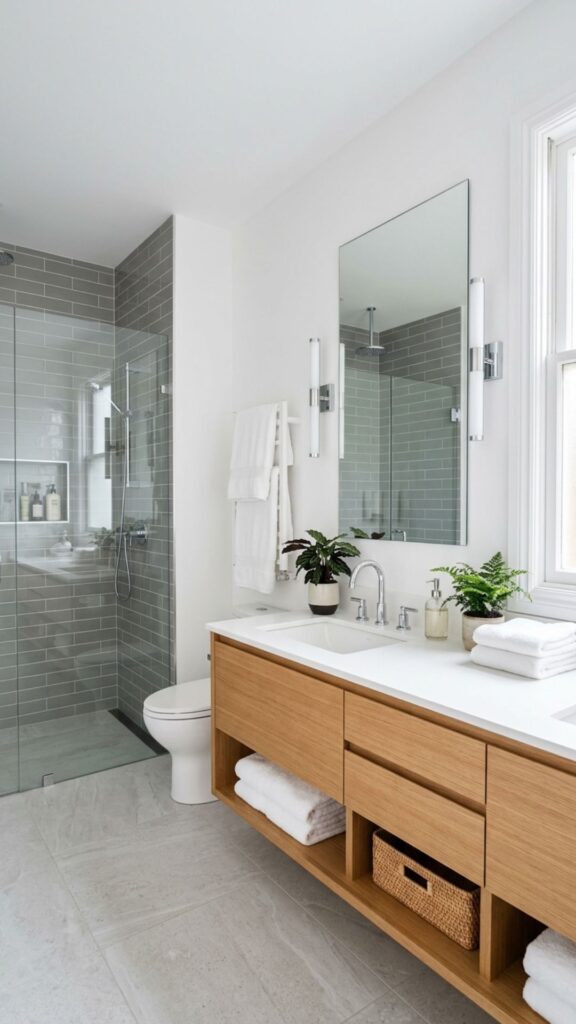
You can never really go wrong with grey and white. This pairing feels crisp, clean, and endlessly classic. Use white as your base and let grey provide structure through tiles, accents, or trim.
The beauty of this combination is its flexibility. It suits traditional cottages and sleek city apartments alike. When in doubt, lean on grey and white, then add personality through textures and small pops of color.
10. Textured Grey Tiles for Depth
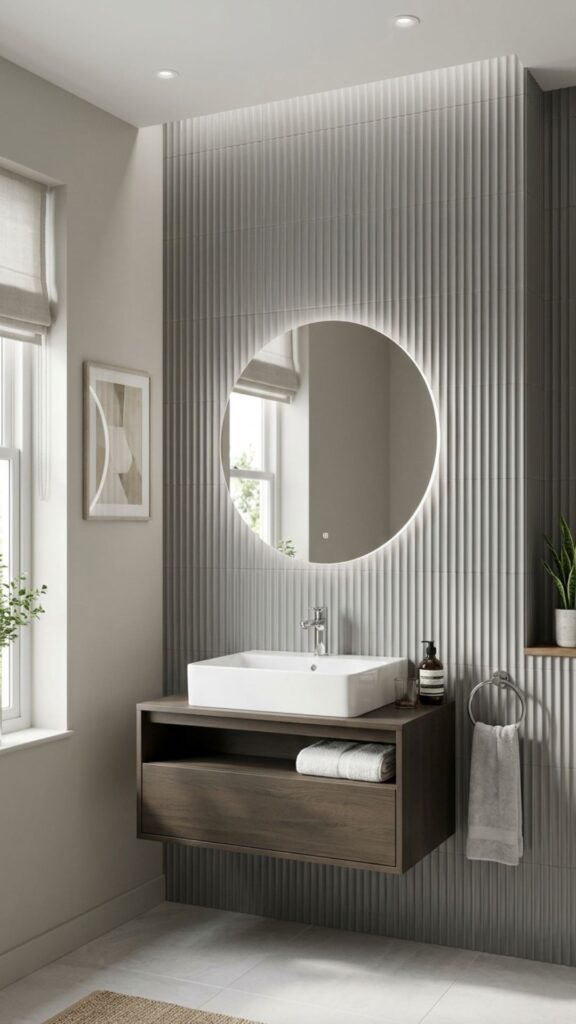
Flat surfaces can feel a bit lifeless, so textured grey tiles add welcome dimension. Think ribbed, fluted, or hexagonal shapes that catch the light differently throughout the day. They turn a plain wall into a talking point.
Use textured tiles as a feature behind the vanity or inside the shower. A little goes a long way here, so resist the urge to cover every surface. Let the texture breathe against smoother finishes elsewhere in the room.
11. Grey Bathtub Surrounds
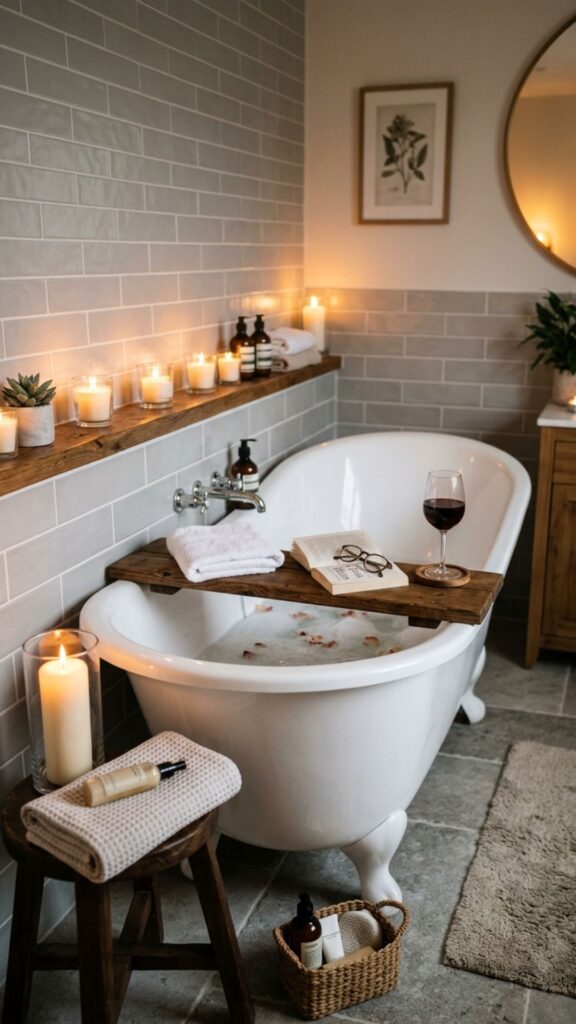
If you’re lucky enough to have a freestanding tub, consider a grey surround or backdrop. A grey-tiled wall or panel behind the bath frames it beautifully and creates a relaxing zone within the room.
This idea works especially well in larger bathrooms where the tub is the star. Soft grey tones encourage you to slow down and unwind. Add a wooden bath caddy and some candles, and your evening soak becomes a proper ritual.
12. Pair Grey with Soft Pink
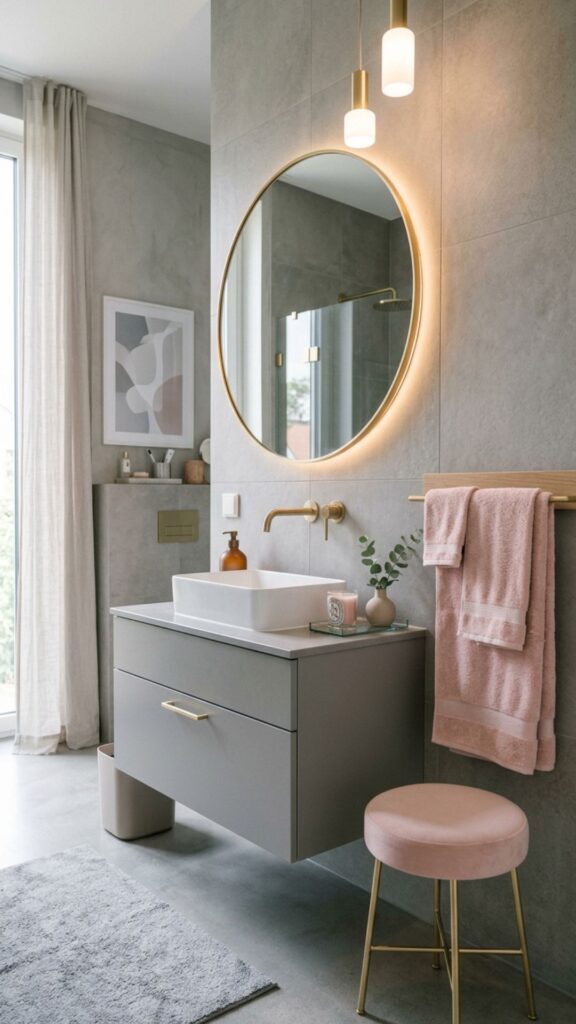
Grey and blush pink make a surprisingly lovely pair. The cool grey grounds the sweetness of pink, creating a balanced, modern feel that’s neither too bold nor too plain. It’s a fresh take that feels current without trying too hard.
Bring in pink through towels, a stool, or a single painted wall, keeping grey as the dominant tone. This combination flatters skin in the mirror too, which is a small but genuinely useful bonus during your morning routine.
13. Grey Grout for a Practical Finish
Grout often gets overlooked, but its color makes a big difference. Choosing grey grout instead of white is one of the smartest practical decisions you can make. It resists staining and disguises the grime that white grout shows so quickly.
Grey grout also creates a softer, more cohesive look with light tiles. The lines blend rather than jump out, giving walls and floors a calmer appearance. It’s a tiny detail that saves you scrubbing and keeps things looking tidy for longer.
14. Industrial Grey with Black Fixtures
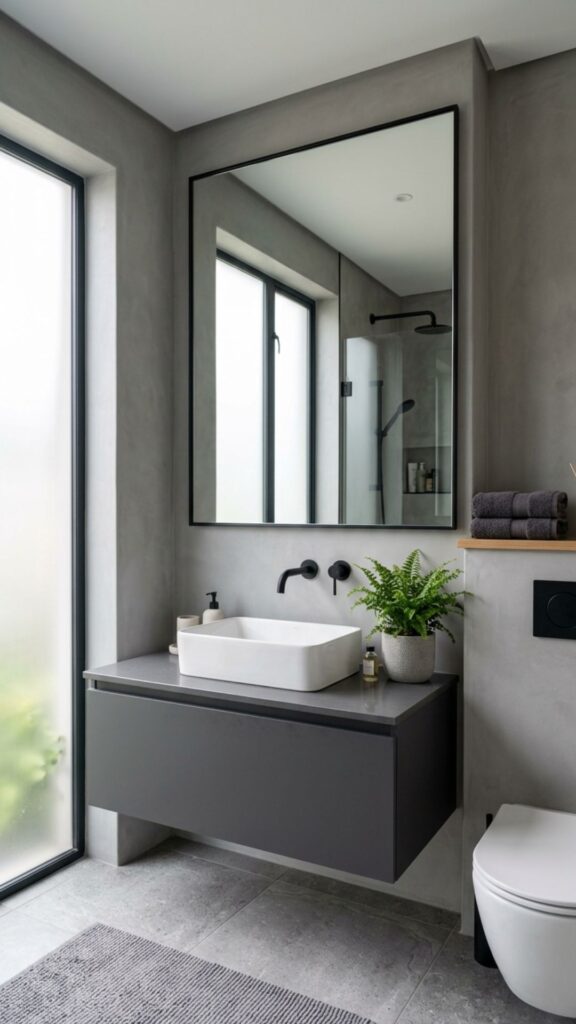
For a bold, modern edge, pair grey surfaces with matte black fixtures. Black taps, showerheads, and towel rails stand out crisply against grey walls and tiles. The result feels confident and a little urban.
This look suits open, airy bathrooms with good lighting. Keep accessories minimal so the contrast does the talking. A simple round mirror with a black frame ties the whole scheme together neatly.
15. Grey Wood-Look Flooring
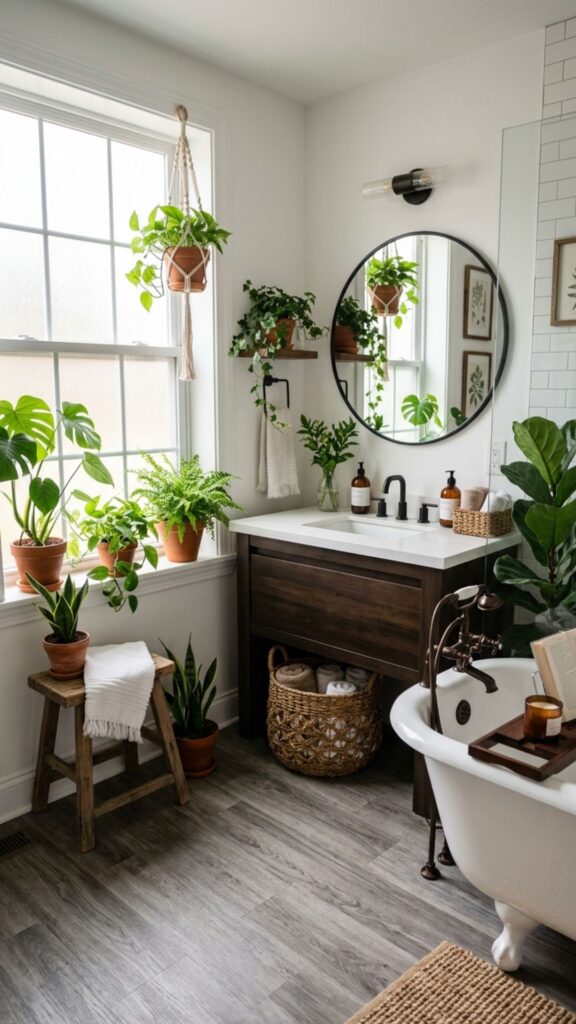
Grey-toned wood-effect flooring brings warmth and natural texture. It softens the cool side of grey while keeping that clean, modern vibe. Plank-style porcelain or vinyl handles moisture far better than real wood.
These floors suit both rustic and contemporary styles. They feel cozy underfoot and pair brilliantly with white walls and greenery. If you want grey without any hint of coldness, this is one of the easiest routes to take.
16. Light Grey for Small Bathrooms
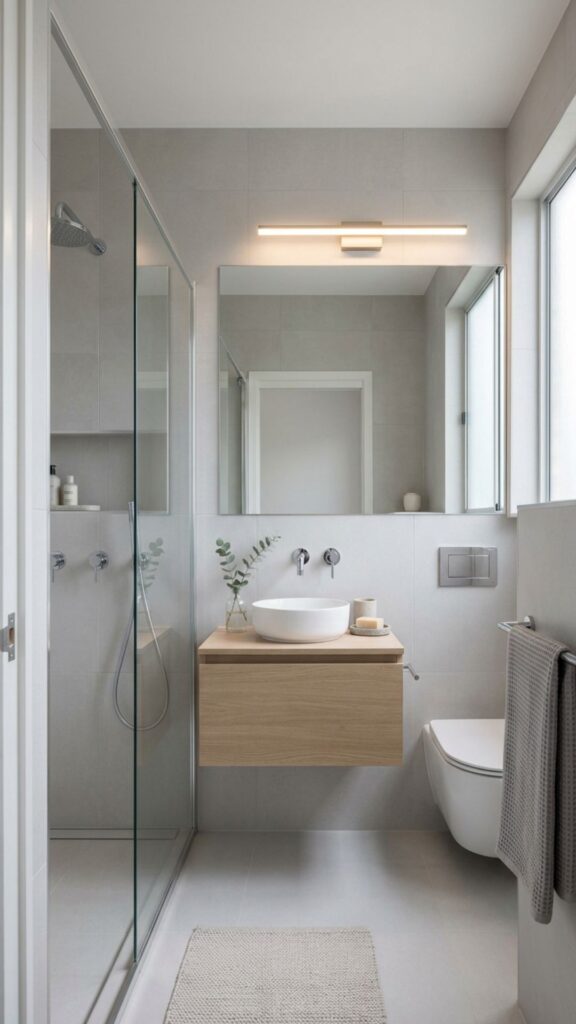
Small bathrooms benefit hugely from light grey. Pale shades reflect light and keep tight spaces from feeling boxed in. Unlike pure white, light grey adds a touch of depth so the room doesn’t feel flat.
Use the same light grey on walls and tiles to create a seamless flow, which tricks the eye into seeing more space. Add a large mirror to bounce light around, and even the tiniest bathroom will feel calmer and more open.
17. Grey Statement Mirrors and Frames
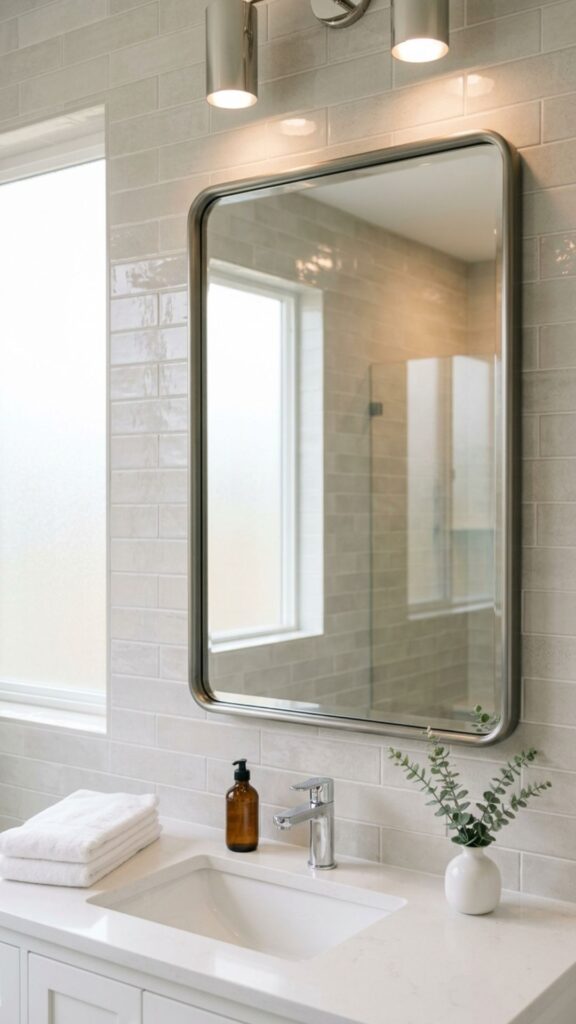
A framed mirror in a grey or pewter finish adds polish to your wall. It’s a quick, low-commitment way to weave grey into the room without any major work. Round, arched, or rectangular shapes each bring their own character.
Statement mirrors do double duty by reflecting light and making the space feel bigger. Choose a frame with a slightly weathered or brushed finish for added texture. It’s a small detail that makes the room feel finished and considered.
18. Grey Accessories for Easy Updates
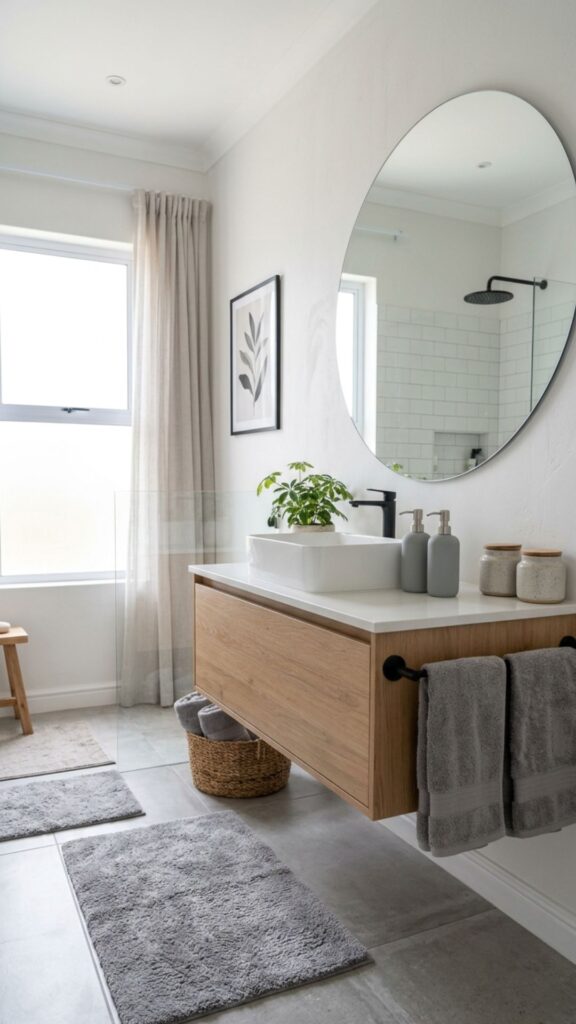
Not ready for a full remodel? Start small with grey accessories. Towels, bath mats, soap dispensers, and storage jars in soft grey tones instantly cool down a busy color scheme. It’s the cheapest way to test the look.
The best part is how easy these are to swap. Refresh your accessories with the seasons or your changing taste without spending a fortune. Layer a few different grey shades and textures to keep things feeling rich rather than flat.
19. Slate Grey Shower Walls
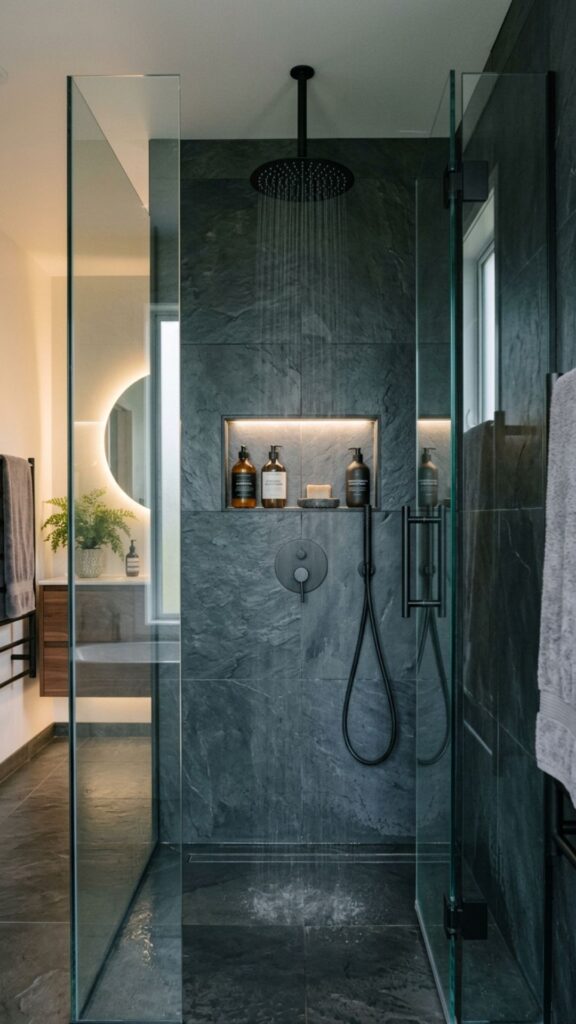
Slate grey brings a natural, earthy quality to shower areas. Its deep, slightly mottled tone feels organic and grounding, like you’ve stepped into a high-end spa. Real or faux slate both work beautifully here.
Slate’s texture also helps with grip and hides water spots well. Pair it with chrome or black fixtures and clear glass to let the stone shine. A built-in niche in the same material keeps the look clean and clutter-free.
20. Grey Ceiling for an Unexpected Twist
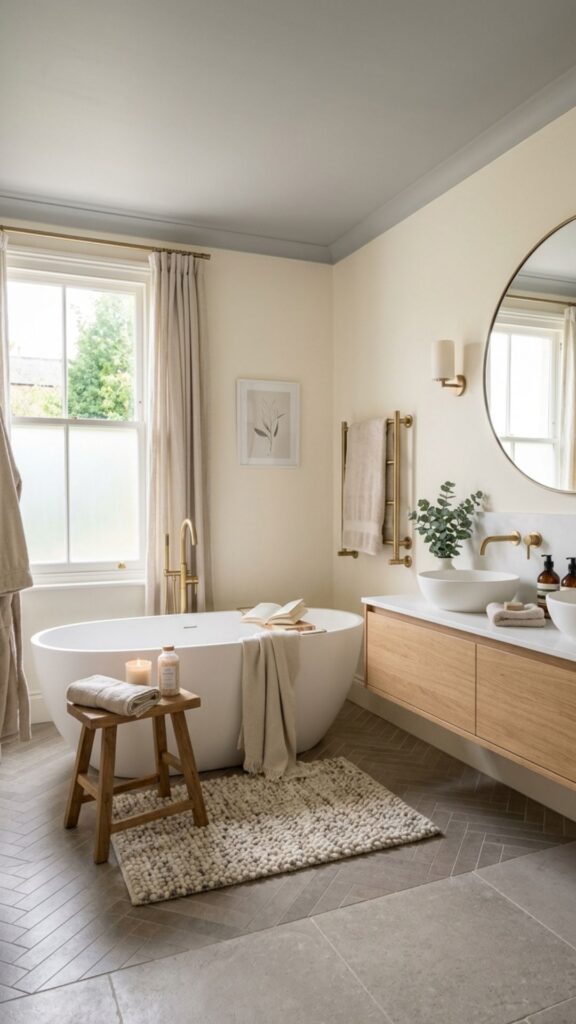
Most people forget the ceiling, but painting it a soft grey adds quiet drama. It draws the room together and creates a cozy, enveloping feel, especially in bathrooms with higher ceilings. It’s an idea few people try, which makes it feel special.
Keep the shade light so the room doesn’t feel heavy. This works wonderfully alongside grey walls for a fully wrapped, restful effect. It’s a designer trick that costs almost nothing but instantly elevates the whole space.
Bringing It All Together
Grey truly is one of the most versatile colors for a bathroom. From pale dove tones that open up small spaces to dramatic charcoal walls and warming greige, there’s a shade and an idea here for every style and budget. The key is balancing cool greys with warm materials like wood, brass, and soft textiles so the room feels inviting rather than stark.
Start with one or two of these bathroom grey ideas that excite you most. Maybe it’s swapping in grey accessories this weekend, or planning a tiled feature wall for your next big project. Whatever you choose, take your time and trust your instincts. Ready to begin? Pick your favorite idea, grab a few paint samples or tile swatches, and start shaping the calm, modern bathroom you deserve.
Is grey still a good color for bathrooms?
Yes, grey remains one of the most popular and practical bathroom colors. It’s versatile, hides water marks and grime better than white, and pairs easily with almost any accent color or material, making it a smart long-term choice.
What colors go well with grey in a bathroom?
Grey pairs beautifully with white, soft pink, navy, sage green, and warm wood tones. Metallics like brass, matte black, and brushed nickel also work well, adding contrast and warmth to balance grey’s cooler edge.
Does grey make a small bathroom look bigger or smaller?
Light grey can make a small bathroom feel bigger by reflecting light and adding subtle depth. Dark greys, on the other hand, can make tight spaces feel smaller, so use them as accents rather than covering every wall.
How do I stop a grey bathroom from feeling cold?
Add warmth through natural materials and textures. Wooden vanities, rattan baskets, linen towels, greenery, and warm metal finishes like brass instantly soften grey and create a cozy, welcoming atmosphere.
What is the best grey paint finish for bathroom walls?
Choose a satin or semi-gloss finish for bathroom walls. These finishes resist moisture and are easier to wipe clean than matte paint, which is important in a room with high humidity and frequent splashes.