A bathroom backsplash does more than protect your walls from splashes and toothpaste. It sets the mood for the whole room. After helping homeowners plan dozens of bathroom updates, I’ve seen how the right backsplash can turn a plain sink area into the part of the room everyone notices.
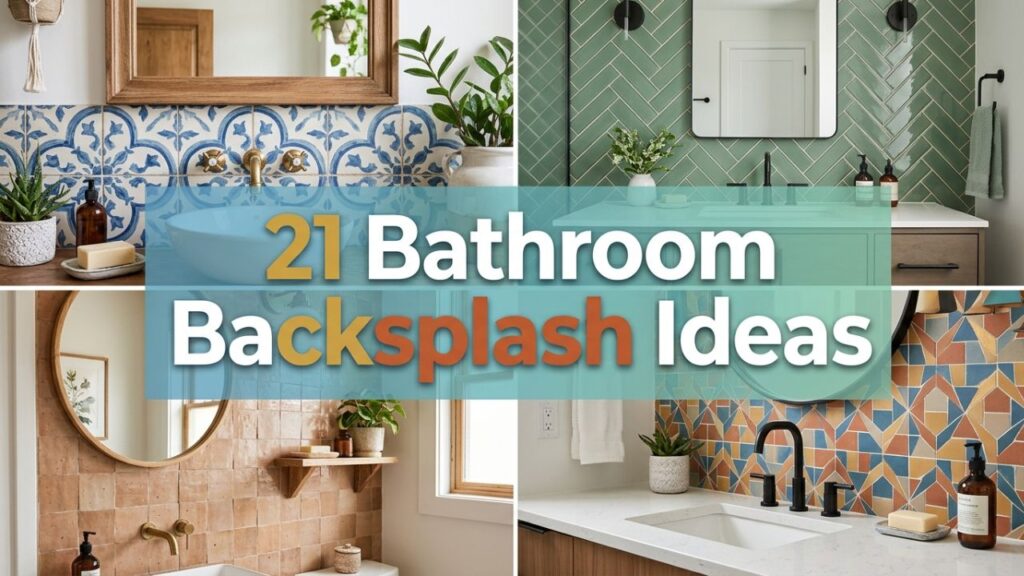
The good news? You don’t need a full renovation to make a big difference. Whether you’re working with a tiny powder room or a spacious primary bath, the right material and pattern can completely change the feel.
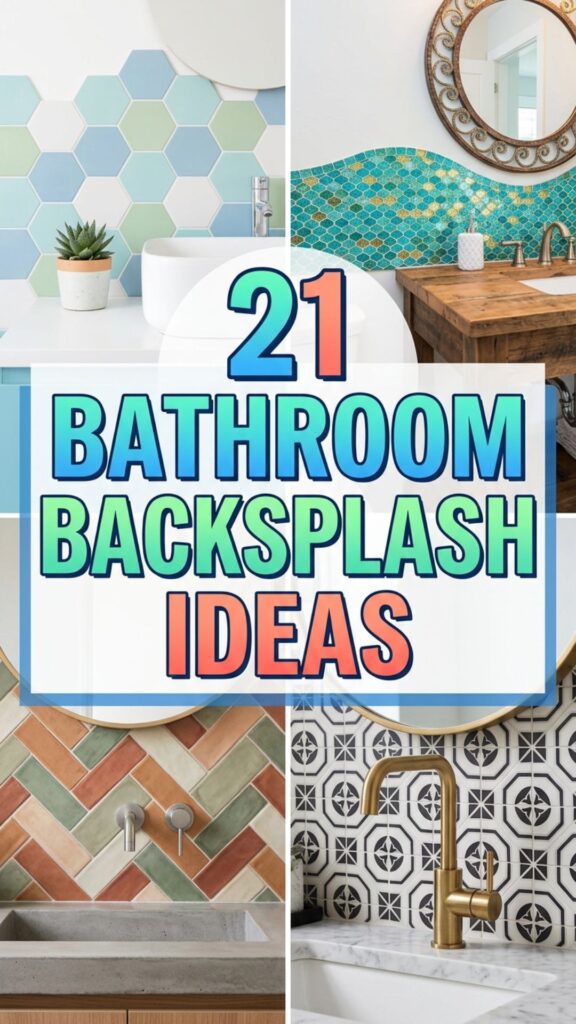
Below, you’ll find 21 bathroom backsplash ideas covering tile, stone, glass, and a few surprises. Each one includes the practical details you need, plus tips I’ve picked up from real projects. Let’s find the look that fits your home and budget.
1. Classic White Subway Tile
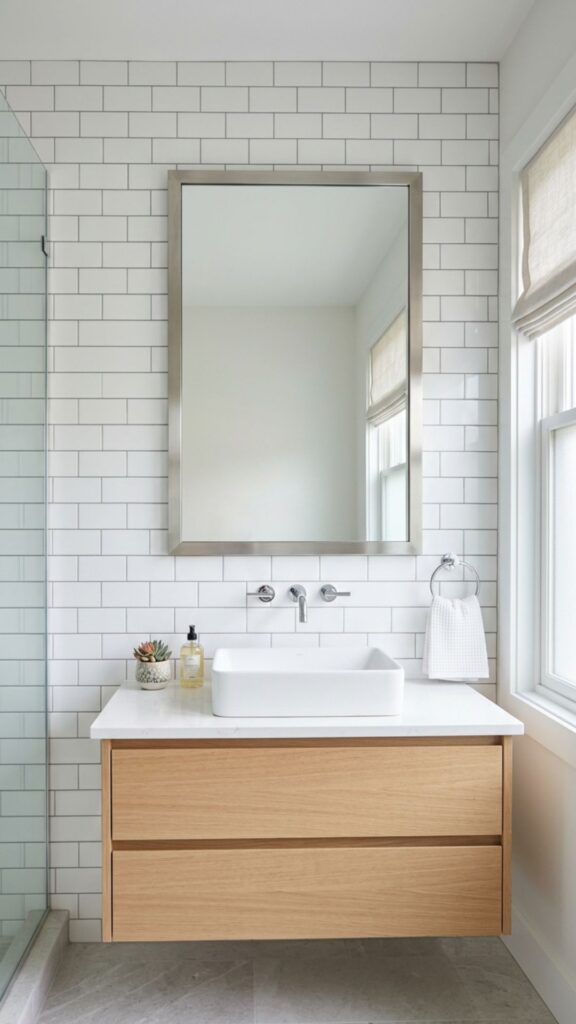
Subway tile earns its popularity for a reason. The clean 3×6-inch rectangles offer a crisp, timeless backdrop that works in nearly any style, from farmhouse to modern. White subway tile also bounces light around the room, which helps small bathrooms feel bigger and brighter.
For a twist on the classic, change up the grout color. A light gray or charcoal grout makes each tile pop and hides everyday grime better than bright white. I usually recommend a stain-resistant epoxy grout near sinks, since it holds up well against water and toothpaste over the years.
2. Bold Geometric Patterns
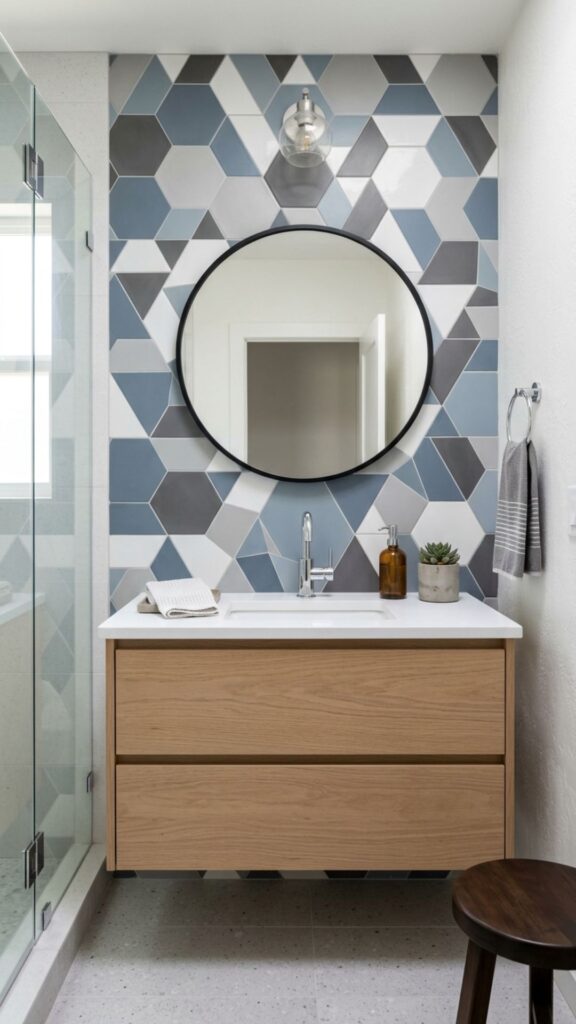
If you want your bathroom to feel current and full of personality, geometric tile delivers. Think hexagons, triangles, or arabesque shapes that draw the eye and add movement to the wall. These patterns work especially well behind a vanity where they become a natural focal point.
Keep the rest of the room simple when you go geometric. Pair a busy pattern with neutral walls and plain countertops so the backsplash stays the star. A small powder room is the perfect spot to experiment, since you can take a risk without committing to a huge wall area.
3. Natural Stone Slab
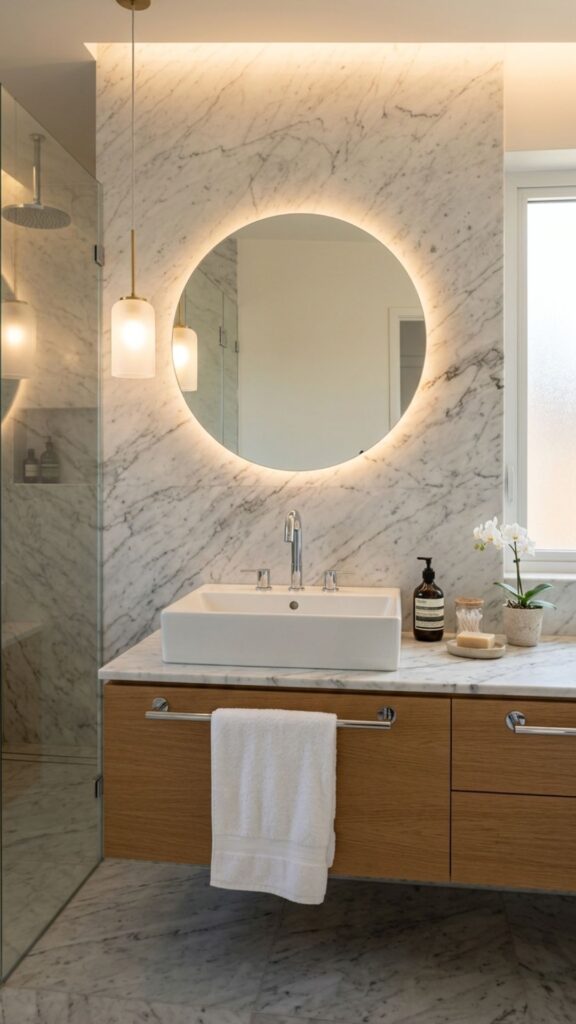
A single slab of marble, quartzite, or travertine creates a smooth, seamless look with no grout lines to clean. The natural veining means every installation is one of a kind, which gives your bathroom a high-end, custom feel.
Stone does need a little care. Marble and travertine are porous, so they should be sealed once or twice a year to guard against water stains. If you love the marble look but want less maintenance, quartzite offers similar beauty with better durability. It’s a swap I often suggest for busy family bathrooms.
4. Glass Mosaic Shimmer
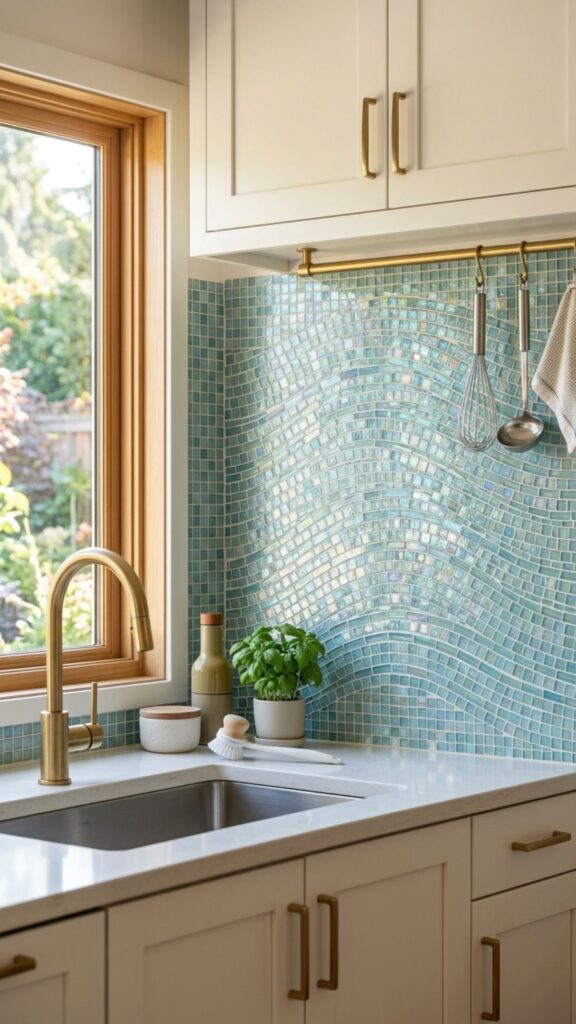
Glass mosaic tiles reflect light beautifully, adding a touch of sparkle that feels fresh and clean. They come in tiny squares, narrow strips, and mixed patterns, often pre-mounted on mesh sheets that make installation easier.
Because glass is non-porous, it resists water and stains without sealing, which makes it ideal for wet areas. Blues and greens give a spa-like vibe, while neutral tones keep things calm. Just know that glass shows fingerprints and smudges, so plan on a quick wipe-down to keep that shimmer looking sharp.
5. Penny Round Tile
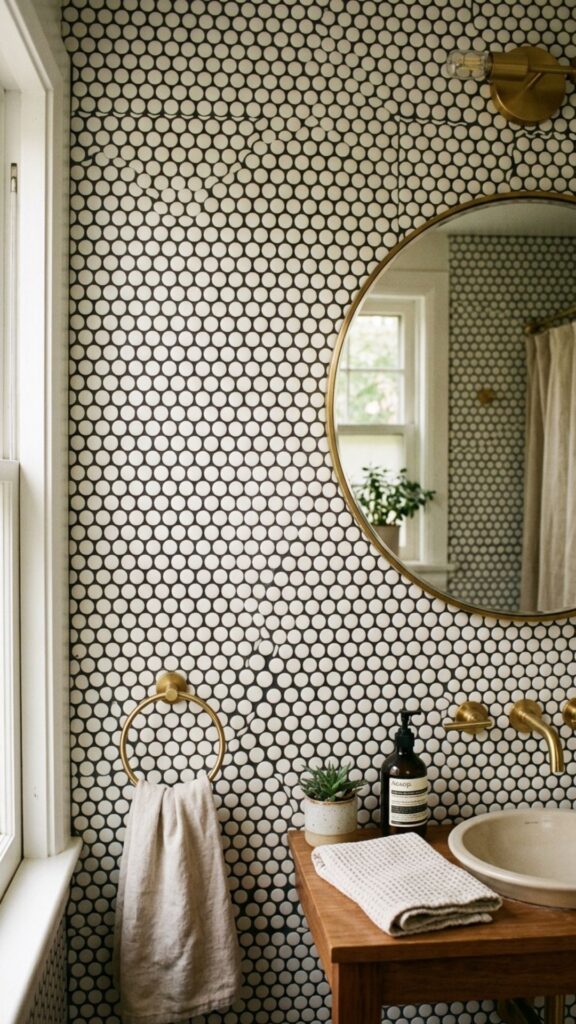
Penny rounds bring a playful, vintage charm to any bathroom. These small circular tiles create texture and visual interest, especially when grout fills the curved spaces between them. They’re a favorite in retro and eclectic spaces.
The rounded shape also adds grip and dimension, which is handy if you carry the tile into a shower floor. Pick a single color for a subtle look, or mix shades for a custom blend. Because there are so many grout lines, lean toward darker grout to keep cleaning manageable.
6. Moody Dark Tile
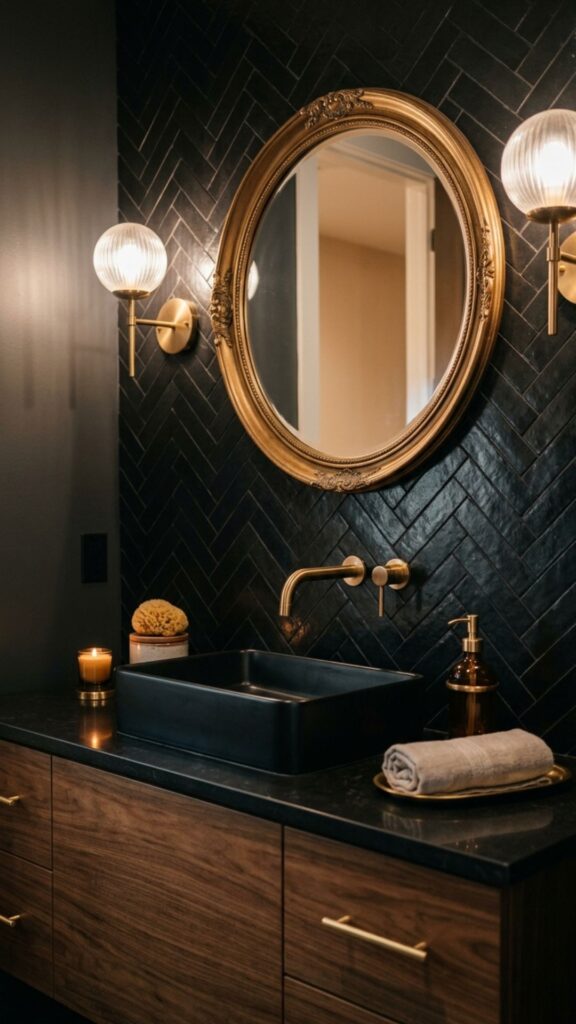
Dark backsplashes have moved from bold trend to lasting favorite. Deep navy, forest green, or matte black tile creates a dramatic, cozy atmosphere that feels both modern and sophisticated. The look works wonderfully against brass or gold fixtures.
Worried about a dark color shrinking the room? Balance it with plenty of light from above and a lighter floor or ceiling. In my experience, dark tile actually hides water spots and toothpaste splatter better than white, which means less daily wiping.
7. Beadboard for Cottage Charm
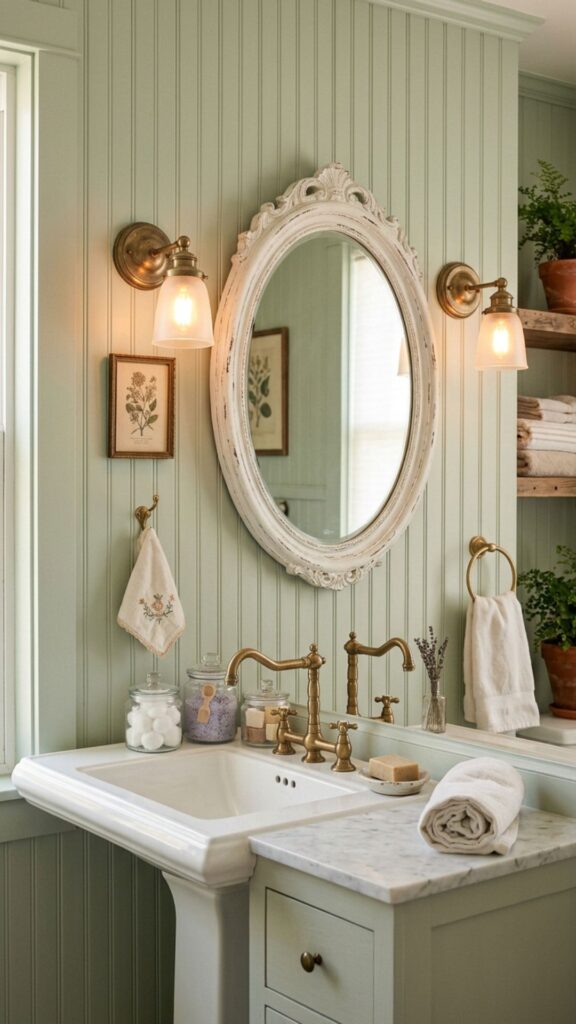
For a softer, traditional look, beadboard paneling brings instant cottage warmth. The vertical grooves add texture and a relaxed, homey feel that pairs perfectly with vintage fixtures and soft paint colors.
Choose a waterproof PVC or moisture-resistant MDF beadboard near sinks, and seal any seams well. Paint it in a cheerful color or a calm neutral to match your style. It’s also one of the most budget-friendly backsplash ideas if you’re handy with basic tools.
8. Marble Herringbone
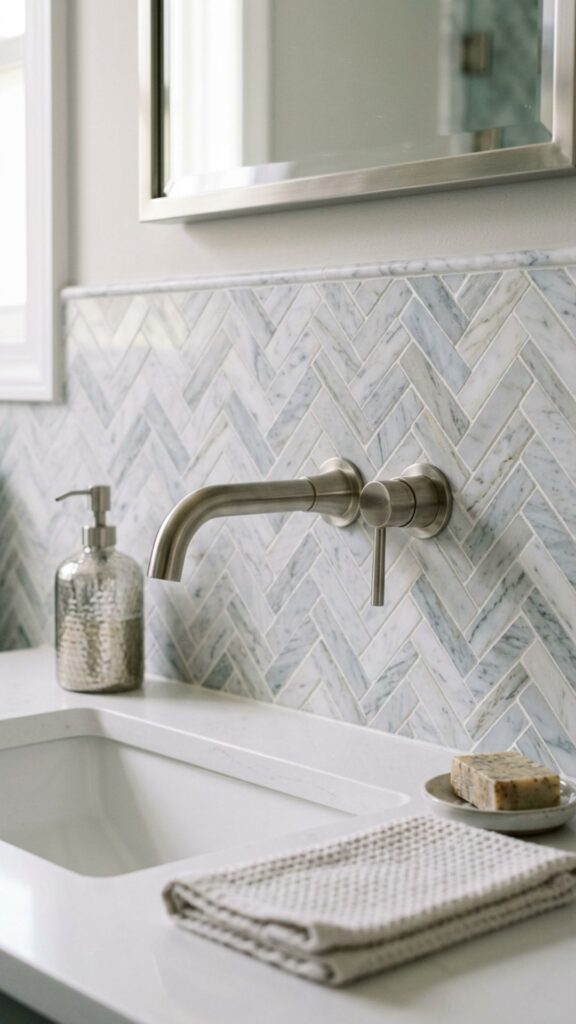
Arranging marble tile in a herringbone pattern adds elegance and movement at the same time. The zigzag layout feels intentional and upscale, turning a simple material into something special. It’s a detail that signals care and quality.
This pattern works in both small and large doses. Use it across a full wall for serious impact, or as a narrow strip behind the faucet for a subtle accent. Hire an experienced tile setter for herringbone, since the angled cuts take precision to look clean.
9. Colorful Patterned Cement Tile
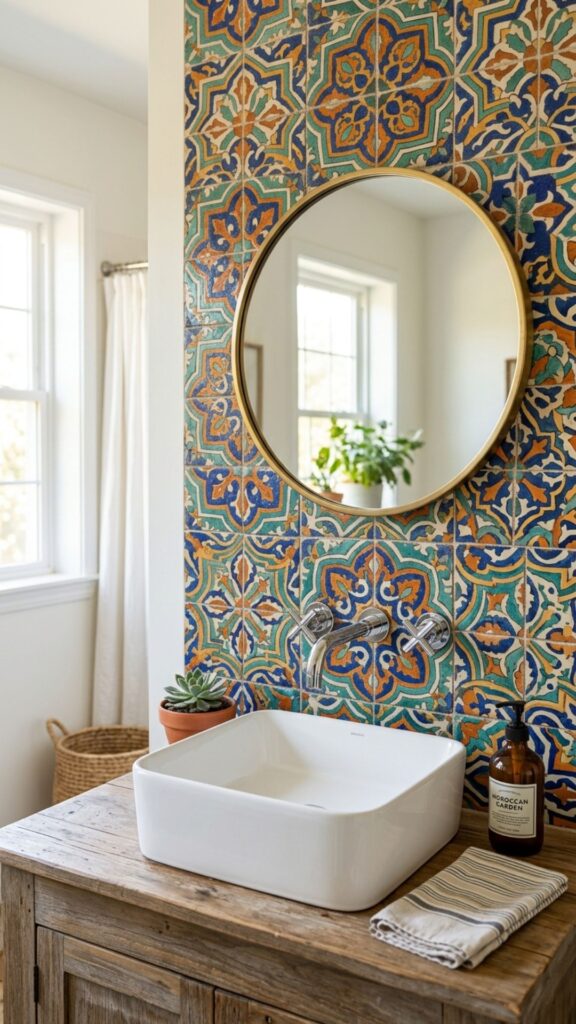
Encaustic cement tiles bring bold color and intricate designs, often inspired by Moroccan or Spanish styles. A patterned backsplash like this can carry the entire design of a bathroom, no extra decor needed.
Keep in mind that cement tile is porous and needs sealing before and after grouting. Once sealed, it holds up well and keeps its rich color. I recommend these tiles for a powder room or accent wall where their personality shines without overwhelming a larger space.
10. Floor-to-Ceiling Tile
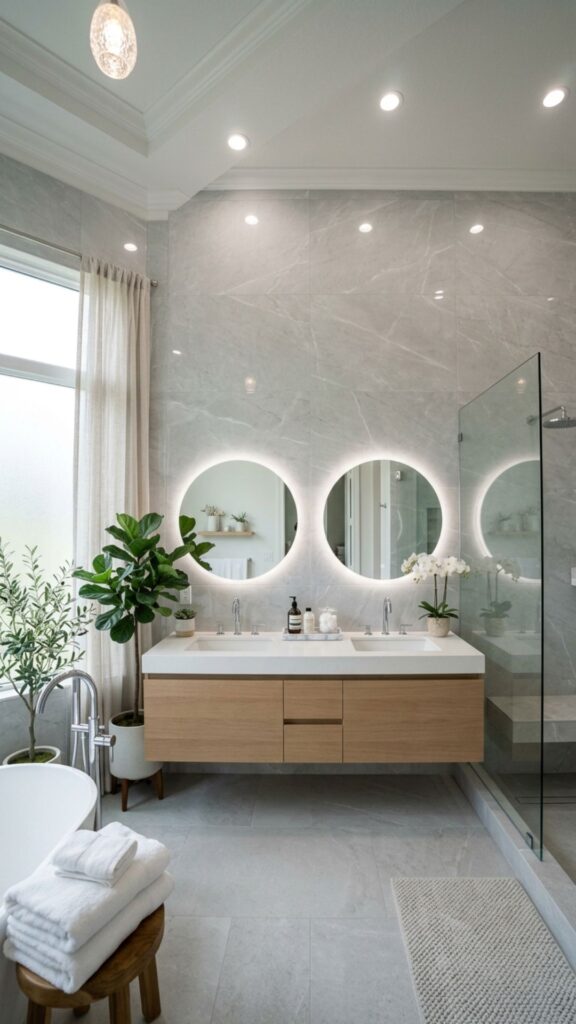
Taking your backsplash all the way to the ceiling makes a powerful statement. This full-height treatment protects more wall surface and creates a clean, immersive look that feels luxurious and intentional.
It works beautifully with subway tile, large-format slabs, or textured stone. Beyond the visual payoff, full-height tile is practical in humid bathrooms because it shields walls from moisture damage. Just budget for more material and labor than a standard backsplash.
11. Large-Format Tile
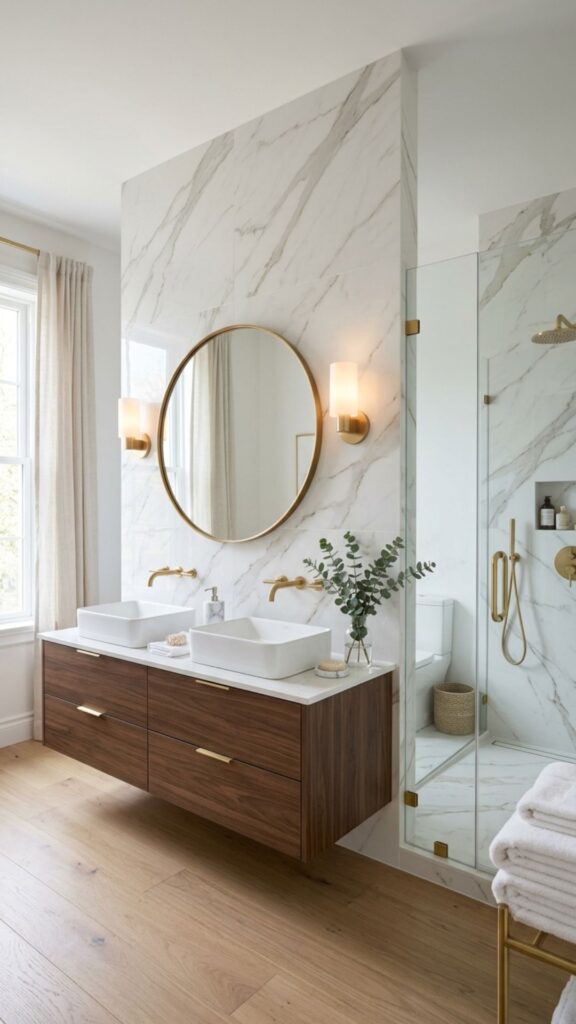
Large tiles, like 12×24-inch or bigger, reduce the number of grout lines for a sleek, modern surface. Fewer seams mean less cleaning and a more continuous, polished appearance overall.
These tiles come in finishes that mimic marble, concrete, or wood, giving you high-end looks at a friendlier price. They’re a smart pick for contemporary bathrooms and for anyone who wants low-maintenance walls. Make sure your wall is flat, since large tiles show unevenness more than small ones.
12. Mirrored Backsplash
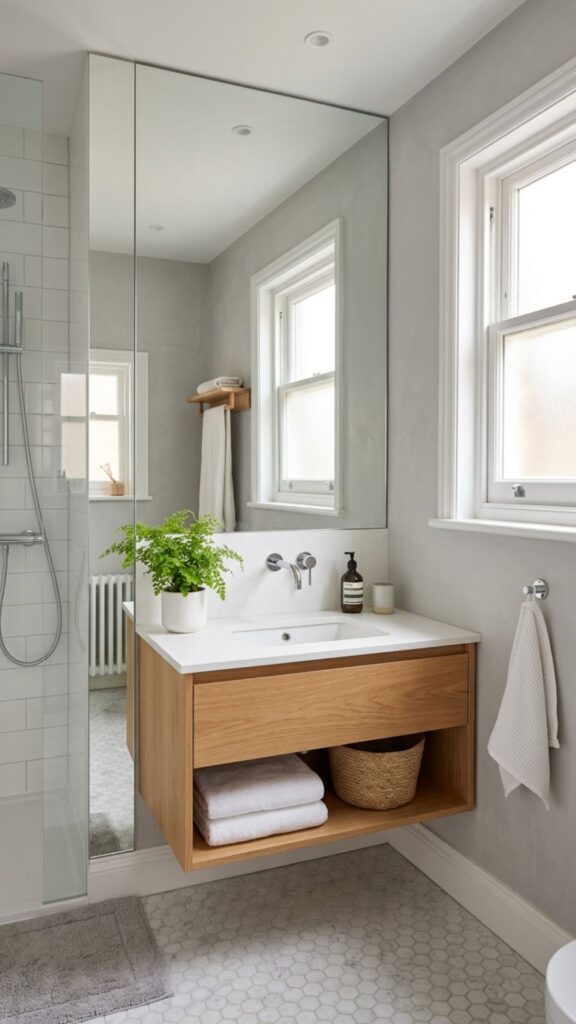
A mirrored backsplash doubles the light and visually expands the room, making it a clever choice for compact bathrooms. It reflects your tile, fixtures, and natural light to create an open, airy feel.
You can use a full mirrored panel or antique-style mirror tiles for a softer, vintage glow. The main downside is upkeep, since water spots and toothpaste show easily. A daily wipe keeps it gleaming, and the bright payoff is usually worth the effort.
13. Textured 3D Tile
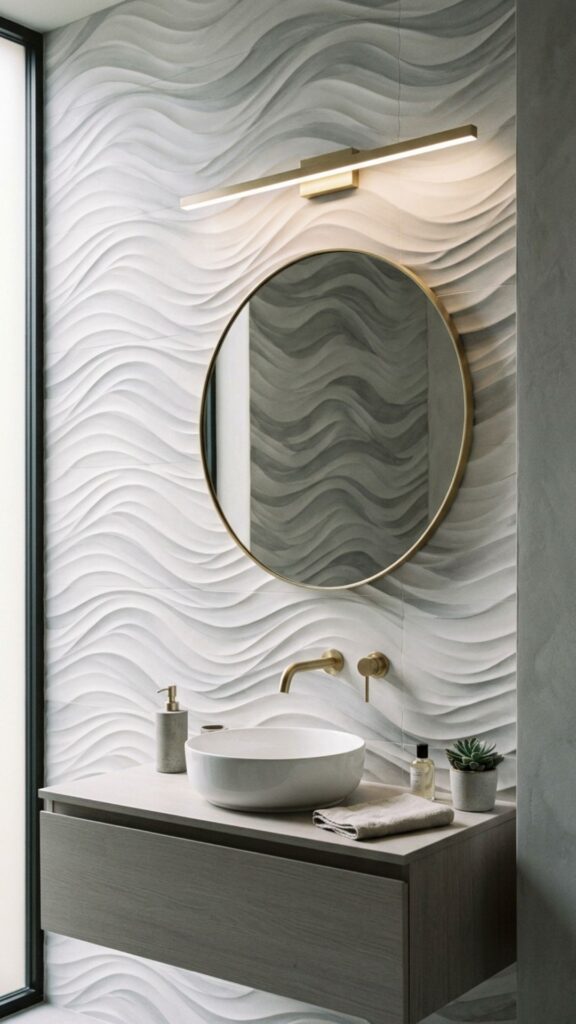
Three-dimensional tiles add depth and shadow that flat surfaces can’t match. Wavy, fluted, or geometric raised patterns catch the light and create a sculptural feature wall behind your vanity.
Stick to a single neutral color so the texture, not the color, does the talking. This idea suits modern and minimalist bathrooms especially well. Keep in mind the raised surfaces collect a bit more dust, so occasional dusting keeps them looking sharp.
14. Zellige Handmade Tile
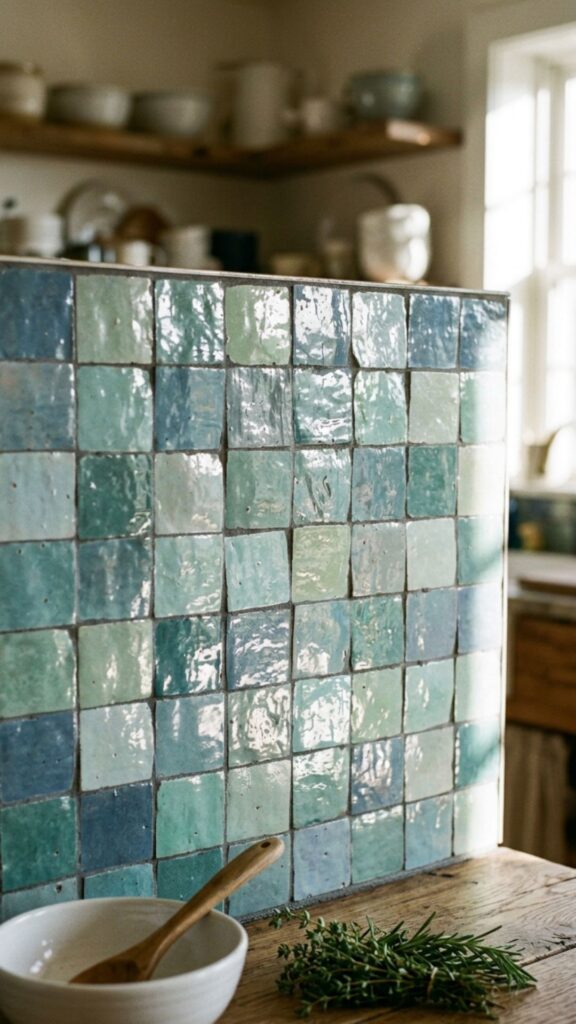
Zellige tiles are handmade clay tiles known for their glossy, slightly uneven surface. Each tile reflects light differently, giving the wall a living, shimmering quality that mass-produced tile can’t copy.
The natural variation is the whole point, so embrace the small imperfections and color shifts. Zellige looks stunning in earthy tones and rich jewel colors alike. Because these tiles vary in size and thickness, an experienced installer will get the best, most authentic result.
15. Wood-Look Tile
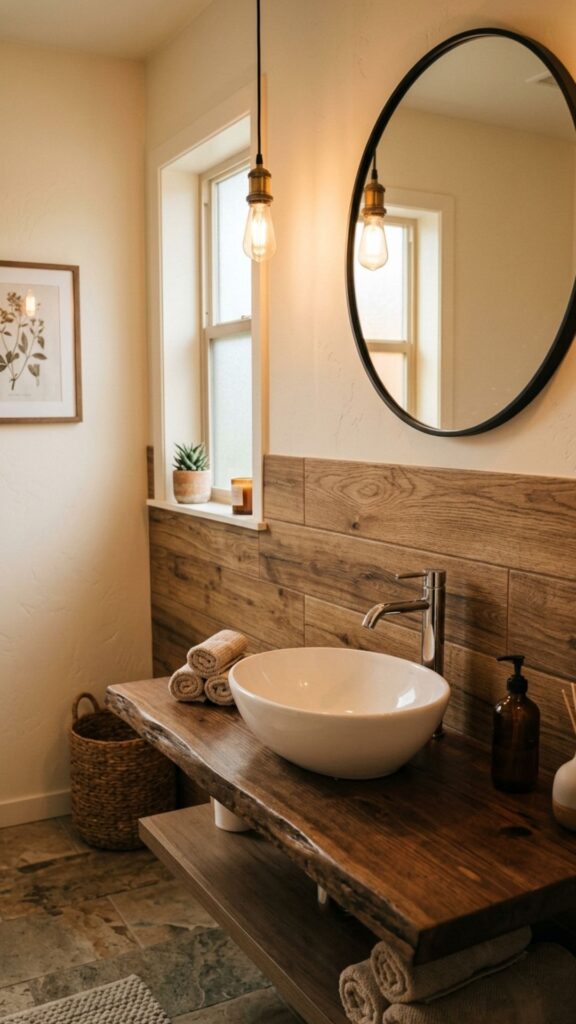
For warmth without water worries, wood-look porcelain tile delivers the cozy feel of timber with full waterproofing. The realistic grain and plank shapes bring natural texture into a space that real wood couldn’t survive.
This idea pairs nicely with spa-style bathrooms and nature-inspired palettes. Run the planks horizontally behind a vanity for a fresh, modern twist. Because it’s porcelain, you get easy cleaning and long-lasting durability with none of the warping wood would face.
16. Vertical Stacked Tile
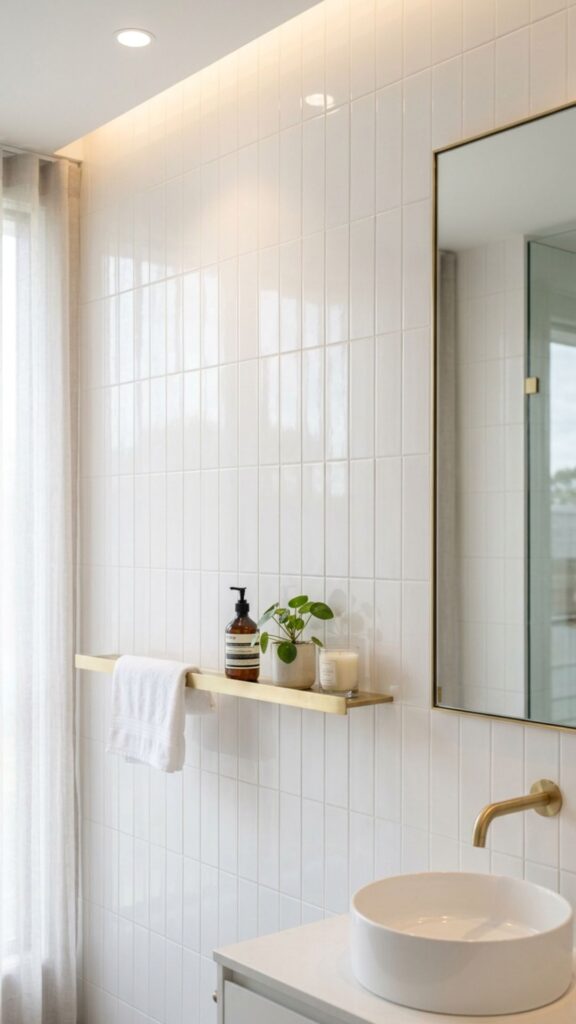
Stacking rectangular tiles vertically instead of the usual horizontal offset gives a modern, elongating effect. The straight lines draw the eye upward, which can make ceilings feel taller and rooms feel more spacious.
This clean layout works great with subway tile when you want something familiar but fresh. Use a matching grout for a seamless look, or a contrasting grout to highlight the vertical lines. It’s a simple change that makes a standard tile feel intentional and current.
17. Two-Tone Color Block
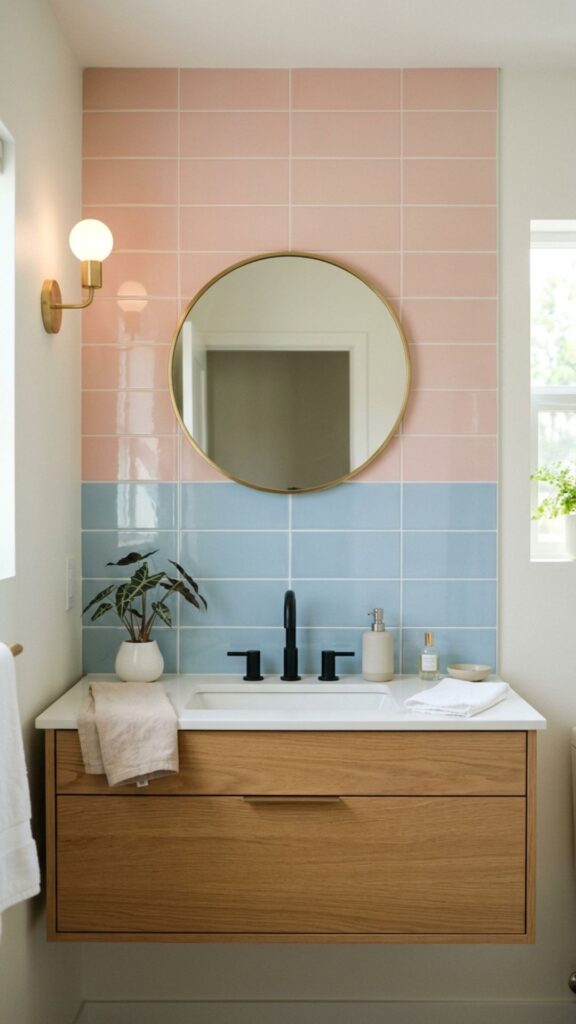
Pairing two complementary tile colors adds depth and a designer touch. You might run one color along the bottom and another above, or split the wall down the middle for a bold, graphic effect.
This approach lets you blend a neutral with a pop of color without overwhelming the room. Try soft white with sage green, or pale pink with terracotta. It’s an affordable way to add personality using basic tiles you can find at most home stores.
18. Pebble and River Stone
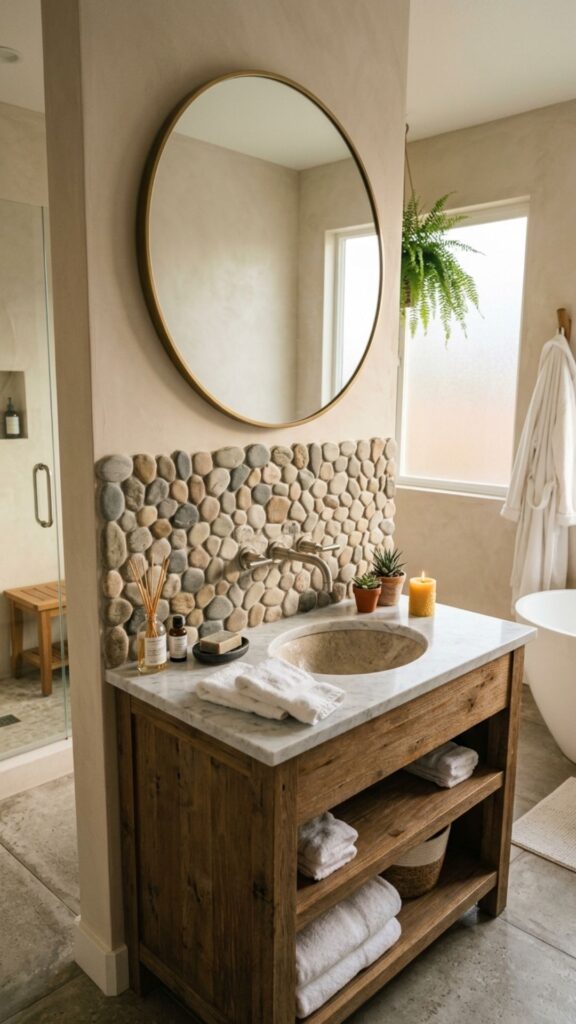
Pebble tile brings the outdoors in with a natural, organic texture. Made from smooth river stones mounted on mesh sheets, it creates a soothing, spa-like surface that feels grounded and calm.
The uneven surface adds wonderful texture, though it does mean more grout and more cleaning. Seal the stones to protect them from water and soap residue. This idea shines in nature-inspired bathrooms and as an accent behind a freestanding tub.
19. Metallic Accent Tile
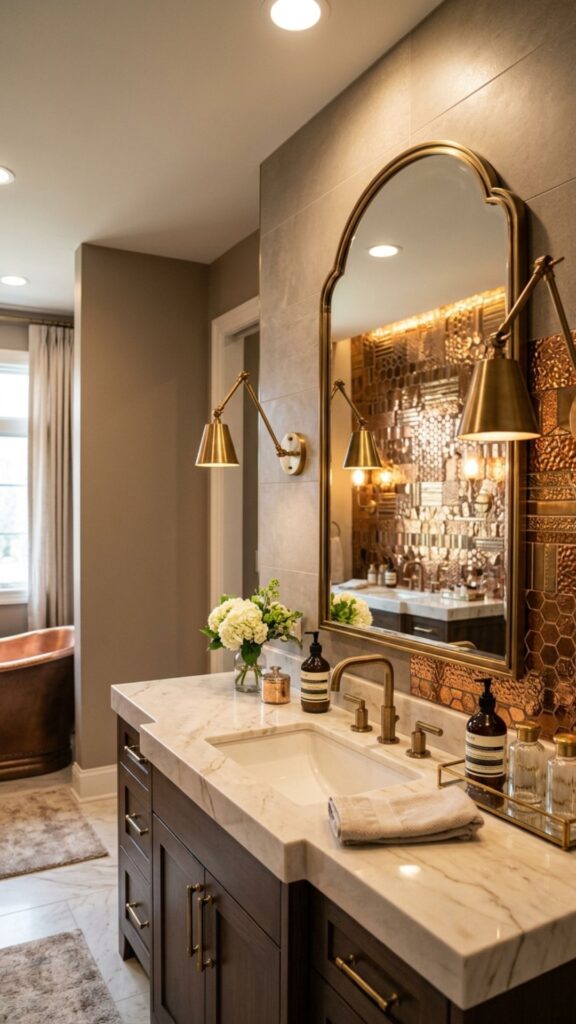
Copper, brass, or stainless steel tiles add a touch of glamour and warmth. Used as a full backsplash or a thin accent stripe, metallic tile reflects light and pairs beautifully with matching fixtures and hardware.
A little metal goes a long way, so balance it with matte surfaces nearby. Warm metals like brass feel inviting, while stainless steel reads sleek and industrial. Wipe these tiles with a soft cloth to avoid scratches and keep their finish bright.
20. Painted Accent Wall
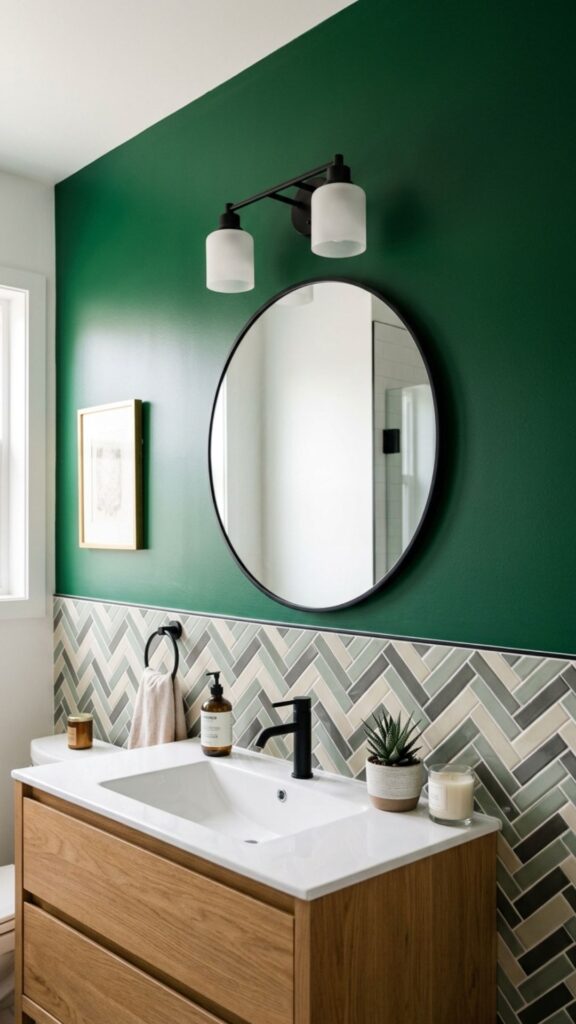
Not ready to commit to tile? A waterproof, semi-gloss or satin paint can act as a budget-friendly backsplash on lower-moisture walls. It’s the quickest way to refresh a bathroom and test a bold color.
Choose a moisture-resistant bathroom paint and avoid placing it where direct splashing happens, like right behind the faucet. Pair it with a small tile strip near the sink for protection where it matters most. This combo gives you color and practicality without a big spend.
21. Mix-and-Match Eclectic Tile
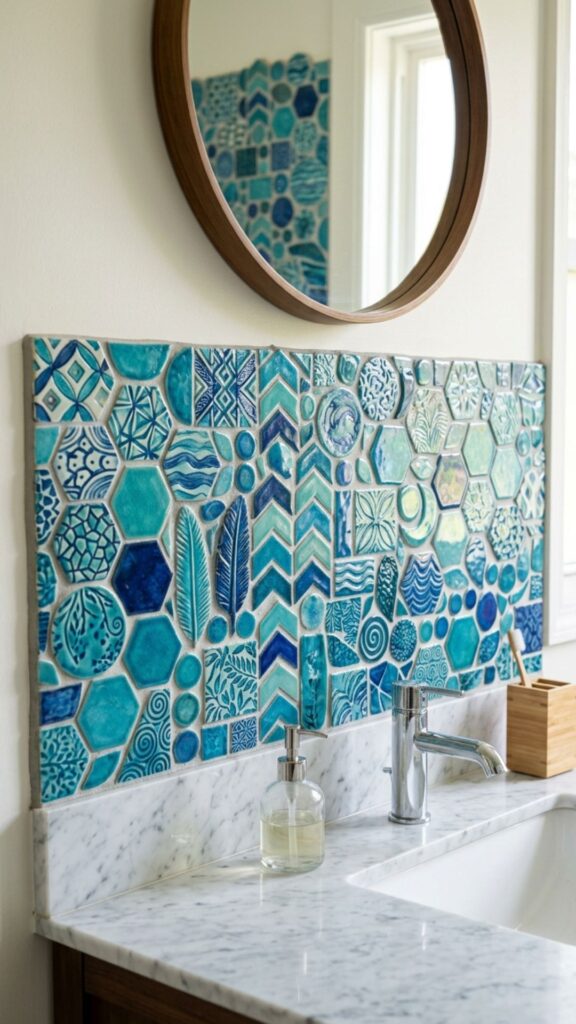
For the bold and creative, mixing different tile shapes, colors, and patterns creates a one-of-a-kind backsplash. The key is a shared color thread that ties the variety together so it feels curated, not chaotic.
Start with a base color and add two or three coordinating accents. Lay out your design on the floor before installing to fine-tune the balance. This idea rewards experimentation, and it’s a fun way to use leftover tiles from other projects while keeping costs down.
Bringing Your Bathroom Backsplash to Life
The right backsplash blends beauty with everyday function, and these 21 bathroom backsplash ideas prove there’s a perfect fit for every style and budget. Whether you’re drawn to timeless subway tile, dramatic dark colors, or a playful pebble surface, the best choice is the one that matches how you actually use your space. Think about cleaning, moisture, and lighting before you fall in love with a look.
Ready to start? Pick two or three ideas that caught your eye, then order sample tiles to see them in your own light. Hold them against your vanity and floor before deciding. If you’re unsure about installation, consult a local tile professional for a quote, your dream backsplash might be closer than you think.
What is the best material for a bathroom backsplash?
Porcelain and ceramic tile are the best all-around choices for a bathroom backsplash. They resist water, clean easily, and come in countless styles. For low maintenance, choose non-porous options like glass or porcelain that don’t require sealing.
How high should a bathroom backsplash be?
A standard bathroom backsplash is 4 inches high, but a full-height version that reaches the bottom of the mirror (around 18 to 24 inches) offers better wall protection. Floor-to-ceiling backsplashes are popular for a bold, modern look.
Do you need a backsplash behind a bathroom sink?
Yes, a backsplash behind a bathroom sink is recommended to protect the wall from water, soap, and toothpaste splatter. Without one, moisture can damage paint and drywall over time, leading to peeling and mold.
Are bathroom backsplashes hard to clean?
Most bathroom backsplashes are easy to clean with a damp cloth and mild cleaner. Smooth, non-porous materials like glass and porcelain are easiest. Surfaces with more grout lines or natural stone need a bit more care and occasional sealing.
What is the cheapest bathroom backsplash option?
Painted accent walls and peel-and-stick tiles are the most budget-friendly backsplash options. Beadboard and basic ceramic subway tile also offer an affordable refresh while still protecting your walls and updating the look of the room.